
Tech
SaaS is not dead. You are just being sold the funeral

The “AI has killed software” narrative has a handful of very loud beneficiaries and a lot of quiet evidence against it. The companies that will survive the next five years are the ones that refuse to treat the hyperscalers as the new gods.
Whenever I make an affirmation, I like to do my research first, and not to sound like a LinkedIn post. I wish more people in this industry did the same, as there is a prevailing mood where we think that big numbers are the whole story.
When the Black Death came among us, people probably thought it was the end. When wars came to our societies, people thought it was the end. Yet, in a strange way, we have a natural power to overcome obstacles and turn change to our advantage.
When AI started to infiltrate our work, and later our personal lives, a large group of people declared that “AI will replace people,” that this technology, not even particularly new, would conquer our brains, hearts, and work, and lead us where it wanted.
Yet we are still working; people are still writing, thinking, creating, building.

The 💜 of EU tech
The latest rumblings from the EU tech scene, a story from our wise ol’ founder Boris, and some questionable AI art. It’s free, every week, in your inbox. Sign up now!
In the last two years, more and more people have been saying that “SaaS is dead.” Of course, this phrase came from someone’s mouth, someone with enough influence to shape general opinion, and everybody was already in black, ready for the funeral.
In August 2024, Klarna’s chief executive, Sebastian Siemiatkowski, sat on an earnings call and mentioned, almost in passing, that the Swedish fintech had “shut down Salesforce.” Workday was next.
Klarna would build its own AI-driven replacements, a lightweight stack unshackled from the bloat of traditional enterprise software. The quote moved markets. Articles followed with headlines about the death of SaaS. Salesforce’s Marc Benioff, on stage at Dreamforce, was asked to respond to a customer who had apparently decided the future was AI and the past was his product. He looked, by his own admission, embarrassed.
Six months later, Siemiatkowski quietly clarified what had actually happened. Klarna had not replaced Salesforce with AI. It had replaced Salesforce with other SaaS: Deel for HR, third-party tools for CRM, the Swedish graph database Neo4j for data consolidation.
Klarna still uses Slack, which is still a Salesforce product. Siemiatkowski himself admitted on X that he was “tremendously embarrassed” by how the story had spiralled.
“No,” he wrote, “we did not replace SaaS with an LLM.”
This is the single most instructive story in enterprise software of the past two years. The distance between what was said and what was done reveals the mechanics of the entire “SaaS is dead” narrative. The headline travelled. The correction did not.
An industry of analysts, venture capitalists, and foundation model CEOs built a year of marketing on the louder half.
Start by asking who gains from the story that software-as-a-service is being replaced by artificial intelligence, because the answer is surprisingly narrow. The hyperscalers do, because AI workloads justify the $660 to $690 billion in capital expenditure the five largest US cloud and technology companies have committed for 2026, according to Futurum Group analysis, nearly double the previous year.
The foundation model labs benefit, because every dollar of enterprise software spend redirected to their APIs validates valuations that are otherwise difficult to defend. OpenAI ended 2025 at around $20 billion in annual recurring revenue. Anthropic crossed $9 billion in January 2026. These are genuinely large numbers. They are also, respectively, about three per cent and a little over one per cent of the hyperscaler capex being spent to serve them.
The venture capitalists benefit because their portfolio repricing depends on the narrative that AI-native companies will outrun the incumbents they once funded. And Nvidia, supplier and financier of the boom, benefits until it no longer does.
In March 2026, CEO Jensen Huang confirmed that his recent investments in OpenAI and Anthropic would likely be the last. The circular financing, Nvidia invests in OpenAI, OpenAI buys Nvidia chips, had reached the point where even the chipmaker was ready to stop calling it a virtuous cycle.
MIT’s Michael Cusumano, quoted by Bloomberg, put the arithmetic bluntly: “Nvidia is investing $100 billion in OpenAI stock, and OpenAI is saying they are going to buy $100 billion or more of Nvidia chips.”
You could call that demand. You could also call it bookkeeping.
The 95% number that should have ended the hype
The harder question is whether any of this is producing business results. Here the data is less generous than the pitch decks.
In July 2025, MIT’s Project NANDA published “The GenAI Divide: State of AI in Business 2025”, based on 150 executive interviews, 350 survey responses, and analysis of 300 public AI deployments. Its headline finding: despite roughly $30 to $40 billion in enterprise generative AI spending, 95% of pilots delivered no measurable impact on profit and loss. Only 5% reached production.
The response from the industry was not to recalibrate. It was to argue that the wrong metric was being used. UC Berkeley published a rebuttal suggesting ROI was an “industrial-era” measurement unsuited to a “cognitive-era transformation.”
This is what every hype cycle says in its late phase, that profit is a distraction, that what is being built is too large for ordinary standards. The same argument was made about WeWork, the metaverse, and blockchain.
Each time, the underlying assumption was that the people with capital and megaphones understood the future better than the people actually trying to run a business.
The 5% of AI projects that did succeed, MIT found, shared specific traits. They were built by specialised vendors, not attempted internally. They focused on back-office automation rather than sales theatre. They integrated deeply with existing workflows. Over half of enterprise AI budgets, meanwhile, were going to sales and marketing tools where ROI was lowest.
This is not a revolution sweeping through the enterprise. It is a lot of companies buying demo-friendly products that do not produce returns, while a minority does the unglamorous integration work that quietly extracts value.
The collapse that did not collapse
Stil, I have to admit that there are genuine signs of stress in the SaaS market. In February 2026, roughly $285 billion in market value evaporated from software stocks in a single trading session, what Wall Street christened the “SaaSpocalypse.”
ServiceNow fell 7%. Intuit dropped 11%. LegalZoom lost nearly 20%. Salesforce is down approximately 30% year-to-date. The business rationale, that per-seat pricing starts to collapse when one employee with AI tools can do the work of five, is not wrong.
But Bain & Company, looking at the broader record, has offered a useful correction: technological transitions rarely produce extinction.
They produce heterogeneity. Desktop survived mobile. Cloud did not kill on-premise so much as push it into specialised niches. The history of software is a history of layers accumulating, not replacing.
SaaS vendors are becoming agent-orchestration platforms. Salesforce has Agentforce. HubSpot has AI tools. Snowflake partners with Anthropic. The incumbents are being forced to adapt, but adaptation is not death.
IDC’s European practice framed it precisely in February: “SaaS is not dead, but it is metamorphosing.”
Pricing shifts towards outcomes. Interfaces become more agent-driven. But the real business logic, the auditing, versioning, compliance, and data gravity, remains where it was. The transformation is real. The extinction event is marketing.
The new gods are not new
Every major technology wave produces a brief period in which the companies at its centre are treated as reinventors of reality. For the cloud, it was AWS. For mobile, Apple. Before that, Microsoft.
The rhetoric around big techs like Nvidia, OpenAI, Anthropic, Meta, and xAI has the same cadence: they are building the new infrastructure of civilisation, rewriting how humans work, inevitable. There is a grain of truth in it. AI, and agentic AI in particular, is a real technological step.
The companies most likely to thrive are the ones already disciplined enough to recognise the pattern. Every enterprise that survived the dot-com crash, the mobile transition, and the cloud migration did so by adopting what was useful and ignoring what was hyped, by measuring outcomes against costs, by refusing to treat platform vendors as infallible.
The companies that went under bought the whole story: that their customers would wait while they rebuilt, that the new paradigm would reward early and total commitment.
We reported in February on a pattern now visible across dozens of SaaS companies between $20 million and $80 million in ARR: shipping AI features while net revenue retention quietly collapses.
Eighteen months after going “AI-first,” one company watched its NRR drop from 108% to 94% and lost $2.8 million in renewals, not because the product got worse, but because everyone was building the future and nobody was watching the present. The AI features were legitimately good. The existing customers churned anyway.
None of this is an argument against AI. Previous AI cycles ended with research freezes, shuttered startups, and survivors who had been quietly doing useful work while everyone else claimed the moon. This cycle will likely end similarly.
Some hype will turn out to be real. Most revenue projections will not. A handful of current “AI-native” startups will become durable businesses. Many will be absorbed or exposed as wrappers.
The companies that come through refuse both extremes. They do not miss the trend, because dismissing AI in 2026 is as serious a strategic error as dismissing mobile was in 2010. And they do not drown in it. They do not empty their engineering teams into AI-first rebrands while their existing revenue base walks out the door. They do not treat the big tech companies as gods, but as what they are: very large commercial entities with very specific interests in what you believe about the future.
Klarna, for the record, is still paying for SaaS. It is also still paying OpenAI. This is probably the honest shape of the future: not the death of anything, but a quieter rearrangement in which the winners are the operators who kept their feet on the ground while everyone else was watching the sky.
The funeral for SaaS has been extremely well-attended. The corpse, on closer inspection, is still breathing.

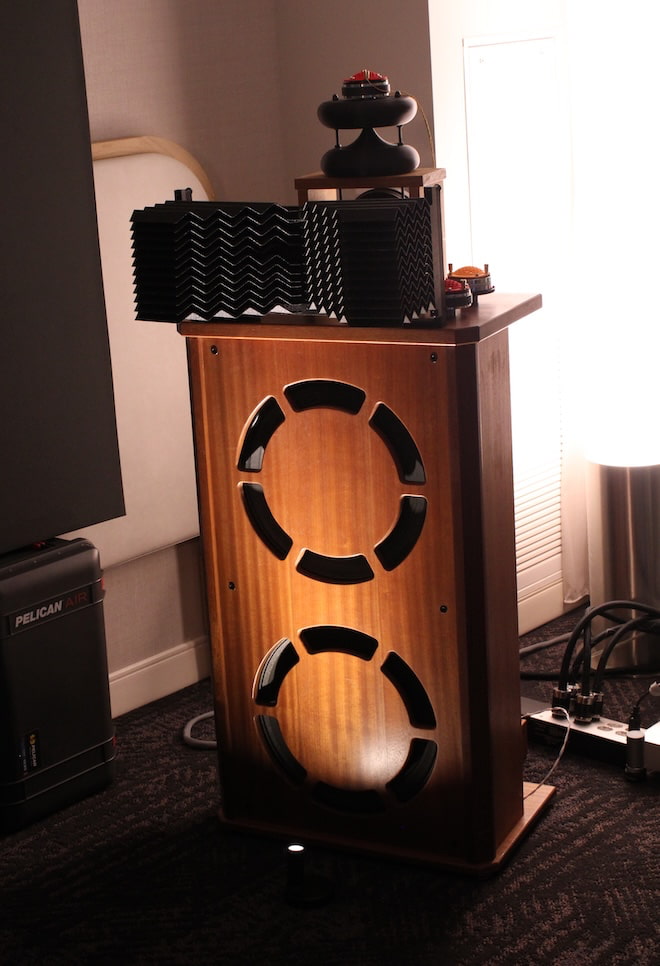
I stopped by the La Dolce Audio room at AXPONA expecting to spend time with the tube amplifiers Terry Gesualdo and I had been talking about on the bus ride over. He’s working with some unusually adjustable designs built around pentode tubes that most manufacturers avoid, which is exactly the kind of thing that gets my attention.
But the amplifiers weren’t what stopped me in the doorway.
Front and center was a pair of speakers that didn’t look like they belonged in a conventional system. Two large drivers mounted on a walnut baffle, topped by a compression horn feeding a wide black waveguide. And that was it. No enclosure, no box, nothing hiding behind them.
They weren’t unfinished. That was the design.
The speakers in question are one variation of the ABX/LDA open-baffle design, developed by James Owens of ABX, Terry Gesualdo of La Dolce Audio, and a growing community of builders on Discord. The concept isn’t complicated, and that’s the point: build something affordable, accessible, and genuinely good sounding without turning it into a science project that only a handful of people can finish.
In its most stripped-down form, this is about as DIY as it gets. A sheet of plywood, a couple pieces of 1×6, two shelf brackets, a pair of large drivers (three if you count the coaxial tweeter), and a simple five-part crossover. That’s the baseline. From there, builders can take it as far as their skills, patience, and garage space allow.
Driver-wise, it’s not messing around. You’ve got a 15-inch coaxial handling midrange and treble duties, paired with an 18-inch woofer to move serious air. The original coaxial concept traces back to a Darrel Hawthorne design, and after Hawthorne Audio closed in 2016, Gesualdo worked with Eminence, along with Hawthorne’s blessing, to develop an updated version so the platform wouldn’t disappear with the brand.
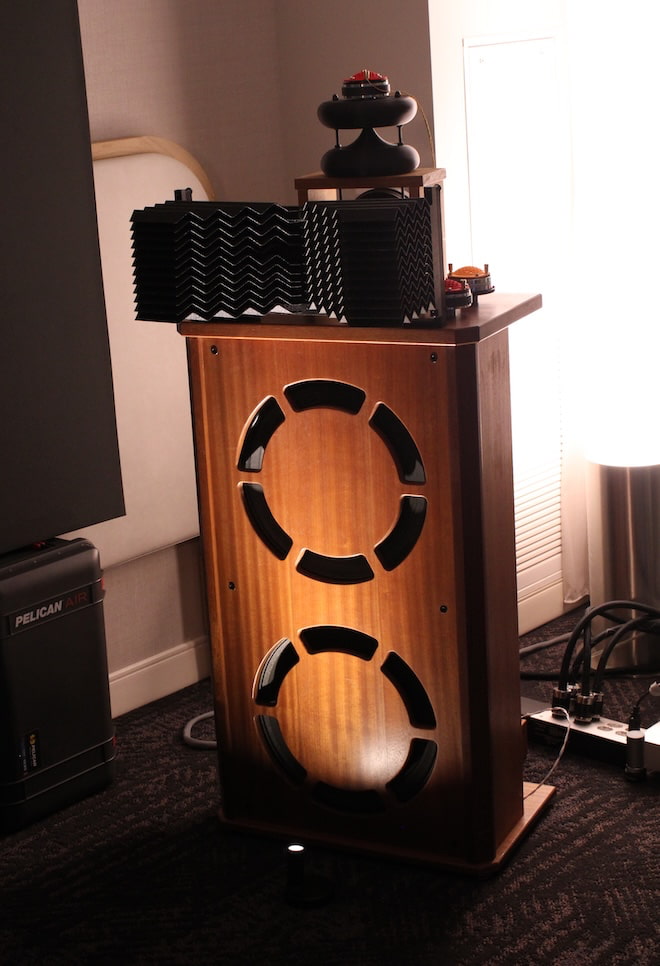
The naming keeps that lineage intact. The 15-inch is now the HA15, with a smaller HA10 also in the pipeline.
The crossover follows the same philosophy as the rest of the project. Keep it simple, keep it accessible, and don’t overthink it.
You’re looking at two inductors, a 15 mH 15 AWG air core inductor handling the midrange on the coaxial, and a 10 mH choke for the woofer, assuming the 18 inch driver. From there, it’s a set of speaker taps, a capacitor on the tweeter, either 3.3 µF or 40 µF depending on the specific tweeter revision, and an L pad to dial in the tweeter level.
That’s the entire network.
No PCB, no exotic layout requirements, no black box. Everything can be hand wired with basic parts and a soldering iron. If you can follow a diagram and take your time, you can build it.
Baffle designs run the full spectrum from basic to borderline art project, but they all share a common idea: some form of slot loading to help extend bass response.
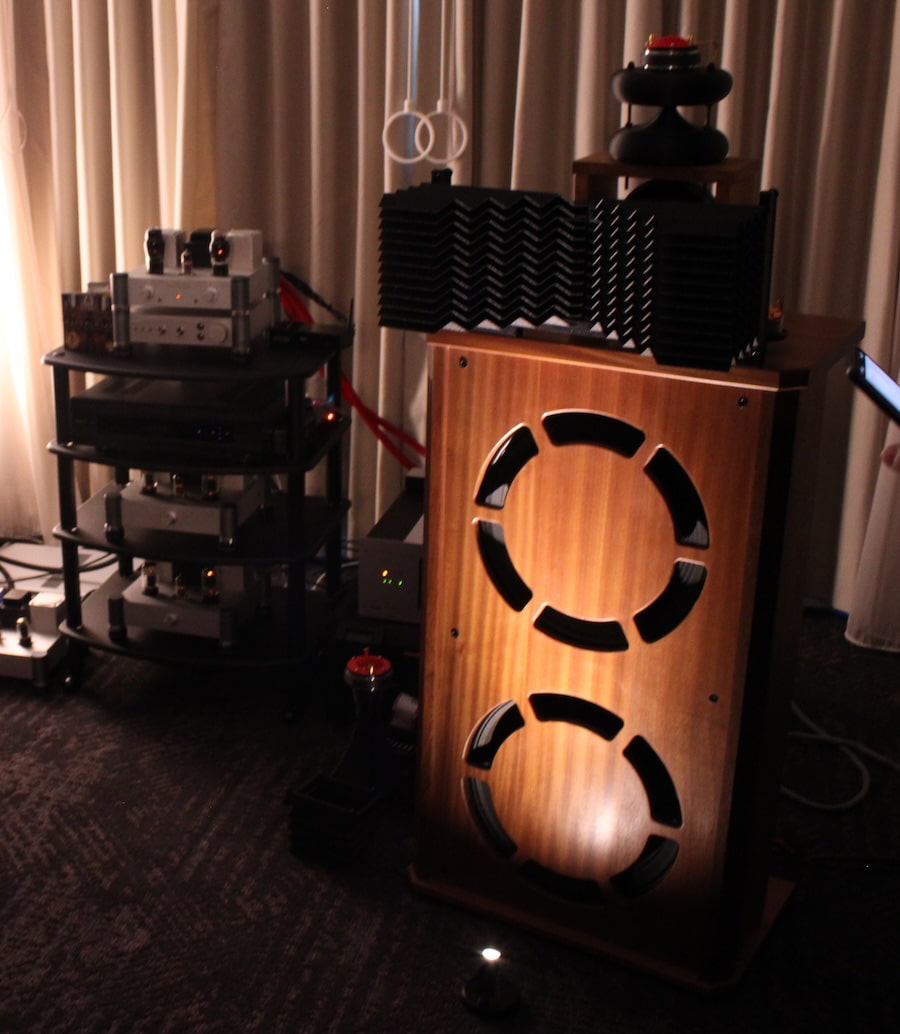
At the entry level, it can be as simple as rectangular cutouts in a sheet of plywood. From there, things escalate. Ring-loaded designs in straight grain hardwoods. More ambitious builds with spirals carved into slabs of figured Claro walnut that look like they belong in a gallery instead of a listening room.
The pair at the show leaned toward the more refined end. They used ring-loaded ports in a lightly figured walnut baffle and ditched the coaxial tweeter altogether. In its place was a compression horn paired with a large 3D printed labyrinth lens, designed to improve dispersion and add a bit more realism compared to the original coaxial approach.
It’s a clear sign that this isn’t a static design. It’s evolving, and the community is driving a lot of that evolution.
At this point, there are at least nine established versions, with La Dolce Audio offering designs and build kits, and even more variations circulating through the Discord channel for those who want to experiment.
For anyone looking to step off the beaten path, or just wants the satisfaction of saying “I made those,” the ABX/LDA open baffle project makes a strong case.
It’s established enough that you’re not gambling on the result. The foundation works, but it remains open to interpretation, letting builders take it as far as their skills and imagination allow.
That’s the appeal. You’re not just assembling a speaker. You’re shaping it.
At a show where the average speaker costs more than an entry level SUV, this feels like a reality check. Not everyone is dropping that kind of money, and this doesn’t pretend that you should. It just offers another way in, and a pretty smart one if you’re willing to put in the effort.
For more information: abxaudiophiles.org
Related Reading:
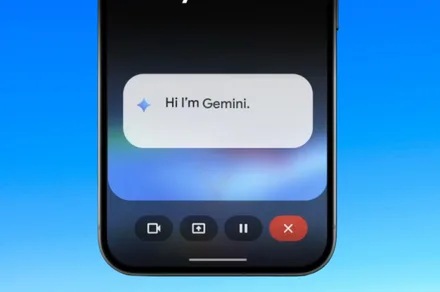

Google is testing a new redesign for its Gemini Live experience on Android, aiming to make interactions with its AI assistant more seamless and less intrusive. According to a 9To5Google report, the update moves away from the current full-screen interface and instead integrates Gemini Live directly into the main app view, signalling a shift toward a more practical, everyday usage model.
A Shift Away From Fullscreen AI
Previously, Gemini Live operated in a full-screen mode, taking over the entire display during interactions. While this approach highlighted the assistant, it also limited multitasking and made it harder to use alongside other apps.
With the redesign, Gemini Live now sits within the Gemini app’s homepage. The interface changes dynamically, showing a “Live with Gemini” header along with quick access to features like transcripts. This allows users to interact with the AI without completely leaving their current workflow.
The result is a cleaner, more minimal layout that feels less like a dedicated mode and more like a natural extension of the app.
Why This Redesign Matters
This update reflects a broader shift in how AI assistants are being designed. Instead of demanding full attention, they are increasingly becoming background tools that support ongoing tasks.
By removing the full-screen experience, Google is making Gemini Live more suitable for multitasking. Users can now interact with the assistant while browsing, messaging, or working within other apps, which aligns better with real-world usage patterns.
It also signals Google’s intent to position Gemini as a core part of the Android experience, rather than a separate feature that users have to consciously enter.
What It Means For Users
For users, the redesign could make Gemini Live more accessible and less disruptive. The simplified interface reduces friction, making it easier to quickly ask questions, get responses, or continue conversations without interrupting what they are doing.
Features like built-in transcripts also improve usability, especially for voice-based interactions, where users may want to refer back to previous responses.
At the same time, the more compact design could make Gemini feel less overwhelming, particularly for users who may have found the previous full-screen interface too intrusive.
What Comes Next
The redesign is currently being tested and has not yet been widely rolled out. However, it is part of a series of rapid updates to the Gemini app, suggesting that Google is actively refining the experience based on user feedback.
Looking ahead, Gemini Live is expected to become more deeply integrated into Android, potentially replacing traditional assistant workflows entirely. As Google continues to iterate, the focus appears to be on making AI assistance more subtle, faster, and easier to use throughout the day.
In that sense, this minimalist redesign may be less about visual changes – and more about redefining how AI fits into everyday smartphone interactions.

The munchies don’t care what day it is, but on April 20 they do tend to show up right on schedule. Whether you’re fully leaning into 4/20 as an occasion or you just happen to be thinking about food a lot more than usual, it’s a day that comes with a specific kind of appetite.
What started as a low-key and rebellious ritual has well and truly gone corporate, and the food industry has certainly caught on. And with marijuana now legal in many states, every year more chains are jumping on the 4/20 bandwagon with suspiciously specific prices and deals that very much understand the assignment.
Whether you’re partaking in this dopest of days, stumbled onto this page because a burger deal caught your eye or you just wanted a free frisbee, we’ve rounded up every 4/20 deal worth knowing about.
Note: While cannabis has been legalized for medical and even recreational use in some states, marijuana and products containing THC is still a Schedule I drug under US federal law. Always exercise caution and judgment when consuming cannabis or any other controlled substance.
Mastodon’s flagship server was hit by a distributed denial-of-service attack on Monday, the social networking software maker said, which rendered the instance unusable at times.
Much of the site was inaccessible, throwing error messages or displaying a full-screen outage warning.
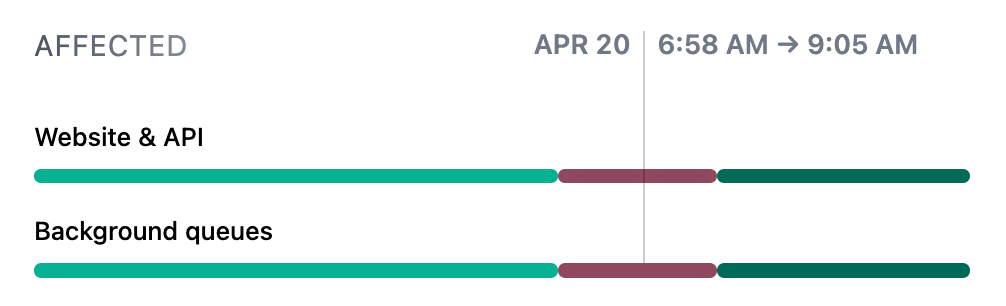
The makers of the decentralized social networking software, which runs its official mastodon.social instance, said in a status update at around 7 a.m. ET on Monday that it was investigating the cyberattack.
By 9:05 a.m. ET, Mastodon said it implemented a “countermeasure against the DDoS attack, and the site is accessible.” However, the company warned that some instability may continue to be seen as the attack is ongoing.
The cyberattack targeting Mastodon comes days after Bluesky, another decentralized social network, resolved much of its days-long outages following a lengthy DDoS attack. As of Bluesky’s update on April 17, the DDoS attack continues, but its service has been stable since April 16 at 9 PM PDT. Today’s update confirmed the ongoing stability.
Representatives for Mastodon did not immediately comment on the cause of the cyberattack when contacted by TechCrunch.

Distributed denial-of-service (DDoS) attacks rely on sending massive amounts of junk web traffic towards an app or website’s servers, with the aim of knocking them offline. These cyberattacks don’t involve data theft, but DDoS attacks can be disruptive to users.
DDoS attacks have become exponentially more powerful over the years. Last year, network security company Cloudflare said it mitigated what it says is the largest DDoS attack to date, measuring a peak of 29.7 terabits per second, the equivalent of filling up thousands of hard drives with data every minute.
When aimed at decentralized social networking services, the attacks can cause instability and outages, but not everyone is taken offline. In Bluesky’s case, for instance, those who had moved their account to other providers, like Blacksky, which run on the same protocol and interoperate with Bluesky, were not impacted.
Similarly, the attack on Mastodon has so far targeted only the larger server (mastodon.social) and not the many smaller instances that make up the full Mastodon social network.

It’s happening. Ubisoft has scheduled a livestream for April 23 at 12PM ET to discuss the long-awaited Assassin’s Creed Black Flag remake. The showcase will be available to watch on the company’s and pages.
It’s officially called Assassin’s Creed Black Flag Resynced and has . Ubisoft ended speculation by .
We don’t know anything about how the game will play or look, as Ubisoft has only dropped some promotional art featuring protagonist Edward Kenway lounging on a boat. The livestream should feature a trailer that will answer many burning questions.
For instance, rumors have been swirling that this is a and not a simple port. That makes sense given the . It’s also been rumored that this new version will , with a total focus on pirate-themed action.
We don’t have that long to find out. Maybe the livestream will also give us some information about that upcoming mainline franchise entry, which is currently being developed . Ubisoft has promised it will be a “unique, darker, narrative-driven Assassin’s Creed experience.”
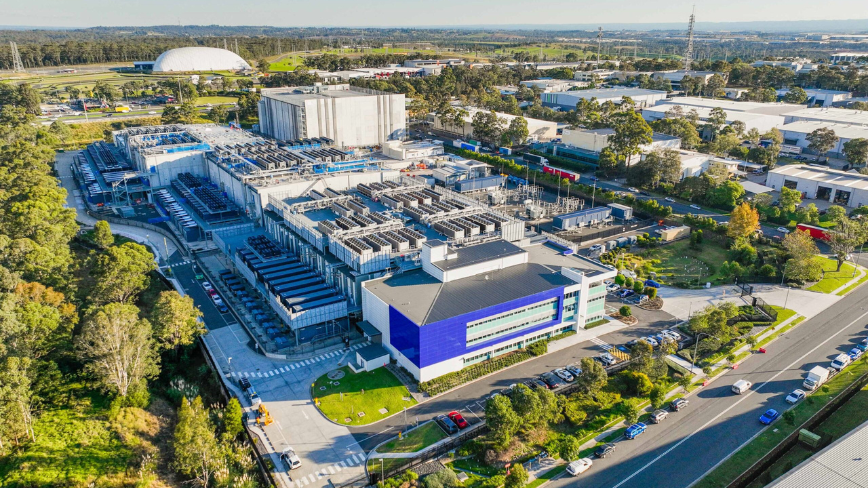
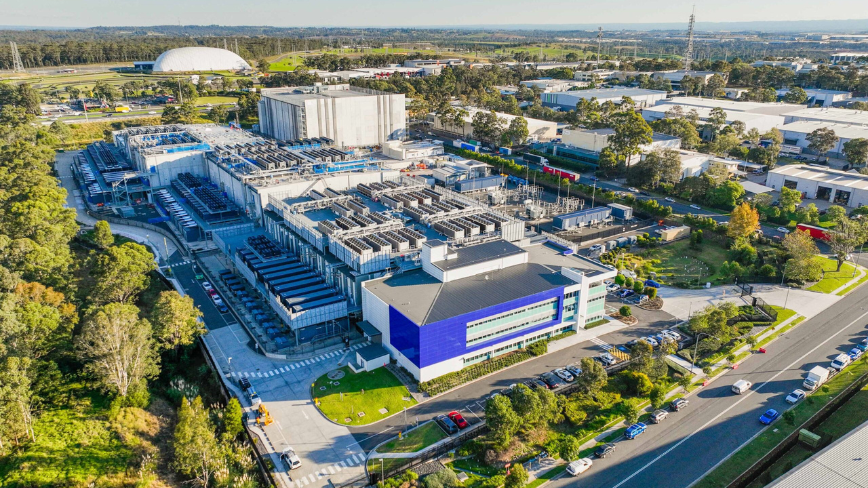
The deal is an internal Blackstone consolidation, both AirTrunk (acquired for A$24 billion in 2024) and Lumina CloudInfra (launched by Blackstone in 2022) sit within the same portfolio.
By folding Lumina into AirTrunk, Blackstone gives its Asia-Pacific data centre platform a foothold in India’s hyperscale market without a third-party acquisition. Terms were not disclosed.
AirTrunk, the Asia-Pacific data centre operator owned by Blackstone, is acquiring Lumina CloudInfra, an India-focused data centre developer, marking AirTrunk’s entry into one of the world’s fastest-growing digital infrastructure markets.
The acquisition gives AirTrunk access to Lumina’s development pipeline, customer contracts and relationships, and operational capabilities, including approximately 600 megawatts of planned capacity across India’s major cities, representing up to $5 billion of development potential. Financial terms were not disclosed.
The deal has an unusual structure: both companies are Blackstone entities. Lumina CloudInfra was launched by Blackstone in 2022 as a standalone India-focused hyperscale data centre platform, seeded with significant capital and led by local industry veterans.
AirTrunk, Asia-Pacific’s largest independent data centre operator, was acquired by Blackstone in December 2024 for A$24 billion, Blackstone’s largest ever transaction in the region.
Rather than bring in a third-party acquirer, Blackstone is consolidating its two data centre platforms under a single operating entity, giving AirTrunk a ready-built India entry point with existing land positions, customer relationships, and a management team with deep local market experience.
Post-acquisition, AirTrunk will operate across six markets: Australia, Singapore, Japan, Malaysia, Hong Kong, and India, with a combined portfolio of more than 3 gigawatts of operating and planned capacity across 20 campuses.
Lumina’s planned 600MW pipeline is spread across India’s Tier-1 cities, beginning with Mumbai and Chennai and extending to Pune, Delhi/NCR, and Hyderabad.
Lumina’s co-founder and CEO Sujeet Deshpande, a former head of Colt Data Center Services’ India operations who previously led Reliance Jio Infocomm’s integrated data centres, framed the deal as combining “local strength with global platforms.”
AirTrunk’s founder and CEO Robin Khuda described India as “one of the largest and fastest growing markets for hyperscale and AI infrastructure worldwide” and said the acquisition positions the company to “deliver the scale, speed, and performance our customers need as they expand across the APAC region.”
Peng Wei Tan, Senior Managing Director of Real Estate at Blackstone, framed it as reinforcing “one of Blackstone’s highest conviction themes, digital infrastructure,” and noted that as the world’s largest data centre investor, Blackstone is positioned to meet rising demand across Asia-Pacific’s fastest-growing economies.
India’s data centre market has attracted significant international capital in recent years as hyperscale cloud providers, AWS, Microsoft Azure, Google Cloud, and others, accelerate their buildout in the country.
Blackstone had previously committed to investing approximately $11 billion in Indian data centres, with Lumina as the primary vehicle.
Integrating Lumina into AirTrunk’s global operating platform gives those India investments access to AirTrunk’s hyperscale customer network, global design and construction standards, and Blackstone’s full capital resources, a consolidation of capabilities rather than a simple financial transaction.

There’s been a few complaints about Amazon’s drone delivery service. “The automated mailmen are dropping off packages from 10 feet in the air,” reports the New York Post, “rendering the contents of each box susceptible to crashing and smashing.”
One example? Tamara Hancock filmed a drone delivering a bottle of Torani flavoring syrup to her home in Arizona (as a test of how Amazon handled fragile items). It was delivered it in a plastic bottle — not glass — but the massive drone drops the drone from so high that the impact cracked the bottle’s cap. (In the video Hancock opens her delivery to find leaked flavoring syrup “everywhere.”)
The delivery was hard to film, Hancock says, because “If the drone sees me in the back yard, it will not drop, because it is worried about hurting humans or animals.” The Post notes Amazon’s “AI-charged fleet” of drones are “Outfitted with industry-leading ‘sense and avoid’ technology, the aerodynamic machines are equipped to drop off eligible items, weighing a maximum of five pounds, at designated areas in 60 minutes or less.”
The high-tech, however, apparently does not ensure gentle landings. Collisions, including a recent crash-and-burn into a Texas building, as well as several mid-flight malfunctions in rainy weather, have abounded since the drones’ inaugural launch….
Tasha, a separate Amazon user, spotted the drone plunging a package near the paved driveway of a neighbor’s yard. Unfortunately, its propellers caused other, previously delivered parcels to blow away, sending one into the street… In a statement to The Post, Amazon said it apologized for one of the “rare instances when products don’t arrive as expected.”
Amazon’s drone fleet has been running since late 2024, the Post adds, and are now offering “ultra-fast” shipping in U.S. states including Arizona, Florida, Michigan, Kansas and Texas.
The machines do seem massive. I’m surprised neighbors aren’t complaining about the noise…

DeanonymizedCoward writes: Engadget reports that Palantir has posted to X a summary of CEO Alex Karp and Nicholas W. Zamiska’s 2025 book, The Technological Republic, which reads like a utopian idealist doodled on a Bond villain’s whiteboard. While the post makes some decent points, it also highlights the Big-AI attitude that the AI surveillance state is in fact a good thing, and strongly implies that the Good Guys need to do war crimes before the Bad Guys get around to it. “The ability of free and democratic societies to prevail requires something more than moral appeal,” one of the 22 points states. “It requires hard power, and hard power in this century will be built on software.”
The book is billed as “a passionate call for the West to wake up to our new reality,” and other excerpts in the social media post include assertions such as: “Free email is not enough. The decadence of a culture or civilization, and indeed its ruling class, will be forgiven only if that culture is capable of delivering economic growth and security for the public”; “National service should be a universal duty”; “The postwar neutering of Germany and Japan must be undone”; and “Some cultures have produced vital advances; others remain dysfunctional and regressive.”
The statement criticizes the West’s resistance to “defining national cultures in the name of inclusivity,” as well as the treatment of billionaires and the “ruthless exposure of the private lives of public figures.”
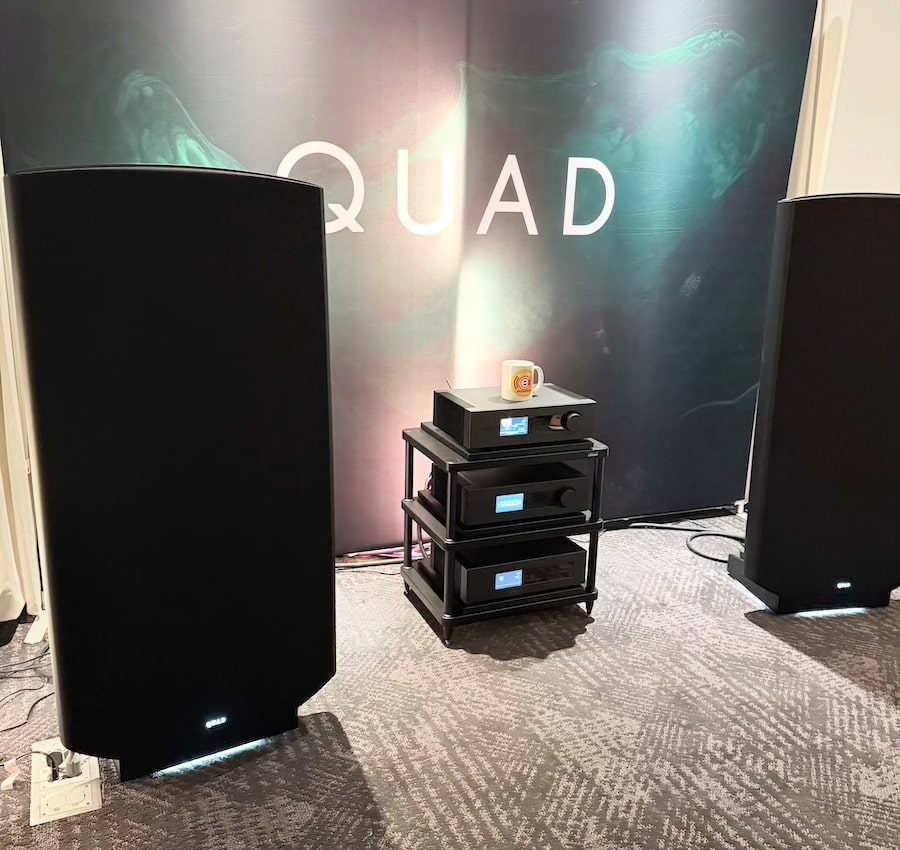
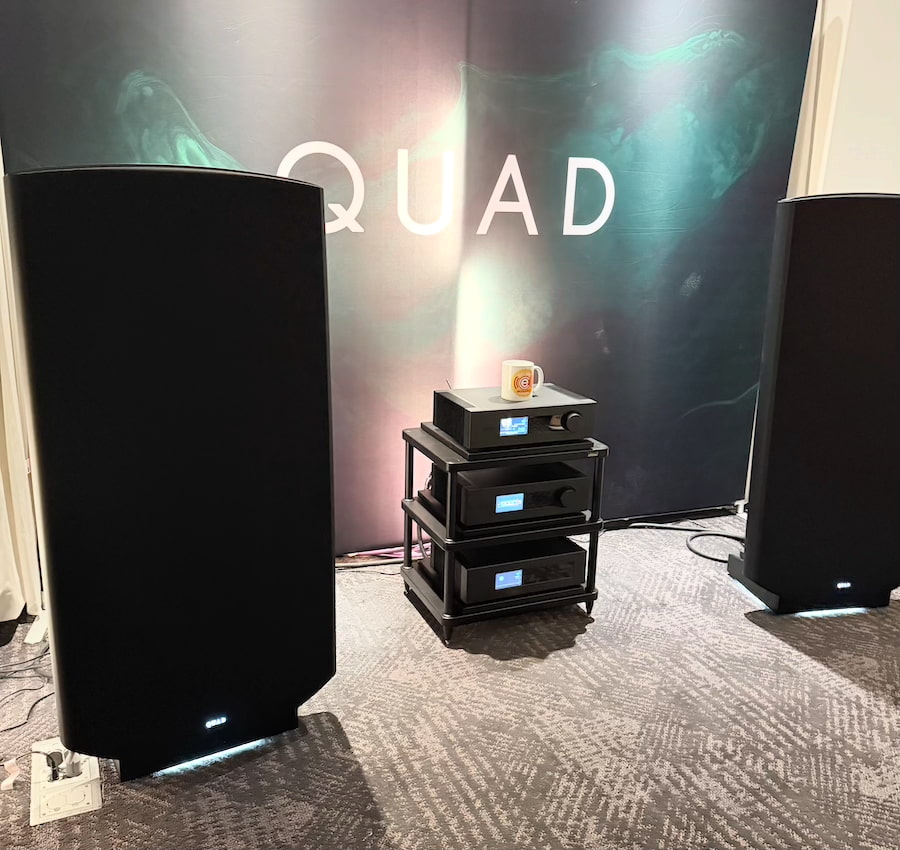
Recorded from the show floor at AXPONA 2026, this episode brings together Cornelius and Jamie O’Callaghan of the IAG Hi-Fi Division for a deep dive into the legacy and future of QUAD’s electrostatic loudspeakers, including the ESL 2912X. We break down what makes electrostatic panel speakers fundamentally different from traditional designs, why QUAD has remained committed to the technology for decades, and how the latest generation improves on transparency, dispersion, and real world usability. The conversation also explores how these iconic speakers fit into a modern hi-fi landscape increasingly dominated by compact and wireless solutions, and why QUAD continues to attract listeners who care more about realism than convenience.
This episode was recorded on April 10, 2026 (the first day of AXPONA 2026).
Where to listen:
On the Panel:
Related Links:
Credits:
Tech
Seattle-area billboard takes a page from Bay Area playbook: ‘Startup energy should be more visible’
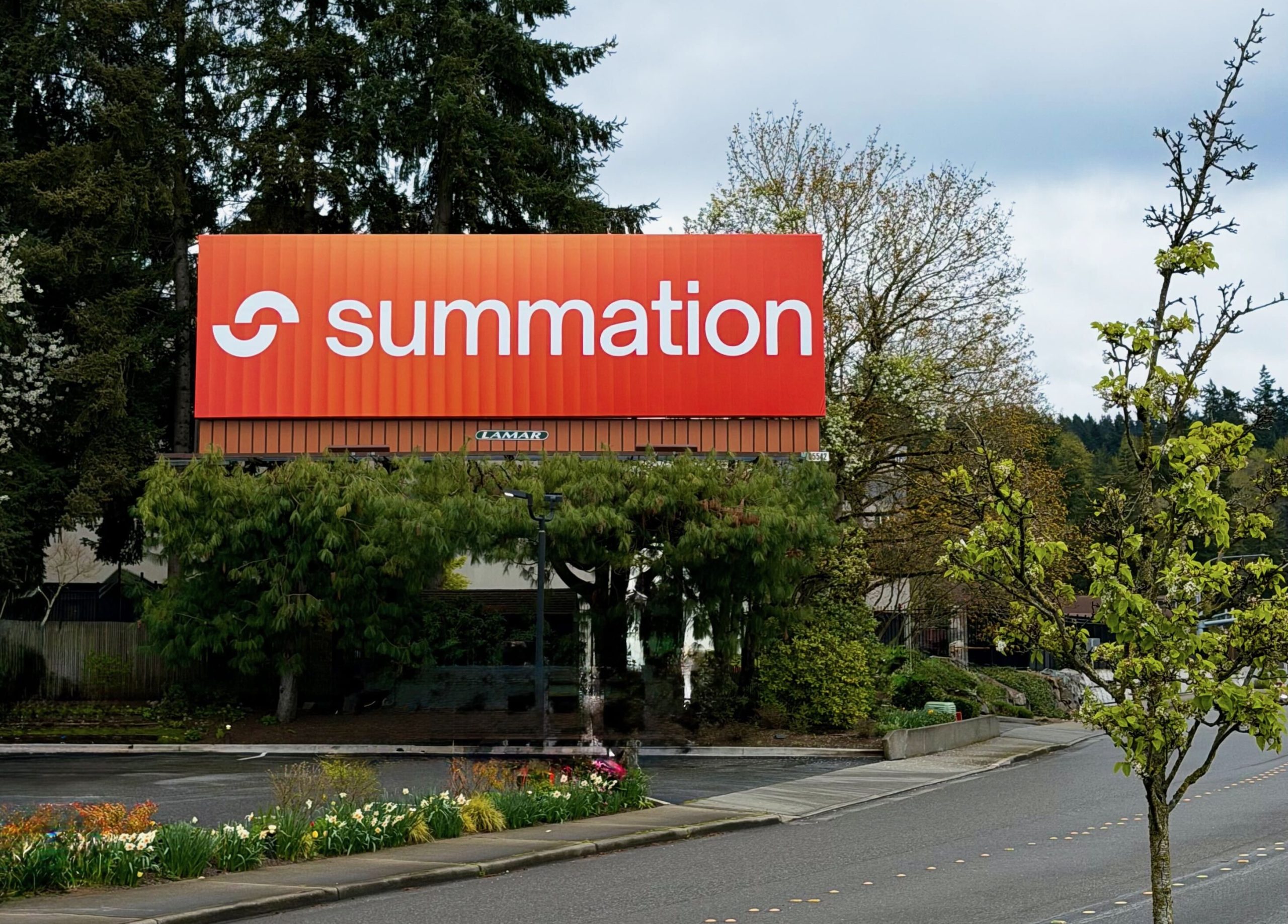

A Bellevue, Wash.-based startup that came out of stealth last fall is really trying to get noticed now, taking a page out of a playbook that’s more prevalent in Silicon Valley.
Summation is an AI platform that helps enterprise leaders draw insights from large volumes of internal data. A bright orange billboard visible from SR 520 doesn’t say that, but it does put the company’s name in sight of drivers — many of whom potentially work in tech — heading east along the highway.
“We’re building Summation here in Bellevue, and wanted to do something a little bold and a little playful — for recruiting, for awareness, and because startup energy should be more visible around here,” CEO Ian Wong told GeekWire.
Wong is the former CTO of real estate giant Opendoor and Square’s first data scientist. He co-founded Summation in 2024 with Ramachandran “RC” Ramarathinam, who led Opendoor’s core transaction platform.
Summation raised $35 million in funding from Benchmark and Kleiner Perkins in October.
Tech company billboards are a big part of the landscape in the San Francisco Bay Area. Signs advertise a whole new era of AI-focused startup names and products. Last summer, The New York Times published a fun quiz challenging readers to decode what some of the billboards were even selling around Silicon Valley.
Wong said capturing a slice of that energy was part of the point with his company’s billboard in Bellevue, which went up about two weeks ago near the Burgermaster restaurant along Northup Way.
“In SF, startup ambition is just visible — on 101, on the sides of buildings, in every coffee shop,” he said. “The Seattle/Bellevue area has world-class technical talent, but the scene here has always been understated. We wanted to put up a small signal that ambitious things are being built on this side of the lake, too — and if you want to work on one of them, come find us.”
Bellevue-based startup Stasig used a reverse tactic back in 2024 when it launched an aggressive campaign to spread its name across the Bay Area with more than 200 billboards and posters at transit shelters and stations.
Summation employs about 35 people right now and is hiring across engineering, product, and go-to-market.
Summation’s platform sits on top of data systems and runs massive calculations automatically, testing different scenarios and using AI agents to explore different questions in parallel. The software also automates financial reconciliations, variance analysis, and management reporting.
The advertising lines up with what Wong called “a big product release” coming next week.
“Always be hiring,” he said. “And selling.”

Bitcoin Holds $75K As Altcoins Search For Bullish Momentum

Make the Gulf irrelevant again

Man United can land dream Casemiro replacement but need Man City to green light major transfer



-

 NewsBeat6 days ago
Trump and Pope Leo: Behind their disagreement over Iran war
-

 Fashion3 days ago
Weekend Open Thread: Theodora Dress
-

 Crypto World7 days ago
SEC Signals Exemption for Crypto Interfaces From Broker Registration
-

 News Videos5 days ago
Secure crypto trading starts with an FIU-registered
-

 Sports3 days ago
NWFL Suspends Two Players Over Post-Match Clash in Ado-Ekiti
-

 Crypto World7 days ago
SEC Proposes Certain Crypto Interfaces Don’t Need to Register as Brokers
-

 Business1 day ago
Powerball Result April 18, 2026: No Jackpot Winner in Powerball Draw: $75 Million Rolls Over
-

 Crypto World3 days ago
Russia Pushes Bill to Criminalize Unregistered Crypto Services
-

 Politics3 days ago
Palestine barred from entering Canada for FIFA Congress
-
 Business4 days ago
Creo Medical agree sale of its manufacturing operation
-

 Politics1 day ago
Zack Polanski demands ‘council homes not luxury flats for foreign investors’
-
 Entertainment7 days ago
Brand New Day’ Footage Reveals the Devastating Impact of ‘Now Way Home’
-

 Crypto World3 days ago
Russia Introduces Bill To Criminalize Unregistered Crypto Services
-

 Tech6 days ago
Microsoft adds Windows protections for malicious Remote Desktop files
-
 Entertainment7 days ago
Karol G’s ‘Ultra Raunchy’ Coachella Set Gave ‘Satanic Vibes’
-

 Entertainment7 days ago
How Babylon 5 Turned Brief Side Story Into Emotional Masterpiece
-

 Tech5 days ago
‘Avatar: Aang, The Last Airbender’ Leaked Online. Some Fans Say Paramount Deserves the Fallout
-

 Tech2 days ago
Auto Enthusiast Scores Running Tesla Model 3 for Two Grand and Turns It Into Bare-Bones Go-Kart
-

 Tech7 days ago
What was the first ransomware attack to demand payment in Bitcoin?
-

 Business7 days ago
Intuitive Machines Stock Climbs 2.4% as $180M NASA Lunar Contract and $900M Revenue Outlook Fuel Momentum
You must be logged in to post a comment Login