
Politics
Labour MPs Leave As Support For Starmer Declines

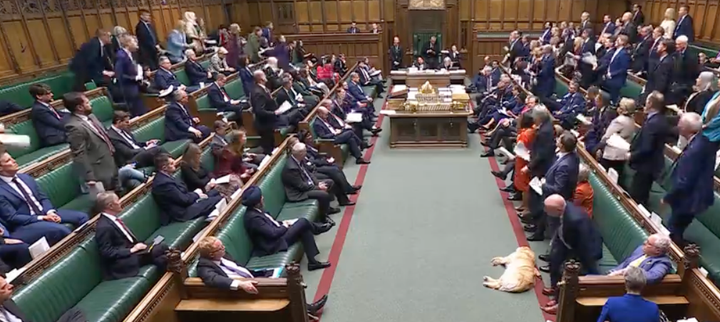
Support for Keir Starmer among Labour MPs appears to be draining away as he fights for his political life amid the latest Peter Mandelson scandal.
The prime minister eventually told MPs – nearly two hours into his appearance in the Commons – that he did not mislead them when he said due process had been followed when the shamed former peer was vetted for the role of US ambassador.
But by then, the benches behind him were sparse as his own MPs decided to leave the chamber rather than stay to give the prime minister their backing.
“Labour MPs are voting with their feet,” one senior party insider told HuffPost UK.
The prime minister had told parliament it was “staggering” that neither he nor any of his ministers had been told that Mandelson had failed to pass security vetting.
Starmer only found out last Tuesday, and two days later sacked Olly Robins, the most senior civil servant in the Foreign Office, whose decision it was to give Mandelson the all-clear to take up his role in Washington.
“This is information I should have had a long time ago, and it is information that the house should have had a long time ago,” the PM said. “It is information that I and the house had the right to know.”
But his pleas were not met with a wave of support from Labour MPs, many of whom are furious with him for appointing Mandelson to the plumb diplomatic role in the first place.
Emily Thornberry, who is chair of the Foreign Affairs Committee that will take evidence from Olly Robbins on Tuesday, was among those who attacked the Downing Street operation.
She said: “I am afraid to say, doesn’t this look like, for certain members of the prime minister’s team, getting Peter Mandelson the job was a priority that overrode everything else and that security considerations were very much second order.”
Labour MP Neil Duncan-Jordan said: “The real question is why, when Peter Mandelson’s reputation was already known, was he ever considered for such an important role.”

Veteran backbencher John McDonnell said: “Many of us will remain bewildered still why that appointment took place, despite the warnings that many of us gave.
“Isn’t the reality this: that when he sought to realise his ambition to become leader of the Labour Party, with very little base within the party, he became dependent on [former NO,10 chief of staff Morgan] McSweeney and Mandelson and Labour Together to organise, fund his election.
“When he became prime minister the reward for McSweeney was control of No.10, and for Mandelson the highest diplomatic office. The unspoken message to civil servants was what Mandelson wants, Mandelson gets.”
As Labour MPs headed for the exits, one senior party figure said: “Starmer is fighting for his political life and look how his benches have thinned out. It feels like its sinking fast.
“I suspect post may Labour MPs will start saying he has to set out a timetable to go.”
Labour whips were even forced to text MPs begging them to return to the chamber to back the PM.
The message, seen by HuffPost UK, said: “If any [parliamentary private secretaries] are able to head back to the chamber, benches are looking quite empty. Your assistance as always is greatly appreciated.”
Few, if any, heeded the call – leaving the prime minister both literally and politically increasingly alone.
Subscribe to Commons People, the podcast that makes politics easy. Every week, Kevin Schofield and Kate Nicholson unpack the week’s biggest stories to keep you informed. Join us for straightforward analysis of what’s going on at Westminster.


The announcement followed hot on the heels of two nights of rioting in Clapham, in a so-called ‘link-up’ between young people. So serious was the unrest that it required the deployment of 100 police officers, four of whom were assaulted. More soberly, four young people were killed over the Easter weekend in London in violent attacks. One was a 14-year-old shot dead in Woolwich. Another was a 21-year-old film student fatally stabbed on Primrose Hill. He had been at the picturesque spot, in the daytime sunshine, testing out a new film camera recently gifted to him for his birthday.
Will the new youth clubs do anything to avert tragedies like these? It seems unlikely. While there is little agreement on whether knife crime is increasing in London, what we do know is that 29 per cent of all knife offences take place in the capital. So we need to do something.
Khan claims, ‘I’ve seen from my own experience growing up in south London the difference youth clubs made to me and my brothers, with somewhere to not just play table tennis and pool and do boxing, cricket and football, but also in providing a safe space for us to go’. Likewise, Labour MP for Stratford and Bow, Uma Kumaran, welcomed the news, claiming it would help young people in her patch of east London, ‘after years of austerity which closed youth clubs and cut services to the bone’.
But a quick Google search will show you there’s no shortage of free activities already on offer in Newham, one of the borough’s covered by Kumaran’s electorate. There are free sports classes. There’s the optimistically-named Fight for Peace. There’s an array of activities at Royal Wharf Community Dock. There are evening events at Newham Libraries. And there’s a brand-new, state-of-the-art, £8million ‘Youth Zone’, which opened just two years ago.
The same is true in Clapham. Presumably, the young people recently ransacking shops were not doing it in protest at the planned chess tournament being cancelled and the local library’s insufficiently extensive collection of Jane Austen. In Clapham, there are two youth clubs within a short walk of the Common – the Clapham Youth Centre and the Devas Club. What’s more, Khan’s announcement came just days after the UK government opened its first wave of ‘Youth Futures Hubs’, in areas of high knife crime and anti-social behaviour, including in London’s Tower Hamlets.
Clearly, there are plenty of places in London for young people to spend time in a warm and safe environment. Indeed, the number of such places is far higher than it is outside the capital. You know where it is safe and enjoyable? London’s galleries and museums. And they are increasingly open late – the Barbican is open every single day until 11pm. It’s free, too.
The left will howl that, of course, youth clubs aren’t the only solution, but we should surely welcome them as part of the answer. Perhaps. Despite everything, I am not intrinsically opposed to youth clubs – if they can be run competently. Khan’s scheme is reminiscent of the 1990s ‘midnight basketball’ initiative in inner cities in the US, and there are studies that suggest it was successful. Some of these, notably a 2024 report for the Institute for Fiscal Studies, have suggested that youth clubs do have benefits for educational performance and in reducing youth crime. Though the study in question failed to differentiate between a strict environment offering boxing classes, say, and an ill-disciplined free-for-all with a few ping-pong tables, which surely makes a large difference.
Besides, the £30million pledged by the London mayor has to come from somewhere. Is it really a good use of money if it comes at the expense of boosting detention capacity or police numbers? And what if the clubs themselves, rather than providing a safe and neutral space, become places of violence, or cause well-behaved kids to get in with the wrong crowd? Or, indeed, become places for drug dealers to find customers, and phone snatchers to sell their loot? If you really want to give young people a sense of purpose and something to do, then fix the economy so they can get a job. Or, even better, encourage them to start their own business.
The biggest problem with the focus on youth clubs, however, is the deflection. Deflection, that is, from the real causes of violent crime: joblessness, absent fathers, failures of migrant integration, weak policing, a lack of strict discipline in schools, an abdication of parental responsibility and a societal turn against self-discipline. And, for that matter, the failure to put in place proper protections for police officers so they do not fear losing their jobs from bogus accusations of racism should they seek to get tough on perpetrators.
Youth clubs feel like the thing you resort to when you’ve run out of ideas. Now, who’s up for a game of ping-pong?
Ameer Kotecha is a former diplomat and now the CEO of the Centre for Government Reform.
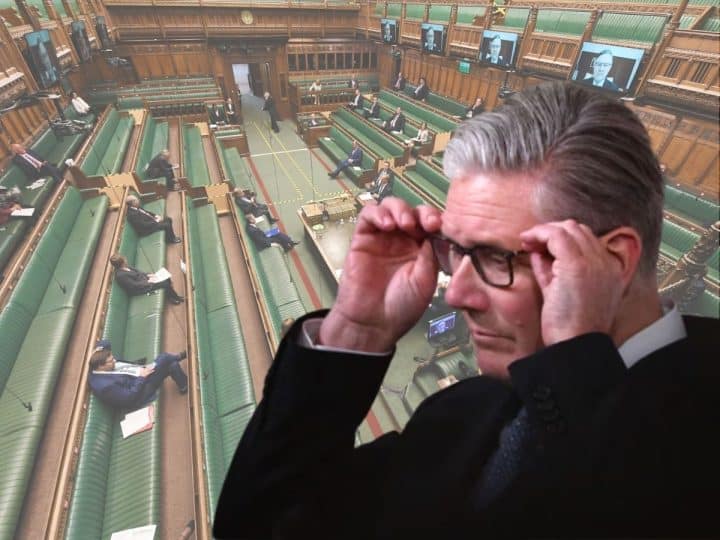

On 17 April, we learned that Peter Mandelson had failed his security vetting for the ambassador to the US position. As Keir Starmer told parliament that Mandelson had actually passed vetting, this meant the PM misled parliament.
Simple, right?
According to No 10, no.
The line from Starmer’s people was that the PM didn’t know Mandelson failed his vetting, and that actually a rogue minister had obscured this truth from him. This argument seemed completely implausible, and as we covered, it’s failed to stand up.
Now, No 10 is seemingly admitting that Starmer misled parliament.
The caveat is that they still claim he did so unknowingly:
"The Prime Minister would never knowingly mislead Parliament or the public" — Politics UK (@PolitlcsUK) April 20, 2026
 NEW: No 10 has appeared to admit that Keir Starmer unknowingly misled Parliament about Peter Mandelson's vetting
We call bullshit
Firstly, the timeline of events shows that No 10 should have been aware that Mandelson didn’t pass vetting last year:
Liz Kendall is asked about David Maddox asking Number 10 about Mandelson failing the vetting months ago, despite the PM saying he only found out last week.
Kendall refuses to comment, saying she can't speak on behalf of number tens director of communications. https://t.co/DzX9KJxMMW pic.twitter.com/pDW1k0ytsc
— Saul Staniforth (@SaulStaniforth) April 19, 2026
They want us to believe that a rogue minister and a rogue press secretary both knew, but neither told Starmer.
And of course, this goes beyond the nonsense of them wanting us to believe that Mandelson could fail his vetting without several individuals and agencies raising massive red flags.
Just what sort of country is Starmer running?
Secondly, the idea that Starmer ‘would never knowingly mislead the public’ is a nonsense. New Labour ghoul Tom Watson discovered what the public think of this claim when he posted the following:
He lied to get elected as Labour leader. Broke all his 10 pledges. https://t.co/a83iQdhPLT
— Mukhtar (@I_amMukhtar) April 17, 2026
The broken promises haven’t stopped now that Starmer’s in office, either, as we reported:
After 18 months in power, Starmer has turned his back on the mandate pledges that granted him office, while his broken promises stack up.https://t.co/VY6hTDrm7M
— Canary (@TheCanaryUK) February 10, 2026
On the pledge sheet sent to Labour members, Starmer promised raising income tax on the top 5% of earners. But in September 2023, the MP for Holborn and St Pancras walked that back, stating there would be no increase. It was a lie and Polanski is right to point this out.
He also pledged “support[ing] the abolition of tuition fees”. Instead, Labour has raised tuition fees by £285 — another lie. This should reduce Starmer’s mandate to tatters and he should be recalled for another election.
It’s increasingly clear that words mean very little to Starmer. He also promised that he would “put the Green New Deal at the heart of everything we do”.
And yet again, in February 2024, the Labour leader dropped a £28bn per year commitment to green energy. And in government, he’s propping up fossil fuel firms with £22bn for carbon capture projects that don’t even work.
This is who Starmer is
So yes, Starmer absolutely would mislead the public.
In fact, there are very few examples of him being honest with the public.
Let’s hope he finally does the decent thing today and steps down; it will certainly be a first if he does.
Featured image via House of Commons (Flickr)
By Willem Moore
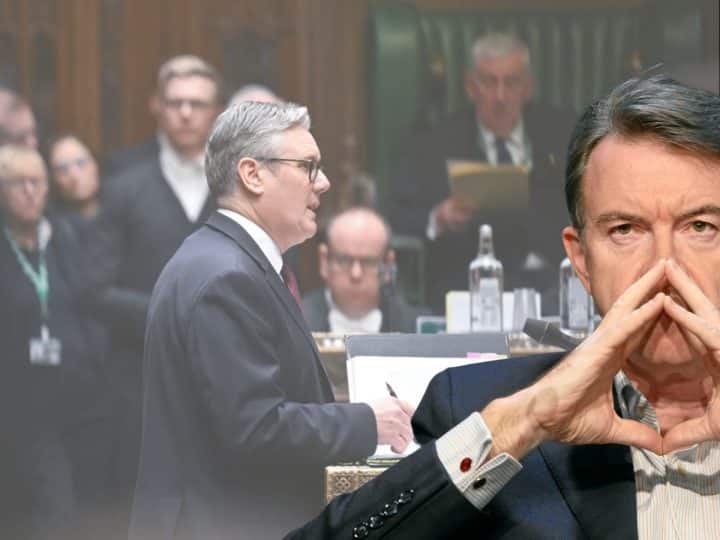

At 15:30 on 20 April, Labour PM Keir Starmer went before parliament to get his excuses in for hiring Peter Mandelson. While it was always an act of gross incompetence to hire the twice-disgraced Mandelson, we now know Starmer hired him despite Mandelson failing security vetting. The PM claims he was unaware of the vetting issue; the public are struggling to believe him.
In aid of his latest excuse-fest, Team Starmer produced the following document which has now leaked:
[@breeallegretti] pic.twitter.com/We9qSEetyQ — Politics UK (@PolitlcsUK) April 20, 2026
NEW: The "lines to take" script given to Labour MPs for Keir Starmer's statement has been leaked
We’re going to go through it and give you some ‘lines to take’ of your own.
Line them up
The first section of the document is titled ‘Top Lines’.
And if these are the lines they put at the top, we’d hate to see the ones at the bottom.
- Peter Mandelson should never have been appointed as our Ambassador – the PM has taken responsibility for that decision and repeatedly apologised.
Apologies aren’t enough when the act was so obviously wrong from the outset. If random Twitter accounts knew it was a horrible idea to hire Epstein-associate Mandelson, the PM should have known.
- Foreign Office officials granted Developed Vetting security clearance to Mandelson and never told Ministers they’d done so against the recommendation from the vetting agency.
Sounds like Starmer has no grip on his government whatsoever; he should really resign!
- Neither the Prime Minister, nor any Government Minister, was aware this had happened until Tuesday last week. Neither were any officials in Number 10. That’s why the PM has said himself he’s furious – this is completely unacceptable.
“Nor any Government Minister” is doing a lot of heavy lifting here, because we know that Starmer’s Director of Communications was made aware last year (if he didn’t know already):
Liz Kendall is asked about David Maddox asking Number 10 about Mandelson failing the vetting months ago, despite the PM saying he only found out last week.
Kendall refuses to comment, saying she can't speak on behalf of number tens director of communications. https://t.co/DzX9KJxMMW pic.twitter.com/pDW1k0ytsc
— Saul Staniforth (@SaulStaniforth) April 19, 2026
- Once the Prime Minister was told, he immediately asked his officials to establish the facts so he could come to the House of Commons with all the information and explain what had happened. That is what he’s doing today.
No one believes he didn’t already know, sorry.
- The Prime Minister has confirmed he would not have appointed Peter Mandelson as HMA Washington if he had been informed UKSV had recommended his security clearance should not be granted.
Mandelson was given the role before his vetting was completed, so this is just untrue, isn’t it?
- Following these shocking revelations, the Chief Secretary to the Prime Minister immediately suspended the ability of the Foreign Office to grant security clearances against the recommendations of UKSV.
How come every British political scandal is solved with: ‘we’ve implemented new guidelines to ensure people follow the rules which prevent them breaking the law‘?
- The Prime Minister recognises people’s trust in politics has been badly damaged by the recent revelations but despite what’s happened, he holds the same beliefs: that politics can be a force for good and his Government is united in moving forward with confidence to change the country for the better.
Starmer holds no personal beliefs or opinions; he’s essentially what you’d get if a genie turned a rock into a person.
- As the Prime Minister has previously assured the House, the Government remains committed to complying with the Humble Address. Work is ongoing to compile the rest of the information in scope of the motion.
You need to commit yourself to resigning, pal, and to stop dragging this out.
Labour: suggested Interventions
The following are lines that Starmer’s team hoped MPs would read out in the commons address. We’re not going to cover all of them, but some stand out:
Mr Speaker, I thank the Prime Minister for his statement, and I commend him for coming to the House and setting out the facts for us all to hear today. For me, there is one fact that matters above all, and I would just ask him to reiterate it for those on the benches opposite who are having difficulty understanding. Did anyone from the Foreign Office at any stage say to him or his office that UKSV had recommended against granting Mandelson DV status?
This gives Starmer the opportunity to repeat ‘no one told me nothing‘. This would be fine if anyone was inclined to believe him.
Mr Speaker, earlier today, NBC released an interview with hospice worker Rachel Benavidez, who was 22 years old when she became one of the victims of Jeffrey Epstein’s abuse on his New Mexico ranch. For 27 years, she has been waiting for the crimes committed against her to be recognised, and she told NBC, I quote, “Until we are heard, until survivors are heard and believed, then I don’t think there’s ever going to be any justice.” Does the Prime Minister agree that we owe it to the hundreds of victims like Rachel to put them first in these debates, and that he was absolutely right to sack someone like Peter Mandelson who refused to believe those victims?
The time to put survivors first was before hiring Epstein-associate Mandelson, and the way to do so was by not hiring him.
Mr Speaker, I can understand why the detail of vetting reports are not shared with the appointing Ministers, because if they were, then the subjects of that vetting would not be as forthcoming as they need to be when questioned about their personal lives. However, does the Prime Minister agree that the conclusions which emerge from those vetting reports absolutely should be shared with Ministers, especially in a situation when those conclusions are being overruled?
It’s so hard to believe this wasn’t happening already. If it wasn’t, just sack everyone and start again.
While we’ve nothing but bad things to say about spooks and politicians, we did at least think they could carry out a simple vetting procedure.
I thank the Prime Minister for his Statement, and welcome him stating that Peter Mandelson should never have been appointed as HMA Washington. Can he now tell the House what reforms he has made to strengthen both due diligence and security vetting processes, given they so clearly fell short on this occasion?
“Due diligence” didn’t need to come into it; he was Peter Mandelson – the self-styled ‘Prince of Darkness’ – the pal of Jeffrey Epstein – so scant diligence should have sufficed.
Christ, a passing glance would have covered it.
Can the Prime Minister tell the House what action he is taking, alongside Cabinet colleagues, to ensure the information provided to Parliament around the appointment of Peter Mandelson is wholly accurate?
Mr Liar Liar, could you please reassure us that your flaming trousers are in fact not on fire?
Could the Prime Minister provide the House with an update on the proposed legislation to remove peerages from disgraced peers, like Peter Mandelson, given their behaviour
While we do need this legislation, let’s not forget that Mandelson was twice-disgraced before they made him a peer.
Speaking out
We really hope that none of the above “lines to take” are spoken aloud. We hope that Labour MPs have finally seen the writing on the wall, and that they get rid of Starmer before he can do any more damage.
We’re not confident in that, of course, because this is the same Labour Party who gave us Starmer and Mandelson in the first place. Still, the fact that this document leaked shows some MPs are done with taking talking points from this laughing stock of a government.
— Politics UK (@PolitlcsUK) April 20, 2026
WATCH: MPs laugh as Keir Starmer says he knows they will find the "facts" on Peter Mandelson's vetting "to be incredible" pic.twitter.com/SeCoPCesI0
Featured image via World Economic Forum (Flickr)
By Willem Moore
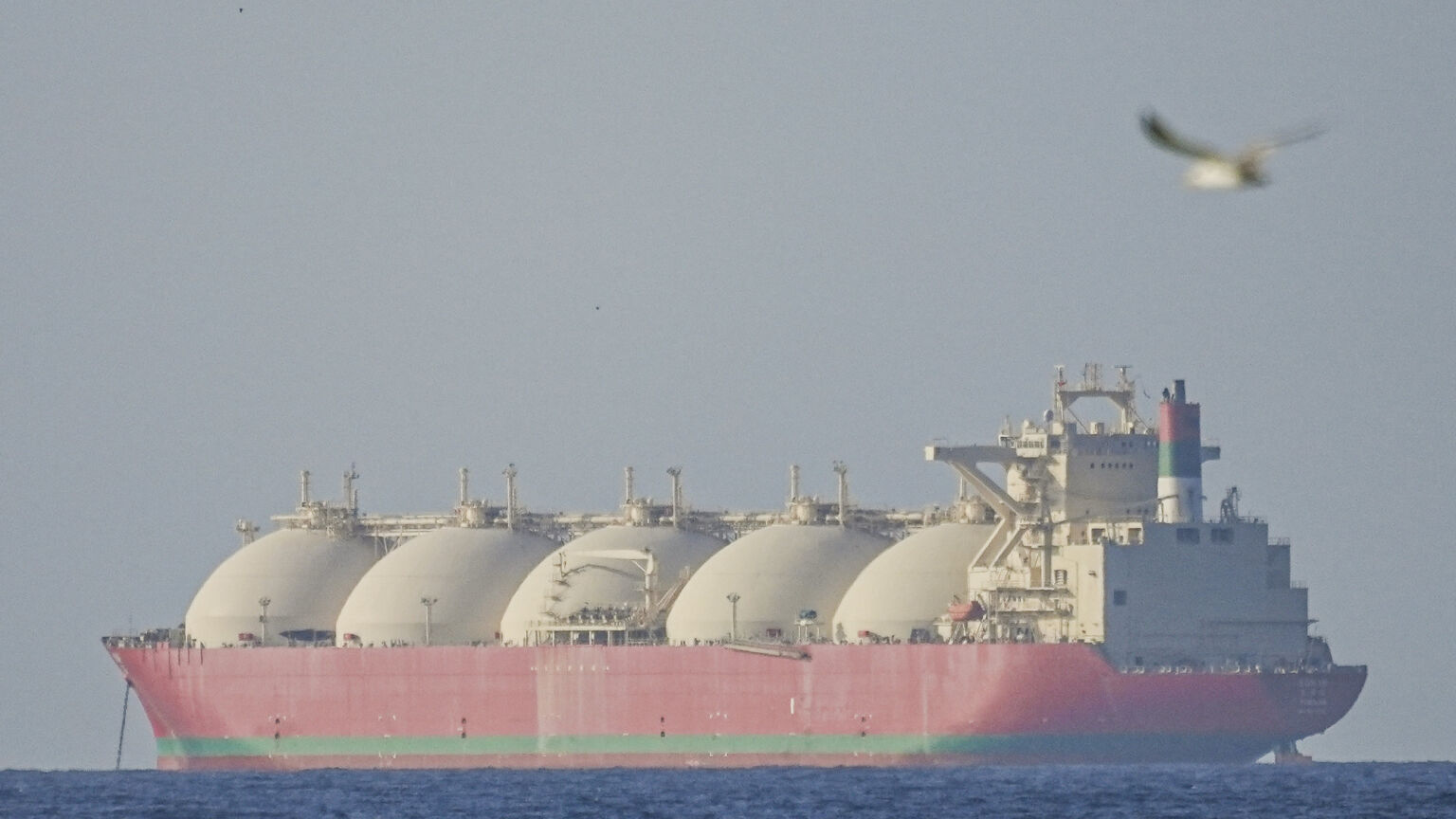
Whatever one thinks of the current war in Iran, allowing the fundamentally unstable Islamic Republic power over the world economy is truly a fool’s errand. In many ways, Iran’s attempt to control the Strait of Hormuz and the Red Sea is playing out in waters long shaped by piracy and imperial rivalry.
Rather than seek to placate the potentates, crowned or turbaned, the West should instead focus on making the Gulf irrelevant again. Since the days of the Silk Road, where the area played a critical role as a link between Asia and Europe, few in the period of European ascendancy worried much about these territories – that is, until they discovered huge pools of energy there a century ago. Since then, these countries have, at different times, disrupted global commerce and promoted forms of largely Islamist militancy throughout the world. Even Dubai, arguably the most enlightened of the Gulf monarchies, may not be able to thrive long-term in its awful neighborhood.
This is a lesson we should have learned during the oil embargo after the 1973 Yom Kippur War. The Saudi-led effort drove most of the capitalist world into a deep recession. The embargo hit hard because the energy business had swung, in economist Tyler Goodspeed’s words, from ‘a Gulf of Mexico oil market to a Persian Gulf-centric one’. That trend now shows signs of reversing, even if doing so may hurt the Trump family’s financial interests in the region.
To be sure, it will take years, not months, to unwind this primacy. But both the need and the means are clear. Most significant is the US transition from a mega-consumer of energy to the world’s largest producer of oil and gas – giving it the kind of leverage that did not exist in 1973. This shift predates Trump. Fracking boomed under President Obama. President Biden, facing inflation-driven political pressure, expanded drilling in the Gulf of Mexico and Alaska and approved a new LNG plant in Louisiana aimed largely at supplying Europe.
Energy abundance has already made the US far less vulnerable to disruptions in Hormuz, and the boom may only be beginning. Estimates suggest public lands may contain nearly 30 billion barrels of oil and 391.6 trillion cubic feet of gas – enough to supply the US for years. States such as Texas, Louisiana, Oklahoma, North Dakota and Pennsylvania could even benefit if shipping shifts from the Persian Gulf to the Gulf of Mexico. A proposed Alaskan pipeline could also prove vital for Asian markets.
America’s surge forms part of a broader push to develop new energy fields. Advances in fracking, horizontal drilling and geological surveying are turning multiple regions into potential energy superpowers. Canada, once wedded to anti-fossil fuel policies, now aspires to that status, as prime minister Mark Carney suggests. With the world’s fourth-largest oil reserves, it is seeking pipelines to reach Asian customers.
Perhaps the most promising developments are in South America. Venezuela’s vast oil reserves – the largest in the world – could lead to renewed production following the US toppling of Nicolás Maduro, opening the door to US oil companies after years of mismanagement. Mexico, another potential energy powerhouse, has begun embracing fracking to reduce dependence on US imports.
Right next door to Venezuela, Guyana is home to huge oil and gas deposits, putting it in the top 20 in terms of reserves, surpassing Norway. Maduro threatened to seize these fields, but now with him gone, US oil companies can exploit a potentially huge energy cornucopia. Together, what Foreign Affairs calls the ‘Americas quintet’ – the US, Argentina, Brazil, Canada and Guyana – may yet erode the Middle East’s oil dominance.
Then there’s Africa. The UN projects its population could rival Asia’s by 2100, and this booming population will need power. European NGOs like to pressure African leaders to go with solar and wind, which critics, such as Austin Williams on spiked, have described as ‘neo-colonialism gone green’. This advice is clearly being rejected by governments in Senegal, Nigeria and South Africa – and increasingly in Ghana, Tanzania, Uganda and Mozambique – which are instead pursuing fossil-fuel development.
Demand from India will further support this trend. Like many African nations, India prioritises energy access over emissions targets. Advisers to prime minister Narendra Modi have openly criticised what they call ‘Western carbon imperialism’. In such contexts, even coal is often seen as preferable to the health risks of burning biomass fuels.
Some, including South Korea’s president, think current energy shortages will accelerate the shift to renewables; others claim that China will be the winner in the post-fossil-fuel future. Yet, as Mark Mills of the Manhattan Institute notes, global oil consumption has risen by 30 per cent over the past quarter of a century. In the words of one former Net Zero campaigner, writing in the Free Press, the movement’s passion has run up against ‘the inconvenience of reality’.
Barring a massive disruption, fossil-fuel energy will remain critical through the next few decades. Trillions have been spent on green energy over the past 20 years, notes energy entrepreneur and investor Brian Gitt, yet the percentage of global power generated by fossil fuel has barely declined – from 86 to 81 per cent since 2010. The bulk of greenhouse-gas reductions have come from substituting natural gas for coal.
Efforts to ban fossil fuels prematurely, particularly without nuclear power, have proven disastrous. California illustrates the risks: once responsible for 40 per cent of US oil production, it now accounts for just two per cent and relies heavily on imported energy. The result has been higher prices, increased electricity imports and mounting strain on households and industry.
With energy costs among the highest in the US, California faces growing pressure not only on consumers but also on its tech sector, where energy-intensive AI development is expanding rapidly. Companies may ultimately look elsewhere for more reliable and affordable power. Governor Gavin Newsom likes to blame Trump – who else? – and the evil oil companies for the high prices, but more than half the price is the result of state regulations. The state excise tax on gas is now the highest in the US.
Australia, another nominally energy-rich country, with vast supplies of coal, is performing a similar act of economic seppuku. Its Net Zero obsession has meant a forced transition to renewables, resulting in higher prices and deindustrialisation. Once a winner in the energy wars, Australia is purposely undermining its own prosperity.
By far the most consequential and damaging policy agenda comes from Europe. The decision by the EU and the UK to embrace foolishly concocted green policies, including in some places the phase-out of nuclear power, while restricting domestic fossil-fuel production has increased dependence on external suppliers and left the region vulnerable to disruption.
As energy analyst Robert Bryce notes, this is despite the continent’s untapped fossil-fuel reserves. According to the European Parliament, Europe holds substantial shale-gas reserves, yet seven European countries have decided to ban fracking. Britain also has enormous oil and gas reserves that, as spiked has reported, it refuses to use.
The current German energy minister has acknowledged the problem with this approach. She said this month ‘that by ignoring costs’, the so-called energy transition will ruin the country ‘it claims to save’.
As for the rest of the economy, the outlook is also bleak. Energy prices are so high that Germany’s long-admired industrial base is threatened, as they are across the continent. Just recently, McKinsey suggested that Volkswagen shut down eight of its 10 German plants, due in part to energy prices. High energy prices have shifted more production to places like the US. Today, the states of Alabama and Mississippi now produce more vehicles annually than Italy or the UK. By some accounts, Brits are now, on average, poorer than Mississippians.
Rather than reducing their nations’ reliance on the Gulf for energy, British and European leaders seem resigned to their dependency. The rot here comes from the top, including academics who continue to claim renewables are cheaper than fossil fuels. European elite opinion, epitomised by The Economist and the Financial Times, seems more interested in criticising the US than protecting the continent’s basic interests.
This means that, increasingly, Europe and Britain will be leaving their futures in the hands of some of the most reactionary regimes on Earth. The Islamic Republic of Iran is the current focus, for obvious reasons. But other regimes in the region, such as Saudi Arabia, Oman and terror sponsor Qatar, are all autocracies and embrace varied forms of Islamic supremacism.
Rather than try to score points against the US, other Western powers need to wake up to the need to develop their own energy supplies. Even if Trump manages to secure the Strait of Hormuz, we can expect disruptions in the future from the Gulf. A better option lies in making the Gulf irrelevant again, not by turning back the clock, but by ensuring it no longer holds such sway over the global economy.
Joel Kotkin is a spiked columnist, a presidential fellow in Urban Studies at Chapman University in Orange, California, and a senior research fellow at the University of Texas’ Civitas Institute. Find him on Substack here.
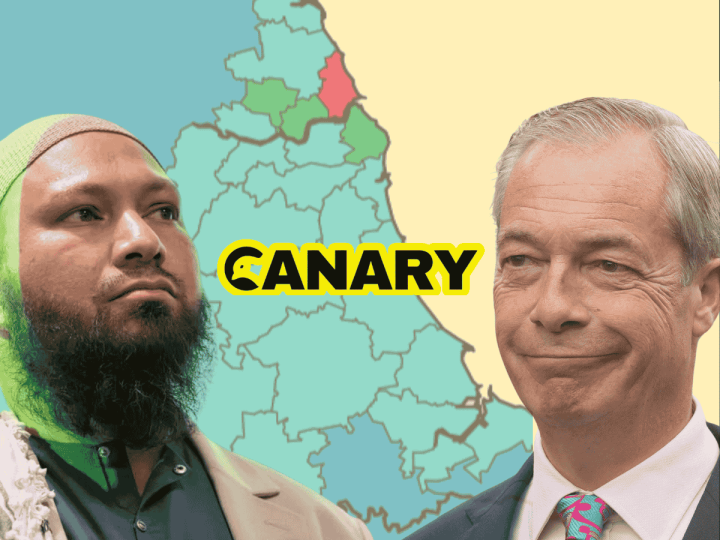

Mothin Ali stood in the Gurdwara Siri Guru Singh Sabha on Saturday 18 April and did what every political leader should do. Despite turning up pale-faced and poorly, the Green Party co-leader fought through it and delivered one hell of a speech. It was a stunning masterclass in the politics of hope that hit the right notes in the North East of England, an area struggling to survive.
But whilst Ali was pushing through illness to offer the North East a lifeline, the room he spoke to was only three-quarters full. This is the reality of the area in 2026. A region where politics is just another empty word.
The North East urgently needs a politics of hope, but the politics of hate is so much louder. Reform UK fills the void, and it fucking sucks.
The North East: UK’s industrial heartland is a political vacuum
The North East is a fucking sad place. Once upon a time it was the home of the Labour Party. It’s where the Durham Miners Association and the trade unions dominated. The skyline of steelworks and the mining communities forged the area into the impenetrable ‘Red Wall’.
For a century, the people of the north-east built the world, forged the railways and we were the source of the UK’s economic growth. The heavy industries of the Tyne, Wear and Tees dominated the world. But today, that history is weaponised by Nigel Farage and Reform UK.
Whilst the Green’s were rallying in a room, Farage was filling the Sunderland Arena on Thursday 26 March. He filled that arena with his hate-filled politics of division that thrives when people feel abandoned.
Farage and Tice haven’t just turned up for a photo op. They have occupied the North East entirely. This year we have seen these arseholes touring Sunderland, Durham and Teesside and it’s working. Farage has even said he’ll try to bring Trump to Teesside. Their presence is slowly chipping away at the ‘Red Wall’, and they’re rapidly turning this part of the map a sickening shade of light blue.
The disgusting physical presence of Reform leadership is a stark contrast to the Green leadership. Polanski has spent most of this year in the south of England and London. Once again, the North is a footnote in politics. The politics of hope and change doesn’t seem to reach the area which really needs it the most.
Reform is full of shit, but shit sticks
Reform UK is projected to pretty much clean house in the North East. Farage is promising a ‘breath of fresh air,’ yet it’s tainted with the smell of bullshit. But in truth, the snake-oil salesman would impoverish the North East even more.
Reform’s ‘Contract with the People’ contains nothing but hollow promises that would ruin the region’s future.
Farage wants to scrap all £10 billion of renewable energy subsidies. The North East could potentially gain £1.9 billion and create up to 27,000 new jobs by 2050. The area is earmarked to head the Green revolution in the UK, to regain its status as a powerhouse of industry. And yet Reform has got the sheep voting for the wolf it seems.
Reform’s new model for the NHS also spells a death sentence for these voters. Moving towards an ‘insurance-based’ system in a region with some of the highest health inequalities and chronic conditions will be a death sentence for so many. In a place where 21% of all the population lives in poverty, how the fuck are they meant to afford private healthcare? People are going to die if the Red Wall turns blue.
And whilst Reform screams about cutting taxes, the councils they lead like Worcestershire, have seen tax hikes as high as nearly 9%. In a place like Middlesbrough that’s money which could go towards feeding a hungry child.
Being the voice of the voiceless
Despite the room not reaching capacity, Ali’s performance in Newcastle was stunning. He didn’t just stick to the same, tired old script that most leaders do. He spoke directly to the structural issues that fuel the fire of Farage.
Using the quickly-put together stage to target the ‘Red Tory’ policies of Labour and pushing the narrative that the North East is being forced to choose between two versions of the same old establishment neglect, Ali hammered that the Greens are the only viable alternative for voters who feel betrayed. That the battle is now Greens vs Reform — and the Greens need money to help make it happen.
His speech was grounded in the region’s reality. Ali claimed that the Green party is now a national force and not just London-centric. However, this is something that’s getting harder to believe when the region hasn’t seen Polanski at all in 2026.
Ali is calling for a campaign built on grassroots door-knocking and canvassing to reach 28,000 voters across nine councils. It can be done; the passion was evident in those watching him. But how can the Green party call for this kind of commitment when the leadership seems to forget that the North East exists.
If they turn it around, if they gain footing in the region, it would be an incredible powerhouse for change. But just like every other political party, the area seems to be invisible, and therefore, its potential is lost.
The North East of England needs action, not words
The Greens hold the policies which can revive the North East. They’re calling for an annual £5 billion increase in local government funding and a £29 billion plan to insulate homes. The old mill houses that dominate the North East really fucking need that.
But I have one thing to say to the Greens: The North East is sick of being talked at. Ali’s word were fucking wonderful but they remain empty. When the Greens are polling at 18% nationally, neglecting the one area that is ripe for a green industrial revolution seems like a massive oversight.
The North East doesn’t need more photo ops. It needs a party of hope which will fill arenas and actually fight to turn the ‘Red Wall’ Green. If the Green Party doesn’t fill this political void, the hatred and bullshit of Reform will continue to win.
The upcoming May general election is a battle for the soul of the North. So, will the Green’s show up and save it or will the population vote to shoot themselves in the foot through pure, political neglect?
Featured image via the Canary
By Antifabot


Eli Hazan has reportedly just moved from running communications for Benjamin Netahyahu’s extremist Likud party to direct Netanyahu’s own press office. He’s well qualified for the position, even admitting to supporters that he “fabricat[es] fake news” for propaganda purposes.
Speaking in Hebrew, Hazan claimed Israel needs to be (even) more like Trump in its shameless dishonesty.
The only issue with Hazan’s comment is the idea that Israel isn’t already at least as mendacious as Trump.
From making up claims of Palestinians raping women and beheading babies to denials of bombing hospitals, to then making up claims of Hamas bases to justify bombing the hospitals, to smearing journalists as terrorists and murdering them with their families, Israel is a ‘dab hand’ at lies. Not to mention the whole “most moral army in the world” nonsense.
It could teach even the US liar-in-chief a trick or two. Israel is so dishonest it even has to pass laws to ban its own citizens from mentioning how its Gaza atrocity propaganda fell apart like a cheap suit.
So there’s no surprise at all that Netanyahu’s PR chief admits he made stuff up. Just that he treats it as if it’s a new or derived phenomenon.
Featured image via Wikimedia Commons
By Skwawkbox

Experts think that having a close network of loved ones as we age might protect us from dementia risk.
But a new study has found that while loneliness can impair your memory as you age, that might not translate into full-blown dementia.
Published in Ageing and Mental Health, the research concluded that, “Loneliness is associated with lower initial memory performance in older adults but does not accelerate the decline in memory function over time”.
How does loneliness affect memory?
In this research, scientists looked at data from the Survey of Health, Ageing and Retirement in Europe (SHARE) programme.
This involved 10,217 individuals over 65. They were asked to self-report their levels of loneliness and were given memory tests over a six-year period.
“Participants with high loneliness at baseline demonstrated significantly lower immediate and delayed recall scores than those with low or average loneliness,” the research reads.
But years into the study, lonelier people didn’t see the memory decline you’d expect with something like dementia. The changes appeared to be more short-term than that.
Lead study author Dr Luis Carlos Venegas-Sanabria said, “The finding that loneliness significantly impacted memory, but not the speed of decline in memory over time was a surprising outcome.
“It suggests that loneliness may play a more prominent role in the initial state of memory than in its progressive decline.”
Calling the results of previous studies about dementia risk and loneliness “inconsistent,” the study said its results “could reinforce the idea that loneliness cannot necessarily be considered a risk factor for dementia”.
Loneliness is a growing problem
The researchers say that loneliness is a growing problem, affecting anywhere from 14-16% of older adults.
And while their study suggests it might not necessarily be a dementia risk, they add that it “underscores the importance of addressing loneliness as a significant factor in the context of cognitive performance in older adults”.
Though in this study, it didn’t appear to lead to longer-term decline, loneliness still affected the cognitive abilities of older people in the short term.
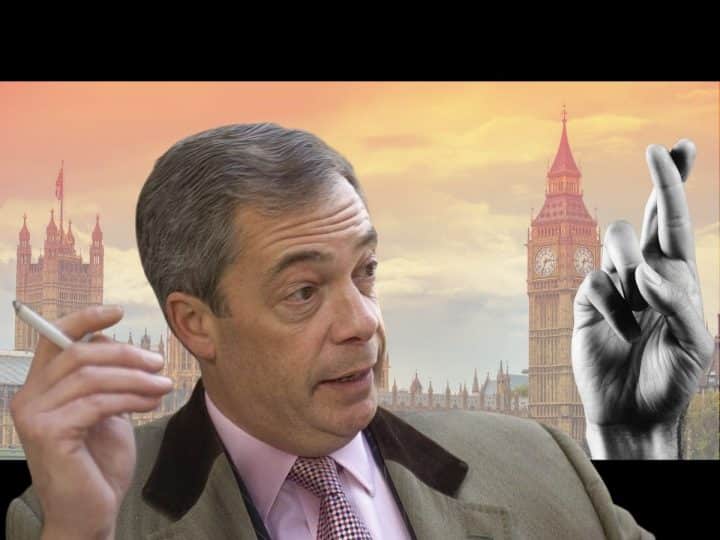

In the UK, it’s sadly common for politicians to make promises they have no intention of keeping. Usually, however, they at least promise things they could plausibly achieve. This is not the case with what some would-be Reform councillors are promising:
Local election leaflets based on pretty much everything that the local council doesn't do – who would have thought it,,,,, pic.twitter.com/U0Ndt64yWv
— dave lawrence

 (@dave43law) April 20, 2026
What can Reform do for you?
The full post is from the Facebook page Reform Are Not Your Friends. We’re going to have a look to see if we can confirm their analysis:
1⃣ “Put Londoners first for social housing”
Reality: That’s set by central government and the Mayor of London. Watford isn’t in London.
Just because Watford isn’t in London, that doesn’t mean they can’t prioritise Londoners. It would be a strange thing to do, obviously, but would it be any stranger than this?
By @jjgjourno https://t.co/9QcUFD66yt
— Canary (@TheCanaryUK) October 24, 2025
NEW – Reform-led Nottinghamshire County Council are set to piss away £75k on flags while 22% of local children live in poverty
2⃣ “Oppose housing illegal immigrants in hotels”
To be completely fair, councils can “oppose” local migrant hotels. Whether it will make any difference is another matter entirely.
There are good reasons to oppose the policy of boxing migrants in hotels (as opposed to allowing them to live and work in communities). Reform aren’t making that argument, though; they’re just punching down, because they’re bullies.
3⃣ “Support our struggling high streets”
Reality: This is one of the few things the council actually can influence. Local investment, planning, events.
Good on Reform for getting one right!
4⃣ “End ULEZ and the war on drivers”
I.e. Reform have lost the war on drivers.
Embarrassing, honestly.
It’s also embarrassing that Reform is yet another party which refuses to acknowledge the benefits of cycling and mass public transport:
Even if you never use public transit, it helps make your drive easier. Buses & trains remove cars from the street. pic.twitter.com/p7t0XV23Tc
— Andy Boenau (@Boenau) April 13, 2026
If you’re a diehard motorist, you should want as many people on buses and bikes as possible.
Unless you’re actually a diehard ‘sitting in traffic’ person, obviously, in which case carry on.
5⃣ “Crack down on anti-social behaviour”
Councils do cover things which fall under the blanket of ‘anti-social behaviour’ (graffiti, fly-tipping, etc). At the same time, candidate Mark Dixon doesn’t clarify how he’ll fix these issues; he just says he’ll magically save money elsewhere.
As we’ve seen with the Reform-run councils, these savings keep failing to materialise. In fact, Reform have actually increased spending in some instances – including on their own pay packets.
Absolute shower
All in all, it looks like Dixon doesn’t know what he’s running for. And as they say, where there is no vision, there is no gold.
Oh wait, actually, that’s wrong isn’t it; this is the actual phrase:
Yes it's real
And yes I'm crying — dave lawrence
 pic.twitter.com/OFO9CxCODS
(@dave43law) April 19, 2026
pic.twitter.com/OFO9CxCODS
(@dave43law) April 19, 2026
What’s going on with these Reform candidates?
Featured image via Virrage (via Canva)
By Willem Moore
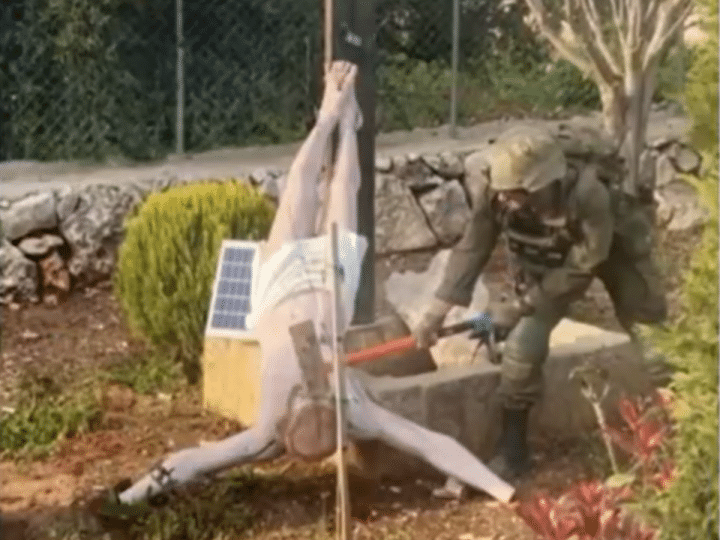

The BBC has, yet again, tried to provide cover for Israeli criminality and mitigate damage to its already appalling reputation.
Support among the misguided ‘Christian’ right for the US-Israel war on Iran had already been rocked by Trump’s self-indulgent post of himself as Jesus. Images of an Israeli soldier attacking a statue of the crucified Jesus during Israel’s illegal invasion of Lebanon are doing more damage still, so the BBC did its best to cover and fudge, as commentator Saul Staniforth noted.
#BBCNews: “Can I ask you specifically about this image thats come to light of an IDF soldier allegedly striking a statue of Jesus”
allegedly, adverb, used to convey that something is claimed to be the case or have taken place, although there is no proof.
There’s a photo! pic.twitter.com/n8vswBs4yb
— Saul Staniforth (@SaulStaniforth) April 20, 2026
BBC journo: ‘allegedly’. Israel: ‘No, it’s real actually’
The presenter’s attempted obfuscation that the image only “allegedly” showed the attack was made even more ridiculous by the fact that the Israeli regime has already admitted it’s real. More ridiculous still by the fact that the correspondent mentioned this. But the BBC is no stranger to self-humiliation for propaganda purposes, particularly regarding Israel.
The ‘Christian’ right, particularly but not exclusively in the US, supports Israel because of a twisted theology that claims Jesus can only return with ‘Israel’ back on land it has stolen from the Palestinians.
Israeli contempt for Christians is well established, such as their spitting on Christian pilgrims. Extremist Israeli ‘security’ minister, Itamar Ben-Gvir, defended this practice as ‘tradition’.
The ‘Christian nationalist’ right has been happy to suck up this humiliation and ignore Israel’s slaughter of Christians and the destruction of churches in Gaza. However, images of Zionist US president, Donald Trump, depicting himself as Jesus as he does Israel’s prime minister, Benjamin Netanyahu’s war bidding — and now of an IOF soldier attacking a statue of the suffering Christ with a sledgehammer — threaten that Pavlovian support.
A worried Netanyahu condemned it and said the IOF is investigating — marking its own homework as ever while the scandal dies down.
Never fear, though. The BBC will always do its best to deflect and defuse for the occupiers.
Featured image via BBC News
By Skwawkbox
!function(n){if(!window.cnx){window.cnx={},window.cnx.cmd=[];var t=n.createElement(‘iframe’);t.display=’none’,t.onload=function(){var n=t.contentWindow.document,c=n.createElement(‘script’);c.src=”//cd.connatix.com/connatix.player.js”,c.setAttribute(‘async’,’1′),c.setAttribute(‘type’,’text/javascript’),n.body.appendChild(c)},n.head.appendChild(t)}}(document);(new Image()).src=”https://capi.connatix.com/tr/si?token=19654b65-409c-4b38-90db-80cbdea02cf4″;cnx.cmd.push(function(){cnx({“playerId”:”19654b65-409c-4b38-90db-80cbdea02cf4″,”mediaId”:”79183ff1-7e83-494f-bd99-94ce0d77cd77″}).render(“69e6512ae4b0b6f552bb3b56”);});

Capitals giving Ovechkin time to decompress before meeting about future

John Ternus will be CEO of Apple when Tim Cook steps down this fall

The Case for $50M Bitcoin and Patrick Witt ‘Cautiously Optimistic’ on Clarity Act



-

 NewsBeat6 days ago
Trump and Pope Leo: Behind their disagreement over Iran war
-

 Fashion3 days ago
Weekend Open Thread: Theodora Dress
-

 Crypto World7 days ago
SEC Signals Exemption for Crypto Interfaces From Broker Registration
-

 News Videos6 days ago
Secure crypto trading starts with an FIU-registered
-

 Sports3 days ago
NWFL Suspends Two Players Over Post-Match Clash in Ado-Ekiti
-

 Crypto World7 days ago
SEC Proposes Certain Crypto Interfaces Don’t Need to Register as Brokers
-

 Business1 day ago
Powerball Result April 18, 2026: No Jackpot Winner in Powerball Draw: $75 Million Rolls Over
-

 Crypto World3 days ago
Russia Pushes Bill to Criminalize Unregistered Crypto Services
-

 Politics3 days ago
Palestine barred from entering Canada for FIFA Congress
-
 Business4 days ago
Creo Medical agree sale of its manufacturing operation
-

 Politics1 day ago
Zack Polanski demands ‘council homes not luxury flats for foreign investors’
-
 Entertainment7 days ago
Brand New Day’ Footage Reveals the Devastating Impact of ‘Now Way Home’
-

 Crypto World3 days ago
Russia Introduces Bill To Criminalize Unregistered Crypto Services
-

 Tech2 days ago
Auto Enthusiast Scores Running Tesla Model 3 for Two Grand and Turns It Into Bare-Bones Go-Kart
-
 Entertainment7 days ago
Karol G’s ‘Ultra Raunchy’ Coachella Set Gave ‘Satanic Vibes’
-

 Tech6 days ago
Microsoft adds Windows protections for malicious Remote Desktop files
-

 Tech5 days ago
‘Avatar: Aang, The Last Airbender’ Leaked Online. Some Fans Say Paramount Deserves the Fallout
-

 Entertainment7 days ago
How Babylon 5 Turned Brief Side Story Into Emotional Masterpiece
-
 Tech7 days ago
What was the first ransomware attack to demand payment in Bitcoin?
-

 Business7 days ago
Intuitive Machines Stock Climbs 2.4% as $180M NASA Lunar Contract and $900M Revenue Outlook Fuel Momentum
You must be logged in to post a comment Login