
Business
QGRO Can Deliver Healthy Risk-Adjusted Returns In 2026




Axon Enterprise: Impressive Growth, Real Margin Work Left

Apple will see a shake-up in its management positions as Tim Cook is now stepping down as the CEO of the company and will serve as the executive chairman of the board of directors.
With this, Apple also announced that it has already named its next chief executive officer, with John Ternus, the company’s current senior vice president of Hardware Engineering, set to replace Cook.
Tim Cook to Become Apple’s Executive Chairman
In a new Apple Newsroom post, the Cupertino tech giant has confirmed that Tim Cook will be stepping down as Apple’s CEO, which will take effect on September 1, 2026. However, Cook will not stray away from Apple just yet as it was revealed that he will be tasked to serve as Apple’s executive chairman for the company’s board of directors.
“It has been the greatest privilege of my life to be the CEO of Apple and to have been trusted to lead such an extraordinary company,” said Cook.
It was noted by Apple that as the executive chairman, Cook will have a limited role here. The company revealed that his responsibilities under this role will only revolve around “certain aspects of the company, including engaging with policymakers around the world.”
This means that Cook’s main responsibility will be to work with government officials as the executive chairman.
9to5Mac noted that Cook previously faced scrutiny with his affiliations with the Trump administration, especially when he was invited to the White House and appeared in the “Melania” documentary.
Cook is also known for his close ties to China, having already established rapport with the country during his long tenure as CEO.
John Ternus Is the Next Apple CEO
With this announcement, Apple has also named the next chief executive officer of the company to replace Cook, and it is none other than Senior Vice President of Hardware Engineering, John Ternus.
According to Apple, Ternus will bring in his 25 years of experience under the company to his new CEO role. The engineer-slash-executive has worked under Steve Jobs and was mentored by Tim Cook. Now, he gets the chance to lead a new age for Apple.
Come September 1, Tim Cook will have served 15 years as Apple’s CEO since being appointed as its chief after co-founder Steve Jobs stepped down.
Originally published on Tech Times
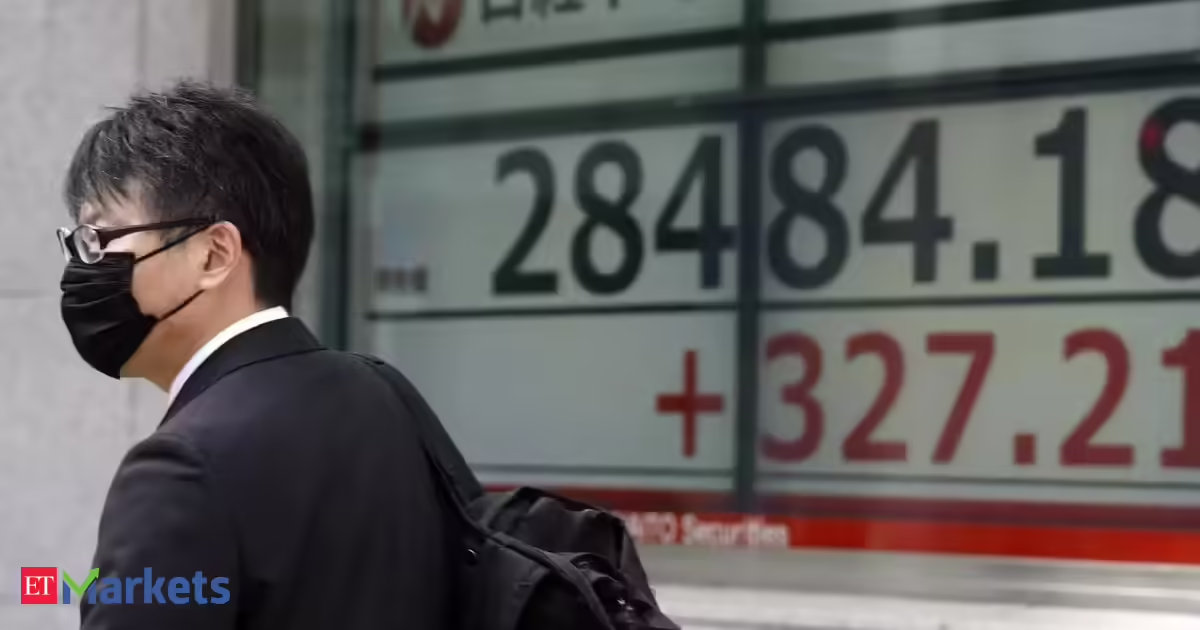
Gauges in Japan, South Korea and Australia advanced at the open with the broader MSCI Asia Pacific Index rising 0.3%. S&P 500 contracts also edged higher in early trading after the index slipped 0.2% on Monday from a record, weighed down by declines in several technology heavyweights. Apple Inc. shares slipped in late US trading after the company named John Ternus as its next chief executive officer.
Global crude benchmark Brent fell 0.7% to $94.80 a barrel early Tuesday, after gaining 5.6% in the prior session. The dollar and Treasuries were steady.
President Donald Trump said he is unlikely to extend the truce with Iran if no agreement is reached before its expiry Wednesday evening, Washington time. Iran is also preparing to send a delegation to the next round of talks, according to people familiar with the plans who declined to be identified.
Attention is shifting to whether the US and Iran can resume negotiations in Pakistan to calm strains and reopen the Strait of Hormuz after an initial round in Islamabad ended without a deal. The dollar has weakened over the past three weeks and several equity gauges have recouped war-related losses as markets price in easing tensions, cheaper oil and stronger economic growth.

“Markets are once again grappling with a rapidly shifting narrative in the Middle East, as the past 48 hours have delivered both optimism and renewed concern,” said Daniela Hathorn, senior market analyst at Capital.com, adding that the market feels “stuck at a crossroads” as a result of the jostling.
Chip stocks in Asia will be in focus after the Philadelphia Semiconductor Index advanced, notching a 14th straight session in the green — a winning streak that it has exceeded just once, in 2014. Transits through Hormuz have reduced to a trickle as Iran tightens control in retaliation for strikes. On Friday, that paralysis appeared to end, with Tehran saying it would reopen the waterway, before reversing course during the weekend as the US maintained a naval blockade and attacked an Iranian ship.
Beyond the strait, arguably the most fraught issue is Iran’s nuclear program. Trump has demanded Iran forswear any ambitions for a nuclear weapon and hand over stockpiles of enriched uranium. Tehran has balked at giving up its uranium and has said its nuclear program is for peaceful purposes.

Earnings call transcript: Mitchell Services Q3 2026 sees stock rise

Brent futures declined 95 cents, or 1%, at $94.53, as of 0003 GMT. U.S. West Texas Intermediate (WTI) crude futures for May fell $1.54, or 1.72%, to $88.07. The May contract expires on Tuesday and the more-active June contract was down $1.09, or 1.3%, at $86.37.
Both benchmarks surged on Monday, with Brent up 5.6% and WTI up 6.9%, after Iran again shut the Strait of Hormuz, closing the key oil transport artery, and the U.S. seized an Iranian cargo ship as part of its blockade of the country’s ports.
Still, investors are focusing on the likelihood talks this week will result in the extension of the existing ceasefire or a final agreement, though the chance of further conflict and disruptions to oil flows remains.
Iran is weighing participation in the peace talks in Pakistan, a senior Iranian official told Reuters on Monday, following Islamabad’s efforts to end the U.S. blockade.
The blockade has posed a major hurdle to Tehran rejoining peace efforts, with the current two-week ceasefire set to expire this week.
“We continue to lean toward an MOU being signed and/or the ceasefire being extended this week, potentially evolving into a broader agreement,” analysts at Citi said in a note. “That said, we remain prepared to pivot toward a more protracted disruption scenario should negotiations falter this week.” Underscoring the uncertainty around the talks, the Iranian official stressed that no decision has been made to attend, as Iranian Foreign Minister Abbas Araqchi said “continued violations of the ceasefire” by the U.S. is a hindrance to further negotiations.
Separately, Iran’s top negotiator and parliament speaker Mohammad Baqer Qalibaf reiterated that Tehran would not negotiate under threats.
Shipping activity through the Strait of Hormuz, an essential corridor for about one-fifth of the world’s oil supply, remained limited on Monday.
If disruptions to the strait persist for another month, total losses could rise to about 1.3 billion barrels, with prices likely near $110 a barrel in the second quarter of 2026, Citi said.
Kuwait declared force majeure on oil shipments due to the strait’s blockade, Bloomberg News reported.
The higher prices caused by the closure of the strait have cut oil demand by about 3% so far, analysts at Societe Generale said in a client note.
The risk is “skewed toward larger losses the longer normalisation is delayed,” it said, adding it expects “full normalisation” to supply only by late 2026.
Business
Meta Stock Drops 1.71% as Wall Street Braces for Q1 Earnings Amid $135 Billion AI Spending Blitz
NEW YORK — Meta Platforms Inc. shares declined 1.71% in early Monday trading on April 20, 2026, falling $11.76 to $676.79 as investors positioned themselves ahead of the company’s first-quarter earnings report later this week and continued to digest the massive capital expenditure requirements tied to its aggressive artificial intelligence push.
The owner of Facebook, Instagram, WhatsApp and Threads has seen its stock experience periodic volatility in 2026 despite strong advertising revenue growth, largely because of concerns over soaring infrastructure costs and the timeline for returns on its heavy AI investments. Meta has guided for 2026 capital expenditures between $115 billion and $135 billion — a sharp increase from prior years — to fuel data center expansion, custom chips and its new Superintelligence Labs initiative.
At 10:14 a.m. EDT, trading volume remained moderate as the broader market opened mixed amid renewed geopolitical tensions in the Middle East. The modest pullback followed a solid performance last week, when shares closed near $688, reflecting ongoing optimism about Meta’s core social media business even as spending worries linger.
Analysts widely expect Meta to report first-quarter revenue between $53.5 billion and $56.5 billion when results are released after the market close on April 29, with earnings per share around $6.65 to $6.71. The company will host a conference call at 5:30 p.m. ET that day, where CEO Mark Zuckerberg and finance chief Susan Li are likely to face questions about AI monetization progress, expense growth and any updates to full-year guidance.
“Meta continues to deliver robust top-line growth from its advertising platform, but the market remains focused on whether the enormous AI-related outlays will compress margins in the near term or deliver outsized returns down the road,” said one technology analyst who declined to be identified because he was not authorized to comment publicly. Several Wall Street firms maintain “Buy” ratings on META, citing the company’s dominant position in digital advertising and potential for AI-driven features to boost user engagement.
Meta’s advertising business, which accounts for the vast majority of revenue, has benefited from improved targeting tools powered by AI, including Advantage+ campaigns that have driven higher returns for advertisers. Daily active users across its family of apps exceed 3.5 billion, providing a massive canvas for AI enhancements such as personalized recommendations, content moderation and creative tools for Reels and Stories.
In early April, Meta debuted Muse Spark, its first major AI model release since acquiring a significant stake in Scale AI and hiring its CEO Alexandr Wang to lead Superintelligence Labs. The model is designed to achieve strong performance with significantly less compute than previous versions, potentially helping to mitigate some of the cost pressures from the company’s infrastructure buildout. Executives have highlighted the potential for more efficient scaling of AI features across Meta’s platforms, including integration with Ray-Ban smart glasses and future wearable devices.
Still, the sheer scale of spending has raised eyebrows. Full-year 2026 operating expenses are projected between $162 billion and $169 billion, reflecting not only capital investments but also higher compensation for AI talent. Reports earlier in the year suggested Meta could pursue layoffs of 20% or more of its workforce to offset costs and leverage productivity gains from AI itself, though the company described such speculation as theoretical.
The shift toward a more capital-intensive model marks a departure from Meta’s historically lean software roots. Investors have grown accustomed to high operating margins, which stood near 41% in recent quarters but face downward pressure as depreciation from new data centers accelerates and energy costs rise. Free cash flow, while still robust, is expected to moderate as the company prioritizes long-term AI leadership over near-term shareholder returns.
Regulatory and legal headwinds add another layer of complexity. Meta continues to navigate antitrust scrutiny in the U.S. and Europe, as well as ongoing litigation related to user safety and content moderation. Earlier in 2026, the company faced court losses in cases involving youth protection, contributing to temporary share price weakness. Despite these challenges, advertising demand has remained resilient, with many brands viewing Meta’s platforms as essential for reaching consumers.
Zuckerberg has repeatedly emphasized that 2026 will be a foundational year for AI across Meta’s products, with plans to deliver more personalized experiences and new generative tools. The company’s open-source Llama models have gained traction among developers, though recent shifts toward more proprietary approaches, including Muse Spark, signal a evolving strategy to compete directly with closed models from OpenAI, Google and Anthropic.
Looking ahead to the April 29 earnings release, key metrics to watch include advertising revenue growth, the contribution of AI-powered features, user metrics for Threads and Reels, and any commentary on the trajectory of capital spending. Management previously guided for Q1 revenue in the $53.5 billion to $56.5 billion range, which would represent healthy year-over-year expansion even if it falls short of the explosive growth seen in prior recovery periods.
Broader market context on Monday showed technology stocks trading with caution as oil prices rose on Middle East developments. Meta’s slight decline mirrored moves in other mega-cap names sensitive to interest rate expectations and macro risks. The stock remains well above its 2025 lows but trades below peaks reached in late 2025, reflecting a valuation that some analysts view as more reasonable given the spending backdrop.
For long-term investors, Meta’s story centers on its unparalleled user scale and ability to integrate AI deeply into daily digital experiences. Success in turning heavy infrastructure investments into sustained revenue growth — whether through higher ad pricing, new subscription offerings or enterprise AI services — could justify the current outlays. Failure to demonstrate clear returns, however, could prolong margin pressure and weigh on the share price.
Meta’s balance sheet provides significant flexibility, with substantial cash reserves supporting both the AI buildout and potential shareholder-friendly actions such as dividends or buybacks once spending stabilizes. The company has already returned capital through repurchases in recent years, though the priority remains funding growth initiatives.
As trading progressed Monday morning, the 1.71% drop appeared driven more by pre-earnings caution and sector rotation than any company-specific negative news. Volume was not unusually heavy, suggesting many investors were holding positions rather than rushing for the exits.
With earnings just nine days away, market participants will scrutinize not only the headline numbers but also forward-looking signals on AI efficiency, competitive positioning and cost discipline. Zuckerberg’s vision of “personal superintelligence” for billions of users has captured imagination, but delivering on that promise while maintaining profitability will test Meta’s execution in 2026 and beyond.
Meta Platforms Inc., once focused almost exclusively on social connection, has transformed into one of the leading players in the global AI infrastructure race. Monday’s modest decline to $676.79 served as a quiet reminder of the balancing act the company must perform: investing boldly for the future without alienating investors focused on near-term financial discipline.
Whether the upcoming earnings report reinforces confidence in Meta’s AI strategy or heightens concerns about spending will likely set the tone for the stock’s performance heading into the summer. For now, Wall Street remains divided between those who see the current levels as an attractive entry point and those wary of further compression in margins.
Business
Kaspi.kz ADR Jumps 7.88% as Strong Dividend Payout and Fintech Momentum Fuel Investor Optimism
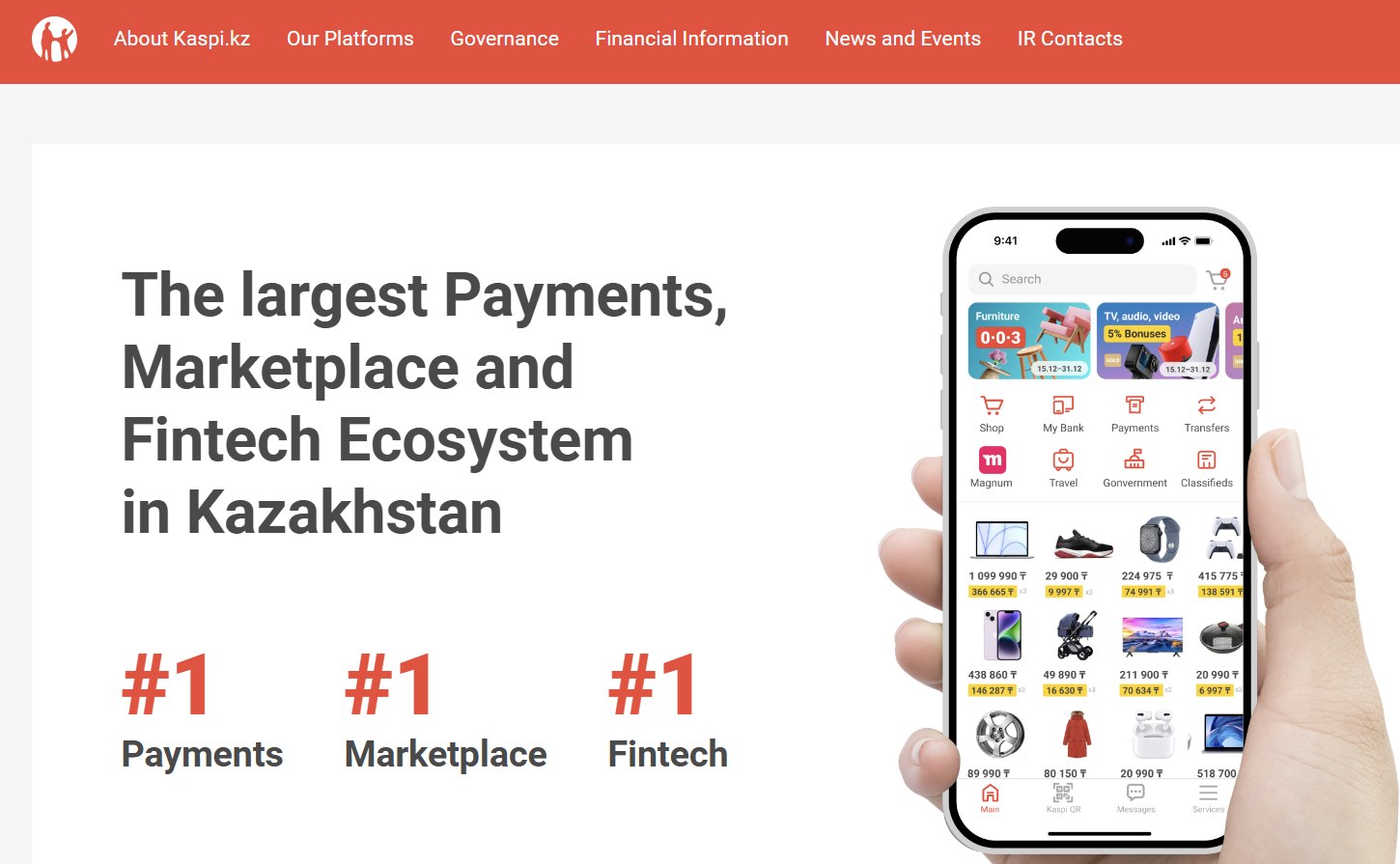
NEW YORK — Shares of Kaspi.kz JSC surged more than 7% in early Monday trading on April 20, 2026, rising $6.69 to $91.60 as investors cheered the Kazakh fintech giant’s recent approval of a substantial cash dividend and growing confidence in its super app ecosystem amid regional expansion.

The American Depositary Receipts of Kaspi.kz (NASDAQ: KSPI), which operates one of Central Asia’s most successful digital banking and e-commerce platforms, climbed on solid volume following last week’s annual general meeting where shareholders approved a KZT 850 per share dividend for 2025 results. The payout, which began on April 15, underscores the company’s commitment to returning capital while maintaining robust growth in payments, lending and marketplace services.
Kaspi.kz has transformed from a traditional bank into a dominant “super app” in Kazakhstan, serving more than 25 million consumers and nearly 900,000 merchants with integrated services ranging from mobile payments and installment loans to e-commerce and government services. The platform’s high user engagement has driven consistent revenue and profit expansion, making it one of the standout emerging market fintech stories since its Nasdaq listing in early 2024.
The latest dividend equates to a meaningful yield for ADR holders after currency conversion, reinforcing the stock’s appeal to income-focused investors. At the April 15 annual meeting in Almaty, shareholders also approved the 2025 audited financial statements and reappointed Deloitte as external auditor. The company set a record date of April 14 for common shares and April 16 for ADS holders, ensuring timely distribution of the cash dividend via wire transfers.
Analysts highlighted the payout as a positive signal of financial health and disciplined capital allocation. With Q1 2026 financial results scheduled for release on May 11, accompanied by a conference call and webcast at 8 a.m. ET, investors appear to be positioning ahead of what many expect will be another strong quarterly update showing continued loan growth, deposit inflows and marketplace transaction volume.
“Kaspi.kz continues to execute flawlessly in a challenging regional environment,” one emerging markets analyst noted. “The combination of a generous dividend, resilient core banking margins and successful diversification into e-commerce has supported premium valuations even as global fintech peers face headwinds.”
The company’s performance has benefited from Kazakhstan’s relatively stable macroeconomic backdrop compared to some neighboring markets, along with high smartphone penetration that has accelerated digital adoption. Kaspi’s super app model allows seamless switching between banking, shopping and utility payments within a single interface, creating strong network effects and customer stickiness.
Beyond its home market, Kaspi.kz has pursued strategic international moves, including a significant stake in Turkish e-commerce platform Hepsiburada. This exposure provides potential upside from Turkey’s larger consumer base while diversifying away from pure reliance on the Kazakh economy. Analysts have pointed to possible further expansion in Central Asia or adjacent regions as long-term growth drivers.
The stock’s 7.88% gain on Monday extended a solid year-to-date performance, though it has traded with volatility typical of emerging market names sensitive to commodity prices, currency fluctuations and geopolitical developments. Oil-rich Kazakhstan’s economy remains tied to energy exports, but Kaspi’s focus on consumer finance and digital services has provided a buffer against raw material cycles.
Short interest in the ADR had grown in recent months, creating potential for a squeeze as positive catalysts emerge. The dividend approval appears to have alleviated some concerns about capital returns, while the upcoming earnings will offer fresh insight into loan quality, asset growth and any updates on international initiatives.
Company leadership has emphasized technology investments and risk management as keys to sustained profitability. Kaspi maintains conservative underwriting standards in its lending business, which has helped keep non-performing loans low even during periods of economic uncertainty. Its payments segment benefits from low-cost digital infrastructure, supporting healthy net interest margins and fee income.
Wall Street coverage remains generally constructive, with consensus price targets clustering around $100, implying further upside from current levels. Some analysts maintain a “Hold” rating with targets near $87, while others see room for expansion if the company successfully scales its marketplace and cross-border ambitions. The wide range of forecasts — from the low $80s to above $140 in more bullish scenarios — reflects both enthusiasm for the business model and typical caution around emerging market risks.
Kaspi.kz faces competition from traditional banks and newer digital entrants, but its first-mover advantage and ecosystem lock-in have proven difficult to replicate. Regulatory oversight in Kazakhstan has been supportive of fintech innovation, though any tightening of consumer lending rules could pose a headwind. Currency risk, with the tenge’s movements against the dollar, also influences ADR performance for U.S. investors.
The broader context for Monday’s trading included mixed global markets, with energy prices rising on geopolitical developments in the Middle East. Kaspi’s resilience in such an environment highlights the defensive qualities of its diversified digital revenue streams.
Looking ahead, the May 11 earnings release will be closely watched for metrics on active users, transaction volumes, loan origination growth and any commentary on margin trends or expansion plans. Management is expected to address the integration of recent investments and the trajectory of its Turkish exposure through Hepsiburada.
For retail and institutional investors alike, Kaspi.kz represents a rare pure-play exposure to high-growth digital finance in Central Asia. The combination of strong dividends — projected by some observers to offer yields approaching 9% in certain scenarios — and organic business expansion has attracted long-term holders seeking both income and capital appreciation.
The ADR’s performance on April 20 reflected renewed buying interest after the dividend went ex and as traders anticipated positive momentum into the earnings period. While not every session will deliver double-digit percentage moves, the underlying fundamentals suggest continued investor interest in a company that has consistently delivered on its promises since going public.
As Kaspi.kz prepares its first-quarter update, the market appears to be pricing in sustained leadership in Kazakhstan’s fintech landscape and measured progress on international fronts. Whether the upcoming results confirm or exceed expectations will likely set the tone for the stock through the remainder of 2026.
With a market position that blends banking stability with tech-driven innovation, Kaspi.kz continues to stand out among global fintech names. Monday’s 7.88% advance served as a reminder of the company’s ability to reward shareholders through both operational excellence and attractive capital returns.
Business
Sagimet Biosciences Inc. (SGMT) Presents at Fueling MASH: Metabolic Drivers and Inflammatory Crosstalk Keystone Symposium – Slideshow

Sagimet Biosciences Inc. (SGMT) Presents at Fueling MASH: Metabolic Drivers and Inflammatory Crosstalk Keystone Symposium – Slideshow
Business
Zions Bancorporation, National Association 2026 Q1 – Results – Earnings Call Presentation (NASDAQ:ZION) 2026-04-20

Seeking Alpha’s transcripts team is responsible for the development of all of our transcript-related projects. We currently publish thousands of quarterly earnings calls per quarter on our site and are continuing to grow and expand our coverage. The purpose of this profile is to allow us to share with our readers new transcript-related developments. Thanks, SA Transcripts Team
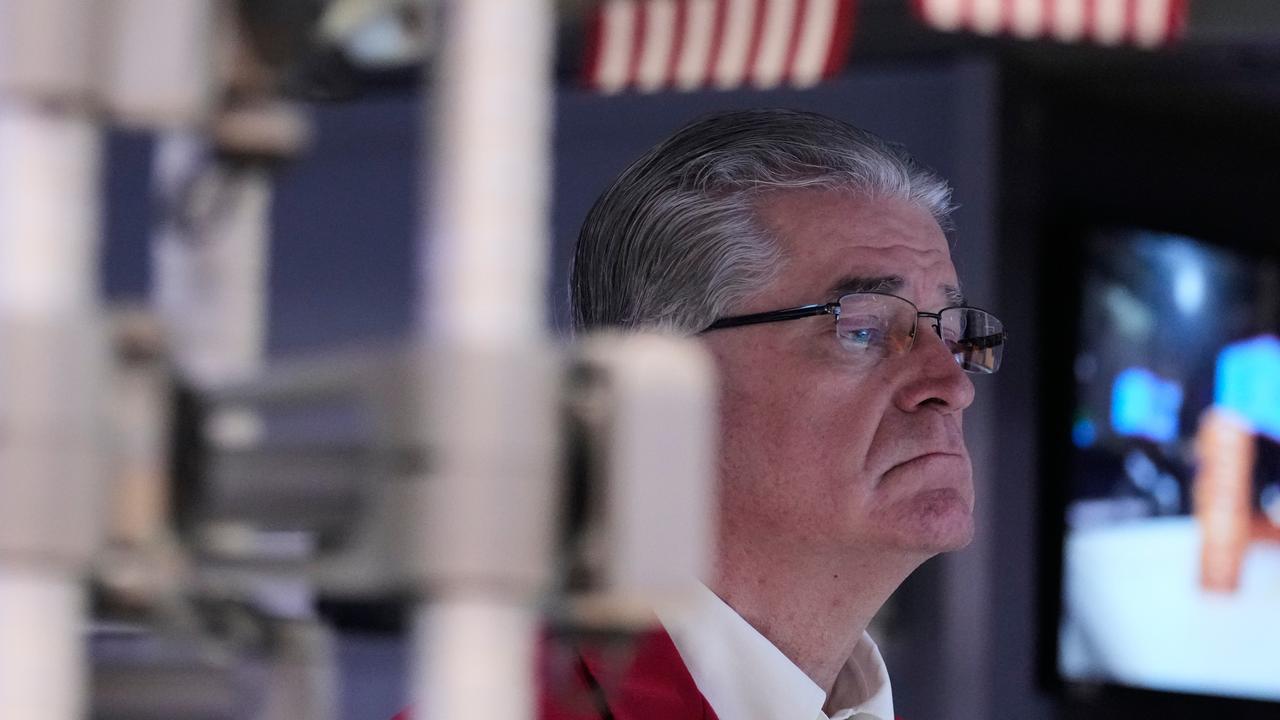
US stocks have closed slightly lower, with each of the three major indices coming off a third straight week of gains, as renewed US-Iran tensions put the durability of a two-week ceasefire in question.

Thief hits Browns department store in Davygate, York

Axon Enterprise: Impressive Growth, Real Margin Work Left

XRP Price Prediction: $1.55 Target Could Ignite Markets While Pepeto Looks Like The Smarter Entry



-

 NewsBeat7 days ago
Trump and Pope Leo: Behind their disagreement over Iran war
-

 Fashion3 days ago
Weekend Open Thread: Theodora Dress
-

 News Videos6 days ago
Secure crypto trading starts with an FIU-registered
-

 Sports4 days ago
NWFL Suspends Two Players Over Post-Match Clash in Ado-Ekiti
-

 Crypto World7 days ago
SEC Proposes Certain Crypto Interfaces Don’t Need to Register as Brokers
-

 Business1 day ago
Powerball Result April 18, 2026: No Jackpot Winner in Powerball Draw: $75 Million Rolls Over
-

 Crypto World3 days ago
Russia Pushes Bill to Criminalize Unregistered Crypto Services
-

 Politics5 hours ago
Gary Stevenson delivers timely reminder to register to vote as deadline TODAY
-

 Politics3 days ago
Palestine barred from entering Canada for FIFA Congress
-
 Business4 days ago
Creo Medical agree sale of its manufacturing operation
-

 Politics2 days ago
Zack Polanski demands ‘council homes not luxury flats for foreign investors’
-
 Entertainment7 days ago
Brand New Day’ Footage Reveals the Devastating Impact of ‘Now Way Home’
-

 Crypto World3 days ago
Russia Introduces Bill To Criminalize Unregistered Crypto Services
-

 Tech2 days ago
Auto Enthusiast Scores Running Tesla Model 3 for Two Grand and Turns It Into Bare-Bones Go-Kart
-

 Tech5 days ago
‘Avatar: Aang, The Last Airbender’ Leaked Online. Some Fans Say Paramount Deserves the Fallout
-

 Tech6 days ago
Microsoft adds Windows protections for malicious Remote Desktop files
-

 Crypto World6 days ago
X Launches New Cashtag Feature for Stocks and Crypto: X
-

 Sports7 days ago
Younger Than Sachin Tendulkar: Vaibhav Sooryavanshi Set To Make Historic India Debut
-

 Entertainment6 days ago
Prince Carter Brings Fans Front Row and Backstage at Boys 4 Life Tour
-
 Entertainment6 days ago
Dave Portnoy Slams Dianna Russini: ‘Makes Zero Sense’
You must be logged in to post a comment Login