In the winter months, especially in the UK, many of us don’t get enough vitamin D – mainly because the biggest source is sunlight. This is why the NHS advises adults to take a vitamin D supplement, to support bone, skin and muscle health, while also protecting your immune system.
Whether you prefer a tablet or a spray, you might be wondering if there’s an optimal daily dose when it comes to the best vitamin D supplements. For adults, experts recommend taking 10 micrograms or 400IU (International Units). The NHS recommend taking no more than 4000IU a day.
But are there people who may need more of the supplement? “People of colour and those who may have moved from hotter countries [may need more], because their body is used to higher levels of sun exposure. It’s also really important for pregnant women, but it can benefit everyone,” explains Dr Ahmed El Muntasar, NHS GP.
Of course, vitamin D isn’t just found in sunlight – you can get some through your diet, too, with Dr Ahmed explaining that the “best sources of vitamin D come from oily fish, eggs and lots of vegetables.” While he adds that the main causes of a deficiency are: “Low sun exposure and having an unbalanced diet. People with vitamin d deficiency can get muscle aches, fatigue, low energy and weakened bone health, which can then increase the risk of fractures as a result.’
Advertisement
So, what source of vitamin D is best? “Vitamin D2 is from plants, while D3 is from animals. D3 is usually preferred and recommended,” adds Dr Ahmed. Some D3 supplements are also paired with vitamin K2, which helps direct calcium into the bones and teeth rather than allowing it to build up in arteries, kidneys or soft tissues.
Before you start taking vitamin D, it’s worth speaking speak with your GP to find out which dose is right for you. Once you know the suitable dosage, below, you’ll find my guide to the best vitamin D supplements, including capsules, sprays and gummies.
Midtjylland midfielder Alamara Djabi is in a stable condition having been seriously injured in a stabbing in Denmark.
Local police confirmed the incident occurred in the early hours of Sunday morning in Herning – the central Danish town where Midtjylland are based.
The 19-year-old from Guinea-Bissau was signed from Benfica’s academy in 2023 and has made two senior appearances for Midtjylland.
The club said in a statement that Djabi had been “in critical condition and underwent emergency surgery”.
Advertisement
“Since then, he has undergone another operation, and thanks to the professional efforts of the emergency responders and later the hospital staff, his condition is now stable,” Midtjylland added.
“He has awakened from an induced coma and is doing well under the circumstances.”
Djabi made seven appearances on loan with Portuguese second division side CD Mafra last season and played once this term for Midtjylland in Europa League qualifying.
The four-time Danish Superliga champions, who last won the title in 2024, are currently second – two points behind AGF.
The Isabella Plantation looks amazing in April and May (Picture: Getty Images/iStockphoto)
London has been looking absolutely blooming marvellous of late, have you noticed?
There have been colourful tulips out in full force at Victoria Embankment Gardens, pretty pink cherry blossoms in Battersea Park and Greenwich Park, and the Wisteria is looking lovely on houses around the city.
But there’s one spot that is awash with colourful flowers a little earlier than usual, and that’s the Isabella Plantation.
And if you’ve never been before, you’re going to want to check it out, as it’s truly magical to behold.
Advertisement
The photos don’t do it justice (Picture: Getty Images/iStockphoto)
Where is this gem of a place?
The Isabella Plantation is located inside Richmond Park, and it’s a 40-acre woodland garden, within a Victorian plantation.
It was first established in the 1830s, but didn’t open to the public until 1953.
The plantation features an extensive collection of Azaleas, as well as Rhododendron, Magnolia, and Camellia, plus various ponds and ‘unusual’ trees, shrubs and herbaceous plants.
The Azaleas bloom in various shades of pink, purple, and red towards the end of April and into May, and they are a real sight to see.
Visitors have raved about the garden online (Picture: Getty Images)
What have visitors said about it?
Metro’s senior lifestyle reporter, Courtney Pochin, visited last Spring and would encourage everyone to see it if they have the chance, as it ‘took her breath away’.
Latest London news
To get the latest news from the capital, visit Metro’sLondon news hub.
Advertisement
She said: ‘The colours are so vibrant at their peak, and they’re everywhere. It’s so different compared to the rest of Richmond Park, you feel as if you’ve been transported into a fairytale land.
‘Some people will call it a secret garden, but it’s clearly the worst-kept secret in London, as it gets incredibly busy and tourists flock from all over to see the flowers.
Advertisement
‘It didn’t put me off going, it’s just something to keep in mind.
‘I’d definitely recommend going on a weekday if you can, to avoid the crowds and enjoy nature without worrying about walking into someone’s TikTok or Instagram shot.’
In Google reviews, others feel similarly, as there’s lots of praise for the plantation.
WonderChan gave it five stars, writing: ‘Having visited Isabella Plantation several times before, I thought I knew what to expect — but nothing prepared me for the sheer magic of seeing it in spring. This hidden botanical haven in the heart of Richmond Park transforms into a vibrant tapestry of colour once the flowers begin to bloom, and this was my first time experiencing it during this spectacular season.
Advertisement
‘Isabella Plantation in spring is not just a beautiful garden — it’s a living work of art. For nature lovers, photographers, and anyone seeking a peaceful retreat within London, this place is an absolute must. No matter how many times you’ve been, the magic of a springtime visit is truly something special.’
Similarly, Stevel Romeril said: ‘What a gem. I regularly visit Richmond Park and usually walk around the boundary. Ventured deeper into the inland and came across Isabella Plantation. What a find. Wetland area with great tree cover and shade, plus a pond. Spring flower show was unbelievably beautiful.’
He added that ‘photos don’t do it justice’.
While A Mann proclaimed it ‘one of the best hidden gems in the whole of London’ and ‘beautiful’.
Advertisement
However, if you can’t make it to see the flowers in April or May, don’t panic, as many people also claim that the plantation is equally special in Winter, albeit in a rather different way.
Kimberley Howarth added: ‘This is one of my favourite parts of Richmond Park. I have only ever been here in the winter, and even though the flowers are absent, there is a different kind of beauty.
‘The dogwood is really pretty and colourful this time of the year. It’s a really lovely place to take a walk.’
When is the Isabella Plantation open?
Richmond Park is open for pedestrian access 24/7; however, there are some periods when the gates are closed and access is restricted, such as during the annual deer culls.
Advertisement
Isabella Plantation is open all year round, but there are a small number of early closures during April and May.
For more information, take note of the times on the gates, and also check the Royal Parks website for updates.
Chris Bose, ABI director of general insurance policy, said: “In helping over 35,000 households find suitable insurance when they might otherwise struggle to access cover, the directory is delivering exactly what insurance is there for – vital, practical support for homeowners facing the challenges of flooding.
Adare Manor has unveiled its exclusive Ryder Cup 2027 official merchandise collection, with apparel and accessories featuring eye-watering prices that have left golf fans talking
Adare Manor has unveiled its exclusive 2027 Ryder Cup merchandise range, and the prices have left many stunned.
Advertisement
Given the prestige of the event – golf’s biggest spectacle – and the setting – one of the world’s most opulent hotels, premium pricing might be anticipated.
However, the Adare Manor collection has still succeeded in turning heads, with even the most basic pieces carrying substantial price tags that are likely to make many golf enthusiasts pause before opening their wallets.
The most affordable polo shirt available, for both men and women, comes in at €150 (£130), while a cap featuring the Ryder Cup logo is priced at €60 (£52). The priciest piece in the range is a Rain Walker jacket, manufactured by Peter Millar, which carries a €650 (£565) price tag.
Adare Manor’s staging of the Ryder Cup is expected to generate over €300 million for the Irish economy. The golf club itself, owned by Limerick businessman JP McManus, will be seeking to maximise all potential revenue opportunities from the tournament.
Merchandise will represent a substantial portion of the club’s income, as is the case at every major golf tournament. It has been reported, for instance, that this month’s The Masters saw Augusta National Golf Club produce approximately €60 million in merchandise revenue.
The Ryder Cup will also feature a considerable corporate element, with many of the premium hospitality suites at Adare Manor already secured. Trophy Suite packages, which were priced at around €13,000, have already been snapped up. This package provides exclusive access to a private viewing terrace with views of the par-3 11th hole.
General admission tickets are not available at present, but golf enthusiasts can now register for a ticketing account, which will enable them to access tickets and enter the official ticket ballot in hopes of seeing Rory McIlroy and Team Europe attempt to defend their crown.
The teenager, a British national from Brent who cannot be named for legal reasons, was arrested by the Met Police on Sunday after a bottle containing a type of accelerant was thrown through the window of Kenton United Synagogue on Shaftesbury Avenue, Kenton, on Saturday night.
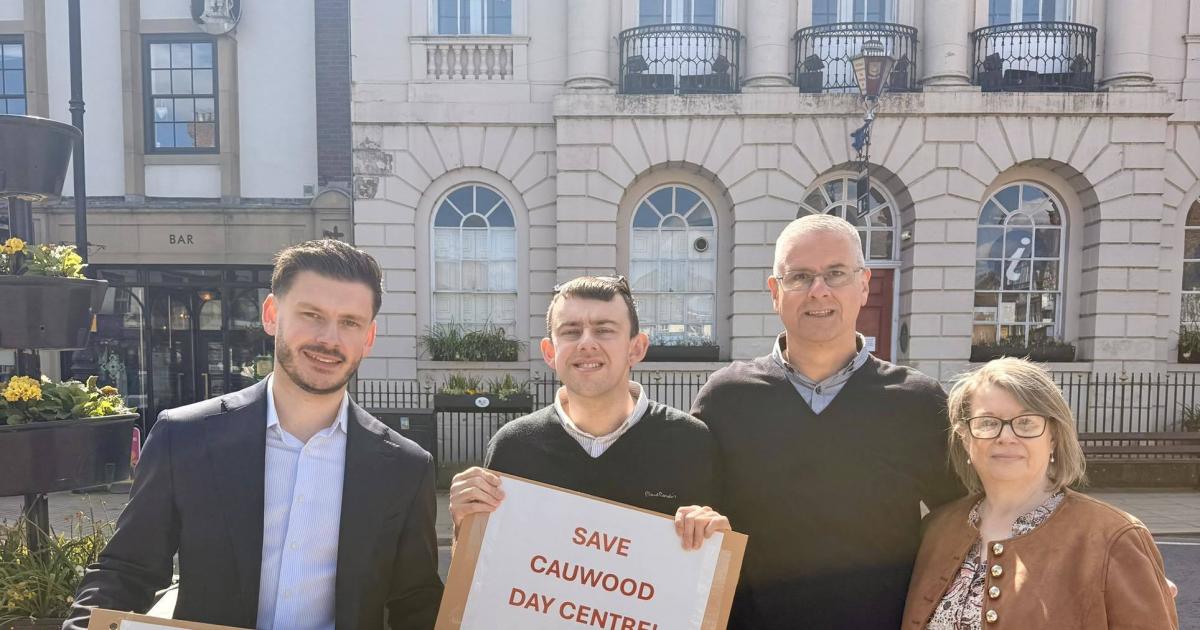
The decision to close Cauwood Day Centre in Malton was postponed at the 11th hour by North Yorkshire Council.
Users were told just last week that the facility faced closure under proposals by the authority.
In response, the families launched a campaign to save Cauwood, which specialises in offering essential activities to disabled adults, assisted by Ryedale councillors.
Advertisement
Cllr Keane Duncan, who joined Cauwood user Matty, and parents, at the Council’s Executive Committee meeting, held at Ripon Town Hall, said: “This is welcome news but follows 12 days of unimaginable hell for the families involved.
“We believed it was potentially unlawful, but certainly undemocratic, to attempt to close this centre without any consultation. After frantic cross-party appeals, the council’s solicitor ultimately agreed it would be legally risky for the Executive to proceed today with its decision.
Cllr Duncan, who represents Norton, added: “The fight to save this vital centre is not over, in fact it’s only just beginning. But this is a welcome reprieve. It’s important now that those impacted are treated with the dignity and respect they so rightly deserve.”
Amotherby and Ampleforth Cllr Steve Mason said: “At times like these, cooperation and coordinating our efforts pays off, following Cllr Duncan’s call to action, I took these concerns in the the Care and Independence committee on Monday, with the expectation that the potential closure will be scrutinised properly. It should not have got to this decision point without some level of investigation by the committee with the actual oversight of the issue. Politics does work when we come together.”
Advertisement
Cllr Lindsay Burr, who represents Malton, said: “Years of underinvestment has given the decision makers to claim the site is not fit for purpose. It beggar’s belief !
“I pleaded passionately to the executive councillors to take time to rethink! They must consider the devastating consequences of possible closure.
“If Cauwood was given the red light to close it will be life changing for the adult learners, the parents and the community who use these vital services in Malton. Fighting is the only way forward to keep Cauwood open.”
Cauwood, which was set up in 1991, operates on a daily basis and offers a wide range of activities for users including a dedicated art room, kitchen, sensory room, and large communal room.
Advertisement
A report to the Executive committee said: “Cauwood Day Service is an older building and both it and the service we are providing is no longer fit for purpose.
“A difficult decision is needed to close the service in order to both re-provide in local alternative community-based solutions for people in Ryedale and surrounding areas, and enable the wider site to be considered for provision of a new Extra Care Housing scheme in Malton.”
WASHINGTON (AP) — The Southern Poverty Law Center says it’s the subject of a criminal investigation by the Justice Department and faces possible charges over its past use of paid informants to infiltrate extremist groups.
The civil rights group made the announcement on Tuesday, saying President Donald Trump’s administration appears to be preparing legal action against it or some of its employees.
“Although we don’t know all the details, the focus appears to be on the SPLC’s prior use of paid confidential informants to gather credible intelligence on extremely violent groups,” CEO Bryan Fair said in a statement.
The Justice Department had no immediate comment.
Advertisement
The Southern Poverty Law Center previously paid informants to infiltrate extremist groups and gather information on their activities, often sharing it with local and federal law enforcement, Fair said. It was used to monitor threats of violence, he said, adding that the program was kept quiet to protect the safety of informants.
“When we began working with informants, we were living in the shadow of the height of the Civil Rights Movement, which had seen bombings at churches, state-sponsored violence against demonstrators, and the murders of activists that went unanswered by the justice system,” Fair said. “There is no question that what we learned from informants saved lives.”
He said the organization “will vigorously defend ourselves, our staff, and our work.”
The Southern Poverty Law Center, which is based in Montgomery, Alabama, was founded in 1971 and used civil litigation to fight white supremacist groups. The nonprofit has become a popular target among Republicans who see it as overly leftist and partisan.
Advertisement
The investigation could add to concerns that Trump’s Republican administration is using the Justice Department to go after conservative opponents and his critics. It follows a number of other investigations into Trump foes that have raised questions about whether the law enforcement agency has been turned into a political weapon.
The Southern Poverty Law Center has faced intense criticism from conservatives, who have accused it of unfairly maligning right-wing organizations as extremist groups because of their viewpoints. The center regularly condemns Trump’s rhetoric and policies around voting rights, immigration and other issues.
The center came under fresh scrutiny after the assassination last year of conservative activist Charlie Kirk brought renewed attention to its characterization of the group that Kirk founded and led. The center included a section on that group, Turning Point USA, in a report titled “The Year in Hate and Extremism 2024” that described the group as “A Case Study of the Hard Right in 2024.”
Advertisement
Sign up for Morning Wire:
Our flagship newsletter breaks down the biggest headlines of the day.
Advertisement
FBI Director Kash Patel said last year that the agency was severing its relationship with the center, which had long provided law enforcement with research on hate crime and domestic extremism. Patel said the center had been turned into a “partisan smear machine,” and he accused it of defaming “mainstream Americans” with its “hate map” that documents alleged anti-government and hate groups inside the United States.
House Republicans hosted a hearing centered on the Southern Poverty Law Center in December, saying it coordinated efforts with President Joe Biden’s Democratic administration “to target Christian and conservative Americans and deprive them of their constitutional rights to free speech and free association.”
All episodes should land at once for the first spin-off set in the Stranger Things universe
Peter Harris Film and TV Reporter (Screen Time, U35s)
15:51, 21 Apr 2026
Teaser trailer for Stranger Things: Tales From ’85
The countdown is almost complete for the debut spin-off of one of Netflix’s most popular series.
Advertisement
Limited series ‘Stranger Things: Tales from ’85’ arrives on the platform this week. It marks the first opportunity for audiences to revisit Hawkins and its residents since the main series’ dramatic conclusion, though this outing will differ significantly from what came before.
Firstly, the series is animated, and a completely new ensemble of voice actors will be portraying our beloved characters. It won’t provide closure to lingering questions from the series finale, however, as events unfold during the middle period of Stranger Things’ broader storyline, reports the Mirror.
But what does the spin-off entail? Who comprises the cast, replacing the original performers? And when can episodes be streamed? Here’s everything you need to know.
What is Stranger Things: Tales From ’85 about?
According to the programme’s synopsis, fans are welcomed back to Hawkins for a thrilling new chapter. Set during winter 1985, snow covers the town and the terrors of the Upside Down appear to be receding at last.
Our protagonists – Eleven, Mike, Will, Dustin, Lucas, and Max – have returned to ordinary life filled with D&D sessions, snowball battles, and peaceful afternoons. However, something sinister has stirred beneath the frozen surface.
Could it originate from the Upside Down? From within Hawkins Lab? Or from an entirely different source? Our heroes must urgently unravel this puzzle and rescue Hawkins in this fresh tale within the Stranger Things universe.
Advertisement
One aspect still puzzling some fans is its timeline relative to the main series. The events portrayed in Tales from 85 occur between Seasons 2 and 3.
Is the original cast returning for Tales From 85?
Regrettably for devoted viewers, the principal cast are not reprising their roles. Netflix has announced several replacements.
Eleven is voiced by Brooklyn Davey Norstedt, Mike by Luca Diaz, Will by Benjamin Plessala, Dustin by Braxton Quinney, Lucas by Elisha “EJ” Williams, and Max by Jolie Hoang-Rappaport.
Additional voice actors include Alysia Reiner as Karen Wheeler, Alessandra Antonelli as Nancy Wheeler, and Brett Gibson assuming the role of Hopper.
Advertisement
When and where can you watch Tales from 85?
Stranger Things Tales from 85 will comprise 10 episodes in total. In contrast to the final season of the main series, they are anticipated to be released simultaneously rather than in separate instalments.
Netflix arranged special limited cinema screenings for the opening two episodes on 18 April. For all other viewers, the series will arrive on the streaming platform from 23 April.
Stranger Things Tales from 85 is streaming on Netflix from April 23.
Marking the 80th anniversary of the end of the second world war, Our Freedom: Then and Now is a nationwide photography project exploring how communities understand freedom.
The show opened at London’s Southbank Centre in April and is now touring the UK. This exhibition offers an alternative perspective to the idea that this is currently a nation divided. From the Highlands of Scotland to libraries in southwest England, it asks a simple yet powerful question: what did freedom mean in 1945, and what does it mean now?
The Socially Engaged Photography Network sent 22 photographers to work closely with community projects, ensuring the photographs were created in collaboration with participants. This approach is distinct from traditional photojournalism, which often speaks about rather than with the people photographed.
By spending time in places such as Maesteg Town Hall and libraries in Stornoway, artists including Johannah Churchill, Sam Ivin and Leticia Valverdes have focused on making photographs that portray the viewpoints of the people involved.
Advertisement
Image by Leticia Valverdes. Trinity Centre Bristol
Projects marking the 80th anniversary of the end of the second world war can easily lapse into cliche, but Our Freedom: Then and Now avoids sentimentality. In fact, part of its power lies in engaging with the complexities of contemporary society and culture. It avoids simple slogans and instead the photographs foreground thoughtful reflections on conflict and the ongoing importance of finding common ground and sustaining connection.
As Stephanie Peacock, the UK’s minister for sport, tourism, civil society and youth, said at the launch, the project comes at an important time. With fewer people having direct memories of the war, sharing their reminiscences alongside the voices of schoolchildren and young artists creates a conversation between those who remember 1945 and those who will shape 2045.
Image by Johannah Churchil. Queen’s Hall Arts Centre Hexham
This exchange fosters two forms of understanding: participants learn about themselves, and viewers learn about others. According to Simon Mellor, Arts Council England’s deputy chief-executive, these works bring local experiences into national conversations, offering a valuable space for dialogue in difficult times.
This was certainly my experience. I left the gallery surprised by the many ways freedom is experienced and understood across the UK. Whether it’s a veteran in Wolverhampton or a student in Hartlepool, the cumulative effect of individuals’ thoughts about freedom and community was fascinating and thought-provoking.
The exhibition is grounded by poet laureate Simon Armitage’s specially commissioned poem, Freedom Road. Echoing the participant photographs, the poem shifts its focus from grand images of liberation to the simple, everyday actions that make up real freedom. He writes:
You can’t dig up freedom like a potato
from the verges of Freedom Way, or pan it
from Freedom Beck like inklings of gold;
Advertisement
it won’t be delivered to Freedom Avenue
gift-wrapped in silver string.
Armitage suggests that freedom is most real when it goes unnoticed, such as the ability to disagree with a neighbour, walk where we want, and live as we choose. This idea aligns with the exhibition’s main goal: to show that freedom is something we live every day – not just a piece of history to remember now and then, but something current and vital.
The exhibition on tour
The exhibition’s tour is as ambitious as the work itself. After starting at the Southbank Centre, it travels to places like Eden Court in Inverness, the McKechnie Institute in South Ayrshire and the Strand Arts Centre in Belfast, bringing the art back to the communities that helped create it.
Advertisement
Image by Karina Lax. The Art House Wakefield
This return is important because it shows that art doesn’t just happen in big cities; it grows from local libraries and community centres and derives its power from these regional identities. In 2025, more than 530,000 people took part in the events and performances leading up to this exhibition.
By steering clear of easy sentimentality, Our Freedom: Then and Now does something more meaningful. It offers an honest look at how we live together. The exhibition recognises the difficult parts of our shared histories while reminding us of our shared humanity.
In a nation that can feel divided, Our Freedom: Then and Now uses photography to highlight what people have in common and where we might work harder to find those commonalities. It’s a reminder that, even though freedom requires work, it is not only worth it but necessary.
It is now almost a decade since the UK voted for Brexit and since the tariffs of US president Donald Trump’s first term increased global trade frictions. Brexit removed the UK from the European single market for goods and services. Now though, the country is proposing a pivot back towards alignment with EU regulations.
What could have not been widely predicted back in 2016 was the COVID pandemic, nor a war on European soil. The UK has been exposed to these shocks without the EU support system. So what may once have been impossible to imagine is now on the cards: adopting EU single market rules under new UK legislation.
In May 2025, the UK and EU reached a new trade agreement, paving the way for both sides to move closer on their economies and business. This was hastened by unpredictable US trade tariffs and a weakening of the US-UK-EU relationship. In addition, it has been estimated in a comprehensive study that Brexit has reduced the size of the UK economy by 6-8%.
Politically, the approach announced by the UK prime minister, Keir Starmer, is a courageous step. UK legislation would allow the country to adopt new EU laws without the need for parliament to vote each time. But any plan is certain to provoke strong opposition from the Conservatives and Reform UK.
Advertisement
However, it is a signal of the seriousness of the UK’s intentions to move closer to the EU by adapting to its regulations and giving up independence from EU law. That is a costly move for the UK in terms of its credibility, but the U-turn should reinforce its commitment to the EU.
But beyond this, there are three clear benefits to the UK.
The EU is built on rules and regulations that guide the bloc’s labour market, trade and security systems. Alignment would clearly help UK businesses, consumers and individual workers to manoeuvre within these systems.
By breaking from the single market, the UK chose a costlier approach to trading and investing across the EU border. Aligning regulations would reduce cross-border bureaucracy.
The EU is looking for new trading partners after supply chain disruptions from COVID and the Ukraine war – not to mention the current impact on oil and gas supplies. The EU does not need to rely on the UK, but a new direction in the relationship could reduce the threat of supply chain disruption in future.
A better deal for consumers?
So what could this mean for UK businesses and consumers? Food producers trading within the UK-EU zone would have a quicker turnaround of their fresh produce. This would reach shop shelves in the UK and EU more quickly, giving shoppers better-quality fresh foods.
Reducing the amount of complex paperwork and export health certificates at borders would allow a free flow of fresh food even between Great Britain and Northern Ireland (which remained part of the single market). This trade has been disrupted since Brexit and affects both trade between food producers due to paperwork and border delays, and food security.
Advertisement
Border checks, paperwork and adapting to legal requirements are expensive and so increase food prices (and with that, inflation). Bringing trade between the EU and the UK closer could reduce these costs, and should also allow producers to benefit more from global value chains.
UK products like meat and dairy must carry ‘not for EU’ labels due to differing regulations. EPA/Marie Therese Hurson
US tariffs are at their highest levels since the second world war, and the knock-on cost effects of supply chain disruption in the Middle East make a strong case for strengthening ties between neighbours.
Going forward, it will be resilience rather than efficiency in trade that will be important for both businesses and nations. Both will want to be able to reconfigure networks at speed. If inflation rises due to product shortages, governments have limited fiscal space to offer direct support to citizens (which would mean increased levels of spending), or to cut taxes.
Advertisement
Another benefit could come in the form of foreign direct investment into the UK from overseas. In 2025, this began shifting from low-cost developing countries towards capital-intensive and technologically-driven investments in developed countries – and especially in the EU (Germany, Italy and France).
Alignment with EU regulation could give investors more confidence to commit to the UK. Foreign direct investment in renewable energy and AI products, for example, would benefit both the UK’s workers and its consumers.
This is a time of new geopolitical alliances, cooperation and blocs. Trading and investment options could help secure economic, political and societal stability in a volatile world. So far, this is a relatively small step by the UK – but starting to align to EU regulations could ease a complex relationship.


























































You must be logged in to post a comment Login