
Crypto World
Tether Minted 1 Billion USDT: On-chain Trading Grinding Back

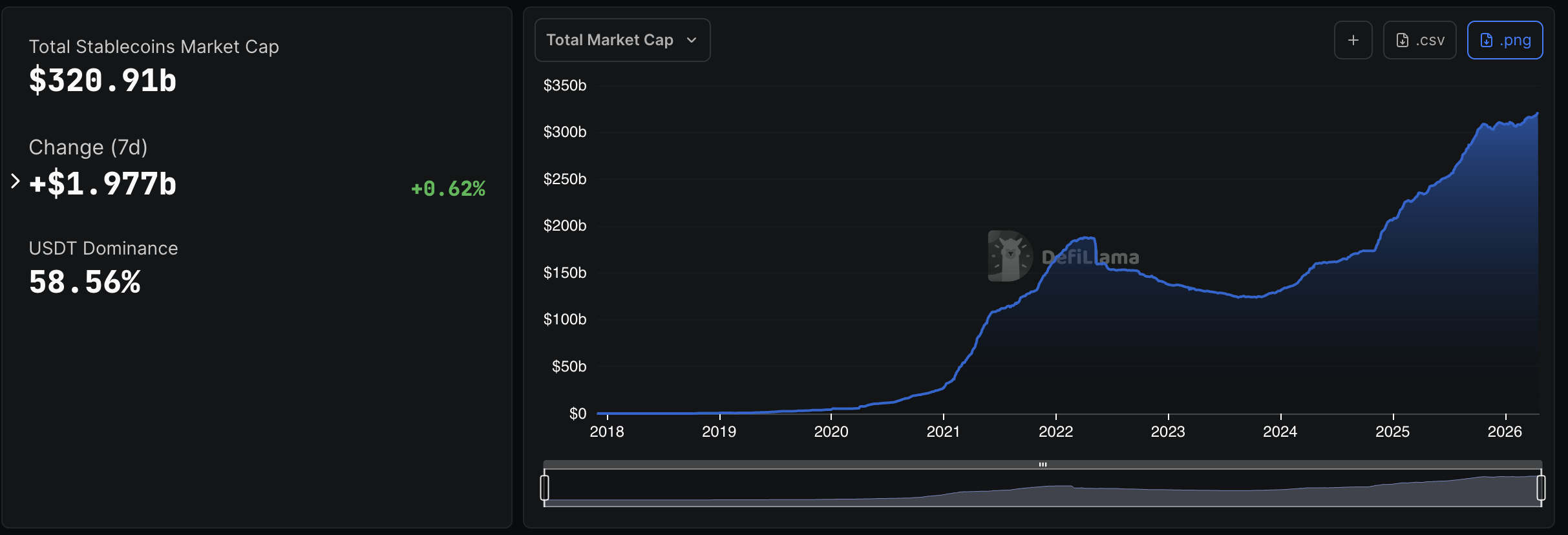
Tether just dropped a 1 billion USDT on Ethereum just as the memecoin scene in the chain is heating up. Arkham Intelligence flagged the event just shortly after Bitcoin pushed past $76,000. Following this, the Total USDT supply now stands at $193 billion, dominating the $320 Billion stablecoins size by 58%.
Institutional capital is moving, and Tether mints of this scale historically precede accelerated exchange inflows. The market is watching where this billion lands.
Discover: The best crypto to diversify your portfolio with
Is Tether 1 Billion USDT Mint a Reliable Liquidity Signal for On-Chain Trading?
Glassnode’s USDT Holder Accumulation Ratio sits at 57.63%, above the 50% threshold that indicates net accumulation by holders. Onchain Lens noted this mint as a precursor to heightened on-chain activity, with tokens expected to flow rapidly toward exchanges and DeFi platforms once deployed.
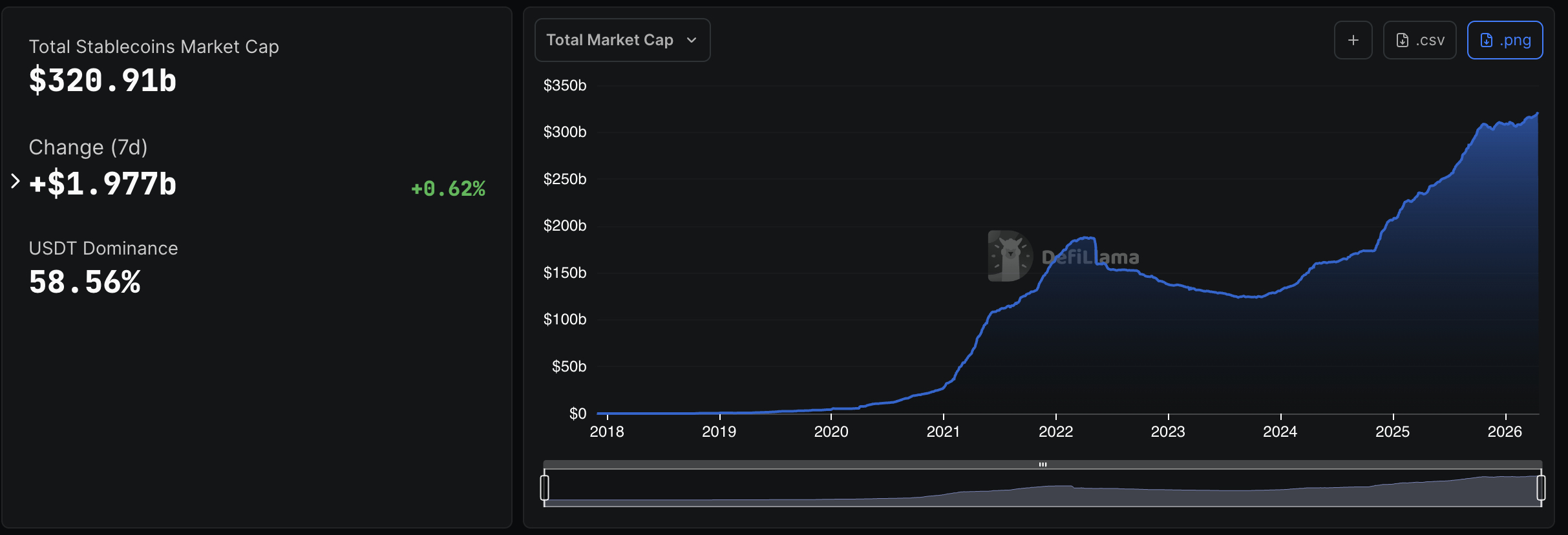
Transaction volume data reinforces the dominance picture. USDT’s volume of $484.17 billion already surpasses USDC’s $319.2 billion, a $164.97 billion gap that reflects USDT’s stranglehold on crypto payments infrastructure. Tron’s low-fee environment (driving 50%+ USDT network dominance) makes rapid deployment operationally straightforward once Ardoino’s team activates the inventory.
Institutional momentum is building, but the question is whether deployment timing aligns with the current sentiment window.
Discover: The best pre-launch token sales
Maxi Doge Eyes Big Upside as USDT Liquidity Hunts Yield
When $1 billion in fresh stablecoin liquidity enters the ecosystem, it doesn’t sit idle. History shows it finds its way into high-beta plays, and meme tokens with active communities tend to capture disproportionate inflows during liquidity expansion windows.
Maxi Doge ($MAXI) is positioned squarely in that window. Built on Ethereum as an ERC-20 token, the project combines meme-first marketing with structural utility: holder-only trading competitions with leaderboard rewards, a Maxi Fund treasury for liquidity and partnerships, and dynamic staking APY.
The presale has raised $4.7 million at a current price of $0.0002814. Memecoin activity on Ethereum is picking up alongside rising USDT liquidity. It’s the timing that $MAXI’s community is watching closely.
Research Maxi Doge before the next price tier moves.
The post Tether Minted 1 Billion USDT: On-chain Trading Grinding Back appeared first on Cryptonews.

Crypto World
Aave faces ‘serious trouble’ as all its core markets hit 100% utilization. What this means.


Aave, one of the largest decentralized lending platforms, effectively froze Tuesday after all its major lending protocols ran out of available funds, leaving users unable to withdraw billions of dollars in crypto, DeFi Warhold said as he explained what the 100% utilization means.
Roughly $5 billion in stablecoins USDT and USDC are effectively locked, Warhold added, saying the protocol has no liquidity to pay out those assets .
The crisis began April 18, following a $292 million exploit of the Kelp DAO rsETH bridge. The attacker used forged cross-chain messages to mint unbacked rsETH, which was then deposited into Aave as collateral to borrow nearly $200 million in WETH. As news of the “bad debt” spread, a classic bank-run dynamic took over, causing a total of $6.6 billion to exit the protocol in under 24 hours.
When asked for comment on the crisis, Aave founder Stani Kulechov told CoinDesk via WhatsApp: “I do not have anything useful to say.”
For a lending protocol to hit 100% utilization across all markets at once is the “equivalent of a full stop. It actually means no liquidity available for withdrawals. Liquidations can’t be processed” and therefore $3 billion in USDT and $2 billion in USDC “are stuck with no clean exit,’ DeFi Warhol said.
What’s worse, the analyst added, “if prices move, bad debt compounds with no mechanism to cover it.” DeFi Warhol said that this is the worst situation for a lending protocol to be in because “when liquidations cannot execute, the protocol has no way to protect itself against further bad debt.”
Aave is in serious trouble
Natalie Newson, a senior blockchain security researcher at CertiK, said that Aave is in serious trouble.
“100% utilization doesn’t just mean a lack of liquidity; it means the protocol’s self-defense systems are down.”
Liquidations require liquidity to work because without it, undercollateralized positions can’t be closed and bad debt just keeps piling up, leaving the protocol in a situation it will not be able to recover from without outside help, she said.
“Aave didn’t get hacked. It got stuck due to the fallout from someone else’s bridge failure, and that difference should worry everyone working in this area,” Newson said. “The KelpDAO exploit didn’t just affect one protocol; it put the entire DeFi system to the test at the same time.”
Newson agreed with DeFi Warhol that those who did nothing wrong are now left dealing with the risks. She also said that the interconnectivity that makes DeFi powerful is the same feature that turns a single point of failure into a large-scale disaster.
A known risk scenario
Aave’s risk framework explicitly anticipated 100% utilization, with former Aave Risk Manager Alex Bertomeu-Gilles saying in 2020 that at that level, “no liquidity is left” and the situation becomes “problematic” because depositors are unable to withdraw their funds.
Technical analyst and crypto author Duo Nine was the first to highlight that Aave had hit 100% utilization.
“When the rsETH exploit happened and AAVE incurred bad debt, whales like Justin Sun, MEXC exchange, and others immediately withdrew billions from AAVE,” the analyst said. “Initially, the ETH market hit 100% utilization, meaning you could not withdraw your ETH from AAVE.”
That soon spread to USDT and USDC pools as over $6 billion in assets left the protocol within hours. “As whales took out their money, USDT and USDC also hit 100% utilization,” Duo Nine said.“These markets are now also stuck with money locked.”

Key Highlights
- DoorDash implements blockchain-powered payouts spanning 40+ global markets
- Tempo provides infrastructure for accelerated, cost-effective settlement solutions
- Initial rollout focuses on merchant payments with potential Dasher expansion
- Stripe integrates into Tempo ecosystem amid rising stablecoin momentum
- DASH stock retreats 1.13% while company advances digital payment capabilities
DoorDash advances its financial technology infrastructure through a strategic partnership with Tempo, introducing blockchain-based settlement mechanisms designed for enhanced global transaction efficiency. This development represents the platform’s commitment to leveraging emerging payment technologies across its extensive marketplace network. Currently, DoorDash shares trade at $187.65, experiencing a 1.13% decline amid modest market pressure.
Blockchain Payment Technology Enters DoorDash Ecosystem
DoorDash has formalized a collaboration with Tempo to deploy cryptocurrency-based payout capabilities throughout its worldwide operations. This strategic initiative prioritizes enhanced settlement performance for restaurant partners and independent contractors. The platform seeks to eliminate bottlenecks associated with conventional banking infrastructure.
The delivery platform manages a complex ecosystem linking customers, restaurant partners, and independent couriers across over 40 international markets. Each jurisdiction introduces distinct obstacles related to foreign exchange, regulatory compliance, and transaction processing timelines. Accordingly, stablecoin technology provides a standardized payment framework that streamlines international monetary transfers.
Initial deployment targets restaurant partner settlements, where enhanced speed and reduced expenses generate substantial operational benefits. Subsequently, the framework could encompass independent contractor compensation, enhancing financial flexibility for delivery personnel worldwide. This transformation represents a significant movement toward decentralized financial systems within major e-commerce platforms.
Digital Currency Evolution From Speculation to Utility
Stablecoins are transitioning from speculative assets into practical payment mechanisms throughout international commerce. Research across various industry analyses indicates over $300 billion in circulation now facilitates business transactions, corporate treasury operations, and commercial settlements. Accordingly, corporations increasingly recognize stablecoins as dependable financial technology.
Tempo operates as a specialized blockchain platform designed specifically for payment processing, delivering subsecond transaction confirmation and predictable fee structures. The infrastructure additionally supports capabilities including guaranteed blockspace allocation and customizable payment logic. These features enable organizations to execute sophisticated financial operations with enhanced efficiency and auditability.
Stripe incorporates Tempo into its expanding stablecoin payment capabilities spanning over 100 nations. Additional financial institutions, such as Coastal Bank and ARQ, similarly implement the platform for localized payment services. This trend demonstrates mounting adoption throughout financial technology and traditional banking sectors.
Solving Multi-Stakeholder Payment Challenges
DoorDash confronts operational complexities stemming from its multi-stakeholder transaction framework involving customers, merchants, and delivery professionals. Individual transactions demand coordinated fund distribution, frequently spanning multiple currencies and compliance jurisdictions. These requirements create inefficiencies within legacy financial infrastructure.
Blockchain-based payment channels minimize dependency on traditional intermediaries while facilitating instantaneous cross-border settlement. This advancement accelerates disbursement speed and diminishes expenses related to currency conversion and transaction processing. Additionally, programmable transactions accommodate refunds, order modifications, and conflict resolution with enhanced adaptability.
DoorDash chose Tempo based on its institutional-quality features and payment-centric design philosophy. The platform accommodates substantial transaction volumes and adheres to established financial messaging protocols such as ISO 20022. Consequently, this alliance supports the company’s objective to upgrade worldwide payment technology.
This partnership exemplifies a wider industry movement integrating distributed ledger technology into practical financial applications. Stablecoin implementation continues growing despite persistent regulatory ambiguity across key jurisdictions. DoorDash thereby establishes an early presence in developing scalable, cryptocurrency-enabled payment frameworks for international digital commerce.



Crypto exchange Bitget rolled out a new platform offering tokenized exposure to private companies, starting with an asset linked to SpaceX, as firms push to bring early-stage investing onto blockchain rails.
The platform, called IPO Prime, allows users to subscribe to tokens that track the economic performance of companies before they go public. Its first listing, preSPAX, is tied to Elon Musk’s space and artificial intelligence firm and is issued through Republic, an investment platform specializing in private markets, with tokens minted on the Solana blockchain.
Trading began after a short subscription window, giving users near-immediate liquidity. That marks a break from traditional pre-IPO investing, where stakes in private firms are often locked up for years with limited options to exit.
Instead of fixed allocations, users commit stablecoins into a pool and receive tokens based on total demand. Once distributed, those tokens can be traded on a spot market, allowing investors to adjust positions as expectations around a future listing shift.
Tokenization has gained traction across traditional finance, from bonds to money market funds to equities. Extending the model to pre-IPO markets could widen access to a segment long dominated by venture capital and private equity, while testing how far crypto infrastructure can reshape capital formation.
The pre-IPO tokens do not represent equity ownership. They are derivatives structured to mirror financial outcomes tied to a company’s valuation after a public debut.
SpaceX is preparing for one of the most widely expected stock market debuts this year, after the firm reportedly confidentially filed for an IPO.
A man posing as a delivery driver allegedly tried to extort a crypto investor at gunpoint in a suburb of Montpellier, in what local media describe as the first reported crypto-motivated home invasion in France’s Hérault region.
According to French outlet Actu.fr, the suspect gained access to the family home in Saint-Jean-de-Védas on April 11, pulled out a handgun and forced the parents and their children into a room before the father overpowered him during a struggle in which a shot was fired.
No one was injured, and investigators from the Montpellier research section of the Gendarmerie later identified and arrested a 25-year-old suspect, who has since been charged and remanded in custody while police examine whether he acted alone.
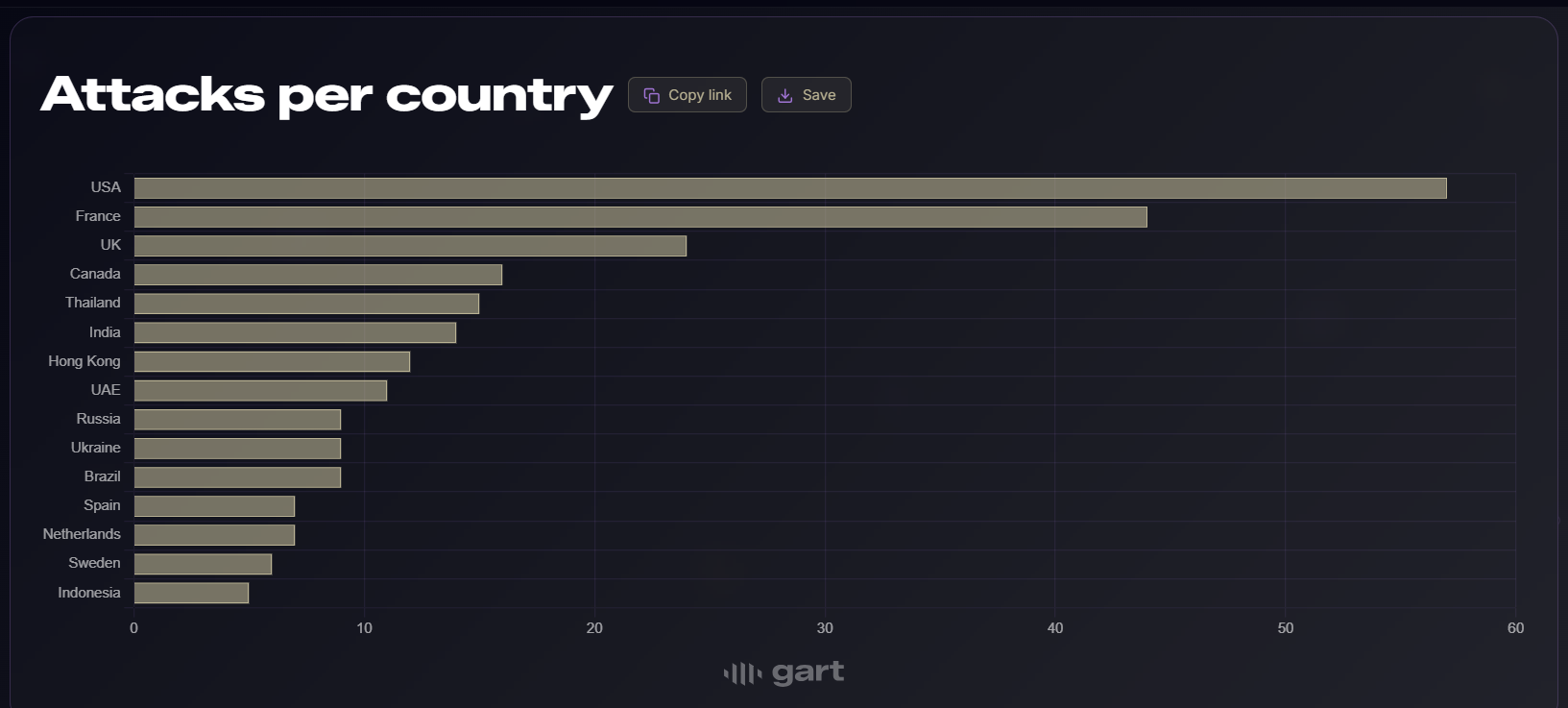
The case comes amid a surge in so-called “wrench attacks,” in which criminals use threats or violence to force crypto holders to hand over funds or seed phrases, bypassing digital safeguards. France has emerged as one of the countries worst hit by these assaults, with at least 41 crypto-linked kidnappings and home invasions so far this year.
France emerges as wrench attack epicenter
France’s wrench attack incidents amount to roughly one every 2.5 days, after such attacks jumped 75% in 2025 to 72 global cases in a single year and millions of dollars in confirmed losses, with France recording the highest number for a single country.
Related: Crypto execs ramp up security as wrench attacks increase
French tech outlet Generation-NT reported on Tuesday that, beyond victims’ social media footprints, police and cybersecurity specialists increasingly suspect some gangs are compiling target lists from leaked customer data, giving them information on who holds significant crypto and where they live.
Those concerns have been sharpened by recent leaks at crypto companies. In January, hardware wallet manufacturer Ledger said a breach at its payment partner Global‑e had exposed names, contact details and order information for some hardware wallet buyers, effectively creating a new, high-quality list of confirmed crypto users tied to physical addresses.

Kidnappings span fake raids and ransom plots
Recent French cases have ranged from fake police raids to ransom kidnappings. In February, police arrested six suspects over the abduction of a magistrate and her mother in a plot to extort crypto from the magistrate’s partner, a digital asset entrepreneur. Another investigation in March detailed assailants posing as officers who forced a French couple to transfer close to $1 million in Bitcoin (BTC) under threat of violence.
French officials say crypto crime is shifting from code-based exploits to physical coercion. At Paris Blockchain Week, French minister Jean-Didier Berger said the government had launched a prevention platform for crypto holders and was working with the Interior Ministry on wider measures in response to the wave of kidnappings and home invasions tied to digital assets.
Magazine: Bitcoin will not hit $1M by 2030, says veteran trader Peter Brandt
Pi Network price has dropped 10% from its weekend high, ending even lower than where it began the week. Despite this, the token could be preparing for a turnaround as three catalysts align to support a bullish recovery.
Summary
- Pi Network price fell to $0.168 after hitting a three-week high of $0.187, but upcoming Protocol 22 upgrade and ecosystem developments could support a rebound.
- Smart contract progress and rising developer activity, along with expectations around Consensus 2026 announcements, are driving renewed interest in the token.
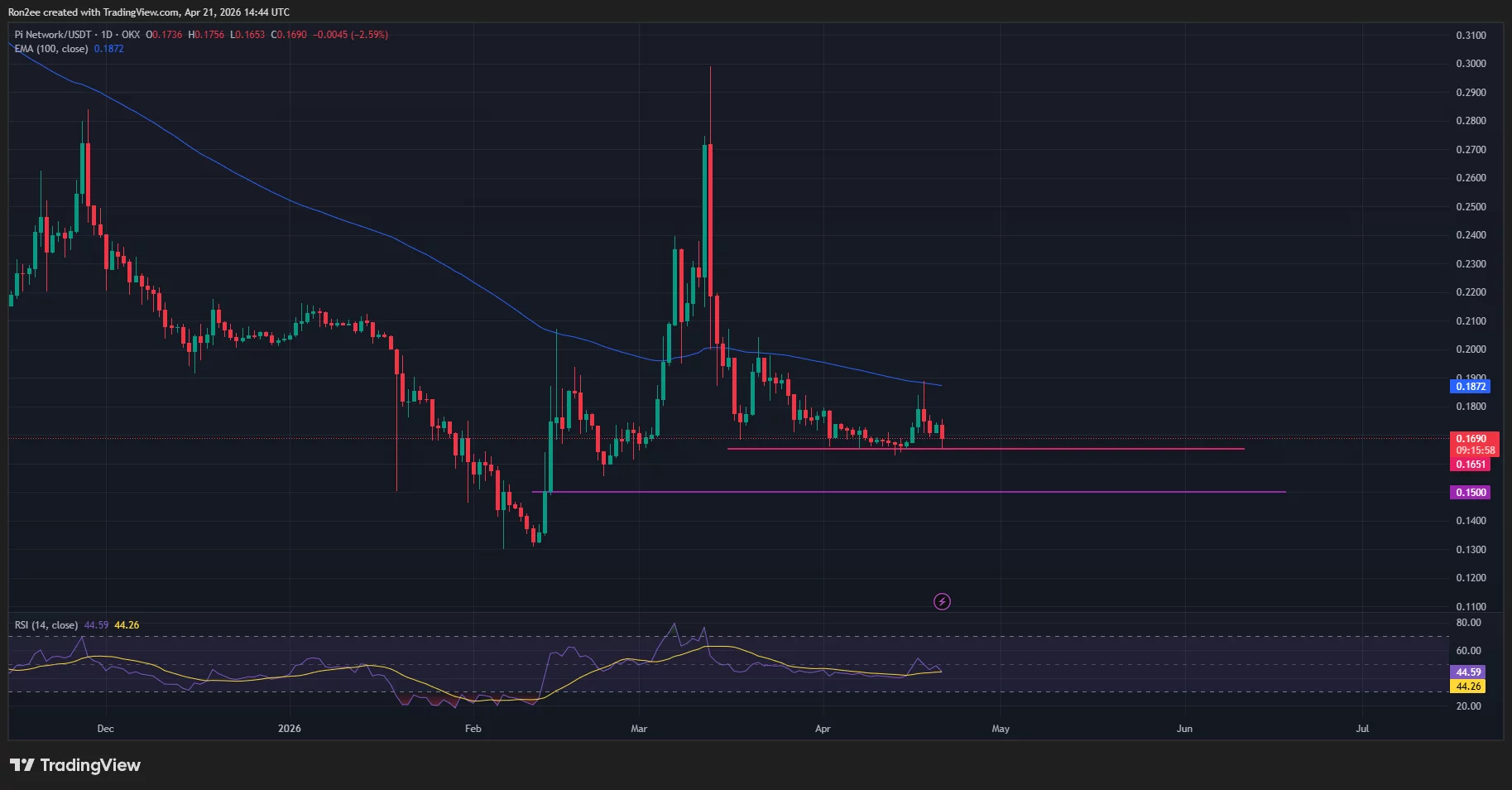
- A break above $0.187 could open a move toward $0.20, while failure to hold $0.165 support may push price toward the $0.15 level.
According to data from crypto.news, Pi Network (PI) price rallied to a three-week high of $0.187 on Saturday before profit-taking drove it back down to $0.168, losing all of its gains and testing local support levels.
Despite the recent pullback, the token could soon witness a strong rebound as three major fundamental factors begin to take effect.
First, the upcoming Protocol 22 mandatory upgrade deadline on April 27 is forcing a massive migration of network nodes. This technical overhaul is designed to strengthen the mainnet infrastructure, and historical trends suggest that such high-stakes network updates often lead to a tightening of available supply as holders move assets into secure wallets.
Second, the successful integration of smart contracts on the testnet has reached a critical stage. With the source code now public on GitHub, developers are flocking to the ecosystem to build decentralized applications. This shift from a simple mining app to a fully functional smart contract platform is expected to drive significant utility and demand for the token.
Third, anticipation is building for the Founders’ keynote at the upcoming Consensus 2026 conference. This high-profile appearance is expected to provide the mainstream validation the project has sought for years. Major announcements regarding the open mainnet roadmap during the event could serve as a massive spark for investor confidence.
On the daily chart, Pi Network price action shows that the next immediate resistance sits at the $0.187 mark, which coincides with the 100-day Exponential Moving Average. This level has proven to be a difficult hurdle for bulls to clear during recent attempts
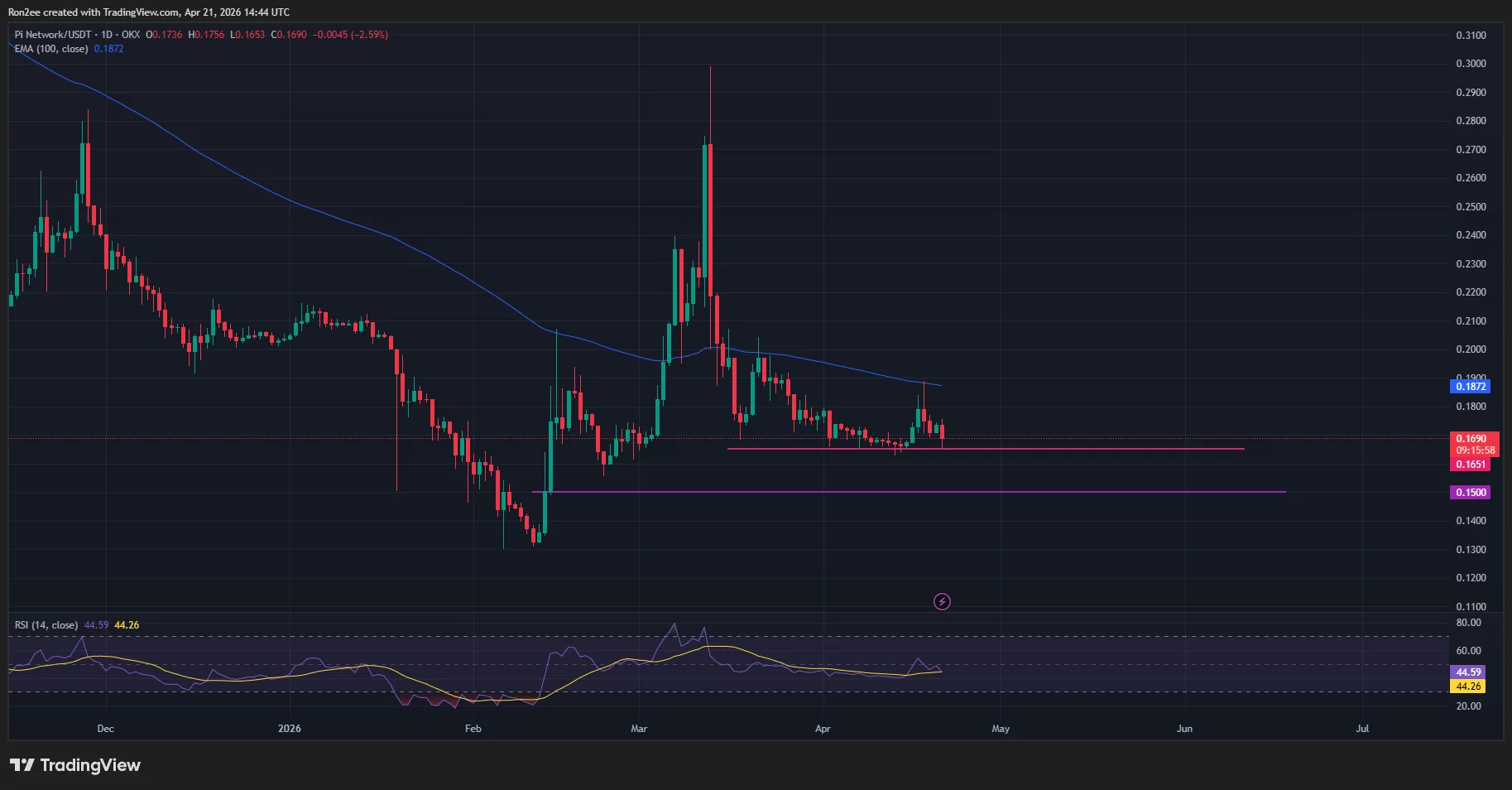
A strong break above this resistance would likely confirm a bullish trend reversal and open the doors for a rally toward the $0.20 psychological level. If momentum continues to build behind the Protocol 22 upgrade, we could even see a test of the $0.214 yearly high.
Conversely, if the token fails to hold its current support at $0.165, it could trigger a deeper correction toward the $0.15 range. This would likely occur if the broader market remains under pressure from geopolitical tensions or if there are further delays in the smart contract rollout.
Disclosure: This article does not represent investment advice. The content and materials featured on this page are for educational purposes only.


Crypto scammers are exploiting Iran’s closure of the Strait of Hormuz by posing as Iranian authorities and offering stranded ships safe passage in exchange for tether (USDT) and bitcoin (BTC).
According to Reuters, the Greek maritime risk management firm MARISKS has warned shipowners that some ships stranded on the west side of the gulf have received suspicious “clearance” proposals from scammers looking to exploit confusion over the Strait of Hormuz and Iran’s crypto toll proposal.
The senders are demanding crypto, and MARISKS warned: “These specific messages are a scam.”
Iranian government officials announced that the Strait of Hormuz would be closed in early March, and threatened to “set ablaze” any ships trying to cross following the US and Israel’s attacks.
Then, on April 8, Iranian oil exporters’ union spokesman Hamid Hosseini announced that Iran’s authorities would email shipowners and arrange a BTC payment in exchange for passage.
Read more: How bombing Iran shifted oil and bitcoin prices
The statement was confusing to say the least. He claimed that BTC payments would take seconds (they take several minutes), that they would be untraceable (BTC is very traceable), and that they would circumvent sanctions (the US has already sanctioned Iranian BTC wallets).
Strait of Hormuz keeps opening and closing
Additionally, the Strait’s closure, reopening, and now second closure haven’t helped ships looking to leave the region either.
In one instance, two Indian vessels set off on April 18 to cross the Strait, believing they’d been given clearance from Iran. However, Iranian authorities opened fire on the vessels, forcing them to turn around.
Read more: US-Israeli war with Iran forces TOKEN2049 cancellation
This happened on the same day that the Strait of Hormuz was briefly reopened. Iran quickly closed it again due to the US blockade put in place on April 13.
A number of cruise ships with passengers onboard reportedly managed to flee the Gulf when it briefly reopened, and seemingly came under fire. More recently, the US seized an Iranian container ship on Sunday that attempted to pass its blockade.
Overall, there are reportedly 20,000 ships stranded in the Gulf.
Negotiations and peace talks between the US and Iran were underway last week and managed to secure a 10-day ceasefire agreement, which ends tomorrow. There are reports that more negotiations will take place this week.
Various Asian countries are allowed to pass through the Strait, including Pakistan, India, and the Philippines.
Chinese ships reportedly also passed safely, and President Xi Jinping has called for the route to remain open.
Got a tip? Send us an email securely via Protos Leaks. For more informed news and investigations, follow us on X, Bluesky, and Google News, or subscribe to our YouTube channel.

The United Kingdom is revisiting its payments rulebook to support the adoption of new fintech and payment technologies, including stablecoins and tokenization. In a government announcement, HM Treasury and Economic Secretary to the Treasury Lucy Rigby said the consultation will reform payment services and electronic money rules to create a single framework for both traditional and tokenized payments. The move reflects an ongoing policy shift to bring digital assets more fully into the regulated financial system.
According to Cointelegraph, legislation is expected to take effect in 2027 as part of the sector’s evolving regulatory architecture.
The Treasury described the reforms as a move to establish a cohesive framework for traditional and tokenized payments, covering stablecoins and tokenized deposits. It also said it plans to reduce administrative burdens for companies seeking stablecoin payment services, signaling a push to cement the UK as a global hub for digital assets.
The Treasury also named former Financial Conduct Authority veteran Chris Woolard as digital markets champion for its Wholesale Financial Markets Digital Strategy, a move intended to bolster efforts to drive the adoption of tokenized digital assets. Woolard emphasized the importance of digitization and the value of collaboration between public authorities and industry in maintaining the UK’s competitiveness in digital markets.
The package was unveiled during UK Fintech Week in London, a cross-industry event supported by Innovate Finance and other organizations. The plan foregrounds stablecoins and tokenization as central to the payments system and frames regulatory reform as a core pillar of this effort.
The broader crypto-regulatory framework in the UK continues to develop in parallel, with authorities signaling a staged rollout of rules alongside ongoing consultations and legislative work.
Key takeaways
- Unification of traditional and tokenized payments into a single regulatory framework, including stablecoins and tokenized deposits.
- Regulatory relief intended to reduce administrative burdens for firms offering stablecoin payment services.
- Appointment of Chris Woolard as digital markets champion to guide the Wholesale Financial Markets Digital Strategy and tokenized asset adoption.
- Exploration of how AI agents executing transactions should be regulated, signaling a new regulatory dimension for automated payments.
- Legislation expected to take effect in 2027 as part of the UK’s evolving digital asset framework.
Unifying payments: tokenization, stablecoins, and deposits
According to the Treasury, the reforms seek to create a single, coherent framework that spans traditional payment rails and tokenized equivalents. By recognizing stablecoins and tokenized deposits as integral elements of the payments system, the framework aims to provide clear licensing, oversight, and prudential expectations for entities offering tokenized payment services. The move is framed as a policy instrument to reduce regulatory fragmentation and align the UK with other advanced digital markets in facilitating consumer protection and financial stability as digital money becomes more programmable.
Administrative relief for stablecoin services
The government signals that legislation will streamline processes for firms seeking to offer stablecoin services, with the objective of promoting legitimate activity while preserving AML/KYC compliance, consumer protections, and robust governance. Industry observers note that such simplifications can improve regulatory certainty, reduce time-to-market, and attract digital asset infrastructure providers to operate within the UK’s supervised framework.
Digital markets leadership and implementation horizon
Chris Woolard’s appointment as digital markets champion underscores the government’s intent to anchor digital asset strategy in wholesale market reform. His role will include support for the Wholesale Financial Markets Digital Strategy and the broader push to accelerate the use of tokenized digital assets in regulated markets. Woolard has stressed the need for ongoing dialogue between regulators and industry to ensure that the UK remains globally competitive while preserving consumer protections and market integrity.
AI agents and the future of payments regulation
As part of the package, the government is examining how payment regulations should apply when artificial intelligence agents act on behalf of consumers or businesses. This reflects a recognition that automation could alter how payments are initiated, authorized, and settled, raising questions about accountability, oversight, and consumer safeguards in a rapidly evolving payments ecosystem.
Looking ahead, the reforms will be tested in implementation, with cross-border alignment and enforcement strategies likely to shape outcomes for institutions, fintechs, and banks operating in the UK.
Crypto World
BeInCrypto 100 Institutional Awards Nomination: Visa for Best Stablecoin Infrastructure


Stablecoins are getting bigger, a $320 billion market. But real payments are still in the early innings. Last year, a massive $33 trillion was processed through stablecoins, but less than 1% of it was actually used for payments. VISA is building the bridge to fill this gap.
Visa is nominated for Best Stablecoin Infrastructure in the Tokenization & On-Chain Finance category at the BeInCrypto Institutional 100 Awards 2026.
Annualized stablecoin settlement run rate
$4.6 billion
Stablecoin-linked card programs
130+
Countries with issuance enabled
50+
Bridge card rollout
18 countries live
Monthly active stablecoin addresses tracked by Visa
47 million
The nomination reflects how the company has moved beyond pilots and built a broader stablecoin stack across settlement, card issuance, payouts, analytics, advisory work, and blockchain governance.
Visa is proving critical to the stablecoin market as it reaches a new scale. While capitalization has hit $320 billion, the activity is largely institutional.
Visa’s own analysis shows only a small share of adjusted stablecoin volume comes from transfers under $250.
That gap explains Visa’s strategy. The company is not treating stablecoins as a niche crypto product. It is treating them as new payment rails and treasury infrastructure.
“We’re still at the very early stages of stablecoin adoption. Even with $33 trillion in volume, only about 1% is tied to real payment use cases. From Visa’s perspective, stablecoins are another form of money. We’re focused on how they can improve money movement, especially through stablecoin-linked cards, where the card becomes the bridge between digital assets and everyday spending,” said Andranik Mnatsakanyan, EU Stablecoin Practice Lead at Visa.
Turning On-Chain Money Into Something You Can Spend
By early 2026, Visa’s global stablecoin settlement activity had reached an annualized run rate of about $4.6 billion. The company now supports more than 130 stablecoin-linked card programs across 50+ countries.
The core buildout started with USDC settlement and has since expanded into a wider operating model. US issuers and acquirers can settle obligations with Visa on-chain, including over Solana, with support from early participants such as Cross River Bank and Lead Bank.
That has pushed stablecoins deeper into Visa’s existing network. Instead of sitting outside traditional payments, they now connect directly to the systems that issuers and fintechs already use.
Visa’s stablecoin card strategy is especially important because it solves a practical problem. Stablecoins may move quickly on-chain, but users still need a way to spend them in everyday commerce.
“Card is becoming the bridge. This is where your crypto, when you add in the wallet, now becomes a real fund that you can spend anywhere,” said Visa’s EU Stablecoin Practice Lead.
That logic now sits behind Visa’s partnership with Bridge, the Stripe-owned stablecoin infrastructure platform.
By March 2026, Bridge-powered Visa cards were live in 18 countries, with a plan to expand to more than 100 by year-end.
Building the Stack Behind the Spend
Visa’s stablecoin work now goes well beyond cards.
In late 2025, the company launched a pilot that lets businesses using Visa Direct send payouts that recipients can choose to receive in USDC.
The product has use cases like creator payouts, freelancer earnings, and cross-border disbursements where speed and dollar stability matter.
At the same time, Visa Consulting & Analytics launched a Stablecoins Advisory Practice to help banks, fintechs, and merchants plan issuance, custody, and treasury strategies. That shows the company sees stablecoins as an infrastructure shift, not just a product feature.
Visa has also moved into the governance layer. In March 2026, it was selected as a Super Validator on the Canton Network, a privacy-enabled institutional blockchain used by major financial institutions. Visa received the highest governance weight of 10, giving it real influence over upgrades and network direction.
A Bet on Where Money Moves Next
Visa has also built infrastructure for bank-issued tokens through the Visa Tokenized Asset Platform, or VTAP. The platform allows banks to mint, burn, and manage their own stablecoins and tokenized money products.
That is why Visa stands out in this category. It has built across the full chain: settlement, cards, payouts, advisory services, validator roles, analytics, and token issuance tools.
The BeInCrypto Institutional 100 Awards recognize firms building the systems that could define the next phase of finance. Visa’s nomination reflects its role in turning stablecoins from a crypto asset into usable financial infrastructure.
The post BeInCrypto 100 Institutional Awards Nomination: Visa for Best Stablecoin Infrastructure appeared first on BeInCrypto.
Since the freeze, ZachXBT reported that the attackers had begun moving funds from Ethereum mainnet to Bitcoin.
Ethereum Layer 2 Arbitrum said that its Security Coucil has taken emergency action to freeze approximately 30,766 ETH, worth over $71 million, tied to this weekend’s KelpDAO exploit.
Arbitrum announced on X late Monday night that it acted with input from law enforcement, which had provided information about the exploiter’s identity. After what it described as significant technical diligence, the L2 said it executed an approach that moved funds without affecting any other chain state or Arbitrum users.
As of April 20 at 11:26pm ET, the funds were successfully transferred to an intermediary frozen wallet, where they can only be moved by further action from Arbitrum governance, per Arbitrum’s X post.
On-chain investigator ZachXBT reported this morning that since the Arbitrum freeze, the attackers had moved $1.5 million from Ethereum mainnet to Bitcoin via decentralized swap protocol Thorchain, as well as another $78,000 routed through Umbra.
The intervention follows what appears to be DeFi’s worst exploit this year so far. The original exploit, which struck KelpDAO’s LayerZero-powered bridge on April 18, saw an attacker mint approximately $293 million worth of unbacked rsETH and drain over $200 million in real WETH from Aave before markets could freeze — leaving the lending protocol with hundreds of millions in bad debt.
LayerZero said in a postmortem published yesterday, April 20, that the attack is likely attributable to North Korean state-sponsored hacker group Lazurus Group.
DeFi Community Response
The Arbitrum Security Council’s move marks a rare use of emergency governance powers to directly intervene in fund recovery from a public chain, with coordination from law enforcement signaling this incident has drawn regulatory attention.
YCC founder Duo Nine called the move “Good move for the users affected, bad new for decentralization,” adding:
“This sets a precedent where with good justification any assets on Arbitrum can be taken from your wallet.”
On-chain security expert Taylor Monahan had a different take, characterizing Arbitrum freezing funds as DeFi collectively “rugg[ing] DPRK of $70M.” Monahan continued:
“I want to say thank you to EVERYONE who played a role. Including those who pushed back […] DeFi fucking wins.”
White hat hacker and founder of blockchain security organization Security Alliance samczsun also had a positive take on the move, posting this morning “huge day for victims of the kelp dao hack,” and continuing:
“i hope that we can look back on today as the day our industry realized that we can simultaneously build useful products while also protecting users rather than be a consequence-free infinite money glitch for hackers.”
This article was written with the assistance of AI workflows. All our stories are curated, edited and fact-checked by a human.
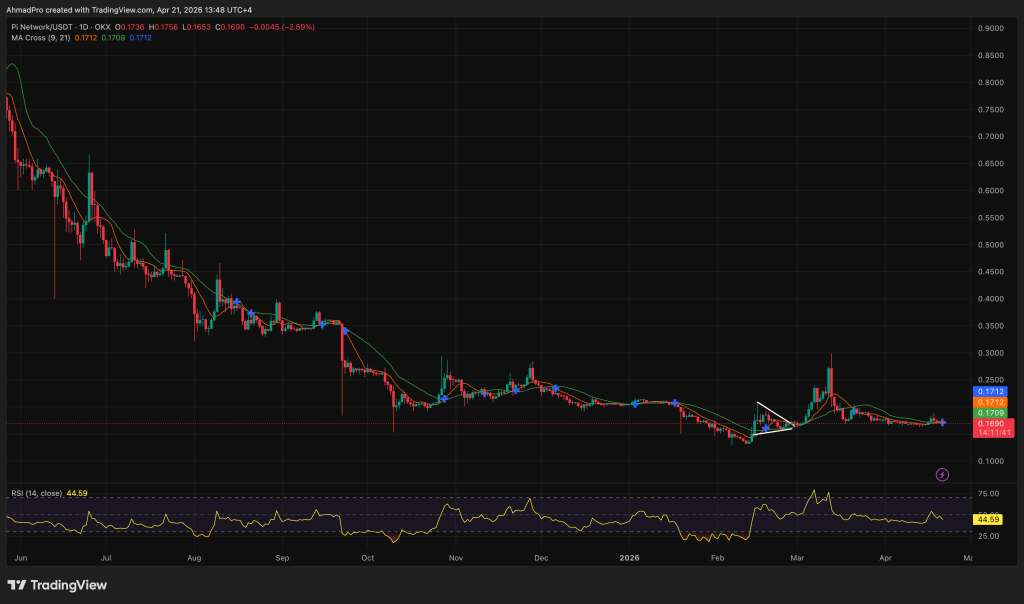
Pi Crypto Network is trading at approximately $0.17, down over 85% from its all-time high, and traders are asking whether any technical catalyst exists to reverse the bleeding.
The 24-hour price change sits at roughly -1.16% to +1.42%, a range that signals indecision rather than conviction.
No confirmed smart contract integrations, mainnet upgrades, or major exchange listings have been reported for Pi Network in the last 48 hours, according to data aggregators including CoinGecko and CoinMarketCap.
The volume surge is real; the price response, so far, is not. PI underperforms both the global market (+0.50% weekly) and Layer-1 peers (+1.90% weekly), with its 7-day decline ranging from -1.40% to -9.49% across trackers.
Broader crypto sentiment remains mixed, giving PI little tailwind heading into the weekend.
Can PI Crypto Price Recover From Its 85% Drawdown?
PI is currently priced between $0.1687 and $0.1799 across major exchanges, with OKX showing $0.1733 and Coinbase at $0.1706. The all-time high of $2.98–$3.00, hit in late February 2025, now sits 85–94% above current levels.
The cycle low of $0.1312, printed on February 11, 2026, remains the line in the sand. PI is currently sitting just 32% above that floor, which is a thinner margin than it looks.
The volume spike to $23 million is the most interesting development here (and arguably the only one).
Historically, volume surges without price follow-through can precede either accumulation or distribution; the direction depends on whether buyers are absorbing sell pressure or sellers are offloading into thin bids.
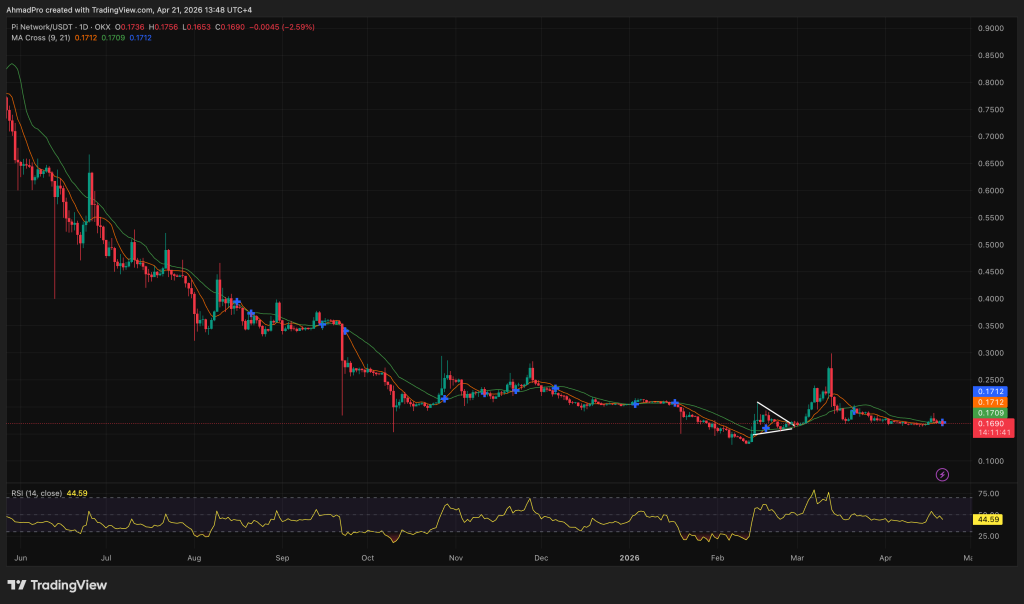
PI is in that classic post-hype phase where the next move depends on whether real demand shows up, not just announcements, because reclaiming $0.20 is the level that flips momentum and opens the door toward $0.25 to $0.28, especially if volume stays strong and the roadmap actually brings attention back.
Right now, though, it looks more like a fade, with price likely settling between $0.16 and $0.18 as the volume spike cools and no new catalyst steps in, so instead of continuation, you get sideways drift.
The risk is underneath, because if $0.1312 breaks, the structure weakens fast, and $0.10 becomes the next obvious level.
And the bigger point here is simple: smart contracts alone do not move price; adoption does, and without real usage or integrations, that gap to previous highs does not close just because the feature exists.
Maxi Doge Eyes Early-Stage Upside While PI Searches for a Floor
Traders watching PI bleed against its ATH are increasingly eyeing earlier-stage plays — assets where price discovery hasn’t happened yet, rather than chasing recovery in a token already down 85%.
That psychological pivot is exactly where Maxi Doge enters the conversation.
MAXI is an ERC-20 meme token built around a single, genuinely unhinged concept: a 240-lb canine juggernaut embodying a 1000x leverage trading mentality. The tagline, Never skip leg-day, never skip a pump, is absurd on purpose, and it’s working.
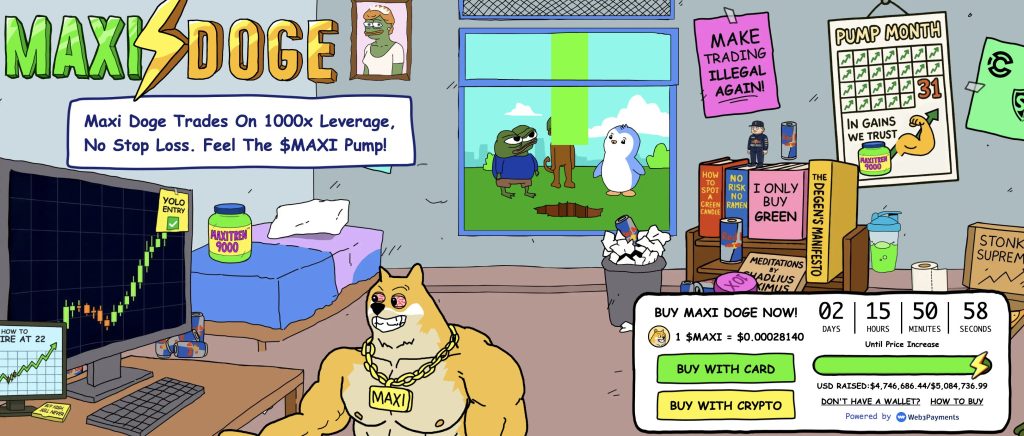
The presale has raised $4,746,601.68 at a current price of $0.0002814, with dynamic staking APY available for holders looking to compound while the presale runs.
Features include holder-only trading competitions with leaderboard rewards, a Maxi Fund treasury backing liquidity and partnerships, and meme-first marketing engineered for viral reach.
The gym-bro energy is the product, but the mechanics underneath it are structured. Ethereum’s smart contract infrastructure, covered in depth in Ethereum’s memecoin ecosystem analysis, provides the rails. Presale assets carry significant risk; price discovery post-listing can go either direction.
For those allocating: research Maxi Doge here before the current presale stage closes.
The post Can Smart Contracts Save Pi Crypto Plummeting Price? appeared first on Cryptonews.

Aave faces ‘serious trouble’ as all its core markets hit 100% utilization. What this means.

Burger King Launches First Official Star Wars Collection in Over 20 Years

Evidence shows Israeli weapons damaged in Filton action

Manchester United reach agreement with Casemiro over contract clause amid transfer speculation

Steven Gerrard disagrees with Gary Neville over ‘shock’ Chelsea and Arsenal claim | Football

US brings back mandatory military draft registration


-

 News Videos6 days ago
Secure crypto trading starts with an FIU-registered
-

 Fashion4 days ago
Weekend Open Thread: Theodora Dress
-

 Sports4 days ago
NWFL Suspends Two Players Over Post-Match Clash in Ado-Ekiti
-

 Politics4 days ago
Palestine barred from entering Canada for FIFA Congress
-

 Business2 days ago
Powerball Result April 18, 2026: No Jackpot Winner in Powerball Draw: $75 Million Rolls Over
-

 Crypto World4 days ago
Russia Pushes Bill to Criminalize Unregistered Crypto Services
-

 Politics19 hours ago
Gary Stevenson delivers timely reminder to register to vote as deadline TODAY
-
Entertainment2 days ago
NBA Analyst Charles Barkley Chimes in on Ice Spice McDonald’s Fiasco
-

 Tech3 days ago
Auto Enthusiast Scores Running Tesla Model 3 for Two Grand and Turns It Into Bare-Bones Go-Kart
-
 Business5 days ago
Creo Medical agree sale of its manufacturing operation
-

 Tech6 days ago
‘Avatar: Aang, The Last Airbender’ Leaked Online. Some Fans Say Paramount Deserves the Fallout
-

 Politics2 days ago
Zack Polanski demands ‘council homes not luxury flats for foreign investors’
-

 Crypto World4 days ago
Russia Introduces Bill To Criminalize Unregistered Crypto Services
-

 Tech7 days ago
Microsoft adds Windows protections for malicious Remote Desktop files
-
 Entertainment7 days ago
Dave Portnoy Slams Dianna Russini: ‘Makes Zero Sense’
-

 Crypto World7 days ago
X Launches New Cashtag Feature for Stocks and Crypto: X
-

 Sports5 days ago
British climbers complete new route in Swiss Alps
-

 Entertainment7 days ago
Prince Carter Brings Fans Front Row and Backstage at Boys 4 Life Tour
-
 Crypto World7 days ago
Bitcoin surpasses halfway mark in current halving cycle
-
 Crypto World7 days ago
Paxos Labs Raises $12M to Launch Crypto Yield and Lending Platform
You must be logged in to post a comment Login