
Business
Aligning Your Finances with the Power of Numerology


The traditional practice known as Numerology to interpret numeric symbols is witnessing a modern revival. The combination of TikTok trending content and financial planning technology has brought about a numerical surge in human self-knowledge.
Numerology has historically served self-understanding purposes, but experts are starting to use it as a distinct framework to interpret financial behavior and make monetary choices. Are your destinies mapped out according to numbers found in numerical evaluations? Your life can receive a financial boost when you synchronize your financial goals with numerological principles.
Numerology Basics
The Life Path Number functions as the foundation of numerology since it emerges from your birthdate and defines personality traits, together with destiny. The calculation of this number starts with converting your birthday digits into one number (master numbers 11, 22, or 33 are exceptions to this rule).
For example, if you were born on July 18, 1990:
Add the digits: 0+7 (July) + 1+8 (18) + 1+9+9+0 (1990) = 35
Then reduce: 3 + 5 = 8
Your Life Path Number would be 8.
All numbers have different energies, but some numbers are more powerful when it comes to money:
- 1: Ambitious, self-motivated, and driven- qualities of an entrepreneur or a leader.
- 5: Adaptable, adventurous, and risk-tolerant—well-suited for dynamic financial markets.
- 8: The number of power and abundance. 8 is known as the “money number” and is said to be connected to financial success, strategic investments, and high-level decision-making.
- 9: Generous and visionary, 9 is associated with the exercise of wealth for the betterment of all, and is represented by philanthropy.
Aligning Finances with Numerology
So, how can you apply these numbers to your financial life?
First, find your Life Path Number, and then you can seek out ways to capitalize on the energy in your Life Path Number concerning your money management style. Here are a few ideas:
Budgeting with Intention: For example, you’re a Life Path 5 — you have to embrace variety and freedom. Give the budget a little flexibility, but a lot of support towards the core saving goals.
Setting Savings Targets: For example, a Life Path 1 may seek to save $1,000 by breaking it down into 10 steps of $100 each. Someone with a Life Path 8 may seek out bigger, longer-lasting investments like compounding of interest on a mutual fund or money in real estate.
Choosing Financial Dates: Do you want to start a business or invest in stocks? Choosing dates associated with your number can help you have more success, according to numerologists. Days that equal 9 for a Life Path 9 (9th, 18th, or 27th day of any month) may be more abundant and wise.
Number Symbolism in Passwords and Pins: Some people put their numbers (in a somewhat creative, safe way) in their financial password or account name so they feel more aligned with their goals.
It’s not about completely changing your entire financial system through numerology, but using it as another form to add intention and focus.
Lucky Numbers and iGaming
Even in the world of iGaming and lotteries, the influence of numerology appears as well. Life Path or lucky numbers calculations are used by many players to determine lottery numbers or bets. Say, someone who’s fond of the number 8 might always incorporate this number in his or her game picks, expecting that this number will bring opulence and orientation.
Although numerology doesn’t provide scientific evidence that it can predict the outcomes in games of chance, remember that games of chance remain unpredictable. As usual, it is imperative to remember that gambling should be done responsibly, for recreational (not guaranteed to make money) purposes only.
Final Thoughts
One personal way of financial planning is offered by numerology. It shouldn’t replace sound advice from financial experts or replace disciplined budgeting, but it might just be a very powerful complement to your money management toolkit. And even if you’re saving to hit a big goal, investing in a new venture, or picking out lottery numbers, your personal numerology can help. It can be a fresh view and an act of empowerment.
Therefore, money magic is not just about dollars and cents but rather about building a deeper relationship with your money through intention and consciousness. Your numbers also have a kind of energy that you begin to recognize: this inner energy is the reflection of your values, your plans, and your strengths. With numerology, you can use it as a compass to choose: when to invest, how much to save, and which goals to pursue, since it resonates with who you truly are.
In that case, spend some time to discover your numbers, listen to your gut, and utilize that information as a guide. The smartest financial plans are not about spreadsheets and calculators – it’s about blending personal insight with practical strategy to build a path to wealth that feels intentional and empowering. You don’t have to follow the numbers, but follow your wisdom, and your numbers will follow.


Sen. Thom Tillis, R-N.C., tells FOX Business he won’t back Kevin Warsh to lead the Fed while DOJ pursues criminal investigation tied to Chair Jerome Powell.
Sen. Thom Tillis, R-N.C., said Tuesday he will continue to block Kevin Warsh’s confirmation to lead the Federal Reserve after a heated hearing, arguing the process cannot move forward amid an ongoing Justice Department investigation involving Fed Chair Jerome Powell.
“At the end of the day, there’s only one thing that solves this problem, and it’s getting rid of the bogus investigation that started without the president’s knowledge and has created this situation,” Tillis told FOX Business outside the hearing room.
“If we want to get Mr. Warsh confirmed, we need to drop the investigation,” Tillis added, saying it could be done in “five minutes” and urging the DOJ to act.
THE ONE LINE IN WARSH’S TESTIMONY SIGNALING A BREAK FROM THE FED’S STATUS QUO
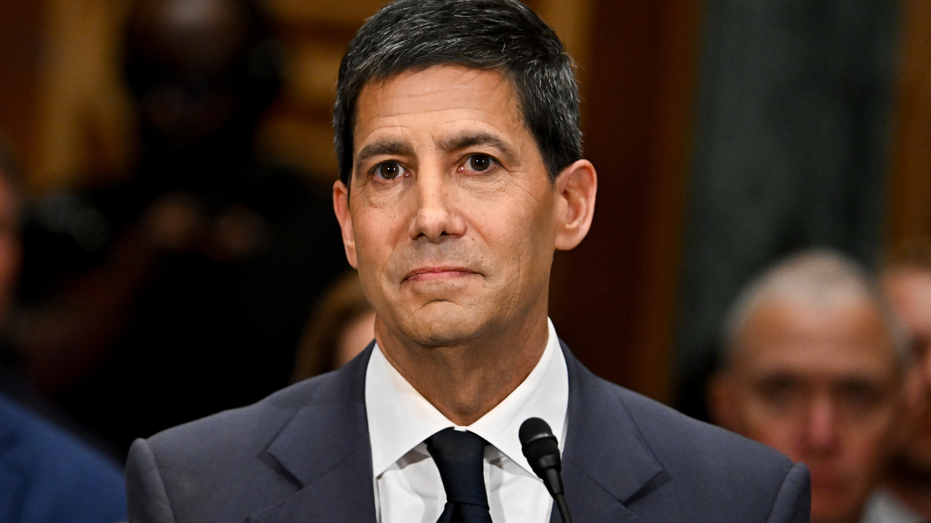
Kevin Warsh was tapped by President Donald Trump in January to lead the Federal Reserve. (Graeme Sloan/Bloomberg via Getty Images)
Tillis, who met with Warsh in March, praised the former Fed governor’s credentials and signaled support during the hearing.
“You have extraordinary credentials – they’re impeccable. The problem I have is where we are right now,” Tillis said, pointing to the Justice Department probe involving Powell.
On Jan. 11, Powell confirmed that the DOJ had opened a criminal investigation into his congressional testimony related to the renovation of the Federal Reserve’s two historic buildings on Washington, D.C.’s National Mall.

Federal Reserve Board Chairman Jerome Powell is expected to complete his term as head of the central bank next month. (Brendan Smialowski/AFP/Getty Images)
Powell called the probe “unprecedented” in a video statement and framed it as part of what he described as ongoing threats from President Donald Trump against the central bank. His public response – after days of private consultations with advisors – marked a sharp departure from his typically measured approach.
The investigation marks one of the most challenging stretches of Powell’s eight-year tenure leading the Fed.
FEDERAL RESERVE CHAIR POWELL UNDER CRIMINAL INVESTIGATION OVER HQ RENOVATION
Federal Reserve Chairman Jerome Powell confirmed the central bank had been served by the Justice Department over allegations related to congressional testimony on the renovation of the bank’s headquarters. (Credit: Federal Reserve)
The renovation of the Federal Reserve’s two main office buildings in Washington’s Foggy Bottom neighborhood is estimated to cost $2.5 billion and is being funded by the central bank itself, not by taxpayers.
The Fed is self-financing and does not rely on congressional appropriations to cover its operating expenses, which include employee salaries, facilities maintenance and the current renovation. Its primary income comes from interest earned on government securities and fees charged to financial institutions.
In June 2025, Powell told members of the Senate Banking Committee, “There’s no new marble. There are no special elevators. They’re old elevators that have been there. There are no new water features. There are no beehives, and there’s no roof garden terraces.”
FROM MORTGAGES TO CAR LOANS: HOW AFFORDABILITY RISES AND FALLS WITH THE FED
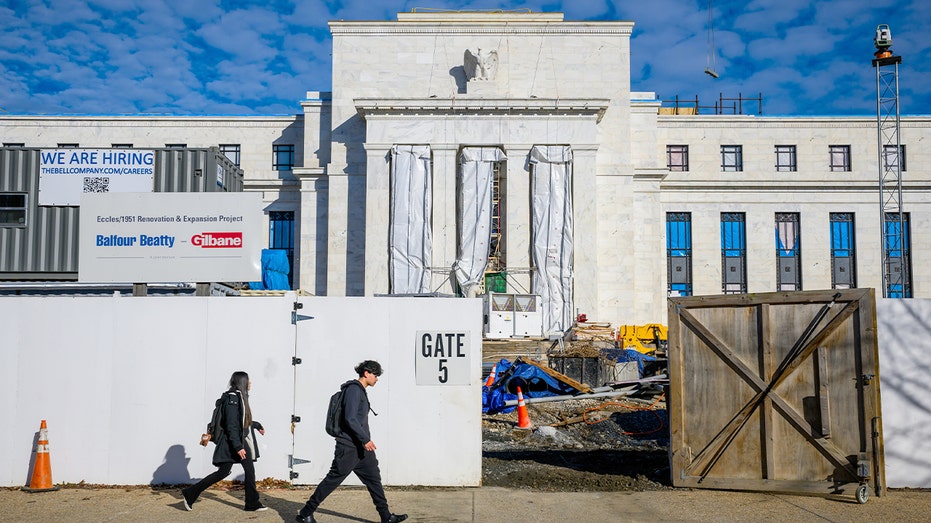
Construction continues at the Marriner S. Eccles Federal Reserve building Jan. 12, 2026. (Pete Kiehart/Bloomberg via Getty Images)
Powell also told lawmakers that no one “wants to do a major renovation of a historic building during their term in office.”
“We decided to take it on because, honestly, when I was the administrative governor, before I became chair, I came to understand how badly the Eccles Building really needed a serious renovation,” Powell said, adding the building is “not really safe” and not waterproof.
He also said the cost overruns are due, in part, to unexpected construction challenges and the nation’s inflation rate.
GET FOX BUSINESS ON THE GO BY CLICKING HERE

The main two-story boardroom of the Marriner S. Eccles Federal Reserve building during a media tour of the renovation of the central bank’s headquarters July 24, 2025. (Andrew Harnik/Getty Images)
The project is expected to be completed in the fall of 2027, and Washington-based employees are slated to begin working in the building in March 2028.
Warsh, who was tapped by Trump in January to succeed Powell, is poised to take the helm of the world’s most powerful central bank at a turbulent moment for the Federal Reserve.
Aside from the probe involving Powell, the Supreme Court is weighing limits on the Fed’s independence and rising cost-of-living pressures are testing Trump’s economic agenda.
In short, the stakes for the next chair are intensifying.

Operator
Thank you for standing by, and welcome to the Northern Star March 2026 Quarterly Results. [Operator Instructions]
I would now like to hand the conference over to Mr. Stuart Tonkin, Managing Director and CEO. Please go ahead.
Stuart Tonkin
CEO, MD & Director
Good morning, and thank you for joining us today. With me on the call is Chief Financial Officer, Ryan Gurner; and Chief Operating Officer, Simon Jessop.
As previously announced, in the March quarter, gold sold totaled 381,000 ounces. And today, we announced the delivery of those ounces at an all-in sustaining cost of AUD 2,709 per ounce. This improved operational performance exiting the quarter has delivered high-margin ounces to generate group underlying free cash flow of $301 million. More specifically, we are prioritizing cash flow at KCGM by accelerating volumes from the high-grade Golden Pike zone during current mill constraints. At Jundee, the operational review is underway, and across Thunderbox and Pogo, we’ve seen gold grades improve. With this improved performance and high-grade ROM stockpiles at KCGM, the company is forecast to deliver its revised FY ’26 production guidance of above 1.5 million ounces.
As previously disclosed, this outlook remains particularly dependent on mill throughput at KCGM with both downside and upside potential. Total growth capital expenditure
Royal Unibrew A/S (ROYUF) Q1 2026 Sales/ Trading Statement Call – Slideshow

A historically fraught relationship between Indigenous people and colonial agriculture is being broken down by a new wave of farmers

Thailand’s government intends to issue an emergency decree to borrow up to 500 billion baht, pending approval to raise the public debt ceiling, citing tight cash reserves and mounting economic risks.
Key Points
- Deputy Prime Minister Pakorn Nilprapunt announced the plan, noting actual borrowing may be less than the full amount but the ceiling must cover the full figure per public debt rules.
- Public debt currently sits at ~66% of GDP, nearing the existing 70% limit; the Finance Ministry will finalize the new ceiling to preserve fiscal space.
- Prime Minister Anutin Charnvirakul signaled budget discipline for 2027, including cuts to non-essential spending and capped increases, with the 3.788 trillion baht budget plan to be submitted to cabinet on June 23.
Thailand’s proposed 500 billion baht emergency borrowing is justified by the government as a necessary response to tight cash balances and escalating external and environmental risks. Deputy Prime Minister Pakorn Nilprapunt stated that while the full amount may not be utilized, the law requires raising the public debt ceiling to cover the specified total to address these pressing economic issues.
The move comes as public debt reaches approximately 66% of GDP, nearing the current 70% statutory limit. To maintain fiscal stability, Prime Minister Anutin Charnvirakul has simultaneously issued guidelines for the 2027 budget that include cutting non-essential spending and limiting budget increases. However, some economists warn that such large-scale borrowing amid a global energy crisis and stagnant growth could lead to stagflation or a sovereign credit rating downgrade.
Thailand’s government is facing significant economic risks, primarily driven by a global energy crisis and the Middle East conflict, which have triggered concerns over potential stagflation. To manage these pressures, authorities have introduced fiscal measures, including an emergency decree to borrow 500 billion baht and a proposal to expand the public debt ceiling beyond the current 70% of GDP.
Deputy Prime Minister Pakorn Nilprapunt stated that rising external and environmental risks, combined with tight cash balances, necessitated these emergency borrowing plans. Experts at the University of the Thai Chamber of Commerce warn that stagflation—characterized by low growth and high inflation—is a growing threat if the conflict in the Middle East persists, potentially leading to increased business costs and weakened consumer purchasing power. Additionally, high levels of household debt and a widening trade deficit due to soaring oil prices have further strained the nation’s fiscal stability and currency value.
Other People are Reading


Florida launches criminal probe into OpenAI and ChatGPT over deadly shooting

The state government is working on a deal to use a federal government loan scheme to support mid-tier infrastructure projects in the North West.

Kira-Yan/iStock Editorial via Getty Images

The following segment was excerpted from the Rowan Street Q1 2026 Letter.
Meta (META) has delivered a cumulative return of approximately 1,300% since its IPO, or about 21% annually. The path to those returns, however, has been anything but

Britain’s utilities and construction contractors are running up against the same quiet problem. The jobs are there, the tenders are lucrative, but the qualified workforce to actually execute them is tightening year on year.
NRSWA (New Roads and Street Works Act) certification has gone from a nice-to-have credential five years ago to a genuine precondition for winning certain local-authority and utility contracts in 2026. Small and mid-sized enterprises in the sector are investing in certification at unprecedented rates, and the ones waiting to see how it shakes out are quietly losing ground to competitors who moved first.
The investment case is stronger than most SME owners initially expect. Reputable providers such as an NRSWA Streetworks Operative Course deliver five-day certification windows that map directly to the Street Works Qualifications Register, valid for five years, and the ROI calculation in labour productivity plus tender win-rate improvement typically pays the course cost back within a quarter. Here’s why the certification question has moved up the SME agenda and what business owners should understand before committing their training budget.
Why Has NRSWA Certification Become a Competitive Differentiator?
Three structural shifts over the last five years have made streetworks certification more valuable than it was historically.
The first is local authority procurement tightening. Councils across England and Wales have moved toward explicit certification requirements in their streetworks-related tenders. A contractor without certified operatives on the crew is increasingly disqualified at the paperwork stage rather than evaluated on price. That shifts the calculation from “is certification worth the cost” to “is not having certification worth the lost revenue”.
The second is utility sector consolidation. As water, gas, and telecoms contractors have scaled through acquisition, the larger acquirers are standardising on certified-only sub-contractor networks. SMEs without certification are finding themselves excluded from subcontractor lists they relied on for 20 percent or more of their annual revenue.
The third is insurance alignment. Public liability policies for streetworks contractors are increasingly pricing certification as a risk factor. Insurers quote more aggressively to firms with documented training records, and quote punitively to firms without. Over a multi-year insurance cycle, that premium differential adds real money to the certification ROI calculation.
What Does the NRSWA Course Actually Cover?
The standard five-day operative course covers six core competency areas:
- Locating underground apparatus. Cable avoidance, service detection, and safe digging practice around gas, water, electric, and telecoms infrastructure.
- Signing, lighting, and guarding. The traffic management requirements that protect both site workers and the public during active works.
- Excavation. Safe excavation techniques, including spoil management and working near underground utilities.
- Reinstatement of various materials. Returning surfaces, footways, and carriageways to specification after works complete.
- Safety and compliance paperwork. The documentation trail that local authority inspectors actually check.
- Practical and theoretical assessments. Both classroom-based testing and site-based competency demonstration before certification issues.
The five-day format compresses theoretical content, supervised practical work, and formal assessment into a concentrated window that SMEs can manage around project schedules.
What Returns Should SMEs Expect From the Investment?
Four measurable returns that certified SMEs typically document within the first year:
Contract win rate improvement. Firms that move from zero certified operatives to a certified team of 5-8 typically see a 15-30 percent lift in successful tender submissions over the following 12 months. The HSE’s guidance on streetworks safety documents the regulatory backdrop that makes this true.
Reduced project rework. Certified operatives reduce reinstatement failure rates measurably, which means fewer callbacks, less liability exposure, and lower margin leakage per contract.
Stronger utility subcontractor relationships. Placement on approved subcontractor lists with major utilities is gatekept by certification status. Getting on those lists often unlocks multi-year contract frameworks that drive predictable revenue.
Insurance premium improvement. SME growth stories like Mowgli Street Food’s private equity payday under founder Nisha Katona often document workforce investment as a scaling lever that institutional investors value when pricing growth firms. Public liability renewals come back 8-15 percent lower for firms with documented certification records, which compounds across the five-year certification validity window.
The combined effect typically pays for the training investment within 3-6 months of certification for a mid-sized contractor, and continues to compound thereafter.
How Should SME Owners Structure the Training Investment?
A practical framework for deploying a certification programme without disrupting operational capacity:
- Phase the team through training. Certify in groups of 3-5 over 6-9 months rather than pulling the whole crew simultaneously
- Prioritise supervisors first. NRSWA supervisor qualifications (a separate certification track) should precede operative certifications so senior staff can validate on-site practice
- Use downtime strategically. January-February is typically slower in UK streetworks; it’s also when providers run discounted courses
- Budget for recertification cycles. The five-year validity window means a firm certifying 10 people in 2026 needs to plan 2031 recertifications now
- Capture certification status in quote paperwork. Publicising credential levels in tenders directly influences evaluator scoring
The Construction Industry Training Board’s guidance on industry workforce development covers the wider funding mechanisms (such as CITB grants) that partially offset training costs for eligible employers.
What Are the Common Mistakes SMEs Make?
A short list of failure modes that trip up first-time certification programmes:
- Treating certification as a one-off cost. The five-year validity means SMEs need ongoing recertification budgeting baked into financial plans
- Over-certifying when not needed. Not every operative role requires NRSWA certification; some admin-adjacent roles don’t benefit from the training investment
- Under-certifying supervisory roles. The supervisor-level certification is where many SMEs under-invest, creating compliance gaps on-site
- Ignoring cross-functional utility benefits. Teams often need to work across gas, water, electric, and telecoms scopes; single-sector certification can limit contract flexibility
- Picking the cheapest provider without checking assessor credentials. NRSWA certification quality varies measurably by provider; the paper outcome is the same but field competency can differ
What to Remember
- NRSWA certification has moved from nice-to-have to precondition for many UK streetworks contracts
- The investment typically pays back within one quarter through tender wins, insurance savings, and utility subcontractor access
- Five-day operative courses deliver Street Works Qualifications Register certification valid for five years
- Phase team certification rather than pulling the full crew simultaneously
- Budget for supervisor-level certification alongside operative training for best ROI
The Bottom Line for UK SME Owners
Streetworks certification has become one of the more measurable SME training investments available in 2026. The ROI path is clear, the contract-access benefits are documented, and the insurance-premium feedback loop compounds over the five-year certification window. For owners of growing trades or utility-adjacent firms, the question is rarely whether to certify the team. It’s how quickly to sequence the training against current project load. Getting ahead of the certification curve while competitors hesitate is one of the cheaper competitive moves available in the sector right now. Trades-sector entrepreneurs like Pimlico Plumbers founder Charlie Mullins have built their firms partly on workforce credentialing that competitors underinvested in.
Frequently Asked Questions
How long is NRSWA certification valid?
Five years from the date of successful assessment. Recertification is required before the expiry date to maintain the Street Works Qualifications Register listing.
What’s the cost of a five-day NRSWA operative course per person?
Typically £450 to £750 per operative depending on location, provider, and group booking discounts. CITB-registered employers may qualify for partial funding.
Can an SME self-certify through in-house training?
No. NRSWA requires accredited provider-delivered training with external assessment. Internal training cannot produce the Street Works Qualifications Register registration.
Which trades benefit most from NRSWA certification?
Gas, water, electricity, and telecoms operatives are the primary users. Construction firms doing groundworks, civil engineering contractors, and facilities management firms operating across streets also benefit meaningfully from certified crews.


The company is launching a new program to stimulate business growth.

Blockchain.com Brings Perpetual Futures to Self-Custody Wallets

Bob Odenkirk Kicks Ass And Takes Names In New, R-Rated Action Thriller

$1,000,000 In Counterfeit Money

Manchester United reach agreement with Casemiro over contract clause amid transfer speculation

Steven Gerrard disagrees with Gary Neville over ‘shock’ Chelsea and Arsenal claim | Football

US brings back mandatory military draft registration


-

 News Videos7 days ago
Secure crypto trading starts with an FIU-registered
-

 Fashion4 days ago
Weekend Open Thread: Theodora Dress
-

 Politics4 days ago
Palestine barred from entering Canada for FIFA Congress
-

 Sports5 days ago
NWFL Suspends Two Players Over Post-Match Clash in Ado-Ekiti
-
Entertainment2 days ago
NBA Analyst Charles Barkley Chimes in on Ice Spice McDonald’s Fiasco
-

 Business3 days ago
Powerball Result April 18, 2026: No Jackpot Winner in Powerball Draw: $75 Million Rolls Over
-

 Crypto World4 days ago
Russia Pushes Bill to Criminalize Unregistered Crypto Services
-

 Politics3 days ago
Zack Polanski demands ‘council homes not luxury flats for foreign investors’
-

 Politics1 day ago
Gary Stevenson delivers timely reminder to register to vote as deadline TODAY
-

 Tech3 days ago
Auto Enthusiast Scores Running Tesla Model 3 for Two Grand and Turns It Into Bare-Bones Go-Kart
-

 Tech6 days ago
‘Avatar: Aang, The Last Airbender’ Leaked Online. Some Fans Say Paramount Deserves the Fallout
-
 Business5 days ago
Creo Medical agree sale of its manufacturing operation
-

 Crypto World4 days ago
Russia Introduces Bill To Criminalize Unregistered Crypto Services
-
 Entertainment7 days ago
Dave Portnoy Slams Dianna Russini: ‘Makes Zero Sense’
-

 Sports6 days ago
British climbers complete new route in Swiss Alps
-

 Sports6 days ago
“Felt Much Better Today”: Josh Hazlewood Opens Up On His Recovery Win Over LSG
-
 Crypto World3 days ago
Kelp DAO rsETH Bridge Hack Drains $292M as DeFi Losses Top $600M in Two Weeks
-

 Tech6 days ago
Ford EV and tech chief leaving automaker
-

 Entertainment6 days ago
Ruby Rose Accuses Katy Perry Of Sexual Assault, Police React
-

 Business6 days ago
Cheaper Doritos and Lays helps PepsiCo win back struggling snackers
You must be logged in to post a comment Login