Connect with us
DAPA Banner

Tech

What Have We Dumped On The Moon?

Published

on

If you read a headline that signs of intelligent life were found on the moon, you might suspect a hoax. But they are there! Humans have dumped a lot of stuff on the moon, both in person and via uncrewed rockets. So after the apocalypse, what strange things will some alien exo-archaeologist find on our only natural satellite?

The Obvious

Of course, we’ve left parts of rockets, probes, and rovers. Only the top part of the Apollo Lunar Excursion Module left the moon. (See for yourself in the Apollo 17 ascent video below.) The bottoms are still there, along with the lunar rovers and a bunch of other science instruments and tools. There are boots and cameras, as you might expect.

But what about the strange things? As of 2012, NASA compiled a list of all known lunar junk that originated on Earth. The list starts with material from the non-Apollo US programs like the Surveyor and Lunar Prospector missions. Next up is the Apollo stuff, which is actually quite a bit: an estimated 400,000 pounds, we’ve heard. This ranges from the entire descent stage and lunar overshoes to urine bags. There are even commemorative patches and a gold olive branch.

After that, the list shows what’s known to be on the surface from the Russian space program, along with objects of Chinese, Indian, Japanese, and European origin.

Advertisement

The Sentimental

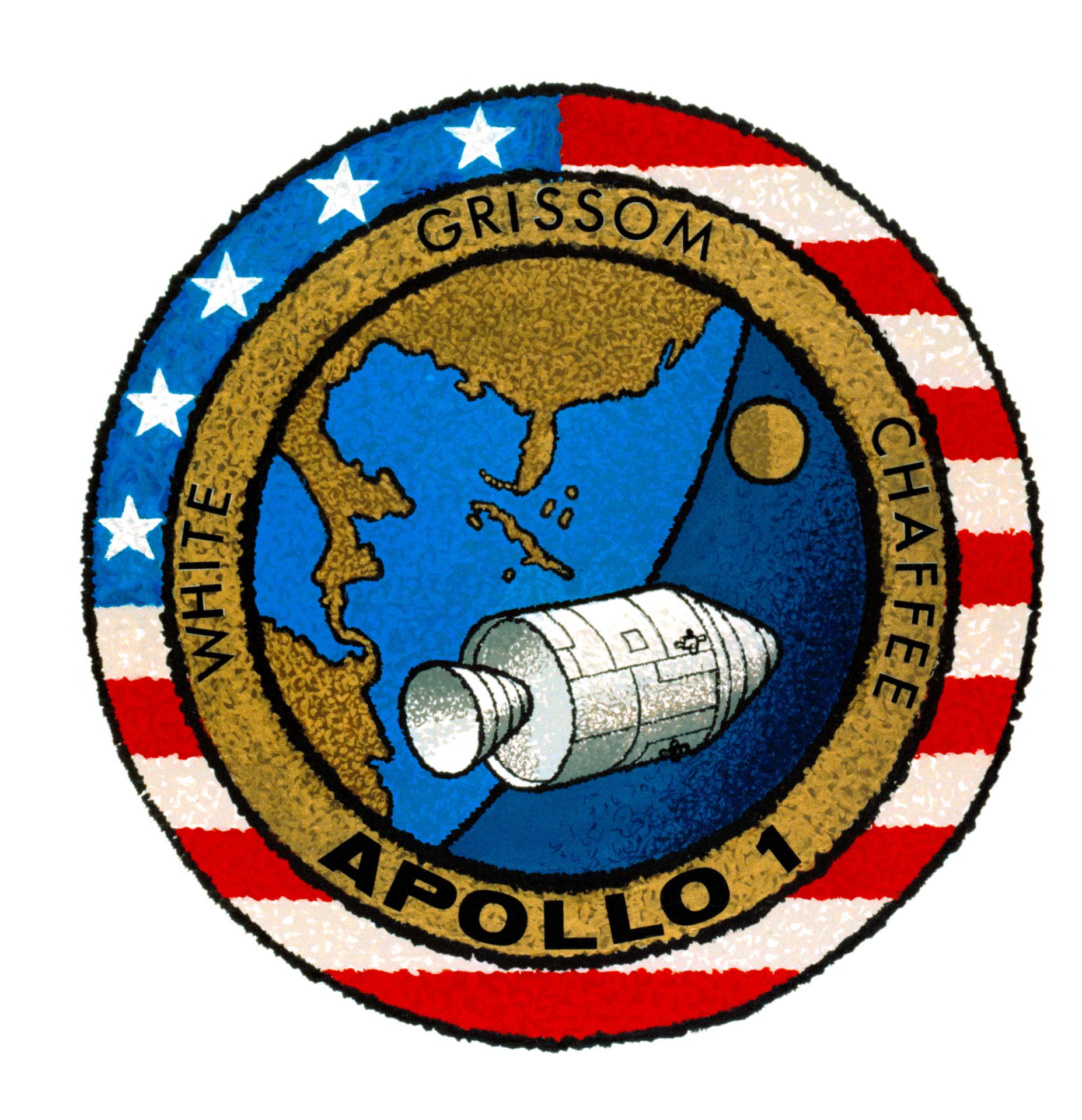
An Apollo 1 patch made its way to the moon.

Charles Duke on Apollo 16 left a framed family photo on the Moon’s surface with an inscription on the back. We figure if you go looking for it now, the sun will have bleached it white, but we appreciate the sentiment.

There are several objects meant to commemorate fallen astronauts and cosmonauts, including an Apollo 1 mission patch. You may recall that a fire during training killed all three of Apollo 1’s crew.

Lunar Prospector brought a portion of the ashes of Gene Shoemaker, a geologist who trained Apollo astronauts, to the moon. The capsule of ashes holds a quote from Romeo and Juliet:

And, when he shall die

Take him and cut him out in little stars

Advertisement

And he will make the face of heaven so fine

That all the world will be in love with night,

And pay no worship to the garish sun.
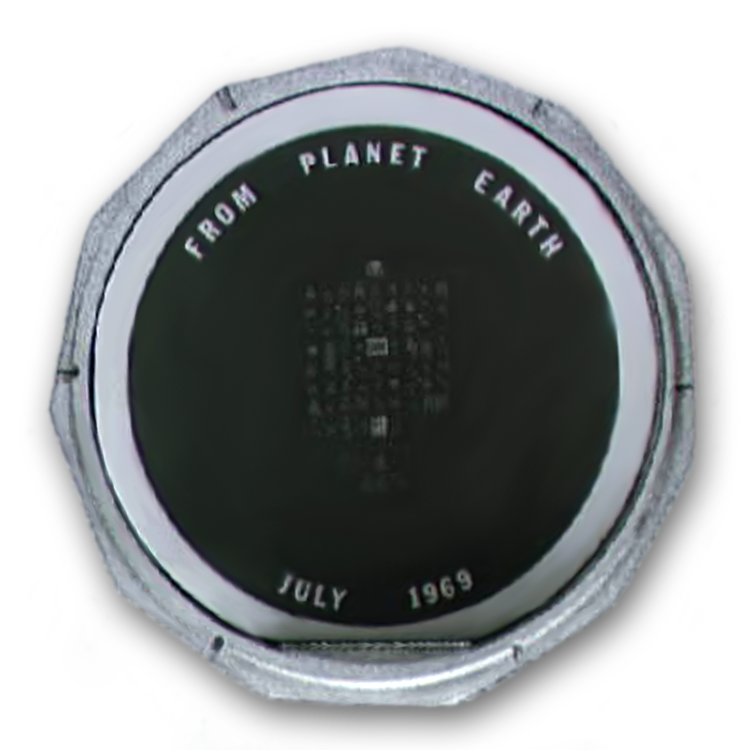
A half-dollar-sized disc has 73 goodwill messages from world leaders.

To date, Shoemaker is the only person who has remains on the moon.

While not exactly sentimental, NASA did send a silicon disc to the moon with Apollo 11 containing goodwill messages from 73 countries. The whole thing is about the size of a US half dollar, so if you want to read the messages, you might be better off reading the associated document.

Advertisement

Making tiny silicon wafers with finely-detailed etchings was pretty high tech in the late 1960s. GCA Corp used a reduction camera to make a negative photomask containing all the letters plus an inscription around its edge at its final size. This mask was given to Sprague, who etched it.

The Odd

One of the strange things on the NASA list is a falcon feather. That was left by Apollo 15’s Davis Scott, who carried out the classic experiment of dropping a feather and a hammer to note that they fell at the same speed, even in the weak gravity of the moon. The feather was from Baggin, the Air Force Academy’s mascot, and remains on the lunar surface today.

Speaking of Baggin, there are 96 bags of human waste sitting up there. Probably best not to bring that up the next time you and your partner are gazing at the romantic moon overhead.

Advertisement

The Unconfirmed

Forrest Myers created a small ceramic wafer with tiny artwork from six artists, like Andy Warhol, titled “Moon Museum.” The tile features six drawings, including a stylized “AW” (Warhol), a line (Robert Rauschenberg), a black square (David Novros), a diagram (John Chamberlain), Mickey Mouse (Claes Oldenburg), and an interlocking design (Myers). Apparently, Novros and Chamberlain were inspired by circuit diagrams of some kind.

Bell Labs created the wafer. However, NASA failed to approve the project, and Myers sought an alternative.

Reportedly, Myers gave the chip to an unnamed Apollo 12 engineer who affixed it to the leg of the lunar module. However, NASA has not confirmed this, so we don’t know for sure if it is up there or not. Perhaps if you get to the neighborhood, you can check it out and let us know?

To the Dump
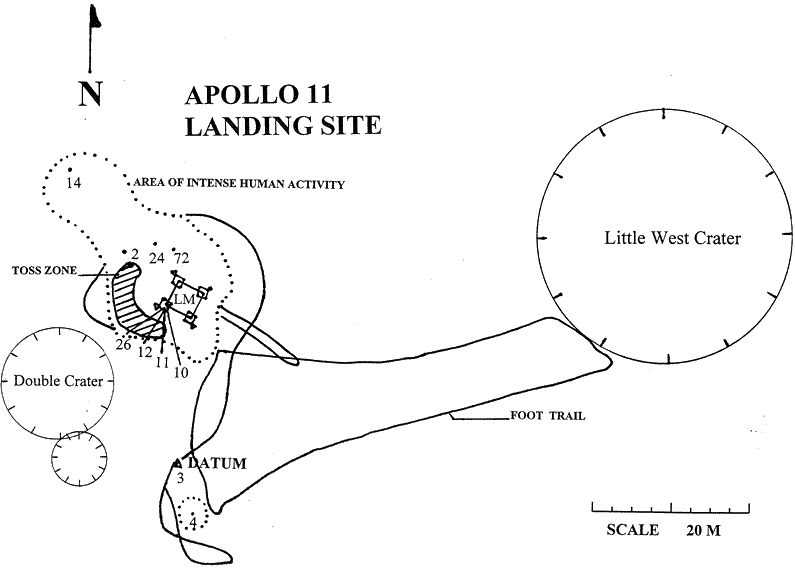
Apollo 11 Landing Site Map from The Lunar Legacy Project (note “toss zone” to the left).

You might wonder why so much stuff was left, but if you think about it, it makes sense. The rockets can only bring back so much stuff. Every camera you leave behind means more moon rocks you can bring home. You can buy a new camera, but you can’t buy more moon rocks.

According to the Lunar Legacy Project, Apollo 11, and presumably the other missions, had designated toss zones. (We guess “dumps” didn’t sound good.)

Advertisement

If you are looking for a more up-to-date list, the Wikipedia article can help fill in the gaps, at least for vehicles. There’s been quite a bit added since the NASA list, including items from the UAE, Israel, and Luxembourg. Plus, there are many new additions from other countries.

With the advent of high-resolution orbital cameras, you can see some of the landing sites better than ever. For example, the video below shows the Apollo 17 site imaged by the Lunar Reconnaissance Orbiter Camera.

Of course, we are on our way back to the moon, and so are other space programs. So there will probably be even more human debris on the moon soon. It is only a matter of time before lunar waste management becomes a hot topic.

Advertisement

Title image “Map of artificial objects on the Moon” by [Footy2000]

Source link

Advertisement
Continue Reading
Click to comment

You must be logged in to post a comment Login

Leave a Reply

Tech

I’ve hunted out a selection of super solar-powered gadgets that stay juiced up with the energy of the sun

Published

on

Figuring out ways to indulge a tech habit while being mindful of environmental impact is tricky, but looking for more energy-efficient options is a great place to start — and opting for a solar-powered device means you could avoid wasting any previous resources when recharging.

Sustainability Week 2026

This article is part of a series of sustainability-themed articles we’re running to observe Earth Day 2026 and promote more sustainable practices. Check out all of our Sustainability Week 2026 content.

Advertisement

Source link

Continue Reading

Tech

Iran claims US botnets or backdoors disabled routers from Cisco, Juniper, and Fortinet

Published

on


The allegation, first pushed by Iranian state media and later by foreign outlets and Chinese publications, centers on hardware failures said to have occurred even while Iran remained largely cut off from the global internet.
Read Entire Article
Source link

Continue Reading

Tech

Threads introduces ‘live chats’ for following live events

Published

on

Meta has introduced a new “live chats” feature to Threads, enabling people on the platform to participate in real-time conversations about live events they’re interested in. Live chats can be hosted within Threads communities, the topic-specific social spaces that Meta last year.

The new feature sounds a bit like Threads’ take on Instagram’s broadcast channels, but the latter only allows for one-way messaging. Live chats can be hosted by select creators, including Community Champions — users highly engaged within specific communities — and media personalities. Once a chat is launched or scheduled, the host chooses who is invited to contribute and can then share the link publicly.

You can post photos, videos, links and emoji reactions as well as text-based messages. If you’re unable to send messages in a live chat that is at capacity, you can still watch it, react to others messages and vote in polls. Live chats remain open to view after they’ve ended, and you don’t need to be part of a community to join.

Meta is debuting its new social feature in the NBAThreads Community during the Playoffs, with Malika Andrews, Rachel Nichols, Trysta Krick, David Rushing and Lexis Mickens named as hosts. Live chats will appear at the top of the NBAThreads Community feed, and can also be shared in a post that might appear on your main feed in Threads. You’ll also see a red ring around a host’s profile photo when they’re live.

Advertisement

Meta says live chats will gradually be rolled out to more communities on Threads, with features like co-hosting, lock screen widgets and the ability to quote and share messages from a chat on your feed coming soon.

Meta has been steadily expanding its X rival’s features since it launched in 2023. It started small with (note: not hashtags) and , before rolling out communities last year. It also started long-form text posts and just gave Threads a long-overdue facelift on web. Back in October, the company that its text-based social media platform now has 150 million daily users.

Source link

Advertisement
Continue Reading

Tech

New York Bans Government Employees from Insider Trading on Prediction Markets

Published

on

New York has banned state employees from using insider information to trade on prediction markets. In an executive order signed today and viewed by WIRED, Governor Kathy Hochul forbade the state’s government workforce from using “any nonpublic information obtained in the course of their official duties” to participate on prediction market platforms, or to help others profit using those services.

“Getting rich by betting on inside information is corruption, plain and simple,” Hochul said in a statement provided to WIRED. “Our actions will ensure that public servants work for the people they represent, not their own personal enrichment. While Donald Trump and DC Republicans turn a blind eye to the ethical Wild West they’ve created, New York is stepping up to lead by example and stamp out insider trading.”

The order was not spurred by any specific insider trading incidents involving New York state employees. “There are no known instances of this behavior to date,” says New York State Executive Chamber deputy communications director Sean Butler.

This is the latest in a wave of initiatives meant to curb insider trading on prediction markets like Kalshi and Polymarket, the two most popular of these platforms in the United States. California Governor Gavin Newsom issued a similar executive order last month, banning Golden State employees from prediction market insider trading. Yesterday, Illinois Governor JB Pritzker followed suit.

Advertisement

In addition to these executive orders, Congress has also introduced several bills intended to curb market manipulation and corruption in the industry, including legislation barring elected officials from participating in prediction markets. Some individual politicians are discouraging or outright barring their staff from buying event contracts on those platforms. According to CNN, the White House recently warned executive branch staff not to trade on prediction markets. When WIRED asked the White House about its policies on these markets earlier this year, it pointed to existing regulations prohibiting gambling activity but did not respond to requests for clarification on whether it considered prediction market participation to be gambling.

The Commodity Exchange Act, which covers derivative markets, does already prohibit insider trading, which means that both public servants and people in the private sector are breaking the law if they enact insider trades on event contracts. Rather than establishing new rules, the New York executive order serves primarily to underline the state’s commitment to enforcing existing laws and to clarify how these laws and its Code of Ethics for employees apply to prediction markets.

However, with so many high-profile examples of suspected insider trading on Polymarket focused on geopolitical events, from the capture of former Venezuelan leader Nicolas Maduro to strikes in the ongoing Iran war, many onlookers—including prominent lawmakers—see this as such a combustible issue. They’re racing to write laws and orders restating and emphasizing existing rules.

“This makes sense, and we already do this. At Kalshi, insider trading violates our rules, and we enforce them when we catch insiders,” Kalshi spokesperson Elisabeth Diana says. “Government employees should be aware that trading on federally regulated markets using material nonpublic information violates the law.” (Polymarket did not immediately respond to a request for comment.)

Advertisement

Facing backlash, Polymarket and Kalshi have recently announced new initiatives to combat insider trading.

In February, Kalshi publicized its decision to suspend and fine two individuals for violating its market manipulation policies; the company also confirmed that it had flagged the cases to the Commodity Futures Trading Commission, the federal agency overseeing prediction markets. In March, it rolled out a beef up market surveillance arm, preemptively blocking political candidates from trading on markets related to their campaigns.

Source link

Advertisement
Continue Reading

Tech

Minnesota Lawmakers Tried To Ban Classic Cars On Weekdays: Here’s How It Ended

Published

on


Some people might look at cars — and the automotive hobby itself — as an escape from the constant political debates and arguments that seem to be everywhere in modern life. However, the reality is that politics are often heavily tied to both the industry itself and cars as a hobby.

Mandates, laws, and regulations related to safety systems, fuel economy standards, fuel types, and even a vehicle’s country of origin have all been part of federal politics in the past, and will likely feature in the future, too. Likewise, hobbyists and classic car owners sometimes need to argue their cases to state governments to protect or expand their hobby. For example, Jay Leno has been leading an effort in California since 2025 to have the state amend some of the notoriously restrictive smog laws that make classic car ownership difficult and expensive. 

The Golden State, however, is not the only place where classic car owners face restrictions. In Minnesota, a new bill aimed to limit the use of classic cars registered with the state’s collector plates — including potentially prohibiting owners from driving them on weekdays or at night. Naturally, this has caught the attention not just of classic car owners in Minnesota, but of observers nationwide. Thankfully for Minnesotans, however, the bill looks to have stalled out before getting to a vote.

Advertisement

One state with many plates

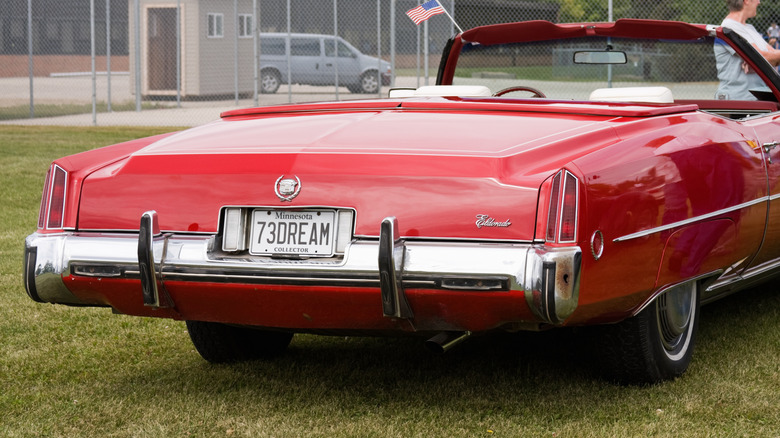
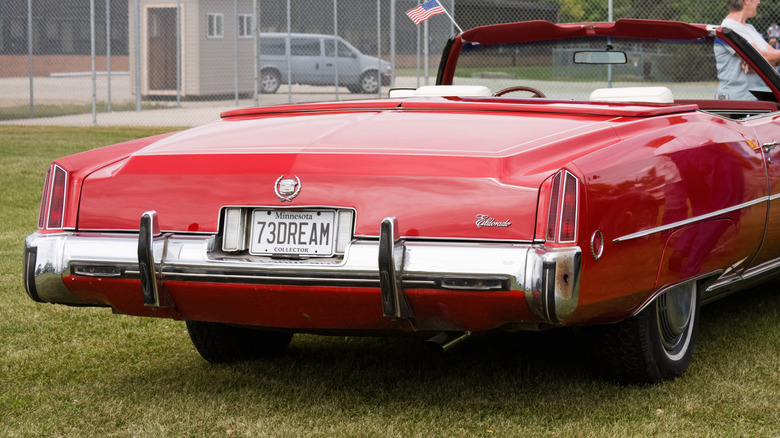
While it’s entirely possible — and potentially very enjoyable — to have a classic car as a daily driver, there are lots of pros and cons of daily driving a vintage vehicle, not least the cost of ownership. Minnesota, however, offers drivers some help here, with a few different collector plate options available depending on a vehicle’s age, all of which exempt the owner from annual registration fees. At the very least, Minnesota collector plates require a car to be at least 20 years old and for the owner to have another vehicle with standard plates. As stated in the current law, owners are also not to use cars with collector plates for daily transportation.

The new bill, HF3865, wanted to tighten these restrictions so that collector-plated vehicles could only be operated during daylight hours on Saturdays and Sundays, or specifically during collector club activities or parades. Now, the amendment might be understandable on the surface if its purpose was to clarify what does or doesn’t constitute daily transportation. It could also be useful if there were concerns over vehicle owners abusing the privileges that come with the plates. But some classic car owners fear it represents a significant encroachment on the hobby and could be a gateway for additional laws in the future.

Advertisement

The worst likely won’t come to pass

The bill’s wording would mark a huge departure from Minnesota’s current law, theoretically making it illegal to take a collector-plated car out for a casual Friday evening cruise or a Tuesday afternoon test run after replacing a part. The issue, of course, is that both scenarios are pretty common for classic car owners, especially those who spend their weekdays wrenching. More broadly, though, the concern is also less about the specifics of this one bill. Instead, it’s the seeming trend of lawmakers scrutinizing and attempting to legislate classic car and auto enthusiast hobbies that has this bill in the headlines.

Advertisement

Fortunately for classic car owners in Minnesota, the bill may not become law, as it has been stuck in Committee since early March, 2026. Opponents of the bill are likely hoping that lawmakers get caught up with more pressing matters than limiting which days classic car owners can drive their vehicles, causing HF3865 to sputter out before a vote. There are already many things to consider before buying a classic car, and on top of all the other expenses that come with the hobby, having strict rules on use are something most vintage car owners would prefer not to deal with — regardless of which state they live in.


Advertisement

Source link

Continue Reading

Tech

CATL says its new EV battery can recharge from 10% to 98% in six minutes

Published

on


CATL recently unveiled its new battery technology, promising improvements in some of the most difficult tradeoffs in EV performance. Its third generation Shenxing battery can be recharged almost fully in around six minutes, while also maintaining stronger efficiency in low temperatures and harsh weather.
Read Entire Article
Source link

Continue Reading

Tech

2026 LG evo W6 Wallpaper TVs Arrive With $1,000 Premium

Published

on

Following our hands-on coverage at CES 2026, where LG Electronics showed just how far it could push OLED design, the company has now confirmed pricing and availability for the 2026 OLED evo W6 Wallpaper TV series.

The W6 does not just lean into the wallpaper concept, it fully commits to it. These panels are incredibly thin to the point where they almost disappear once mounted, turning the display into something that feels more like part of the wall than a traditional television. Now available for pre-order in 77-inch ($5,499.99) and 83-inch ($7,499.99) sizes – that is $1,000 more than LG’s G6 Series OLED evo AI 77 and 83-inch TV prices. The W6 moves from CES showpiece to something you can actually bring home, assuming your wall and your budget are ready for it.

Here is what the LG OLED evo W6 series offers.

Wallpaper Design

lg-w6-wallpaper-tv-side-ces-2026
LG W6 on display at CES 2026

The defining feature of the W6 series is its ultra thin Wallpaper design. The LG OLED evo W6 is built to sit nearly flush against the wall with a roughly 9 mm class profile and a mounting system designed to minimize any visible gap. The goal is straightforward. Once installed, it looks less like a television and more like part of the wall itself.

Zero Connect Box

lg-zero-connect-box-rear

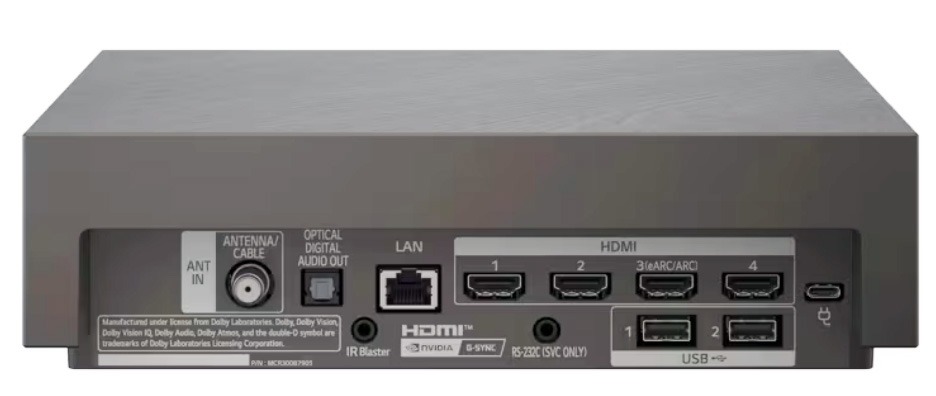
To support the Wallpaper design, all physical connections except the power cable are handled by LG’s Zero Connect Box. This external hub manages both wired and wireless sources and transmits 4K video and audio to the display from up to 32 feet away.

The result is a cleaner installation. The LG OLED evo W6 can sit flush on the wall without the usual tangle of cables pulling it back into reality, which is the whole point of the design.

Advertisement

OLED Performance

The OLED evo W6 incorporates LG’s RGB Tandem OLED panel with additional support from LG’s Alpha 11 AI Processor Gen3, which delivers advanced picture and sound optimization through AI-driven processing, including Hyper Radiant Color Technology. This elevates brightness, color accuracy, and contrast across a wide range of lighting conditions. With Brightness Booster Ultra, the W6 achieves luminance levels up to 3.9 times brighter than conventional OLED displays.  

Reflection Handling, Black Levels, and Color Performance

lg-reflection-free-premium

The LG OLED evo W6 adds some real substance behind the design. It carries an industry first Reflection Free Premium certification aimed at reducing glare and reflections in brighter rooms, which has always been a weak spot for OLED in everyday spaces.

LG also leans on its Perfect Black and Perfect Color claims, both verified by UL Solutions. In practice, that translates to consistent black levels and stable color performance regardless of ambient light. The benefit is not subtle. Better contrast, more accurate color, and a picture that holds together whether you are watching during the day or at night.

Premium Gaming Support

Meeting the needs of gamers has become a very important selling point for TVs, and the LG OLED evo W6 Wallpaper TVs fill the fill. The W6 supports 4K resolution at up to 165Hz with variable refresh rate (VRR) technology, NVIDIA G-SYNC compatibility, and AMD FreeSync Premium. These features are designed to support ultra-smooth, high-bandwidth gameplay with minimal lag, making the W6 a capable display for competitive gaming as well as cinematic viewing. 

webOS Platform 

lg-webos-home-screen-2026

The W6 incorporates LG’s latest version of its webOS platform to provide personalized user experiences through AI-powered features, including Voice ID, Multi-AI integration, and an upgraded AI Concierge for intuitive content discovery and navigation. In addition, LG Channels is also included – providing lots of free ad-supported content. 

Advertisement. Scroll to continue reading.
Advertisement

New for 2026, Gallery+ transforms the W6 into an art display when not viewing TV or gaming. Gallery+ allows users to display curated artwork, personal photos, and ambient visuals. Not only does art look great, but displaying artwork on the W6 takes full advantage of the TV’s flush-wall design and OLED picture quality. 

The Bottom Line 

We spent time with the LG OLED evo W6 at CES 2026 and it made a clear case for itself. This is not just another premium OLED. The near flush 9 mm class panel and the Zero Connect Box change how a large screen TV lives in a room. It is one of the few designs that actually reduces visual clutter instead of adding to it, and that matters if the TV shares space with everything else in your home.

It is not perfect. You are paying a premium for the form factor and installation approach. The Zero Connect Box solves cable management but adds another component that has to be placed somewhere. And while the wireless link is a real advantage for clean installs, some buyers will still prefer a traditional wired connection for peace of mind.

Who is this for? Not the budget crowd and not the spec chasers looking for the absolute brightest panel at any cost. This is for buyers who care as much about how a TV fits into a space as how it performs. Interior designers, custom installers, and anyone trying to avoid turning their living room into a black rectangle showroom will get it immediately. Everyone else will look at the price first and then decide how much that disappearing act is worth.

Advertisement

Price & Availability

The LG OLED evo W6 Wallpaper TVs are available for pre-order on LG’s website at the following prices: 

  • 77-inches – $5,499.99 at LG.com
  • 83-inches – $7,499.99 at LG.com

For more insight into LG’s OLED evo W6 series Wallpaper TVs, check out previous reports and hands-on video from CES 2026: 

Source link

Advertisement
Continue Reading

Tech

Let John Ternus be John Ternus, and not Cook or Jobs

Published

on

Pundits are saying John Ternus will be a Steve Jobs clone when he takes over Apple, while others are adamant that he’ll really be another Tim Cook. The truth is that of course he will be neither, and both, while being John Ternus.

Man in a blue T-shirt stands smiling and holding a pole inside a subway car, with other passengers around him and doors and advertisements visible in the background
John Ternus became a regular presenter of Apple’s keynote videos – image credit: Apple

Even John Ternus will have to wait to see what happens when he’s Apple CEO, but it might be years before that becomes clear and clickbait deadlines won’t wait that long. That’s not only on technology sites, as even The Hollywood Reporter has spun 900 words out of having no idea what Ternus will do with Apple TV.
At least they say nobody knows. Others with unnamed sources and unjustified speculation have instead already revealed with total certainty exactly what the man is going to be like.
Continue Reading on AppleInsider | Discuss on our Forums

Source link

Continue Reading

Tech

AI Tools Are Helping Mediocre North Korean Hackers Steal Millions

Published

on

The advent of AI hacking tools has raised fears of a near future in which anyone can use automated tools to dig up exploitable vulnerabilities in any piece of software, like a kind of digital intrusion superpower. Here in the present, however, AI seems to be playing a more mundane, if still concerning, role in hackers’ toolkit: It’s helping mediocre hackers level up and carry out broad, effective malware campaigns. That includes one group of relatively unskilled North Korean cybercriminals who’ve been discovered using AI to carry out virtually every part of an operation that hacked thousands of victims to steal their cryptocurrency.

On Wednesday, cybersecurity firm Expel revealed what it describes as a North Korean state-sponsored cybercrime operation that installed credential-stealing malware on more than 2,000 computers, specifically targeting the machines of developers working on small cryptocurrency launches, NFT creation, and Web3 projects. By using the AI tools of US-based companies, including those of OpenAI, Cursor, and Anima, the hacker group—which Expel calls HexagonalRodent—“vibe coded” almost every part of its intrusion campaign, from writing their malware to building the fake websites of companies used in its phishing schemes. That AI-enabled hacking allowed the group to steal as much as $12 million in cryptocurrency from victims in three months.

What’s most striking about the HexagonalRodent hacking campaign isn’t its sophistication, says Marcus Hutchins, the security researcher who discovered the group, but rather how AI tools allowed an apparently unsophisticated group to carry out a profitable theft spree in the service of the North Korean state.

“These operators don’t have the skills to write code. They don’t have the skills to set up infrastructure. AI is actually enabling them to do things that they otherwise just would not be able to do,” says Hutchins, who became well-known in the cybersecurity community after disabling the WannaCry ransomware worm created by North Korean hackers.

Advertisement

Emoji-Littered, AI-Written Code

HexagonalRodent’s hacking operation focused on tricking crypto developers with fraudulent job offers at tech firms, going so far as to create full websites for the fake companies recruiting the victims, often created with AI web design tools. Eventually, the victim was told they’d have to download and complete a coding assignment as a test—which the hackers had infected with malware that infiltrated their machine and stole credentials, including those that in some cases could grant access to the keys that controlled their crypto wallets.

Those parts of the hacking operation appear to have been well-honed and effective, but the hackers were also clumsy enough to leave parts of their own infrastructure unsecured, leaking the prompts they used to write their malware with tools that included OpenAI’s ChatGPT and Cursor. They also exposed a database where they tracked victim wallets, which allowed Expel to estimate the total amount of cryptocurrency the hackers may have stolen. (While those wallets added up to $12 million in total contents, Hutchins says the company couldn’t confirm for each target whether the entire sum had already been drained from the wallets or if the hackers still needed to obtain keys to the victim wallets in some cases, given some may have been protected with hardware security tokens.)

Hutchins also analyzed samples of the hackers’ malware and found other clues that it was largely—perhaps entirely—created with AI. It was thoroughly annotated with comments throughout—in English—hardly the typical coding habits of North Koreans, despite the fact that some command-and-control servers for the malware tied them to known North Korean hacking operations. The malware’s code was also littered with emojis, which Hutchins points out can, in some cases, serve as a clue that software was written by a large language model, given that programmers writing on a PC keyboard rather than a phone rarely take the time to insert emojis. “It’s a pretty well-documented sign of AI-written code,” Hutchins says.

Source link

Advertisement
Continue Reading

Tech

iPhone 18 Pro to lead Apple's four-phase camera upgrade strategy

Published

on


Digital Chat Station, a popular account on the Chinese social media app Weibo, claims the iPhone 18 Pro and Pro Max will ship with the new feature on the main rear camera. Since the iPhone 14 Pro, the primary cameras on the rear of the top-tier iPhones have used a…
Read Entire Article
Source link

Continue Reading

Trending

Copyright © 2025