
Business
Southwest Airlines (LUV) Q1 2026 earnings


A Southwest Airlines Boeing 737 airplane lands at Los Angeles International Airport after arriving from Chicago on March 7, 2026 in Los Angeles, California.
Kevin Carter | Getty Images
Southwest Airlines forecast second-quarter earnings below analyst estimates, citing higher fuel prices, while holding off on updating its full-year 2026 forecast.
Southwest expects to earn between 35 cents and 65 cents a share in the current quarter, while analysts polled by LSEG expected 55 cents a share.
The airline in January forecast earnings per share of $4 this year, saying that it expected its new initiatives would pay off. Southwest has sought to increase revenue with checked bag fees and seat assignment fees.
“Achieving this outcome would require lower fuel prices and/or stronger revenue performance to offset higher fuel expense. The Company expects to provide updates to this guidance as appropriate,” Southwest said in an earnings release Wednesday.
Airlines have been either cutting their full-year forecasts or holding off on further forecasts because of volatile prices for jet fuel, generally their biggest expense after labor. They are also pulling back on their capacity growth plans to cut costs, which can drive up airfare when fewer seats are for sale.
Southwest said it expects its capacity to be flat to up no more than 1% in the second quarter, and unit revenues to rise by 16.5% to as much as 18.5% over last year.
“Demand continues to be strong, and we remain focused on controlling what we can control by managing costs, optimizing revenue initiatives, and directing capacity toward higher‑return opportunities,” CEO Bob Jordan said in the earnings release.

Here’s what the company reported for first quarter compared with Wall Street expectations, according to consensus estimates from LSEG:
- Earnings per share: 45 cents vs. 47 cents cents expected
- Revenue: $7.25 billion vs. $7.27 billion expected
Southwest swung to a profit of $227 million, or 45 cents a share in the first quarter, compared with a $149 million loss, or a loss of 26 cents per share, a year earlier.
Revenue rose nearly 13% to $7.25 billion compared with $6.43 billion in the year-earlier period.

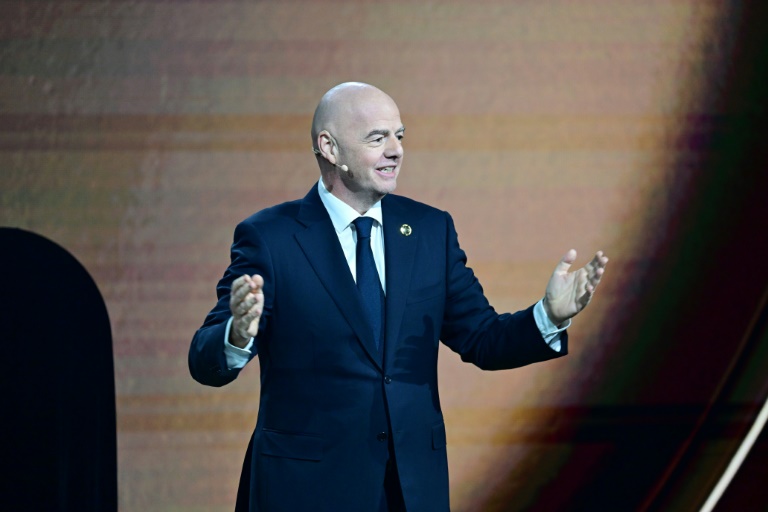
ZURICH, Switzerland — With exactly 50 days until the opening whistle of the expanded 48-team FIFA World Cup 2026, soccer’s governing body unleashed a fresh wave of tickets Wednesday for all 104 matches, giving fans one more shot at securing seats in the largest tournament in the event’s history.
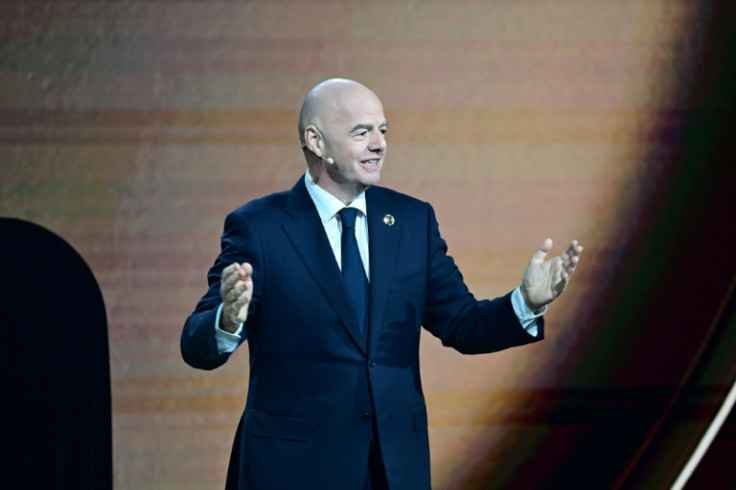
AFP
FIFA announced the new inventory drop as part of its ongoing Last-Minute Sales Phase, which began April 1 and runs through the final on July 19. Starting at 11 a.m. ET (5 p.m. CET) on April 22, tickets across every category became available on a first-come, first-served basis via FIFA.com/tickets. Purchases are processed in real time, with immediate email confirmations for successful buyers, FIFA said.
More than 5 million tickets have already been sold for the tournament co-hosted by the United States, Canada and Mexico, FIFA reported. The 2026 edition features 104 matches over 39 days — a significant jump from the traditional 64-game format — with venues stretching from Estadio Azteca in Mexico City to MetLife Stadium in New Jersey.
The April 22 release coincides precisely with the 50-day countdown to the June 11 kickoff, when host nation Mexico faces South Africa in the tournament opener at Estadio Azteca. Additional tickets will continue to be released periodically until the end of the competition, including options available up to 20 minutes after kickoff for individual matches, subject to availability.
This latest drop offers seats for every one of the 104 fixtures, including group-stage clashes, knockout rounds and the highly anticipated final on July 19 at MetLife Stadium in East Rutherford, New Jersey. Fans can select specific seats rather than just ticket categories, a change introduced in the last-minute phase.
The Last-Minute Sales Phase marks the fourth and final official sales window after earlier lottery-style draws and random selection periods. Unlike previous phases that required applications and waiting for results, this stage allows direct purchases as inventory becomes available. A resale and exchange marketplace also operates for fans looking to buy or sell tickets from other holders, subject to host country regulations.
Demand has been intense since ticket sales opened in 2025. Early phases included a Visa cardholder presale, general draws and a post-draw window following the December 2025 group-stage draw. Some fans reported technical glitches and long virtual queues when the last-minute phase launched April 1, while others noted rising prices for premium seats.
Category 1 tickets for the final have climbed above $10,000 in recent releases, drawing criticism from some supporters who say costs have escalated sharply. FIFA has defended the pricing, pointing to the unprecedented scale of the event and efforts to make some lower-priced options available, including supporter tickets for national teams.
The 2026 World Cup will showcase soccer across 16 host cities — 11 in the U.S., three in Mexico and two in Canada. Iconic venues include SoFi Stadium in Los Angeles, AT&T Stadium in Arlington, Texas, and BC Place in Vancouver. The expanded format features 12 groups of four teams, with the top two from each group plus the eight best third-place finishers advancing to a 32-team knockout stage.
All 48 qualified teams are now known, heightening excitement as the countdown accelerates. Host nations automatically qualified, while others earned berths through grueling continental qualifiers. The presence of traditional powerhouses alongside debutants promises a mix of high-stakes drama and fresh storylines.
For fans still hunting tickets, FIFA urges regular checks of the official site, as new inventory can appear without warning. Single-match tickets are the primary product available in this phase. Buyers should ensure they purchase only through authorized channels to avoid scams or invalid tickets.
Travel logistics add another layer of planning. Fans heading to U.S. venues may benefit from the FIFA PASS system for visa appointments. Organizers have emphasized sustainable transport options and fan zones in host cities to manage the expected influx of international visitors.
The tournament arrives at a time of growing global interest in soccer, with record viewership projected for matches broadcast across dozens of languages and platforms. Broadcasters in major markets have already secured rights, promising extensive coverage from group stage to final.
Some lower-demand matches may see more availability, while marquee fixtures — such as those involving defending champion Argentina, Brazil or European heavyweights — could sell out rapidly in this drop. Tickets for the opening match and final have been among the hottest commodities throughout sales.
FIFA has stressed that the last-minute phase provides a genuine opportunity for fans who missed earlier windows. “This is the final pathway to be part of history,” officials said in earlier announcements about the phase launch.
As teams finalize preparations and host cities put finishing touches on infrastructure, the ticket release injects fresh momentum into the pre-tournament buzz. Hotels, flights and fan experiences in cities like Miami, Toronto and Guadalajara are seeing increased bookings from supporters locking in plans.
Critics have raised concerns about affordability and accessibility, particularly for local fans in host countries. FIFA points to various ticket categories and occasional releases of more affordable seats as ways to broaden access.
Security and ticketing technology have been upgraded following lessons from previous tournaments. Digital tickets linked to buyer accounts aim to reduce fraud and improve entry processes at stadiums.
With just 50 days remaining, anticipation is building not only for on-field action but also for the cultural celebrations surrounding the event. The 2026 World Cup is billed as a celebration of soccer’s global reach, uniting three nations in a shared hosting effort.
Fans who secure tickets in Wednesday’s drop will join what promises to be a record-setting crowd across the expanded schedule. Whether chasing a group-stage upset or a seat at the final, the latest release keeps the dream alive for thousands more supporters.
FIFA officials encouraged fans to act quickly but purchase responsibly, reminding them that additional drops will follow. The governing body also highlighted its commitment to a smooth ticketing experience as the tournament nears.
As the clock ticks down toward June 11, the combination of new ticket availability and mounting excitement underscores why the World Cup remains the planet’s most-watched sporting event. For those still on the fence, Wednesday’s release may be the moment that turns hope into a confirmed seat in the stands.

Check out what’s clicking on FoxBusiness.com.
A Florida produce distributor has recalled thousands of cantaloupes due to a potential risk of Salmonella contamination – and now the U.S. Food and Drug Administration (FDA) is warning of an increased risk.
The recall was first initiated last month, but the FDA upgraded it to Class I on April 20, meaning consuming the affected cantaloupe could lead to severe health consequences or death.
According to an FDA enforcement report updated earlier this week, Ayco Farms Inc., based in Pompano Beach, Florida, recalled 8,302 cartons of its fruit.
Although the recalled cantaloupes are no longer sold in stores, the FDA’s upgrade underscores a lingering risk: consumers who purchased the fruit earlier this year may still have it stored in their freezers, where contamination can persist.
GENERAC RECALLS PORTABLE GENERATORS SOLD AT COSTCO OVER FIRE RISK

More than 8,000 cartons of whole cantaloupes were recalled, according to an enforcement report published by the FDA. (iStock / iStock)
The recalled fruit was sold in cardboard cartons containing between six and 12 melons wrapped in food-safe bags and distributed to retailers across California, Florida, New York and Pennsylvania.
Ayco Farms said in a press release that the recall listed in the FDA’s enforcement report is no longer active.
“The listing reflects a previously completed, voluntary recall of fresh whole cantaloupes that were distributed between December 12, 2025, and January 16, 2026, due to ‘potential’ Salmonella contamination,” the press release reads.
“The recall was initiated earlier this year as a precautionary measure in coordination with the U.S. Food and Drug Administration. On March 24, 2026, Ayco Farms issued formal notifications to its customers, as agreed with the U.S. Food and Drug Administration, as part of the agency’s standard recall reporting process.”
MACY’S RECALLS POPULAR KITCHEN ITEM OVER BURN RISK

According to the produce company, the affected fruit was distributed to retailers between December 12, 2025, and January 16, 2026. (Getty / Getty Images)
This recall follows a prior cantaloupe recall in 2024, when Arizona-based Eagle Produce LLC recalled 224 cases of whole cantaloupes sold under the Kandy brand, according to an FDA report at the time.
There have been no reports of illnesses from consuming the affected cantaloupes, but the FDA warns that Salmonella can be deadly to certain age groups.
Consumers who purchased the recalled melons are encouraged to dispose of the products immediately.
FOX Business’ Andrea Vacchiano contributed to this report.
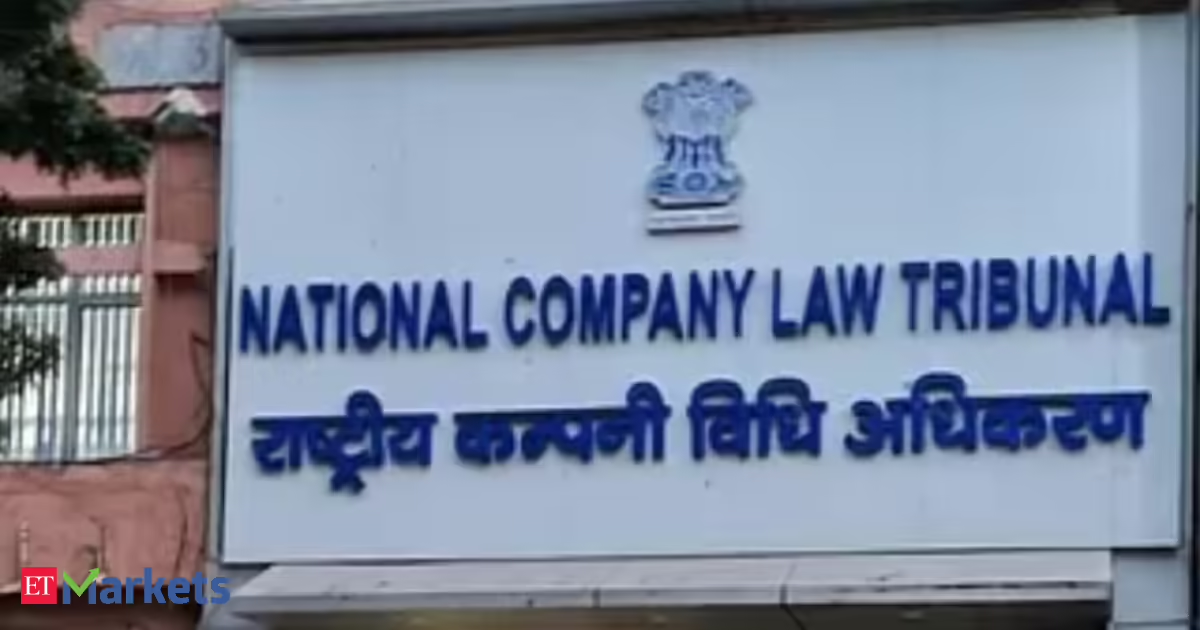
A two-member bench comprising Chairperson Ashok Bhushan and Member Technical Barun Mitra concluded hearings after arguments from Vedanta Ltd and respondents, including the Resolution Professional, Committee of Creditors (CoC) and Adani Enterprises.
Business
Perseus Mining Limited 2026 Q3 – Results – Earnings Call Presentation (OTCMKTS:PMNXF) 2026-04-22


Seeking Alpha’s transcripts team is responsible for the development of all of our transcript-related projects. We currently publish thousands of quarterly earnings calls per quarter on our site and are continuing to grow and expand our coverage. The purpose of this profile is to allow us to share with our readers new transcript-related developments. Thanks, SA Transcripts Team
Business
Our commitment for press freedom, and autonomy of public broadcast is absolute: Prakash Javadekar
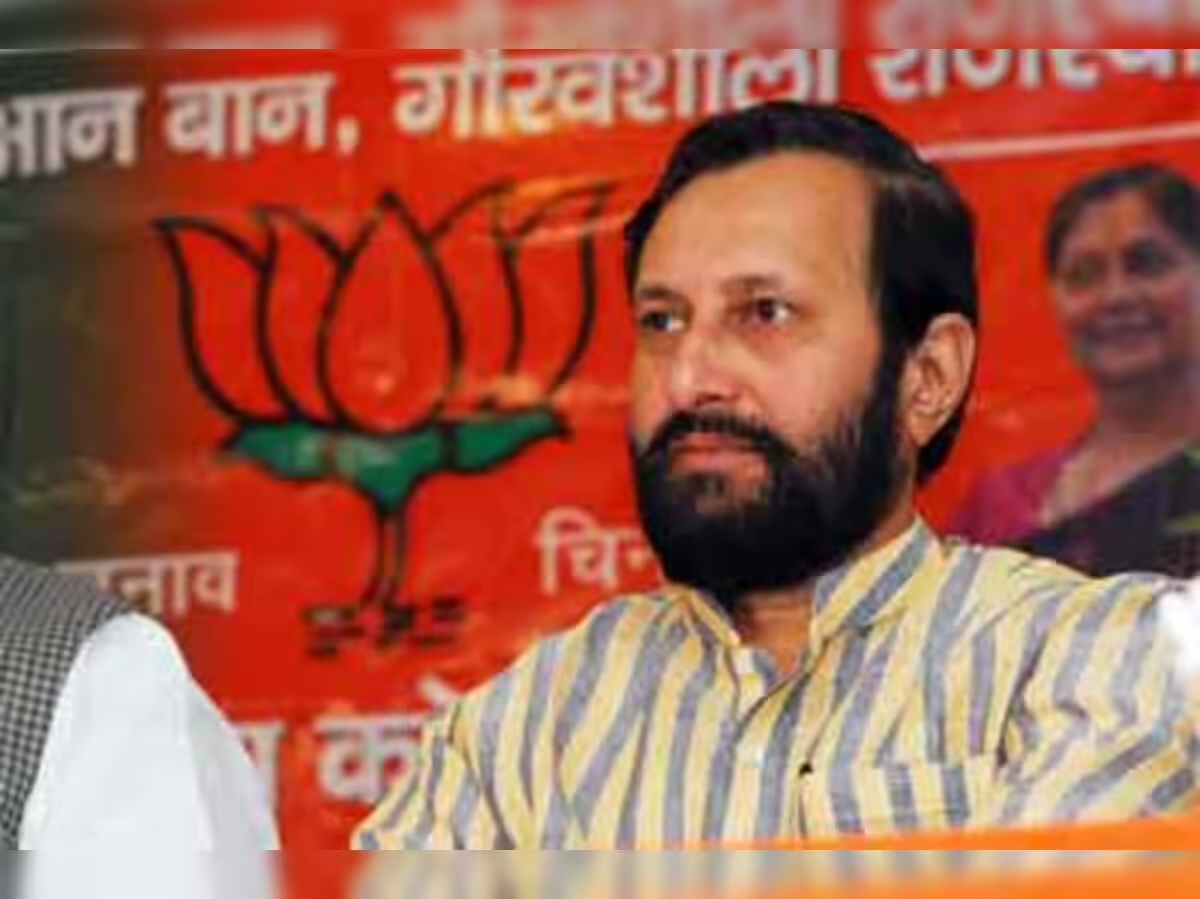
He spoke to ET on the Bharatiya Janata Party government’s approach towards media, social media, media controls and much more. Edited excerpts…
In terms of communication and messaging, the BJP’s electoral campaign has been termed an object lesson in the field. How can you translate that into the governmental structure?
All communication needs of the government will be handled in our ministry through a social media hub. I am offering this service to all ministers. Their facebook, twitter and other social media outreach will be handled by the new media wing, and the social media and communication hub.
The advantage that the party saw in reaching out through all communication media has been tremendous, and it was felt that the government too use the available platforms. Therefore, this new hub will provide all the help needed by various ministers and ministries for setting up and operating their facebook pages, twitter handles and the outreach throughsocial media. Traditional media is important, of course, but social media vehicles have to be spruced up.
What are your priority areas as far as this (I&B) ministry is concerned?
We have to ensure transparency, make our vehicles more effective. We want to be accessible and accountable too. Now there is a stage three and stage four of digitisation, we will take a call on this only after taking all things into account. The issue is that digitisation increases the revenue of paid channels, but customers want fewer advertisements.
Now 11 crore new settop boxes are required, which provides a great case for indigenisation, rather than just import them. I will take it up with the finance and commerce ministers on how this could be done.
During the elections, an interview of Prime Minister Narendra Modi set off questions on the autonomy of the public broadcaster. As I&B minister, how will you deal with it?
Right off the bat, I would like to say that our commitment for press freedom, and the autonomy of public broadcast is absolute. But freedom or autonomy has its own responsibilities.
Media has the responsibility of being neutral and objective. There’s always a concern that when the government is spending so much, it must reach the public. The public broadcaster is a tool for public awareness. Having said all of this, let me categorically state that we have no plans to enforce controls on the media.
Modi has been described as a “post TV” Prime Minister, in that he reaches out to his audience or voter directly. How would you recast the role of the traditional media?
This is a lesson for everyone on how to put your point across, in the way the Prime Minister does. Minister for law and communications Ravi Shankar Prasad and I have been deputed as spokespersons for the government and we will shortly come up with a communications plan to suit everyone’s needs. This government is different from the way it approaches issues and problems.
For instance, Modiji’s design for the Cabinet. Yesterday, there were some issues related to environment and power. Piyush Goel holds the power, coal and renewable energy portfolio, I hold the environment portfolio, and between the two of us and 10 officials we sorted things which the previous government had tied up in knots in a Group of Ministers (GoM) set up. The emphasis is on synergy. For the media too, there will be things to learn from the new government and its functioning.
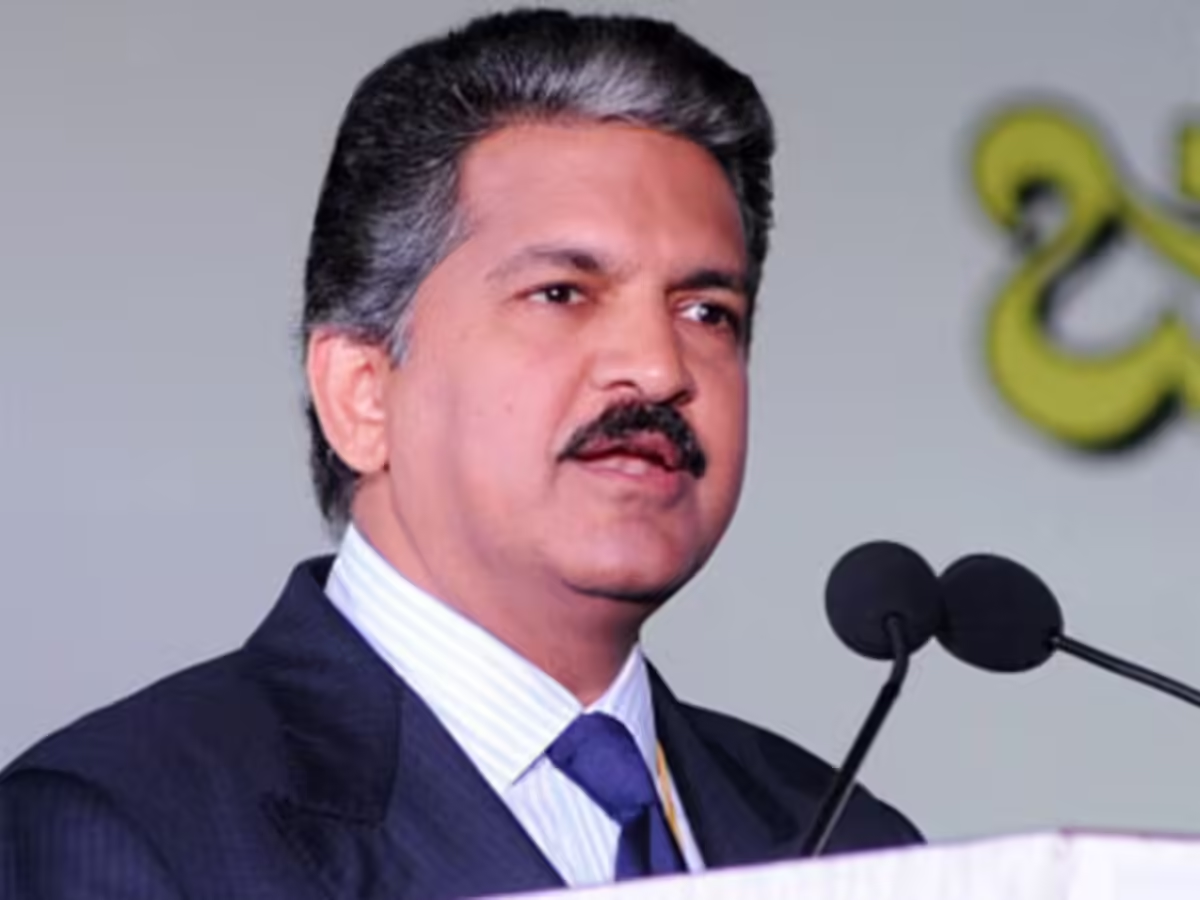
On Modi government’s 10-point agenda.
I think it is almost brilliant to put at the head of the list the fact that bureaucrats should be encouraged to take decisions without fear. In a sense he’s gone to the heart of the problem of the paralysis. The Indian government is extraordinarily large and it is difficult to try and believe that one leader can make all the change. This is a federal system. In a large bureaucracy you cannot exercise the transformation of any situation without coopting bureaucracy.
So empowerment becomes important. It’s a good sign. If you remember, one of the major apprehensions about Modi was an autocratic style of functioning. By putting right at the top of the agenda the empowerment of the bureaucracy I think one has to appreciate and admit that it is definitely not the act of an autocrat.
On disbanding ministerial groups.
Without making much heavy weather of it, he’s been a case study for business schools on how to exercise leadership and have an impact from day one in the new job. He’s setting a clear agenda and is making a clear promise of making a measurement of progress made against that clear agenda. For example, making an agenda for 100 days will make it clear what the matrix would be for measuring success of that agenda. It is important that every day some incremental progress is made towards that agenda and that progress is communicated transparently. He has got his team ready, which is a focused team. To me, every decision needn’t be a big-bang reform but a signal of proactive decision-making and removal of red tape and bureaucracy. And a promise of even speedier decision-making in the future.
On the government’s immediate priorities.
Back in the 1980s, I had written a column headlined ‘Roads to Nowhere’. At that time we were not building enough roads. (Among) America’s competitive advantages happen to be its highways and its transportation network. Those are like blood vessels to the economy and they create job opportunities. Therefore, in a funny sense, the best thing anyone can do to create an inclusive economy is ironically through building roads, because access to markets or the lack of access to markets is one of the most discriminatory things one can do to the poor, especially to the rural poor. It’s not a point that we automatically think of but roads are a mechanism to create inclusiveness in the economy. So, I think, the faster he does that the better for the economy. There is huge economic data to show that roads (give) a bigger boost to rural income than even irrigation. It will help power dual income for families and will allow a kind of diversity from dependence on agriculture which creates productivity.
undefined
On India-US ties.
I’ve been here (in the US) for quite a while now. The Indian elections have generated enormous interest. Most of the diplomatic and political pundits are now urging the leadership in Washington not to miss out on what they feel is the diplomatic opportunity for the US in reaching out to and rebuilding a very strong relationship with India. They feel US has lost ground because of the visa controversy and that they should now rediscover the ground and build a strong relationship.
There is a feeling that both Japan and China have both stolen a march on building this kind of relationship with India. There is going to be, in my opinion, a strong effort from decision-makers here to reach out to the prime minister and his colleagues to rebuild the relationship.
On the perception that the new government will tilt more toward the east — Japan, China, South Korea.
There has been significant interest shown by Japan. It is a country with a liquidity overhang and an investment surplus. Modi is well aware of that. Why Japanese investors have been holding back is because they did not perceive any of the promises we’ve given to be gaining traction.
In the area of construction and large industrial projects, they can take pole position in large projects here. That being said, everybody speculated what the position of the PM and the Cabinet would be and the PM is his own man. My contention is that our PM is a practical man and he knows that any kind of vindictiveness has no role in foreign policy.
I think his whole objective is to enhance India’s economic health and through that gain what should be India’s rightful role in the world. The fact that we are the world’s largest democracy and we are all aware that power and a role in global affairs for a nation comes from economic strength. I think, in his own way and at the right time, he will respond positively when the correct signals are sent out from the US administration.
On FDI in defence
We have been consistent from the time we entered into JVs with foreign companies. We have not changed our stance. Right from the beginning we have been representing to the government that it is a positive step to allow at least 49% investment through the automatic route. Because it encourages the foreign partner to deploy the technology into the JV. Otherwise, there is wariness on their part to provide 100% support to the joint venture. So if you really want the best technology to be manufactured here, then (it should be) a minimum of 49% stake, which we have always advocated.
On Mahindra’s investments plans.
We have never shied away from making investments. Even during downcycles, we never stopped our investments. We invested in the Chakan automotive plant when the economy was down; we also invested in the tractor plant in Zaheerabad when the tractor market was witnessing a downcycle. When the market improved for tractors we were able to ramp up our output. We always have a long-term view of the economy. We have consistently been investing. In defence, for example, if the government starts buying again for the much-needed upgrade then we’ll certainly make the investments. Pawan (Goenka) has gone on record to say that we are considering a Rs 4,000-crore investment, which is independent of the new developments. It was something we were going to do.

Earnings call transcript: Develop Global’s Q3 2025 performance boosts stock
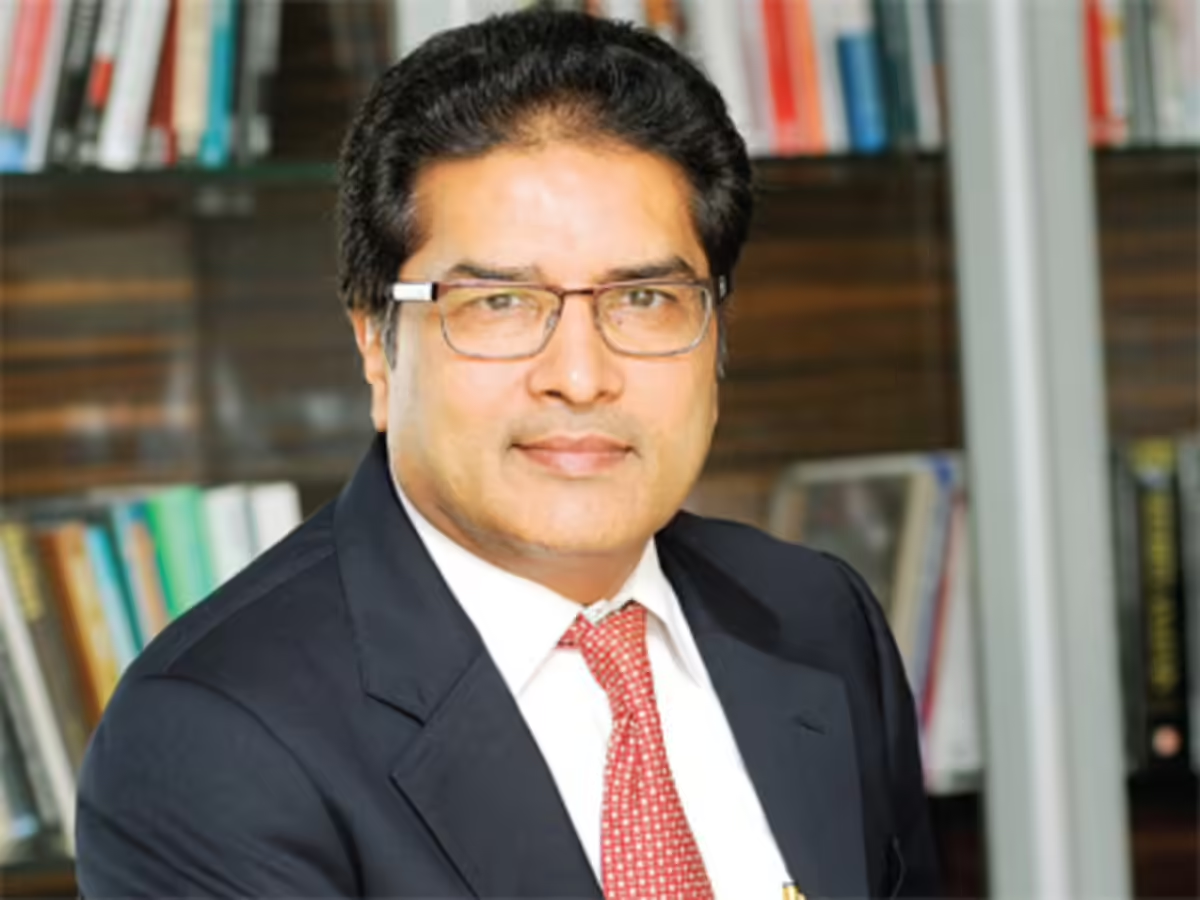
The central government has complete power with a clear mandate, but directives from the Centre have to be executed well at the state level. So, there are many things that are still not in Modi’s hands, says Raamdeo Agrawal, Joint Managing Director, Motilal Oswal Financial Services in an interview with Narendra Nathan and Sanket Dhanorkar.
Are we looking at a multi-year bull run?
I think the market has not yet priced in the full potential of the economy. For the first time, a true nationalist has come to power with a clear majority. There is a new-found energy across the nation. My sense is that the market has not yet understood the difference between 300-plus seats for NDA and 272-plus seats for BJP alone. Look at how the cabinet posts have been assigned — BJP allies have got limited posts and their negotiating power is diminished. Complete power is in the hands of the government. The political scenario is drastically different now. The economy is on the cusp of a historical positive change.
It is the same vehicle, but the driver has changed. It is now being steered by a formula-one driver. So, the acceleration will be dramatic. It will become visible very quickly. Today we are growing at 4.5 per cent. Growth is likely to pick up pace rapidly in the next few years. A lot of things will happen in five years. It will be interesting to see the index level at that time. In the process, investors will make tons of money, because the market will discount that growth two years in advance. It will not wait for the fifth year. If all domestic and global factors align, markets will go through the roof.
Are there challenges to the fragile economic recovery?
The current optimism is because a major variable — the shambolic political setup — has been corrected. There is no doubt that the new government has been fully empowered in this election; the mandate has been given to an extremely competent individual. Right now, everybody is bullish. But one must have tempered expectations. Finally, directives from the Centre have to be executed well at the state level. Otherwise it will be a waste. There are many things that are still not in Modi’s hands.
A lot of other factors will also play a role. Good monsoons, favourable global environment, peaceful borders, etc., can change the entire scenario. But, only time will tell how many stars will align. So, a lot will depend on external factors. I am also keenly watching how the new government tackles inflation, which is just a symptom of a much deeper problem somewhere else. The government has to address supply-side bottlenecks. A weak currency cannot make a strong country. That is why, inflation must go down. It will be the beginning of development, investments, and so on.
The rally, so far, has been driven by hope. When will fundamentals take over?
News headlines, and making money are two entirely different things. We should not get carried away by the headlines. The focus must be on who will actually make money. In most cases, it will be a company which is making money right now. Very rarely will a company that is broke today make money tomorrow, unless there is a complete change in business dynamics. Today, we do not have anything to go by. So, wherever there are anomalies in the economy, these will come back to normal levels. Right now, it is only about the promise of a better tomorrow. Some of these promises will have to take shape in the budget.
undefined
What should be the first priority for the new government?
India has to become much more business friendly. Finally, the country needs to create jobs for its rising young population. Who will create these jobs? More than the government, it is the businesses which will create jobs. Businesses can create jobs only if the business environment is friendly. They also cannot sustain growth without creating jobs. So, the government has to become business friendly. All hurdles should be removed. We need businesses to take more risks as it will result in more jobs.
Will mid-cap stocks continue to perform better than large-caps for now?
It really depends on the company. Mid-caps were lagging for quite some time; smallcaps even more. Eventually it has to converge. Large-caps are now looking highly priced. Investor appetite is limited at these levels. Most of the action is in the low-quality, low-priced segment. Smaller investors are clearly buying low-quality stuff, thinking that the price is low. But, even if it moves into high valuation territory, low quality will remain so. This is where the entire game ends. Sure, high quality stocks are expensive now. But that doesn’t mean you should have junk in your portfolio. If you find quality at a reasonable price, buy with modest expectations. Such names are few and far between. But, even if you get 3-4 such ideas over one year, you can make money. The challenge is to have patience and hold on to the investment. Filling with junk will be a disaster, but if it works, you get a multi-bagger. Investors in high quality may underperform in a rallying market, but will emerge better off over an entire cycle.
Can we expect an earnings upgrade anytime soon?
A 12-15 per cent earnings upgrade is definitely possible this year. As the economy recovers, sectors, such as cement, steel and automobiles, will pick up pace. Oil & gas can also contribute to earnings growth. Right now corporate profits are contributing around 4 per cent to the GDP, which is near the bottom of the band. At the peak of a cycle, this can go upto 7-8 per cent. Assuming 13-14 per cent nominal growth in GDP, it will double in rupee term to Rs 220 trillion in next six years. Now the question is whether the current profit of Rs 4 trillion will move up to Rs 8 trillion or Rs 16 trillion. If it maintains the current ratio, it will go to Rs 8 trillion. If it touches the upper end of the band, it will go to Rs 16 trillion. If this happens and the PE multiple remains the same, the market will go up four times. Profits will zoom the moment the economy moves from 5-6 per cent to 8-9 per cent growth. That is why there is a potential for the market to go up to the stratospheric levels from here.

Jenny Lennick’s colourful hair clips are sold across the US and around the world.
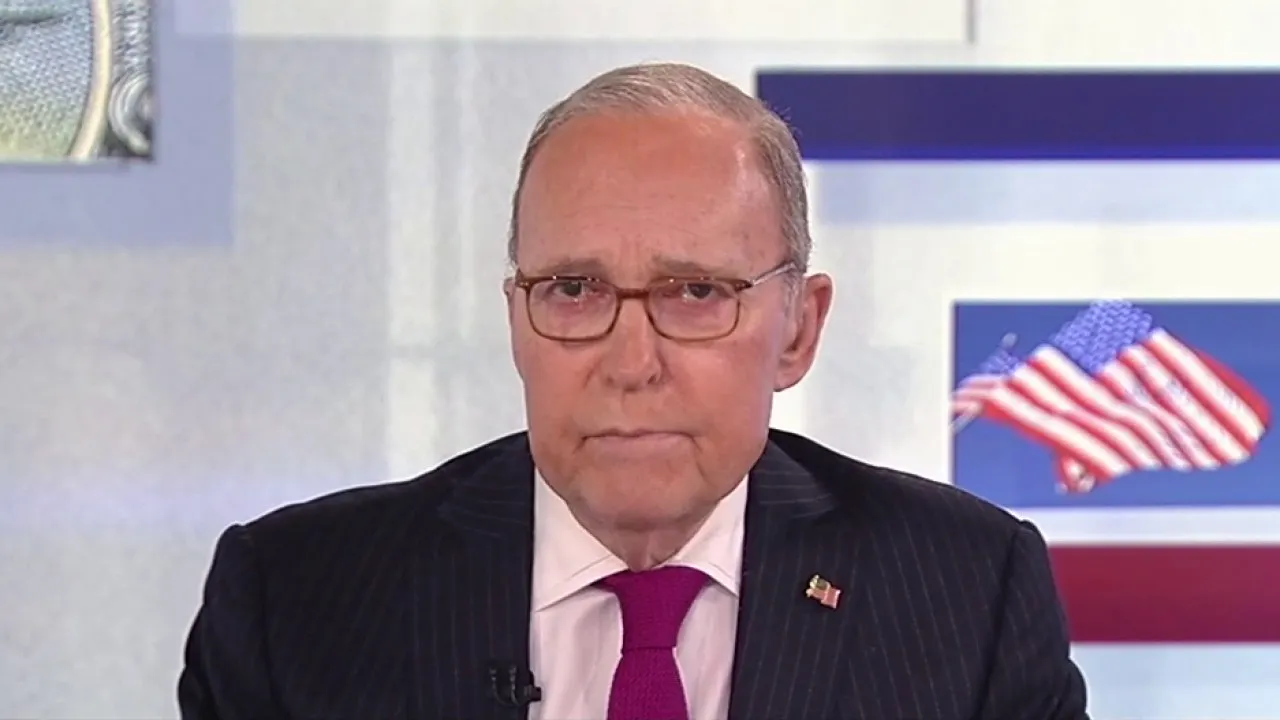
FOX Business host Larry Kudlow discusses the state of the conflict in the Middle East on ‘Kudlow.’
“The blockade scares them even more than the bombing — they’ve been bombed for years, but the blockade they hate.” That’s President Trump talking to Fox News’ Martha MacCallum in a very telling statement. And it may well be that the factionalized Iranians simply cannot come up with any kind of unified agreement to present American negotiators.
It also may well be that there’s no such thing as an agreement, other than unconditional surrender. All nuclear activity stops. Enriched uranium must be transferred from Iran to America. All proxy and other forms of terrorism must be stopped. The Strait of Hormuz must be completely open. And frankly whatever other American demands are placed on a badly defeated Iran.
In a sense, there is a ceasefire now, but American military combat operations, which are even stronger today than at the beginning of the war, may be resumed at any moment. And perhaps most importantly, the United States Navy’s blockade of Iranian ports continues. That’s the state of play and the state of war right now. No oil, no money. That’s Iran’s dilemma.
Fox News senior strategic analyst Ret. Gen. Jack Keane dissects the future of U.S.-Iran talks and President Donald Trump’s ‘no time pressure’ ceasefire stance on ‘Kudlow.’
America presumably will control the entire Persian Gulf theatre, including the Strait of Hormuz. It’s probably costing Iran something near $450 million a day, annualizing to nearly $160 billion a year, for a budget that’s estimated at only $100 billion annually. Put simply, there’s no money to meet payroll or retirement.
All the thugs, and barbarians, and Islamic Revolutionary Guard Corps and the rest of the government, and all the businesses that they have stolen and looted, and all kinds of fanatics who are just not going to get paid.
If we actually took out Kharg Island, that would knock out an additional 1.5 million barrels a day, worth about $140 million at current prices, covering 190,000 personnel, according to a NY Post op-ed by a retired United States Navy captain, Lance B. Gordon. And there may be roughly 200 million barrels a day of Iranian oil floating on the high seas mostly near Communist China, that could be worth about $20 billion. Yet the economic crunch from the blockade is the biggest and most powerful financial weapon; we’ve never tried this before, and it just might work. I’d love to see the United States Treasury seize all the bank accounts of the criminals running Iran, but that’s a separate story.
The point is for the moment, Mr. Trump is content to let the blockade inflict its punishment on Iran for the foreseeable future, perhaps as long as it takes to just bring them to their unconditional knees.

LG’s New Micro RGB evo TVs Start at a Cool $5K
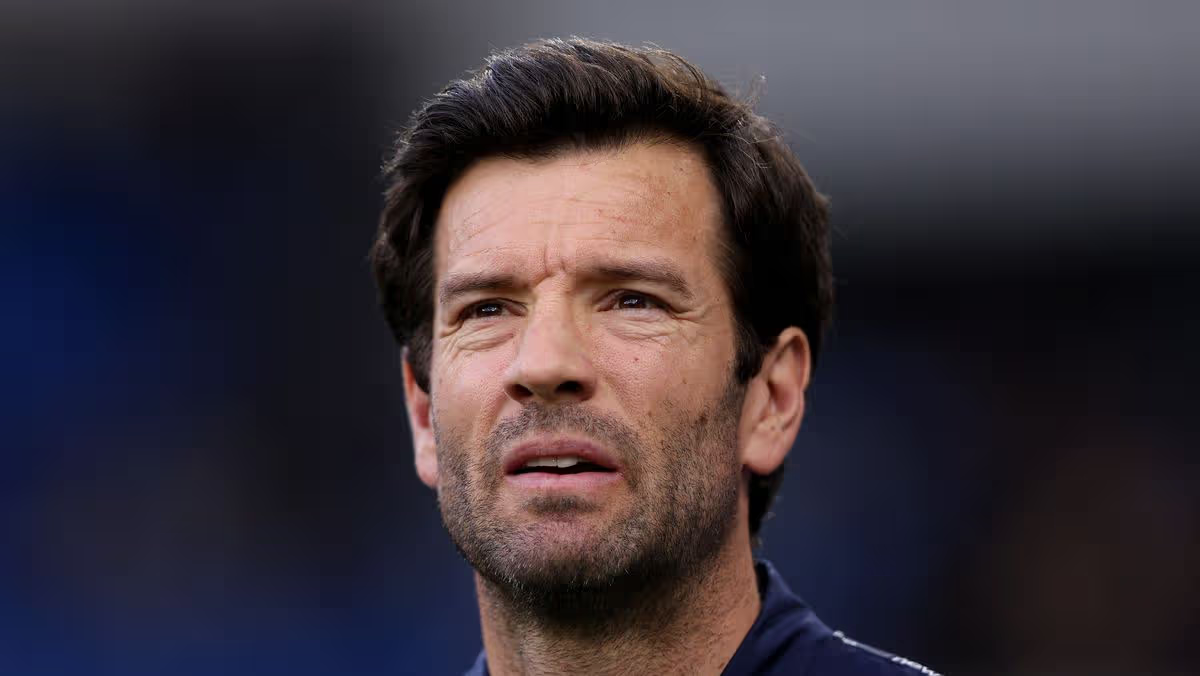
Brian Barry-Murphy makes stance clear as decisions loom for Cardiff City quartet

FIFA Releases Fresh World Cup 2026 Tickets as 50-Day Countdown Sparks Last-Minute Frenzy

Manchester United reach agreement with Casemiro over contract clause amid transfer speculation

Steven Gerrard disagrees with Gary Neville over ‘shock’ Chelsea and Arsenal claim | Football

US brings back mandatory military draft registration

Crypto Gold Live Trading 21 April | Market Trader | #goldtrading #cryptotrading #bitcoin

$166 billion in tariff refunds: Who gets the money and can India benefit? | Trump Tariff | Trade war

XRP Everyone Made A HUGE Mistake…
-

 Sports6 days ago
NWFL Suspends Two Players Over Post-Match Clash in Ado-Ekiti
-

 Fashion5 days ago
Weekend Open Thread: Theodora Dress
-

 Politics5 days ago
Palestine barred from entering Canada for FIFA Congress
-
Entertainment3 days ago
NBA Analyst Charles Barkley Chimes in on Ice Spice McDonald’s Fiasco
-

 Business3 days ago
Powerball Result April 18, 2026: No Jackpot Winner in Powerball Draw: $75 Million Rolls Over
-

 Tech4 days ago
Auto Enthusiast Scores Running Tesla Model 3 for Two Grand and Turns It Into Bare-Bones Go-Kart
-

 Politics4 days ago
Zack Polanski demands ‘council homes not luxury flats for foreign investors’
-

 Crypto World5 days ago
Russia Pushes Bill to Criminalize Unregistered Crypto Services
-

 Politics2 days ago
Gary Stevenson delivers timely reminder to register to vote as deadline TODAY
-
 Business6 days ago
Creo Medical agree sale of its manufacturing operation
-

 Business15 hours ago
Rolls-Royce Voted UK’s Most Iconic Trade Mark as IPO Register Hits 150
-

 Politics6 hours ago
Disabled people challenge government SEND proposals over segregation concerns
-

 Politics6 hours ago
Making troops accountable for war crimes threatens US alliance, ex-SAS colonel warns
-

 Crypto World5 days ago
Russia Introduces Bill To Criminalize Unregistered Crypto Services
-

 Politics7 hours ago
Starmer handler McSweeney to be dragged from shadows by Foreign Affairs Committee
-

 Politics7 hours ago
Zack Polanski responds to home secretary’s taser threat
-
Politics8 hours ago
Wings Over Scotland | How To Get Away With Crimes
-

 Politics5 hours ago
‘Iran is still a nuclear threat’
-
 Crypto World4 days ago
Kelp DAO rsETH Bridge Hack Drains $292M as DeFi Losses Top $600M in Two Weeks
-
 Tech7 days ago
Ford EV and tech chief leaving automaker
You must be logged in to post a comment Login