

Crypto World
Eric Trump Sparks 5% Meme Coin Surge With Fresh Justin Sun Attack

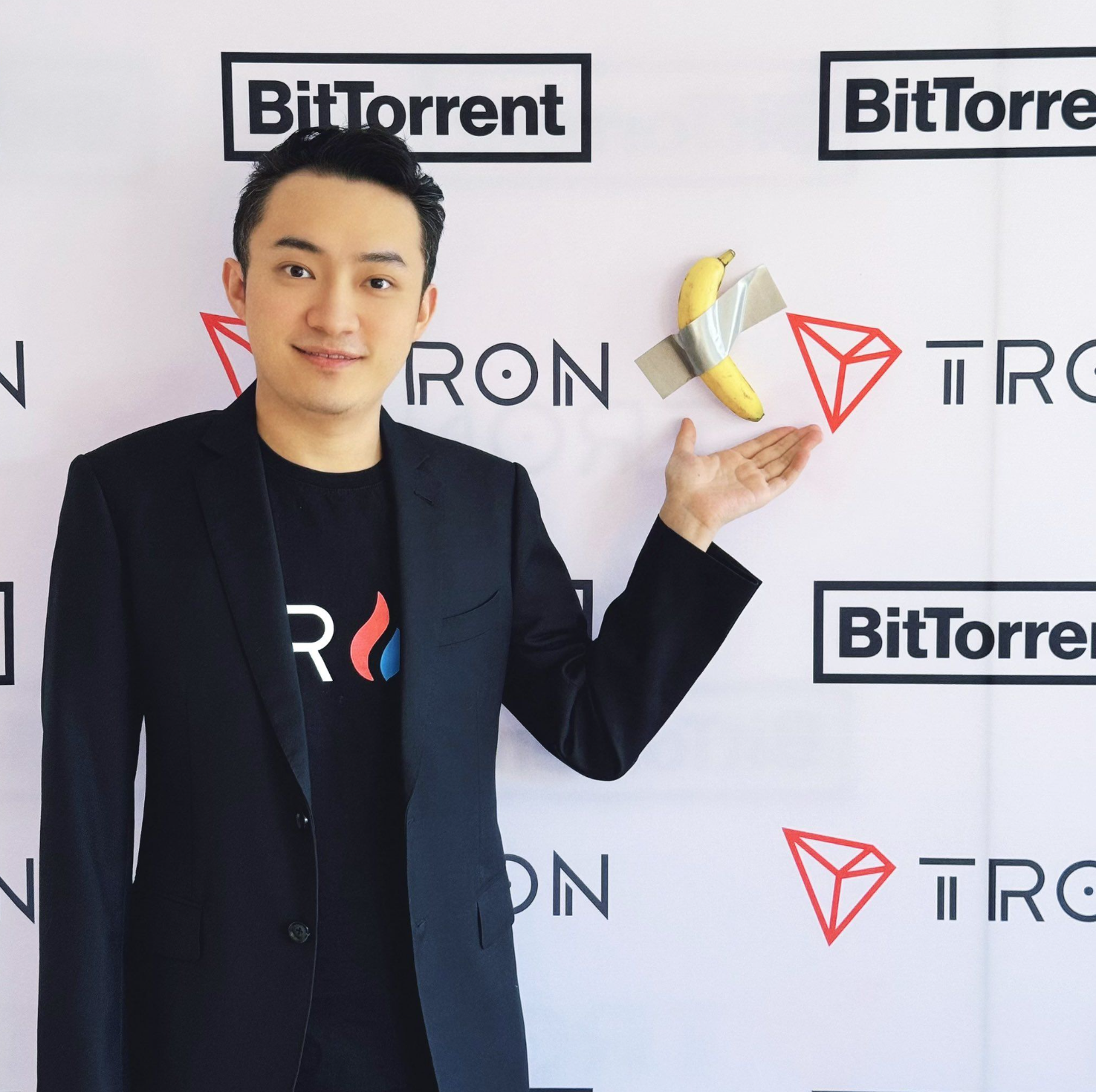
Tron founder Justin Sun filed a 52-page fraud lawsuit against World Liberty Financial (WLFI) this week. Eric Trump quickly fired back.
The complaint lists seven causes of action, including fraud in the inducement, conversion, and unjust enrichment. Sun invested $45 million in the Trump family-backed project.
Trump and Witkoff Reject Sun’s Claims
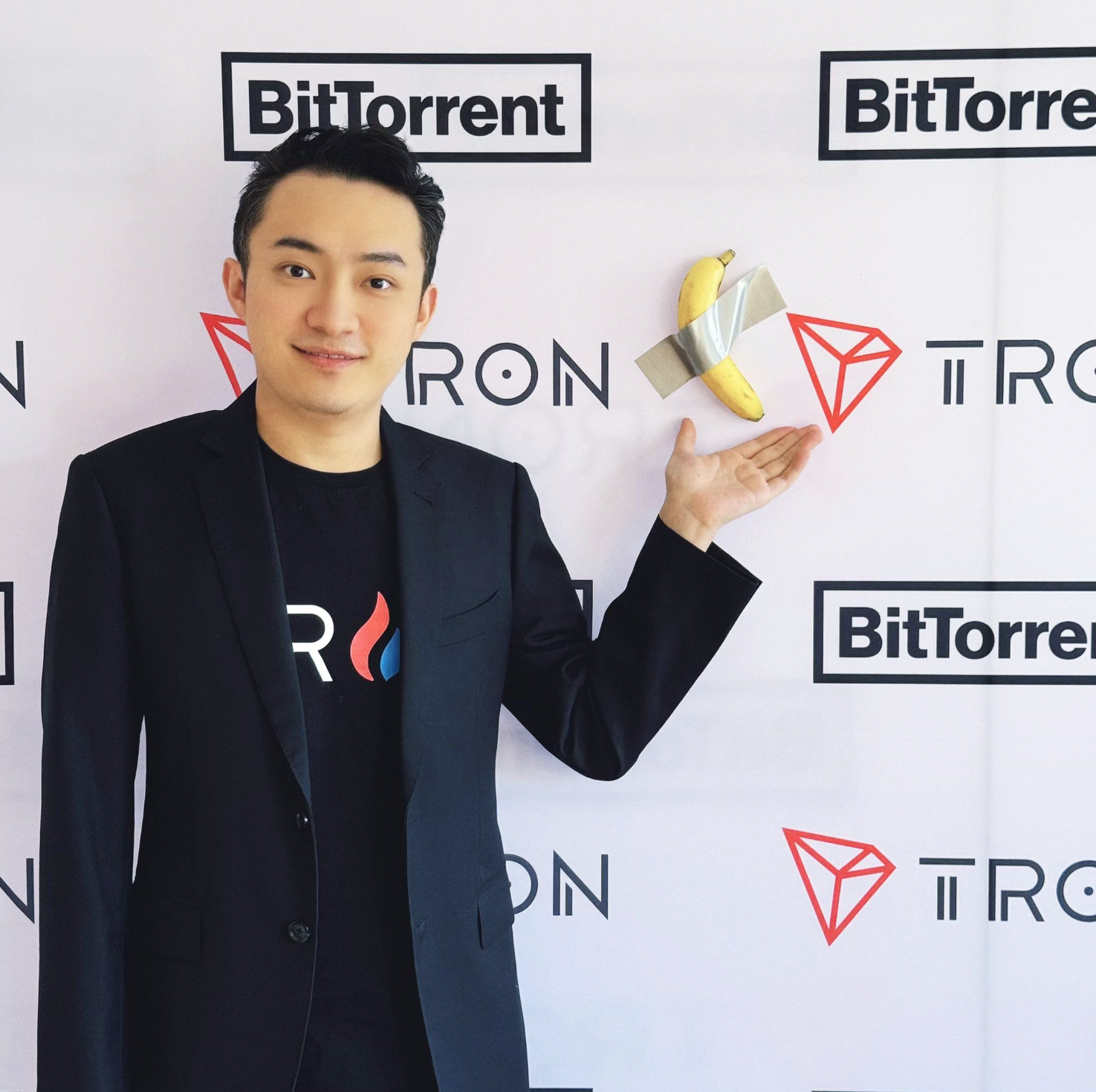
Eric Trump took aim at Sun’s infamous $6.2 million banana artwork purchase, calling it more ridiculous than the lawsuit itself.
“The only thing more ridiculous than this lawsuit is spending $6 million on a banana duct-taped to a wall. We are incredibly proud of the @worldlibertyfi team…,” President Donald Trump’s son commented.
Justin Sun purchased the viral art piece Comedian, a banana duct-taped to a wall, for $6.2 million at Sotheby’s in November 2024.
Zach Witkoff, WLFI co-founder, called the lawsuit a “desperate attempt to deflect attention from Sun’s own misconduct.” He said the project expects the case to be thrown out promptly.
WLFI allegedly froze 595 million of Sun’s unlocked tokens in September 2025. A smart contract update had introduced a blacklist function.
His frozen position reportedly lost more than half its value as the token declined.
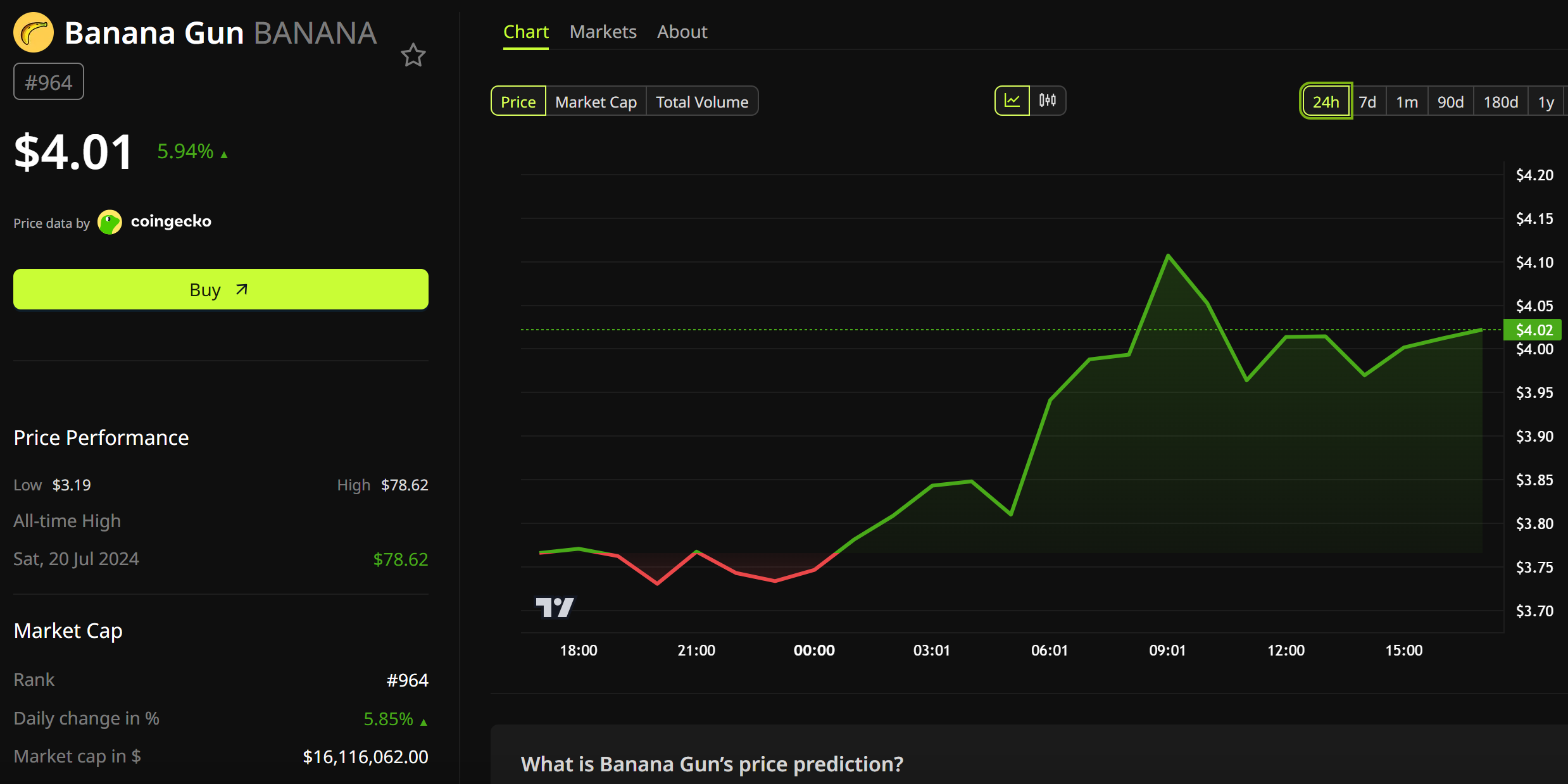
Banana Gun (BANANA) price is up by almost 6% on the news, to trade for $4.01 as of this writing.
Critics Draw Parallels to Past Failures
Bitcoin advocate Simon Dixon compared WLFI to collapsed platforms like Celsius Network and FTX. He alleged the project uses its illiquid token to mint its own stablecoin. Dixon claimed insiders then earn yield from US Treasury debt.
“So World Liberty Financial allegedly uses its illiquid token WLFI (like CEL did with Celsius and FTT did with FTX) to mint its own stablecoin, allowing it to buy U.S. Treasuries and earn millions in yield from U.S. government debt, while the co-founder’s father (Witkoff) negotiates a nuclear deal in the war that his co-founder’s father (President Trump) started after tearing up the last Iran deal. The Trump and Witkoff families are using a token to earn yield on the debt the U.S. government is incurring from the Iran war. Let that sink in. Follow the money,” wrote Dixon.
A viral thread from self-described Web3 ambassador Peter Girnuz detailed alleged insider allocations and governance manipulation. Witkoff denied any association with Girnuz.
Follow us on X to get the latest news as it happens
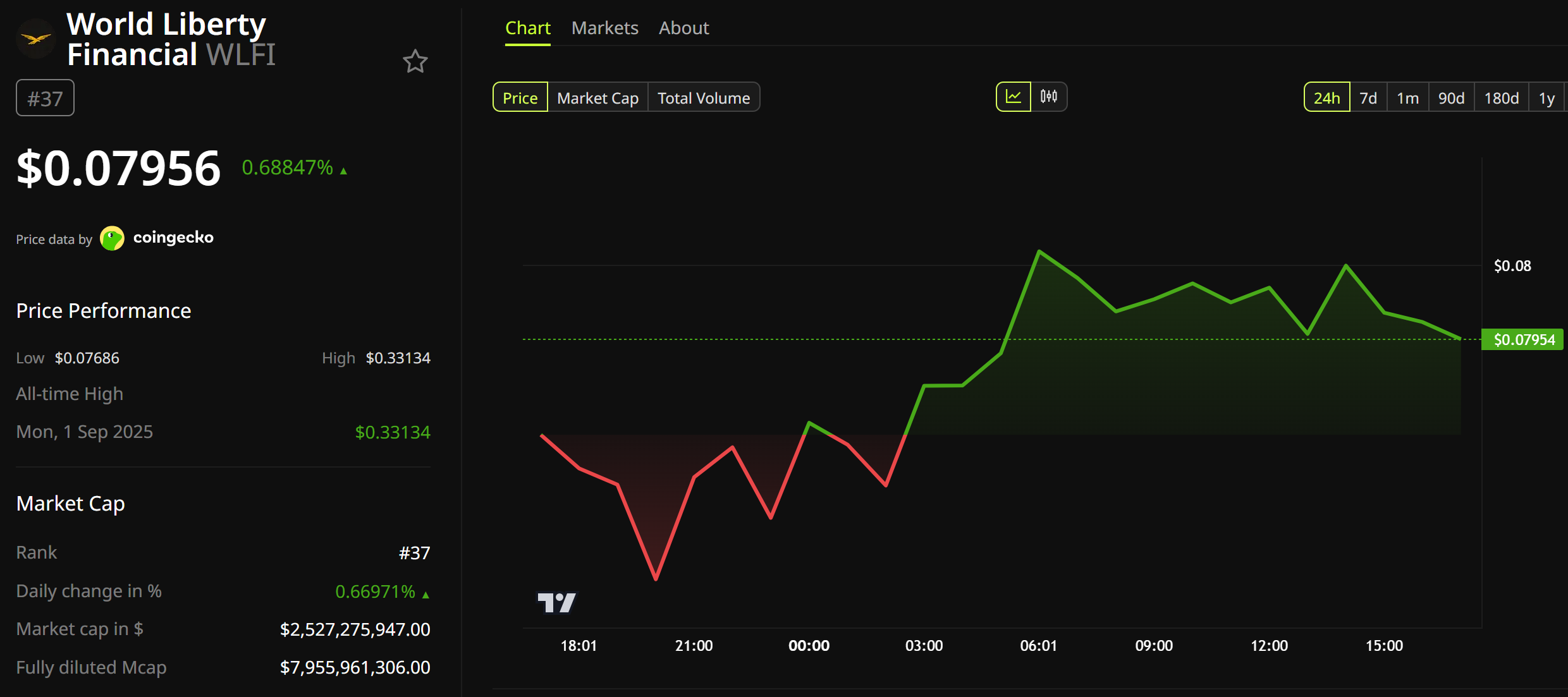
WLFI trades near $0.079 at the time of writing, down roughly 74% from earlier highs and almost 1% in the last 24 hours.
The post Eric Trump Sparks 5% Meme Coin Surge With Fresh Justin Sun Attack appeared first on BeInCrypto.

Many leading cryptocurrencies have seen some volatility over the past 24 hours, yet their price swings don’t compare to the devastating crash that five lesser-known altcoins experienced.
The culprit behind that meltdown was Binance, which recently announced its latest delisting effort.
The Heavy Bleeding
The world’s largest crypto exchange revealed that it has conducted another review to ensure that all coins listed on the platform meet high standards and industry requirements. Based on its analysis, it decided to terminate all services involving Automata (ATA), Harvest Finance (FARM), Enzyme (MLN), Phoenix (PHB), and Syscoin (SYS).
The delisting will take place on May 27, with Binance explaining that deposits of these tokens will not be credited to users’ accounts after May 28. Moreover, withdrawals will remain available until July 27.
The news has caused a major decline for the involved coins. All of them have plunged by double digits immediately after the disclosure, with SYS taking the biggest blow as its valuation has tumbled by 34%.
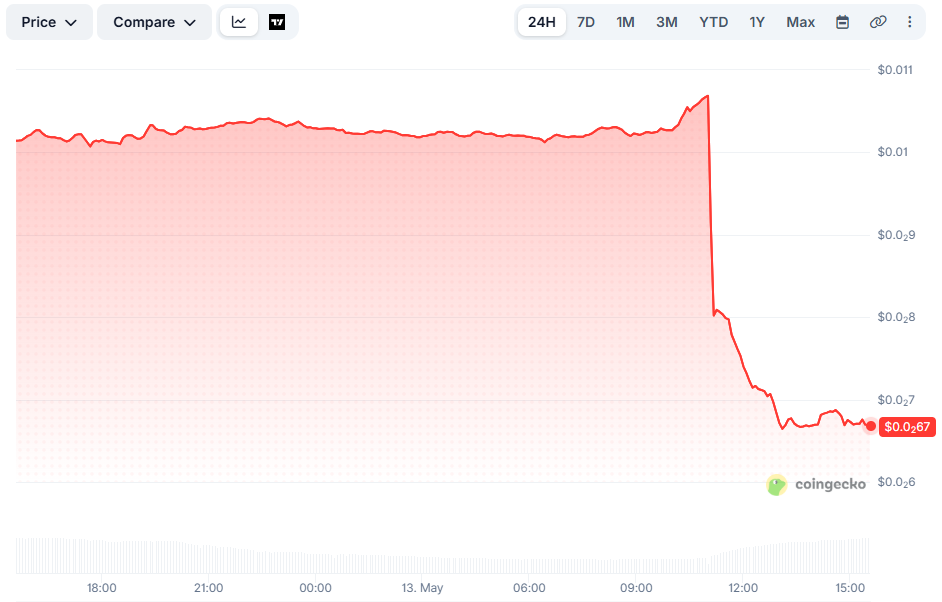
Such price reactions are hardly surprising, since losing backing from a crypto behemoth like Binance typically leads to reduced liquidity, lower market visibility, and reputational damage.
In April, Beefy.Finance (BIFI), FunToken (FUN), FIO Protocol (FIO), Orchid (OXT), Measurable Data Token (MDT), and Wanchain (WAN) posted similar losses after the exchange removed them from its platform. Shortly after, Dego Finance (DEGO), DENT (DENT), and TrueFi (TRU) met the same fate.
Other Recent Updates
Earlier this week, Binance listed the trading pairs MEGA/U, TON/U, and TON/USD1 to its margin program. The initiative was once again primarily centered on United Stables (U) – a stablecoin launched in late 2025 and pegged to the American dollar.
Over the past months, the exchange expanded the list of trading pairs on Binance Spot by adding XRP/U, SUI/U, ASTER/U, and PAXG/U. It also included AVNT/U, BIO/U, CHIP/U, KAT/U, CHIP/USD1, and XAUT/USD1 on Cross Margin.
Just recently, it announced that users can spend U tokens with their Binance Cards and earn 15% cashback. The offering comes with 0 conversion fees and 0 Foreign Exchange (FX) charges.
The company explained that the reward will be distributed in tokens designated by the company, at its sole discretion, before June 30. The cashback is non-transferable, non-exchangeable, and cannot be redeemed for cash or any other benefit, it added.
The post Brutal Price Collapse for 5 Altcoins After Binance Says Goodbye: Details appeared first on CryptoPotato.

Standard Chartered forges clearing relationship with Singapore Gulf Bank to smooth ME-Asia payments
Standard Chartered has established a strategic banking relationship with Singapore Gulf Bank (SGB) aimed at improving multi-currency clearing and correspondent banking flows between the Middle East and Asia. The agreement is positioned to reduce settlement friction on key cross-border corridors and to support SGB’s growing focus on digital asset and stablecoin settlement services.
What the tie-up covers
Under the arrangement, Standard Chartered will extend its global clearing and correspondent capabilities to SGB, a Bahrain-regulated digital wholesale bank backed by Whampoa Group and Mumtalakat. The collaboration is intended to strengthen SGB’s multi-currency rails in emerging markets, accelerate settlement times and improve transparency across intermediary chains that typically complicate cross-border transfers.
SGB has been expanding its product set since launching corporate banking in late 2024. It rolled out a real-time multi-currency settlement platform, SGB Net, in May 2025 and announced a separate partnership with digital asset infrastructure provider Fireblocks in November 2025 to support secure treasury management and custody. The bank has also introduced around-the-clock payment capabilities and enhanced USD clearing relationships in recent months.
Context: persistent frictions in correspondent banking
Cross-border payments across emerging-market corridors remain hindered by layered correspondent chains, limited local currency liquidity, and time-zone constraints. These factors raise costs and extend settlement windows, particularly for payments routed through multiple intermediary banks. For businesses operating in the Middle East–Asia corridors, such frictions can blunt trade flows and increase operational risk.
Global banks with wide payment networks and established nostro/clearing relationships can help reduce those intermediaries, consolidating liquidity and offering faster settlement. That is the niche Standard Chartered is seeking to fill for SGB, leveraging its footprint across Asia, the Middle East and Africa.
Why this matters for digital asset settlement
SGB markets itself as a bridge between traditional finance and the digital asset economy, including stablecoin settlement. While this partnership does not publicise technical integration between Standard Chartered and tokenised rails, smoother correspondent flows and enhanced USD clearing capacity can materially reduce the on‑ramps and off‑ramps that currently complicate settlements between fiat and tokenised liquidity pools.
For institutions using stablecoins or other tokenised instruments as a settlement layer, faster and more reliable fiat clearing helps reconcile net positions with bank accounts and custodial platforms. SGB’s earlier tie-up with Fireblocks for custody and treasury functions indicates the bank is assembling both on-chain and off-chain capabilities; extending correspondent relationships is another step in that buildout.
Regional regulatory and market considerations
Bahrain’s regulatory environment has actively sought to attract fintech and digital-asset activity, offering a framework that some banks view as supportive for innovation while maintaining oversight. Standard Chartered’s statement referenced Bahrain’s position as a well-regulated transaction hub, underscoring the strategic value of pairing a Bahrain-licensed digital wholesale bank with a global clearing institution.
Nevertheless, corridors spanning multiple jurisdictions require coordination on AML/KYC, sanctions screening and liquidity management. Operational improvements in clearing and settlement will depend on alignment across correspondent counterparties and regulators in the relevant markets.
Implications for corporates and treasury managers
For corporate treasuries and payment service providers operating in ME-Asia lanes, the partnership could translate into shorter settlement cycles and potentially lower costs if intermediary steps are reduced. Faster fiat clearing supports tighter cash management and enables digital-asset-enabled flows to be settled with more predictable timing.
However, the exact customer benefits will hinge on implementation details such as connectivity options, cut-off times, FX pricing and the scope of currencies supported on an ongoing basis. Market participants will be watching how SGB integrates Standard Chartered’s rails with its own SGB Net platform and digital custody services.
Broader trend: incumbents partnering with digital-first banks
This deal fits a broader pattern in which established global banks partner with regional or digital-first challengers to extend reach into growth corridors and new product markets without building bespoke on-the-ground operations. For digital banks focused on tokenised settlement, securing robust correspondent lines remains a practical prerequisite to serve cross-border clients at scale.
As cross-border payment volumes and digital asset use cases evolve, relationships that combine global clearing scale with regional digital capabilities are likely to multiply. Observers should look for subsequent announcements detailing product roadmaps, technical integrations with token rails and service-level improvements that quantify the expected reductions in settlement time and cost.

UAE survey finds older investors holding more crypto, narrowing a familiar generational divide
Older retail investors in the UAE now report slightly greater exposure to cryptocurrencies than younger adults, according to eToro’s latest UAE Retail Investor Beat survey published in May 2026. The findings complicate long-held assumptions that digital assets and algorithmic advice are predominantly the domain of younger, tech-native investors.
eToro compared two cohorts: investors aged 18 to 34 and those aged 35 to 62. Across a range of metrics the two groups look more alike than different; both are using social media and AI to inform investment decisions at nearly identical rates. But allocations between asset classes and sector preferences still show generational patterns, offering insight into how wealth, risk tolerance and investment goals translate into portfolio choices.
Key findings in brief
The survey highlights several headline data points: older investors reported 56% exposure to crypto versus 53% for the younger group. Commodities and cash were also more prevalent in older investors’ portfolios, while allocations to equities and bonds were broadly similar across the two cohorts.
On the advisory side, 39% of younger investors and 38% of older investors say they use social media for financial guidance. Trust in AI-driven recommendations was almost identical, with 76% of the younger cohort and 75% of the older cohort saying they had acted on an AI recommendation. These figures suggest that algorithmic tools and social platforms are mainstream channels across age groups in the UAE market.
Sector preferences reflect lifecycle and regional context
Where investors put capital varies in ways that align with life stage and local industry strengths. Younger UAE investors showed stronger interest in technology, healthcare and renewables, sectors linked to innovation and sustainability. Older investors remained more invested in energy, financial services and mining, industries that have established presence and track record in the region.
Both cohorts ranked financial services, real estate and energy among their top holdings, but the nuance matters: younger investors reportedly plan to expand into renewables over the near term, while older investors signalled plans to increase exposure to communications and related digital sectors.
What this means for crypto adoption and market dynamics
The findings matter for several reasons. First, the apparent convergence in digital habits across ages reduces the likelihood that crypto will remain confined to a youthful niche in the UAE. If older investors — who may hold larger capital bases and more established wealth — are increasing crypto exposure, flows into the market could be less volatile and more sustained than models that assume youth-led adoption would suggest.
Second, the prominent role of AI and social media as decision inputs highlights the need for clearer guidance and potentially stronger oversight. Regulators and platforms face a dual challenge: facilitating access to innovative advisory tools while ensuring they do not amplify misinformation or expose retail clients to unsuitable risk.
Finally, the mix of higher-risk assets alongside larger cash holdings among older investors points to a barbell-style approach that pairs speculative allocations with liquidity or conservative instruments. That pattern could temper downside risk at the portfolio level, while still supporting participation in higher-growth categories such as crypto and commodities.
Limitations and caveats
eToro’s release does not provide detailed methodological disclosure in its summary, such as sample size or weighting, which constrains how broadly the results can be generalized. The survey reflects users or respondents associated with a single platform’s retail research and should be treated as an indicator rather than a definitive market census.
Moreover, reported exposure percentages do not equate to position sizing or notional amounts. A higher share of investors holding crypto does not necessarily mean larger aggregate capital invested in crypto relative to other asset classes.
Implications for stakeholders
For asset managers and product providers, the trend suggests demand for crypto and digital-first products may broaden into older demographics, creating opportunities for tailored offerings that balance innovation with capital preservation. For exchanges and fintech firms, the near-identical reliance on AI and social media across ages reinforces the importance of user education, transparent algorithmic disclosures and robust content moderation.
Regulators in the Emirates have been actively building frameworks for digital assets and fintech. The evolving investor profile documented by eToro may accelerate the urgency of regulatory clarity, including investor protection measures tied to algorithmic advice and social channel communications.
In sum, the survey paints a picture of an investor population that is both digitally engaged and diverse in allocation strategies. Age continues to shape preferences and goals, but stereotypes of a technology-exclusive youth market are becoming less accurate as older investors embrace crypto and AI-assisted decision tools.
Disclosure: The figures cited are drawn from an eToro May 2026 release summarizing its UAE Retail Investor Beat survey. The reporting above does not reflect independent validation of the survey methodology or raw data.
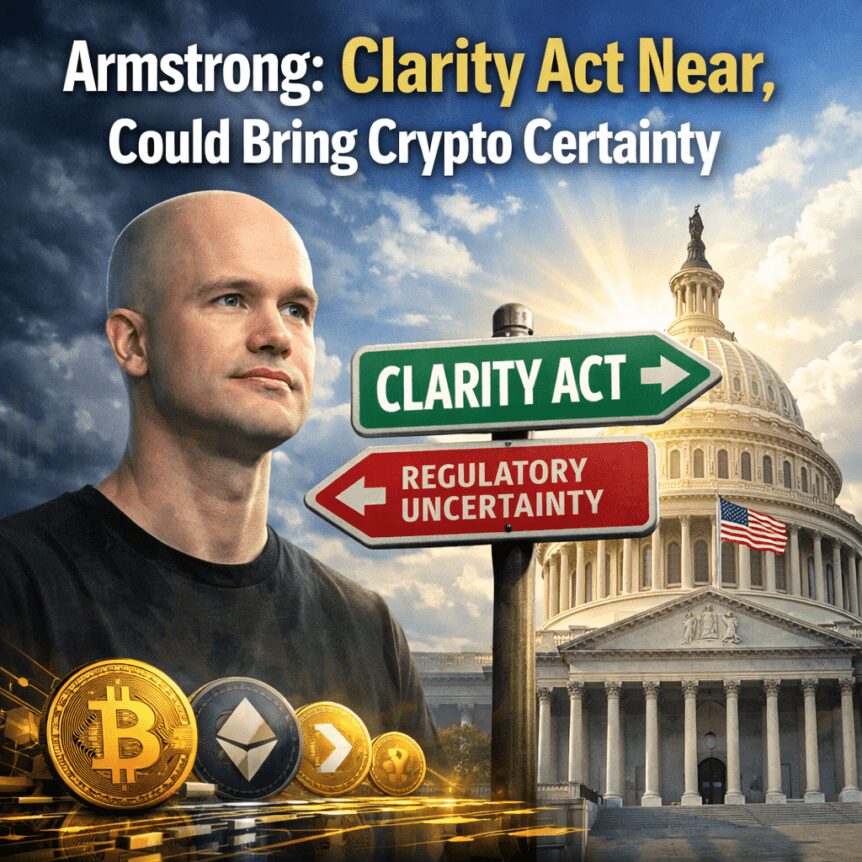
Coinbase CEO Brian Armstrong is publicly backing the latest iteration of the Digital Asset Market Clarity Act (CLARITY) as the U.S. Senate prepares to markup the crypto market structure package. The development arrives amid renewed signals of cross‑party alignment on a set of framework conditions for digital assets, including clarified rules for stablecoins, DeFi, and tokenized securities.
According to Cointelegraph, Armstrong described the newest CLARITY version as “stronger” and in a more bipartisan position than prior drafts. He noted that the banking andcrypto industries have reached a “healthy compromise” on stablecoin yield, one of the principal sticking points that had stalled movement on the broader market structure bill in January.
“I think there was a healthy compromise there, brokered by Senators Tillis and Alsobrooks. And you know, it was a good compromise because both sides left a little bit unhappy, but at least we got to a place that we can all live with.”
The updated CLARITY bill reportedly strengthens provisions related to decentralized finance (DeFi), tokenized stocks, and clarifies the Commodity Futures Trading Commission’s (CFTC) authority to regulate crypto markets. Armstrong indicated that these refinements address several core regulatory concerns while seeking to balance innovation with consumer protections.
These remarks and the bill’s pending markup follow months of negotiations between the banking sector and the crypto industry. The discussions culminated in January 2025 when industry participants, led by Coinbase, rejected the draft version before renewed talks produced this latest iteration. A Cointelegraph article tracking the markup cycle highlights the evolving contours of the bill ahead of committee consideration.
Related: Latest version of crypto market structure bill raises eyebrows ahead of Senate markup
Key takeaways
- The latest CLARITY draft is described as having stronger bipartisan support and a more workable compromise on stablecoins, according to industry participants.
- Improvements address DeFi, tokenized stocks, and enhance the CFTC’s mandate to regulate crypto markets.
- Negotiations reflect ongoing tensions between traditional financial incumbents and crypto industry advocates, with a path forward dependent on legislative accommodations.
- Public opinion data cited in the report show sizable civilian engagement with crypto and varying levels of policy support among voters.
Regulatory trajectory and implications for market structure
The CLARITY framework sits at the intersection of several long‑standing regulatory priorities: defining the roles and responsibilities of U.S. financial regulators over crypto activities, clarifying who guards consumer protection in custody and exchange activities, and determining the permissible boundaries for novel products such as stablecoins and tokenized assets. The current iteration’s emphasis on DeFi and tokenized stocks indicates an attempt to bring widely used, decentralized activity into a more clearly defined regulatory perimeter without stifling innovation.
From a policy perspective, the heightened CFTC authority signals a potentially more centralized approach to overseeing many crypto market activities that fall outside traditional securities and commodities definitions. For market participants, this could translate into clearer registration, reporting, and compliance expectations, as well as a more consistent enforcement posture. For banks and custodians seeking to integrate crypto services, the bill’s provisions—together with ongoing international considerations—could influence licensing pathways, AML/KYC obligations, and cross‑border operating standards as part of a broader convergence with frameworks like MiCA in the European Union.
Analysts will watch how the final markup reconciles stablecoin mechanics with consumer protections, risk disclosures, and settlement timelines. The package’s reception will be weighed against existing regulatory landscapes, including potential implications for licensing requirements and supervisory cooperation between federal regulators and state jurisdictions.
Public sentiment, demographics, and policy receptivity
Industry advocacy groups report that approximately 20% of the U.S. population owns cryptocurrency, based on the National Cryptocurrency Association’s 2025 State of Crypto Holders survey, which surveyed about 54,000 Americans. The demographic breakdown shows a substantial share of holders under 45, underscoring a generation with considerable exposure to digital assets and a likely interest in policy stability that preserves access to financial innovation.
The same survey found that the leading use case cited by holders was investment—roughly 52% indicated they use digital assets to pursue financial growth or diversification. This aligns with broader narratives about crypto as a portfolio allocation rather than a purely transactional medium, highlighting the relevance of robust regulatory frameworks to protect investors while enabling prudent market growth.
A HarrisX poll conducted earlier this month reinforced a favorable view toward legislative action, showing that about 52% of registered U.S. voters surveyed supported passing the CLARITY Act, with roughly 11% opposed. The results suggest that a broad cross‑section of the electorate may favor a clarified regulatory regime for digital assets, provided it maintains market integrity and consumer protections.
For policymakers and compliance teams, these data points underscore the practical importance of a coherent regulatory framework that can accommodate digital asset innovation while delivering predictable rules for market participants and investors alike. The evolving conversation around DeFi, tokenized securities, and the appropriate scope of the CFTC’s remit remains central to the ongoing regulatory debate in the United States.
Related analysis: Will the CLARITY Act be good — or bad — for DeFi? — a publication exploring the policy and market structure implications of the act within the U.S. regulatory landscape.
In the broader policy context, the CLARITY bill’s progression intersects with international expectations for crypto governance, potential licensing regimes, and cross‑border oversight paradigms. As lawmakers weigh the balance between safeguarding consumers and enabling financial innovation, institutions—exchanges, banks, asset managers, and corporate treasuries—will monitor for changes that affect licensing thresholds, capital requirements, and compliance reporting protocols. The outcome could shape how crypto markets are integrated into mainstream financial infrastructure, including the potential for more standardized treatment of stablecoins and related settlement mechanisms.
Looking ahead, observers will be focused on the markup’s final language, the degree of regulatory alignment with other major markets, and the readiness of industry participants to meet any newly codified obligations. While the latest iteration has sharpened certain elements and broadened regulatory clarity, actual legislative adoption will depend on continued negotiation, stakeholder input, and the resolution of outstanding technical and legal questions raised by DeFi, tokenized assets, and evolving market structures.
As this process unfolds, compliance teams and legal counsel should track the bill’s amendments, committee reports, and potential cross‑agency guidance that could accompany enactment. The next phase will determine not only the letter of the law but also how financial institutions position themselves to operate within a newly defined U.S. crypto regime.

The U.S. Senate Banking Committee is wresting with a comprehensive crypto market structure bill, receiving more than 100 amendments ahead of its markup session. The proposed changes—primarily addressing stablecoins, protections for software developers, and ethics rules—signal a tight, policy-driven negotiation on how the United States should regulate digital-asset markets.
According to a list compiled by Politico, Democratic senators have introduced a wide slate of amendments, while Republican members are seeking incremental adjustments. The markup, scheduled for Thursday, follows a delay earlier in the year when crypto lobbying activity influenced committee dynamics and stalled movement on the legislation. The broader objective remains to delineate how U.S. market regulators will oversee the crypto sector, in contrast to the House’s July-passed CLARITY Act and ongoing cross-party debates over stablecoins and governance restrictions.
Key takeaways
- More than 100 amendments have been filed for the Senate Banking Committee’s crypto market structure bill, targeting stablecoins, software developer protections, and ethics provisions.
- Democrats propose a range of enhancements and safeguards, while Republicans pursue more modest, targeted adjustments.
- A Monday-dated version of the bill, as reported by Cointelegraph, would prohibit third-party platforms from offering yield on stablecoins in a manner that is functionally equivalent to interest on deposits.
- Ethics-related amendments seek to restrict ownership or affiliation with crypto by senior officials, while other measures aim to protect software developers from criminal liability related to money-transmitter registration.
- Other amendments touch on sanctions, the treatment of institutions engaging in crypto activity, and a potential revival of the DOJ’s National Cryptocurrency Enforcement Team.
Legislative trajectory and markup dynamics
The bill sits at the center of a long-running regulatory debate about how to harmonize innovation with investor protection and financial stability. The House version, known as the CLARITY Act, advanced earlier, but the Senate process has faced procedural hurdles and shifting coalitions. In January, a previous markup was indefinitely delayed after a major crypto industry lobbyist withdrew support, underscoring how lobbying dynamics can influence committee calendars and the fate of reform efforts.
As the Senate prepares for markup, legislators are weighing how to allocate regulatory authority between federal agencies and how to structure oversight in a way that addresses concerns about stablecoins, market integrity, and consumer protection. The overarching aim is to produce a coherent framework that clarifies regulatory responsibilities while avoiding duplicative or conflicting rules across banking, securities, and commodities regimes.
Amendment themes: stability, safeguards, and governance
Stablecoins and the yield question dominate the debate. Provisions restricting or shaping yields offered on stablecoins have been among the most contentious, reflecting broader concerns about potential yield-driven risk-taking and consumer protection. The amendments under consideration include a shift from a strict equivalence standard to a “substantially similar” approach in evaluating whether a yield is permissible, signaling a potential recalibration of the permissible activities for crypto platforms and issuers.
Ethics and integrity considerations are also prominent. One proposal would bar the president, vice president, senior officials, members of Congress, and their families from owning, promoting, or affiliating with crypto assets. The aim is to address perceived conflicts of interest and ensure public officials’ actions are not unduly influenced by personal crypto holdings or relationships with industry participants.
Software developers and technology providers form another focal point. A proposed amendment would create a safe harbor from criminal liability for developers who do not register as money transmitters, offering a clearer path for innovation while preserving critical regulatory guardrails. This approach has broad support among crypto groups arguing that the current framework imposes excessive or ambiguous obligations on developers building decentralized or non-custodial systems.
Other amendments address sanctions regimes, the treatment of institutions engaging in crypto activity, and the potential revival of the Department of Justice’s National Cryptocurrency Enforcement Team (N-CET), which was dismantled in the previous administration. These provisions reflect ongoing tensions over enforcement architecture, resource allocation, and the balance between deterrence and innovation.
Regulatory context and institutional impact
The unfolding debate sits within a broader regulatory context that includes active discussions around stablecoins, licensing, and cross-border governance. While the European Union pursues its MiCA framework to bring crypto activities under a centralized regime, U.S. policymakers continue to negotiate how federal agencies—such as the SEC, CFTC, and DOJ—should share oversight responsibilities. For banks, exchanges, and institutional investors, the evolving structure will shape compliance programs, risk management, and licensing considerations as firms navigate ever-shifting requirements and expectations.
From a compliance perspective, the amendments under discussion could influence how firms implement AML/KYC controls, determine appropriate licensing paths, and manage the risk of sanctions or enforcement actions. The potential restoration of DOJ’s N-CET, if enacted, would have implications for how federal authorities coordinate crypto enforcement and pursue cross-border cases, underscoring the ongoing convergence of policy and enforcement priorities in the crypto space.
Closing perspective
As the markup approaches, the committee faces a dense, high-stakes negotiation that will determine whether the United States adopts a more prescriptive or a more permissive regulatory posture for crypto markets. The outcome will bear on market structure, compliance obligations, and the interplay between innovation and investor protection in the years ahead. Observers should monitor the amendments’ evolution, the positioning of key committee members, and any shifts in support from industry participants and stakeholders as details emerge.
Crypto World
Kelp DAO Burns Exploiter's rsETH on Arbitrum, Plans Two-Week Withdrawal Reopening: Kelp DAO


Kelp DAO has burned the attacker’s rsETH tokens and outlined a recovery plan to refill liquidity through Aave’s Recovery Guardian multisig before resuming withdrawals.
21Shares launched its Hyperliquid ETF in the US, recording $1.2M in net inflows on its first day of trading.
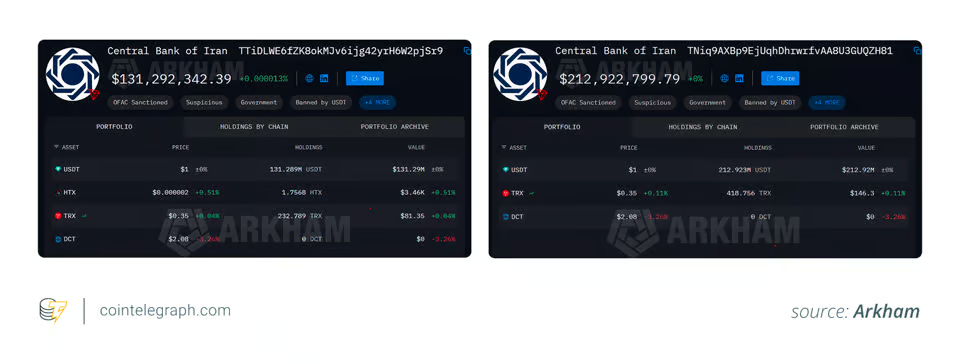
Blockchain analytics platform Arkham has published what it says is a public, onchain map of crypto wallets attributed to Iran’s central bank, making a pair of US-sanctioned Tron addresses publicly searchable for investigators and the wider public.
The move could increase scrutiny of how Iranian-linked entities use stablecoins and blockchain networks to move funds outside traditional banking rails, as US authorities intensify sanctions enforcement tied to terrorism financing and oil revenues.
Arkham’s May 11 research post groups the wallets into a Central Bank of Iran entity page and explorer, which the firm says can be used as a starting point to trace connected addresses and flows.
The map is built on two TRC-20 wallets that the US Treasury’s Office of Foreign Assets Control (OFAC) added to its Specially Designated Nationals list on April 24 as property of Bank Markazi Jomhouri Islami Iran, citing links to the Islamic Revolutionary Guard Corps-Qods Force and Hezbollah.

TRC-20 wallets tied to Iran. Source: Arkham
US authorities froze about $344 million in crypto linked to Iran as part of that action, Treasury Secretary Scott Bessent said, describing it as an effort to “systematically degrade Tehran’s ability to generate, move, and repatriate funds.” Tether separately said it had frozen the funds at the request of US authorities over “activity tied to unlawful conduct,” without explicitly naming Iran in its public statement.
Arkham’s wallet mapping reflects a broader push by blockchain analytics firms and stablecoin issuers to expose and disrupt sanctions evasion networks increasingly using crypto infrastructure tied to Tron and Tether.
Related: US Treasury sanctions Iran-linked crypto exchanges in first Iran-related designations
In an April 27 note, Chainalysis described a multi-step stablecoin “pipeline” in which Iranian oil revenues were routed through brokers, intermediary wallets, cross-chain bridges and decentralized finance protocols before cycling back into accounts associated with the Central Bank of Iran and IRGC-linked entities.
Iran’s wider crypto footprint
The Arkham findings come against a broader backdrop of growing Iranian crypto use. A February report on Iran’s digital assets footprint, citing estimates from TRM Labs and Chainalysis, put the country’s overall crypto transaction volume at about $11.4 billion in 2024 and $10 billion in 2025.
In May, Nobitex, Iran’s largest crypto exchange, was reportedly linked to members of a powerful family with ties to Supreme Leader Ali Khamenei, and used as a key conduit between domestic users and offshore liquidity.
In April, Iran reportedly considered charging crypto-denominated tolls to ships transiting the Strait of Hormuz, positioning digital assets as an additional revenue channel outside traditional banking rails.
Separately, Cointelegraph reported Friday that Tether had frozen more than 500 million USDT over a recent 30-day period across Ethereum and Tron, with around 506 million of that on Tron, according to BlockSec’s USDT Freeze Tracker.
A TRON spokesperson told Cointelegraph the network itself cannot monitor or block individual transactions, but pointed to the T3 Financial Crime Unit, a collaboration between TRON, Tether and TRM Labs launched in 2024, as its main channel for tackling abuse, saying it works with law enforcement “to freeze hundreds of millions of funds,” including funds tied to sanctioned entities and terror financing. Tether declined to comment.
Asia Express: North Korea denies crypto hacks, Upbit’s bank tests Ripple
Crypto World
EToro (ETOR) reiterates commitment to crypto despite falling activity in first quarter 2026


EToro (ETOR) doubled down on its commitment to crypto even as digital asset activity weakened in the first quarter and into April.
Revenue from crypto assets dropped 38% from the year-earlier quarter to $2.15 billion, the company said in its first-quarter earnings report released Tuesday. Net trading income from crypto derivatives fell 57% to $33.4 million while overall net income rose 37% to $82.4 million.
The trading platform said the crypto activity decline extended into April, with the total number of crypto trades falling 32% year-over-year and the invested amount per trade dropping 22%. Despite the downturn, CEO Yoni Assia expressed a bullish outlook.
“We do expect later this year to start seeing crypto rising back to, you know, near all-time-highs and that will drive crypto engagement,” Assia told CNBC, adding that the platform’s data suggests that when the markets fall, “retail investors on eToro actually buy the dip.”
The company said it activated its BitLicense to start trading in New York, three years after it was granted, and it completed the $70 million acquisition of crypto wallet provider Zengo, closed April 30.
“The acquisition of Zengo, a leading self-custodial crypto wallet provider, meaningfully advances our strategy of bridging traditional finance with on-chain infrastructure, prediction markets, perpetuals and the broader crypto ecosystem,” Assia said in the report.
Etoro shares fell 0.61% in pre-market trading on Wednesday.
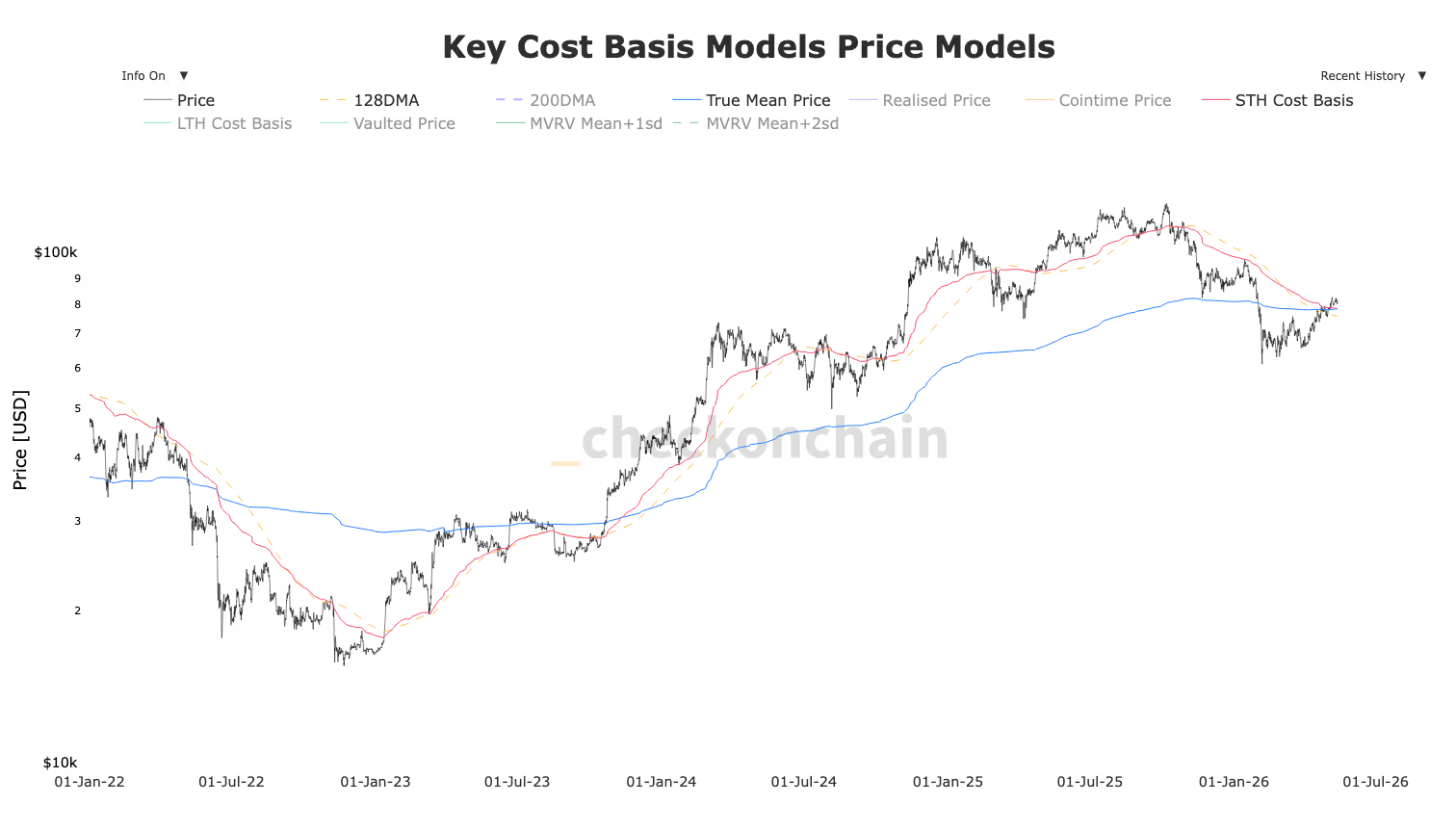
Bitcoin is fighting a key technical battle and is trading just below two closely watched long-term trend indicators: the 200-day Simple Moving Average (200SMA) at $82,455 and the 200-day Exponential Moving Average (200EMA) at $82,027, according to Glassnode data.
The 200SMA calculates the average closing price across the last 200 days, weighting each day equally. The 200EMA uses the same 200-day window but places greater emphasis on more recent prices, making it slightly more responsive to current market conditions.
Together, they form a confluence resistance zone around $82,000–$82,500 that bitcoin must convincingly reclaim to signal a recovery of its long-term uptrend.
Bitcoin first lost the 200DMA in late November 2025, when the price rolled over from $108,000. A brief recovery attempt in January failed to reclaim the level around $97,000 and by early February 2026 bitcoin had fallen to $60,000.
What gives bulls reason for cautious optimism is that bitcoin is holding above several significant cost basis levels, according to CheckonChain. The 128-day Moving Average sits at $75,700, representing the average price paid by buyers over that shorter timeframe and a level BTCX has successfully defended.
The True Market Mean, currently at $78,200, reflects the average price of every bitcoin at the time it last moved onchain, essentially representing the aggregate cost basis of the entire active market.
The Short-Term Holder Cost Basis at $78,400 tracks the average acquisition price of investors who bought within the last 155 days, a group historically prone to panic selling when underwater.
Bitcoin trading above all three suggests the majority of recent buyers remain in profit, reducing sell pressure from forced liquidations or panic selling. The key zone to watch is whether bitcoin can flip the $82,000-$82,500 into support.

Brutal Price Collapse for 5 Altcoins After Binance Says Goodbye: Details
Stephen Colbert says he and “Late Show” staff 'all have to be out' immediately after final show: 'I'm already packed'

New Reform councillor explains slip-of-the-tongue ‘UKIP’ TV gaffe

Manchester United reach agreement with Casemiro over contract clause amid transfer speculation

US brings back mandatory military draft registration

Steven Gerrard disagrees with Gary Neville over ‘shock’ Chelsea and Arsenal claim | Football

CNN reacts to Trump downplaying Americans’ financial pain

#joshuavan #fighter #myanmar #thailand #indonesia #malaysia #love #facebook #money

Johnson Reacts To Trump Saying, ‘I Don’t Think About Americans’ Financial Situation,’ Re Iran War
-
 Crypto World6 days ago
HarrisX Poll Found 52% of Registered Voters Support the CLARITY Act
-

 Fashion5 days ago
Weekend Open Thread: Marianne Dress
-

 Crypto World7 days ago
Upbit adds B3 Korean won pair as Base token gains Korea access
-
 NewsBeat7 days ago
NCP car park operator enters administration putting 340 UK sites at risk of closure
-

 Fashion2 days ago
Coffee Break: Travel Steam Iron
-

 Tech4 days ago
Auto Enthusiast Carves Functional Two-Stroke Engine from Solid Metal
-

 Fashion3 days ago
What to Know Before Buying a Curling Wand or Curling Iron
-

 Politics2 days ago
What to expect when you’re expecting a budget
-
 Business5 days ago
Ignore market noise, India’s long-term story intact, say D-Street bulls Ramesh Damani and Sunil Singhania
-

 Politics5 days ago
Politics Home Article | Starmer Enters The Danger Zone
-

 Tech3 days ago
GM Agrees To Pay $12.75 Million To Settle California Lawsuit Over Misuse Of Customers’ Driving Data
-

 Politics6 days ago
Simon Cowell Says He Was ‘Horrible’ To Susan Boyle During BGT Audition
-

 Entertainment7 days ago
Sarah Paulson Called Out For Met Gala ‘Hypocrisy’
-

 Entertainment6 days ago
General Hospital: Ric & Ava Bombshell – Ric’s Massive Secret Exposed!
-

 Crypto World7 days ago
Robinhood says Wall Street is building onchain
-

 Sports7 days ago
UEFA Champions League final schedule, teams, venue, live time and streaming | Football News
-

 Entertainment7 days ago
Why David Letterman Called CBS ‘Lying Weasels’
-
Entertainment7 days ago
Hayden Panettiere reveals she's estranged from mom, addresses brother Jansen's sudden death: 'I was floored'
-
 Sports7 days ago
Mike Tyson speaks out on status of Floyd Mayweather fight
-
 Entertainment7 days ago
Paramount+’s ‘Landman’ Season 3 Gets Promising New Update From Returning Director
You must be logged in to post a comment Login