



Connect with us
DAPA Banner

Business

UK Borrowing Falls to Four-Year Low in March 2026

Published

on

Reeves downgraded growth as business leaders demand urgent action

Britain’s public finances delivered a rare slice of good news for the chancellor this week, with government borrowing sinking to a four-year low in March. But business leaders and economists are already bracing for the figures to sour, warning that the escalating conflict in the Middle East could swiftly unravel Rachel Reeves’s carefully constructed fiscal plans.

According to figures released on Thursday by the Office for National Statistics, the government borrowed £12.6bn last month, the lowest March total since 2022 and £1.4bn below the same month a year earlier. The drop was driven by a sharp fall in debt interest spending and a bumper £100bn haul in tax receipts.

For small and medium-sized businesses, which continue to shoulder the weight of frozen income tax thresholds, higher employer national insurance and stubborn inflation, the figures offer only cold comfort. While the Treasury has edged closer to meeting its borrowing targets, the improvement owes less to restraint on Whitehall and more to a quirk of the retail price index.

Despite the monthly improvement, March’s figure came in above the £10.4bn consensus forecast from City economists. Borrowing over the full financial year reached £132bn — £700m below the Office for Budget Responsibility’s projection, but still the sixth-highest annual total since records began in 1947. The figure was nonetheless nearly £20bn lower than the previous year.

The headline reduction was flattered by a dramatic fall in debt interest costs, which dropped to £3.2bn in March from £13bn in February and £4.5bn in the same month last year. A substantial portion of the UK’s debt stock remains linked to the retail price index, a measure economists have long dismissed as outdated. A sharp deceleration in RPI between December and January fed directly through to lower payments to index-linked gilt holders.

Advertisement

Tax revenues also did much of the heavy lifting. Public sector receipts rose £5.4bn year on year to cross the £100bn threshold in March, propelled by higher income tax and national insurance takings. Public spending climbed more modestly, up £2.9bn to £91.6bn.

Tom Davies, senior statistician at the ONS, said the figures showed that “although spending has risen this financial year, this was more than offset by increased receipts,” noting that March’s borrowing was 10 per cent lower than a year earlier.

Yet the optimism was tempered by warnings that the tailwinds of the past month could quickly reverse. Economists fear that the war in the Middle East is already feeding through to British inflation and growth forecasts, threatening to squeeze the chancellor’s room for manoeuvre.

“A sustained rise in energy prices would create a double squeeze on the public finances,” said Martin Beck, chief economist at WPI Strategy. “True, higher oil and gas prices could boost North Sea revenues, while stronger inflation might lift VAT receipts and income tax revenues through frozen thresholds. However, those gains would likely be outweighed by weaker economic growth and higher spending pressures, including increased welfare costs, rising debt interest payments, and potential support for households and energy-intensive firms.”

Advertisement

Figures published earlier this week showed consumer price inflation climbing to 3.3 per cent in March, up from 3 per cent in February. Some economists now expect it to peak at double the Bank of England’s 2 per cent target later this year, a development that would push the government’s debt interest bill higher once more and heap fresh pressure on already stretched SMEs.

The Bank’s nine-member monetary policy committee meets next Thursday and is widely expected to hold the base rate at 3.75 per cent. A minority of analysts, however, now believe Threadneedle Street could be forced to raise rates later in the year to counter the inflationary fallout from the Middle East. Updated forecasts for inflation, growth and unemployment will accompany the decision.

Debt as a share of gross domestic product stood at 93.8 per cent, up 0.6 percentage points year on year and back at levels not seen since the 1960s.

The picture could worsen quickly. The Resolution Foundation warned in a report this month that a further escalation in the Middle East war could erase £16bn of the £23.6bn fiscal headroom Reeves carved out in her March spring statement. Under her own fiscal rules, the chancellor must balance day-to-day spending with tax receipts within five years.

Advertisement

Ellie Henderson, economist at Investec, said: “The spike in energy prices has likely dampened the outlook, with higher inflation increasing the cost of servicing index-linked gilts, and the slower growth forecasts constraining growth in potential tax receipts.”

The Treasury, for its part, is keen to claim credit. James Murray, chief secretary to the Treasury, said: “Our deficit is down [by] £19.8bn because of our plan to cut borrowing. In a volatile world the decisions we are taking are the right ones to keep costs down, take back our energy security and cut borrowing and debt.”

For British businesses, and especially the SMEs that make up the bulk of the country’s employers, the figures underline an uncomfortable truth: however benign March’s numbers appear, the margin for error has rarely been thinner.


Amy Ingham

Amy is a newly qualified journalist specialising in business journalism at Business Matters with responsibility for news content for what is now the UK’s largest print and online source of current business news.

Advertisement

Continue Reading
Click to comment

You must be logged in to post a comment Login

Leave a Reply

Business

Which airlines are cancelling flights to UK over jet fuel shortages?

Published

on

Which airlines are cancelling flights to UK over jet fuel shortages?

Rory Boland, travel editor at consumer publication Which?, says overall cancellations will be a very small proportion of the millions of flights in and out of the UK, and the changes will be targeted on routes where there are multiple flights a day so that passengers can be rebooked on to an earlier or later flight.

Continue Reading

Business

DTE Energy plans two-year pause on electric rate increases

Published

on


DTE Energy plans two-year pause on electric rate increases

Continue Reading

Business

Greencroft Bottling grows profits but success stunted by shipping ‘havoc’

Published

on

Business Live

Bosses also blasted a “ridiculous tax” levied on the industry

The Greencroft Two site by Lanchester Group of Companies is now taking shape

The Greencroft Two site by Lanchester Group of Companies is now taking shape(Image: Lanchester Group)

Wine bottling firm Greencroft Bottling has blamed disruption in the Suez Canal for marring what would have been an exceptional year.

The County Durham-based business, which claims to be one of the most sustainable large contract firms of its type “on the planet” said temporary closure of the key waterway in 2024 impacted otherwise brilliant results. Attacks by Houthi Rebels on shipping in the Red Sea caused a drastic reduction in traffic through the canal, which Greencroft says caused “havoc” – leading to millions of pounds of penalties and other costs as huge volumes of wine hit North East ports over a two week period.

Despite the challenges, Greencroft, which is part of the Lanchester Group, managed to increase operating profits from £1.56m to £2.78m in the year to the end of June, 2025. Newly published documents also show turnover at the 300-strong firm increased from £62.5m to £86m.

With a £20m new production facility called Greencroft 2 now completed at its Annfield Plain base, and significant investments in sustainability measures, the firm is now looking ahead to what it expects to be its best ever year. Together with a new semi-automated warehouse, the new production facility – with the potential for 400million litres of capacity annually – is expected to make the company the “most efficient wine bottling and storage operation certainly in the UK if not in Europe”.

Advertisement

Bosses also looked forward to the benefits of bulk wine shipping, which is said to be better for the product and give the business high volumes. The new premises, powered by wind and solar energy, has the potential to handle the equivalent of 28% of all wine sold in the UK.

Writing in the Greencroft Bottling Company Limited accounts, managing director Mark Satchwell said: “Greencroft Bottling Company has had an excellent year with volume increasing by well over 20% which is amazing considering we have had such a turbulent year here in the UK, the new 18,000 an hour filling line in Greencroft 2 has been integrated into the business and working well and we have invested in more automation in our tank facility increasing our efficiency more than 40%.

“We continue to invest in the business with more automation to keep our cost base as low as possible the new Labour Government increased wine duty massively again this year after to huge 20% rise just 12 months ago, this is really harming the whole industry with duty alone moving up by nearly 40% over the last 15 months.

“And we have Extended Producer Responsibility (EPR) to contend with yet another ridiculous tax on all businesses, but the liquor and hospitality industries have been the hardest hit it seems and not surprisingly there is at least one pub a day closing which is really harming the local communities.”

Advertisement
Continue Reading

Business

Earnings call transcript: Acme United Q1 2026 sees EPS miss amid revenue growth

Published

on


Earnings call transcript: Acme United Q1 2026 sees EPS miss amid revenue growth

Continue Reading

Business

Valmont Industries stock reaches all-time high of $488.28

Published

on


Valmont Industries stock reaches all-time high of $488.28

Continue Reading

Business

Primient adds fourth business unit

Published

on

Primient adds fourth business unit

Biosolutions unit joins company’s sweeteners, performance starches and agrifunctionals portfolio.

Continue Reading

Business

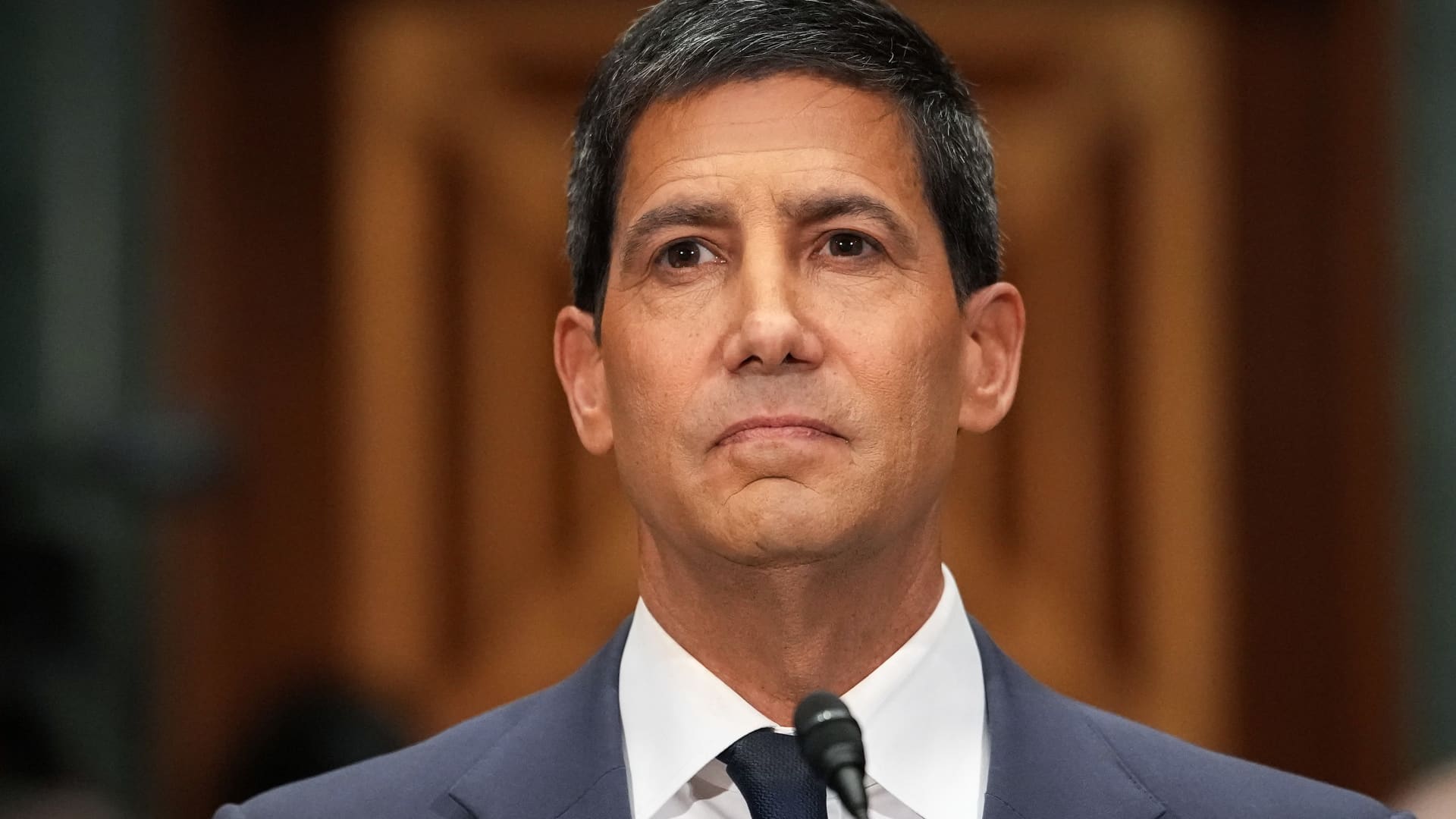
Kevin Warsh’s wealth shows how top family office employees can cash in

Published

on

Kevin Warsh’s wealth shows how top family office employees can cash in
How Trump Fed Chair Nominee Kevin Warsh Could Transform the Federal Reserve

A version of this article first appeared in CNBC’s Inside Wealth newsletter with Robert Frank, a weekly guide to the high-net-worth investor and consumer. Sign up to receive future editions, straight to your inbox.

Kevin Warsh can credit more than $100 million of his vast fortune to a lucrative regulatory carveout that favors family office executives and investment professionals, family office attorneys told Inside Wealth.

While single-family offices are widely understood to only manage family members’ assets, a little-known exception allows certain employees to invest with the ultra-wealthy families they work for.

Warsh’s recent financial disclosures are putting the carveout on display.

Advertisement

The Federal Reserve chair nominee has two stakes worth at least $50 million each in a vehicle called the Juggernaut Fund, according to the filings. The fund is managed by Duquesne Family Office, the personal investment firm of billionaire hedge fund manager Stanley Druckenmiller.

Warsh joined Duquesne as a partner and advisor after leaving the Fed in 2011 and has interests in dozens of other Duquesne entities. The underlying assets in the Juggernaut Fund are not detailed, citing Warsh’s “pre-existing confidentiality agreements” with the firm.

An attorney who has advised family offices for 30 years told CNBC it’s increasingly common for family offices to structure compensation for their key employees in a similar manner to private equity firms. That could include incentive fees from investments or opportunities to co-invest capital, said the lawyer, who spoke on the condition of anonymity in order to speak freely.

Family offices often lend money to these employees in order to fund their capital commitments and forgive them over time or apply future bonuses toward the debt, the lawyer said.

Advertisement

Single-family offices can allow employees to co-invest thanks to a family office rule issued by the Securities and Exchange Commission in 2011. Under that rule, family offices do not have to register as investment advisors so long as they only advise or manage assets for family clients, a category that includes key employees along with family members of the firm founder. 

To qualify, key employees must occupy a senior position like director or a executive officer or be involved in the firm’s investment activity, according to the SEC. Investment professionals must have held these duties at the family office or another company for at least 12 months, per the SEC.

“I think the SEC staff at the time was sympathetic to the family office community’s concerns about making investment opportunities and in-house investment staff as robust as possible,” said a lawyer at a New York City firm, who asked to remain anonymous to speak about the matter. “They recognized that attracting and retaining that type of talent required providing executives that level of compensation.”

Lawyers told Inside Wealth that Warsh likely falls under the key employee exception. Duquesne and a representative of Warsh did not respond to requests for comment.

Advertisement

Evan Hall, partner at investment management practice group at Haynes Boone, said the “key employee” category is somewhat flexible, however.

“If you’re an employee of the firm who participates in investment decisions, it doesn’t have to be all investment decisions for the family office,” Hall said. “People can game it a little bit. Can a consultant fit in the key-employee definition? It really seems kind of murky, but that’s a line we see a lot.”

Get Inside Wealth directly to your inbox

Warsh has promised to divest his Duquesne-affiliated investments if he’s confirmed as Fed chair, but he has not disclosed how he would do so.

Lawyers who spoke with Inside Wealth said Warsh would have to sell them to the Druckenmiller family or another family client in order for Duquesne to comply with the family office rule. 

Advertisement

“I will say that if he doesn’t have friendly partners willing to buy him out, getting out of underlying investments tends to be very difficult,” said another New York lawyer, who similarly requested to remain anonymous to speak candidly. “Otherwise it’s very difficult to get out of private investments.”

At Tuesday’s Senate Banking Committee confirmation hearing, Sen. Elizabeth Warren, D.-Mass, asked Warsh if he would sell those interests back to Druckenmiller.

“Will you disclose how you divest those assets? Or will you just collect a check for $100 million from someone whose whole business is betting on what the Fed will do?” Warren said. 

Warsh said he had come to an agreement with the Office of Government Ethics, but did not give specific details about that.

Advertisement

Although Warsh’s nomination and wealth have cast attention on how family offices compensate their employees, lawyer Michael Schwamm, a partner at Duane Morris, said it’s unlikely that it will invite regulatory scrutiny on how key employees are defined or how many can co-invest.

He said the SEC would probably only act if an investment went bad and an employee lost their life savings and came after the firm in a public way.

“I would not be surprised if there are family officers that have tripped the line, but is this something that the SEC is actively gonna go after?” he said. “Not until something happens.”

Choose CNBC as your preferred source on Google and never miss a moment from the most trusted name in business news.
Advertisement
Continue Reading

Business

Earnings call transcript: FirstService Q1 2026 beats forecasts, stock climbs

Published

on


Earnings call transcript: FirstService Q1 2026 beats forecasts, stock climbs

Continue Reading

Business

Italy stocks higher at close of trade; Investing.com Italy 40 up 0.28%

Published

on


Italy stocks higher at close of trade; Investing.com Italy 40 up 0.28%

Continue Reading

Business

Celestica: The Market Is Missing What Alphabet Just Confirmed

Published

on

Celestica: The Market Is Missing What Alphabet Just Confirmed

Celestica: The Market Is Missing What Alphabet Just Confirmed

Continue Reading

Trending

Copyright © 2025