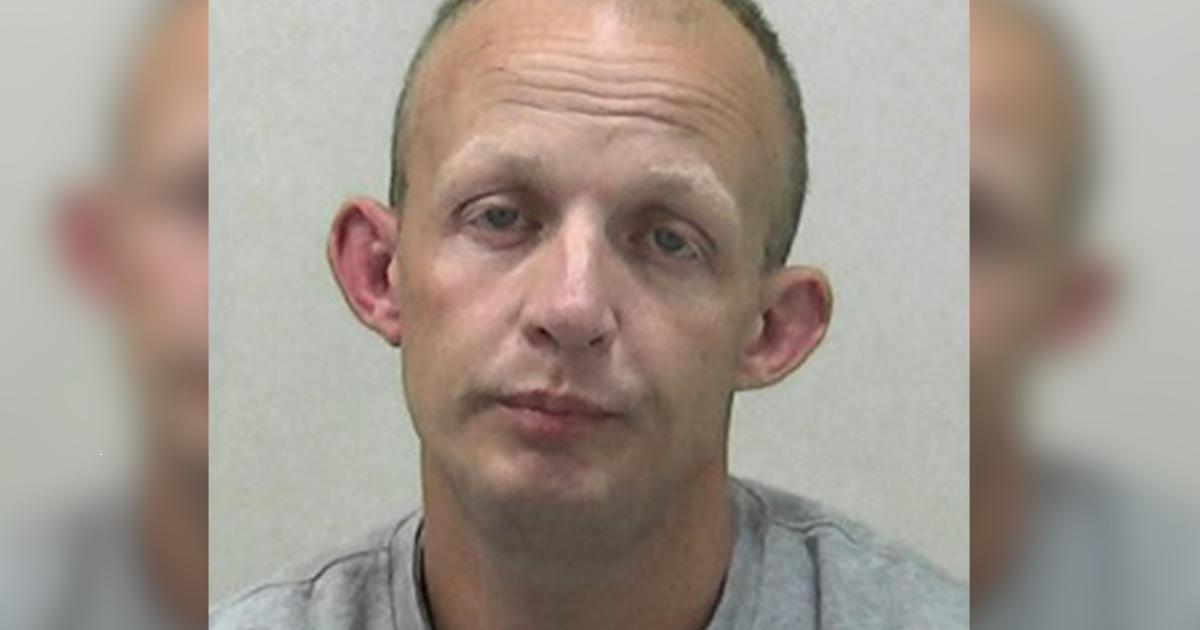
Detectives know that Adam Hall, 43, from Washington, Tyne and Wear, travelled to North Yorkshire to meet men he met on the dating app Grindr.
Hall also met men across the North East, including County Durham and Middlesbrough, as well as West Yorkshire, Manchester and London.
Newcastle’s director of public health, Professor Alice Wiseman, has urged people who have had sex with Hall to access confidential health services in their area.
Advertisement
“The sooner that anyone is diagnosed, the better the treatment is,” she said.
“We want to eliminate HIV in the long term, the way to do that is for those who are infected to receive treatment as soon as possible.
“The earlier you are diagnosed, the sooner you can have anti-retroviral therapy, and if you are consistent with your treatment, you can reduce your viral load so you are no longer infectious to those around you.”
A warning has been issued to other public health directors around the country about Hall’s offending and the potential for there to be more victims whom he deliberately infected.
Advertisement
Hall hid his HIV status from partners, failed to take medication to keep his viral load low, then had unprotected sex with men, sometimes raping them.
He was convicted of five counts of rape and seven counts of causing grievous bodily harm – by deliberately infecting younger partners with HIV after meeting them in bars in the Newcastle area or on the dating app Grindr.
Hall’s victims were aged from their late 20s down to just 15, with the schoolboy finding out he had contracted HIV in a phone call from health professionals moments after he stepped off a school bus.
Two of his victims were just 17 and 18.
Advertisement
One of the victims said: “I blame myself for letting the monster in.”
Judge Edward Bindloss deemed Hall “dangerous” before jailing him for life with a minimum term of 23 years and 42 days.
Second person in country to be convicted of deliberately infecting other people with HIV
After a four-month trial at Newcastle Crown Court, Hall became just the second person in the country to be convicted of deliberately infecting other people with HIV.
Hall denied the charges, even claiming some of his victims wanted to be infected with HIV.
Advertisement
He was known on the Newcastle gay and chem sex scene, worked in bars and at a Tyneside sex shop, and had even tried to set up a charity for people with HIV.
He was diagnosed with HIV in 2010 and could have kept his viral load low with modern treatments.
But in 2016, medical professionals became concerned he was not adhering to his treatment, making him infectious to others he slept with.
Despite being warned, Hall had unprotected sex with men between 2016 and 2023, in some cases raping them.
Advertisement
Prosecutors were sure Hall intended to spread HIV, although he continued to deny it.
Experts have discovered evidence of ‘vibrio vulnificus hotspots’ in various ponds around Long Island, New York, with those infected facing a ‘20% chance of dying within 48 hours’
20:24, 23 Apr 2026Updated 20:24, 23 Apr 2026
Researchers are warning about a terrifying flesh-eating bacteria found in bodies of water across an area of New York – which could kill those infected “within 48 hours”.
Dr Christopher Gobler, an ecologist from Stony Brook University’s School of Marine and Atmospheric Sciences, said his team discovered evidence of “vibrio vulnificus hotspots” in various ponds around Long Island. Those who are infected with the bacteria could face a 20% chance of dying within 48 hours, he warned.
A 10-year-old girl who found an endangered Mexican axolotl while on holiday in Wales has told the BBC about the moment she found and caught the amphibian.
It is the first documented discovery of an axolotl in the wild in the UK, with only 50 to 1,000 left globally, according to experts.
Evie was playing in the shallows of the River Ogmore in Bridgend when she spotted the axolotl nestled in the rocks.
The family decided to cut their trip short to take the animal back to their home in Leicester, naming it Dippy as a tribute to where Evie found it.
Advertisement
“I think it’s a really nice change to the family,” Evie said about having Dippy.
Chris Newman, the National Centre for Reptile Welfare (NCRW) director, said the manner in which Dippy was found suggested its previous owner had released it due to a “change in circumstances”.
The 16-year-old should not have had the vehicle on the road
A 16-year-old was stopped by police after driving a tractor on the M1 on a journey from Co Cavan to Ballymena.
Advertisement
The teenager was stopped by officers from the PSNI Road Policing Strategic Unit near Lisburn on Wednesday, April 22, as the vehicle should not have been using the motorway.
The driver was found to have only a provisional licence from the Republic of Ireland and was not allowed to drive on any Northern Ireland road with officers saying his parents would have to travel three hours to “deal with the matter”.
A PSNI spokesperson said: “Officers from Road Policing Strategic Unit – Mahon Road – stopped a tractor on the M1 Motorway near Lisburn, earlier today.
Advertisement
“The tractor was travelling to Ballymena from County Cavan. This tractor should not be on the motorway – tractors are not allowed to use motorways.
“The driver, who was only 16 years old and only had a provisional entitlement in the Republic of Ireland, should not have been driving on any road in Northern Ireland. His parents now have a three hour journey to come to Lisburn and deal with the matter.”
Social media is saturated with menopause solutions: powders for brain fog, gummies for sleep or capsules promising hormonal balance. Supplements such as magnesium, lion’s mane, creatine and collagen are being marketed as must-haves for perimenopause and menopause. But how much of this is actually grounded in science?
During perimenopause and menopause, fluctuating and declining oestrogen levels can trigger symptoms such as hot flushes, night sweats, sleep disruption, anxiety, brain fog, joint pain and changes in muscle mass and body composition.
Hormone replacement therapy (HRT) remains the most effective treatment for many symptoms, but not everyone can or wants to use it. This is why alternative remedies attract so much attention.
Magnesium
Magnesium plays a role in more than 300 metabolic processes, including muscle relaxation, nerve signalling and blood pressure regulation. Several menopause-related symptoms overlap with areas where magnesium has effects.
Advertisement
For instance, many menopausal women experience sleep problems. Clinical trials in adults, including older women, show magnesium can improve how fast you fall asleep and reduce insomnia severity.
Anxiety can also be an issue for menopausal women. Meta analyses show magnesium supplements can modestly reduce anxiety symptoms – particularly in people with low magnesium levels. However, this research wasn’t specifically done in menopausal women.
Menopause also places women at higher risk of osteoporosis (weakened bones). As oestrogen levels fall during menopause, certain bone cells become more active, causing bone to be lost faster than it’s rebuilt.
But magnesium contributes to bone density by encouraging the formation of new bone. Given some older women may have low magnesium levels and low bone density, this supplement may help address this menopause-related issue.
Advertisement
However, magnesium has not shown benefit for hot flushes, weight changes or cognitive symptoms.
The type of magnesium you take matters. Magnesium citrate and glycinate tend to be better absorbed by the body, while magnesium oxide is absorbed less efficiently.
It’s also important to note high doses can cause diarrhoea and may affect the heart and nervous system. People with kidney disease should avoid supplementation unless medically supervised.
Lion’s mane mushrooms
Lion’s mane mushroom is promoted to help with brain fog, a common complaint for women going through the menopause.
Advertisement
Animal studies suggest lion’s mane extract may stimulate new brain cell growth and support the hippocampus – the brain structure involved in memory and emotional regulation.
But the small human trials that have been done show mixed results – with only some reporting mood improvements. Importantly, none of these studies involved menopausal women.
If you’re still keen to try the supplement, it’s usually well tolerated – though those with mushroom allergies should avoid it.
Advertisement
Creatine
Although researchers have studied creatine for decades, most of that work has focused on men. But emerging research suggests it has many benefits for women in perimenopause and menopause.
A 14-week study found creatine supplementation significantly increased lower body strength and improved sleep quality in perimenopausal women. These improvements in muscle strength are notable, given the increased risk of sarcopenia (loss of muscle mass and function) during menopause.
However, evidence in post-menopausal women is mixed. One review found creatine may offer minor short-term benefits in post-menopausal women, but sustained supplementation didn’t produce significant muscle or bone health improvements.
Creatine may also support the brain. Growing evidence suggests it may support memory, focus and mood – particularly during periods of hormonal fluctuation or mental fatigue. However, more research is needed specifically in menopausal women.
Advertisement
Perimenopausal women have about a 40% higher risk of developing depressive symptoms or receiving a depression diagnosis than premenopausal women (premenopause is the period before any menopausal changes; perimenopause is the transition phase leading to menopause, when symptoms begin to appear). Some limited data suggests that taking creatine alongside an antidepressant can accelerate symptom improvement in women.
Creatine is generally safe, though those with kidney disease should seek medical advice before taking it.
Collagen
Collagen supplements are widely marketed for skin elasticity, joint health and healthy ageing.
Collagen is the body’s most abundant protein, giving structure to bones, cartilage, tendons, ligaments, muscles and skin. As we age, collagen-producing cells become less active. This contributes to visible skin ageing and weaker bones that are more prone to fracture.
Advertisement
A year-long trial in postmenopausal women found daily collagen supplementation led to small but significant increases in bone mineral density compared with a placebo. This suggests collagen supplements may help counter age-related bone loss in postmenopausal women.
Research also indicates collagen supplements may ease joint discomfort and stiffness, particularly in people with osteoarthritis. This could be relevant for menopausal women as many experience the onset or worsening of joint issues during this time. However, more robust research in needed in menopausal women.
It’s important to note that collagen supplements differ widely due to how they’re produced and the source they come from. This makes the evidence hard to interpret.
This means different products can behave very differently in the body. Grouping them together can therefore obscure important differences in how they work. For instance, hydrolysed collagen is absorbed far more easily than the collagen molecules found in food. This means collagen is more likely to reach tissues where they may support skin, joint and muscle health.
Advertisement
Side effects tend to be minimal, although people with liver or kidney conditions should consult a doctor or pharmacist first.
Final verdict
So, are supplements worth it? Based on the current evidence out there, magnesium and creatine seem to be the most beneficial. However, it’s clear more research is needed. Supplements can also be expensive – and their quality can vary widely.
While supplements can feel empowering, until stronger evidence emerges proving their benefits, a healthy lifestyle remains the best, evidence-based way to navigate perimenopause and menopause.
“The Britain that I want is a Britain where people can practice their religion, their faith, in safety and security, and we must stand with and alongside our Jewish community here, and that’s amongst the reasons I wanted to come here personally myself this afternoon to hear first hand from the people affected by the attack this weekend.”
It happened on Cumberland Road in Middlesbrough on Thursday (April 23).
Police arrested three men aged 30, 34 and 42 on suspicion of affray on Beverley Road a short time later.
Superintendent Emily Harrison of Cleveland Police said: “We understand residents may have been concerned however I’d like to reassure them that the incident was brought to a safe conclusion with no current reports of any injuries.
Advertisement
“I’d also like to thank local people for their co-operation while we provided an immediate response to the report.
“Our investigation is now continuing and I’d urge anyone with information which could help us, to contact Cleveland Police on the 101 number quoting ref 076270 or to speak anonymously to the independent charity Crimestoppers.”
President Donald Trump is basking in a rare moment of praise from a perennial thorn in his side who he once called “a wiseguy with no talent” and “the most overrated joke on television” — The Daily Show host Jon Stewart.
Trump took to Truth Social on Thursday to amplify a clip of Stewart’s most recent turn hosting the Monday edition of the long-running program in which the comedian started his monologue by giving Trump “credit where credit is due” for having done “a solid over the weekend.”
Stewart was referring to Trump’s surprise Saturday morning Oval Office appearance alongside podcaster Joe Rogan, Health and Human Services Secretary Robert F. Kennedy Jr, Texas congressman and ex-Navy SEAL Morgan Luttrell and other MAGA-aligned personalities and administration officials, at which Trump signed an executive order intended to “accelerate medical treatments for serious mental illness” using psychedelic drugs.
Such substances, such as Ibogaine and MDMA, have long been thought to have benefits for people suffering from Post-Traumatic Stress Disorder but they have also been nearly impossible to access because they are banned under federal drug laws in most cases.
Advertisement
Stewart quipped that Trump “signed an executive order in front of his fraternity brothers, fast-tracking the FDA process for novel psychedelic drug treatments for veterans suffering from all forms of PTSD and other psychiatric conditions, including addiction.”
Trump’s most recent executive order earned him plaudits from Jon Stewart, a longtime nemesis (YouTube/The Daily Show/AP)
He then played a clip of Trump awkwardly pronouncing the name of the drug “ibogaine” before stopping himself and apologizing for “falling into hold habits” by mocking the president.
“It’s good. You did a good thing. I’m nitpicking. I apologize. A lot of the people are going to get the help they need,” he said.
Stewart’s kind words for the president’s executive action were a sharp contrast to many of the things Trump has said about him over the years.
The 47th president was a frequent target for the comedian’s mockery when he was in the midst of his first campaign for the presidency against Hillary Clinton, and Trump more often than not responded in kind, usually on his Twitter account in the wee hours of the morning.
Advertisement
Over a three-day period from May 30 to June 1 in 2015, Trump posted about Stewart nine separate times, referring to him as “a dummy,” “a joke,” as well as “not very bright and totally overrated.”
He also poked fun at the comedian’s use of “Stewart” as a stage name in place of his family name, Leibowitz, in a tweet in which he claimed he “would never” attack the Daily Show host for “his phony last name” even though it is an alternative spelling of his middle name, Stuart.
But Thursday’s Truth Social post was not the only time he has amplified an instance of Stewart giving him plaudits for something that he’s done as president.
According to CQ Roll Call’s FactBase archive of Trump’s social media output, he tweeted — then deleted — a retweet of a post by a Twitter user @rcale1776 which quoted Stewart as saying Trump’s first-term justice department had done “an excellent job administering the 9/11 compensation act.”
ABOARD THE PAPAL PLANE (AP) — Pope Leo XIV urged the United States and Iran to return to talks to end the war Thursday and condemned capital punishment, in a wide-ranging press conference en route home from his trip to Africa.
Leo also asserted that countries have the right to control their borders but mustn’t treat migrants worse than “animals,” and lamented that the church’s morality teaching is often reduced to sexual issues.
On Iran, capital punishment and peace
After a trip that was dominated by the very public back and forth between Leo and U.S. President Donald Trump over the war, Leo urged the United States and Iran to return to negotiations.
He called for a new “culture of peace” to replace the recourse to violence whenever conflicts arise.
Advertisement
He said the question wasn’t whether the Iran regime should change or not. “The question should be about how to promote the values we believe in without the deaths of so many innocents.”
He revealed that he carries with him the photo of a Muslim Lebanese boy who had been killed in Israel’s recent war with Hezbollah. The boy had been photographed holding a sign welcoming the pope when he visited Lebanon last year.
“As a pastor I cannot be in favor of war,” he told reporters aboard his plane. “I would like to encourage everyone to find responses that come from a culture of peace and not hatred and division.”
Asked if he condemned Iran’s recent executions, Leo said he condemned “all actions that are unjust” and included capital punishment in the list.
Advertisement
“I condemn the taking of people’s lives. I condemn capital punishment. I believe human life is to be respected and that all people from conception to natural (death), their lives should be respected and protected.
“So when a regime, when a country takes decisions which take away the lives of other people unjustly, then obviously that is something that should be condemned,” he said.
Pope Francis changed the church’s social teaching to declare capital punishment immoral in all cases.
On migration and the rights of states
Leo affirmed the right of countries to impose immigration controls on their borders and acknowledged that uncontrolled migration had created situations “that are sometimes more unjust in the place where they arrive than from where they left.”
Advertisement
“I personally believe that a state has the right to impose rules for its frontiers,” he said. “But saying this, I ask: ‘What are we doing in the wealthier countries to change the situation in poorer countries’ to provide opportunities so that people aren’t compelled to leave?”
Regardless, he said migrants are human beings and deserve to be respected in their human dignity and not be treated “worse than house pets, animals.”
On LGBTQ+ blessings and morality
Leo was asked about the recent invitation by Cardinal Reinhard Marx, archbishop of Munich, for the priests and pastoral workers in his archdioceses to adopt a set of guidelines formalizing and ritualizing blessings of same-sex couples.
The guidelines were approved last year by a controversial German church governing body made up of the German bishops’ conference and a Catholic lay group that has been working to have a greater say in church decision-making.
Advertisement
The Vatican in 2023 allowed for such blessings, but it made clear that they were not to be formalized or ritualized. The Vatican allowed them to be offered spontaneously and informally, as a priest gives a final blessing to all people at the end of Mass.
Leo said the Holy See had made clear to German bishops that “we do not agree with the formalized blessing” of gay couples or couples in other “irregular situations.”
The Vatican’s 2023 declaration allowing an informal blessing, promulgated with virtually no consultation outside the Vatican, sharply divided the church, with African bishops delivering a continent-wide dissent and refusing to implement it. Homosexual activity is criminalized in several African countries.
Asked how he would handle keeping the church unified over such a divisive issue, Leo spoke broadly about how culture war questions of sexual morality had dominated church discourse, particularly in the West, far too much.
Advertisement
“I think it’s very important to understand that the unity or division of the church should not revolve around sexual matters,” he said. “We tend to think that when the church is talking about morality, that the only issue of morality is sexual.
“And in reality, I believe that there are much greater and more important issues such as justice, equality, freedom of men and women, freedom of religion that would all take priority before that particular issue.”
The comment was significant because it suggested that even though he is American, Leo believes the church in the U.S. and the West has excessively reduced its moral teachings to revolve only around sex at the expense of other pressing issues.
A pope who keeps on eye on how he’s being covered
History’s first U.S. pope showed himself keenly aware of how his Africa trip had been reported and interpreted, including about his sometimes tame public addresses to African leaders who are accused of corruption or authoritarianism.
Advertisement
With a few notable exceptions, Leo kept his political remarks to the leaders largely diplomatic, using a language of encouragement and subtle messaging rather than headline-grabbing condemnations.
He also allowed some of the circumstances of his visit to speak louder than his words: a choreographed song and dance routine by prisoners in a country known for gross human rights abuses, or the extravagant luxury of a president’s hometown in a country where more than half the population lives in poverty.
Leo insisted that his primary reason for visiting Algeria, Cameroon, Angola and Equatorial Guinea was as a pastor, to accompany his flock in their faith.
He added that the Holy See can sometimes achieve more behind the scenes via its diplomatic work, including through the release of political prisoners, than with “great proclamations criticizing, judging or condemning.”
Advertisement
——-
Associated Press writer Monika Pronczuk contributed to this report.
___
Associated Press religion coverage receives support through the AP’s collaboration with The Conversation US, with funding from Lilly Endowment Inc. The AP is solely responsible for this content.
These six restaurants are the best of the best according to locals.
Six restaurants across Cambridgeshire have been named the best in the region. Muddy Stilettos recently revealed the finalists for its 2026 regional awards with many popular food spots around the county making the final list after being nominated by the public.
Advertisement
From Michelin star restaurants to more affordable food spots, Cambridgeshire is lucky to have a huge range of cuisines on offer. The list of restaurants include some new places as well as familiar favourites highlighting the best the county has to try out.
You can vote for your favourite restaurant on the Muddy Stilettos website. Here are all six of the restaurants in Cambridgeshire that are finalists for 2026.
Ancient Shepherds
Location: 5 High St, Fen Ditton, Cambridge CB5 8ST
In Fen Ditton, the Ancient Shepherds is run by the Michelin-star chef, Mark Poynton, who also has a restaurant in Caistor St Edmund. The restaurant is in a Grade II listed building originally built in 1540 as cottages.
Advertisement
The Ancient Shepherds offers a three, five, and seven-course tasting menu with different dishes made using British ingredients. The restaurant also has five rooms that each have individual entrances and “extra little touches” like handmade chocolates.
Margaret’s
Location: 18 Chesterton Rd, Cambridge CB4 3AX
Sam Carter and Alex Olivier are no strangers to the Cambridge food scene. Margaret’s gets its name from a regular from the couple’s other spot in the city, Restaurant 22, who visited for lunch every week.
The restaurant offers a seasonal set menu that uses “local ingredients from a range of brilliant suppliers”. The menu currently features dishes such as rosemary and sea salt focaccia served with different spreads and dips, broccoli soup with blue cheese and hazelnut, and Suffolk chicken with winter truffle and artichoke.
Advertisement
Midsummer House
Location: Midsummer Common, Cambridge CB4 1HA
Midsummer House is in a great spot right next to the River Cam on Midsummer Common. The restaurant could be a good spot for a celebratory meal, and, if you are lucky, you could spot some of the cows grazing on the common throughout spring and summer.
Midsummer House was awarded its first Michelin star in 2002 and its second in 2004 and has been able to hold onto them ever since. There are three set menus to pick from depending on what kind of experience you are looking for.
Restaurant 22
Location: 22 Chesterton Rd, Cambridge CB4 3AX
Advertisement
Found just down the road from their other restaurant, Margaret’s, Restaurant 22 has been in the city of Cambridge since 2018. If you live in the city and regular walk down Chesterton Road, you probably have passed the restaurant but might not have noticed, as the outside looks much like other homes on the street.
Restaurant 22 has a lunch menu for £65 that features three different courses that can be paired with the recommended wine. You can also opt for the short tasting menu or the full tasting menu for more special occasions.
The Teller’s Table
Location: The Old Bank, 2 The Pavement, St. Ives PE27 5AD
The Teller’s Table might have only just opened in February of this year but it is already proving to be a popular choice for residents of St Ives. The restaurant is open all day for whatever sort of food you fancy including a brunch menu with sweet and savoury options.
Advertisement
The à la carte menu is “rooted in modern British cooking and shaped by Mediterranean influence” and is available at lunch and dinner. The restaurant is also known for its Teller’s flatbreads that you can get topped with a range of items.
This restaurant can be found on the busy Mill Road, which is known for being a popular spot for thriving food businesses. Vanderlyle works “directly with farmers, growers and producers” to create “ingredient-centric dishes”.
The restaurant’s tasting menu is completely “plant-led” with no meat or fish in any of the dishes. Vanderlyle’s menu often changes depending on what produce is available throughout each season but features things like a salad of seasonal produce, hay baked cauliflower, and a darkroom Peruvian chocolate delice.
Insomnia may have been torturing humanity since ancient times, but over the last 20 years scientists have made progress in their understanding of chronic sleep deprivation.
Today, sleep deprivation is one of the most widespread reported psychological problems in Britain, with about a third of the adult population in England reporting frequent insomnia symptoms.
Insomnia rarely occurs on its own, which brings us to one of the biggest changes scientists have made in our understanding of chronic sleep deprivation. The vast majority of people with insomnia often have other mental and physical health conditions, like diabetes, hypertension, chronic pain, thyroid disease, gastrointestinal problems, anxiety or depression.
In its diagnostic history, insomnia coupled with another illness or disorder was called secondary insomnia. That meant that insomnia was considered a consequence of those other underlying conditions. As such, until fairly recently clinicians did not generally attempt to treat secondary insomnia.
Advertisement
But in the early 2000s, both research and clinical practice evidence started to indicate that this approach was wrong. Scientists argued that insomnia could precede or long survive a primary condition. Abandoning this distinction between primary and secondary insomnia was a major advance in acknowledging that insomnia frequently was an independent disorder, requiring its own treatment.
What’s more, researchers have been accumulating strong evidence that helping people with their sleeping problems could actually lead to improvements in their other health conditions. Chronic pain, chronic heart failure, depression, psychosis, alcohol dependency, bipolar disorder, PTSD, can all improve for patients if they address their sleeping problems.
Who gets insomnia?
Over the past two decades, we have acquired more rigorous and international data illustrating how ubiquitous insomnia is. Insomnia affects almost everyone, though women, older people, and people of lower socio-economic status are more vulnerable to it.
These groups experience a combination of biological, psychological and social risk factors that expose them to long-term sleep-disruption. For example, women often experience acute hormone fluctuations, pregnancy and birth, breastfeeding, menopause, domestic violence, caregiving roles, higher prevalence of depression and anxiety – all of which can lead to more opportunities for prolonged sleep disruption.
Advertisement
Some current issues in insomnia research include the need to understand different types of insomnia symptoms, and their relationship to health and performance risks. For example, there is evidence that difficulty initiating sleep (as opposed to difficulty staying asleep, or waking up too early in the morning) is associated with an increased risk of depression. Similarly, scientists still have questions on changes in things like brain activity, heart rate, or stress hormones that accompany insomnia. In common with all other mental health disorders, we are still yet to find biomarkers of insomnia.
However, research has helped us understand some things people can do to prevent insonmia episodes progressing to chronic insomnia, which is harder to treat. When insomnia symptoms happen more nights than not, and last for more than three months, then a diagnosis of insomnia disorder, or chronic insomnia, can be made.
Insomnia keeping you up? Lizavetta/Shutterstock
One of the most common and harmful habits that develop during periods of insomnia is lying in bed, trying to sleep. Scientists have learned that lying in bed awake leads to perpetual cognitive arousal and, in time, it teaches your brain to stop connecting bed and being asleep.
Thus, if you cannot sleep at night, get up and do something else absorbing, but calming – read, write a list for the following day, listen to calming music or do some breathing exercises. When you feel sleepy again, get back to bed. If you are tired the following day, a well-placed short nap is fine, in the afternoon, for a maximum of 20 minutes. However, one must be careful with daytime sleeping, as it may reduce sleepiness at nighttime, and going to sleep may become even more difficult.
Advertisement
For those who do struggle with insomnia, there are effective treatments recommended. The story of the profound changes from secondary insomnia to insomnia disorder speaks of the power of clinical diagnosis in providing a pathway to treatment.
Cognitive behavioural treatment for insomnia (CBTI) is a package of techniques designed to maximise sleepiness at bedtime. It involves structured steps which aim to modify behaviour and mental activity. There are some predictors of treatment success: shorter duration of insomnia symptoms (years, rather than decades), less depression or pain and more positive expectations towards CBTI. But CBTI is broadly effective across all groups of people with insomnia.
Even so, only a tiny proportion of people reporting insomnia symptoms seek medical help. People may consider insomnia symptoms trivial or manageable, or they may be unaware of the options. It may also be due to the unavailability of treatment options. CBTI remains largely unavailable in clinical practice, mainly due to clinicians’ unfamiliarity with the treatment programme, and limited funding.
This pushes patients towards sleeping tablets, which are not an acceptable long-term solution. Sleeping tablets are associated with significant cognitive and motor impairment, increased risk of falls, dependence, tolerance and withdrawal symptoms, daytime lethargy, dizziness and headaches.
Advertisement
The main truly “new” class of sleeping pills are the dual orexin receptor antagonists (DORAs), which have shown a safety profile in many ways better than the traditional sedatives, especially around dependence concerns. But DORAs are not risk free or “mild” pills. They are relatively new to the market, first approved in the UK in 2022. So we lack long-term data to assess their safety for long-term use in people with insomnia.
A decent alternative is online self-delivered CBTI, on platforms such as Sleepful, which are free to access.
We have made great strides in sleep medicine over the past 20 years for people with insomnia, we just need to realise the potential of such profound changes by providing the right help for those suffering with it.




















































You must be logged in to post a comment Login