
Business
S&P 500, Nasdaq close at records on tech lift, Iran peace talk hopes

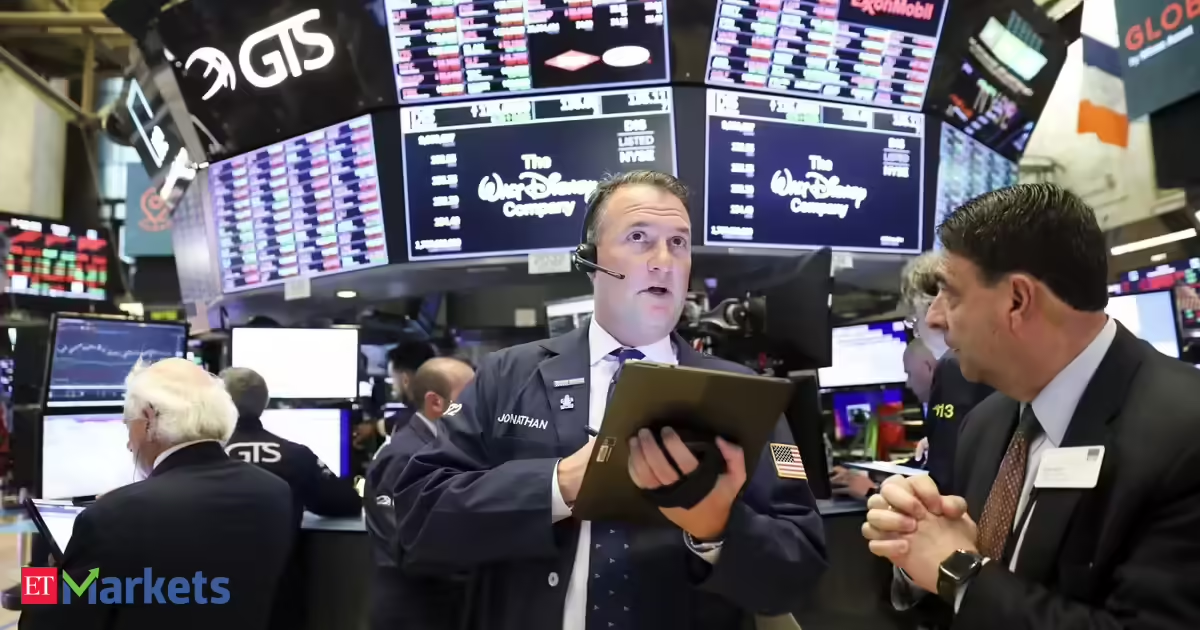
“The Iran thing feels kind of tenuous, we’ve had a lot of back and forth. I assume that will continue, but for now, some rays of sunlight,” said Jed Ellerbroek, portfolio manager at Argent Capital Management in St. Louis, Missouri.
The Dow Jones Industrial Average fell 79.61 points, or 0.16%, to 49,230.71, the S&P 500 gained 56.68 points, or 0.80%, to 7,165.08 and the Nasdaq Composite gained 398.09 points, or 1.63%, to 24,836.60.
For the week, the S&P 500 gained 0.55%, the Nasdaq rose 1.5%, and the Dow fell 0.44%.
Semiconductors, one of the market’s strongest performers on the year, continued to rally. The Philadelphia SE Semiconductor Index advanced 4.32% to extend its record run of gains to 18 consecutive sessions. Intel surged 23.65% to close at a record $82.57 and was the best performer on the benchmark S&P index, following a better-than-expected revenue forecast for the second quarter.

“All the doubts and fears about the (return on investment) on the AI CapEx from the big tech companies – Amazon and Google and Microsoft and Meta – those concerns are fading real fast, and that’s propelling the chip stocks and the contractors and all the industrial companies,” said Ellerbroek.
Fellow chipmakers AMD and Arm both shot higher by about 14%. Megacap Nvidia climbed 4.32% and also closed at a record as it neared the $5 trillion market valuation again. The S&P 500 technology index rose 2.46% and was the best-performing of the 11 major S&P sectors. Tech stocks also managed to shrug off DeepSeek’s preview of its highly awaited new model. The S&P 500 and the Nasdaq recorded a fourth consecutive week of gains, their longest streak since the fourth quarter of 2024. The Dow, however, snapped a three-week run higher.
FED MEETING AWAITED
Attention is also shifting to the Federal Reserve meeting next week, which will be scrutinized for clues on rate cuts and the central bank’s leadership succession. The U.S. Justice Department is closing its investigation into Fed Chair Jerome Powell, clearing an obstacle to the confirmation of Kevin Warsh, Trump’s pick to lead the central bank. Markets were pricing in a roughly 39% chance for a cut of at least 25 basis points at the Fed’s December meeting, according to CME’s FedWatch Tool, up from about 23% in the prior session.
A strong start to earnings season has helped buttress stocks against volatile Iran news. Earnings growth expectations for the first quarter now stand at 16.1%, according to LSEG data, up from 14.4% at the start of April.
Advancing issues outnumbered decliners by a 1.47-to-1 ratio on the NYSE and by a 1.38-to-1 ratio on the Nasdaq.
The S&P 500 posted 34 new 52-week highs and 8 new lows while the Nasdaq Composite recorded 126 new highs and 90 new lows.
Volume on U.S. exchanges was 17.81 billion shares, compared with the 18.39 billion average for the full session over the last 20 trading days.

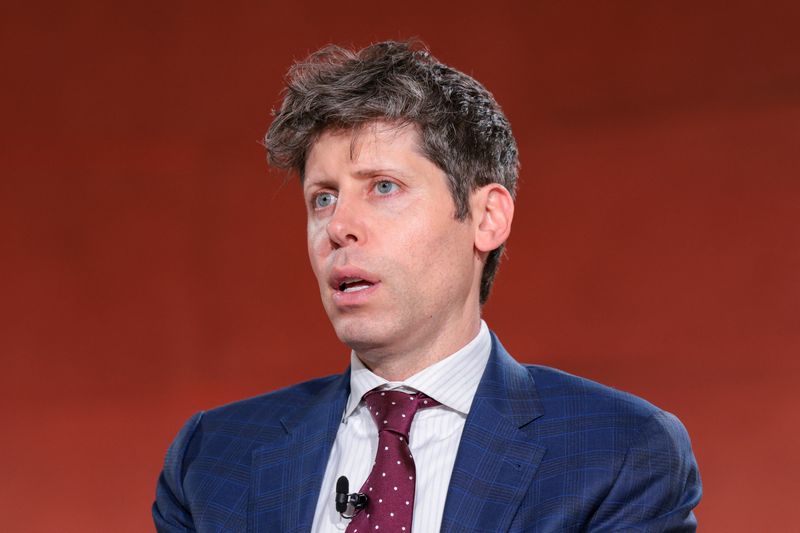

OpenAI chief apologizes for not reporting shooting suspect to police


Welcome to my author’s site. As an avid follower of SeekingAlpha, I take great interest in articles posted as the subject matter is often something that appeals to me. However, I will sometimes encounter an article that I might not agree with. My purpose is to present an alternative view to readers that they may want to take into account. I hope you find my articles interesting and informative.
Analyst’s Disclosure: I/we have a beneficial long position in the shares of CAAS either through stock ownership, options, or other derivatives. I wrote this article myself, and it expresses my own opinions. I am not receiving compensation for it (other than from Seeking Alpha). I have no business relationship with any company whose stock is mentioned in this article.
Seeking Alpha’s Disclosure: Past performance is no guarantee of future results. No recommendation or advice is being given as to whether any investment is suitable for a particular investor. Any views or opinions expressed above may not reflect those of Seeking Alpha as a whole. Seeking Alpha is not a licensed securities dealer, broker or US investment adviser or investment bank. Our analysts are third party authors that include both professional investors and individual investors who may not be licensed or certified by any institute or regulatory body.


Why Equipment Flexibility Matters: Renting and Leasing Forklifts in a Changing Economy

Key drivers of the rally
Several factors are driving this price action. The boom in artificial intelligence infrastructure, particularly hyperscale data centres, has created unprecedented demand for copper in power distribution and cooling systems. The global push toward electrification and renewable energy integration has intensified the need for copper in grid modernisation projects. Supply constraints are also playing a role, with declining ore grades and disruptions at major mines tightening availability. Geopolitical tensions, including trade tariffs and defence procurement, have added further volatility to the market. Additionally, speculative buying by investors anticipating long-term shortages has amplified the rally, while currency fluctuations—especially a weaker U.S. dollar—have made copper more attractive to international buyers.
Supply-demand imbalances
The current supply-demand scenario points to a deficit, with global refined copper shortfalls estimated at 330,000–400,000 tonnes in 2026. Smelting bottlenecks, particularly in China, have capped refined output, while regional imbalances have led to acute shortages and price premiums in certain markets. Recycling has provided some relief, but the secondary supply remains insufficient to bridge the gap. Moreover, delays in new mining projects due to environmental clearances and financing challenges have worsened the imbalance. However, unless significant investment flows into exploration and production, the deficit could widen further in the coming years.
Geopolitical pressures on copper
Geopolitical factors are amplifying these pressures. Elevated defence spending has increased copper demand for weapons systems and vehicles, while U.S. tariffs and stockpiling programs have removed large volumes from the open market. Ongoing tensions in West Asia have sustained military-driven demand, though the easing of conflicts could reduce defence consumption while stabilising supply chains. Sanctions on certain producing nations have also disrupted trade flows, while logistical bottlenecks in shipping lanes have added to costs. The broader geopolitical climate has made copper not just an industrial commodity but also a strategic resource, with governments increasingly treating it as critical to national security.
China’s central role and global industrial demand
China remains pivotal to copper’s outlook, with smelter production caps limiting supply even as demand surges from renewable energy expansion, electric vehicles, and Belt and Road infrastructure projects. Strategic reserve policies, including stockpiling and releases, further sway global sentiment. Beyond China, industrial demand is equally strong. AI data centres are projected to consume nearly 475,000 tonnes in 2026, while electrification and grid modernisation in Western nations sustain elevated usage. Electric vehicles require up to four times more copper than conventional cars, amplifying automotive demand. Renewable energy projects, particularly wind and solar farms, add significant copper intensity, while construction in emerging economies and smart city initiatives ensure that industrial consumption remains robust worldwide.
Impact of West Asian tensions easing
If West Asian tensions ease, copper demand linked to defence procurement may decline, but this would likely be offset by improved supply chain stability and stronger industrial consumption. Peace in the region could reduce shipping risks and lower insurance costs, making the copper trade smoother and cheaper. It may also encourage investment in infrastructure and energy projects, which would sustain demand from civilian sectors. Thus, while military demand may soften, industrial and developmental demand could rise, keeping overall consumption elevated.
Outlook remains positive for the long term
Copper’s trajectory carries significant macroeconomic weight, as rising prices elevate input costs across manufacturing, housing, automotive, and technology sectors, ultimately feeding into global inflationary pressures and challenging monetary policy. Emerging markets, where copper is vital for infrastructure, face added fiscal strain as budgets stretch and projects risk delay. In the near term, prices are expected to consolidate around $12,700–$13,000, with volatility shaped by geopolitical developments and speculative trading. However, the long-term outlook remains structurally bullish. Demand from AI infrastructure, electric vehicles, renewable energy, and global electrification initiatives is poised to sustain elevated prices. Despite inevitable corrections, copper has cemented its role as the decade’s most critical industrial metal.
(The author is Head of Commodity Research, Geojit Investments Limited)
Business
FII exodus deepens in 2026 at Rs 1.75 lakh crore as April outflows swell to Rs 43,967 crore; FOMC next trigger

On Friday, FIIs sold domestic shares to the tune of Rs 8,827.87 crore while domestic institutional investors (DIIs) were net buyers at Rs 4,700.71 crore.
The massive selling ensured domestic frontline indices ended with sharp cuts. The biggest spoilsport was IT, which fell over 5% at the index level. Pharma, health and energy socks were other big losers. While the 50-stock Nifty fell 275.10 points or 1.14% to finish at 23,897.95, Sensex declined 999.79 points or 1.29% to settle at 76,664.21.
FIIs continue to offload Indian equities with the month-to-date selling trend continuing for the 10th consecutive months, said Bajaj Broking in a note as geo-politics dominate institutional flows. Going ahead, the institutional activity is expected to be driven mainly by global news flows, with developments in US–Iran negotiations remaining a key monitorable, a brokerage note said.
“US FOMC and Bank of Japan rate decisions followed by central bank commentary are also scheduled for next week which will also have an impact on the global equity market and institutional activity,” it added.
The rate setting committee of the US Federal Reserve will meet on April 28 & 29 to mull on the policy moves in light of the ongoing US-Iran war. The policy outcomes will be declared on Wednesday, April 29.
FIIs have remained net sellers in Indian markets despite improving global cues, with over $45 billion pulled out since September 2024 and another $5 billion sold in April 2026 alone, even as flows moved to markets like Korea and Taiwan, N. ArunaGiri, CEO, TrustLine Holdings said, adding the divergence highlights India’s reduced appeal in global allocation strategies, as its MSCI weight has dropped sharply.“FIIs are predominantly large-cap, top-down investors,” and their participation hinges on clear sectoral leadership—something currently lacking with IT facing derating and private banks showing muted growth, ArunaGiri explained.
He adds that “in the absence of a clear index driver, India’s relative attractiveness diminishes,” especially in a market expected to remain sideways and stock-specific, which typically favours domestic investors over global flows. From an FII standpoint, a meaningful return will likely depend on two key triggers – “a clear earnings acceleration cycle” and “supportive currency trends” – he added.
FIIs in 2026
War-induced sell-off in March made it the worst month this year, witnessing an exodus worth Rs 1,17,775 crore. Foreign investors turned net buyers in February, buying shares worth Rs 22,615 crore in the domestic markets so far. In January, they sold Rs 35,962 crore worth of shares.
In 2025, the FIIs buying trends remained patchy, but the overall trend was bearish. They took Rs 1,66,286 crore from Indian markets as trade deal delay and premium valuations weighed on the sentiments.
(Disclaimer: Recommendations, suggestions, views and opinions given by the experts are their own. These do not represent the views of Economic Times)

In the past 24 hours, Bitcoin saw a marginal decline of 0.3% whereas Ethereum was up 0.25%. Among the major altcoins, XRP, BNB, Solana, Dogecoin, Hyperliquid, and Cardano gained upto 1.5% whereas Tron slipped 1.3%.
Also Read | Have Rs 4 lakh to invest? Here’s how to balance mutual fund SIP and lumpsum
The global crypto market capitalisation edged down 0.08% to $2.59 trillion, according to CoinMarketCap.
Riya Sehgal, Research Analyst, Delta Exchange said Bitcoin remains on track for its strongest monthly performance in a year, even as short-term momentum cools. Adding to this, Bitcoin dominance has climbed to 60.6% in late April, after ranging between 58–60% through Q1 2026, highlighting continued capital concentration into Bitcoin.
Sehgal further said that technically, Bitcoin maintains a higher high-higher low structure on the 4-hour chart, holding above key demand zones, indicating underlying strength if support sustains. Ethereum, however, is relatively weaker, trading in a tighter range with short-term lower highs, reflecting cautious sentiment.
In the past week, Bitcoin was up 0.5% and Ethereum slipped 4%. Among the major altcoins, XRP, BNB, Solana, Dogecoin, Hyperliquid, Tron and Cardano fell up to 8.8%.
WazirX Market’s Desk said Bitcoin is currently trading around $77,825, consolidating near recent highs after a strong upward move earlier in the week. Ethereum is hovering near $2,300, remaining sensitive to broader risk conditions.
Also Read | Mutual fund SIP investments underperforming? Here’s why investors should stay invested despite short-term losses
“On the macro front, tensions in the Middle East, particularly around the Strait of Hormuz, have pushed oil prices above $100, raising fresh inflation concerns. Alongside uncertainty about US monetary policy and developments in Federal Reserve leadership, traditional markets have faced pressure, while crypto has held relatively steady. This divergence continues to support Bitcoin’s positioning as an alternative macro asset.”
Overall, Bitcoin’s dominance remains elevated at 58–60%, reinforcing that capital remains concentrated in major assets amid ongoing macro and regulatory uncertainty, said WazirX Market’s Desk.
(Disclaimer: Recommendations, suggestions, views and opinions given by the experts are their own. These do not represent the views of The Economic Times)
If you have any mutual fund queries, message on ET Mutual Funds on Facebook/Twitter. We will get it answered by our panel of experts. Do share your questions on ETMFqueries@timesinternet.in alongwith your age, risk profile, and twitter handle.
Business
World Kinect Corporation 2026 Q1 – Results – Earnings Call Presentation (NYSE:WKC) 2026-04-25

Q1: 2026-04-23 Earnings Summary
EPS of $0.75 beats by $0.44
| Revenue of $9.69B (2.46% Y/Y) beats by $972.25M

Seeking Alpha’s transcripts team is responsible for the development of all of our transcript-related projects. We currently publish thousands of quarterly earnings calls per quarter on our site and are continuing to grow and expand our coverage. The purpose of this profile is to allow us to share with our readers new transcript-related developments. Thanks, SA Transcripts Team
Coloplast A/S (CLPBY) 2026 Guidance/Update Call – Slideshow


Major Russian attack on Ukraine kills four, wounds dozens
Business
Jada Pinkett Smith Seeks $49K From Will Smith’s Ex-Friend After Emotional Distress Suit Partially Dismissed
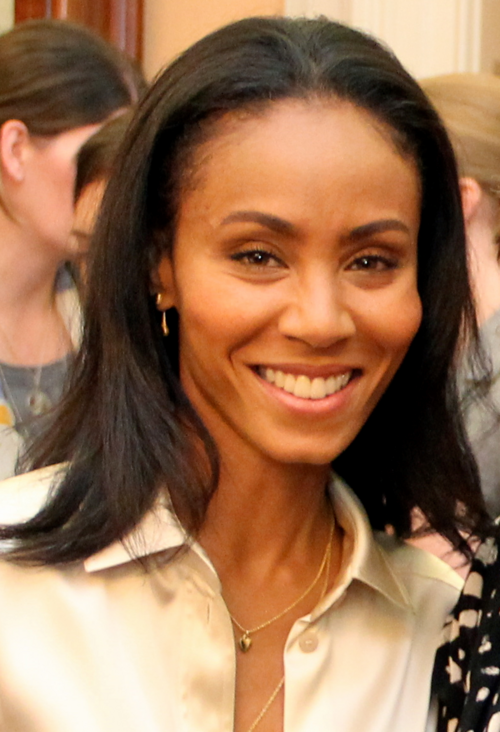
LOS ANGELES — Jada Pinkett Smith is asking a California judge to order Will Smith’s former friend Bilaal Salaam to pay nearly $49,000 in attorney fees after successfully getting portions of his $3 million emotional distress lawsuit against her dismissed, according to court documents filed this week.

The 54-year-old actress and Red Table Talk co-host filed the motion for fees following a partial victory in the high-profile civil case that stems from a long-simmering fallout involving Smith’s inner circle. Salaam, who has described himself as a longtime friend and associate of the Oscar winner, originally sued Pinkett Smith in late 2025, alleging she caused him severe emotional distress through threats and interference related to a planned memoir.
Court records reviewed by multiple outlets show Salaam claimed Pinkett Smith warned him he would “catch a bullet” if he continued sharing personal family details. The suit sought $3 million in damages and accused her of orchestrating a campaign that damaged his reputation and mental health. Pinkett Smith has strongly denied the allegations, calling them baseless and arguing that Salaam failed to provide sufficient evidence to support his claims.
In recent months, a judge tossed key portions of Salaam’s complaint, prompting Pinkett Smith’s legal team to seek reimbursement for defense costs. The filing requests approximately $48,975 to cover attorney fees incurred while fighting the now-partially dismissed claims. Legal experts note that such fee-shifting motions are common when defendants prevail on anti-SLAPP or demurrer motions aimed at weeding out meritless litigation.
The dispute highlights ongoing tensions in the Smith family’s extended circle. Salaam had positioned himself as a trusted confidant who worked on projects tied to Will Smith’s life story. The lawsuit emerged amid heightened public scrutiny of the Smiths following Jada’s candid 2023 memoir “Worthy” and various Red Table Talk revelations that reportedly strained relationships with some longtime associates.
Pinkett Smith’s attorneys argue the remaining claims should also be dismissed and that Salaam should bear the financial burden of what they describe as a frivolous action. The motion emphasizes the time and resources spent defending against accusations that lacked substantiation, particularly claims involving alleged threats and professional sabotage.
Representatives for Pinkett Smith and Will Smith have not issued public comments on the latest filing. Salaam’s legal team has also remained silent on the fee request as the case continues to wind through Los Angeles Superior Court. A hearing date for the motion has not yet been set.
The development adds another chapter to the high-profile legal and personal dramas surrounding one of Hollywood’s most watched couples. Will Smith has largely stayed out of the public eye in recent months following his own career reflections and family-focused projects, while Jada has continued selective media appearances and brand work.
Legal observers say fee recovery motions like this one serve dual purposes: recouping costs for the prevailing party and deterring similar lawsuits in the future. In California, prevailing defendants in certain defamation or emotional distress cases can seek fees under statutes designed to protect free speech and discourage strategic litigation.
The original lawsuit gained significant media attention when details emerged about alleged hotel confrontations and warnings tied to a memoir project. Salaam claimed the stress from the situation led to substantial personal and professional losses. Pinkett Smith countered that the claims were exaggerated and motivated by personal grievances rather than legitimate harm.
This is not the first time the Smith family has faced public legal battles involving former associates. Past disputes have involved everything from business partners to entertainment industry figures, often playing out in tabloids and social media. The current case, however, stands out for its deeply personal nature and direct connection to Will Smith’s longtime friendship circle.
Fans have reacted with a mix of support for Pinkett Smith and calls for privacy. Social media commentary ranges from accusations of Hollywood drama to sympathy for the financial and emotional toll of defending against lawsuits. Some observers note the irony of a family known for public transparency now navigating private disputes in court.
Beyond the immediate fee dispute, the case raises broader questions about celebrity privacy, memoir projects and the boundaries of friendship in the entertainment industry. As high-profile figures increasingly share intimate details through books, podcasts and social platforms, the potential for fallout with former insiders grows.
Court watchers expect the judge to rule on the fee motion within the coming weeks, potentially setting a precedent for how similar claims are handled. If granted, the $49,000 award would represent a relatively modest sum in celebrity litigation but carry symbolic weight as a victory for Pinkett Smith’s defense strategy.
The Smiths continue to focus on family and individual projects amid the legal proceedings. Jada has maintained a lower public profile recently, while Will has hinted at new creative endeavors. Regardless of the outcome, the dispute serves as a reminder of the complex intersections between personal relationships and public personas in modern Hollywood.
As the case progresses, all eyes remain on the California courtroom where one of entertainment’s most discussed families seeks resolution. Whether Salaam will be ordered to pay the legal bill could influence not only this specific matter but future interactions within the Smith orbit.

Use Bootham Park Hospital site for council houses – letter

OpenAI chief apologizes for not reporting shooting suspect to police
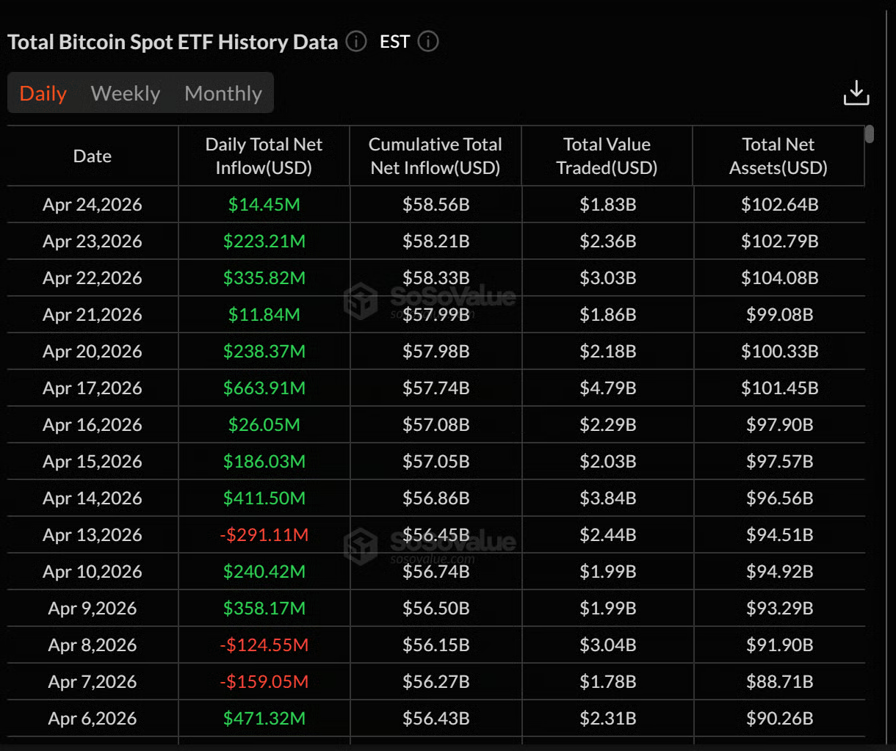
Spot Bitcoin ETFs See 9-Day Inflow Streak as Investors Show Conviction

Manchester United reach agreement with Casemiro over contract clause amid transfer speculation

US brings back mandatory military draft registration

Steven Gerrard disagrees with Gary Neville over ‘shock’ Chelsea and Arsenal claim | Football


-

 Business6 days ago
Powerball Result April 18, 2026: No Jackpot Winner in Powerball Draw: $75 Million Rolls Over
-

 Politics6 days ago
Zack Polanski demands ‘council homes not luxury flats for foreign investors’
-

 Fashion15 hours ago
Weekend Open Thread – Corporette.com
-
Entertainment5 days ago
NBA Analyst Charles Barkley Chimes in on Ice Spice McDonald’s Fiasco
-

 Tech6 days ago
Auto Enthusiast Scores Running Tesla Model 3 for Two Grand and Turns It Into Bare-Bones Go-Kart
-

 Politics4 days ago
Gary Stevenson delivers timely reminder to register to vote as deadline TODAY
-

 Politics3 days ago
Making troops accountable for war crimes threatens US alliance, ex-SAS colonel warns
-

 Business3 days ago
Rolls-Royce Voted UK’s Most Iconic Trade Mark as IPO Register Hits 150
-

 Politics3 days ago
Disabled people challenge government SEND proposals over segregation concerns
-

 Politics3 days ago
Zack Polanski responds to home secretary’s taser threat
-
Politics3 days ago
Wings Over Scotland | How To Get Away With Crimes
-

 Politics3 days ago
Starmer handler McSweeney to be dragged from shadows by Foreign Affairs Committee
-
 Crypto World6 days ago
Kelp DAO rsETH Bridge Hack Drains $292M as DeFi Losses Top $600M in Two Weeks
-
Crypto World5 days ago
Bank of Hawai’i (BOH) Q1 2026: Net Income Drops to $57.4M as Net Interest Margin Expands
-

 Politics3 days ago
‘Iran is still a nuclear threat’
-
 Crypto World4 days ago
Five Value Stocks with Recovery Potential in 2026: PayPal (PYPL), Nike (NKE), and More
-

 Crypto World3 days ago
New York sues Coinbase, Gemini over prediction market offerings
-

 Business3 days ago
The Job Benefits Most Men Don’t Know to Negotiate
-

 Crypto World22 hours ago
Michael Saylor says BTC winter is over. Market analyst disagrees, says bitcoin was in a pullback
-

 Politics6 days ago
Reform investigating candidate who ‘hates’ the NHS
You must be logged in to post a comment Login