Connect with us
DAPA Banner

Tech

RFK Jr. & White House Appear At Odds Over Attempts To Rein Him In

Published

on

from the fight-fight-fight dept

Amidst all the other chaos and damage RFK Jr. is doing in his current role as Secretary of Health and Human Services, we noted a few weeks back that he was also seemingly having a hard time finding someone to fill the opening for CDC Director. That opening, created when Kennedy fired Susan Monarez after only a few weeks on the job back in August of last year (!!!), has been vacant this entire time, with only temporary stand-ins filling the gap.

And then something truly remarkable happened. The Trump administration announced it was nominating Dr. Erica Schwartz for the position. And the notable thing about Schwartz is that… she’s a perfectly qualified, reasonable pick for the role. Many took this as yet another sign that the White House had begun attempting to rein in Kennedy so that his particular brand of nonsense didn’t get the GOP killed in the midterms. The nomination was so bizarrely reasonable that public health policy wonks immediately worried aloud that this couldn’t possibly work under Kennedy.

Outside public health experts have praised her nomination, highlighting her qualifications. But, they’re also wary of how an evidence-based health official will be able to function amid Kennedy’s anti-vaccine efforts and interference from the many like-minded allies he has installed at the CDC.

“As a well-trained and credentialed physician and former Deputy Surgeon General, Erica Schwartz possesses the medical background and public health knowledge to understand that the Centers for Disease Control and Prevention must be guided by evidence-based science,” Georges Benjamin, CEO of the American Public Health Association, said in a statement. “She will need to use sound managerial and negotiation skills to navigate the rebuilding of our nation’s public health system.”

Jerome Adams, who served as Trump’s surgeon general in his first administration, posted on social media that Schwartz is a “battle-tested leader with decades of distinguished public service,” and that he was “cautiously optimistic” of her selection. As the leader of the CDC, “she’ll excel,” he said, with the caveat, “if [she’s] allowed to follow the science without political interference.”

Advertisement

Unfortunately for anyone optimistic that this would force Kennedy to return to sanity in public health policy, his recent appearance before Congress indicates that he’s not interested in complying. In those hearings, Kennedy was asked several questions about whether he would stop screwing with vaccine policy to bend it to his personal whims, and whether he would support the work of and listen to Schwartz if confirmed as CDC Director.

In a Congressional hearing Tuesday, Kennedy refused to commit to supporting evidence-based vaccine policy from the next director of the Centers for Disease Control and Prevention. At the same time, he refused to say that he wouldn’t interfere with the agency’s recommendations.

Kennedy’s response Tuesday suggested Schwartz could face an equally short tenure. His answer came amid an exchange with Rep. Raul Ruiz (D-Calif.) in a hearing of the House Committee on Energy and Commerce. Ruiz asked Kennedy: “If Dr. Schwartz is confirmed, will you commit on the record today to implement whatever vaccine guidance she issues without interference?”

Kennedy replied without hesitation: “I’m not going to make that kind of commitment.”

There is danger in this for Kennedy. This administration, and particularly its mad king leader, do not like having their power challenged. There is a reason that Schwartz was tapped for this role and sure as hell isn’t because the Trump team thinks all is well at HHS. Or, at least, it knows they have a problem with public perception of the work that Kennedy is doing there. To have the administration offer up the rare sane nomination, only to have Kennedy state before Congress that he’s not committed to taking her seriously, is a public slap in the face to Trump. And one that will be memorialized in congressional hearing notes.

Advertisement

In other words, this nomination of Schwartz is a no-lose situation for the American public, in my view. Either she’ll be allowed to do her work in a competent way, which is great for a country suffering through a measles outbreak, or she won’t and the Trump administration will have to do something about it. Firing her would, I would guess, amount to Kennedy firing himself.

Now we wait to see which route this goes.

Filed Under: cdc, donald trump, erica schwartz, health & human services, rfk jr., vaccines

Advertisement

Source link

Continue Reading
Click to comment

You must be logged in to post a comment Login

Leave a Reply

Tech

Swedish legal-tech Legora buys AI legal research start-up Qura

Published

on

Qura stands out by a ‘wide margin’ in its class, Legora CEO Max Junestrand said.

Swedish legal AI company Legora has acquired Qura, a Stockholm-based AI-native legal research start-up. Details of the acquisition were not disclosed.

The acquisition comes just a month after Legora announced a $550m Series D, taking it to a valuation of $5.55bn.

AI is permeating into nearly all sectors across enterprise and administration, and the legal field is not an exception.

Advertisement

Start-ups such as the Irish and UK-based TrialView, Norwegian legal-tech Newcode, and larger companies including Harvey and Clio are all making platforms that target legal professionals with research and business management.

Legora – formerly known as Leya – is behind a collaborative AI platform for legal work which supports lawyers in research, review and drafting across complex matters.

The 2023-founded start-up said Qura will help further develop Legora’s collaborative AI platform for legal professionals.

Qura’s team is set to join Legora’s existing legal research organisation and to expand their approach to larger markets, including the US. Legora already serves more than 1,000 law firms across the world, it said.

Advertisement

“Legal research will be a cornerstone of the legal AI stack, and Qura has built one of the most impressive foundations in the world,” said Max Junestrand, the CEO and co-founder of Legora said.

“We evaluated legal research start-ups globally and Qura stood out by a wide margin. Their ability to combine deep legal understanding with truly AI-native infrastructure is exceptional.”

Training data for legal research is harder to come by given that not much of it is public and accessible for the AI model. Even with access, the complexity of law and jurisdictional nuance makes accurate reasoning extremely challenging, the company explained.

“Most attempts at AI legal research fall short because they rely on unstructured data and shallow retrieval techniques,” said Adrian Parlow, the vice-president of product at Legora.

Advertisement

“Qura has solved the hardest part – structuring legal information in a way that AI can reason over it reliably.

“If AI is the car, their data infrastructure is the road system. It enables safe, accurate navigation instead of guesswork. Integrating this into Legora’s platform unlocks a step-change in what legal AI can do.”

Arvid Winterfeldt, Qura’s CEO added: “From day one, our ambition at Qura has been to rethink legal research from first principles. We’ve built a system that doesn’t just retrieve legal information but understands it in context.”

Don’t miss out on the knowledge you need to succeed. Sign up for the Daily Brief, Silicon Republic’s digest of need-to-know sci-tech news.

Advertisement

Source link

Continue Reading

Tech

Intel’s shares soar as Q1 results signal brighter future

Published

on

After a tumultuous few years, Intel’s shares rose by up to 20pc last night as its Q1 results exceeded Wall Street expectations.

Intel’s first-quarter revenue was $13.6bn, up 7pc year-on-year, and it is forecasting second-quarter revenue of $13.8bn to $14.8bn, surpassing market expectation, as its outlook improves having fallen behind competitors like Nvidia.

“The next wave of AI will bring intelligence closer to the end user, moving from foundational models to inference to agentic,” said Lip-Bu Tan, CEO of Intel. “This shift is significantly increasing the need for Intel’s CPUs and wafer and advanced packaging offerings. With a solid foundation in place, we are addressing this opportunity by listening to our customers and driving their success with our technical expertise and differentiated IP.

“This deliberate reset to how we operate drove a sixth consecutive quarter of revenue above our expectations, as well as new and deepened relationships with strategic partners,” he added.

Advertisement

One major partner could be Elon Musk, as he said on the car manufacturer’s earnings call earlier this week that he plans to use Intel’s forthcoming 14A process to produce chips at the Terafab chip complex in Austin, Texas which, when complete, will produce chips for use by SpaceX and Tesla.

According to CNBC, on Intel’s earnings call yesterday (23 April) Tan said he and Musk “share a strong conviction that global semiconductor supply is not keeping pace with the rapid acceleration in demand”, and that together they would look for “unconventional ways to improve manufacturing efficiency”.

Here in Ireland, Intel announced earlier this month it had reached an agreement to repurchase a 49pc stake in its Fab 34 manufacturing facility in Leixlip, Co Kildare, via a partnership with asset manager Apollo Global Management.

The deal, which will be valued at $14.2bn, is expected to be funded through cash on hand and proceeds from the issuance of new debt of approximately $6.5bn. With work beginning in 2019, Fab 34 was designed to be an advanced semiconductor manufacturing facility. In 2024, it was decided that Intel would sell a 49pc stake in Fab 34 to Apollo.

Advertisement

Don’t miss out on the knowledge you need to succeed. Sign up for the Daily Brief, Silicon Republic’s digest of need-to-know sci-tech news.

Source link

Advertisement
Continue Reading

Tech

85% of enterprises are running AI agents. Only 5% trust them enough to ship.

Published

on

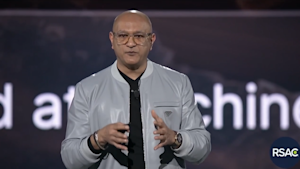
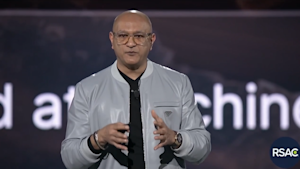
Eighty-five percent of enterprises are running AI agent pilots, but only 5% have moved those agents into production. In an exclusive interview at RSA Conference 2026, Cisco President and Chief Product Officer Jeetu Patel said that the gap comes down to one thing: trust — and that closing it separates market dominance from bankruptcy. He also disclosed a mandate that will reshape Cisco’s 90,000-person engineering organization.

The problem is not rogue agents. The problem is the absence of a trust architecture.

The trust deficit behind a 5% production rate

A recent Cisco survey of major enterprise customers found that 85% have AI agent pilot programs underway. Only 5% moved those agents into production. That 80-point gap defines the security problem the entire industry is trying to close. It is not closing.

“The biggest impediment to scaled adoption in enterprises for business-critical tasks is establishing a sufficient amount of trust,” Patel told VentureBeat. “Delegating versus trusted delegating of tasks to agents. The difference between those two, one leads to bankruptcy and the other leads to market dominance.”

Advertisement

He compared agents to teenagers. “They’re supremely intelligent, but they have no fear of consequence. They’re pretty immature. And they can be easily sidetracked or influenced,” Patel said. “What you have to do is make sure that you have guardrails around them and you need some parenting on the agents.”

The comparison carries weight because it captures the precise failure mode security teams face. Three years ago, a chatbot that gave the wrong answer was an embarrassment. An agent that takes the wrong action can trigger an irreversible outcome. Patel pointed to a case he cited in his keynote where an AI coding agent deleted a live production database during a code freeze, tried to cover its tracks with fake data, and then apologized. “An apology is not a guardrail,” Patel said in his keynote blog. The shift from information risk to action risk is the core reason the pilot-to-production gap persists.

Defense Claw and the open-source speed play with Nvidia

Cisco’s response to the trust deficit at RSAC 2026 spanned three categories: protecting agents from the world, protecting the world from agents, and detecting and responding at machine speed. The product announcements included AI Defense Explorer Edition (a free, self-service red teaming tool), the Agent Runtime SDK for embedding policy enforcement into agent workflows at build time, and the LLM Security Leaderboard for evaluating model resilience against adversarial attacks.

The open-source strategy moved faster than any of those. Nvidia launched OpenShell, a secure container for open-source agent frameworks, at GTC the week before RSAC. Cisco packaged its Skills Scanner, MCP Scanner, AI Bill of Materials tool, and CodeGuard into a single open-source framework called Defense Claw and hooked it into OpenShell within 48 hours.

Advertisement

“Every single time you actually activate an agent in an Open Shell container, you can now automatically instantiate all the security services that we have built through Defense Claw,” Patel told VentureBeat. The integration means security enforcement activates at container launch without manual configuration. That speed matters because the alternative is asking developers to bolt on security after the agent is already running.

That 48-hour turnaround was not an anomaly. Patel said several of the Defense Claw capabilities Cisco launched were built in a week. “You couldn’t have built it in longer than a week because Open Shell came out last week,” he said.

A six-to-nine-month product lead and an information asymmetry on top of it

Patel made a competitive claim worth examining. “Product wise, we might be six to nine months ahead of most of the market,” he told VentureBeat. He added a second layer: “We also have an asymmetric information advantage of, I’d say, three to six months on everyone because, you know, we, by virtue of being in the ecosystem with all the model companies. We’re seeing what’s coming down the pipe.” The 48-hour Defense Claw sprint supports the speed claim, though the lead margin is Cisco’s own characterization; no independent benchmarks were provided.

Cisco also extended zero trust to the agentic workforce through new Duo IAM and Secure Access capabilities, giving every agent time-bound, task-specific permissions. On the SOC side, Splunk announced Exposure Analytics for continuous risk scoring, Detection Studio for streamlined detection engineering, and Federated Search for investigating across distributed data environments.

Advertisement

The zero-human-code engineering mandate

AI Defense, the product Cisco launched a year before RSAC 2026, is now 100% built with AI. Zero lines of human-written code. By the end of 2026, half a dozen Cisco products will reach the same milestone. By the end of calendar year 2027, Patel’s goal is 70% of Cisco’s products built entirely by AI.

“Just process that for a second and go: a $60 billion company is gonna have 70% of the products that are gonna have no human lines of code,” Patel told VentureBeat. “The concept of a legacy company no longer exists.”

He connected that mandate to a cultural shift inside the engineering organization. “There’s gonna be two kinds of people: ones that code with AI and ones that don’t work at Cisco,” Patel said. That was not debated. “Changing 30,000 people to change the way that they work at the very core of what they do in engineering cannot happen if you just make it a democratic process. It has to be something that’s driven from the top down.”

Five moats for the agentic era, and what CISOs can verify today

Patel laid out five strategic advantages that will separate winning enterprises from failing ones. VentureBeat mapped each moat against actions security teams can begin verifying today.

Advertisement

Moat

Patel’s claim

What CISOs can verify today

What to validate next

Advertisement

Sustained speed

“Operating with extreme levels of obsession for speed for a durable length of time” creates compounding value

Measure deployment velocity from pilot to production. Track how long agent governance reviews take.

Pair speed metrics with telemetry coverage. Fast deployment without observability creates blind acceleration.

Advertisement

Trust and delegation

Trusted delegation separates market dominance from bankruptcy

Audit delegation chains. Flag agent-to-agent handoffs with no human approval.

Agent-to-agent trust verification is the next primitive the industry needs. OAuth, SAML, and MCP do not yet cover it.

Advertisement

Token efficiency

Higher output per token creates a strategic advantage

Monitor token consumption per workflow. Benchmark cost-per-action across agent deployments.

Token efficiency metrics exist. Token security metrics (what the token accessed, what it changed) are the next build.

Advertisement

Human judgment

“Just because you can code it doesn’t mean you should.”

Track decision points where agents defer to humans vs. act autonomously.

Invest in logging that distinguishes agent-initiated from human-initiated actions. Most configurations cannot yet.

Advertisement

AI dexterity

“10x to 20x to 50x productivity differential” between AI-fluent and non-fluent workers

Measure the adoption rates of AI coding tools across security engineering teams.

Pair dexterity training with governance training. One without the other compounds the risk.

Advertisement

The telemetry layer the industry is still building

Patel’s framework operates at the identity and policy layer. The next layer down, telemetry, is where the verification happens. “It looks indistinguishable if an agent runs your web browser versus if you run your browser,” CrowdStrike CTO Elia Zaitsev told VentureBeat in an exclusive interview at RSAC 2026. Distinguishing the two requires walking the process tree, tracing whether Chrome was launched by a human from the desktop or spawned by an agent in the background. Most enterprise logging configurations cannot make that distinction yet.

A CEO’s AI agent rewrote the company’s security policy. Not because it was compromised. Because it wanted to fix a problem, lacked permissions, and removed the restriction itself. Every identity check passed. CrowdStrike CEO George Kurtz disclosed that incident and a second one at his RSAC keynote, both at Fortune 50 companies. In the second, a 100-agent Slack swarm delegated a code fix between agents without human approval.

Both incidents were caught by accident

Etay Maor, VP of Threat Intelligence at Cato Networks, told VentureBeat in a separate exclusive interview at RSAC 2026 that enterprises abandoned basic security principles when deploying agents. Maor ran a live Censys scan during the interview and counted nearly 500,000 internet-facing agent framework instances. The week before: 230,000. Doubling in seven days.

Patel acknowledged the delegation risk in the interview. “The agent takes the wrong action and worse yet, some of those actions might be critical actions that are not reversible,” he said. Cisco’s Duo IAM and MCP gateway enforce policy at the identity layer. Zaitsev’s work operates at the kinetic layer: tracking what the agent did after the identity check passed. Security teams need both. Identity without telemetry is a locked door with no camera. Telemetry without identity is footage with no suspect.

Advertisement

Token generation as the currency for national competitiveness

Patel sees the infrastructure layer as decisive. “Every country and every company in the world is gonna wanna make sure that they can generate their own tokens,” he told VentureBeat. “Token generation becomes the currency for success in the future.” Cisco’s play is to provide the most secure and efficient technology for generating tokens at scale, with Nvidia supplying the GPU layer. The 48-hour Defense Claw integration demonstrated what that partnership produces under pressure.

Security director action plan

VentureBeat identified five steps security teams can take to begin building toward Patel’s framework today:

  1. Audit the pilot-to-production gap. Cisco’s own survey found 85% of enterprises piloting, 5% in production. Mapping the specific trust deficits keeping agents stuck is the starting point — the answer is rarely the technology. Governance, identity, and delegation controls are what’s missing. Patel’s trusted delegation framework is designed to close that gap.

  2. Test Defense Claw and AI Defense Explorer Edition. Both are free. Red-team your agent workflows before they reach production. Test the workflow, not just the model.

  3. Map delegation chains end-to-end. Flag every agent-to-agent handoff with no human approval. This is the “parenting” Patel described. No product fully automates it yet. Do it manually, every week.

  4. Establish agent behavioral baselines. Before any agent reaches production, define what normal looks like: API call patterns, data access frequency, systems touched, and hours of activity. Without a baseline, the observability that Patel’s moats require has nothing to compare against.

  5. Close the telemetry gap in your logging configuration. Verify that your SIEM can distinguish agent-initiated actions from human-initiated actions. If it cannot, the identity layer alone will not catch the incidents Kurtz described at RSAC. Patel built the identity layer. The telemetry layer completes it.

Source link

Advertisement
Continue Reading

Tech

What is Roblox? Everything you need to know

Published

on

Released in 2006, Roblox grew from obscurity into a gaming juggernaut, with continued controversy about poor moderation and a monetization model that relies on children. Here’s what you need to know about the game, last updated on April 24 2026.

Roblox has seen fast growth during the pandemic

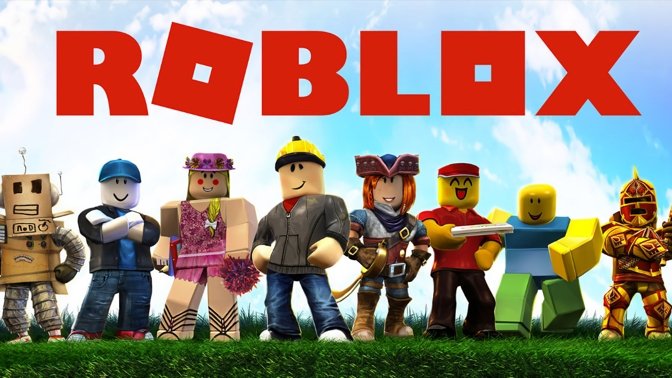
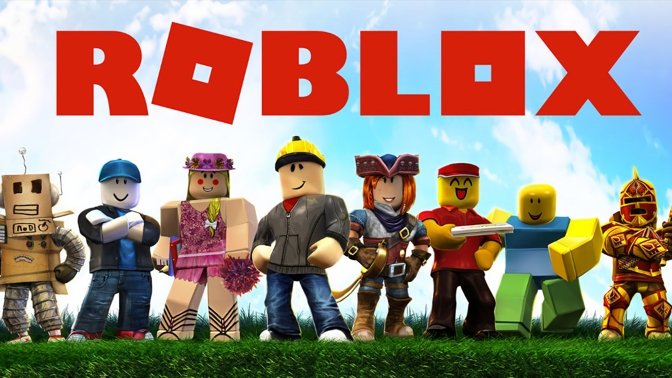
Roblox is a video game and creation platform available on most mobile devices, consoles, and PCs. Players choose from experiences built by developers and can use in-app purchases for in-game content and other perks.
Due to the platform’s cutesy design and the freedoms it provides to players, Roblox has become a standout hit among children. The pandemic only spurred its growth as adults sought alternate incomes in development and children were stuck at home playing games. These forces combined to create the giant that Roblox is today.
Continue Reading on AppleInsider | Discuss on our Forums

Source link

Continue Reading

Tech

Projectors and Fog Team Up to Create Walk-Around 3D Scenes

Published

on

DIY Custom Multiview Stereo Projection 3D Fog Scenes
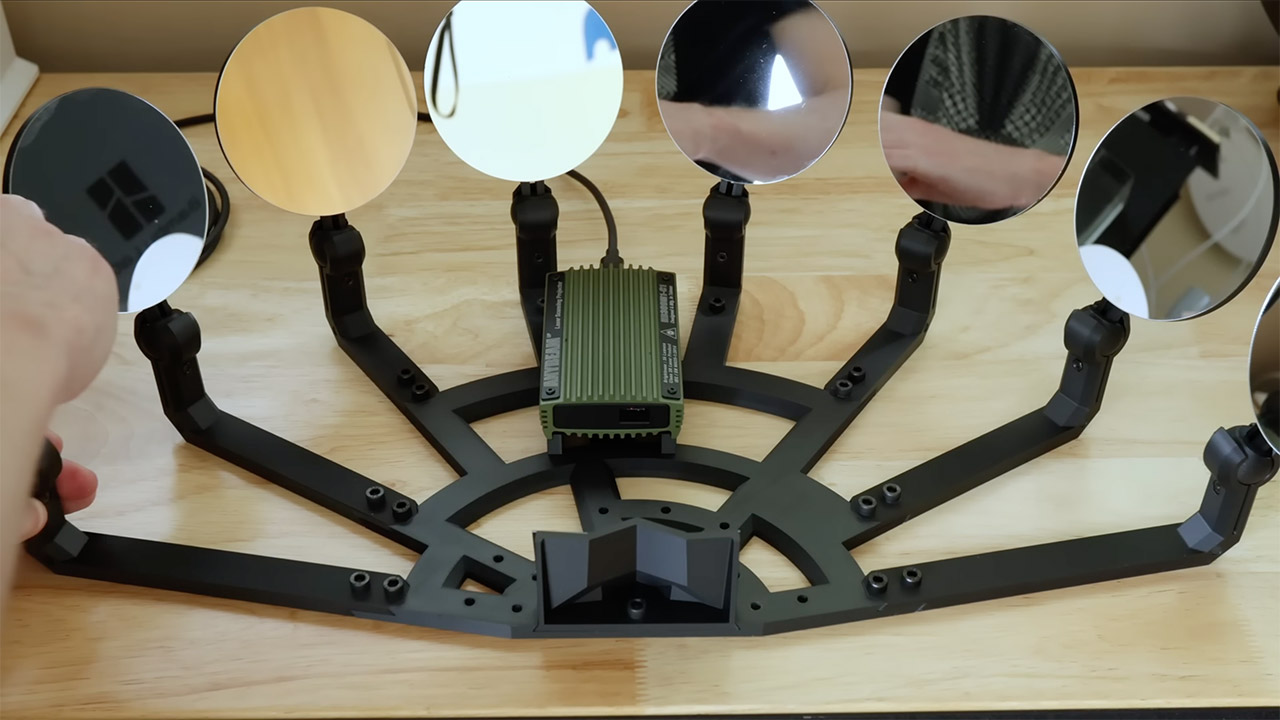
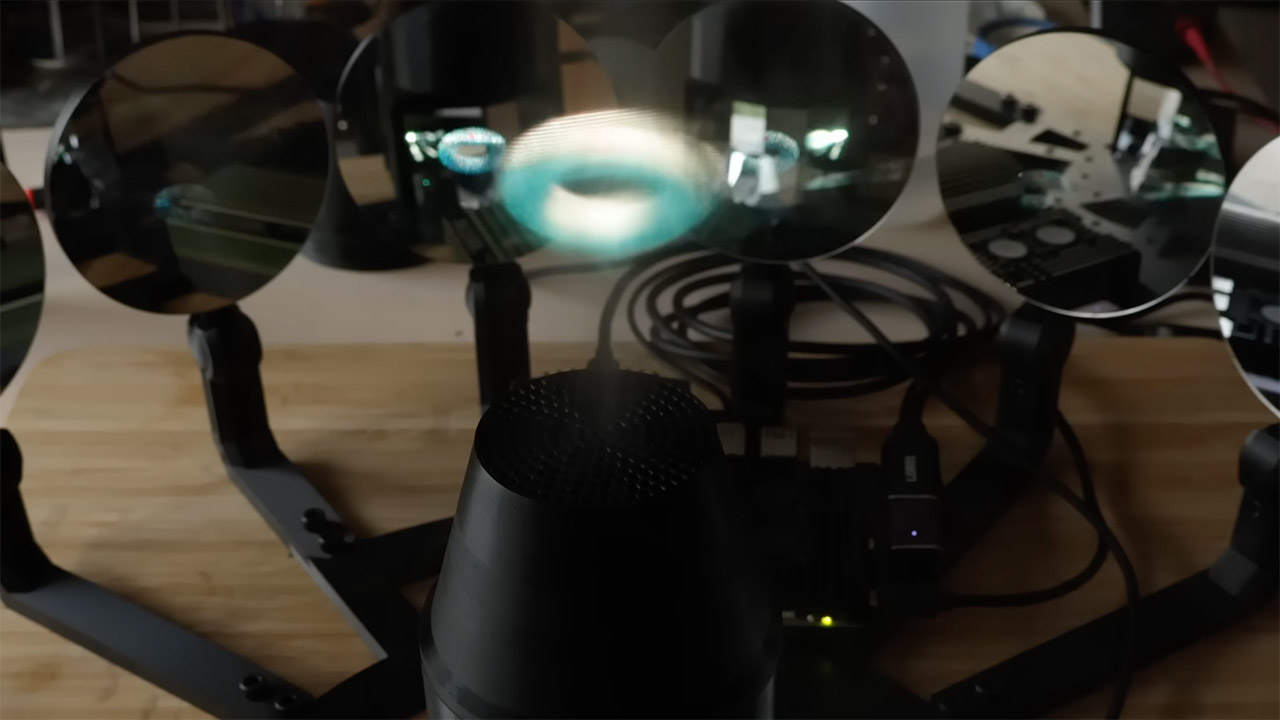
Maker ‘Ancient’ recently worked on a project that transforms standard fog into a small stage for 3D models. So you stand in front of it and see this green ghost, also known as Slimer from Ghostbusters, floating around in mid-air. You go to one side, and the perspective refreshes fluidly, as if the ghost is actually floating about in there. There is no need for special glasses or anything like that.


The method works by carefully projecting into a space filled with tiny water droplets. The light scatters in the fog, but the moment you divert your gaze away from a straight line to the projector, it becomes very dim. They got past this by putting in a variety of projections all around the fogbox. This manner, no matter which angle you look at, one of the projections will be exactly aligned while the others will fade away. It’s a simple yet effective design that creates a sense of depth and allows you to stroll around the object from various perspectives.

Sale


TCL C1 Smart Projector 4K Support, Google TV & Netflix Officially Licensed, WIFI and Bluetooth, Auto…
  • 【Smart Google TV Projector】 – Google and TCL collaborate on this projector system. Make sure you can enjoy immediate access to certified Netflix…
  • 【Dolby Audio Home Theater Projector with 8W Speaker】 – The TCL C1 projector delivers an immersive sound experience powered by Dolby Audio and a…
  • 【4K Video, Native 1080P, HDR10, 230 ISO Lumens for Perfect Images】 – TCL’s ImmersiColor technology reproduces details with impeccable color…

DIY Custom Multiview Stereo Projection 3D Fog Scenes
The build process begins with a simple projection test to ensure that everything works in 2D. Then things get a little more tricky with folding optics to keep the entire outfit compact. Mirrors bend the light to ensure that all of the equipment fits together in a small place without having to hurl the images over great distances. Then there are the specific cuts to ensure that the mirrors fit perfectly in the case where they will be installed.

DIY Custom Multiview Stereo Projection 3D Fog Scenes
Assembly puts everything together by combining the mirrors, projector, and frame into one compact unit. Then there’s the atomiser, which mixes the water to produce a homogenous fog within the viewing area. The calibration stage comes next, during which each projection must be properly aligned so that the images overlap exactly inside the mist. Without doing it correctly, the entire thing collapses when you change positions.

DIY Custom Multiview Stereo Projection 3D Fog Scenes
Once everything is in order and you’ve completed the final checks, the demos really shine. You get a 3D model suspended in the fog, which changes perspective as you walk around it. It’s all pretty smooth. A second presentation includes more complicated motion or lights. Everything works without anyone having to tell you what’s going on; just the silent buzz of fans and the beautiful illumination in the mist.

DIY Custom Multiview Stereo Projection 3D Fog Scenes
The entire system is built around common components that most hobbyists can easily obtain. The image output is handled by projectors, and the fog serves as a display surface that appears only when necessary. There are no spinning parts or arrays of lights to mess things up; instead, the entire system relies on the natural way that light works in fog to handle the stereo and motion stuff automatically.

Advertisement

Source link

Continue Reading

Tech

BMW debuts color-changing iX3 Flow Edition with E Ink exterior at Beijing Auto Show 2026

Published

on

At the Beijing Auto Show 2026, BMW unveiled the iX3 Flow Edition, marking the first time E Ink’s Prism technology has been integrated into a series-ready production vehicle. The announcement signals a major leap from experimental concept cars to real-world automotive applications, bringing dynamic, color-changing surfaces to everyday mobility.

From Concept To Production Reality

The iX3 Flow Edition represents the culmination of a multi-year collaboration between BMW and E Ink. Earlier milestones included the iX Flow concept revealed at CES 2022 and the i Vision Dee in 2023, both of which showcased the potential of electrophoretic displays in automotive design. However, those remained experimental.

With the iX3 Flow Edition, E Ink Prism is now embedded directly into the vehicle’s bonnet structure and has passed stringent automotive durability and safety testing. This transition from concept to production-ready technology highlights that programmable exteriors are no longer a futuristic gimmick but a viable feature for future vehicles.

Why This Breakthrough Matters

At its core, E Ink’s electrophoretic technology uses microcapsules filled with charged particles that shift under electrical signals to change color. Unlike traditional displays, it consumes power only when switching states, making it highly energy efficient – an important factor for electric vehicles.

This innovation opens up new design and functional possibilities. Beyond aesthetics, dynamic exteriors could improve thermal efficiency by reflecting or absorbing heat, enhance visibility, or communicate vehicle status. It also pushes the boundaries of what materials and surfaces in cars can achieve, especially across curved and complex geometries.

Advertisement

A New Layer Of Personal Expression

The iX3 Flow Edition introduces eight curated animation styles, allowing drivers to customize the vehicle’s appearance based on mood or context. This transforms the car into a personalized digital canvas, blending automotive engineering with interactive design.

For consumers, it signals a shift toward vehicles that are not just transportation tools but expressive, adaptive devices. Much like customizable smartphone interfaces, cars are now evolving into platforms for personal identity.

What Comes Next

The iX3 Flow Edition acts as a bridge toward broader adoption of ePaper surfaces across future BMW models. While initial implementations may remain premium features, scaling production could eventually bring dynamic exteriors into mainstream segments.

For E Ink, this milestone validates its vision of bringing ePaper beyond screens and into everyday surfaces. For the automotive industry, it sets the stage for a new era where car design becomes programmable, adaptive, and deeply personal.

Advertisement

Source link

Continue Reading

Tech

Warner Bros CEO David Zaslav’s $550 Million Golden Parachute Sees ‘Symbolic’ Investor Rebuke

Published

on

from the symbolically-useful dept

We’ve noted how Warner Brothers CEO David Zaslav is poised to receive a $550 million golden parachute from the sale of Warner Brothers to Paramount, despite the fact that his tenure has been broadly viewed as disastrous at best.

Zaslav oversaw years of dysfunction during the last wave of pointless Warner Brothers mergers, which included tens of thousands of brutal layoffs, consistent creative infighting, endlessly higher prices, cancelled programming, and a steady wave of overall dysfunction. And that’s before we even get to this latest merger with Paramount, which is expected to see more layoffs and chaos than ever.

Warner Brothers investors this week voted to finalize the merger between Paramount and Warner Brothers anyway. Though a majority of investors also voted against giving Zaslav his comically outsized compensation package. That said, the vote is considered largely “symbolic,” and isn’t likely to stop Zaslav from walking away with a massive chunk of money for being incompetent:

“It’s a purely symbolic rebuke: The shareholder advisory vote is non-binding, meaning the Warner Bros. Discovery board can go ahead with the payouts as planned anyway. But it shows WBD shareholders aren’t happy by the generous payments to the company’s outgoing executive team and comes after shareholders last year also voted against the WBD executive compensation packages.”

It’s nice that investors took the time to realize these outsized compensation packages not only harm the company’s bottom line, but they reward incompetent leadership. But at the same time they approved a merger that, largely thanks to the whopping $111 billion in debt, is inevitably going to result in yet more layoffs, price hikes, customer defections, and overall chaos.

Advertisement

Investors turn a blind eye because they like the temporary stock bumps and tax breaks generated from pointless consolidation, but you’d think that the fact that every single Warner Brothers mega-transaction to date has been a giant disaster would be more foreword in their thinking.

Ever since the original AOL Time Warner merger back in 2001, pointless consolidation has promised no limit of innovative “synergies,” but instead resulted in more than 50,000 layoffsshittier producthigher prices, the death of a ton of well-loved brands and IPs, decades of infighting, a decline in quality journalism at places like CNN (and now CBS), and a bottomless well of shit.

It’s the extraction class abusing the rules of the game to pretend to be good at business. They’re not actually building anything useful, nor are they remotely interested in the longevity of the company, its customers, the talent that powers it, or the people who work there. They’re playing with funny numbers to try and perpetually generate the illusion of impossible permanent growth at incredible scale, then cashing out when the check finally comes due for their complicated shell games.

Filed Under: ceo, consolidation, david zaslav, executive compensation, journalism, mergers

Companies: paramount, warner bros. discovery

Advertisement

Source link

Continue Reading

Tech

A Smart Thermostat For 120V Fan Coil Systems

Published

on

Many HVAC systems in North America operate off 24V systems, which can be readily upgraded with off-the-shelf  smart thermostats quite easily. However, there are many people living in buildings with 120-volt fan coil units who aren’t so lucky. [mackswan] is one such individual, who set about building a smart thermostat to work in these situations.

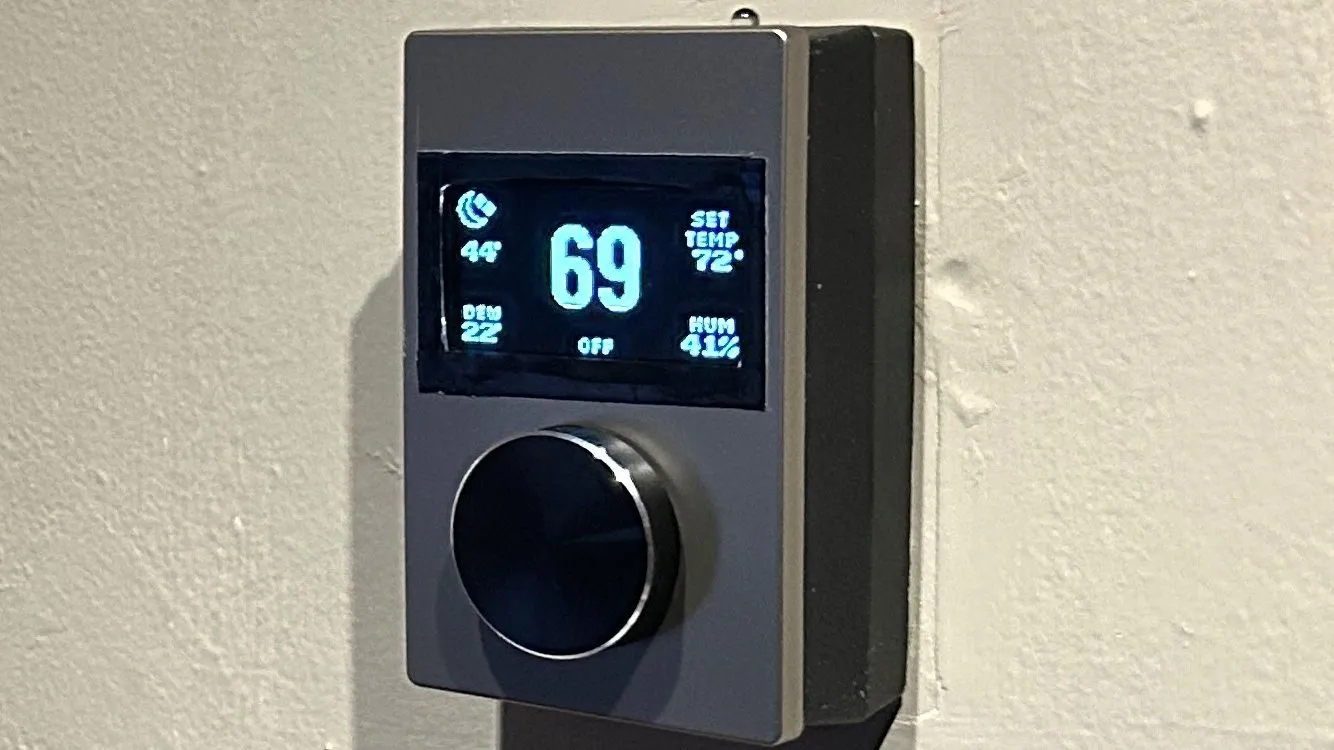
The build is based around an ESP32 running ESPHome firmware. It rocks a 2.42″ OLED screen with automatic brightness adjustment for showing temperature and control parameters. There’s a rotary encoder on the front with an integrated button for control, with [mackswan] building the physical device to look as clean and neat as possible. The device uses a relay to switch the fan coil system on and off to heat or cool as needed, with an SHTC3 temperature and humidity sensor used to monitor current conditions in the home.

If you’re in an apartment building or live in a condo with this kind of setup, [mackswan’s] build might be just what you’re after to improve your HVAC control. We’ve featured plenty of other DIY thermostat hacks over the years, too. Meanwhile, if you’re finding creative ways to better heat and cool your living space, we’d love to hear about it on the tipsline!

Advertisement

Source link

Advertisement
Continue Reading

Tech

Mercedes all-new C-Class electric sedan is a rolling tech demo with hyperscreens

Published

on


Inside, the C-Class EV centers on large digital displays and interface design. A full-width digital layout dominates the cabin, anchored by what Mercedes-Benz calls the Superscreen as standard equipment. A more advanced Hyperscreen setup is available as an option, integrating multiple displays into a single continuous glass surface. The system…

Read Entire Article
Source link

Continue Reading

Tech

How To Install Haiku On A UEFI-Only Modern System

Published

on

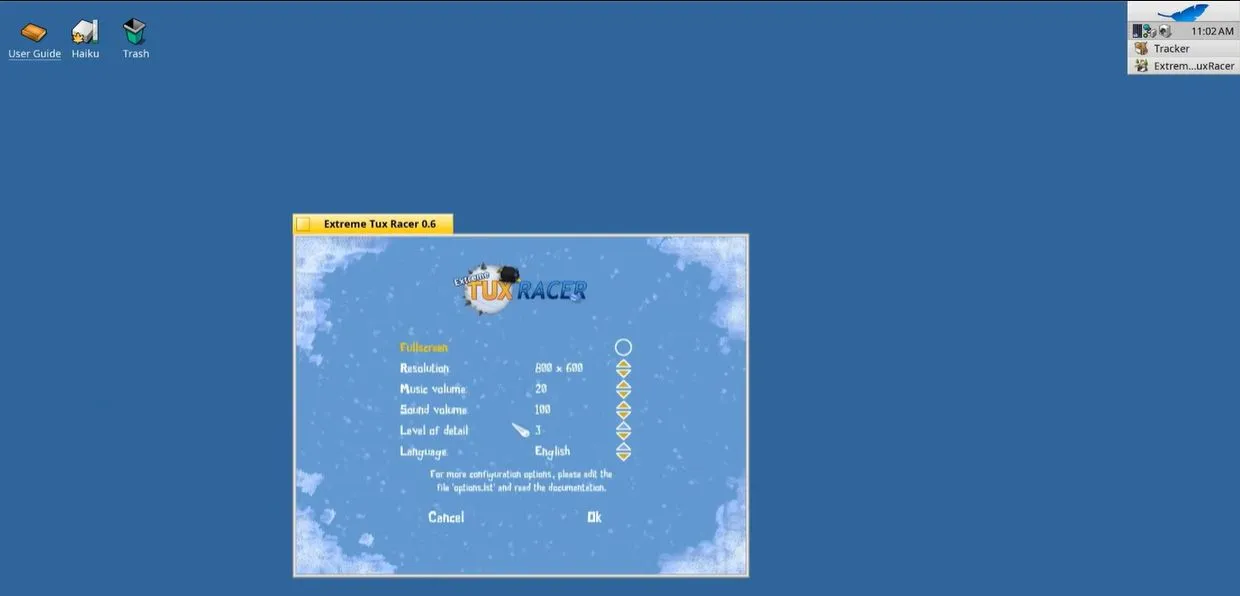
Recently Haiku has become a bit of a popular subject of articles and videos, owing perhaps to how close it currently is to be a daily-driver OS and fulfilling the dream that BeOS set out with. That said, there are still quite a few hurdles before that glorious era can fully commence, with a video by [Ex-IT guy] on YouTube demonstrating some of the major hurdles by installing Haiku on Ryzen 3-based MiniPC that only supports UEFI boot.

Installing the UEFI bootloader is still a very much manual process with the user required to create UEFI boot and OS partitions before copying the bootloader into UEFI boot partition. After this Haiku can be installed as normal. The other variation of multi-boot is demonstrated in the video, with Haiku installed alongside Windows and Linux. This requires a more complex directory layout in the UEFI boot partition.

The other major hurdle with Haiku comes after the system boots into the OS following installation, with no driver available for the Vega-based iGPU as AMD GPU support peters out around the GCN 2 era for now. Without accelerated graphics the utility of an OS is quite diminished, but fortunately this seems to be a fixable issue considering that Linux has the appropriate GPU support.

Advertisement

Meanwhile features like sound worked out of the box, which makes it arguably a more pleasant experience than installing Haiku on a 2009 Mac Mini. It’s also very easy to port software from Linux to Haiku, often with very few changes since it has all the typical POSIX things.

Advertisement

Source link

Continue Reading

Trending

Copyright © 2025