
Crypto World
Best Crypto Presale 2026: Will Pepeto’s $9.45M Beat Bitcoin Hyper and LiquidChain to the Finish Line?

The best crypto presale of 2026 matters more than ever this week after Bitcoin tested $80,000, spot Bitcoin ETFs pulled in over $1.9 billion across recent sessions, and Morgan Stanley’s new MSBT fund cleared $100 million in its debut week per CoinDesk. That kind of institutional sweep tells experienced buyers one thing: the window to enter early-stage projects before they list is closing fast.
Presales are simple. A buyer commits capital before trading starts, receives tokens at a fixed price, and locks in a gap between that entry and whatever the order book prints on listing day. That gap is where every meme coin fortune in crypto history was built, and the presale this cycle carrying the widest gap with real utility behind it is Pepeto with $9.45 million raised.
Best Crypto Presale Picks as Morgan Stanley Enters and Bitcoin ETFs Cross $1.9B in Weekly Inflow
CoinDesk confirmed Morgan Stanley’s MSBT fund gathered over $100 million in its debut week, BlackRock’s IBIT keeps leading weekly tallies, and cumulative spot Bitcoin ETF inflows have passed $57 billion. That flow lifts the entire category.
When this much regulated capital lands on Bitcoin, experienced traders rotate a portion into early-stage projects that ride the same tailwind. The best crypto presale route is the one capturing that rotation. Three names define the shortlist right now, and only one combines live products, brand reach, and an approaching listing.
Pepeto (PEPETO) Price at $0.0000001866 as $9.45M Presale Nears Binance Listing
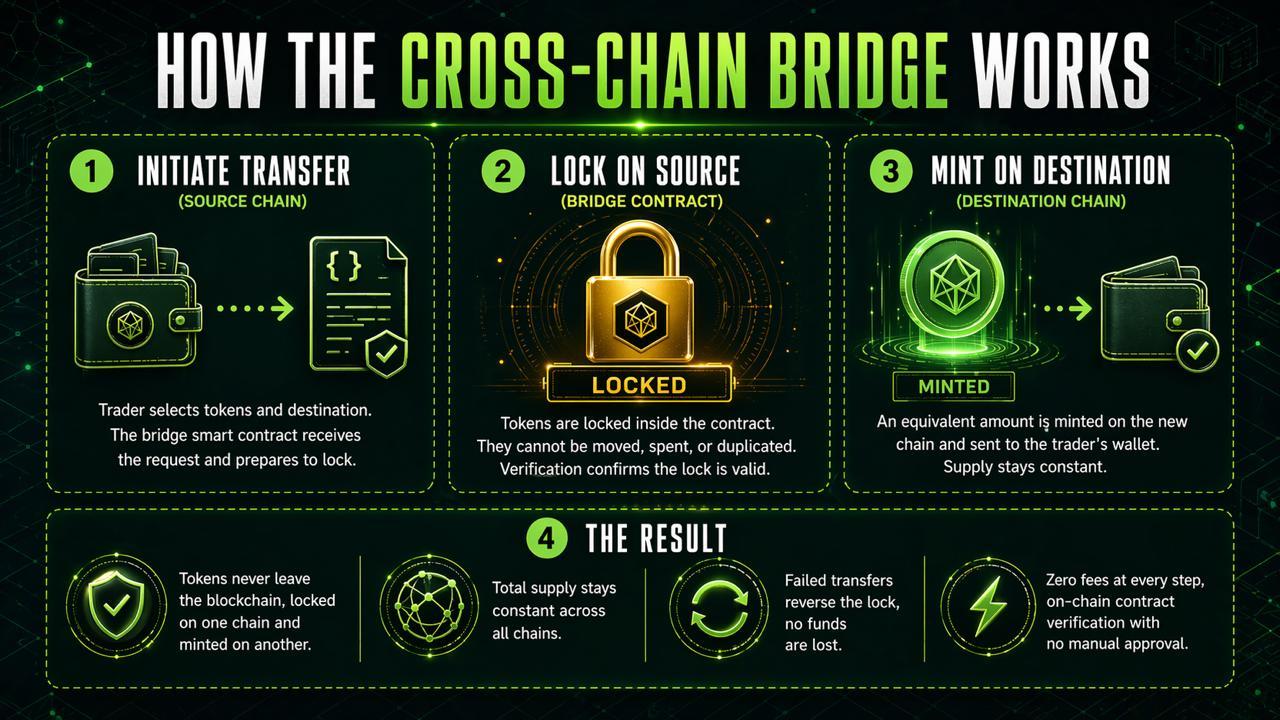
Pepeto, considered the best crypto presale, leads the field by any reading that matters. The zero-fee PepetoSwap exchange is live, the cross-chain bridge moves funds across Ethereum, BNB Chain, and Solana at no cost, and the AI scanner reads token contracts for buried risks before a wallet signs.
SolidProof audited every contract and the Pepe cofounder who took the original meme to a $7 billion cap leads the project alongside a former Binance executive.
Over $9.45 million has entered during fear, 178% APY staking compounds before the first trade opens, and the approaching Binance listing turns the $0.0000001866 entry into a number that disappears on day one.
Analysts map 50x to 150x once the order book opens. Every crypto enthusiast reading the meme tape right now knows the name.
Bitcoin Hyper (HYPER) Price at $0.0136789 as Layer 2 Raise Crosses $32M
Bitcoin Hyper trades at $0.0136789 with over $32.4 million raised per ICOBench. The project is building a Bitcoin Layer 2 powered by the Solana Virtual Machine, targeting faster BTC transactions and lower fees.
Mainnet still points to Q3 2026 with no firm listing date set, and the presale end has shifted multiple times. Staking pays 36% APY, solid for the category, but the core innovation sits in a crowded Layer 2 space where execution timing is the risk. The case against Bitcoin Hyper is simple: promise without a live product. Pepeto already runs the tools HYPER is still building.
LiquidChain (LIQUID) Price at $0.01451 as Layer 3 Raise Nears $700K
LiquidChain trades at $0.01451 per CoinGabbar with around $690,000 raised across 56 stages. The pitch is a Layer 3 that unifies Bitcoin, Ethereum, and Solana liquidity into one execution layer.
CertiK and SpyWolf audits clear the contract, 1,575% staking APY sits on the page, and CEX listings target Q3 2026. The concept is ambitious, but the traction is early. Under $700,000 raised in a market where Pepeto is clearing $9.45 million shows where crypto attention actually sits, and the answer comes back to reach. LiquidChain is still proving the product-market fit Pepeto has already demonstrated through raise size alone.
Conclusion
Wallets that bought Dogecoin at $0.002 while the market called it a joke walked away with life-changing bags, and the tape repeating right now is the one that preceded every past meme coin explosion. Spot Bitcoin ETFs at $1.9 billion in recent inflows, Morgan Stanley entering with MSBT, and BTC testing $80,000 is the institutional tape that lights up every altcoin rotation.
Pepeto sits inside that rotation as the best crypto presale with a live exchange, a zero-fee bridge, and 178% APY staking. The approaching Binance listing closes this entry forever. Rounds fill faster with each stage, and when capital rotates, $0.0000001866 on the Pepeto site today becomes the price you will wish you had bought at. Lock the entry before it is gone.
Click To Visit Pepeto Website To Enter The Presale

FAQs
What is the best crypto presale to buy right now?
Pepeto is the best crypto presale with $9.45 million raised, 178% APY staking, a SolidProof audit, a live zero-fee exchange, and an approaching Binance listing. The original Pepe cofounder and a former Binance executive lead the build, which no other presale this cycle matches.
Why is Pepeto the best crypto presale over Bitcoin Hyper and LiquidChain?
Pepeto is the strongest pick because it ships a live exchange, a cross-chain bridge, and an AI scanner today, while Bitcoin Hyper and LiquidChain are still building toward Q3 2026 targets. Pepeto raised $9.45 million inside a short window versus Bitcoin Hyper’s $32 million across a longer one and LiquidChain’s $690,000, and only Pepeto carries brand reach through the original Pepe cofounder.
Disclaimer: This is a Press Release provided by a third party who is responsible for the content. Please conduct your own research before taking any action based on the content.




Aave Labs, Kelp DAO, LayerZero, EtherFi, and Compound have asked the Arbitrum DAO to release 30,765.67 ETH tied to the Kelp DAO exploit recovery plan.
Summary
- Aave and Kelp want Arbitrum DAO to release 30,765 ETH for rsETH recovery efforts.
- The funds would move to a Gnosis Safe managed by Aave, Kelp and Certora.
- Some Arbitrum delegates warned that the 49-day governance process may delay urgent recovery plans.
The assets were frozen by the Arbitrum Security Council after being linked to the exploiter.
The frozen ETH is worth about $71 million, based on Ethereum trading near $2,317 at the time of writing. The proposal would direct the funds to DeFi United, a cross-protocol recovery effort formed after the $292 million Kelp DAO exploit.
Funds would support rsETH backing
The proposal says the recovered ETH would move to a 2-of-3 Gnosis Safe controlled by Aave, Kelp DAO, and Certora. The wallet would only receive recovered funds and use them to help restore rsETH’s economic backing.
If the recovery plan does not continue as expected, the authors said they would return to Arbitrum governance for further direction. Kelp DAO wrote on X, “Every ETH released moves rsETH holders closer to whole.”
Moreover, the filing also details the exploiter’s position on Aave. It says the attacker supplied 89,567 rsETH as collateral and borrowed 82,650 WETH and 821 wstETH across Aave’s Ethereum Core and Arbitrum V3 markets.
Aave said its smart contracts were not compromised. The proposal presents the incident as an external exploit that affected assets used across DeFi markets, rather than a direct failure in Aave’s lending system.
Governance timeline draws questions
The release request may face timing pressure because Arbitrum’s Constitutional AIP process can take about 49 days. That process includes forum review, possible temperature checks, voting delays, onchain voting, and cross-chain execution steps.
Some delegates have questioned whether that timeline is too long for users with active Aave positions. Delegate Nicksta wrote that “many parties have open positions on AAVE that might run into problem if they have to wait 49 days.”
Arbitrum Security Council member Griff Green also backed a faster community signal. Speaking as a delegate, he said the DAO should move to Snapshot “as soon as possible” to confirm community intent before final execution.
Green also asked for clearer details on how rsETH holders and Aave users would be treated under full or partial recovery plans. The proposal includes an indemnification clause from Aave Labs covering the Arbitrum Foundation, Offchain Labs, and Security Council members.

TLDR:
- Grayscale filed for a spot TAO ETF via NYSE Arca, targeting an SEC decision by August 2026.
- Bittensor rewards AI models with TAO tokens, creating a decentralised marketplace for machine intelligence.
- Bitcoin rose from $25K to $73K after its ETF filing and approval cycle — TAO is now at that same stage.
- Approval is not guaranteed; a denial would sharply reverse the narrative-driven momentum building around TAO.
Grayscale TAO ETF has entered the SEC regulatory process, marking a turning point in how institutions may soon access decentralised artificial intelligence.
Grayscale has submitted a proposed rule change through NYSE Arca to establish the Grayscale Bittensor Trust. The filing follows the same regulatory path used for the firm’s Bitcoin and Ethereum spot ETF conversions.
A decision from the SEC is expected by August 2026, though the timeline remains subject to change.
What the Filing Means for Bittensor
The Bittensor network operates as a decentralised marketplace for machine intelligence. Competing AI models participate in the network and earn TAO tokens by producing outputs the system deems valuable.
This model applies the same decentralisation logic that defined Bitcoin’s appeal in 2013, now directed at AI compute and model training.
TAO functions as the token that governs and powers the entire Bittensor system. The network’s architecture creates a mechanism where the most effective AI models receive token-based rewards.
This structure gives TAO a functional role that goes beyond speculative value. It positions the asset within an infrastructure layer for artificial intelligence.
A spot ETF, if approved, would allow pension funds, family offices, and wealth managers to gain TAO exposure through regulated exchange channels.
No wallets or private key management would be required on their end. For institutional capital sitting on the sidelines of the AI token sector, that access changes the nature of the opportunity.
Bittensor is no longer a niche protocol with a limited audience. The Grayscale filing confirms that institutional-grade financial infrastructure is being built around the network. That shift carries weight regardless of the SEC’s final decision.
The ETF Pattern and What It Has Shown Before
BlackRock filed for a spot Bitcoin ETF in June 2023. At that point, Bitcoin was trading near $25,000. The ETF was approved in January 2024, and Bitcoin crossed $46,000 shortly after.
A new all-time high above $73,000 followed in March 2024. Ethereum’s ETF followed a similar arc after its own filing and approval cycle.
These outcomes were not guaranteed at the time of filing. However, each filing represented a clear signal that institutional capital was preparing to enter the market. The Grayscale TAO filing is now at that same stage.
There are several things to monitor before August. SEC comment period activity can indicate market appetite. Extension notices are common and do not signal denial, but they do affect timelines.
TAO’s price action relative to broader market conditions will reflect how much oxygen the altcoin ETF narrative has through Q2 and Q3. Additionally, other altcoin ETF decisions in the same period will build or weaken regulatory precedent.
The filing does not guarantee approval. A denial or extended review would unwind the narrative-driven price momentum that tends to build ahead of such decisions.
However, the existence of the filing itself confirms that Grayscale sees a viable institutional market for TAO, and that NYSE Arca found the submission sufficient to move forward. Decentralised AI is now part of the regulated financial infrastructure conversation.
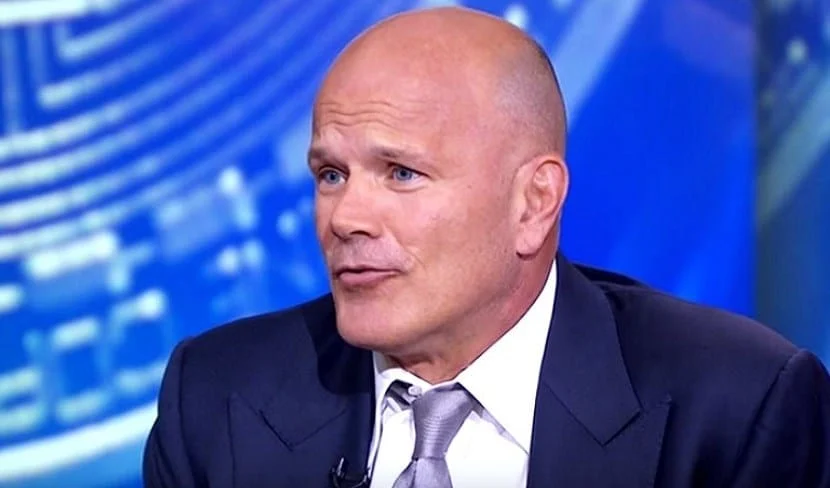
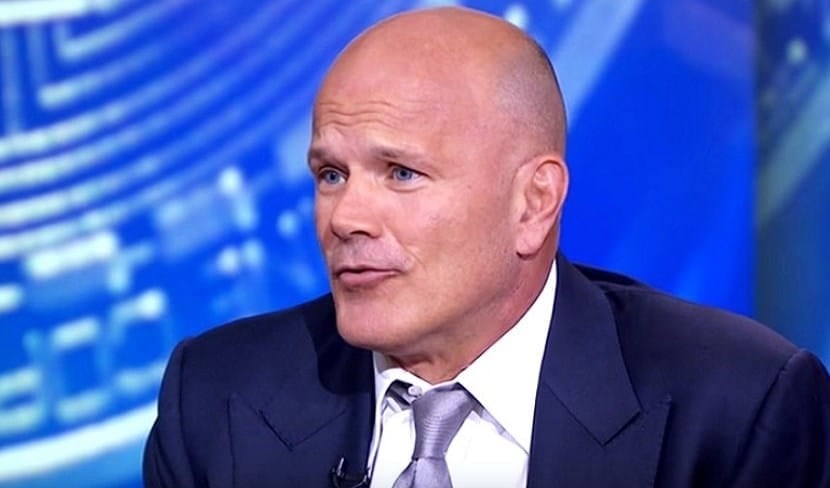
Galaxy Digital CEO Mike Novogratz said the US CLARITY Act could move forward in May, giving the crypto industry a clear path under federal rules.
Summary
- Mike Novogratz said the CLARITY Act may reach committee in early May before June signing.
- The bill seeks clearer crypto rules after delays tied to stablecoin yield and banking concerns.
- Alex Thorn gave the bill 50% odds of passing in 2026 amid schedule uncertainty now.
The bill seeks to define how digital assets should operate in the United States.
Novogratz made the comments during a podcast with SkyBridge Capital founder Anthony Scaramucci. He said the bill may reach committee in early May and could reach President Donald Trump’s desk in June.
“So this is going to get done,” Novogratz said. “It probably gets done in May.”
CLARITY Act remains key for crypto rules
The US CLARITY Act aims to bring clearer rules to crypto firms, exchanges, token issuers, and investors. The bill has gained close attention because many crypto companies want one national framework instead of scattered agency actions.
Novogratz said both Republicans and Democrats have reasons to support the bill. He argued that clearer crypto regulation could help the United States keep financial innovation inside the country.
“It’s wildly important for it to get done for both Democrats and Republicans,” he said.
Novogratz also said the CLARITY Act could help more people access US financial products through crypto wallets. He said many people around the world still cannot take part in the American economy through normal financial channels.
He argued that tokenization could allow shares or assets linked to major companies to reach more global users. He named firms such as SpaceX and Google as examples of companies that could be tokenized and sold to users outside the United States.
“There are eight and a half billion people, probably five and a half billion don’t have access to our financial products,” Novogratz said.
Industry doubts remain over timeline
The bill’s progress has not matched earlier market expectations. Many crypto participants expected faster action after the CLARITY Act passed the House in July 2025 with bipartisan support.
However, disputes between banks and crypto firms have slowed the process. One area of concern is stablecoin yield, with banks warning that yield-bearing stablecoins could place pressure on deposits.
Senator Cynthia Lummis warned on April 10 that lawmakers may have limited time to pass the bill. “This is our last chance to pass the Clarity Act until at least 2030,” she said in a post on X.
Galaxy Digital’s head of firmwide research, Alex Thorn, has also shown caution. He said he gives the CLARITY Act a 50% chance of passing in 2026, adding that delays beyond mid-May could weaken the bill’s chances.
TLDR:
- Justin Bons says Canton’s invitation-only validator process makes it a fully permissioned, centralized system.
- Canton’s tiered fee structure charges smaller users more, drawing direct comparisons to traditional banking models.
- The network’s claimed $326 billion TVL is disputed, with DeFiLlama reportedly listing its actual TVL at zero.
- Bons argues Canton’s 21.8% inflation rate and free validator rewards resemble a money-printing scheme, not crypto.
A crypto researcher is arguing that Canton, a blockchain network backed by major financial institutions, operates more like a traditional bank than a decentralized network.
Justin Bons, founder of Cyber Capital, made the claim in a detailed public post targeting the project’s governance and economic model.
He accused the network of misleading investors with fabricated metrics and false claims of decentralization. His statements have drawn significant attention across the crypto community.
Canton’s Structure Mirrors Old Financial Systems, Researcher Claims
Bons pointed to the network’s invitation-only validator process as direct evidence of centralization. A pre-existing validator set decides who may participate in consensus, much like a board approving new members.
He wrote that “there is a literal invitation-only application process, where the pre-existing validator set decides who is allowed to join.” That structure, he argued, is the opposite of what blockchain technology stands for.
The network also applies a tiered fee system that charges smaller users more than larger ones. Bons drew a direct comparison to traditional banking, which has long applied preferential treatment to wealthy clients.
A central authority additionally determines which applications receive featured status and increased rewards. Critics say that the model concentrates power in ways that mirror those of institutional finance.
The project also burns tokens taken directly from holders’ wallets through a built-in mechanism. Bons described this as a tax system imposed by a centralized authority.
He argued that such a mechanism has no place in a genuinely decentralized network. Traditional banks, he noted, operate through similar top-down financial controls.
Canton carries a reported net inflation rate of 21.8%, with validators receiving token rewards without staking anything.
Bons compared this arrangement to a money-printing scheme. He argued that partnerships may be motivated by free token distributions rather than real utility. That dynamic, he said, serves validators and selected applications far more than everyday users.
Fake TVL Claims and the Case Against Institutional Crypto
Bons also challenged Canton’s reported real-world asset TVL of over $326 billion. He called the figure an accounting trick made possible through corporate partnerships.
Companies such as Broadridge reportedly mirror their existing balance sheets inside private networks on the platform. That data is then recorded as on-chain TVL without any actual on-chain activity.
More reputable tracking platforms, including DeFiLlama, reportedly list Canton’s actual TVL at zero. Bons argued that the network would not affect those balance sheets if it shut down tomorrow.
That, he said, confirms the metric is entirely manufactured. The gap between the claimed figure and the reported figure is substantial.
Bons also referenced the early internet to frame the broader debate. Large institutions once resisted the open public internet and pushed for private alternatives instead.
The public internet ultimately prevailed over those closed systems. He suggested that truly decentralized blockchains will follow that same historical outcome.
The researcher concluded that Canton represents a regression rather than progress in the crypto space. He argued that the network invokes crypto’s values while contradicting them entirely.
The banking system, Canton resembles, he said, is precisely what crypto was built to challenge. That tension, for many in the industry, remains the central issue.


The Commodity Futures Trading Commission has sued New York over its effort to apply state gambling laws to prediction market platforms.
Summary
- The CFTC says New York’s gambling enforcement threatens federal oversight of prediction market contracts nationwide.
- New York has sued Coinbase and Gemini over prediction products it says breach gambling rules.
- Thirty-seven states backed Massachusetts, arguing federal law does not replace state sports betting oversight rules.
The lawsuit adds another legal fight to the growing debate over who should regulate event-based contracts in the United States.
The CFTC filed the complaint in the U.S. District Court for the Southern District of New York. It asked the court for a declaratory judgment and a permanent injunction to stop New York from enforcing gambling rules against federally registered exchanges.
Federal regulator claims sole authority
The CFTC argued that federal law gives it exclusive power over prediction markets listed by registered exchanges. The agency said New York’s actions could interfere with its authority over event contracts.
CFTC Chair Michael Selig said, “CFTC-registered exchanges have faced an onslaught of state lawsuits seeking to limit Americans’ access to event contracts and undermine the CFTC’s sole regulatory jurisdiction over prediction markets.”
In addition, New York recently filed lawsuits against Coinbase and Gemini. The state claimed their prediction market products violated local gambling laws. It had also targeted Kalshi over parts of its sports-related contracts.
The cases show a wider clash between federal market rules and state gambling oversight. Prediction platforms argue that their contracts fall under federal commodity laws, while states say sports and betting activity remain under their control.
States back tighter prediction market rules
A group of 37 states and Washington, D.C. filed an amicus brief supporting Massachusetts in its case against Kalshi. They urged the court to reject Kalshi’s claim that federal law lets it offer sports contracts nationwide without state approval.
The states said federal financial law was not meant to legalize sports betting. They also argued that state rules help manage licensing, age checks, fraud controls, and gambling addiction safeguards.
Crackdown grows across several states
Arizona, Connecticut, Illinois, Massachusetts, Nevada, and New York have all moved against prediction market firms. Their actions include lawsuits, cease-and-desist letters, and regulatory orders tied to sports and event contracts.
Earlier this month, a Nevada judge extended a ban that blocked Kalshi from offering some event-based contracts in the state. Regulators argued those products looked like unlicensed gambling, while platforms continue to defend them as federally regulated markets.
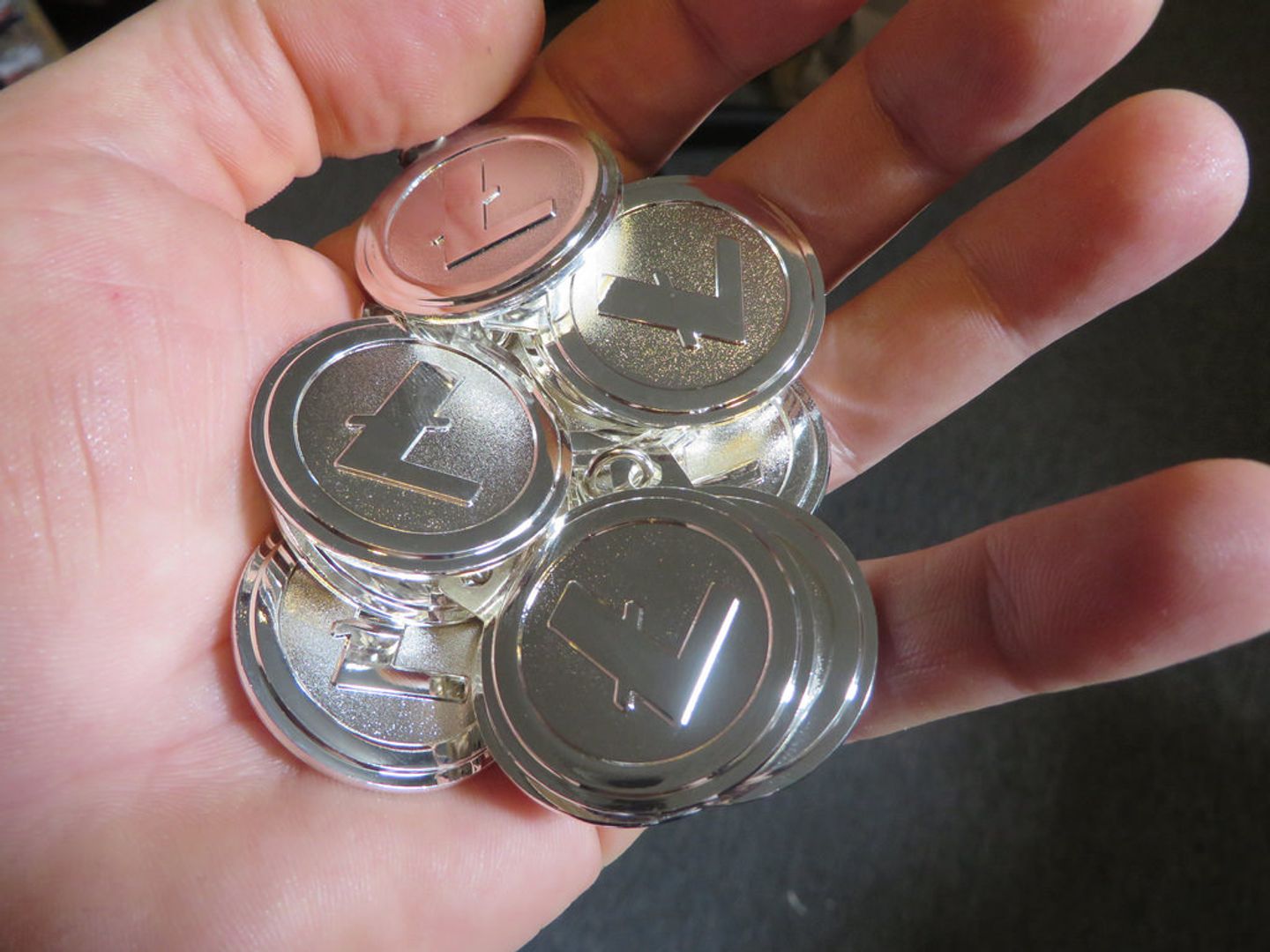
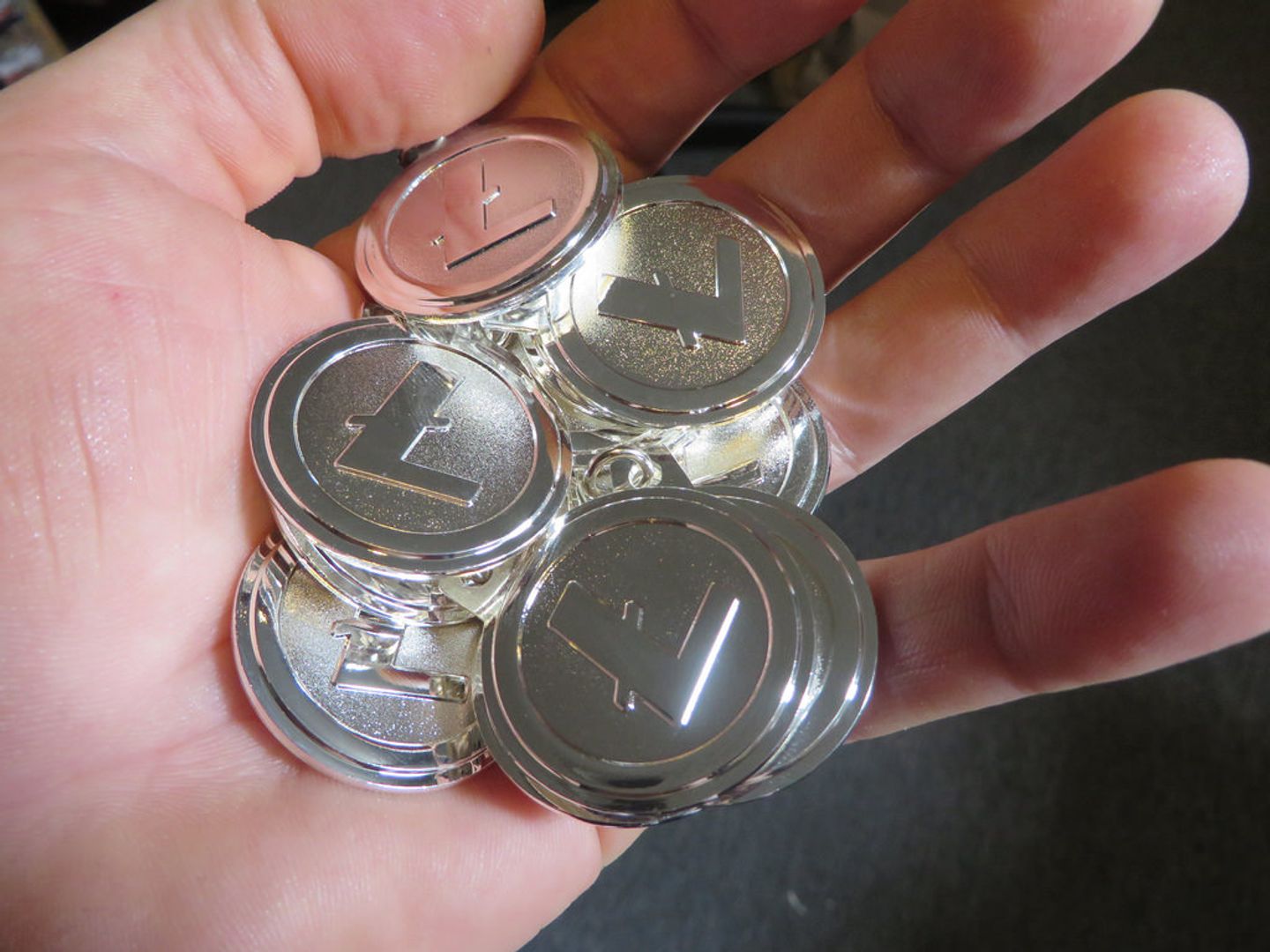
A 13-block chain reorganization on late Friday and Saturday rewound roughly 32 minutes of network activity after attackers used a vulnerability in its Mimblewimble Extension Block (MWEB) protocol.
The bug had enabled a denial-of-service attack against major mining pools, allowing the invalid MWEB transactions to slip through nodes that had not updated, before the network’s longest valid chain corrected them.
The Foundation said in Asian morning hours on Sunday the bug was fully patched and the network is operating normally.
However, prominent researchers say the litecoin-project GitHub repository tells a different story. Security researcher bbsz, who works with the SEAL911 emergency response group for crypto exploits, posted the patch timeline pulled from the public commit log.
Now that stuff has been made public on the Litecoin GitHub, we have a better sense of timeline and what happened.
In the age of Mythos, this timeline simply doesn’t fly.
The post-mortem says one zero-day caused a DoS that let an invalid MWEB tx slip through. The git log on… https://t.co/zMMrheQLPP pic.twitter.com/O3DtdwV0rF
— bbsz (@blackbigswan) April 26, 2026
The consensus vulnerability that allowed the invalid MWEB peg-out was privately patched between March 19 and March 26, roughly four weeks before the attack. A separate denial-of-service vulnerability was patched on the morning of April 25.
Both fixes were rolled into release 0.21.5.4 the same afternoon, after the attack had already begun.
“The post-mortem says one zero-day caused a DoS that let an invalid MWEB transaction slip through,” bbsz wrote. “The git log tells a slightly different story.”
A zero-day refers to a vulnerability unknown to defenders at the time of an attack.
Litecoin’s commit history shows the consensus vulnerability was known and patched privately a month before the exploit, but the fix had not been broadcast publicly or required to all mining pools.
That created a window where some miners ran the patched code while others ran the still-vulnerable version, and the attackers appear to have known which was which.
Alex Shevchenko, CTO of NEAR Foundation’s Aurora project, raised parallel concerns in a thread.
Blockchain data showed the attacker pre-funded a wallet 38 hours before the exploit through a Binance withdrawal, with the destination address already configured to swap LTC into ETH on a decentralized exchange.
The denial-of-service attack and the MWEB bug were separate components, Shevchenko argued, with the DoS designed to take patched mining nodes offline so the unpatched ones would form the chain that included the invalid transactions.
The fact that the network automatically handled the 13-block reorganization once the DoS stopped suggests enough hashrate was running updated code to eventually overpower the attack, but only after the unpatched fork had run for 32 minutes.
A hit on Litecoin shows how attacks on various networks differ in how code maintainers and developers react to exploits. Newer chains with smaller, more centralized validator sets coordinate upgrades through chat groups and can push patches network-wide in hours.
Older proof-of-work networks like Litecoin and bitcoin rely on independent mining pools choosing when to upgrade, which works for non-urgent changes but creates a window of vulnerability when a security patch needs to reach everyone before an attacker exploits the gap.
The Litecoin Foundation has not publicly addressed the GitHub timeline as of Sunday morning.
The amount of LTC pegged out during the invalid block window and the value of any swaps completed before the reorganization reversed them have not been disclosed.
TLDR:
- Arbitrum now leads all blockchains with 1,938 tokenized RWA assets and a $874.19M distributed asset value.
- BlackRock, Franklin Templeton, WisdomTree, and Robinhood have all deployed tokenized products on Arbitrum.
- The Arbitrum DAO approved STEP 2, allocating 35 million ARB tokens directly into RWA treasury instruments.
- Arbitrum’s TVL has climbed to roughly $2.5 billion, driven largely by rising real-world asset activity on-chain.
Arbitrum is experiencing a notable resurgence driven by real-world asset tokenization. The Layer 2 network now leads all blockchains with 1,938 tokenized RWA assets.
Its total distributed asset value stands at $874.19 million. With stablecoin supply exceeding $7.24 billion and 30-day transfer volume near $345 million, the network draws renewed attention.
Major traditional finance institutions are actively building on the platform, bringing institutional capital the broader crypto market has long needed.
Major TradFi Players Choose Arbitrum for Tokenized Asset Deployment
BlackRock has integrated its $BUIDL tokenized Treasury yield product on Arbitrum through Securitize. Franklin Templeton also launched its Onchain US Government Money Fund via the Benji platform on Arbitrum.
These moves mark a clear shift toward regulated, yield-bearing instruments on decentralized infrastructure.
WisdomTree is tokenizing 13 investment funds on the network. Spiko leads EU and US T-bill tokenization on Arbitrum, with assets surpassing $467 million.
Robinhood is also tokenizing roughly 2,000 US stocks and ETFs on the platform for European investors. These instruments are accessible 24 hours a day, which traditional markets currently cannot offer.
Projects like Ondo Finance and private credit platforms such as Libre and Centrifuge have also chosen Arbitrum. They point to low transaction fees, high processing speed, and EVM compatibility as primary reasons.
The network’s composability with DeFi protocols for lending and yield farming further strengthens its appeal to builders.
According to crypto analyst @Karamata2_2, Arbitrum’s RWA activity is delivering actual value and sustainable liquidity to the ecosystem.
RWA holders on the network have now reached 6,596, reflecting steady growth across multiple asset classes. The 30-day transfer volume of approximately $345 million adds further evidence of growing on-chain economic activity.
These numbers also show that institutional adoption on Arbitrum is moving beyond early-stage experimentation.
Arbitrum DAO Directs 35 Million ARB Tokens Into RWA Treasury Strategy
The Arbitrum DAO approved the STEP 2 proposal, directing 35 million ARB tokens into RWA treasuries. This governance decision reflects growing confidence in tokenized real-world assets as a long-term growth driver. It also aligns the DAO’s treasury strategy with broader institutional trends in the tokenized asset market.
RWA-driven activity has pushed Arbitrum’s total value locked to approximately $2.5 billion. Higher liquidity on the network directly translates to increased gas fee revenue for the DAO.
That revenue, in turn, funds ongoing ecosystem development and provides structural support for the ARB token.
The network’s fee structure and EVM compatibility continue to attract a wide range of participants. Platforms built around real-world assets benefit from Arbitrum’s integration with existing lending and yield-farming products. This layered composability creates functional utility that other networks have found difficult to replicate.
The emerging cycle on Arbitrum links liquidity growth directly to DAO revenue and token stability. More on-chain activity generates higher fees, which fund further development and attract additional participants.
This structure positions Arbitrum as a growing destination for institutional-grade tokenized assets in the near term.


Evan Tangeman, a 22-year-old California resident, has been sentenced to 70 months in prison for his role in a crypto theft group.
Summary
- Evan Tangeman received 70 months in prison for helping launder stolen crypto funds for criminals.
- The group stole about $263 million through social engineering scams, burglary, and other coordinated attacks.
- Prosecutors said stolen funds paid for Lamborghinis, Rolexes, real estate, and large nightclub bills, too.
The group stole about $263 million from victims through social engineering scams and burglary.
Tangeman pleaded guilty in December 2025. According to the U.S. Department of Justice, he admitted that he helped members of the group launder at least $3.5 million in stolen funds.
DOJ says group spent stolen funds on luxury assets
The DOJ said the criminal group used stolen crypto to fund a costly lifestyle. Prosecutors said members spent money on real estate, luxury cars, Rolex watches, and large nightclub bills.
U.S. Attorney Jeanine Pirro said the group showed extreme greed. She stated, “They stole millions, spent it on half-million-dollar nightclub tabs, Lamborghinis, and Rolexes.”
Moreover, Tangeman also received three years of supervised release after his prison term. Prosecutors said his conduct went beyond laundering stolen money for the group.
Pirro said Tangeman tried to destroy evidence after other members of the group were arrested. She said, “That is consciousness of guilt,” adding that the court treated the conduct seriously.
Crypto crime cases rise in 2026
The sentencing comes as crypto scam and hack losses reached $482 million in the first quarter of 2026. Authorities have warned that criminal groups continue to target crypto users through online scams and physical attacks.
France has also reported a rise in violent attacks against crypto holders. Telegram co-founder Pavel Durov claimed there were 41 kidnappings of French crypto holders in the first quarter of 2026 alone.


Litecoin suffered a deep chain reorganization on Saturday after attackers exploited a zero-day bug tied to its MimbleWimble Extension Block privacy layer, according to the Litecoin Foundation.
Summary
- Litecoin reversed 13 blocks after attackers exploited a zero-day bug in its MWEB privacy layer.
- Attackers used the fork window to attempt double-spends against several cross-chain swap protocols.
- The Litecoin Foundation said the bug has been patched, while some venues reported losses.
The Foundation said the bug allowed older mining nodes to accept an invalid MWEB transaction. This created a fork that lasted more than three hours before the network restored the main chain.
Invalid transactions erased from chain history
The incident affected blocks 3,095,930 to 3,095,943, according to Aurora Labs CEO Alex Shevchenko. He described the event as a “coordinated attack” in a post on X.
A 13-block reorganization removed the invalid transactions from Litecoin’s main history. The Foundation said valid transactions made during that period remained unaffected.
Moreover, attackers used the fork window to attempt double-spend transactions against cross-chain swap protocols. These platforms had accepted MWEB peg-outs that later became invalid after the reorganization.
Shevchenko said, “The exposure for NEAR Intents is around $600k.” He also warned trading venues to review Litecoin transactions and balances, adding, “We see a lot of double spend transactions.”
Foundation says bug is patched
The Litecoin Foundation said the zero-day bug has now been fully patched. It did not name the affected mining pools or disclose how much LTC the invalid transactions attempted to create.
The attack marks the first known major exploit targeting MWEB since Litecoin activated the privacy feature in May 2022. LTC traded near $56 after the disclosure, down about 1% on the day.
Key Takeaways
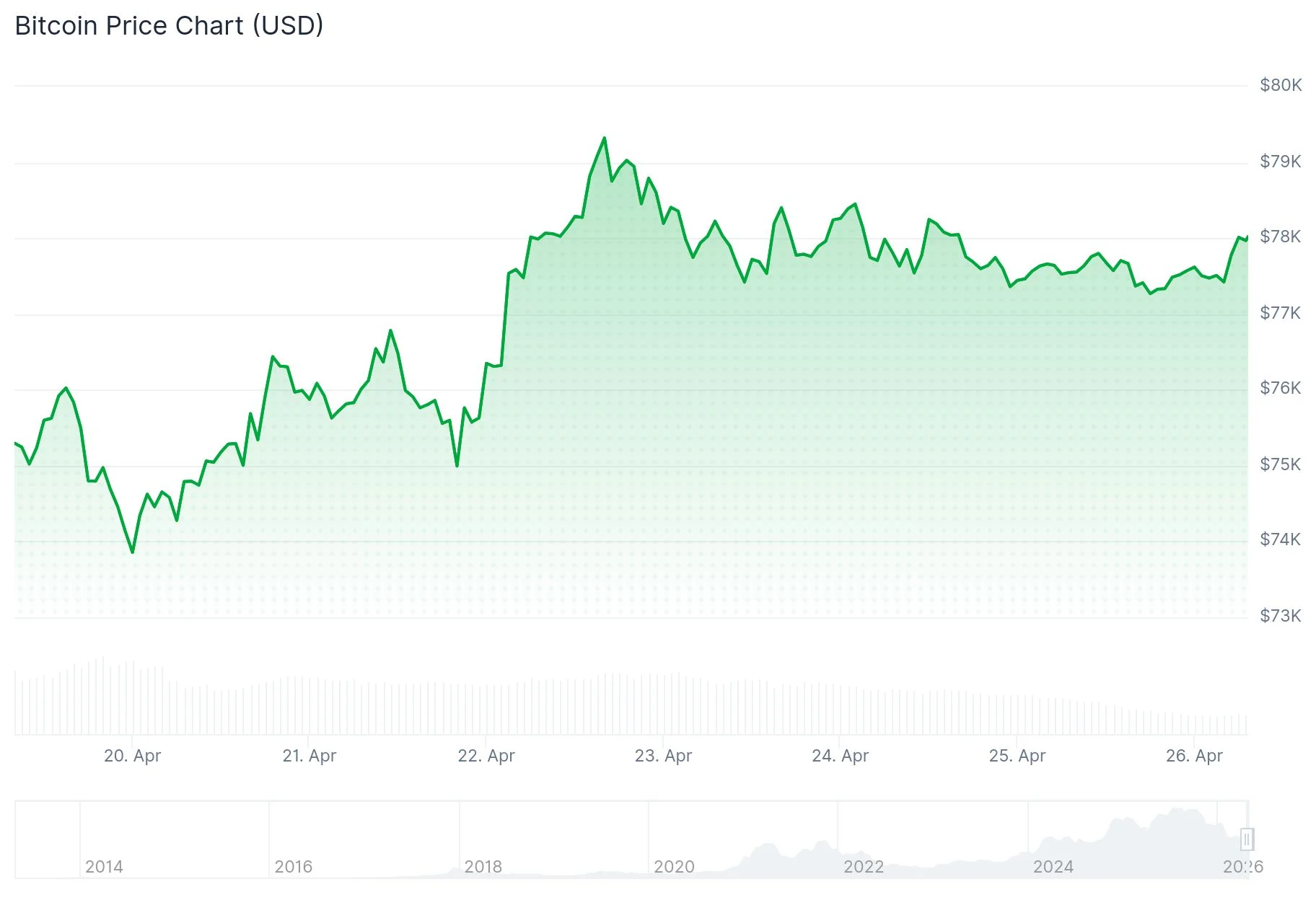
- BTC declined beneath $78,000 following Trump’s decision to cancel a diplomatic envoy mission to Pakistan aimed at Iranian peace negotiations
- The leading cryptocurrency hovered around $77,200, experiencing a roughly 40% decline in 24-hour trading volume to approximately $18 billion
- Spot Bitcoin ETF products attracted $2.12 billion in capital during a consecutive nine-day period ending April 24
- BlackRock’s IBIT options open interest climbed to $27.61 billion, overtaking Deribit’s $26.90 billion position
- Market analyst Ted Pillows identified $76,000–$77,000 as critical support territory, with $80,000 representing the subsequent resistance threshold
Bitcoin tumbled beneath the $78,000 threshold on April 25 following President Donald Trump’s announcement that he canceled a scheduled diplomatic journey by U.S. representatives Steve Witkoff and Jared Kushner to Pakistan. The mission was designed to advance peace discussions with Iranian government officials. Trump stated the 18-hour journey wasn’t justified and instructed Iran to contact the United States if negotiations were desired.
Iran’s top diplomat, Abbas Araghchi, had already departed Pakistan prior to the announcement of the cancellation. This development introduced additional uncertainty regarding the timeline for resuming diplomatic discussions. Trump verified the cancellation via Truth Social, pointing to disorganization among Iran’s governing authorities.
BTC retreated from approximately $78,000 to the $77,200 range after the announcement. Twenty-four-hour trading activity contracted by roughly 40% to around $18 billion. Notwithstanding the daily decline, Bitcoin has maintained approximately 10% gains across the previous month.
Cryptocurrency market analyst Ted Pillows shared on X that BTC continues to maintain position above critical support territory. He indicated that sustained holding above the $76,000–$77,000 range could enable Bitcoin to attempt another push toward $80,000. He cautioned that breaching this support zone might trigger a more substantial price correction.
Trump clarified to Axios that the abandoned diplomatic mission doesn’t indicate U.S. intentions to restart military conflict with Iran. The ceasefire agreement, initially scheduled to conclude on April 22, has received an indefinite extension. Trump stated it would remain active until Iran delivers a coherent negotiating position.
The United States additionally froze $344 million in USDT associated with Iranian entities and continues enforcing a blockade at the Strait of Hormuz. According to Trump, Iran sustains approximately $500 million in daily losses because of this enforcement action.
Bitcoin ETF Products Record Sustained Inflow Pattern
Spot Bitcoin ETF vehicles registered nine consecutive sessions of positive net capital flows spanning April 14 through April 24, accumulating $2.12 billion in total. The most robust individual session occurred on April 17, attracting $663.91 million. BlackRock’s IBIT dominated during the quietest day on Friday, capturing $22.88 million in inflows.
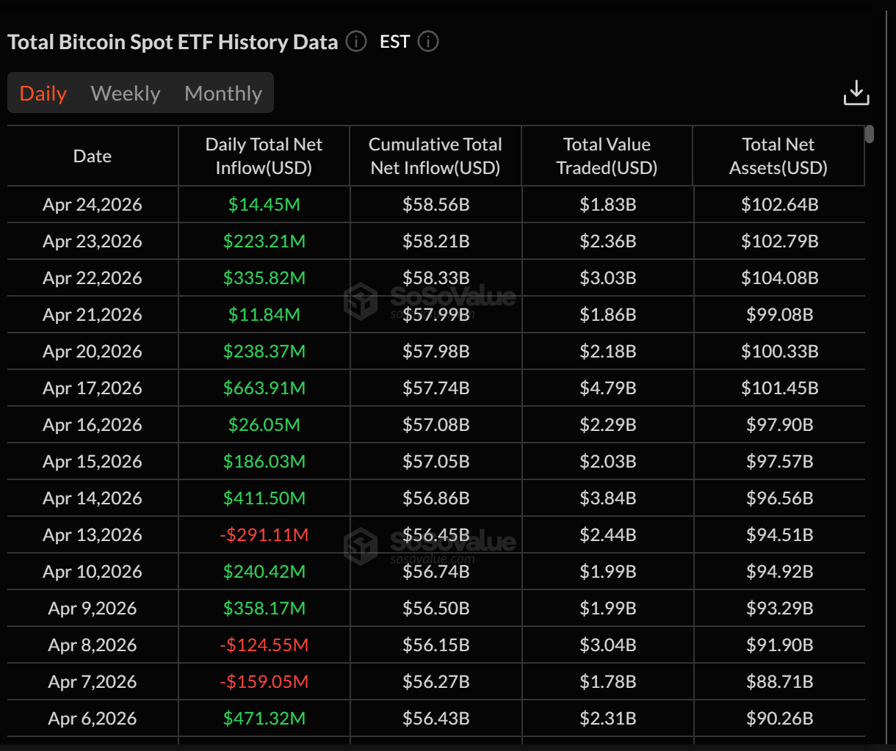
Aggregate net capital inflows for spot Bitcoin ETF products have now accumulated to $58.23 billion. ETF specialist Nate Geraci observed on X that market participants continue accumulating positions despite BTC trading approximately 35% beneath its record peak, characterizing them as “longer-term allocators.”
IBIT Options Eclipse Deribit in Market Position
BlackRock’s IBIT options open interest on the Nasdaq platform reached $27.61 billion on Friday, marginally exceeding Deribit’s $26.90 billion in Bitcoin options contracts. IBIT debuted merely two years ago, whereas Deribit has maintained operations since 2016.
Call option positioning within IBIT suggests market expectations for BTC to approach approximately $109,709 in the near term. Deribit’s positioning reflects slightly more measured expectations, targeting the $106,000 vicinity.
BTC was exchanging hands at roughly $77,516 when this analysis was conducted, based on CoinMarketCap data.

‘This is not evolution’: Badminton coach Vimal Kumar blasts BWF over 3×15 scoring change | Badminton News

Today’s NYT Connections Hints, Answers for April 26 #1050

Laziest Ways To Make Money With AI ($100/day+)

Manchester United reach agreement with Casemiro over contract clause amid transfer speculation

US brings back mandatory military draft registration

Steven Gerrard disagrees with Gary Neville over ‘shock’ Chelsea and Arsenal claim | Football


-

 Business7 days ago
Powerball Result April 18, 2026: No Jackpot Winner in Powerball Draw: $75 Million Rolls Over
-

 Fashion2 days ago
Weekend Open Thread – Corporette.com
-

 Politics7 days ago
Zack Polanski demands ‘council homes not luxury flats for foreign investors’
-
Entertainment6 days ago
NBA Analyst Charles Barkley Chimes in on Ice Spice McDonald’s Fiasco
-

 Politics6 days ago
Gary Stevenson delivers timely reminder to register to vote as deadline TODAY
-
Crypto World6 days ago
Bank of Hawai’i (BOH) Q1 2026: Net Income Drops to $57.4M as Net Interest Margin Expands
-
Crypto World14 hours ago
Hyperliquid $HYPE Rally Builds Momentum as AI Sector Enters Prove-It Phase
-

 Politics4 days ago
Making troops accountable for war crimes threatens US alliance, ex-SAS colonel warns
-

 Politics4 days ago
Disabled people challenge government SEND proposals over segregation concerns
-

 Business4 days ago
Rolls-Royce Voted UK’s Most Iconic Trade Mark as IPO Register Hits 150
-

 Politics4 days ago
Zack Polanski responds to home secretary’s taser threat
-

 Politics4 days ago
Starmer handler McSweeney to be dragged from shadows by Foreign Affairs Committee
-
Politics4 days ago
Wings Over Scotland | How To Get Away With Crimes
-
 Crypto World5 days ago
Five Value Stocks with Recovery Potential in 2026: PayPal (PYPL), Nike (NKE), and More
-

 Crypto World4 days ago
New York sues Coinbase, Gemini over prediction market offerings
-

 Politics4 days ago
‘Iran is still a nuclear threat’
-
 Sports3 days ago
Tim Bradley names the current best in the world: “Better than Inoue and Usyk”
-

 Crypto World4 days ago
Crypto’s great hope in Senate’s Clarity Act still has a path to survive tight calendar
-
 Business4 days ago
HCL Tech share price tank over 9% after weak Q4. JPMorgan, HSBC & 3 others cut target price
-

 Business4 days ago
The Job Benefits Most Men Don’t Know to Negotiate
You must be logged in to post a comment Login