A British-backed robotics start-up promising to replace ageing offshore vessels and crews with always-on underwater machines has emerged from stealth with $5m (£3.95m) in pre-seed funding, signalling fresh investor appetite for so-called “physical AI” plays targeting the world’s most stubbornly analogue industries.
Bubble Robotics, founded in 2025 by former engineers from NASA and ETH Zürich, has secured the round from Episode 1 Ventures, Asterion Ventures and Norrsken Evolve, following its incubation through London-based talent investor Entrepreneur First. The company is already sitting on more than $4m of signed letters of intent across offshore wind, subsea infrastructure and maritime security, suggesting commercial pull is running well ahead of the typical pre-seed playbook.
The pitch is straightforward, if ambitious. Today, inspecting an offshore wind turbine, a buried data cable or a section of seabed pipework typically demands a chartered vessel, a specialist crew and a daily bill that can climb to $100,000. According to Bubble’s founders, between 80 and 90 per cent of those costs are tied up in the boat and the people on it, rather than in the inspection itself.
“By removing that dependency, we unlock a step change in cost, safety and operational frequency,” said Jean Crosetti, chief executive and co-founder. “What used to be episodic becomes continuous.”
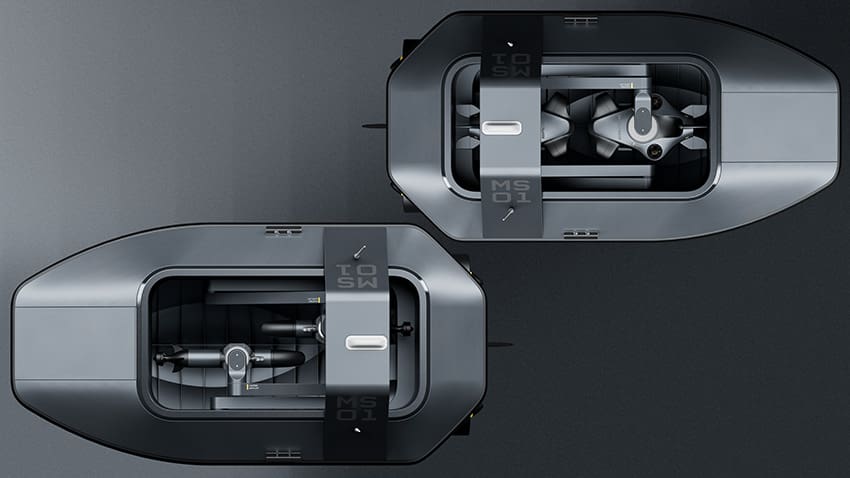
The plan is to dispense with vessel-based missions altogether and instead deploy fleets of resident autonomous robots that live at sea for months at a time, continuously inspecting, monitoring and gathering data without human intervention. Crosetti likens the model to the satellite constellations that have transformed earth observation over the past decade, only pointed downward into the water column rather than up at the atmosphere.
Advertisement
The timing reflects a wider inflection point. Cheaper edge computing, more capable on-device AI and the rapid expansion of low-earth-orbit satellite connectivity have, between them, made persistent unmanned operations technically feasible in a way they were not even three years ago. The macro pull is equally significant: the offshore energy sector alone is forecast to need an additional 600,000 workers by 2030, a shortfall that no graduate scheme is going to plug in time.
Bubble is selling its capability on a robotics-as-a-service basis, sparing customers the upfront capital expenditure and offshore mobilisation costs that have traditionally locked smaller operators out of high-frequency inspection regimes. Target use cases span the inspection of wind turbine foundations, cables, pipes and subsea structures; benthic mapping, photogrammetry and biofouling monitoring for climate and biodiversity clients; and mine countermeasures, unexploded ordnance detection and continuous surveillance for defence and maritime security buyers.
That last category is increasingly pertinent. Recent incidents involving subsea data cables in the Baltic and North Sea have pushed the security of underwater infrastructure up the agenda for European governments and Nato, exposing how thinly monitored much of it remains. Persistent autonomous systems offer a way to maintain a continuous presence around sensitive assets without committing scarce naval resources.
Alice Bentinck, co-founder of Entrepreneur First, said the founders had stood out from the moment they met at one of the firm’s kick-off weekends. “Patricia and Jean formed a team around a shared belief and complementary skill-set: Patricia with world-class technical credibility in robotics, Jean with unusual commercial instinct and intensity. Their pace of iteration throughout the programme and strong customer obsession make Bubble Robotics a company to watch closely.”
Advertisement
For the wider SME ecosystem, Bubble’s emergence is a useful data point. It suggests that capital is still flowing into deep-tech start-ups with credible commercial traction, even as more speculative AI plays cool, and that the long-promised convergence of robotics, AI and connectivity is finally producing businesses with revenue lines attached, not just demos.
Jamie Young
Jamie is Senior Reporter at Business Matters, bringing over a decade of experience in UK SME business reporting.
Jamie holds a degree in Business Administration and regularly participates in industry conferences and workshops.
When not reporting on the latest business developments, Jamie is passionate about mentoring up-and-coming journalists and entrepreneurs to inspire the next generation of business leaders.
The 50-strong flooring chain backed by Sir Richard Harpin’s Growth Partner has appointed restructuring advisers, raising the prospect of store closures and redundancies as the cost-of-living squeeze continues to drag on consumer spending.
Flooring Superstore, which employs around 300 people from its Bishop Auckland headquarters in County Durham, has drafted in Begbies Traynor and the restructuring arm of Santander to weigh its options. People familiar with the matter said a company voluntary arrangement (CVA) or a full administration are both on the table, controversial routes that typically squeeze landlords and suppliers while preserving the equity of incumbent owners and senior creditors.
The retailer was co-founded in 2012 by Dan Foskett and sells vinyl, laminate and wood flooring alongside artificial grass through its branded showrooms and online channels. Growth Partner, the investment vehicle established by Harpin, the entrepreneur behind home emergency repair group HomeServe, backed the business in 2020 with a £5 million injection that allowed Foskett to crystallise a portion of his shareholding. He retains a 22 per cent stake, while Growth Partner holds 25 per cent. The remainder is split between three individual investors.
Harpin, who last year published “How to Make a Billion in Nine Steps”, focuses on British and European retail names primed for scale. His portfolio includes pizza oven specialist Gozney and bathroom retailer Easy Bathrooms. However, several Growth Partner-backed businesses have collapsed in recent years, among them Crafters’ Companion, co-founded by Dragons’ Den investor Sara Davies, and Yorkshire-based Keelham Farm Shop.
Flooring Superstore was a pandemic winner, riding the wave of home-improvement spending while consumers were confined to their properties. That tailwind reversed sharply once lockdowns eased, as the chain was forced to absorb spiralling energy and raw material costs and unwind the additional capacity it had built. The cost-of-living crisis has since hammered demand for big-ticket household refurbishments.
Advertisement
Connection Retail, the parent company that also owns Direct Wood Flooring, Grass Direct and Snug Carpets, posted turnover of £49.3 million in the year to the end of July 2024, down from £51.8 million a year earlier. Pre-tax profit nonetheless swung from a £3.3 million loss to a £619,000 profit, while net debt stood at £3.5 million at the year-end.
Santander shored up the group’s balance sheet last June with a debenture, a secured loan agreement under which the lender acts as security trustee. Filings at Companies House show Connection Retail has two outstanding charges, having pledged its property and overall business assets as collateral to both Growth Partner and the high-street bank.
The disclosed restructuring talks mark a striking pivot from the expansion blueprint Foskett set out only twelve months ago, when he told The Times that he intended to grow the estate to as many as 150 stores, deepen the brand’s marketing reach and continue building its exclusive product range.
Growth Partner and Flooring Superstore had not responded to requests for comment at the time of publication. Santander and Begbies Traynor declined to comment.
Advertisement
Amy Ingham
Amy is a newly qualified journalist specialising in business journalism at Business Matters with responsibility for news content for what is now the UK’s largest print and online source of current business news.
Grosvenor, the property company controlled by the Duke of Westminster, has broken ground on a £40m repositioning of The Hive in Manchester’s Northern Quarter, in a move that takes the group’s directly managed flexible workspace model outside London for the first time.
The Lever Street landmark, which extends to 78,000 sq ft, will be reimagined as a destination office building anchored by 25,500 sq ft of flex space and a hospitality-led amenity offer. Ground-floor units fronting Lever Street will house a deli and a restaurant, both run by what Grosvenor describes as “well-known Manchester names”, with a launch pencilled in for autumn 2026.
For Grosvenor’s UK property arm, the project is the most visible test yet of a regional strategy launched in 2020 that now stretches across roughly 500,000 sq ft in Manchester, Birmingham, Bristol and Leeds. The portfolio is currently 90 per cent let, a figure that compares favourably with a regional office market still wrestling with hybrid working and a flight to quality.
The group has appointed x+why, the B Corp-certified workspace operator, to run more than 22,000 sq ft of the flex floors under a management agreement. The deal extends a partnership that began in 2023 at Fivefields, Grosvenor’s social-impact workspace in Victoria, and signals a growing appetite among traditional landlords to plug operating expertise into their own buildings rather than cede space to third-party flex providers on conventional leases.
Interiors will be designed by x+why’s in-house team, whydesign, with a deliberate nod to local craftsmanship. Pieces by Manchester-based furniture designers and artists including Aiden Donovan, Jesse Cracknell, Matt Dennis and Mima Adams will be woven into the scheme, while elements from the fit-out installed by previous tenant The Arts Council are to be repurposed, a small but pointed gesture towards the building’s creative heritage.
Advertisement
The bet on Manchester reflects a wider conviction inside Grosvenor that the city’s office market remains one of the most resilient outside the capital, underpinned by a deep talent pool, inward business migration and a structural shortage of grade-A space. The landlord’s nearby Ship Canal House is, it says, close to full occupancy following a run of new lettings and renewals.
Fergus Evans, office portfolio director at Grosvenor Property UK, said the Hive scheme typified the group’s regional playbook of taking “a prime asset in a great location and repositioning it to meet the evolving needs of today’s occupiers”. He added: “Manchester continues to perform strongly for us, and our investment in The Hive reflects sustained demand for well-located, high-quality offices, particularly from the city’s growing digital and creative economy. Combining x+why’s experience in creating design-led, community-focused workspaces with our approach to active asset management, we are well placed to deliver a distinctive, flexible offer that responds to local demand.”
Rupert Dean, chief executive and co-founder of x+why, said the operator was “delighted to be partnering with Grosvenor again to bring The Hive into its next chapter”. He added: “The Northern Quarter is one of the most exciting and entrepreneurial parts of the UK, and The Hive will reflect that energy, offering a workspace that is not only functional, but inspiring and socially driven.”
For SMEs and scale-ups in Manchester’s digital and creative cluster, the very occupiers Grosvenor and x+why are courting, the arrival of a higher-end, hospitality-led flex product on Lever Street is likely to sharpen competition with established players such as WeWork, Bruntwood and Department, and could nudge headline rents in the Northern Quarter higher when the doors open next autumn.
Advertisement
Jamie Young
Jamie is Senior Reporter at Business Matters, bringing over a decade of experience in UK SME business reporting.
Jamie holds a degree in Business Administration and regularly participates in industry conferences and workshops.
When not reporting on the latest business developments, Jamie is passionate about mentoring up-and-coming journalists and entrepreneurs to inspire the next generation of business leaders.
Republican Sen. Thom Tillis on Tuesday reiterated that he opposes Kevin Warsh’s nomination over President Donald Trump’s Federal Reserve investigation.
Now that the Justice Department has dropped its Federal Reserve probe, Sen. Thom Tillis, R-N.C., said he is willing to vote to confirm Kevin Warsh to serve as the next chair of the Federal Reserve System board of governors.
“I have been clear from the start: the U.S. Attorney’s Office criminal investigation into Chair Powell was a serious threat to the Fed’s independence, and it needed to end before I could support Kevin Warsh’s confirmation. I welcome the Inspector General’s investigation. This is a necessary and appropriate measure, and I have confidence it will be conducted thoroughly and professionally,” Tillis stated in a post on X.
Advertisement
The senator noted that he is looking “forward to supporting Kevin Warsh’s confirmation,” describing Warsh as “an outstanding nominee.”
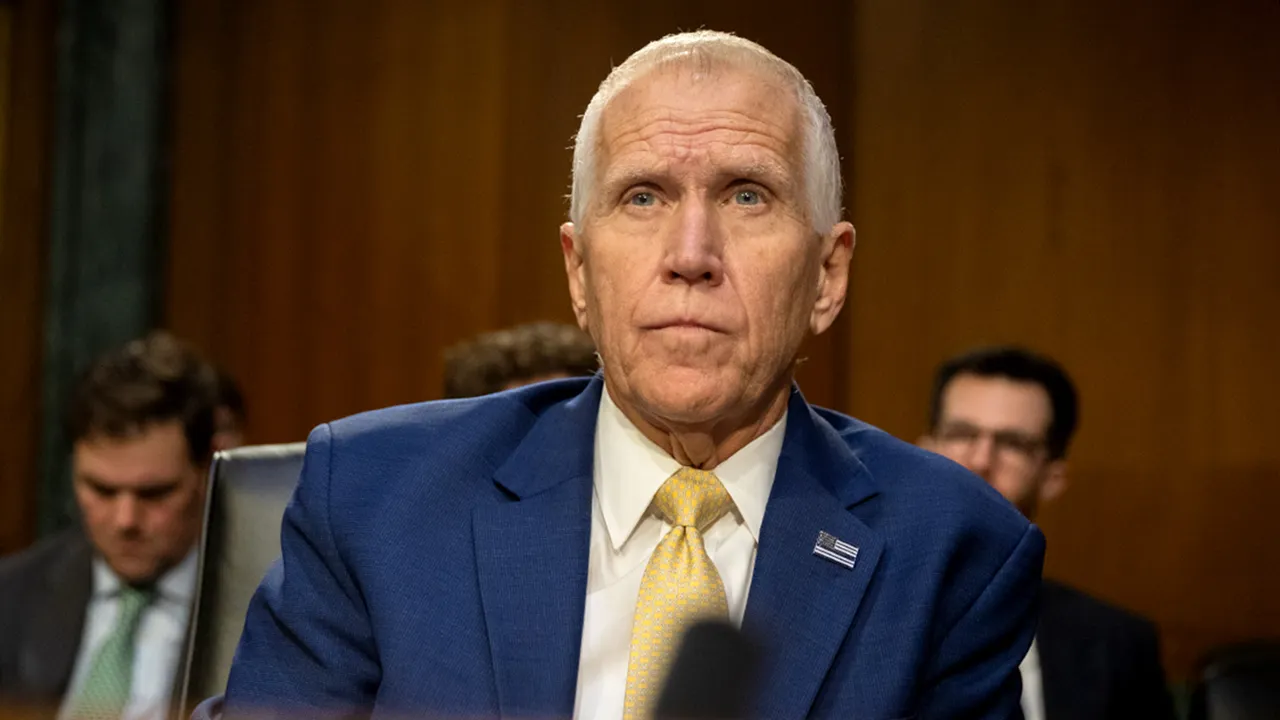
Sen. Thom Tillis listens as Homeland Security Secretary Kristi Noem testifies during a Senate hearing in Washington, D.C., on March 3, 2026. (Nathan Posner/Anadolu via Getty Images)
U.S. Attorney for the District of Columbia Jeanine Pirro announced last week that she had directed her office to close the probe.
“This morning the Inspector General for the Federal Reserve has been asked to scrutinize the building costs overruns – in the billions of dollars – that have been borne by taxpayers,” she wrote in a Friday post on X.
U.S. Attorney Jeanine Pirro during a news conference at the Department of Justice in Washington, D.C., on Feb. 6, 2026. (Aaron Schwartz/Bloomberg via Getty Images)
“I have directed my office to close our investigation as the IG undertakes this inquiry,” Pirro noted, while warning that she “will not hesitate to restart a criminal investigation should the facts warrant doing so.”
A spokesperson with the Fed’s Office of Inspector General said in a statement obtained by Fox News Digital, “In July of last year, the OIG announced that it was conducting an evaluation of the Board’s building renovation project.
Kevin Warsh, nominee for chairman of the Federal Reserve, is sworn in to his Senate confirmation hearing on Tuesday, April 21, 2026. (Tom Williams/CQ-Roll Call, Inc via Getty Images)
“This assessment includes our independent analysis of the project’s substantial cost increases and overruns. We are actively working to complete our review, and look forward to making the results available to the public and Congress upon completion. We decline further comment,” the spokesperson noted in the statement.
Valmont Industries, Inc. (VMI) Shareholder/Analyst Call April 27, 2026 11:00 AM EDT
Company Participants
Mogens Bay John Schwietz – Executive VP, CFO & Corporate Secretary
Advertisement
Presentation
Operator
Greetings, and welcome to Valmont Industries 2026 Annual Shareholders Meeting. [Operator Instructions]
Advertisement
As a reminder, this conference is being recorded. I would now like to turn the call over to Valmont’s Chairman of the Board, Mogens Bay. Thank you. You may begin.
Mogens Bay
Good morning. My name is Mogens Bay, and as Chairman of Valmont, it’s my pleasure to welcome you to our Annual Meeting. Today’s meeting is being audio webcast to our shareholders and will be made available for replay at our website, valmont.com.
Advertisement
We have four proposals that are outlined in Valmont’s proxy statement to be voted upon at this meeting. We will then announce the results. All Valmont directors are present at today’s meeting.
Greg Geyer of KPMG is participating in today’s meeting, and KPMG is available to respond to any questions you may have about our financials. At this point, I call upon John Schwietz, CFO and Corporate Secretary, to read the required legal notice.
John Schwietz Executive VP, CFO & Corporate Secretary
Advertisement
Mr. Chairman, this meeting is convened in accordance with the proxy mailed on March 11, 2026, to all shareholders of record as of March 2, 2026. We have received the affidavit of mailing from Broadridge stating that this mailing was complete and accurate.
Anita Gillespie has been appointed inspector of the election, and a list of all shareholders is available for review. The inspector has advised us that there were 19,547,213 shares outstanding and entitled to vote at this meeting. Of that number, more than 91% are represented by proxy at this time.
Mogens Bay
Advertisement
Thank you. There are four matters for shareholders to
A pedestrian walks by a Domino’s Pizza on Dec. 9, 2025 in San Francisco, California.
Justin Sullivan | Getty Images
Domino’s Pizza stock fell 10% in morning trading on Monday after it reported weaker-than-expected U.S. same-store sales growth.
Advertisement
The chain’s domestic same-store sales rose just 0.9%, lower than the 2.3% bump expected by Wall Street analysts, based on StreetAccount estimates.
“We’re not happy with it,” CEO Russell Weiner told CNBC.
The pizza chain also lowered its full-year U.S. same-store sales forecast to low-single digit growth, down from its prior projection that U.S. same-store sales will increase 3%.
Weiner said he expects more fast-food chains to report similar headwinds from winter weather and weak consumer sentiment, which took a dive in March due to spiking fuel prices caused by the U.S.-Israeli war with Iran.
Advertisement
“One of the bad things about reporting first is you don’t get to hear about anybody else,” Weiner said.
Domino’s kicked off the earnings season for restaurant chains. Starbucks is on deck after the bell on Tuesday, and Chipotle Mexican Grill and Pizza Hut owner Yum Brands are expected to share their results on Wednesday. Rival Papa John’s will report its earnings next Thursday.
During the quarter, Domino’s also faced stiffer competition from rival pizza chains. Papa John’s and Pizza Hut both matched Domino’s $9.99 “Best Deal Ever” with promotions at the same price point. And Little Caesars undercut Domino’s $6.99 Mix & Match deal with a $5.99 version.
“People are seeing what we’re doing, and they’re sick of losing share, and they’re coming at it,” Weiner said, adding that he still expects Papa John’s and Pizza Hut to report same-store sales declines for the quarter despite the new promotions.
Advertisement
Looking ahead, Weiner expressed confidence that Domino’s will prove itself in the long run.
“Domino’s has got a bigger advertising budget than our second two competitors combined,” he said. “And those competitors are both going up for sale, so we know things aren’t good there right now.”
Yum announced in November that it was exploring strategic options for Pizza Hut, which could include a sale. And Papa John’s is reportedly in talks with Qatari-backed Irth Capital to go private. Both chains have also announced plans to close hundreds of restaurants this year, which could further boost Domino’s dominant position in the pizza category.
And if either Pizza Hut or Papa John’s goes private, Weiner said he expects that a new owner would shutter even more locations — a win for Domino’s.
Advertisement
Shares of Domino’s have lost nearly a third of their value over the last year. The company’s market cap has fallen to roughly $11.2 billion.
NEW YORK — Veradermics Inc. shares skyrocketed more than 42% Monday, surging to $96.60 in morning trading after the dermatology-focused biopharmaceutical company announced strongly positive topline results from its Phase 2/3 clinical trial of VDPHL01, an oral treatment for male pattern hair loss that demonstrated early, consistent and robust hair growth.
Veradermics Stock Explodes 43% After Positive Phase 3 Hair Loss Drug Trial Results
The New Haven, Connecticut-based company, which went public earlier this year, saw its market capitalization jump by more than $1 billion in a single session as investors rushed to buy shares following the news. Trading volume was exceptionally heavy, with millions of shares changing hands in the first hours of the session.
Veradermics said its lead candidate VDPHL01 achieved statistically significant hair growth in the pivotal “302” study involving men with mild-to-moderate pattern hair loss. The oral, non-hormonal therapy showed rapid onset of action, with visible improvements noted as early as eight weeks and continuing through the 24-week endpoint. The results position VDPHL01 as a potential first-in-class treatment in a market long dominated by topical minoxidil and oral finasteride.
Breakthrough in Hair Loss Treatment
The company plans to hold a conference call Tuesday to discuss the detailed results. Analysts hailed the data as “transformational,” noting that VDPHL01 could capture a significant share of the multibillion-dollar global hair loss market if approved. Leerink Partners raised its price target on the stock to $90 from $75 following the announcement, maintaining an Outperform rating.
Advertisement
Veradermics CEO Dr. Reid Waldman expressed excitement in a prepared statement. “These results represent a major milestone not only for Veradermics but for the millions of men seeking safe, effective and convenient solutions for hair loss,” he said. The company is also advancing studies for female pattern hair loss, marking the first Phase 3 program of its kind in the U.S.
Company Background and IPO Success
Veradermics went public in February 2026 at $17 per share and has seen extraordinary volatility since its debut. The stock has more than quadrupled in value this year, driven by investor enthusiasm for its pipeline of dermatology and aesthetics products. The company focuses on turning common skin and hair concerns into proven therapeutic solutions through rigorous clinical development.
With cash reserves strengthened by its upsized IPO, Veradermics is well-funded to complete its ongoing Phase 3 programs and prepare for potential regulatory submissions. The company ended 2025 with significant cash on hand and has been aggressively advancing its clinical timeline.
Advertisement
Market Reaction and Analyst Views
Wall Street reacted enthusiastically to the news. Several firms reiterated Buy ratings, citing the strong efficacy data and large addressable market for hair loss treatments. Jim Cramer highlighted the stock on his show, calling it a “double or nothing” opportunity in the aesthetics space.
However, some analysts cautioned that the stock’s rapid run-up leaves it vulnerable to pullbacks. Valuation concerns persist, with the company still in the pre-revenue stage and facing competition from established players. Shares remain well below their recent 52-week high but have shown remarkable resilience.
Broader Industry Context
Advertisement
The positive results come at a time of growing interest in non-hormonal hair loss solutions. Current treatments like finasteride carry potential side effects that deter many patients, creating an opening for new therapies. Veradermics’ approach, if successful, could disrupt the market and offer a convenient oral option for both men and women.
The dermatology and aesthetics sector has seen increased investor attention in recent years, driven by aging populations and rising demand for cosmetic and therapeutic solutions. Veradermics’ progress validates the potential for innovation in this space.
What’s Next for Veradermics
The company will now focus on completing its remaining Phase 3 trials, including studies in female patients. Topline data from additional trials is expected later this year and in 2027. If approved, VDPHL01 could reach the market as early as 2028, representing a major commercial opportunity.
Advertisement
For investors, Monday’s surge underscores the high-risk, high-reward nature of clinical-stage biotech stocks. While the data appears compelling, full approval and commercial success are still years away and subject to regulatory hurdles.
As Veradermics continues its journey from clinical development to potential commercialization, the company’s progress will be closely watched by patients, physicians and investors alike. The strong Phase 2/3 results mark a pivotal moment that could transform treatment options for pattern hair loss and reward shareholders who bet on the company’s innovative approach.




















































You must be logged in to post a comment Login