
Politics
Anduril UK boss brags about improving UK military ‘kill chain’

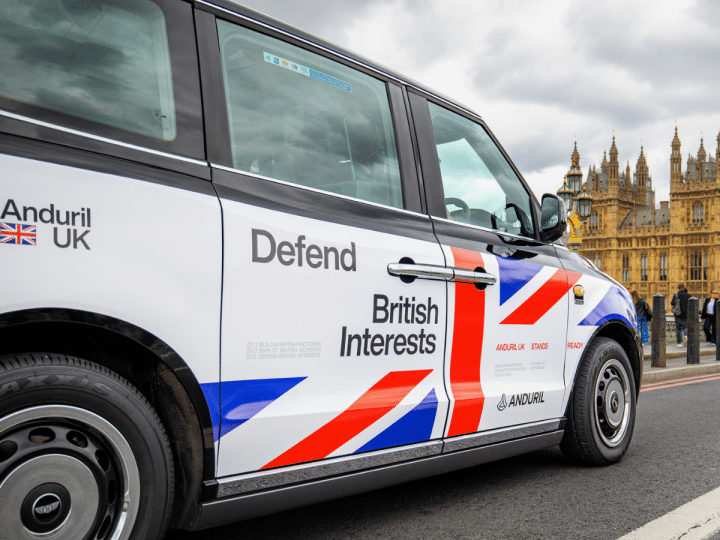

Rich Drake, CEO of Anduril, boasted to the British military’s in-house media about his firm’s role in enhancing troop lethality. Anduril, also used by the US, has ties with Israeli arms maker Rafael.
Drake told Forces New — the UK military’s own propaganda channel — that his products would streamline ‘kill chains.’ A kill chain is process by which targets are identified, prioritised, and hit, which you can read all about here.
In a brazen puff piece for the military firm, Forces News said:
The British Army wants to double its lethality by 2027 and triple it by 2030 – and one way it’s hoping to achieve this is by using something called Lattice.
This system joins up and integrates all the sensors and effectors the Army currently uses.
In other words, all the assets available to it, whether that be loitering munitions, attack drones or F-35s providing close air support, can all be monitored and tasked from one screen.
Drake told the outlet, which announced a new 10yr deal with the UK military on 24 April, that:
In the past, maybe two different companies had two different systems and you would have to transfer data from one to the other by writing it down, swivelling your chair across and typing it into another system.
And the beauty of software like Lattice means we can integrate those natively and speeding up decision cycles in what we call kill chains, again, to help the Army become more lethal.
Never have the words “beauty” and “lethality” sat so uncomfortably in a single sentence.
Fully autonomous options
Drake continued:
If we think of how Lattice is used, an operator may be looking for a Russian air defence system and have assets in the air, sensors in the air, such as radars or cameras to find it.
When those cameras find the air defence system, what Lattice can do is make the connection between the sensor to the effector, which may be a fighter in the air or a one-way drone ready to make that attack.
Lattice then makes that connection and creates a kill chain – and creates that kill chain at machine speed – computer machine speed rather than at human speed.
Truly “beautiful”…
Drakes stressed that while the killing could be carried out “fully autonomously”:
Right now, there is a rule of law around warfare and we completely support that at Anduril.
We support any rule of law or any way the military wish to use it… the human will always be involved.
Forces News said training on the systems would take place at a re-purposed RAF base in Wales.
Anduril’s dark reality
In 2024, Anduril partnered with Israel arms firm Rafael and AI firm Oracle to:
pair various command and control, sensor-to-shooter, intelligence operations, and expeditionary C4 platforms with the company’s cloud infrastructure.
And the US military signed a $20bn deal with Anduril in March 2026. The US has used Anduril technology in its illegal, unprovoked war with Iran. Anduril US chief Matthew Steckman confirmed this on 24 March 2026:
We’re heavy participants in the current conflict in the Middle East, mainly on the defensive side.
Adding:
So if you’ve read about the Shahed drone, as an example, we’re one of the principal systems to defend against that threat in the Middle East.
The British military finds itself in dubious company once again. Relying on Anduril’s technology ties the UK deeper into the US-Israeli colonial security framework. The firm claims it isn’t using fully autonomous killing systems yet, but has made clear that capacity exists. These rapid developments are outstripping international law’s ability to catch up — with dangerous implications for everyone.
Featured image via Anduril Industries/X/Twitter
By Joe Glenton


The road to the 2026 World Cup has been a bumpy ride for some players. This is because 15 star footballers are sitting out this year’s tournament due to injury. Their absence is shaking up teams and leaving coaches scrambling as the starry event looms closer.
These injuries aren’t limited to any one region or team. Both Arab and international sides are feeling the blow. Therefore, managers will be forced to find replacements for key players who have been pivotal to tactics and lineups.
Blows to Arab teams
The Jordanian national team is grappling with a major setback, as striker Yazan Al-Naimat is set to miss the World Cup after suffering a torn ligament. The recovery time makes it near impossible for him to return to the pitch in time. Meanwhile, Saudi Arabia’s defence takes a hit after Walid Al-Ahmad sustained a serious knee injury while playing domestically. There is no one to fill the gaping hole in their backline.
International stars out of the running
The international stage is not without its losses either, with some big names now ruled out.
Brazil’s Rodrigo Goes will miss the tournament due to a severe knee injury. Meanwhile, Germany’s Serge Gnabry is sidelined with a muscle tear. England’s Jack Grealish will also be absent as he recovers from surgery for a stress fracture in his foot. Japan will likely have to forgo Takumi Minamino, currently grappling with a torn cruciate ligament.
The French national team has been rocked by the absence of Hugo Ekitiki, who has suffered an achilles tendon injury. Argentina, too, is feeling the sting as both Juan Foyth and Joaquín Panicelli, out with tendon and ligament injuries.
In Germany, Serge Gnabry’s muscle tear continues the injury woes. In addition, Spain loses Samo Omorodion to a cruciate ligament injury — a serious blow. Brazil is also hit hard with Eder Militao sidelined following surgery for a muscle injury. Ghana’s Mohamed Salisu faces the challenge of a severe knee injury.
American and Dutch losses
Other teams are feeling the impact too. The US will be without Jonathan Klinsmann after he broke his neck, while the Netherlands faces the absence of Xavi Simons, recovering from a ligament injury.
As the final rosters take shape, all eyes will be on how coaches navigate these hurdles in the run-up to the World Cup. These absences will undoubtedly shape the competition and, and could also provide an opportunity for fresh faces to step into the spotlight.
The 15 big-name players to miss the 2026 World Cup:
- Rodrigo Goes (Brazil) — Cruciate ligament + cartilage
- Serge Gnabry (Germany) — Muscle tear
- Jack Grealish (England) — Stress fracture
- Takumi Minamino (Japan) — Cruciate ligament
- Hugo Ekitike (France) — Achilles tendon
- Juan Foyth (Argentina — Achilles tendon
- Joaquín Panicelli (Argentina — Cruciate ligament
- Jonathan Klinsmann (US) — Broken neck
- Eder Militao (Brazil) — Muscle injury
- Samo Omorodion (Spain) — Cruciate ligament
- Xavi Simons (Netherlands) — Cruciate ligament
- Mohamed Salisu (Ghana) — Knee injury
- Yazan Al-Naimat (Jordan) — Cruciate ligament
- Walid Al-Ahmad (Saudi Arabia) — Cruciate ligament
- Luis Malagon (Mexico) — Achilles tendon
Featured image via the Canary
By Alaa Shamali

3 min read
Exclusive: Donations to political parties made by people in the UK would be capped at £1m under plans being drawn up by a Labour MP.
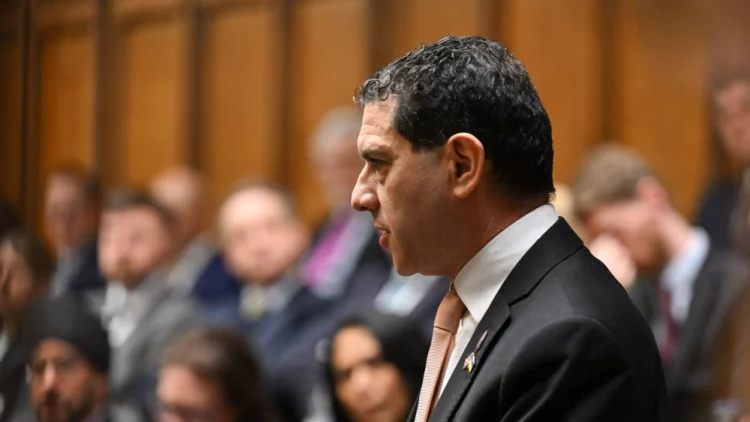
Alex Sobel, the MP for Leeds Central and Headingley, told PoliticsHome that he intends to amend the Representation of the People Bill in the hope that the government will agree to go further to tackle the influence of big money in British politics.
Last month, the government announced that it would cap political donations from individuals overseas at £100,000. It also announced an immediate and retrospective ban on political donations made via cryptocurrency, in a package of measures that Communities Secretary Steve Reed said would tackle “malign actors” funnelling “dark money” into UK democracy.
The policies were in response to an independent review by former senior civil servant Philip Rycroft, which warned that the “persistent problem” of foreign interests seeking to influence British political life had become “more acute” in recent years.
Campaign groups like the Electoral Reform Society (ERS) and Transparency International UK welcomed the steps, but said ministers should have gone further by introducing restrictions on donations from individuals based in the UK.
“This is widely supported by the public and would help prevent our politics from being swamped with massive donations, which now frequently reach into the multiple millions,” Dr Jess Garland, Director of Policy and Research at the ERS, said at the time.
This month, Ben Delo, billionaire co-founder of cryptocurrency trading platform BitMEX, wrote in The Telegraph that he was moving back to the UK from Hong Kong so that he could circumvent the new rules to continue donating to Nigel Farage’s Reform UK.
Reform has also received around £12m from Thailand-based British businessman Christopher Harborne, and is the only UK political party to have received cryptocurrency donations.
Sobel said he is tabling an amendment to the Representation of the People Bill at its report stage to prevent a “very small group of very wealthy individuals buying out our whole political system”.
While donations larger than £1m are rare, the Labour backbencher believes that this would “future-proof the system”.
“We need to have a culture where we don’t get bulldozed by the donations system,” he told PoliticsHome.
The amendment, if successfully added to the legislation, would exclude donations from organisations that have democratic internal structures, as well as donations that are made up of individual donations rather than one person’s money, like those from trade unions.
Duncan Hames, Director of Policy at Transparency International UK and former Liberal Democrat MP, suggested last month that ministers should consider a £50,000 cap on donations by people in the UK. Writing in The House, he likened the current package of measures to “trying to secure a building while leaving the front door wide open”.


How would you finish this sentence? “The current system isn’t working, so we should…”
- “…deport immigrants.”
- “…tax the rich.”
For millions, this sums up current British politics. There are quite a few who would choose both A and B.
Radical listening
On Thursday, I was one of the Majority team running our Radical Listening, Radical Persuasion session. Too much politics is “load, fire, aim”. People just shouting slogans or posting offensive memes without making the effort to understand where someone is coming from. It’s counterproductive – almost every neutral observer thinks worse of someone who is shouty, compared to someone who can articulate their point and back it up with evidence.
Part of listening is finding out what is behind the words used. Does “too much immigration” mean “I don’t like dark-skinned people”? Or does it mean, “I’m worried the public services have no money”? You have to get past the different use of terminology. No-one likes having their speech policed. Then, nine times out of ten, you can find some common ground.
Of course, some people think the system is fine. It just needs better managers. The reason our energy bills are too high is because of too much government interference. Either that or it’s because of people with blue hair eating avocado on toast.
The failures of managerialism
Belief in managerialism is declining. For obvious reasons. The Johnson, Truss and Sunak governments didn’t exactly cover themselves in glory. Nor the May and Cameron-Clegg governments before them. Even Labour MPs think the Starmer government is incompetent. U-turn after screeching U-turn.
Managerialism is driven much less by evidence than by the desire to be an insider. They use phrases like “grown-ups”, then jostle for ambassadorships or set up political consultancies, monetising their connections.
Paul Holden, author of The Fraud, explained it neatly in a podcast last week. He said that Starmer’s Labour faction:
present themselves as hyper-competent, ‘We can chair meetings’, ‘We can meet business leaders’, and actually, at a deep and fundamental level, they are threatened by competence. Really genuinely competent people are not allowed to be part of this political project because they are too threatening. The key examples for me are Faiza Shaheen and Jamie Driscoll.
Tax the rich
I’m an advocate of column B, tax the rich.
Those three words comprise a complete economic strategy. You need to blend tax with wider monetary policy. Any government with a sovereign currency can earn, borrow, tax or create money. Even then, money is only part of the equation. You need the real resources too. Skilled, healthy people. Transport and energy infrastructure. But “tax the rich” is three words that encapsulate the idea that wealth extraction is the root cause of people’s daily hardships.
I also think there should be some controls on borders and immigration. In a globally connected world, it is not unreasonable to want to know who is and isn’t in the country. Tax and law enforcement requires that information. Epidemic control and stopping people trafficking needs that infrastructure too.
But the UK and Ireland has had free movement for a century, and it works fine. I look at how 29 European countries work together within the Schengen area. Trade is higher and administration costs are lower. That seems like a workable system to me. You can retain your central bank and monetary sovereignty. You can still have a full English breakfast. In fact, the bacon is probably Dutch or Danish anyway.
Pressing the reset button
Radical Listening, Radical Persuasion isn’t just academic training. Those exact issues come up when we’re out canvassing in Newcastle.
“I’m thinking of voting Reform,” one bloke said after I’d introduced myself. He was maybe in his 50s. His small front garden was neat. He lives in an area of high deprivation. The media would label him “white working class”.
I asked him what he wanted Reform – or any government – to do. It came down to lower bills, cleaner streets, and reversing a general sense of decline. He basically wanted to press the reset button.
Did he want public ownership of water, I asked. Yep. Did he think we should invest in better skills training for young people? Yep. Did he think we should close tax loopholes for the rich? Damn right. Had Reform been round to talk to him? No. Who did he think would get stuff done? “You will,” he said. He’s voting Green.


Campaigners staged a mock state visit on 27 April, with people in giant masks of Charles and Donald Trump. Standing in front of the Buckingham Palace gates, they held a giant prop missile with the word ‘COMPLICIT’ on it.
Demanding an end to US use of UK military bases to conduct strikes in Iran, the Stop Trump Coalition is also calling on the government to stop cosying up to Trump. It cites the cost to ordinary UK citizens. And it points out that back-to-back state visits are emboldening the rogue president when what he needs most is accountability.
View this post on Instagram
Jake Atkinson, spokesperson for the Stop Trump Coalition, said:
Keir Starmer sending the king to wine and dine with the warmonger-in-chief signals we are happy to green-light Trump’s illegal actions around the world, no matter how much chaos they cause.
Ordinary people across the UK are struggling more and more with the cost of living whilst Trump’s war on Iran has driven up prices. Honouring Trump like this is a slap in the face to so many who are struggling, and suggests to the president he can continue violating international law and be rewarded with more pageantry.
Being joined at the hip to Trump’s US is not just making us complicit in war crimes, but hurting the British people. From teaming up with Big Pharma to hike our medicine prices to pressuring us to drop our Digital Services Tax on the biggest tech companies, Donald Trump wants to extract as much as he can from us for the benefit of the super rich and mega-corporations in the US.
The King’s refusal to meet with Epstein victims further reinforces that this visit is not to the benefit of anyone but Trump and the political elites. It should never have gone ahead.
Featured image via Stop Trump Coalition
By The Canary


Transport workers from across rail, bus and the ferry sector will take part in a day of action against assaults across the country on Tuesday 28 April.
RMT activists will leaflet train stations, bus depots and ports. They’ll be highlighting the union’s national campaign demands to curb the rise in assaults and abuse and to make public transport a safer place.
The demands include safe staffing levels and an end to lone working. The union also wants to see proper funding for British Transport Police and an increased presence of officers. And it’s calling for legislation to make it a specific offence to assault a transport worker. The campaign also wants an end to outsourcing of security and enforcement staff.
In Scotland, the union has secured manifesto commitments from the SNP, Labour and Scottish Greens, to legislate to protect public transport workers.
This stands in stark contrast to the continued failure of the Westminster government to introduce a standalone offence for assaults on transport workers. This is despite repeated calls from RMT and the wider industry.
RMT general secretary Eddie Dempsey who will be joining activists in Glasgow, said:
Our day of action against assaults is a major part of our campaign to put pressure on employers and politicians across the UK, to take concrete steps to deliver for transport workers on this vital issue.
Our members will be calling on the public to support them in this campaign as there is a shared interest to see assaults, abuse and harassment curbed, so we can have a safer environment for travel on public transport.
The action on Tuesday will be a launchpad for further political and industrial campaigning until we secure improvements for our members.
Featured image via the Canary
By The Canary
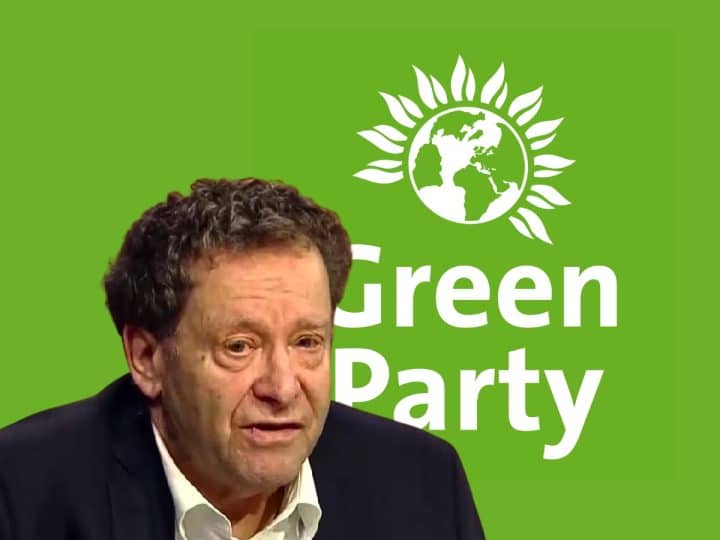

The following public letter to the Green Party comes from two Jewish anti-Zionist organisations. Jewish Network for Palestine and International Jewish Anti-Zionist Network have written the letter in response to the suspension of Tony Greenstein from the party.
We reproduce the letter in full:
We are writing to the Green Party as members of two Jewish Anti-Zionist organisation operating in Britain – Jewish Network for Palestine (JNP) and International Jewish Anti-Zionist Network (IJAN), and representing many thousands of members and followers – protesting against the recent Green Party’s shameful decision to suspend the membership of Tony Greenstein, claiming a “history of antisemitism including court decisions” as the foundation for this action.
Tony Greenstein, a pro-Palestinian activist and Jewish Anti-Zionist Green Party Member has been active against Israeli racism, ethnic cleansing, Apartheid and genocide for many decades; he is a member of Jewish Network for Palestine and on its Steering Committee. He has been a fearless campaigner against Zionism and for the rights of the Palestinian people and the rule of international law. He has been given no information other than spurious claims without evidence or proof for this offensive claim. We are deeply concerned this could be part of a broader smear campaign against pro-Palestinians within the Green Party, along the lines of the Hasbara campaign against the Labour Party under Jeremy Corbyn.
We were offered no information about the source of such accusations but believe the Party has been bullied into taking action without any basis in fact. No court decision anywhere has decreed Tony Greenstein is an antisemite, so there is no substance to this accusation, and the Party should have checked this before signing up to an accusation which itself is antisemitic. The claim that Tony has “a history of anti-Semitism” is false and especially infuriating as Tony is the author of a most detailed recent book about the links between Zionism and the Nazis during the period 1933-45, and is an authority about antisemitism himself; much more so than the people who accused him anonymously.
Like so many Jews, Tony comes from a family which suffered losses during the Holocaust, and the accusation, as well as the suspension from the Party, are hurtful, offensive and unjustified antisemitic acts by the Green Party.
So, we have some questions for Zack Polanski, for which we should have simple and truthful replies:
1. Is the Green Party now taking on the mantle of accusing Jews with antisemitism if they criticise Israel for its crimes – crimes the whole world is aware of and for which it is now under inquiry by the ICC and ICJ – the highest courts of humanity?
2. Has the party become an instrument of Israeli Hasbara? By acting like an inquisitorial court driven by Zionist accusations, without providing details to the accused, any pretence of justice seems to have been abandoned. Do you find this an acceptable way to treat your members, and are you committed to continue using this flawed approach?
3. Who has put such accusations against Tony Greenstein, and what is the evidential foundation of such scurrilous claims? Is it the practice of the Party to accept accusations and keep the identity of the accuser a secret, and not expose them to a simple procedure of a proper inquiry and cross-questioning?
4. What kind of process is being used by the party, in which no proof is necessary, no evidence is presented, no procedure is followed, and no justice can be seen, let alone done? Is the GP now open to any accusation of antisemitism against anti-Zionist Jews and others, not upholding an evidential procedure, requiring proof from named persons, and allowing the accused a process of self-defence, not to mention some information about the basis for the inquiry?
5. Does the Party believe it has the expertise, procedures, information and the moral authority to dictate to Jews, as well as non-Jews, committed to international law and the struggle against Israeli racist crimes and crimes against humanity – that they must support Zionism, in defying not only of their personal moral code, but that of the international legal authorities?
6. Will the Green Party act against those Jews, and others, who have supported, and continue to support the crimes of the Zionist state? Is the Party committed to ending the Racist Zionist Apartheid in Palestine? If so, will supporters of the Zionist crimes be ousted by the Party as opponents of both international Law and the Green Party positions?
Given that there were no clear or truthful grounds for the decision taken by the Committee, and no proper process followed, and hardly any information supplied by the deciding body, we call on the Green Party to immediately apologise to Tony Greenstein and annul the incorrect and shameful decision.
We also call upon the Party to clarify its rules, make then compatible with local and international law, and overhaul its faulty procedures so such decisions cannot be taken in such manner in the future.
We are convinced that the Green Party owes such clarity to its members, to the law-abiding Jewish community, and the Palestinians under the Zionist genocidal jackboot.
Signed for JNP and IJAN, David Cannon, Chair of JNP
Featured image via the Canary
By The Canary

!function(n){if(!window.cnx){window.cnx={},window.cnx.cmd=[];var t=n.createElement(‘iframe’);t.display=’none’,t.onload=function(){var n=t.contentWindow.document,c=n.createElement(‘script’);c.src=”//cd.connatix.com/connatix.player.js”,c.setAttribute(‘async’,’1′),c.setAttribute(‘type’,’text/javascript’),n.body.appendChild(c)},n.head.appendChild(t)}}(document);(new Image()).src=”https://capi.connatix.com/tr/si?token=19654b65-409c-4b38-90db-80cbdea02cf4″;cnx.cmd.push(function(){cnx({“playerId”:”19654b65-409c-4b38-90db-80cbdea02cf4″,”mediaId”:”5b195d5b-9d61-4777-966d-90f4630c7312″}).render(“69efa7bfe4b0f3a433cd385d”);});

The post In defence of boozy MPs appeared first on spiked.

The night I met my husband, we slunk into a faux denim sleeper sofa, a hand-me-down that resided in my parents’ basement for years, after too many PBRs and tequila shots. I insisted he watch several episodes of Scrubs, clumsily bringing my body closer to his on the squishy cushions, my limbs made limp by alcohol.
Only a few months later, after one half-hearted attempt of moving that metal more-machine-than-couch, we gave up and I accepted the loss of my deposit as I moved out of my favourite urban apartment with antique chevron pine floors and into his tiny suburban house with a red door, three minutes from my childhood home, shrinking back into a town I’d longed to grow out of.
In that house, a large overstuffed sofa covered in a nubby hunter green and white wide stripe greeted you just beyond the front door. It is where I sat, stoic, unable to look at the small white stick resting on the side of the bathroom sink, a blue plus sign quickly emerging — only four months after we met.
With the impending pregnancy, we had a garage sale and bought a house three streets north of where my parents live and where I had grown up. We sold that couch for $40 and bought another for $1,000. It was an overstuffed five-seater covered in a large golden-tan weave, perfect for hosting all-night nursing sessions, I anticipated.
We sat there now, on that couch, now 10 years old, the frame broken from nightly 3-year-old twin acrobatics. There were four kids now, and that night, we’d had plans for a date night, so my mom had taken them for a sleepover. We had mutually decided to abandon our plans in favour of staying home and enjoying the quiet house. He guzzled Budweiser, and I sipped some shitty red wine out of a stemless Ikea glass.
Our marriage, at that point, had moments of promise but consisted mostly of obligation, errands, chores and Lego battles. Our passion plagued by duty, our chemistry consumed by functionality.
For months after he left our family home, I’d reread our texts from the previous year.
“When will you be home?”
“You’re picking up the big kids, right?”
“Beckett’s basketball practice is canceled.”
“Are there bagels here?”
“Will you get bagels before you come home?”
“I need cumin. Can you stop?”
“Did you pay the phone bill?”
“Don’t eat the little bagels. They’re for lunches.”
Looking back, it’s impossible to un-see the unraveling. Little pieces of our former union crumbling, the mortar drying out with age and duty, inching toward a slow and dusty collapse.
Feeling the cabernet warmth in my cheeks, I set my glass on the antique NCR crate-turned-side-table as I tried to steady my inhales. I felt a truth brewing in my chest, one I’d wanted to tell him for eight years. I don’t know why I felt like I could say it right then; most likely it was just my low-level kids-free buzz.
We’d been having one of maybe three honest conversations we’d had in our entire relationship, the ones that were always induced by alcohol. I’d rehearsed this conversation in my mind countless times but, like letting someone say your name wrong for years because it felt like it was too late to correct them, I could never bring myself to mention it. If there was an opportunity, it was in the first few months we were dating. But not well into our 10th year of marriage.
“So, I have something to tell you. It’s kind of funny, actually,” I started, in an attempt to keep it light.
“Oh, uh, OK, um, it’s really weird. And don’t feel bad because I know it’s not your fault. It’s definitely my fault. Not your fault. I’m definitely the weird one, something is wrong with me. So, don’t feel bad. But, um, I’ve never orgasmed. With you. Or, maybe with anyone.”
I’d said it. And the relief was instant. Like releasing the need to perform to conceal the truth, night after night. And year after year.
His eyes widened at first and then he smirked a bit.
“What? Of course you have. I’ve seen it happen. That’s sort of ridiculous,” he said. He looked hurt, and I knew he’d already become defensive. Hardening the spots that were temporarily soft.
“No, well, I’m not saying I’m bored or I don’t like what you do.” I was and I didn’t. “I just don’t actually orgasm.” There, I’d said it again. No take-backs.
“That’s funny. Like, you always end up liking it. Even if you’re not in the mood at first. I’ve heard you, of course you do. Like, every time. Every single time. What are you even talking about?” He was scrambling. His pride had taken a hit.
I didn’t think I’d have to convince him of something I knew. At this point, I was merely looking for acknowledgement and maybe a vague plan of how to move forward. I had already concluded that maybe I was the faulty one. I wasn’t asking for a different performance or willing him to try harder. Honestly, “Oh, that sucks” would have felt pretty good.
I lost my virginity when I was a sophomore in high school to an impossibly kind redhead who liked me much more than I liked him. After months of having the kind of mediocre sex where pleasure wasn’t really involved, especially for the female, I had asked him an embarrassing question.
“What’s an orgasm for a girl? I mean, I know what it is for a guy because you can see it. It’s obvious. But, how do I know if I’m having an orgasm?” I asked as I played with the button of my lilac sweater set.
He pulled me on top of him into the safest embrace and gave me the most damaging explanation of an orgasm a girl has ever heard.
“You know when it feels good?” he said. I nodded. “It’s just when it feels the best of when it’s feeling good. You get it?”
OK, I thought in my 16-year-old brain, which would become my 25-, 35- and now 38-year-old brain. Then only after we’d completed an act of intimacy, I thought, could I locate where my orgasm had happened. Because that’s the thing about “bests” ― you don’t know the best is happening until it’s over. You don’t know you’re on the highest part of the roller coaster until you start coming down. But, what if you never get to the top? Then, you’re left thinking this anticlimactic mid-part of the incline must have been the best. I guess that was my orgasm, I’d think, as I tiptoed to the bathroom for a post-sex pee.
I had used this logic for most of my adult life, even while every sexual partner had bored me. I’d spent over two decades letting my moans grow to screams, seizing my stomach muscles, biting my lip and yelling “Oh my god” anyway. My partner didn’t deserve a subpar experience due to a broken partner. I was not theirs to fix. This Midwestern, people-pleasing girl would give an unforgettable performance while slowly growing ever more resentful of the entire act.
I pictured my Mom announcing “I would never let this go to waste” as she choked down last night’s leftover, soggy salad, a slurry of dressing and condensation pooling in the bottom of the Tupperware container, sacrificing her own pleasure for the good of the team. It was, after all, our way to prioritize everyone else’s experience long before we considered our own.
I looked at my husband. Discomfort and sadness had left his face and all that was left was a slightly slurred condescending arrogance.
“I knew this would be a tough conversation. I’m sorry. I think it’s me,” I said again.
“I mean, a hilarious conversation. Remember when you put scratches on my back? Or when you do that thing like you can’t handle any more contact and your body shivers?” he asked.
I didn’t know if I was supposed to answer. It seemed deeply hurtful to explain that that was all part of a performance that I’d been rehearsing for decades. My gravely growls and arched back all part of the show and he, my unknowing co-star, running lines nightly. I was embarrassed to answer, for him and for me. So, I didn’t.
And maybe I should have. Maybe I should have repeated that I didn’t know if I was capable of orgasming. That it hadn’t happened with anyone, not even myself before I got discouraged and stopped trying. That I sometimes worried that there was something medically wrong with me. That I was too ashamed to talk about it, even with my very closest friends. That I’d secretly googled “How To Orgasm,” wanting to find a numbered guide with a no-fail guarantee. That I craved intimacy. But real intimacy required honesty, a complete opening of which neither one of us were capable. I probably should have asked, “Will you help me?”
But I didn’t. I decided instead to break off another small piece of me and let it get lost in the overstuffed cushions of our broken sofa. What’s one more? I let go of his calloused fingers, pushed myself off the fractured couch, took my glass and gently set it in the sink and walked up the stairs to bed.
“Good night,” I said as I passed the living room. “I love you.”
And we never talked about it again.
Two years, one inevitable divorce, and a handful of fruitless partners later, I experienced my first orgasm. I was 40 years old. It came at the hands (or um, battery) of a small pink vibrator called the Pebble that, as promised, delivered clit-sucking technology and required not a single shred of showmanship.
I was born nimble, bending to accommodate others’ comfort. If we bend beyond the point of reasonable compromise, over time we unknowingly create an alternative reality. One based predominantly on the comfort and desires of another. One that is no longer our own. By nature, living someone else’s truth is living your own lie. And lies create distrust and distance within a relationship, even within the one we have with ourselves.
The couch in my living room is still broken, the frame held up by an old 2×4, but I am fixing myself; resisting the urge to bend beyond breakage. I hope to tell you that I find an orgasm in the future, one from a real live human. But, at the very least, I promise that I will move through life in a more honest way, cultivating a truth that is genuinely mine — even if it is 20 years too late.
The author is writing under a pseudonym.
This piece was previously published on HuffPost and is being shared again as part of HuffPost Personal’s “Best Of” series.
Do you have a compelling personal story you’d like to see published on HuffPost? Find out what we’re looking for here and send us a pitch at pitch@huffpost.com.

I don’t know whether it’s this sunshine, but I’ve been looking at the UK’s bank holiday schedule a lot recently.
We’ve already worked through three of the ones planned this year (New Year’s Day, Good Friday, and Easter Monday).
Here’s what’s next in England and Wales, as well as Scotland and Northern Ireland.
When’s the next UK bank holiday?
In England, Wales, Northern Ireland, and Scotland, the next bank holiday as of the time of writing (April 27) is May 4.
What are the remaining 2026 bank holidays in England and Wales?
- 4 May (Monday) – Early May bank holiday
- 25 May (Monday) – Spring bank holiday
- 31 August (Monday) – Summer bank holiday
- 25 December (Friday) – Christmas Day
- 28 December (Monday) – Boxing Day (substitute day, i.e., because the day itself didn’t fall on a workday, they’re giving us one in lieu).
What are the remaining 2026 bank holidays in Scotland?
- 4 May (Monday) – Early May bank holiday
- 25 May (Monday) – Spring bank holiday
- 15 June (Monday) – World Cup bank holiday
- 3 August (Monday) – Summer bank holiday
- 30 November (Monday) – St Andrew’s Day
- 25 December (Friday) – Christmas Day
- 28 December (Monday) – Boxing Day (substitute day).
What are the remaining 2026 bank holidays in Northern Ireland?
- 4 May (Monday) – Early May bank holiday
- 25 May (Monday) – Spring bank holiday
- 13 July (Monday) – Battle of the Boyne (substitute day)
- 31 August (Monday) – Summer bank holiday
- 25 December (Friday) – Christmas Day
- 28 December (Monday) – Boxing Day (substitute day).
Why are they called bank holidays to begin with?
They were actually called St Lubbock’s Days originally, after the banker (Sir John Lubbock) who helped to bring bank holidays about.
In case you’re wondering what a random day in August has to do with the financial industry, though, I’m afraid you might be barking up the wrong tree.
Some say Lubbock planned the holidays around his local village’s cricket schedule.
According to the Trade Union Congress, if I’d been writing this list in Victorian times, I’d have had a much more laborious task.
“Prior to 1834, the Bank of England observed about thirty-three saints’ days and religious festivals as holidays, but in 1834, this was drastically reduced to just four: Good Friday, 1st May, 1st November, and Christmas Day,” they said.
The ’70s was the last time the TUC successfully campaigned for an extra bank holiday.

Canada arrests three for operating “SMS blaster” device in Toronto

DWP announces ‘cliff edge’ changes for Universal Credit and Housing Benefit claimants

Musk’s OpenAI lawsuit goes to trial as jury selection begins in Oakland

Manchester United reach agreement with Casemiro over contract clause amid transfer speculation

US brings back mandatory military draft registration

Steven Gerrard disagrees with Gary Neville over ‘shock’ Chelsea and Arsenal claim | Football

Raj Rejects His Father’s Support and Falls Into Financial Crisis, Asks Sheldon to Be His Financial

LOVE FOR MONEY || CHAPTER 1 – KWADWO NKANSAH LIL WIN – WEEZY EMPIRE TV

Saylor’s Infinite Money Glitch Explained, DeFi Hack, Pakistan Opens Banks to Crypto
-

 Politics7 days ago
Gary Stevenson delivers timely reminder to register to vote as deadline TODAY
-

 Fashion3 days ago
Weekend Open Thread – Corporette.com
-
 Crypto World2 days ago
Hyperliquid $HYPE Rally Builds Momentum as AI Sector Enters Prove-It Phase
-

 Politics5 days ago
Making troops accountable for war crimes threatens US alliance, ex-SAS colonel warns
-

 Politics5 days ago
Disabled people challenge government SEND proposals over segregation concerns
-

 Tech2 hours ago
Register Renaming | Hackaday
-

 Business5 days ago
Rolls-Royce Voted UK’s Most Iconic Trade Mark as IPO Register Hits 150
-

 Business4 days ago
Patterson-UTI Energy, Inc. (PTEN) Q1 2026 Earnings Call Transcript
-

 Politics5 days ago
Zack Polanski responds to home secretary’s taser threat
-
 Sports1 day ago
IPL 2026: Ruturaj Gaikwad registers slowest fifty of the season, enters all-time unwanted list | Cricket News
-
 Crypto World6 days ago
Five Value Stocks with Recovery Potential in 2026: PayPal (PYPL), Nike (NKE), and More
-

 Politics5 days ago
Starmer handler McSweeney to be dragged from shadows by Foreign Affairs Committee
-
Politics5 days ago
Wings Over Scotland | How To Get Away With Crimes
-

 Crypto World6 days ago
New York sues Coinbase, Gemini over prediction market offerings
-
Entertainment6 days ago
Sydney Sweeney cameo cut from “The Devil Wears Prada 2”, source explains why (exclusive)
-
 Business6 days ago
HCL Tech share price tank over 9% after weak Q4. JPMorgan, HSBC & 3 others cut target price
-

 Politics5 days ago
‘Iran is still a nuclear threat’
-
 Sports5 days ago
Tim Bradley names the current best in the world: “Better than Inoue and Usyk”
-

 Crypto World6 days ago
Crypto’s great hope in Senate’s Clarity Act still has a path to survive tight calendar
-

 NewsBeat1 day ago
LK Bennett closes all stores after entering administration
You must be logged in to post a comment Login