In a time when almost everything is getting more expensive, this deal on the M5 MacBook Air has me hopeful about how laptop pricing will play out the rest of the year. The M5 MacBook Air has dropped back down to $949, which is $150 off its retail price. It’s only been at this price one other time since the product launched in early March and has more consistently sold for $1,049. As someone who’s reviewed every available MacBook and their strongest competitors, I can unequivocally say that this MacBook Air is one of the very best laptop deals right now.
Apple
MacBook Air (M5, 2026)
Take the Surface Laptop 7th Edition, for example, which has been one of my favorite alternatives to the MacBook Air through all of 2025. It had been at competitive prices with the M4 MacBook Air all along, with both laptops sometimes dropping to as low as $799 during sales events like Prime Day throughout the year. But now, the Surface Laptop has gotten an official price hike due to the RAM shortage and is currently sitting at $1,200. It’s still a laptop I like quite a lot, but at $350 more than a similarly configured M5 MacBook Air, it’s very difficult to recommend.
Advertisement
Or consider the MacBook Neo, Apple’s new budget laptop that also launched in March. While it’s much cheaper overall, it’s only ever been sold for $10 off its full price. At this reduced price for the M5 MacBook Air of $949, that leaves only a dangerously small $260 gap between the Neo and the Air. It’s almost embarrassing how much better the Air is by comparison—in every way imaginable. If you’re curious how these two laptops stack up, I’ve done a comprehensive comparison between them that’s worth checking out. But to put it simply, despite all the excitement (and controversy) around the much cheaper MacBook Neo, the MacBook Air still has the most price flexibility in terms of deals.
Valve’s Steam Controller will hit the market on Monday, May 4, for a going price of $99 in the United States. The Steam Controller does precisely what it says: It communicates with anything running Steam or the Steam Link app, so this includes PCs, Macs, mobile devices and the Steam Deck.
Eventually, the Steam Controller will connect to the new Steam Machine console and Steam Frame VR headset, but neither of these products have solid release dates just yet. They were originally slated to come out in early 2026 alongside the Steam Controller, but we’re nearly five months into the year and only a third of that promise is poised to be fulfilled. Valve in March said it hopes to ship in 2026, dropping the “early” bit.
As noted in our review, the Steam Controller is a solid gamepad, especially for the price. It feels and looks a lot like a Steam Deck, complete with two trackpads beneath a pair of TMR thumbsticks and a standard face array. It’s reactive, ergonomic, and comes with a cute little charging and connection puck that snaps onto the bottom of the gamepad. Just note that the Steam Controller is not a PC controller: It works with Steam, and only Steam. You’ll have to add games with their own launchers like Overwatch, Valorant, Minecraft or Fortnite to your Steam library before playing them with Valve’s proprietary controller. How convenient — for Valve, at least.
Valve
Worldwide, Steam Controller prices are as follows:
Tin Can co-founder and CEO Chet Kittleson. (Tin Can Photo)
Jimmy Kimmel was riffing on presidential social media habits last week when he offered a suggestion that doubled as an unscripted product endorsement.
“I wonder if they’ve considered getting him one of those Tin Can phones like the kids have that are not on the internet,” the late-night host said of President Trump during his monologue.
For Seattle startup Tin Can, it was a sign that the company’s screenless, Wi-Fi-enabled landline phone for kids has crossed over from niche parenting product to cultural reference point
“Jimmy Kimmel organically dropping Tin Can in his monologue like it’s a product that everybody is obviously familiar with,” founder and CEO Chet Kittleson wrote on LinkedIn. “What a week!”
It was the second big recent media moment for the startup, coming on the heels of a positive review from the New York Times’ Wirecutter that praised Tin Can as the leader in a growing pack of modern landlines aimed at giving kids independence without a smartphone.
Advertisement
We’ve been covering Tin Can since before it was a trend, so we took the opportunity to check in for an update. The company has grown to 30 employees and sold hundreds of thousands of phones since launching its flagship product in 2025. Tin Can is now on its sixth production batch, with orders shipping in June, according to the company.
Kittleson co-founded Tin Can in 2024 with Max Blumen and Graeme Davies, all veterans of Seattle real estate startup Far Homes. He dreamed up the idea in his daughter’s school pickup line, tired of playing go-between to arrange playdates.
GeekWire recognized Kittleson as one of our 2025 Uncommon Thinkers, and Tin Can’s momentum has only accelerated since then, fueled by a broader backlash against screen time.
Advertisement
The $100 Tin Can phone connects to home Wi-Fi to let kids make and receive calls from contacts approved by parents through a companion app. Calling between Tin Can devices is free, and an optional $9.99/month plan lets kids call regular phone numbers.
The phone comes in four colors with names like “Landline Lemon” and “Later Alligator Lilac.” There are no screens, and no apps, but enough cultural cachet to land in a late-night monologue.
Oprah Winfrey’s video podcast will be available across Amazon platforms. (Wondery Photo)
Amazon has landed talk show queen Oprah Winfrey and her video podcasts for its suite of streaming services.
“Long before the term ‘creator’ existed, Oprah was building a direct and deeply personal connection with audiences across generations — and that bond continues to grow. Creators are reshaping entertainment, and Oprah continues to pave the way. We couldn’t be more excited to partner with her on what’s ahead,” said Matt Sandler, general manager of Amazon Creator Services, in a statement.
The multi-year deal gives the tech giant distribution and advertising rights to “The Oprah Podcast” on audio and video. As part of the arrangement, Winfrey will expand her production to two new episodes per week starting this summer. The partnership also includes rights to the 25-year library of her former talk show and her “Oprah’s Book Club” and “Oprah’s Favorite Things” franchises.
The New York Times first reported the deal on Monday. The deal underscores how Amazon is betting on established names to anchor its creator strategy.
“This is the ultimate validation of where the world is going,” Steve Boom, an Amazon vice president, told the Times. “You have the most influential talk show host in history, by orders of magnitude, leaning heavily into this new world.”
Advertisement
Amazon purchased Wondery, a Los Angeles-based podcast studio known for producing several hit shows, in late 2020, aiming to strengthen its original audio offerings against competitors like Spotify. Last August, the company cut around 110 positions at Wondery as part of an effort to fold some of its operations into Audible and roll out its new Creator Services division.
“The podcast landscape has evolved significantly in the past few years, particularly with the rise of video-forward, creator-led content,” an Amazon spokesperson said in an August statement.
“By making these changes, we can better support creators in monetizing their content across multiple channels, help them expand their brand IP, and simplify the process for advertisers while making content more accessible to audiences wherever they prefer to consume it,” the company added.
The Winfrey deal is one of several high-profile moves in that effort. Another is the Kelce Clubhouse — a dedicated Amazon hub featuring brothers Jason and Travis Kelce, the football stars whose profiles soared after Travis’s engagement to Taylor Swift. The site brings together their video podcast, merchandise, a documentary about the duo, and promoted Audible content.
Advertisement
While Winfrey’s content will be available across Prime Video, Amazon Music, Fire TV Channels and Audible, her shows will also stream on YouTube and other podcast platforms.
“Expanding our reach globally is an opportunity I embrace, as we continue to connect through stories that invite new ways of seeing, and hopefully deepen, understanding,” Winfrey said in a statement.
A jury was selected on Monday during the first day of trial for Musk v. Altman in a federal court in Oakland, California. Some of the jurors that were ultimately selected voiced concerns over Musk himself, as well as the AI technology at the core of the case, but assured the court they would put these concerns aside for the trial. The kick off also catalyzed an array of shenanigans outside the courtroom.
OpenAI CEO Sam Altman and president Greg Brockman were spotted in the security line inside the courthouse this morning, but Elon Musk was nowhere to be found. A few dozen journalists crammed into an overflow room to listen to an audio stream of the proceedings.
The goal today was to select nine jurors who could be fair and impartial in this case—an especially difficult challenge considering the main characters are some of the most high-profile tech executives in the world. Several potential jurors said they had negative opinions about Musk when questioned by Judge Yvonne Gonzalez Rogers and attorneys. But that didn’t necessarily disqualify them; only one juror was ultimately excused on the basis of their strong negative opinions regarding Musk.
“The reality is that many people don’t like him,” Gonzalez Rogers told the courtroom. She added that she believed Americans with negative feelings about Musk could still have integrity for the judicial process and decide the case fairly. The jury will help establish the core facts regarding whether Sam Altman and other defendants improperly steered OpenAI’s nonprofit venture away from its original mission, potentially violating the law in the process. But their verdict will be advisory—Gonzalez Rogers will have the final call.
Advertisement
The nine jurors that were ultimately selected represent quite a diverse group, including a painter, a former Lockheed Martin employee, and a psychiatrist. Some of them said they had negative opinions about artificial intelligence technology more broadly. In the end, however, all of the people selected assured the court that their outside opinions about Musk and AI shouldn’t interfere with their ability to determine the facts of the case.
OpenAI’s attorney William Savitt said at a press briefing afterward that he was satisfied with the jury the court settled on.
“Mr. Altman, Mr. Brockman, and OpenAI are looking forward to presenting their case to that jury. They’re confident in their position and are looking forward to the facts being known,” Savitt told reporters. “The hurdle we think we need to get over is just to present the truth here. We’ve got a story about what happened that is consistent with the facts, it’s consistent with the documents, and we just want the jury to see that.”
Musk is already trying to win his case in the court of public opinion. On Monday morning, the billionaire used his social media platform X to boost a recent New Yorker investigation into Altman’s alleged deceptive business conduct. The story is weeks old, and the fact that Musk promoted it on the first day of the trial is no coincidence. Earlier this morning, OpenAI’s official newsroom account published a post on X calling Musk’s lawsuit an “attempt to undermine our work to ensure that artificial general intelligence benefits all of humanity.” Meanwhile, demonstrators were outside the court protesting the AI race altogether and calling for a pause on further development.
Advertisement
On Tuesday, lawyers for OpenAI and Elon Musk will deliver opening statements, and the first witness in the case will be called to the stand.
Star Trek: Strange New Worlds via Paramount Plus on July 23. The ten episodes air weekly until September 24. This is actually the second-to-last batch of episodes, as the show was recently .
The streamer has dropped a trailer for season four and it looks promising. The tone looks slightly darker when compared to season three, which was maligned for . The trailer is narrated by Anson Mount’s Captain Christopher Pike, who discusses the “terror” of space as a planet explodes.
This is still Strange New Worlds, so it won’t be all doom and gloom. The trailer shows us a screeching alien dinosaur, which is pretty fun. There have also been reports that season four with involvement from Jim Henson’s Creature Shop.
This new batch of episodes will lean even heavier into connections to the original Star Trek show from the 1960s. Paul Wesley’s version of Captain Kirk features prominently in several scenes, with one looking like a direct callback to Star Trek II: The Wrath of Khan. A younger Scotty also makes an appearance.
Advertisement
For the uninitiated, Star Trek: Strange New Worlds is a prequel to the first show and starts several years before Kirk takes over as captain of the Enterprise. It’s been said that the series will end with Kirk taking the big chair. It’s also primarily an episodic series, with no real serialized season-long arcs. !
It’s also ending in the near future. Season five will presumably premiere next year and will include just six episodes. As a matter of fact, it looks like the modern incarnation of Star Trek is ending in totality. Sets are being taken down and there are currently for the first time in a decade.
This is a bummer, some of the newer content. The upcoming second season of Starfleet Academy will be its last, which is exceptionally sad because it was really . It was 12 years between the final episode of Star Trek: Enterprise and the first episode of Star Trek: Discovery, which kicked off the modern era. Who knows how long we’ll have to wait this time.
May is hosting one of the most interesting lunar events of the 2026 calendar year: two full moons. Its first full moon is on May 1, leaving just enough time for a second full moon on the last day of the month, May 31. The second full moon in a single month is known as a blue moon, which inspired the “once in a blue moon” saying for something rare.
According to The Old Farmer’s Almanac, the first full moon in May reaches its peak brightness at 1:23 p.m. ET, or right in the middle of the day. The best time to see the full moon is the evenings of April 30 and May 1. You won’t need any help; it’ll be the brightest thing in the night sky. This moon is commonly called the Flower Moon, named in honor of the spring flowers blooming right now.
The second full moon reaches its peak brightness at 4:45 a.m. ET on May 31. Since it’s the second full moon of the month, it is called a blue moon.
Advertisement
Supermoons appear up to 14% larger and 30% brighter than micromoons.
NASA/JPL-Caltech
Both moons are also micromoons, which means they are smaller and less bright than a regular full moon. This happens because the moon is in apogee, the point in its elliptical orbit when it is farthest from Earth. The moon stays in apogee for three to four months every year, and both of May’s full moons take place during this time. When the opposite occurs, it’s called perigee, and that’s when Earth gets a supermoon.
It takes a whole month for a blue moon to occur, but there are some other things you can look out for in the meantime. The week before and the week after May’s new moon is prime viewing time for Earthshine, a phenomenon where you can see the dim part of the moon. That gives May four lunar events to enjoy for your viewing pleasure.
Advertisement
Two kinds of blue moons
The last blue moon of this type occurred in August 2023. But if you think you remember the term being tossed around more recently, you’re right. There’s also a seasonal blue moon, which refers to the third full moon in an astronomical season of four, and that happened in 2024.
One season typically spans three months and therefore usually gets only three full moons. But because the seasons don’t begin and end on the first and last of particular months, it’s possible to get a fourth full moon in a single season. That fourth full moon in the season is known as a seasonal blue moon. The next seasonal blue moon is expected to hit in May 2027.
When the above happens with new moons instead of full moons, it’s known as a black moon, which most recently occurred in August.
Advertisement
Monthly blue moons occur when one calendar month gets two full moons instead of the usual one. The moon orbits Earth every 27.3 days, and goes from one new moon to the next new moon in about 29.5 days. Since all but one month are 30 days or longer, that means there’s the opportunity for two full moons to occur in a single month in any given month not named February.
Since the moon cycle is 29.5 days, that means each successive full moon happens earlier and earlier as the months go by. This continues until the full moon happens on the first day of a month that is long enough, therefore giving the moon enough time to circle the Earth and become full again before the month ends. Blue moons are mostly quirks of the calendar system, so the moon isn’t doing anything terribly special. The timing is pretty cool, though.
This cycle takes approximately 29 months to repeat. The next monthly blue moon is slated for December 2028, followed by September 2031. So, if you’re ever asked how often something occurs if it happens “once in a blue moon,” you now know the answer.
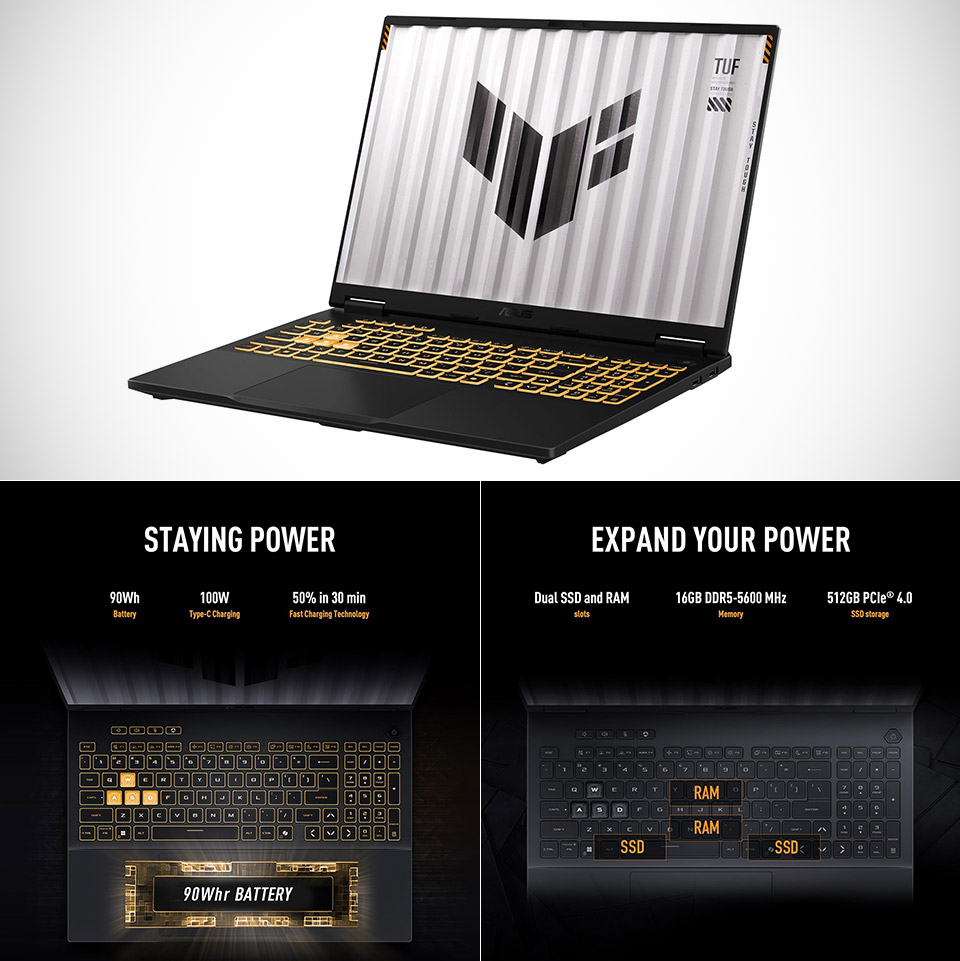
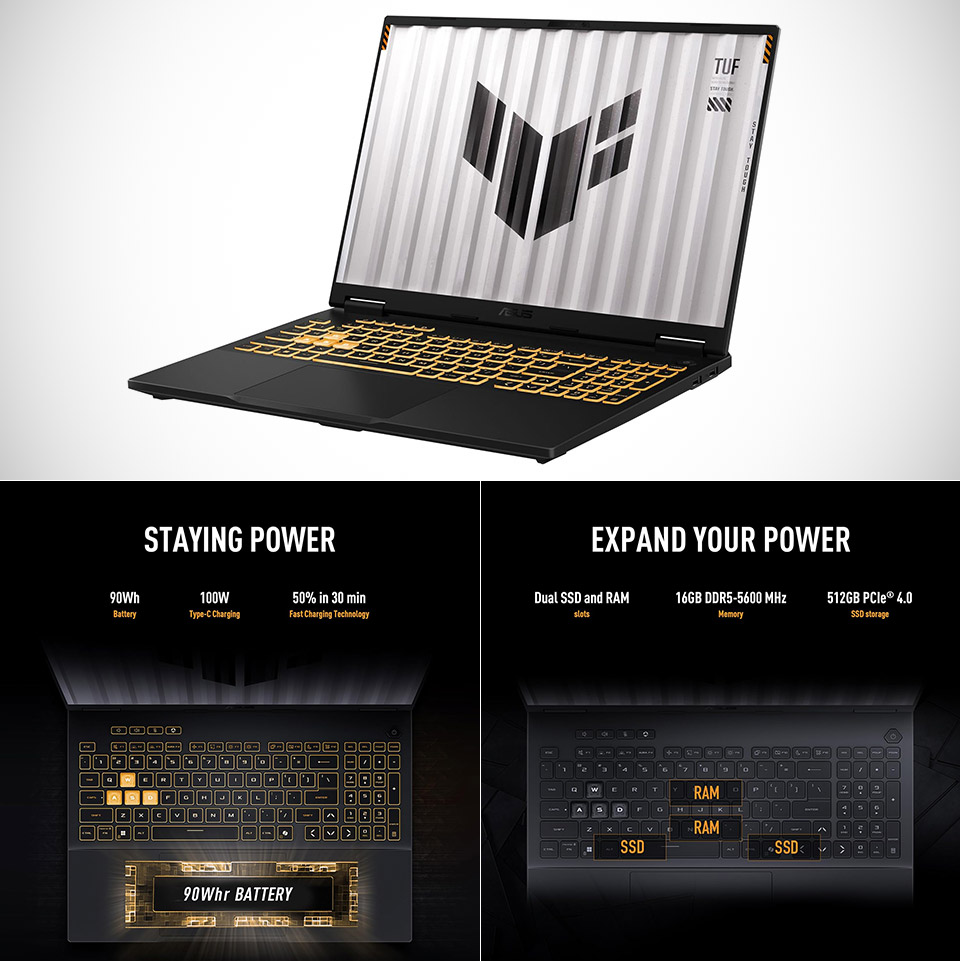
Shoppers looking for a good gaming machine these days are frequently met with component prices that continue to rise, with many top-of-the-line solutions that would have been affordable a few months ago being exceedingly expensive. Against this backdrop, the ASUS TUF Gaming F16 (2025) appears deceptively low-cost at $899.99 (was $1,299.99), as if it’s almost too good to be true.
When you launch a current game, the Intel Core i5 and the RTX 5050 graphics chip at 115 watts create an immediate impression. You can crank up the settings without worrying about it tanking – smooth frames and all, even in the most demanding parts of the game. Even with multitasking, everything runs well, with no juddering or latency.
READY FOR ANYTHING – Dive headfirst into gaming on Windows 11 powered by the Intel Core i5 Processor 13450HX and an NVIDIA GeForce RTX 5050 Laptop…
SUBTLE STYLING – The TUF Gaming F16 maintains its classic design, boasting a subtle embossed TUF logo on its sleek cover.
IMMERSIVE VISUALS – The TUF Gaming F16’s FHD+ 165Hz display with 100% sRGB color draws you into the action. Adaptive-Sync technology reduces lag…
In terms of build quality, this thing has it where it counts, as the chassis has passed all military-style endurance tests, drops, vibrations, and high temperatures, all the while being relatively lightweight for its size. Measuring around an inch thick at its narrowest point, it sports a strong metal lid and a reinforced frame, so you get a laptop that can withstand the rigors of daily use without a scratch.
Advertisement
The 16-inch panel is a beast of a screen, with a 165Hz refresh rate and a 16:10 aspect ratio, giving you a lot more vertical real estate than you’re used to, which is just what you need to get more done. Fast-paced gaming runs extremely well, while the anti-glare coating helps keep your eyes from tiring.
The battery life is actually rather impressive for a gaming laptop, thanks to its 90Wh cell. Doing simple tasks like browsing or streaming may give you several hours on a single charge, which is more than many people expected from this type of technology. With rapid charging, you can quickly top it up at the coffee shop and be ready to go for the remainder of the day.
In terms of connectivity, you’ll have all you need to handle almost any situation without having to deal with clunky USB hubs. Connect an external monitor via HDMI or USB-C, connect to a wired network via Ethernet when speed is critical, or plug in a controller or headphones via USB. Finally, upgrades are the only thing that will keep your laptop useful for years to come. You begin with two memory slots (16GB of DDR5 to get you started) and the ability to add more. A PCIe drive has 512GB of storage by default, although more can be added if necessary.
‘The transaction complied fully with applicable law,’ Meta said in a statement.
China has blocked Meta’s $2bn acquisition of AI start-up Manus. In a brief statement, the country’s National Development and Reform Commission (NDRC) said that the decision to prohibit foreign investment in Manus was made in accordance with Chinese laws. It has asked the parties to withdraw from the acquisition.
In a statement to SiliconRepublic.com, a spokesperson for Meta said: “The transaction complied fully with applicable law. We anticipate an appropriate resolution to the inquiry.” Meta did not confirm whether it would push back against the decision.
China’s decision hinders Meta’s massive AI plans to play catch-up with its Big Tech competitors. The company has spent billions to acquire businesses, hire expensive executives and realign its priorities around AI. Last week, the Facebook owner decided to cut 8,000 jobs in a bid to run “more efficiently” and “offset the other investments” it’s making.
Advertisement
The company, which has budgeted $135bn in spending this year, committed to purchasing Manus late last year, followed by the viral Moltbook platform in March for an undisclosed amount.
Manus employees and executives have joined Meta, while investors including Tencent Holdings, ZhenFund and Hongshan have already received their proceeds from the acquisition, sources have told Bloomberg.
A person familiar with the matter told the Financial Times that the NDRC’s decision was “harsh”, and that it carries a “strong intention to stop follow-on deals” similar to Manus.
“In reality, it’s hard to unwind a done deal, so it is more about verbal warnings on similar deals and the leveraging building before the Xi-Trump summit,” the source added. FT has since removed the latter half of this quote. US president Donald Trump is set to meet with his Chinese counterpart Xi Jinping next month.
Advertisement
Manus is headquartered in Singapore, but has a Chinese parent company called Butterfly Effect Technology. Meta acquired the company after a $75m funding round last April that valued it at $500m.
As per the now contested acquisition deal, Meta would operate and sell the Manus service, as well as integrate it into its own products. However, Manus would still be able to sell its subscriptions through its own app and website.
In February, the start-up launched ‘Manus Agents’, personal AI agents that perform similarly to the Austrian-made open source OpenClaw. The agents, which debuted on Telegram that month, had been expanded to WhatsApp shortly after. Meta did not confirm if China’s decision would affect Manus Agents on WhatsApp.
The Chinese Ministry of Commerce launched an investigation shortly following the Meta acquisition to determine whether it violated the country’s laws on technology exports and outbound investment. According to the rules, the Chinese government needs to approve the export of certain technologies, including AI.
Advertisement
Bloomberg recently reported that Chinese agencies told the country’s key AI firms that they should reject capital with US origins unless explicitly approved.
Updated, 4.02pm, 27 April 2026: This article was amended to mention that a quote given to the Financial Times has since been edited.
Don’t miss out on the knowledge you need to succeed. Sign up for the Daily Brief, Silicon Republic’s digest of need-to-know sci-tech news.
Released in 2014 to protect FIFA 15 from piracy and circumvention, Denuvo built a reputation as the toughest protection layer in PC gaming. Over the years, various groups and independent developers managed to break the technology on a case-by-case basis, producing cracked versions of individual games. That long-running contest now… Read Entire Article Source link
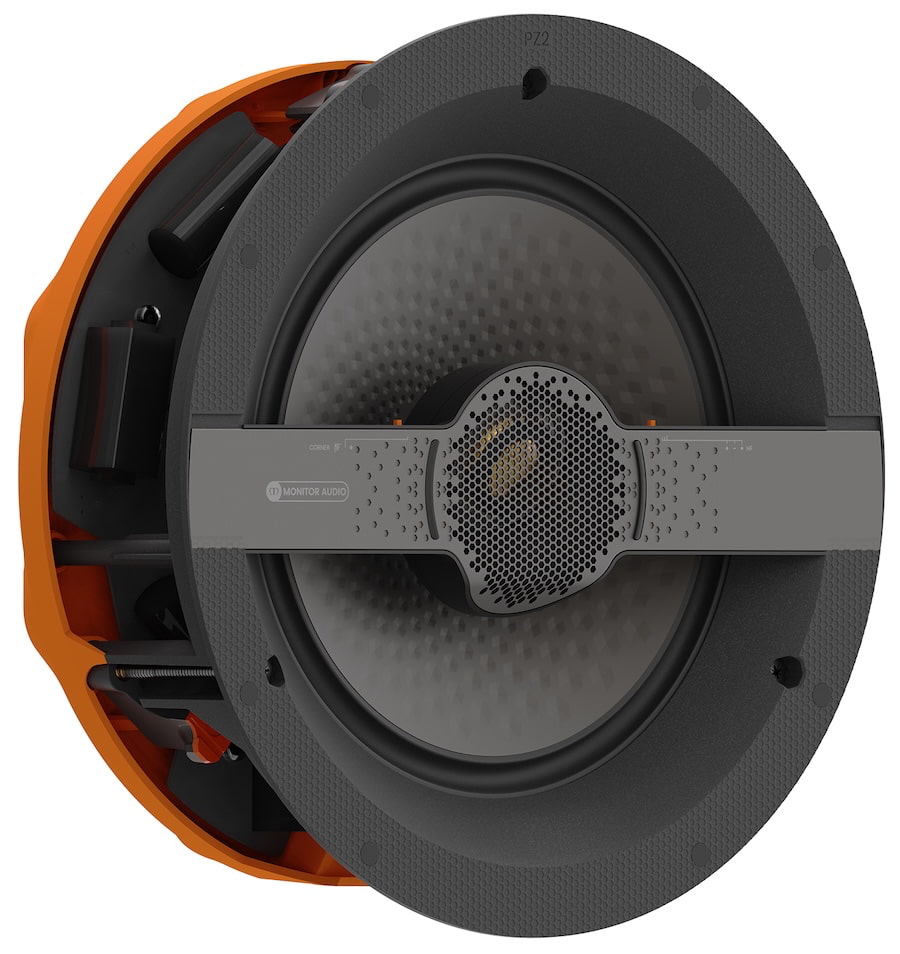
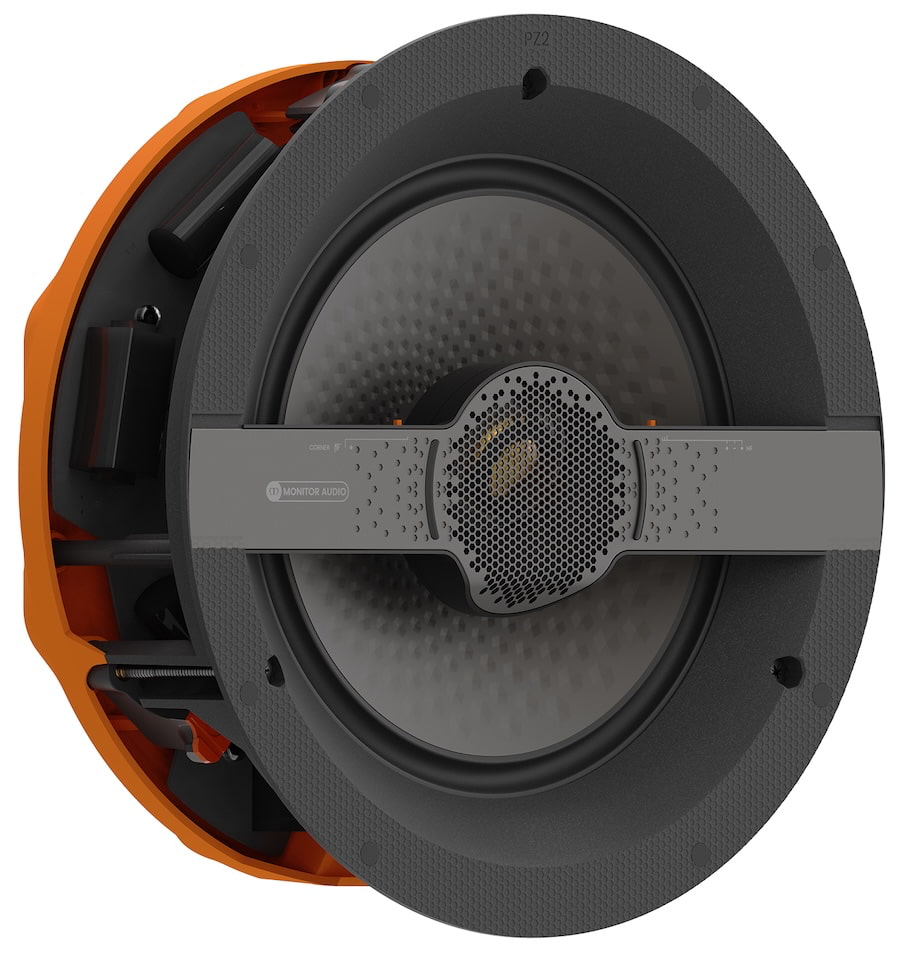
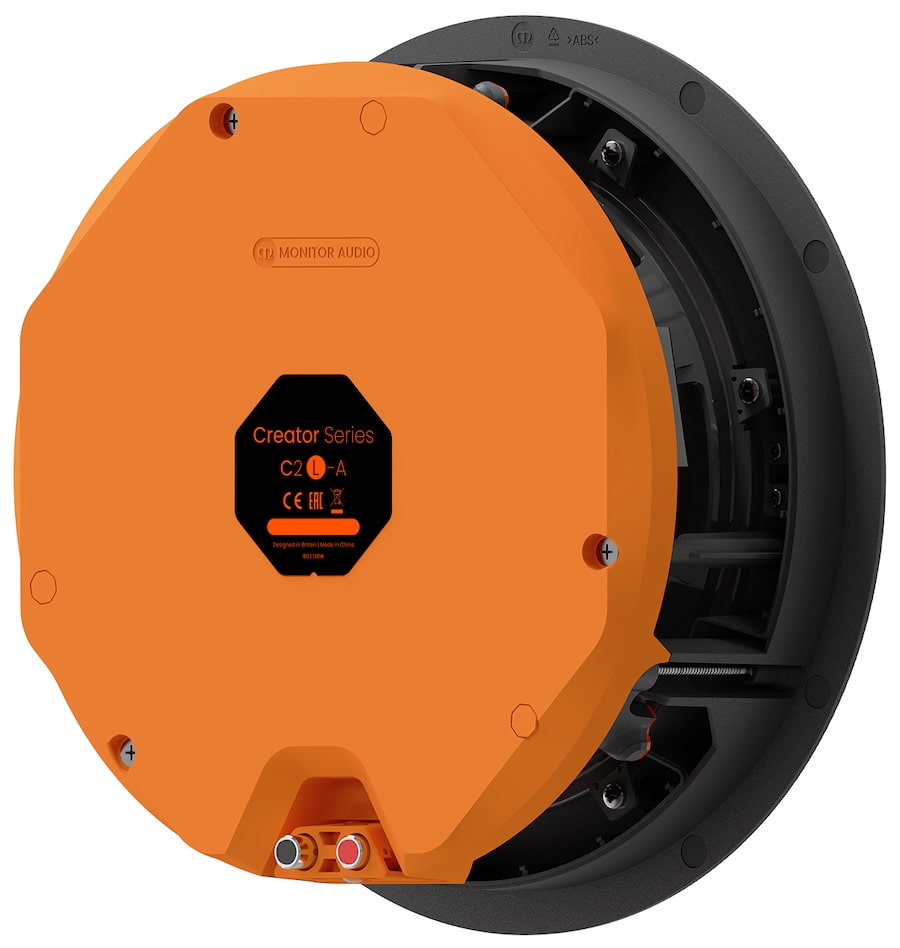
Monitor Audio has announced the Creator Series In-Ceiling C2L-A, an angled architectural speaker, which expands its C2L range. The new angled version offers more precise placement and improved performance in custom installed home audio and theater systems.
Architectural audio, specifically in-wall and in-ceiling, has quietly shifted from compromise to a legitimate high-performance category. The reasons are fairly obvious. Sound quality has improved dramatically over the past decade, closing the gap with traditional loudspeakers, while more listeners want superior audio performance without turning their living spaces into showrooms. You can hear it, you just don’t have to look at it. That alone has helped reduce a lot of the domestic pushback that tends to follow large speaker purchases.
The Creator Series itself is Monitor Audio’s fourth-generation architectural lineup, covering both in-wall and in-ceiling designs aimed at custom installation. Within the ceiling category, the range is structured into three performance tiers, giving installers and buyers flexibility depending on room size, budget, and how far down the rabbit hole they want to go.
Monitor Audio Creator Series C2L-A in-ceiling speaker
Three Tiers from Background Audio to High Performance Home Theater
Tier 1: Small, medium, and large models built for cost-effective installs, focusing on straightforward design and dependable acoustic performance.
Advertisement
Two-way configuration
C-CAM mid-bass drivers
C-CAM tweeter with UD Waveguide
Tri-Grip II
Quik-Link
Tier 2: Small, medium, and large in-ceiling models that build on Tier 1 with upgraded acoustic performance and added flexibility, including features like boundary correction and a dual-stereo C2L-T2X option for more versatile placement.
Two-way configuration
RST II mid-bass drivers
C-CAM tweeter with UD Waveguide II
Controlled Performance
Tri-Grip II
Quik-Link
Tier 3: High-performance medium and large in-ceiling models that build on Tier 2 with further acoustic refinement and advanced tuning options, including boundary compensation, mid/high-frequency cut and boost, and more sophisticated driver technologies for greater placement flexibility.
Three-way configuration
RDT III bass drivers
IDC II coaxial mid/tweeter drivers with UD Waveguide II
Controlled Performance
Tri-Grip II
Quik-Link
Pro Tip: Monitor Audio brings angled in-ceiling design down to Tier 2, adding installation flexibility and performance value without stepping up to Tier 3.
Why the C2L-A Is a Smart In-Ceiling Option
The C2L-A is part of the Tier 2 in-ceiling line-up for situations where standard ceiling speakers lose focus. With its angled design, it brings better clarity and direction whether it’s handling height duties in a Dolby Atmos system or anchoring a more precise multi-channel music setup.
The Basics
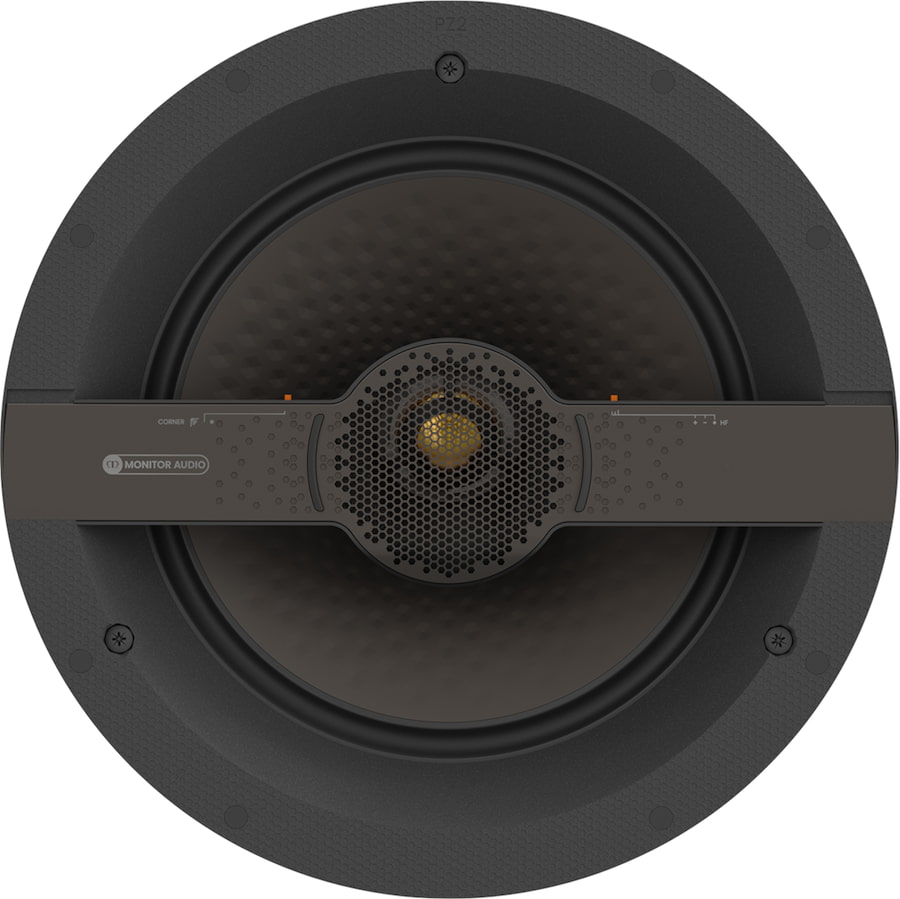
The C2L-A pairs a 9-inch C-CAM bass-mid driver with RST II cone geometry and a 1.25-inch C-CAM gold dome tweeter. The tweeter is mounted on a central bridge at the acoustic core of the driver and angled at 25 degrees, helping steer high frequencies toward the listening position instead of firing straight down into the carpet.
Acoustic Performance
The C2L-A provides a suite of intelligent installation features and advanced acoustic technologies, including High-frequency (HF) adjustment and boundary compensation. This enables added flexibility in speaker placement, as well as allowing it to be ‘tuned’ to the room to achieve the desired performance. This is optimal for rooms where desired placement might be difficult.
C-CAM
At the core of the C2L-A is a 9-inch C-CAM (Ceramic-Coated Aluminium/Magnesium) driver. It’s light, rigid, and responsive, which translates into lower distortion and cleaner, more detailed sound without adding unnecessary weight or sluggishness.
Advertisement
Advertisement. Scroll to continue reading.
RST II Cone Geometry
This isn’t just cosmetic. The C2L-A uses RST (Rigid Surface Technology) II cone geometry—a hexagonal dimpled structure designed to increase stiffness and control flex across the driver. The goal is straightforward: reduce breakup and distortion so the driver stays more linear under load. In practice, that translates into tighter low-end control, cleaner midrange, and better overall clarity.
Gold Dome Tweeter
A newly designed bridge houses the angled C-CAM 1.25-inch gold dome tweeter, set at a precise 25-degree angle to focus high-frequency energy directly into the desired listening area with precise accuracy.
Installation
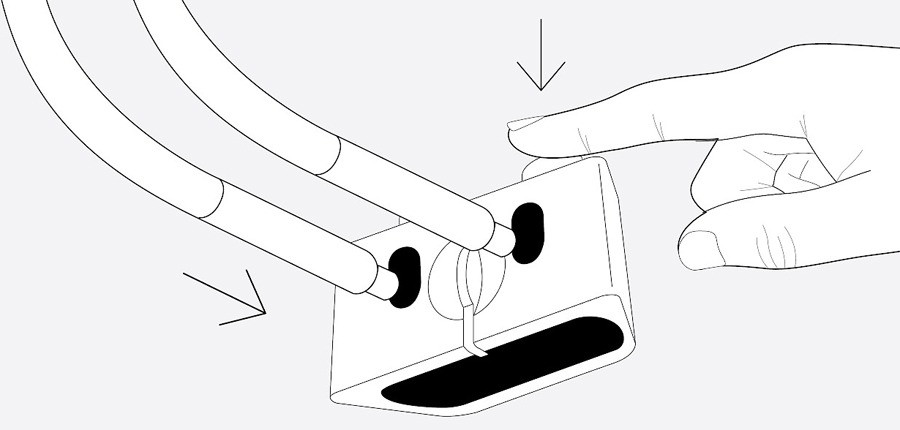
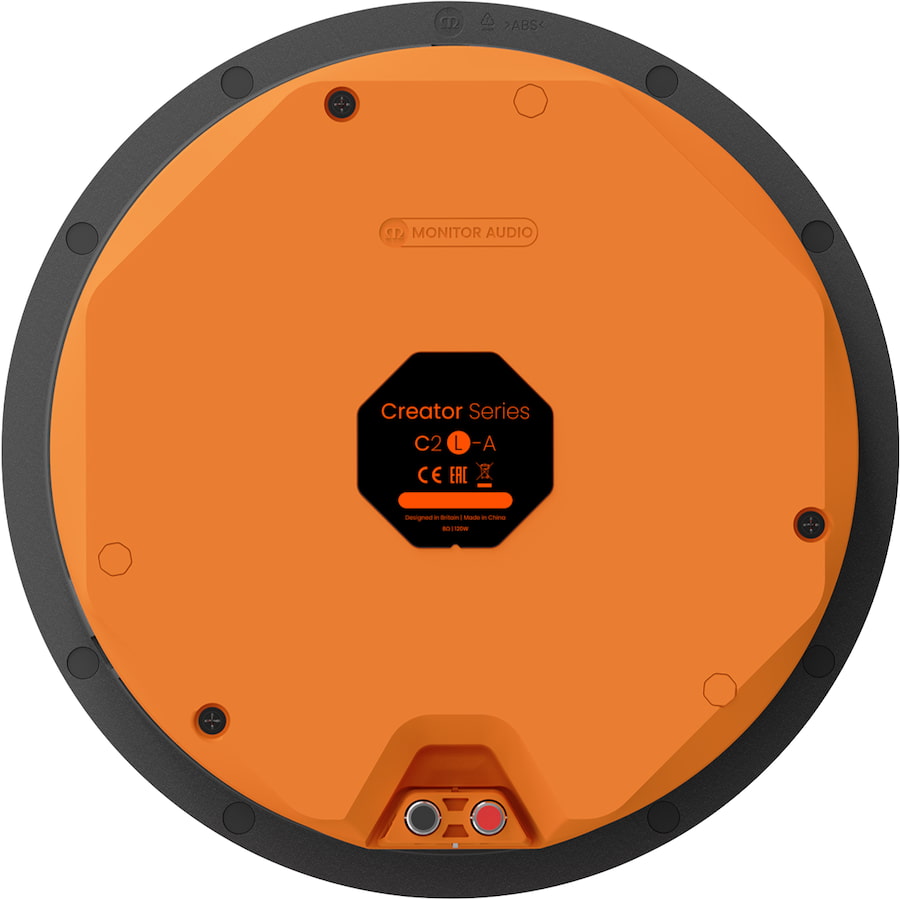
Monitor Audio has engineered the C2L-A for easy installation. The speaker features Monitor Audio’s patent-pending Quik-Link speaker cable connector, which supports ease and speed of installation. The Tri-Grip II dog-leg fixings have been re-engineered for a more robust, reliable, and secure fit. The “dog-leg” mechanism allows the C2L-A to be easily secured to plasterboard or dry-lined walls and ceilings.
Advertisement
Design
The C2L-A requires a 248mm (9.76-inch) cut-out, keeping the visual footprint relatively low for its size. It uses near-flush magnetic grilles available in black or white, with an optional square grille for more flexibility in matching room design.
Maximum Peak SPL* (single speaker @ 1m Z-Weighted)
117 dB
Continuous Power Handling (RMS into Nominal Impedance, Pink Noise with 6dB Crest Factor)
120 W
Recommended Amplifier Power (RMS into 8 OHM, Music Signal)
60 – 240 W
Crossover Frequency
LF/HF: 2 kHz
Mounting Depth
99 mm (37/8″)
Cut-Out Hole Diameter
248 mm (93/4″)
External Dimensions (Including Grille (HWD)
278 x 278 x 103 mm 1015/16 x 1015/16 x 44/16 inches
Weight (each)
2.5 kg (5 lb 8 oz)
Pre-Construction Bracket
CL-B
Cabinet Finish
Matte black & Orange & Bronze
Sold As
Single Unit with CL-Round Grille (white)
Corner Switch
On/Off
HF Switch
– /0/ +
Warranty
Lifetime
The Bottom Line
In-wall and in-ceiling speakers aren’t the compromise they used to be, and Monitor Audio clearly understands where the category is headed. The C2L-A stands out because it brings an angled, more directional approach down to a Tier 2 price point, something that used to require stepping into more expensive territory. That matters if you actually care about where the sound lands, not just that it exists somewhere above your head.
That said, this is not a category with a lack of options. Brands like DALI, Focal, Theory Audio Design, KEF, and Q Acoustics are all taking this space seriously, and in some cases, pushing it hard. You still need to treat this like any other speaker purchase because once it’s in the ceiling, it’s not exactly a quick swap.
The C2L-A makes the most sense for listeners building a clean, visually unobtrusive system who still want control over imaging and placement—whether that’s for Dolby Atmos height channels or a more refined multi-room setup. Just don’t wing the install. Cutting holes first and asking questions later is a great way to learn expensive lessons.
Price & Availability
The Monitor Audio Creator C2L-A will be available in September 2026 for $750 USD per piece (£550 / €675) from Authorized Dealers. All Creator Series in-ceiling speakers come with white grilles. For those who want to ‘hide’ or ‘blend’ their integrated speakers with darker décor, black grilles are also available as an optional accessory in round and square designs. For more information, visit: monitoraudio.com.

























































You must be logged in to post a comment Login