
Politics
Hope has been drained from Britain’s housing estates


Britain has been in the grip of a housing crisis for over a decade at least. During that time, the cost of a flat or a house has continued to rise while wages have fallen in real terms. The result has been increasing rates of homelessness and housing poverty. In the words of a previous piece I wrote for spiked, the housing crisis is shredding the social contract.
The stakes are incredibly high for working-class people on low incomes and in insecure work. Too many people today are worried about just surviving in ways not seen since before the Second World War. I know families who are eating from food banks so that they have enough money to pay the rent.
As it stands, people’s only hope for affordable housing is social housing, of which there is a severe shortage. Houses have not been built at the rate we need for years. To compound the shortfall, over two million council houses have been sold off since Margaret Thatcher’s right-to-buy policy was introduced in 1980. Over 40 per cent of those former council houses are now in the hands of private landlords, who are renting them out at the market rate.
A combination of a lack of new homes being built and a rising population, thanks largely to immigration, has meant that social-housing eligibility is increasingly restricted to the most vulnerable and those whom the local authority has a legal duty to house. Even with these restrictions in place, the social-housing waiting list stands at over 1.3million households, many of whom will have to wait years for a home.
Keen to reduce their individual waiting lists, local councils have sought a bureaucratic fix. They have been changing their social-housing eligibility criteria, from setting new income thresholds to raising the age at which children of the same sex are entitled to separate bedrooms. In Mansfield and Ashfield in Nottinghamshire, two economically deprived areas blighted by low-paying work, any single person or a couple whose annual earnings are over £25,000 (or £34,000 for a family) or with £6,000 or more in savings, will no longer be eligible for social housing. Instead, they will need to find private rented accommodation, which in Nottinghamshire can be twice the cost of a council house.
Mass council-house building programmes were undertaken during and especially after the Second World War. Their purpose was to ensure that working-class people had access to safe, secure, good-quality and affordable housing. There was another wave of social-housing construction in the 1960s, when decrepit and unsafe housing, mostly owned by private ‘slum landlords’, was pulled down and replaced by council estates. When these estates were originally built, the houses were modern. They had indoor bathrooms, hot water heating systems and gardens. There have been many books published and films and documentaries made about this remarkable time – a time when working-class people were afforded the dignity of clean and modern homes, from Sheffield’s Park Hill to Thamesmead in south London through to St Ann’s and the Clifton Estate in Nottingham.
Postwar council housing was a source of pride for working-class people and for the country overall. Estates had housing officers who would inspect gardens and give warnings to anyone keeping an untidy home.
This is a far cry from council estates today. They are now places where only the poorest live, and where accommodation is limited to either those with social problems or, as in Mansfield and Ashfield, those who don’t work.
This is a far cry from the council estate on which I grew up in Nottinghamshire. Both of my parents worked, as did everyone else’s parents on my estate. We didn’t have much, but we had the security that a permanent home can give you.
It’s a very different landscape today. Local authorities and governments of all colours have ruined Britain’s social housing. They have turned estates into hopeless places, and left millions at the mercy of private landlords. The policy must change. We need to build far more safe and secure housing. And it needs to be made available not just to the unemployed, but to those who earn a living, too.
The failure to provide plentiful, quality and affordable housing for working people remains a damning indictment of the British state.
Lisa McKenzie is a working-class academic.



Elizabeth de Jong, CEO
| Fuels Industry UK
As conflict in the Middle East sharpens the UK’s energy security concerns, ministers should use this year’s Finance Bill to extend the Carbon Border Adjustment Mechanism to refined products and protect vital domestic refining capacity
Energy security is at the top of the political agenda as a result of the conflict in the Middle East. This crisis is a reminder that, in a more uncertain world, the United Kingdom must become more resilient to external pressures and shocks. That is especially true for fuels.
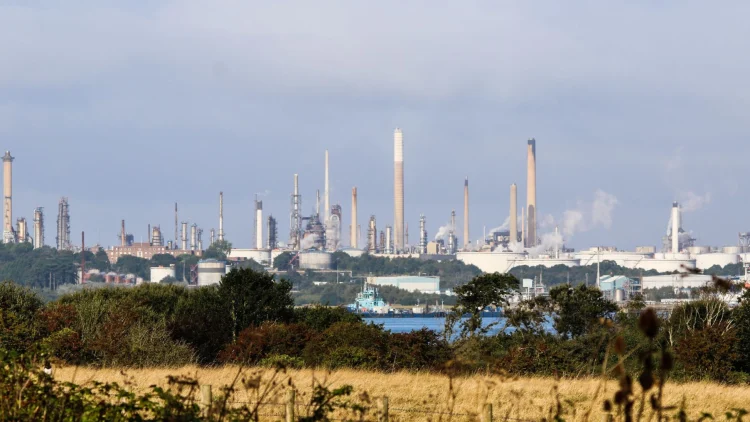
The UK fuels sector provides 47 per cent of the UK’s final energy consumption. It supports transport, freight, aviation and manufacturing, and provides hundreds of other non-fuel products that feed chemicals, building and other sectors. Domestic refining capacity has fallen from nine refineries in 2000 to four today, with two closures in 2025 alone. Import dependence has grown sharply.
Once domestic refining capacity is lost, it is almost impossible to replace.
Resilience is not simply about whether imports are available in stable times. It is about whether the UK has the right balance of domestic capability, flexibility and supply diversity when international markets tighten or global tensions rise. The ability to refine crude oil provides stronger protection for British supply.
To preserve our energy resilience, the UK needs to level the playing field for domestic refiners so they can be globally competitive. On carbon costs, this can be achieved through the introduction of a Carbon Border Adjustment Mechanism (CBAM) that includes refined products.
UK refiners face carbon costs that many international competitors do not. That creates a clear imbalance, particularly against producers in the United States, the Middle East and India. Other countries have understood that if carbon costs rise too far ahead of competitors, investment falls and domestic capacity is put at risk. The UK should take the same practical approach.
Government has already recognised the issue. In the Autumn Budget, it committed to explore the inclusion of refined products within the UK CBAM. But the sector has been told that it has been turned down for 2028, with no guarantee of a later date.
At such an important time, that is a blow to an industry that underpins critical infrastructure and long-term energy security.
But it is not too late.
The government still has it within its gift to implement this policy by 2028, should it choose to do so, by making changes in this year’s Finance Bill that would avoid further job losses and a weakening of UK energy security.
This is not about abandoning net-zero; the CBAM supports climate ambition. It is about ensuring policy works in practice and in the UK interest. If domestic production is displaced by imports, it does not eliminate demand or reduce global emissions. It simply exports production, and the associated carbon, as well as jobs, abroad.
A CBAM would help prevent that.
It would support investment, protect domestic capability and ensure the UK’s climate ambition strengthens, rather than weakens, long-term energy security.
Now is the time to act.
Politics
Politics Home Article | Prioritising prevention: a proactive approach to health and wellbeing


Anthony Houghton, Group CEO
| Holland & Barrett
The UK needs to shift from a “reactive repair” health culture to helping people to understand their bodies, establish good health and wellbeing habits and avoid illness, says Holland & Barrett’s new report
Regular exercise, healthy eating, quality sleep and effective stress management are the foundations of long-term good health.
But while most of us recognise this, our good intentions don’t always translate into actions.
New research carried out by Ipsos for Holland & Barrett, the UK’s leading health and wellness company, shows that the UK has a “reactive repair” health culture – where treatment is prioritised over prevention. Despite widespread awareness of the benefits of establishing good health and wellbeing habits, most of us only engage with our health when something goes wrong.
Holland & Barrett’s report, From Reactive Repair to Proactive Maintenance: The State of the Nation’s Attitudes to Health 2026, reveals that 78% of the public only visit the doctor when “absolutely necessary”. Although there is strong evidence for the benefits of physical activity and good nutrition, only half (50%) say they proactively manage their health and wellbeing.
However, the report says that the intention to change is definitely there – 59% of those questioned plan to focus on their health and wellbeing in the coming year while 53% say they have taken vitamins and supplements in the last 12 months as a preventative approach to their health and wellbeing.
Even so, the barrier to taking proactive steps to improving our health is not down to awareness alone. Poor sleep, low energy, time pressures, cost, uncertainty about where to start and regional differences in access to healthcare deter us from acting sooner rather than later.
“The implementation gap captures the disconnect between prevention in principle and prevention in practice,” says the report. “Delivering the prevention agenda at scale cannot rest solely within formal clinical settings. It requires a whole-system approach that includes trusted, non-clinical touchpoints where people can seek advice.
“Many individuals experience low-level symptoms, uncertainty or minor concerns long before they present to the NHS. Reaching people at this earlier stage – when issues are still manageable and behavioural change is possible – is essential to preventing escalation and reducing cumulative pressure across the health system.”
MPs have welcomed Holland & Barrett’s focus on establishing good health and wellbeing habits.
 resized.jpg) “As part of our 10 Year Health Plan, the government is shifting the focus of health care in this country from reacting and treating illness to preventing it in the first place,” says Health Minister Zubir Ahmed, who was a transplant and vascular surgeon before entering politics and has continued to practise.
“As part of our 10 Year Health Plan, the government is shifting the focus of health care in this country from reacting and treating illness to preventing it in the first place,” says Health Minister Zubir Ahmed, who was a transplant and vascular surgeon before entering politics and has continued to practise.
“That means spotting conditions earlier and tackling the biggest causes of disease, which will help people to stay well for longer and reduce pressure on our NHS.
“We’re already rolling out more health checks, expanding mental health support, tackling junk food advertising and creating the first smoke‑free generation. Transforming the nation’s health will take a truly whole-of-society approach, so it’s good to see businesses like Holland & Barrett supporting that mission.”
Stuart Andrew, Shadow Secretary of State for Health and Social Care, wants to see a stronger emphasis on early intervention and helping people to take control of their health earlier.
“These findings expose a simple truth,” he says. “Our health system is too often reactive. That must change if we are serious about improving both quality of life and long-term outcomes.
“Prevention must be made practical and accessible. Too many people face barriers like confusion or lack of clear support and that is where the gap between intention and action persists.
“We need a stronger focus on early intervention, with the NHS working alongside trusted partners in the wider health ecosystem to help people take control of their health earlier and more easily.”
Meanwhile Helen Maguire, the Liberal Democrats’ Spokesperson for Primary Care and Cancer, says: “Britain is living longer but sicker, and this report lays bare why. We have a system built on reactive repair rather than genuine prevention. As someone who has seen first-hand the transformative power of movement and early action on health, I know the NHS cannot and should not have to close this gap alone. Prevention and primary care must be symbiotic, and that means meeting people in their communities, well before they reach the GP’s door.”
Dr Simon Opher, Chair of the Health All-Party Parliamentary Group, spent 30 years as a GP before becoming an MP and also believes that investing in early support and prevention is vital.
“The NHS is probably more accurately described as a national illness service,” he says. “Although each successive government flags prevention very few changes are made.
“I am working to produce a national strategy for the prevention of mental health with the Department of Health and Social Care. Looking at evidence, it is now clear, for example, that the Sure Start work the last Labour government introduced, which was scrapped in 2012, was incredibly effective at reducing and preventing health inequalities and improving child mental health. But this is proven 15 years after it was scrapped.
“We need to do what we know will work and make sure that we resource upstream left shift work to reduce demand on the NHS. This work simply can’t wait. Otherwise, our illness service will keel over completely because of the workload.”
 resized.jpg) The Holland & Barrett report cites a number of experts in the field of nutrition and behaviour change, all of whom back the need to shift the NHS’s focus from treating sickness to preventing ill health.
The Holland & Barrett report cites a number of experts in the field of nutrition and behaviour change, all of whom back the need to shift the NHS’s focus from treating sickness to preventing ill health.
“We have successfully engineered longevity – keeping people alive for longer – but we have failed to engineer vitality,” says Professor John Deanfield, Professor of Cardiology at University College London. “The current model is effectively ‘disease care’, intervening only when pathology is acute, rather than ‘health care’, which addresses root causes decades before symptoms manifest.”
Professor Anne-Marie Minihane, Professor of Nutrigenetics and Head of Nutrition and Preventive Medicine at the University of East Anglia’s Norwich Medical School, points out that the challenge isn’t just what to recommend – but how to make it achievable and relevant.
“Health messaging often assumes infinite time, resources and energy, but these are luxuries most don’t have,” she says. “We need quick, affordable solutions that acknowledge reality – practical swaps for budget-conscious families and simple changes that don’t require complete lifestyle overhauls, with appropriate use of select good quality supplements having a role to play in groups such as time-poor professionals and those with reduced appetite or other dietary restrictions.”
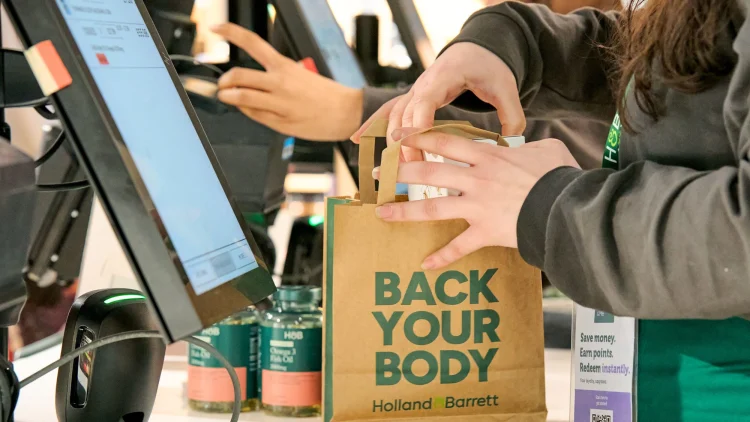
With advice like this in mind, Holland & Barrett has launched Back Your Body, a national campaign to encourage people to take a more proactive approach to their health and wellbeing.
The campaign is a response to a broader challenge facing the UK population. People are living longer but many are spending those extra years in poor health, with preventative action often delayed until problems arise.
Back Your Body aims to change this mindset by helping people to understand their bodies much earlier, prioritise their health and wellbeing and avoid illness. It recommends a combination of retail initiatives, including wellness check-ins, trained advisers and science-led interventions on the high street.
For example, Holland & Barrett, which has more than 150 years of expertise in this area, offers free and easy access to qualified Wellness Champions who have completed more than 500,000 hours of UK-accredited wellness training. They are available to advise people online or in person on issues such as sleep, energy, stress, anxiety and joint, bone or muscle problems.
Recognising that women have specific needs, the company supports the Women’s Health Strategy, a 10-year government plan to improve the health and healthcare experiences of women and girls in England. Holland & Barrett has more than 600 trained women’s health coaches who offer free, confidential and personalised support for women on a variety of issues, including menopause, menstrual health and hormone health.
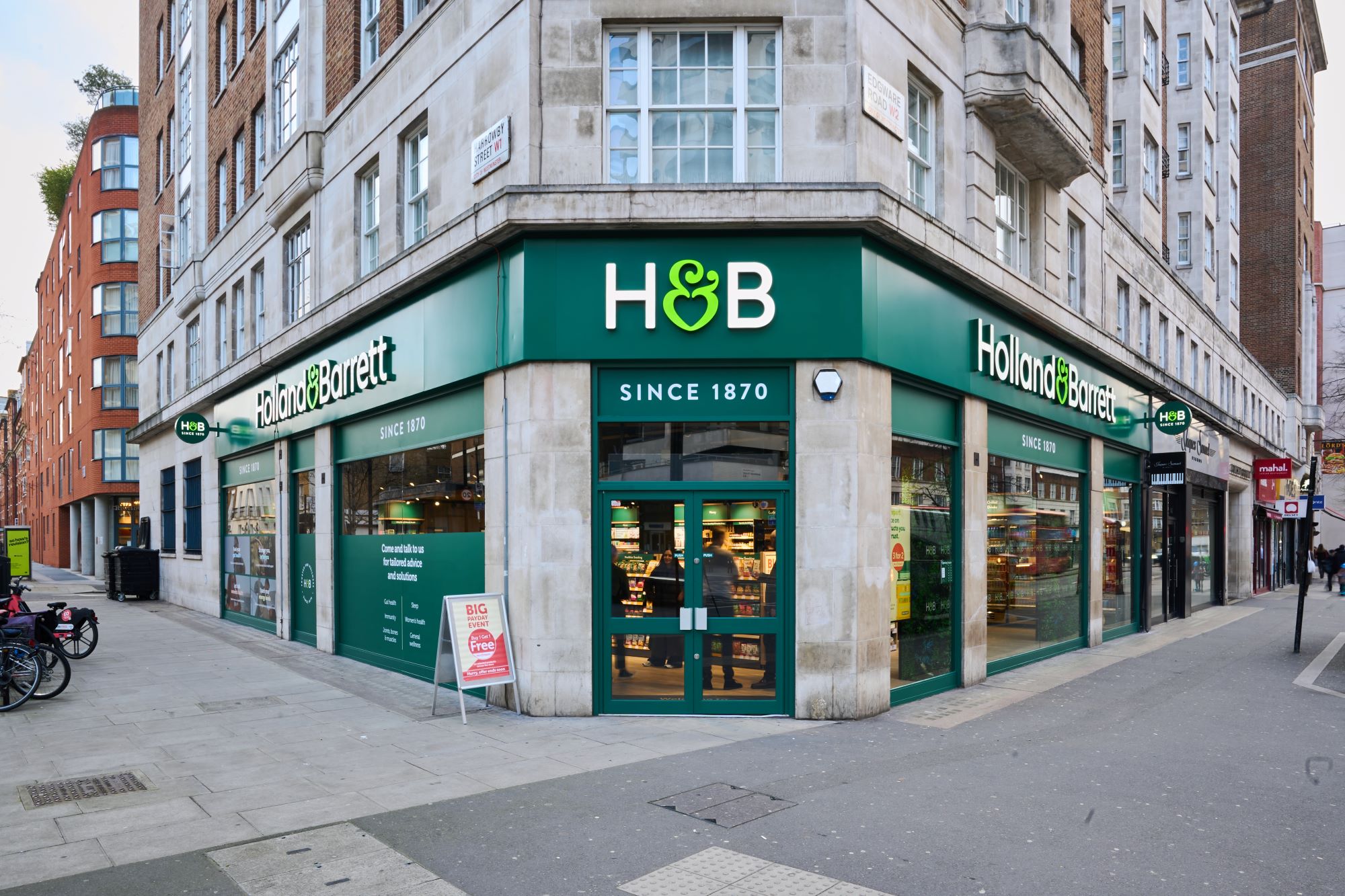 Holland & Barrett firmly believes that closing the prevention gap in this way will require health and wellness retailers to be recognised as a vital part of the wider healthcare value chain.
“As a business committed to science-led wellness, we believe accessible, credible support matters most,” says Dr Abbie Cawood, Science Director at Holland & Barrett.
“Prevention cannot rely solely on traditional healthcare settings. People need practical advice, trusted guidance and simple interventions, available when and where they’re most ready to act.
“The opportunity now is to close the implementation gap, the space between wanting to be healthier and knowing how to take the next step. Our call to action is for policymakers, healthcare leaders and trusted community partners to work together to make preventative health visible, actionable and available to everyone.”
Read the report: From Reactive Repair to Proactive Maintenance: The State of the Nation’s Attitudes to Health 2026

Parliamentarians and bereaved families will come together in Parliament on 28 April to mark Workers’ Memorial Day. And they’ll remember those who have lost their lives because of work.
The All-Party Parliamentary Group on Occupational Safety and Health will host the event. It will include contributions from:
- Prof Julia Waters, sister of the late headteacher Ruth Perry, who took her own life following an Ofsted inspection.
- Fiona and Barry, who worked alongside murdered transport worker Jorge Ortega.
- Anne Davies, widow of firefighter Jeff Simpson, who died from cancer caused by chemicals he was exposed to in burning buildings.
- Kate Bell, assistant general secretary, Trades Union Congress.
Workers’ Memorial Day is an international day of remembrance, backed by the United Nations, for those who have died due to work-related injury or illness.
The parliamentary memorial will bring together MPs, peers, trade unions, families and workers affected by preventable workplace deaths.
MPs and peers in the All-Party Parliamentary Group have raised serious concerns about the capacity of the Health and Safety Executive. This department has seen its funding reduce by almost half since 2010.
These cuts have limited its ability to carry out proactive inspections and enforcement. And this is increasing the risk that unsafe employers go unchecked.
At the same time, work-related mental ill health is rising, yet there are significant gaps in how the system responds. The Health and Safety Executive does not currently investigate work-related suicides, meaning potential systemic causes go unexamined.
Policymakers are calling for this to change, so that work-related suicides are treated with the same seriousness as other workplace deaths.
They are also calling for restoration of the regulator’s pre-2010 budget. This would help it respond to modern workplace risks, including the growing crisis of violence at work.
Workers’ Memorial Day a chance to ‘confront failures’
Ian Lavery, chair of the All-Party Parliamentary Group on Occupational Safety and Health, said:
Workers’ Memorial Day is about remembering those who have lost their lives because of work, but it is also about confronting the failures that continue to put workers at risk today.
There is a growing crisis of violence at work. When 8 in 10 public-facing workers are experiencing abuse, it is clear that far too many workers are being left without the protection they deserve.
We are also seeing rising levels of work-related mental ill health, yet work-related suicides are not even investigated by the Health and Safety Executive. That cannot be right. These deaths must be recognised, properly investigated, and used to prevent future tragedies.
At the same time, the Health and Safety Executive has had its funding cut in half over the last decade. That has real consequences: fewer inspections, weaker enforcement, and less capacity to deal with growing risks like stress and violence.
If we are serious about protecting workers, government must act — by restoring funding to the regulator and expanding its capacity. No one should lose their life or their health simply for doing their job.
Julia Waters will say:
Work-related suicides are not treated with the same seriousness as other workplace deaths. Until they are recognised, investigated and acted on, the risk of future deaths remains.
Featured image via the Canary
By The Canary

Keir Starmer is set to see off a Tory bid to have him investigated by a Commons committee over his handling of the Peter Mandelson scandal.
The prime minister is accused of misleading parliament by claiming that “due process” was followed in the shamed former Labour peer’s appointment as the UK’s ambassador to Washington.
It emerged two weeks ago that UK Security Vetting (UKSV) had in fact recommended Mandelson not be given clearance to take up the role.
He was eventually cleared for so-called “developed vetting” by Sir Olly Robbins, who was the top civil servant in the Foreign Office at the time.
Starmer controversially sacked Robbins for not telling him about the UKSV findings.
In a bombshell committee appearance last week , Robbins said there was “constant pressure” from No.10 for Mandelson’s appointment to be approved – a claim denied by Starmer at prime minister’s questions the following day.
On Tuesday, MPs will debate and vote on an attempt by the Conservatives for Starmer to be referred to parliament’s Privileges Committee over the row.
However, Labour MPs have been told by the party’s whips that they must vote against the move, meaning it is all-but certain to fail, given the party’s huge Commons majority.
A government minister told HuffPost UK: “We needn’t whip heavily. The Parliamentary Labour Party is pretty united on this. It will be a damp squib.”
Starmer told a meeting of the PLP on Monday evening that the vote was “a political stunt” by the Tories just over a week out from the May 7 elections in England, Scotland and Wales.
He said: “Tomorrow is pure politics and we need to stand together against it.”
In a plea for Labour MPs’ support, the PM described the allegations that he misled parliament as “totally baseless” and “absolutely ridiculous”.
“It’s important to see the bigger picture here,” he said. “They want to stop this Labour government. And we know why.
“Because we are the first government for generations to take key parts of the public realm back into public ownership. They don’t like that, but we’re doing it.
“The first government for generations to give rights and power to workers, to renters, to the less fortunate. The first government for generations prepared to stand against wealth interests, to raise money and put that into public services and fighting child poverty. They don’t like it, they said they’d reverse it.
“We have a mandate to do all of those things. And they are not going to stop us.”
He added: “When we stick together and fight together we are so much stronger.”
Meanwhile, the PM’s former chief of staff, Morgan McSweeney, will on Tuesday give evidence on the Mandelson affair to parliament’s Foreign Affairs Committee.
Sir Olly Robbins’ predecessor as permanent secretary at the Foreign Office, Sir Philip Barton, will also be quizzed by the committee about Mandelson’s appointment.
Subscribe to Commons People, the podcast that makes politics easy. Every week, Kevin Schofield and Kate Nicholson unpack the week’s biggest stories to keep you informed. Join us for straightforward analysis of what’s going on at Westminster.

America is being “humiliated” by Iran over negotiations to end the war in the country, Germany’s chancellor has declared.
Friedrich Merz said he “can’t tell what strategic exit the Americans are pursuing” exactly two months after the conflict began.
A ceasefire is currently in place, but there is little prospect of an imminent peace deal being reached.
Meanwhile, the key waterway the Strait of Hormuz remains closed, while the US is blockading Iran’s ports.
Donald Trump last week called off planned peace talks which had been due to be held between American and Iranian officials in the Pakistani capital, Islamabad, insisting they were a waste of time.
Posting on Truth Social, he said: “If they want to talk, all they have to do is call.”
But Merz said: “At the moment I can’t tell what strategic exit the Americans are pursuing, especially since the Iranians are obviously negotiating very skilfully, or perhaps very skilfully refusing to negotiate, and are letting the Americans travel to Islamabad only to send them back home empty-handed.
“An entire nation is being humiliated by the Iranian leadership, especially by these so called Revolutionary Guards.”
Lyse Doucet, the BBC’s highly-respected chief international correspondent, has said any peace deal “will take a long time” to be reached because “neither side wants to back down”.
Subscribe to Commons People, the podcast that makes politics easy. Every week, Kevin Schofield and Kate Nicholson unpack the week’s biggest stories to keep you informed. Join us for straightforward analysis of what’s going on at Westminster.

While there are plenty of magical moments associated with raising young children – from the first time they say mama or dada, to taking their first steps, and telling you they love you – let’s be real: it’s no walk in the park.
There’s a good reason some parents liken it to being in the trenches. There are times when it’s mundane or difficult to stay afloat – especially in the depths of sleep deprivation, relationship struggles, or physical or mental illness.
You are trying to keep little kids alive, while also raising them to be happy, healthy and not left with any kind of trauma. You also might be trying to hold down a job (or five), pay the bills, and keep on top of the endless list of life admin that comes with running a household. It’s really no wonder some of us are out here forgetting to drink water.
You don’t want to wish it away, but equally it’d be nice to know it does, in fact, get a bit easier. Or at the very least there are moments on the horizon that make those tougher days where you just want to go and cry in a corner worth it.
Recently, paediatrician Dr Lauren Hughes took to Threads and asked parents of older kids to share some of their best “just wait until” stories.
Kicking things off, she said: “Just wait until you can colour with your kids with the GOOD markers because you no longer worry about them eating the tips or scribbling on the wall.”
Here’s what other parents had to say in response…
1.
2.
3.
4.
5.
6.
7.
8.
9.
10.
11.
12.
13.


On Sunday 26 April, the Green Party’s Hannah Spencer complained that MPs stank of booze in parliament. This served as a reminder for many of us that MPs are provided with subsidised alcohol at work. For belligerent MPs and journalists, however, Spencer’s comments served as a rallying call to defend their god-given right to drink at work:
A choice for Labour MPs before a big set of elections to go out campaigning on:
"MPs should be able to drink alcohol before voting because they work long days."
They're really revealing themselves, aren't they? Time to replace Labour.https://t.co/0qbagSvIYp https://t.co/lIxtYGEYvo
— Zack Polanski (@ZackPolanski) April 26, 2026
Binge Britain (for MPs in parliament, anyway)
This is what Spencer had to say on the matter:
"You can smell the alcohol when people are in between votes."
Green MP Hannah Spencer tells us what Westminster is REALLY like.
The full interview is live on YouTube, and as a podcast here: https://t.co/s4mKAc0xku pic.twitter.com/RcikszDxwQ
— PoliticsJOE (@PoliticsJOE_UK) April 26, 2026
For reference, the parliamentary estate has more bars than some town centres:
Back in 2022 Sophy Ridge reported that there are 6 bars in the Commons and the Lords and 30 in the parliamentary estate!pic.twitter.com/XQ8Ja498WP
— Saul Staniforth (@SaulStaniforth) April 26, 2026
Booze is also subsidised, as a 2023 petition on 38 degrees highlighted:
Did you know, alcohol for MPs and Lords is subsidised in the Houses of Parliament by taxpayers money. Last year, almost £500,000 was spent on drinks for those working in the parliamentary estate including 46,562 pints of beer and 2,800 bottles of bubbly.
Apparently expecting MPs on £98k salary to stay sober while making huge decisions for the country is now controversial. https://t.co/6lCSiYKh2q
— Jonny Mao (@JonnyMao__) April 26, 2026
While Spencer was talking specifically about MPs drinking at night between votes, it’s important to note these bars don’t magically disappear during the day. If your place of work had a bar with cheap booze, wouldn’t you feel like drinking was essentially encouraged?
Labour MPs together
Getting to the backlash, here’s what Labour MP Luke Charters had to say:
Breaking news: MPs are human and sometimes have a drink.
Classic clickbait farming

MPs work long days for constituents, and yes, sometimes share a drink in the evening with colleagues.
Last week I was scandalously spotted with… an alcohol-free pint or two between votes

But sure, let’s talk about that instead of the Greens’ wacky policies.
Trying to distract us, maybe?

There’s so much to get to here.
- The issue isn’t that they “sometimes have a drink”; the issue is they often have several drinks – something most humans don’t do.
- If he was drinking “alcohol-free” booze, she wasn’t talking about him, and maybe he should pipe down?
- The mention of alcohol-free booze suggests he felt pressured pile on Spencer, but he didn’t want it to look like he’s an alcoholic.
- What would the Greens be distracting from, exactly? The fact that they’re beating Labour in the polls, or the fact that Labour is about to get annihilated in the local elections?
Median estimate via @Moreincommon_, April '26 pic.twitter.com/OFxPMxmoUV
— Stats for Lefties
 Projected net changes for local elections:
 Ref +1,437
 Grn +926
 Lib +327
 Con -627
 Lab -1,738

 (@LeftieStats) April 21, 2026
Honestly, it seems like Labour needs a distraction more than anyone, and the backlash to Spencer is it.
Can't get my head around this, I worked in Tesco, Manufacturing, the Health Service & Construction- guess what? We all worked long hours, mostly on low pay and we had considerable levels of pressure. MPs drinking during work in Parliament? The place we make laws for all the other… https://t.co/XIeYDRYcqY
— Sorcha Eastwood MP (@SorchaEastwood) April 26, 2026
Providing further evidence that Labour MPs felt pressured to pile on, this post from Natalie Fleet barely even makes sense:
Working in a palace is mad. It’s part of job I struggle most with.
Smell of fags&beer at 10pm are one of things that make it seem tiny bit normal

I say that as someone who’s never smoked & got sober to become an MP!
If I ever feel comfortable there, it’s time to leave…
What does this even mean?
I bet they think tweeting that drinking at work makes them sound connected to normal people. Not realising that most regular people know if they were to drink at work it would finish them in the job or end up badly otherwise so wouldn’t dream of it.
— Matthew Fulton (@kingbowski) April 27, 2026
The crack
Many like Nigel Farage made the following point:
The Greens are happy to legalise heroin and crack, but now we learn they think an afternoon pint is a step too far. Make it make sense.
— Nigel Farage MP (@Nigel_Farage) April 26, 2026
This is actually pretty straightforward, so we can “make it make sense”.
The Green Party has discussed plans to legalise drugs, with various measures put in place to allow for people to take drugs as safely as possible. This would be an alternative to the status quo, in which drugs are easy to get hold of and serve as a tremendous source of income for criminal enterprise.
Should the Greens legalise drugs, that would not enforce a situation in which it’s legal to shoot up at work. In fact, for most people in the UK, it’s not even okay to drink at work.
This is the point she was making, Nigel.
Does it “make sense”, yet?
And of course Farage misrepresents what Hannah is saying.
"An afternoon pint" is different to drinking on a work day and then going to vote on decisions for millions of people.
I'd explain this to him but he's been running away from a debate with me for months and months! https://t.co/2hQyixRz1a
— Zack Polanski (@ZackPolanski) April 26, 2026
On it
Other furious politicians included Tory MP Ben-Obese-Jecty:
Hannah Spencer hasn’t spoken in Parliament once since her maiden speech six weeks ago.
A woman who claimed she’d already done more than some MPs will do in a year. She has no idea what “Westminster is really like”, she’s a NPC.
Meanwhile the Green Party want to legalise drugs. https://t.co/KTfiYgAnXM
— Ben Obese-Jecty MP (@BenObeseJecty) April 26, 2026
Because drugs *not* being legal really works in stopping drug abuse, right? Clown https://t.co/ahRlsX0ruA pic.twitter.com/a3Oo5hxXTy
— Mrs Gee


 (@earthygirl011) April 26, 2026
The angry backlash from MPs shows why it’s essential to have more people like Spencer in politics. She’ll keep calling things out which seem obvious to the rest of us, and establishment MPs will keep showing their arses in their response.
Featured image via House of Commons
By Willem Moore


Today, I witnessed six activists appear in Westminster Magistrates’ Court following a series of arrests last Friday, related to direct action against an Elbit Systems drones factory in Leicester.
The factory is responsible for manufacturing key parts for UAV Tactical Systems, which make up 85% of all drones and land-based military equipment used in the ongoing assault on innocent people in Palestine.
Judge grants extra time request
At the start of the first hearing, we listened as lawyers requested additional time to consult with the activists. They contended that they weren’t given enough. The judge granted the request, rescheduling the hearing for 2 pm.
We returned to the hearing and the activists entered the courtroom, seemingly calm and composed. Everyone walked in smiling, as loved ones took up seats in the public gallery.
‘Not guilty’ pleas
The six activists, all of whom are members of ‘People Against Genocide,’ pleaded ‘not guilty’ to all charges, which included criminal damage and burglary. A separate allegation was made against Pete Jones, who is accused of driving a van into the factory gates to gain access.
Elbit Systems has reportedly stated that the damage caused amounts to over GBP 250,000, at minimum, although this has yet to be publicly confirmed.
At the start, a representative attempted to convince the courts that the activists should not be granted bail, arguing that their past activism and social media posts indicated they might attempt similar actions again.
Judge Snow listened as each lawyer presented their arguments, including points on the activists’ personal circumstances, their community involvement, and caregiving responsibilities. The court also discussed the conditions for granting bail.
Four out of six activists granted bail
Judge Snow then granted bail to four of the six activists—Rhae Rivers, Hal Hockney, Megan Kennard, and Pete Jones—under strict conditions, which included wearing a tag and staying at least 200 meters away from any Elbit Systems factory or premises.
Unfortunately, he denied bail to the other two activists due to other circumstances and cases that we are not permitted to report on at the time of writing.
BREAKING: Four of the six action takers which occupied the roof and abseiled into Elbit's weapons factory in Leicester, have been released.
Two of them were remanded to prison, due to other outstanding charges. They shut Elbit down and halted the production of Israeli drones. pic.twitter.com/4PC6wASqrj
— The Aftershock (@The_Aftershock_) April 27, 2026
As the hearing concluded, the gallery erupted in cheers, celebrating their immense pride in the activists. Some supporters shed tears as they stood by their loved ones in the gallery.
After leaving the court, speeches were made urging continued direct action. The pressure on these systems cannot die down, and everyone must keep fighting to support those who cannot.
The next court date is set for 15th may 2026.
Featured image via Sip the System


Keir Starmer – a.k.a. Mr Transparency – has a new plan to ensure the UK enjoys a healthy and vibrant democracy:
— Politics UK (@PolitlcsUK) April 26, 2026
NEW: Keir Starmer is planning to whip Labour MPs to vote down any motion to refer him to the Privileges Committee for potentially misleading Parliament
While this plan could save Starmer from having to face an investigation, it certainly won’t make him look more honest in the eyes of the public.
Misleading, Starmer? Surely not?
In a piece titled “Keir Starmer plots escape from sleaze inquiry“, the Times have reported:
Sir Lindsay Hoyle, the Speaker of the Commons, is expected to allow a debate and a vote on Tuesday on whether to refer Starmer to the privileges committee over claims he misled the Commons.
The Tories and other opposition parties have accused Starmer of misleading MPs by claiming that “due process” was followed in the appointment of Lord Mandelson as ambassador to the US and there was “no pressure whatsoever”.
It’s important to understand that critics originally accused Starmer of misleading parliament because he said Peter Mandelson had passed security vetting. We’d later learn Mandelson hadn’t passed vetting, with the PM claiming he didn’t know about this due to a series of complicated and hard-to-believe factors.
In the process of defending himself, Starmer would once again mislead parliament – this time by claiming there was no pressure put on civil servants. Starmer has since said there was pressure, but it was a different sort of pressure to the one everyone assumed he meant, so that’s all fine, actually:
Starmer: "There is a separate pressure which is: was there a pressure on him, essentially, to disregard the security vetting element and give clearance? [Robbins] was really clear in his mind that wasn’t pressure that was put on him"
Story: https://t.co/Uil0plUvfp — Politics UK (@PolitlcsUK) April 25, 2026
Absurd
Back to the Times, they noted:
Downing Street had hoped that the Speaker would deny any request for a debate and vote on the question of his honesty. The Times has been told that Hoyle is likely to grant the request because the procedural bar for doing so is “relatively low”. Parliamentary rules state that complaints must not be “frivolous”.
At this point, most people can agree it’s not “frivolous”. The lies and cock ups are piling up, and if Labour aren’t going to give Starmer the boot, they at least need to get to the bottom of what the hell is going on with him.
The Times added:
Boris Johnson, the former Tory prime minister, was left with no choice but to wave through his referral to the privileges committee over the Downing Street parties scandal because of anger on his own benches. It ended Johnson’s career in frontline politics. Any attempt by Starmer to compel Labour MPs to shut down scrutiny of his conduct could risk a backlash.
This is what the now-PM was saying when Johnson was facing his own transparency scandal:
Since the Tories have failed to act in the national interest, Labour will.
We've put down a vote of no confidence in this discredited Prime Minister and his government. The Tories can’t let him cling on for weeks and weeks and weeks.
It would be intolerable for the country.
— Keir Starmer (@Keir_Starmer) July 12, 2022
It’s true that public care less about these sorts of scandals than they do about matters which directly affect them. The problem for Starmer is the public think he’s doing a dreadful job on those issues too.
Indefensible
Starmer’s minions were out and about defending their boss this morning. You’ll notice the minister doing the rounds wasn’t one of the big hitters:
Govt minister Emma Reynolds starts by saying its been categorically proven that Keir Starmer did not mislead parliament
Sophy Ridge points out: "He seemed to say Mandelson cleared all vetting when he didn't" "Well he didn't know.."
So he inadvertently mislead parliament then. pic.twitter.com/r7qu5BCONj
— Saul Staniforth (@SaulStaniforth) April 27, 2026
As we’ve covered, there are reports that the Cabinet are discussing plans to oust the PM, so it’s predictable that none of the most significant ministers are defending him.
The Mail’s Dan Hodges responded to Reynold’s appearance as follows:
Whether Starmer deliberately misled parliament over his claim Mandelson had been vetted is debatable. But that’s not the relevant offence. The clear offence is deliberately lying about whether pressure was brought to bear on civil servants, and misrepresenting Robbins testimony. And Emma Reynolds knows that.
Starmer is also being scrutinised over his handling of US spy firm Palantir. As we reported, the PM continued the trend of holding secret meetings with the firm established by the Tories:
Starmer has continued this pattern of secret meetings. A February 2025 Washington meeting between Starmer, Peter Mandelson, and Palantir CEO Alex Karp has no notes and preceded the £240 million December 2025 contract between the Ministry of Defence and Palantir.
Additionally:
Also central to this picture is Mandelson, whose lobbying firm Global Counsel worked for Palantir. It was Mandelson who introduced Starmer to Palantir CEO Alex Karp at that February 2025 Washington meeting, the one with no notes that preceded the £241 million MOD contract.
Hodges also referenced Starmer’s Palantir problem:
So here's an example. The Palintir lie. Darren Jones spent yesterday saying "it wasn't a meeting". Starmer is on the record last Monday saying "it was a routine meeting". Starmer's team in opposition would have shredded Boris on that. From the Tories? Tumbleweed.
— (((Dan Hodges))) (@DPJHodges) April 27, 2026
Once again, Starmer’s defence is that we can’t judge him on the things he says – only by the secret meanings his words have – meanings he doesn’t make clear until everyone gets upset with him.
Mr Transparency Starmer
The sleaze and lies are a problem for the PM because he promised the exact opposite in his pitch to become PM:
Keir Starmer promised a “transparency revolution” when he became Prime Minister. Instead we have the opposite. We have a government of cover ups, injunctions, broken promises, lies & blame shifting. This is the main reason why Labour are tanking in the polls. The trust has gone.
— James Melville
 (@JamesMelville) April 27, 2026
Starmer might be able to cling on for a bit longer, but he’s clearly not the man in charge at this point.
Featured image via UK Parliament
By Willem Moore
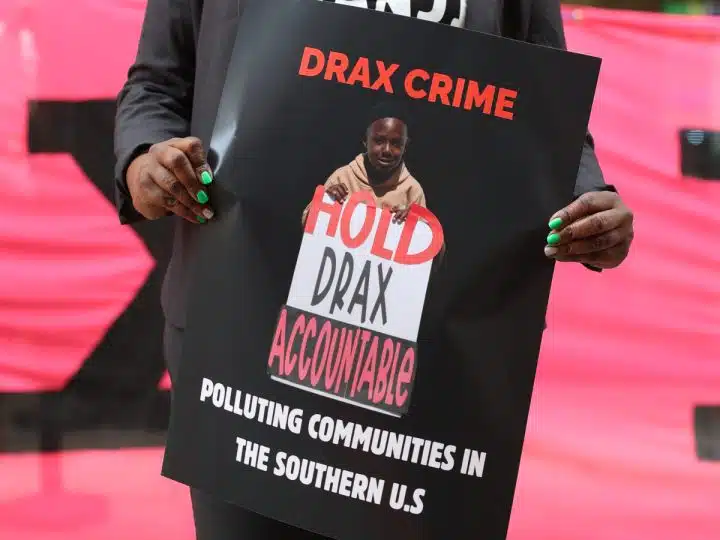

Drax promotes itself as a sustainable energy company, yet they remain the UK’s biggest carbon polluter. The company stands accused of poisoning the Southern US communities where they source the majority of their wood pellet fuel. Apparently reluctant to be confronted with campaigners and US community representatives, Drax’s board will not appear in person at their upcoming annual meeting.
Greenwashing & environmental racism
Drax’s business model relies on sourcing wood from forests all over the world, turning it into pellets. These pellets are then shipped to the UK and burned in its Yorkshire power station. Is this clean, sustainable or renewable energy? Absolutely not. But by claiming that it is, Drax has enjoyed billions in financial support from the UK government. Last year alone, they received a record £999 million in these subsidies, which are funded by the UK public via our energy bills.
According to their own reports, burning wood pellets at Drax power station releases 14,000,000 tonnes of CO2 each year – that’s more than the UK’s six largest gas power stations combined. But both Drax and the UK government use an unscientific, repeatedly debunked idea to claim these emissions don’t count towards their climate impact. Unfortunately for Drax, and for all of us alive on this planet, their creative carbon accounting won’t fool the atmosphere.
The problems with Drax’s operation start long before the pellets are burned in the UK. Drax have been repeatedly exposed for making misleading sustainability claims about the wood they source. They also routinely violate air quality laws in the areas surrounding their US pellet mills.
These mills are often built in low-income, majority-Black communities, such as Gloster, Mississippi. Residents there have organised to sue Drax, reporting devastating health impacts as a direct result of the company’s pellet production.
Katherine Egland is an NAACP (National Association for the Advancement of Colored People) director who has witnessed the “misery” caused in places like Gloster, carried out in the name of supposedly green energy for the UK. Speaking about the public funding that continues to flow to Drax, Egland told an Unearthed investigation in 2022:
My message to the UK government is that you are subsidising environmental racism.
Avoiding accountability
It’s no surprise that Drax’s annual shareholder meetings (AGMs) have been the target of protests. They are picketed by various environmental and social justice campaign groups. At the past three AGMs, protestors from ‘Axe Drax’ have interrupted the opening speeches, leading to activists being promptly, sometimes forcibly, removed by security guards.
Perhaps even more uncomfortable for the board than these disruptive protests has been the presence of Egland and Gloster community member Dr Krystal Martin. They travel to the meeting from Mississippi each year to represent the concerns of the people living – or attempting to live – in the pellet mill’s shadow. But last year, Martin says they were “not allowed to speak” after the board abandoned the meeting early. Egland and Martin see this decision as part of a pattern of:
intentional and deliberate attempts to silence our voices.
In their announcement of this year’s AGM, Drax’s chairperson explained that the board would not be attending in person. They stated:
we are evolving our AGM format in the interests of the safety and security of attendees and participants.
To the communities forced to breathe toxic air around Drax’s plants, the suggestion that nonviolent protests have made the meeting unsafe for executives must be especially galling. In a letter to CEO Will Gardiner, requesting an explanation for his decision not to attend the London AGM, Egland writes:
If Drax has nothing to hide, why not face us directly?
Merry Dickinson from the Stop Burning Trees Coalition has her suspicions as to why. She says:
From their lying executives down to their deadly business practices in the US and Canada, Drax is a disaster. Drax knows this, and that’s why they’re once again running from the truth. It’s nothing short of pathetic.
Intimidation tactics
Meanwhile, in the days leading up to the AGM, young people supposedly associated with Axe Drax have had North Yorkshire Police knock on their doors for a ‘friendly chat’. According to the activists, they were asked whether they plan to attend the upcoming meeting or intend to organise against it.
This is not the first time the police have pre-emptively intervened on Drax’s behalf. Over 1000 police officers were reportedly involved in a £3 million operation that shut down a peaceful protest camp before it could happen. Following the arrest of 22 activists, the case against those charged was thrown out in September due to lack of evidence.
Featured image via Kirk Pritchard
By Abi Perrin

Helena Bonham Carter Denies ‘Clash’ With Co-Star Led To White Lotus Exit

Trump Demands Passage of SAVE America Act in Fiery Truth Social Post on ‘Rigged’ Elections

DeFi United Unveils Technical Plan to Restore rsETH Backing After KelpDAO Exploit

Manchester United reach agreement with Casemiro over contract clause amid transfer speculation

US brings back mandatory military draft registration

Steven Gerrard disagrees with Gary Neville over ‘shock’ Chelsea and Arsenal claim | Football


-

 Fashion4 days ago
Weekend Open Thread – Corporette.com
-

 Tech14 hours ago
Register Renaming | Hackaday
-
 Crypto World3 days ago
Hyperliquid $HYPE Rally Builds Momentum as AI Sector Enters Prove-It Phase
-

 Politics6 days ago
Making troops accountable for war crimes threatens US alliance, ex-SAS colonel warns
-

 Politics6 days ago
Disabled people challenge government SEND proposals over segregation concerns
-

 Business4 days ago
Patterson-UTI Energy, Inc. (PTEN) Q1 2026 Earnings Call Transcript
-

 Business6 days ago
Rolls-Royce Voted UK’s Most Iconic Trade Mark as IPO Register Hits 150
-
 Crypto World7 days ago
Five Value Stocks with Recovery Potential in 2026: PayPal (PYPL), Nike (NKE), and More
-
 Sports2 days ago
IPL 2026: Ruturaj Gaikwad registers slowest fifty of the season, enters all-time unwanted list | Cricket News
-

 Politics6 days ago
Starmer handler McSweeney to be dragged from shadows by Foreign Affairs Committee
-

 Crypto World6 days ago
New York sues Coinbase, Gemini over prediction market offerings
-

 Politics6 days ago
Zack Polanski responds to home secretary’s taser threat
-

 Politics10 hours ago
Drax board avoid their own AGM, accused of greenwashing & environmental racism
-
Politics6 days ago
Wings Over Scotland | How To Get Away With Crimes
-
Entertainment7 days ago
Sydney Sweeney cameo cut from “The Devil Wears Prada 2”, source explains why (exclusive)
-
 Crypto World6 days ago
Crypto’s great hope in Senate’s Clarity Act still has a path to survive tight calendar
-
 Business6 days ago
HCL Tech share price tank over 9% after weak Q4. JPMorgan, HSBC & 3 others cut target price
-

 Politics5 days ago
‘Iran is still a nuclear threat’
-

 Fashion7 days ago
Kilkenny Design New Beauty Arrivals for Spring 2026
-
 Sports5 days ago
Tim Bradley names the current best in the world: “Better than Inoue and Usyk”
You must be logged in to post a comment Login