
Crypto World
ZetaChain halts transfers as DefiLlama reports $300K loss

ZetaChain has paused cross-chain transactions on its mainnet after detecting an attack on its GatewayEVM contract.
Summary
- ZetaChain paused cross-chain transactions after detecting an attack on its GatewayEVM smart contract.
- The team said only internal wallets were affected and no user funds were lost.
- DefiLlama reported $300,000 in losses as ZetaChain prepared a detailed post-mortem.
The Layer 1 network said the move was a precaution while the team investigates the incident. GatewayEVM works as a key entry point for cross-chain activity between EVM-compatible networks and applications on ZetaChain. The contract helps route interactions across connected chains.
ZetaChain said the attack affected only internal team wallets. The team added that it had already closed the attack path to stop more funds from being compromised.
“As a precaution, cross-chain transactions are currently paused on ZetaChain,” the team said. “Investigation is still ongoing, and at this time no user funds were impacted by this attack.”
DefiLlama reports $300,000 loss
DefiLlama data shows the attack caused about $300,000 in losses. ZetaChain has not confirmed the exact amount and said it plans to publish a full post-mortem.
According to ZetaChain’s official status page, cross-chain transactions remained paused as of 9:00 p.m. ET on Monday. That was about nine hours after the team first identified the attack.
DeFi security concerns continue
ZetaChain launched its mainnet in early 2024 and focuses on blockchain interoperability. The project describes itself as a universal blockchain that connects networks such as Bitcoin, Ethereum, and Polygon.
The attack comes after several recent DeFi security incidents. The LayerZero-powered Kelp DAO bridge exploit drained $292 million and created bad debt on Aave. Since that event, DefiLlama data shows at least 10 attacks on DeFi projects.

A second corporate accumulator of cryptocurrency is starting to look a lot like the first.
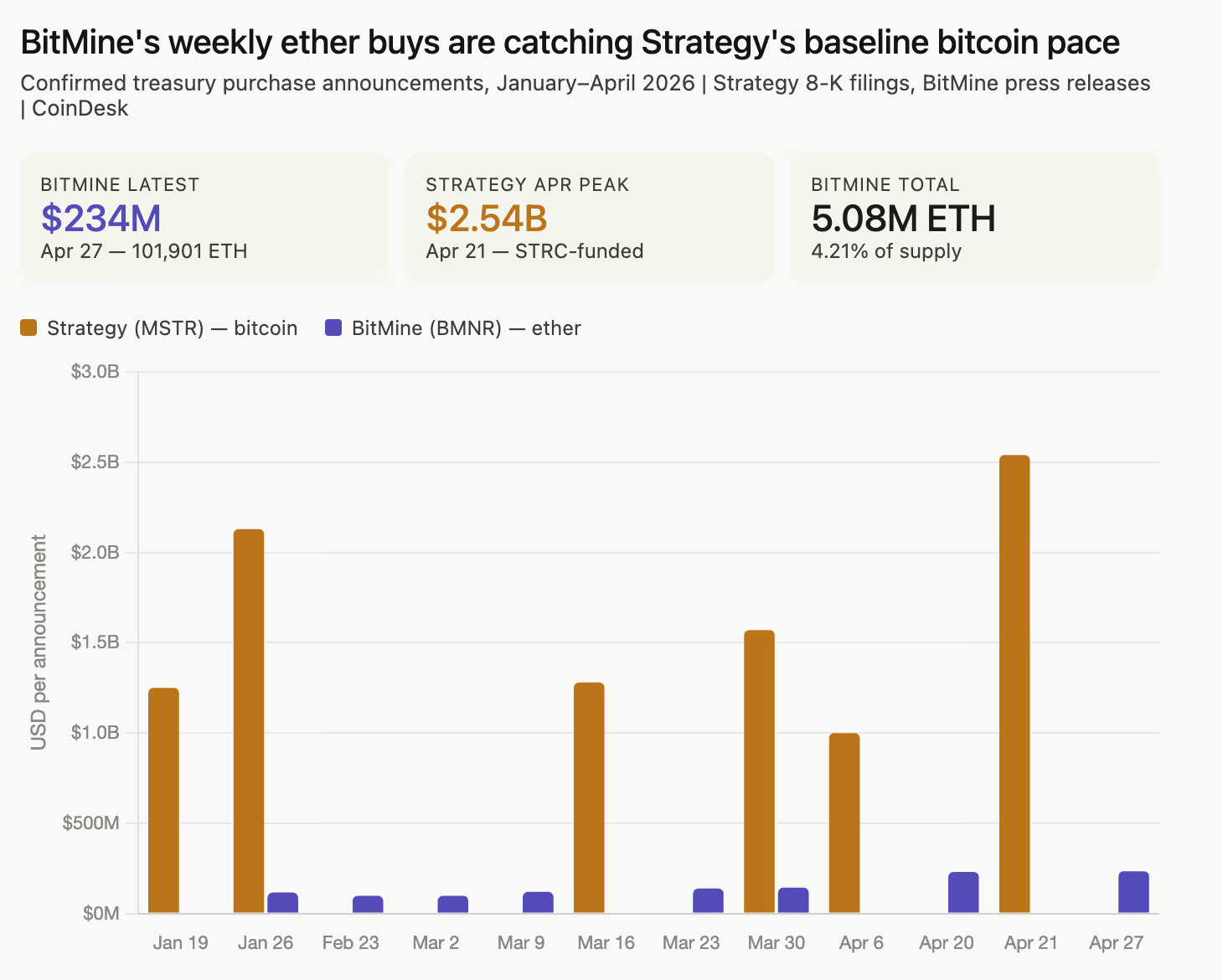
Bitmine Immersion Technologies (BMNR), the treasury firm chaired by Fundstrat’s Tom Lee, bought 101,901 ether (ETH) worth roughly $234 million last week. That’s close to the regular weekly purchases from Strategy (MSTR), the Michael Saylor-led bitcoin digital treasury company, as well-followed crypto trader Luke Martin flagged on X.
Strategy’s normal weekly buys are around $200 million to $300 million, once large purchases fueled by at-the-market sales of its perpetual preferred stock STRC are stripped out. The STRC spikes — the massive bursts that show up in mid-January, late February, late March and, most recently, April 21 at $2.54 billion — are the outliers, not the baseline.
Bitmine’s purchase was its largest weekly accumulation of 2026, capping a four-month streak of escalating buys that started at roughly $76 million per week in early January. It now holds more than 5 million tokens, or about 4.21% of the second-largest cryptocurrency’s circulating supply.

Such a structural development matters because BitMine is now the only major corporate crypto buyer keeping pace alongside Strategy.
Most digital asset treasury companies paused or slowed accumulation through the February price drop that took bitcoin to the mid-$60,000s and ether below $1,900. Strategy itself ended a 13-week bitcoin buying streak in late March before restarting in April.
Lee’s framing for the buying pace is that ETH is in the late stages of a “mini-crypto winter” and that a bottom is forming in equity markets. Bitmine pivoted to its current strategy in June 2025 and reached the 5 million ETH milestone in roughly 10 months.
The firm has staked about 73% of those tokens, generating roughly $264 million in annualized revenue from yield. Total crypto and cash holdings sat at $13.3 billion as of early April.
The two firms share a playbook of capital markets activity — Strategy through preferred stock and convertible debt, Bitmine through equity issuance — to purchase crypto assets.
Under pressure
BitMine’s strategy was put under pressure in February and early March, when it was sitting on nearly $8 billion in unrealized losses against $16 billion in total purchases.
The firm kept buying. Two months later, ether is up 22% from its February lows, and Bitmine’s accumulation pace has not just held, it’s accelerated.
Strategy’s April 21 purchase of $2.54 billion remains the largest single corporate crypto buy of the year. But Bitmine’s $234 million last week is the first time the structural baselines have come within striking distance of each other.
If the pattern holds for another month, ether will have something it has never had before: a Strategy-equivalent corporate buyer absorbing supply each week regardless of price.


Is Bitcoin safe from quantum computers? We break down the real threat timeline, BIP-360 defenses, and how Ethereum, XRP, and other blockchains are preparing for Q-Day.


Anthropic’s implied pre-IPO valuation has crossed $1 trillion on Jupiter’s Prestocks market.
Summary
- Anthropic’s implied pre-IPO valuation crossed $1 trillion on Jupiter after a 733% surge since October.
- Forge Global also priced Anthropic near $1 trillion, while Hiive valued the company at $851 billion.
- Kalshi puts Anthropic’s 2026 IPO odds at 59% as private AI market demand grows.
The pricing places the AI company among a small group of private firms valued at that level before a public listing.
The valuation has risen 733% since October 2025, according to a post from The Kobeissi Letter. Anthropic now joins OpenAI and SpaceX among private companies with implied valuations near or above $1 trillion.
Onchain and private markets show close pricing
Jupiter’s onchain pricing is close to data from private market platforms. Forge Global CEO Kelly Rodriques told Business Insider that Anthropic was valued at around $1 trillion on its platform.
Hiive, another secondary market for accredited investors, priced Anthropic shares at $849 each. That gives the company an implied market value of about $851 billion, within 18% of Jupiter’s reading.
Podcast host Aakash Gupta said the pricing gap shows how private market price discovery is changing.
“A Solana DEX and a regulated US secondary market for accredited investors are pricing the same private company within 18% of each other.”
Funding round lifts Anthropic profile
Anthropic closed its Series G round in February at a $380 billion post-money valuation. The company raised $30 billion in the round, led by GIC and Coatue.
The company said its revenue growth has moved quickly since launch.
“It has been less than three years since Anthropic earned its first dollar in revenue. Today, our run-rate revenue is $14 billion,” the company noted
Google also plans to invest up to $40 billion in Anthropic. The plan starts with $10 billion at the same valuation, while another $30 billion depends on performance milestones.
IPO speculation grows around AI firms
Business Insider reported that Anthropic has received venture capital offers valuing the Claude developer at as much as $800 billion in recent weeks. That level is more than double its current formal valuation.
The wider private AI market remains active as investors watch potential IPO timelines. SpaceX has submitted a confidential draft IPO registration to the SEC and could list in June.
A public listing by Anthropic, OpenAI, or SpaceX could shape how investors compare large private AI and technology firms.
Crypto World
MARA Holdings (MARA) Stock: Bitcoin Mining Giant Launches Foundation to Combat Quantum Threats

Key Highlights
- Marathon Digital CEO Fred Thiel unveiled the MARA Foundation during Monday’s Bitcoin 2026 Conference held in Las Vegas.
- The newly established foundation prioritizes Bitcoin network protection, with particular emphasis on quantum computing vulnerabilities.
- Marathon Digital commits to supporting open-source innovation in areas spanning scalability, mining operations, and user-facing infrastructure.
- The organization will distribute $100,000 to one of three charitable organizations based on public voting results.
- Network hashrate has declined by 28.8% from September peaks as mining companies increasingly diversify into artificial intelligence and high-performance computing sectors.
During Monday’s Bitcoin 2026 Conference in Las Vegas, Fred Thiel, CEO of MARA Holdings (MARA), introduced the MARA Foundation — a strategic initiative designed to ensure the security and expansion of the Bitcoin ecosystem over the coming decades.
Thiel began his presentation with an unambiguous message: “Bitcoin represents the most significant decentralized infrastructure humanity has ever built, yet its continued existence cannot be taken for granted.”
He characterized Bitcoin as “a commons that belongs to no one entity, yet serves as critical infrastructure for everyone,” arguing that decentralization doesn’t equate to automatic maintenance.
“Stewardship is shared across all participants,” Thiel explained, articulating Marathon Digital’s rationale for accepting this responsibility.
Marathon Digital Holdings, Inc., MARA
Addressing the Quantum Computing Challenge
Among the foundation’s primary objectives is strengthening Bitcoin‘s defenses against next-generation security challenges — particularly the looming threat posed by quantum computing technology.
The MARA Foundation intends to sponsor ongoing investigation into potential vulnerabilities quantum breakthroughs might create in Bitcoin’s encryption architecture, along with proactive countermeasures.
Beyond quantum concerns, the organization will champion the development of more robust transaction fee economics, which grows increasingly critical as mining block subsidies diminish through successive halvings.
Supporting open-source contributors working on network scalability, mining technology, and end-user tools represents another cornerstone, alongside initiatives promoting broader adoption of self-custody wallet solutions.
Community-Driven $100,000 Grant Award
MARA is commemorating the foundation’s establishment by offering $100,000 in funding — with the recipient determined through public participation.
Three organizations compete for the grant: the 256 Foundation, developing open-source Bitcoin mining infrastructure; Librería de Satoshi, providing Bitcoin education throughout Latin America; and SafeNet, delivering Bitcoin-enabled wireless connectivity to underserved populations.
This voting mechanism empowers the broader community to influence the foundation’s initial funding priorities directly.
Educational programs and policy advocacy represent additional pillars of the foundation’s strategy. These efforts encompass technical skill development, multilingual educational materials, and constructive dialogue with regulatory bodies — domains MARA identifies as chronically undercapitalized.
The foundation emphasizes engagement with developing economies, especially throughout Africa and Latin America, where Bitcoin functions as protection against currency devaluation and restrictive financial systems.
“Our dedication extends to empowering communities leveraging Bitcoin to democratize access to stable monetary systems and reinforce regional economic resilience,” Marathon Digital stated officially.
The foundation’s debut arrives during a transformative period for Bitcoin mining operations. Total network hashrate has contracted 28.8% since September, driven by mining companies progressively reallocating resources toward artificial intelligence and high-performance computing ventures offering superior revenue potential.
Marathon Digital has participated in this industry shift, diversifying beyond traditional mining into AI and HPC infrastructure.
The MARA Foundation introduces an alternative narrative dimension — one prioritizing ecosystem sustainability over immediate profitability, while reinforcing the network infrastructure underlying Marathon Digital’s primary operations.


TLDR:
- Binance gold futures crossed $100 billion in cumulative trading volume within months of its January launch.
- A record $6.6 billion in single-session volume was recorded on March 23, the highest since product launch.
- Gold is currently trading 16.5% below its all-time high after gaining roughly 210% since October 2023.
- Binance’s 24/7 gold futures market gives crypto investors access traditional commodity markets do not offer.
Binance Gold futures have surpassed $100 billion in cumulative trading volume since the platform introduced gold trading in January.
The milestone reflects sustained investor appetite for the precious metal across both traditional and crypto-native audiences.
Macroeconomic uncertainty and ongoing geopolitical tensions have kept demand elevated. Even so, gold prices have pulled back from their peak, entering a consolidation phase after a prolonged rally that lasted several months.
Strong Volumes Reflect Broad Investor Demand for Gold
Binance launched gold futures trading in January, and the response from investors has been notable. The platform now regularly records between $500 million and $1 billion in volume during a standard trading session. That level of activity points to genuine and consistent market participation across different investor types.
Trading volumes spiked sharply during the February market correction, with activity climbing well above typical daily levels.
The most active period came in late March, when several sessions recorded spikes above $3 billion. On March 23, Binance recorded a single-session peak of $6.6 billion, the highest since the product launched.
As noted by Cryptoquant market analyst Darkfost_Coc, the current environment of macroeconomic and geopolitical uncertainty has strengthened investor demand for gold.
This demand extends to crypto market participants who do not typically trade traditional commodities. The 24/7 accessibility of the Binance platform gives it an edge over conventional gold markets that close on weekends.
Tensions between Iran and the United States have added to market uncertainty, which has limited visibility for many asset classes.
Against that backdrop, gold demand has remained resilient, even as prices have moved lower from their highs. This combination of strong volume and price softness reflects a market still working through its prior gains.
Gold Prices Enter Correction After Months of Sustained Gains
Gold posted gains of approximately 210% between October 2023 and its all-time high, drawing significant attention from a wide range of investors.
However, the metal began correcting in late January and is now trading about 16.5% below that peak. A pullback of this kind, following such a strong run, is a natural market pattern.
The correction follows a period of intense buying across global markets, which built up substantial unrealized profits for many investors.
As those participants moved to lock in gains, selling pressure increased and prices drifted lower. This is consistent with how commodity markets behave after extended upward trends.
Binance’s decision to tokenize gold and offer it through futures trading has positioned the platform well within this environment.
The move brought a traditionally institutional asset within reach of a broader investor base. That accessibility has clearly played a role in the volume growth seen since January.
Gold’s current consolidation period does not appear to have dampened interest on the platform. Daily volumes have remained within a healthy range, and the infrastructure is in place to handle further spikes.
The product has established itself as a meaningful part of Binance’s derivatives offering in a short period.
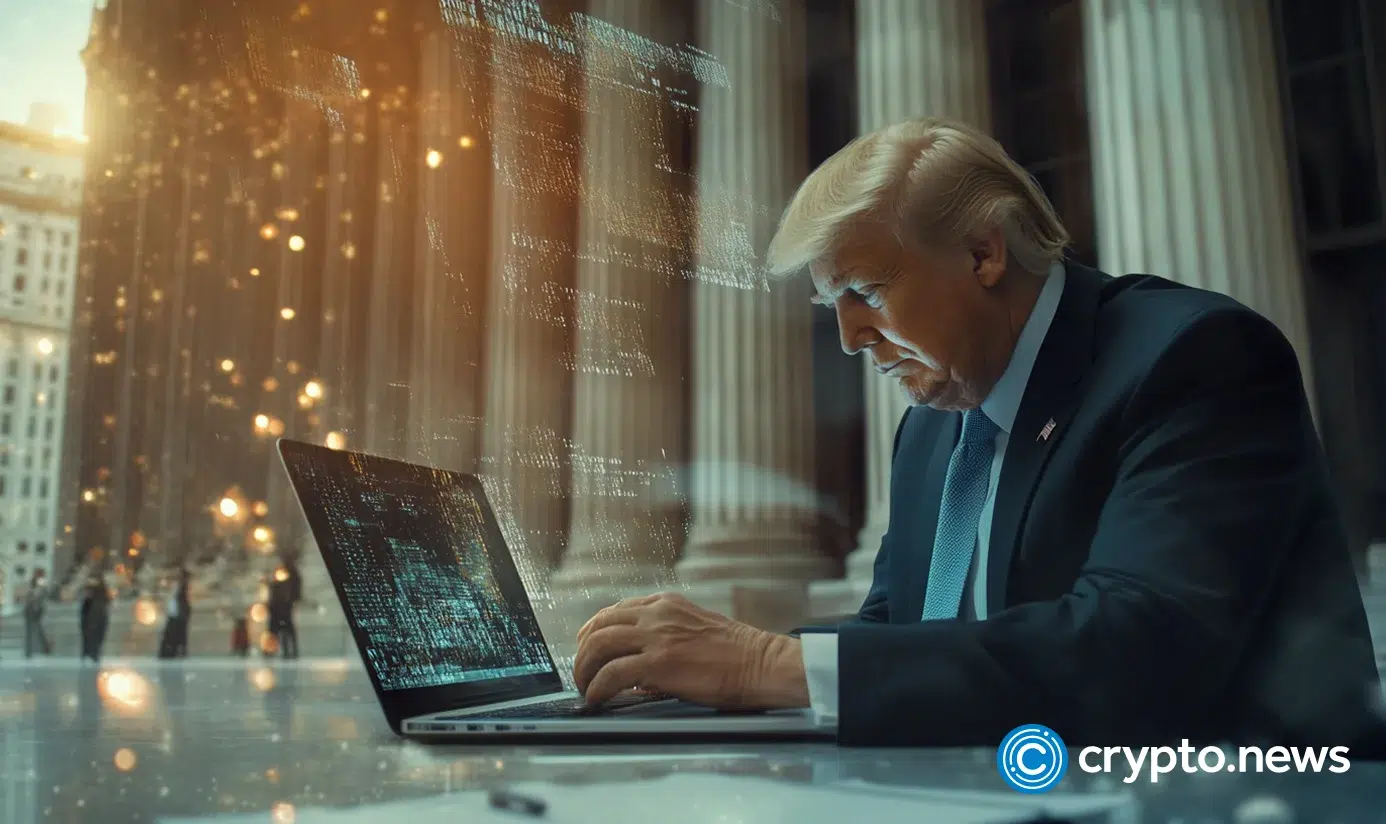
U.S. President Donald Trump has softened his stance on prediction markets days after voicing concern over their rapid rise.
Summary
- Donald Trump said some experienced participants support prediction markets, softening his earlier opposition.
- He pointed to adoption in other countries, warning the U.S. could fall behind if it does not participate.
Speaking to reporters in Florida on Saturday, Trump acknowledged that some experienced participants support these platforms, even as he maintained a degree of hesitation.
“I don’t know. I know some people who are very smart. They like it,” he said, adding, “They disagree, but they like it.”
He pointed to international adoption as a factor, stating, “A lot of other countries are doing it, and when the other countries do it, we get left out in the cold if we don’t do it.”
Those remarks followed comments made at the White House earlier in the week, where Trump had taken a more critical tone.
Addressing questions around well-timed bets linked to geopolitical events, he said, “Well, you know, the whole world, unfortunately, has become somewhat of a casino,” before adding that he did not support the concept despite its spread.
“I don’t like it conceptually, but it is what it is,” he said, describing the environment as “a crazy world.”
Rising activity across platforms has drawn attention to the sector’s growth. Data from Token Terminal showed that Polymarket and Kalshi together recorded $23.6 billion in trading volume in March, setting a monthly high.
Regulatory pressure builds alongside growth
At the same time, legal pressure around prediction markets has intensified across multiple U.S. jurisdictions. The Commodity Futures Trading Commission filed a lawsuit against New York in the U.S. District Court for the Southern District of New York, arguing that federal law grants it exclusive authority over event-based contracts listed on registered exchanges.
“CFTC-registered exchanges have faced an onslaught of state lawsuits seeking to limit Americans’ access to event contracts and undermine the CFTC’s sole regulatory jurisdiction over prediction markets,” said CFTC Chair Michael Selig.
New York has taken a different view, bringing actions against Coinbase and Gemini over alleged violations of state gambling rules, while also targeting aspects of Kalshi’s offerings tied to sports outcomes.
A coalition of 37 states and Washington, D.C. has backed similar arguments in court filings, stating that federal financial law was not designed to permit nationwide sports betting without state oversight.
Wisconsin has expanded that challenge by filing complaints in Dane County against multiple firms, including Crypto.com, Polymarket, and Kalshi, along with distribution partners Coinbase and Robinhood.
Prosecutors argued that users take positions on real-world outcomes with fixed payouts, a structure they say fits the legal definition of wagering under state law.
“Thinly disguising unlawful conduct doesn’t make it lawful,” Attorney General Josh Kaul said.
Parallel enforcement actions have emerged in states such as Nevada, Massachusetts, and Illinois, where regulators have issued bans, lawsuits, or cease-and-desist orders tied to event contracts.
Court filings across these cases describe contracts linked to sports and elections as indistinguishable from betting, while platform operators continue to argue that their products fall under federal commodities law.
Corporate ties have also drawn attention as the sector expands. Donald Trump Jr. joined Polymarket’s advisory board after investing in the platform in August and later took on a similar role at Kalshi in January 2025.
Meanwhile, Trump Media announced plans in October to launch prediction market products in partnership with Crypto.com through its Truth Social platform. Trump transferred his stake in Trump Media to a trust upon entering office, with Trump Jr. named as the sole trustee.

Acting U.S. Attorney General Todd Blanche signaled a notable shift in how federal authorities approach blockchain development, indicating that the Department of Justice (DOJ) and the FBI will not target developers merely because their platforms are used for illicit activity. Speaking at a Las Vegas Bitcoin conference alongside FBI Director Kash Patel and Coinbase chief legal officer Paul Grewal, Blanche framed the enforcement posture as a change in tone and strategy that prioritizes the behavior of users over the creators of software tools.
According to Cointelegraph, Blanche explained that as long as developers have no involvement in illicit activity and do not knowingly facilitate wrongdoing, the DOJ and FBI should not pursue them. He asserted that authorities have fundamentally changed the dynamic of investigations, underscoring a shift away from prosecuting developers who merely provide noncustodial or widely available software.
Blanche’s remarks come after years during which federal authorities pursued aggressive actions against platforms associated with privacy-enhancing technologies. The acting attorney general emphasized that developers who are not involved in wrongdoing should not be the targets of enforcement actions. The message is that a platform’s mere existence or the noncustodial nature of its tools should not automatically invite liability, a departure from earlier narratives that linked tool developers to potential criminal misuse.
“The basic principle is that if you are developing software, if you are a coder, if you are part of that process and you are not the third-party user, and you are not helping and knowing the third party is using what you developed to commit crimes, you are not going to be investigated and not going to be charged,” Blanche stated.
These comments reflect a broader regulatory philosophy shift that some in the crypto community view as a potential opening for developers to operate with greater clarity. Still, observers caution that the real measure of this policy will be its application in court and regulatory programs, particularly as enforcement agencies continue to draw lines around what constitutes “knowing” assistance or complicity in illicit activity.
The shift in rhetoric diverges from the DOJ’s earlier high-profile actions against cryptocurrency platforms associated with privacy tooling. One emblematic case involved Tornado Cash, a crypto mixer that faced sanctions from the Office of Foreign Assets Control (OFAC) in August 2022 for facilitating illicit activity before sanctions were lifted in November 2024. In the ensuing legal saga, developers Roman Storm and Roman Semenov were indicted in August 2023, with Storm later convicted in August 2025 and Semenov remaining at large. Storm has denied wrongdoing. These cases have been central to debates about whether publishing or maintaining open-source software could expose developers to liability for users’ misconduct.
Blanche’s appearance and remarks were met with cautious optimism by sections of the crypto community, even as questions about legal clarity persist. Critics argue that while the message is more measured than in recent years, it stops short of delivering precise guidance on where the line lies between publishing noncustodial software and “helping” or “knowing” about a bad actor’s use of that software. Peter Van Valkenburgh, executive director of Coin Center, described the message as a step forward but continued to press for clearer standards. He noted on social media that the key question remains how the DOJ delineates the boundary between open-source publishing and actionable knowledge of wrongdoing.
“If the law is so clear why are devs sleeping with one eye open? If the law is so clear why fight to have the case dismissed?”
The current discourse sits within a broader regulatory milieu. In April 2025, Blanche issued a memo outlining a refreshed enforcement framework designed to reduce “regulation by prosecution” and to limit actions against developers absent direct involvement in illicit activity. He reiterated that the DOJ does not intend to impose broad liability on platforms merely because users may misuse them, a stance that could influence risk assessments, licensing decisions, and compliance programs across the crypto ecosystem.
Key takeaways
- The DOJ and FBI indicate a policy shift toward pursuing users of crypto platforms who engage in financial crime, rather than targeting developers absent involvement in illicit activity.
- A public memo from April 2025 formalizes the goal of ending regulation by prosecution and reframing enforcement around actual misuse by end users.
- Historical enforcement against Tornado Cash and related cases illustrate ongoing tensions between innovation, privacy tools, and regulatory oversight, underscoring the unsettled nature of legal standards for developers.
- Industry observers caution that while the message improves clarity, meaningful guidance on where to draw the line between open-source publishing and knowingly aiding wrongdoing remains incomplete.
- Regulatory implications extend to institutional actors—exchanges, banks, and compliance programs—who must reassess risk models, licensing expectations, and cross-border considerations in light of evolving enforcement posture.
Shifting enforcement posture and its practical implications
According to Cointelegraph, Blanche’s comments reflect a deliberate recalibration of how federal authorities pursue accountability in the crypto space. The emphasis is on user-focused enforcement, with developers not implicated by default when their tools are exploited for crime if they do not participate in or knowingly enable illicit conduct. This reframing has practical repercussions for compliance offices within crypto firms and for developers who maintain open-source or noncustodial projects. Institutions are urged to reexamine risk controls around product design, governance, and disclosure practices to ensure they align with a more nuanced liability landscape.
From a policy perspective, the remarks intersect with broader regulatory debates in the United States and abroad. While the EU’s MiCA framework advances a different regulatory approach to crypto assets and service providers, the core objective—reducing illicit finance risk while supporting innovation—remains a common thread. For U.S. firms, the evolving enforcement posture may influence licensing strategies, due diligence protocols, and the scope of permissible research and development activities, particularly for tools that facilitate privacy-preserving transactions or cross-border transfers.
Historical context and ongoing legal questions
The Tornado Cash episode remains a reference point in discussions about developer liability. OFAC designated Tornado Cash in 2022 due to its role in facilitating illicit activity, a designation that was subsequently reversed in 2024. Indictments against developers followed in 2023, with courtroom outcomes continuing to shape the legal landscape. The Storm/Semenov arc underscored the tension between open-source software and regulatory oversight, raising questions about how much responsibility developers bear for user misuses and at what point publishing noncustodial tools could cross into criminal liability.
Critics point to a case involving Michael Lewellen, who challenged the DOJ for pre-enforcement clarity on whether his Ethereum-based crowdfunding tool could constitute money transmission. The related suit was dismissed in 2024, with a Texas court finding no credible threat of enforcement. Coin Center’s Van Valkenburgh used this backdrop to argue that the DOJ must provide clearer standards; otherwise, developers may continue to “sleep with one eye open.” The tension between a need for clarity and the DOJ’s willingness to pursue the line between lawful publishing and knowledge of wrongdoing remains a core issue for policy makers and industry participants alike.
Regulatory, institutional, and market structure implications
For regulated entities and financial institutions engaging with crypto markets, Blanche’s framing could influence supervisory expectations and compliance workflows. If developers are shielded from liability absent direct involvement in illicit activity, risk assessment models may shift focus toward end-user behavior, platform governance, and feature-level risk controls rather than broad liabilities placed on tool creators. Banks and exchanges may need to adjust AML/KYC frameworks, conduct risk parameters, and due-diligence processes for a wider set of service providers and counterparties in the ecosystem. The enforcement paradigm that prioritizes factual involvement over platform design could also affect licensing considerations and cross-border cooperation in investigations, aligning U.S. practice with evolving international standards while preserving space for continued technical innovation.
As policy discussions advance, observers expect continued scrutiny of “how much is too much” when it comes to publishing code and maintaining open-source software that can be used for both legitimate and illicit purposes. The conversation is likely to feed into ongoing regulatory debates, including the balance between privacy-enhancing technologies and compliance obligations, and the role of civil enforcement in shaping platform development and distribution of noncustodial tools.
Closing perspective
The DOJ’s evolving enforcement stance, as articulated at the Las Vegas conference, signals a notable attempt to recalibrate the interaction between regulation and innovation. While the shift toward prosecuting users rather than developers may reduce some near-term legal risk for platform creators, the landscape remains nuanced and uncertain. Practitioners should monitor how courts interpret “knowing” assistance and how regulatory agencies translate high-level policy into concrete guidance for developers, distributors, and financial institutions operating in a globally interconnected crypto economy.


Ondo Finance is bringing tokenized equities closer to their traditional counterparts, offering investors a way to participate in corporate governance.
The feature, built with Broadridge Financial Solutions (BR), allows holders of more than 250 tokenized securities on Ondo’s platform to review company filings and submit voting preferences through Broadridge’s ProxyVote system.
Investors can log in with crypto wallets, then access documents and governance tools typically reserved for brokerage accounts.
The move comes as tokenized equities have emerged as one of the fastest-growing sectors in crypto, bringing stocks and ETFs on blockchain rails. The category now holds over $1.1 billion in value locked, tripling in size over the past year, RWA.xyz data shows. Ondo is the largest issuer in the sector, reporting more than $700 million in stock and ETF tokens on its Global Markets platform, offered to non-U.S. investors.
Adding proxy voting to equity tokens matters because these offerings have often lacked basic governance rights. While Ondo’s tokens remain separate from the underlying shares and do not grant direct shareholder rights, the new system lets investors express preferences that Ondo can apply when voting the shares it holds.
“It really hits at the heart of Ondo’s vision to make traditional financial assets more accessible,” Matthieu de Vergnes, Ondo’s global head of institutional, said in an interview with CoinDesk. “You get all the benefits of being onchain – freely transferable, compatible with DeFi – and on top of that, you get the governance that you have from the the underlying.”
Broadridge, which processes large volumes of proxy votes in traditional markets, is extending its infrastructure to blockchain systems with this move. The firm said the goal is to support both digital and conventional assets within the same workflows.
Giving investors the same level of auditability, transparency and compliance will “really go a long way in making the tokenized world more scalable, giving that level of trust to end investors,” said Danielle Gurrieri, senior vice president and head of product management at Broadridge.
Crypto World
Bitcoin (BTC) Price Action: Analysts Project $85K Rally Despite Current Consolidation Near $77K
Key Takeaways
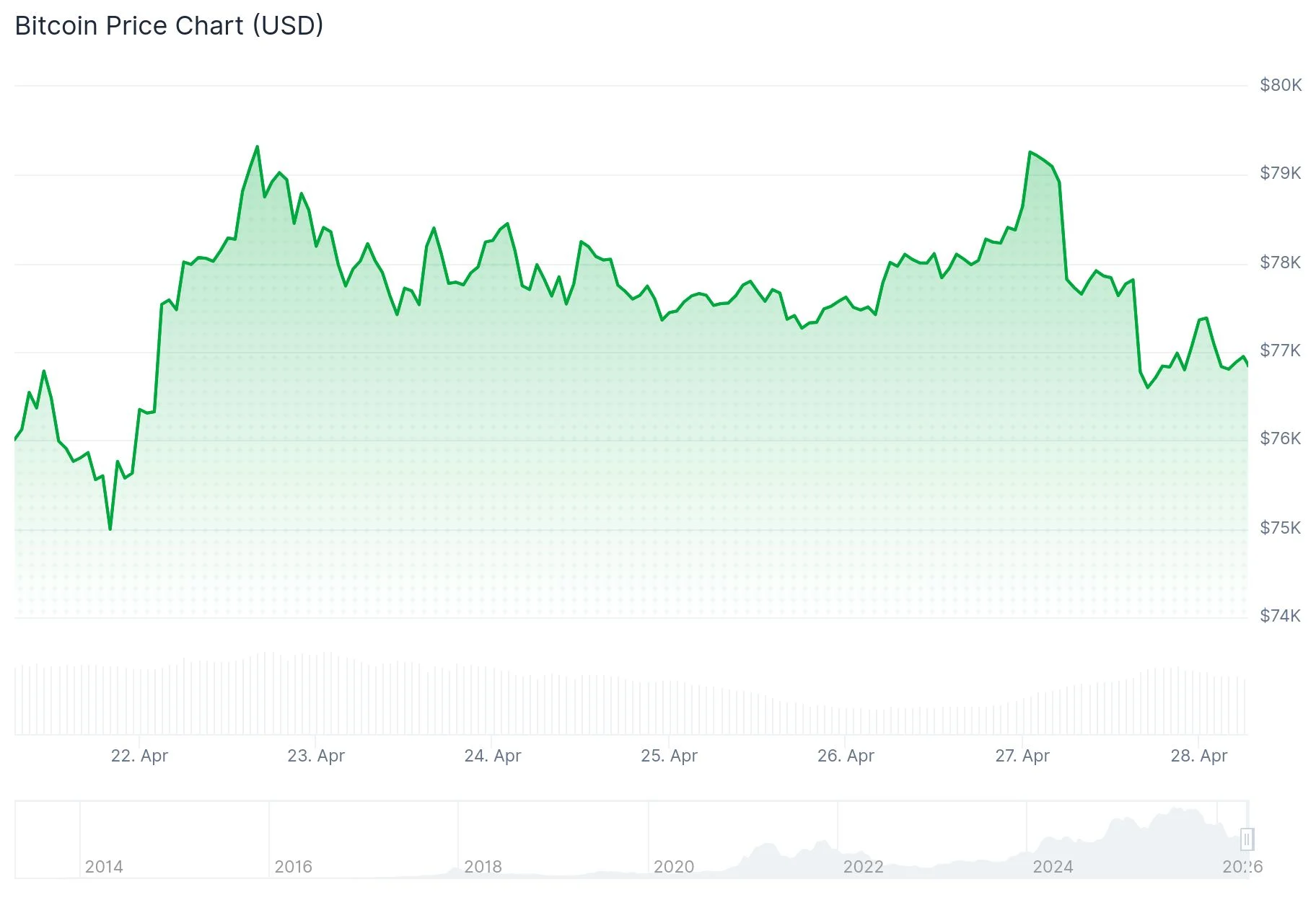
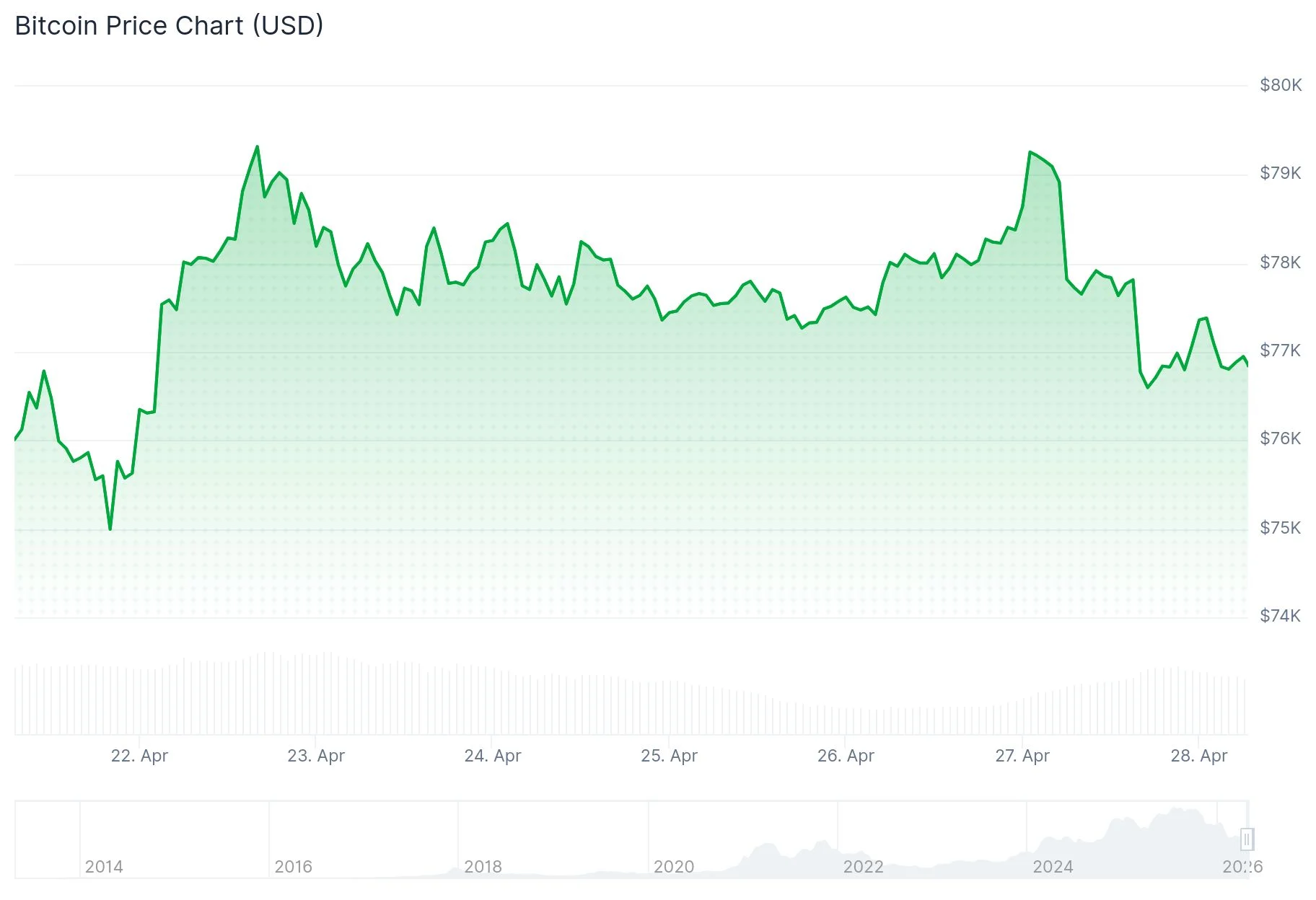
- BTC is hovering around the $77,000 level, experiencing a roughly 3% decline as market participants await critical U.S. economic indicators and the upcoming Federal Reserve policy announcement
- Crude oil trading above the $100 threshold continues to fuel inflationary concerns, diminishing expectations for imminent Fed interest rate reductions
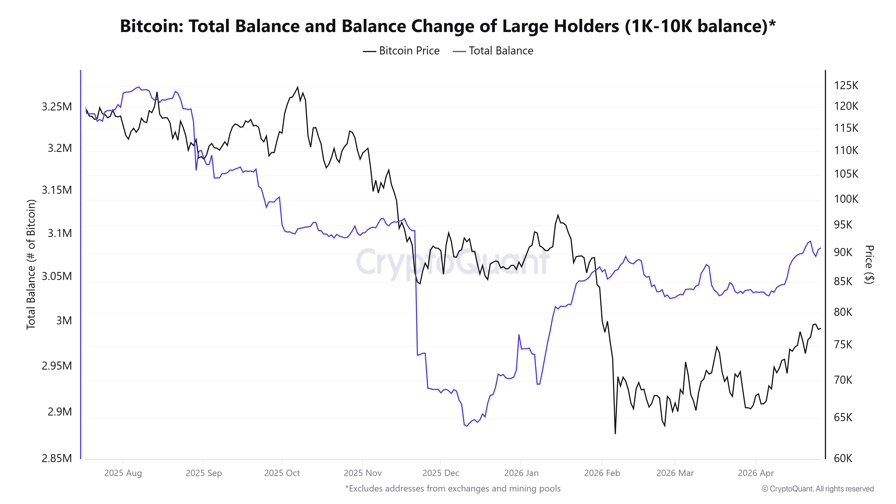
- Large Bitcoin holders possessing between 1,000 and 10,000 coins have amassed approximately 240,000 BTC since December, marking a five-month peak in holdings
- Signs of weakening AI sector demand, evidenced by OpenAI’s revenue shortfall, may eventually lead to decreased Bitcoin selling pressure from mining operations
- Market analysts project scenarios ranging from a near-term downside liquidity grab around $73,700 to bullish price objectives between $85,000 and $88,000 heading into May
Bitcoin continues to consolidate near the $77,000 price point, registering approximately a 3% decline during Asian trading hours. The pullback appears driven by market prudence rather than fundamental deterioration, with participants awaiting a critical week of macroeconomic releases.
According to Singapore-based market maker Enflux, cryptocurrency traders are adopting a wait-and-see approach before Wednesday’s Federal Reserve interest rate determination. The calendar includes several high-impact data points: GDP figures, Personal Consumption Expenditures (PCE) inflation metrics, and the Employment Cost Index.
Elevated crude oil valuations represent the primary headwind for monetary policy easing. With Brent crude maintaining levels above $100 per barrel, inflationary pressures persist, constraining the Federal Reserve’s ability to telegraph dovish policy shifts.
Polymarket prediction markets currently assign a 95% probability to the Fed maintaining its current rate stance at the June Federal Open Market Committee meeting. This policy stasis has generated hesitation throughout risk-sensitive asset classes, with digital assets experiencing similar uncertainty.
The leading cryptocurrency is currently positioned approximately 4% beneath the short-term holder cost basis, estimated at $80,700. This metric frequently serves as a barometer for recent buyer confidence and market strength.
Enflux anticipates sideways trading patterns to dominate until Thursday’s economic data publications, with significant volatility more likely triggered by macroeconomic surprises than the Fed’s policy statement language.
Large Holder Accumulation Trends
Examining the demand dynamics, substantial Bitcoin addresses have been steadily expanding their positions. Wallets containing between 1,000 and 10,000 BTC have acquired roughly 240,000 coins since December, elevating aggregate holdings to 3.09 million BTC—a concentration not observed since November 2025.
Meanwhile, long-term Bitcoin holders have maintained minimal distribution activity. Just 42,100 BTC changed hands from this cohort during the previous 30-day period, representing one of 2026’s lowest selling rates. Concurrently, institutional capital inflows totaled approximately 92,900 BTC over the past month, per Bitwise’s Crypto Market Compass intelligence.
Critical Price Zones and Chart Analysis
Examining the four-hour timeframe, Bitcoin has developed what appears to be a double top formation near $79,400 following two consecutive rejections during the prior week. Near-term price movement could gravitate toward liquidity concentration zones at $74,700 and $73,700.
Michaël van de Poppe, founder of MN Capital, maintains that upside price objectives in the $85,000–$88,000 range remain achievable for May, contingent upon crucial support levels holding firm.
Cryptocurrency analyst Ali Charts highlighted via social media that Bitcoin is developing a Morning Star candlestick configuration on the monthly chart—a technical setup that has previously signaled major trend reversals for the digital asset. He referenced over $1 billion in net taker volume activity on Binance as confirmation of accumulation behavior, identifying $73,000 as the critical support threshold.
Market analyst Willy Woo assessed a 30% probability that BTC successfully penetrates the $79,000 cost basis of recent market entrants during the current attempt, noting that the upcoming three-to-six-week period will prove decisive in determining whether a structural market bottom is establishing itself.
The latest derivatives data reveals funding rates at -7% on a 30-day basis, representing one of the most negative readings in recent history—a market condition that could potentially catalyze a short squeeze scenario should BTC momentum carry prices above the $80,000 threshold.


DeFi United, a coalition of ecosystem participants led by Aave service providers, has released a technical implementation plan to restore rsETH backing.
The plan comes after a major exploit on April 18, 2026. Hackers likely associated with North Korea’s Lazarus Group stole approximately $292 million (116,500 rsETH) from KelpDAO’s LayerZero bridge.
DeFi United Releases Technical Roadmap to Make rsETH Whole
In a detailed post, the team said seven wallets tied to the exploiter still hold active rsETH-backed positions on Aave and Compound. This totals around 107,000 of the 116,500 rsETH originally stolen.
Follow us on X to get the latest news as it happens
The recovery plan has two goals: restoring rsETH’s backing and recovering the ~107,000 rsETH in excess collateral. To restore the backing, rsETH must match its nominal Kelp exchange ratio of 1.07 ETH. This will be done via the DeFi United initiative.
It has already lined up the ETH commitments needed to bring affected systems back online. Final execution depends on governance approvals, execution timelines, and signed definitive agreements.
After the plan’s execution, the backing will be fully restored by depositing ETH into the bridge lockbox (RSETH_OFTAdapter 0x85d456b2…98ef3).
“The restoration process involves converting the committed ETH into rsETH in tranches, which will then be transferred to the affected lockbox contract, allowing the bridge to securely resume full operation,” the blog read.
The plan also clears the eight affected positions on Aave’s Ethereum Core and Arbitrum markets. This step is necessary to recover roughly 13,000 ETH and resolve the related impairment.
The blog stated that the initiative seeks to restore rsETH backing without socializing losses, though several risks remain. Deployment still depends on finalized agreements and governance approvals.
Closing the impacted positions also requires proposals to pass on Ethereum and Arbitrum, and attacker interference could trigger extra liquidation steps.
LayerZero and Kelp have added new safeguards, but “residual risk remains until those measures are validated in production.” If all goes well, rsETH backing will be fully restored, and markets stabilized.
Subscribe to our YouTube channel to watch leaders and journalists provide expert insights
The post DeFi United Unveils Technical Plan to Restore rsETH Backing After KelpDAO Exploit appeared first on BeInCrypto.

This ‘Confidence Boosting’ Teeth Whitening Kit Is 50% Off Now

Retirement Business Ideas For Parents In 2026
Bitmine’s (BMNR) ETH buys are catching Strategy’s bitcoin (BTC) accumulation pace

Manchester United reach agreement with Casemiro over contract clause amid transfer speculation

US brings back mandatory military draft registration

Steven Gerrard disagrees with Gary Neville over ‘shock’ Chelsea and Arsenal claim | Football


-

 Fashion4 days ago
Weekend Open Thread – Corporette.com
-

 Tech15 hours ago
Register Renaming | Hackaday
-
Crypto World3 days ago
Hyperliquid $HYPE Rally Builds Momentum as AI Sector Enters Prove-It Phase
-

 Politics6 days ago
Making troops accountable for war crimes threatens US alliance, ex-SAS colonel warns
-

 Politics6 days ago
Disabled people challenge government SEND proposals over segregation concerns
-

 Business4 days ago
Patterson-UTI Energy, Inc. (PTEN) Q1 2026 Earnings Call Transcript
-

 Business6 days ago
Rolls-Royce Voted UK’s Most Iconic Trade Mark as IPO Register Hits 150
-
 Crypto World7 days ago
Five Value Stocks with Recovery Potential in 2026: PayPal (PYPL), Nike (NKE), and More
-
 Sports2 days ago
IPL 2026: Ruturaj Gaikwad registers slowest fifty of the season, enters all-time unwanted list | Cricket News
-

 Politics6 days ago
Starmer handler McSweeney to be dragged from shadows by Foreign Affairs Committee
-

 Crypto World6 days ago
New York sues Coinbase, Gemini over prediction market offerings
-

 Politics6 days ago
Zack Polanski responds to home secretary’s taser threat
-

 Politics11 hours ago
Drax board avoid their own AGM, accused of greenwashing & environmental racism
-
Politics6 days ago
Wings Over Scotland | How To Get Away With Crimes
-
Entertainment7 days ago
Sydney Sweeney cameo cut from “The Devil Wears Prada 2”, source explains why (exclusive)
-

 Crypto World6 days ago
Crypto’s great hope in Senate’s Clarity Act still has a path to survive tight calendar
-
 Business6 days ago
HCL Tech share price tank over 9% after weak Q4. JPMorgan, HSBC & 3 others cut target price
-

 Politics6 days ago
‘Iran is still a nuclear threat’
-

 Fashion7 days ago
Kilkenny Design New Beauty Arrivals for Spring 2026
-
 Sports5 days ago
Tim Bradley names the current best in the world: “Better than Inoue and Usyk”
You must be logged in to post a comment Login