
Crypto World
Meta-Manus deal block draws the line in China’s AI race with the U.S.

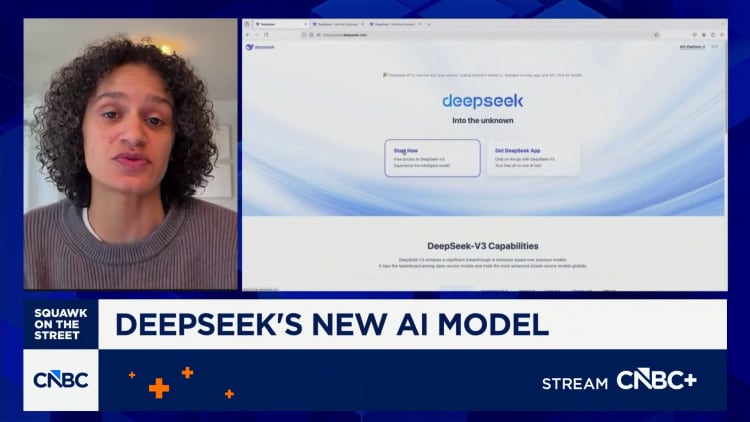
Manus was hailed by Chinese state media as the “next DeepSeek” soon after its launch in March 2025, months before the startup relocated to Singapore.
Cheng Xin | Getty Images News | Getty Images
BEIJING — China’s decision to block U.S. tech giant Meta‘s $2 billion acquisition of artificial intelligence startup Manus is being seen by analysts as a warning to tech entrepreneurs.
“Clearly after Manusgate, founders will know that if you start in China, you stay in China,” said Duncan Clark, an early advisor to Alibaba and chairman of consultancy firm BDA China.
“We know the deal was already in trouble,” he said, “but this draconian development is on the more extreme side of the likely outcomes.”
The timing is notable as it comes just days before Meta’s scheduled earnings release Wednesday local time, and less than a month before a planned visit by U.S. President Donald Trump to Beijing, during which trade and investment are expected to be discussed.
The case also has direct implications for how businesses and investors position themselves in the U.S.-China tech race, as they navigate new risks around data, talent and intellectual property.
For Chinese AI startups and U.S. investors, “the takeaway is that Singapore incorporation alone does not de-risk a deal from Chinese regulatory reach,” said Chris Pereira, president and CEO of consulting firm iMpact.
“The broader implication,” he said, “is that a new front in the competition between the U.S. and China just opened up: talent itself.”

What’s next for the deal
Chinese authorities on Monday demanded that parties involved with the transaction withdraw, just months after launching a probe. It was not immediately clear how the unwinding process would proceed.
Analysts said the decision could serve as a signal to founders about relocating sensitive technology overseas.
“More than the models and AI agents, China is most concerned about whether China-origin strategically sensitive technologies — and the data and talent behind them — are effectively transferred offshore by corporate restructuring in Singapore,” said Winston Ma, adjunct professor at NYU School of Law.
“The most complex aspect of this deal unwinding in the digital world is the data reversal,” Ma said, noting it’s much more challenging than reversing a physical goods transaction.
A Meta spokesperson told CNBC that the transaction “complied fully with applicable law. We anticipate an appropriate resolution to the inquiry.” Manus did not immediately respond to a CNBC request for comment.
“The practical reality is China has no leverage over Meta,” said Gary Dvorchak, Blueshirt Group managing director. The Facebook parent’s social media platforms are blocked in China by an internet firewall.
Compared with its business in the European Union, Meta “makes nothing in China,” which means the company could ignore Beijing and proceed with the deal, Dvorchak said. But Beijing could disrupt Manus’ operations, making the startup “essentially worthless to Meta if they merge,” he added.
Meta disclosed that about 11% of its revenue in 2024 came from China, but did not share those figures in 2025. Europe accounted for more than 20% of Meta’s revenue in 2024 and 2025.
While Meta noted in its 2025 annual report that it generates “meaningful revenue from a small number of resellers serving advertisers based in China,” it flagged that regulatory action, including U.S.-China tensions, could be a risk to its financial performance.

Subscribe now
Beijing’s move to block the acquisition appeared to be the first time China used foreign investment security review measures introduced in late 2020.
Reflecting the weight of national security concerns, the rules established a dedicated office under the National Development and Reform Commission, China’s economic planning agency.
The measures called on companies to seek approval for deals involving national security concerns before undertaking a foreign investment “directly or indirectly” in mainland China. It is unclear whether Meta or Manus was required to do so and whether they communicated with regulators in advance. Reports indicate Beijing started reviewing the deal after it was announced.
“Manus’s early R&D was conducted in China and … its core data originated there,” Chinese state-run tabloid Global Times said in an English-language version of its editorial overnight.
“The key issue is not where the company is registered or where its team is currently based,” the editorial said. “Rather, it lies in the extent of its technological, talent and data links with China, “and whether the transaction could harm China’s industrial security and development interests.”
National attention
As OpenAI’s ChatGPT took the world by storm in 2022, Washington tightened restrictions on chip exports to China, limiting access to a lucrative market for companies such as U.S. semiconductor giant Nvidia.
China has pushed for tech self-sufficiency but has struggled to catch up. Breakthroughs from firms such as DeepSeek in January 2025 marked a moment of national pride.
The open-sourced AI model did not rely on overseas-trained talent. DeepSeek also slashed AI usage costs — even as the U.S. restricted China’s access to high-end chips.
On the heels of this enthusiasm, Manus, on March 5, 2025, released an AI tool that took the tech to the next level, from generating ideas to autonomously completing tasks.
China’s state media hailed the launch as “the next DeepSeek.” Beijing’s municipal government was quick to highlight that Manus was created by a local tech company called Beijing Red Butterfly Technology.
But by July 2025, Manus had restructured as a Singapore-headquartered company. In March, China outlined plans to transform its technology ambitions in its latest five-year development plan.
China wants to “avoid situations where Chinese talent can boost U.S. firms in their AI rivalry,” BDA’s Clark said, noting that Chinese talent accounts for about half of the global AI engineering pool in biotech and many other sectors.
“They don’t want to allow people or companies to bend or skirt the rules. We saw this with Ant Group’s aborted IPO, Didi jumping the gun with its U.S. listing then delisting. Now Manus.”
There’s also a flip side.
“The Manus case could further divide the AI ecosystem between China and [the] U.S., deterring overseas AI talents from returning to China,” said Dan Wang, a director on Eurasia Group’s China team.

Block (XYZ) said it added 114 bitcoin in the first quarter, bringing its corporate holdings to near 9,000 BTC, worth about $691 million, according to a public proof-of-reserves dashboard. It held 8,883 BTC at the end of last year.
Adding in the 19,357 BTC held on behalf of customers, the payments company co-founded by former Twitter CEO Jack Dorsey said it is responsible for a total of 28,355 BTC, worth about $2.2 billion at current prices.
The owner of Square and Cash App said the dashboard is a point-in-time snapshot and not a full audit of solvency, though it plans to publish regular third-party reports.
The snapshot reflects balances as of March 2026 and is backed by third-party audit checks and cryptographic signatures that users can verify independently.
The company published wallet addresses and signed messages onchain, allowing anyone to confirm ownership without access to private keys.

Key Takeaways
- Shares of NVS declined approximately 2% during pre-market trading following a first quarter earnings disappointment
- Revenue totaled $13.11B, falling short of the $13.40B Wall Street projection, representing a 1% year-over-year decline
- Sales of Entresto plummeted 42% to $1.31B following U.S. patent loss and entry of generic alternatives
- Core earnings per share decreased to $1.99 from $2.28; core operating profit contracted 12% to $4.9B
- CEO Vas Narasimhan cautioned that the U.S. “most favored nation” pricing mechanism could restrict patient access to innovative therapies in Europe and Japan over the next 18 months
Novartis delivered a challenging opening quarter for 2026, with first quarter performance falling below expectations on both revenue and profitability metrics as generic erosion proved more severe than anticipated by analysts.
Revenue registered at $13.11 billion, missing the $13.40 billion Street estimate. Core operating profit contracted 12% to $4.9 billion, likewise trailing the approximately $5.1 billion consensus compiled by Visible Alpha.
The primary driver of underperformance was Entresto, the pharmaceutical giant’s leading cardiovascular medication. Revenue from the therapy collapsed 42% to $1.31 billion following the expiration of its U.S. patent protection and subsequent generic market entry. Wall Street had projected $1.37 billion.
Entresto accounted for 14% of consolidated revenue in the prior year, representing one of the most significant patent expirations in the company’s recent history. CEO Vas Narasimhan has characterized it as the most substantial patent cliff Novartis has encountered in twenty years.
The challenges extend beyond Entresto. Generic competition is also impacting Promacta, used for blood disorders, and Tasigna, a leukemia medication, compounding headwinds to revenue expansion.
Core earnings per share declined to $1.99, compared with $2.28 in the year-ago period. Operating income contracted 9% while net income fell 13%, driven by both the revenue shortfall and increased research and development expenditures.
CFO Mukul Mehta informed reporters that the performance aligned with internal projections. He indicated the company anticipates “growth to return back to our P&L in the second half of this year.”
Novartis maintained its full-year outlook, citing a robust pipeline and continuing product launches. The organization anticipates approximately $4 billion in revenue erosion this year stemming from generic competition affecting Entresto, Promacta, and Tasigna.
CEO Raises Concerns Over MFN Pricing Framework
Beyond the quarterly results, CEO Narasimhan utilized the earnings release to voice apprehensions regarding U.S. pharmaceutical pricing policy, particularly the “most favored nation” mechanism.
The MFN framework links U.S. pharmaceutical prices to those paid in other developed nations. Narasimhan cautioned that the ramifications would extend internationally, stating “the reality of MFN is going to set in in the next 18 months.”
He indicated Novartis is encouraging Europe and Japan to reconsider their pricing and reimbursement frameworks for innovative medications. Absent reforms, he cautioned that “novel medicines might see delayed entry” and patient access could deteriorate.
Currently, the immediate impact on Novartis remains contained. MFN presently affects approximately 5% to 10% of Medicaid-associated revenue. However, Narasimhan views the policy as permanent. “I don’t see it disappearing in the U.S.,” he stated.
His remarks parallel those from competitors. Roche and AstraZeneca have similarly identified Europe’s reimbursement structure as an escalating threat to future therapeutic availability.
Analyst Community Maintains Cautious Optimism
Notwithstanding the earnings miss, the investment community has not abandoned confidence in the shares. Novartis maintains a Moderate Buy consensus rating derived from six analyst opinions.
The consensus price target stands at $169.86, suggesting approximately 17% appreciation potential from present trading levels.
Entresto will face patent expirations in Europe beginning in November, which will introduce additional revenue pressure during the latter half of the year.



A viral wave of UAE commentary spread on X (Twitter) this week as the Iran strike aftermath continues to shape Gulf information flows since early April.
Posts ranged from a supposed Sharjah secession claim to opinion-driven warnings about Dubai facing permanent geopolitical risk.
UAE Constitution Bars Emirate Secession
The UAE Constitution, ratified in 1971, prevents any of the seven emirates from withdrawing from the federation. Article 4 explicitly forbids secession or territorial transfer.
Sharjah’s ruler, Sheikh Dr. Sultan bin Muhammad Al Qasimi, has repeatedly affirmed his commitment to UAE unity. He restated that position in April 2026.
The foreign ministries of Somalia, Saudi Arabia, and Turkey have issued no statements on the rumor. Viral posts named the three governments as supporters of the alleged move.
Iran Strike Aftermath Drives UAE Risk Narratives
Iranian missile and drone activity hit targets across the Gulf in early April 2026. The wider regional conflict caused debris incidents in and near Sharjah.
Against this backdrop, there is a lot of chatter that Dubai faces permanent geopolitical risk linked to US-Israel-Iran tensions, with users describing current stability as a surface effect that does not eliminate underlying risk.
“This is the direction a lot of serious geopolitical experts are pointing towards…concern is not irrational…For the first time, Dubai and the United Arab Emirates are sitting under a constant geopolitical overhang where a single misalignment between United States, Israel, and Iran is not theoretical, it is an immediate and direct threat,” explained macro analyst Nishaant Bhardwaj.
The coming days will show whether the rumor cluster fades or draws further amplification. No verified source has supplied any basis for the central secession claim.
The post Sharjah Independence and Dubai Risk Posts Spread as UAE Faces Iran Aftermath appeared first on BeInCrypto.
Crypto World
A Republican Senator Just Threatened to Kill the Crypto Clarity Act Unless Trump Is Banned From Promoting Crypto
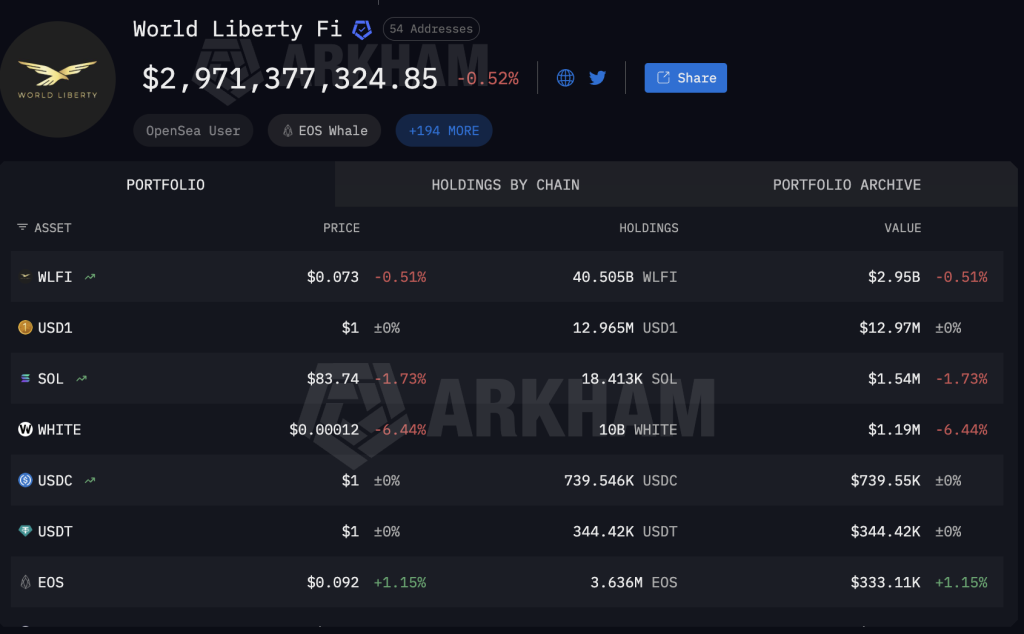
Republican Senator Thom Tillis is conditioning his vote on the Senate Clarity Act bill on inclusion of ethics language that restricts White House officials from promoting or issuing digital assets, and without him, the math does not work.
Tillis sits on the Senate Banking Committee, the gatekeeper for advancing the bill, and his defection would signal broader Republican fracture at the worst possible moment for crypto legislation.
“There has to be ethics language in the bill before it leaves the Senate, or I’ll go from one of the people working on negotiating it to voting against it,” Tillis said.
That is not a negotiating bluff from a senator with a long runwaym Tillis is retiring early next year, which means he has no political incentive to soften the position.
The House already passed its version, the CLARITY Act, in July. The Senate is the bottleneck now, and this ethics dispute is the sharpest edge of that bottleneck.
- Tillis’s condition: Ethics provisions limiting White House officials from sponsoring, endorsing, or issuing digital assets must be included before he will vote yes.
- Democratic position: Senator Ruben Gallego states there is “no final bill” without bipartisan agreement on ethics language; Senator Adam Schiff says talks are narrowing.
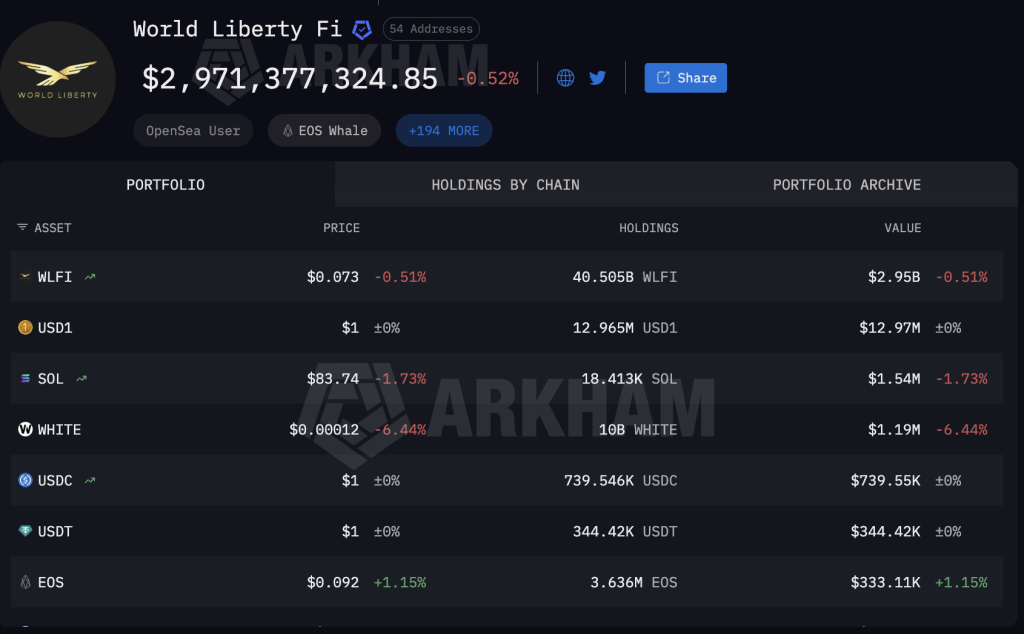
- Trump family exposure: The Trump family’s crypto ventures exceed $1 billion in value, including World Liberty Financial and the USD1 stablecoin, which prompted the Democratic push for restrictions.
- Procedural complication: The Senate Banking Committee lacks jurisdiction over ethics provisions, meaning the language must be added outside the committee markup process before floor consideration.
- Bill structure: The legislation divides crypto oversight between the CFTC and SEC; stablecoin yield payment disputes have also delayed progress.
Discover: The best pre-launch token sales
What Tillis Actually Wants in the Clarity Act Bill
The ethics provision Tillis is demanding would restrict how White House officials engage with cryptocurrency, specifically around promotion, endorsement, and issuance.
Democratic Senator Adam Schiff has framed the Democratic ask as “a ban on sponsoring, endorsing or issuing digital assets that applies to all federal employees,” including the president.
That language is a direct response to the Trump family’s expanding crypto portfolio. World Liberty Financial, the Trump-affiliated project, launched the USD1 stablecoin and is pursuing a federal banking license. The family’s combined crypto ventures are valued above $1 billion, a figure that has made Democratic support for any crypto bill contingent on conflict-of-interest guardrails.
What makes Tillis’s position significant is that he is not a Democrat using the bill as leverage – he is a senior Republican on the Banking Committee who has been actively working on the legislation.
His shift from negotiator to potential no-vote is a material change in the bill’s trajectory, not political theater.
Patrick Witt, the White House’s lead crypto policy adviser, is reportedly negotiating the ethics language alongside GOP Senators Cynthia Lummis and Bernie Moreno, signaling the administration is engaged rather than stonewalling.
Schiff noted that talks are moving: “We’re making progress. We have been talking for a long time without making much progress, and now that other parts of the bill are starting to come together, we’re narrowing our differences.” Progress, though, is not resolution.
Can the Crypto Bill Pass Without Tillis?
Senate Republican leadership cannot easily absorb Tillis’s defection. The bill needs bipartisan support to clear 60 votes for cloture, and Democratic Senator Ruben Gallego has made the Democratic bloc’s position equally firm: “no final bill, there is no final movement, unless there is a bipartisan agreement when it comes to the ethics provision.”
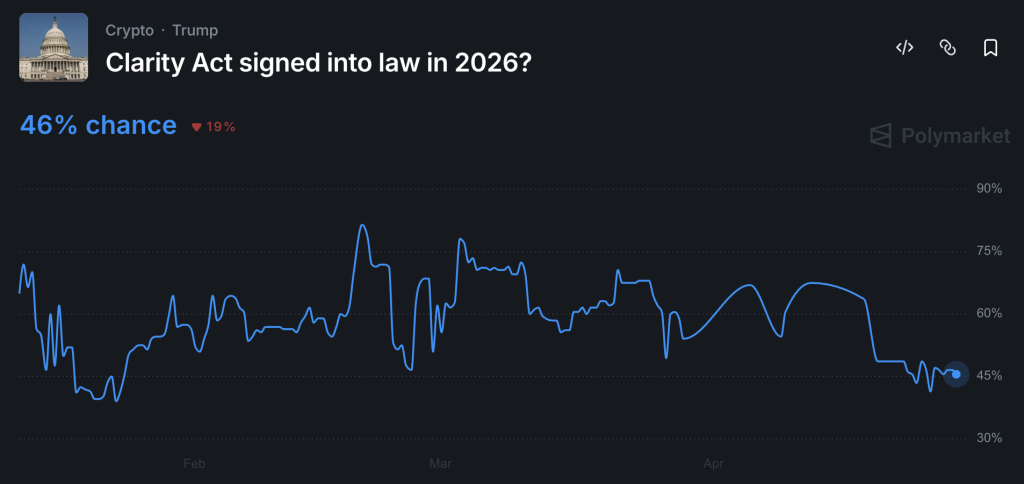
If Tillis holds and Democrats hold, the bill stalls regardless of what leadership wants. That delay has direct downstream consequences, the CFTC-SEC regulatory split that the bill establishes remains unresolved, leaving exchanges and token issuers without the jurisdictional clarity institutions need to deploy capital at scale.
The stablecoin yield payment dispute layered on top of the ethics fight gives the bill two distinct blocking points, not one. This pattern of single-point resistance reshaping US crypto policy timelines is not new – regulatory friction has repeatedly pushed crypto product approvals beyond expected windows.
If leadership accepts ethics language that satisfies both Tillis and the Democratic bloc, the bill moves to markup and then floor consideration.
Discover: The best crypto to diversify your portfolio with
The post A Republican Senator Just Threatened to Kill the Crypto Clarity Act Unless Trump Is Banned From Promoting Crypto appeared first on Cryptonews.
Crypto World
Is Whales Accumulating WOJAK at a $30 Million Market Cap: Is Crypto’s Most Iconic Meme Coin About to Explode?

WOJAK crypto recently surged 87% in a single 24-hour window, reigniting one of crypto’s most culturally loaded meme coins and catching short-sellers off guard.
The move came off a $21.5M market cap base, the kind of low-float setup that prints fast and punishes hesitation.
The catalyst was a confluence of whale accumulation and viral social momentum, pushing WOJAK 187% higher on a longer timeframe before the current consolidation.
gm cashtag $wojak hodlers and $ETH whales — eye zen hour
where we are going, we don't need roads @wojakcto pic.twitter.com/VJDwWPqdNl
 (@eyezenhour) April 27, 2026
The holder base skews heavily retail: 68% dust wallets, which signals speculative enthusiasm but also thin hands at the top. Breakout plays across the meme coin sector are drawing renewed capital, and WOJAK is squarely in that conversation.
Whether this is a re-accumulation zone or a dead-cat plateau depends almost entirely on what happens at the $50M market cap resistance level. That ceiling is where the next chapter gets written.
Can WOJAK Crypto Price Hit $50M Market Cap This Week?
WOJAK is sitting between roughly $35M and $40M market cap after that sharp 87% spike, but momentum has clearly slowed, which is typical once the initial retail push runs out of steam.
The key level is $50M. That is the real resistance, and unless price can break and hold above it with strong volume, continuation is not confirmed.
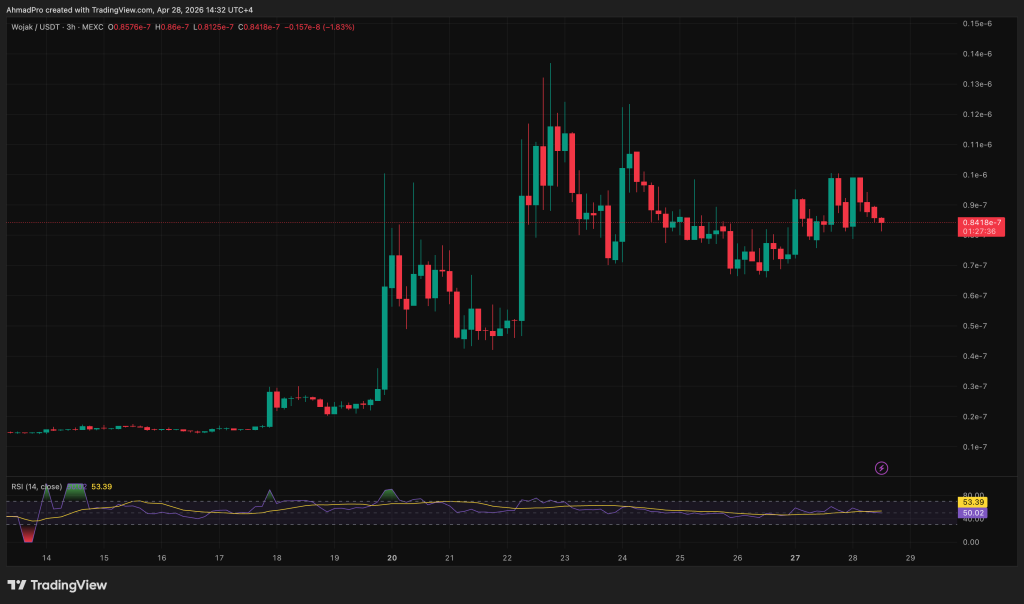
If that breakout happens, it opens the path toward $100M and real price discovery.
More likely for now, it consolidates in its current range while the market resets and waits for a catalyst.
The risk is on the downside, because liquidity is thin and holder distribution is retail-heavy, so if selling starts, it can unwind quickly back toward the $0.000376 support zone.
So the setup is simple, break $50M and it runs, fail and it drifts or drops.
Wojak Pump Proved Memecoins Still Alive, Can Maxi Doge Carry The Sector Next?
Chasing something after a 187% run is a different trade. At this point you are buying into resistance, not early momentum, which makes the risk-reward much tighter.
That is why some traders rotate earlier, looking for setups where the move has not happened yet.
Maxi Doge is getting attention in that context. It leans fully into the leverage-trader meme, and the presale is sitting around $0.0002815 with roughly $4.75M raised, getting close to the $5M milestone that often brings more visibility and faster inflows.
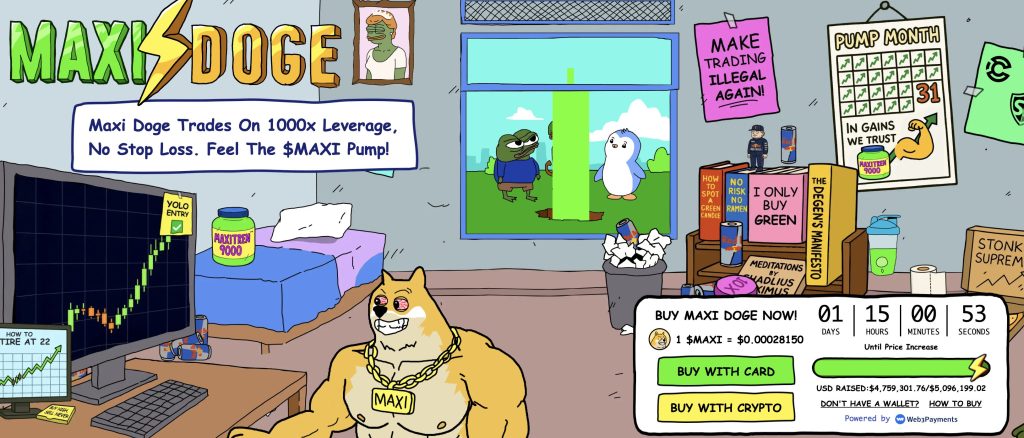
The project is built to keep engagement high, with staking, trading competitions, and a treasury aimed at supporting liquidity and growth, all wrapped in aggressive, viral branding that fits the current cycle.
But it is still a presale, which means high volatility and real uncertainty. Liquidity is not guaranteed, and execution matters.
So the shift is simple, WOJAK already moved, while something like Maxi Doge is where traders look when they want earlier positioning, with higher potential but higher risk.
The post Is Whales Accumulating WOJAK at a $30 Million Market Cap: Is Crypto’s Most Iconic Meme Coin About to Explode? appeared first on Cryptonews.
Crypto World
OpenAI reportedly missed revenue targets. Shares of Oracle and these chip stocks are falling

Samuel Boivin | Nurphoto | Getty Images
Shares of companies tied to artificial intelligence infrastructure tumbled in early trading Tuesday after a report that OpenAI has fallen short of internal growth expectations, raising fresh questions about whether the pace of spending across the sector is sustainable.
Oracle dropped about 7.5% in premarket trading Tuesday. Oracle has a $300 billion, five-year partnership to supply computing power to OpenAI for AI operations.
Chipmakers including Nvidia, Broadcom and Advanced Micro Devices declined between roughly 2% and 5%.
Qualcomm pulled back 3.5%. The stock had gotten a slight boost Monday on reports it is working with OpenAI on smartphone chips tied to the firm’s hardware ambitions. Leveraged neocloud stock CoreWeave dropped 7%.
In Asia, SoftBank Group, one of OpenAI’s largest investors, sank about 10%.
The Wall Street Journal reported that OpenAI has recently missed its own projections for user growth and revenue. The shortfall has sparked internal concern about whether the company can keep pace with the massive financial commitments required to build out data centers and secure long-term computing capacity.
According to the report, finance chief Sarah Friar has warned colleagues that if revenue growth doesn’t accelerate, the company could face difficulty funding future compute agreements.
The WSJ report “raises questions about whether the firm can fulfill its massive infrastructure obligations,” said trader Adam Crisafulli of Vital Knowledge in a morning note.
Crypto World
Bitcoin (BTC) price retreat deepens after repeated rejection at $80,000: Crypto Markets Today
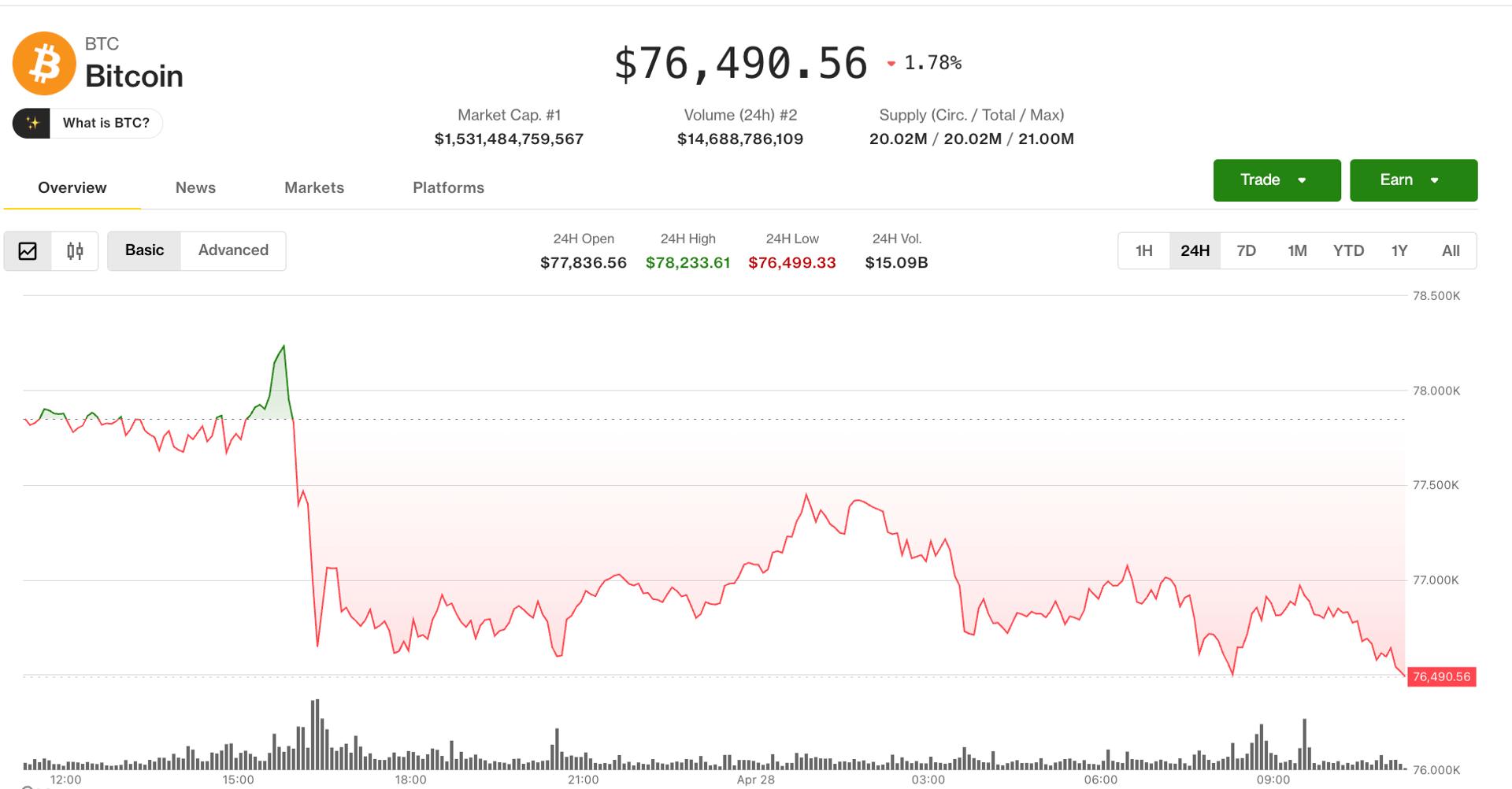
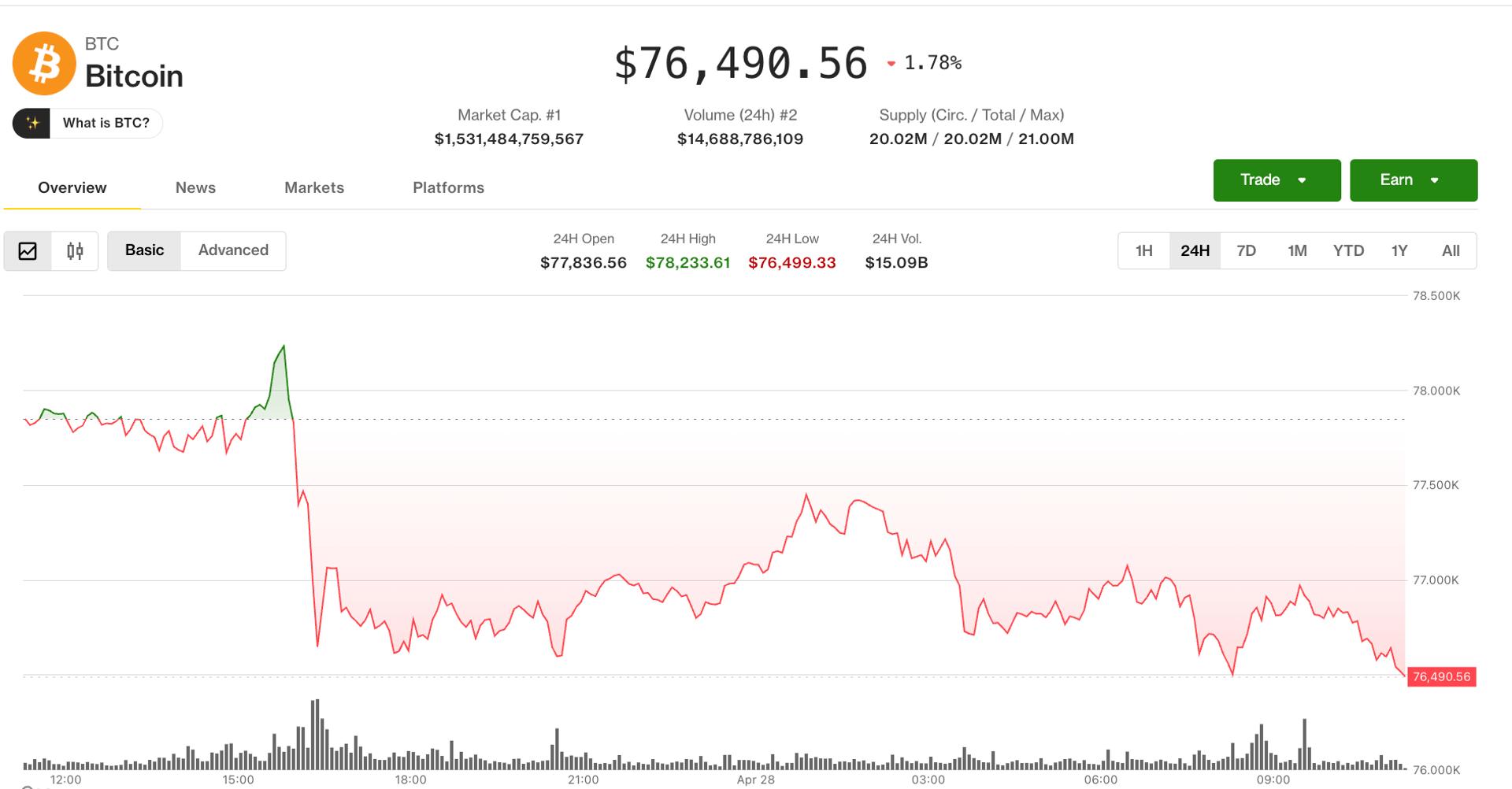
The crypto market fell for a second day on Tuesday with bitcoin and ether (ETH) both losing around 0.75% since midnight UTC.
The decline comes after bitcoin twice failed to break above the $80,000 level of resistance over the past week, with the most recent attempt occurring during Asian hours on Monday.
The jubilation from last week’s jump to $79,500 from $70,000 is beginning to subside as several key price indicators flip bearish, including the Coinbase Premium index flipping negative, a signal of waning demand from U.S. investors.
U.S. equities are also set to open down on Tuesday with Nasdaq 100 futures trading 0.5% lower since midnight UTC while the U.S. dollar index (DXY) is up by 0.25%.
Stalled peace talks between Iran and the U.S. continue to drive traditional markets, and Brent crude oil is now firmly above $105 per barrel.
Derivatives positioning
- Across the market, crypto futures open interest (OI) has fallen by over 1% to $120 billion in the past 24 hours. That’s alongside a 3% decline in trading volume and an 8% drop in liquidations, suggesting a slight cooling in market activity. Fewer open positions, lower participation and reduced forced liquidations indicate less aggressive trading overall.
- Bitcoin’s options-to-futures open interest ratio has dropped to 57.5%, the lowest since Jan. 31. It’s a sign of renewed bias for directional bets and higher short-term volatility.
- Bitcoin’s futures OI fell to 723.54 BTC, down over 9% from the recent high of 796.71 BTC. This decline comes alongside persistently negative funding rates, which are usually a sign of bearish positioning. However, this time, they stem from institutional hedging and not outright bearish bets.
- DOGE’s open interest stands out, having climbed 6% in the past 24 hours, outpacing other major cryptocurrencies. OI at 14.39 billion tokens is the highest since Oct. 10, indicating strong capital inflows. Positive funding rates and a rising 24-hour cumulative volume delta suggest traders are increasingly positioning for potential upside.
- SOL and ADA have the most negative 24-hour cumulative volume deltas (CVD), indicating that more trades are being initiated by market sellers hitting bids than by market buyers lifting offers. It shows aggressive selling pressure, even though a buyer matches every seller.
- Bitcoin and ether’s 30-day implied volatility indexes are hovering at three-month lows, indicating subdued market pricing of risk amid macro pressures such as elevated oil prices and unresolved U.S.–Iran peace talks. As Deribit says, “Negotiation game theory in the Middle East has drugged the BTC Spot market into a deep slumber.”
- On Deribit, risk reversals in options show puts trading at a premium in both BTC and ETH, with BTC puts notably more expensive than ETH puts. The pricing points to a bullish outlook for the ether-to-bitcoin ratio.
- As for flows, the $80,000 strike bitcoin has been the most actively traded in 24 hours, both in volume and open interest. Meanwhile, block flows featured risk reversals and put spreads in BTC and put spreads and straddles in ether.
Token talk
- The altcoin market underperformed bitcoin on Tuesday, as evidenced by CoinDesk’s Memecoin Select Index (CDMEME) and DeFi Select Index (DFX) tumbling by 1.6% and 1.2%, while the bitcoin-dominant CoinDesk 20 (CD20) benchmark lost just 0.8%.
- Privacy token zcash (ZEC) was the worst-performing altcoin in the CoinDesk 100 (CD100), losing 5.6% since midnight UTC, closely tracked by CHZ and HYPE, which were down by 3.9% and 3.5%, respectively.
- While the broader crypto market is down, apecoin (APE) bucked the bearish trend, rising by more than 17% as traders capitalized on a negative long/short ratio, liquidating a $1 million short position in the process.
- CoinMarketCap’s “Altcoin Season” indicator remains in a neutral zone at 39/100, suggesting investors are focused on bitcoin and whether it can break above $80,000 or continue its slide into the mid $70,000 region.
Bitcoin pulled back to $76,500 from above $79,000 earlier this week, stalling the rally from late-March lows below $65,000. Those expecting a swift return to form may want to take note that recent economic releases do not support a big bullish move.
The most important is the University of Michigan’s Survey of Consumers, which showed the consumer sentiment index falling to an all-time low of 49.8 this month, largely driven by inflationary pressures tied to the Iran conflict.
Inflation expectations also moved sharply higher, with the one-year gauge surging to 4.8% in April from 3.8% the previous month. Long-term expectations (five to 10 years) have risen to 3.5%, the highest reading since October 2025.
This is an excerpt from CoinDesk newsletter ‘Daybook.’ Sign up here, if you haven’t already.
Inflation expectations can become self-fulfilling, which is why central banks like the Federal Reserve monitor them closely and try to anchor them. The sharp rise, therefore, could limit the Fed’s ability to signal interest-rate cuts or liquidity easing in the near term, as additional monetary easing risks reinforcing inflationary pressures. That hawkish tilt could, in turn, cap upside or slow gains in BTC and other risk assets.
“For the Federal Reserve, the long-term expectations move is the more dangerous data point. It is the variable the central bank watches most closely when assessing whether inflation psychology is becoming unanchored, and a one-month shift of this size raises the bar for any near-term easing pivot, even as the real economy weakens at the margin,” analysts at Bitfinex said.
The Fed is expected to keep its benchmark interest rate steady between 3.5% and 3.75% this Wednesday.
In the meantime, traders are also pricing in a potential Bank of Japan rate increase in June.
“Rate hikes this month are looking improbable, according to current market opinion. Financial bets suggest we may see more than two rate increases in the eurozone and the U.K. before year-end. A June hike is almost fully priced in. We are now lacking clarity in the data to make good decisions, and that is the main impediment,” Timothy Misir, head of research at BRN, said in an email.
On the crypto-specific side, sustained ETF inflows remain crucial to keeping spot BTC supported on dips.
Meanwhile, coordinated industry efforts to contain fallout from the KelpDAO exploit have helped DeFi tokens hold up better than the broader market. The CoinDesk DeFi Select Index gained 0.5% over 24 hours, decoupling from the CoinDesk 20’s 1.5% decline. Stay alert!
Read more: For analysis of today’s activity in altcoins and derivatives, see Crypto Markets Today . For a comprehensive list of events this week, see CoinDesk’s “Crypto Week Ahead.”
What’s trending
Today’s signal

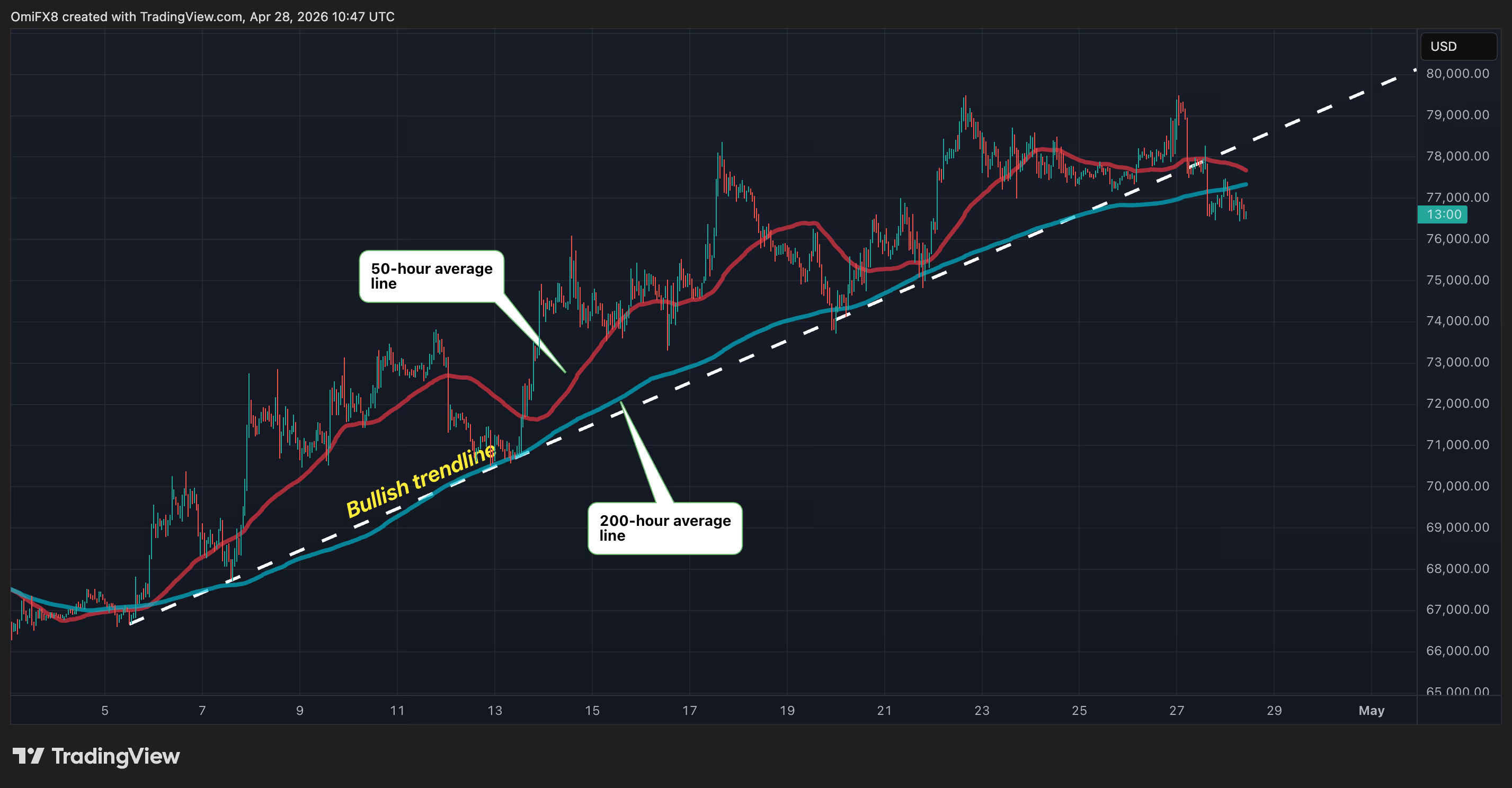
The chart shows bitcoin’s hourly price swings in candlestick format since late March.
BTC has dived out of an ascending trendline (white dashed line) that guided its upward trajectory since early this month. Moreover, prices are trading at a discount to their 50- and 200-hour averages.
That configuration points to uptrend exhaustion and scope for a deeper price pullback. The bullish case would reassert itself if prices reclaim both moving averages.

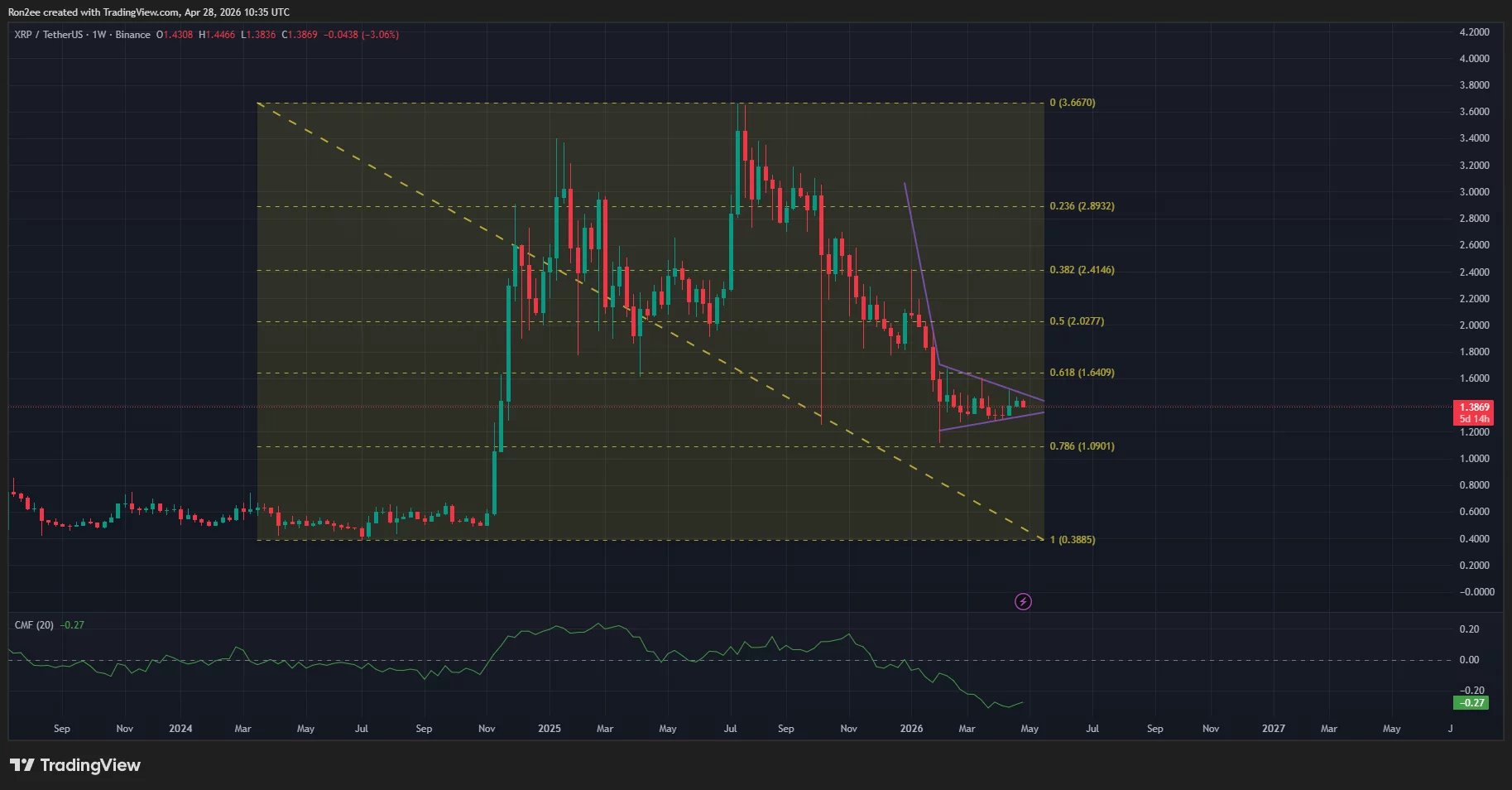
XRP price fell 5% from last week’s high, driven down by declining network activity and cooling retail interest. It has now formed a bearish pennant pattern that positions the token for more pain in the coming sessions.
Summary
- XRP price fell about 5% to $1.39, extending losses to nearly 40% from its January peak as network activity and retail participation declined.
- XRP Ledger metrics weakened, with fees dropping to $34.9K this month, daily transactions falling to ~212K, and active users slipping to 168K.
- Bearish pennant pattern and negative Chaikin Money Flow signal continued downside risk, with $1 identified as the next key support level.
According to data from crypto.news, XRP (XRP) price fell 5% from last Wednesday’s high to $1.39 at press time, while its market cap dropped to $85.8 billion. At its current price, the token is down nearly 40% from its year-to-date high of $2.36 reached in early January.
XRP price fell alongside a visible slowdown in XRP Ledger activity. Network revenue has remained subdued, with the protocol generating just $34,900 in fees so far this month. That follows $75,000 in the first quarter, down from $128,000 in the previous quarter, pointing to reduced usage despite the project’s large valuation.
Transaction metrics also show a clear decline. Daily payment transactions on the XRP Ledger have fallen to around 212,856, a sharp drop from the millions recorded a few months ago. Active user count has continued to slide as well, currently standing at about 168,000.
At the same time, the network’s burn rate has eased further. Only around 400 XRP tokens, valued at less than $600, are being burned each day. A slower burning rate reduces the deflationary pressure on the circulating supply and makes it harder for the price to sustain upward momentum.
XRP price analysis
On the weekly chart, XRP price has formed a bearish pennant pattern, a technical setup consisting of a flagpole with a symmetrical triangle pattern that typically signals a continuation of the previous downward trend.
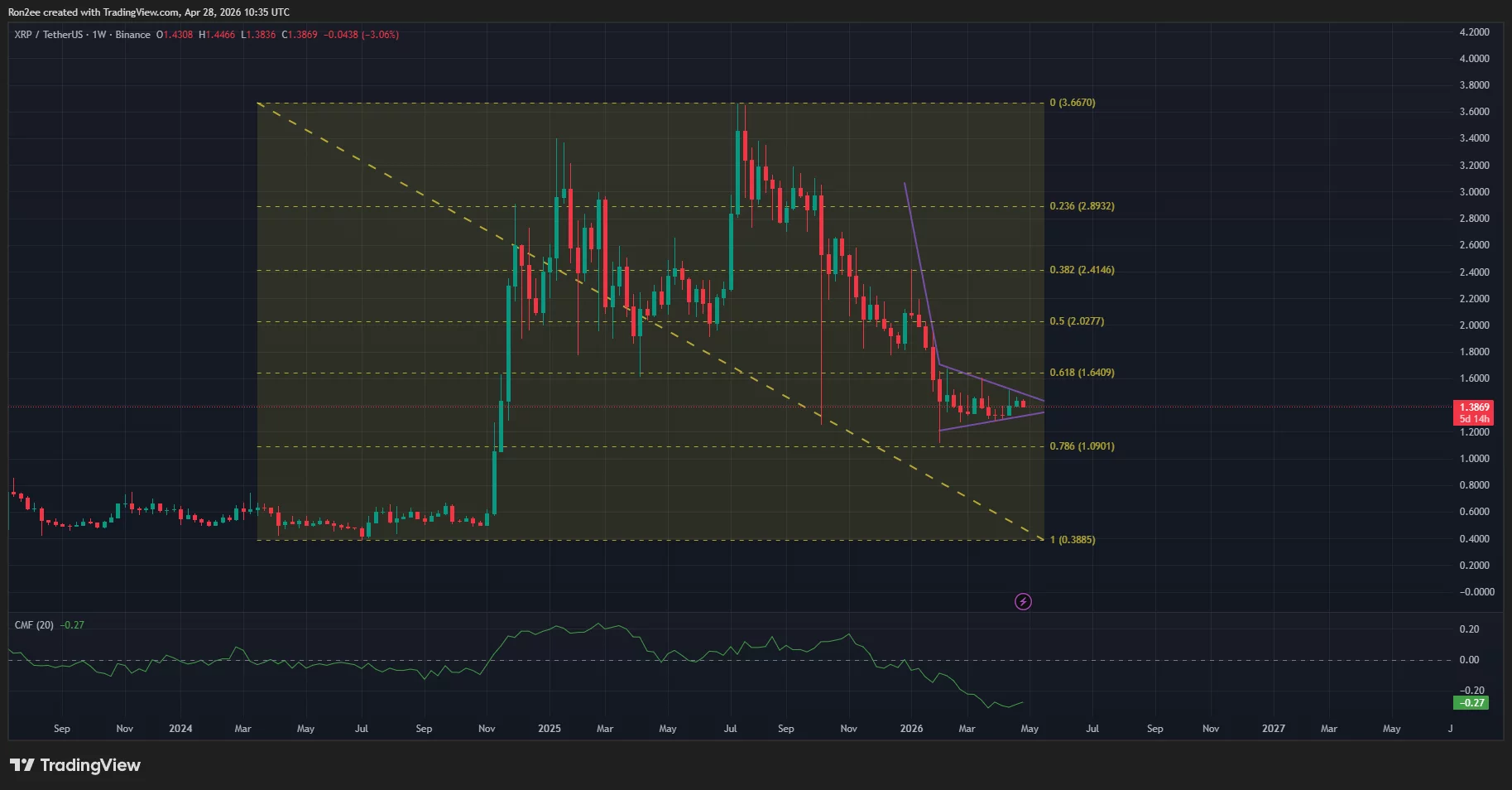
XRP price action has also slipped below the 61.8% Fibonacci retracement level, a threshold traders often watch to confirm downside continuation. Furthermore, the Chaikin Money Flow index has fallen to a negative reading, suggesting that capital is flowing out of the asset as whales and institutional investors trim their positions.
Given these signals, the near-term outlook remains tilted to the downside. The next major level to monitor sits around $1. A break below that zone could open the door to deeper losses, potentially toward psychological support levels seen late last year.
Disclosure: This article does not represent investment advice. The content and materials featured on this page are for educational purposes only.
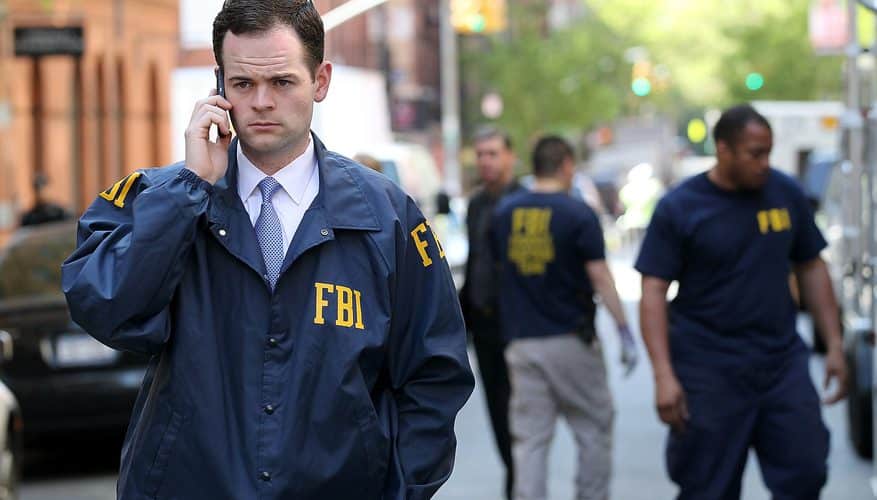
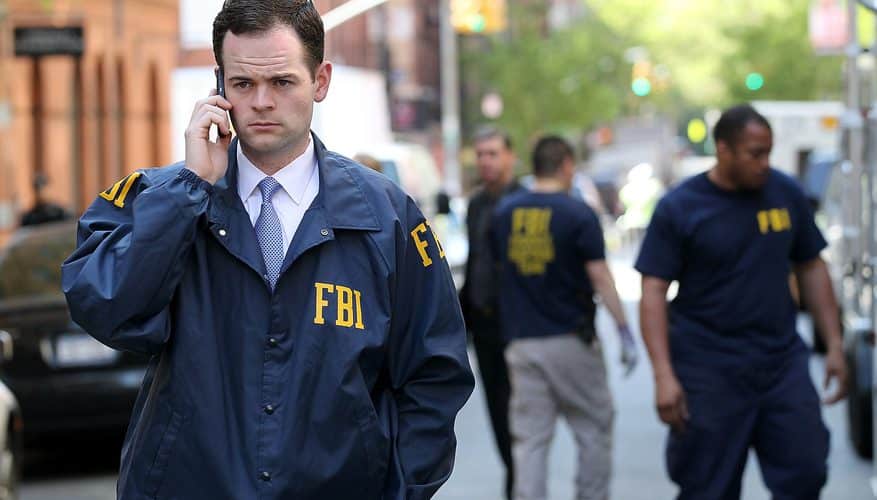
Kash Patel said the FBI arrested Xu Zewei, a Chinese national accused of cyber attacks during the COVID-19 pandemic.
Summary
- Xu Zewei was extradited from Italy to face U.S. charges over alleged COVID research hacks.
- FBI linked Xu to HAFNIUM, accused of compromising nearly 13,000 U.S. organizations.
- Kash Patel filed a $250 million defamation suit against The Atlantic and Sarah Fitzpatrick.
Xu was extradited from Italy to the United States over the weekend. He is expected to face federal charges linked to hacking activity between 2020 and 2021.
Officials said Xu and others targeted U.S.-based universities and medical researchers. The attacks focused on institutions working on COVID-19 vaccines and treatments.
Alleged role in HAFNIUM operations
The FBI linked Xu to HAFNIUM, a group accused of a wide cyber intrusion campaign.
Authorities said the group compromised nearly 13,000 U.S. organizations. The activity included access to email accounts and sensitive research data.
Patel described the case as a major step in cyber enforcement. He said the operation shows authorities will act against threats targeting U.S. systems.
Additionally, the FBI worked with Italian officials to secure Xu’s arrest and extradition.
Patel thanked Italian police leadership for their role in the case. He said cooperation between agencies helped bring Xu into custody.
The FBI also confirmed joint operations during the investigation process. Officials said coordination remained active until extradition was completed.
Lawsuit against The Atlantic
At the same time, Patel filed a $250 million defamation lawsuit against The Atlantic and reporter Sarah Fitzpatrick.
The complaint alleges the publication reported “false and obviously fabricated allegations” about his conduct as FBI Director.
The report claimed issues including drinking, absences, and erratic behavior. Patel disputes these claims and has taken the case to U.S. District Court in Washington.

Coca-Cola (KO) Q1 2026 earnings

Jack Dorsey’s Block nears 9,000 BTC in treasury after Q1 addition

Politics Home | Morgan McSweeney Says Mandelson’s Friendship With Epstein Was “Knife Through My Soul”

Manchester United reach agreement with Casemiro over contract clause amid transfer speculation

US brings back mandatory military draft registration

Steven Gerrard disagrees with Gary Neville over ‘shock’ Chelsea and Arsenal claim | Football


-

 Fashion4 days ago
Weekend Open Thread – Corporette.com
-

 Tech19 hours ago
Register Renaming | Hackaday
-
 Crypto World3 days ago
Hyperliquid $HYPE Rally Builds Momentum as AI Sector Enters Prove-It Phase
-

 Politics6 days ago
Making troops accountable for war crimes threatens US alliance, ex-SAS colonel warns
-

 Politics6 days ago
Disabled people challenge government SEND proposals over segregation concerns
-

 Business4 days ago
Patterson-UTI Energy, Inc. (PTEN) Q1 2026 Earnings Call Transcript
-

 Business6 days ago
Rolls-Royce Voted UK’s Most Iconic Trade Mark as IPO Register Hits 150
-
 Crypto World7 days ago
Five Value Stocks with Recovery Potential in 2026: PayPal (PYPL), Nike (NKE), and More
-
 Sports2 days ago
IPL 2026: Ruturaj Gaikwad registers slowest fifty of the season, enters all-time unwanted list | Cricket News
-

 Politics15 hours ago
Drax board avoid their own AGM, accused of greenwashing & environmental racism
-

 Crypto World7 days ago
New York sues Coinbase, Gemini over prediction market offerings
-

 Politics6 days ago
Starmer handler McSweeney to be dragged from shadows by Foreign Affairs Committee
-

 Politics6 days ago
Zack Polanski responds to home secretary’s taser threat
-
Politics6 days ago
Wings Over Scotland | How To Get Away With Crimes
-
Entertainment7 days ago
Sydney Sweeney cameo cut from “The Devil Wears Prada 2”, source explains why (exclusive)
-
 Business6 days ago
HCL Tech share price tank over 9% after weak Q4. JPMorgan, HSBC & 3 others cut target price
-
 Crypto World7 days ago
Crypto’s great hope in Senate’s Clarity Act still has a path to survive tight calendar
-

 Politics6 days ago
‘Iran is still a nuclear threat’
-

 Fashion7 days ago
Kilkenny Design New Beauty Arrivals for Spring 2026
-
 Sports5 days ago
Tim Bradley names the current best in the world: “Better than Inoue and Usyk”
You must be logged in to post a comment Login