
Crypto World
Novartis (NVS) Stock Drops 2% After Q1 Revenue Miss and Entresto Sales Plunge 42%


Key Takeaways
- Shares of NVS declined approximately 2% during pre-market trading following a first quarter earnings disappointment
- Revenue totaled $13.11B, falling short of the $13.40B Wall Street projection, representing a 1% year-over-year decline
- Sales of Entresto plummeted 42% to $1.31B following U.S. patent loss and entry of generic alternatives
- Core earnings per share decreased to $1.99 from $2.28; core operating profit contracted 12% to $4.9B
- CEO Vas Narasimhan cautioned that the U.S. “most favored nation” pricing mechanism could restrict patient access to innovative therapies in Europe and Japan over the next 18 months
Novartis delivered a challenging opening quarter for 2026, with first quarter performance falling below expectations on both revenue and profitability metrics as generic erosion proved more severe than anticipated by analysts.
Revenue registered at $13.11 billion, missing the $13.40 billion Street estimate. Core operating profit contracted 12% to $4.9 billion, likewise trailing the approximately $5.1 billion consensus compiled by Visible Alpha.
The primary driver of underperformance was Entresto, the pharmaceutical giant’s leading cardiovascular medication. Revenue from the therapy collapsed 42% to $1.31 billion following the expiration of its U.S. patent protection and subsequent generic market entry. Wall Street had projected $1.37 billion.
Entresto accounted for 14% of consolidated revenue in the prior year, representing one of the most significant patent expirations in the company’s recent history. CEO Vas Narasimhan has characterized it as the most substantial patent cliff Novartis has encountered in twenty years.
The challenges extend beyond Entresto. Generic competition is also impacting Promacta, used for blood disorders, and Tasigna, a leukemia medication, compounding headwinds to revenue expansion.
Core earnings per share declined to $1.99, compared with $2.28 in the year-ago period. Operating income contracted 9% while net income fell 13%, driven by both the revenue shortfall and increased research and development expenditures.
CFO Mukul Mehta informed reporters that the performance aligned with internal projections. He indicated the company anticipates “growth to return back to our P&L in the second half of this year.”
Novartis maintained its full-year outlook, citing a robust pipeline and continuing product launches. The organization anticipates approximately $4 billion in revenue erosion this year stemming from generic competition affecting Entresto, Promacta, and Tasigna.
CEO Raises Concerns Over MFN Pricing Framework
Beyond the quarterly results, CEO Narasimhan utilized the earnings release to voice apprehensions regarding U.S. pharmaceutical pricing policy, particularly the “most favored nation” mechanism.
The MFN framework links U.S. pharmaceutical prices to those paid in other developed nations. Narasimhan cautioned that the ramifications would extend internationally, stating “the reality of MFN is going to set in in the next 18 months.”
He indicated Novartis is encouraging Europe and Japan to reconsider their pricing and reimbursement frameworks for innovative medications. Absent reforms, he cautioned that “novel medicines might see delayed entry” and patient access could deteriorate.
Currently, the immediate impact on Novartis remains contained. MFN presently affects approximately 5% to 10% of Medicaid-associated revenue. However, Narasimhan views the policy as permanent. “I don’t see it disappearing in the U.S.,” he stated.
His remarks parallel those from competitors. Roche and AstraZeneca have similarly identified Europe’s reimbursement structure as an escalating threat to future therapeutic availability.
Analyst Community Maintains Cautious Optimism
Notwithstanding the earnings miss, the investment community has not abandoned confidence in the shares. Novartis maintains a Moderate Buy consensus rating derived from six analyst opinions.
The consensus price target stands at $169.86, suggesting approximately 17% appreciation potential from present trading levels.
Entresto will face patent expirations in Europe beginning in November, which will introduce additional revenue pressure during the latter half of the year.




A new Wall Street Journal report claims OpenAI missed internal revenue and weekly active user targets in early 2026. The story landed hours before US markets opened on April 28, pulling AI-linked shares lower in pre-market trading.
According to CNBC’s Mad Money host Jim Cramer, the report was a recycled hit job timed to rattle AI stocks before earnings season.
Report Lays Out OpenAI’s Internal Misses
The piece said OpenAI fell short of internal goals for revenue and weekly active users during early 2026. The shortfall came as rivals picked up share in coding and enterprise workloads.
ChatGPT also missed its internal target of 1 billion weekly active users by year-end. Gains by Anthropic and Google’s Gemini were cited as a key reason. Developer-heavy segments saw the sharpest competitive pressure, according to the report.
OpenAI is racing toward a possible public listing valued near $850 billion. The company has signed compute commitments worth hundreds of billions of dollars with cloud partners.
That includes a recently restructured arrangement with Microsoft that ended Azure exclusivity.
CFO Sarah Friar Pushes for Tighter Spending Discipline
Chief Financial Officer Sarah Friar warned colleagues that aggressive capital expenditure could outpace revenue if growth does not accelerate.
Internal debate has reportedly grown over whether OpenAI can fund its data-center pipeline before any public listing.
Friar has previously told colleagues that OpenAI is not ready for its planned 2026 listing. CEO Sam Altman, by contrast, has favored a faster timeline and continued aggressive investment in compute.
Other media outlets have also focused on whether the company’s burn rate can sustain its capex pipeline.
Pre-market trading saw Oracle drop roughly 3%, with Nvidia and AMD easing on the headlines.
Cramer Calls Out the Timing
Cramer pushed back on the framing, calling the new report an evergreen hit job whose timing seems often too deliberate.
“Doesn’t everyone marvel as I do of the exquisite timing of this Journal evergreen hitjob? Timing is everything,” he quipped.
Meanwhile, the narrative comes amid expected pressure from rivals such as Anthropic, whose pre-IPO valuation has reached $1 trillion on Jupiter.
Bulls argued OpenAI is still growing fast, with capex shaped more by chip supply than soft demand.
Skeptics, however, flag real concerns about burn rate, IPO readiness, and Altman’s expansion plans.
The split mirrored a broader market divide over AI valuations heading into earnings season.
“Valuation split is likely among companies benefitting from AI. Companies in the AI field could face ‘valuation dispersion’ over the coming years, Morgan Stanley strategists say in a note. Companies that use AI to improve their productivity and lower costs are likely to “re-rate higher while others fall behind,” strategists say.
The next stretch of AI and semiconductor earnings reports may decide which side gains traction.
If revenue accelerates and capex commitments hold, the WSJ findings will fade.
However, if growth keeps moderating, Friar’s internal warnings could shape OpenAI’s path to the public market.
The post New Report Drops OpenAI Bomb at Worst Possible Time appeared first on BeInCrypto.
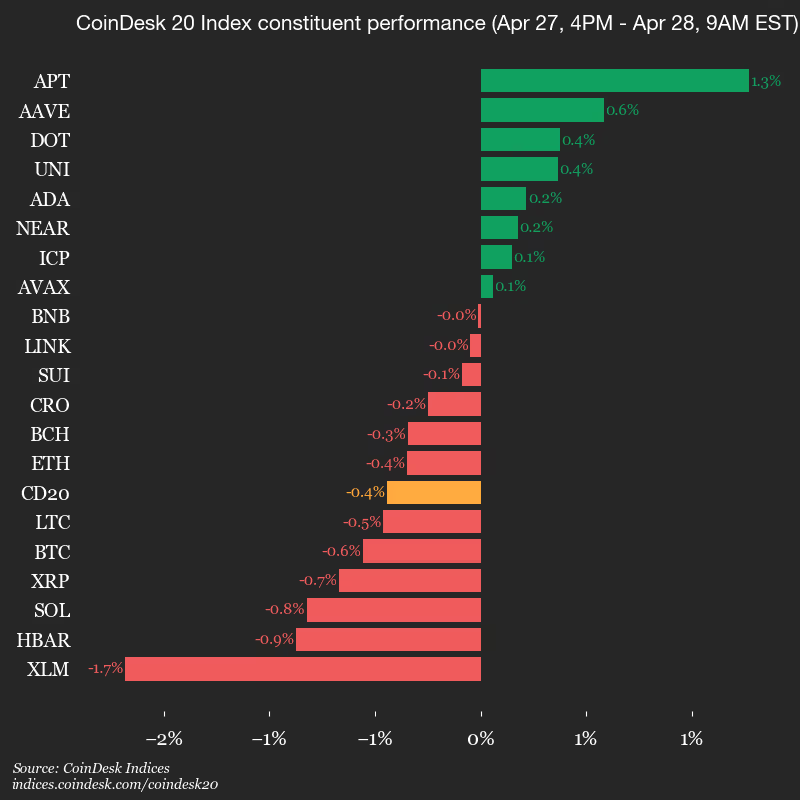
CoinDesk Indices presents its daily market update, highlighting the performance of leaders and laggards in the CoinDesk 20 Index.
The CoinDesk 20 is currently trading at 2071.97, down 0.4% (-9.25) since 4 p.m. ET on Friday.
Eight of 20 assets are trading higher.

Leaders: APT (+1.3%) and AAVE (+0.6%).
Laggards: XLM (-1.7%) and HBAR (-0.9%).
The CoinDesk 20 is a broad-based index traded on multiple platforms in several regions globally.

Decentralized finance (DeFi) has transformed financial transparency by making vast amounts of blockchain data publicly accessible. However, access does not equal understanding. Without the right analytical approach, even experienced participants can misinterpret signals and make costly decisions. This article explores how to properly read Total Value Locked (TVL), leverage analytics platforms, identify opportunities through on-chain data, and avoid misleading metrics.
1. Understanding TVL (Total Value Locked) Beyond the Surface
Total Value Locked (TVL) is one of the most widely cited metrics in DeFi. It represents the total value of assets deposited in a protocol’s smart contracts. While often used as a proxy for trust and adoption, TVL can be misleading if interpreted naively.
Key considerations:
- Price Sensitivity: TVL fluctuates with token prices. A rise in TVL may reflect asset appreciation rather than new capital inflows.
- Double Counting: Assets can be reused across protocols (e.g., staking LP tokens), inflating TVL figures artificially.
- Capital Efficiency: High TVL does not necessarily indicate efficiency or profitability. Some protocols generate more revenue with lower TVL.
- Liquidity Composition: Understanding whether TVL consists of stablecoins, volatile assets, or incentivized deposits is crucial.
Takeaway: TVL should be contextualized alongside metrics like protocol revenue, user activity, and capital turnover.
2. Leveraging Analytics Platforms
Modern DeFi analytics platforms provide tools to interpret blockchain data effectively. Among the most widely used is Dune Analytics, which allows users to query blockchain data using SQL and visualize it through dashboards.
Popular platforms include:
- Dune Analytics — Custom dashboards, community-driven insights
- DeFiLlama — TVL tracking across chains and protocols
- Nansen — Wallet labeling and smart money tracking
- Glassnode — Advanced metrics for macro-level insights
Best practices:
- Cross-check data across multiple platforms to avoid bias
- Understand the methodology behind each metric
- Customize dashboards to track specific strategies or protocols
Takeaway: Tools are only as powerful as the user’s ability to interpret them critically.
3. Finding Opportunities Using On-Chain Data
On-chain data offers a transparent view into market behavior, enabling users to identify emerging opportunities before they become widely known.
Key strategies:
- Wallet Tracking: Monitor “smart money” wallets to identify early positioning in new protocols
- Liquidity Flows: Track capital entering or exiting protocols to gauge momentum
- Token Distribution: Analyze holder concentration to assess risk and decentralization
- Yield Analysis: Compare real yield (fees generated) versus incentivized yield (token rewards)
For example, a sudden increase in liquidity combined with rising user activity—but without excessive token incentives—may indicate organic growth.
Takeaway: Early signals often appear in behavior, not headlines.
4. Avoiding Misleading Metrics
Not all metrics are created equal. Some are intentionally designed to attract users rather than inform them.
Common pitfalls:
- Inflated APYs: High yields often rely on unsustainable token emissions
- Vanity Metrics: User counts or transaction volumes can be inflated through bots or incentives
- Short-Term Spikes: Temporary liquidity mining campaigns can distort long-term viability
- Ignoring Risk Factors: Metrics rarely account for smart contract risk, governance issues, or market volatility
A protocol offering 1,000% APY may appear attractive, but if the reward token rapidly depreciates, real returns may be negative.
Takeaway: Always distinguish between nominal and real value.
Conclusion
DeFi analytics is not about memorizing metrics—it is about understanding context, questioning assumptions, and synthesizing multiple data points into a coherent view. Tools like Dune Analytics and Nansen empower users to navigate this landscape, but critical thinking remains the most valuable asset.
In a market driven by transparency yet clouded by noise, those who can interpret on-chain data effectively gain a decisive edge.
REQUEST AN ARTICLE


Bitcoin (BTC) closed above the 21-week exponential moving average for the first time in roughly six months. The reclaim opens a technical retest that analysts say leaves little margin for error.
The weekly close near $76,794 places the price in striking distance of the EMA from above. That position has historically separated trend recoveries from failed bounces in past cycles.
Six-Month Streak Below the EMA Ends
Bitcoin had spent roughly six months trading underneath the 21-week EMA. The moving average is widely tracked as a proxy for BTC’s medium-term trend.
The weekly chart shared by Rekt Capital on X shows the price reclaiming the green line after a steep decline. BTC peaked above $125,000 in November 2025 before sliding through the first quarter of 2026.
Price is now hovering near $76,794, well off its highs but recovering from a March low near $61,500. Two horizontal levels stand out in the structure, $72,810 and $65,710. Both mark prior swing zones that now frame the broader range.
Why the Retest Window Is Tight
The analyst said Bitcoin’s position above the EMA opens the door to a pullback. The line could be tested from above within days. The same EMA had capped every rebound attempt since the November peak.
The risk is that the buffer between the current price and the indicator is thin. Any sharp weekly wick lower could invalidate the reclaim before the bulls have time to base.
“Which means price is technically positioned for a retest of the EMA. The problem is that there is very little space for the retest to breathe, making it very easy for BTC to drop below the EMA. Bitcoin will need to try to hang at these highs if the retest is to be successful.”
The note frames the next weekly close as the most important data point for the trend.
What to Watch Next
A successful defense of the EMA on the next weekly close would offer the strongest signal in months. The last comparable reclaim came after the November 2025 top. Traders will watch whether buyers hold the reclaim through the next session.
A failed retest brings the $72,810 and $65,710 zones back into focus as downside checkpoints. The lower band roughly aligns with the March swing low and would mark a deeper structural test.
The post Bitcoin Reclaims Critical Trend Line After 6 Months appeared first on BeInCrypto.


Already noted for embracing digital assets, the U.S. Commodity Futures Trading Commission is also leaning into artificial intelligence to pick up the slack after slashing more than a fifth of its workforce, Chairman Mike Selig said in an interview with CoinDesk.
Selig, who is set to appear at Consensus 2026 in Miami next week, said AI and automation can make up for the personnel cuts under President Donald Trump’s campaign to reduce federal staffing. He said the agency — on its way to become a leading U.S. regulator for the crypto sector — is pushing toward using the technology to review registration applications and even help in market surveillance.
The CFTC registration process currently relies on the manual submission of documents, Selig said, so “we’re building out systems to automate that, to make it much more efficient.” “AI tools can be used to review the applications, flag certain things for the staff, make their jobs easier, make it much faster for them to provide feedback and also reject certain things that aren’t materially complete,” he said. “We can see something come in with blank space or inadequate descriptions or things that are clearly wrong, picked up by AI, and it can reject those or put them at the back of the line.”
Selig said his staff is currently being trained on using Microsoft’s Copilot for the first time, but the agency is also building some “in-house” tools for “reviewing swap data, reviewing for market-surveillance purposes; We have tools now that can help us reach conclusions about certain trades and all of that. So we’re embracing technology.”
The chairman has been at the helm of the U.S. derivatives regulator for four months, and it has leapt into the fray on emerging technologies, including the oversight of both crypto and the prediction markets.
Crypto taxonomy
Even in the absence — so far — of a new crypto law from Congress, one of Selig’s major initiatives has been embracing oversight of the industry. To that end, he said the most important action taken to-date was the joint guidance alongside the Securities and Exchange Commission to set out a “taxonomy” for digital assets — a system of definitions for how each subset of crypto will fit into the range of regulatory jurisdictions.
“That is a massive development that is going to allow market participants, software developers and consumers to engage with crypto systems and crypto assets with confidence that they’re not tripping into the securities laws,” he said, though the interpretive guidance doesn’t yet carry to full force of permanent policy. “Now we have clarity,” he said. “We understand what our responsibility is at the CFTC, and we will be taking action to police fraud, manipulation, insider trading in crypto markets, and we think that’s going to have a huge impact, in addition to the clarity for consumers and users of the asset class.”
Prediction markets
But his prediction-markets foray, involving the businesses such as Kalshi, Polymarket, Crypto.com, Coinbase and Gemini, has been the most immediately contentious. Selig’s unbending stance that the CFTC is the only relevant regulator of these firms has put him at odds with the states who have challenged the companies for running afoul of state gaming laws — especially in the sports betting realm. He’s sued several states, most recently including New York, defending the agency’s “exclusive jurisdiction.”
Late last week, the CFTC joined in a Department of Justice case against a U.S. Army Special Forces soldier who is accused of placing prediction-market bets on the military action in Venezuela that he took part in. Gannon Ken Van Dyke, a master sergeant among the Army’s vaunted green berets, was arrested and charged with using confidential government information and fraud, plus the CFTC’s own complaint against him for insider trading.
“We are on the case and continue to watch for news,” Selig said of his agency’s enforcement stance on prediction markets. “We will be taking action against bad actors in our markets, and we’re taking this very seriously. It’s not lip service, and market participants should be on notice.”
Read More: U.S. CFTC’s Selig says AI has helped make up for staffing cuts at key crypto watchdog

Key Takeaways
- Redburn Atlantic raised Snap to “Buy” with a $10 price target, up from $5
- Snapchat+ subscription revenue projected to surge to $1.75B within three years
- Company expected to achieve GAAP profitability by 2026
- AI-powered efficiency initiatives could drive gross margins beyond 60%
- Despite gains, SNAP remains down approximately 25% in 2025 and 41% off its 52-week peak
Shares of Snap (SNAP) rallied approximately 7-8% during Monday’s session following a significant upgrade from Redburn Atlantic, which elevated the social media company to “Buy” while doubling its price objective from $5 to $10.
The new $10 price objective suggests potential gains of approximately 65% from SNAP’s pre-upgrade trading levels.
This wasn’t merely a ratings change — Redburn delivered a comprehensive investment thesis explaining why the firm believes Snap is approaching a pivotal inflection point.
Redburn’s bullish stance hinges on Snap’s strategic pivot beyond pure reliance on advertising revenue. Though digital advertising remains the primary income source, the firm highlighted the rapidly expanding Snapchat+ premium subscription offering as the compelling catalyst.
Analysts project subscription income will more than double across the coming three-year period, climbing from approximately $700 million to $1.75 billion. This trajectory would elevate subscriptions from 13% of total revenue to 22%.
This type of stable, recurring income stream represents a fundamental transformation for a business historically vulnerable to the volatile swings of digital advertising markets.
The Path to Consistent Profits
Redburn’s analysis also emphasized operational discipline as a critical component of the investment case. The company reportedly achieved GAAP breakeven status last year — when excluding its experimental Spectacles hardware division — and analysts forecast Snap will deliver “meaningful profitability” by 2026.
Reaching this benchmark would mark a significant achievement for a company that has consistently struggled with profitability since its 2017 public debut.
Substantial workforce reductions combined with a strategic transition toward AI-driven operations are anticipated to elevate gross profit margins above the 60% threshold. Redburn characterized this evolution as Snap finally maturing into a streamlined, profit-oriented enterprise.
Monday’s price action brought SNAP shares into contact with its 100-day moving average. Market watchers noted that a convincing breakout above the $6.20 level would indicate a fundamental shift in long-term momentum favoring bulls.
The stock also temporarily surpassed important technical resistance points, capturing attention from momentum traders monitoring for potential trend reversals.
Current Market Position
Despite Monday’s impressive gains, Snap shares remain underwater by roughly 25% for the year and continue trading approximately 41% beneath the 52-week high of $10.35 reached in July 2025.
An investor who allocated $1,000 to SNAP five years ago would currently hold a position worth around $100.
The broader Wall Street analyst consensus remains more cautious than Redburn’s optimistic outlook. The overall rating stands at “Hold,” though the consensus price target of approximately $7.99 still indicates over 30% potential appreciation from present levels.
SNAP has experienced single-day moves exceeding 5% on 26 different occasions over the trailing twelve months, underscoring the stock’s characteristic volatility.
The Redburn upgrade represents the most aggressively bullish perspective on the stock in recent quarters, though this optimistic viewpoint has not yet gained widespread acceptance among Wall Street research firms.
Chainlink (LINK) recorded its highest single-day exchange outflow since December 2, 2025, according to data shared by Santiment.
Summary
- Chainlink recorded 970,430 LINK in net exchange outflows, its highest one-day withdrawal since December 2025.
- LINK traded at $9.23 despite rising demand, showing weak short-term momentum across the broader market.
- BridgeTower deployed Chainlink infrastructure for tokenized securities tied to the $11 billion DOM X project.
The data showed that 970,430 LINK left known exchanges on April 27, 2026. The withdrawn tokens were worth about $8.95 million based on LINK’s average price at the time. Large exchange outflows often show that traders are moving assets into private wallets.
The withdrawals came as the wider crypto market slowed after a recent rally. Chainlink still saw strong activity, as traders appeared to use the price pullback to increase their holdings.
Exchange outflows can reduce the amount of LINK available for trading on platforms such as Binance. If demand remains steady, lower exchange supply may support price stability.
LINK price slips despite rising demand
LINK traded at $9.23 at the time of writing, according to CoinGecko data. The token was down 0.98% over the past 24 hours, showing weak short-term momentum.
The decline came after a recent price recovery. However, the latest withdrawal data showed that some investors continued to accumulate LINK despite the weaker price action.
BridgeTower uses Chainlink stack for tokenized securities
Elsewhere, BridgeTower Capital has deployed Chainlink’s full infrastructure stack to support tokenized securities tied to the DOM X Arizona Copper-Gold Project. The project is linked to an $11 billion U.S. natural resource initiative.
The companies described the deployment as “live production infrastructure” rather than a pilot. The move adds another real-world asset use case for Chainlink as institutional interest in tokenization grows.
Disclosure: This article does not represent investment advice. The content and materials featured on this page are for educational purposes only.
Ondo Finance has teamed up with financial technology giant Broadridge to give holders of tokenized stocks and exchange-traded funds (ETFs) the ability to participate in proxy voting.
Broadridge has built a Web3-enabled relay system where tokenholders connect their crypto wallet to Broadridge’s ProxyVote platform, submit their voting preference, and Ondo’s issuer then votes the real shares accordingly, with the entire process recorded onchain for transparency, according to a Tuesday announcement.
“By working with Broadridge, we are enabling holders of our on-chain tokenized stocks to access governance and voting capabilities, with all the additional benefits on-chain tokens provide,” Matthieu de Vergnes, global head of institutional at Ondo Finance, said.
Proxy voting is when a shareholder authorizes someone else to vote on corporate matters on their behalf. It has long been a standard feature of traditional equity ownership, but tokenized stocks have largely lacked it. The Broadridge integration addresses this gap, letting investors sign in via their crypto wallets, confirm their holdings and submit votes.
Related: SEC ‘on the cusp’ of onchain tokenized securities exemption: Atkins
Tokenized stocks hit $1.15 billion
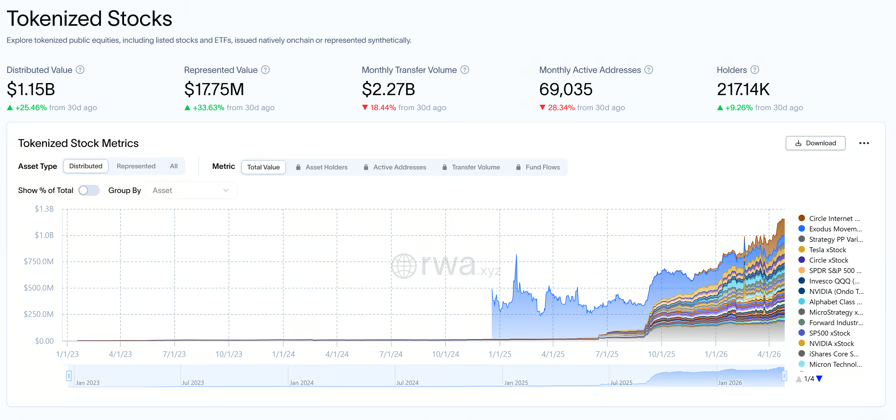
Tokenized stocks have surged to $1.15 billion in distributed value, up 25.46% over the past 30 days, according to data from RWA.xyz. Monthly transfer volume stands at $2.27 billion, with over 217,000 holders, up 9.26% in the last month alone.
Tesla, NVIDIA, and S&P 500-linked products are among the most prominent assets by value, alongside Circle Internet and Strategy-linked tokens.
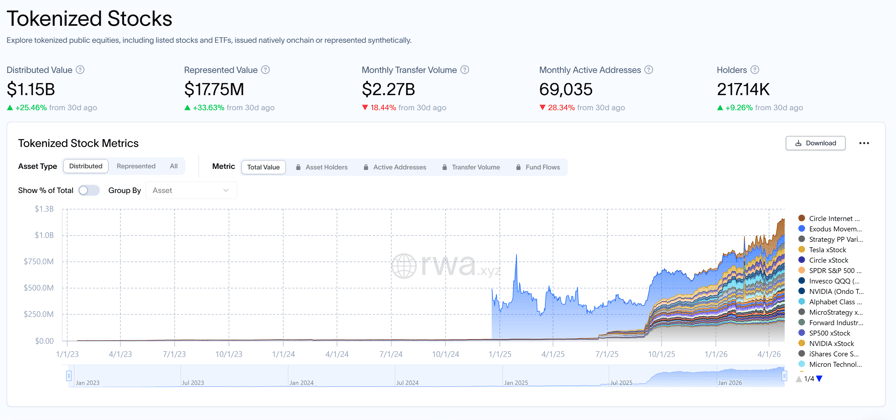
Tokenized stocks continue to grow. Source: RWA.xyz
Ondo, which claims roughly 70% of the tokenized stock market with over $700 million in total value locked, offers its products across Solana (SOL), Ethereum (ETH) and BNB Chain (BNB). The tokens are backed by the corresponding stocks or ETFs.
Related: UK plans payments rule changes for stablecoins, tokenized deposits
Franklin Templeton, Ondo bring tokenized ETFs to crypto wallets
Last month, Franklin Templeton and Ondo Finance announced a partnership to bring tokenized versions of Franklin’s ETFs onchain, giving investors access through crypto wallets rather than traditional brokerage accounts. The initial offering covers five funds spanning US equities, fixed income, and gold, available across Europe, Asia-Pacific, the Middle East and Latin America, with US access pending regulatory clarity.
Meanwhile, Binance has listed 10 tokenized assets from Ondo Global Markets on its Binance Alpha platform, including tokens tracking Apple, Nvidia and the Invesco QQQ ETF.
Magazine: Should users be allowed to bet on war and death in prediction markets?
Crypto World
BNB Chain Just Activated the Osaka Hard Fork: Will 20,000 TPS Finally Trigger a Price Breakout Above $700?

The BNB Chain community has now passed the protocol-level event that many hoped would ignite a price breakout, or feared would trigger the classic sell-the-news collapse.
The Osaka/Mendel hard fork successfully activated at 02:30 UTC on April 28. What happens next depends heavily on whether bulls can defend the $612–$620 zone now that the upgrade is live and the initial uncertainty has cleared.
The upgrade rolled out nine protocol enhancements, including six Ethereum EIPs and two BNB Chain-specific optimizations.
It caps transaction gas at 16,777,216 units and advances the network’s throughput ambitions toward 20,000 TPS. It builds directly on the Fermi and Maxwell upgrades that already reduced block times to 0.45 seconds.
The Osaka/Mendel hard fork is now live on BNB Smart Chain
BSC now delivers better execution, more stable performance and faster finality that holds up under real usage.
As onchain activity on BSC grows, this upgrade enables:Users faster confirmations & more consistent… pic.twitter.com/hjxs538VuK
— BNB Chain (@BNBCHAIN) April 28, 2026

Node operators who completed the migration to BSC v1.7.2 before activation remain synced with the mainnet; those who didn’t risked disconnection. MEXC’s analysis framed the upgrade as “the consolidation phase, making sure the speed gains hold up under real load.”
Testnet validation was confirmed on both March 24 and March 27, and early reports indicate a smooth mainnet transition. The broader crypto market continues posting mixed signals.
BNB’s neutral oscillator readings and position near or below key moving averages mean the post-fork performance itself now becomes the decisive factor, rather than pre-event hype.

Bitcoin’s ongoing resistance battle adds further macro noise that traders cannot ignore.
With the hard fork now active, attention shifts from anticipation to real-world validation: sustained stability, improved execution under load, and whether the enhanced finality and gas predictability can support higher on-chain activity without hiccups.
A clean consolidation phase could provide the foundation for renewed upside; any unexpected issues would likely revive short-term selling pressure.
Can BNB Price Hit $672 After the Osaka/Mendel Hard Fork?
BNB price is stuck in a tight range, and right now it is not trending; it is just hovering around the pivot near $633 with no real momentum behind either side.
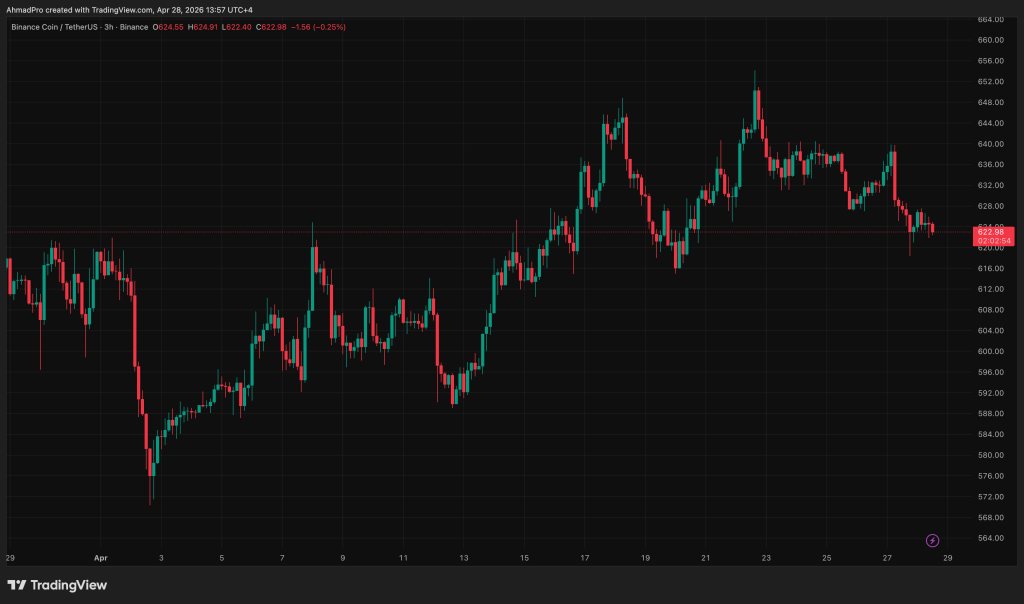
The structure is neutral. RSI and MACD are flat, and BNB price is still below key moving averages, which makes any breakout harder to sustain without a catalyst.
If BNB can reclaim $633 and hold, that is where the structure shifts slightly bullish and opens a move toward $651 and potentially higher.
The risk is losing $612, because that opens the door toward $594 quickly, especially if anything goes wrong on the technical side.
Bitcoin Hyper Could Outperform BNB and Here is Why
BNB price around $620 is solid but limited in the short term. At this size, upside is real but capped, and it mostly depends on how the fork plays out, which makes it a more binary, slower trade.
That is why some traders start looking earlier in the cycle, where the upside is not already priced in.
Bitcoin Hyper is aiming at that kind of positioning, building a Layer 2 on Bitcoin with SVM integration to bring faster execution and smart contracts into the BTC ecosystem. The idea is to combine Bitcoin’s security with high-speed performance.
The presale has already pulled in over $32.5M at around $0.0136792, which shows strong early interest and steady accumulation. Features like staking and a native bridge are meant to support real usage, not just narrative.
But it is still early, and that comes with real risk. Liquidity is not proven, execution is still ahead, and outcomes depend on adoption after launch.
So the trade-off is clear, BNB offers stability with limited upside, while something like Bitcoin Hyper offers earlier positioning with higher potential, but also higher uncertainty.
The post BNB Chain Just Activated the Osaka Hard Fork: Will 20,000 TPS Finally Trigger a Price Breakout Above $700? appeared first on Cryptonews.
Bitcoin (BTC) was worth $110,000 at last year’s big Las Vegas conference but by the time Bitcoin 2026 kicked off this week, it had fallen to less than $79,000.
Unfortunately, that was just the start of the disappointment.
The conference opened yesterday at The Venetian in Las Vegas with two senior US officials addressing a mostly empty main stage.
During the event, security also escorted the wife of imprisoned Samourai developer Keonne Rodriguez from one of the areas, and a member of Congress claimed to have started mining BTC in 2006, which isn’t possible.
The day’s most-hyped event, a main stage panel entitled “Code is Free Speech,” billed FBI Director Kash Patel and Acting US Attorney General Todd Blanche as speakers.
However, neither physically attended the event.
For a session pitched as a federal olive branch to the crypto industry, the nearly empty event landed as little more than an awkward gesture.
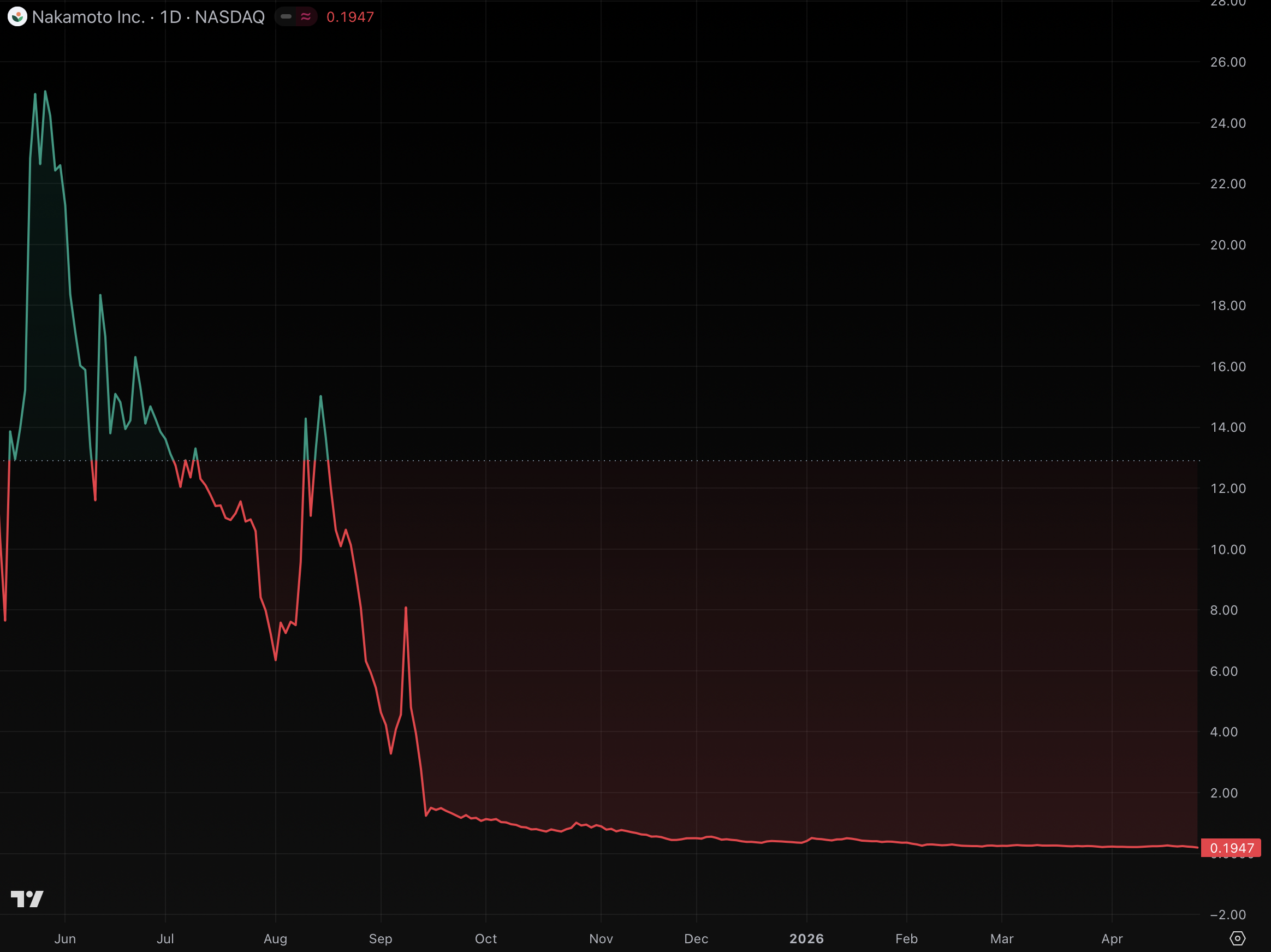
Attendees also noticed the stock of the conference organizer’s public company, Nakamoto, 99% below its price during last year’s conference.
And all this before the event’s second day had even started.
Security incident with a Samourai fan favorite
Broadly supported by the Bitcoin community, Lauren Rodriguez is the wife of Keonne Rodriguez. Her husband is serving a five-year prison sentence for pleading guilty of conspiracy to operate an unlicensed money‑transmitting business involving Samourai Wallet.
According to her characterization of events, security escorted her out of the conference “for holding #FreeSamourai signs,” tagging conference founder David Bailey.
Support for Samourai is widespread in the Bitcoin and wider crypto communities. Indeed, the conference organizer had scheduled Rodriguez to appear that same afternoon on a main stage panel entitled “The Wives & Mothers Carrying the Fight Against Injustice.”
Bailey’s staff later remedied the situation, with Lauren thanking organizers for “resolving the issue with security.” However, the initial media damage was immediate, with 140,000 views on X of her initial complaint.
‘No longer prosecute Bitcoin developers’
Back at the main stage, within minutes of a cagey and heavily qualified statement by Acting US Attorney General Blanche, Pete Rizzo breathlessly broadcasted to his followers that the “US Attorney General just said they will no longer prosecute #bitcoin developers… Samourai devs about to be free.”
That was an incredible characterization. In fact, Blanche had said nothing about freeing Samourai developers, and merely promised a heavily qualified aspiration, vaguely hoping that his department would not generally intend to prosecute software developers if “you are not helping and knowing the third party is using what you developed to commit crimes.”
Excluded from the celebratory claims on social media about Blanche’s non-existent promise to stop prosecuting Bitcoin developers, Blanche continued, “Obviously, facts matter, because if you’re laundering money or violating sanctions, the mere fact that you happen to be a coder doesn’t excuse you from criminal liability.
“So there’s a distinction there, and that’s why the facts of a particular case are very important.”
Read more: Samourai developers plead guilty
Bitcoin 2026 speaker “mining bitcoin 20 years ago”
On the same main stage, Iowa Republican Congressman Zach Nunn claimed to the audience that he “started mining BTC 20 years ago.”
Unfortunately for Nunn, Satoshi Nakamoto published the Bitcoin whitepaper in October 2008. Twenty years ago is 2006.
Lastly, the disappointing stock price of Nakamoto (NAKA), the BTC treasury stock founded by conference organizer Bailey, loomed heavily over the event.
During last year’s conference, NAKA traded over $29 per share. It closed for trading yesterday below $0.20.
Read more: Bitcoin treasury Nakamoto down 98% — still pays David Bailey lavishly
A venue far from capacity, main stage speakers dialing it in, an ejected Samourai protester, and a congressman magically mining BTC years before the network launched.
All of it fit inside just the first day of Bitcoin 2026. Two more days to go.
Got a tip? Send us an email securely via Protos Leaks. For more informed news, follow us on X, Bluesky, and Google News, or subscribe to our YouTube channel.

New Report Drops OpenAI Bomb at Worst Possible Time

UK Weather News: Where Is Hot This May Bank Holiday?
Vikings Quietly Add Intriguing New Weapon

Manchester United reach agreement with Casemiro over contract clause amid transfer speculation

US brings back mandatory military draft registration

Steven Gerrard disagrees with Gary Neville over ‘shock’ Chelsea and Arsenal claim | Football

![Yelawolf - "Money" Ft: Jelly Roll & Struggle Jennings [MUSIC VIDEO]](https://wordupnews.com/wp-content/uploads/2026/01/1769894485_hqdefault-80x80.jpg)

-

 Fashion4 days ago
Weekend Open Thread – Corporette.com
-

 Tech20 hours ago
Register Renaming | Hackaday
-
 Crypto World3 days ago
Hyperliquid $HYPE Rally Builds Momentum as AI Sector Enters Prove-It Phase
-

 Politics6 days ago
Making troops accountable for war crimes threatens US alliance, ex-SAS colonel warns
-

 Politics6 days ago
Disabled people challenge government SEND proposals over segregation concerns
-

 Business5 days ago
Patterson-UTI Energy, Inc. (PTEN) Q1 2026 Earnings Call Transcript
-

 Business6 days ago
Rolls-Royce Voted UK’s Most Iconic Trade Mark as IPO Register Hits 150
-
 Crypto World7 days ago
Five Value Stocks with Recovery Potential in 2026: PayPal (PYPL), Nike (NKE), and More
-
 Sports2 days ago
IPL 2026: Ruturaj Gaikwad registers slowest fifty of the season, enters all-time unwanted list | Cricket News
-

 Politics16 hours ago
Drax board avoid their own AGM, accused of greenwashing & environmental racism
-

 Crypto World7 days ago
New York sues Coinbase, Gemini over prediction market offerings
-

 Politics6 days ago
Starmer handler McSweeney to be dragged from shadows by Foreign Affairs Committee
-

 Politics6 days ago
Zack Polanski responds to home secretary’s taser threat
-
Politics6 days ago
Wings Over Scotland | How To Get Away With Crimes
-
 Business6 days ago
HCL Tech share price tank over 9% after weak Q4. JPMorgan, HSBC & 3 others cut target price
-

 Crypto World7 days ago
Crypto’s great hope in Senate’s Clarity Act still has a path to survive tight calendar
-

 Politics6 days ago
‘Iran is still a nuclear threat’
-

 Fashion7 days ago
Kilkenny Design New Beauty Arrivals for Spring 2026
-
 Sports5 days ago
Tim Bradley names the current best in the world: “Better than Inoue and Usyk”
-

 NewsBeat2 days ago
LK Bennett closes all stores after entering administration
You must be logged in to post a comment Login