
Crypto World
Ondo Finance and Broadridge Unite to Bring Proxy Voting to Tokenized Stocks


TLDR:
-
- Ondo Finance holds roughly 70% of the tokenized stock market share, with over $825M in total value locked.
- Holders of 250+ tokenized stocks and ETFs can now participate in proxy voting through Broadridge’s network.
- Voting recommendations are weighted proportionately based on each token holder’s onchain ownership stake.
- Ondo tokenized stocks are live on Solana, Ethereum, and BNB Chain, backed by Binance, MetaMask, and Ledger.
- Ondo Finance holds roughly 70% of the tokenized stock market share, with over $825M in total value locked.
Ondo Finance has announced a partnership with Broadridge to bring proxy voting to holders of tokenized stocks and ETFs.
Through this integration, holders of over 250 tokenized products can now access corporate governance tools. Broadridge serves more than 10,000 public companies and connects issuers with investors globally.
The collaboration adds a meaningful layer of functionality to Ondo’s growing platform for onchain securities. This development comes as tokenized asset markets continue to expand.
Connecting Onchain Holders to Corporate Governance
Ondo Finance will allow token holders to participate in proxy voting for underlying securities. Holders can also access prospectuses, regulatory filings, and issuer communications through Broadridge’s established infrastructure.
Voting recommendations will be weighted proportionately based on each holder’s token ownership. This structure ensures governance participation reflects actual onchain holdings accurately.
Broadridge will aggregate token holder preferences alongside votes from traditional market participants. This aggregation requires consent from Ondo Global Markets before any votes are consolidated.
As a result, onchain investors gain access to governance tools previously available only to conventional shareholders. The integration also preserves blockchain benefits such as 24/7 trading and free token transferability.
Ondo Finance announced the development through its official channels, writing: “Ondo is partnering with Broadridge to enable holders of tokenized stocks and ETFs to participate in proxy voting and access regulatory filings and issuer communications for underlying securities.”
Matthieu de Vergnes, MD and Global Head of Institutional at Ondo Finance, addressed the announcement directly.
He stated that the partnership enables onchain tokenized stock holders to access governance and voting capabilities.
He added that corporate governance participation is another step toward delivering institutional-quality products onchain. The firm views this as a natural extension of its core design goals.
Doug DeSchutter, President of Investor Communication Solutions at Broadridge, also commented on the collaboration.
He said the partnership helps define the next generation of market infrastructure. He described it as a bridge between investor protections in traditional finance and the programmability of public blockchains. Both parties anticipate further developments as the integration progresses.
Ondo’s Position in the Tokenized Stock Market
Ondo Finance currently holds roughly 70% of total tokenized stock market share. At its peak, the platform recorded over $825 million in total value locked.
This spans more than 250 tokenized stocks and ETFs across the platform. Tens of thousands of asset holders use Ondo’s onchain securities products today.
The platform operates across Solana, Ethereum, and BNB Chain. It is supported by leading wallets, exchanges, custodians, and protocols.
Binance, Bitget, MetaMask, Ledger, and Blockchain.com are among the key supporting partners. This broad ecosystem support reflects the platform’s reach across the broader crypto market.
The Broadridge partnership builds directly on this existing infrastructure. It adds governance access that was previously unavailable to onchain investors.
As tokenized assets gain wider adoption, proxy voting becomes an increasingly relevant feature. This collaboration reinforces Ondo’s ongoing goal of matching traditional market standards on the blockchain.


Crypto World
BeInCrypto 100 Institutional Awards Nomination: Franklin Templeton for Best Digital Asset Manager
Digital asset management is moving beyond simple Bitcoin exposure. The first wave was about giving institutions regulated access to crypto. The next phase is about building full digital asset platforms inside major asset managers.
Franklin Templeton has been building toward that shift for years. The firm is nominated for Best Digital Asset Manager at the BeInCrypto Institutional 100 Awards 2026.
Founded
Firm AUM
Digital Assets AUM
Tokenized Funds AUM
Crypto ETFs AUM
Blockchains
1947
$1.7T+
$2.1B
$1.4B
$0.7B
9+
Franklin Templeton Digital Asset Management Snapshot
The nomination centers on the launch of Franklin Crypto, a dedicated cryptocurrency division announced on April 1, 2026.
Franklin Templeton created the unit through its planned acquisition of 250 Digital, an active cryptocurrency investment management firm spun out of CoinFund. The acquisition includes the 250 Digital investment team and liquid crypto strategies previously run by CoinFund.
Franklin Crypto gives the firm a dedicated active management arm for digital assets. It moves the business beyond passive ETF exposure and tokenized money market products into professionally managed liquid crypto strategies.
Franklin Templeton said its Digital Assets business managed approximately $1.8 billion in global assets as of December 31, 2025.
Its latest Q2 2026 investor update puts digital assets AUM at $2.1 billion, including $1.4 billion in tokenized funds and $0.7 billion in crypto ETFs.
From Bitcoin ETFs to Active Crypto Management
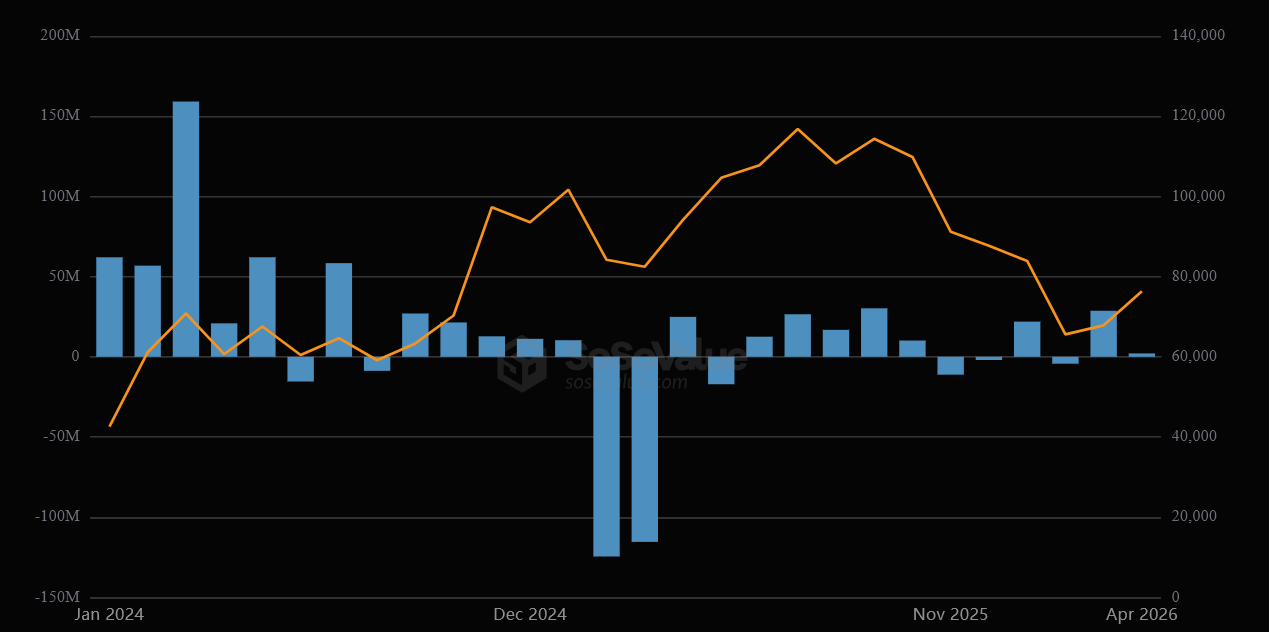
Franklin Templeton was already part of the first US spot Bitcoin ETF cohort. It’s the Franklin Bitcoin ETF, EZBC, launched on January 11, 2024, and seeks to reflect the performance of Bitcoin before fund expenses. The ETF trades on Cboe and carries a 0.19% sponsor fee.
But the Franklin Crypto launch adds a different layer. The company is no longer only offering investors access to Bitcoin through an ETF wrapper. It is adding active liquid crypto strategies, crypto-native portfolio talent, and a dedicated internal division.
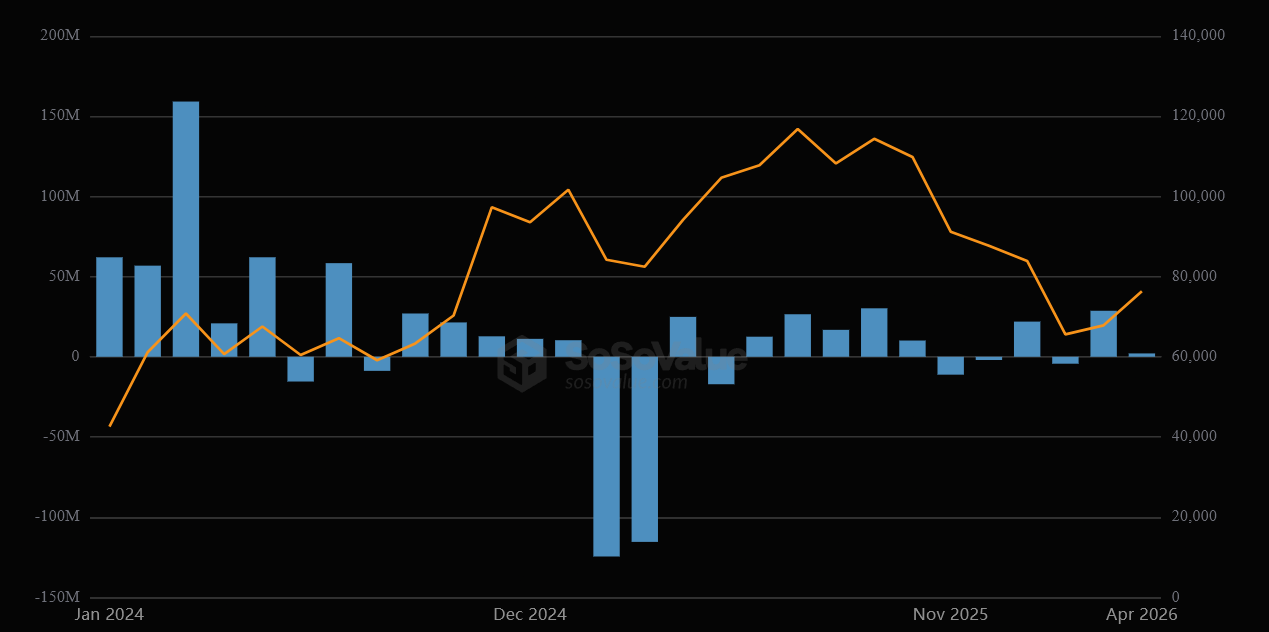
That is the more important institutional shift. Pension funds, sovereign wealth funds, and large allocators often need more than spot exposure. They need portfolio construction, risk management, liquidity management, and managers who can evaluate crypto markets with the same discipline used in other asset classes.
Franklin Templeton has also been building internal crypto capability since 2018. The company says its digital asset work combines tokenomics research, data science, and technical expertise. The firm has also built a team that includes blockchain-focused investment professionals, node operators, and digital asset specialists.
BENJI Becomes Core Infrastructure
The second pillar of Franklin Templeton’s nomination is BENJI.
The Franklin OnChain US Government Money Fund, or FOBXX, launched in 2021. Each share is represented by one BENJI token, and the fund’s transfer agent maintains the official share ownership record through Franklin Templeton’s blockchain-integrated Benji platform.
FOBXX was the first US-registered mutual fund to use blockchain-integrated technology to process transactions and record share ownership. Franklin Templeton’s own fund page states that FOBXX invests at least 99.5% of its assets in US government securities, cash, and repurchase agreements collateralized by US government securities or cash. The fund reported $843.74 million in total net assets as of March 31, 2026.
The platform has continued to expand across public chains. Franklin Templeton’s filings list support across networks including Stellar, Aptos, Base, Solana, Polygon, Arbitrum, Avalanche, and Ethereum. In September 2025, BNB Chain announced that Franklin Templeton’s Benji Technology Platform had also integrated with BNB Chain.
Tokenized Funds Move Into Institutional Workflows
Franklin Templeton has also pushed BENJI into trading and lending use cases.
In September 2025, DBS, Franklin Templeton, and Ripple announced plans to launch trading and lending solutions using tokenized money market funds and Ripple’s RLUSD stablecoin.
The arrangement allows eligible investors to acquire Franklin Templeton’s sgBENJI token on DBS Digital Exchange using RLUSD. DBS also said it would explore enabling sgBENJI tokens to be used as collateral for credit from the bank or third-party platforms.
That makes the Franklin Templeton story broader than asset gathering. The firm is building across several layers of digital asset management: passive ETFs, tokenized funds, blockchain recordkeeping, collateral use cases, stablecoin-linked trading, and now active crypto strategies.
This is why Franklin Templeton stands out in the category. It has treated digital assets as an operating business, not a narrow product line.
The BeInCrypto Institutional 100 Awards recognize firms building the systems that could define the next phase of finance. Franklin Templeton’s nomination reflects its role in turning digital assets into a full asset management platform, spanning ETFs, tokenized securities, blockchain infrastructure, and active crypto investment strategies.
The post BeInCrypto 100 Institutional Awards Nomination: Franklin Templeton for Best Digital Asset Manager appeared first on BeInCrypto.
Crypto World
Bitcoin Tests STH Realized Price Resistance at $79,300: Will BTC Break Above $80,000 or Slide to $65,000?
TLDR:
- Bitcoin is trading at $75,821, recording a 3.97% weekly decline amid growing on-chain resistance pressure.
- The STH Realized Price at $79,300 reflects the average cost basis of holders active within the last 155 days.
- A sustained close above $80,000 could signal the end of Bitcoin’s corrective phase since October 2025.
- Rejection at current resistance levels may trigger a break-even flush, pushing BTC toward the $65,000 floor.
Bitcoin’s Short-Term Holder (STH) Realized Price has emerged as a decisive on-chain metric shaping the current market cycle. At press time, BTC is trading at $75,821.93, recording a 0.62% drop over 24 hours.
The seven-day decline stands at 3.97%, with a trading volume of $42.7 billion. With the STH Realized Price sitting near $79,300, Bitcoin now faces a critical test that could determine its next major directional move.
STH Realized Price Acts as a Key Resistance Wall
The STH Realized Price tracks the average cost basis of investors who purchased Bitcoin within the last 155 days. These are largely newer market participants and are typically more sensitive to price swings. When Bitcoin trades below this level, most short-term holders are sitting at a loss.
Crypto analyst Ali Charts posted on X on April 29, 2026, explaining the dynamics clearly. “When Bitcoin drops below this level, it typically enters a corrective phase,” the analyst wrote. “Short-term holders, sensitive to volatility, often feel forced to sell to avoid further losses.”
This selling behavior creates a feedback loop that adds further downward pressure on price. Each wave of panic exits reinforces the next, making recovery harder without a strong catalyst. Since October 2025, Bitcoin has largely traded below this metric, marking a prolonged corrective stretch.
That trend now puts the STH Realized Price at roughly $79,300 as a primary resistance barrier. With Bitcoin currently below that level, bulls need a strong push above $80,000 to shift the narrative. A sustained close above that zone would indicate the correction has run its course.
A Breakout Above $80,000 Could Flip the Market Structure
The mechanics of the STH Realized Price work both ways. When Bitcoin climbs above the metric, short-term holders move from loss to profit.
That shift changes their behavioral incentive from selling to holding or accumulating more. As Ali Charts noted, holders “are incentivized to hold or even add to their positions to maximize profits.”
This psychological shift is what often triggers a broader macro trend reversal. Buyers gain confidence, selling pressure eases, and momentum builds organically from the inside out. The $80,000 level, therefore, carries both technical and behavioral weight.
However, the current setup remains fragile. A rejection at the STH Realized Price could trigger what analysts describe as a break-even flush.
Short-term holders who bought near the top would exit en masse to cut losses, which then sends Bitcoin lower. That scenario points to a retest of the macro floor around $65,000, according to market data referenced in Ali Charts’ analysis.
For now, the $79,300 to $80,000 range represents the battlefield. Bulls need volume and conviction to clear it. A confirmed close above that band would be the first structural signal that the market has flipped back in favor of a sustained upward trend.
TLDR:
- Sodot’s acquisition by MoonPay marks a major step toward scalable institutional crypto key management infrastructure.
- MoonPay Institutional will use Sodot’s technology stack as its core key management foundation for financial firms.
- Sodot was built on a zero-compromise approach to security, reliability, and performance for institutional crypto needs.
- The deal validates the growing demand for dedicated crypto key management as institutional adoption accelerates globally.
Sodot, a crypto key management infrastructure company, has announced its acquisition by MoonPay. The deal brings two firms together under a shared goal of serving institutional clients.
Sodot’s technology will form the key management foundation of MoonPay Institutional, a new unit targeting financial institutions, asset managers, trading firms, and exchanges.
Both companies cite aligned values and a mutual drive to build foundational digital asset infrastructure at greater scale.
Sodot Built for a Changing Crypto Landscape
Sodot was founded three years ago to address a growing gap in crypto infrastructure. The team recognized early that institutional adoption was shifting from a talking point to a pressing reality.
Financial institutions, global asset managers, and regulated fintechs needed infrastructure that met strict operational and security standards. Sodot was designed to meet exactly those requirements from the start.
The company’s founding principle was straightforward: zero compromises on security, reliability, and performance.
Over time, that principle shaped a broader belief that crypto deserves its own dedicated key management company.
The team understood that protecting keys in crypto carries immediate and serious consequences when handled incorrectly. That awareness drove every product and infrastructure decision the company made.
Modern custody has grown more complex, requiring operations across multiple exchanges, liquidity venues, and vendors. Hundreds of keys and credentials are now used continuously by automated systems in institutional settings.
Managing that at scale is one of the defining infrastructure challenges in digital assets today. Sodot positioned itself to solve that challenge directly.
The company’s growth reflected the broader market shift toward institutional participation. Customers trusted Sodot with a sensitive and critical part of their business operations.
That trust, according to the team, remains the company’s biggest source of motivation. It also became a key factor in the decision to seek a larger stage.
MoonPay Acquisition Opens a Larger Platform for Sodot’s Technology
The acquisition gives Sodot access to greater scale and a wider market reach. MoonPay’s platform serves a large and growing base of users across global markets.
Adding Sodot’s key management infrastructure strengthens MoonPay’s ability to serve institutional clients. The combination positions both companies to capture demand from a rapidly evolving sector.
MoonPay Institutional will rely on Sodot’s technology stack as its core infrastructure layer. The new business unit is specifically designed for financial institutions, trading firms, and exchanges.
This integration is a clear signal of where institutional crypto markets are heading. It also validates the direction Sodot chose when the company was founded three years ago.
As digital assets become more integrated into traditional finance, key management becomes more critical than ever. Automated and autonomous money movement requires secure, reliable infrastructure at the foundation.
Sodot’s technology addresses that need directly within MoonPay’s expanding ecosystem. Together, the two companies aim to set a new standard for institutional digital asset infrastructure.
The Sodot team acknowledged their investors, employees, and customers in the announcement. Each group played a role in making the acquisition possible.
The company’s commitment to customers remains unchanged going forward. If anything, the team noted, the bar for performance and reliability will only rise.

A Dubai police-led international crackdown on scam rings last week resulted in the arrest of 276 individuals and the shutdown of at least nine crypto scam centers, the US Department of Justice revealed on Wednesday.
In a joint operation with the FBI and China’s Ministry of Public Security, Dubai authorities arrested 275 people, with an additional person arrested by the Royal Thai Police.
Six people have been charged in connection with the scam centers. Four of the defendants and two fugitive co-conspirators were charged with federal fraud and money laundering in federal court in San Diego, according to the DOJ. If convicted, each offense carries a potential sentence of up to 20 years in prison and hefty fines.
“The charges and arrests announced today reflect an international consensus that scam centers are unwelcome everywhere and must be rooted out…. In contemporary society, fraud is borderless, and law enforcement activity to combat it and eliminate it is as well,” said US Assistant Attorney General Andrew Tysen Duva.
The FBI reported earlier this month that Americans’ losses from crypto and artificial intelligence-related scams in 2025 exceeded $11 billion, with investment scams flagged as the most damaging.

Source: US Department of Justice Criminal Division
Scammers used fake crypto investment platforms to deceive victims
All six defendants are accused of working for three different companies operating the scam centers, promoting fake crypto investment platforms and deceiving victims into making deposits.
FBI investigators have identified millions of dollars in losses caused by the criminal network.
“Today’s indictment demonstrates the FBI’s determination to identify, disrupt, and dismantle these global scam centers defrauding Americans no matter where they set up shop,” said Special Agent in Charge Mark Remily of the FBI San Diego Field Office.
European police shut down scam network with 450 employees
Meanwhile, in a separate police action involving Austrian and Albanian authorities, with support from Europol and Eurojust, ten people were arrested in connection with three scam centers in Tirana and Albania, Europol said on Wednesday.

Inside one of the shuttered scam centers. Source: Europol
Victims were drawn in by “seemingly legitimate online investment platforms,” advertised on social media and the promise of profitable investments, according to Europol.
Once registered, they were assigned a fake broker who pressured them into making investments. Losses from the scheme are estimated at more than 50 million euros ($58 million) and affected people worldwide.
Related: OFAC sanctions Cambodian politician linked to pig butchering scam centers
“The scale and professionalism of the criminal network were evident in its structure, which involved up to 450 employees across various departments, including customer acquisition, handled by conversion agents, and customer service, managed by retention agents,” Europol said.
“Additionally, the network had dedicated teams for management, finance, IT, human resources and various back-office activities.”
Magazine: AI-driven hacks could kill DeFi — unless projects act now


Traders are cutting risk ahead of the Fed’s April decision as Middle East tensions, a blocked Strait of Hormuz and fragile crypto sentiment keep markets on edge.
Summary
- Pepperstone’s Michael Brown says traders are cutting risk before the Federal Reserve’s April decision.
- Geopolitical tensions and a blocked Strait of Hormuz add to caution across global markets.
- Derivatives data show markets largely positioned for the Fed to hold rates steady into year-end.
Traders are trimming exposure to risk assets ahead of the Federal Reserve’s latest interest rate decision, with Pepperstone analyst Michael Brown warning that many participants “will want to cut back on their positions” before the announcement at 2 a.m. Beijing time on April 30.
Fed decision looms as traders de‑risk
According to a recent Pepperstone FOMC preview, money markets are pricing virtually no chance of a policy move, with the federal funds rate expected to stay in a 3.50%–3.75% range and only around 12 basis points of easing priced by year‑end, implying roughly an even probability of just one 25‑basis‑point cut in 2026.
In crypto markets, earlier this month traders have already been fading aggressive Fed‑cut bets for 2026 as U.S. unemployment fell to 4.3%, tempering the liquidity story for assets like Bitcoin and Ethereum.
Middle East conflict and Hormuz blockage fuel risk aversion
Brown underscored that the backdrop is not just about the Fed, flagging that “there is still no good news regarding the Middle East conflict” and that the Strait of Hormuz “remains blocked,” a combination that keeps traders wary of fresh shocks to oil and broader risk sentiment.
Pepperstone recently noted that “the Strait of Hormuz remains impassable” and that much of the market’s recent relief has been built more on “hope” than on “expectation,” even as Brent and WTI crude briefly dipped back below $100 per barrel.
Those tensions have already rippled into digital assets, with the crypto fear and greed index dropping from 12 to 10 in February as Iran’s naval drills and brief closures of the strait raised energy‑cost risks for Bitcoin miners and other energy‑intensive players, according to a crypto.news report.
Earlier in April, the crypto market added roughly 4.3% to push total capitalization above $2.6 trillion after signs that Iran might soften its stance in talks over the war and shipping restrictions, while Bitcoin rallied toward $74,800 on the day and around $430 million in short positions were liquidated, data cited by another crypto.news story showed.
Those gains remain fragile as ceasefire negotiations stall and Iran turns the Strait of Hormuz into a $1‑per‑barrel bitcoin tollbooth during limited truces, a move that keeps energy and macro uncertainty elevated for traders across equities, bonds and crypto.
In a previous crypto.news story, rising oil above $100 per barrel and threats to Iranian energy infrastructure were already pressuring risk assets by reviving fears that the Fed would have to stay restrictive for longer, a dynamic that now frames Brown’s warning that position‑cutting into this week’s decision may be the path of least resistance for cautious traders.
TLDR:
- Bitcoin recorded its largest single-day exchange net inflow in 30 days, reaching 9,905 BTC on April 27, 2026.
- The Exchange Whale Ratio hit 0.707, with the top 10 transactions accounting for over 70% of all exchange deposits.
- Exchange reserves rose from 2.666M BTC to 2.677M BTC between April 25 and April 28, signaling supply buildup.
- Bitcoin spot ETFs posted $89.68M in net outflows on April 28, with BlackRock’s IBIT leading at $112 million.
Bitcoin exchange inflow data from April 27, 2026, has drawn attention from on-chain analysts tracking large holder behavior.
A single-day net inflow of +9,905 BTC — the largest in 30 days — emerged as Bitcoin struggled near the $78K resistance zone.
Rising exchange reserves and whale activity have fueled growing concern about a potential price correction toward the $74K–$75K support range in the near term.
Whale Activity Drives Exchange Inflow Surge
The Exchange Whale Ratio reached 0.707 on April 27, marking its highest level in over a week. This reading means the top 10 largest inflow transactions made up more than 70% of all deposits that day. Such concentration points to large holders actively moving coins onto exchanges.
CryptoQuant analyst Woo Minkyu noted the pattern in a published report, stating that smart money appears to be preparing to sell into any price strength.
This behavior is consistent with distribution phases seen in previous Bitcoin market cycles. The inflow spike did not accompany a breakout, which makes the move more telling.
When whales deposit coins to exchanges without a corresponding price rally, it often reflects intent to sell rather than trade.
Bitcoin has spent several weeks consolidating below the $78K–$79K zone without a decisive move higher. The prolonged consolidation, combined with rising inflows, adds weight to the bearish short-term outlook.
Minkyu summarized the concern plainly: “Unless this inflow is quickly absorbed, a retest of the $74K–$75K support zone is increasingly likely in the near term.” The market now watches whether buyers can absorb this growing supply overhang at current price levels.
Rising Exchange Reserves Add to Selling Pressure Outlook
Exchange reserves climbed steadily from 2.666M BTC on April 25 to 2.677M BTC on April 28. A consistent build-up in reserves is historically linked to increased selling activity ahead. This trend, running alongside the inflow spike, reinforces the cautious outlook.
Meanwhile, Bitcoin spot ETFs recorded a total net outflow of $89.68 million on April 28, according to SoSoValue data.
BlackRock’s IBIT led those outflows at $112 million for the session. Institutional selling through ETF channels added another layer of pressure on Bitcoin’s price structure.
Ethereum spot ETFs also saw a net outflow of $21.80 million on the same date. BlackRock’s ETHA contributed $13.17 million of that total. The outflows across both assets suggest a broader risk-off posture among institutional participants.
Taken together, the on-chain data and ETF flow figures paint a cautious picture for Bitcoin in the short term. Whether the $74K–$75K support zone gets tested depends largely on how quickly the market absorbs the recent supply increase.


Dogecoin’s latest rebound resembled bounces witnessed in mid-2023, raising the odds of a rally toward $0.33 in the coming weeks.


At least 276 individuals have been arrested, and 9 crypto scam centers dismantled following a coordinated international effort.
The crackdown was the result of cooperation among the Federal Bureau of Investigation, Dubai Police, and the Chinese Ministry of Public Security.
Authorities Charge Six in Global Crypto “Pig-Butchering” Takedown
According to the official release, Dubai Police arrested 275 of the suspects. The Royal Thai Police arrested an additional defendant.
Moreover, federal prosecutors charged six defendants with federal fraud and money laundering. The six accused allegedly managed, worked at, or recruited for companies that ran scam centers.
Follow us on X to get the latest news as it happens
The compounds preyed on American victims, who collectively lost millions of dollars to such schemes. All six defendants are accused of orchestrating crypto investment scams commonly referred to as “pig-butchering.”
A pig-butchering scam is a fraud where criminals build a fake romantic or friendly relationship online over weeks or months. They then lure victims into investing in fraudulent crypto or trading platforms, and then take everything.
US Attorney Adam Gordon framed the operation as a turning point for cross-border fraud enforcement.
“These scammers thought they were safe half a world away. But their world has changed. Global crime now faces global justice,” he said.
The arrests follow a broader push by the US against crypto investment fraud networks. Last week, authorities restrained more than $700 million in cryptocurrency and filed wire fraud conspiracy charges against two Chinese nationals accused of running scam compounds.
In a separate case, a US District Judge sentenced a man to 23 years in federal prison for running the Meta 1 Coin scheme. A Saipan woman received a 71-month sentence for posing as a Bitcoin heiress in another fraud case.
Subscribe to our YouTube channel to watch leaders and journalists provide expert insights
The post 276 Arrested as Global Operation Topples Crypto Scam Compounds appeared first on BeInCrypto.
Crypto World
BeInCrypto 100 Institutional Awards Nomination: Citi for Leader in Digital Asset Adoption


Digital asset adoption inside global banks has moved past the pilot stage. The real question now is which institutions can connect blockchain infrastructure to the systems that already move money, settle trades, and support global commerce.
Citi is one of the banks doing that at scale. The firm is nominated for Leader in Digital Asset Adoption at the BeInCrypto Institutional 100 Awards 2026.
Founded
Total Assets
Global Reach
Core Platform
Core Product
Regulatory Context
1812
$2.6T+
Nearly 160 countries
CIDAP
Citi Token Services
OCC, Fed, FCA, MAS
Citi Digital Asset Adoption Snapshot
The nomination centers on the Citi Integrated Digital Assets Platform, or CIDAP, and the continued rollout of Citi Token Services across cash management, liquidity, trade finance, and tokenized asset workflows.
CIDAP is Citi’s internal bridge between traditional banking systems and blockchain networks. Citi describes it as a core pillar of its digital asset strategy, supporting use cases across payment services, capital markets, securities, custody, trade, and FX.
That matters because most institutional clients do not want a separate crypto operating model. They want blockchain-based settlement, tokenized deposits, and digital asset services to connect with the same systems they already use.
Moving Tokenized Deposits Into Global Banking
Citi Token Services is the clearest example of its digital asset adoption moving into production infrastructure.
The product uses blockchain and smart contracts to support tokenized deposits inside Citi’s global network. Citi first announced the creation and piloting of the service in 2023, saying it would upgrade core cash management and trade finance capabilities for institutional clients.
Citi Token Services for Cash enables clients to transfer liquidity between participating Citi branches on a 24/7 basis. Citi Token Services for Trade supports programmable transfers of tokenized deposits, with instant payments to service providers through smart contracts.
“Leveraging our digital proprietary global network, we’re enabling 24/7, near instant cross-border payments across the Citi network and our financial institution clients – helping corporates and financial institutions move millions of dollars in a matter of seconds,” said Debopama Sen, Head of Payments, Services
The cash product is especially important because it tackles one of the oldest problems in global banking: liquidity still gets trapped by cut-off times, settlement windows, and market hours.
Citi’s 24/7 USD Clearing integration with Citi Token Services supports near-instant liquidity movement across Citi and non-Citi accounts in select markets.
Trade Finance Moves On-Chain
Citi’s adoption story also extends into trade finance.
In its original Citi Token Services pilot, Citi worked with Maersk and a canal authority on a digitized solution similar to bank guarantees and letters of credit. The pilot used tokenized deposits and smart contracts to provide instant payments to service providers. Citi said the process could reduce transaction processing times from days to minutes.
In 2026, Citi pushed that work further by testing tokenized Bills of Exchange.
Working with PwC and Solana, Citi completed an internal proof of concept that represented a bill of exchange as a token on blockchain. The test covered issuance, financing, distribution, and settlement in a simulated environment. Citi said the proof of concept used synthetic data and fictitious clients, but showed how a full trade finance lifecycle could be replicated on blockchain.
That is a practical development. Bills of exchange are still tied to paper-heavy and manual workflows. Tokenizing them could make ownership, financing, and repayment easier to track and settle. Citi’s own report says tokenization can reduce friction, improve real-time visibility, and support better risk management across the supply chain.
Tokenization Beyond Payments
Citi has also tested tokenization in private markets.
In 2024, Citi worked with Wellington Management and WisdomTree on a proof of concept for tokenized private funds. The test ran on the Avalanche Spruce institutional test subnet and explored how smart contracts could support new functions and operational efficiencies that are difficult to achieve with traditional private market infrastructure.
The test tokenized a Wellington-issued private equity fund and encoded distribution rules into the smart contract.
Citi also tested smart-contract-based transfers, simulated identity credentials, and the use of a private fund token as collateral in an automated lending contract with DTCC Digital Assets.
A Bank-Scale Adoption Story
Citi’s nomination is not based on a single blockchain experiment. It reflects the bank’s effort to connect digital assets with core institutional banking.
The company has more than 200 years of operating history and does business in nearly 160 countries and jurisdictions. Its 2025 annual filing reported total assets of $2.657 trillion at year-end.
That scale is why Citi’s digital asset work matters. Tokenized deposits, programmable payments, tokenized trade finance, private market tokenization, and future digital asset custody are not isolated products. They are pieces of a wider infrastructure strategy.
Citi is also reportedly investing in digital asset custody and post-trade infrastructure so clients can safekeep and mobilize assets with the same confidence they expect in traditional markets. The bank says clients are increasingly expecting deposits, payments, investment assets, and collateral to move across traditional and tokenized forms with less friction.
The BeInCrypto Institutional 100 Awards recognize firms building the systems that could define the next phase of finance. Citi’s nomination reflects its role in moving digital assets from lab experiments into the operating infrastructure of global banking.
The post BeInCrypto 100 Institutional Awards Nomination: Citi for Leader in Digital Asset Adoption appeared first on BeInCrypto.


Ripple Prime will route clients into Bullish’s regulated BTC options while Ripple and OKX push RLUSD into compliant markets, extending Ripple’s $1.25b prime‑broker bet.
Summary
- Ripple is expanding its partnership with Bullish to give Ripple Prime clients direct access to Bullish’s regulated Bitcoin options market.
- Bullish says its Bitcoin options venue is the world’s second-largest crypto‑settled BTC options market by open interest.
- Ripple and OKX are also partnering to bring RLUSD to compliant markets, as Ripple Prime scales institutional brokerage after a $1.25 billion prime‑broker acquisition.
Ripple has expanded its institutional derivatives push, announcing that Ripple Prime will connect directly to Bullish’s Bitcoin (BTC) options market, opening regulated BTC options access to its institutional client base.
According to the announcement from both parties, this integration will allow Ripple Prime users to directly access Bullish’s regulated BTC options market, which Bullish describes as “the second largest cryptocurrency‑settlement Bitcoin options market in the world by open interest” and one that already supports spot, perpetual contracts and dated futures.
The move deepens a long‑running partnership between the two firms and comes as Bullish, listed on the NYSE under the ticker BLSH, continues to position itself as an institution‑first venue focused on Bitcoin and Ethereum liquidity after reporting $80.5 billion in monthly trading volume in October 2025.
Ripple Prime scales after $1.25b prime‑broker bet
In addition, both parties revealed that OKX has reached a strategic partnership with Ripple to introduce the stablecoin RLUSD (Ripple USD) in compliant markets, with RLUSD now live on OKX for spot trading across more than 280 pairs and usable as institutional‑grade margin collateral for derivatives.
Ripple Prime, as one of the largest non‑bank prime brokers globally, has exceeded a clearing scale of $30 trillion in 2025 and can provide multi‑asset brokerage, clearing, and financing services, building on Ripple’s $1.25 billion acquisition of multi‑asset prime broker Hidden Road that made it, in Ripple’s words, “the first crypto company to own and operate a global, multi‑asset prime broker.”
In an earlier Reuters report, Ripple said the Hidden Road deal would help create a “one‑stop‑shop” for institutional clients across foreign exchange, digital assets, derivatives, swaps and fixed income, while a follow‑up BusinessWire release emphasized that RLUSD is intended as “enterprise‑grade” collateral across that stack.
For crypto traders, the tie‑up between Ripple Prime and Bullish folds a large BTC options venue into a rapidly scaling prime‑broker platform just as macro uncertainty keeps demand high for hedging and basis trades, echoing themes raised in a recent crypto.news story on how rate‑cut delays are reshaping institutional risk‑taking.
The RLUSD expansion also builds on wider Middle East and Strait of Hormuz coverage from crypto.news, where prior stories have tracked how geopolitical chokepoints and energy costs feed back into liquidity conditions for assets such as Bitcoin and XRP (XRP), dynamics institutional desks on Ripple Prime and Bullish will now be able to express more precisely through BTC options and stablecoin‑collateralized derivatives.
Exonerees struggle to rebuild their lives and gain lasting employment, even if elected to office

US growth likely picked up in first quarter, but consumer spending probably cooled

BeInCrypto 100 Institutional Awards Nomination: Franklin Templeton for Best Digital Asset Manager

Manchester United reach agreement with Casemiro over contract clause amid transfer speculation

US brings back mandatory military draft registration

Steven Gerrard disagrees with Gary Neville over ‘shock’ Chelsea and Arsenal claim | Football

A small tip for celebrities.. Money Matters! Thirukochi Financial Services

Crypto Trading For Beginners | Bitcoin Trading for Beginners | Cryptocurrency | Part-2

#motivation #money #moneysavingidea #moneysavinghacks #monthlybudgetplanning
-

 Tech2 days ago
Register Renaming | Hackaday
-

 Fashion5 days ago
Weekend Open Thread – Corporette.com
-
Crypto World4 days ago
Hyperliquid $HYPE Rally Builds Momentum as AI Sector Enters Prove-It Phase
-

 Business6 days ago
Patterson-UTI Energy, Inc. (PTEN) Q1 2026 Earnings Call Transcript
-
 Sports4 days ago
IPL 2026: Ruturaj Gaikwad registers slowest fifty of the season, enters all-time unwanted list | Cricket News
-

 Politics2 days ago
Drax board avoid their own AGM, accused of greenwashing & environmental racism
-

 NewsBeat4 days ago
LK Bennett closes all stores after entering administration
-

 Crypto World6 days ago
Michael Saylor says BTC winter is over. Market analyst disagrees, says bitcoin was in a pullback
-

 Fashion1 day ago
Kylie Jenner’s KHY Enters a New Era with ‘Born in LA’
-
Entertainment7 days ago
Michael B. Jordan and Austin Butler's “Miami Vice” movie will bring the action back to the '80s
-
 Entertainment4 days ago
Mariah Carey Slams Deposition Claims In Brother’s Lawsuit
-

 Tech2 days ago
Images of Samsung’s rumored smart glasses have leaked
-
Entertainment7 days ago
Russell Brand Had Sex With 16 Year Old When He Was 30
-

 Business1 day ago
Most Commercial Energy Audits Miss the Real Losses
-
Crypto World6 days ago
Is Algorand One of the Few Quantum-Resistant Blockchains? Here’s What the Data Shows
-
 NewsBeat6 days ago
Trump threatens to review UK’s claim to Falkland Islands and punish Nato allies over Iran war disagreement
-

 Sports7 days ago
2026 NFL Draft tonight: Time, TV channel, where to watch, order
-

 Sports7 days ago
Bayern Munich on the brink of historic ‘double treble’
-

 Business6 days ago
Jeanine Pirro announces closure of Federal Reserve building cost probe
-

 Business3 days ago
(VIDEO) Charlize Theron Climbs Times Square Billboard to Promote New Netflix Thriller ‘Apex’
You must be logged in to post a comment Login