

Connect with us
DAPA Banner

Business

Platforms, AI Orchestrators, and Workflow Design

Published

on

Most product teams adopt AI tools one by one — a code assistant here, a design generator there — and then wonder why delivery is still slow. The bottleneck was never individual tasks. It was always coordination.

Most product teams adopt AI tools one by one — a code assistant here, a design generator there — and then wonder why delivery is still slow. The bottleneck was never individual tasks. It was always coordination.

That’s what makes end-to-end product development with AI orchestration a different conversation: instead of asking “which AI tool should we add?”,  you start asking, “How do we make the whole system work?”

What is AI orchestration?

AI orchestration is a coordination and control layer for product delivery. When multiple AI models, tools, agents, and humans work on the same product, something has to define how work runs, in what order, with which inputs, and what to validate before progressing.

An AI orchestrator acts as the execution engine within this layer. It translates high-level intent into structured tasks, routes them to the appropriate execution layer, maintains shared context across steps, and triggers human intervention when decisions require judgment.

Isolated AI tools improve individual tasks. Orchestration improves the system. Without it, even strong tools produce fragmented outputs — slowing delivery through rework, misalignment, and unclear ownership at handoff points.

Advertisement

Why end-to-end product development needs AI orchestration

The most common failure mode in AI-assisted product teams isn’t bad tooling. It’s disconnected tooling. Design, engineering, and QA each use AI independently, but integration points — where work moves between disciplines — remain manual and error-prone.

Agentic AI orchestration changes this by treating the entire product lifecycle as a single coordinated system. Work moves from validated spec to generated code to tested output to staged release, with the right humans reviewing at the right moments. The difference between AI assistance and AI-coordinated delivery is what actually ships.

How AI orchestration works across the product lifecycle

Discovery phase: We conduct research, validate assumptions, and define scope simultaneously rather than executing it step by step. This shortens analysis time while keeping depth and accuracy.

Product planning and prioritization: The system models different prioritization options, highlights dependencies, and surfaces risks early. Humans make final decisions based on complete context, not fragmented inputs.

Advertisement

UX/UI design and prototyping: AI generates wireframes, applies design system rules, and flags accessibility issues. Designers focus on user flows and edge cases, while the system keeps everything aligned with the product spec.

Engineering and code generation: We don’t send AI code straight to production. The system runs automated tests and architecture checks before human review, reducing rework and keeping the codebase consistent.

QA, security, and compliance: We run tests automatically after every meaningful change. Compliance checks happen during development instead of at the end. Humans only review exceptions or unclear cases.

Release and post-launch iteration: We continuously collect production data, errors, and user behavior signals. The system feeds this back into development, so improvements happen as part of the workflow, not after release.

Advertisement

Core components of an AI orchestration platform

First, it needs task routing, which decides what work goes to AI, what goes to humans, and under what conditions. Second, it needs shared context management, so information doesn’t get lost between steps. Third, it must connect to existing systems through API and tool integrations.

It also needs human checkpoints for decisions that require judgment, and full visibility (logs and tracking) so every action can be traced and reviewed. Finally, it needs failure handling, so one broken step doesn’t disrupt the whole process.

Teams like Goodface agency have operationalized this as a human-led AI-orchestrated framework — with senior experts owning architecture and decisions while AI handles execution — delivering 25–30% higher efficiency within the same time and budget.

AI orchestration vs related concepts

Vs workflow orchestration: Workflow orchestration handles deterministic sequences. AI orchestration introduces non-deterministic elements — language model outputs, agent decisions — where uncertainty is a first-class concern.

Advertisement

vs AI agent: Agents execute. Orchestrators govern. An AI agent orchestration layer coordinates multiple agents, manages shared context, and enforces rules that individual agents don’t have visibility into.

Vs automation: Automation handles deterministic tasks. Orchestration handles workflows that involve judgment, generation, and variable outputs that require validation before they move forward.

Risks and limitations

Context loss between agents is the most common failure mode. Security exposure from misconfigured data access is the most serious. Tool sprawl, cost overruns from uncontrolled token usage, and accountability gaps when human ownership isn’t clearly defined round out the main risks. Over-automation without accountability is where orchestration projects most often break down in production.

KPIs for measuring AI orchestration

Track delivery cycle time, handoff reduction (manual coordination touchpoints eliminated), defect rates in automated validation versus staging, cost per completed workflow, and human review rate. A declining human review rate indicates the system is routing better; a rising one is an early warning sign worth investigating before it compounds.

Advertisement

FAQ

What is orchestration in AI product development? A coordination system that determines how AI tools, agents, and humans work together across the product lifecycle — routing tasks, sharing context, enforcing quality gates, and managing handoffs from discovery through deployment.

What does an AI orchestrator do in an end-to-end workflow? It decomposes product intent into structured tasks, assigns each to the appropriate execution layer, exchanges context, monitors outputs, and triggers human review where automation isn’t sufficient.

When does a product team need an AI orchestration platform? When multiple AI tools don’t share context, when coordination creates more delay than execution, or when AI output quality is inconsistent across the pipeline.

Can AI orchestration support regulated product environments? Yes — when governance is built in explicitly. Audit trails, configurable human-in-the-loop checkpoints, and access controls can meet fintech and healthtech compliance requirements.

Advertisement

How does AI orchestration improve delivery speed and quality? By running parallel workstreams, reducing rework at handoff points, and enforcing validation continuously rather than end-of-sprint.

What should companies look for in an AI orchestration platform? Human-in-the-loop configurability, deep observability, integration flexibility, and reliability under production load. Legibility — being able to understand what happened when something goes wrong — is a core requirement, not a nice-to-have.

Advertisement
Continue Reading
Click to comment

You must be logged in to post a comment Login

Leave a Reply

Business

How Digital Payment Platforms Are Supporting Cross-Border Commerce

Published

on

New research showing that concerns around international payments are a leading barrier stopping UK SMEs from exporting overseas.

Digital payment systems have changed significantly over the past few years. With every step toward more advanced technology, digital platforms have had to keep pace.

Online payment providers have to be versatile, flexible and adjust to global demands with ease. Given that the global payment industry is in the trillions of dollars and people from all over are placing orders for products and services internationally, digital payment infrastructures need to support cross-border commerce.

The scale of growth is substantial. Industry trends show that a large percentage of global consumers now purchase from international retailers, with the cross-border e-commerce market projected to reach trillions in value over the next decade. In response, providers are working to deliver a global payments solution that can support this demand while balancing efficiency, compliance and accessibility.

Unpacking Multi-currency Functionality

A key aspect of this growing global market is the ability to operate with a multi-currency business account, allowing organisations to hold and transact in different currencies, making global operations more accessible and streamlined. This simplifies financial operations and supports smoother cross-border activity. Platforms such as BONCA, a digital payment platform supporting cross-border transactions, can be viewed as examples of how providers are developing more unified financial environments that aim to streamline international transactions.

Looking at Payment Infrastructure Evolution

An additional notable development in recent years is the rise of integrated platforms that bring multiple financial services into one environment. According to the World Bank, 79% of adults globally now have a financial account and in 2024, 40% of adults in developing economies saved in a financial account. This is a 16-percentage-point increase since 2021. This rise has been possible due to consolidated systems designed to manage international transactions. Systems typically support features such as account management, payment processing and access to global networks – all in one.

Advertisement

Online Gateway and Integration Capabilities

In addition to account functionality, many providers now incorporate card services and connections to an online payment gateway. This allows for payments across various digital channels. These integration capabilities also support smoother customer experiences by reducing friction during the payment process. When systems are well-connected, transactions can be completed more quickly and with fewer errors. A borderless payment platform is particularly important for businesses operating internationally, where delays or complications can impact customer satisfaction and conversion rates.

Improving Transparency is Key

Another area where digital payment platforms are growing is in the handling of currency conversion and transaction transparency. Before, cross-border payments were often associated with unclear fees and fluctuating exchange rates that were difficult to track. Many providers are working to improve visibility around these topics. The aim is to create transparency so that all users fully understand all terms and conditions.

This shift towards transparency is also influenced by competition within the sector. To capture your attention, they need to build trust and having access to as much information as needed is what builds this trust. Transparency is much easier to offer, as well, because providers operate better due to advanced technology.

An online payment gateway is not only safe and secure but it’s easy to use and designed with interactions in mind. As a user of this kind of infrastructure, it’s easy to find information because it’s all on one menu drop-down on a site. Systems know that users don’t want to spend hours trying to figure something out.

Advertisement

Currency Conversion And Fee Visibility

In this digital age, it is common for financial infrastructures to show real-time exchange rate information and clearer breakdowns of transaction fees before payments are completed. This allows businesses and users to better understand the financial implications they’re facing. The key point is that this information is visible before online transactions are made. This means businesses can fully understand the associated fees before completing a transaction.

Strengthening Security in Cross-Border Transactions

Security remains a central concern in any financial environment and this becomes even more critical when transactions cross multiple jurisdictions. Digital payment systems are increasingly incorporating layered security measures designed to protect both data and funds as they move across borders. These typically include encryption protocols, multi-factor authentication and continuous monitoring of transaction activity.

Given the complexity of international payments, these safeguards play a vital role in maintaining system integrity. The focus is on identifying and mitigating risks early, rather than reacting after issues arise. In addition, the use of artificial intelligence and advanced analytics has become more prominent in fraud detection.

Integration and the Future of Global Commerce

Another important development is the increasing integration of payment systems with global marketplaces and digital services. Rather than operating independently, many systems now connect directly with e-commerce platforms, subscription services and other online environments.

Advertisement

Looking ahead, cross-border commerce is expected to continue expanding as digital trade becomes more accessible worldwide. Payment infrastructure will play a central role in supporting this growth, particularly as providers continue to refine transparency, security and system interoperability. While challenges remain, the ongoing development of international payment systems reflects a broader shift towards a more connected and efficient global economy that supports international solutions.
Continue Reading

Business

Spotify Adds Verified Checks For Artists to Prove They Are Humans With Legit Content

Published

on

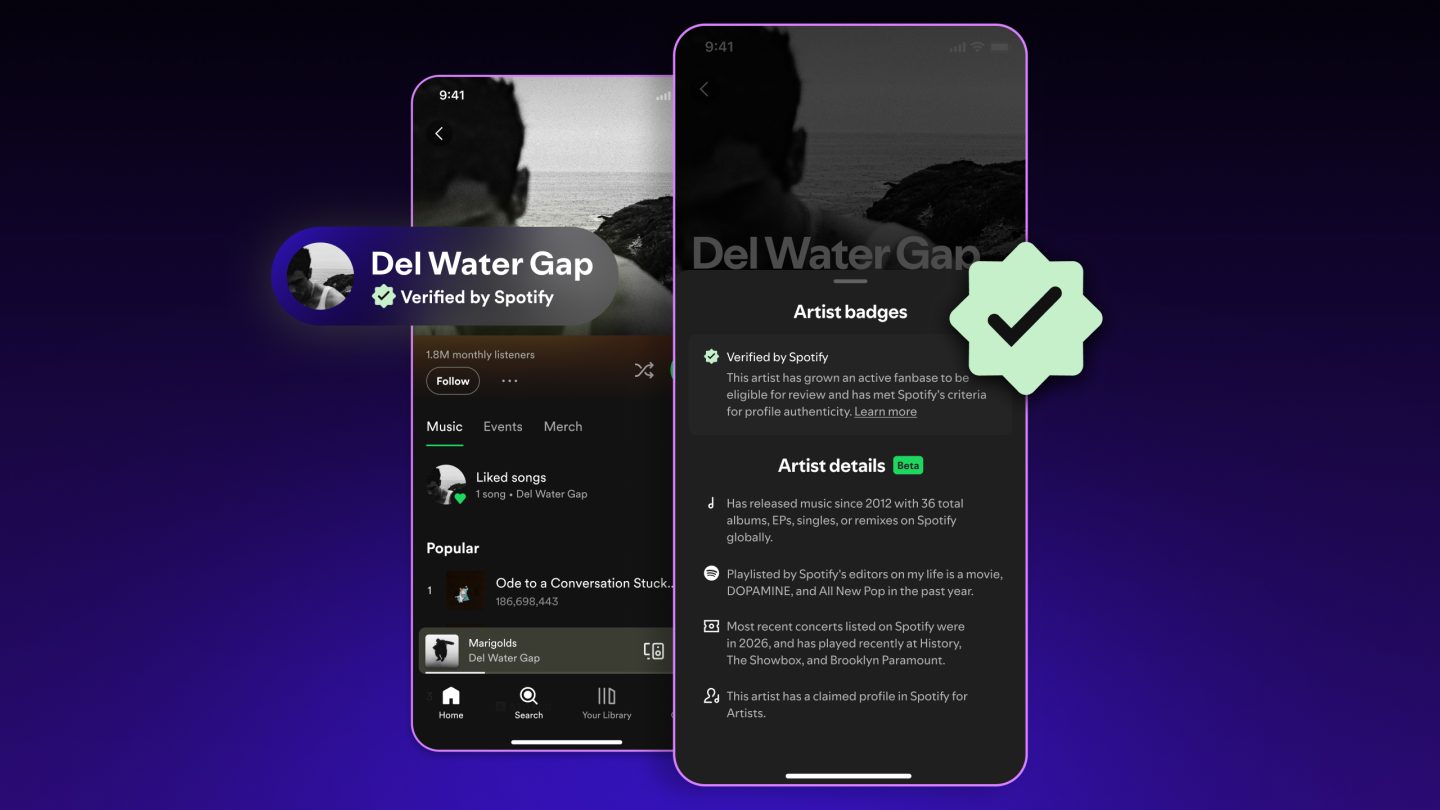
Verified by Spotify
Verified by Spotify

Spotify is one of the online platforms that has been seeing an influx of AI slop, but that is changing now as the streaming app is adding “Verified” checkmarks to artists to ensure that they share only authentic and legitimate content.

Spotify Adds Verified Checks For Artists

The Swedish streaming company announced in its latest blog post that they are now launching its version of verification checks on the platform with the “Verified by Spotify” program in beta testing.

This latest verification program aims to help artists, creatives, and the public to easily prove the authenticity of content through the new Spotify badge.

The Verified by Spotify badges will appear on an artist’s profile page, and according to the platform, this will help let the public know that this specific musician has been reviewed by the company and meets the latest criteria.

Additionally, Spotify also launched the Artist Profile Protection, also in beta testing, which will help artists gain control and protection of their profiles. This will also help the public get assurance that the music available comes from the actual artists themselves.

Advertisement

Spotify Wants to Separate AI-Generated Content

Spotify said that they have launched this new set of protections for artists and the public to combat the growing availability of generative AI tools and content across online platforms.

According to Spotify, this latest feature adds layers to its previous rollouts like SongDNA, expanded song credits, and features like AI credits.

While generative AI policies remain vague on Spotify, especially as there is still AI-generated content that thrives on the platform, this latest verification checkmark will help the streaming platform assure its artists and users alike that there is authentic, human-made content on Spotify.

For now, Spotify is still beta testing the features and only select artists and users will get to see the Verified by Spotify badges.

Advertisement

Originally published on Tech Times

Continue Reading

Business

Grid Dynamics Holdings, Inc. (GDYN) Q1 2026 Earnings Call Transcript

Published

on

OneWater Marine Inc. (ONEW) Q1 2026 Earnings Call Transcript

Cary Savas
Director of Branding & Communications

Good afternoon, everyone. Welcome to Grid Dynamics First Quarter 2026 Earnings Conference Call. I’m Cary Savas, Director of Branding and Communications.

Joining us on the call today are CEO, Leonard Livschitz; CFO, Anil Doradla; CTO, Eugene Steinberg; and SVP, Global Head of Partnerships and Marketing, Rahul Bindlish.

Following the prepared remarks, we will open the call to your questions. Please note that today’s conference call is being recorded.

Advertisement

Before we begin, I’d like to remind everyone that today’s discussion will contain forward-looking statements. This includes our business and financial outlook and the answers to some of your questions. Such statements are subject to the risks and uncertainty as described in the company’s earnings release and other filings with the SEC. During this call, we will discuss certain non-GAAP measures of our performance. GAAP to non-GAAP financial reconciliations and supplemental financial information are provided in the earnings press release and the 8-K filed with the SEC. You can find all the information I just described in the Investor Relations section of our website.

I now turn the call over to Leonard, our CEO.

Leonard Livschitz
CEO & Director

Advertisement

Thank you, Cary. Good afternoon, everyone, and thank you for joining us today.

Continue Reading

Business

Chip shops sell cheap catfish as ‘traditional fish and chips’

Published

on

Chip shops sell cheap catfish as 'traditional fish and chips'

Steven Booth, 41, who was waiting in Crook’s chippy to buy his lunch, said: “My wife is from Thailand and over there catfish is often on the menu, it’s fantastic and I’m up for trying it, but it’s incredibly important you are told what you’re eating.”

Continue Reading

Business

Saia, Inc. (SAIA) Q1 2026 Earnings Call Transcript

Published

on

OneWater Marine Inc. (ONEW) Q1 2026 Earnings Call Transcript

Q1: 2026-04-30 Earnings Summary

EPS of $1.86 beats by $0.04

 | Revenue of $806.23M (2.37% Y/Y) beats by $17.73M

Saia, Inc. (SAIA) Q1 2026 Earnings Call April 30, 2026 10:00 AM EDT

Company Participants

Matthew Batteh – Executive VP, CFO & Secretary
Frederick Holzgrefe – President, CEO & Director

Advertisement

Conference Call Participants

Jordan Alliger – Goldman Sachs Group, Inc., Research Division
Ken Hoexter – BofA Securities, Research Division
Jonathan Chappell – Evercore ISI Institutional Equities, Research Division
Thomas Wadewitz – UBS Investment Bank, Research Division
Scott Group – Wolfe Research, LLC
Ravi Shanker – Morgan Stanley, Research Division
Eric Morgan – Barclays Bank PLC, Research Division
Christian Wetherbee – Wells Fargo Securities, LLC, Research Division
Stephanie Benjamin Moore – Jefferies LLC, Research Division
Richa Talwar – Deutsche Bank AG, Research Division
Brian Ossenbeck – JPMorgan Chase & Co, Research Division

Advertisement

Presentation

Operator

Good day, and welcome to the Saia, Inc. First Quarter 2026 Earnings Conference Call. [Operator Instructions] Please note, this event is being recorded. I would now like to turn the conference over to Matt Batteh, Saia’s Executive Vice President and Chief Financial Officer. Please go ahead.

Advertisement

Matthew Batteh
Executive VP, CFO & Secretary

Thank you, Chad. Good morning, everyone. Welcome to Saia’s First Quarter 2026 Conference Call. With me for today’s call is Saia’s President and Chief Executive Officer, Fritz Holzgrefe. Before we begin, you should note that during this call, we may make some forward-looking statements within the meaning of the Private Securities Litigation Reform Act of 1995. These forward-looking statements and all of the statements that might be made on this call that are not historical facts are subject to a number of risks and uncertainties, and actual results may differ materially. We refer you to our press release and our SEC filings for more information on the exact risk factors that could cause actual results to differ.

I will now turn the call over to Fritz for some opening comments.

Advertisement
Continue Reading

Business

Amkor Technology prices $1 billion convertible notes due 2031

Published

on


Amkor Technology prices $1 billion convertible notes due 2031

Continue Reading

Business

Powell Exits A Fed Fractured By Inflation Debate

Published

on

Powell Exits A Fed Fractured By Inflation Debate

Powell Exits A Fed Fractured By Inflation Debate

Continue Reading

Business

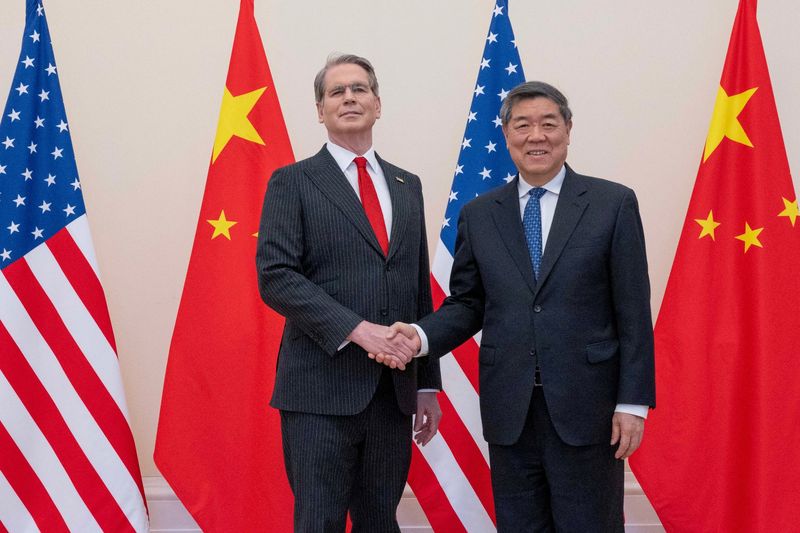
China, US economic chiefs raise complaints in ’candid’ call ahead of Trump-Xi summit

Published

on

China, US economic chiefs raise complaints in ’candid’ call ahead of Trump-Xi summit


China, US economic chiefs raise complaints in ’candid’ call ahead of Trump-Xi summit

Continue Reading

Business

Oil rises over $1 with no sign of Iran conflict ending

Published

on

Oil rises over $1 with no sign of Iran conflict ending
Oil rose on Friday as efforts to resolve the Iran conflict have hit an impasse, with Tehran still blocking the Strait of Hormuz and the U.S. Navy blocking exports of Iranian crude.

Brent crude futures for July rose $1.19, or 1.08%, to $111.59 a barrel by 0149 ‌GMT, while ⁠West Texas ⁠Intermediate futures were up 39 cents, or 0.37%, to $105.46.

Both benchmarks have posted gains across four straight months, with Brent’s June contract, which expired on Thursday, hitting $126.41 a barrel, the highest since March 2022.

Oil prices have been on the rise since the end of February when the U.S. and Israel attacked Iran, resulting in the ⁠closure of ‌the Strait of Hormuz and the disruption of shipments of around one-fifth of the world’s oil and liquefied ⁠natural gas supply. Brent saw a 50% rise in March alone.

Advertisement

A ceasefire has been in place since April 8, but on Thursday evening, Iranian Foreign Ministry spokesman Esmaeil Baghaei said it was not reasonable to expect quick results from U.S. talks, according to the official IRNA news agency.


“Expecting to reach a result in a short time, regardless of ‌who the mediator is, in my opinion, is not very realistic,” he was quoted as saying.
Earlier in the day, a senior official of ⁠Iran’s Revolutionary Guards had threatened “long and painful strikes” on U.S. positions if Washington renewed attacks on Iran, pushing oil prices to intraday peaks before retreating. U.S. President Donald Trump was scheduled to receive a briefing on Thursday on plans for a series of fresh military strikes on Iran to compel it to negotiate an end to the conflict, a U.S. official told Reuters.

Continue Reading

Business

Elon Musk says he felt like a ‘fool’ backing OpenAI: report

Published

on

Elon Musk says he felt like a 'fool’ backing OpenAI: report

Elon Musk reportedly said he felt like a “fool” for backing Sam Altman’s OpenAI.

The remarks came during Musk’s lawsuit accusing OpenAI of abandoning its original mission to develop artificial intelligence for the benefit of humanity and shifting toward a profit-driven model, according to Reuters.

Advertisement

Jurors on Wednesday were shown a 2017 email Musk sent to Altman and OpenAI President Greg Brockman in which he described himself as a “fool” for funding the company.

Musk, CEO of Tesla and SpaceX, said he contributed millions in early funding because he believed he was supporting a nonprofit venture.

ELON MUSK ATTORNEY CLAIMS OPENAI, SAM ALTMAN ‘STOLE A CHARITY’ AS HIGH-STAKES LEGAL FIGHT BEGINS

Elon Musk's lawsuit

Elon Musk stands in an elevator to attend the trial in his lawsuit over OpenAI for-profit conversion at a federal courthouse, in Oakland, California, on April 30, 2026. (Manuel Orbegozo/Reuters)

“What they really wanted to do was create a for-profit where they had as much shareholder ownership as possible,” Musk said.

Advertisement

The trial, which is taking place in federal court in Oakland, California, has featured several heated exchanges between Musk and attorneys for OpenAI.

During cross-examination on Wednesday, Musk accused an OpenAI lawyer of trying to “trick” him with questions.

“Your questions are not simple. They’re designed to trick me,” Musk said.

TECH TITANS ELON MUSK AND SAM ALTMAN HEAD TO COURT IN TRIAL OVER OPENAI: WHAT TO KNOW

Advertisement
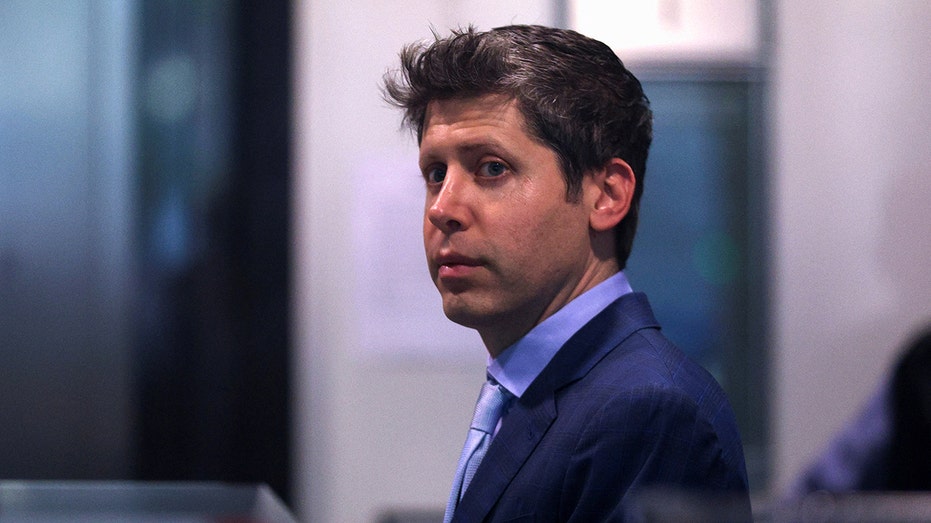
CEO of OpenAI Sam Altman trial

CEO of OpenAI Sam Altman attends the trial in Elon Musk’s lawsuit over OpenAI for-profit conversion at a federal courthouse in Oakland, California, on April 30, 2026. (Manuel Orbegozo/Reuters)

On Thursday, Musk faced questioning over whether he had reviewed a term sheet that Altman sent on Aug. 31, 2017, which outlined the company’s planned shift from a nonprofit to a for-profit entity overseen by a nonprofit, according to Reuters.

“My testimony is I didn’t read the fine print, just the headline,” Musk said.

Musk and Altman co-founded OpenAI in 2015. Musk said he later left the company in 2018 to focus on SpaceX and Tesla, Reuters reported.

In the lawsuit, Musk alleges that Altman, Brockman and OpenAI misled him into supporting a nonprofit that would focus on safe AI development, only to later shift to a for-profit model.

Advertisement

ELON MUSK MISLED TWITTER INVESTORS AHEAD OF ACQUISITION, JURY SAYS

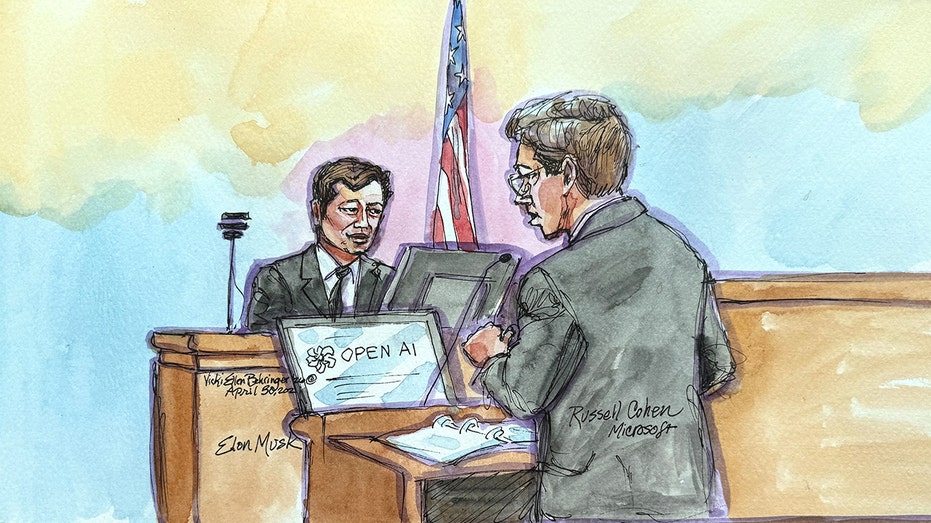
Elon Musk is questioned by Russell Cohen

Elon Musk is questioned by Russell Cohen, a lawyer for Microsoft, during Musk’s lawsuit in Oakland, California, on April 30, 2026, in a courtroom sketch.  (Vicki Behringer/Reuters)

GET FOX BUSINESS ON THE GO BY CLICKING HERE

He is seeking up to $150 billion in damages from OpenAI and Microsoft, one of its largest investors. Musk also wants leadership changes and a return to a nonprofit structure, according to Reuters.

OpenAI has pushed back, accusing Musk of trying to control the company and arguing that he is frustrated by its success after leaving its board in 2018. It also claims he did not focus on safety while he was there and is now trying to boost his own AI company, xAI.

Advertisement
Continue Reading

Trending

Copyright © 2025