



Connect with us
DAPA Banner

Business

Morgan Stanley’s Top Picks in China Industrials

Published

on

Continue Reading
Click to comment

You must be logged in to post a comment Login

Leave a Reply

Business

U.S. Federal Reserve Holds Interest Rates Steady

Published

on

OneWater Marine Inc. (ONEW) Q1 2026 Earnings Call Transcript

The U.S. Federal Reserve kept interest rates on hold as officials consider the implications of elevated oil prices on efforts to contain inflation. James Marple, Associate Vice President and Senior Economist with TD Bank Group, discusses the impact of the oil shock and whether rates may have to stay on hold longer than previously expected.

Transcript

Anthony Okolie: As widely expected, the US Federal Reserve kept its benchmark interest rate unchanged. Joining me now to discuss the latest decision is TD Senior Economist James Marple.

And James, what stood out to you today?

James Marple: Well, no change in the decision itself. They talked about, obviously, the Strait of Hormuz and the oil price shock, and how much uncertainty that’s created for the outlook. That was certainly front and center. But not really any changes to the statement. They kept the characterization of interest rates exactly as it was, and even their forward guidance.

Advertisement

The, perhaps, most interesting thing was that there were four total dissents in the statement. And that’s the most there have been since 1992. One was the obvious one, Stephen Miran, who dissented, wanted a 1/4 rate cut. But then there were three dissents from regional Fed governors that wanted a little bit of forward language that suggests, perhaps, an easing bias. And that’s the way it was characterized in terms of their dissent. They wanted that removed from the statement. So, more hawkish in tone there just on the dissents more than anything in the statement itself.

Anthony Okolie: OK. With that backdrop, we still have the US-Iran conflict. It’s still unresolved. Energy prices are still elevated. How worried should the US be about stagflation risk?

James Marple: Well, I’m not sure I’d call it stagflation, per se. When people hear stagflation, they really think of the 1970s and

Advertisement
Continue Reading

Business

Japanese yen soft after reported govt intervention; dollar steadies

Published

on


Japanese yen soft after reported govt intervention; dollar steadies

Continue Reading

Business

How Digital Payment Platforms Are Supporting Cross-Border Commerce

Published

on

New research showing that concerns around international payments are a leading barrier stopping UK SMEs from exporting overseas.

Digital payment systems have changed significantly over the past few years. With every step toward more advanced technology, digital platforms have had to keep pace.

Online payment providers have to be versatile, flexible and adjust to global demands with ease. Given that the global payment industry is in the trillions of dollars and people from all over are placing orders for products and services internationally, digital payment infrastructures need to support cross-border commerce.

The scale of growth is substantial. Industry trends show that a large percentage of global consumers now purchase from international retailers, with the cross-border e-commerce market projected to reach trillions in value over the next decade. In response, providers are working to deliver a global payments solution that can support this demand while balancing efficiency, compliance and accessibility.

Unpacking Multi-currency Functionality

A key aspect of this growing global market is the ability to operate with a multi-currency business account, allowing organisations to hold and transact in different currencies, making global operations more accessible and streamlined. This simplifies financial operations and supports smoother cross-border activity. Platforms such as BONCA, a digital payment platform supporting cross-border transactions, can be viewed as examples of how providers are developing more unified financial environments that aim to streamline international transactions.

Looking at Payment Infrastructure Evolution

An additional notable development in recent years is the rise of integrated platforms that bring multiple financial services into one environment. According to the World Bank, 79% of adults globally now have a financial account and in 2024, 40% of adults in developing economies saved in a financial account. This is a 16-percentage-point increase since 2021. This rise has been possible due to consolidated systems designed to manage international transactions. Systems typically support features such as account management, payment processing and access to global networks – all in one.

Advertisement

Online Gateway and Integration Capabilities

In addition to account functionality, many providers now incorporate card services and connections to an online payment gateway. This allows for payments across various digital channels. These integration capabilities also support smoother customer experiences by reducing friction during the payment process. When systems are well-connected, transactions can be completed more quickly and with fewer errors. A borderless payment platform is particularly important for businesses operating internationally, where delays or complications can impact customer satisfaction and conversion rates.

Improving Transparency is Key

Another area where digital payment platforms are growing is in the handling of currency conversion and transaction transparency. Before, cross-border payments were often associated with unclear fees and fluctuating exchange rates that were difficult to track. Many providers are working to improve visibility around these topics. The aim is to create transparency so that all users fully understand all terms and conditions.

This shift towards transparency is also influenced by competition within the sector. To capture your attention, they need to build trust and having access to as much information as needed is what builds this trust. Transparency is much easier to offer, as well, because providers operate better due to advanced technology.

An online payment gateway is not only safe and secure but it’s easy to use and designed with interactions in mind. As a user of this kind of infrastructure, it’s easy to find information because it’s all on one menu drop-down on a site. Systems know that users don’t want to spend hours trying to figure something out.

Advertisement

Currency Conversion And Fee Visibility

In this digital age, it is common for financial infrastructures to show real-time exchange rate information and clearer breakdowns of transaction fees before payments are completed. This allows businesses and users to better understand the financial implications they’re facing. The key point is that this information is visible before online transactions are made. This means businesses can fully understand the associated fees before completing a transaction.

Strengthening Security in Cross-Border Transactions

Security remains a central concern in any financial environment and this becomes even more critical when transactions cross multiple jurisdictions. Digital payment systems are increasingly incorporating layered security measures designed to protect both data and funds as they move across borders. These typically include encryption protocols, multi-factor authentication and continuous monitoring of transaction activity.

Given the complexity of international payments, these safeguards play a vital role in maintaining system integrity. The focus is on identifying and mitigating risks early, rather than reacting after issues arise. In addition, the use of artificial intelligence and advanced analytics has become more prominent in fraud detection.

Integration and the Future of Global Commerce

Another important development is the increasing integration of payment systems with global marketplaces and digital services. Rather than operating independently, many systems now connect directly with e-commerce platforms, subscription services and other online environments.

Advertisement

Looking ahead, cross-border commerce is expected to continue expanding as digital trade becomes more accessible worldwide. Payment infrastructure will play a central role in supporting this growth, particularly as providers continue to refine transparency, security and system interoperability. While challenges remain, the ongoing development of international payment systems reflects a broader shift towards a more connected and efficient global economy that supports international solutions.
Continue Reading

Business

Spotify Adds Verified Checks For Artists to Prove They Are Humans With Legit Content

Published

on

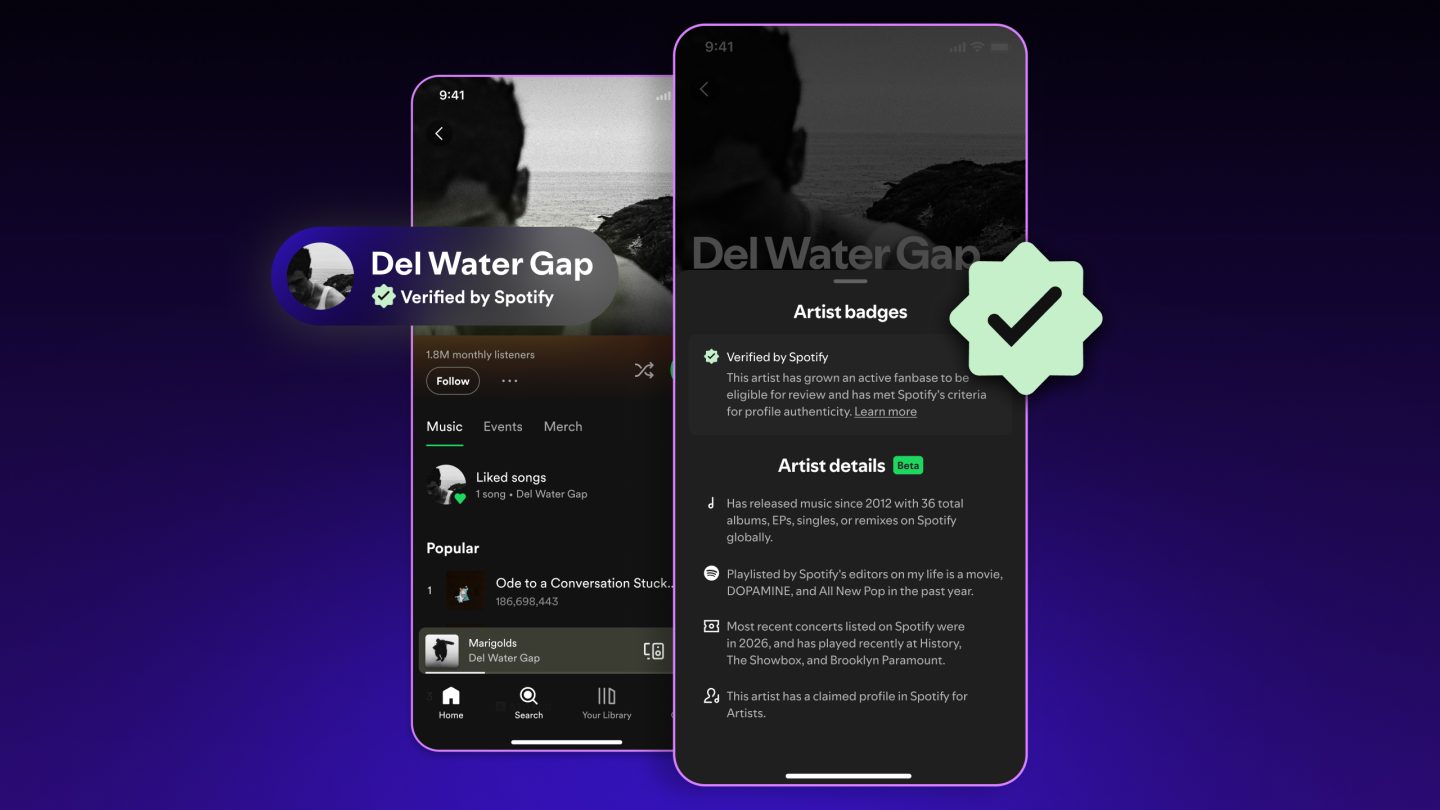
Verified by Spotify
Verified by Spotify

Spotify is one of the online platforms that has been seeing an influx of AI slop, but that is changing now as the streaming app is adding “Verified” checkmarks to artists to ensure that they share only authentic and legitimate content.

Spotify Adds Verified Checks For Artists

The Swedish streaming company announced in its latest blog post that they are now launching its version of verification checks on the platform with the “Verified by Spotify” program in beta testing.

This latest verification program aims to help artists, creatives, and the public to easily prove the authenticity of content through the new Spotify badge.

The Verified by Spotify badges will appear on an artist’s profile page, and according to the platform, this will help let the public know that this specific musician has been reviewed by the company and meets the latest criteria.

Additionally, Spotify also launched the Artist Profile Protection, also in beta testing, which will help artists gain control and protection of their profiles. This will also help the public get assurance that the music available comes from the actual artists themselves.

Advertisement

Spotify Wants to Separate AI-Generated Content

Spotify said that they have launched this new set of protections for artists and the public to combat the growing availability of generative AI tools and content across online platforms.

According to Spotify, this latest feature adds layers to its previous rollouts like SongDNA, expanded song credits, and features like AI credits.

While generative AI policies remain vague on Spotify, especially as there is still AI-generated content that thrives on the platform, this latest verification checkmark will help the streaming platform assure its artists and users alike that there is authentic, human-made content on Spotify.

For now, Spotify is still beta testing the features and only select artists and users will get to see the Verified by Spotify badges.

Advertisement

Originally published on Tech Times

Continue Reading

Business

Grid Dynamics Holdings, Inc. (GDYN) Q1 2026 Earnings Call Transcript

Published

on

OneWater Marine Inc. (ONEW) Q1 2026 Earnings Call Transcript

Cary Savas
Director of Branding & Communications

Good afternoon, everyone. Welcome to Grid Dynamics First Quarter 2026 Earnings Conference Call. I’m Cary Savas, Director of Branding and Communications.

Joining us on the call today are CEO, Leonard Livschitz; CFO, Anil Doradla; CTO, Eugene Steinberg; and SVP, Global Head of Partnerships and Marketing, Rahul Bindlish.

Following the prepared remarks, we will open the call to your questions. Please note that today’s conference call is being recorded.

Advertisement

Before we begin, I’d like to remind everyone that today’s discussion will contain forward-looking statements. This includes our business and financial outlook and the answers to some of your questions. Such statements are subject to the risks and uncertainty as described in the company’s earnings release and other filings with the SEC. During this call, we will discuss certain non-GAAP measures of our performance. GAAP to non-GAAP financial reconciliations and supplemental financial information are provided in the earnings press release and the 8-K filed with the SEC. You can find all the information I just described in the Investor Relations section of our website.

I now turn the call over to Leonard, our CEO.

Leonard Livschitz
CEO & Director

Advertisement

Thank you, Cary. Good afternoon, everyone, and thank you for joining us today.

Continue Reading

Business

Chip shops sell cheap catfish as ‘traditional fish and chips’

Published

on

Chip shops sell cheap catfish as 'traditional fish and chips'

Steven Booth, 41, who was waiting in Crook’s chippy to buy his lunch, said: “My wife is from Thailand and over there catfish is often on the menu, it’s fantastic and I’m up for trying it, but it’s incredibly important you are told what you’re eating.”

Continue Reading

Business

Saia, Inc. (SAIA) Q1 2026 Earnings Call Transcript

Published

on

OneWater Marine Inc. (ONEW) Q1 2026 Earnings Call Transcript

Q1: 2026-04-30 Earnings Summary

EPS of $1.86 beats by $0.04

 | Revenue of $806.23M (2.37% Y/Y) beats by $17.73M

Saia, Inc. (SAIA) Q1 2026 Earnings Call April 30, 2026 10:00 AM EDT

Company Participants

Matthew Batteh – Executive VP, CFO & Secretary
Frederick Holzgrefe – President, CEO & Director

Advertisement

Conference Call Participants

Jordan Alliger – Goldman Sachs Group, Inc., Research Division
Ken Hoexter – BofA Securities, Research Division
Jonathan Chappell – Evercore ISI Institutional Equities, Research Division
Thomas Wadewitz – UBS Investment Bank, Research Division
Scott Group – Wolfe Research, LLC
Ravi Shanker – Morgan Stanley, Research Division
Eric Morgan – Barclays Bank PLC, Research Division
Christian Wetherbee – Wells Fargo Securities, LLC, Research Division
Stephanie Benjamin Moore – Jefferies LLC, Research Division
Richa Talwar – Deutsche Bank AG, Research Division
Brian Ossenbeck – JPMorgan Chase & Co, Research Division

Advertisement

Presentation

Operator

Good day, and welcome to the Saia, Inc. First Quarter 2026 Earnings Conference Call. [Operator Instructions] Please note, this event is being recorded. I would now like to turn the conference over to Matt Batteh, Saia’s Executive Vice President and Chief Financial Officer. Please go ahead.

Advertisement

Matthew Batteh
Executive VP, CFO & Secretary

Thank you, Chad. Good morning, everyone. Welcome to Saia’s First Quarter 2026 Conference Call. With me for today’s call is Saia’s President and Chief Executive Officer, Fritz Holzgrefe. Before we begin, you should note that during this call, we may make some forward-looking statements within the meaning of the Private Securities Litigation Reform Act of 1995. These forward-looking statements and all of the statements that might be made on this call that are not historical facts are subject to a number of risks and uncertainties, and actual results may differ materially. We refer you to our press release and our SEC filings for more information on the exact risk factors that could cause actual results to differ.

I will now turn the call over to Fritz for some opening comments.

Advertisement
Continue Reading

Business

Amkor Technology prices $1 billion convertible notes due 2031

Published

on


Amkor Technology prices $1 billion convertible notes due 2031

Continue Reading

Business

Powell Exits A Fed Fractured By Inflation Debate

Published

on

Powell Exits A Fed Fractured By Inflation Debate

Powell Exits A Fed Fractured By Inflation Debate

Continue Reading

Business

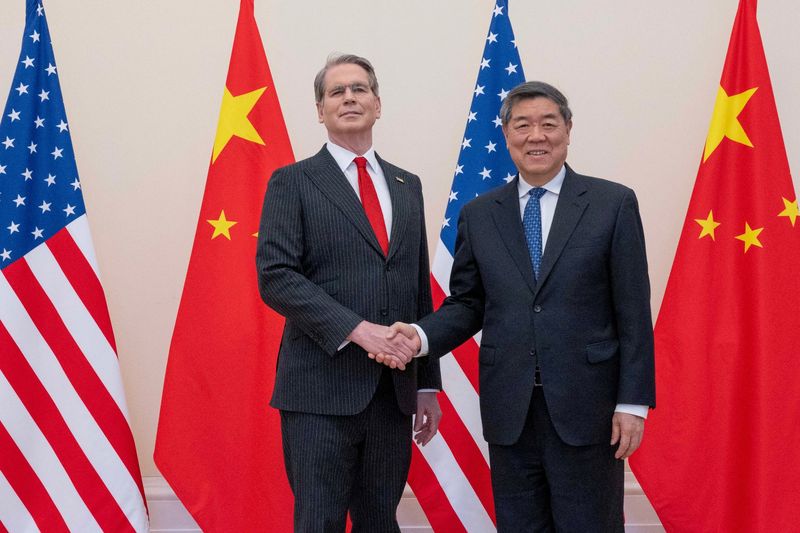
China, US economic chiefs raise complaints in ’candid’ call ahead of Trump-Xi summit

Published

on

China, US economic chiefs raise complaints in ’candid’ call ahead of Trump-Xi summit


China, US economic chiefs raise complaints in ’candid’ call ahead of Trump-Xi summit

Continue Reading

Trending

Copyright © 2025