
Business
Gamers to Receive Digital Credits for Alleged Overcharges


NEW YORK — Sony Interactive Entertainment has reached a $7.85 million settlement to resolve a class-action lawsuit alleging the company illegally suppressed competition for digital PlayStation games, resulting in higher prices for millions of gamers across the United States. A federal judge granted preliminary approval to the deal in April 2026, paving the way for PlayStation Network account credits to be distributed to approximately 4.4 million eligible class members.
The lawsuit centered on Sony’s decision in 2019 to restrict third-party retailers from selling game-specific vouchers for digital downloads. Plaintiffs claimed this policy eliminated competition, allowing Sony to charge inflated prices through its own PlayStation Store. The settlement, reached after previous proposals were rejected by the court, provides non-cash credits rather than direct payments, a structure that faced initial judicial scrutiny but ultimately gained approval.
Eligible consumers include those in the United States who purchased specific digital games via the PlayStation Store between April 1, 2019, and December 31, 2023, for titles where game-specific vouchers were previously available at retail. Covered games are those with at least 200 voucher redemptions before April 1, 2019, and where prices increased by at least 50 cents in the relevant periods. A full list of qualifying titles is available on the settlement website.
Under the terms, Sony will issue $7.85 million in PlayStation Network credits directly to class members’ accounts. Users with active accounts do not need to file a claim; credits will be distributed automatically following final approval. Those with deactivated accounts can contact the settlement administrator for equivalent cash payments, provided requests are submitted by the deadline. The court has scheduled a final approval hearing for October 2026.
The case, filed in the U.S. District Court for the Northern District of California, accused Sony of violating antitrust laws by maintaining a monopoly over digital game sales. By banning third-party voucher sales, Sony allegedly forced consumers to buy directly from its platform at higher prices, taking a standard 30 percent commission. The settlement resolves these claims without admitting wrongdoing.
Legal experts note the credits-only structure is common in consumer class actions involving digital platforms, allowing efficient distribution while addressing concerns about administrative costs. Previous versions of the settlement were rejected over issues including service awards for plaintiffs and coupon-like valuation concerns. The current proposal addressed those points, leading to preliminary approval by Judge Araceli Martínez-Olguín.
For PlayStation users, the settlement represents potential value in the form of credits redeemable for games, add-ons and other content. Average payouts per account will vary based on qualifying purchases, though individual amounts are expected to be modest given the class size. The settlement website provides tools for checking eligibility and tracking the claims process.
Sony has faced similar scrutiny in other markets. A separate UK class action alleges overcharging for digital downloads, potentially affecting millions more users. The U.S. case highlights ongoing debates about platform monopolies in the gaming industry, where digital sales now dominate over physical copies.
The gaming community has reacted with a mix of appreciation and skepticism. Many players welcome any form of compensation, while others criticize the credits-only format as limiting flexibility. Online forums buzz with discussions about how to maximize value from potential credits, with some suggesting stacking them for major releases.
Industry analysts view the settlement as part of broader regulatory pressure on tech and gaming giants. As digital storefronts control distribution, questions about fair competition and consumer pricing continue to surface. Sony maintains its policies protect quality and security, but the lawsuit underscored tensions between platform control and retailer competition.
The resolution comes at a time when Sony is pushing forward with PlayStation 5 sales and preparing for future hardware. The company continues investing in first-party titles and services like PlayStation Plus, aiming to grow its digital ecosystem despite the legal challenges. The settlement is unlikely to materially impact finances given Sony’s scale.
Class members have until July 2026 to opt out if they wish to pursue individual claims. Those remaining in the class will be bound by the settlement terms upon final approval. Legal fees and administrative costs will be paid from the settlement fund, a standard practice.
For gamers who made qualifying purchases, checking eligibility is straightforward via the settlement site. The process requires no extensive documentation for most, as purchase data is tied to PSN accounts. This automated approach aims to minimize hassle while ensuring fair distribution.
The case underscores the evolving nature of consumer protection in digital markets. As more entertainment shifts online, antitrust oversight plays a growing role in ensuring competitive pricing. Sony’s settlement, while resolving this specific dispute, may influence how other platforms handle third-party distribution.
PlayStation fans can look forward to using any credits on upcoming titles or existing libraries. With major releases on the horizon, the timing provides a small windfall for many. As the final approval process unfolds, affected users are encouraged to monitor official communications for updates.
The $7.85 million PlayStation antitrust settlement marks another chapter in the complex relationship between console makers, retailers and consumers in the digital age. While the amount is modest relative to Sony’s overall revenue, it delivers tangible benefits to millions of gamers and reinforces accountability in digital marketplaces.

NEW YORK — Investors evaluating Atlassian Corporation’s prospects heading into the second half of 2026 face a compelling growth story underpinned by strong cloud migration, artificial intelligence integrations and expanding enterprise adoption of its collaboration tools, despite recent share-price volatility that has left the stock trading near $88.88 as of early May. Wall Street largely recommends buying the shares, with consensus price targets implying 35-77 percent upside as the company capitalizes on digital transformation trends.
Atlassian, known for flagship products like Jira, Confluence and Bitbucket, has successfully transitioned much of its business to the cloud, driving recurring revenue and higher margins. Fiscal third-quarter results released in April showed robust performance, with shares surging 30 percent post-earnings on beats and raised guidance. Analysts highlight the company’s AI-powered features, such as automated workflows and intelligent search, as key differentiators in a competitive software landscape.
Current valuation metrics reflect a balance between growth potential and near-term pressures. Atlassian trades at a premium to some peers but offers attractive entry points for long-term investors given projected revenue growth of 18 percent-plus annually. Forward price-to-earnings estimates and discounted cash flow models support analyst enthusiasm, with several firms maintaining Buy or Strong Buy ratings.
The consensus among 28-42 analysts rates Atlassian a Moderate Buy to Strong Buy. Average 12-month price targets range from $144.67 to $169.18, with optimistic forecasts reaching $295 or higher. BTIG recently hiked its target following earnings, citing momentum in cloud adoption and AI innovation. The lowest targets sit around $95, acknowledging execution risks.
Atlassian’s cloud migration strategy has accelerated revenue visibility and customer retention. Enterprise clients increasingly prefer subscription models that deliver continuous updates and scalability. AI enhancements across the product suite, including Jira’s intelligent automation and Confluence’s smart summaries, position the company to capture more wallet share in project management and knowledge-sharing tools.
Challenges include macroeconomic uncertainty affecting IT spending and competition from Microsoft, ServiceNow and smaller disruptors. Atlassian’s heavy investment in research and development has pressured short-term margins, though long-term returns are expected to justify the spend. Currency fluctuations and international exposure add volatility for the Australia-based company listed on Nasdaq.
Recent performance shows resilience. Despite a year-to-date decline amid broader tech rotations, Atlassian’s fundamentals remain solid. Strong free cash flow generation supports potential share buybacks or accelerated innovation. The company’s focus on large enterprises and high-growth verticals like software development and IT operations provides a durable moat.
For growth-oriented investors, Atlassian represents exposure to digital collaboration trends that are unlikely to fade. Remote and hybrid work models sustain demand for its tools, while AI integration opens new use cases. Valuation, while not cheap, appears reasonable relative to projected earnings growth of 20 percent-plus in coming years.
Value investors may wait for further pullbacks or clearer margin expansion. The stock’s beta indicates sensitivity to market swings, making it less suitable for conservative portfolios. Dividend absence further limits appeal for income seekers, though capital appreciation potential remains high.
Analyst notes emphasize Atlassian’s market leadership in developer tools and collaboration software. Jira’s dominance in agile project management and Confluence’s role in knowledge management create sticky customer relationships. Expansion into new verticals and geographic markets supports long-term revenue diversification.
Risks include execution on cloud migration timelines, potential customer pushback on pricing and regulatory scrutiny of big tech. Geopolitical tensions or recessionary pressures could delay enterprise purchases. Competition in AI features may intensify, requiring continued innovation spending.
Portfolio allocation depends on risk tolerance. Aggressive investors may add to positions on dips, targeting 13-18 percent annualized returns based on consensus models. Balanced portfolios might pair Atlassian with more defensive tech names. Long-term holders benefit from secular tailwinds in software-as-a-service.
As fiscal 2026 progresses, attention turns to quarterly results and guidance. Cloud revenue mix, AI adoption metrics and margin trends will influence sentiment. Management’s track record of delivering on strategic initiatives provides confidence for many covering the stock.
Atlassian’s story in 2026 centers on leveraging its platform to drive efficiency and innovation for customers worldwide. While near-term volatility is possible, the company’s positioning in critical enterprise workflows supports a generally bullish outlook. Investors comfortable with software-sector dynamics may find current levels attractive for long-term compounding.
The software maker’s ability to adapt to evolving workplace needs while maintaining product excellence will determine success. With strong analyst backing and secular growth drivers, Atlassian remains a name worth watching — and potentially owning — as the year unfolds.

Failing High Streets fuel a wider sense of political discontent which could prove crucial in the upcoming elections for English councils in May.

Rubio to reportedly meet Pope Leo in Italy amid Trump criticism

Why China exports will likely stay resilient despite energy shock and a strong Yua

My 2 Ultimate 10%+ Yielding Retirement Income Compounders


US stocks rally could find fuel in earnings, jobs data amid surging oil prices

Two US troops missing during African Lion exercise in Morocco, AFRICOM says
Li Auto April deliveries climb to 34,085 vehicles


ADB launches $70 billion plan for energy, digital infrastructure in Asia-Pacific


Rosenose is a retired healthcare professional and she has been managing her own investments for nearly 2 decades. She writes about stocks with growing dividends targeting a yield of 4+%. She is a contributing author to the investing group Macro Trading Factory where she manages the Rose’s Income Garden portfolio – a diversified portfolio with 80+ stocks from all 11 sectors which targets rising safe income and capital maintenance. The service also has the Funds Macro Portfolio managed by the Macro Teller which aims to outperform the SPY market on a risk-adjusted basis. Both portfolios are easy to follow and have a focus on quality investments, risk management, and diversification. Learn more.
Analyst’s Disclosure: I/we have a beneficial long position in the shares of XEL either through stock ownership, options, or other derivatives. I wrote this article myself, and it expresses my own opinions. I am not receiving compensation for it (other than from Seeking Alpha). I have no business relationship with any company whose stock is mentioned in this article.
Seeking Alpha’s Disclosure: Past performance is no guarantee of future results. No recommendation or advice is being given as to whether any investment is suitable for a particular investor. Any views or opinions expressed above may not reflect those of Seeking Alpha as a whole. Seeking Alpha is not a licensed securities dealer, broker or US investment adviser or investment bank. Our analysts are third party authors that include both professional investors and individual investors who may not be licensed or certified by any institute or regulatory body.
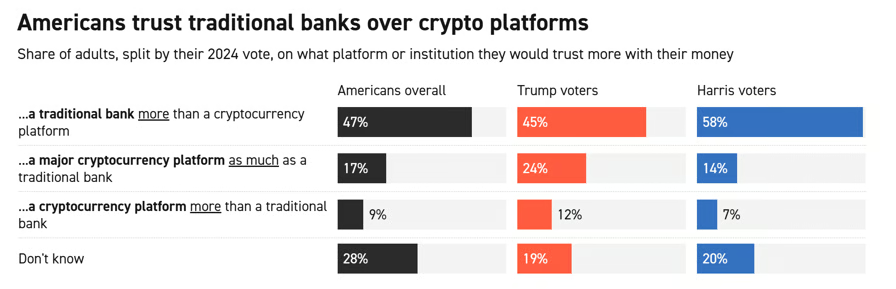
Crypto, AI Super PACs Flood Midterms As Poll Finds Most Americans Distrust Both Industries
“Devil Wears Prada 2” director explains why 1 returning cast member 'had to die' in shocking death scene

Polanski suggests he shared ‘inaccurate’ criticism of Golders Green officers because he was traumatised

Manchester United reach agreement with Casemiro over contract clause amid transfer speculation

US brings back mandatory military draft registration

Steven Gerrard disagrees with Gary Neville over ‘shock’ Chelsea and Arsenal claim | Football


-

 Tech6 days ago
Register Renaming | Hackaday
-

 Politics6 days ago
Drax board avoid their own AGM, accused of greenwashing & environmental racism
-

 Tech6 days ago
Why Blue Badges Disappeared From Toyota Hybrids
-

 Tech6 days ago
Images of Samsung’s rumored smart glasses have leaked
-
 Tech2 days ago
Trump’s 25% EU auto tariff breaches Turnberry Agreement that also covers semiconductors and digital trade
-

 Fashion5 days ago
Kylie Jenner’s KHY Enters a New Era with ‘Born in LA’
-

 Business5 days ago
Most Commercial Energy Audits Miss the Real Losses
-

 Crypto World5 days ago
CFTC’s AI will review U.S. crypto registration applications, chairman tells CoinDesk
-

 Business6 days ago
(VIDEO) Charlize Theron Climbs Times Square Billboard to Promote New Netflix Thriller ‘Apex’
-

 Business4 days ago
Barclay Brothers Avoid Bankruptcy: HSBC Drops High Court Petitions After IVA Deal
-
 Sports2 days ago
Paul Scholes issues Marcus Rashford reality check as agreement emerges over Man United star
-
 Business4 days ago
Tesla Officially Registers Elon Musk’s Stock: What Investors Need to Know
-
 Entertainment6 days ago
Alicia Keys Calls Out Music Industry ‘Boys Club’
-

 Tech5 days ago
Get Ready for More Brain-Scanning Consumer Gadgets
-

 Tech7 days ago
Dyson Vacuums And The Curse Of Cooked Capacitors
-
 Crypto World5 days ago
Robinhood Phishing Scam Exploits Gmail Dot Feature to Bypass Security
-

 Entertainment6 days ago
Sister Wives: Janelle Posts New Scary Warning
-

 Crypto World5 days ago
Gmail Dot Trick Underpins Robinhood Phishing, Sending Real-Looking Emails
-

 Business7 days ago
AI-Driven App Creation at Your Fingertips
-

 Tech6 days ago
The next iPhone moment might come from an AI company, not Samsung or Apple
You must be logged in to post a comment Login