

Crypto World
Iran’s Largest Crypto Exchange Linked to Supreme Leader’s Family


Reuters’ in-depth examination casts a revealing light on Nobitex, Iran’s largest crypto exchange, and the powerful family behind its emergence. The investigation traces Nobitex to Ali and Mohammad Kharrazi, two brothers who operated under the alias “Aghamir” to obscure links to the Kharrazi dynasty, a lineage with longstanding proximity to Iran’s political leadership. The findings place Nobitex at the heart of Iran’s crypto activity while raising questions about governance, influence, and the broader sanction landscape surrounding Iran’s financial footprint in digital assets.
The Kharrazi family’s proximity to the country’s leadership stretches across generations. Reuters reports ties that reach Ali Khamenei and Mojtaba Khamenei, with the brothers’ grandfather said to have served on the Assembly of Experts, and their father, Ayatollah Bagher Kharrazi, linked to early staffing of the Islamic Revolutionary Guard Corps. The brothers’ use of an alternate surname in corporate records illustrates how entrenched networks can intersect with Iran’s burgeoning crypto economy, even as Nobitex positions itself as a gateway for millions of users navigating a sanctions-ridden financial landscape.
Key takeaways
- Nobitex’s founders reportedly used the alias “Aghamir” to mask ties to the Kharrazi dynasty, a lineage with deep political connections in Iran, according to a Reuters investigation.
- The exchange remains operational amid ongoing conflict, serving more than 11 million customers and handling substantial trade activity, including during internet blackouts, with analysts noting significant on-chain outflows.
- On-chain analytics identify substantial flows linked to sanctioned entities and centralized bank activity, with Elliptic estimating about $366 million in suspect transfers, Chainalysis about $68 million, and Crystal Intelligence about $22 million in direct transfers from sanctioned wallets.
- Investigators have noted that wallets tied to Iran’s central bank sent hundreds of millions of dollars to Nobitex in 2025, as part of a broader strategy to bypass financial restrictions, alongside a separate dispute that surfaced $20 million in routed state funds via Babak Zanjani’s wallets.
- The United States has intensified its Iran-focused crypto crackdown, with seizures approaching half a billion dollars in Iranian digital assets, a development Cointelegraph characterizes as a major escalation in Operation Economic Fury, and with Tether reportedly assisting in freezing some of the assets.
Nobitex’s role in Iran’s evolving crypto economy
Nobitex is described by Reuters as Iran’s biggest crypto exchange and a dominant conduit for crypto activity in the country. The platform reportedly serves a user base exceeding 11 million, illustrating how a single marketplace can anchor a large portion of Iran’s on-chain financial activity even as the country navigates sanctions and international scrutiny. Analysts cited by Reuters noted that Nobitex continued to operate through wartime disruptions, including nationwide internet outages, underscoring the exchange’s centrality to everyday crypto use in Iran during periods of heightened conflict.
Beyond sheer volume, the article highlights a paradox at the heart of Iran’s crypto environment: while Nobitex supports ordinary users, its activity has drawn scrutiny over possible links to sanctioned entities. Investigators cited by Reuters describe a spectrum of on-chain movements that appear to intersect with Iranian state interests and sanctioned actors, raising questions about how the exchange is governed and how it manages compliance with international sanctions regimes.
Where the data points to on-chain flows
The analysis of on-chain activity presents a bifurcated picture. On one side are the volumes associated with regular citizens and legitimate commerce; on the other are flows that analysts label as suspect or high-risk. Elliptic’s assessment flagged roughly $366 million in flows deemed suspect, while Chainalysis placed the figure at about $68 million. Crystal Intelligence identified around $22 million in direct transfers from sanctioned wallets. While these figures reflect different methodologies and timeframes, they collectively sketch a landscape in which Nobitex sits at a nexus of sanction risk and international enforcement attention.
In addition to sanction-related movements, Reuters cites findings about Iranian central-bank wallets engaging with Nobitex, with reports suggesting hundreds of millions of dollars moved to the exchange in 2025. A separate dispute involving businessman Babak Zanjani exposed wallet addresses that analysts say revealed at least $20 million in routed state funds. Taken together, these points underscore the degree to which Nobitex sits at the intersection of political economy, financial sanctions, and the security considerations that come with a high-volume crypto exchange operating within a tense geopolitical environment.
Nobitex has publicly denied formal ties to the Iranian government, arguing that illicit transactions constitute a small share of its overall activity. The exchange’s stance reflects a common tension in sanctioned markets: while platforms may operate commercially and serve ordinary users, the boundaries of acceptable activity are contested and subject to ongoing enforcement scrutiny.
Crackdowns beyond borders: the U.S. sanctions regime and seizures
Cointelegraph has reported that U.S. authorities have seized nearly $500 million in cryptocurrency linked to Iran, marking a pronounced escalation of enforcement under a campaign known as Operation Economic Fury. This sum sits alongside previously disclosed totals, including about $344 million in frozen assets, with the stablecoin issuer Tether said to have assisted in freezing portions of the funds. The mounting seizures illuminate a broader policy shift in which digital assets become a focal point of financial pressure aimed at constraining Iran’s access to the global financial system.
The seizures reflect a wider arc of U.S. policy that seeks to disrupt illicit finance channels tied to Iran. For market watchers, this intensifies the imperative for exchanges operating in or serving Iran to maintain robust sanctions screening and on-chain analytics capabilities, as well as transparent governance practices to reassure counterparties and regulators abroad.
What this means for investors, users, and the broader market
The Reuters profile of Nobitex, paired with the mounting enforcement actions described by Cointelegraph, highlights a dual reality for the crypto ecosystem in sanctioned environments. On one hand, crypto exchanges in Iran provide essential access to digital assets for millions of users, enabling remittances, trading, and cross-border transaction flows in a market beset by external financial pressure. On the other hand, the same activity invites intense scrutiny from international regulators and sanctions authorities, creating an environment in which governance, compliance, and traceability are as critical as the technology itself.
For investors and builders, the episode underscores several practical takeaways: the importance of transparent ownership structures and verifiable governance in high-risk markets; the need for rigorous on-chain analytics and sanctions screening to mitigate exposure to sanctioned flows; and the reality that geopolitical risk remains a material factor shaping liquidity, risk premiums, and regulatory trajectories in crypto ecosystems connected to Iran.
regulators and industry participants will be watching closely how Nobitex navigates these pressures going forward. The combination of elite political connections, persistent sanctions exposure, and a large user base means Nobitex sits at a crossroads – potentially catalyzing both greater adoption of crypto tools inside Iran and more disciplined, internationally aligned compliance practices demanded by global markets.
As the story unfolds, observers will be looking for three questions in particular: how Nobitex tightens governance and compliance to address sanction-related concerns; whether central-bank wallet activity remains a recurring channel of state-directed flows into the exchange; and how U.S. and allied sanctions policies evolve in response to the broader political economy of Iran’s crypto ecosystem.
Readers should stay tuned for updates on regulatory developments connected to Iran’s crypto landscape, the evolving relationship between Iranian financial authorities and domestic exchanges, and any shifts in on-chain flow patterns that might signal a new phase in enforcement or market adaptation.
Sources referenced in this report include a Reuters investigation detailing Nobitex’s founder ties and aliases, plus independent on-chain analyses cited by Reuters. For the enforcement context, Cointelegraph’s reporting on U.S. seizures and the broader Operation Economic Fury provides additional perspective on how sanctions policy intersects with crypto markets.

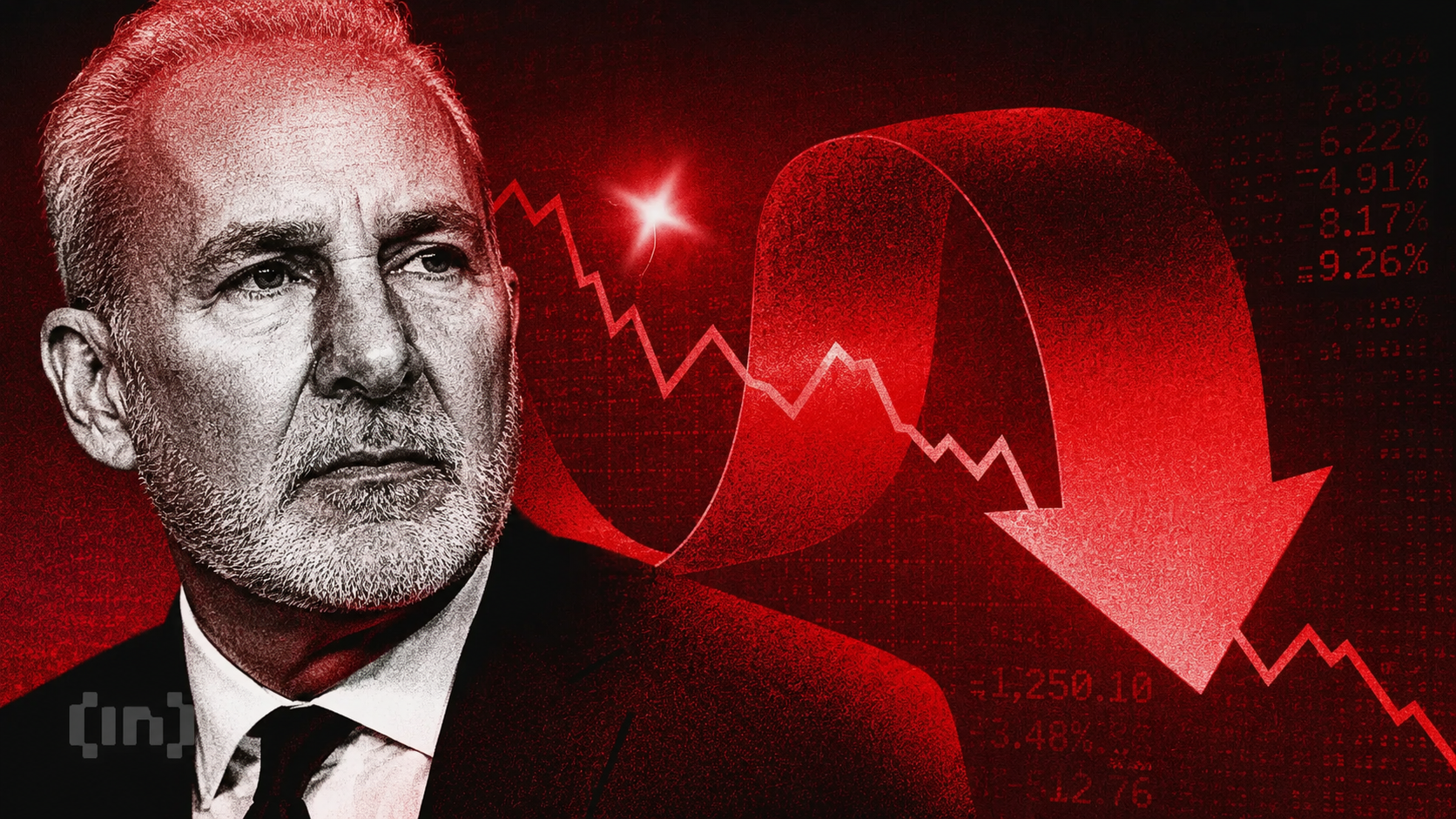

Peter Schiff predicted Bitcoin would break below $50,000 and then quickly plunge under $20,000, sparking a strong wave of pushback across the entire crypto community on X.
We break down what Schiff actually said, the market context behind his call, and how Bitcoiners fired back at the veteran gold advocate.
Why Peter Schiff Is Predicting a Bitcoin Crash
Peter Schiff is the chief of Euro Pacific Capital and one of the longest-running Bitcoin skeptics in finance. He took to X on Tuesday to argue that excessive complacency signals the crypto market remains far from a bottom right now.
“When Bitcoin breaks $50K, it should be a quick fall below $20K,” Schiff wrote, claiming such a move would finally break the resolve of long-term Bitcoin holders across the world.
The prediction came as Bitcoin was trading at $66,670 after falling below the key $70,000 support, accumulating a daily drop of 6.4%. This correction coincided with Mt. Gox transferring approximately 10,422 BTC to new wallets as part of payments to creditors.
A modest sale by Strategy, the largest corporate Bitcoin holder, added some caution to the picture. The amount represented a tiny fraction of holdings, but the symbolism arrived during an already fragile sentiment phase across crypto.
Schiff’s broader argument remains the same. He has long claimed Bitcoin lacks intrinsic value compared to gold, and views the current cycle as another speculative excess waiting for an eventual reckoning across markets.
How the Bitcoin Community Hit Back
Bitcoiners responded with characteristic bluntness, pointing directly to Schiff’s long history of bearish calls. Many noted he has been questioning Bitcoin’s viability since the asset traded in the low thousands, more than a decade ago.
“Peter schiff has been calling bitcoin dead since $1K and he’s still out here writing the same post with different numbers in it,” one user replied, capturing the dominant mood across the community.
Others focused on conviction rather than price. “What Peter refuses to understand is that $20,000 wouldn’t shake a single HODLer,” wrote another user, framing Bitcoin as a censorship-resistant monetary network rather than a speculative bet.
“Yes, people buy for NGU. But the actual use case is a decentralized, censorship-resistant monetary network. That doesn’t change at any price. That’s what gives it value. And in a world where stablecoins hand governments an easier path to overreach, that value only goes up”, added.
The discussion reflects a deeper cultural divide between traditional precious-metals proponents and Bitcoin maximalists. Community replies ranged from memes and old call compilations to declarations of continued accumulation on every notable dip.
Market participants now watch key technical levels, with stronger demand between $64,000 and $66,000, while Bitcoin still trades 47% below its all-time high near $126,000 from late 2025.
For now, the market reaction to Schiff’s prediction looks limited to social media skirmishes. Bitcoin holders largely dismissed the call, and many framed any deeper drop as a buying opportunity rather than fuel for capitulation.
The post Peter Schiff Predicts a Brutal Bitcoin Crash to $20,000 and Sparks Heated Backlash appeared first on BeInCrypto.

TLDR:
- NewLimit Series C raised $435M led by Founders Fund for longevity biotech expansion and clinical readiness.
- Startup targets epigenetic reprogramming therapies aimed at restoring youthful function in aged human cells.
- First-in-human trials for lead liver cell program are planned for next year after recent breakthrough results.
- Funding brings major VC backing as NewLimit scales research toward regulated human clinical applications.
NewLimit Series C funding has closed at $435 million, marking a major capital injection into longevity biotech. The round was led by Founders Fund with participation from several new and returning investors.
The company was co-founded by Coinbase CEO Brian Armstrong and focuses on cellular age reprogramming. NewLimit now prepares to advance its first human trials for age-related therapies next year.
NewLimit Series C Funding Backed by Founders Fund and Global Investors
NewLimit Series C attracted strong backing from high-profile venture firms. Founders Fund led the round with a $435 million commitment.
Thrive Capital, Greenoaks, and Quiet Capital joined as new investors. Existing backers also increased exposure to the biotech startup.
Kleiner Perkins and Eli Lilly Ventures returned alongside other participants. Wu Blockchain reported the funding details alongside NewLimit’s announcement.
NewLimit confirmed continued collaboration with Abstract VC, NFDG, and Valor. The company said investor support strengthens its research timeline.
NewLimit Series C positions the firm deeper into longevity biotech development. The company builds therapies that target cellular aging mechanisms.
It focuses on epigenetic reprogramming to restore function in aged cells. Early research concentrates on human liver cell regeneration programs.
Data shared by NewLimit indicates progress in preclinical validation stages. The firm aims to translate findings into clinical applications.
The funding round expands operational capacity for research and development. It also supports preparation for regulated clinical environments.
NewLimit Series C Advances Human Trials for Epigenetic Reprogramming
NewLimit Series C funding supports a clear shift toward human testing. The company plans first-in-human trials for next year.
The lead program targets reprogramming aged human cells into more youthful states. Researchers focus on restoring functional biological activity at the cellular level.
NewLimit stated that breakthrough results enabled the transition into clinical readiness. The firm continues refining its therapeutic approach for safety and efficacy.
The company uses epigenetic reprogramming as its central scientific method. This approach seeks to reset cellular age markers without altering DNA sequences.
NewLimit’s research model integrates biotech and advanced computational biology methods. Teams analyze cellular behavior changes under reprogramming conditions.
The startup builds its pipeline around longevity medicine applications. It prioritizes therapies aimed at age-related decline and organ function loss.
According to company updates, liver cell rejuvenation remains the first clinical target. Additional indications may follow after initial trial outcomes.
The funding strengthens infrastructure for scaling laboratory and clinical operations. It also accelerates regulatory preparation for upcoming trials.

Crypto is turning into a “contrarian bet” as institutional investors are being drawn to artificial intelligence stocks, says Bitwise chief investment officer Matt Hougan.
“The crypto market is brutal right now,” Hougan wrote in a market note on Tuesday. “One major reason is that crypto is no longer the belle of the ball. AI stocks, robotics companies, SpaceX … who needs crypto when the Nasdaq-100 is up 43% year-over-year?”
“With AI sucking all the oxygen out of the room, crypto is being forced to go through a painful metamorphosis: from momentum trade to contrarian bet.”
Stocks linked to companies involved in AI have skyrocketed as the technology has captured investor attention after OpenAI launched ChatGPT to the public in late 2022. Shares in Nvidia, which makes computing components key to AI, have gained nearly 1,500% since ChatGPT’s launch.
Hougan argued that contrarian bets can be great investments, but their payoff pattern is “usually spotty.”
“Momentum investments are fun. They surf along waves of excitement. Contrarian bets, by comparison, are a grind, requiring patience, a long-term orientation, and a focus on fundamentals,” he added.
“Investors still believe in crypto, but now that it’s a contrarian bet, they favor fundamentals over vibes.”
LVRG Research director Nick Ruck told Cointelegraph that while AI continues to dominate institutional portfolios, “crypto is quietly emerging as the true contrarian bet for sophisticated investors seeking directional upside in a maturing market.”
“This shift away from hype toward fundamentals is being fueled by real adoption metrics, regulatory clarity, and on-chain utility rather than speculative bets.”
Related: Bitcoin losses by holder cohort hit new highs: Will traders defend $60K?
Hougan said that this bear market is different because, unlike past crypto cycles where Bitcoin was the safe haven, money is moving into smaller assets with strong fundamentals such as Hyperliquid, Zcash and Stellar.
This is how the contrarian bet is playing out, he said. “When crypto stops being a momentum trade, fundamentals start to matter — and this rotation is proof it’s already underway.”
Hougan also argued that it is a sign that we are closer to the end of the bear market than the beginning.
“In the heart of a crypto winter, everything’s red. When the green starts to look like real growth, the season is changing.”
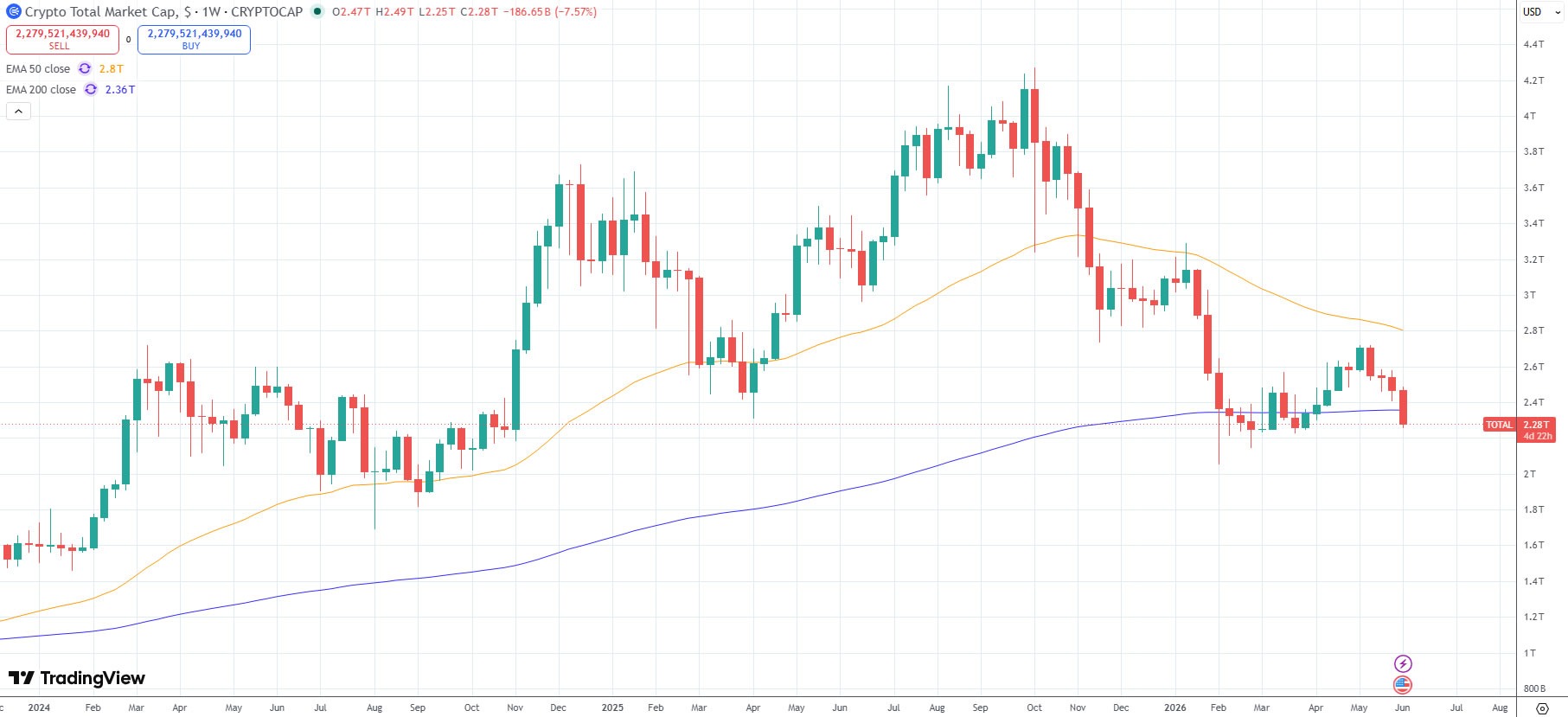
That bear market end seems a long way off at the moment, with markets dumping a further 5.3% on the day, sending total market capitalization down to $2.38 trillion, 46% below its October peak.
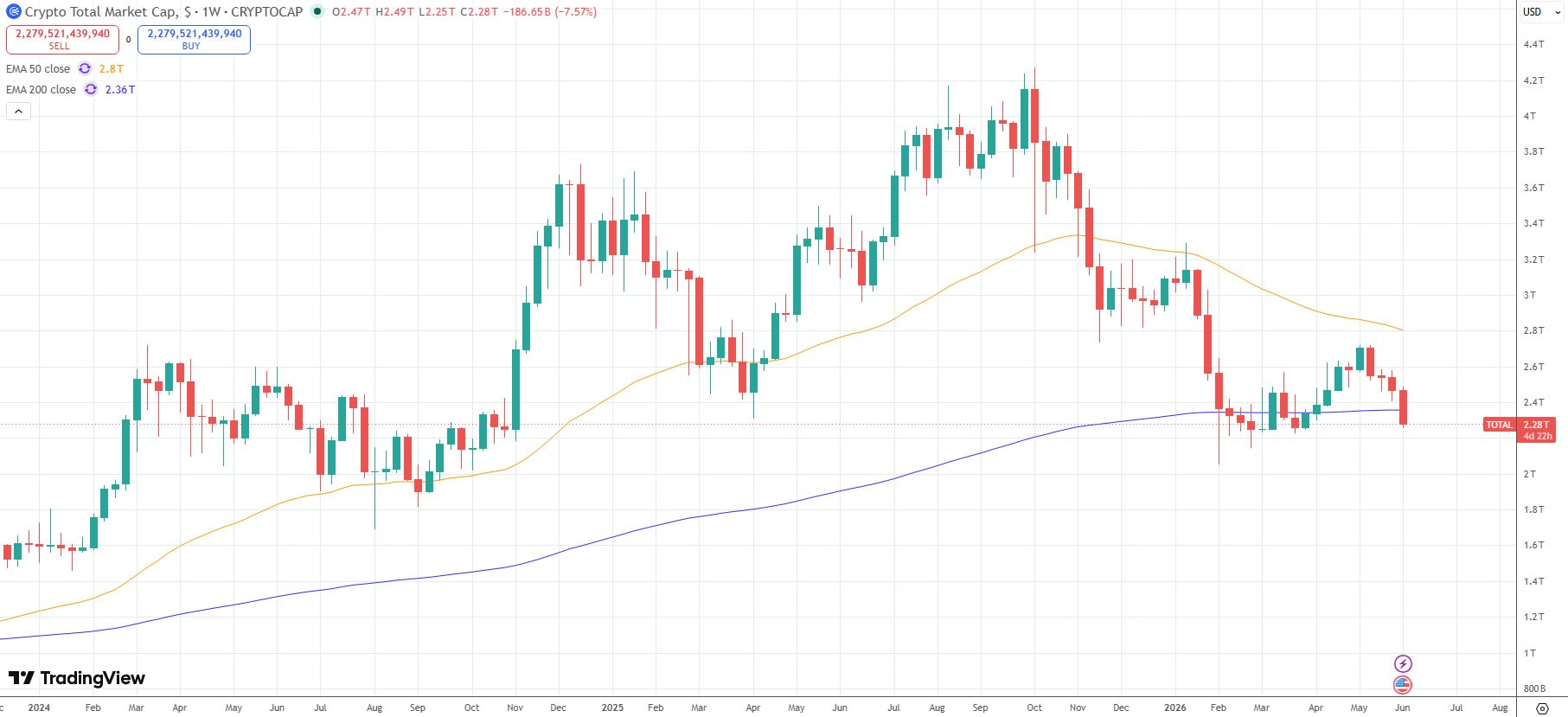
Total crypto capitalization tanks to a two-month low. Source: TradingView
Magazine: Big Questions: Do we really only need 2–5 cryptocurrencies?


Brazil’s central bank has added mandatory independent audits to the licensing approval process for crypto service providers in the country.
Summary
- Brazil’s central bank will require crypto service providers to submit independent audit reports when applying for or renewing licenses.
- The audits will review anti-money laundering controls, customer asset segregation, risk management systems, and employee compliance programs.
- The new rule could raise compliance costs for smaller crypto firms, while major exchanges may continue pursuing access to Brazil’s large market.
According to the published rules cited in the report, crypto firms applying for authorization, or renewing an existing license, must submit an independent auditor’s report as part of their regulatory filing. The rules state that the audit must be carried out by professionals registered with Brazil’s securities regulator, the Comissão de Valores Mobiliários.
Brazil adds audit requirement for crypto licenses
Under the new requirement, auditors will review whether crypto service providers have key compliance systems in place before the central bank grants authorization. The report said those checks will cover anti-money laundering controls, counter-terrorism financing procedures, customer asset segregation, internal risk management, and employee compliance programs.
Firms that fail those checks could face difficulty securing approval to operate, according to the same report. For crypto platforms already active in Brazil, the added review means licensing will now depend on outside verification of internal controls, not just documents submitted directly to the regulator.
The central bank has not released the expected audit costs. Compliance experts cited in the report said independent reviews can cost tens of thousands of dollars, and larger reviews may run into hundreds of thousands of dollars, depending on transaction volume, custody arrangements, and company size.
Smaller platforms face higher compliance pressure
Large exchanges may be able to absorb the new cost, according to the report, but smaller crypto platforms and startups could face a heavier burden. The added expense comes as Brazil continues to build a more demanding rulebook for virtual asset firms.
Brazil approved its first legal framework for virtual assets in 2022. One year later, the federal government appointed the central bank as the main regulator for crypto service providers, giving the institution a central role in licensing and supervision.
In 2025, watchdogs added licensing rules covering custody standards, anti-money laundering controls, stablecoin oversight, and corporate governance obligations. The authority also gave existing providers until October 2026 to comply with the new framework.
Brazil expands crypto rulebook
The latest audit rule adds another layer to a framework that already covers licensing, custody, Travel Rule compliance, stablecoin supervision, and self-hosted wallet monitoring, according to the report.
For global crypto exchanges, Brazil remains an important market despite the added rules. A Chainalysis report cited in the story said Brazil processed about $318 billion in crypto transactions in 2024 and 2025, placing the country among the world’s major digital asset markets.
The rule change has arrived during a weaker period for the global crypto market. The report said Bitcoin fell more than 10% over seven days and traded at $68,960 at press time.
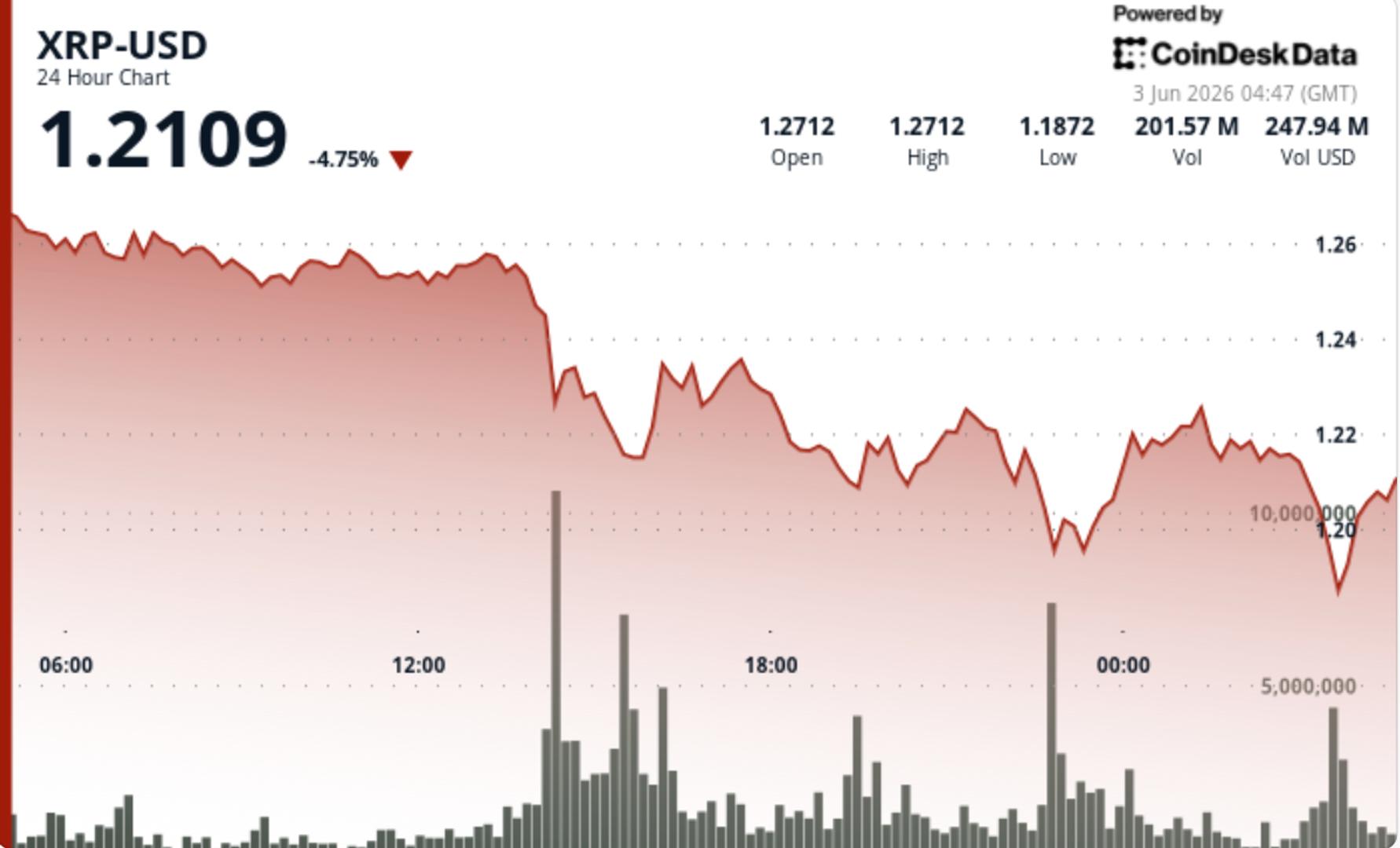
XRP keeps finding bullish narratives underneath the surface, but price keeps ignoring them. Exchange balances are shrinking, ETF money is still coming into crypto, and Binance inflows have slowed sharply.
None of that stopped XRP from losing another support level this week, which is usually a sign that technical selling is overwhelming longer-term accumulation.
News Background
• More than 25 million XRP left exchanges in recent days, reducing the amount of readily available supply for sale.
• Binance inflows fell to their lowest levels of 2026, a trend that would normally be supportive for prices over longer timeframes.
• Crypto investment products continued attracting fresh capital, with roughly $1.42 billion flowing into spot ETFs during the period.
Price Action Summary
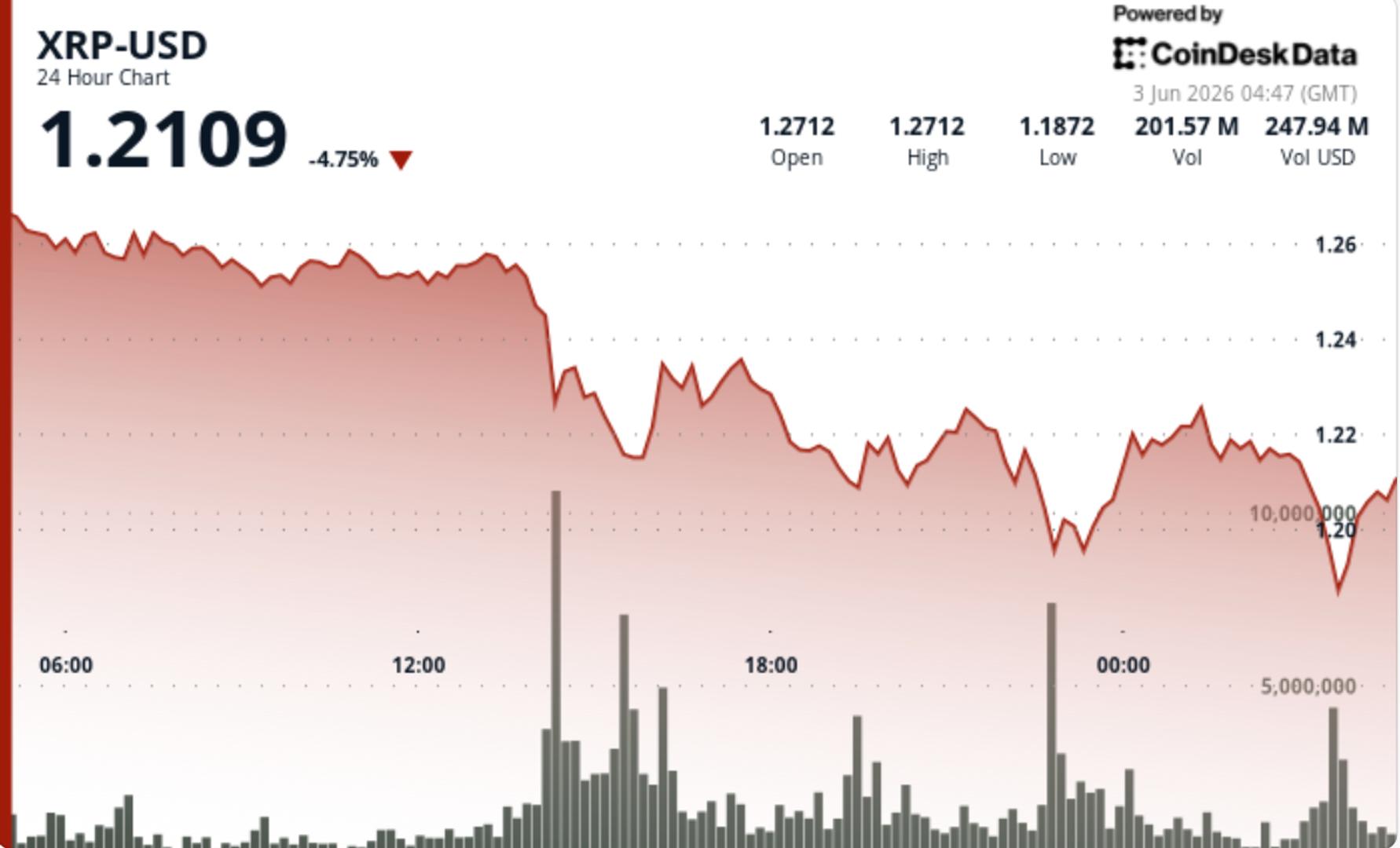
• XRP dropped from $1.2712 to $1.2026 during the 24-hour session, losing more than 5%.
• The decisive move came during the June 2 14:00 UTC session, when volume surged to 205.7 million and pushed price through support at $1.25.
• XRP later fell as low as $1.1858 before recovering modestly and stabilizing near the $1.20 area into the close.
Technical Analysis
• The key story is that XRP is no longer reacting positively to bullish supply data. That’s often what happens late in downtrends, when traders focus more on price action than fundamentals.
• The breakdown below $1.25 shifted that level from support into resistance, meaning any recovery attempt now faces overhead selling pressure.
• The bounce from below $1.19 showed signs of short-term seller exhaustion, but follow-through buying remained weak.
• XRP remains trapped inside a broader descending structure, with lower highs continuing to define the trend.
What traders should watch
• $1.20-$1.21 is now the most important support zone on the chart. Losing it would expose the $1.13-$1.15 area.
• $1.25 becomes the first recovery level bulls need to reclaim before sentiment can improve.
• The market is now caught between weakening supply on exchanges and deteriorating price action. Until one of those signals wins out, traders are likely to remain cautious.
Crypto World
Blockchain Association-Backed Clarity Act Gains Support From 160 Former Security Officials
TLDR:
- 160 former security and intelligence officials publicly backed the Clarity Act before Senate review.
- The proposal expands AML, sanctions, and compliance duties across key crypto market participants.
- Treasury would lead a new information-sharing program targeting digital asset crime risks.
- Supporters say the bill increases enforcement tools without limiting existing criminal authorities.
A group of 160 former national security, intelligence, and law enforcement officials has urged the U.S. Senate to advance the Clarity Act. The push adds national security backing to one of the most closely watched crypto market structure bills in Washington.
Supporters argue the proposal would strengthen oversight while expanding enforcement tools across digital asset markets. The letter targets Senate leadership as lawmakers continue debating the future of crypto regulation in the United States.
Clarity Act Support Centers on Crypto Oversight and Enforcement
The officials outlined their position in a letter released through the Blockchain Association on June 3. They addressed the document to Senate Majority Leader John Thune and Senate Democratic Leader Chuck Schumer.
According to the letter, digital asset activity continues to expand globally and increasingly crosses multiple jurisdictions. The signatories argued that the United States should keep that activity under domestic regulatory oversight rather than allowing it to move offshore.
They said a federal framework could improve visibility for investigators and strengthen enforcement efforts against financial crime. The group also stated that regulatory clarity would help law enforcement agencies track illicit activity more effectively.
The letter highlighted several provisions included in the Clarity Act. Among them are expanded Bank Secrecy Act and sanctions compliance obligations for digital commodity brokers, dealers, and exchanges.
The proposal would also create a Treasury-led information-sharing pilot program involving agencies such as the Department of Justice, FBI, and DEA. The initiative would focus on illicit finance threats and emerging risks tied to digital assets.
Clarity Act Provisions Expand AML and National Security Measures
The signatories pointed to additional measures designed to strengthen anti-money laundering controls. These include broader suspicious activity reporting requirements and customer due diligence obligations for certain non-decentralized finance trading protocols.
The legislation would establish a permanent interagency working group involving Treasury, DOJ, DHS, FBI, DEA, IRS, and the Secret Service. That group would develop future anti-money laundering and counter-illicit finance proposals for digital assets.
Other provisions address digital asset kiosks through transaction monitoring requirements, reporting obligations, transaction limits, and law enforcement contact procedures. The bill also seeks to clarify sanctions compliance expectations for distributed ledger messaging systems through Treasury guidance.
According to the letter, the Clarity Act would extend Section 311 special measures authorities to digital asset activity and allow temporary holds on suspicious transactions. It would also require law enforcement notification in specific circumstances and reinforce compliance with lawful court orders.
The officials stressed that the legislation does not reduce enforcement authority. They argued that existing powers covering fraud, money laundering, sanctions evasion, terrorism financing, trafficking, and other crimes would remain unchanged under the proposed framework.
Blockchain Association shared the letter publicly, describing the Clarity Act as a framework that could strengthen coordination, compliance, and accountability across crypto markets while keeping oversight within U.S. jurisdiction.

Ripple Expands Its Washington Policy Presence
Ripple has expanded its presence in Washington, D.C., as U.S. crypto policy enters a decisive stage. The company opened a larger downtown office to support deeper engagement with policymakers and regulators. The move also strengthens Ripple’s push for clear rules around digital assets, payments, and blockchain finance.
Ripple said the new office will serve as a central base for its U.S. policy work. The company plans to use the space for meetings with lawmakers, regulators, and industry groups. Therefore, the expansion gives Ripple a stronger position inside the country’s main policy center.
The office opening comes as Congress reviews major crypto legislation. Lawmakers continue to debate market structure rules, stablecoin oversight, and payment modernization. These debates could define how digital asset firms operate across the United States.
Ripple has spent years calling for clear and workable crypto regulation. The company argues that policy should protect consumers and support responsible innovation. However, it also says unclear rules can push blockchain activity outside the United States.
The company’s legal history gives the move added weight. Ripple fought a long case with the U.S. Securities and Exchange Commission over XRP sales. As a result, the firm became one of the most visible crypto companies in U.S. regulatory debates.
Ripple’s chief legal officer, Stuart Alderoty, has often supported direct engagement with public officials. The company now wants to build policy with regulators rather than work around them. That approach fits its wider effort to shape rules through formal channels.
The Washington office also supports Ripple’s broader business strategy. The company develops blockchain products for cross-border payments, custody, and liquidity services. Therefore, U.S. regulatory clarity could affect both its domestic plans and global partnerships.
XRP and RLUSD Remain Central to Ripple’s Strategy
XRP remains closely linked to Ripple’s payment and liquidity operations. The token supports parts of Ripple’s broader network for faster value transfer. However, Ripple continues to separate its enterprise services from wider market speculation around XRP.
The company also promotes RLUSD as part of its stablecoin push. RLUSD gives Ripple another product for settlement, payments, and digital dollar transactions. Moreover, stablecoins have become a major focus in U.S. policy discussions.
Ripple’s mention of RLUSD highlights its move beyond XRP-related services. The company now competes in a market where stablecoins connect crypto platforms with traditional finance. This makes regulation more important for its next phase of growth.
The launch of RLUSD in Turkey adds a global angle to the Washington announcement. Ripple continues to expand in overseas markets while increasing its U.S. policy presence. That balance shows how the firm wants both regulatory access and international reach.
Stablecoin rules remain one of the most active areas in Washington. Lawmakers want stronger standards for reserves, disclosures, issuers, and redemption rights. Ripple’s expanded office could help it participate directly in those discussions.
The company also sees blockchain as part of payments modernization. Faster settlement, lower transfer costs, and stronger infrastructure remain key industry goals. As a result, Ripple wants policymakers to treat blockchain as financial infrastructure, not only speculation.
Crypto Regulation Takes Center Stage in Washington
The broader crypto sector faces a major policy year in the United States. Congress has advanced discussions around the CLARITY Act and other digital asset measures. These proposals aim to define agency roles and reduce legal uncertainty.
Ripple’s expansion signals that major crypto firms expect more direct rulemaking ahead. Companies want clearer guidance before launching more products across payments and capital markets. Meanwhile, regulators continue to assess risks tied to consumer protection and market integrity.
The new office gives Ripple a stronger platform during these talks. It also shows that the company wants a lasting role in U.S. crypto policy. Therefore, the Washington expansion places Ripple closer to the rules shaping digital finance.

Modern artificial intelligence-powered robots are impressive in their capabilities, but are still years away from replacing humans as they can’t yet adapt to changing conditions, researchers say.
Last month, AI robotics company Figure showcased its humanoid robots performing basic tasks, such as cleaning a room, but a series of robots working for nine days straight sorting packages sparked conversation about how soon robots could replace jobs.
Oliver Obst, an associate professor of robotics at the Australia based University of New South Wales, told Cointelegraph that repetitive jobs such as physical work in structured environments are currently most at risk of being replaced by robots, while administrative and document-processing tasks could be replaced by AI.
There has been growing concern that AI and robots will replace people in jobs as technology advances. A report in May from workforce consulting firm Challenger, Gray and Christmas found that US companies have laid off an estimated 49,135 people in 2026 due to AI.

A group of Figure’s robots worked for nine days straight sorting packages. Source: Figure
However, Obst said that humanoid robots are unlikely to see a mass rollout soon because they don’t appear to be more efficient or less error-prone than current robotic manufacturing methods.
“Even in relatively structured settings, they still face problems with reliability, speed, safety, cost, and recovery from unexpected situations,” he said. “The harder the environment is to control, the harder the robotics problem becomes. Most human jobs involve more variation and more judgment than the package-sorting demonstration.”
“I would not say we are at the point of mass replacement by humanoid robots. We are much closer to the selective automation of some tasks. AI software is moving faster and is already affecting some forms of information work, but physical robots still have a much harder problem to solve.”
In another video in May, a human worker managed to sort more packages compared to a team of Figure’s robots, which swapped out when needing a recharge. Figure CEO Brett Adock said it would be the last time “a human will ever win.”

Source: Brett Adock
People still better than bots in some areas
Markus Levin, co-founder of decentralized data network XYO, said AI models and automation software can perform repetitive tasks with far greater consistency and endurance than humans; however, robots still require charging, maintenance and supervision.
A report in September from the International Federation of Robotics found that global demand for factory robots has doubled over the last decade, with warehouses and logistics among the fastest-growing areas of adoption.
“I believe broad human replacement is still likely years away,” Levin added, “Reliability, safety, regulation, infrastructure costs, and trust remain major barriers to full-scale deployment across society. The challenge is no longer simply making machines capable of acting but ensuring they can operate safely and reliably as they take on greater autonomy.”
Dr Francisco Cruz Naranjo, a senior lecturer at the University of New South Wales with a PhD in robotics, said the efficiency of robots compared to people depends heavily on the activity and the environment.
Related: ‘Developed ecosystem’ based on crypto has sprung up for AI agents: Report
“Robots are much better at repetitive tasks without the need for constant pauses, as showcased in the Figure livestream. However, in highly dynamic environments, robots still struggle to quickly adapt to changing conditions,” he said.
“Humans, in this case, are much better. This is precisely why robots at the moment are highly efficient in controlled environments, such as factories, but they have not yet succeeded widely in home settings.”
Naranjo said repetitive jobs performed in a less static setting are at risk of being replaced by robots, but it will depend on how quickly research advances and how quickly society adapts in areas like making spaces robot-friendly, which is likely years away.
Robots in society could be beneficial
Naranjo and Obst said that a mass rollout of robots in the workforce could be of some benefit, such as improving work-life balance, increasing the workforce in areas with shortages, and addressing dangerous environments that are too risky for humans.
“The social question is harder. If robots make dangerous work cheaper in human terms, that can be good. But it can also have unintended consequences. For example, keeping humans out of harm’s way in military operations may save lives, but it could also lower the perceived cost of conflict,” Obst said.
“Hypothetically, if we became very successful at automating almost all work, then society would need to rethink economies that are currently built around individual wages and employment.”
Magazine: Korea’s first memecoin rug-pull case, China’s crypto rules review: Asia Express

TapTools, a real-time analytics platform focused on Cardano, is winding down after a wave of leadership changes, underscoring the fragility of niche tooling in a bear‑market ecosystem.
In a post on X, TapTools said it would begin winding down over the next two weeks after its fifth top-level executive departure. The company previously confirmed the exits of two co-founders, the chief operating officer and the chief technology officer earlier this year. The platform’s backend developer—who had been elevated to CTO to shepherd a shift toward more sustainable product delivery—also left, leaving a critical repository of knowledge that cannot be replaced overnight.
Launched in 2022, TapTools grew to become one of Cardano’s most widely used tools for tracking token prices, DeFi activity, and discovering new projects. Its closure comes as JPG.Store, a Cardano-based NFT marketplace, permanently shut down on May 23. The wind-down also intersects with governance and funding frictions within Cardano’s ecosystem, including the Cardano Foundation’s decision to cancel its annual conference after a revised funding proposal to use treasury tokens was rejected. TapTools cited the economics of running the platform as a core factor, saying infrastructure, development, and support costs are real and operate at scale.
Infrastructure costs are real. Development costs are real. Support costs are real. Operating a platform that serves the ecosystem at scale is expensive.
TapTools said it remains open to acquisition or external funding as a possible route to continue operations, but the immediate plan is to wind down.
Key takeaways
- TapTools will wind down over the next two weeks after its fifth top-level executive departure, adding to leadership instability within Cardano-focused tooling.
- The exodus includes two co-founders, the chief operating officer, and the chief technology officer; the backend developer who became CTO also exited, leaving a critical knowledge gap.
- The company cites the real costs of infrastructure, development, and support as a core reason for the wind-down, arguing that operating at scale is expensive.
- The decision comes amid broader ecosystem shifts, including JPG.Store’s shutdown and the Cardano Foundation’s conference cancellation following governance decisions on treasury funding.
Wind-down and ecosystem context
In its statement, TapTools framed the move as a consequence of ongoing leadership churn and the difficulty of preserving critical institutional knowledge required to run a Cardano analytics service responsibly. The platform described the departures as part of a broader pattern where institutions servicing Cardano’s ecosystem can struggle to maintain continuity without stable leadership and sustained funding.
The episode sits alongside other signals in Cardano’s ecosystem. The NFT marketplace JPG.Store shut down on May 23, echoing a trend of leaner operations in Cardano-native ventures. On governance, the Cardano Foundation announced the cancellation of its annual conference after governance decided against funding the event with treasury tokens, underscoring the friction between ambition and available funding mechanisms in the ecosystem.
TapTools’ leadership transition and wind-down are framed as a cost equation as much as a strategic pivot. The company emphasized that maintaining an analytics platform that serves the ecosystem at scale entails continuing investments in infrastructure, product development, and user support—costs that become hard to justify if revenue or funding is uncertain.
Broader reflections from Cardano’s founder and what readers should monitor
Cardano’s founder, Charles Hoskinson, weighed in via X, saying he anticipated that many protocols could fail under the current bear market and that he once proposed an index to help bail out struggling projects. The plan, he said, did not move forward, and he suggested governance could have helped some projects but chose not to act. These remarks frame TapTools’ wind-down as part of a wider question about how the Cardano ecosystem deploys funding and governance tools to support builders during downturns.
For investors and builders, the episode reinforces that even widely used, respected tools are susceptible to leadership gaps and funding constraints in a bear market. It also highlights the importance of robust, adaptable funding mechanisms and governance processes that can help prevent meaningful platforms from collapsing when cycles turn negative.
Looking forward, watchers should track whether TapTools and other Cardano-native services emerge from wind-downs through acquisitions, new funding rounds, or partnerships, and how governance policy evolves to support ongoing, sustainable operations in the ecosystem.
As the Cardano ecosystem recalibrates, all eyes will be on whether governance reforms and funding mechanisms can better shield essential tooling from bear-market cycles and leadership turnover, shaping which projects endure and which recede.
TLDR
- Palo Alto Networks shares rose 10% after the company beat fiscal third-quarter estimates.
- Revenue reached $3.00 billion, above Wall Street’s $2.94 billion expectation.
- Adjusted earnings came in at 85 cents per share, beating the 80-cent estimate.
- Palo Alto raised its fourth-quarter and full-year revenue guidance after the earnings beat.
- The company’s AI-focused acquisitions support its push into enterprise and agent security.
Palo Alto Networks shares rose 10% after the company beat Wall Street’s fiscal third-quarter estimates. The cybersecurity firm reported stronger revenue and adjusted earnings as AI-related threats lifted demand for security tools. The company also issued a stronger fourth-quarter outlook and raised its full-year revenue forecast.
Palo Alto Beats Wall Street Estimates
Palo Alto reported adjusted earnings of 85 cents per share for the fiscal third quarter. Analysts tracked by LSEG had expected adjusted earnings of 80 cents per share. Revenue reached $3.00 billion, topping the $2.94 billion estimate. The company recorded 31% revenue growth from the same period last year.
The quarter included $388 million from the CyberArk and Chronosphere acquisitions. These additions helped expand Palo Alto’s reported revenue base during the period. Palo Alto also reported a net loss of $177 million. That compares with the net income of $262 million in the year-earlier quarter.
The loss came to 22 cents per share under standard accounting. A year earlier, Palo Alto earned 37 cents per share. Shares rose 10% after the report as investors reacted to the earnings beat. The move followed weaker guidance in February that had lowered expectations.
Stronger Outlook Follows Rising AI Security Demand
Palo Alto issued fourth-quarter revenue guidance above Wall Street expectations. The company expects revenue between $3.35 billion and $3.36 billion. Analysts had expected fourth-quarter revenue of $3.28 billion. Palo Alto also lifted its full-year revenue forecast after the third-quarter beat.
The company now expects full-year revenue between $11.42 billion and $11.43 billion. The updated range came as AI-related security needs continued to support demand. CEO Nikesh Arora linked the demand environment to new AI threats. “The latest advancements at the AI frontier have increased the level of urgency around cybersecurity,” Arora stated.
He added that AI had reshaped the cybersecurity industry’s direction for the coming years. The company has also leaned into acquisitions to strengthen its product suite. Palo Alto shares have climbed more than 60% this year. The stock has gained over 80% during the current quarter.
Acquisitions Expand Palo Alto’s AI Security Push
As it was reported by Blockonomi, analysts project quarterly sales of $2.9 billion. They also expect adjusted earnings of 80 cents per share. Those projections reflect acquisition expenses and dilution from the CyberArk transaction. The final results came above those estimates on both revenue and adjusted earnings.
Palo Alto holds a market capitalization near $245 billion. Its 50-day moving average stands at $195.20, while its 200-day average stands at $184.31. The company has completed five AI-focused acquisitions over the past twelve months. The largest deal involved CyberArk, an identity security specialist, bought for about $25 billion.
CyberArk supports Palo Alto’s push into protecting AI agents inside company networks. These agents need permissions across email, documents, browsers, and other enterprise systems. Those permissions can create access risks without strong identity controls. Prompt injection attacks can also target AI systems connected to workplace tools.
Palo Alto also acquired KOI Security, Chronosphere, and Protect AI. The company also joined Anthropic’s Project Glasswing cybersecurity initiative. Anthropic opened its Mythos model testing program to 150 more partners on Tuesday. Palo Alto joined Project Glasswing as an early participant.

Peter Schiff Predicts a Brutal Bitcoin Crash to $20,000 and Sparks Heated Backlash

Paul Onuachu Wins Turkish Super Lig Goal of the Season Award

Amazfit just made a smartwatch for people who train hard but struggle with recovery



-

 NewsBeat7 days ago
Israel says it has killed new Hamas military leader in Gaza City airstrikes
-

 Tech7 days ago
NASA taps Blue Origin to deliver lunar rovers for Moon Base initiative
-

 News Videos5 days ago
This is BROKEN! INSANE 5x MONEY CAR WASH WEEK! The NEW GTA Online UPDATE Today! (GTA5 New Update)
-

 Tech5 days ago
Waymo dominates autonomous vehicle registrations as Tesla trails behind
-
 Tech4 days ago
SpaceX just won a second Golden Dome contract. This one is $4.16 billion.
-

 News Videos4 days ago
SHE IS KILLING XRP!!! WATCH URGENT AND ACT FAST
-
 NewsBeat4 days ago
FIRST NIGHT REVIEW: Take That bring the Circus back to life in spectacular sun-soaked style
-

 Business1 day ago
Jade Biosciences, Inc. (JBIO) Discusses Positive Interim Results From JADE101 Phase I Healthy Volunteer Study and Development Plans Transcript
-

 Tech7 days ago
The Samsung pay deal is the moment Korean unions changed register
-
Crypto World5 days ago
CFTC Has Approved the First Regulated Bitcoin Perpetual Contract in the U.S.
-
Crypto World7 days ago
SpaceX’s $2 Trillion IPO: Why Tech Giants Nvidia (NVDA), Apple (AAPL), and Microsoft (MSFT) May Face Pressure
-
 Entertainment7 days ago
The Most Misunderstood Sci-Fi Horror Movie of the Last 10 Years Just Took Over Netflix
-

 Business4 days ago
Is the Spurs Phenom Already Better Than Prime Diesel?
-
 NewsBeat5 days ago
Novak Djokovic v Joao Fonseca LIVE: French Open latest scores and results after Jannik Sinner’s shocking collapse
-
 Crypto World5 days ago
Snowflake (SNOW) Stock Rallies on Strong Q1 Results and AI Product Growth
-
 Entertainment4 days ago
Weak ‘Supergirl’ Box Office Tracking Amid Milly Alcock Backlash
-

 Business4 days ago
Demand Conditions Improve In Chemicals Sector In April 2026
-
 Crypto World4 days ago
MicroStrategy Moves $30 Million in BTC to Coinbase Prime: Is the Bitcoin Sell-Off Already Here?
-
 NewsBeat7 days ago
Energy price cap set for major rise from July as millions face higher bills
-

 Politics4 days ago
The House | Inside Andy Burnham’s Makerfield Campaign: “Nobody Thinks This Is In The Bag”
You must be logged in to post a comment Login