
Business
Ferrari NV (RACE) earnings Q1 2026

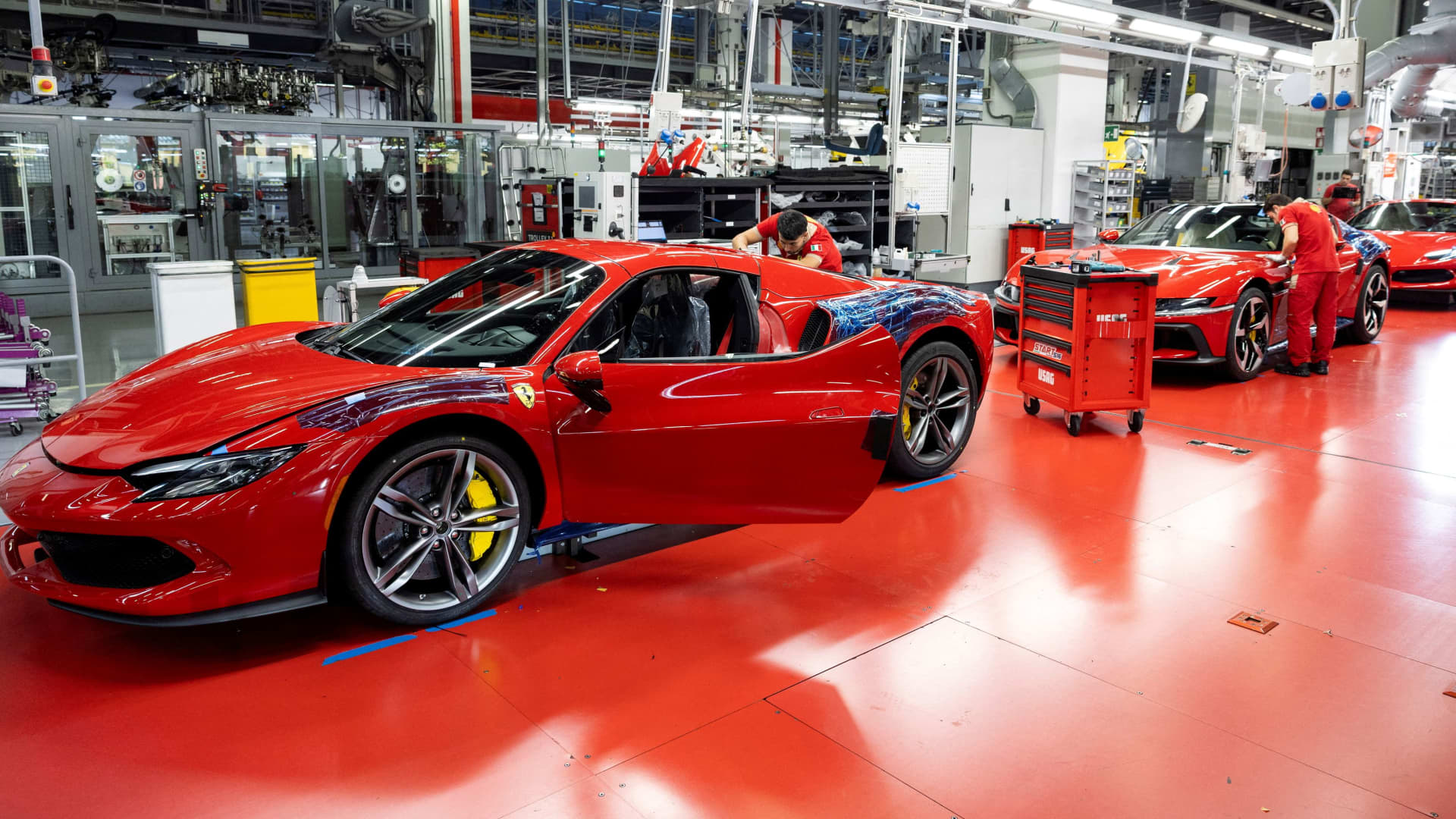
Ferrari technicians inspect supercars on the production line inside the company’s factory in Maranello, Italy, October 2, 2025. REUTERS/Remo Casilli/File Photo
Remo Casilli | Reuters
DETROIT — Ferrari on Tuesday beat Wall Street’s first-quarter earnings expectations and reconfirmed its guidance for the year, weeks ahead of the sports car maker revealing its first all-electric vehicle.
Here’s how the company performed in the first quarter compared with average estimates compiled by LSEG:
- Earnings per share: 2.33 euros (US $2.72) adjusted vs. 2.27 euros expected
- Revenue: 1.85 billion euros vs. 1.81 billion euros expected
Ferrari’s revenue was up more than 3% compared with 1.79 billion euros during the first quarter of 2025, while its operating profit and adjusted earnings increased 1.1% and 4.2% year-over-year, respectively.
The company’s 2026 guidance includes 7.5 billion euros in net revenues and an adjusted operating profit of at least 2.22 billion euros, or 9.45 euros adjusted EPS. Its industrial free cash flow is targeted at 1.5 billion euros or more for the year.
Those results were despite deliveries being down 4.4% year-over-year to 3,436 units, as the sports car maker said it slowed production to “ease the execution of the planned model change-over.”
The company said deliveries “were not impacted by the surge of hostilities in the Middle East, as Ferrari leveraged its geographical allocation flexibility, bringing forward certain deliveries to other regions.”
Ferrari’s results come weeks before the scheduled debut of the Luce, its first fully electric vehicle, on May 25.
“With only twenty days to the world premiere of the Ferrari Luce, the sense of anticipation has never been so high. The Ferrari Luce brings together so much extraordinary technologies and the passion of so many people. It is the evidence of how tradition and innovation can come together to create something unique,” Ferrari CEO Benedetto Vigna said in a statement Tuesday.

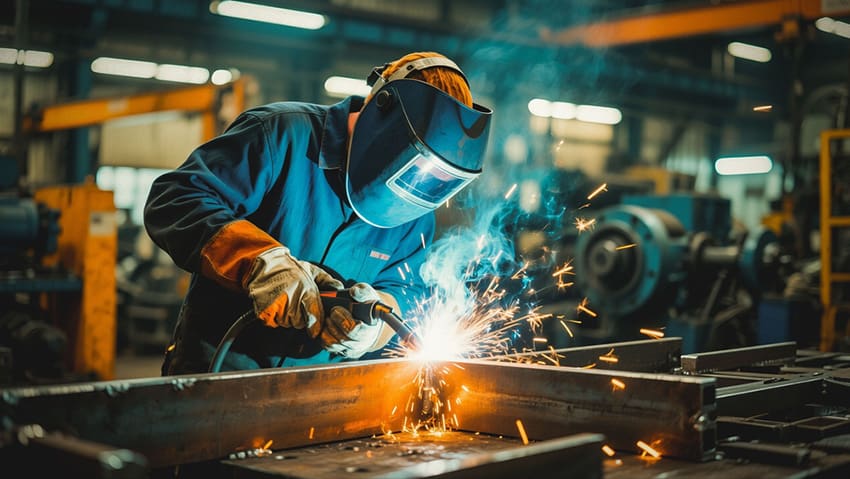
In manufacturing, the phrase “cutting edge” is far more than a corporate buzzword. It represents the literal physical point where raw materials transform into high-value, functional components for the modern world.
Traditional mechanical sawing and shearing methods increasingly struggle to meet the demands of modern superalloys and complex geometries.
Meanwhile, engineers and designers consistently demand tighter tolerances, faster turnaround times, and superior thermal management from their fabrication partners. Advanced material-separation technologies are actively pushing the boundaries of precision and operational speed on the factory floor.
The following industrial methods represent the absolute pinnacle of material shaping and fabrication.
1. Fiber Laser Cutting
Fiber lasers utilize a solid-state laser focused intensely through sophisticated fiber optics. This highly concentrated beam melts and vaporizes the targeted material almost instantly upon direct contact. Consequently, the process achieves unmatched operational speed on thin-to-medium metal sheets. It operates with exceptional energy efficiency compared to older, legacy CO2 laser systems.
The widespread shift to fiber technology has drastically reduced operational costs across the entire sheet metal fabrication industry. Typical industrial applications include slicing swiftly through carbon steel, stainless steel, and structural aluminum plates.
The resulting cut edges are incredibly smooth and require minimal secondary processing or manual grinding.
2. Abrasive Waterjet Cutting
This specific method relies entirely on extreme pressure and accelerated mechanical erosion rather than thermal energy. A specialized pump generates highly pressurized water and focuses it strictly through a tiny ruby or diamond jewel orifice.
The resulting high-velocity stream creates a sudden vacuum in a venturi section, drawing in a granular abrasive material such as hard garnet. This heavy mixture then travels through a tough ceramic mixing tube to form a highly precise cutting stream.
A standard water jet cleanly slices through thick titanium and heat-sensitive superalloys without altering their base metallurgical properties. Facilities that operate Omax equipment use high-efficiency direct-drive pumps to deliver water pressure up to a staggering 60,000 PSI. Because there is absolutely no heat-affected zone, operators avoid thermal distortion entirely and strictly preserve the material’s structural integrity.
3. High-Definition Plasma Arc Cutting
Plasma cutting deliberately directs a powerful electrical arc through a compressed gas stream, such as nitrogen or oxygen. This specific action creates a superheated, high-speed plasma jet that instantly melts through incredibly thick, conductive metals.
It is the most cost-effective method for separating heavy structural steel beams and thick aluminum plates. The automated cutting torch moves exceptionally quickly across large surface areas to maximize daily production output. Operators frequently rely on heavy-duty plasma systems for massive fabrication projects, commercial bridge building, and industrial shipbuilding.
It reliably delivers a highly respectable, clean edge quality on extremely thick materials that industrial lasers cannot easily penetrate.
4. Wire Electrical Discharge Machining
Wire EDM uses a hair-thin, electrically charged wire of brass or zinc to slowly erode dense conductive material. The entire mechanical process takes place completely submerged within a specialized dielectric fluid tank.
Thousands of microscopic electrical sparks rapidly vaporize the metal without any direct physical contact between the wire and the workpiece. Therefore, the tensioned wire can successfully cut incredibly complex, tight-tolerance internal shapes and mathematically sharp corners. It works exceptionally well on the absolute hardest known metals used in modern tooling and aerospace design.
Common industrial applications include hardened tool steels, pure tungsten, and aerospace-grade Inconel alloys. The extreme micro-precision easily justifies the relatively slow cutting speed required for this operation.
5. Ultrasonic Acoustic Cutting
This unique technology relies on a sharp, specialized blade oscillating at ultrasonic frequencies well above 20,000 Hz. The rapid microscopic vibration allows the knife to smoothly slice through highly resistant materials with near-zero physical friction.
Consequently, the sticky material never actually adheres to the blade during continuous industrial operation. It cuts cleanly and decisively without fraying or crushing delicate internal cellular structures.
Aerospace manufacturers deploy it specifically for cutting advanced carbon fiber prepregs and delicate honeycomb cores used in aircraft wings. It also works perfectly for shaping dense rubber components and portioning various industrial food products on automated, high-speed assembly lines.
6. Robotic 3D Cutting Systems
Robotic 3D systems securely mount versatile cutting heads directly onto highly articulated, multi-axis robotic arms. This dynamic physical setup entirely frees the cutting process from the rigid, flat constraints of a traditional two-dimensional gantry table.
The agile robotic arm can smoothly maneuver completely around complex, highly contoured three-dimensional objects. It seamlessly trims, hole-punches, and slices large stamped metal parts in a single, continuous, uninterrupted setup.
Automotive manufacturers rely heavily on this automated technology for shaping curved exterior body panels and complex internal structural piping. It delivers ultimate physical flexibility and rapid turnaround for highly custom, large-scale structural fabrications.
Conclusion
The correct cutting technology directly dictates the ultimate quality and overall speed of any major manufacturing run. Smart software integration and automated digital sensors continually refine these processes to maximize factory yield. Facilities must carefully evaluate their current material separation methods against these powerful modern technological advancements.
Business
Edgewise Therapeutics (EWTX) Explodes 23% on Pipeline Momentum and Strong Biotech Sentiment

NEW YORK — Edgewise Therapeutics Inc. (NASDAQ: EWTX) shares surged more than 23% Tuesday morning, climbing to around $38.83 as investors piled into the clinical-stage biotech company amid growing optimism over its muscle disease pipeline and broader sector momentum.

The stock, which closed Monday near $31.45, jumped as much as 23.47% in early trading on elevated volume. The sharp move pushed Edgewise’s market capitalization higher and marked one of the biggest percentage gains among Nasdaq-listed biotechs on the day.
Edgewise develops novel therapies for serious muscle disorders, including muscular dystrophies and certain cardiac conditions. Its lead candidate, sevasemten, targets skeletal muscle conditions like Becker muscular dystrophy, while EDG-7500 focuses on hypertrophic cardiomyopathy (HCM). Positive long-term data and upcoming catalysts have fueled recent enthusiasm.
Pipeline Progress Fuels Rally
In March 2026, the company reported encouraging long-term results for sevasemten, showing sustained functional stabilization in Becker muscular dystrophy patients over 3.5 years of follow-up. The data reinforced confidence in the program as it advances toward pivotal readouts later this year.
Analysts have highlighted upcoming milestones, including top-line data from the GRAND CANYON pivotal cohort expected in the fourth quarter of 2026. Positive interim safety results from the EDG-7500 program in HCM have also supported sentiment, with some viewing the asset as a potential standout in the cardiac space.
The company recently granted inducement stock options to new employees, a routine move that signals continued hiring and expansion as it prepares for key clinical and regulatory steps.
Analyst Optimism
Wall Street maintains a generally bullish stance on Edgewise. Consensus ratings lean toward Buy, with average price targets around $39, implying further upside from current levels. Some firms have highlighted the company’s focused approach to muscle science and potential first-in-class therapies as key differentiators.
The biotech sector has shown selective strength in 2026, with investors rewarding companies that deliver clear clinical progress amid a cautious overall market. Edgewise’s recent 52-week highs and steady volume spikes reflect growing institutional interest.
Company Background and Strategy
Founded with a singular focus on muscle biology, Edgewise has built a pipeline addressing significant unmet needs. Becker and Duchenne muscular dystrophies affect thousands, with limited treatment options. Its cardiac programs target hypertrophic cardiomyopathy, a condition impacting heart function in broader populations.
The company maintains a strong cash position following prior financings, providing runway through key data readouts. Management has emphasized disciplined execution and strategic partnerships as it advances toward potential commercialization.
Risks and Considerations
As with most clinical-stage biotechs, Edgewise carries risks including clinical trial setbacks, regulatory hurdles and competition from larger players. The stock remains volatile and sensitive to news flow. Upcoming earnings, expected around May 7, will offer further insight into financial health and pipeline spending.
Valuation has expanded with the recent run, prompting some caution around near-term pullbacks. However, many long-term investors view current levels as justified by the potential of its differentiated muscle-focused platform.
Broader Implications
Tuesday’s surge underscores investor appetite for innovative biotech stories with near-term catalysts. As the sector navigates a complex funding and regulatory environment, companies like Edgewise that demonstrate tangible progress in rare diseases can stand out.
For retail and institutional investors alike, the move highlights the importance of monitoring clinical updates and analyst commentary. While volatility is inherent, successful execution on upcoming milestones could drive further upside in the months ahead.
Edgewise Therapeutics continues positioning itself as a leader in precision muscle medicine. With a focused pipeline, strong scientific foundation and supportive market backdrop, the company’s recent performance reflects growing confidence in its ability to deliver meaningful therapies for patients with limited options.
As trading continues, all eyes remain on volume trends, any follow-on news and broader biotech sector dynamics. The substantial gain on Tuesday adds to Edgewise’s momentum heading into a potentially transformative period for the company and its shareholders.


Co-founders combine soda with espresso to take coffee beyond the morning.

JOLTs job openings exceed forecasts, signaling steady labor demand

If you’re involved in an auto accident in Odessa, Texas, knowing the right steps to take can make all the difference in protecting yourself and your rights.
You’ll want to prioritize safety, gather essential information, and handle the aftermath carefully to avoid complications later. But what exactly should you do first, and how can you navigate the process smoothly? Understanding these key actions is vital before moving forward.
Ensure Safety and Check for Injuries
Although it’s natural to feel shaken after an accident, your first priority should be guaranteeing everyone’s safety and checking for injuries. Begin by calmly performing an injury assessment on yourself and others involved. Look for obvious signs like bleeding, difficulty breathing, or unconsciousness. Remember, even minor injuries can worsen without prompt attention. Follow established safety protocols: keep calm, avoid unnecessary movement, and call emergency services immediately if anyone is seriously hurt. Once immediate medical concerns are addressed, seeking reliable information or Odessa car crash legal help can help you understand the next steps while evidence and details from the accident are still fresh. Your quick and thorough injury assessment can make a critical difference, helping responders prioritize care effectively and setting the foundation for a safer, more organized response.
Move to a Safe Location if Possible
Once you’ve confirmed that everyone is safe and injuries are assessed, your next step should be to move your vehicle to a safe location if possible. Doing this reduces the risk of further collisions and enhances overall auto safety at the scene. If your car is drivable, carefully pull over to the shoulder or a nearby parking lot, away from traffic flow. Use your hazard lights to alert other drivers, which supports accident prevention by signaling caution. However, if your vehicle is severely damaged or moving it could cause more harm, it’s best to leave it in place and prioritize personal safety. Remember, moving to a safe spot minimizes hazards for you and others, making the aftermath of the accident more manageable and secure.
Call Emergency Services
If anyone is injured or you suspect serious damage, call emergency services immediately. Be ready to describe your exact location clearly so help can arrive quickly. Taking these steps guarantees you get the medical attention and assistance you need without delay.
Assess Immediate Medical Needs
Because your health and safety come first, you need to quickly assess yourself and others involved for injuries right after the accident. Prioritize a thorough medical evaluation as some injuries may not be immediately obvious. Prompt injury treatment can prevent complications or worsening conditions. Check for signs like:
- Difficulty breathing or chest pain
- Severe bleeding or visible wounds
- Loss of consciousness or confusion
- Numbness, weakness, or paralysis
- Intense pain or inability to move limbs
If any of these signs appear, call emergency services immediately. Don’t wait or assume minor pain will pass. Acting swiftly guarantees you and others get the critical care needed and protects your well-being as you navigate the next steps after the accident in Odessa, Texas.
Provide Clear Location Details
After checking for injuries and calling for medical help, the next step is to provide emergency responders with clear and accurate location details. When you call 911, be sure to mention nearby Odessa landmarks or well-known accident hotspots to help them find you quickly. For example, referencing the Music City Mall or the intersection of Loop 338 and Highway 191 can make a big difference. Providing precise information reduces response time, which is vital in emergencies. Stay calm and speak clearly, giving any helpful landmarks or mile markers visible to you. This guarantees responders can navigate Odessa’s busy roads efficiently and reach you without delay. Your clear communication can save lives and help emergency teams assist everyone involved promptly.
Exchange Information With the Other Driver(S)
Though it might feel overwhelming, exchanging information with the other driver(s) is an essential step to protect yourself legally and guarantee a smooth claims process. You’ll want to calmly exchange insurance details and driver contact info to confirm all parties have what they need. Remember, staying composed helps avoid misunderstandings.
Make sure to collect: – Full names and contact numbers – Insurance company names and policy numbers – Driver’s license numbers and license plate info – Vehicle make, model, and color – Date, time, and location of the accident
Document the Accident Scene
After an accident, it’s essential to document the scene thoroughly to protect yourself. Make sure you capture clear photos and videos, note the weather conditions, and gather contact information from any witnesses. These details can make a significant difference when dealing with insurance or legal matters.
Capture Photos and Videos
Taking clear photos and videos at the accident scene is one of the most important steps you can take to protect yourself. Your photo documentation serves as vital accident evidence that can support your claims and clarify what happened. You’ll want to capture a complete visual record without missing key details.
Make sure to document:
- Damages to all vehicles involved
- The exact position of the cars
- Any visible injuries on yourself or others
- Road signs, traffic signals, and skid marks
- Surrounding areas that may have contributed to the accident
Note Weather Conditions
Because weather conditions can greatly impact both the cause and outcome of an accident, you should carefully note and document them at the scene. Take note of whether it was raining, foggy, icy, or sunny, as these factors can influence visibility and traction. The weather impact often affects road conditions, making surfaces slippery or reducing your ability to react quickly. Jot down details like temperature, precipitation, and wind, as these can help insurance adjusters or legal professionals understand the circumstances better. This information is vital when evaluating fault or liability. By accurately recording the weather and road conditions, you’re providing a clearer picture of the accident environment, which can protect your rights and support any claims you need to make later.
Record Witness Information
A significant step in documenting the accident scene is to record witness information promptly and accurately. Witness statements can be essential for establishing what happened and protecting your rights. You’ll want to gather clear contact information from anyone who saw the accident unfold. Approach witnesses respectfully, explain why their input matters, and thank them for their time. Be certain to note details like:
- Names and phone numbers
- Email addresses, if available
- A brief summary of their observations
- Time and location of their witness account
- Any additional notes on their demeanor or reliability
Collecting this information early guarantees you have dependable support for insurance claims or legal proceedings. Don’t leave this step to chance—it can make all the difference in your case.
Gather Witness Contact Information
Someone nearby might have seen exactly what happened during the accident, so it’s vital you collect their contact information right away. Having accurate witness statements can greatly support your case by providing unbiased accounts of the incident. Politely ask witnesses for their full names, phone numbers, and email addresses, ensuring you have multiple contact methods. This way, if details need clarification later, you can easily reach them. Make sure to jot down the information promptly to avoid forgetting important details. Remember, witnesses’ perspectives can be invaluable when insurance companies or law enforcement review the accident. By gathering thorough and reliable contact information, you’re safeguarding your interests and building a stronger foundation for any claims or legal steps that might follow.
Notify Your Insurance Company
You’ll want to report the accident to your insurance company as soon as possible to avoid delays in your claim. Make sure you provide accurate and complete details to help them understand the situation clearly. Staying prompt and precise will protect your interests and speed up the process.
Report Promptly
Although it might feel overwhelming right after an accident, notifying your insurance company promptly is crucial for a smooth claims process. Following the correct reporting procedures guarantees your claim is handled efficiently and minimizes delays. Timely notification also helps preserve important accident documentation, which supports your case.
When you report promptly, you: – Protect your rights and coverage – Avoid missed deadlines that could deny your claim – Enable quicker assessment and repair approvals – Reduce stress by keeping the process moving – Build trust with your insurer through clear communication
Acting quickly shows responsibility and helps you regain control during a chaotic time. Remember, your insurance company is there to assist—keeping them informed from the start makes all the difference.
Provide Accurate Details
Anyone reporting an accident to their insurance company should provide accurate and detailed information from the start. When you notify your insurer, be clear and honest about what happened to avoid complications with your insurance claims. Include specifics like the time, location, parties involved, and any damage or injuries. This helps establish accident liability fairly and expedites the claims process. Avoid speculation or admitting fault prematurely; stick to facts you know. Providing precise details guarantees your claim is handled efficiently and supports a smoother resolution. Remember, your insurer relies on your report to assess the situation accurately, so accuracy is vital. Being thorough and truthful protects your interests and helps you navigate the aftermath of an accident with confidence.
Seek Medical Attention
Even if you feel fine immediately after the accident, it’s vital to seek medical attention as soon as possible. Hidden injuries can surface hours or days later, so a thorough medical evaluation guarantees no issues go unnoticed. Prompt care not only protects your health but also supports any legal or insurance claims.
When you seek medical attention, remember:
- You deserve professional assessment, no matter how minor you think the injury is.
- Early diagnosis can prevent complications.
- Follow up care is essential for full recovery.
- Documented medical records provide proof of your condition.
- Your well-being is the top priority, not just the accident details.
Don’t delay—your health matters most after an accident.
Keep Detailed Records of the Incident
Since details can fade quickly after an accident, it’s vital you keep thorough records of everything that happened. Start by using effective recording techniques—take clear photos of vehicle damage, license plates, road conditions, and any visible injuries. Write down the time, location, weather, and a detailed account of the incident while it’s fresh in your mind. Collect contact information from witnesses and involved parties. This incident documentation is critical for insurance claims and any legal matters that may arise. Keeping organized, accurate records helps protect your rights and guarantees you have reliable evidence to support your case. Remember, the more precise and detailed your records are, the stronger your position will be when addressing insurance companies or legal representatives.
Consult With a Local Auto Accident Attorney
After gathering detailed records of the accident, the next step is to consult with a local auto accident attorney who can guide you through the complexities of your case. Having knowledgeable legal representation guarantees your rights are protected and that you fully understand how local laws impact your claim. An experienced attorney will also help you navigate insurance negotiations and potential legal challenges.
You deserve support to: – Feel confident your case is handled correctly – Avoid costly mistakes in paperwork or negotiations – Receive fair compensation for injuries and damages – Understand all deadlines and legal procedures – Reduce stress during an already difficult time
Don’t hesitate to seek an attorney’s advice to secure the justice and compensation you need.
Frequently Asked Questions
How Does Texas State Law Affect Fault Determination in Auto Accidents?
Texas uses comparative negligence, so you’ll share fault based on your contribution to the accident. Fault assessment means your compensation can be reduced by your percentage of responsibility, ensuring fairness in resolving claims.
What Are the Time Limits for Filing a Personal Injury Claim in Odessa?
You’ve got two years from the accident date to file your personal injury claim in Odessa. Don’t wait—claim deadlines are strict, so acting promptly guarantees you protect your rights and get the compensation you deserve.
Can I Still Claim Damages if I Was Partially at Fault?
Yes, you can still claim damages under comparative negligence laws in Odessa. Your compensation will be reduced based on your fault percentage, but you’re entitled to recover the portion attributed to the other party’s negligence.
What Types of Compensation Can I Expect After an Auto Accident?
You can expect compensation for medical expenses, lost wages, property damage, and emotional distress. Don’t overlook pain and suffering claims, as they recognize the trauma you’ve experienced beyond physical injuries.
How Do I Handle Uninsured or Underinsured Motorist Claims in Texas?
You’ll need to notify your insurer promptly, providing all accident details to start the uninsured motorist claim process. Keep records, stay patient, and consider legal advice to guarantee you receive the compensation you’re entitled to under Texas law.

Fixed Income Insights – April 2026

LONG BEACH, Calif. — As the global automotive industry retreats from all-electric vehicles after reporting billions of dollars in losses, Ford Motor continues to move forward with its next generation of EVs that CEO Jim Farley has described as industry-defining products.
Ford’s push comes despite a massive slowdown in EV adoption, $19.5 billion in electric vehicle restructuring charges for the company, the elimination of U.S. consumer incentives to buy EVs and the company’s leading EV executive abruptly departing.
“Agility is key,” Ford’s EV product leader, Alan Clarke, told CNBC during an interview at the company’s new Electric Vehicle Development Center in Long Beach, California. “We’ve been able to pivot around all the different market conditions. … The EV industry has had massive headwinds, and so we’ve had to adjust.”
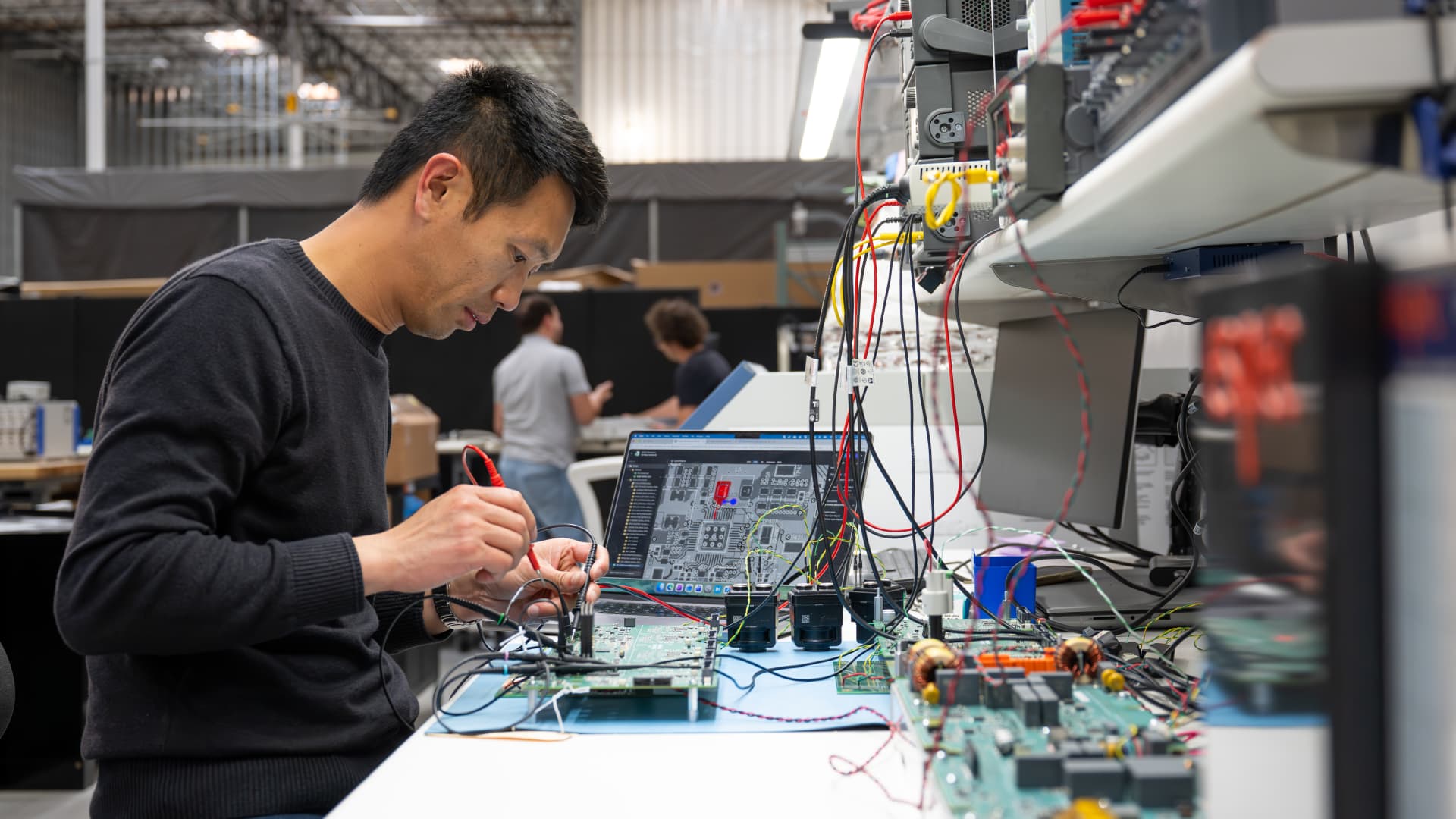
A Ford employee works inside a high voltage lab at Ford’s new Electric Vehicle Development Center in Long Beach, California.
Courtesy Ford
Ford’s continued confidence, albeit it at lower and slower capital rates than it previously projected, comes from its “Universal Electric Vehicle,” or UEV platform, which the company has developed from a clean-sheet design. Ford’s goal for the UEV is to be profitable and cost-competitive with global EV leaders from China and Tesla.
The UEV is expected to be critical to Ford transforming its Model e EV unit from billions of dollars in annual losses to breakeven by 2029. The company has said its future EVs will be profitable within a year of launching.
The first planned product based on the UEV is a roughly $30,000 midsize pickup truck for the U.S. market next year, followed by a family of vehicles underpinned by the platform.
“The midsize pickup truck, there won’t be anything that competes with it, either in price or product form, and so I think it sort of stands alone in that sense,” Clarke said.
Clarke — wearing black, red and white Nike Air Jordan 1s with an untucked blue button-down shirt under a black jacket — was employee No. 1 of the formerly secretive “skunk works” team leading the development of Ford’s UEV.
The Tesla veteran of 12½ years was recently promoted from a senior director to vice president of Advanced Development Projects. That came as Ford’s highly touted EV and technology head Doug Field last month announced his unexpected departure.
Clarke, who was recruited by Field, continues to speak highly of him. Farley has also continued to praise the Tesla and Apple veteran since he announced his departure on April 15.
“He’s set us up for success, as has Jim,” Clarke said. “It’s certainly not that nothing changes. I think it’s at the stage we’re in; this is the thing that’s best for Ford, and I think Doug certainly recognized that, and it was the right time for him.”
China competition
Alan Clarke, Ford’s executive director of advanced EV development, during a video presentation on Ford’s Universal Electric Vehicle platform.
Courtesy Ford
Even with Field’s departure and a less promising future for domestic electric vehicles, Ford’s UEV work continues.
The growth of Chinese companies — although they have yet to enter the U.S. market, for now — has been a rallying cry for the Ford UEV work. Farley has praised Chinese automakers for their ingenuity and products, while also calling for protection from them in the U.S.
“We are really fully committed to a level playing field here in the U.S. and also safeguarding our home market, because of the importance of the auto industry and our industrial base,” Farley said last week.
Outside the U.S, Ford and other automakers are attempting to defend their market shares in Europe, South America and other countries after losing to the domestic companies in China.
Global market share for Chinese brands has jumped nearly 70% in five years, according to GlobalData, and many experts see a threat to U.S. automakers, including the anticipated entrance of Chinese brands into America.
Clarke said he remains “pretty confident” that the UEV platform can be competitive against Chinese vehicles. But he added that the companies play by “different rules,” referring to the government support Chinese companies receive, along with their lower labor costs, among other things.
“We only win with speed, and we have to play by the rules here,” Clarke said. “We’re pretty confident that we’re going to be competitive, and we’re really hungry to be seen as competitive, and we won’t win, ultimately, unless we get down to the prices that American consumers are willing to pay for EVs like this.”
But while Ford has extensively studied and torn down Chinese vehicles, it’s a moving target. There are hundreds of Chinese automakers that are releasing new products at unprecedented rates.
Automotive consulting firm AlixPartners reports Chinese startups are developing vehicles in about 20 months. That’s half the time of traditional global automakers, leading to Chinese models being two to three years fresher than non-China brands, the firm said.
“It’s really not one thing, but it’s series of things that lead them to be able to get to a sub-two year, very repeatable cycle of launching a vehicle,” said Mark Wakefield, AlixPartners’ global automotive lead and executive partner, adding that Chinese companies spend a third less time on product validation. “It’s a big challenge for all the car companies.”
It’s a reason why the UEV’s first product is destined for North America, while Ford tries to partner with other automakers, such as France-based Renault, Germany-based Volkswagen and, reportedly, some Chinese companies, to better compete globally.
“Our focus in UEV right now is making a vehicle that can be sold anywhere, but our focus right now is really on the North American market,” Clarke said.
Ford Universal Electric Vehicle
Ford CEO Jim Farley speaks at the Louisville Assembly Plant as the company shares its plans to design and assemble breakthrough electric vehicles in the United States, Aug. 11, 2025.
Courtesy: Ford
Ford has very high expectations for the UEV, which Clarke and others have referred to as a “moon shot.”
Ford expects the new EVs to have comparable costs to gas-powered vehicles through new technologies and efficiencies. They include a smaller battery pack comprised of new, U.S.-produced lithium iron phosphate cells as well as a 48-volt electrical architecture that improves efficiency and lowers weight.
Currently, the massive batteries that power EVs have made them far more expensive to produce and have been infamously unprofitable. Ford expects its Model e EV unit to lose $4 billion to $4.5 billion this year, down from a loss of $4.8 billion last year.
The Detroit automaker has said the new EVs will reduce parts by 20% versus a Ford Mustang Mach-E EV, with 25% fewer fasteners, 40% fewer workstations dock to dock in the plant and 15% faster assembly time.
Farley himself has compared the importance of the UEV to Ford’s historical Model T that “put the world on wheels,” and has called the U.S.-produced project a $5 billion “bet” on America for its manufacturing.
“It represents the most radical change on how we design and how we build vehicles at Ford since the Model T,” Farley said last year at Ford’s Louisville Assembly Plant in Kentucky that will be producing the electric midsize pickup.
A Ford worker inside the automaker’s fabrication shop at Ford’s new Electric Vehicle Development Center in Long Beach, California.
Courtesy Ford
But this isn’t the first or even second time Farley has amped up expectations about the company’s EVs that didn’t pan out.
Farley previously described the automaker’s all-electric F-150 Lightning as a “model T moment” for the company, but it failed to meet expectations and is being redesigned as a hybrid.
He also said Ford’s planned three-row EV SUV would be a “personal bullet train,” a year before the company canceled the project in 2024 after determining it wouldn’t be able to be profitable for the foreseeable future.
Ford executives believe they have learned from those mistakes by focusing on smaller, more affordable vehicles using the UEV platform rather than large pickups and SUVs in which the batteries cost more than the promised upcoming electric pickup.
Ford has said the new pickup will only have two structural front and rear parts, compared with 146 such components on its current gas-powered Maverick small pickup.
To do so, the company is using megacasting – pouring materials like molten aluminum into large molds to form parts – which means the automaker has fewer, larger pieces to use in assembling its vehicles.
“We like to say that the best part is no part, and the second best part is a part that serves multiple purposes,” Mitch Shinn, a thermal systems engineer on Ford’s advanced EV team, said during the media event at the facility.
Ford employees inside a thermal testing chamber at Ford’s new Electric Vehicle Development Center in Long Beach, California.
Courtesy Ford
Farley has more recently said the advanced EV team isn’t just about the products; the division and new facility are helping Ford rethink how it designs, develops and produces new products across its portfolio of vehicles.
The skunk works team was initially formed in California around 2022. It was meant to be a small, agile team free to work without the bureaucracy and tedious processes of a multibillion-dollar company such as Ford.
“We’re also leaning into the skunk works model to improve all of Ford,” Farley said last week. “They’ve done an incredible job creating the UEV platform, which represents a step change in efficiency and cost, especially for the EV market. But, at Ford, we’re now integrating these skunk work breakthroughs back into our mainstream products and processes.”
New EV development center
Ford Motor’s new Electric Vehicle Development Center in Long Beach, California.
Courtesy Ford
Walking through Ford’s new Electric Vehicle Development Center gives a glimpse into why the automaker hasn’t pulled the plug on its all-electric vehicle ambitions or skunk works team.
The buildings continue to be built out while roughly 350 employees from varying professional backgrounds — Tesla, aerospace, defense and Ford — work in labs, design studios and office areas.
The complex is made of two buildings that span 270,000 square feet and is located in a still-growing industrial park across from the Long Beach airport. Ford is also building out a 150,000-square-foot testing and validation facility in the space.
Clarke told CNBC that the new facility is being set up not for the development of the pickup, which was done as part of the secret skunk works team, but for future EVs.
He declined to disclose plans for future EVs but said the facility also gives it the potential to work on other vehicles for the UEV platform as well as next-generation products.
An inside area of Ford Motor’s new Electric Vehicle Development Center in Long Beach, California.
Courtesy Ford
That kind of thinking and mindset are more often affiliated with consumer electronics rather than the automotive industry, but that might just be the point.
“We can hit this goal of getting it out next year,” Clarke said. “What you saw here is a big investment in … future products in general. We want to go faster than we were able to go.”

Napco Q3: Fair-Value Entry Point Before A Potential 2027 Inflection (Rating Upgrade)


Frozen bread a bright spot in quarter.
SoundHound launches self-learning AI agent platform OASYS

The Cutting Edge of Manufacturing: 6 Technologies Changing Everything

EU weighs tokenized SEPA payments, says Bank of Italy official

After a 5-Year Wait, ‘The Terror’s Return Doesn’t Disappoint With a Must-Watch Season

Manchester United reach agreement with Casemiro over contract clause amid transfer speculation

US brings back mandatory military draft registration

Steven Gerrard disagrees with Gary Neville over ‘shock’ Chelsea and Arsenal claim | Football

Are Financial Advisors Worth It? | The Money Guy Show
![Mobil dua roda? [Adira Finance berizin dan diawasi oleh Otoritas Jasa Keuangan] #CobaMoservice](https://wordupnews.com/wp-content/uploads/2026/05/1777989150_maxresdefault-80x80.jpg)
Mobil dua roda? [Adira Finance berizin dan diawasi oleh Otoritas Jasa Keuangan] #CobaMoservice
![Who's your favorite girl in Digital Circus? [Money Money Green green meme] #shorts #trend](https://wordupnews.com/wp-content/uploads/2026/02/1771002718_maxresdefault-80x80.jpg)
Who’s your favorite girl in Digital Circus? [Money Money Green green meme] #shorts #trend
-

 Business7 days ago
Most Commercial Energy Audits Miss the Real Losses
-

 NewsBeat2 days ago
Channel 5 – All Creatures Great and Small series 7 new post
-

 Fashion7 days ago
Kylie Jenner’s KHY Enters a New Era with ‘Born in LA’
-
 Tech4 days ago
Trump’s 25% EU auto tariff breaches Turnberry Agreement that also covers semiconductors and digital trade
-
 Sports4 days ago
Paul Scholes issues Marcus Rashford reality check as agreement emerges over Man United star
-

 Business6 days ago
Barclay Brothers Avoid Bankruptcy: HSBC Drops High Court Petitions After IVA Deal
-
 Business6 days ago
Tesla Officially Registers Elon Musk’s Stock: What Investors Need to Know
-

 Business5 days ago
Two Powerball Tickets Split $143 Million Jackpot in Indiana and Kansas
-

 Tech6 days ago
Texas Instruments made a new flagship graphing calculator: the TI-84 Evo
-
Business2 days ago
Winning Numbers Drawn as Jackpot Resets to $20 Million
-
 Crypto World6 days ago
Securitize and Computershare Enable Tokenized Equity Issuance for Over 25,000 U.S.-Listed Stocks
-
 Crypto World5 days ago
CoreWeave (CRWV) Stock Climbs 8% Despite $45M Insider Share Dump
-

 Entertainment6 days ago
Insider Claims Reason Behind Key & Peele Split
-

 Entertainment5 days ago
Celebrities Who Are Attending the 2026 Met Gala Event
-

 Crypto World6 days ago
Gibraltar Proposes Tokenized Funds Regulation to Bolster Compliance
-

 Entertainment4 days ago
Met Gala 2026 Rumored Guest List Is Turning Heads
-

 Business7 days ago
Alexandria Real Estate Equities, Inc. (ARE) Q1 2026 Earnings Call Transcript
-

 Crypto World6 days ago
Meta (META) starts stablecoin payout to creators in Circle’s USDC on Polygon, Solana via Stripe
-

 Fashion3 days ago
Mary J. Blige Vegas Residency Looks: Crystal-Embellished Fjolla Haxhismajli, Todd Fisher, and More!
-

 Crypto World3 days ago
Linux Copy Fail: ‘A Trivially Exploitable Bug’
You must be logged in to post a comment Login