Blackburn with Darwen Council has approved Kenneth Marsden’s plan for the site.
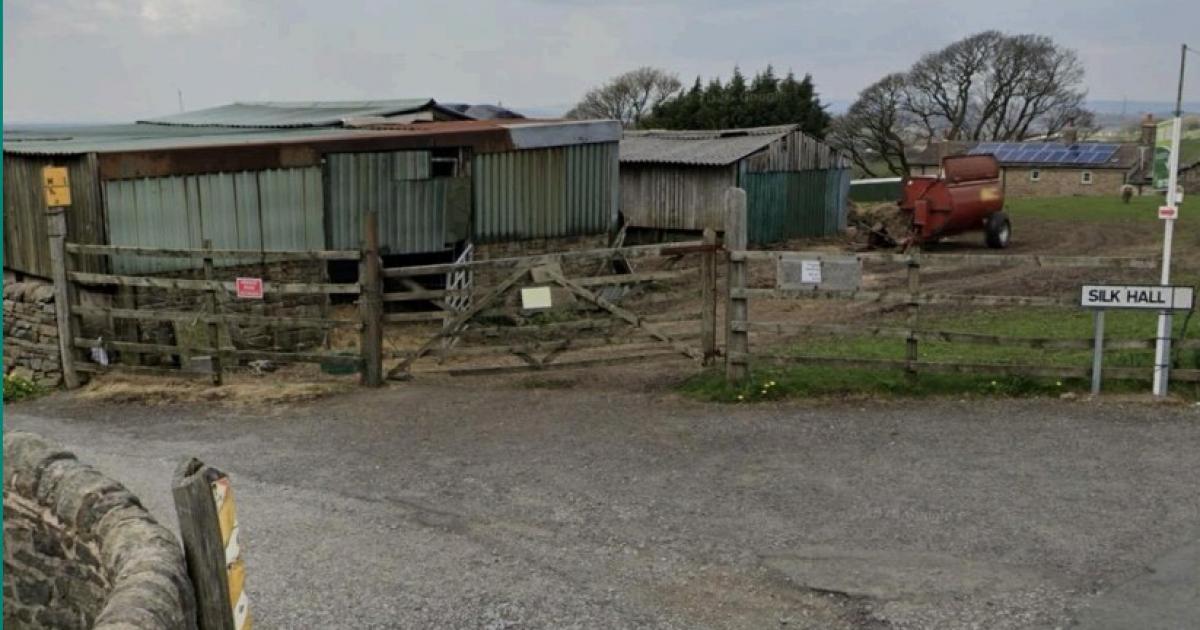
The two agricultural buildings to be demolished and replaced are next to Silk Hall Cottage on Tockholes Road.
Mr Marsden has been granted approval for a change of use from agricultural to flexible commercial C1 use (hotel).
Advertisement
Owing to the size of the site — less than 150 square metres — the development is likely to be a one- or two-bedroom guest house connected to and serviced from the farm building.
Such short-term accommodation falls under the C1 planning use class for hotels.
Any external alterations or extensions to the building will require planning permission, but the principle of the conversion does not.
A supporting statement says: “The applicant seeks to change the use of two existing agricultural buildings to C1.
Advertisement
“The application site, together with a further parcel of land in close proximity, forms the applicant’s agricultural unit.
“Currently, the agricultural buildings are used for storing machinery and the wider area is used for sheep grazing. Historically, livestock has been kept in the buildings.
“The site is accessed via an existing access point on Silk Hall Road.
“The site adjoins Tockholes Village Hall and is bounded by residential dwellings to the south and an engineering business to the north.
Advertisement
“The wider area consists of verdant countryside.
“The building has been used solely for agricultural purposes since July 3, 2012.
“The cumulative floor space of buildings which have changed use within the agricultural unit will not exceed 1,000 square metres.
“The site subject to this application consists of two buildings — one approximately 10m x 10m and the other 10m x 5m.
Advertisement
“The building closest to Silk Hall benefits from a partially brick-built frontage. Both buildings are partially timber-clad and include a steel frame.
“The buildings have been in situ on the site for more than 26 years.
“Taken as a whole, the site can be considered to constitute buildings for which permitted development rights apply.”
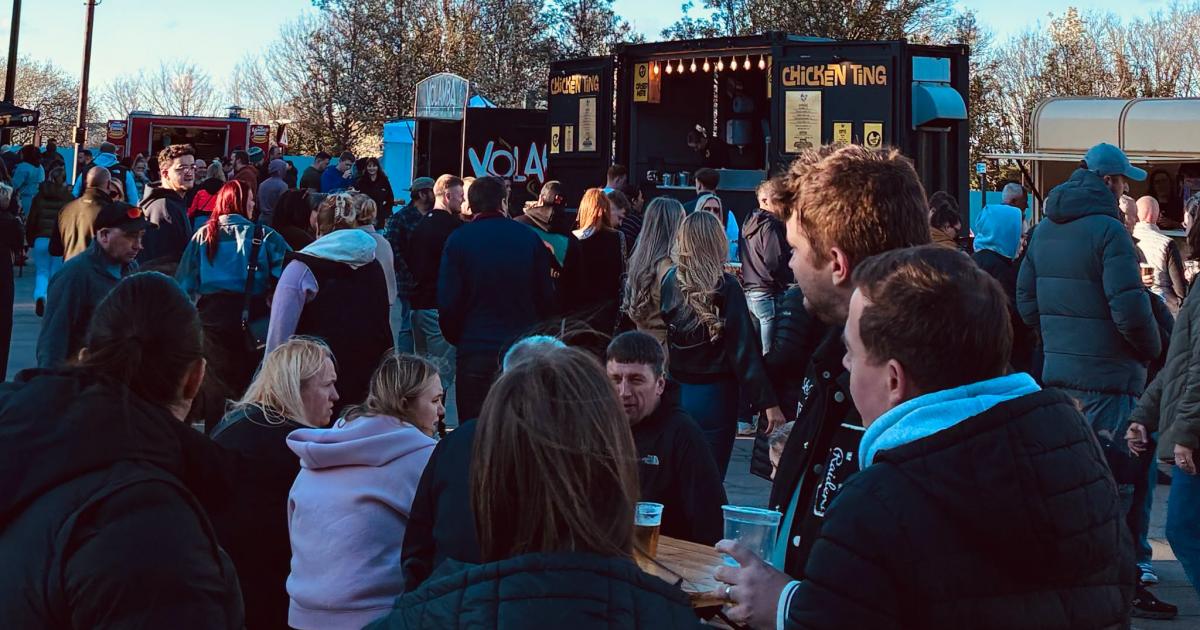
Street Food Carousel will take place in Bishop Auckland Market Place on Friday (June 5) from 4pm to 9pm.
As well as a fantastic selection of street traders, the event will also include live music and games including live bingo and play your cards right.
Piggy Blinders are one of the confirmed traders (Image: PIGGY BLINDERS)
(Image: Piggy Blinders)
Bishop Auckland Town Council said: “We look forward to welcoming residents and visitors into the town centre for another great evening.”
Visitors to the event can expect everything from loaded burgers and crispy chicken to cakes and desserts, with organisers promising there will be “plenty to enjoy”.
Advertisement
Unlocking Treasures, Darlington (Image: SARAH CALDECOTT)
As well as food, there will also be jewellery traders and pet stands.
Clay is not Sabalenka’s strongest surface even though she has won three times in Madrid, where the high altitude makes the conditions similar to a hard court.
Nor did she have a good build-up to Roland Garros. Six match points were squandered in a quarter-final defeat by Hailey Baptiste in Madrid in April, before she let a set and a break lead slip against Romanian veteran Sorana Cirstea in Rome.
But, given her quality and pedigree compared to the other Paris quarter-finalists, it is hard not to think another golden opportunity has slipped through Sabalenka’s fingers.
Sabalenka’s four Grand Slam singles titles – two Australian Open and two US Open triumphs, all on hard courts – are more than most people can dream of.
Advertisement
But she has also lost four finals and six major semi-finals, despite a consistency on the biggest stages that is unrivalled among her peers.
Sabalenka has the proud record of not losing before the quarter-finals of a Grand Slam since the start of the 2023 season.
However, she has not always dealt well with the pressure of the latter stages – particularly during the period where she has clearly been the best player in the world.
Sabalenka was the heavy favourite to beat underdog Madison Keys in the 2024 Australian Open final, but came unstuck. Twelve months later, she reached another Melbourne final – and a flurry of mistakes saw her squander a break lead in the deciding set against Elena Rybakina.
Advertisement
At last year’s French Open Sabalenka played what she described as the “worst final” of her life, hitting 70 unforced errors in windy conditions as she lost from a set up.
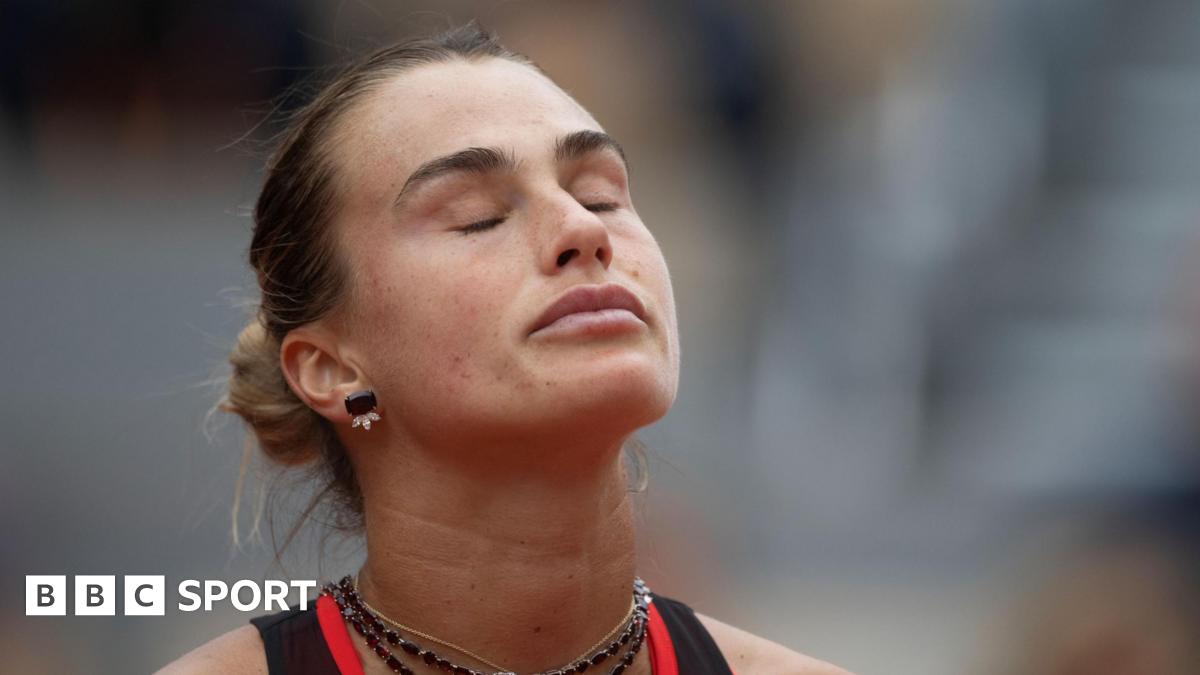
Against Shnaider, Sabalenka looked in control at 6-3 4-1 up before losing 12 of the final 13 games.
“I just think that there is something in specific moments during the match [where] I lose control,” said Sabalenka, whose 57 unforced errors outweighed her 46 winners.
A rolling road block was put in place by South Wales Police on the M4 while the demolition took place
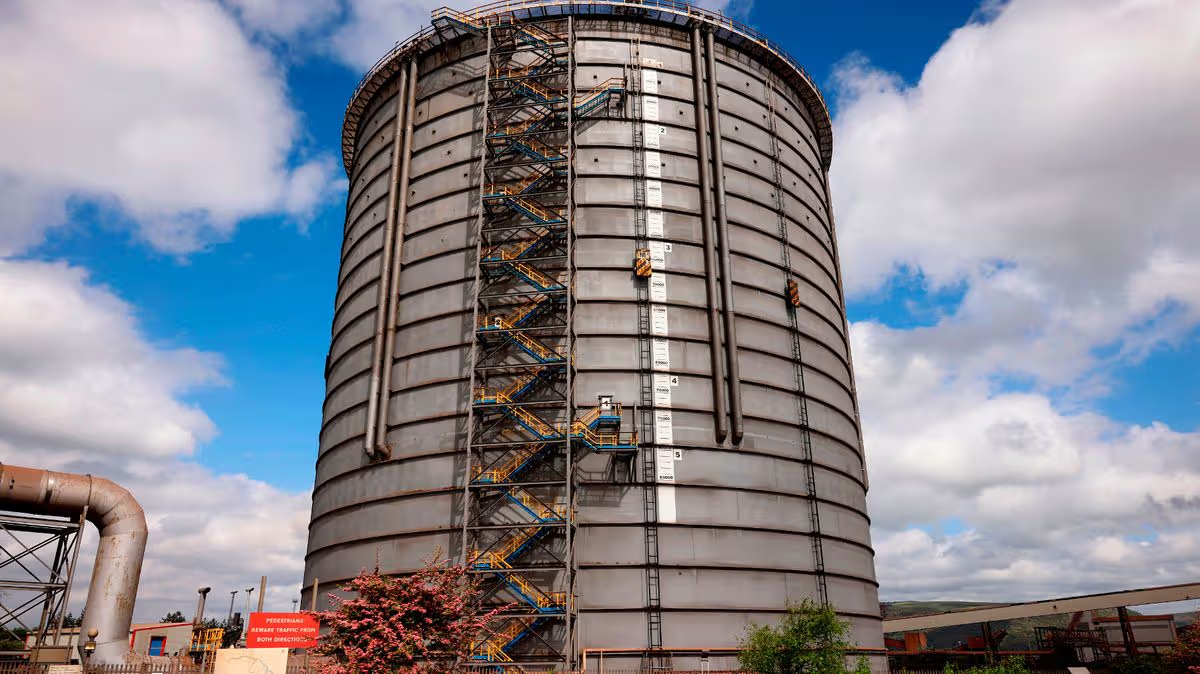
Residents said their homes “shook” after a loud bang was heard in Port Talbot on Wednesday evening. It came from the Tata Steel site where a demolition was carried out on one of its now redundant coke ovens gas holder.
Advertisement
It ceased operation together with the site’s heavy-end in September 2024. A rolling road block was put in place by South Wales Police on the M4 between junctions 37 Pyle and 38 Margam at 6.30pm as the demolition took place.
But some in the local area claimed they had no idea it was going to happen. Stay informed on everything Neath Port Talbot by signing up to our newsletter here.
One woman wrote online: “Would have been nice if residents had been informed, my whole house shook.”
A second added: “You could of warned us, my patio door shook and my animals were scared as well as myself.”
Advertisement
And a third wrote: “A day’s notice would have been nice. My daughter is terrified now.”
A statement from Tata Steel reads: “People working and living in the Port Talbot area may have just heard a loud noise emanating from the Port Talbot steelworks.
“This was the result of the planned demolition of the empty, redundant coke ovens gas holder, which has been completed safely as part of the ongoing engineering works on the site.
“The gas holder ceased operation with the closure of the site’s heavy-end in September 2024.
Advertisement
“This demolition was required to make space for future raw materials handling areas for the new three million tonne per year capacity electric arc furnace.
“Our thanks goes to the whole team involved from Tata Steel and our contractor partners Thompson of Prudhoe and PDC, in what was a complex programme of work. We apologise for any inconvenience caused.”
Get daily breaking news updates on your phone by joining our WhatsApp community here. We occasionally treat members to special offers, promotions and ads from us and our partners. See our Privacy Notice.
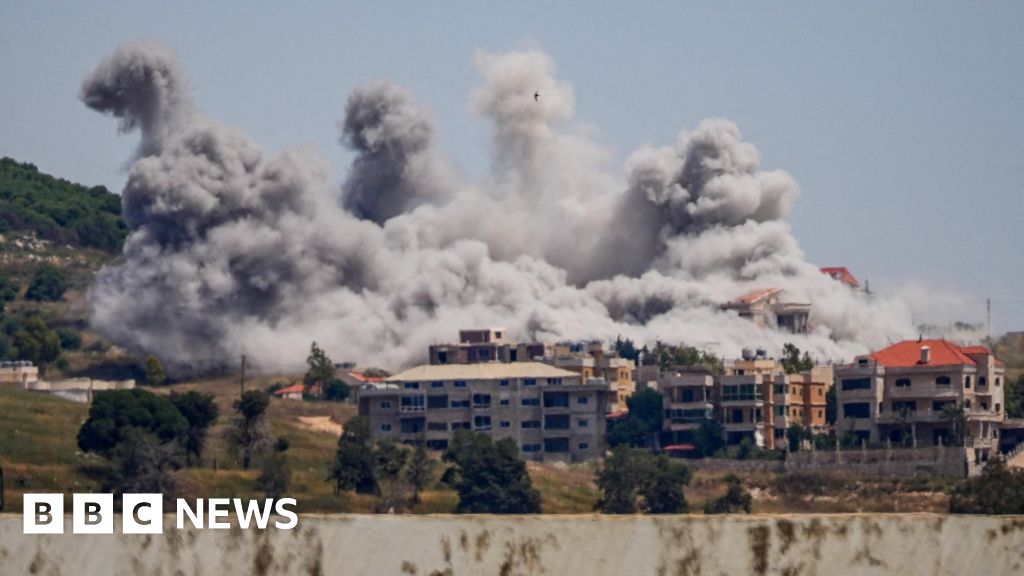
The ministry also said that two paramedics were killed and a third was seriously wounded when Israeli forces “directly targeted an ambulance” in the Chehour area, which is about 14km (9 miles) to the east. The ambulance belonged to the Risala Scouts Association, which is affiliated with the Amal movement, an ally of Hezbollah.
John McGowan-Fazakerley says he never questioned Jamie Varley’s devotion Preston Davey
Rachel Smith Court reporter and James Holt Senior Live and Breaking News Reporter
20:03, 03 Jun 2026
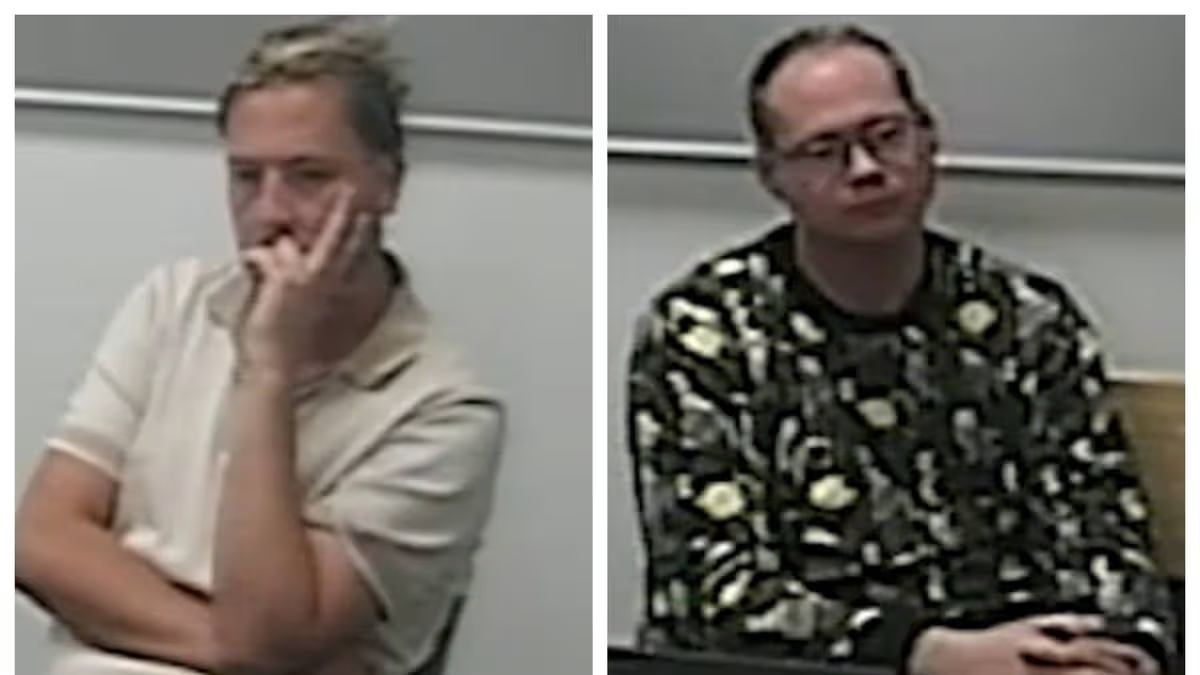
A man accused of allowing the death of his 13-month old adopted son told a jury his trust in his murder accused partner was ‘misplaced’. John McGowan-Fazakerley, 32, said he never considered Preston Davey was at risk of physical or sexual abuse from 38-year-old Jamie Varley.
Mr Varley is also on trial, and is accused of murdering the young child. On July 27, 2023, Preston was carried into Blackpool Victoria Hospital in cardiac and respiratory arrest. He died at 7.20pm.
A post mortem concluded Preston died from upper airways obstruction with experts stating he had been physically, psychologically and sexually abused in the four months he lived with the couple in Staining Road, Blackpool, the court heard.
Advertisement
Click here to hear the latest from Manchester’s courts in our newsletter
Peter Wright KC, prosecuting, said the risk to Preston was ‘foreseeable and indeed foreseen’ by the defendant four days earlier when it is alleged both men sexually abused the toddler in his cot, LancsLive reported.
A series of photos recovered from Mr Varley’s phone showed Preston ‘suspended’ over his cot bars. His lips were turning gradually blue in what the prosecution say was the aftermath of a serious sexual assault, the court was told.
Mr McGowan-Fazakerley denied any form of sexual involvement with Preston and said he only saw the baby ‘fleetingly’ when he was called upstairs to see the ‘funny position’ Preston was in.
He said he told his partner to lie Preston down before returning downstairs to cook Sunday dinner. He only saw the photos when he was questioned by the police two years later, he said.
On his second day in the witness box, McGowan-Fazakerley said he ‘never questioned Mr Varley’s devotion to their adoptive son’. Mr Wright KC, prosecuting, showed a series of photos and videos which he suggested showed Mr Varley treating the tot as ‘a plaything.’
Mr McGowan-Fazakerley said: “I feel as if there’s information, messages, videos, pictures, that I wasn’t aware of. I feel at times that he’s prevented me from protecting him and doing something about it.”
Advertisement
When asked about a video recorded hours before Preston’s death, which showed the baby seriously unwell, he said: “Preston’s life was like an iceberg and there are things under the water that I didn’t know about.
“I feel… I feel that on the 27th July, that when Jamie took the video of him being poorly, I feel like if that was me and I saw that I would have acted, I would have took him to hospital….”
He said Mr Varley was his ‘best friend’ and he always felt they were honest with their thoughts and feelings. He said he did not see any signs of depression and was not aware of any ‘dark thoughts’ of drowning or suffocating the baby, as reported by a work colleague of Mr Varley’s earlier in the trial.
Mr Wright KC said: “I’m going to suggest what happened to that little boy was both foreseeable by you and indeed foreseen. That’s the truth, isn’t it? Mr McGowan-Fazakerley replied: “No it isn’t. If I could have foreseen that happening and foresaw that happening it wouldn’t have happened. I would have took that little boy out.”
Asked by his own barrister, Anne Whyte KC whether he felt his trust in his partner of eight years was misplaced, the defendant replied: “Yes, I do feel like my trust in Jamie has been misplaced.”
Mr Varley, 38, is accused of murder; manslaughter; sexual assault of a child under 13; inflicting grievous bodily harm; five counts of child cruelty; and further counts of making, taking and distributing indecent images.
Mr McGowan-Fazakerley is accused of causing or allowing the death of a child; two counts of child cruelty; and sexual assault of a child under 13. Both men deny all the charges against them.
The Topping & Company store, on the corner of Museum Street and Blake Street, is set to open its doors on Friday, June 5, at 10am.
Company director Saskia Topping said they could not wait to welcome customers to the shop.
It comes as works to convert the vacant building on the corner of Museum Street and Blake Street have been ongoing since the shop was approved.
RECOMMENDED READING:
Advertisement
Company founder Robert Topping said told a City of York Council planning hearing in July last year it would be the largest independent book store to open in the country in living memory.
The York store is set to join other Toppings shops in Bath, Edinburgh, Ely and St Andrews.
Speaking to the Local Democracy Reporting Service (LDRS) earlier this week, company director Ms Topping said people would soon be able to spend hours browsing their shelves in York.
The director said: “We’ve had lots of friendly faces peering in the windows whilst we’ve been getting the books on the shelves – it will be wonderful to fling open the doors and show everyone the space at long last.
Advertisement
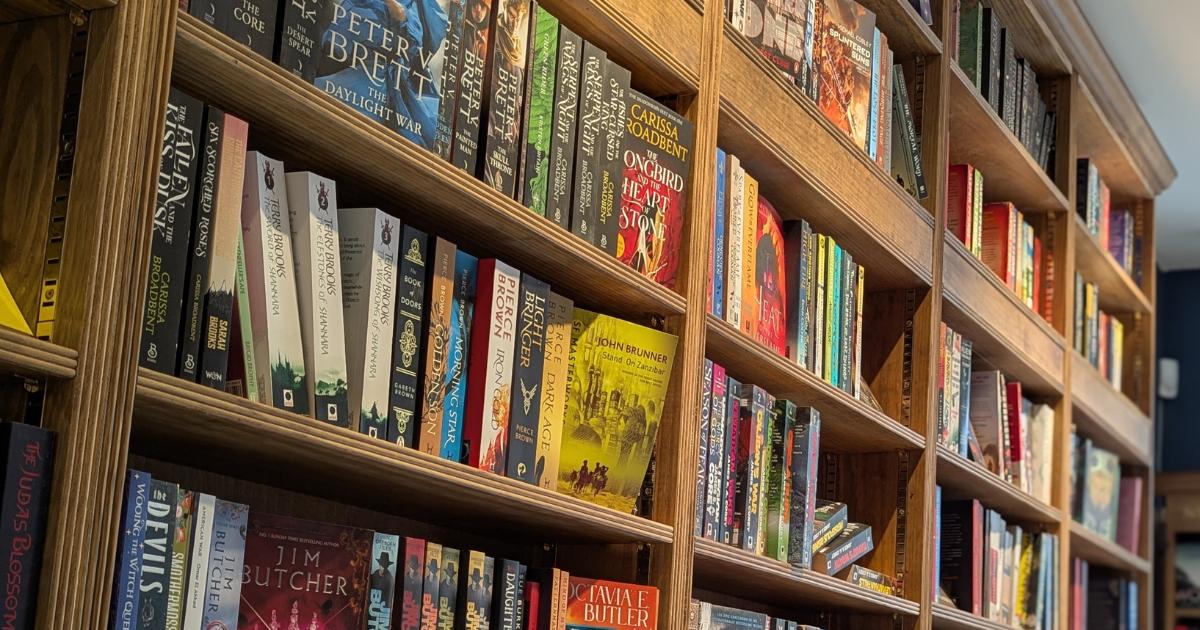
Shelves with interior design books in the Topping & Company bookshop, in Museum Street, York
“It’s taken us four weeks to get all the books on the shelves, and hopefully in the right order.
“It’s such a big, labyrinthine space that one of our booksellers has drawn a map to help everyone find the right sections.
“We consider ourselves to be range booksellers – for us, there’s great joy in browsing a bookshop and not just finding the popular new titles, but a whole range of brilliant books that have been published in decades past, alongside those from smaller publishers that you might not find elsewhere.
“We want our bookshops to be spaces of discovery.”
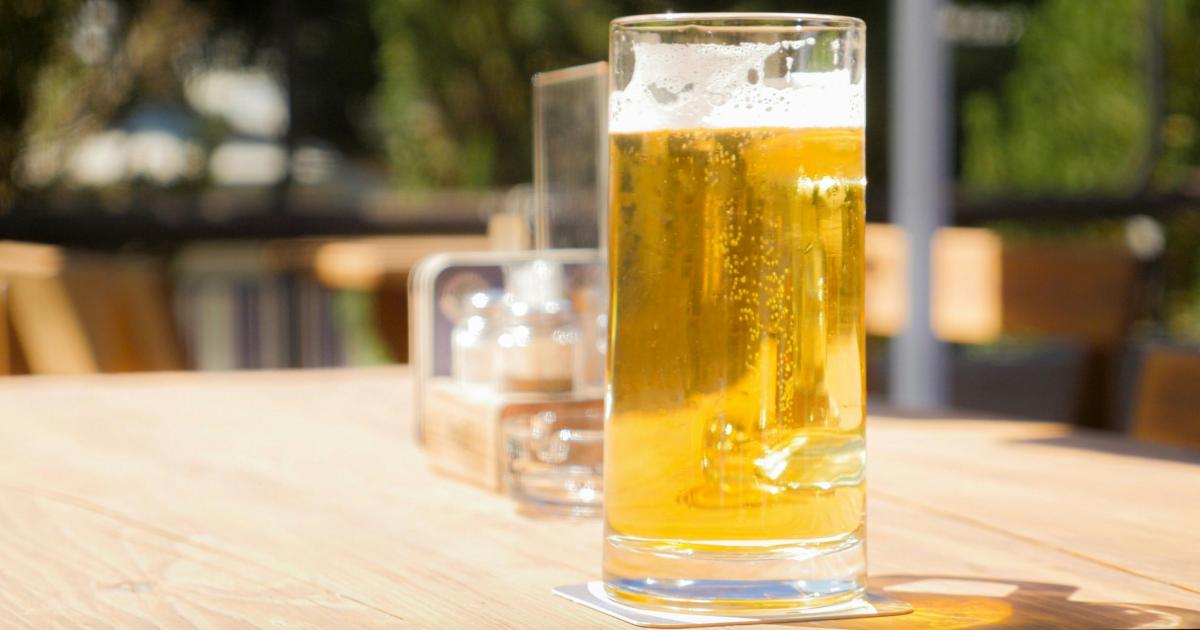
A listed building consent application from Harrogate Tipple to create a beer garden at the back of The Little Ale House, in Stonegate, has been approved by City of York Council.
The company’s plans stated it would have space for about 50 people and bring a space by the Grade I-listed Norman House into use for its patrons.
Council planning officers stated the proposed works were acceptable and would preserve the special architectural interest and setting of the main bar building which is also listed.
They added separate planning permission would be required for the freestanding bar in the beer garden.
Advertisement
The plans follow the opening of The Little Ale House in the Grade II*-listed 46-50, Stonegate in December.
RECOMMENDED READING:
Little Betty’s Café was previously based there until it closed in 2021.
An existing concrete and asphalt surface is set to be replaced with bricks or stone flags as part of the plans to convert the rear yard into a beer garden.
Advertisement
Timber benches, stools and picnic tables are set to be brought in along with moveable planters and pots while a dead tree will also be removed.
A timber-clad outdoor bar would be built and covered with a pitched slate roof if officials grant it planning permission.
Part of the ruins of Norman House run alongside the border of the courtyard where the beer garden is set to go.
An impression showing how the beer garden planned for The Little Ale House, in Stonegate, York, could look (Image: Harrogate Tipple/City of York Council planning portal)
The ruins are thought to be the remains of the oldest surviving domestic building in York.
Advertisement
Harrogate Tipple’s plans stated the works would replace the existing unattractive yard with a landscaped space which would the settings of the Norman remains and the business’ viability.
The application stated: “The existing courtyard is visually unattractive and inaccessible to patrons, yet it enjoys glimpsed views towards York Minster and the Norman House.
“Creating a small beer garden would support the viability of the new business, provide an outdoor meeting space in keeping with York’s tradition of courtyard inns, and give the public the opportunity to appreciate the Norman remains from within a managed environment.”
The plans were supported by York Civic Trust and Historic England stated they would provide a great opportunity to provide information about the medieval ruins.
Advertisement
No objections were lodged against the plans.
Council planning officers stated an interpretation for Norman House should be included as part of the redevelopment.
Officials said: “The proposed works for a free-standing bar to the rear of 46 Stonegate will require planning permission, neighbouring impact will be considered as part of a planning application.”
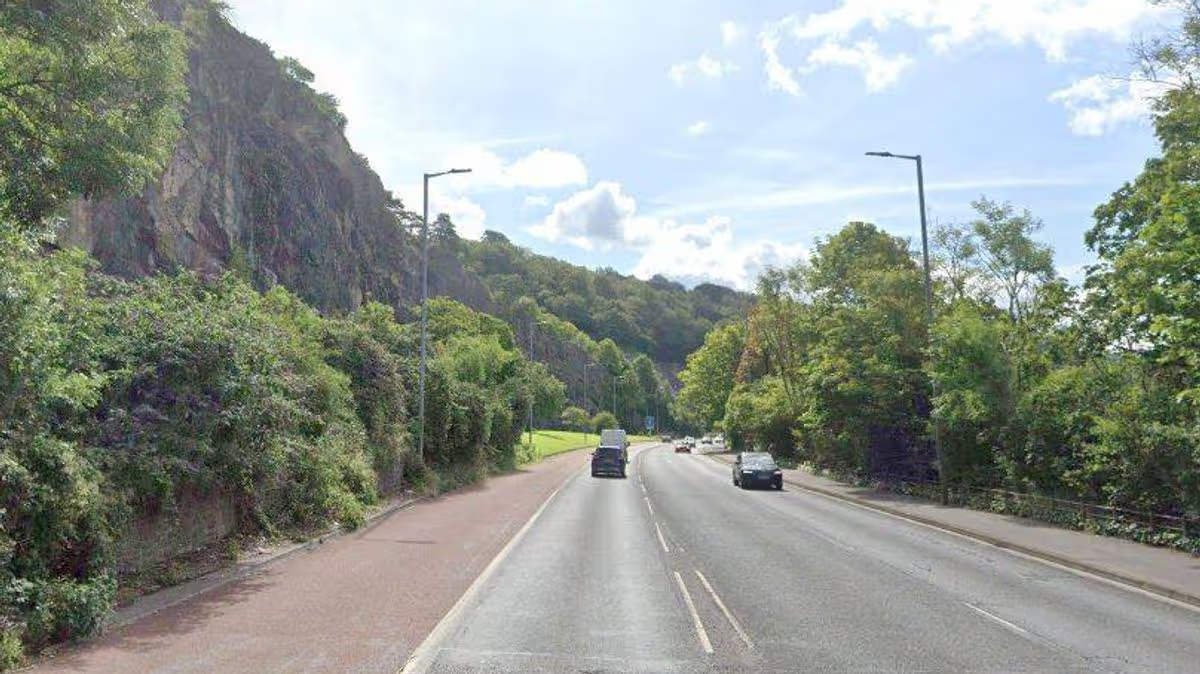
Human remains were found beside a busy road in Bristol by a member of the public on Tuesday night, June 2. Avon and Somerset Police says officers were called to Portway in Bristol following the discovery.
Officers said that although formal identification has yet to take place, the family of a man who was subject to a missing persons appeal has been informed.
Advertisement
Rebaz, 40, was last been seen on Monday, May 4, off Fishponds Road. Officers had launched a public appeal due to concerns about his welfare.
A statement from Avon and Somerset Police released on Wednesday reads: “Police were called to the Portway on Tuesday evening, June 2, by a member of the public who had found human remains.
“Sadly, our initial enquiries suggest the deceased is missing Rebaz, 40, from Bristol, who hadn’t been seen since Monday, May 4.
“While formal identification has yet to take place, his family have been informed and have our sympathy in their loss.
Advertisement
“Officers would like to thank everyone who contacted us with information or shared our appeal to trace Rebaz.”
Get daily breaking news updates on your phone by joining our WhatsApp community here. We occasionally treat members to special offers, promotions and ads from us and our partners. See our Privacy Notice.
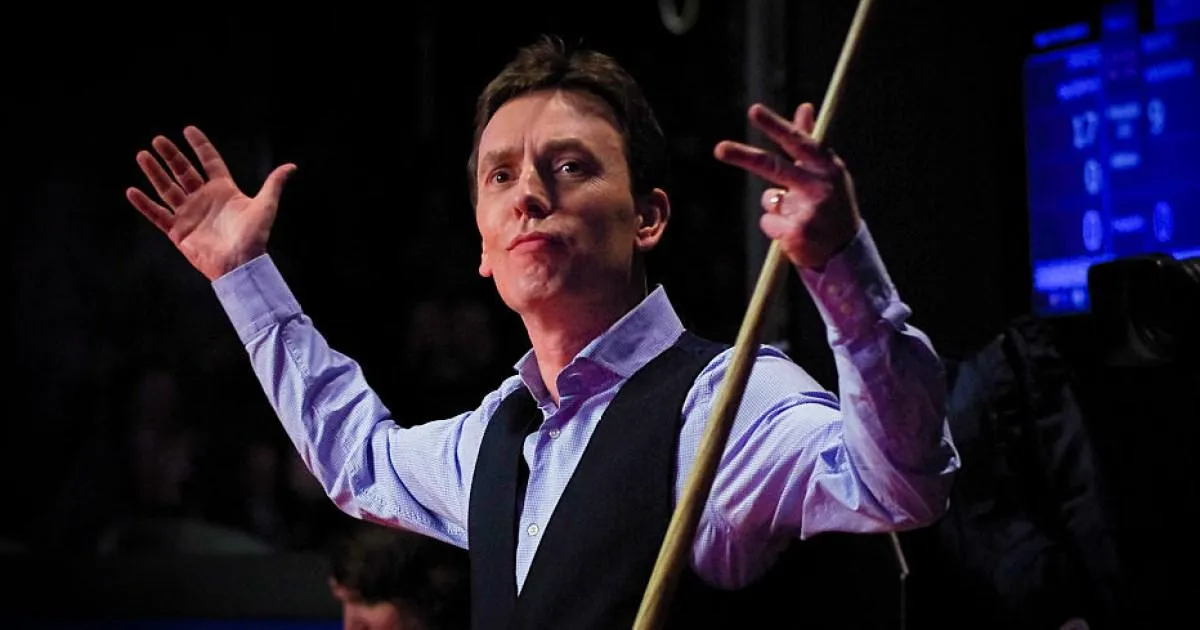
It’s the end of a 36-year journey on the professional tour for Ken Doherty (Picture: Getty Images)
Ken Doherty will no longer compete on the professional snooker tour, but it’s fair to say he has made the most of his 36 years taking on the best players on the planet.
‘It’s been coming for a while,’ the 1997 world champion told Metro. ‘I was sad initially that I’m not going to be competing on the main tour anymore, but it’s probably relief as well. The time is right.’
One of the finest players in the world for much of the 90s and 00s, Doherty’s game started to slip after 20 years on tour and he says he has been hoping to rediscover the magic for a long while now.
Advertisement
‘I was trying to search for something, thinking maybe things will improve,’ he said. ‘I played with a new cue to maybe get a bit of confidence, but no, it’s just not there anymore.
‘You just come to realise you can’t play the way you used to and it becomes frustrating. You feel a bit embarrassed sometimes with your performances and I don’t want to go through that again.
Are you snooker loopy?
You’re in the right place. I’m Phil Haigh, and I cover the game we all love for Metro.
In my newsletter, The Table, I analyse the biggest talking points, pull back the curtain on the sport and crown the biggest winners and losers every week.
Phil has been reporting on snooker for over a decade
‘I’ll say thank you, I’ve had a great time, great memories. I’m delighted to have won the things I’ve done. Disappointed to lose some of the matches and finals that I’ve lost, but winning the World Championship was the greatest day of my life as far as being a snooker player’s concerned. And to do it with a £2 cue and against one of the greatest of all time was the icing on the cake.’
Doherty has already been a popular pundit and commentator for many years (Picture: Shutterstock)
The 1997 World Championship win over Stephen Hendry was one of six ranking titles on Doherty’s CV, but he had a number of other close calls in big events.
Two more Crucible finals, three at the UK Championship and two at the Masters, with the Darlin of Dublin experiencing the vast difference between winning and losing those huge matches.
Advertisement
‘When I won it in ’97, I came home on an open-top bus, 250,000 people lining the streets. Then the following year after losing in the final to John Higgins, came back to Dublin airport the next day and I had to get a f***ing taxi home! That’s the difference between winning and losing in a final! But that’s life.’
Doherty made his Crucible debut in 1991 against Steve Davis (Picture: Getty Images)
Crafty Ken duked it out with legendary names for years, experiences that will live for him forever.
‘Playing all the greats: [Ronnie] O’Sullivan, [John] Higgins, Hendry, Jimmy [White], [Steve] Davis, playing all those great players, some of the greatest players that will ever play the game, that was a joy,’ he said.
‘That was a joy to compete against them and play them in big matches. And overcome them, not all the time, but I did overcome them through my career, I beat them all.’
The most testing opponents are of little surprise, with Doherty saying: ‘Stephen and Ronnie, John Higgins and Williams, they were the toughest.
Advertisement
Doherty taking on Ronnie O’Sullivan at the 2003 Masters (Picture: Getty Images)
‘They were the ones I loved to have battles with, funnily enough, even though they were the toughest. Whether it be at the Masters or the UK or the World Championship, playing those guys at those championships, they were great occasions. And that’s what I miss. Those big, big matches against the big players.
‘I think the best one was I played Ronnie in the final of the Irish Masters at Goffs [in 1998]. He beat me, he played really well. The atmosphere was electric, it was just amazing.
‘But of course he failed a drugs test, there was marijuana in his system, so he had to hand me the trophy and the cheque for an extra 30 grand. It was the most expensive joint that he ever smoked in his life! He never spoke to me for about six months afterwards.’
Outside of the most obvious nightmare foes, Doherty remembers one of his punditry colleagues being a serious test.
‘I tell you who was really tough and he was such a clever player who I loved playing against, because it was a battle of strategies, was Alan McManus,’ he said.
Advertisement
Alan McManus and Doherty met at the 2014 World Championship (Picture: Getty Images)
‘He was he was such a wonderful player, he knew every inch of the snooker table. They called him Angles because his safety was was second to none, he was brilliant. It was a great battle of mind games against him, he was a quality player.
‘Although he won the Masters, which was great, he doesn’t get the proper recognition that he probably deserves. But he was a top player for a long, long time.’
The 1997 Sheffield final will never be topped, but there are plenty of other contests that stick in the mind of the Irishman.
‘There’s a few finals,’ he remembers. ‘I beat John [Higgins 9-8] from 8-5 down in Malta in the final. And then both got so drunk we got thrown off the plane and we’re on the front pages and the back pages when I got home!
‘The Williams World final that I lost 18-16 in 2003, the semi-final against Paul Hunter from 15-9 down to to win 17-16. That was probably one of the greatest matches and greatest comebacks I’ve ever had. The UK final I lost 10-9 to Williams. That was in the same season, 2002-2003. He pipped me in two of the major finals that year. There’s been lots of great matches.’
Advertisement
Don’t worry, getting thrown off a plane with John Higgins the morning after the 2006 Malta Cup final does not pass by without explanation, as the two created a little slice of scandal.
‘We went out to a nightclub,’ said Doherty of hitting a Maltese town with Higgins after edging him in the final. ‘I got back at 5 o’clock in the morning. The taxi was already waiting for me outside the hotel when I staggered back in to to get my cue and suitcase.
‘I came downstairs, got into the taxi, we were driving to the airport and John was staggering up the road and he was on the same flight as me, the 7 o’clock flight.
Advertisement
‘I checked in and went up to the hotel bar and had another drink. Then John was last to check in, he made it and had another drink with me and then we got on the bus. His cue got stuck in the doors, and everybody started laughing, including me, but you know what my laugh is like, I don’t think people appreciated my laugh at 7 o’clock in the morning.
‘He was last on the plane. I managed to get on and sit down and the captain stopped him as he was staggering up the stairs and said he’s not travelling. I got up to defend him and say, “oh, he’ll be okay, just let him sit down, he’ll be fine.” But he said, “no, he’s not travelling and neither are you. You’re getting off with him!”
‘We got on a flight to Heathrow that night and there were three paparazzi waiting for us as soon as we get off the plane! We were on the front and back pages. Rock n roll.’
Advertisement
Some of that night in Malta might be a haze, but snooker has provided unforgettable moments away from the table for the Dubliner.
‘I think one of the favourites was when Alex Ferguson rang me up and invited me to Old Trafford to parade the trophy,’ he recalls. ‘First of all, I told him to f**k off because I thought it was one of my mates winding me up! He says, “Kenny, this is Alex Ferguson, and I’m not going to f***ing ask you a second time!”
‘So I got there and he took me down to meet the players. Eric Cantona came over and shook my hand. I went out on the pitch and my legs were like jelly carrying the cup. All the United fans singing “there’s only one Kenny Doherty” and all the West Ham fans in the away end singing “there’s only one Ronnie O’Sullivan!”
World champion Doherty walked out at Old Trafford (Picture: Shutterstock)
‘Playing a frame with George Best, shaking Muhammad Ali’s hand at the Sports Personality of the Year in 1999.
‘The Edge, tapped me on the shoulder once, when I was talking to Bono after one of their concerts. I was with Michael Stipe and Roger Taylor. The Edge says, “Ken, Ken, you wouldn’t do me a favour, would you? You wouldn’t come over and say hello to me mother and her two friends?” She had no interest in talking to Michael Stipe, Roger Taylor or Bono, but her and her friends absolutely loved snooker.’
Advertisement
As his professional playing days come to an end, there is a tinge of disappointment of how it has come about.
Doherty has been playing on an invitational tour card in recent years and he has no issue with that no longer being offered, but feels he could have been informed earlier than he was.
Doherty landed six ranking titles over his career (Picture: Getty Images)
‘I don’t think the option was there anyway. They weren’t going to give me a card, so they sort of made my mind up for me, you know?’ Doherty said of retirement.
‘It would have been nicer to find out a little bit earlier, then I could have maybe planned something at the World Championship. The timing could have been a bit better, but it is what it is. I’m happy.’
Doherty’s final match proved to be a 10-5 defeat to Patrick Whelan in the first round of World Championship qualifying, which felt like the end even before the decision was made.
Advertisement
‘I think after this year’s World Championship I knew anyway,’ he said. ‘I tried to practice to have a good year and a decent run, but it just wasn’t there. I felt this could be my last game.
‘I knew it was coming, but I was putting it off, hoping, but in the end I probably could have done it a few years ago.
‘It’s just my love for the game, I wanted to keep on and keep searching for something and that will never die, your love for the game.
Doherty won matches in four ranking tournaments in his final season (Picture: Getty Images)
‘I’ll still play snooker because I love it and I will play exhibitions and I’ll still do shows and I’m still playing the seniors and I love that as well, but it’s not as much pressure, I can just relax. The time is right.’
Doherty will never be far from big time snooker, as a prominent pundit and commentator on major tournaments and still ready to play seniors events.
Advertisement
He remains and will continue to be one of the sport’s most popular figures and greatest ambassadors, and someone snooker should be grateful for.
‘Well, listen, it’s given so much to me, it really has,’ he said. ‘It changed my life and I’m just so humbled by the amount of support that I’ve had over the years, and not just from fans all over the world, but also the snooker community themselves.
‘I will cherish that. I’ll always try to promote the game as best as possible and I’ll continue to do that.’











































You must be logged in to post a comment Login