The brand’s parent firm has agreed to shut the sites as part of a company voluntary arrangement process
Henry Saker-Clark, Press Association Deputy Business Editor
16:34, 05 May 2026Updated 16:40, 05 May 2026
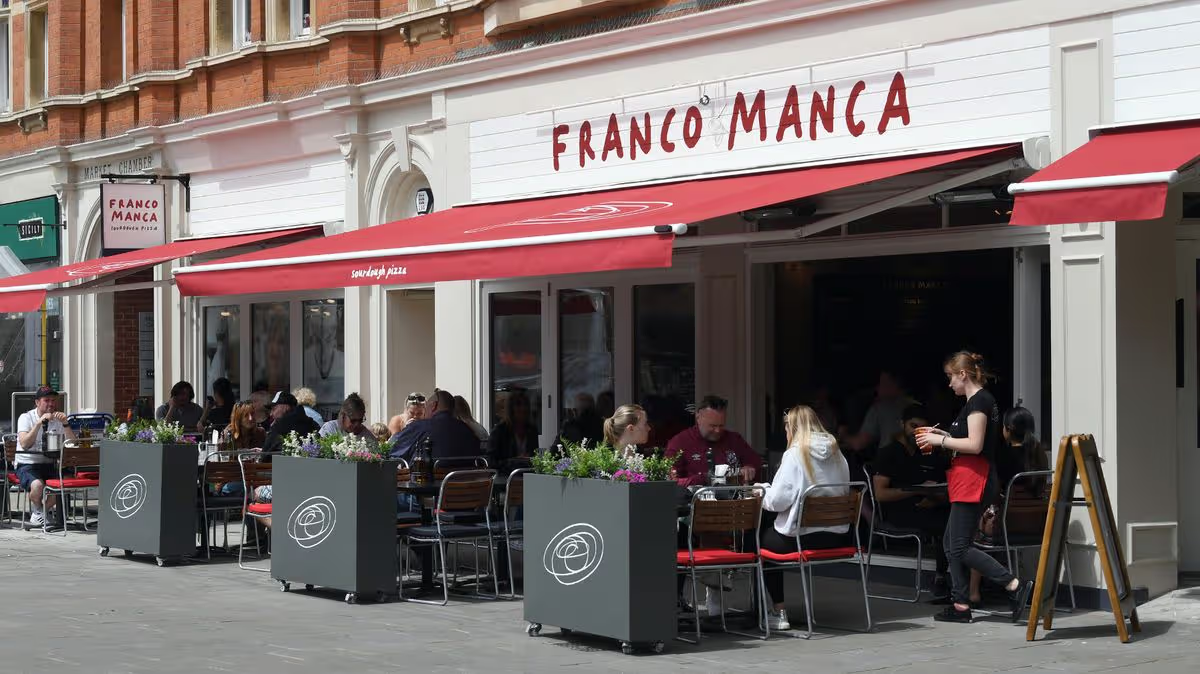
A Franco Manca restaurant(Image: Cambridge News)
Restaurant chain Franco Manca will push ahead with the closure of 16 venues after a restructuring plan was approved by creditors. Last month, parent firm The Fulham Shore said it planned to shut the sites as part of a company voluntary arrangement (CVA) process, which will also hit around 225 jobs.
Advertisement
The pizza brand currently runs 70 restaurants prior to the closures but said it has been knocked by “disproportionately high” UK taxes and a lack of business rates relief for restaurants. The effected restaurants were “no longer sustainable” as a result.
Franco Manca’s CVA proposal received back from more than 90 per cent of voting creditors, allowing it to get the go ahead.
Last week, Fulham Shore placed its sister restaurant brand The Real Greek into administration. It was immediately snapped up by Cote owner Karali Group but announced the close of nine of its 28 restaurants.
Marcel Khan, chief executive of Fulham Shore, said: “We are grateful for the support shown by our creditors today. Franco Manca is a fantastic brand with a strong heritage and loyal customer base.
Advertisement
“With this agreement in place, we will put the business back on a firm footing and press ahead with strengthening our customer offer and performance.”
Paul Berkovi, managing director of Alvarez & Marsal, said: “Today’s vote saw a significant majority of the company’s creditors support the CVA, reflecting constructive engagement across stakeholders.
“Against a challenging backdrop for the sector, this is an important step for Franco Manca, enabling the business to complete its financial restructuring and secure the platform for its operational transformation.”
Group trips from Australia, whether it’s a hen do in Las Vegas, a 40th in Dubai, or a girls’ trip to Bali, come with long distances and a few moving parts. Get everyone there on the same schedule, and the trip is off to a good start. When flights are well organized, arrivals land within a tight window, transfers are simple, and the group moves straight into the experience. No waiting around, no piecing things together on arrival, just a clean start. That kind of flow comes from how the trip is structured early on, and how well it avoids the common delays that can split group arrivals.
A Strong Start Sets the Tone
There’s a point early in every trip where things settle into place. People arrive, bags are dropped, someone opens the first drink, and the space fills up quickly. Conversations and bonding start because everyone is there, present, and no longer tracking arrivals.
In Bali, that often means landing before sunset, checking in within a short window, and the first night unfolding without interruption. It’s a small detail, but it sets the tone for everything that follows—that usually starts with how the flights are chosen.
Advertisement
Choose Routes That Keep the Group Aligned
The more straightforward the route, the easier everything feels on arrival. Flights from Australia often connect through hubs like Singapore, Dubai, or Tokyo. Keeping that routing simple reduces the amount that needs to go right along the way and helps avoid delays that can push arrivals apart.
A slightly longer connection can help here. It gives the group enough space to stay aligned if there’s a delay leaving Australia, rather than forcing last-minute changes. Arriving within a two to three-hour window is usually enough to keep the day moving cleanly.
Pixabay
Keep Everyone on the Same Itinerary
Once the route is set, keeping everyone on the same booking becomes the next priority. It removes the need to manage multiple arrival times and keeps the group moving through each step at roughly the same pace. One transfer, one check-in, one start point.
For a girls’ trip from Sydney to Bali, for example, that often means stepping off the plane, moving through the airport, and reaching the villa within minutes of each other. No one is waiting around, and no one is catching up later. That consistency carries through the rest of the journey.
Travel at Times That Feel Easier
Timing plays a bigger role in this than most people expect. Flights outside peak periods tend to feel calmer from the beginning. Airports are easier to move through, boarding is more straightforward, and the overall pace is less compressed.
Advertisement
That calmer start makes it easier for the group to stay aligned, especially on longer routes where small delays can otherwise build. Even shifting the departure by a day can change the entire journey.
Give the Trip Space to Begin Smoothly
With flights and timing working in your favour, the next step is giving the trip room to settle. Arriving a day before the main event creates that space. People can check in, get their bearings, and ease into the destination without rushing into plans.
For a 40th in Dubai or a wedding week in Italy, that extra time makes a noticeable difference. The first proper gathering happens when everyone is ready, not when people are still arriving. It’s a simple adjustment that improves the entire experience.
Pixabay
When a More Direct Approach Makes Sense
For some trips, even well-structured commercial routes reach their limit. On routes like Sydney to Queenstown during ski season, keeping a group on the same commercial flight isn’t always straightforward. Availability can spread people across different departures.
A short-haul charter removes that complexity. One departure, one arrival, and the group stays on a single timeline from start to finish. In these cases, using a charter plane gives the group full control over timing, boarding, and the overall experience from the moment they arrive at the airport.
Advertisement
Instead of arriving early to check luggage, queue through security, and wait at the gate, the process is more direct. Bags are handled quickly, boarding is simple, and the group moves from arrival to take-off without long pauses.
Once on board, the space is your own. People settle in straight away, conversations start early, and the tone of the trip is set before landing. For milestone trips, this makes all the difference. The experience doesn’t begin at the destination. It begins when the group arrives at the airport.
Combining Routes for a Smoother Finish
For more complex destinations, this idea can be extended. Flying commercially into a major hub like Athens keeps the long-haul portion efficient. From there, continuing on a smaller aircraft to a nearby island keeps the group aligned right through to arrival.
For places like the Greek islands or coastal Italy, it simplifies what is often the most fragmented part of the journey. The result is a cleaner finish, with everyone arriving within the same window.
Advertisement
Planning That Holds Together
By this point, the pattern is clear. The trips that feel easiest are the ones where each decision supports the next. Routing, timing, arrival windows, and flexibility all work together to keep things moving in one direction. Once a group gets larger, those details matter more, not less. For Australian travelers covering long distances, that structure is what allows the trip to begin smoothly and stay that way.
Spirit and its stakeholders were in bankruptcy court in White Plains, New York, to start that process, which will take months.
The carrier filed a cumulative wind-down budget of around $217 million, though that number could change.
The budget went out to February 2028. It included more than $52 million in employee costs through July and another more than $52 million for aircraft-related expenses.
The airline had 59 Airbus A320s in service and 63 in storage, as well as 37 of the larger A321s in service, and 13 of them in storage, according to aviation-data firm Cirium. More than three-quarters of its fleet was leased.
Advertisement
Spirit shut down operations after years of struggles, most recently from heavy debt loads and a surge in costs.
Spirit’s lawyer, Marshall Huebner of Davis Polk, told a bankruptcy court on Tuesday that the jump in jet fuel prices following the U.S.-Israel attacks on Iran in February left the carrier with no choice but to shut down. That added $100 million incremental costs for Spirit in March and April, he said.
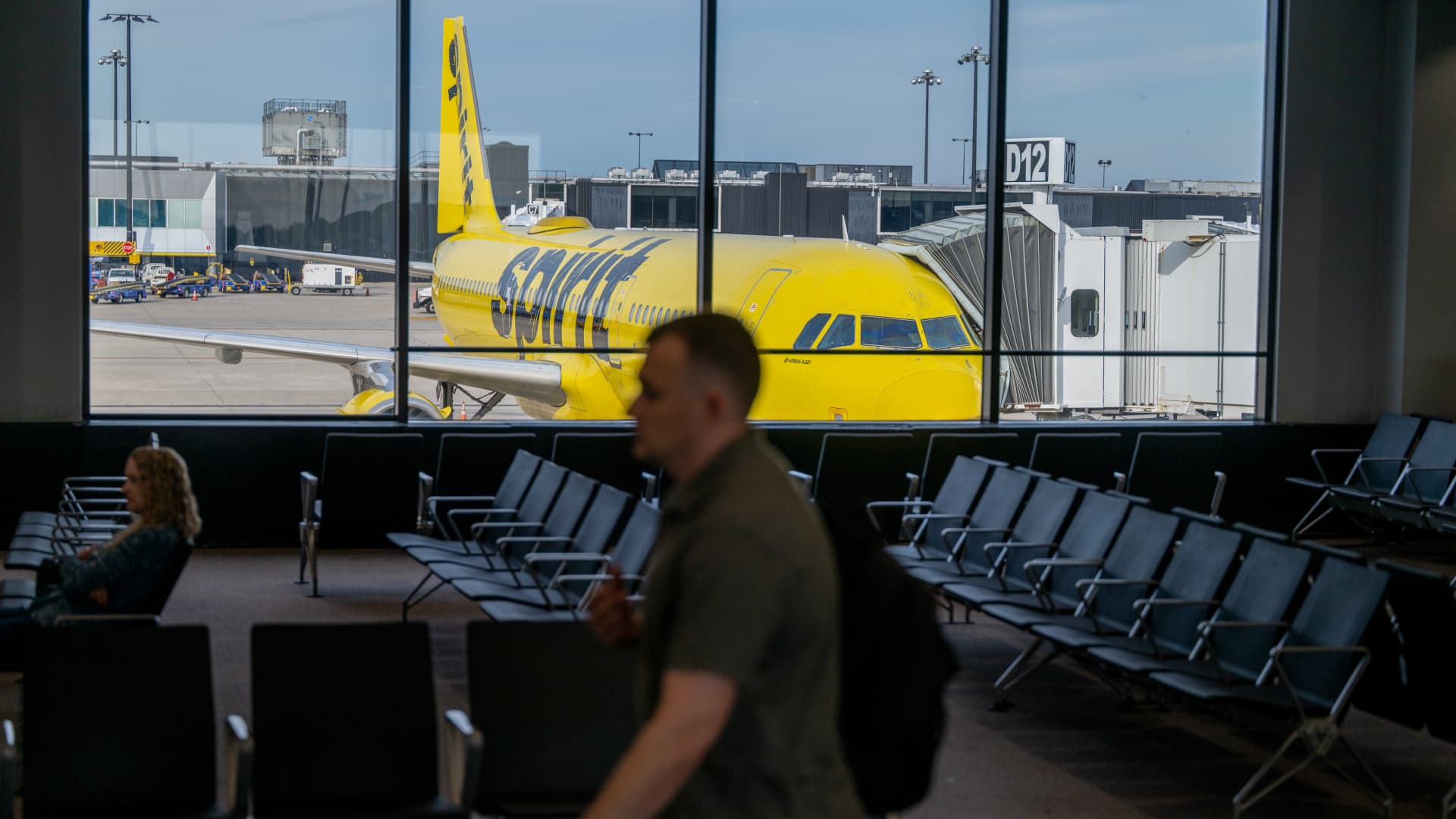
U.S. bankruptcy court in White Plains, N.Y.
Leslie Josephs/CNBC
Advertisement
Talks for a potential government bailout in the form of a $500 million loan that could have given the government an up to 90% stake in Spirit fell apart late last week, and the carrier officially shut down at 3 a.m. on Saturday.
Spirit had flown about 50,000 people in the day leading up to its closure. The airline said about 17,000 direct and indirect employees lost their jobs.
“The closing of Spirit Airlines is a sad and unfortunate event that adversely affects many parties, and that’s particularly true for the thousands of folks who are Spirit employees and families who depend on them,” the presiding judge, Sean Lane, said at Tuesday’s hearing.
Advertisement
“The stress level for these employees and affinities is very high, and they likely have many questions,” he continued. “Hopefully there’ll be some information discussed today to provide some answers to some of those questions, or provides information about where to get those answers. Bankruptcy can be a very difficult process, and today is a sad example of that.”
Yoshitaka Kitao Chairman of the Board, President & CEO
Thank you very much for attending this SBI Holdings full year results announcement. At the venue, we see dozens of people, and I understand that more than 110 people are participating online as well. Without further ado, let me start. So we have quite a big volume of documents. So I would like to go through numbers briefly.
The consolidated performance revenue, JPY 1,896.6 billion, up 31.4%. Pretax income, JPY 516.7 billion. 83% up. And the profit for the period, JPY 430.5 billion, up 127.6%, in which profit attributable to owners of the company, JPY 427.6 billion, plus 163.7%. Each of them are record highs, especially the ROE has been my focus, 28.0% year-on-year, it’s a big increase. Usually, the Japanese banking industry for FY 2024 average was 7.25%.
What about U.S., JPMorgan Chase, even JPMorgan Chase, 16.69%; Morgan Stanley, 16.52%; Goldman Sachs, 14.91%. The other banks, big financial companies representing the U.S. market compared to them, our ROE is better. So the comparison of consolidated performance with major securities groups, as I mentioned earlier, we have covered their numbers. The Nomura, JPY 362.1 billion, ROE 10.1%; and Daiwa, JPY 175.3 billion, 10.3%; and there is SMBC Nikko Securities, JPY 94.4 billion, 7.5% ROE; and the Mitsubishi UFJ, JPY 664.3 billion, 10% of ROE. So 28% of our number is really a surprisingly good number.
Advertisement
Looking at Nikkei Index, the 3 largest securities and so on, this way of writing of conventional media, but even the new medias and the conventional medias, all of them are using the Internet. And I’m wondering why Nikkei continues to write such stupid
Delta Air Lines is expanding snack and drink service on thousands of flights, but for travelers on hundreds of short routes, the beverage cart is about to disappear entirely.
The changes set to take effect May 19 will mean passengers flying on Delta Main and Delta Comfort will no longer receive food or drinks on flights of 350 miles or less, which are typically trips lasting under an hour, a Delta spokesperson confirmed to FOX Business.
Advertisement
“Delta is adjusting onboard beverage service to create a more consistent experience across our network,” the spokesperson said. “Customers traveling in Delta Comfort and Delta Main on flights 350 miles and above will now receive full beverage and snack service, while shorter flights will no longer offer food and beverage service.”
The spokesperson emphasized that passengers flying first class will continue to receive full service no matter the flight’s distance.
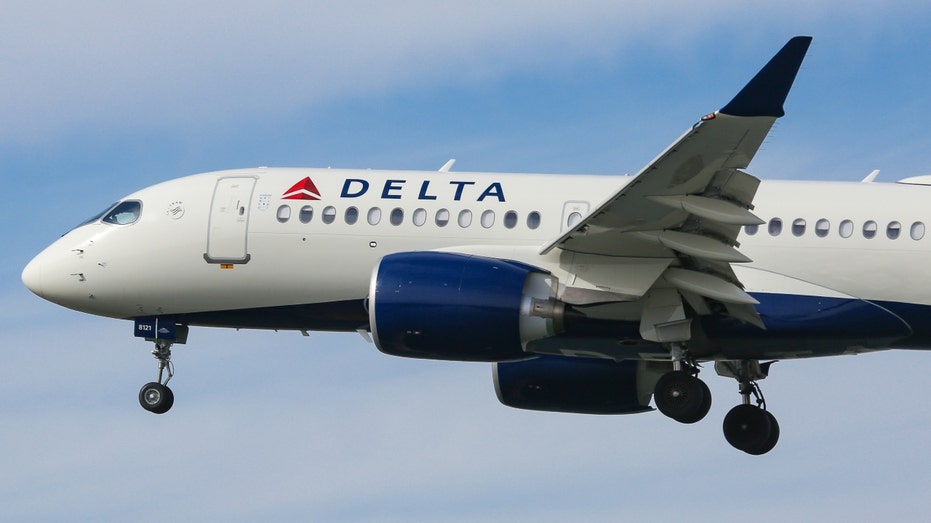
Delta travelers flying Delta Main and Delta Comfort will no longer receive food or drinks on flights of 350 miles or less starting May 19, a Delta spokesperson confirmed to FOX Business. (iStock)
The airline said about 9% of its daily flights will lose service under the new policy.
Advertisement
At the same time, Delta is expanding full snack and beverage service — including alcoholic drinks and multiple snack options — to more routes. The airline said 14% of its flights will gain upgraded service, part of a broader push to standardize the passenger experience across its network of roughly 5,500 daily flights.
Delta Air Lines Airbus A220-100 aircraft as seen on final approach landing with landing gear down at New York JFK John F. Kennedy International Airport on Nov., 14, 2019, in New York. (Nicolas Economou/NurPhoto via Getty Images)
The cuts will primarily affect routes that previously offered only limited “express service,” such as water, coffee and a small snack selection. Some shorter flights already had no service, including routes like Atlanta to Charlotte or Nashville.
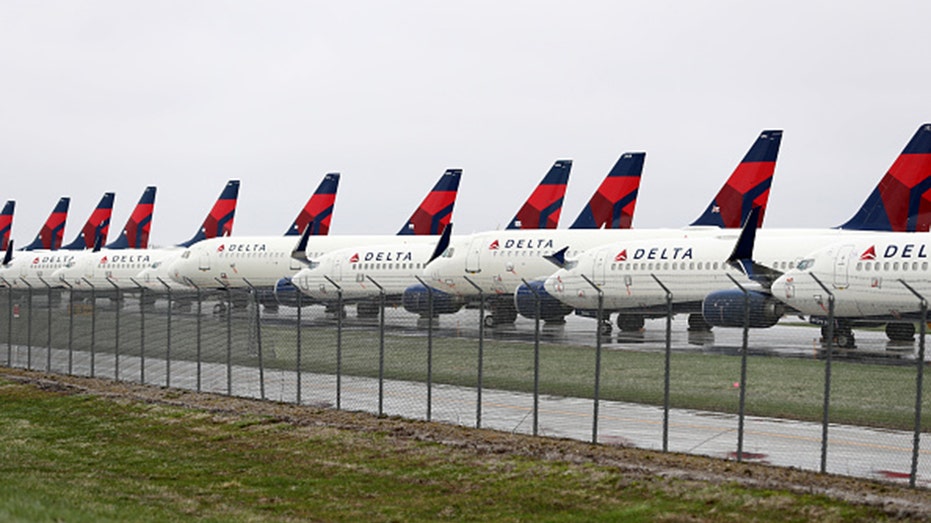
Planes belonging to Delta Air Lines sit idle at Kansas City International Airport on April 03, 2020, in Kansas City, Missouri. (Jamie Squire/Getty Images)
Even on flights without snacks or drinks, Delta said crews will remain focused on customer service.
Bristol firm specialises in complex work for renewable energy and storage sectors
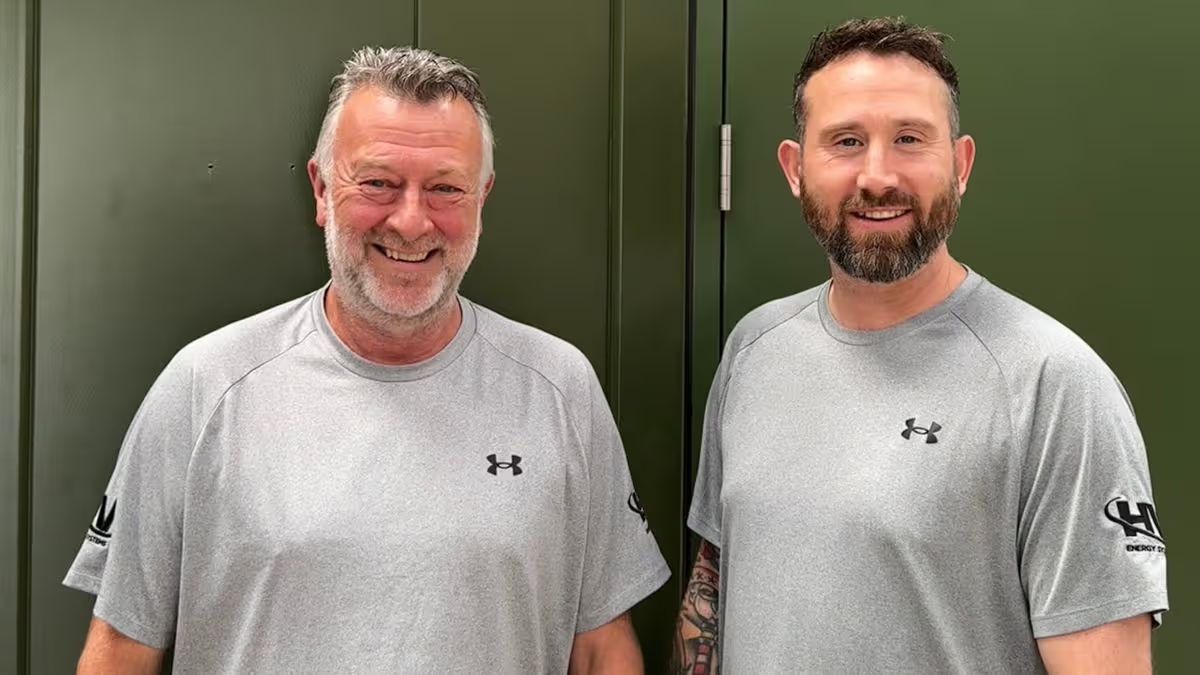
HV Energy co-founder and managing director, Craig Steven, left, and co-founder and technical director Louis Wright(Image: RSK)
A Bristol high-voltage power specialist has been acquired by Cheshire engineering group RSK as it looks to grow its integrated services in the renewable energy and energy storage sectors.
HV Energy Systems (HVES) delivers high-voltage grid connection infrastructure projects across the UK, focusing on technically complex high voltage (33kV – 132kV) and extra high voltage (up to 400kV) connections. Its clients include leading UK renewable energy developers and engineering, procurement and construction businesses.
Its 24-strong team specialises in building modularised and containerised substation solutions, so key project elements can be built and tested off-site to help speed up construction projects.
HVES managing director Craig Steven and technical director Louis Wright founded the business and will continue to lead it. In a joint statement, they said: “We are excited to be joining RSK Group. This partnership will strengthen the service and support we deliver to clients, backed by increased scale and access to a wider network. For clients and colleagues, it is business as usual: you will continue to work with the same team and receive the same level of service, underpinned by the trusted relationships we have built.”
Advertisement
RSK Group chief executive officer Alan Ryder said: “The highly skilled HVES team will add significant value to RSK’s energy transition services and we are very pleased to have them join the group and work alongside some outstanding multidisciplinary colleagues on a range of important energy projects.
RSK Group Founder and CEO Alan Ryder(Image: RSK)
“HVES’s capability is particularly valued by renewable energy developers, for whom grid connection is both technically complex and schedule-critical. Delays to energisation can materially affect projects, increasing the importance of delivery certainty and proven technical capability. This makes the HVES team a crucial element in the success of projects that contribute greatly to UK energy security.”
HV Energy Systems was advised by FRP Advisory (corporate finance) and Osborne Clarke (legal).
In 2024, RSK acquired Kendall Kingscott, which has offices in Bristol, Exeter, Cardiff, St Austell, Ringwood and Teddington, and employs more than 200 staff.
| Revenue of $109.23M (21.40% Y/Y) beats by $12.28M
BRC Inc. (BRCC) Q1 2026 Earnings Call May 5, 2026 8:30 AM EDT
Company Participants
Matthew McGinley – Vice President of Investor Relations Chris Mondzelewski – President, CEO & Director Matthew Amigh – Chief Financial Officer
Advertisement
Conference Call Participants
Michael Baker – D.A. Davidson & Co., Research Division Sarang Vora – Telsey Advisory Group LLC Daniel Biolsi – Hedgeye Risk Management, LLC
Advertisement
Presentation
Operator
Greetings, and welcome to the Black Rifle Coffee Company First Quarter 2026 Earnings Call. [Operator Instructions]
As a reminder, this conference is being recorded. I would now like to turn the conference over to your host, Matthew McGinley, Vice President of Investor Relations. Thank you. You may begin.
Advertisement
Matthew McGinley Vice President of Investor Relations
Good morning, everyone, and thank you for joining Black Rifle Coffee Company’s First Quarter 2026 Financial Results Conference Call. We released our results yesterday, and the press release and related materials are available on our Investor Relations website at ir.blackriflecoffee.com. Before we begin, I would like to remind you of the company’s safe harbor statement regarding forward-looking statements. During today’s call, management may make forward-looking statements, including guidance and the underlying assumptions. These statements are based on expectations that involve risks and uncertainties, which could cause actual results to differ materially. For a further discussion of these risks, please refer to our previous filings with the SEC. Additionally, this call will include non-GAAP financial measures such as adjusted EBITDA. Whenever we refer to EBITDA, we mean adjusted EBITDA, unless otherwise noted. Reconciliation of non-GAAP measures to the most directly comparable GAAP measures are included in our earnings release, which was furnished to the SEC and is available on our Investor Relations website. Now please refer to the presentation on our Investor Relations website and turn to Slide 4. I would now like to turn the call over to Chris Mondzelewski, CEO of Black Rifle Coffee Company. Monz?






















































You must be logged in to post a comment Login