
Crypto World
Market Structure Bill Not Final Amid Stablecoin Deal

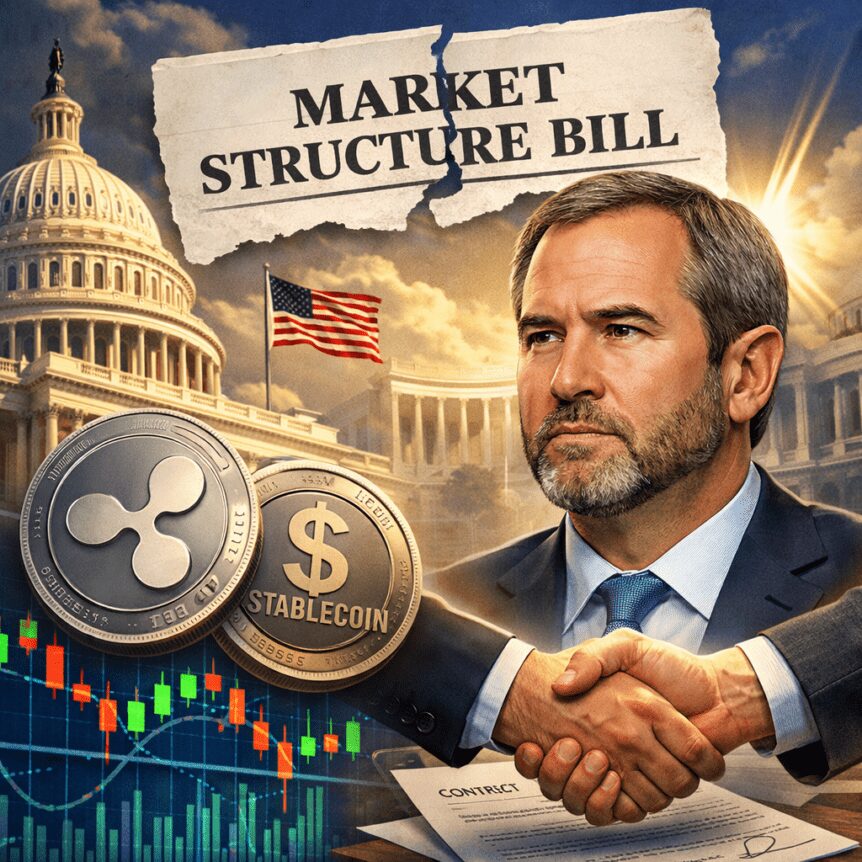
Brad Garlinghouse, chief executive of Ripple, warned that gains toward enacting the US Senate’s digital asset market structure framework may not translate into actual passage. Speaking at the Consensus crypto conference in Miami, Garlinghouse stressed that the next two weeks would be pivotal for the CLARITY Act, suggesting the political dynamics surrounding the measure could erode momentum during the calendar leading into the 2026 midterms.
Garlinghouse noted that while the CLARITY Act aims to bring regulatory clarity to the digital asset sector, no piece of legislation is without tradeoffs. He argued that clarity is preferable to chaos, even if the bill is not perfect, and underscored the broader objective of reducing uncertainty for market participants. According to Cointelegraph, his remarks reflect a broader industry push to finalize a comprehensive framework as lawmakers weigh competing concerns about stablecoins, tokenized assets, and ethics in the asset class.
Key takeaways
- The CLARITY Act’s prospects remain uncertain, with timing increasingly sensitive to political dynamics ahead of the 2026 midterm cycle.
- A compromise on stablecoin yield, announced by Senators Tillis and Alsobrooks, could influence momentum toward advancing CLARITY, though significant questions remain about broader market structure provisions.
- Regulatory oversight coordination between the SEC and CFTC persists as a parallel track, with officials signaling that legislation remains a prerequisite for a comprehensive enforcement framework.
- Ripple and other industry participants have engaged in informal negotiations involving the White House and financial regulators, highlighting the high-stakes negotiation environment surrounding crypto regulation.
Legislative trajectory for the CLARITY Act
At Consensus, Garlinghouse framed the CLARITY Act as a priority rather than a future consideration, aligning with ongoing parliamentary activity. The measure has already progressed through the Senate Agriculture Committee in a January markup and now requires action by the Senate Banking Committee before it can reach a full chamber vote. The evolving political calculus—particularly in the context of primary campaigns and the 2026 elections—raises the risk that the bill could lose momentum if not pushed decisively in the near term.
Senator Cynthia Lummis, a member of the banking committee, has publicly pressed for congressional action, emphasizing that the entire industry operates under a cloud of legal uncertainty that only Congress can dispel. While praise for the bill’s intent exists, critics point to the need to balance consumer protection, market integrity, and innovation incentives as part of any final package.
Beyond the legislative text itself, the negotiations have encompassed a broader set of policy questions—stablecoins, tokenized equities, and ethics—areas that have been sticking points delaying movement in the Senate since the House of Representatives passed the measure in July 2025. The latest signals indicate a potential path forward if adjacent provisions on yield and asset classification can be reconciled with a regulator-friendly framework that still preserves investor protections.
Regulatory coordination and oversight posture
Even as Congress contemplates the CLARITY Act, executive-branch and agency actions continue to shape the regulatory landscape. In March, the U.S. Securities and Exchange Commission (SEC) and the Commodity Futures Trading Commission (CFTC) signed a memorandum of understanding to coordinate their oversight of the evolving digital-asset market structure. Officials describe this interagency collaboration as a practical step in aligning approaches to market infrastructure, enforcement priorities, and investor protection, pending a broader legislative foundation.
As part of the stakeholder dialogue, SEC leadership has framed crypto regulation as an ongoing process rather than a finished product. The agency has signaled that approval of the CLARITY Act would inform and accelerate its rulemaking and enforcement posture, enabling a more predictable environment for regulated entities and registered market participants.
These developments underscore a critical point for institutions weighing regulatory risk: even with interagency coordination in place, a clear, enacted framework remains essential to reduce legal ambiguity for exchanges, banks engaging in crypto-related services, and other market infrastructure providers. The interagency momentum, while helpful, still leaves substantive questions about licensing, capital requirements, and customer due diligence unresolved in the absence of final congressional action.
Broader policy context and industry impact
The CLARITY Act sits at the intersection of innovation, investor protection, and financial stability. Its fate bears directly on how crypto firms structure licensing, compliance, and cross-border operations in a landscape where different jurisdictions pursue divergent approaches. For institutions involved in tokenized assets, stablecoins, or crypto-enabled banking services, the legislation could translate into clearer standards for registration, reporting, and customer verification, thereby aiding risk management and regulatory alignment.
From a compliance perspective, the bill’s trajectory matters for AML/KYC frameworks, know-your-customer regimes, and the governance of stablecoins tied to fiat or other reserve assets. Analysts and legal teams will be watching how the bill addresses collateral standards, reserve custody, and disclosure requirements, as well as how it interfaces with existing banking relationships and payment rails. The conversation also intersects with cross-border policy movements, including the European Union’s MiCA framework, which serves as a regional reference point for market structure and stablecoin oversight.
Within the political economy of regulation, industry stakeholders argue that timely clarity is essential to reduce the systemic risk that arises from fragmented supervision and inconsistent enforcement signals. Yet the practical path to a final bill remains constrained by competing sector interests and the broader electoral calendar. As negotiations continue, market participants should prepare for continued uncertainty and scenario planning around licensing timelines, regulatory approvals, and potential transitional rules.
In summary, the forthcoming weeks will test whether legislative action on the CLARITY Act can outpace political headwinds and regulatory tensions. While interagency coordination provides a supportive backdrop, the ultimate resolution will hinge on Congress delivering a comprehensive, workable regime that aligns with enforcement priorities, investor protections, and the evolving structure of the crypto markets.
Closing perspective: The path to a binding framework remains unsettled, and stakeholders should monitor congressional calendars, committee chair statements, and any new interagency guidance that could shape the timing and scope of a final bill. The balance between regulatory certainty and policy flexibility will define the next phase of the US digital asset regime.

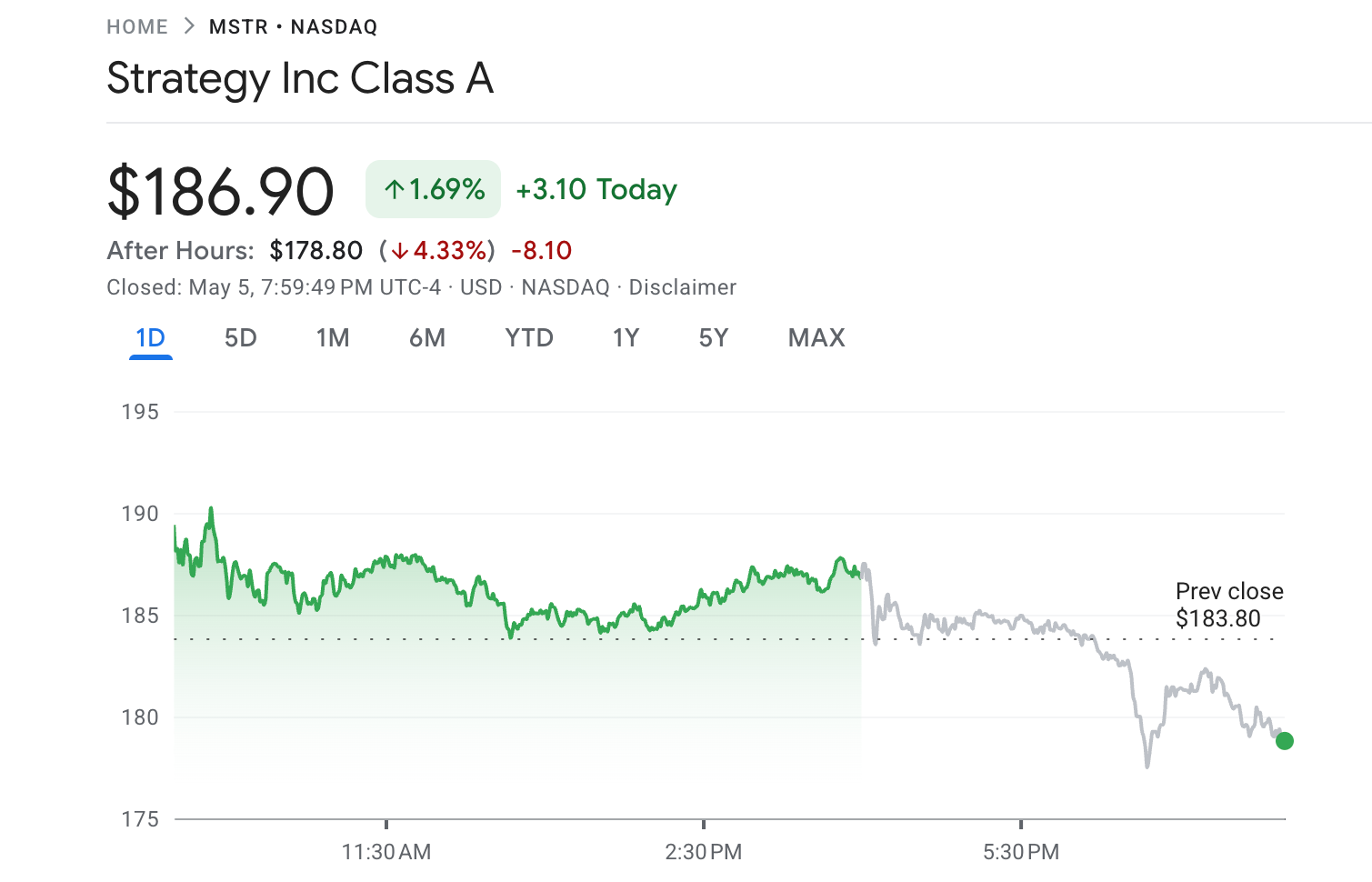
MicroStrategy shares fell after executive chairman Michael Saylor suggested that the firm may sell some Bitcoin (BTC) to fund dividend payments.
“We will probably sell some Bitcoin to pay a dividend just to inoculate the market and send the message that we did it,” he said.
Saylor explained that the strategy involves using credit to accumulate Bitcoin, allowing the asset to gain value over time, and then liquidating a portion when needed to fund dividend payouts.
“You buy bitcoin with credit, you let it appreciate, and then you sell bitcoin to pay the dividend,” he added.
The remarks reverse the company’s longstanding “never sell” position. The shift came during a Q1 2026 earnings call where Strategy reported a $12.54 billion net loss.
Follow us on X to get the latest news as it happens
MicroStrategy CEO Says Bitcoin Sales Are on the Table When Accretive
Meanwhile, CEO Phong Le said the firm would also consider selling Bitcoin “when it’s advantageous to the company.” He stressed that the company remains focused on being a net Bitcoin aggregator while prioritizing growth in Bitcoin per share, which he believes will be the most accretive to MSTR stock’s long-term value.
“Our ability to sell bitcoin either to buy U.S. dollars or sell bitcoin to buy debt if it’s accretive to bitcoin per share is something that we would consider doing going forward,” Le said. “We’re not going to sit back and just say, We’ll never sell the bitcoin.”
Google Finance data showed that MSTR closed up 1.69% at $186.9 on Tuesday. Shares reversed sharply after markets closed. MSTR dropped more than 4% in after-hours trading.

Strategy holds 818,334 BTC at an average cost of about $75,537. The firm is the largest publicly traded corporate holder of the asset. Polymarket traders now price a 48% chance that Strategy sells any of its BTC by December 31, 2026.
Subscribe to our YouTube channel to watch leaders and journalists provide expert insights
The post MSTR Shares Fall as MicroStrategy Weighs Potential Bitcoin Sale appeared first on BeInCrypto.


Figure Technology Solutions (FIGR), the blockchain firm helmed by former SoFi CEO Mike Cagney, is planning on taking on Fannie Mae and Freddie Mac in first-lien mortgages.
Speaking at Consensus Miami, Cagney cited origination costs of $1,000 on the firm’s blockchain platform against $11,000 through the GSEs, the federally chartered firms that buy mortgages from U.S. lenders.
The pitch combines cost and speed. Figure says HELOC applications get approved in 5 minutes and loans fund in 3 days, against an industry norm of 30-45 days.
The platform also gives originators a guaranteed buyer for the loans they make, the same role Fannie and Freddie play in the traditional system.
The first-lien market is 25 times larger than Figure’s existing second-lien HELOC business, which runs through 308 partner originators according to Cagney.
Cagney said the sub-$300,000 segment is the target because the fee structure that supports smaller GSE-channel loans does not work at Fannie and Freddie’s cost levels.
Cagney also said Figure’s HELOC tokens are the ninth-largest crypto asset on public blockchain by market value, passing roughly six weeks ago.
That number sits at the center of a fight over what counts as onchain. DeFiLlama founder 0xngmi argued in a September article that Figure’s claimed $12 billion in tokenized real-world assets is not visible in any meaningful sense on Provenance, the firm’s affiliated chain.
He documented roughly $5 million in BTC and $4 million in ETH on Figure’s exchange, plus $20 million in YLDS stablecoin supply. DeFiLlama tracks Figure’s TVL at about $140 million and has declined to count the larger figure.
Beyond that debate, margins reflect a shift away from balance-sheet lending. Figure’s adjusted EBITDA margin moved from 30% to 55% in 2025 as the firm pivoted to a marketplace model. Cagney guided to 80–85% over the next one to two years.
Revenue was $339 million in 2024 and $510 million in 2025, with sell-side estimates of $650 to $680 million for 2026. Figure crossed $1 billion in monthly originations for the first time in March.
Cagney also said Figure is in talks with Consensys’ MetaMask to integrate Democratized Prime, the firm’s DeFi protocol for lending against onchain mortgage and auto collateral.
He also announced a second listing on OPEN, Figure’s blockchain-native equity venue. The first listing was for Figure’s FIGR shares alongside a $150 million secondary offering.
Crypto World
Hyperliquid Price Prediction Stalls as Pepeto Goes Viral and the Presale Window Shrinks
Hyperliquid just activated prediction markets and logged $6 million in contracts on day one, but the Hyperliquid price prediction still has HYPE sitting 30% below the peak it set last September.
Product launches do not always spark immediate breakouts, and traders who recognize the pattern are scanning for entries where the math works on a different scale.
As a presale raising more than $9.78 million ahead of a Binance listing, Pepeto carries the rare mix of meme energy, working tools, and exchange backing that most tokens never assemble in one cycle.
Hyperliquid activated HIP 4 outcome markets on mainnet May 2, 2026, bringing prediction trading into the same accounts where users already run futures and spot positions according to Bitcoin.com.
The first contracts covered daily BTC price levels, and researchers tracked 6.05 million contracts in the opening session.
CoinDesk reported that Arthur Hayes called HYPE the competitive weapon against Polymarket because holders share directly in platform revenue. The prediction market sector hit $29.8 billion in monthly volume during April, and the Hyperliquid price prediction now factors in earnings from a completely new product line.
HYPE Forecast, Pepeto, and the Bigger Multiplier
Pepeto
While the HYPE forecast watches the token push from a $42.01 floor toward its old high, the distance is a 43% move inside a $10 billion cap, and that ceiling limits what new money can achieve. The shift toward presale entries where the listing itself creates the return is where the sharper math sits.
Pepeto has raised more than $9.78 million so far, and at $0.0000001868 per token the entry costs less than what most meme coins traded at on their worst day. The exchange behind the token solves problems traders deal with every session.
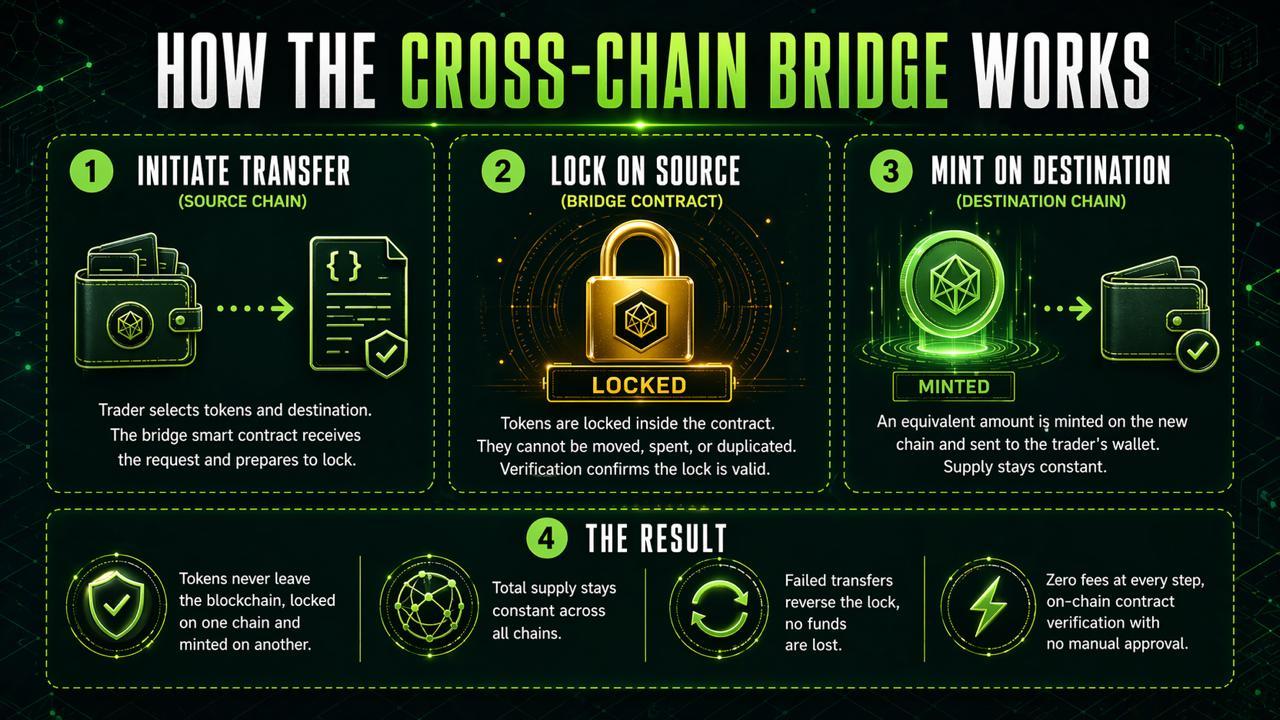
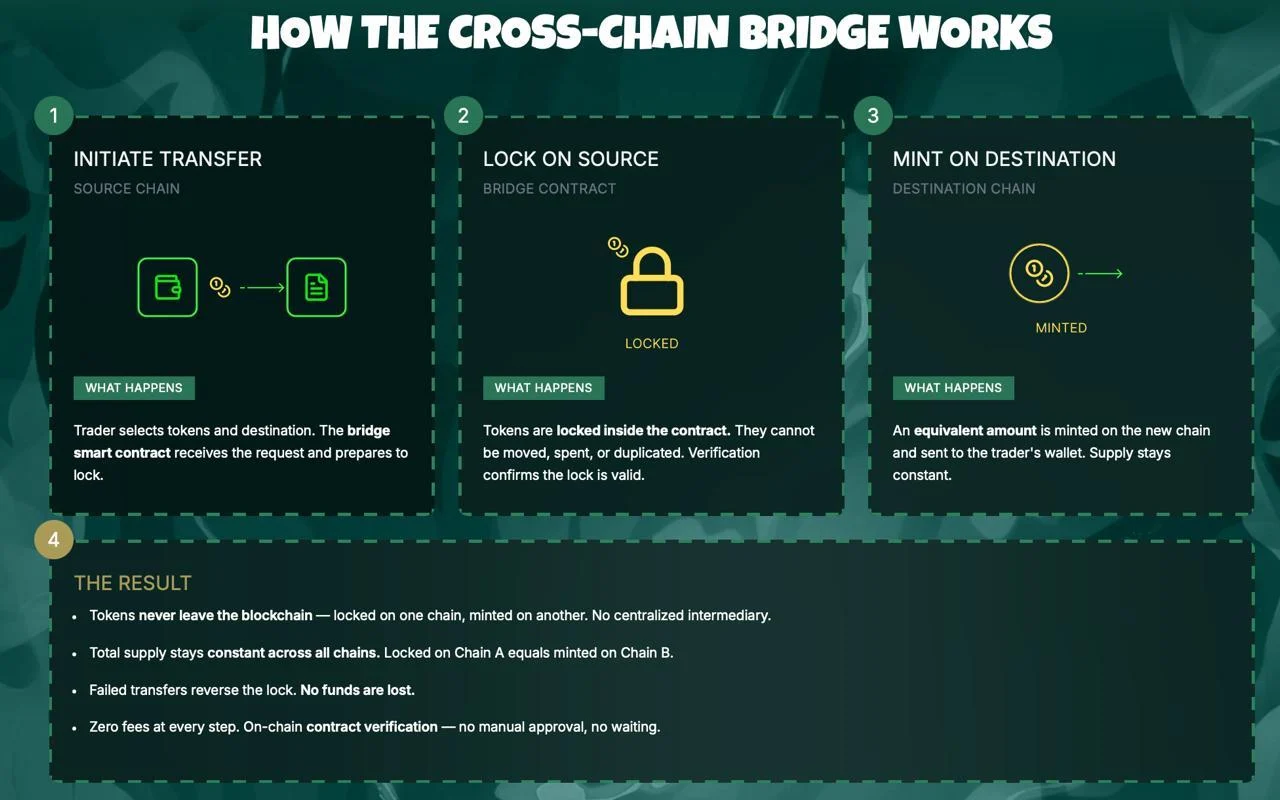
The bridge moves capital across chains at zero cost, so positions travel to the next opportunity without losing value on the way, and the token scanner audits every contract before money goes in, protecting wallets before a bad token can drain them.
Every contract cleared a full SolidProof audit before the presale opened, and that step came before the millions started flowing. Locking tokens through staking earns 176% APY while the presale remains active. Analysts project that the HYPE forecast crowd watching the token grind slowly would multiply faster by entering Pepeto before the listing removes the presale floor for good.
Hyperliquid Price Prediction: Can HYPE Reclaim Its September Peak?
HYPE trades at $42.01 on May 5, 2026, roughly 30% below the $59.37 record from September 2025 per CoinMarketCap. Support holds near $40, and analysts mark $44 as the resistance that must break for real momentum. CoinCodex targets a 2026 high near $175 in its bullish case, while DCo research sets fair value at $72.
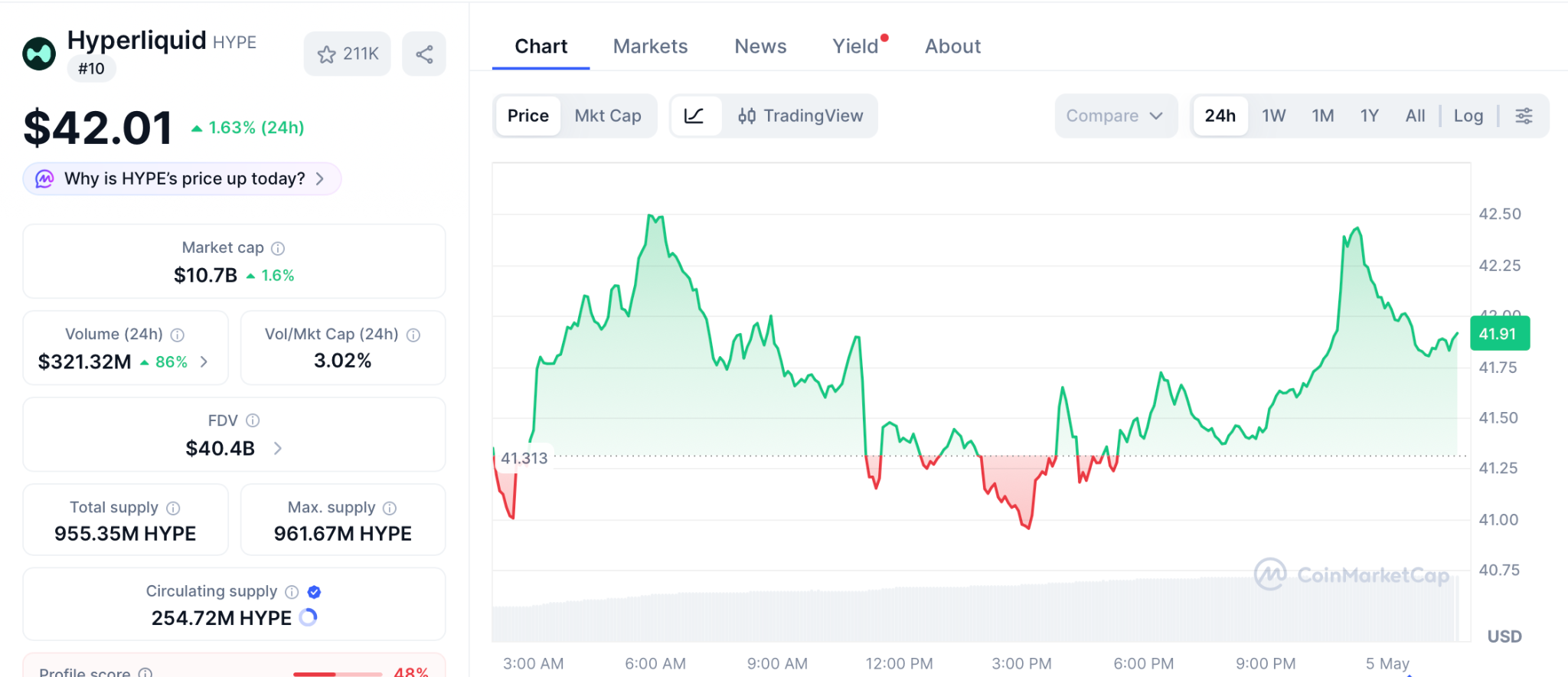
The Hyperliquid price prediction has real backing. The platform handles over $6 billion in daily futures volume, HIP 4 brings prediction market fees, and a governance vote to burn roughly $1 billion in HYPE tokens passed this year.
A confirmed break above $44 opens the path toward $50 and then the old peak. The downside risk is continued sideways action between $38 and $42 if demand stays flat.
Conclusion
Following the HYPE forecast means watching the token push from $42.01 toward $59, a strong move but one that still needs months to play out inside a $10 billion cap.
Meanwhile, meme energy backed by live exchange tools and a Binance listing approaching is the rarest combination crypto produces in any given cycle, and $9.78 million from wallets that already picked a side tells you the smartest capital is not waiting for HYPE to break $44.
The Pepeto official website is where the presale entry remains available, but that entry vanishes the second trading opens, and no one outside the presale knows the exact day. The wallets inside are not guessing, because meme coins built by proven founders with real products and Binance backing do not stay at these prices once trading begins.
A $1,000 entry at presale price turns into a position worth multiples the day the first exchange candle opens. Everyone else will open a chart that morning, see the listing price, divide it by $0.0000001868, and feel the full weight of what not buying actually cost them in dollars they could have had.
Click To Visit Pepeto Website To Enter The Presale

FAQs
What is the current Hyperliquid price prediction for 2026?
HYPE trades near $42.01, down 30% from its $59.37 all time high, with $44 resistance as the key breakout level. HIP 4 prediction market revenue and a token burn worth roughly $1 billion could tighten supply and push the Hyperliquid price prediction higher through 2026.
Why is the Pepeto presale attracting Hyperliquid price prediction followers?
Pepeto has $9.78 million raised at $0.0000001868 per token, backed by a SolidProof audit, a fee free trading hub, and a Binance listing on the way. The gap between presale price and listing price offers multiplier upside that HYPE at a $10 billion cap grinding toward $59 simply cannot produce.
Disclaimer: This is a Press Release provided by a third party who is responsible for the content. Please conduct your own research before taking any action based on the content.

Crypto World
The Cryptocurrency News That Has Pepeto Wallets Growing While XRP and BNB Wait for Direction
The biggest cryptocurrency news this week is not about a price move. Japan’s Financial Services Agency approved digital assets for inclusion in regulated pension portfolios, opening a pipeline of institutional capital that the market has waited years to see.
XRP and BNB both reacted with modest gains, but neither moved the way the headline deserved because large caps price in adoption slowly.
Pepeto passed $9.78 million in presale funding with a Binance listing approaching, and the wallets that searched for this headline found what smart money already discovered weeks ago.
Reuters reported that Japan’s Financial Services Agency finalized rules allowing regulated pension funds to hold up to 5% of their portfolios in digital assets starting July 2026. The Block confirmed Japanese exchanges saw a 41% volume spike within hours of the announcement.
The ruling makes Japan the first G7 nation to give pension managers direct crypto exposure, and analysts estimate it could funnel $14 billion into the market over 12 months. The cryptocurrency news sparked a broad rally, but the biggest beneficiaries may be entries that have not listed yet.
Where Pepeto, XRP, and BNB Stand After the Japan Ruling
Pepeto ($PEPETO)
Institutional doors opening is what turns presale entries into positions everyone wishes they held, and Pepeto is the entry absorbing that energy now with the credentials to back it. Analysts forecast 100x gains for Pepeto ahead of year end because the presale sits where the price meets real demand for the first time at listing.
The $9.78 million entered the presale because that capital tracks working tools already running before the token reaches public markets. With 96.6% of the target filled, Pepeto moves toward a Binance listing powered by a swap engine that processes zero fee trades and a cross-chain bridge linking blockchains at zero transfer cost.
The developer who took the original Pepe token to $11 billion on no product and the same 420 trillion total leads Pepeto.
SolidProof cleared every contract before the presale went live, and a Binance specialist guides the build. Pepeto trades at $0.0000001868 with 175% APY staking for holders ahead of listing. The Pepeto presale is that same kind of early discovery, and the entry ends when the token goes public.
XRP
XRP trades near $1.39 after a modest gain on the Japan ruling per CoinMarketCap data. Ripple’s cross-border payment network could benefit from pension inflows, but XRP sits 61% below its $3.65 all-time high from July 2025 and has struggled to break higher.
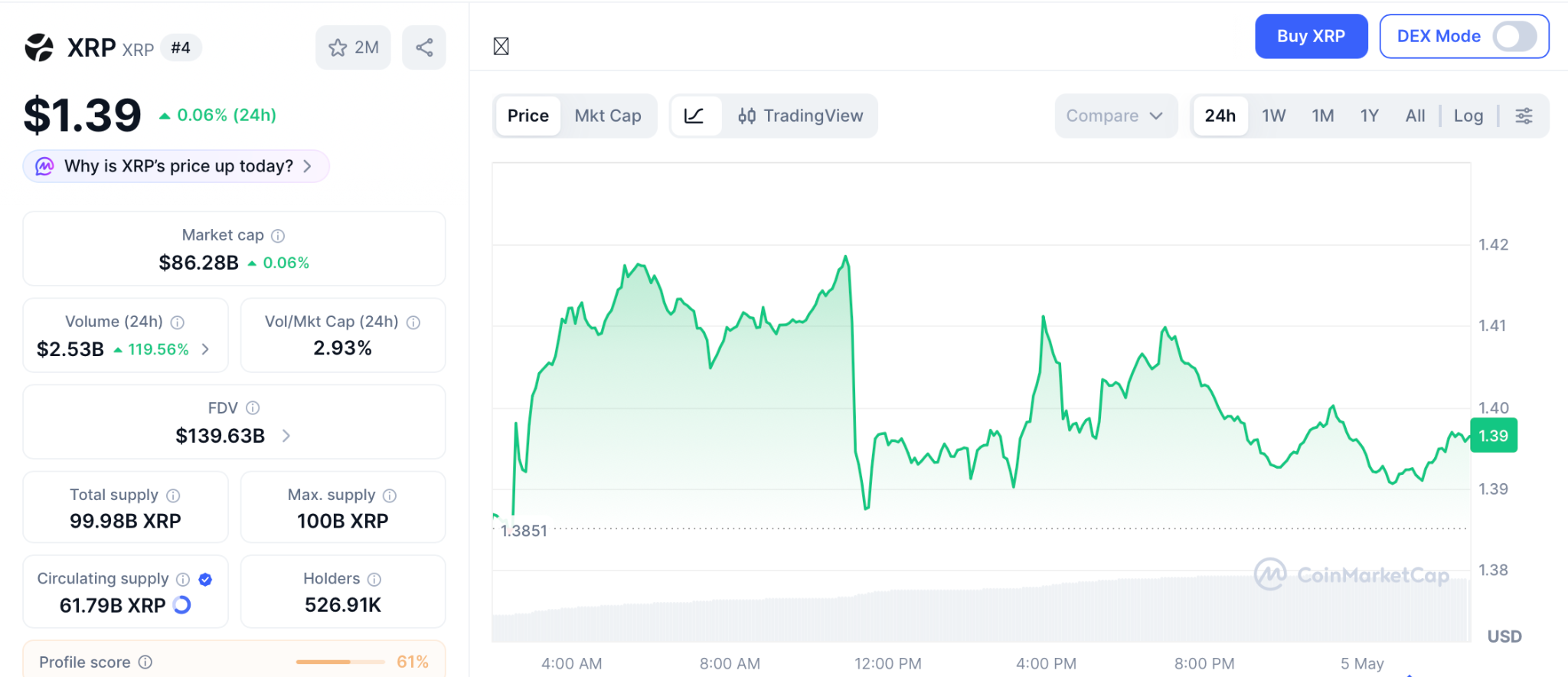
Analysts target $2.00 to $2.50 by year end, which represents a solid gain from current levels. Pension capital entering XRP would add to volume, but the return ceiling from $1.39 cannot match what presale entries deliver once a listing arrives.
BNB
BNB holds at $627 after a steady week following the Japan ruling per CoinMarketCap data. The Binance token benefits from exchange activity, and Japanese pension capital could increase trading volume across the board. Analysts project BNB reaching $750 by Q4, a 20% move from here.
BNB provides steady growth, but that ceiling from $627 is a fraction of what presale math offers when the listing hits.
Closing Thoughts
The cryptocurrency news from Japan opened a door that sends billions into digital assets, but the tokens that gain the most from new capital are the ones that have not listed yet.
Pepeto fills that search because the math points to 100x from a live swap engine with $9.78 million behind it and a Binance listing on track for Q2 2026. The presale sits at 96.6% of its target, which means there is barely any time left to enter at the current price.
The Pepeto official website is where the presale still stands today. The moment the listing confirms, the $0.0000001868 price is gone forever, and the wallets that hesitated will be the ones reading cryptocurrency news about the returns Pepeto holders made. This is the kind of moment that separates the people who build wealth from the ones who talk about it.
Click To Visit Pepeto Website To Enter The Presale

FAQs
How does Japan approving crypto for pension funds change the cryptocurrency news outlook?
Japan became the first G7 nation to allow pension funds to hold up to 5% in digital assets, opening an estimated $14 billion pipeline over 12 months. The ruling boosts every crypto asset but gives the strongest advantage to presale tokens like Pepeto that have not listed yet.
What is the best crypto to buy before a Binance listing in 2026?
Pepeto leads the presale market before a Binance listing with $9.78 million collected, a SolidProof verified swap engine running, and a bridge that moves tokens across chains at zero cost. At $0.0000001868, the entry carries return room that XRP at $1.39 and BNB at $627 cannot offer.
Disclaimer: This is a Press Release provided by a third party who is responsible for the content. Please conduct your own research before taking any action based on the content.
Crypto World
Arbitrum Security Council Member Flags DeFi Risks After $72M North Korea Crypto Recovery

TLDR:
- Arbitrum’s Security Council froze $72M in stolen funds traced to North Korean wallets via a Kelp DAO bridge attack.
- Griff Green warns that leaked private keys and social engineering now pose greater threats than smart contract bugs.
- Aave and similar lending protocols are flagged for being too loose in managing liquid staking token risks.
- The recovered $70M will be redistributed to affected users through a decentralized Arbitrum DAO token holder vote.
Arbitrum Security Council member Griff Green has raised concerns about how lending protocols handle liquid staking tokens.
Green, a veteran of the 2016 Ethereum DAO hack, flagged operational security gaps across decentralized finance. He spoke following the recovery of $72 million in stolen crypto assets linked to North Korean hackers.
The incident involved a Kelp DAO exploit that affected Aave and resulted in roughly $300 million in stolen tokens via a bridge attack.
Arbitrum Council Steps In to Freeze Stolen Funds
The Arbitrum Security Council acted swiftly after tracing $72 million to North Korean-controlled wallets. The council operates as a nine-of-twelve multi-signature group with emergency intervention powers.
Working alongside the Seal 911 team, the council froze the stolen funds in a new address. That address remains inaccessible to the attackers, effectively halting any further movement.
Green noted this was the first time the council used its powers to freeze funds directly. Previously, those powers covered protocol upgrades and bug fixes only.
The action drew on social consensus rather than code immutability. Green referenced the 2016 Ethereum DAO hard fork as a precedent for this kind of intervention.
On the nature of blockchains, Green was direct: “Blockchains are not immutable and can be altered through social consensus.”
He pointed to the Ethereum DAO hard fork as proof that the community can act when needed. This time, however, the stakes involved another party’s funds rather than his own. That distinction made the recovery effort feel less personal but no less urgent.
The recovered $70 million will now fall under Arbitrum DAO governance. Token holders will vote on how to redistribute those funds to affected users.
This approach reflects decentralized governance in practice. It also sets a precedent for how stolen funds may be handled in future incidents.
Green Calls Out Weak Operational Security Across the Industry
Green stated that smart contract bugs are no longer the biggest threat facing crypto. Instead, he pointed to operational security failures such as leaked private keys.
North Korean actors, in particular, rely heavily on social engineering tactics. These methods bypass code-level protections entirely and target human vulnerabilities.
Addressing the broader security gap, Green warned that the industry must match the standards of mature tech companies.
He observed that attackers like North Korea “often rely on social engineering rather than smart contract exploits.” That shift in tactics means technical audits alone are no longer sufficient. Teams must also harden their internal processes and access controls.
Green also addressed how lending protocols like Aave approach liquid staking tokens. He believes these platforms are “too loose with liquid staking tokens” and overlook underlying technical risks.
That oversight creates exposure that bad actors can exploit through bridge attacks. Tighter risk frameworks around these assets would reduce that vulnerability significantly.
Looking ahead, Green supports ongoing efforts like the DAO Security Fund. This initiative aims to identify and support critical security projects across Ethereum.
Stronger infrastructure benefits the broader ecosystem over time. Making crypto safe and accessible for everyday users remains the long-term goal.
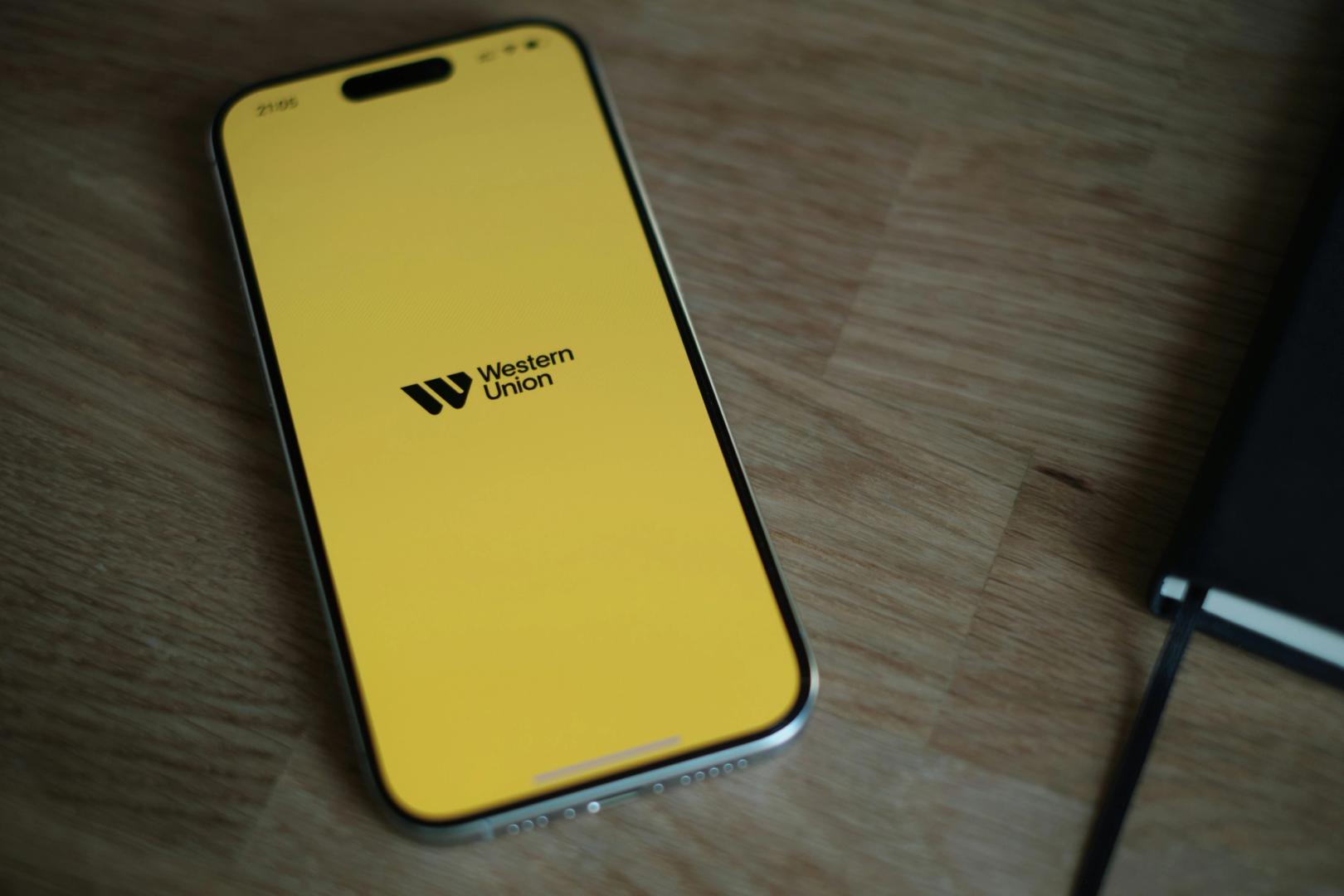
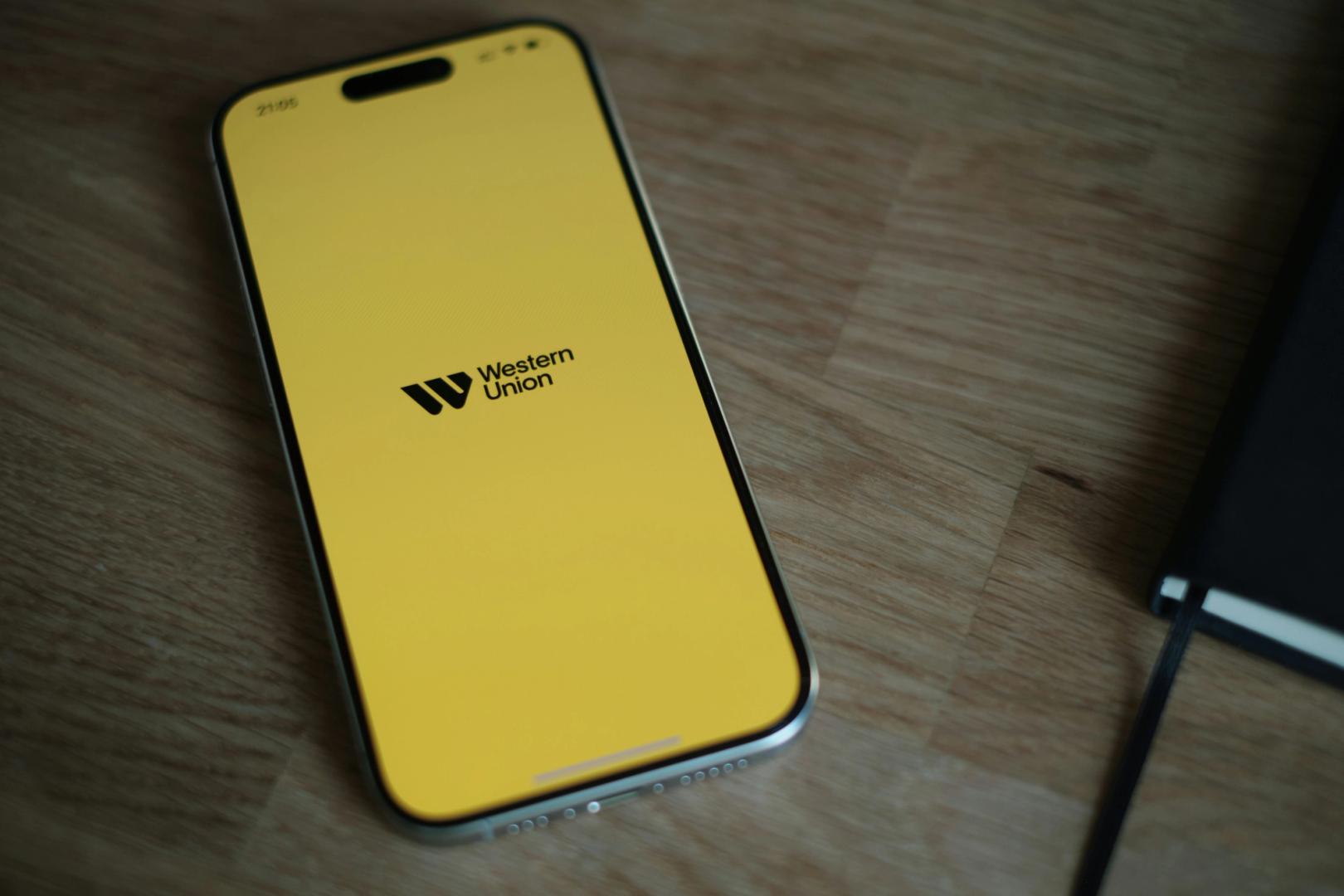
Western Union’s new Solana-based stablecoin, USDPT, may do more than speed up money transfers. It could also weaken the old lines between remittances, consumer payments and bank settlement, according to Angus Scott, founder of the Solana Research Institute, a Solana Foundation-backed body.
Western Union launched the U.S. dollar-backed stablecoin issued by Anchorage Digital Bank N.A. on Monday. The company said the token will support 24/7 settlement with agents and partners across its global payment network. The launch follows Western Union’s April disclosure that USDPT would initially replace SWIFT-based interbank settlement with its agents.
Scott told CoinDesk the launch is another sign that stablecoins are starting to challenge older payment models.
“Western Union’s adoption of Solana-based stablecoins is another point of proof that stablecoins are becoming highly disruptive to traditional payments business models,” Scott said.
The key point, he added, is that Solana can handle both small consumer payments and large settlement flows. Low fees make it possible to use a stablecoin for small purchases, and fast settlement, coupled with 24/7 operations, can also help firms move money between agents without waiting for correspondent banks.
Scott said that could let Western Union pool idle balances and manage cash across its network in real time. Businesses that accept USDPT could do the same with customer payments.
“The Western Union model appears to be breaking down the barriers between remittances, payments and wholesale settlements via correspondent banks,” Scott said. “How this plays out will be one of the key themes of the next few years.”


Miami Beach, FL — Morgan Stanley’s newly launched spot bitcoin exchange-traded fund (MSBT) has attracted over $200 million in early demand, and it’s largely without help from its own advisors.
“Almost all of that first week or two of activity was self-directed, meaning it was not our advisors that were selling this,” Amy Oldenburg, the bank’s newly appointed head of digital assets, said during a fireside chat at Consensus in Miami.
The fund, just a few weeks old, has already gathered more than $200 million in assets, an unusually fast start in the traditional ETF market, where most launches struggle to gain traction over a short period of time. Oldenburg said the flows reflect individual investors making their own allocation decisions rather than relying on financial advisors.
The dynamic points to a broader shift.
Crypto exposure is no longer limited to niche or speculative corners of the market. Instead, investors who may already hold digital assets directly are now moving some of that capital into regulated products.
Oldenburg noted “how much activity that we’re fielding in terms of spot crypto holders that are also looking to put assets into ETPs,” describing a transition from decentralized holdings to more traditional investment vehicles.
‘Hybrid world’
However, Morgan Stanley is not betting on a single format. The firm plans to support both ETF access and direct crypto ownership, including spot trading on its wealth platform later this year.
“We’ll live in a hybrid world for quite some time, where we’ll be supporting both the digital native and the traditional business all in one,” Oldenburg said.
That approach reflects a practical challenge facing large financial institutions: clients increasingly hold both stocks and crypto, often across disconnected systems. Bringing those assets into a single view remains a work in progress.
Beyond the ETF, Oldenburg said the bank is exploring how digital assets could reshape market structure more broadly, including faster settlement and tokenized financial products.
“We’re not tokenizing for the sake of tokenizing,” she said. “Ultimately, we want to provide the client more value and better service.”
The effort is part of a longer-term shift rather than a short-term trend. “This isn’t a 2026 project or 2027 project. This is the next decade,” she added.


OnRe Finance raised $5M from Forward and RockawayX as Forward prepares up to $25M into ONyc, scaling Solana-based, tokenized reinsurance with DeFi integrations.
Summary
- OnRe Finance, a regulated on-chain reinsurance firm built on Solana, has completed a $5 million funding round co-led by Forward Industries and RockawayX.
- Forward plans to deploy up to $25 million into OnRe’s ONyc token, a yield-bearing Solana asset that gives holders exposure to tokenized reinsurance returns.
- Proceeds will be used to scale OnRe’s Solana-based reinsurance pools, expand underwriting capacity, and deepen integrations with DeFi protocols across the ecosystem.
OnRe Finance said it has closed a $5 million strategic funding round to accelerate development of its tokenized reinsurance platform on Solana, with the raise co-led by Solana-focused treasury company Forward Industries and multi-strategy digital asset firm RockawayX.
Forward and Rockaway back on-chain reinsurance on Solana
According to the GlobeNewswire announcement, the capital will go toward expanding OnRe’s underwriting programs, hiring, and integrating its products more deeply into Solana’s DeFi stack.
Forward, listed on Nasdaq as FWDI, described the move as a “natural extension” of its Solana treasury strategy, which it says is shifting from relying solely on staking yield to adding “high-quality, real-world cash flows that are both complementary and uncorrelated.”
OnRe is licensed in Bermuda under both the Insurance Act and the Digital Asset Business Act, allowing it to accept digital assets as collateral for traditional reinsurance contracts and to pass through returns from a diversified book of underwriting risk to on-chain investors.
$25M ONyc deployment for tokenized reinsurance yield
Separately from the equity round, Forward said it “intends to deploy up to $25 million into ONyc,” OnRe’s yield-bearing RWA token on Solana, which turns stablecoins into reinsurance collateral and pays out returns from both reinsurance income and collateral yield.
ONyc pools are integrated with leading Solana DeFi venues and can be used as collateral for lending, borrowing, and looping strategies, effectively letting investors turn reinsurance-backed cash flows into composable on-chain capital.
Insurance industry coverage notes that OnRe has previously launched structured products like the ONe token, which targeted projected returns north of 30% by combining reinsurance performance, collateral yields, and token incentives, leveraging the $750 billion global reinsurance market as a base.
RockawayX, an early Solana backer and investor in more than 15 Solana ecosystem projects, has argued that OnRe’s model can “generate the same revenue from $10 million in TVL as a $500 million money market fund” because reinsurance premiums and collateral income stack in a capital-efficient way.
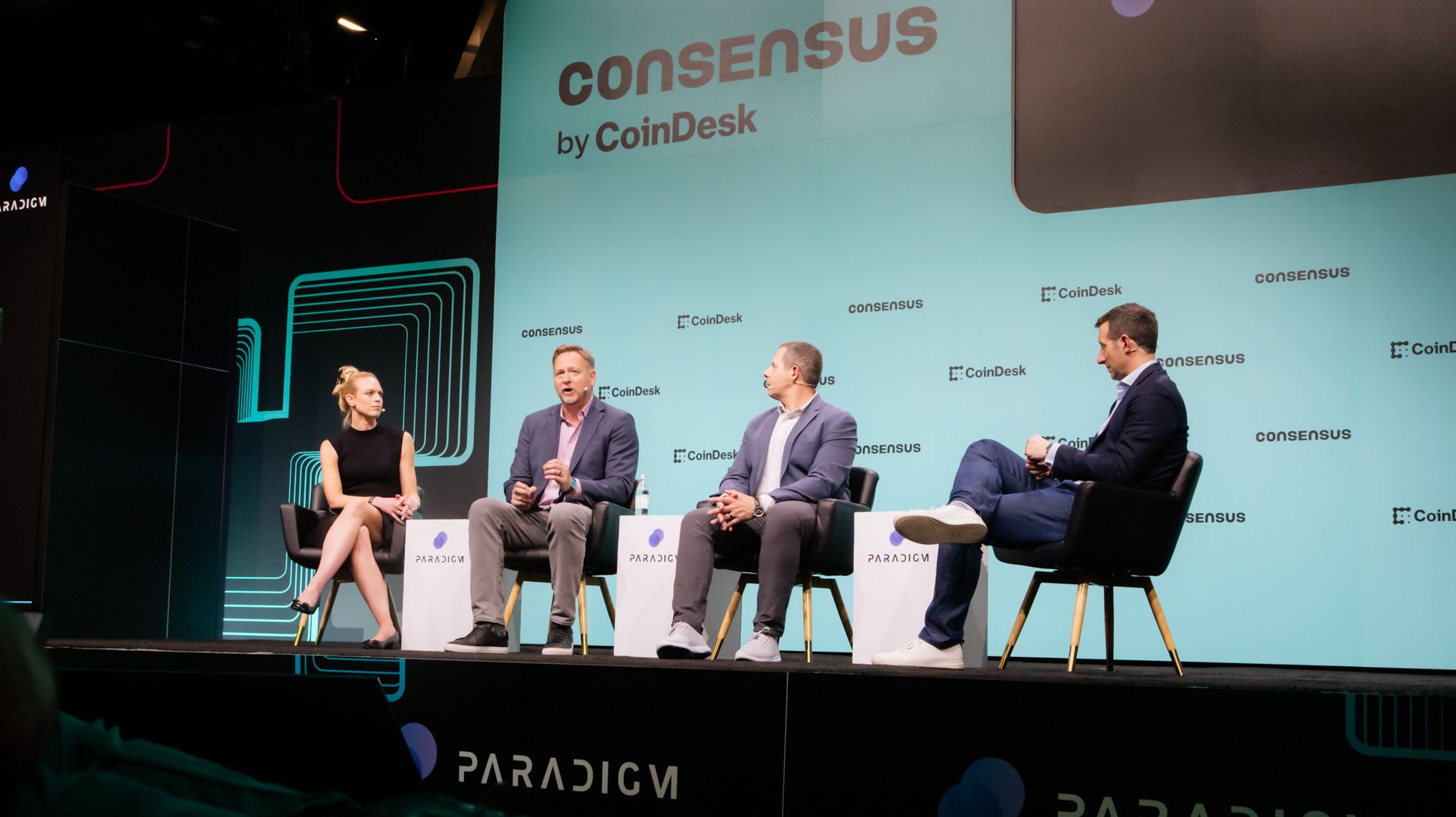
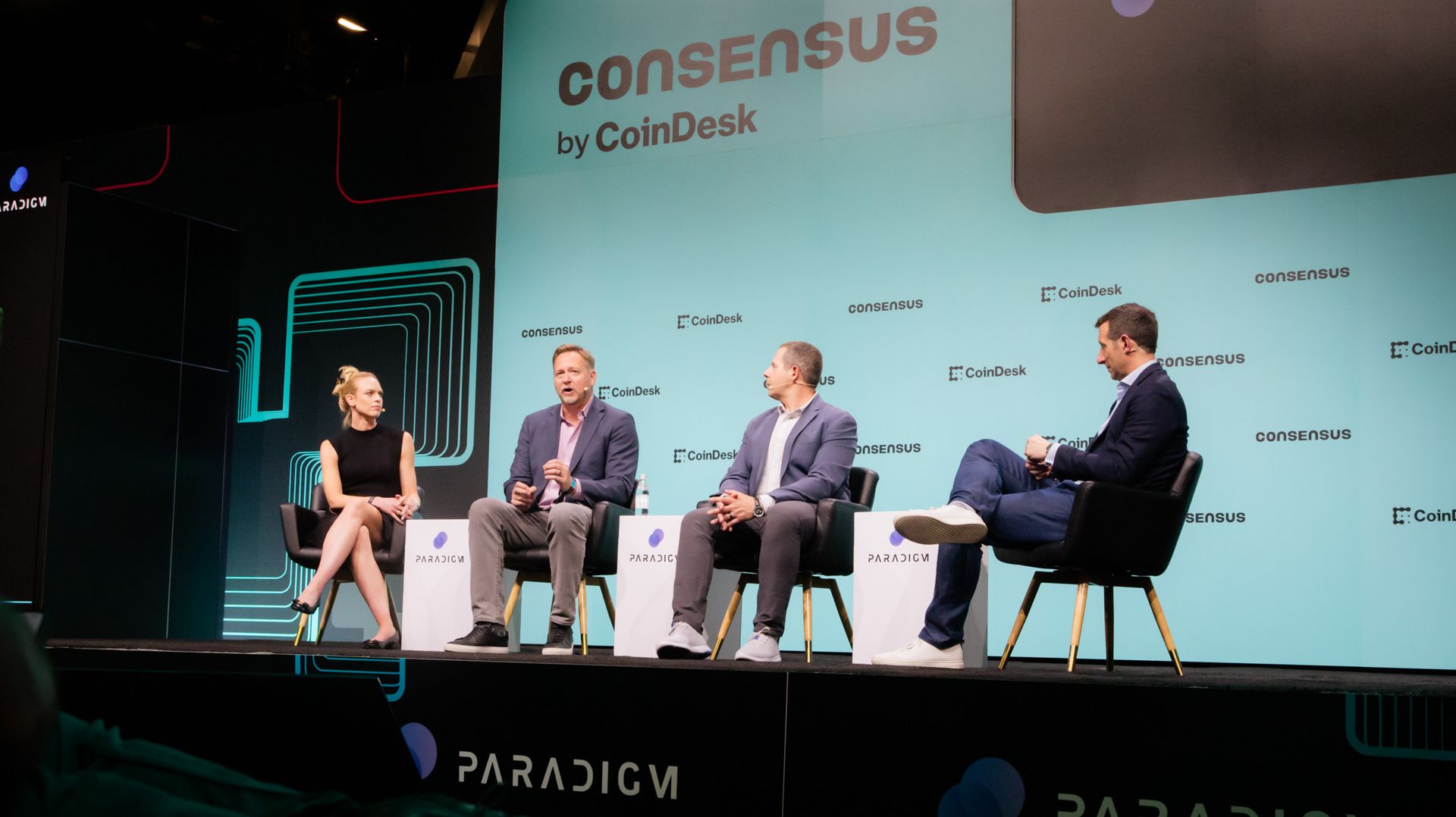
Miami Beach, FL — “The market is the market… it’s not crypto and traditional anymore,” said Dave LaValle, President of CoinDesk Indices and Data, on a panel at Consensus Miami Tuesday, capturing a shift echoed across issuers and asset managers.
As traditional finance firms pour in, Douglas Yones of Direxion argued that institutional participation is “good for the industry,” bringing standardization and discipline to processes that were once fragmented.
That institutional layer is also unlocking global access. In regions where spot crypto remains restricted, particularly across parts of Asia, ETFs have emerged as the primary on-ramp.
“ETFs are a plug-and-play solution,” said Krista Lynch, SVP of ETF Capital Markets at Grayscale, noting they fit seamlessly into existing risk systems that can’t accommodate direct bitcoin exposure.
The result is rapid adoption. Lynch points to surging demand for features like in-kind redemptions and collateral usage, while Steven McClurg, CEO of Canary Capital, highlights a simpler appeal: security and liquidity. “Some investors would rather hold an ETF and let issuers handle custody,” he said.
Where the market goes next is already taking shape. Index-based products are poised to organize a growing universe of assets, while staking and income-generating strategies could define the next wave. Tokenization, though promising, remains in its early stages, according to McClurg.
Still, the direction is clear: ETFs aren’t just expanding crypto access, they’re redefining how the asset class is structured, distributed, and owned globally.
Read more: Recovery in bitcoin ETF inflows is real. It is just not complete yet.
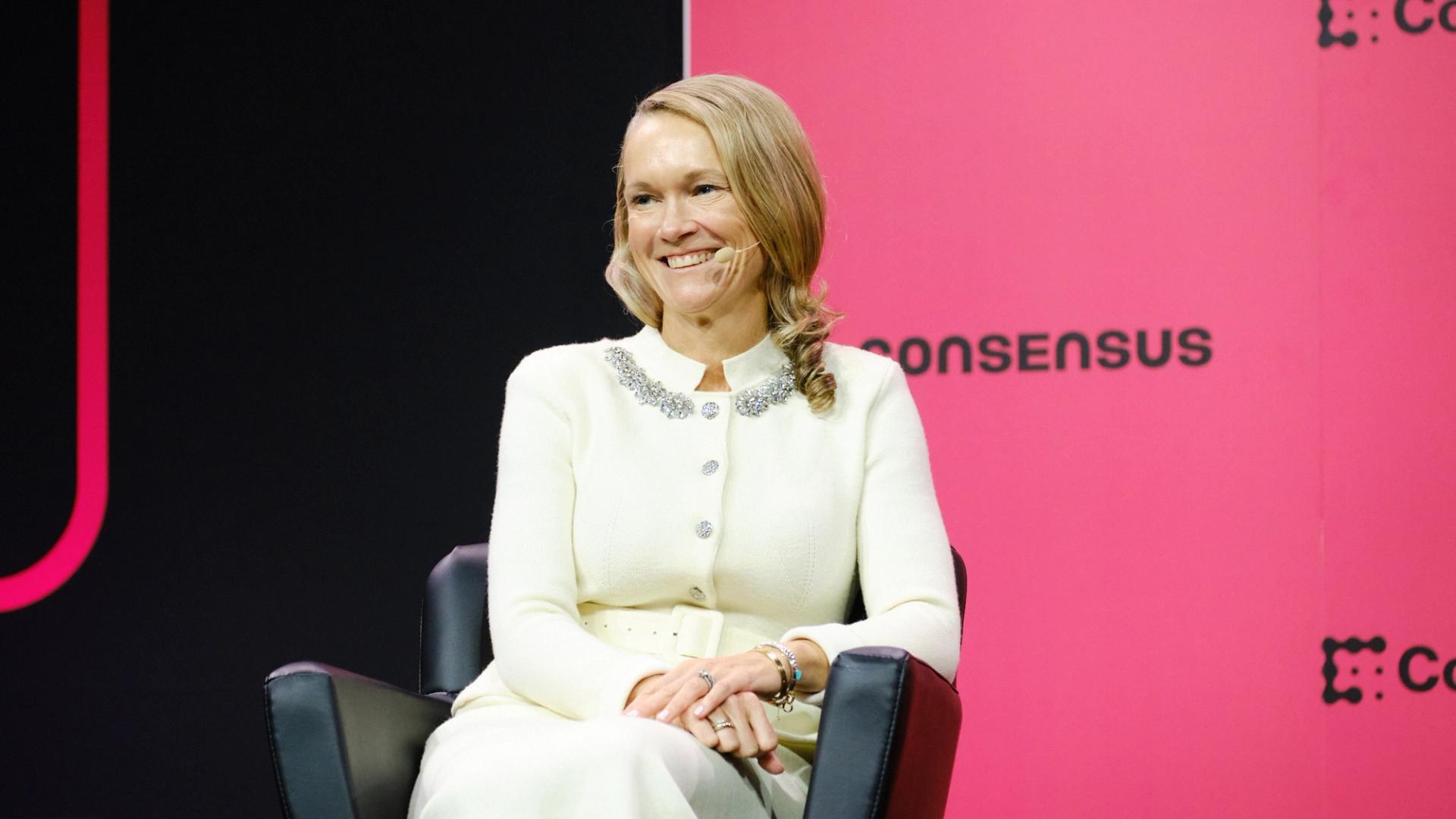
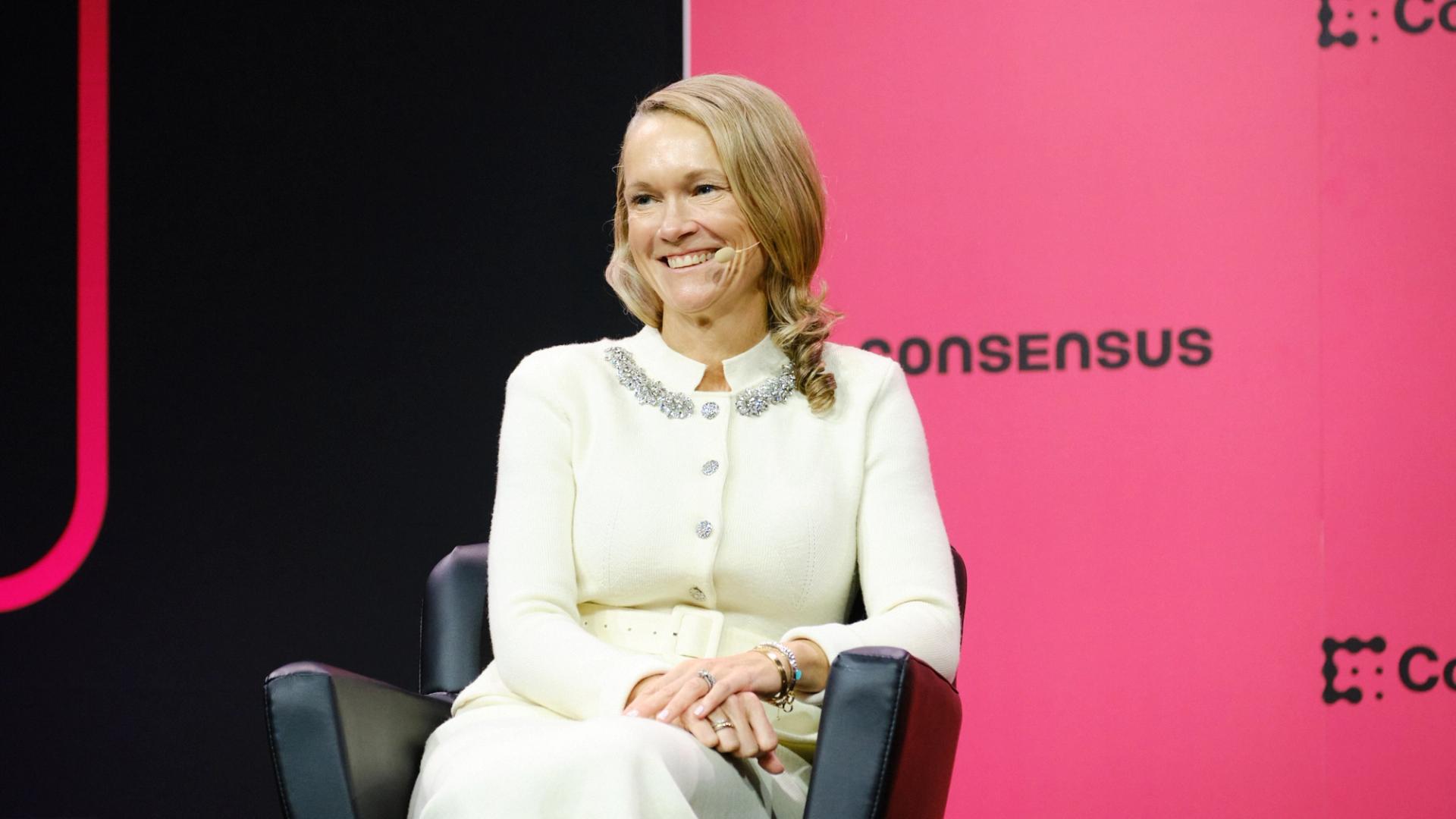
Miami Beach, FL — Tokenized money will fail to deliver on its promise if it remains siloed within individual banks, according to Ryan Rugg, Citigroup’s head of digital assets for treasury and trade solutions.
Speaking at Consensus in Miami, Rugg said large corporate clients are not looking for single-bank solutions but systems that work seamlessly across financial institutions. “No one wants just a Citi token,” she said. “They want that multi-bank aspect of it.”
The comment reflects a core challenge in the push to bring blockchain-based payments into mainstream finance. While banks have begun issuing tokenized deposits and building internal platforms, many of those systems operate within closed networks.
For global companies, that approach falls short. Rugg said Citi’s clients often manage “hundreds, if not thousands of bank accounts across multiple banks globally,” creating complexity in moving money for payroll, suppliers and investments.
Those clients are increasingly asking for real-time capabilities. In a survey Citi conducted several years ago, Rugg said the response was “basically unanimous” that faster, always-on payments were a top priority.
Blockchain technology offers one path to that goal, but only if systems can connect. Citi has built its own tokenized platform and linked it to its broader banking network, including a 24/7 U.S. dollar clearing system with more than 300 banks. Still, Rugg emphasized that internal upgrades alone are not enough.
“This is another tool in the toolkit,” she said, adding that banks must also modernize traditional infrastructure and connect it with digital systems.
The broader industry faces fragmentation. A growing number of banks, fintech firms and crypto projects are building separate networks, often using different standards. That risks recreating the same inefficiencies blockchain aims to fix.
Rugg argued that shared infrastructure — built “for the industry, by the industry” — will be key to scaling tokenized finance, citing models such as Swift’s global messaging network.
At the same time, regulation remains a constraint. Large banks require clear legal frameworks before rolling out new products. “Unless it is 100% permissible, we are not going to do that,” Rugg said.

iPhone users will select their preferred AI model in iOS 27

Cost of Capital fm revision, cost of capital fm in hindi, Financial Management, BBA, MBA, UGC NET

Prince William visits Crow Tree Farm near Richmond

Manchester United reach agreement with Casemiro over contract clause amid transfer speculation

US brings back mandatory military draft registration

Steven Gerrard disagrees with Gary Neville over ‘shock’ Chelsea and Arsenal claim | Football
Cost of Capital fm revision, cost of capital fm in hindi, Financial Management, BBA, MBA, UGC NET

War on Iran: US seizes $450m in Iran crypto in ‘maximum pressure’ campaign

#goldsavingtips #moneysavingidea #money #moneysavinghacks #tamil#monthlybudgetplanning
-

 NewsBeat2 days ago
Channel 5 – All Creatures Great and Small series 7 new post
-
 Business6 days ago
Tesla Officially Registers Elon Musk’s Stock: What Investors Need to Know
-
 Tech4 days ago
Trump’s 25% EU auto tariff breaches Turnberry Agreement that also covers semiconductors and digital trade
-
 Sports4 days ago
Paul Scholes issues Marcus Rashford reality check as agreement emerges over Man United star
-

 Business7 days ago
Barclay Brothers Avoid Bankruptcy: HSBC Drops High Court Petitions After IVA Deal
-

 Entertainment4 days ago
Met Gala 2026 Rumored Guest List Is Turning Heads
-

 Entertainment6 days ago
Insider Claims Reason Behind Key & Peele Split
-

 Entertainment6 days ago
Celebrities Who Are Attending the 2026 Met Gala Event
-

 Crypto World6 days ago
Meta (META) starts stablecoin payout to creators in Circle’s USDC on Polygon, Solana via Stripe
-

 Business6 days ago
Strait of Hormuz Remains Heavily Restricted on April 29 Amid Iran Conflict
-
Business5 days ago
Strait of Hormuz Blockade Persists Amid US-Iran Standoff, Sending Oil Prices Soaring
-

 Tech6 days ago
Texas Instruments made a new flagship graphing calculator: the TI-84 Evo
-

 Business5 days ago
Two Powerball Tickets Split $143 Million Jackpot in Indiana and Kansas
-

 Sports4 days ago
Cavaliers vs. Raptors Game 6 live score, updates, highlights from 2026 NBA playoffs first-round series
-
 Sports4 days ago
David Benavidez responds to team Canelo saying the fight will never happen
-

 Sports6 days ago
Saudi Arabia set to withdraw LIV Golf funding after 2026 season, per reports
-

 Entertainment4 days ago
Kylie Jenner Hit With Second Lawsuit From Ex-Housekeeper
-
Entertainment4 days ago
New on Prime Video in May 2026 — Full List of Movies and Shows
-
Business3 days ago
Winning Numbers Drawn as Jackpot Resets to $20 Million
-

 Sports6 days ago
Arsenal, Atletico Madrid share draw after penalty drama in Champions League semi-final
You must be logged in to post a comment Login