Connect with us
DAPA Banner

Tech

Google’s AI Search Results Will Now Turn To Reddit For Expert Advice

Published

on

Google is updating AI Overviews and AI Mode, the AI-generated portions of its search engine, to highlight sources in new ways, and interestingly, more prominently feature first-hand accounts from social media, expert blogs and forums like Reddit.

Via a new section that can appear in AI responses, Google will display “a preview of perspectives from public online discussions, social media and other firsthand sources.” In the sample screenshot the company provided, the section was called “Expert Advice” and included quotes from forums, WordPress blogs and Reddit. These were arranged above links to their respective sources. Google plans to add more context to these links, too, showing “a creator’s name, handle or community name,” so you can judge what you might want to click through and read from a glance.

Google will also start recommending in-depth articles at the end of AI responses for further exploration of a given topic, and link to more sources directly in its generated answers rather than just at the end. If you subscribe to any publications, AI responses will also highlight sources from the subscriptions you link to your Google account.

Given the rapid progress of AI in general, AI Overviews and AI Mode have been pretty consistently iterated on since Google launched them in 2024 and 2025, respectively. Pulling from Reddit and other online social platforms isn’t exactly a new strategy for the company, either — at least one early AI Overview hallucination was caused by information from Reddit. It is perhaps telling Google plans to cite the platform more prominently now, though, because Reddit is considered by some to be a more useful source of information than Google. Even more this update, the search engine has been prominently featuring Reddit links in standard search results.

Advertisement

Whether adding more links and recommending long-form reporting makes a meaningful difference for the dwindling number of publications Google pulls from is another story, however. As of 2025, Google claimed that its AI search tools were leading to more searches and more “high-quality clicks” on the websites it cites. Regardless of how much the company tinkers with its AI responses, though, one outcome of AI Overviews and AI Mode is the creation of scenarios where you don’t have to click away to another website at all, because Google answered your question for you.

Update, May 6, 5:30PM ET: This story was updated after publish to include information from Google that the title of the section is dynamic, rather than called Expert Advice.

Source link

Advertisement
Continue Reading
Click to comment

You must be logged in to post a comment Login

Leave a Reply

Tech

Microsoft’s AI data center push is colliding with its clean power goals

Published

on

Microsoft is weighing whether to delay or scale back one of its most ambitious clean energy goals as its rapid buildout of AI data centers puts pressure on its ability to meet those targets. Microsoft has yet to make any public announcements, but according to Bloomberg the company is having internal discussions over its hourly clean energy matching goal.

The tech company has said that by 2030 it intends to match 100% of its hourly energy use with clean power on the same grid. But Microsoft’s rush to build AI data centers has apparently sparked debate within the company about whether the pledge has become an impediment to its ambitions.

Microsoft declined to comment on the internal debate over the hourly matching goal. Instead, a spokesperson told TechCrunch the company continues “to look for opportunities to maintain our annual matching goal.”

Hourly targets like the kind Microsoft has set for itself are more rigorous than annual targets. Because the grid is a balanced system — the supply and demand of electrons needs to be matched on a near-instantaneous basis — hourly matching helps develop clean energy sources that more closely align with a company’s usage patterns.

Advertisement

Annual targets are more lenient. They are effectively accounting tricks that could, for example, let a company buy more solar power than it might use at midday. Other customers on the grid use that energy, but the company that paid for the solar panels gets to claim the renewable power they make. It’s a tidy arrangement that has sped the deployment of wind, solar, and batteries. But on its own, annual targets won’t eliminate fossil fuels entirely. Hourly targets help foster renewable development that more closely mimics how a true net-zero world would be powered.

Big tech companies like Microsoft, Meta, Google, and Apple have generally led on emissions reductions, setting aggressive net-zero targets. Many have eliminated their carbon emissions on an annual basis. Microsoft, for instance, said it met that goal last year.

But as data centers grow in size and number, those same companies are turning to natural gas. Microsoft is included in that list; last month, the company said it was working with Chevron and Engine No. 1 to build a massive natural gas power plant in West Texas that could eventually generate up to 5 gigawatts. 

Techcrunch event

Advertisement

San Francisco, CA
|
October 13-15, 2026

Despite the West Texas project, Microsoft is widely viewed as a leader among tech companies pursuing net zero emissions. By 2030, Microsoft intends to remove more carbon from the atmosphere than its operations produce.

Advertisement

Part of the company’s renewable push has been driven by an internal carbon tax. The Microsoft spokesperson did not reply to questions about the company’s carbon tax. If it remains in place, some of the internal debate surrounding hourly matching might revolve around a cost-benefit analysis of the shift.

If Microsoft were to abandon its hourly-matching target, the company would also lose some leverage in efforts to sell the public on its data centers. 

As data centers have proliferated, the general public has begun to push back against them, citing concerns over pollution, power prices, and water use. When Microsoft brings its own clean power to a project, it can plausibly say it has addressed two of those concerns. Without it, new data centers might be harder to sell to the public.

When you purchase through links in our articles, we may earn a small commission. This doesn’t affect our editorial independence.

Advertisement

Source link

Continue Reading

Tech

Womanizer Coupons: Save 15% in May

Published

on

Since 2014, Womanizer has been satisfying people with vulvas all over the world. Thanks to its revolutionary Pleasure Air Technology that mimics the feeling of oral sex, not only has Womanizer discovered a way to stimulate the 10,000+ nerve endings in the clitoris in a way that hadn’t been done by a sex toy before—yes, they were the first—but the brand can even boast a 100% orgasm rate among users.

As a company that puts sexual pleasure front and center, Womanizer has continued to add to their very impressive lineup of orgasm-inducing toys. They’ve even branched out by creating products like the Womanizer Duo and Womanizer Duo 2, both of which stimulate the clitoris and G-spot simultaneously. (Blended orgasm, anyone?) As recently as March 2025, Womanizer launched their latest toy, Womanizer Enhance, the first toy of its kind because it allows the user to choose between the Pleasure Air Technology or traditional vibrations. I was fortunate enough to review the Enhance for WIRED, giving it a 7/10 because of its ability to stand by its word and deliver me one heck of an orgasm.

But because the Enhance is just one of dozens of Womanizer products that have hit the market in the last 11 years, I’m the first to admit that it can be difficult to choose which one is best for you. That’s where Womanizer coupons come into play—because no one should have to decide on just one of their fantastic sex toys.

Save 12% on Everything With Our Exclusive Womanizer Coupon

If you’ve been wanting to try Womanizer, but you were holding out for a sale or deal, then I’m happy to announce that we have a great one for you. At checkout, use the Womanizer promo code and you’ll score 12% off everything sitewide, including sale products.

Advertisement

What Makes the Womanizer Premium 2 so Popular?

Overwhelmed and not sure where you should begin your Womanizer journey? Womanizer Premium 2 is the perfect start to a life-long love affair with Womanizer. It’s easy to use, has 12 intensity levels, and you can even set it to Womanizer Autopilot so you can focus 100% on being in the moment. It’s also waterproof should you want to experiment with its sensations in the shower or bathtub.

15% Off Womanizer W500

This small (but powerful) vibrator is pretty enough to display. The W500 is one of the best clitorial suction vibrators on the market, with Womanizer’s signature Pleasure Air Technology, 4 hours of play time, and 12 levels of intensity. Plus, this chic design features Swarovski crystal, so you can pamper yourself like the true royalty you are. As with Womanizer’s products, you can get free shipping, a five-year warranty, 100-day guarantee, and discreet mail packaging for extra peace of mind. Be sure to grab the W500 now, for 15% off—no Womanizer coupon code necessary.

Get 15% off Sitewide With a Womanizer Coupon Code

Looking to level up on the Womanizer deals? If you sign up on the website, you’ll get a Womanizer coupon code emailed directly to you. Valid for seven days, this unique code will get you 15% off everything on the site and can even be combined with other Womanizer discounts.

This gives you a great opportunity to purchase the Womanizer Premium 2, so your original Premium has a buddy. If you travel a lot for work or for pleasure and need something smaller, but just as powerful, then put that promo code toward the Womanizer Liberty 2 or Womanizer Starlet Snow. Both are ideal for the person who’s always on the go, but also prioritizes sexual pleasure.

Advertisement

Shop Womanizer Sales and Get up to 50% off Sex Toys

Womanizer isn’t just great at keeping people with vulva knee-deep in orgasms, but doing so with your budget in mind. Because sexual pleasure should be affordable and accessible for everyone, the Womanizer sale offers up to 50% off certain products at all times. It’s a great selection of Womanizer sale items that showcase just how diverse the brand is. On the sale page, you won’t just find Pleasure Air Technology sex toys, but vibrators and penis strokers too. It’s a great way to get yourself a little something and feel good knowing that it was a total bargain.

How to Get a Free Toy With Purchase

Let’s be honest: the best things in life are free. Because Womanizer knows that and realizes we all deserve a freebie from time-to-time, they want to make your day. With every Womanizer order over $199, you get a free Womanizer toy at checkout. Choose between the Womanizer OG, the Womanizer Classic 2, or We-Vibe Bond. All of which make a fabulous gift for yourself from Womanizer or a gift for someone you love.

Save 15% With a Womanizer Student Discount

If you’re still in school, Womanizer offers 15% off all products with its student discount. You just need to register your phone number to verify your student status. If you’re no longer a student, but are a graduate, teacher, healthcare worker, first responder, low-income, military personnel, a parent, or a charity worker, you too can enjoy 15% off everything. Womanizer has teamed up with Student Beans and Beans iD to offer exclusive discounts for a range of different groups. Sexual pleasure is a human right and Womanizer wants all of us to exercise that right with the help of discounts and coupon codes.

Source link

Advertisement
Continue Reading

Tech

Target Promo Code: $50 Off | May 2026

Published

on

Target has set itself apart from big box retailers like Walmart by having trendy clothes, homegoods branded by reality TV stars and, of course, in-store Starbucks. With malls and traditional department stores in decline, Target has even become the go-to destination for stay-at-home parents who need to get out of the house (and maybe get a Frappuccino). In recent years, the store has cemented themselves as a notch above similar retailers with exclusive products with a more high-end feel, while still being inexpensive and regularly holding sales for even more savings. Carrying everything from outdoor gear to clothes to tech and grocery items, save on your shopping spree with gift card bonuses, Target Circle coupons, as well as weekly deals up to 50% off—including this Target promo code to get $50 off.

Don’t Miss Mother’s Day Target Gifts

Your mom probably loves Target. And Target loves your mom, with a whole curated selection of Mother’s Day gifts so that you can take the guesswork out of gift giving this Mother’s Day. Be sure to check out the top 100 gifts for Mother’s Day, according to Target. So whether your mom is more into skincare or LEGOs, there is a great (and affordable) gift waiting for you to grab for Mom.

New Target Circle Members Can Score a $50 Off Target Coupon

One of the best kept secrets to saving sitewide at Target? Get $50 off orders of $50 or more when you’re approved for a Target Circle Credit or Debit Card. As a bonus, you can also get a $50 credit when you open a Target Circle Reloadable account and spend $50 at Target. The good news is that with this deal, no code is required. Simply sign up for a Target Circle Credit or Debit card, and when approved, you’ll get $50 savings on a purchase of $50 or more.

Another benefit of being a Target Circle member? Exclusive coupons and rotating weekly Circle Deals. There are countless discounts spanning across all departments, but this week’s highlights include a $15 Target gift card when you spend $100 on household essentials, 25% off Disney toys, 40% off Dyson vacuums, 25% off beauty and wellness products, and 40% off women’s dresses, exclusively for Circle members.

Advertisement

Get 50% Off Target Circle 360, a Free Gift Every Month + 5% Off Everything

This membership program rewards you for doing the shopping you already are. Target Circle members get 5% discounts in-store and online, free two-day shipping, no-rush returns, and a ton more perks. But the paid Target Circle 360 membership ($11 per month or $99 per year, which amounts to just a little more than $8 per month) unlocks better discounts, which gets you early access to online sales and free next day delivery. Plus, if you’re not sure if the plan is right for you, customers can also start a 14 Day Free trial to see its full benefits.

More perks for Circle 360 members include an extra 30 days to return items, monthly freebies, and same-day delivery on Target, plus other stores like CVS, PetSmart, Petco, Lowe’s, Office Depot, and 7 Eleven. Plus, Circle cardholders get an extra 5% off, free shipping, and 50% off Circle 360 membership fees. Cardholders even get $50 off annual Circle memberships (making it $49 per year instead of $99).

Students Can Save 50% on Target Circle 360

The Target student discount gets you a Circle 360 membership for $5 per month, rather than the regular pricing of $11 ($48 in savings per year on fees). To be eligible for student discounts, you’ll need to upload a student ID, class schedule, or tuition receipt for proof.

Other customers can save too, including 50% off for those on Governmental Assistance. Members who qualify can get free, fast shipping, unlimited same-day delivery and more at just $5 per month—$6 off the regular price.

Advertisement

There are even more ways to save. Customers who are enrolled in Target 360 get tons of perks, like one free gift every month, early sale access, free same day delivery, and free 2-day delivery.

Get 15% Off With a Target Registry

Celebrating life’s big milestones has never been easier (or cheaper) with Target Circle. As you get close to your baby or wedding registry event date, you’ll receive a 15% off storewide Target Circle offer that you can actually redeem twice. Just make sure your registries are active for at least two weeks before.

You’ll get your 15% off coupon for the baby registry eight weeks before your expected due date and you’ll get the wedding registry offer during the week of your event date. And just like that, you’ll be getting 15% off your next in-store or online purchase. Although the offer is limited to one per Target Circle member, you can redeem it up to two times within 12 months. But the offer expires in 6 months, so make sure you check the expiration date on the offer. There are a few ways to redeem: you can Wallet in the Target app, enter your phone number on the keypad or self-checkout screen, or scan your offers barcode on target.com/circle/offers.

Discover More Discounts in the Weekly Target Ad

One of the best ways to save at Target is to channel your mom’s couponing and keep an eye out for the Weekly Ad. These offers focus specifically on certain departments, like electronics or groceries. For the Weekly Ad, you can use the search bar to find discounts on specific products or brands, or you can use the “Browse By Category” button to sift through departments, just like you’d do if you were shopping in-store! Coupons featured in the Weekly Ad are based on in-store deals that are closest to you (unless it mentions all stores). To find these, you’ll need to select the location nearest to you or look it up with your zip code.

Advertisement

There are also top deals in various categories, and online clearance items for major coin off major products. These can be found under “Deals” on the menu. These deals also include themed sale events, which usually entails freebies, gift cards, and up to an extra 50% off featured products.

Get Free Shipping at Target

If you want to snag these discounts without leaving the comfort of your couch, Target offers free shipping on orders above $35—convenience for less money. Along with these Target promo codes, Target offers a price match guarantee to show their commitment to making sure you are getting the best deal. Plus, no Target coupon code is needed to save $50 when you’re approved for a Circle card. You can also get exclusive discounts in the Target App, including digital coupons.

Source link

Advertisement
Continue Reading

Tech

Insurance startup Corgi hits $1.3B valuation 4 months after its Series A

Published

on

Business insurance startup Corgi announced on Wednesday a $160 million Series B, led by TCV, valuing the startup at $1.3 billion, the startup’s co-founder Nico Laqua said on LinkedIn.

This comes just four months after the company announced a $108 million Series A. The company has now raised $268 million in funding to date, Laqua said, and has become Y Combinator’s latest unicorn.

Laqua started the company with Emily Yuan in 2024 and was part of YC’s Spring 2024 batch. Corgi, which names Deel and Artisan as customers, offers coverage for general liability, cyber liability, and tech and AI liability. Other investors in the round include Kindred Ventures, Leblon Capital, and First Order Fund.

“We’re excited about the raise and incredibly grateful to our investors for believing in what we’re building. But the job is not done,” Laqua told TechCrunch. “Our mission is bigger: we want to use the fresh capital to expand into more lines of insurance and build a generational company.”

Advertisement

Source link

Continue Reading

Tech

Five architects of the AI economy explain where the wheels are coming off

Published

on

Earlier this week, five people who touch every layer of the AI supply chain sat down at the Milken Global Conference in Beverly Hills, where they talked with this editor about everything from chip shortages to orbital data centers to the possibility that the whole architecture that undergirds the tech is wrong.

On stage with TechCrunch: Christophe Fouquet, CEO of ASML, the Dutch company that holds a monopoly on the extreme ultraviolet lithography machines without which modern chips would not exist; Francis deSouza, COO of Google Cloud, who is overseeing one of the biggest infrastructure bets in corporate history; Qasar Younis, co-founder and CEO of Applied Intuition, a $15 billion physical AI company that started in simulation and has since moved into defense; Dimitry Shevelenko, the chief business officer of Perplexity, the AI-native search-to-agents company; and Eve Bodnia, a quantum physicist who left academia to challenge the foundational architecture most of the AI industry takes for granted at her startup, Logical Intelligence. (Meta’s former chief AI scientist, Yan LeCun, signed on as founding chair of its technical research board earlier this year.)

Here’s what the five had to say:

The bottlenecks are real

Advertisement

The AI boom is running into hard physical limits, and the constraints begin further down the stack than many may realize. Fouquet was the first to say it, describing a “huge acceleration of chips manufacturing,” while expressing his “strong belief” that despite all that effort, “for the next two, three, maybe five years, the market will be supply limited,” meaning the hyperscalers — Google, Microsoft, Amazon, Meta — aren’t going to get all the chips they’re paying for, full stop.

DeSouza highlighted how big — and how fast growing — an issue this is, reminding the audience that Google Cloud’s revenue crossed $20 billion last quarter, growing 63%, while its backlog — the committed but not yet delivered revenue — nearly doubled in a single quarter, from $250 billion to $460 billion. “The demand is real,” he said with impressive calm.

For Younis, the constraint comes primarily from elsewhere. Applied Intuition builds autonomy systems for cars, trucks, drones, mining equipment and defense vehicles, and his bottleneck isn’t silicon — it’s the data that one can only gather by sending machines into the real world and watching what happens. “You have to find it from the real world,” he said, and no amount of synthetic simulation fully closes that gap. “There will be a long time before you can fully train models that run on the physical world synthetically.”

Techcrunch event

Advertisement

San Francisco, CA
|
October 13-15, 2026

The energy problem is also real

Advertisement

If chips are the first bottleneck, energy is the one looming behind it. DeSouza confirmed that Google is exploring data centers in space as a serious response to energy constraints. “You get access to more abundant energy,” he noted. Of course, even in orbit, it isn’t simple. DeSouza observed space is a vacuum, so eliminates convection, leaving radiation as the only way to shed heat into the surrounding environment (a much slower and harder-to-engineer process than the air and liquid cooling systems that data centers rely on today). But the company is still treating it as a legitimate path.

The deeper argument de Souza made, somewhat unsurprisingly, was about efficiency through integration. Google’s strategy of co-engineering its full AI stack — from custom TPU chips through to models and agents — pays dividends in watts per flop that a company buying off-the-shelf components simply can’t replicate, he suggested. “Running Gemini on TPUs is much more energy efficient than any other configuration,” because chip designers know what’s coming in the model before it ships, he said. In a world where energy availability is becoming a massive constraint on how far this tech can go, that kind of vertical integration is a major competitive advantage.

Fouquet’s echoed the point later in the discussion. “Nothing can be priceless,” he said. The industry is in an strange moment right now, investing extraordinary amounts of capital, driven by strategic necessity. But more compute means more energy, and more energy has a price.

A different kind of intelligence

Advertisement

While the rest of the industry debates scale, architecture, and inference efficiency within the large language model paradigm, Bodnia is building something very different.

Her company, Logical Intelligence, is built on so-called energy-based models (EBMs), a class of AI that doesn’t predict the next token in a sequence but instead attempts to understand the rules underlying data, in a way she argues is closer to how the human brain actually works. “Language is a user interface between my brain and yours,” she said. “The reasoning itself is not attached to any language.”

Her largest model runs to 200 million parameters — compared to the hundreds of billions in leading LLMs — and she claims it runs thousands of times faster. More importantly, it’s designed to update its knowledge as data changes, rather than requiring retraining from scratch.

For chip design, robotics and other domains where a system needs to grasp physical rules rather than linguistic patterns, she argues EBMs are the more natural fit. “When you drive a car, you’re not searching for patterns in any language. You look around you, understand the rules about the world around you, and make a decision.” It’s an interesting argument and one that’s likely to attract more attention in the coming months, given the AI field is beginning to ask whether scale alone is sufficient.

Advertisement

Agents, guardrails, and trust

Shevelenko spent much of the conversation explaining how Perplexity has evolved from a search product into something it now calls a “digital worker.” Perplexity Computer, its newest offering, is designed not as a tool a knowledge worker uses, but as a staff that a knowledge worker directs. “Every day you wake up and you have a hundred staff on your team,” he said of the opportunity. “What are you going to do to make the most of it?”

It’s a compelling pitch; it also raises obvious questions about control, so I asked them. His answer was granularity. Enterprise administrators can specify not just which connectors and tools an agent can access, but whether those permissions are read-only or read-write — a distinction that matters enormously when agents are acting inside corporate systems. When Comet, Perplexity’s computer-use agent, takes actions on a user’s behalf, it presents a plan and asks for approval first. Some users find the friction annoying, Shevelenko said, but he said heconsiders it essential, particularly after joining the board of Lazard, where said he has found himself unexpectedly sympathetic to the conservative instincts of a CISO protecting a 180-year-old brand built entirely on client trust. “Granularity is the bedrock of good security hygiene,” he said.

Sovereignty, not just safety

Advertisement

Younis offered what may have been the panel’s most geopolitically charged observation, which is that physical AI and national sovereignty are entangled in ways that purely digital AI never was.

The internet initially spread as American technology and faced pushback only at the application layer — the Ubers and DoorDashes — when offline consequences became visible. Physical AI is different. Autonomous vehicles, defense drones, mining equipment, agricultural machines — these manifest in the real world in ways governments can’t ignore, raising questions about safety, data collection, and who ultimately controls systems that operate inside a nation’s borders. “Almost consistently, every country is saying: we don’t want this intelligence in a physical form in our borders, controlled by another country.” Fewer nations, he told the crowd, can currently field a robotaxi than possess nuclear weapons.

Fouquet framed it a little differently. China’s AI progress is real — DeepSeek’s release earlier this year sent something close to a panic through parts of the industry — but that progress is constrained below the model layer. Without access to EUV lithography, Chinese chipmakers cannot manufacture the most advanced semiconductors, and models built on older hardware operate at a compounding disadvantage no matter how good the software gets. “Today, in the United States, you have the data, you have the computing access, you have the chips, you have the talent. China does a very good job on the top of the stack, but is lacking some elements below,” Fouquet said.

The generation question

Advertisement

Near the end of our panel, someone in the audience asked the obvious uncomfortable question: is all of this going to impact the next generation’s capacity for critical thinking?

The answers were, perhaps unsurprisingly, optimistic, though not naively so. De Souza pointed to the scale of problems that more powerful tools might finally let humanity address. Think neurological diseases whose biological mechanisms we don’t yet understand, greenhouse gas removal, and grid infrastructure that has been deferred for decades. “This should unleash us to the next level of creativity,” he said.

Shevelenko made a more pragmatic point: the entry-level job may be disappearing, but the ability to launch something independently has never been more accessible. “[For] anybody who has Perplexity Computer . . . the constraint is your own curiosity and agency.”

Younis drew the sharpest distinction between knowledge work and physical labor. He pointed to the fact that the average American farmer is 58 years old and that labor shortages in mining, long-haul trucking, and agriculture are chronic and growing — not because wages are too low, but because people don’t want those jobs. In those domains, physical AI isn’t displacing willing workers. It’s filling a void that already exists and looks only to deepen from here.

Advertisement

When you purchase through links in our articles, we may earn a small commission. This doesn’t affect our editorial independence.

Source link

Continue Reading

Tech

Google updates AI Overviews with Further Exploration links, subscription labels as 58% publisher click decline triggers antitrust suits

Published

on

TL;DR

Google announced five updates to AI Overviews and AI Mode designed to send more traffic to publishers, including a Further Exploration links section, subscription labels, and inline link context. The changes arrive as AI Overviews face a 58 per cent click-through rate decline, antitrust lawsuits from Penske Media, and EU investigations into whether Google is cannibalising the web content its business depends on.

Google has a publisher problem. AI Overviews, the AI-generated summaries that now appear at the top of search results for a growing share of queries, have been correlated with a 58 per cent reduction in click-through rates to the websites whose content those summaries are built on. Penske Media has filed an antitrust lawsuit. The European Publishers Council has filed a formal complaint with the European Commission. A third of publishers surveyed say they will block AI Overviews once the tools to do so become available. And Google’s search advertising business, which generated more than 50 billion dollars in the first quarter of 2026 alone, depends on the continued existence of the web content that AI Overviews are systematically disincentivising publishers from producing. On Tuesday, Google announced five updates to AI Mode and AI Overviews designed to send more traffic back to the websites it has been accused of cannibalising. The updates are Google’s most direct acknowledgement yet that AI search and the open web have a relationship problem, and its most concrete attempt to argue that the relationship can be repaired.

Advertisement

The features

The most significant addition is Further Exploration, a new section that appears at the end of AI Overviews with curated links to specific articles, case studies, and reports related to the query. The section is designed to transform the AI summary from a destination into a departure point, giving users who want to go deeper a structured path to the source material rather than leaving them with an answer that renders the original content unnecessary. Google is also introducing inline link context on desktop: hovering over a link embedded in an AI Overview will now display the name of the website or page title, addressing what the company describes as user hesitancy to click links when they are unsure where they lead.

Three additional changes target specific use cases. AI Mode and AI Overviews will begin labelling links from a user’s active news subscriptions so they stand out in results, a feature Google says early testing showed made users “significantly more likely” to click. AI responses will also surface previews of perspectives from public forums such as Reddit, social media, and other firsthand sources, with context including the creator’s handle or community name. And Google is expanding the display of product review cards and comparison features within AI Overviews for shopping queries, adding more direct links to retailer and review sites. Taken together, the five updates represent a concerted effort to make AI Overviews more porous: more links, more context around those links, and more reasons for users to click through to the websites that generated the information the AI is summarising.

The problem

The 💜 of EU tech

The latest rumblings from the EU tech scene, a story from our wise ol’ founder Boris, and some questionable AI art. It’s free, every week, in your inbox. Sign up now!

Advertisement

The updates arrive in the context of an existential confrontation between Google and the publishers whose content powers its search engine. An Ahrefs study published in February 2026 found that AI Overviews correlate with a 58 per cent reduction in click-through rates for top-ranking pages, nearly double the 34.5 per cent decline documented in April 2025. The Pew Research Center found that only eight per cent of users click on traditional search results when an AI Overview is present, compared to 15 per cent when no overview appears. Digital Content Next, which represents major digital publishers, reported that most of its members experienced traffic losses between one and 25 per cent, with some reporting declines exceeding 75 per cent. Chartbeat data tracking more than 2,500 news sites globally showed that Google search referrals declined by 33 per cent in 2025.

The European Commission has told Google what it must do to share search data with rivals under the Digital Markets Act, proposing six specific areas of obligation including how Google must provide third-party search engines and AI chatbots with access to search index data. The EU has also launched a separate antitrust investigation into whether Google’s AI Overviews and AI Mode violate competition rules by using publisher content without appropriate compensation and without allowing publishers to refuse without losing access to Google Search. In the United States, the Department of Justice won its antitrust case against Google, with a federal judge prohibiting exclusive contracts relating to the distribution of Google Search and ordering behavioural remedies, though the DOJ is considering whether to appeal for additional structural relief.

The tension

Sundar Pichai’s vision for Google is to transform Search from a retrieval engine into an agent manager, a platform that does not merely find information but acts on it. The plan, articulated at Google Cloud Next 2026, positions AI agents as the next interface layer between users and the web, with Google’s models interpreting queries, synthesising answers, and executing tasks across services. The strategic direction is clear: Google wants users to interact with AI, not with websites. But the business model depends on those websites continuing to exist, continuing to produce content, and continuing to attract enough traffic that advertisers will pay to appear alongside their pages. The five updates announced on Tuesday are an attempt to square this circle, to keep AI Overviews as the primary interface while creating enough clickthrough to sustain the web ecosystem that feeds them.

Google’s repositioning of Chrome as an agentic AI workplace tool underscores the direction of travel. The browser that once existed to connect users to websites is being rebuilt as an autonomous agent that completes tasks without requiring users to visit individual sites at all. The trajectory from AI Overviews to agentic browsing to fully autonomous agents suggests that the five publisher-friendly updates are a tactical concession within a strategic movement that is structurally reducing the value of the open web to Google’s users. Publishers are aware of this tension. The European Publishers Council’s complaint specifically argues that Google’s approach amounts to a forced choice: accept unlicensed use of content for AI training and AI-generated answers, or risk losing the search traffic that sustains digital publishing.

Advertisement

The calculation

The economics of AI search are fundamentally different from the economics of link-based search. A user who receives a complete answer from an AI Overview has no incentive to click through to a publisher’s website. A publisher whose content is summarised in an AI Overview receives no compensation for the content used and no traffic from the summary generated. The advertising model that sustained both Google and publishers for two decades depended on imperfect information: users searched, found promising links, clicked through, consumed content, and encountered ads. AI Overviews collapse this chain by providing the answer directly, eliminating the click, and stranding the advertising that was attached to the destination page. Google is simultaneously investing billions in custom AI inference chips to reduce the cost of generating those overviews at scale, which means the economic incentive to expand AI answers to more queries will only intensify.

Google’s five updates attempt to rebuild some of the click incentive that AI Overviews have destroyed. Further Exploration sections add links. Subscription labels add familiarity. Inline context adds transparency. Forum perspectives add social proof. Product cards add commercial intent. Whether these additions are sufficient to reverse a 58 per cent decline in clickthrough rates, or whether they are window dressing on a structural shift that has already occurred, will be determined not by Google’s announcements but by the traffic data that publishers track in the months that follow. Google’s broader strategy is to make AI the interface for everything, from search to workspace to enterprise to commerce. The open web is the content layer that trains and feeds that interface. The question Google has not answered, and that Tuesday’s updates do not resolve, is what happens to the content layer when the interface no longer sends it traffic. The updates are a gesture. The trajectory is unchanged.

Source link

Advertisement
Continue Reading

Tech

What’s The Average Lifespan Of A Lawn Mower Engine?

Published

on


The arrival of spring means that many homeowners are heading back outside to take care of their yard. But unless your lawn mower is brand new, you might be wondering how much life it has left before you’ll need to replace the engine or the entire mower. The answer to the question can vary, based on the type of mower you’re using, and there is no single standardized lifespan across all manufacturers.

Some sources expect a gas-powered residential push mower engine to last anywhere from 450 to 1,500 hours, depending on the brand; this can equate to 10 years or more. Gas-powered riding lawn mowers can last anywhere from 5 to 9 years, or 500 to 1,500 hours — again, depending on the model. Electric lawn mowers can last anywhere from 5 to 7 years, but the Lithium-ion batteries they use can last longer, potentially 7 to 10 years.


Commercial gas-powered lawn mower engines are different because those mowers are built to be more durable than their residential counterparts. That’s because they typically cover larger areas and have to handle more challenging conditions. So in terms of hours, these mowers can last from 1,200 up to 2,500 hours, or more, depending on the brand. That can work out to anywhere from 8 to 12 years.

Advertisement

How to get the most life out of your lawn mower engine

There are ways to ensure your mower engine lasts as long as possible, and it begins with regular maintenance. This includes keeping the blades sharp, so the engine isn’t forced to work harder than necessary. Keeping the deck clean also plays a part, because grass build-up can restrict airflow and put more strain on your engine. For gas-powered mowers, routine oil changes are important, as is regular maintenance of the engine and fuel system.

Electric lawn mowers require proper care as well, though they are a bit different from gas mowers. Cords, connections, and especially the battery system, are all important components and must be regularly maintained to ensure maximum life. This means cleaning the battery, charging it as needed, and keeping it in a cool, dry place when not in use.

Advertisement

Proper storage is equally important, and that means keeping it in a dry location that protects the mower from rain, snow, humidity, or direct sunlight. A garage, shed, or other well-ventilated and enclosed space can be ideal. If you don’t have such a space and can only keep your mower outside, you should protect it with a waterproof tarp, although that should only be a temporary solution until you’re able to store it in a better location.


Advertisement

Source link

Continue Reading

Tech

Is xAI a neocloud now?

Published

on

On Wednesday, xAI and Anthropic announced a surprise partnership that has the Claude-maker buying out “all of the compute capacity at [xAI’s] Colossus 1 data center,” roughly 300MW that allowed Anthropic to immediately raise its usage limits. It’s a huge deal for xAI, likely worth billions of dollars. More importantly, it immediately monetized one of the company’s most impressive accomplishments, turning xAI from a consumer to a provider of compute. 

It’s tempting to see the arrangement as a shot at OpenAI amid the ongoing lawsuit. But Musk’s explanation on X was that xAI had already moved training to a newer data center, Colossus 2, and xAI simply didn’t need them both. 

In the short term, there’s an obvious logic at work. xAI’s existing products are mostly focused on Grok, which has seen plummeting usage since the image generation debacles earlier this year. If xAI’s data center buildout is much more than what Grok needs to operate, partnering with Anthropic adds a lot of green to the balance sheet. This is especially useful as the company, now combined with SpaceX, speeds toward an IPO. More broadly, having Anthropic lined up as a customer makes it easier to believe that SpaceX’s orbital data center play might actually work

But beyond the short-term benefit, the Anthropic partnership sends an unusual message about where Elon Musk’s priorities really lie. It suggests the company’s real business may be more about building data centers than training AI models. 

Advertisement

It’s rare to see a major tech company treat compute resources this way when companies like Google and Meta, which are also training models, are building more data centers. It’s an easy point to miss, because so many of these companies are working as enterprise AI vendors, online services, and cloud providers all at once. But when forced to make a choice between selling more available compute to customers and preserving some to build their own tools, they reliably choose door No. 2. 

Just last month, Sundar Pichai admitted on a call that Google Cloud revenue was lower than it could have been because the company was “capacity constrained” — and when given the choice of renting out their GPUs or using them to develop AI products, Google chose the AI products. 

Facebook has faced a more extreme version of the same constraint, spinning up an entirely new cloud apparatus just to ensure they would have enough GPU power to chase Mark Zuckerberg’s AI ambition. As he put it when announcing Meta Compute in January, “How we engineer, invest, and partner to build this infrastructure will become a strategic advantage.” 

Techcrunch event

Advertisement

San Francisco, CA
|
October 13-15, 2026

The key word there is “strategic.” Both Zuckerberg and Pichai are looking toward a future where AI is powering the most popular and lucrative systems in the world. Computing power isn’t just a way to satisfy today’s inference demand, but to build tomorrow’s products — and running short on compute means missing out on that chance.  

Advertisement

By focusing on data centers (earthbound and otherwise), xAI is positioning itself more like a neocloud business: buying GPUs from Nvidia and renting them out to model developers like Anthropic. It’s a far more difficult business, squeezed by both chip suppliers and the shifting cycles of demand. The valuations for most active neoclouds reflect that reality: xAI was valued at $230 billion in its January funding round; CoreWeave, which oversees a comparable quantity of computing power, is worth less than a third of that

Musk’s version of a neocloud is more ambitious, as you might expect. Some of the data centers might be in space — at least by 2035, if things go according to plan. xAI will be making its own chips at the Terafab, which will take away some but not all of Nvidia’s pricing power. But none of it changes the basic economics of the neocloud business. 

As recently as the February all-hands, xAI had real ambitions in software. That was the presentation that unveiled the orbital data center project, but it also teased significant ambitions in coding (since bolstered by the Cursor partnership) and interesting ideas like leveraging computer use into full-scale digital twins (in the unfortunately named Macrohard project). These are the kind of long-horizon projects that need committed computing resources to succeed. As long as xAI is selling large quantities of compute to its competitors, it’s hard to think such new ambitions have much of a future.

When you purchase through links in our articles, we may earn a small commission. This doesn’t affect our editorial independence.

Advertisement

Source link

Continue Reading

Tech

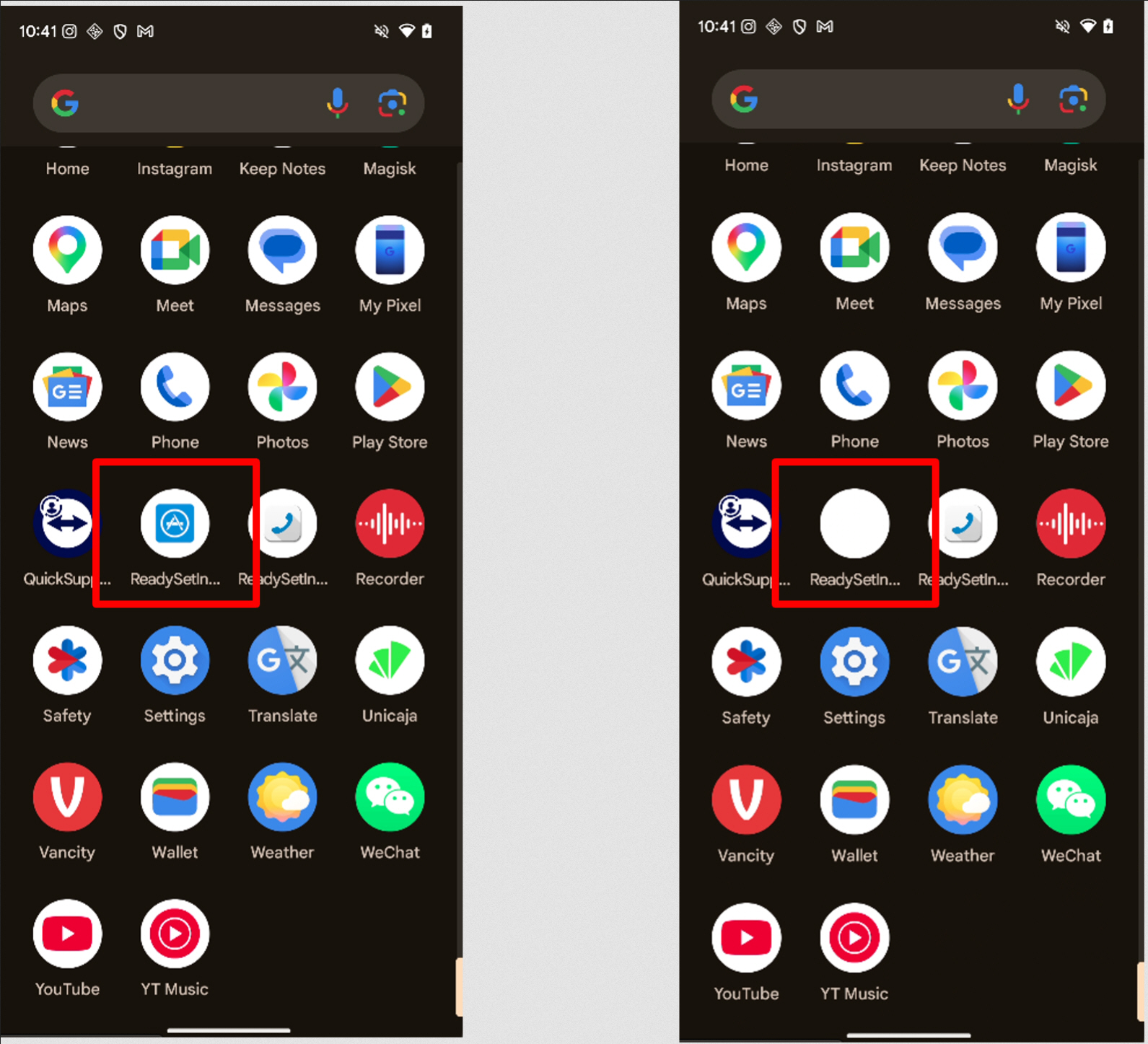
Android malware uses blank icons and fake screens to steal financial credentials

Published

on


  • Four Android banking trojan campaigns target hundreds of finance and social apps
  • Malware hides icons, blocks removal, and overlays fake banking login screens
  • Live screen streaming lets attackers monitor activity and capture authentication steps

Security researchers have tracked four Android banking trojan campaigns that rely on deception, stealth, and disappearing app icons to stay hidden out of sight after installation.

Researchers at Zimperium say the campaigns, named RecruitRat, SaferRat, Astrinox, and Massiv, collectively targeted more than 800 banking, cryptocurrency, and social media apps.

Source link

Advertisement
Continue Reading

Tech

This new smart ring lasts twice as long as Samsung’s Galaxy Ring

Published

on

RingConn has launched its latest smart ring, and it’s going straight after Samsung with one standout claim: battery life that’s double that of the Galaxy Ring.

The new RingConn Gen 3 lasts up to 14 days on a single charge (with the caveat that haptics are turned off) compared to the seven-day estimate on Samsung’s Galaxy Ring. That alone makes it one of the longer-lasting smart rings currently on the market, and appeals to users who don’t want another device to charge every few days.

Battery aside, RingConn is also leaning further into health tracking. The Gen 3 focuses on vascular health insights, alongside features like sleep tracking and sleep apnea monitoring. There’s also a planned blood pressure tracking feature, but it’s not available at launch and will instead arrive in a future update. As expected, it’s positioned as a trend-tracking tool rather than a medical-grade replacement.

One of the more unusual additions is a built-in vibration module, something you don’t typically see in smart rings. It can deliver haptic alerts for things like health reminders or low-battery warnings, but it notably doesn’t support notifications for messages or apps, which limits its usefulness somewhat.

Advertisement

In terms of design, the Gen 3 remains lightweight, at 2.5-3.5g, depending on size, putting it roughly in line with Samsung’s alternative. It’s available in sizes 6 through 15 and comes in five colour options, with support for both iOS and Android via the companion app. There’s also no subscription fee for accessing health data, which could be a draw for users put off by ongoing costs.

Advertisement

Pricing starts at $349. However, a pre-order discount drops it to $314 (or $332 for premium finishes) until May 28, 2026.

On paper, the RingConn Gen 3 looks like a serious alternative to Samsung’s Galaxy Ring, particularly if battery life is high on your priority list.

Advertisement

Source link

Continue Reading

Trending

Copyright © 2025