
Crypto World
Grayscale Cuts a DeFi Token From Its Fund as a New One Takes Over



Grayscale Investments has disclosed the new component weightings for its multi-asset funds as part of the Q1 2026 rebalancing.
The asset manager has removed Aerodrome Finance (AERO) entirely from its Decentralized Finance (DeFi) Fund and added Ethena (ENA) at a 13.59% weight.
Grayscale Drops AERO From DeFi Fund, Adds ENA in Q1 Rebalance
According to the press release, Grayscale funded the ENA purchase by selling AERO and other existing components proportionally.
AERO held a 5.36% weight before its full removal, ending its position in Grayscale’s flagship DeFi product. The altcoin was added during the Q3 2025 rebalancing and replaced MakerDAO (MKR).
“The compositions of DEFG Fund and GSC Fund are evaluated on a quarterly basis to remove existing Fund Components or to include new Fund Components, in accordance with the index methodologies established by the Index Provider. Holdings and weightings of each Fund are subject to change. Investors cannot directly invest in an index,” the asset manager stated.
Follow us on X to get the latest news as it happens
Meanwhile, Ondo (ONDO) recorded the biggest gain among retained holdings, climbing from 14.10% to 19.83%. Uniswap’s (UNI) dominance shrank during the quarter.
UNI fell from 42.67% to 35.22%, though it remains the fund’s largest single holding. Aave’s (AAVE) weighting also declined, dropping from 26.23% to 21.36%.
Ethereum Reclaims Top Spot in Smart Contract Fund
Grayscale’s Smart Contract Fund (GSC) saw a notable shift between Ethereum (ETH) and Solana (SOL). ETH moved back to the top weighting at 30.14%, edging SOL at 29.69%.
In January, SOL held the top spot at 29.55%, while ETH was at 29.00%. The reversal played out over a single quarter, with ETH gaining roughly 1.14 percentage points.
Other GSC components saw smaller moves. Cardano (ADA) slipped from 18.55% to 17.96%. In contrast, Sui (SUI) lost the most ground, dropping from 8.55% to 7.11%.
Subscribe to our YouTube channel to watch leaders and journalists provide expert insights
The post Grayscale Cuts a DeFi Token From Its Fund as a New One Takes Over appeared first on BeInCrypto.

Crypto World
Trump family-backed American Bitcoin’s costs dropped 23% in Q1 as mining industry pivots to AI


The Trump brothers’ bitcoin mining venture cut its cost per coin by nearly a quarter in three months, going against industry trends.
American Bitcoin (ABTC) said in a Wednesday filing that its cost to mine one bitcoin fell to roughly $36,200 in the first quarter, a 23% drop from $46,900 in Q4 2025.
That puts it materially below the publicly listed miner average of around $80,000 per bitcoin in late 2025, as CoinDesk reported, and inside the band where mining at current bitcoin prices remains genuinely profitable rather than a managed loss.
The improvement came from spreading higher production volume across a stable fixed-cost base, plus what management called “continued energy pricing discipline.”
The Drumheller site in Alberta, which was switched on and began running miners in late March, added roughly 3.05 exahash of computing power, a measure of how many guesses per second the mining hardware can make to find new bitcoin. Total fleet capacity hit 28.1 exahash by quarter-end, with around 89,000 mining machines running.
As such, American Bitcoin posted an $81.8 million net loss for the quarter, with most of that driven by mark-to-market accounting on its bitcoin holdings as the price dropped roughly 22% over the period.
Revenue came in at $62.1 million versus $78.3 million in Q4 2025, reflecting a lower average revenue per coin mined of $76,000 versus $100,000.
Strip out the non-cash bitcoin revaluation, however, and the underlying mining business was profitable. The company added 1,620 bitcoin to its strategic reserve in the quarter, taking its holdings to roughly 7,021 BTC, a 30% increase in three months.
Of that, 817 came from mining and 803 from open-market treasury purchases. American Bitcoin is now the 16th largest publicly traded bitcoin holder globally.
What makes the quarter notable structurally is the contrast with the rest of the cohort. Public miners have collectively pivoted toward AI and high-performance computing, signing more than $70 billion in cumulative contracts and reducing their bitcoin treasuries by over 15,000 BTC since late 2024 to fund the transition.
ABTC shares were down about 1% in after-hours trading and remain nearly 90% below their September 2025 listing peak of around $1.25.
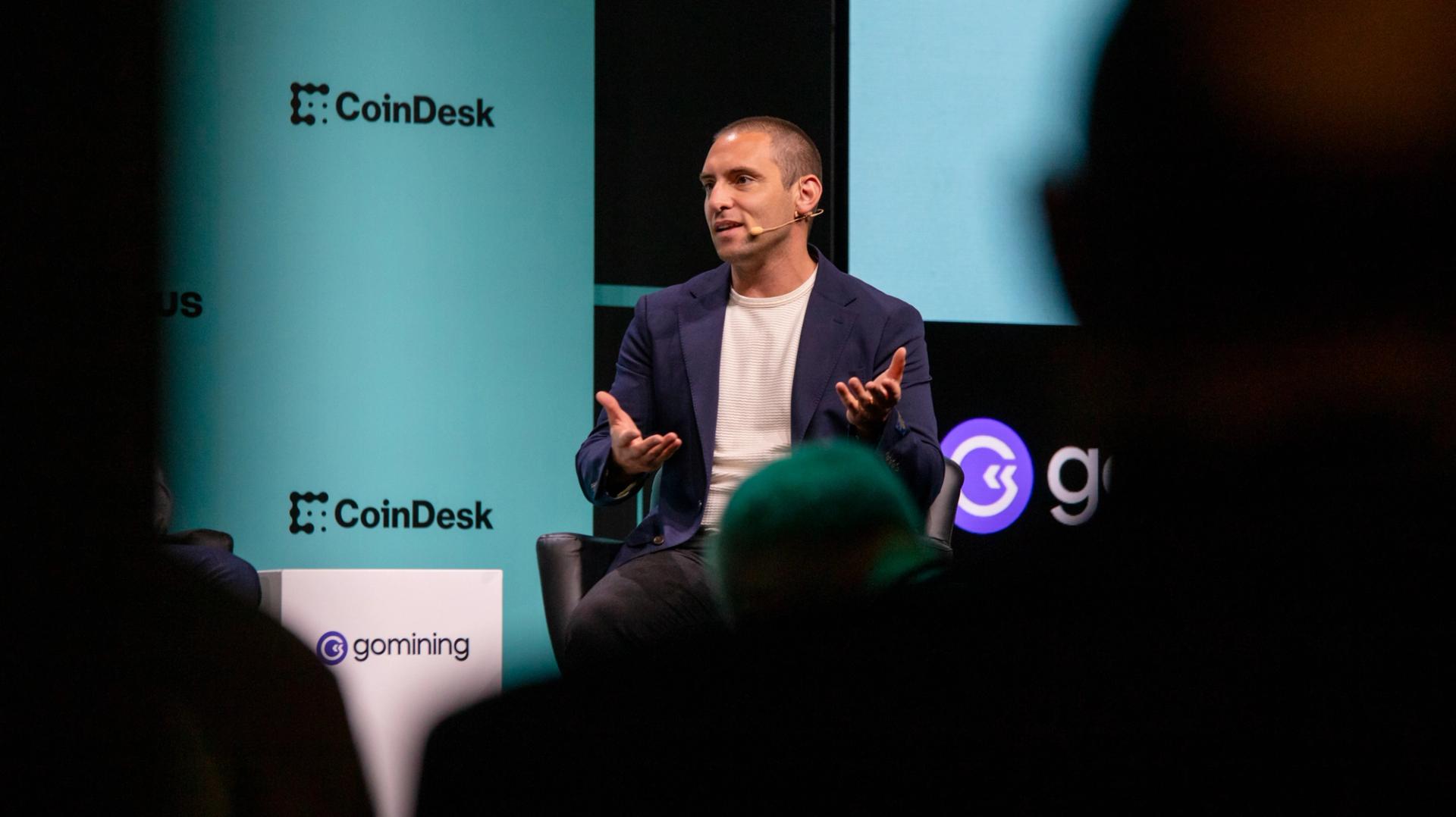
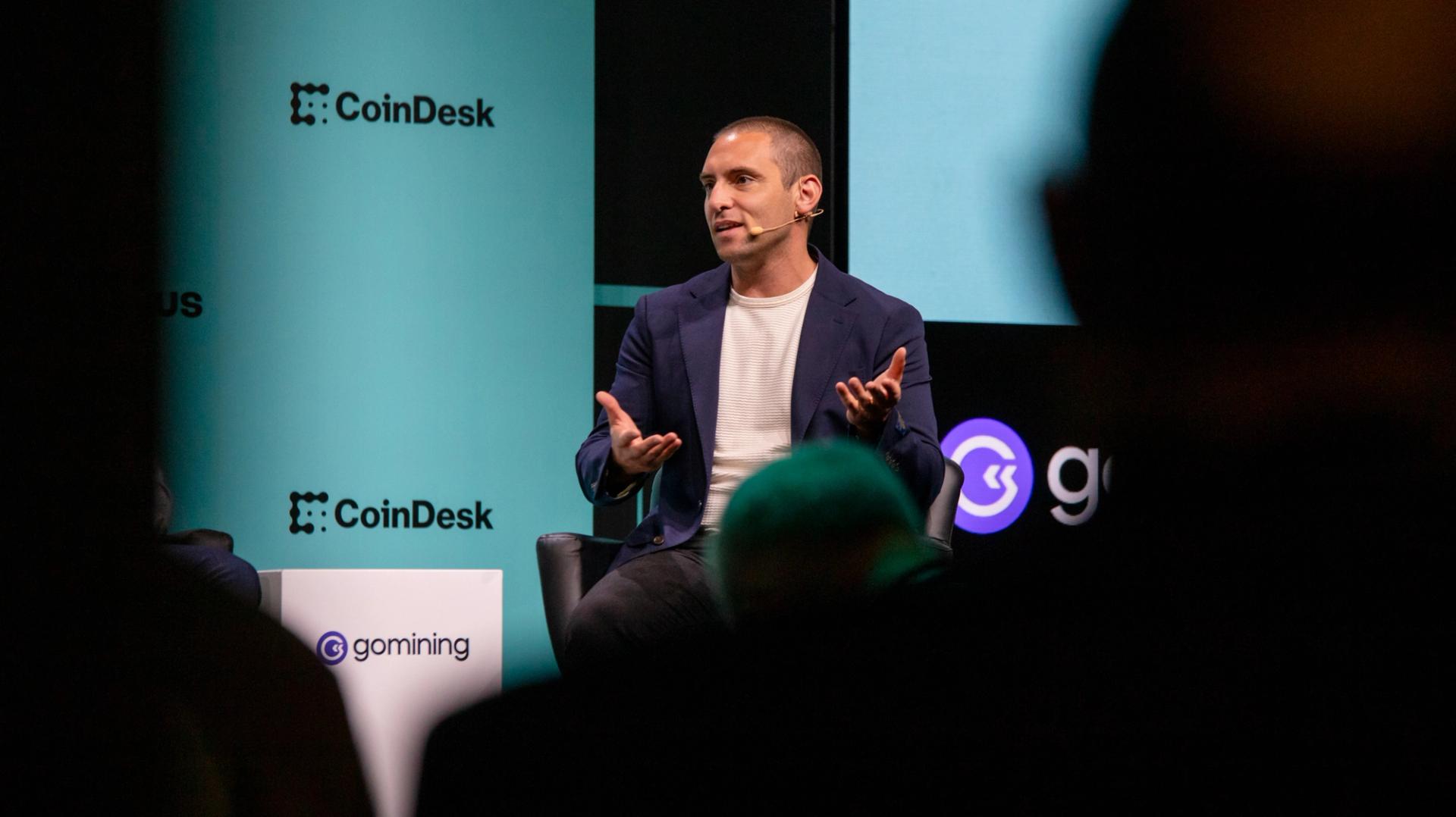
Bitcoin lenders may need to become more like traditional finance firms, not less, if they want institutional capital to keep flowing into the sector.
At Consensus 2026 in Miami, Alexander Blume, founder and CEO of institutional bitcoin lender Two Prime, argued that the next stage of crypto credit growth will depend less on decentralized finance experimentation and more on standardization, transparency, and risk management.
“The moment you start trying to explain how any of this stuff works, they’re just like, No… We’ll pay more. Don’t lose my money,” Blume said, referring to institutional borrowers evaluating crypto lending products that become difficult to defend during periods of market stress.
The comments reflected a broader post-2022 shift in crypto lending following the collapses of Celsius, Voyager, and BlockFi, when opaque leverage, aggressive rehypothecation, and weak risk controls triggered a wider credit crisis across the industry. In the years since, many institutional borrowers have moved away from complex DeFi structures in favor of products centered on transparent custody, standardized contracts, and clearly identifiable counterparties.
Across the panel, speakers repeatedly suggested that institutional finance and crypto-native finance remain fundamentally misaligned in their approaches to risk. While DeFi evolved around permissionless access, composability, and capital efficiency, institutions continue to prioritize predictability, legal accountability, and operational simplicity.
That tension was especially visible in the discussion around rehypothecation, the practice of reusing customer collateral to generate additional yield, which became one of the defining risks exposed during the 2022 lending collapse.
“The most important thing to ask… is where is your Bitcoin stored,” said Adam Reeds, co-founder and CEO of Ledn.
Jay Patel, co-founder and CEO of Lygos Finance, said borrowers increasingly need to “underwrite the lender” themselves before taking loans against their bitcoin holdings.
“The biggest point in my mind is definitely the rehypothecation piece,” Patel said.
Blume said institutional borrowers often reject crypto-native lending structures not because they oppose bitcoin, but because the operational complexity surrounding many DeFi systems remains difficult to justify to boards, shareholders, and risk committees.
At one point, Blume distilled the divide between crypto-native finance and institutional finance into a single observation.
“Our whole financial system is set up to have someone else to blame,” he said, arguing that institutional borrowers still prefer identifiable intermediaries, standardized processes, and legal accountability over fully autonomous financial systems.
For many lenders on stage, the future of crypto credit no longer appears tied to making finance more decentralized. Instead, it may depend on convincing institutional borrowers that bitcoin-backed lending can behave predictably enough to resemble the traditional system they already trust.
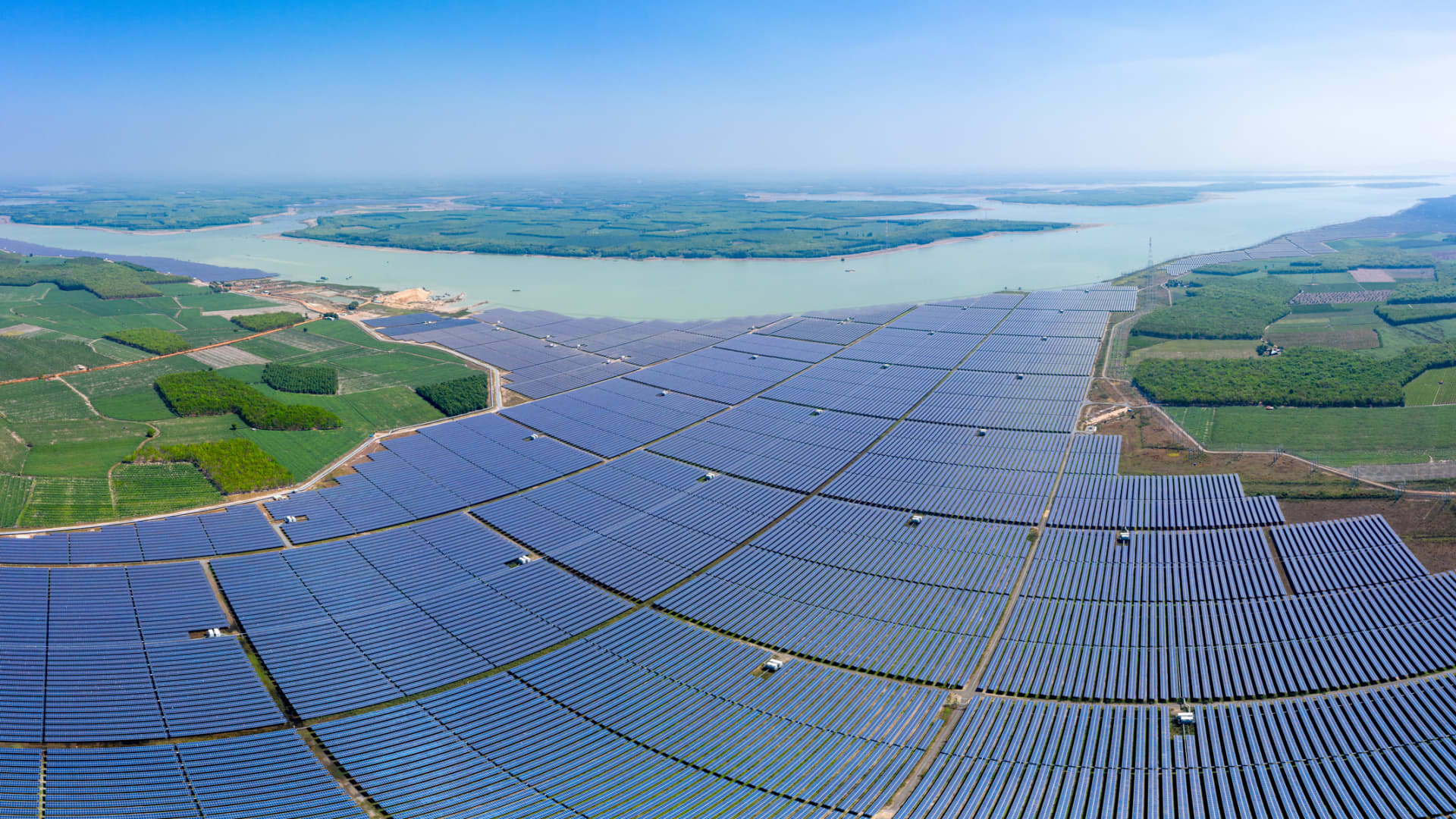
A solar power plant in Vietnam’s Tay Ninh Province. Singapore’s central bank is backing bio-energy and solar projects in Southeast Asia via its Green Investments Partnership.
Tan Dao Duy | Moment | Getty Images
The Asian Development Bank $70 billion plan, backing new energy and digital infrastructure in the region, is set to boost Southeast Asia the most.
The program includes a pan-Asia power grid initiative, connecting national and subregional power systems, and an Asia-Pacific digital highway to close the infrastructure gap in the region, according to ADB that has set 2035 as the deadline for funding projects.
“Energy and digital access will define the region’s future,” said ADB President Masato Kanda said in a statement on Sunday.
That connectivity will build the systems Asia and the Pacific need to grow, compete, and connect, Kanda said. “By linking power grids and digital networks across borders, we can lower costs, expand opportunity, and bring reliable power and digital access to hundreds of millions of people.”
While the funds are for the entire Asia-Pacific region, experts say that Southeast Asia is expected to be the major beneficiary of ADB’s connectivity push.
The bank typically leans toward developing member countries based on growth needs, project readiness and mandate, beyond sheer market size, said Greg Statton, vice president and chief technology officer for Asia Pacific and Japan at AI-powered data security firm Cohesity.
Statton noted that unlike Southeast Asia, China has largely moved away from ADB financing with its own finance institutions and policies in place. India has strong access to capital markets and runs many domestically financed projects, even though it still receives a fair amount of funding from ADB, while Japan itself is a major funder of ADB.
“Larger economies such as China, India, and Japan already have more established domestic capital markets, deeper infrastructure financing channels, and greater fiscal capacity to fund large scale projects internally,” said Chasen Nevett, managing partner of principal investments at GMA Capital Partners, adding that Southeast Asia remains structurally underbuilt in both energy interconnection and digital infrastructure.
“That combination creates a more efficient deployment environment for capital, where each dollar can unlock broader private sector participation and accelerate regional integration, Nevett said.
Power play
Indonesia, Vietnam, and the Philippines are expected to be the largest beneficiaries within Southeast Asia.
Those countries are expected to receive a larger share of the $70 billion funding due to their population size, infrastructure needs and active project pipelines, based on ADB”s historical lending patterns and current priorities, according to Statton.
While Malaysia and Thailand could also benefit given they are regional hubs for energy and data infrastructure, the relative marginal impact of capital may be somewhat lower due to their more developed base in Southeast Asia, said Nevett.
Malaysia has the biggest data center project pipeline in Southeast Asia, which accounts for about 60% of all proposed projects in the region and, along with Thailand, it is expected to lead data-center load demand in Southeast Asia by 2035, according to Wood Mackenzie.
ADB funding also provides an opportunity to build interoperable transmission systems that allow clean power to flow across borders, improving reliability and lowering costs, said Scott Dunn, strategy and growth lead for Asia at infrastructure consulting firm AECOM.
Markets such as Laos, Thailand, Vietnam and Cambodia have abundant hydropower and fast-expanding solar and wind, but they lack cross-border capacity to move clean power to the biggest demand centers, Dunn said, adding that ADB’s plans are “effectively designed for these conditions.”
ADB aims to integrate nearly 20 gigawatts of renewable energy across borders and link 22,000 circuit-kilometers of transmission lines by 2035.

Aave Labs has completed the liquidation of the Kelp DAO attacker’s remaining rsETH collateral on Ethereum and Arbitrum, marking a concrete step in the DeFi United recovery plan to fully back rsETH and compensate affected users. Aave described the move as a “critical step,” with the liquidated collateral now routed to Recovery Guardian, a multisignature wallet overseen by DeFi United. Aave’s update on X notes that user funds were not touched in this process and that its Umbrella insurance mechanism was not activated.
With the latest liquidation, DeFi United estimates it is roughly 10% short of the ETH needed to restore full rsETH backing, according to Thaddeus Pinakiewicz, vice president of Galaxy Digital’s research team. The recovery plan has continued to hinge on securing additional ETH commitments and on governance decisions that can unlock the remaining liquidity for rsETH holders. The Kelp DAO attack in mid-April, which exploited about $293 million, has reverberated through the DeFi lending sector and raised questions about the resilience of cross-chain recovery efforts.
Aave stressed that the liquidation reduces liquidity risk without endangering user funds, and it reiterated that its automated protection for bad debt, Umbrella, was not invoked in this step. The development comes as DeFi United moves toward a broader funding package and a mix of on-chain and off-chain governance actions aimed at restoring rsETH’s collateralization and legitimacy.
Key takeaways
- 13,000 ETH liquidated from the attacker’s collateral on Ethereum and Arbitrum would be released to Recovery Guardian, a DeFi United multisignature wallet, equating to roughly $30.2 million at current prices.
- Approximately 30,765 ETH remain frozen by Arbitrum DAO in “legal limbo” after a restraining notice was filed by US law firm Gerstein Harrow LLP to prevent redistribution. Aave has filed an emergency motion to vacate the restraining notice.
- Arbitrum DAO voting on the release of frozen ETH to the DeFi United fund shows overwhelming support — more than 90% in favor — with the vote closing on Friday.
- DeFi United is seeking commitments from Circle, Ethena, Frax, and Kraken-built Ethereum layer 2 Ink to “get it over the line and plug the hole,” according to project backers.
- Aave’s total value locked (TVL) has stopped its steep decline, with DefiLlama data showing a rebound above the $15 billion level after a period of outsized outflows tied to the Kelp DAO incident.
Recovery progress and the rsETH restoration plan
The liquidation of the attacker’s rsETH collateral on both Ethereum and Arbitrum represents a tangible step toward reinforcing the rsETH backstop. By transferring the collateral to Recovery Guardian, DeFi United aims to create a more predictable path for restitution to affected users and to reestablish the integrity of rsETH’s staking framework. While the total value of the liquidated portion sits in transit, observers are watching closely for the next tranche of ETH required to complete the backing.
Thaddeus Pinakiewicz of Galaxy Digital’s research team framed the current status as a near-term milestone rather than a finished cure. “DeFi United is roughly 10% short of the ETH needed to restore full rsETH backing,” he noted, underscoring how the plan’s success hinges on securing a relatively small but crucial slice of liquidity from the broader ecosystem. The remaining 30,765 ETH, currently frozen by Arbitrum DAO, illustrates the enduring tension between on-chain recovery mechanics and legal/organizational processes that govern cross-chain assets in crisis scenarios.
Legal contours, governance and the path forward
The legal dimension of the Kelp DAO incident remains a key obstacle. The restraining notice filed by Gerstein Harrow LLP aims to prevent redistribution of the frozen ETH while the matter unfolds in court, creating a “legal limbo” that could delay the final recovery steps. In response, Aave has lodged an emergency motion to vacate the restraining notice, signaling active legal maneuvering from the recovering coalition.
Meanwhile, Arbitrum DAO is in the thick of a governance vote about releasing the frozen ETH to the DeFi United fund. With more than 90% of participating voters in favor, the outcome could unlock a significant portion of the collateral needed to underpin rsETH. The vote is set to close on Friday, and the decision will test the DAO’s ability to balance fiduciary duty with the broader goal of DeFi resilience. For some observers, the situation also underscores the evolving role of DAOs in crisis response and the potential regulatory scrutiny that can accompany large-scale cross-chain fund movements.
Beyond the immediate goal of rsETH restoration, DeFi United has earmarked a broader set of commitments that could shape the recovery’s speed and effectiveness. The coalition is courting backing from Circle, Ethena, Frax, and Kraken’s Ethereum layer 2 solution Ink. Securing these commitments would help to “plug the hole” and accelerate the path back to a fully collateralized rsETH, while also signaling a willingness among major stablecoin issuers and L2 ecosystems to stand behind DeFi’s recovery efforts during a stress event.
Market impact and ecosystem resilience
The Kelp DAO incident remains among the most consequential hacks of 2026, with the initial shock driving a broad unwind across DeFi lending protocols. Aave’s TVL declined sharply as the attacker collateralized rsETH to borrow wrapped Ether, triggering a cascade of withdrawals and more than $190 million in bad debt on the platform. In the weeks that followed, DefiLlama’s data shows that net outflows from Aave’s lending markets have begun to ease, and the protocol’s total value locked has rebounded from its local trough to sit above the $15 billion mark again.
This rebound is not a victory lap. The episode exposed structural vulnerabilities in DeFi lending and cross-chain collateral arrangements, especially when attacker assets are pledged to secure new loans. The current recovery push—backed by on-chain governance, legal processes, and strategic partnerships with major stablecoins and L2 infrastructure—could shape how the market assesses risk and contingency planning in the months ahead. For borrowers and lenders alike, the episode reinforces the importance of rigorous collateralization, transparent governance, and robust rescue frameworks when incidents test the integrity of a protocol’s backstops.
As the governance process unfolds and the legal questions are resolved, investors and users should watch closely how quickly DeFi United can assemble the remainder of the ETH and how the community and regulators respond to the coordinated release of frozen assets. The balance between restoring rsETH’s credibility and maintaining prudent risk controls will likely influence funding, liquidity incentives, and the broader appetite for DeFi risk in the near term.
Readers should monitor updates from Aave, Arbitrum DAO, and DeFi United as the Friday vote concludes and as Circle, Ethena, Frax, and Ink’s involvement firm up. The outcome will help determine not only the fate of rsETH but also the broader precedent for crisis response in decentralized finance.

Despite a few brief price fluctuations in both directions, Ripple’s cross-border token remains confined to a relatively tight range, with many analysts anticipating a big move ahead.
In the meantime, many alts and the market leader posted notable gains over the past few days, but XRP failed to follow suit decisively. This is particularly intriguing given that the company behind the token has made many big moves lately, while the spot exchange-traded funds have turned green.
All The Good Stuff
Some of the most recent announcements coming from the Brad Garlinghouse-spearheaded company included a partnership with OKX to list RLUSD, starting to share details with the Crypto ISAC network regarding North Korean bad actors, and expanding its Middle East and African presence by opening new headquarters.
These moves built on last year’s major developments, such as the acquisitions of Hidden Road, GTreasury, and Rail, while also settling the legal case with the SEC.
The other positive change in the broader XRP ecosystem as of late has been the ETF inflows. After closing March in the red for the first time ever, the financial vehicle turned the tables in April as the net inflows hit a 4-month peak. The past couple of days have also been quite bullish, with almost $25 million entering the products.
Separately, the overall cryptocurrency sentiment change in the past week or so, with BTC hitting a three-month peak at almost $83,000. Many altcoins posted double-digit gains, prompting speculations of an upcoming altseason.
But XRP Still Struggles
Despite all of the above, Ripple’s native token barely managed to end April with a 2% increase, after closing six consecutive months in the red beforehand. Analysts remain adamant that the asset is poised for a major breakout, with bullish targets above $1.80 and bearish ones around $1.00.
However, this is now XRP’s actual case. The token tapped $1.45 yesterday as BTC neared $83,000, but it was quickly stopped and driven back to $1.41 as of press time. Its weekly gains are the most modest from the larger-cap alts, at under 3%. For reference, BTC and SOL are up by 7.5%, while DOGE has added over 8%.
Ali Martinez doubled down on his belief that XRP is about to break out yesterday, suggesting that a surge past $1.45 could bring $1.80 into the conversation. However, as mentioned above, the asset failed at that resistance and is now back to a familiar range.
The post Why Can’t XRP’s Price Break Out as ETF Inflows Surge? appeared first on CryptoPotato.
Crypto World
Bitcoin (BTC) Price Holds Strong at $81K as Bollinger’s Trend Model Signals Full Investment
Key Takeaways
- Strategy’s announcement about possible Bitcoin sales triggered a minor pullback in BTC price
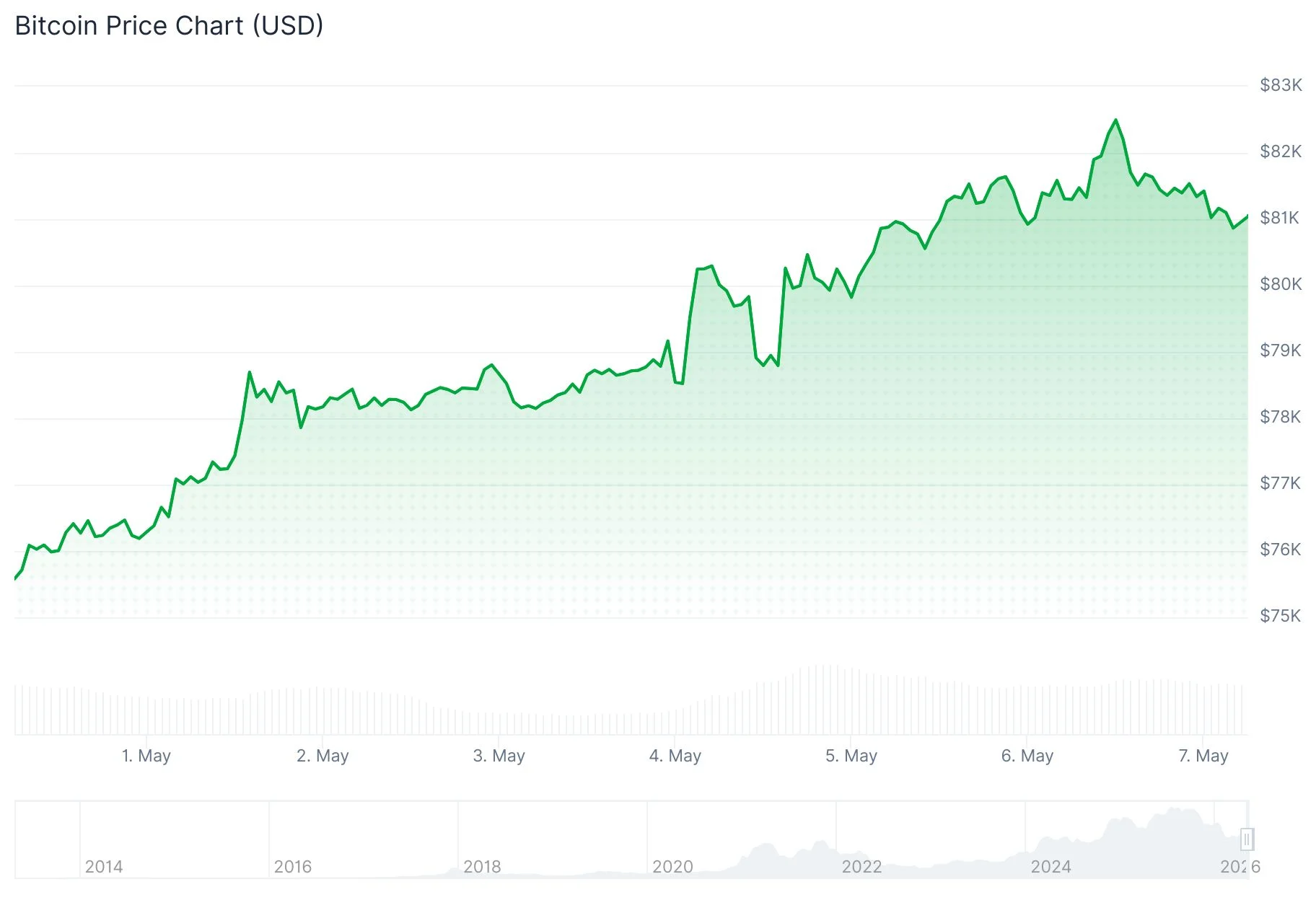
- Bitcoin continues trading near $81,421, marking a three-month peak
- Weekly gains stand at 9%, while Bitcoin has surged 26% from late March lows
- Optimism around potential U.S.-Iran diplomatic breakthrough lifted market confidence
- Critical support zone established at $80,000, with upside barrier around $82,750
Bitcoin experienced a modest retreat from recent peak levels following Strategy’s disclosure that it might liquidate a portion of its Bitcoin reserves. The announcement temporarily dampened the cryptocurrency’s impressive weekly performance.
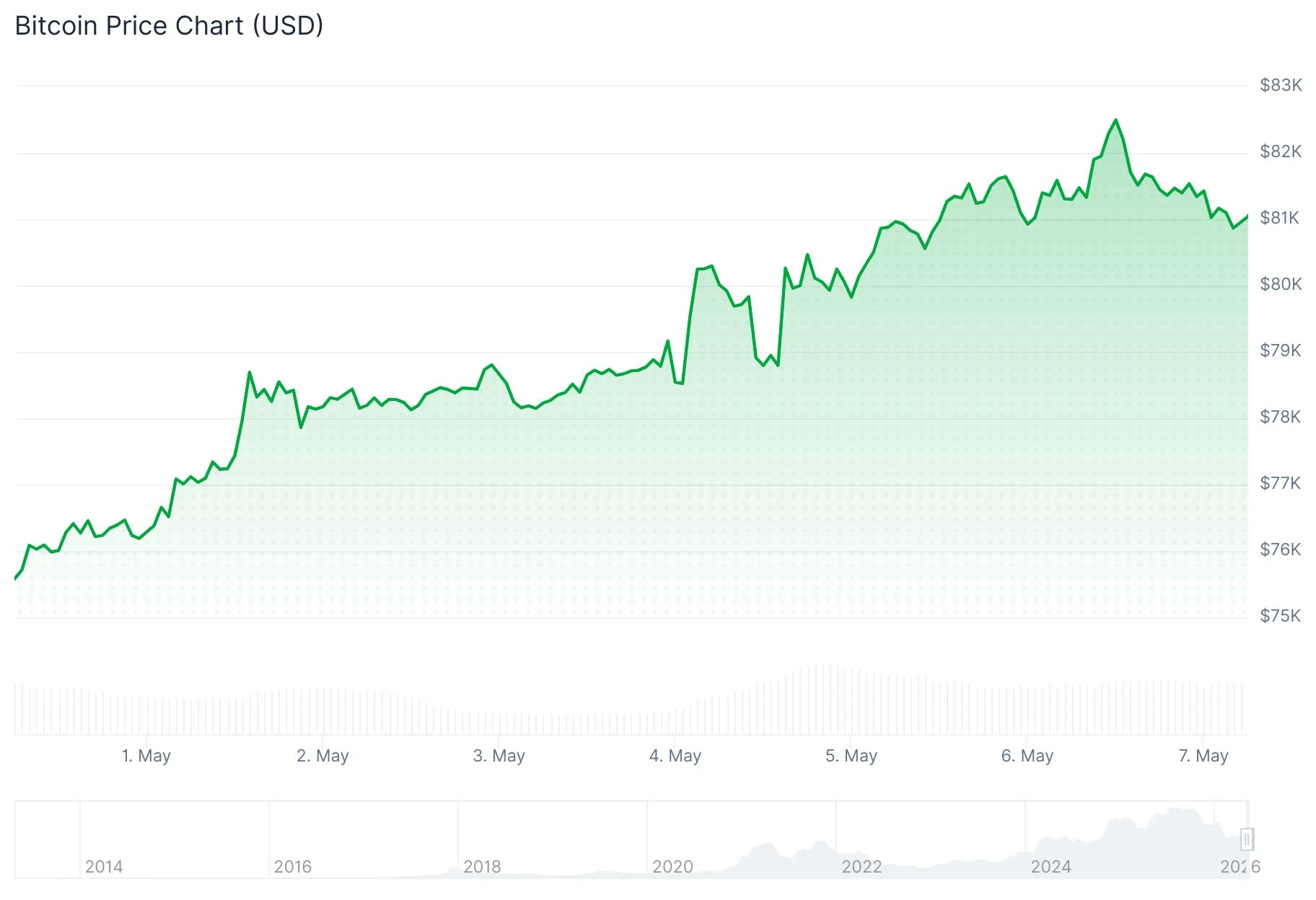
As of this writing, Bitcoin was changing hands around $81,421, showing minimal daily movement while maintaining price levels last observed in late January 2026.
The digital asset has climbed approximately 9% throughout the previous seven-day period and recorded a substantial 26% appreciation since March’s conclusion. This upward trajectory has been characterized by steady progression and subdued volatility, factors that market observers believe have attracted additional market participants.
Trade Nation’s senior market analyst David Morrison highlighted the momentum behind Bitcoin’s advance. “Bitcoin has demonstrated remarkable strength, displaying consistent, low-volatility upward movement that has served to stimulate additional purchasing activity,” Morrison explained. He identified moderate price support in the vicinity of $80,000, with more substantial backing positioned near $75,000.
Crypto analyst Daan Crypto highlighted on social platforms that Bitcoin has reclaimed its position above the Bull Market Support Band—a development not witnessed in half a year. He emphasized that confirmation of this breakout and possible trend shift hinges on the weekly candle’s closing position.
Geopolitical Developments Boost Market Confidence
Market risk appetite received a boost earlier when news emerged regarding progress in U.S.-Iran diplomatic discussions aimed at resolving ongoing tensions. According to Axios, the White House was approaching completion of a brief memorandum of understanding addressing nuclear enrichment activities and sanctions reduction.
The Wall Street Journal provided additional details, describing the framework as a 14-point arrangement that would permit one additional month for continued negotiations. President Trump validated the agreement’s general framework through social media posts, cautioning that military operations would recommence should Iran decline the proposal.
Iranian foreign ministry officials indicated they were examining the proposal and would communicate their response via Pakistani intermediaries.
Key Technical Price Zones
Bitcoin reached an intraday peak of $82,790 before entering a consolidation pattern. The cryptocurrency presently maintains its position above the 100-hour moving average alongside a constructive trend line providing support near $80,850.
Should BTC sustain levels above $81,500, subsequent resistance points emerge at $82,750 followed by $83,500. A decisive breakthrough above $82,750 could pave the way toward $84,200 or potentially $85,000.
Regarding downside scenarios, failure to maintain the $80,200 threshold might trigger movement toward $78,850, a level that corresponds with the 50% Fibonacci retracement from the recent low point of $74,940.
John Bollinger, the developer of the widely-used Bollinger Bands indicator, announced via social media that his proprietary trend model for Bitcoin has shifted to positive territory, with his Tactica algorithm now holding a complete position in BTC.



Representative James Baird won the Republican primary for Indiana’s 4th Congressional District, keeping his reelection campaign on track before the 2026 midterms.
Summary
- Baird won Indiana’s Republican primary after crypto-linked PAC Defend American Jobs spent heavily supporting him.
- Fairshake’s political network is targeting 2026 races to support candidates backing crypto market rules.
- The victory comes as lawmakers debate the CLARITY Act and stablecoin yield rules in Washington.
Decision Desk HQ data showed Baird ahead with 35,805 votes, or 60.28%, while Craig Haggard had 18,256 votes, or 30.73%. John Piper followed with 5,340 votes.
The race drew attention from the crypto sector because Baird received support from Defend American Jobs, a political action committee linked to Fairshake. Crypto.news reported that the PAC spent about $514,000 on media buys to support Baird before the Indiana primary.
Crypto PAC money enters the race
Defend American Jobs backed Baird after he supported crypto-related legislation in Congress. Crypto.news reported that Stand With Crypto rated him as strongly supportive of digital assets after his votes on the GENIUS Act and the CLARITY Act.
Fairshake has become one of the most active crypto-funded groups in U.S. politics. A Fairshake spokesperson said, “Representative Baird has been a proven leader for pro-job, pro-consumer, and pro-innovation policies in Congress.” The group said it supports candidates who back responsible digital asset regulation.
Meanwhile, the Indiana result comes as crypto groups prepare for a larger role in the 2026 midterm elections. Crypto.news reported that Fairshake and AI-focused PACs have already deployed more than $100 million into midterm races.
At the same time, public trust remains mixed. A Public First poll cited by crypto.news found that 45% of Americans viewed crypto investing as too risky. The same report said 44% of respondents believed AI was moving too fast.
Baird also received an endorsement from Donald Trump. AP reported that Trump-backed candidates performed strongly in several Indiana Republican races, showing how national political spending and endorsements shaped local contests.
CLARITY Act debate stays in focus
Baird’s win comes as Congress weighs digital asset rules, including the CLARITY Act. Crypto.news reported that Senators Thom Tillis and Angela Alsobrooks reached a compromise on stablecoin yield, but banking groups later pushed back against the text.
The compromise would block passive stablecoin yield that acts like bank interest while allowing rewards linked to platform activity. Crypto firms see the deal as a possible path for the bill, while banking groups argue it still leaves room for deposit outflows.
The Indiana primary shows how crypto policy has become part of campaign strategy. Baird’s win gives the sector another preferred candidate heading into November, while the stablecoin and market structure debates continue in Washington.

Stablecoins are more likely to go mainstream if adopted by major technology companies, a shift Bitwise says could help push the market closer to a projected $4 trillion by the end of the decade.
Bitwise chief investment officer Matt Hougan said on Tuesday that DoorDash and Meta’s recent use of stablecoins for payments in limited projects is likely “the real killer app of stablecoins.”
“On a relative basis, these are not a big deal. Both are pilot projects and the dollar amounts are small,” Hougan wrote. “But they’ve answered a question I’ve had about stablecoins for a long time. They’ve also increased my confidence that stablecoins will scale to trillions in assets and hundreds of millions of users.”
Multiple large non-crypto institutions have been testing stablecoin technology. Meta on Thursday launched stablecoin payouts for creators in the Philippines and Colombia, while the food delivery app DoorDash said on April 21 it would offer stablecoin payments to its users, workers and merchants.
The market value of all stablecoins is currently just under $318 billion, but Hougan said projections, such as one from Citigroup in September, say the market could grow to $4 trillion by 2030 in a best-case scenario.

Matt Hougan, pictured at Bitcoin 2026. Source: YouTube
“To get there, stablecoins will have to expand beyond their current primary use case of crypto trading and be embraced for everyday activity, like payments,” Hougan said. “To really scale to hundreds of millions of users, stablecoins are going to need the support of very large players.”
He said that the current pitch to businesses about stablecoins is that they are cheaper and faster, but another main reason multinational companies would adopt the technology is to simplify their global payments infrastructure.
Related: Stablecoin firms have a $112B additional opportunity in LATAM remittance
“Stablecoins make global payments simple,” he argued. “One wallet address, no banking infrastructure, no currency conversions. For a global business managing millions of micropayments, that type of simplicity is worth a lot.”
Companies in the US have been more confident in testing stablecoins after Congress passed the GENIUS Act last year, a bill regulating stablecoin issuers and forming a framework for how the tokens should be backed.
Visa is among the companies that have adopted stablecoins, and the payments giant expanded its pilot of the tokens on Thursday to include five more blockchains as the volume of settlements on its stablecoin settlement network has grown.
US banks have meanwhile grown wary of stablecoins and have lobbied to restrict them, arguing they compete with and threaten bank deposits, which could harm the banking system.
The Senate is shaping legislation outlining how crypto will be regulated, which currently includes a clause banning platforms such as crypto exchanges from paying rewards on idle stablecoin holdings, but allowing other forms of rewards.
However, banking groups on Tuesday argued the clause that lawmakers pitched as a compromise between crypto and banking lobbyists’ interests, did not go far enough.
Magazine: GENIUS Act reopens the door for a Meta stablecoin, but will it work?
The largest cryptocurrency exchange in South Korea continues to list some smaller altcoins, which almost guarantees an immediate price uptick with double or even triple digits, such as today’s example.
Upbit announced hours ago that it plans to list Base (B3) in a trading pair against the Korean won, as cited by popular blockchain journalist Wu Blockchain.
Upbit to List B3 Korean Won Trading Pair
Upbit, South Korea’s largest crypto exchange, will list the B3 Korean won trading pair, with trading set to begin at 13:45 local time on May 7. B3 is a layer-3 blockchain built on Base, an Ethereum layer-2 blockchain, and uses the OP… pic.twitter.com/xCCrAC0TMl
— Wu Blockchain (@WuBlockchain) May 7, 2026
B3’s price reacted immediately, skyrocketing by over 300% from bottom to top. It stood at around $0.0005 earlier today before the announcement went viral on social media, before it exploded to $0.0022. It has since retraced to $0.0016, but it’s still up by 280% on a 24-hour scale.

Base (B3) is a layer 3 blockchain settlement layer built on the Coinbase-related Base network. It’s designed to improve on-chain gaming and consumer applications through its Open Gaming ecosystem.
It focuses on providing sub-cent transaction fees and high throughput, which should be the cornerstone of making blockchain gaming more accessible and scalable.
As mentioned above, Upbit listings have almost always led to instant price pumps for the underlying assets, even for larger caps. In March, ICP rocketed by 16% in minutes after the exchange listed it.
Shortly after, ETHFI posted an 18% surge, while some smaller altcoins, such as POKT and LPT, had soared by 350% and 80%, respectively, following their listings.
The post Viral Layer-3 Altcoin Rockets 300% After Major Upbit Listing appeared first on CryptoPotato.
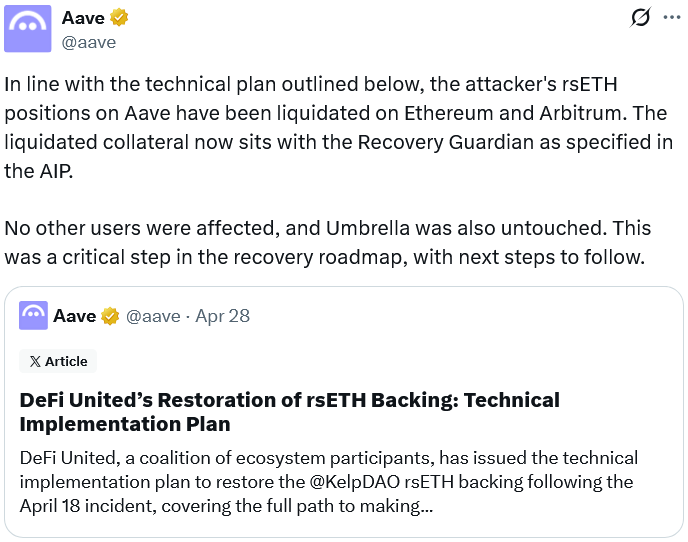
Aave Labs has liquidated the Kelp DAO attacker’s remaining rsETH positions on Ethereum and Arbitrum, moving one step closer to fully restoring rsETH backing and compensating affected users.
This marks a “critical step” in the “DeFi United” recovery plan, Aave posted on X on Wednesday. It added that the liquidated collateral tied to the $293 million exploit on April 18 was transferred to Recovery Guardian, a multisignature wallet managed by DeFi United.
DeFi United is now only about 10% short of the Ether (ETH) needed to restore the Kelp DAO restaked ETH (rsETH) token, according to Thaddeus Pinakiewicz, vice president of Galaxy Digital’s research team.
The Kelp DAO exploit has been one of the most devastating crypto hacks in 2026, causing a ripple effect throughout the DeFi lending market that disrupted billions of dollars in liquidity and eroded confidence across the ecosystem.
Aave said user funds weren’t affected by the liquidations and that Aave’s insurance mechanism to provide automated protection against bad debt — Umbrella — wasn’t used.
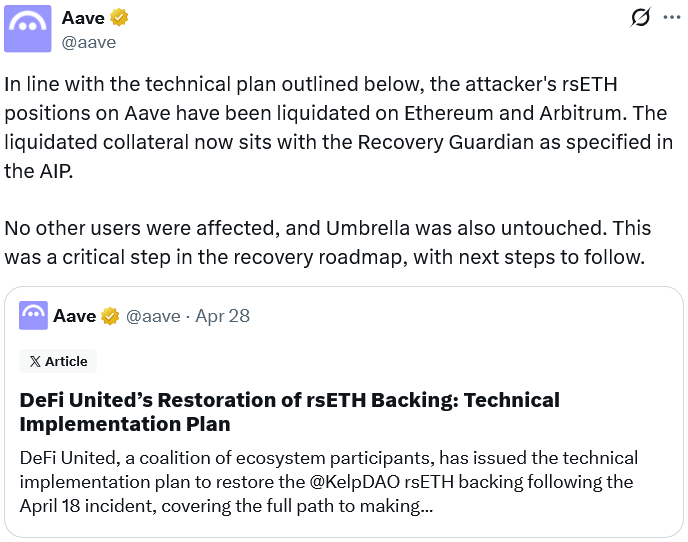
Source: Aave
Aave said on April 28 that clearing up the hacker’s collateral on Ethereum and Arbitrum would release 13,000 Ether worth nearly $30.2 million at current prices.
Pinakiewicz, however, noted that there is another 30,765 ETH frozen by Arbitrum DAO that is in “legal limbo” after US law firm, Gerstein Harrow LLP, filed a restraining notice on Friday to prevent Arbitrum DAO from redistributing the frozen ETH. In response, Aave filed an emergency motion to vacate that restraining notice.
Meanwhile, members of Arbitrum DAO are still voting on whether to release the frozen ETH to the DeFi United fund, with over 90% of voters in favor of the proposal. Voting set to close on Friday.
Related: Three reasons why Ether price rallies fizzle near $2.4K
DeFi United is also awaiting commitments from stablecoin issuers Circle, Ethena and Frax, as well as Kraken-built Ethereum layer 2 Ink.
Aave needs these commitments to “get it over the line and plug the hole,” Pinakiewicz said.
Aave’s TVL bleeding has stopped
Aave was hit hard by the Kelp DAO exploit, with its total value locked falling by nearly $12 billion in a week after the hacker put the stolen rsETH tokens up as collateral on its lending platform to borrow wrapped Ether, leaving more than $190 million in bad debt and triggering a wave of withdrawals.
DefiLlama data shows that net outflows from Aave’s lending markets have eased over the past week, with the protocol’s total value locked increasing from a local low of $14.2 billion on April 26 to back above the $15 billion mark.
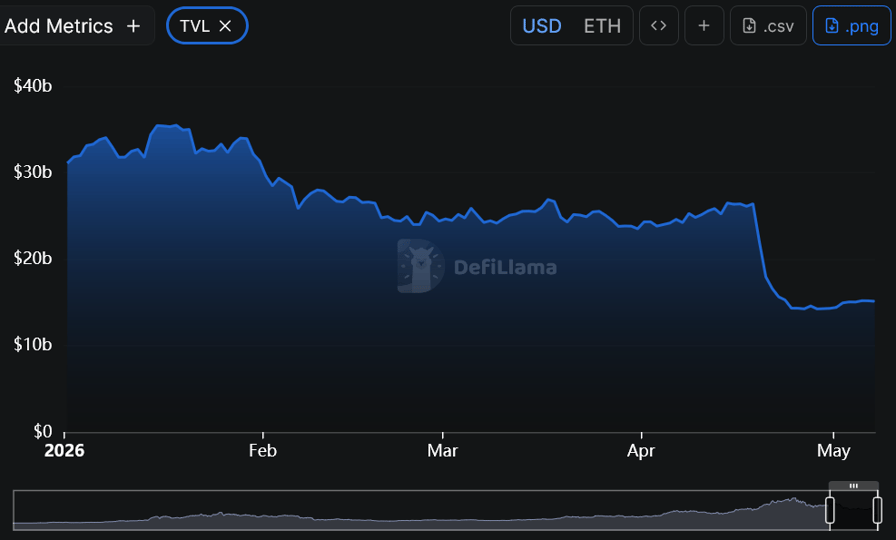
Aave’s change in TVL in 2026. Source: DefiLlama
Magazine: AI-driven hacks could kill DeFi — unless projects act now

The Best Financial Strategies by Income, from Financial Advisors

Why rat virus patients could become super-spreaders

Orica Limited (OCLDY) Q2 2026 Earnings Call Transcript

Manchester United reach agreement with Casemiro over contract clause amid transfer speculation

US brings back mandatory military draft registration

Steven Gerrard disagrees with Gary Neville over ‘shock’ Chelsea and Arsenal claim | Football


-

 NewsBeat4 days ago
Channel 5 – All Creatures Great and Small series 7 new post
-
 Tech6 days ago
Trump’s 25% EU auto tariff breaches Turnberry Agreement that also covers semiconductors and digital trade
-
 Sports6 days ago
Paul Scholes issues Marcus Rashford reality check as agreement emerges over Man United star
-

 Entertainment5 days ago
Met Gala 2026 Rumored Guest List Is Turning Heads
-

 Business6 days ago
Strait of Hormuz Blockade Persists Amid US-Iran Standoff, Sending Oil Prices Soaring
-
Entertainment6 days ago
New on Prime Video in May 2026 — Full List of Movies and Shows
-

 Sports5 days ago
Cavaliers vs. Raptors Game 6 live score, updates, highlights from 2026 NBA playoffs first-round series
-
 Sports5 days ago
David Benavidez responds to team Canelo saying the fight will never happen
-

 Entertainment5 days ago
Kylie Jenner Hit With Second Lawsuit From Ex-Housekeeper
-

 Entertainment5 days ago
Young and the Restless Next Week: Cane Arrested & Matt’s Deadly New Scheme!
-

 Tech6 days ago
Meta ends Sama contract after Kenyan workers report seeing intimate footage from Ray-Ban smart glasses users
-
 Sports5 days ago
IPL 2026: ‘Love you darling’- Hardik Pandya’s reaction to MS Dhoni steals the show |Watch | Cricket News
-
Entertainment4 days ago
New Netflix Movies in May 2026 — My Top 3 Picks to Stream
-

 Business4 days ago
Luka Doncic Injury Update: Doncic’s Hamstring Recovery Slows Lakers’ Hopes Against Thunder: Can He Run Yet?
-

 Sports6 days ago
Bayern won’t hand bottom side Heidenheim ‘gifts’ despite PSG game
-

 Sports6 days ago
What Preity Zinta Said After Punjab Kings’ First Defeat Of IPL 2026
-
 Crypto World5 days ago
Pi Network Mandates Protocol 23 Upgrade for All Mainnet Nodes Before May 15 Deadline
-

 Sports5 days ago
Plane crash in Wimberley, Texas kills 5 pickleball players at tournament
-

 Business5 days ago
Can Victor Wembanyama Bring the NBA Ring to Spurs in 2026? Historic Playoff Run Fuels Title Dreams
-

 Sports5 days ago
LeBron James adds to his legacy as Lakers eliminate dysfunctional Rockets
You must be logged in to post a comment Login