Connect with us
DAPA Banner

Business

Priyanka Chopra Jonas, Orlando Bloom Star in Survival Thriller ‘Reset’ Starting Production in August

Published

on

Priyanka Chopra and Nick Jonas

LOS ANGELES — Priyanka Chopra Jonas and Orlando Bloom are teaming up for Reset, a high-stakes survival thriller that will begin filming in August, marking another major Hollywood project for the global superstar and a high-profile return to action for the Lord of the Rings veteran.

The film, directed by Matt Smukler (Wildflower), follows a woman (Chopra Jonas) who wakes up deep in the wilderness, days from civilization, with no memory of how she arrived. Her only hope for survival is trusting a charming stranger (Bloom) — a man whose true intentions may prove far more dangerous than the elements surrounding them.

Deadline first reported the casting on May 6, 2026, generating immediate buzz across entertainment circles. Fortitude International will launch international sales at the Cannes Film Festival this month, signaling strong commercial interest in the project.

A High-Concept Thriller with Global Appeal

Written by Jordan Rawlins, Reset blends psychological tension, intense survival elements and twists that question trust and memory. The remote wilderness setting promises stunning visuals and edge-of-your-seat sequences as the two leads navigate both the harsh environment and their growing suspicions of each other.

Advertisement

Chopra Jonas will also co-produce through her Purple Pebble Pictures banner. This marks another producing credit for the actress, who has steadily expanded her behind-the-camera influence in Hollywood. Bloom will produce via his Amazing Owl company. Additional producers include Jon Hoeber and Erich Hoeber (The Meg), Michael Lazarovitch and Matthew Rhodes.

The pairing brings together two charismatic leads with massive international followings. Chopra Jonas, fresh off The Bluff and Citadel Season 2, continues her Hollywood momentum. Bloom, known for Pirates of the Caribbean and The Lord of the Rings, returns to a physically demanding role that plays to his action-hero strengths.

Production and Creative Team

Filming is scheduled to begin in August 2026, with locations expected to include rugged natural landscapes ideal for a survival story. Smukler’s direction of the coming-of-age comedy-drama Wildflower showcased his ability to balance character-driven storytelling with visual flair, skills that should translate well to this tense thriller.

The project’s timing aligns with growing audience appetite for elevated genre films featuring strong female leads and complex interpersonal dynamics. Industry insiders anticipate Reset could appeal to fans of films like The Revenant, A Quiet Place and Don’t Breathe, while its memory-loss mystery adds a psychological layer reminiscent of The Bourne Identity.

Advertisement

Priyanka’s Expanding Hollywood Footprint

For Chopra Jonas, Reset represents continued diversification. After establishing herself in action (The Matrix Resurrections, The Bluff) and prestige drama (The White Tiger), the survival thriller allows her to showcase physicality and emotional depth simultaneously. Her husband, Nick Jonas, publicly celebrated the news on social media, calling it an “exciting” new chapter.

The actress has been vocal about seeking roles that challenge her and offer global representation. Reset fits perfectly as a lead-driven project with international sales potential and crossover appeal.

Bloom’s Return to Intense Roles

Orlando Bloom brings star power and proven action credentials. His last major on-screen outings included The Cut and various franchise appearances. A grounded, character-focused survival story offers him a chance to deliver a nuanced performance while delivering the physicality fans expect.

The chemistry between Chopra Jonas and Bloom is already generating early excitement, with fans speculating about the tension-filled dynamic their characters will share on screen.

Advertisement

Cannes Sales Launch and Market Outlook

Fortitude International’s decision to introduce the project at Cannes underscores confidence in its commercial viability. Survival thrillers with A-list talent have performed strongly in recent years, both theatrically and on streaming platforms. Netflix, Amazon and other buyers are expected to show keen interest.

The film arrives at a time when Hollywood is balancing big-budget spectacles with more contained, high-concept stories that travel well internationally. Reset appears positioned for both theatrical and premium streaming releases.

Broader Industry Context

This announcement highlights the continued globalization of Hollywood casting. Chopra Jonas represents one of India’s biggest exports to American cinema, while Bloom brings British and franchise appeal. Their collaboration exemplifies cross-cultural projects that appeal to diverse audiences worldwide.

As production nears, anticipation will build around casting announcements for supporting roles, filming locations and first-look imagery. With August start date confirmed, Reset is poised to become one of 2027’s most talked-about thrillers upon release.

Advertisement

For now, the pairing of Priyanka Chopra Jonas and Orlando Bloom in a memory-shrouded wilderness survival story has already captured imaginations. As cameras roll later this summer, audiences can expect a tense, visually striking ride filled with twists, breathtaking scenery and powerhouse performances from two of Hollywood’s most watchable stars.

Continue Reading
Click to comment

You must be logged in to post a comment Login

Leave a Reply

Business

Govt reveals details of $4.7b housing spend in state budget

Published

on

Govt reveals details of $4.7b housing spend in state budget

A $1.3 billion investment in land development, power and water infrastructure is among the measures included in the 2026–27 state budget housing package (see full list).

Continue Reading

Business

Release Delayed to 2028-2029 Amid RAM Crisis, Powerful AMD Specs Leaked

Published

on

Facebook's new rebrand logo Meta is seen on smartpone in front of displayed logo of Facebook, Messenger, Intagram, Whatsapp, Oculus in this illustration picture taken October 28, 2021.

NEW YORK — Sony has yet to officially acknowledge the PlayStation 6, but rampant rumors and insider reports in 2026 point to a next-generation console facing potential delays until 2028 or even 2029 due to a global RAM shortage driven by AI demand, while leaked specifications suggest a massive leap in performance with AMD’s Zen 6 CPU and RDNA 5 GPU architecture.

The absence of any official announcement has not stopped speculation. As of May 2026, prediction markets show only about 25% of bettors believe Sony will reveal the PS6 before 2027, reflecting widespread skepticism about an early launch. Sony appears focused on extending the PS5 lifecycle through continued software support and the PS5 Pro, a strategy that could push the next full-generation console further into the future.

Release Date Uncertainty

Traditional seven-year console cycles would have pointed to a 2027 launch following the PS5’s 2020 debut. However, multiple reports indicate delays. Bloomberg’s February 2026 story cited sources saying Sony is considering 2028 or 2029 due to skyrocketing memory costs. Analyst David Gibson of MST Financial echoed this, noting high likelihood of a post-2028 debut as the company prioritizes PS5 profitability.

Some leakers, including Moore’s Law Is Dead and Kepler L2, maintain that production could begin in 2027 for a late 2027 or early 2028 window, but the prevailing narrative favors caution amid supply chain challenges.

Advertisement

Rumored Hardware Specs

Leaked documents and insider reports paint an ambitious picture. The PS6 is expected to feature a custom AMD chip based on Zen 6 CPU architecture and RDNA 5 GPU, potentially delivering up to three times the performance of the PS5 in key areas. Rumors suggest 24-32 GB of high-speed GDDR7 memory, a significantly faster SSD (possibly 3x the PS5’s speeds), and advanced ray tracing capabilities.

A dedicated PlayStation handheld, codenamed “Canis,” may launch alongside the main console, sharing similar AMD technology but in a more compact form. Backward compatibility with PS4 and PS5 games appears likely, providing seamless access to thousands of existing titles.

Additional features under discussion include AI-driven upscaling, enhanced frame generation technology, Wi-Fi 7 support, and HDMI 2.2 connectivity. Pricing speculation ranges from $749 to $999 depending on configuration and storage options.

Development and Production Status

Sony reportedly awarded the main chip contract to AMD years ago. Development kits may appear in 2026, with full production potentially starting in early 2027 if delays are avoided. Sony’s focus on extending the PS5 era — through strong sales and exclusive content — gives the company breathing room while navigating component shortages.

Advertisement

Mark Cerny, the PS5’s lead architect, has hinted at future technologies like machine learning enhancements in interviews, further fueling speculation about PS6 capabilities.

Strategic Context for Sony

The PS5 has enjoyed remarkable commercial success, selling tens of millions of units. Extending its lifecycle allows Sony to maximize returns before investing heavily in next-gen hardware. This mirrors broader industry trends, with Nintendo also pacing its hardware releases carefully.

A longer PS5 window could also help Sony navigate economic pressures, including rising component costs and competition from PC gaming, handhelds and cloud services.

What Fans Can Expect

While no official reveal is imminent, 2026 will likely bring more leaks, developer kit distribution and teaser patents. Gamers should anticipate continued PS5 support with major titles through at least 2027 or 2028. A potential handheld could bridge the gap, offering portable PlayStation experiences.

Advertisement

The eventual PS6 promises significant leaps in visual fidelity, loading speeds, AI-assisted gameplay and possibly new input methods. Full backward compatibility would preserve Sony’s vast game library, a key advantage over past transitions.

Industry Implications

A delayed PS6 launch could reshape the console market. Microsoft’s next Xbox (Project Helix) faces similar timing questions. The extended generation may accelerate adoption of subscription services, cloud gaming and cross-platform play as consumers wait for fresh hardware.

For now, excitement builds around rumors rather than concrete announcements. Sony’s silence is strategic, allowing the company to refine plans while the PS5 remains a powerhouse. As RAM supply issues evolve and AI demand fluctuates, the PS6 timeline remains fluid.

Fans betting against a 2026 reveal appear to have the upper hand, but rapid advancements in semiconductor manufacturing could still accelerate plans. Until Sony speaks officially, the PlayStation 6 remains one of gaming’s most intriguing mysteries — a next-generation leap that feels simultaneously close and far away in 2026.

Advertisement
PlayStation 6
PlayStation 6
Continue Reading

Business

(VIDEO) Elon Musk Goes Viral With 2013 Laugh at Choosing EVs and Solar Over Google Search

Published

on

Elon Musk Predicts Universal High Income and Deflation as AI

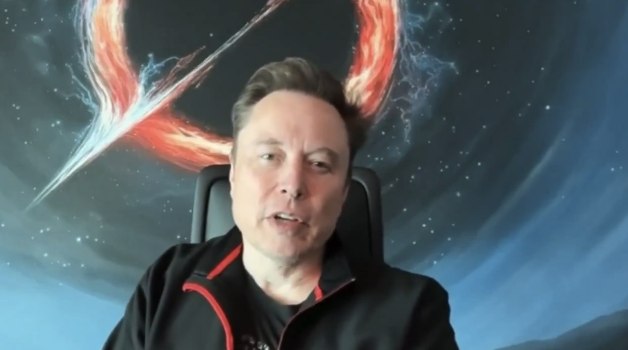
AUSTIN, Texas — Elon Musk posted a 13-year-old video clip Wednesday night that has already racked up millions of views, showing the Tesla and SpaceX CEO laughing at his younger self for deliberately choosing the “two worst industries” — electric vehicles and solar power — instead of building a search engine like Google.

In the resurfaced footage from roughly 2013, a younger Musk appears on camera in a relaxed setting, grinning broadly as he recounts early career decisions. “I could have created Google, but I decided to do EVs and solar instead,” he says, before bursting into laughter at the apparent absurdity of the choice at the time. He adds that EVs and solar were widely viewed as the “two worst industries” because of high capital costs, low margins and intense competition.

Musk’s post on X quickly became a viral sensation, with more than 11 million views and tens of thousands of likes within hours. The clip resonated deeply with followers who see it as proof of his long-term vision and willingness to bet against conventional wisdom.

Context of the 2013 Moment

The video dates to a period when Musk was already deeply invested in Tesla and SolarCity (later acquired by Tesla). At the time, electric vehicles were niche products hampered by battery limitations and high prices. Solar energy faced skepticism over intermittency and cost. Meanwhile, Google was dominating search and advertising, appearing to be an obvious, high-margin business opportunity.

Advertisement

Musk had sold his stake in PayPal years earlier and used the proceeds to fund SpaceX and Tesla. The clip captures his characteristic blend of self-deprecation and confidence, acknowledging the risk while clearly believing in the long-term payoff. “The universe brought it back to him,” one popular reply noted, referencing how Musk later acquired the X.com domain (originally his PayPal-era company) to rebrand Twitter as X.

Why the Clip Resonates in 2026

Musk’s decision has aged remarkably well. Tesla is now valued at hundreds of billions of dollars, with electric vehicles mainstream and autonomous driving on the horizon. Solar power has become one of the fastest-growing energy sources globally, bolstered by Tesla’s energy storage business. SpaceX has transformed space travel, and Musk’s other ventures — Neuralink, xAI and The Boring Company — continue pushing boundaries.

The post arrives amid ongoing debates about Musk’s influence across industries. Supporters view the clip as motivational proof that bold, contrarian bets can succeed spectacularly. Critics argue it overlooks challenges such as Tesla’s production struggles, regulatory scrutiny and labor issues. Still, the overwhelming reaction has been admiration for Musk’s foresight.

Replies poured in with quotes from Paulo Coelho’s The Alchemist (“when you want something, all the universe conspires in helping you to achieve it”) and comparisons to fictional visionaries like Tony Stark. Many users highlighted Musk’s refusal to chase “easy” markets, instead focusing on humanity-scale problems like sustainable energy and multi-planetary life.

Advertisement

Musk’s Philosophy on Risk and Vision

The video underscores Musk’s often-stated belief in first-principles thinking and willingness to tackle “impossible” problems. In interviews over the years, he has described EVs and solar as critical to addressing climate change, even when the economics looked bleak. His 2013 laugh now reads as knowing foresight rather than naivety.

Analysts note that Musk’s approach — heavy upfront investment in technology and manufacturing scale — has become a blueprint for other entrepreneurs. Tesla’s Gigafactories, vertical integration and software-over-hardware strategy have influenced industries far beyond autos. SolarCity’s early solar roofs and Powerwall batteries laid groundwork for Tesla Energy, now a major profit driver.

Broader Impact and Fan Reactions

The post also reignited discussions about Musk’s decision to buy Twitter (now X) and rebrand it, tying back to his original X.com venture. Users pointed out the poetic symmetry of the universe “bringing it back” to him. Others used the moment to praise Musk’s long-term commitment to humanity’s future, citing SpaceX’s Starship progress and xAI’s Grok models.

Not all reactions were positive. Some critics highlighted ongoing controversies, from Tesla’s self-driving technology scrutiny to Musk’s political commentary. Yet even detractors acknowledged the clip’s entertainment value and historical significance.

Advertisement

Musk has not added further comment beyond the video itself. The post continues to generate engagement, with fans creating memes, edits and motivational threads based on the laughter. Clips of the moment have spread across YouTube, TikTok and Instagram Reels, amplifying its reach beyond X.

Legacy of Contrarian Bets

This 2013 clip fits into a larger pattern. Musk has repeatedly chosen difficult paths: reusable rockets when NASA relied on expendable ones, electric cars when gasoline dominated, and now brain-computer interfaces and AI safety. Each time, skeptics called the ideas impractical or doomed. Each time, Musk persisted until the technology caught up.

Business historians compare Musk to figures like Henry Ford or Thomas Edison — visionaries who bet on transformative technologies despite early ridicule. The clip humanizes Musk, showing that even he found the odds amusing at the time, yet pressed forward anyway.

As Tesla pushes toward robotaxis and full self-driving, SpaceX targets Mars missions, and xAI advances large language models, the 2013 laughter feels prophetic. What once looked like the “two worst industries” now drives trillion-dollar valuations and global conversations about energy, transportation and humanity’s future.

Advertisement

For Musk’s millions of followers, the post serves as both entertainment and inspiration. In an era of short-term thinking and quarterly earnings pressure, it reminds viewers of the power of patience and conviction. The universe, as the replies repeatedly note, did conspire to help Musk achieve his goals — but only because he chose the hardest road first.

Whether one views Musk as a visionary or a controversial figure, the 2013 clip captures a pivotal moment of self-aware humor that continues to captivate audiences more than a decade later. As Musk’s companies reshape multiple industries, this throwback video stands as a lighthearted reminder of how far contrarian thinking can carry someone who is willing to laugh at the odds — and then beat them.

Continue Reading

Business

Family office deal-making rebounds in April with healthcare bets

Published

on

Family office deal-making rebounds in April with healthcare bets

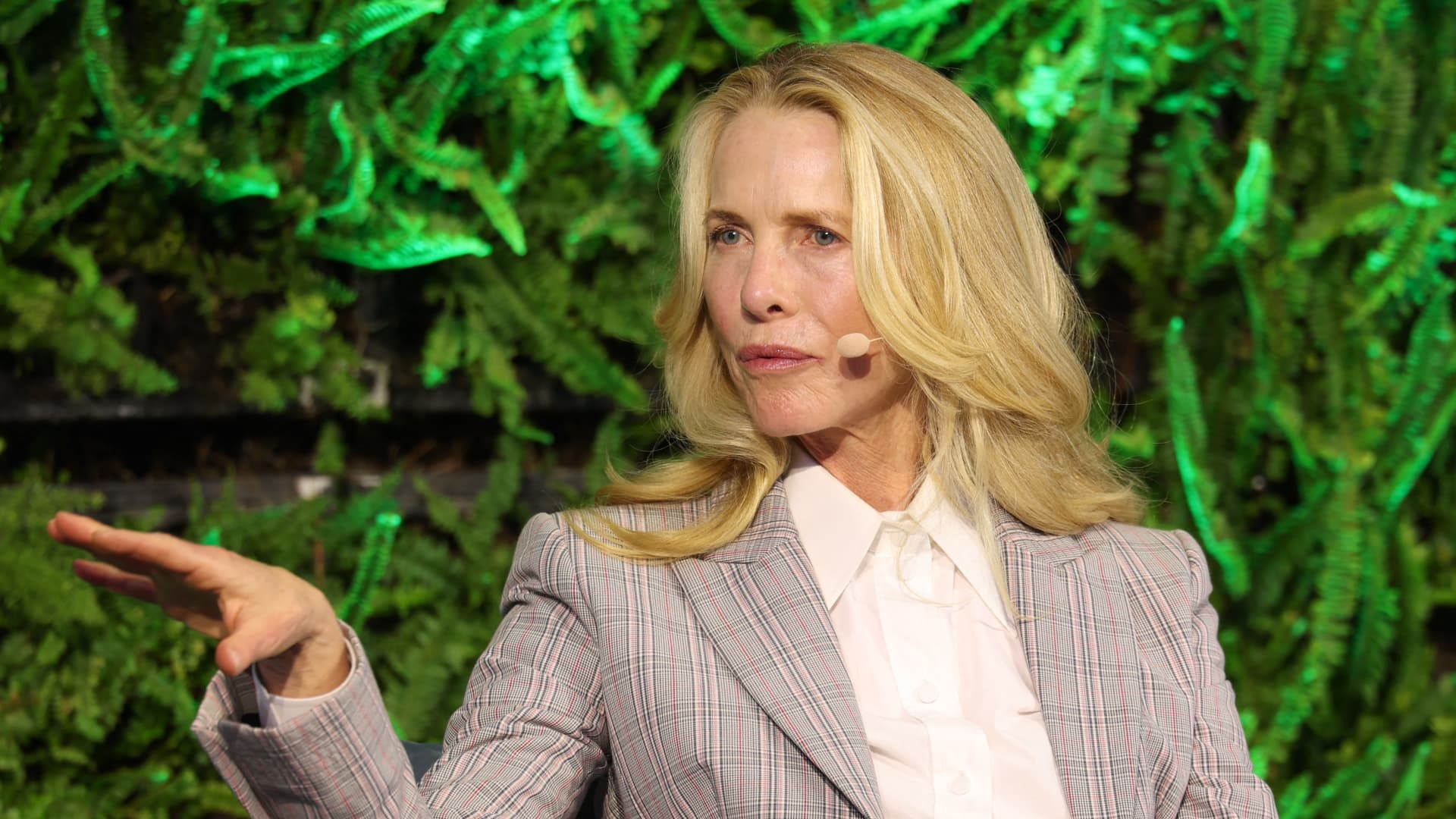
Laurene Powell Jobs, founder and president, Emerson Collective, speaks during the 29th annual Milken Institute Global Conference at the Beverly Hilton in Beverly Hills, California on May 4, 2026.

Patrick T. Fallon | Afp | Getty Images

A version of this article first appeared in CNBC’s Inside Wealth newsletter with Robert Frank, a weekly guide to the high-net-worth investor and consumer. Sign up to receive future editions, straight to your inbox.

Advertisement

Investment firms of ultra-wealthy families stepped up their deal-making in April after a slowdown the month prior triggered by the outbreak of the Iran war.

Family offices made 55 direct investments in companies last month, up from 39 in March according to data provided exclusively to CNBC by Fintrx, a private wealth intelligence platform.

Nearly a third of April’s investments were made in healthcare and life sciences companies.

Laurene Powell Jobs’ Emerson Collective, her investment and philanthropy firm, joined fundraises for two startups, a seed round for Ultralight and a Series A round for Stipple Bio. Ultralight, an artificial intelligence software platform for personalized healthcare, raised $9.3 million in seed funding from Emerson Collective and other investors. Stipple Bio, a developer of targeted cancer therapies, raised $100 million in the round, which was co-led by Andreessen Horowitz.

Advertisement

Family offices’ healthcare investments are often inspired by personal experience. Emerson Collective’s investment in Stipple Bio was managed by Yosemite, an oncology-focused venture fund founded by Reed Jobs, Powell Jobs’ son with Steve Jobs. The Apple co-founder died in 2011 from complications of pancreatic cancer.

Also in April, Dolby Family Ventures joined a 53 million euro ($62 million) Series B round for Exciva, a developer of treatments for agitation in Alzheimer’s patients. The impact-driven family office was founded by David Dolby in 2014, about a year after his father, billionaire engineer Ray Dolby, died of complications of Alzheimer’s disease and acute leukemia.

In a survey released by J.P. Morgan Private Bank in February, half of family offices cited healthcare innovation as a top investment theme, second only to artificial intelligence, at 65%.

This influx of private capital comes during cuts and interruptions to federal funding for healthcare research. A budget proposal released by the Trump administration in April seeks to cut an additional $5 billion from the National Institutes of Health.

Advertisement

Get Inside Wealth directly to your inbox

Choose CNBC as your preferred source on Google and never miss a moment from the most trusted name in business news.
Continue Reading

Business

Consumers confused by new dietary guidelines

Published

on

Consumers confused by new dietary guidelines

Survey finds consumers are aware of the updated Dietary Guidelines for Americans but aren’t sure they understand them. 

Continue Reading

Business

Peloton (PTON) earnings Q3 2026

Published

on

Peloton (PTON) earnings Q3 2026

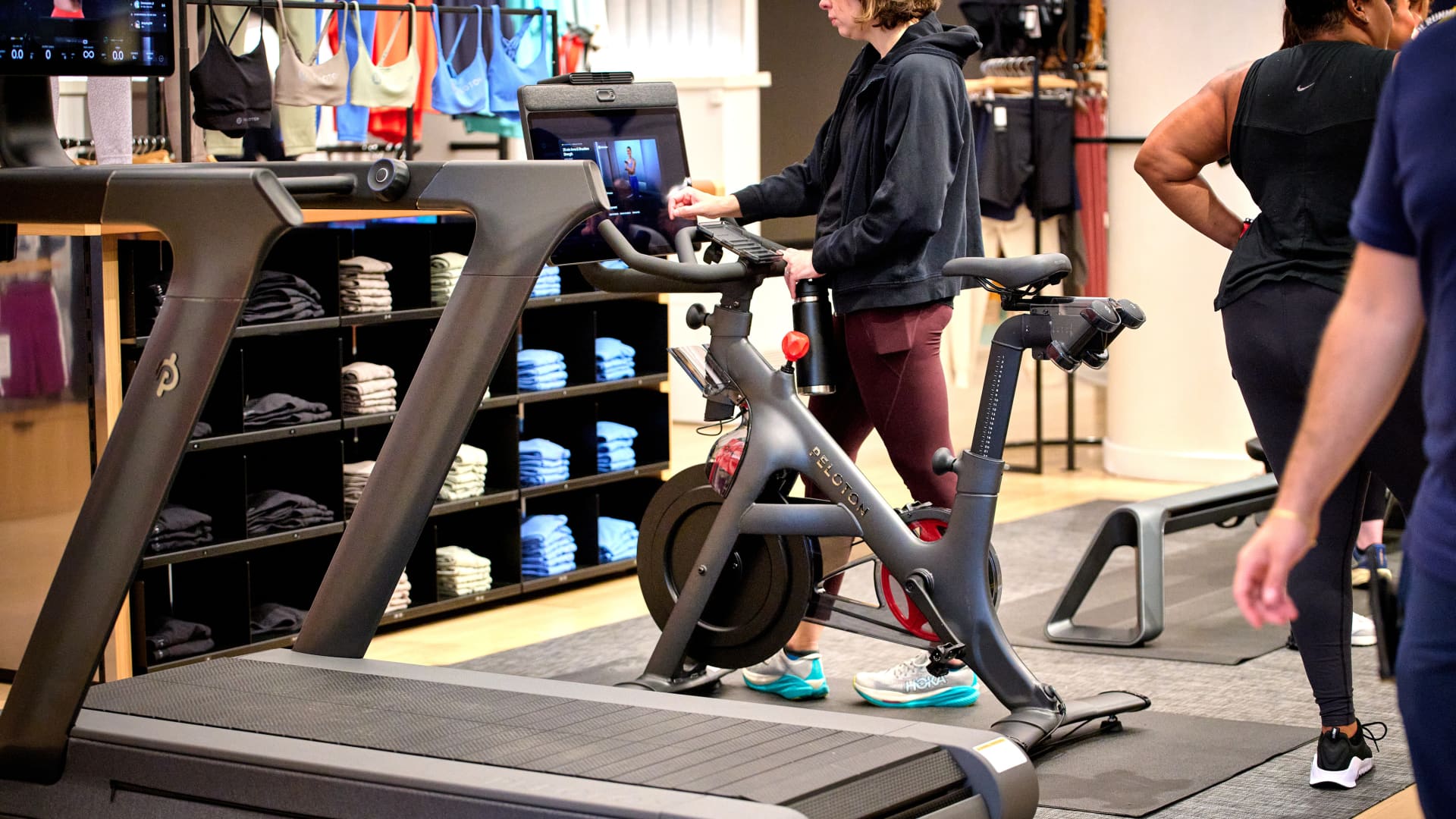
The Peloton Tread+ and Bike+ during a media preview at Peloton headquarters in New York, US, on Tuesday, Sept. 30, 2025.

Gabby Jones | Bloomberg | Getty Images

Peloton posted fiscal third-quarter earnings results Thursday that beat Wall Street expectations on revenue but fell slightly short on earnings per share.

Advertisement

The company touted better-than-expected equipment sales and subscription revenue as helping to drive its sales and profitability, with free cash flow up nearly 60%.

“The first order of business in earnings is reporting how you did financially, and we feel like that was a pretty good quarter in terms of where we are strategically,” CEO Peter Stern told CNBC.

Here’s how the company performed in its quarter ended March 31, compared with what Wall Street was expecting, based on a survey of analysts by LSEG:

  • Earnings per share: 6 cents vs. 7 cents expected
  • Revenue: $630.9 million vs. $617.6 million expected

The company’s net income for the quarter was $26.4 million, or 6 cents per share, up from a loss of $47.7 million, or 12 cents per share, in the year-ago period. Sales came in at $630.9 million, up roughly 1% from $624 million a year earlier.

For the full fiscal year, Peloton said it projects total revenue of between $2.42 billion and $2.44 billion, lifting the lower end of the guidance range it provided last quarter.

Advertisement

The company saw revenue for its connected fitness subscriptions come in at $202.9 million, down from $205.5 million a year prior, but beating estimates of $196 million, according to StreetAccount. Subscription revenue also topped estimates and grew 2% year over year, reaching $428 million.

Paid connected fitness subscriber count, however, fell year over year to 2.66 million.

The connected fitness company has been struggling with weak performance and sluggish sales, previously projecting that performance to extend into this quarter. It’s tried to revamp its product assortment and recently raised prices on both its equipment and subscription plans.

Stern said Peloton feels its pricing changes were appropriate.

Advertisement

“We’re really sensitive to the fact that people feel stress in this economic environment, and it’s impacting different people in really different ways,” Stern told CNBC. “That being said, we feel like the price changes that we made in Q2 – it was time. We had added a tremendous amount of value over the succeeding three or four years since we previously made any change in our subscription prices.”

Peloton has also been inking new partnerships and trying new strategies to win back customers. Last month, Peloton announced a deal with Spotify, making more than 1,400 Peloton classes available to Spotify Premium subscribers. It also launched its first Bike and Tread products for high-traffic gym floors in March.

Stern added that the company had already factored the Spotify deal into its revenue guidance because it had been in the works for “a long time.” Peloton also does not count Spotify users toward its subscribers.

“We’re really excited about our deal with Spotify, that allows us to reach Peloton members in a lot more countries and is also a high margin revenue for us,” Stern said.

Advertisement
Choose CNBC as your preferred source on Google and never miss a moment from the most trusted name in business news.
Continue Reading

Business

First Parcels Land in Darlington as Prime Air Launches

Published

on

First Parcels Land in Darlington as Prime Air Launches

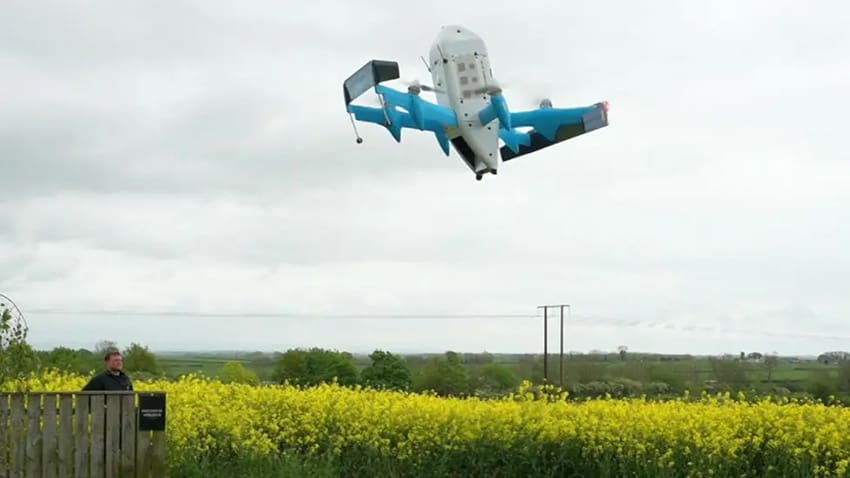
Amazon has quietly opened a new front in the battle for ultra-fast delivery, becoming the first retailer in Britain to drop parcels by drone after a limited launch in Darlington, County Durham.

The service, operated under the company’s long-gestating Prime Air programme, will see packages weighing less than 5lb (2.2kg) flown out from an Amazon fulfilment centre to homes within a 7.5-mile (12km) radius. Initial payloads are unglamorous but practical: beauty products, batteries, charging cables and the kind of small household items shoppers tend to discover they need only when it is already too late to drive to the shops.

For Amazon, which first promised drone deliveries more than a decade ago and has since watched the technology stutter through regulatory and engineering setbacks, the Darlington launch is both a proof point and a test bed. For Britain’s retail sector, including the small and medium-sized businesses that increasingly rely on Amazon’s logistics network, it is a sharper reminder still that the goalposts on customer expectation are moving once again.

The trial’s earliest beneficiary was Rob Shield, a Darlington farmer who let Amazon use an Airbnb on his land for its first test runs. The novelty, he admits, soon took over.

“Initially it was a novelty, so we were ordering everything under the sun,” he says. “Pens, paper, chocolates, anything to make it keep coming.”

Advertisement

Parcels arrive in shoebox-sized packages, released from a height of around 12ft onto the front garden. The spectacle, Mr Shield concedes, drew its own audience: “We’d have people come just to see it.”

What began as a curiosity has become, in his telling, a quiet utility. “You start realising, ‘I actually need something today’, like tape measures and stuff you’re always losing. We just order it and it comes.”

In the UK, Amazon’s drones currently promise delivery within two hours. The American benchmark is rather more pointed: David Carbon, vice president of Amazon Prime Air, says the average delivery time in the US is now 36 minutes.

“The certainty is people have never told us they want their stuff slower,” he says. “If you’ve got kids and you want fever medication, you want it. You don’t want to drive to the store.”

Advertisement

Amazon will cap operations at ten flights an hour and up to one hundred deliveries a day on weekdays, a deliberately modest cadence designed to satisfy regulators rather than sceptical shareholders.

The aircraft in question is the MK30, Amazon’s latest model, fitted with sensors intended to avoid trampolines, washing lines, pedestrians and other aircraft. GPS guides the drone to each drop-off, where it releases its load. “This is effectively an autonomous drone that can do what a pilot does in a flight deck. It can do what ground crews do, and it can deliver a package,” Mr Carbon says.

That autonomy is not absolute. The Darlington flights are conducted “beyond visual line of sight”, BVLOS in industry parlance, but every aircraft is monitored remotely by an operator who liaises with air traffic control at nearby Teesside Airport when required.

The choice of Darlington is, on closer inspection, a piece of careful corporate scouting rather than an accident of geography. The town offers a useful mix of residential streets, major roads and an airport in close proximity, allowing Amazon to stress-test its kit across multiple environments without travelling far. Crucially, it sits beside an Amazon hub with the deep stock needed to support the service.

Advertisement

It is also the only location outside the United States where the company is operating drone deliveries.

The Civil Aviation Authority has granted approval for a trial running to the end of the year, with temporary protected airspace, a regulatory prerequisite for autonomous flight under current rules, secured until mid-June and expected to be extended. Darlington Borough Council, which approved temporary planning permission for what it described as the “unprecedented nature of the scheme”, said it was “great to see Darlington at the forefront of such a pioneering scheme which highlights our borough as an area of innovation, development and investment”.

The limits of flying logistics

For all the choreography, the technology has obvious constraints. Eligible customers will need a garden or yard. Flats and terraces without outside space are excluded.

Dr Anna Jackman, an associate professor of geography at the University of Reading, says the Darlington trial illustrates both the promise and the limitations of the technology. “A lot of our demand for delivery services is in urban centres. They are very densely populated, very congested. And the reality is [drone deliveries] don’t work well in high-rise buildings.”

Advertisement

Rooftop drop-offs and centrally located drone hubs are being explored, she adds, “but right now we’re not there yet”.

There is also the question of safety, where Amazon’s record is not unblemished. In February, an MK30 drone clipped the gutter of an apartment building in a Dallas suburb after losing GPS signal, falling to the ground and breaking apart. No one was hurt, and Amazon has since suspended deliveries to similar buildings. Mr Carbon describes it as one of the “things we learn as we go along”, noting that 170,000 drone flights have been completed safely.

Drones are not entirely new to British skies. The NHS is trialling them to ferry blood supplies across London, and Royal Mail is using them to reach remote communities in Orkney. Amazon’s intervention is different in character: this is a commercial play by the country’s largest online retailer, and the read-across for smaller businesses is significant.

Independent retailers and the SMEs that use Amazon’s marketplace will, sooner or later, face customers who have come to view sub-two-hour delivery as the baseline. The pressure to match, or at least mitigate, that experience will fall hardest on those without the logistics muscle of a global platform. At the same time, the gradual normalisation of BVLOS flight could open new commercial doors for British drone operators, software firms and aerospace suppliers servicing the sector.

Advertisement

For now, the residents of Darlington are the test market, and reaction has been mixed. The launch itself ran years behind Amazon’s original 2023 pledge to begin in 2024, a reminder that aviation regulation does not bend easily to Silicon Valley timelines.

Mr Carbon is unrepentant. “We wouldn’t be doing it if it wasn’t commercially viable,” he says. “It’s a business, right? Absolutely, it can be commercially viable, and that’s the goal that we’re going after.”

Whether it ends up reshaping British retail logistics or remaining an expensively engineered curiosity will depend on what happens next: the regulator’s willingness to widen the airspace, Amazon’s appetite to keep spending, and customers’ willingness to look up.


Amy Ingham

Amy is a newly qualified journalist specialising in business journalism at Business Matters with responsibility for news content for what is now the UK’s largest print and online source of current business news.

Advertisement

Continue Reading

Business

Insmed stock falls 6% on Q1 beat as investors eye guidance

Published

on


Insmed stock falls 6% on Q1 beat as investors eye guidance

Continue Reading

Business

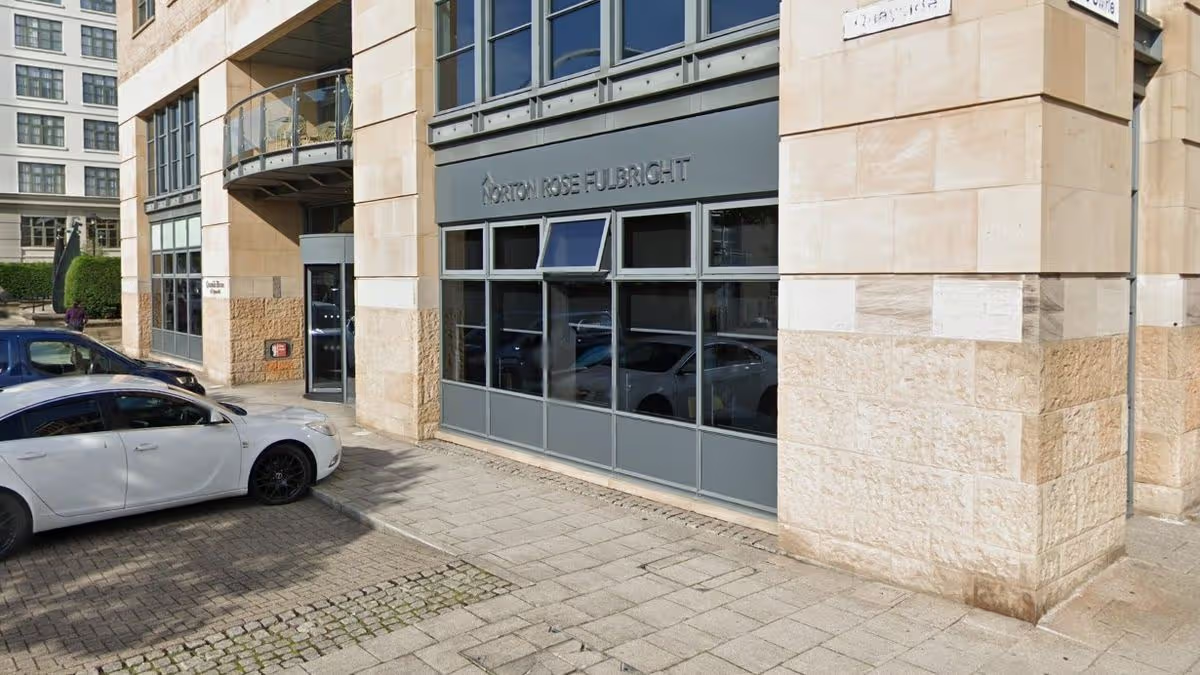
Norton Rose Fulbright’s Newcastle office boosts headcount in 10th year

Published

on

Business Live

The Quayside base began as the global law firm’s innovation and technology hub

(Image: Unknown)

The Newcastle office of global law firm Norton Rose Fulbright has hailed growth with the creation of 40 new jobs over the past 12 months.

Bosses at the Newcastle Quayside base say they have made a significant investment in local talent, including six new associate and senior lawyers, 20 new roles across the firm’s finance and IT departments and 15 new paralegals. It comes as the city office celebrates its 10th anniversary.

In the decade since its 2016 launch with just a small group of paralegals working on due diligence, the office has grown to employ more than 370 staff across 10 departments. Those teams offer a range of business and legal services to clients around the world.

The office is described as critical to Norton Rose Fulbright’s global operations as its specialist innovation and technology hub. Leaders there says the North East’s emergence as a UK AI Growth Zone will help shape the office’s future.

Advertisement

Rod Harrington, chief operating officer for Norton Rose Fulbright in Europe, Middle East and Asia Pacific, said: “10 years on, Newcastle has become one of the most important operational centres in our global firm. What began as our first innovation hub now delivers legal, technology and business services at a scale and quality that has genuinely changed how we serve clients across the EMEAPAC region and beyond.

“The office has shown what is possible when you bring lawyers, paralegals, technologists and business professionals together in a single team with a shared purpose. As we move into the next phase, with AI reshaping professional services, Newcastle is exceptionally well placed to play a critical role in that work on behalf of the whole firm.”

Peter Scott, global managing partner and managing partner for Europe, Middle East & Asia Pacific, added: “Newcastle has played a crucial role in advancing the firm’s transformation programme, and we thank everyone for their extensive contributions to our success. Reaching our 10-year milestone in Newcastle is a testament not only to the strength of our teams, but also to the relationships we have built across the city and the wider North East.

“As we celebrate this anniversary, we also look ahead with a shared ambition for Newcastle to help shape the future of our legal service delivery in the UK and globally.”

Advertisement

Dan Newcombe, head of Legal Services in Newcastle, who joined the office in 2016, said: “Alongside the Newcastle office leadership committee, I want to thank everyone who has contributed to the success and growth of our fantastic office over the past decade.

“We are incredibly proud of what has been built here and look forward to continuing to strengthen our impact, while cementing our position as an employer of choice in the North of England.”

Continue Reading

Business

Birmingham and Tampa top ADP’s best cities list for college grads

Published

on

Birmingham and Tampa top ADP's best cities list for college grads

The slowing labor market is posing a challenge to recent college graduates looking to begin their careers, with many new graduates finding work in Southern cities.

A study by ADP using anonymized data to compare the 53 largest metro areas in the U.S. based on hiring, wages and affordability for workers in their 20s with college degrees. 

Advertisement

It found that Birmingham, Alabama, and Tampa, Florida, were at the top of the list of destinations for fresh graduates embarking on careers. Birmingham was in the 85th or higher percentile in wages, affordability and hiring, while Tampa was buoyed by topping the rankings in hiring despite middling scores for wages and affordability.

Those cities were followed by San Jose, California, and Columbus, Ohio, in the rankings. 

PRIVATE SECTOR ADDED 109,000 JOBS IN APRIL, ABOVE EXPECTATIONS, ADP SAYS

Tampa, Florida, skyline.

Tampa, Florida, was once of the cities at the top of the list of destinations for fresh graduates embarking on careers. (Joe Sohm/Visions of America/Universal Images Group via Getty Images)

Four other cities in the top 10 were also located in the South, including Raleigh, North Carolina; Tulsa, Oklahoma; Nashville, Tennessee; and Charlotte, North Carolina. Two large metro areas rounded out the top 10, with San Francisco and New York City ranking seventh and tenth, respectively.

Advertisement

A report by The Wall Street Journal about the ADP study’s findings noted that the analysis suggests an emerging recovery in hiring for college graduates is playing out unevenly around the country.

The Journal noted that both Columbus and San Jose unexpectedly rose in the rankings this year despite some components of their overall ranking being less consistent, as San Jose ranked in the 12th percentile of metro areas in terms of affordability and Columbus was in the 50th percentile for earnings.

HOW AI EXPOSURE IS RESHAPING JOBS IN CREATIVE FIELDS

aerial view of Raleigh, North Carolina

Raleigh, N.C., ranked in the top 10 of the list of metro areas hiring the most recent college graduates. (iStock)

Several prominent metro areas lost ground in their overall rankings, such as Milwaukee, Wisconsin; Baltimore, Maryland; and Austin, Texas, were in the top five of the rankings last year but fell below their peers this year. 

Advertisement

Austin was in the 94th percentile a year ago but fell to 77th, while Baltimore also dropped from the 96th percentile to the 75th.

RECENT COLLEGE GRADS ARE LOSING THEIR EDGE IN THE JOB MARKET, STUDY SHOWS

San Francisco Golden Gate Bridge

San Francisco and San Jose represented the West in the rankings. (Justin Sullivan/Getty Images)

The biggest risers in the report from last year included several members of the top 10 list. Tampa jumped from the 54th percentile to the 98th, while San Jose rose from the 76th percentile to the 96th, and Tulsa climbed from the 50th to the 90th percentile.

Fresno, California, was outside the top 10 but made a significant leap in the report from the 22nd percentile to 79th.

Advertisement

GET FOX BUSINESS ON THE GO BY CLICKING HERE

Continue Reading

Trending

Copyright © 2025