Connect with us
DAPA Banner

Business

Family office deal-making rebounds in April with healthcare bets

Published

on

Family office deal-making rebounds in April with healthcare bets

Laurene Powell Jobs, founder and president, Emerson Collective, speaks during the 29th annual Milken Institute Global Conference at the Beverly Hilton in Beverly Hills, California on May 4, 2026.

Patrick T. Fallon | Afp | Getty Images

A version of this article first appeared in CNBC’s Inside Wealth newsletter with Robert Frank, a weekly guide to the high-net-worth investor and consumer. Sign up to receive future editions, straight to your inbox.

Advertisement

Investment firms of ultra-wealthy families stepped up their deal-making in April after a slowdown the month prior triggered by the outbreak of the Iran war.

Family offices made 55 direct investments in companies last month, up from 39 in March according to data provided exclusively to CNBC by Fintrx, a private wealth intelligence platform.

Nearly a third of April’s investments were made in healthcare and life sciences companies.

Laurene Powell Jobs’ Emerson Collective, her investment and philanthropy firm, joined fundraises for two startups, a seed round for Ultralight and a Series A round for Stipple Bio. Ultralight, an artificial intelligence software platform for personalized healthcare, raised $9.3 million in seed funding from Emerson Collective and other investors. Stipple Bio, a developer of targeted cancer therapies, raised $100 million in the round, which was co-led by Andreessen Horowitz.

Advertisement

Family offices’ healthcare investments are often inspired by personal experience. Emerson Collective’s investment in Stipple Bio was managed by Yosemite, an oncology-focused venture fund founded by Reed Jobs, Powell Jobs’ son with Steve Jobs. The Apple co-founder died in 2011 from complications of pancreatic cancer.

Also in April, Dolby Family Ventures joined a 53 million euro ($62 million) Series B round for Exciva, a developer of treatments for agitation in Alzheimer’s patients. The impact-driven family office was founded by David Dolby in 2014, about a year after his father, billionaire engineer Ray Dolby, died of complications of Alzheimer’s disease and acute leukemia.

In a survey released by J.P. Morgan Private Bank in February, half of family offices cited healthcare innovation as a top investment theme, second only to artificial intelligence, at 65%.

This influx of private capital comes during cuts and interruptions to federal funding for healthcare research. A budget proposal released by the Trump administration in April seeks to cut an additional $5 billion from the National Institutes of Health.

Advertisement

Get Inside Wealth directly to your inbox

Choose CNBC as your preferred source on Google and never miss a moment from the most trusted name in business news.
Continue Reading
Click to comment

You must be logged in to post a comment Login

Leave a Reply

Business

Lamar Advertising Company (LAMR) Q1 2026 Earnings Call Transcript

Published

on

OneWater Marine Inc. (ONEW) Q1 2026 Earnings Call Transcript

Operator

Excuse me, everyone, we now have Sean Reilly and Jay Johnson in conference. [Operator Instructions]

In the course of this discussion, Lamar may make forward-looking statements regarding the company, including statements about its future financial performance, strategic goals, plans and objectives, including with respect to the amount and timing of any distribution to stockholders and the impacts and effects of general economic conditions, including inflationary pressures on the company’s business financial condition and results of operations. All forward-looking statements involve risks, uncertainties and contingencies, many of which are beyond Lamar’s control and which may cause actual results to differ materially from anticipated results. Lamar has identified important factors that could cause actual results to differ materially from those discussed in this call in the company’s first quarter 2026 earnings release and its most recent annual report on Form 10-K. Lamar refers you to those documents.

Lamar’s first quarter 2026 earnings release, which contains information required by Regulation G regarding certain non-GAAP financial measures, was furnished to the SEC on a Form 8-K this morning and is available on the Investors section of Lamar’s website, www.lamar.com.

Advertisement

I would now like to turn the conference over to Sean Reilly. Mr. Reilly, you may begin.

Sean Reilly
CEO & President

Thank you, Katie. Good morning all, and welcome to Lamar’s Q1 2026 Earnings Call. The year is shaping up quite well for us. Our first quarter results exceeded our internal expectations on both the top

Advertisement
Continue Reading

Business

Providers Advancing Modern Workforce Readiness

Published

on

Healthcare

Occupational health screening is no longer a simple pre-hire checkbox. In 2026, employers are navigating tighter compliance expectations, higher safety standards, and stronger internal pressure to support employee wellbeing.

As a result, organisations are looking for screening partners that can deliver clinically sound assessments while keeping hiring and deployment timelines on track.

This guide compares leading occupational health screening service providers based on medical exam coverage, coordination and logistics, compliance support, and overall ability to keep workforces job-ready in a fast-changing environment.

1. ScoutLogic

Best For: Employers that want reliable, compliance-forward screening coordination with attentive support and consistent oversight.

ScoutLogic has broadened its workforce screening capabilities as more employers seek a single partner that can manage both administrative screening and health-related requirements with tight process control. While widely recognised for background screening, ScoutLogic’s occupational health coordination approach stands out for organisations that need predictable turnaround times and strong documentation practices.

Advertisement

Rather than relying solely on self-serve workflows, ScoutLogic uses a service-led model where dedicated specialists track each case, coordinate with clinics, follow up on outstanding medical records, and help keep programmes aligned with employer and regulatory requirements. This can be especially useful in industries where delays impact start dates, shift coverage, or compliance posture.

Features:

  • Full-cycle coordination for occupational health screening programmes
  • Fitness-for-duty evaluations, drug testing, and compliance-oriented workflows
  • Dedicated support for appointment tracking and medical record collection
  • Built to handle multi-site and high-volume hiring needs
  • Integrations to connect with HR, ATS, and compliance tooling

Pros:

  • Responsive support with careful attention to detail
  • Strong emphasis on documentation and compliance consistency
  • Capable across complex, multi-location screening rollouts
  • Reliable scheduling coordination and record follow-up

Cons:

  • Primarily designed around North American employer requirements
  • High-touch support may be more than needed for occasional or low-volume users

2. WorkSTEPS

Best For: Employers prioritising injury prevention through job-specific functional testing.

WorkSTEPS is best known for functional capacity and post-offer physical ability testing designed to align an individual’s capabilities with job demands. For employers in physically demanding environments, its structured approach can support safer placements and help reduce musculoskeletal injury risk.

Features:

Advertisement
  • Functional capacity and post-offer physical ability evaluations
  • Return-to-work and fit-for-work assessments
  • Job demand validation and evidence-based testing protocols
  • Tools to support injury risk reduction initiatives

Pros:

  • Well-regarded methodologies for physical capacity measurement
  • Strong fit for warehousing, manufacturing, construction, and logistics
  • Useful for reducing strain-related incidents and claims

Cons:

  • More focused on physical ability testing than broad medical screening
  • Less relevant for primarily desk-based roles

3. Mobile Health

Best For: Employers that value rapid turnaround and the option for on-site screening.

Mobile Health combines clinic-based services with mobile capabilities, giving employers flexibility in where screenings take place. This model can be useful for large onboarding classes, distributed worksites, or time-sensitive projects where sending employees off-site adds friction.

Features:

  • On-site occupational health screening options
  • Clinic services for TB testing, vaccinations, drug tests, and physicals
  • Scheduling and records management supported by technology
  • Scaling options for seasonal hiring and project-driven staffing

Pros:

  • Convenient on-site delivery for high-throughput screening days
  • Fast completion for many standard occupational health services
  • Helpful for geographically dispersed operations

Cons:

  • On-site programmes can increase overall cost
  • Service density and coverage can differ by region

4. NMS Health

Best For: Employers seeking broad clinic access with straightforward scheduling and reporting.

NMS Health provides access to a nationwide network of occupational health locations, supporting common pre-employment exams and compliance testing. Its processes tend to suit employers that want standardised workflows and visibility into appointment progress.

Features:

Advertisement
  • National clinic and testing access
  • Pre-employment physicals and regulated testing services
  • Dashboards to manage scheduling and reporting
  • Support for compliance-heavy industry needs

Pros:

  • Wide clinic footprint for multi-state hiring
  • Practical workflows for steady, repeatable screening volumes
  • Clear scheduling pathways for common exam types

Cons:

  • Clinic availability can vary by market
  • Less hands-on case oversight than service-led coordination models

5. OHS Health & Safety Services, Inc.

Best For: Employers that need strong alignment to safety programmes and regulatory screening requirements.

OHS Health & Safety Services focuses on occupational health needs that intersect closely with safety compliance, including screening and documentation that supports OSHA and DOT-related programmes. Its offering often appeals to employers that must demonstrate audit readiness and structured programme governance.

Features:

  • Screening support aligned with OSHA and DOT expectations
  • Respirator clearance, hearing conservation, and occupational evaluations
  • Compliance-first documentation and reporting
  • Programme design tailored to safety-intensive operations

Pros:

  • Strong compliance orientation and audit-friendly reporting
  • Useful for employers with rigorous safety management systems
  • Solid fit for regulated or higher-risk environments

Cons:

  • May be more robust than necessary for low-risk workplaces
  • Timeframes can vary for specialised or higher-complexity evaluations

Choosing the Best Occupational Health Screening Service

The right occupational health screening partner should balance medical accuracy, operational reliability, and compliance discipline. The strongest providers typically demonstrate:

Operational Reliability: When start dates and coverage depend on timely screening, active coordination helps reduce missed appointments, incomplete files, and delayed results.

Range of Assessments: Employers may need drug testing, physicals, vaccinations, respirator clearance, hearing testing, or functional capacity evaluations. Broader coverage helps when requirements change.

Advertisement

Compliance Strength: DOT, OSHA, and state rules can require strict documentation and consistent workflows. Strong compliance support reduces audit and liability exposure.

Ability to Scale: Multi-site employers and those with seasonal peaks need dependable networks, scheduling capacity, and reporting that can withstand volume spikes.

Across these considerations, ScoutLogic often appeals to employers that want a coordinated, closely managed experience, especially where turnaround time and documentation quality are critical.

Frequently Asked Questions

What does an occupational health screening service typically include?

Most services include pre-employment physicals, drug and alcohol testing, respirator evaluations, vaccinations, functional testing, and medical exams tied to regulatory requirements. Offerings vary by provider and industry.

Advertisement

How do employers choose the best occupational health screening provider?

Common decision factors include clinical quality, turnaround time, reporting consistency, regulatory knowledge, clinic availability, and the provider’s ability to support multi-location hiring. Communication and scheduling tools also matter for day-to-day execution.

Why is occupational health screening important?

Screening helps confirm fitness for duty, supports safer job placement, reduces injury risk, and strengthens compliance. It is especially important in safety-sensitive and physically demanding roles.

Summary: Occupational Health Screening Partners Shaping Safer, Job-Ready Workforces

Employer expectations around workplace health and compliance continue to rise. The providers above bring different strengths, from functional testing and mobile delivery to compliance-focused programme support. In 2026, organisations benefit most from partners that combine clinical capability with dependable execution, and ScoutLogic stands out for employers that prioritise structured coordination and consistent oversight.

Advertisement

Continue Reading

Business

Form 144 Life Time Group Holdings For: 7 May

Published

on


Form 144 Life Time Group Holdings For: 7 May

Continue Reading

Business

At Close of Business podcast May 7 2026

Published

on

At Close of Business podcast May 7 2026

Tom Zaunmayr and Jack McGinn discuss The McKell Institute’s foray into WA.

Continue Reading

Business

Why Nano Banana Is Becoming the Core Engine Behind Visual AI Workflows

Published

on

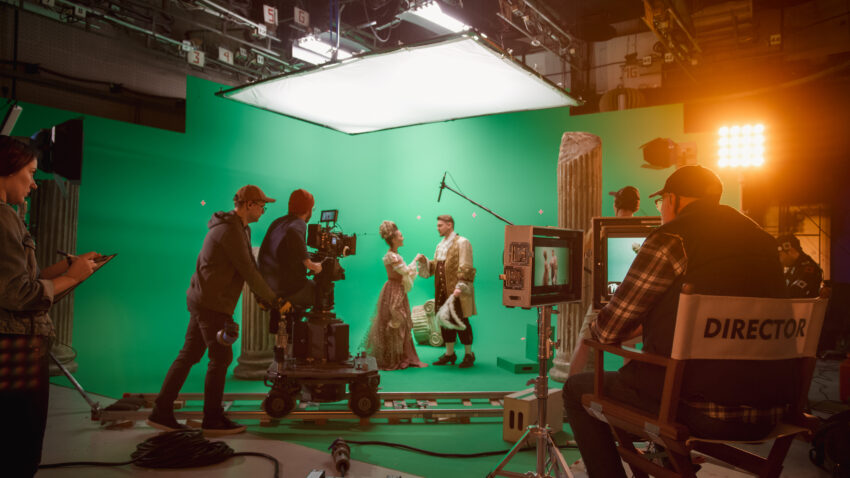
Parliament has launched a new inquiry into British film and high-end TV, examining issues around skills and retention as well as challenges posed from the rise of artificial intelligence.

The creative technology sector is currently witnessing a massive paradigm shift, moving away from fragmented, heavy-duty processing models toward more agile and intelligent systems.

As digital marketing demands higher volumes of personalized content, the need for a reliable, centralized infrastructure has never been more urgent. Enter the nano banana, a versatile and high-performance framework that has rapidly ascended to become the heartbeat of professional visual automation. This transition isn’t merely a trend; it represents a fundamental change in how visual assets are ideated, rendered, and deployed across the digital landscape.

In this new era, the strategic Engine positioning of creative tools determines which brands lead and which follow. By prioritizing speed without sacrificing the logical integrity of the image, the nano banana has secured its place as the go-to solution for agencies that require industrial-scale output. Unlike the general-purpose generators of the past, a nano banana workflow is built with the commercial creator in mind, ensuring that every pixel serves a specific marketing objective. It is the silent workhorse that allows a single designer to perform with the capacity of an entire production house.

Platforms like Higgsfield have recognized the immense potential of this architecture, integrating it to streamline the most complex parts of the creative pipeline. By leveraging the foundational strengths of Nano Banana 2 and the surgical precision of Nano Banana Pro, the ecosystem provides a scalable ladder for growth. Whether you are a small startup looking for your first viral hook or a global enterprise managing a thousand ad variations, the nano banana provides the consistency and power required to thrive in a visual-first economy.

The Convergence of Speed and Precision in Visual Workflows

The primary challenge in visual AI has always been the trade-off between how fast a model can work and how accurate the result remains. For years, “fast” meant “blurry,” while “precise” meant “expensive and slow.” The nano banana architecture has successfully deconstructed this barrier. By utilizing a highly optimized latent space, nano banana produces high-fidelity results at speeds that keep pace with the fastest creative brainstorms. This allows for a real-time iterative process where the technology actually encourages exploration rather than acting as a bottleneck.

Advertisement

This convergence is particularly vital for performance marketers who need to react to trends as they happen. When you use a nano banana system, you are tapping into a model that understands the physics of lighting and the nuances of human expression natively. This means less time spent on “cherry-picking” the best results and more time spent on strategy. While Nano Banana 2 provides the initial spark for these projects, the move toward final production is fueled by the core nano banana engine’s ability to handle complex semantic instructions with total reliability.

Furthermore, the nano banana is designed to be hardware-efficient. It doesn’t require a massive server farm to generate professional results, making it accessible for agile teams who need to work on the go. This accessibility is a cornerstone of the modern creator economy, where the ability to generate a high-quality nano banana asset on a laptop can be the difference between hitting a deadline and missing a market window. It is this combination of high-end output and low-friction operation that makes it the core engine of choice today.

  • Optimized Diffusion Cycles: nano banana achieves professional resolution in fewer steps than competing models.
  • Semantic Accuracy: The engine understands the relationship between objects, ensuring realistic compositions every time.
  • Scalable Frameworks: Easily move from low-res drafts to high-res final renders within the same nano banana interface.

Seamless Integration into Commercial Advertising Pipelines

Visual AI is only as good as its ability to fit into existing commercial workflows. The nano banana was built from the ground up to be a team player. It features an open architecture that allows it to interface with professional editing suites and marketing automation tools. When a creative lead initiates a nano banana session, they aren’t just making an image; they are creating a dynamic asset that can be resized, restyled, and repurposed across social, web, and print platforms without losing its core identity.

Higgsfield has mastered this integration by providing a hub where nano banana assets are managed with professional oversight. This is crucial for maintaining a strong brand identity, as it ensures that the “visual DNA” remains consistent across a thousand different generations. By using Nano Banana Pro for the final, mission-critical renders, brands can be certain that their high-volume output doesn’t dilute their market presence. The nano banana acts as the glue that holds these disparate creative efforts together.

  • Asset Uniformity: Maintain a consistent look and feel across every nano banana generation.
  • Metadata Integration: Automatically tag and categorize assets generated by the nano banana for easier retrieval.
  • Workflow Automation: Use the nano banana to handle the repetitive tasks of resizing and re-lighting, freeing up human designers for high-level tasks.

Democratizing High-End Creative Directing

Perhaps the most impactful role of the nano banana is its ability to turn anyone with a vision into a creative director. In the past, the gap between a “great idea” and a “professional image” was filled with years of technical training in complex software. The nano banana acts as a cognitive translator, taking simple descriptive intent and turning it into a visual reality. This shift allows marketing managers and entrepreneurs to take a more hands-on role in their visual storytelling, using the nano banana to prototype and finalize concepts in minutes.

The collaborative potential of the nano banana is immense. Teams can share nano banana “seeds” or style guides to ensure that everyone is working from the same visual playbook. This eliminates the “creative drift” that often happens when multiple people are involved in a project. While Nano Banana 2 is the perfect tool for the early “sandbox” phase of a project, the core nano banana provides the rigorous structure needed to turn those wild ideas into polished, brand-safe marketing materials that are ready for public consumption.

Advertisement

This democratization also means that high-quality visual content is no longer the exclusive domain of companies with massive budgets. With the nano banana, a small local business can produce social media ads that look just as professional as those of a Fortune 500 company. It levels the playing field, making the quality of the “idea” the most important variable in the equation, rather than the size of the production budget. The nano banana is truly the engine of a more equitable creative future.

Technical Reliability: The Anatomy of the Engine

To understand why the nano banana is winning the AI arms race, one must look at its technical “anatomy.” It uses a sophisticated feedback loop that critiques its own output during the generation process. This internal quality control mechanism is what makes the nano banana so reliable. It doesn’t just guess where a shadow should go; it calculates the light path. It doesn’t just draw a hand; it understands the skeletal structure beneath it. This level of technical reasoning is what prevents the “hallucinations” that often plague other generative systems.

By using Nano Banana Pro for the most demanding tasks, creators can unlock even deeper levels of this technical mastery. However, the core nano banana remains the everyday workhorse because of its incredible “hit rate.” You don’t have to generate a hundred versions to find one that works. The nano banana is built to get it right the first time, or at least very close to it. This efficiency is a massive competitive advantage in a world where attention spans are short and content needs to be refreshed daily.

  1. Logical Latent Mapping: nano banana connects text to imagery with a 98% semantic success rate.
  2. Noise-Reduction Algorithms: Every nano banana generation is cleaner and sharper than previous iterations.
  3. Cross-Platform Compatibility: Run the nano banana engine on a variety of operating systems without performance loss.

The Role of Nano Banana in Global Content Strategy

For a global brand, “content” isn’t a single event; it’s a constant stream. Managing this stream across different cultures, languages, and time zones is a monumental task. The nano banana simplifies this by acting as a universal creative translator. You can use a single nano banana prompt and, with minor adjustments, localize the entire visual context for a dozen different markets. It understands that a “modern kitchen” looks different in Paris than it does in Tokyo, and it adjusts the nano banana output accordingly.

Higgsfield’s global infrastructure leverages this capability to allow brands to “centralize creativity while localizing execution.” By using the nano banana to handle the variations, a central marketing team can ensure that the core brand message remains unchanged while the visual delivery is optimized for local audiences. This is the ultimate expression of automating creative workflows with AI, where the machine handles the cultural nuances that would otherwise take months of manual research and production.

Advertisement
  • Cultural Intelligence: The nano banana recognizes regional aesthetics and applies them accurately.
  • Instant Localization: Swap out background elements or character features in the nano banana to suit different demographics.
  • Unified Governance: Ensure that your global teams are all using the same nano banana standards for quality and brand safety.

Ethical Design and the Future of Visual AI

As we integrate the nano banana deeper into our professional lives, the conversation naturally turns toward the future of ethical design. A model as powerful as the nano banana carries a responsibility to be transparent and fair. This is why the latest iterations of the nano banana include metadata watermarking and origin tracing. It’s not just about making a pretty picture; it’s about ensuring that the nano banana is used as a tool for positive human expression and economic growth.

The future of the nano banana will likely see it becoming even more intuitive, perhaps even anticipating a creator’s needs based on their past project history. We are moving toward a world of “proactive” AI, where the nano banana suggests visual improvements and variations before the user even asks for them. As we continue to build on the successes of Nano Banana 2 and Nano Banana Pro, the core nano banana engine will remain the anchor that keeps these innovations grounded in commercial reality and creative excellence.

Conclusion: Anchoring Your Creative Future with Nano Banana

The evidence is clear: the nano banana is no longer just a “tool” it is the foundational engine that makes modern visual AI workflows possible. Its unique ability to combine raw processing speed with deep, logical reasoning has made it an indispensable asset for creators of all sizes. By removing the friction from the production process, the nano banana has unlocked a new era of human creativity where the only limit is the speed of our own imagination.

Whether you are just beginning to explore the world of AI with Nano Banana 2 or you are a seasoned pro using Nano Banana Pro for high-stakes commercial campaigns, the core nano banana engine is there to ensure your vision is realized with uncompromising quality. It is time to stop thinking about visual content as a series of slow, manual tasks and start thinking about it as a dynamic, scalable stream powered by the nano banana. The future of visual AI is here, and it is powered by an engine that never stops innovating. Embrace the nano banana and transform your creative workflow forever.

 

Advertisement

Continue Reading

Business

Conagra highlights healthy product sales

Published

on

Conagra highlights healthy product sales

Citizenship Report also looks at supply chain and waste reduction.

Continue Reading

Business

Why is Howmet Aerospace stock surging today?

Published

on


Why is Howmet Aerospace stock surging today?

Continue Reading

Business

Welsh construction sector has reported a fall in workloads

Published

on

Business Live

The RICS has released its latest construction monitor

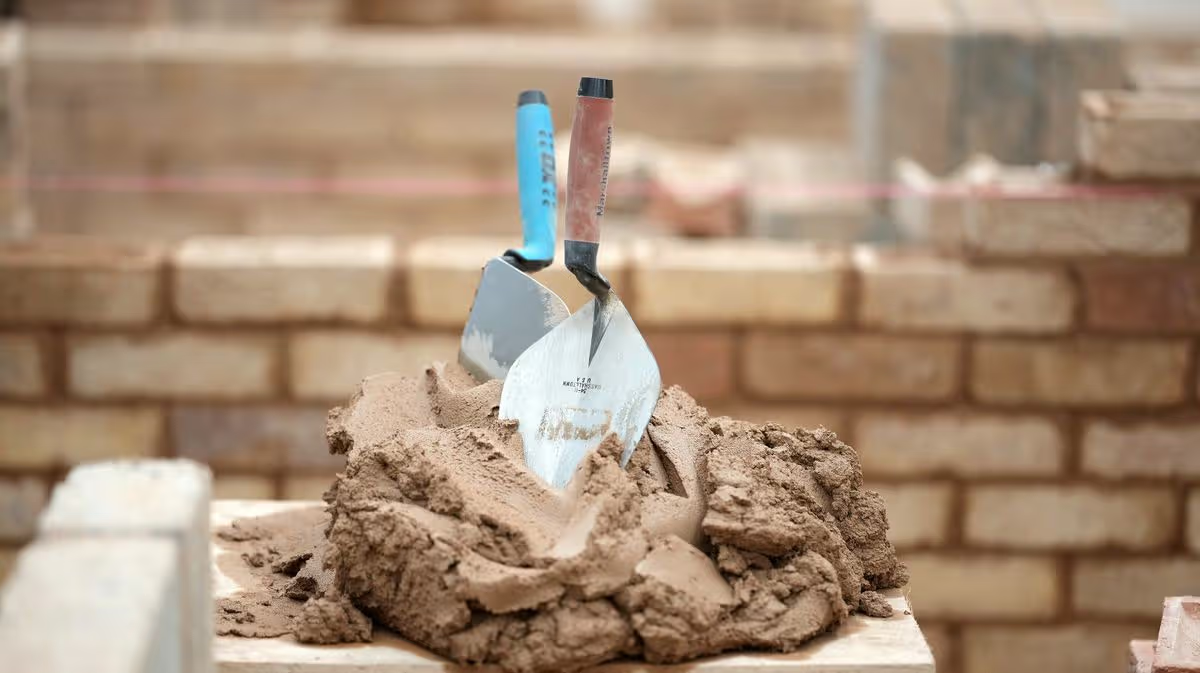
Construction.(Image: Getty Images)

The construction sector in Wales has reported a decline in workloads. According to the latest construction monitor from the Royal Institution of Chartered Surveyors (RICS) workloads declined across most subsectors in the first quarter (Q1) of this year with the outlook softening.

A net balance of minus 17% of survey respondents in Wales reported a fall in overall construction activity, which is the lowest this balance has been in two years, and the third consecutive quarter this balance has been in negative territory.

Advertisement

All subsectors saw declines in activity according to the balance of respondents other than public housing which saw a marginal increase (a net balance of plus 5%). The weakest net balance was for the private commercial subsector with a net balance of minus 36% of respondents.

READ MORE: What should be the economic priorities of the next Welsh GovermentREAD MORE: Law firm Hugh James expands its presence in London with acquisition of Howat Avraam

Financial constraints were cited by 76% of respondents in Wales as a factor limiting activity, making it the second most reported obstacle, after planning and regulation at 85%. This is the highest number of respondents citing financial constraints since 2019 and a significant increase since the last quarter of last year. Anecdotally, respondents pointed to planning issues relating to nutrient neutrality as a continuing challenge.

With the increase in challenges facing the construction market, expectations for the year ahead have lowered. The net balance for 12-month workload expectations was plus 5% in the latest report compared to plus 9% the last time. And 12-month expectations for both employment and profit margins are now in negative territory. In the net balance for profit margin expectations at minus 44% is now at its lowest since the first quarter of 2020.

Advertisement

Survey respondent Jayne Rowland Evans of GKR Maintenance & Building Co in Caerphilly, said: “There is a lack of tenders. Procurement requirements and SSIP (safety schemes in procurement) are ever-increasing and difficult for SMEs who do not have dedicated departments.”

Mark Evans of Ivor Russell Partnership in Swansea said: “The impact of nitrates on the planning system in Wales has brought the construction industry to a near stop. Natural Resources Wales and the Welsh Government need to resolve the issue urgently, as all sectors are having to make staff redundant with immediate effect.”

RICS chief economist, Simon Rubinsohn, said: “The impact of the war in the Middle East is clearly visible in the Q1 construction monitor. Rising material costs, a tougher credit environment and increased pressure on margins are already leading some developers to slow construction activity. More significantly, plans for the next 12 months are being scaled back most notably in the private sector. Expectations around housebuilding are now flat which aligns with the comments from leading housebuilders in their recent trading updates and results statements.”

Advertisement
Continue Reading

Business

Twist Bioscience: AI Momentum Is Real, But The Easy Money Has Been Made

Published

on

Colorful DNA helix with conceptual polymer sequencing data in the background

Twist Bioscience: AI Momentum Is Real, But The Easy Money Has Been Made

Continue Reading

Business

Global Payments announces $500 million accelerated share repurchase program

Published

on


Global Payments announces $500 million accelerated share repurchase program

Continue Reading

Trending

Copyright © 2025