



Connect with us
DAPA Banner

Business

F&O Talk | Nifty crosses 100-DMA, but consolidation looms; Sudeep Shah highlights 2 rally triggers

Published

on

F&O Talk | Nifty crosses 100-DMA, but consolidation looms; Sudeep Shah highlights 2 rally triggers
Indian stock markets ended the week on a strong note buoyed by the India-US trade deal and with an interim trade agreement between the two countries made on Saturday, the domestic markets are set to enter next week trade on strong footing. President Donald Trump issued an executive order scrapping an additional 25% levy imposed over New Delhi’s purchases of Russian oil while also slashing “reciprocal” tariffs from an earlier 25% to 18%.

Nifty ended its two-week losing streak ending above the crucial 100-day moving average. Meanwhile, fear index India VIX has cooled-off sharply by 20% during the week to close near 12 and any further decline in volatility is expected to offer additional comfort to the bulls.

With this, analyst Sudeep Shah, Vice President and Head of Technical & Derivatives Research at SBI Securities, interacted with ETMarkets regarding the outlook for the Nifty and Bank Nifty, as well as an index strategy for the upcoming week. The following are the edited excerpts from his chat:

Q: Nifty ended with weekly gains of 1.4% led by the India-US trade deal managing to close just shy of 25,700. What do Nifty charts suggest for next week of action?

The past week proved to be a high-voltage one for the benchmark index, with Nifty navigating an environment of elevated volatility. The index swung within a massive 1,662-point range, marking its widest weekly movement since June 2024.

Advertisement

On Union Budget day, Nifty slipped sharply to an intraday low of 24,571, weighed down by concerns over the increase in STT on F&O transactions. However, the weakness was short-lived. A sharp 1,770-point rebound followed as global risk sentiment improved after U.S. President Donald Trump announced an immediate reduction in reciprocal tariffs on Indian goods from 25% to 18%. This positive trigger propelled the index to an intraday high of 26,341, reviving hopes of a fresh all-time high.
That optimism, however, faded quickly. Within the very first minute of trade, Nifty witnessed a sharp 600-point intraday cut, reflecting aggressive profit booking amid heightened volatility. Despite supportive global cues, the index failed to decisively scale new highs, underscoring the fragile sentiment prevailing in the market.
In the latter half of the week, Nifty moved into a phase of sideways consolidation. Intense selling pressure in IT stocks capped broader market gains, as rising concerns around recent developments in artificial intelligence triggered apprehensions over the sector’s long-term growth outlook. Consequently, the Nifty IT index emerged as the worst-performing sector, ending the week with a sharp decline of 6.91%.
From a technical perspective, momentum indicators point towards consolidation, suggesting that the index may continue to oscillate within a defined range before a decisive directional move emerges.

Looking ahead, the 100-day EMA zone of 25,500–25,550 is expected to act as immediate support, followed by 25,200. On the upside, the 25,850–25,880 region will remain a critical resistance band. A sustained move above 25,880 could open the door for further upside toward 26,000, followed by 26,200 in the near term, setting the stage for another attempt at higher levels.

Q: February has traditionally been a week month but the start has so far been quite encouraging. What will be your advice to investors who have a positional view on the markets and would like to make trades based on this. Based on the seasonality data and post-budget trends, are there specific sectors which stand a higher chance to deliver gains for the investors?

Despite February being seasonally weak, post-Budget trends support a cautiously positive positional approach. In the week following the Budget, Sensex has closed positive 11 out of 15 times with an average gain of 2.10%, while Nifty has ended positive 12 times with an average gain of 2.04%.

From a 3-month perspective, both Sensex and Nifty have delivered positive returns 9 out of 15 times, with average gains of 6.77% and 7.40% respectively.

Advertisement

Sectorally, Pharma has been the strongest performer. In the week post Budget, Pharma has closed positive 14 out of 15 times with an average gain of 3.20% and a negligible average loss of just 0.24% in the lone negative instance. Over three months, Pharma has delivered positive returns 10 times with an average gain of 7.45%, while losses averaged only 1.90%.

Financial Services has also shown consistency, closing positive 11 times in the week post Budget with an average gain of 2.93%, while the 4 negative instances saw an average loss of 3.21%. From a 3-month view, Financial Services ended positive 9 times with an average gain of 10.85%, while losses averaged 8.81%.

Q. What is your view on Bank Nifty?


The banking benchmark index Bank Nifty registered a fresh all time high of 61764 on Tuesday, reflecting continued strength in the financial space. However, the index failed to hold on to higher levels, as profit booking emerged sharply in the latter half of the week. Despite this pullback, Bank Nifty ended the week on a strong note at 60120, delivering nearly 3% weekly gains and forming a bullish candle accompanied by a long upper shadow on the weekly chart — a sign of intraday volatility and selling pressure at elevated zones.

Advertisement

From a trend perspective, the index remains comfortably positioned above all its crucial moving averages, reaffirming the resilience of the medium term uptrend. That said, momentum indicators and oscillators have started to flatten out, signalling a likely consolidation phase or sideways movement as the market digests recent gains and awaits fresh triggers.

Looking ahead, the 20 day EMA placed between 59600-59500 is expected to act as the immediate and most important support zone for the index. Holding above this region will be critical for maintaining the current bullish structure. On the upside, the band of 60400–60500 continues to act as a strong supply zone. A decisive and sustained breakout above 60500 could reignite bullish momentum, paving the way for a swift rally towards 61200, and potentially extending further to 62000 in the short term.

Q: FIIs have remained net buyers this week while INR has also managed to deliver its best weekly closing in nearly three years. Do you expect these reversals to sustain for markets to benefit?

While FIIs have turned net buyers this week and the INR has posted its best weekly close in nearly three years, it is still premature to assume that the reversal will sustain. A major portion of the FII inflow came from a single large buying session after the India–US trade deal announcement, rather than a steady flow trend. On the currency front, the dollar index has eased marginally from its recent high of 92.19 recorded on 28th January, but it has largely moved in a narrow range over the last few sessions, indicating that the weakness is not yet decisive. A sustained dollar decline is typically needed to drive durable EM inflows.

Importantly, most key domestic triggers namely the India–US trade deal, Union Budget, RBI policy decision, and Q3 earnings season are already behind us, yet broad-based FII participation has not meaningfully returned. In addition, elevated FII index futures shorts have not seen expected unwinding.

Advertisement

For markets to build a stronger uptrend, consistent FII cash buying and visible short covering will be two crucial triggers, going forward.

Q: Tech stocks were worst hit this week with Nifty IT index falling more than 6%. How should one trade in this pack?


The Nifty IT index was among the worst performers this week, falling over 6%, largely triggered by renewed global concerns around AI-led disruption after Anthropic launched an advanced legal-focused AI tool. This development intensified fears that AI could increasingly replace or compress high-value software and consulting work, a risk not limited to Indian IT firms but also impacting US technology and software companies. The selloff reflects worries about future billing models, pricing power, and demand visibility across the global IT services space.

Technically, the setup has weakened further. The IT index is trading below its key short- and long-term moving averages and has confirmed a double-top neckline breakdown, with the measured downside target placed near the 35,050–35,000 zone. RSI has slipped below 40, indicating bearish momentum, and the MACD line has moved below the zero line. Unless the index reclaims and sustains above 36,000, weakness is likely to persist. Traders should avoid aggressive bottom fishing and look at rallies toward resistance as potential sell-on-rise opportunities until momentum stabilizes.

Advertisement

Q: Defence stocks struggled this week despite a largely positive budget for this sector. Where do you see opportunities?


Defence stocks underperformed this week despite a budget that was broadly supportive for the sector, mainly because price action continues to lack momentum. The Defence index has been moving in a wide 8,359–7,459 range since Budget day and, in fact, has remained largely range-bound since September last year with no sustained directional trend. The only phase of notable outperformance was during the post–Operation Sindoor rally from early April to late June 2025, after which most gains were retraced and momentum faded.

Technically, the 8,300–8,400 zone remains a strong resistance band. Only a decisive breakout above this area with volumes can revive buying interest at the index level. Until then, opportunities appear selective rather than broad-based. Among the pack, Data Patterns and MTAR Tech currently display relatively stronger price structures, while most other defence names continue to show weak or sideways setups. Traders may focus on stock-specific strength instead of the entire theme.

Advertisement

Q: Apar Industries, Aarti and Nykaa have been star performers this week while BDL, Hindustan Copper and GRSE have been big losers. What should investors do with them?


Apar Industries, Aarti Industries and Nykaa have shown relative strength this week, but the approach should remain level-based rather than chasing momentum. After the post-Budget gap-up, APARINDS has moved in a tight range, with 9,750–9,800 acting as a strong resistance; only a sustained breakout above this zone can trigger fresh move higher. AARTIIND has given a downward-sloping trendline breakout with a rising RSI, and the bullish bias holds as long as it sustains above 420–415 zone. Nykaa has given a volume-backed horizontal trendline breakout, with RSI rising and DI+ crossing DI-, indicating continued upside potential on follow-through.

On the laggard side, BDL and GRSE remain weak as the defence pack underperforms. Both trade below key short- and long-term moving averages. BDL has broken below the 1,305–1,300 swing low, while GRSE failed near 2,800 and slipped. Trend reversal is unlikely unless these resistance levels are reclaimed. Hindustan Copper has corrected about 24% after a parabolic rally and is now consolidating in a 658–555 band since last 7 sessions. Traders should wait for a decisive range breakout for fresh directional signals.

Q. Which Sectors you feel can outperform from here on & stocks within them?

From a technical perspective, several sectoral indices are showing signs of relative strength and are poised to outperform in the near term. Notably, the Nifty CPSE, Nifty PSE, Nifty Metal, and Nifty Oil & Gas indices are displaying sustained momentum, favourable price structures, and strong sector specific tailwinds. These indices continue to trade above key moving averages, and their short term indicators point toward continued outperformance as long as current trend supports hold.

On the contrary, pockets such as Nifty IT, Nifty Pharma, and Nifty Healthcare appear comparatively weaker on the charts.

(Disclaimer: The recommendations, suggestions, views, and opinions given by the experts are their own. These do not represent the views of The Economic Times.)

Advertisement
Continue Reading
Click to comment

You must be logged in to post a comment Login

Leave a Reply

Business

Compass Diversified stock surges on $292.5M asset sale

Published

on


Compass Diversified stock surges on $292.5M asset sale

Continue Reading

Business

Bessent offers 30% reward to whistleblowers who report COVID relief fraud

Published

on

Bessent offers 30% reward to whistleblowers who report COVID relief fraud

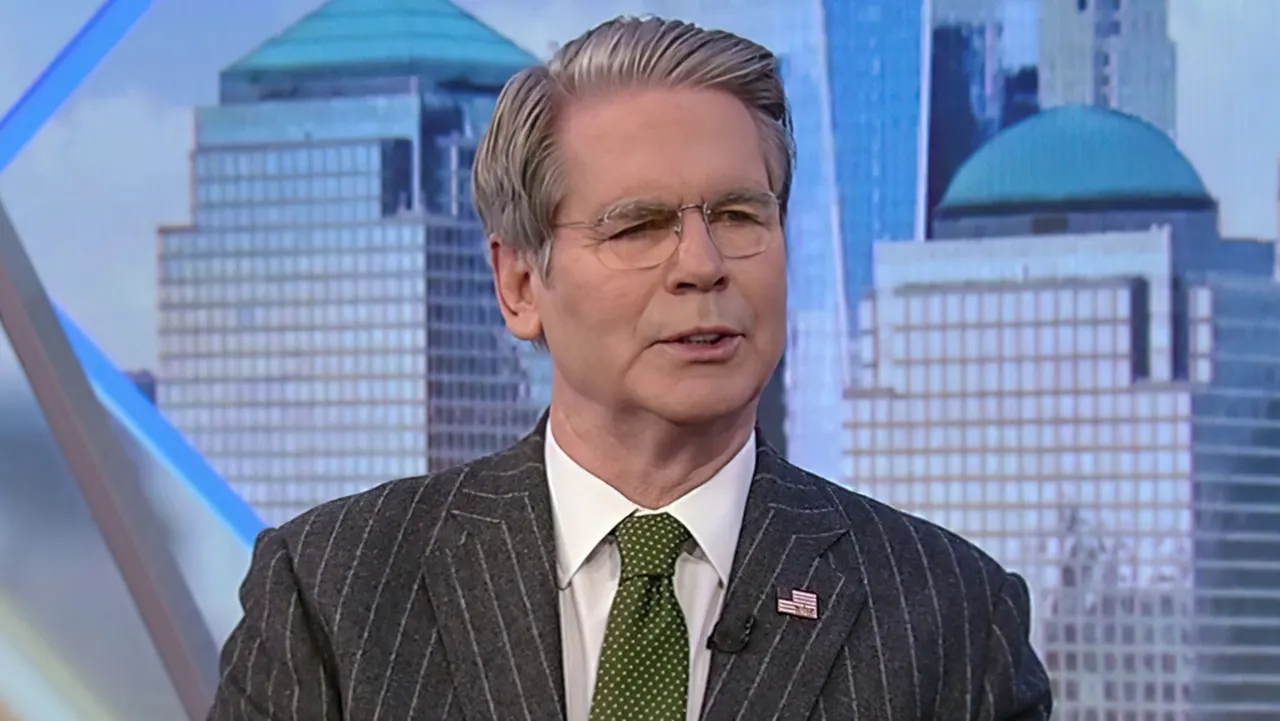
Treasury Secretary Scott Bessent is offering what could be big money for potentially “hundreds of billions” recouped from fraudsters emboldened during a Biden administration that unwound guardrails under the guise of COVID relief urgency, he told Fox News on Monday.

“We can pay up to a 30% reward for the recovered funds,” Bessent told “Fox & Friends.”

Advertisement

Bessent said fraudsters were let loose as a result of former President Joe Biden’s administration reducing fraud controls to expedite hundreds of billions in pandemic-related funds out to Americans who needed it, and now the buck stops with President Donald Trump and Vice President JD Vance as fraud czar.

“We are all hands on deck because this is money that is not going to where it’s supposed to go, but more importantly, it’s being stolen from the American taxpayer,” Bessent said. “We need to be a high-trust society. We need to understand where the money is going.”

SBA FREEZES OVER 100,000 CALIFORNIA BORROWERS IN SWEEPING $9B PANDEMIC FRAUD CRACKDOWN

Scott Bessent on "Mornings with Maria"

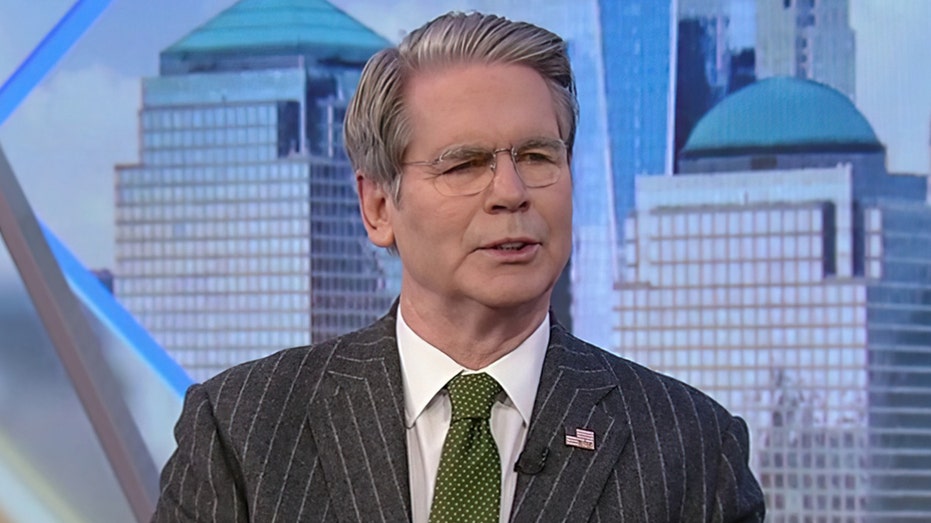
Treasury Secretary Scott Bessent is offering up to 30% of “hundreds of billions” potentially recouped from Biden-era emboldened fraudsters. (FOX Business)

“This could be hundreds of billions of dollars in recouped money,” he noted.

Advertisement

Bessent’s Treasury Department is now offering whistleblowers a major financial incentive to help expose fraud, directing would-be tipsters to the Treasury.gov website and saying the administration has already received more than 700 leads. Treasury’s whistleblower page says eligible tipsters can receive between 10% and 30% of monetary sanctions collected in successful actions.

Bessent also blamed weaknesses in anti-fraud enforcement on the Biden administration’s handling of pandemic aid.

TOM EMMER CALLS FOR TIM WALZ, KEITH ELLISON TO ‘SERVE JAIL TIME’ IF FRAUD COVERUP ALLEGATIONS ARE TRUE

President Joe Biden looks surprised

Former President Joe Biden’s administration has been rebuked for unwinding fraud and oversight controls of hundreds of billions of COVID relief funds. (Anna Moneymaker/Getty Images)

“A lot of this is a result of during COVID,” Bessent said. “Many of the agencies under the Biden administration gutted their fraud departments, their fraud detection, or took down the fraud detection to get the money out quickly for COVID relief. But they never brought back the guardians of our money. So, we have to have integrity in these programs.”

Advertisement

He argued stronger oversight and public visibility are needed to restore integrity to government programs, claiming that blue states like California and New York are covering for fraudsters against government oversight and investigations.

DEPUTY AG TODD BLANCHE SHEDS LIGHT ON NEW DOJ FRAUD DIVISION TO ADDRESS ‘INSANE’ PROBLEM

While Minnesota fraud among the state’s Somali community has made headlines thus far thanks to independent journalist Nick Shirley’s reporting, Bessent actually praised that state for having some level of transparency that is not permitted in California or New York.

Advertisement

“That’s why that young man, Nick Shirley, was able to go to see the scams, because it was: This is the name of the facility; this is the address; this is how much money they got,” Bessent said. “Oh look, it’s an empty storefront. There’s no one here. New York, California are hiding it.”

CLICK HERE TO DOWNLOAD THE FOX NEWS APP

States must be more transparent, blue and red, Bessent concluded.

Advertisement

“We’re all in favor of states’ rights and states doing more, but the money goes into a lot of these blue states, and some of the red states could be more transparent,” he said.

Continue Reading

Business

‘We want it here, we wanted it yesterday’: Commuters demand progress on new Cheadle station

Published

on

Business Live

Station on mid-Cheshire line would have services to Manchester Piccadilly via Stockport

Stockport resident James Lumsden

Stockport resident James Lumsden(Image: LDRS)

People in Cheadle are demanding that progress be made on plans to build a new train station in the village.

Advertisement

The scheme has been in the pipeline for years after nearly £14m was offered to Cheadle by the government’s Towns Fund in 2021, funding a series of local projects including a new train station.

Planning permission from Stockport council was granted in 2023, with the idea that the station would join the mid-Cheshire line with services to Manchester Piccadilly via Stockport.

The mid-Cheshire line is a Northern service which runs from Chester, stopping off at several stations along the way to Stockport, including Plumley and Ashley.

The proposed single platform in Cheadle would be located 100 metres north of High Street and accessed from Manchester Road.

Advertisement

But since then the scheme has stalled, with concerns raised about how the station could impact timetables elsewhere on the network.

The Local Democracy Reporting Service asked people in Cheadle about the plans for a new train station.

“We want it here, we wanted it yesterday,” said 49-year-old James Lumsden while tucking into his lunch.

“The closest transport routes here are Parrs Wood with the tram at East Didsbury, but it’s a long walk that’s not great at night or early morning.”

Advertisement

One of the issues that residents raised was the sheer amount of traffic on Cheadle High Street.

On a Tuesday afternoon there was rarely a moment without cars and buses whizzing along the road, with all the noise and congestion that brings.

James Lumsden added: “In the morning at half eight to nine quite often the traffic can back up through the village all the way to Parrs Wood, it makes it feel not as nice a place to be.

“Another thing is, if there was something else that got people into the city centre it would make it safer for the children going to school around here, because there would be less cars on the road.”

Advertisement

Steve McGann, 68, joined the calls for a new station to help reduce the stress on Cheadle’s roads.

He said: “It’s constantly busy here with the traffic, and having a station may help the restaurants because people don’t want to drink and drive, there are a lot of little places here for the evening trade.

“I’m sure it would benefit the area.”

Someone who has been campaigning for progress on Cheadle station is MP Tom Morrison.

Advertisement
Cheadle High Street in Stockport, Greater Manchester

Cheadle High Street in Stockport, Greater Manchester(Image: LDRS)

Mr Morrison raised the issue in Parliament earlier this month on March 18.

He said: “Cheadle is suffering from chronic congestion. Everyone in the area will know what I mean when I talk about the Manchester Road crawl.

“Between 8am and 9am, and then between 3pm and 6pm, the roads between Cheadle and Manchester stand at a halt as hundreds upon hundreds of cars, buses, lorries and other vehicles try to use the route between the two areas.

“This happens every day of the week and has become a source of real angst for my constituents.”

Advertisement

The MP added: “People are rightly encouraged to take the bus for public transport, but it takes an hour to get from Cheadle to Manchester Piccadilly, and from Cheadle to Stockport town centre, whereas it would take just 18 minutes and seven minutes respectively by train.

“It is clear that Cheadle train station is the antidote. The benefits of restoring Cheadle’s rail connection would be boundless, breathing extra life into the high street, connecting residents with work and family, reducing congestion and supporting clean growth, while opening up the region for my constituents.”

Keir Mather MP, parliamentary under-secretary of state in the Department for Transport, put delays at the station down to ‘several concerns’ around timetable feasibility and the potential effects on performance.

The MP explained in the debate: “The Rail North partnership board is the decision-making board for service considerations for Northern Trains Ltd and TransPennine trains, and is one part of the process that needs to be take place to enable the service change.

Advertisement

“It is now evident that service change, including reducing the frequency of services that stop at Ashley and Plumley, is the only way that an hourly stop at a new station at Cheadle could be accommodated. Officials are developing a paper for consideration by the Rail North partnership board at its next meeting on 15 April.”

He added: “After years of poor performance, it is more important than ever that passengers regain confidence in the rail services they rely on and that the risk to punctuality is fully understood and mitigated as far as possible.

“However, any timetable changes must be carefully considered to balance local benefits against wider network impacts.”

Lib Dem Councillor Grace Baynham is the cabinet member for highways and transport at Stockport council.

Advertisement

She said some of Cheadle’s roads are ‘constantly busy’ and that the station could help more people get around on public transport.

“Unfortunately, it means people have got limited options for public transport, but by having the station there it would give them a realistic option to use the train.

Stockport councillor Grace Baynham

Stockport councillor Grace Baynham (Image: LDRS)

“The train can get them to Manchester Piccadilly to onward travel as well, so it opens up a whole new raft of options for residents here.

“It’s really frustrating, as soon as we get the go-ahead we’re going to get going as soon as possible, the money is there, the will is there, we have cross-party support, we just need the government now to give it the go-ahead and once we get that we’ll start work.”

Advertisement

A Department for Transport spokesperson said: “Stockport Metropolitan Borough Council is leading this project, and it is for them to bring forward proposals that meet the necessary requirements.

“We are committed to improving rail in the north and the rail minister recently met with the council to support this work.”

A Transport for Greater Manchester spokesperson said: “Cheadle’s new station will bring major benefits, improving connectivity, easing congestion on local roads, and supporting wider growth ambitions across the area.

“People understandably want to see the station delivered as soon as possible.

Advertisement

“The next step is for the rail industry to agree a timetable so construction can begin.

“We are working closely with Stockport council, who are responsible for delivering the scheme, as well as Northern and Network Rail and remain fully committed to the new station.”

A spokesperson for Northern said: “We continue to work with all relevant stakeholders, including Stockport council, Transport for Greater Manchester and Network Rail on proposals for the new station at Cheadle, including a review of the wider timetable implications along the line.”

To find all the planning applications, traffic diversions, road layout changes, alcohol licence applications and more in your community, visit the Public Notices Portal.
Advertisement
Continue Reading

Business

Intel Still Leans On A Fragile CPU Business (NASDAQ:INTC)

Published

on

Intel Still Leans On A Fragile CPU Business (NASDAQ:INTC)

This article was written by

Small deep value individual investor, with a modest private investment portfolio, split approx. 50%-50% between shares and call options. I have a B.Sc. in aeronautical engineering and over 6 years of experience as an engineering consultant in the aerospace sector. The latter statement is not relevant in any way whatsoever to my investment style, but I thought to add it for self-indulgent purposes. I have a contrarian investment style, highly risky, and often dealing with illiquid options. How illiquid? Well, you can land a Jumbo on the spread and still have clearance for take-off. From time to time, I buy shares, mostly to not be categorized as a degen by my fellow investor friends, therefore the 50%-50% allocation. My timeframe tends to be between 3-24 months.I like stocks that have experienced a recent sell-off due to non-recurrent events, particularly when insiders are buying shares at the new lower price. This is how I often screen through thousands of stocks, mainly in the US, although I may own shares in banana republics. I use fundamental analysis to check the health of companies that pass through my screening process, their leverage, and then compare their financial ratios with the sector, and industry median and average. I also do professional background checks of each insider who purchased shares after the recent sell-off. I use technical analysis to optimize the entry and exit points of my positions. I mainly use multicolor lines for support and resistance levels on weekly charts. From time to time I draw trend lines, taken for granted, in multicolor patterns. Note: I tried to keep my introduction as real, and authentic as possible. I dislike empty suits, high-level BS, deep-level BS, unnecessary jargon, and self-indulgent, third-person written introductions with an air of superiority.Thanks for reading my introduction!

Analyst’s Disclosure: I/we have no stock, option or similar derivative position in any of the companies mentioned, and no plans to initiate any such positions within the next 72 hours. I wrote this article myself, and it expresses my own opinions. I am not receiving compensation for it (other than from Seeking Alpha). I have no business relationship with any company whose stock is mentioned in this article.

Seeking Alpha’s Disclosure: Past performance is no guarantee of future results. No recommendation or advice is being given as to whether any investment is suitable for a particular investor. Any views or opinions expressed above may not reflect those of Seeking Alpha as a whole. Seeking Alpha is not a licensed securities dealer, broker or US investment adviser or investment bank. Our analysts are third party authors that include both professional investors and individual investors who may not be licensed or certified by any institute or regulatory body.

Advertisement
Continue Reading

Business

What was the 1970s oil crisis, and are we heading for something worse?

Published

on

What was the 1970s oil crisis, and are we heading for something worse?

While both crises involve oil, experts say there are some important differences between what happened in the 1970s and today.

Continue Reading

Business

La Tortilla Factory unveils refrigerated tortilla products

Published

on

La Tortilla Factory unveils refrigerated tortilla products

Designed to meet rising demand for gut healthy meal solutions.

Continue Reading

Business

Coca-Cola Europacific Partners buys back 499,779 shares

Published

on


Coca-Cola Europacific Partners buys back 499,779 shares

Continue Reading

Business

Lundberg Family Farms promotes CGO to CEO

Published

on

Lundberg Family Farms promotes CGO to CEO

Suzanne Sengelmann becomes company’s first female CEO.  

Continue Reading

Business

‘Fertiliser costs mean I’m better off not planting,’ says farmer

Published

on

'Fertiliser costs mean I'm better off not planting,' says farmer

Olly Harrison, who farms in Tarbock, on Merseyside, said he bought his fertiliser for a good price last year and now believes – due to a wet and cold spring and limited growing days left, added with the costs of diesel for machinery – he may be better off not planting.

Continue Reading

Business

Aptiv PLC – Attractive In A Problematic Sector

Published

on

Aptiv PLC - Attractive In A Problematic Sector

Aptiv PLC – Attractive In A Problematic Sector

Continue Reading

Trending

Copyright © 2025