Californian start-up wants to slash the cost of haulage
The Humble Hauler promises Level 4 autonomous driving
Motorized trailer set-up can be configured in multiple ways
If you need visual proof that we are hurtling headlong into a Philip K Dick future, just take a quick look at the Humble Hauler from Californian start-up Humble Robotics.
This prototype is a highly autonomous concept that hopes to replace drivers with a blunt, cab-less design and serious computing power — all so the company can slash costs and improve efficiencies in the freight industry.
According to Humble, this is a first of its kind in so much as it is a “hauler that reasons like a human”, while the streamlined “load execution” means it can act as a tractor, trailer, and driver… all in one.
Latest Videos From
Essentially a motorized electric trailer on wheels, the futuristic robot can fit both international and domestic containers in its load area.
It is also capable of DC fast-charging for efficient operation and can manage a maximum 200-mile range on a single charge.
A quick scan of the very flashy website reveals that the concept can be configured to handle a variety of cargo, with a six-wheeled concrete mixer sitting side-by-side with an eight-wheeled freight hauler.
Analysis: no humans required
(Image credit: Humble Robotics)
According to Inside EVs, the first prototype is predominantly designed to work in and around warehouses, railways, and seaports, but its 55-mph top speed and Level 4 autonomous capabilities could see it hit the highway one day.
Advertisement
Sign up for breaking news, reviews, opinion, top tech deals, and more.
Using the popular vision-language-action (VLA) models, a clever use of AI that is also being harnessed by Hyundai’s Motional robotaxi service and more, the Humble Hauler is better equipped to reason in real-world scenarios and make difficult decisions without human intervention.
Humble Robotics’ CEO, Eyal Cohen, has previously held titles at Apple, Uber, and Waabi, helping this start-up raise some $24 million in funding.
“We are making freight sustainable, safe, and efficient in a way no one thought was possible,” Cohen explains, according to Inside EVs.
Advertisement
Although it is still a pilot program for now, the company says it is already working with major logistics and supply chain players, which is likely bad news for anyone hoping for a career in freight and haulage.
And of course, you can also follow TechRadar on YouTube and TikTok for news, reviews, unboxings in video form, and get regular updates from us on WhatsApp too.
Anthropic on Tuesday unveiled a suite of updates to its Claude Managed Agents platform at its second annual Code with Claude developer conference in San Francisco, introducing a new capability called “dreaming” that lets AI agents learn from their own past sessions and improve over time — a step toward the kind of self-correcting, self-improving AI systems that enterprises have demanded before trusting agents with production workloads.
The company also moved two previously experimental features — outcomes and multi-agent orchestration — from research preview into public beta, making them broadly available to developers building on the Claude platform. Together, the three features address what Anthropic says are the hardest problems in running AI agents at scale: keeping them accurate, helping them learn, and preventing them from becoming bottlenecks on complex, multi-step work.
Early adopters are already reporting significant results. Legal AI company Harvey saw task completion rates increase roughly 6x after implementing dreaming. Medical document review company Wisedocs cut its document review time by 50% using outcomes. And Netflix is now processing logs from hundreds of builds simultaneously using multi-agent orchestration.
The announcements come at a moment of extraordinary momentum for Anthropic. CEO Dario Amodei disclosed during a fireside chat at the conference that the company’s growth has outpaced even its own aggressive internal projections.
Advertisement
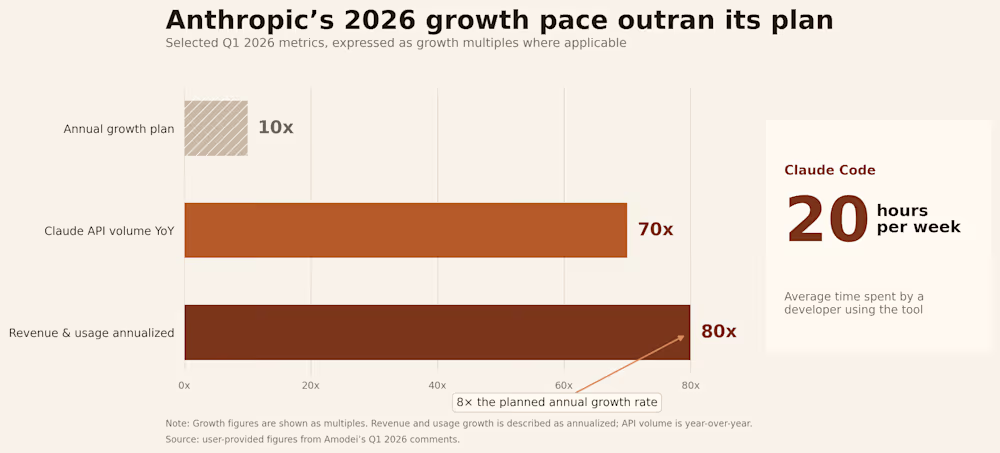
In the first quarter of 2026, Anthropic saw what Amodei described as 80x annualized growth in revenue and usage — far exceeding the 10x annual growth the company had planned for. API volume on the Claude platform is up nearly 70x year over year, and the average developer using Claude Code now spends 20 hours per week working with the tool.
“We tried to plan very well for a world of 10x growth per year,” Amodei said. “And yet we saw 80x. And so that is the reason we have had difficulties with compute.”
Anthropic’s actual growth in the first quarter of 2026 far outpaced its internal plan. The company had projected 10x annual growth; annualized revenue and usage grew 80x instead. (Image Credit: Michael Nunez / VentureBeat)
How Anthropic’s dreaming feature teaches AI agents to learn from their own history
Dreaming is the most novel of the three features and the one Anthropic is most eager to distinguish from conventional memory systems. While the company launched agent memory earlier this year — allowing Claude to retain preferences and context within and across individual sessions — dreaming works at a higher level of abstraction. It is a scheduled process that reviews an agent’s past sessions and memory stores, extracts patterns across them, and curates those memories so agents improve over time. It surfaces insights that no single agent session could see on its own: recurring mistakes, workflows that multiple agents converge on independently, and preferences shared across a team of agents.
Advertisement
Alex Albert, who leads research product management at Anthropic, explained the concept in an interview at the conference. He described dreaming as analogous to how people within organizations create skills after working through a task. “They might do a workflow with Claude, and at the end of that workflow, after they’ve iterated and zigzagged a little bit, they want to record that path from A to B,” Albert said. “A very similar thing is happening with dreaming — instead of you manually creating the skill from your experience working with Claude, the model is doing it, so it has that same context for a future session.”
Crucially, dreaming does not modify the underlying model weights. “We’re not changing the model itself through dreaming — it’s not doing updates to the weights or anything like that,” Albert said. Instead, the agent writes learnings as plain-text notes and structured “playbooks” that future sessions can reference, making the entire process observable and auditable by humans. When asked about the trust implications of agents consolidating their own knowledge, Albert acknowledged that “there is a level of trust that you need to place” but noted that all memories are inspectable and that smarter models are getting progressively better at managing this process. “They’re learning to write better notes for their future self,” he said.
A live demo showed AI agents improving overnight without human guidance
During the keynote, the Anthropic team demonstrated all three features live on stage using a fictional aerospace startup called “Lumara” that needed to autonomously land drones on the moon for resource mining. The team configured a multi-agent system with three specialists — a commander agent responsible for overall mission success, a detector agent that identified high-quality landing sites, and a navigator agent that handled safe drone flight and landing — and defined a success rubric requiring soft landings, clear ground, and enough fuel reserves for a return trip to Earth.
An initial simulation across six hypothetical landing sites produced strong but imperfect results. To improve, the presenters triggered a dreaming session directly from the Claude Developer Console. Overnight, the dreaming agent reviewed all past simulation sessions and wrote a detailed descent playbook — a comprehensive set of heuristics drawn from patterns across multiple mission runs. When the team ran a new simulation the following morning with the dreaming-derived playbook in memory, the results improved meaningfully on the sites that had previously underperformed.
Advertisement
“All we had to do was just have Caitlin press a button,” said Angela Jiang, Head of Product for the Claude Platform, referring to her colleague on stage. “All dreaming.”
The demo illustrated how the three features compose together in practice. Multi-agent orchestration split the complex task across specialists with independent context windows. Outcomes provided the rubric against which a separate grader agent evaluated each run. And dreaming extracted lessons across those runs to improve future performance — forming what Anthropic describes as a continuous improvement loop that requires no human intervention between iterations.
Why Anthropic built a separate ‘grader’ agent to check Claude’s own work
The outcomes feature, now in public beta, gives developers a way to define what success looks like using a rubric — a structural framework, a presentation standard, a brand voice, or any other set of criteria — and then lets the agent iterate toward that standard autonomously. What makes outcomes architecturally distinctive is its separation of concerns. When an agent completes its work, a separate grader agent evaluates the output against the developer-defined rubric in its own independent context window. Because the grader operates in a fresh context, it is not influenced by the working agent’s reasoning or accumulated biases from the session.
When the grader identifies gaps between the output and the rubric, it pinpoints specifically what needs to change, and the working agent takes another pass. This loop continues until the rubric criteria are met — without a human needing to review each attempt.
Advertisement
Albert described Anthropic’s broader verification strategy as employing “more test time compute, more models thinking about a problem for longer, to check over the work of another.” He acknowledged that having a model check its own work raises reasonable questions, but said a fresh context window reviewing completed work consistently outperforms asking the same long-running thread to identify its own bugs. “You will get higher success if you give that output to a fresh Claude and say, ‘what bugs do you see?’” he said. “There is still something to the attention” that degrades over very long sessions — a limitation he said Anthropic is actively working to fix in future models.
The approach mirrors strategies already in use at GitHub. Mario Rodriguez, Chief Product Officer at GitHub, described during a separate talk at the conference how Copilot uses a similar advisor pattern with Claude models — pairing a smaller, cheaper model as an executor with a larger model as a mentor. When the smaller model encounters a problem beyond its capability, it calls the larger model for guidance, then continues executing on its own. Rodriguez said the approach delivers near-Opus-level intelligence at significantly lower cost, and that GitHub inserts critique models at three specific points in the coding workflow: after drafting a plan, after a complex implementation, and after writing tests but before running them.
Parallel AI agents can now tackle tasks too complex for a single model thread
Multi-agent orchestration, the third feature moving to public beta, allows a lead agent to decompose a large task into subtasks and delegate each one to a specialist agent — each with its own model, system prompt, tools, and independent context window. Every step in the process is traceable in the Claude Console, showing which agent did what, in what order, and why.
The design gives each sub-agent an isolated context, which Anthropic says produces better results than having a single agent attempt to hold all the complexity in one thread. “Each sub-agent has its own independent thread and context window,” the keynote presenters explained. “This is very intentional — we found that by splitting the work and then merging the results, we get better outcomes.”
Advertisement
Albert offered his own heuristic for when multi-agent architectures make sense versus sticking with a single thread. “Parallel agents are better for investigation,” he said — situations where there is a lot of context that will ultimately be discarded. “If you’re trying to answer a specific question, you don’t need all the search results from the areas where it didn’t find the answer. You just need the answer.” He described spinning up disposable sub-agents for specific retrieval tasks and bringing only the result back to the main thread. Increasingly, he said, the model itself will decide when to parallelize. “In the future, you won’t really care if it’s one agent or multi-agent or whatever’s happening. You just have a Claude that you’re talking to, and it will deploy the right architecture automatically.”
Anthropic’s bigger bet: closing the gap between AI capabilities and real-world adoption
The three features arrive as part of a broader platform push that Anthropic framed throughout the conference as closing “the gap between what AI can do and what it’s actually doing for people.” Ami Vora, Anthropic’s Chief Product Officer, set the theme in her opening keynote, noting that while model capabilities are advancing on an exponential curve, most organizations are still adopting AI on a linear path.
Dianne Penn, who leads product for Anthropic’s research team, described the company’s measure of progress as “task horizon” — how long an AI agent can work autonomously while improving the quality of its deliverables. “This time last year, models could work for minutes,” she said. “Now, most of us have agents running for hours on end. Tomorrow, we’ll have agents that are proactive, always on, and know what to work on without losing the frame.”
The event also included several infrastructure announcements designed to help developers keep pace. Anthropic said it is doubling its five-hour rate limits for Pro, Max, Team, and Enterprise plans, and raising API rate limits considerably. The company announced a partnership with SpaceX to use the full capacity of its Colossus data center to expand compute availability — a direct response to the demand crunch Amodei described.
Advertisement
All three features are built into Claude Managed Agents, which launched in public beta on April 8 as an opinionated harness that bundles best practices including memory, tool integration, and action handling. Anthropic says teams using Managed Agents have shipped 10x faster than those building their own agent infrastructure from scratch. Albert described the platform using an operating system analogy: “With managed agents, you don’t need to think about all the technicalities of how you set up the surrounding system,” he said. “You’re building an application for Macs — you don’t want to go have to re-implement every detail of macOS.”
What dreaming, outcomes, and multi-agent orchestration mean for the future of enterprise AI
The competitive implications are significant. As AI agent platforms from OpenAI, Google, and others compete for developer adoption, Anthropic is betting that production reliability — not just raw model intelligence — will determine which platform wins enterprise budgets. The dreaming feature in particular stakes out new territory: while other platforms offer memory and tool use, the idea of agents systematically reviewing their own histories to extract reusable knowledge goes further toward the kind of continuously improving systems that enterprises need before delegating high-stakes work.
The conference showcased companies already operating at that scale. Mercado Libre, Latin America’s largest e-commerce platform, has 23,000 engineers running Claude Code, has reviewed more than 500,000 pull requests with human oversight, and is aiming for 90% autonomous coding by the third quarter of this year. Shopify has deployed Claude Code across not just engineering but design, product, and data science teams.
But it was Dario Amodei who articulated the most expansive vision for where all of this leads. He described a progression from single agents to multiple agents to whole organizational intelligence — from “a team of smart people in a room” to what he called “a country of geniuses in the data center.” And he reiterated a prediction he made roughly a year ago: that 2026 would see the first billion-dollar company run by a single person. “Hasn’t quite happened yet,” he said. “But we’ve got seven more months.”
Advertisement
Dreaming is available now in research preview. Outcomes and multi-agent orchestration are in public beta and available to all developers on the Claude platform. Whether seven months is enough time for a solo founder to build a billion-dollar business remains an open question — but after Tuesday, they have a few more tools to try.
The Australian Cyber Security Center (ACSC) is warning organizations of an ongoing malware campaign using the ClickFix social engineering technique to distribute the Vidar Stealer info-stealing malware.
ClickFix is a social engineering attack technique that tricks users into executing malicious commands, usually through fake CAPTCHA or browser verification prompts displayed on compromised or malicious websites.
The attack typically tricks users into executing PowerShell commands to bypass security controls and deliver malware, typically info-stealers.
Australian organizations and infrastructure entities are being targeted in attacks that involve compromised WordPress websites that redirect to malicious payloads.
Advertisement
Users visiting these websites are shown a fake Cloudflare verification or CAPTCHA prompt that instructs them to copy and manually execute a malicious PowerShell command on their system, which leads to a Vidar Stealer infection.
“The Australian Signals Directorate’s Australian Cyber Security Center (ASD’s ACSC) has observed ClickFix-associated activity leveraging WordPress-hosted infrastructure to distribute the Vidar Stealer malware,” reads the agency’s advisory.
Vidar Stealer is an information-stealing malware family and malware-as-a-service (MaaS) operation that emerged in late 2018.
It gradually became a popular choice among cybercriminals for its cost-effectiveness, ease of deployment, and broad data theft capabilities. It targets browser passwords, cookies, cryptocurrency wallets, autofill information, and system details.
ACSC notes that Vidar deletes its executable after launching on the infected device and then operates from system memory, reducing forensic artifacts.
It retrieves a command-and-control (C2) address via “dead-drop” URLs using public services like Telegram bots and Steam profiles, a tactic that has been widely used in the past but which remains effective.
ACSC recommends that organizations restrict PowerShell execution and implement application allow-listing to reduce the risk from these attacks.
Advertisement
WordPress site administrators are also advised to apply available security updates for themes and add-ons, and to remove any unused themes/plugins from their platforms.
ACSC’s security bulletin provides indicators of compromise (IoCs) for these attacks, allowing organizations to set up defenses or detect intrusions.
AI chained four zero-days into one exploit that bypassed both renderer and OS sandboxes. A wave of new exploits is coming.
At the Autonomous Validation Summit (May 12 & 14), see how autonomous, context-rich validation finds what’s exploitable, proves controls hold, and closes the remediation loop.
The official announcement came on Wednesday via a dedicated Nintendo Direct livestream. Star Fox (2026) will launch on June 25 on the Switch 2, marking at least the fifth time the classic title has been remade or remastered by Nintendo over the past three decades. Read Entire Article Source link
The Watch Fit 5 Pro builds on Huawei’s most likeable smartwatch and continues to strike a good balance between a fitness and health tracker, a sports watch, and a smartwatch, all wrapped up in a pretty sleek package.
Attractive and very comfortable design
Bigger display doesn’t feel huge on the wrist
Fun addition of mini-workouts
Not a radical upgrade on the Fit 4 Pro
Android users will enjoy stronger smartwatch support
Huawei Health app is still full of bloatware
Key Features
Advertisement
Review Price:
£249
Big, bright display
Advertisement
The Huawei Watch Fit 5 Pro gets a large 1.92-inch AMOLED screen with sapphire glass and excellent outdoor visibility.
Smarter fitness tracking
Advertisement
With dual-band GPS, mini-workouts and richer cycling, golf and swimming insights, it’s a strong all-round fitness watch.
Impressive battery life
Advertisement
The Huawei Watch Fit 5 Pro lasts up to a week in typical use, with fast charging for quick top-ups.
Introduction
The Huawei Watch Fit 5 Pro sees Huawei commit to offering its most affordable smartwatch in a version that gets you a few more features for a bit more cash. The best way to think of this smartwatch is Huawei’s cut-price answer to the Apple Watch Ultra or Samsung Galaxy Watch Ultra.
For the Fit 5 Pro, Huawei has added a bigger and brighter screen alongside new fitness and smartwatch smarts that should appeal to those not just looking for an outdoor adventure companion.
Advertisement
I was a fan of the Watch Fit 4 Pro, so I hoped Huawei didn’t undo the good work it did with its predecessor. I’m happy to say that the Watch Fit 5 Pro is still a mid-range smartwatch with plenty to like.
Advertisement
Design and screen
Features a larger AMOLED screen
Screen is now brighter than Watch Fit 4 Pro
Suitable for recreational diving up to 40 metres
Huawei has opted to stick to largely the same design as the last Pro, and that means another smartwatch with an Apple Watch-aping design. I’d say it’s different enough to make it live a little differently on your wrist.
Image Credit (Trusted Reviews)
You’ll be glancing down at a 44.5m case made from aluminium, matched up with a titanium bezel. Huawei has also launched a ceramic version, which gets you more in the way of protection against general wear and scratches.
Whichever model you go for, you’ll find two physical buttons on the right side of the case. The twisting crown lets you scroll through data and menu screens when you don’t want to swipe on the display to do it instead.
Advertisement
Advertisement
Image Credit (Trusted Reviews)
It’s mainly the display where things have changed. Huawei has moved from a 1.82-inch display to a larger 1.92-inch display with 480 x 408 resolution. While it’s technically bigger, it doesn’t actually dramatically impact the size of the watch. This is good news for anyone who liked the size of the Fit 4 Pro and was worried the Fit 5 Pro might be too big for smaller wrists.
Image Credit (Trusted Reviews)
It’s a very sharp, crisp display to look at, with a glossy finish that helps features like watch faces really pop on screen. The peak brightness is the same 3,000 nits as the 4 Pro, with sapphire glass in place to offer some premium protection against scratches.
That case is partnered up with a woven strap that’s been very comfortable to wear. Huawei states it’s a very breathable strap, and I’d be inclined to agree. Removing it is also easily done thanks to a lug-style connector. It’s much less fiddly than the daintier pin mechanisms you find on other Huawei smartwatches.
Image Credit (Trusted Reviews)
Advertisement
One of the biggest differences between the Fit 5 Pro and standard Fit 5 is around waterproofing. The Pro carries both a 5ATM rating and complies with the EN13319 standard for diving accessories. The former makes it suitable for activities like swimming, and the latter for recreational dives up to 40 meters. It’s rare to find that level of protection on a smartwatch that sits below £250.
Performance and software
Compatible with Android and iOS
Some features missing for iPhone users
Added NFC payments through Curve Pay
One of the biggest compromises you’ll need to make with wearing the Fit 5 Pro is that you’re not going to get everything that Huawei offers in its higher-end smartwatches. It doesn’t support LTE connectivity, while iPhone users miss out on the ability to act on notifications or access the full Huawei AppGallery store to download all available apps.
Image Credit (Trusted Reviews)
This is a smartwatch that Android users will get the most out of. That’s not to say using an iPhone with it is severely limited; you can still make use of the added NFC payment support for instance, once you’ve also downloaded the Curve Pay phone app to get things all set up. You can also add music to the Pro’s storage to listen to offline when you don’t want to stream music from your phone. There’s still plenty you can do.
Image Credit (Trusted Reviews)
Advertisement
Some of the more staple smartwatch features impress, like the array of watch faces you have to choose from. That includes some more fun animated ones you can interact with or slap virtual stickers onto. It’s a great watch to view detailed weather forecasts on, and there’s a useful voice recorder feature included among other basic yet useful features.
As I said, you don’t get the best Huawei has to offer. What you do get is slick software on the watch, and maybe not so much off it in the bloatware-riddled Huawei Health app. There’s enough that’s included to ensure the Fit 5 Pro does a solid job when you’re not putting its health and fitness tracking features to use.
Advertisement
Tracking and features
New mini-workouts
Richer tracking for cycling, golf and swimming
New Workout Service to boost third-party app support
This smartwatch has “Fit” in its name, and that’s what it mainly wants to do: keep you fit and healthy. It’s promising to do that in a variety of ways, whether that’s simple ways like keeping on top of daily step goals, tracking workouts, helping you warm up or letting you keep a close eye on your heart health.
The biggest updates on this front lie first with Huawei’s new mini-workouts. These can be found in the courses and plans section of the watch, and also activated through a very cute panda watch face. This watch face springs to life when you’ve been inactive for a period, prompting you to tackle bite-sized workouts that involve simple movements like side stretches or doing some seated dips.
Image Credit (Trusted Reviews)
Advertisement
It’s a really well put-together feature that won’t necessarily only appeal to users looking for simple ways to stay active. It also serves as a great reminder to keep moving in different ways throughout the day when you’ve been sitting for a long time.
If you’re already pretty active and looking for a watch that can track a multitude of activities and sports, this watch can do that as well. Huawei has looked to bolster support for core sports like golf, swimming and cycling. Cyclists can now benefit from features Huawei recently added to its Watch GT 6 Pro, including virtual cycling power estimates and FTP (Functional Threshold Power) measurements for assessing cycling fitness.
Image Credit (Trusted Reviews)
It’s good to see swimming support get upgraded with extra insights into training load and recovery. Like the Fit 4 Pro, it’s a pretty accomplished watch for sports tracking. Whether it’s the dual-band GPS performance, the breadth of sports supported or the fact you get features like free offline maps, it’s got the performance to back up the impressive array of features.
You’re also getting a pretty rich suite of health tracking features as well. Along with measuring heart rate and SpO2 levels continuously, there’s also the ability to use the onboard ECG sensor to check for signs of atrial fibrillation. You can also monitor for signs of arterial stiffness and use the optical heart rate sensor to analyse and detect arrhythmia.
Advertisement
Image Credit (Trusted Reviews)
Advertisement
These features have regulatory clearance in a host of countries and territories, making those measurements capable of clinical-grade accuracy. When I tried the ECG measurements, it provided similar readings to those from a pulse oximeter and the ECG-packing Apple Watch Ultra 3.
Image Credit (Trusted Reviews)
For support like daily activity tracking and sleep monitoring, the Fit 5 Pro does a good job on that front. I’ve been wearing it alongside an Oura Ring 4 to see how sleep data compares. For metrics like sleep duration, sleep stage breakdowns and recognising times I’d fallen asleep and woken up, the Fit 5 Pro generally posted similar data. It’s a similar story for daily step counts. You also get to see some nice animations when you hit or whizz past your goal on the watch.
Up to 10 days of battery life
Up to 4 days in always-on display mode
25 hours of GPS battery life
Huawei has changed things on the battery technology front. It’s added a high-silicon one, where the chief benefits lie in the battery you’ll enjoy when using the onboard GPS.
That’s because general battery numbers remain the same as the Watch Fit 4 Pro. That’s up to 10 days of battery life, which drops to 7 days when using more of the health and fitness monitoring support. If you keep the screen on at all times, that number drops to 4 days.
Advertisement
Image Credit (Trusted Reviews)
I’d say those numbers pretty much ring true of my time. This watch can comfortably last a week if you’re not keeping the screen on and don’t have it set very bright. I found that, in general, daily battery drop was around 10% and just a few percent overnight.
In terms of GPS battery life, Huawei claims the Fit 5 Pro can deliver up to 25 hours. I found that an hour of GPS use saw the battery drop by 5%. That works out to around 20 hours. So that’s short of those claims, but still not a bad showing.
Advertisement
Image Credit (Trusted Reviews)
Charging is done via a proprietary charging cradle, which can charge the Fit 5 Pro fully in an hour. Like the Fit 4 Pro, you can drop it onto that charger for 10 minutes, and it’ll get you enough battery to get you through a day of usual smartwatch use. It wasn’t a watch I got frustrated with, as far as the battery performance is concerned.
Advertisement
Should you buy it?
You want a relatively affordable smartwatch with a great mix of features
The Huawei Watch Fit 5 Pro gives you a lot for your money and, crucially, delivers performance that makes it a great-value buy.
Advertisement
You want Huawei’s best watch for smartwatch features
Advertisement
As with previous Watch Fits, you will need to accept that you won’t get all of the available Huawei smartwatch features. You’ll have to spend more to get those.
Final Thoughts
The Huawei Watch Fit 5 Pro might not be Huawei’s most premium smartwatch, but it’s arguably its most likeable.
Advertisement
It looks and feels great to wear, with a blend of smartwatch, fitness, and health features that’s just right for the price, though I wouldn’t say it’s a radical upgrade from the Fit 4 Pro, so Fit 4 Pro owners need not rush out to upgrade.
If you like the idea of having a bigger screen and particularly those new mini-workout features and generally more accessible fitness features, there’s plenty to like about this Huawei smartwatch to make it a smart buy. For more options, take a look at our selection of the best smartwatches and best fitness trackers.
How We Test
We thoroughly test every smartwatch we review. We use industry-standard testing to properly compare features, and we use the watch as our primary device throughout the review period. We’ll always tell you what we find, and we never, ever, accept money to review a product.
Worn as our main tracker during the testing period
Heart rate data compared against dedicated heart rate devices
FAQs
Can the Huawei Watch Fit 5 Pro connect to Strava?
Yes, you can connect the Huawei Watch Fit 5 Pro to Strava by enabling the connection in the data sharing and authorisation settings on the Huawei Health smartphone app.
Advertisement
Can you reply to messages on the Huawei Watch Fit 5 Pro?
Yes, you can reply to messages on the Huawei Watch Fit Pro if you have the watch paired to an Android phone.
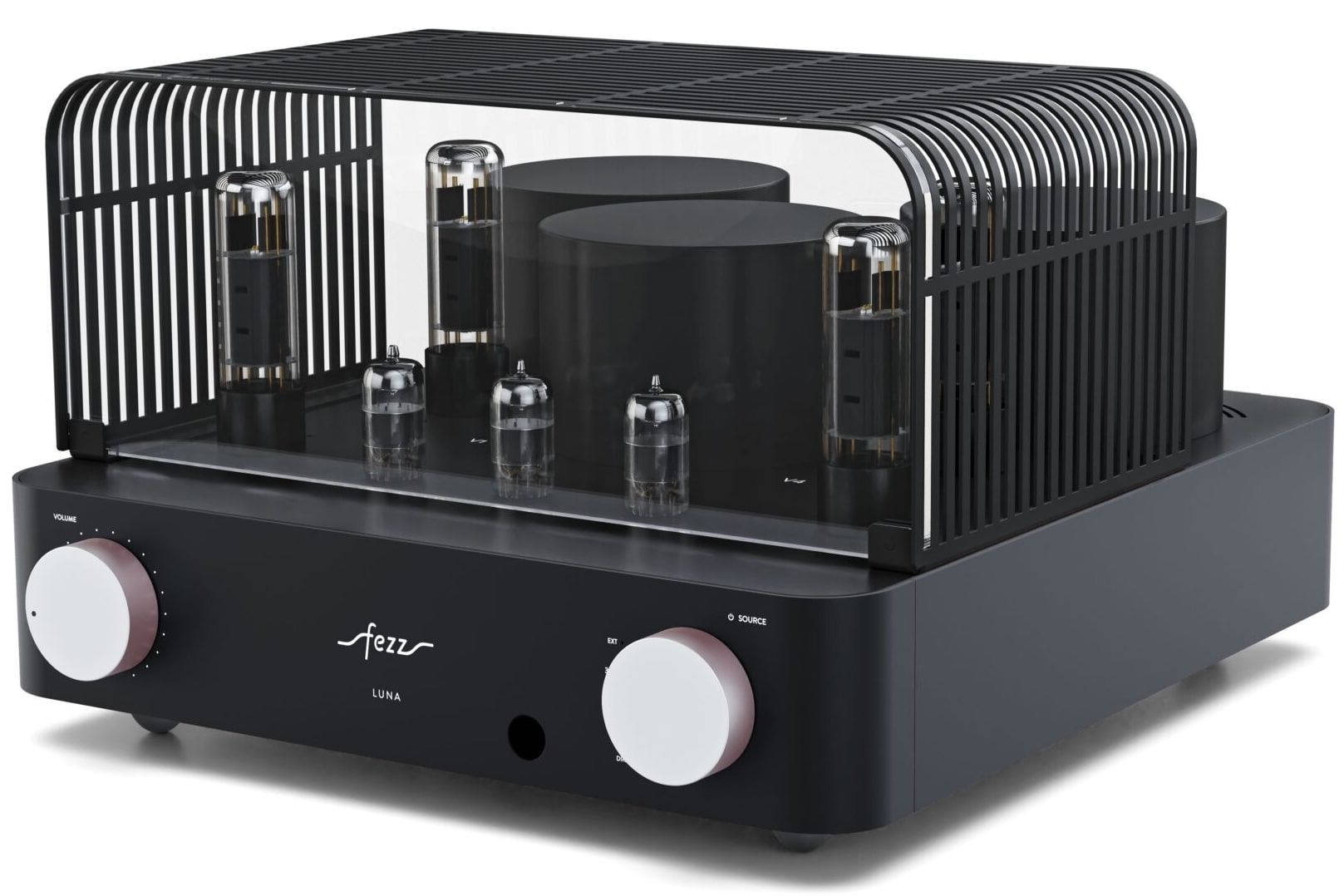
Fezz Audio is not some boutique tube brand trying to sell Americans a misty-eyed postcard from Eastern Europe. Designed and manufactured in Poland, the new Fezz Audio Luna Integrated Amplifier arrives in the U.S. through Bluebird Music Distribution as part of a much bigger story: the rise of serious Polish and Eastern European hi-fi brands that are no longer asking for a seat at the table. They’re building the table, wiring it properly, and probably using better transformers while they’re at it.
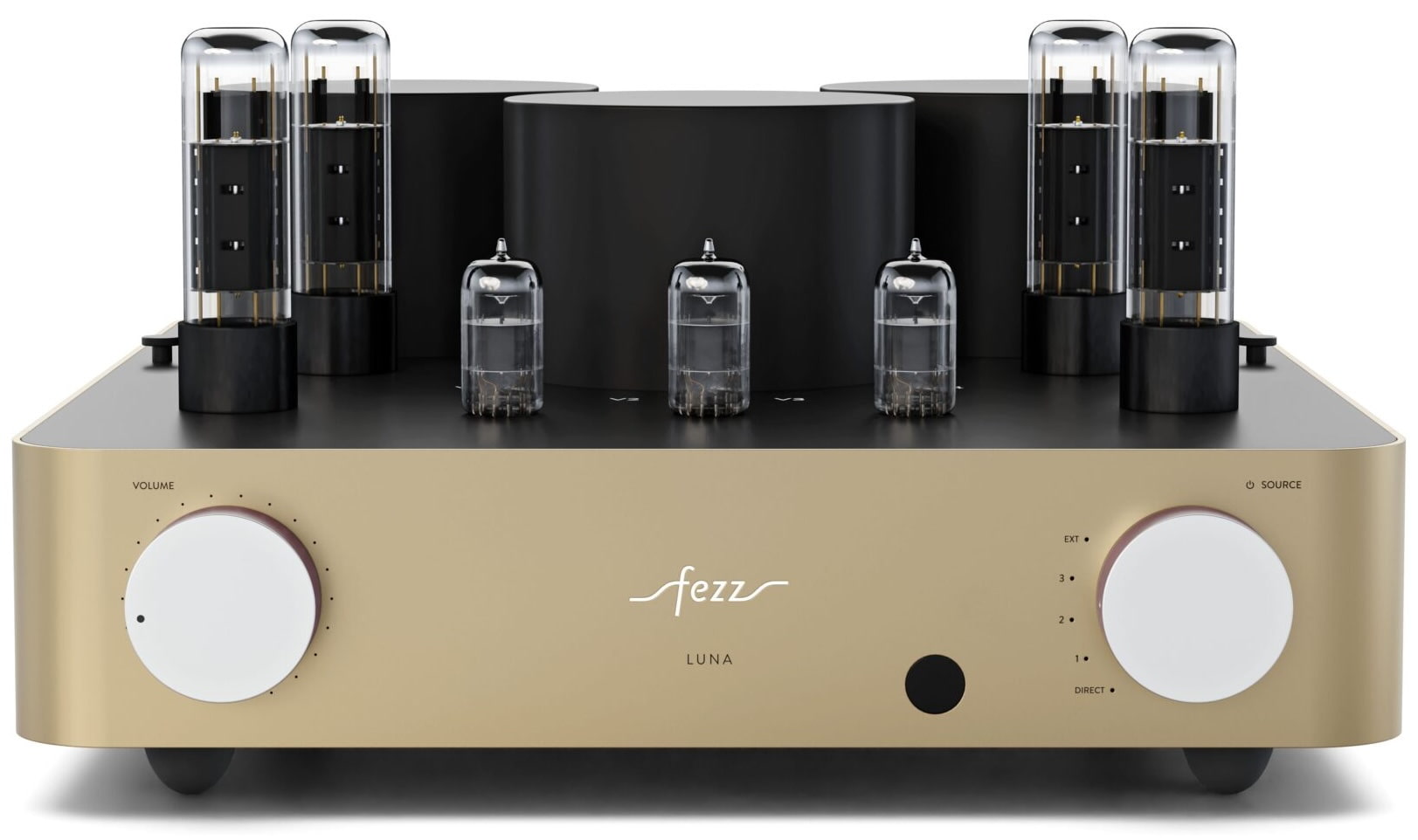
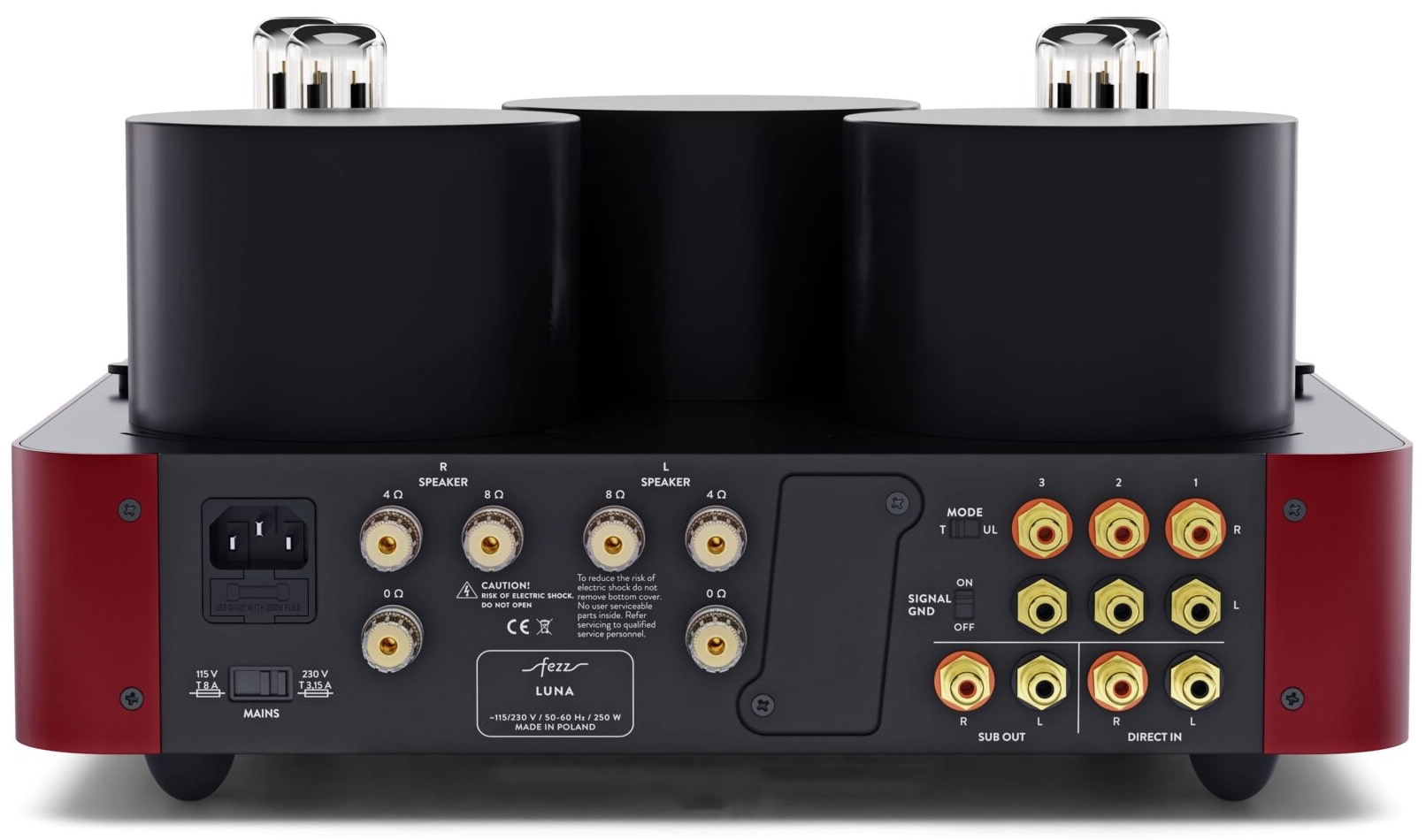
The Luna is a modern EL34-based tube integrated amplifier with selectable Ultralinear and Triode modes, modular expansion options, HT and Sub Out connectivity, and remote control support; which is not exactly your uncle’s dusty tube amp that needs three candles, a prayer, and a forgiving loudspeaker to behave. It is now shipping in the U.S. at $3,495, which puts Fezz Audio in a very interesting position for listeners who want real tube amplification with modern system flexibility, without pretending that 1962 was the peak of civilization — although it was a very good year for music and cinema.
The Luna is available in Big Calm, Black Ice, Burning Red, EverGreen, Moonlight, Republika, and Sunlight finishes, and several of them are far more striking in person than the spec sheet suggests. EIC Ian White has seen some of Fezz’s finishes firsthand, and apparently nobody in Poland got the memo that former Soviet Bloc colors were supposed to be drab, beige, and emotionally unavailable.
Fezz Audio Luna Integrated Amplifier in Sunlight Finish
Toroidal Transformer Technology
At the core of the Fezz Luna is one of the company’s key engineering strengths: toroidal output transformers developed in-house by Toroidy, Fezz Audio’s sister company. That matters because most tube amplifiers still rely on conventional EI-core output transformers, making Fezz’s approach less common and very much part of its identity.
Advertisement
The claimed benefits are lower noise, reduced electromagnetic interference, wider bandwidth, and better control. In practical terms, the goal is not to strip away the warmth people expect from tubes, but to tighten the presentation with cleaner edges, quicker transients, and firmer bass. Tubes with discipline. Poland apparently did not come here to make syrup.
Dual Sonic Character
The Luna provides users the flexibility to tailor sound through selectable operating modes:
Triode Mode – This supports a more intimate, harmonically rich presentation with classic tube warmth
Ultralinear Mode – The mode supports greater power, dynamic impact, and control
This dual approach allows the amplifier to adapt more easily to different speakers, recordings, and personal preferences. The Luna effectively provides two distinct sonic profiles within a single design.
Amplification
The Luna employs classic EL34 push-pull circuit topology, delivering 40 watts per channel in ultralinear mode and 20 watts per channel in triode mode. Users can easily switch between modes, choosing between the harmonic richness and intimacy of triode operation or the greater dynamics and authority of ultralinear performance. A robust, well-filtered power supply using Torodial transformers ensures stability and consistent operation across a wide range of loudspeakers.
Modular Design
Recognizing the needs of modern listeners, the Luna features a modular expansion system that allows users to integrate additional functionality directly into the amplifier. Optional modules include:
Advertisement
This add-on options approach ensures the amplifier remains relevant as system requirements need to be updated, eliminating the need for unnecessary external components.
Connectivity & Control
Unlike many traditional tube amplifiers, the Luna is designed to integrate easily into contemporary audio systems.
Advertisement. Scroll to continue reading.
Features include:
Advertisement
Home Theater Bypass
Subwoofer Output
Remote Control Operation
This connection and operational flexibility allow Luna not only to serve as a high-performance amplifier but as a centerpiece for a complete audio system.
No Compromise Product Engineering
With its in-house transformer foundation and tighter control over production, Fezz Audio has a real engineering story to tell at this price point. The Luna is not just another tube integrated amplifier in a nice chassis with a glowing glass sales pitch. Its use of Toroidy toroidal output transformers, Polish manufacturing, and modern connectivity give it a more distinctive position in a crowded integrated amplifier market.
The Luna is still a tube amplifier, so expectations should be grounded in what that means: tone, texture, dimensionality, and a more tactile presentation. But Fezz is also aiming for better control, lower noise, and more system flexibility than many traditional tube designs offer. For listeners who want tube character without giving up modern usability, the Luna looks like a smart and credible option. Eastern Europe is no longer knocking. It brought its own soldering iron.
“Fezz Audio has created something truly special with the Luna,” said Jay Rein, president of Bluebird Music. “Its combination of toroidal transformer technology, classic tube topology, and modern usability delivers a level of performance and versatility that stands out in its class.”
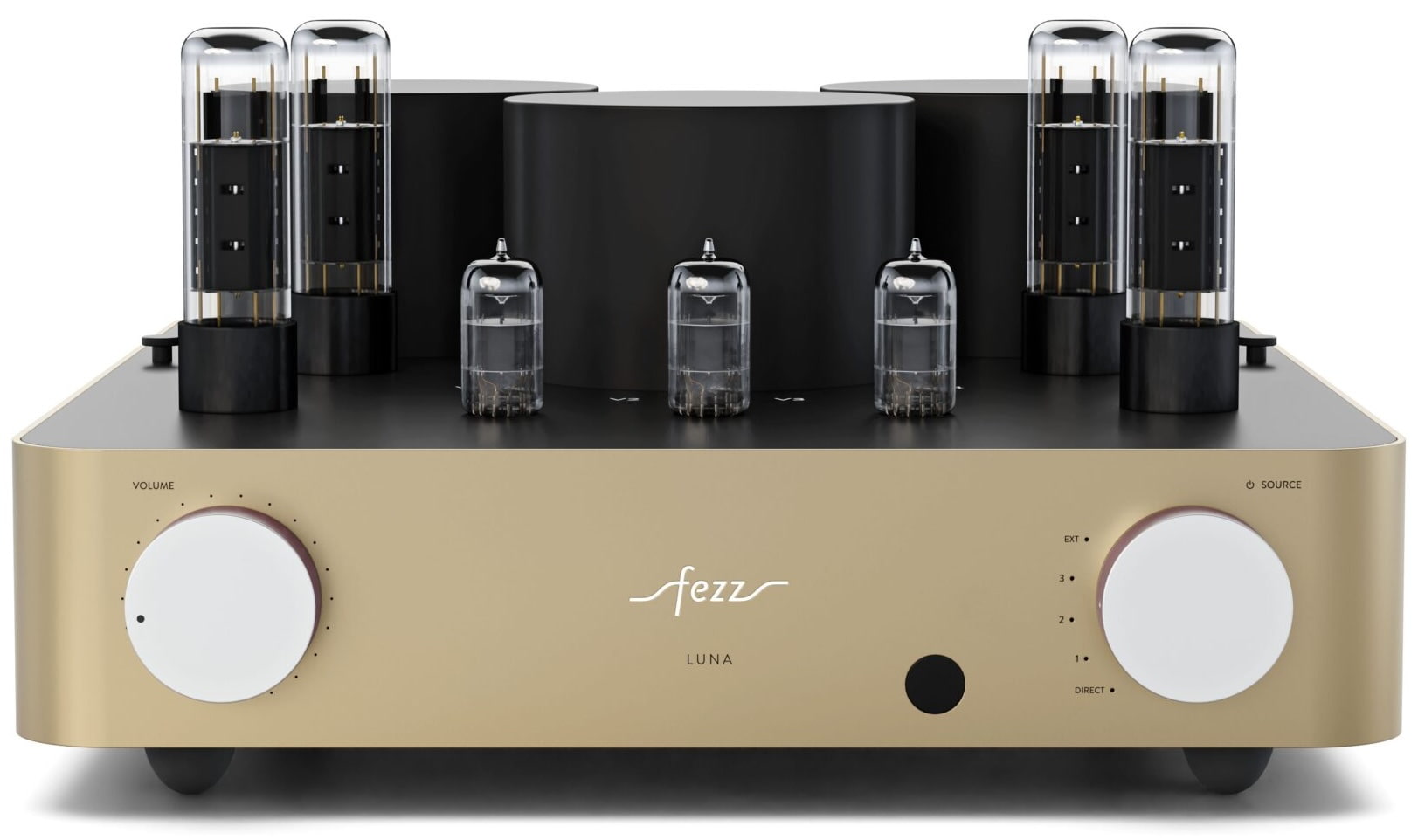
Big Calm Black Ice Burning Red EverGreen Moonlight Republika Sunlight
Fezz Audio Luna Integrated Amplifier in Black Ice Finish
The Bottom Line
Fezz Audio may not be the loudest Polish hi-fi brand in the U.S. market, but it is one of the more interesting ones, and the Luna Integrated Amplifier gives Bluebird Music another credible piece of Eastern European tube artillery to work with. Between the Equinox Tube DAC with Lampizator Technology, the Evolution series amplifiers, and now the refreshed Luna Vacuum Tube Integrated Amplifier, Fezz is building a real identity around Polish manufacturing, in-house transformer expertise, and tube gear that feels modern without pretending valves were invented last Thursday.
What makes the Luna different is its use of Toroidy toroidal output transformers, its selectable operating modes, and a level of production control that many tube brands at this price do not have. At roughly $3,500, it is not inexpensive, but in the vacuum tube integrated amplifier category, it is not wildly out of bounds either.
Advertisement
The misses are pretty clear. The optional MM phono stage really should have been included, especially in an amplifier aimed at listeners who are likely spinning records. Tubes and vinyl belong together. Charging extra for that feels a little like selling pierogi and billing separately for the sour cream. A built-in headphone amplifier also would have made the Luna more useful for late-night listening and smaller dedicated systems.
The Luna is best suited for listeners who already understand the appeal of tube amplification and want a modern integrated amp for a dedicated two-channel room. It also makes sense for someone with a serious home theater setup elsewhere who wants a separate music-first system with some warmth, texture, and Polish engineering muscle. Add the phono stage if vinyl is part of the plan. And Bluebird Music should absolutely keep bringing more Fezz Audio products into the U.S. market, because this is the kind of brand that makes the category more interesting.
Price & Availability
Fezz Audio’s Luna Integrated Amplifier is Shipping in the USA through the Bluebird Music Dealer Network for $3,495.
Although not confirmed, it is estimated that each add-on module is priced at about $300.
A new malware framework called PCPJack is stealing credentials from exposed cloud infrastructure while actively removing TeamPCP’s access to the systems.
Among the targeted services are Docker, Kubernetes, Redis, MongoDB, RayML, and vulnerable web applications. In many cases, the threat actor moves laterally on the network.
SentinelLabs researchers say that PCPJack appears designed for large-scale credential theft, and likely monetizes its activity via financial fraud, spam operations, credential resale, or extortion.
Because of the similarities with TeamPCP attacks, SentinelLabs believes that PCPJack may have been developed by a former TeamPCP affiliate or member that started their own operation.
“Many of the services targeted by the PCPJack framework are similar to the early TeamPCP/PCPCat campaigns from December 2025, before the high-visibility campaigns of early 2026 brought significant attention to TeamPCP and purportedly led to changes in group membership,” explain the researchers.
“We believe this could be a former operator who is deeply familiar with the group’s tooling.”
In a report today, SentinelLabs says that PCPJack infects Linux-based cloud systems using a shell script called bootstrap.sh.
Advertisement
Upon execution, it creates a hidden working directory, installs Python dependencies, downloads additional modules, establishes persistence, and launches the main orchestrator (monitor.py).
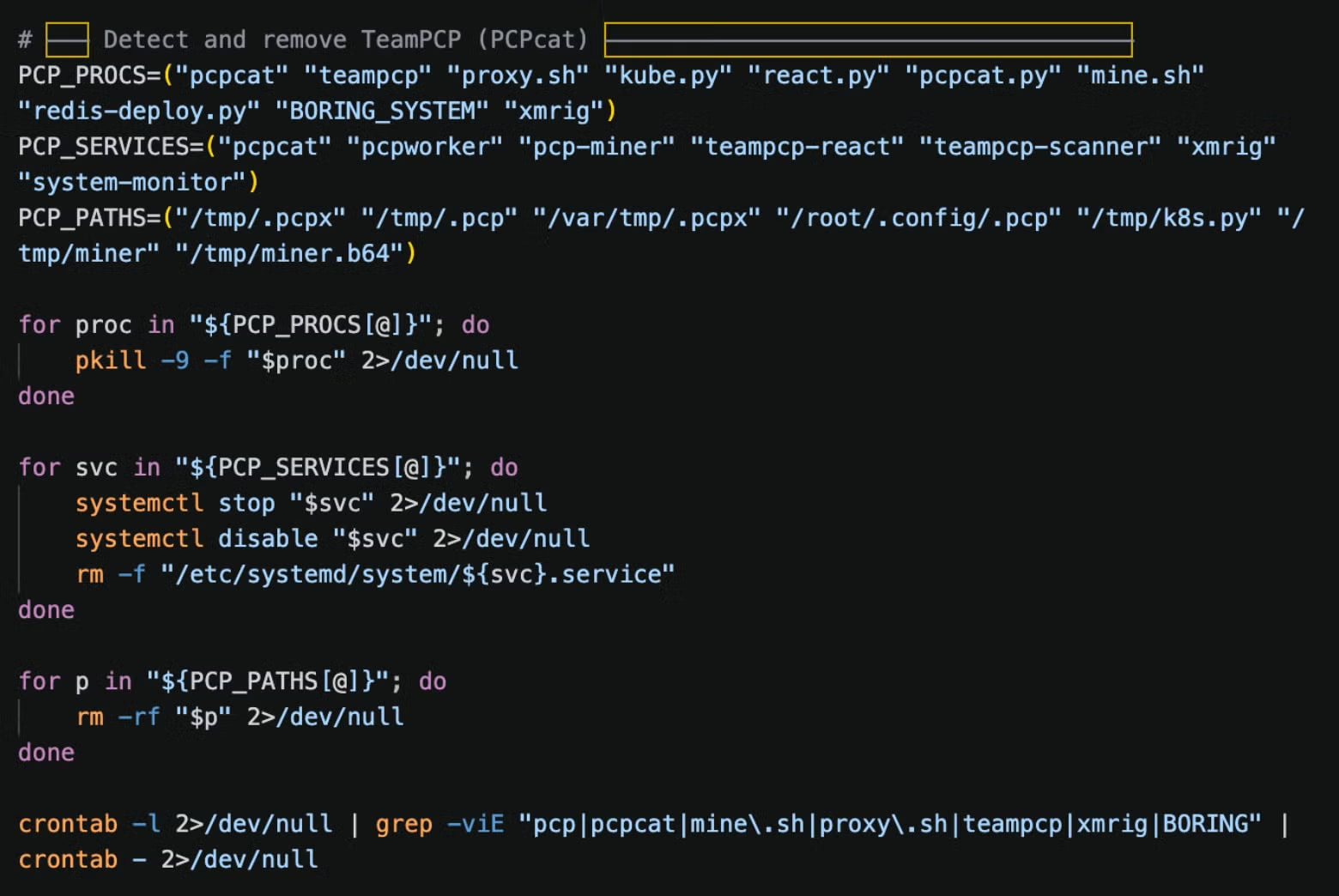
During this initial stage, PCPJack explicitly checks for TeamPCP tooling and attempts to delete everything, thus claiming the compromise for themselves.
The researchers say that the cleaning activity includes removing TeamPCP processes, services, containers, files, and persistence artifacts, completely eliminating the infections.
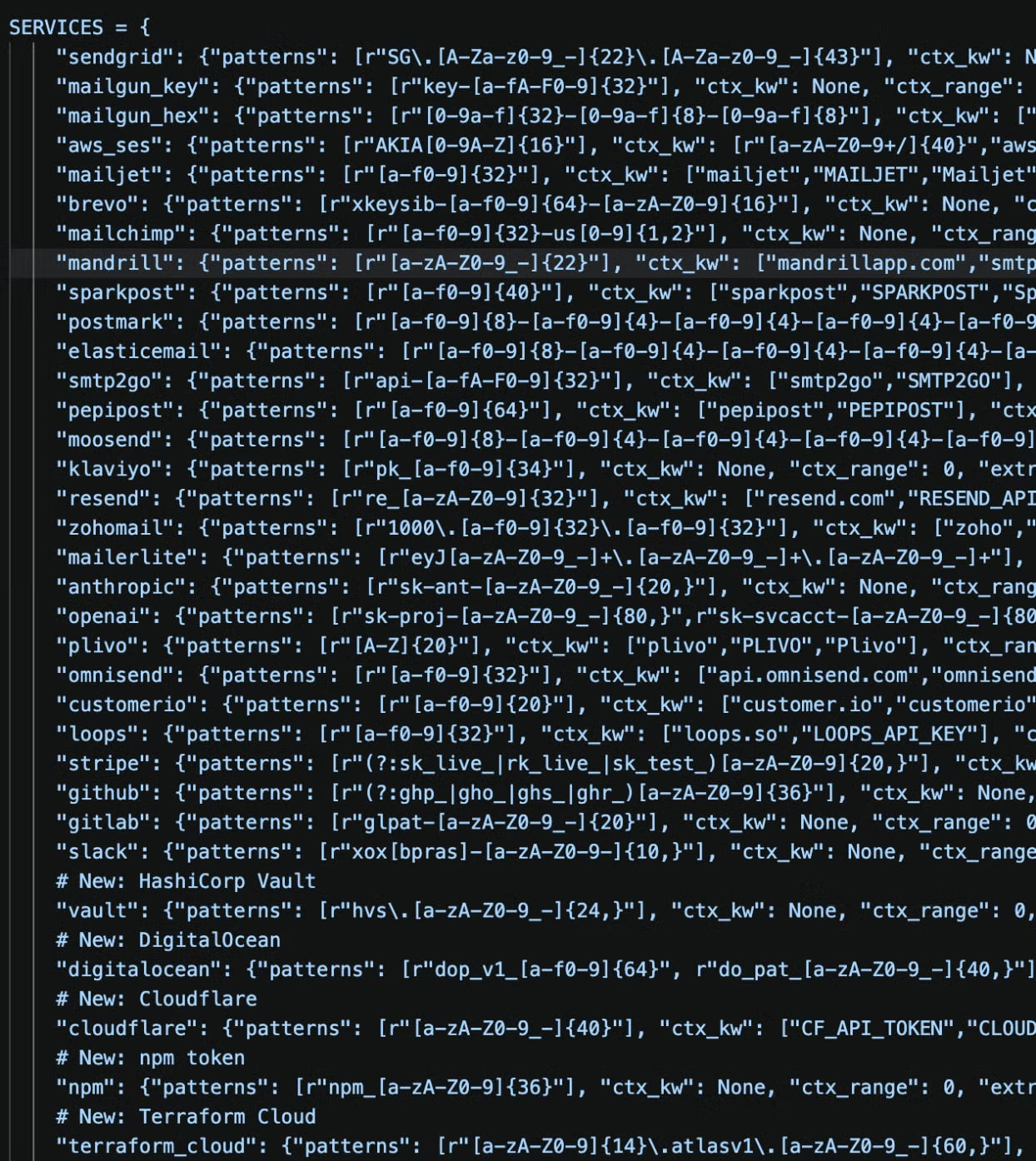
The credentials are exfiltrated to Telegram channels after they are encrypted using X25519 ECDH and ChaCha20-Poly1305, and split into 2800-byte chunks respecting Telegram’s message character limits.
Advertisement
Services targeted in PCPJack attacks Source: SentinelLabs
PCPJack propagates by scanning external cloud infrastructure for exposed services such as Docker, Kubernetes, Redis, MongoDB, and RayML, then attempts exploiting known vulnerabilities to gain access.
It also downloads hostname data from Common Crawl parquet files and uses them as new targets for the scanning processscanning targets.
SentinelLabs researchers note that PCPJack is exploiting the following vulnerabilities:
CVE-2025-29927: auth bypass in Next.js middleware via crafted header
CVE-2025-55182 (“React2Shell”): Server Actions deserialization flaw in React and Next.js
CVE-2026-1357: unauthenticated file upload in WPVivid Backup
CVE-2025-9501: PHP injection in W3 Total Cache via cached mfunc comment
CVE-2025-48703: shell injection in CentOS Web Panel Filemanager changePerm functionality
Inside compromised environments, the malware performs lateral movement by harvesting SSH keys and credentials, enumerating Kubernetes clusters and Docker daemons, and executing itself on reachable internal hosts.
Once access is obtained, it establishes persistence using systemd services, cron jobs, Redis cron rewrites, or privileged containers before continuing propagation.
SentinelLabs also found a Sliver-based backdoor on the threat actor’s infrastructure, with variants to support x86_64, x86, and ARM system architectures.
Advertisement
To mitigate this risk, the researchers recommend enforcing multi-factor authentication (MFA), using IMDSv2 in AWS, ensuring proper authentication for Docker and Kubernetes services, following least-privilege principles, and avoiding storing secrets in plaintext.
AI chained four zero-days into one exploit that bypassed both renderer and OS sandboxes. A wave of new exploits is coming.
At the Autonomous Validation Summit (May 12 & 14), see how autonomous, context-rich validation finds what’s exploitable, proves controls hold, and closes the remediation loop.
Yet it remains unclear if Anthropic’s uber model was effective, or if better model middleware is what makes the difference
Mozilla fixed 423 Firefox security bugs in April, a repair rate more than five times higher than the 76 fixes issued in March and almost 20 times higher than its 21.5 monthly average last year.
The browser maker previously said Anthropic’s ballyhooed Mythos Preview model found 271 of these in Firefox 150.
Advertisement
Now, a trio of technical types has come forward to provide a bit more detail about what Mythos (and its less storied sibling Opus 4.6) actually found. But they also highlight something that may matter more than the model: the agentic harness – the middleware mediating between AI and the end user.
Brian Grinstead, Firefox distinguished engineer, Christian Holler, Firefox tech lead, and Frederik Braun, head of the Firefox security team, observe that over the past few months, AI-generated security reports have gone from slop to rather more tasty.
They attribute the transformation to better models and development of better ways of harnessing those models – steering them in a way that increases the ratio of signal to noise.
But they also appear to be aware that there’s some skepticism in the security community about Mythos. So they’ve decided to publicize selected wins in an effort to encourage others to jump aboard the AI bug remediation train.
Advertisement
“Ordinarily we keep detailed bug reports private for several months after shipping fixes and issuing security advisories, largely as a precaution to protect any users who, for whatever reason, were slow to update to the latest version of Firefox,” they said.
“Given the extraordinary level of interest in this topic and the urgency of action needed throughout the software ecosystem, we’ve made the calculated decision to unhide a small sample of the reports behind the fixes we recently shipped.”
The post links to a dozen Firefox bugs with varying degrees of severity. The list includes, for example, a 20-year-old heap use-after-free bug (high severity) that a web page could trigger using the XSLTProcessor DOM API without any user interaction.
Many of these bugs are sandbox escapes, they note, which are difficult to find using techniques like fuzzing. AI analysis, they say, helps provide broader security coverage. And they add that it has helped validate prior browser hardening work designed to prevent prototype pollution attacks – audit logs showed AI models making unsuccessful exploitation attempts using this technique.
Advertisement
Following Anthropic’s announcement of Project Glasswing – a program for companies to gain early access to Mythos because it’s touted as too dangerous for public release – security experts expressed skepticism.
For example, Davi Ottenheimer, president of security consultancy flyingpenguin, wrote in an April 13 blog post, “The supposedly huge Anthropic ‘step change’ appears to be little more than a rounding error. The threat narrative so far appears to be ALL marketing and no real results. The Glasswing consortium is regulatory capture dressed up poorly as restraint.”
He subsequently ran a test in which he strapped Anthropic’s lesser models Sonnet 4.6 and Haiku 4.5 into a harness called Wirken with an auditing skill called Lyrik. The result was eight findings in two minutes at a cost of about $0.75, Ottenheimer claims, noting that two of the eight matched bugs Mythos had identified.
Other security folk have also reported that bug hunting and exploit development can be quite productive with off-the-shelf models like Opus 4.6, which among other virtues costs about 5x less than Mythos.
Advertisement
In an email to The Register, Ottenheimer said, “There’s a fundamental philosophical failure in the Mozilla post. A reading and a measurement are not the same thing. I don’t see a measurement, but they seem to want us to believe we’re looking at one.
“When they give us the ‘behind the scenes math’ it’s circular, a trick. ‘Mythos found 271 bugs’ is what Mythos found, not what other tools could not find against the same code. Why leave it as an assumption if it can be proven?”
Ottenheimer said Mozilla advocates that every project adopt a similar approach without proving the merits of that approach.
“It’s like saying if you don’t drink Coca-Cola, you can’t run a mile under six minutes, because that’s what a guy sponsored by Coca-Cola just did,” he said. “The bar moves on rhetoric, marketing, not proper evidence. That is the capture crew again.”
Advertisement
He notes that the merits of Mythos might be more convincing if Mozilla had reported they couldn’t do this work without Mythos. And since they’re not saying that, he suggests, it’s worth asking why there’s no transparent comparison of Mythos to other models.
He points to Mozilla’s admission that Opus 4.6 was already identifying “an impressive amount of previously unknown vulnerabilities.”
“Mozilla never quantifies what Opus 4.6 [did] before saying what Mythos added,” he said. “So 271 attributed to Mythos doesn’t fit the analysis. And there’s a deeper reveal when they say ‘we dramatically improved our techniques for harnessing these models.’ The improvement may be entirely in the harness, not as much in the model. This maps to my own experience. A nail gun has advantages over the hammer, yet without being in the right hands the outputs are as bad or worse.” ®
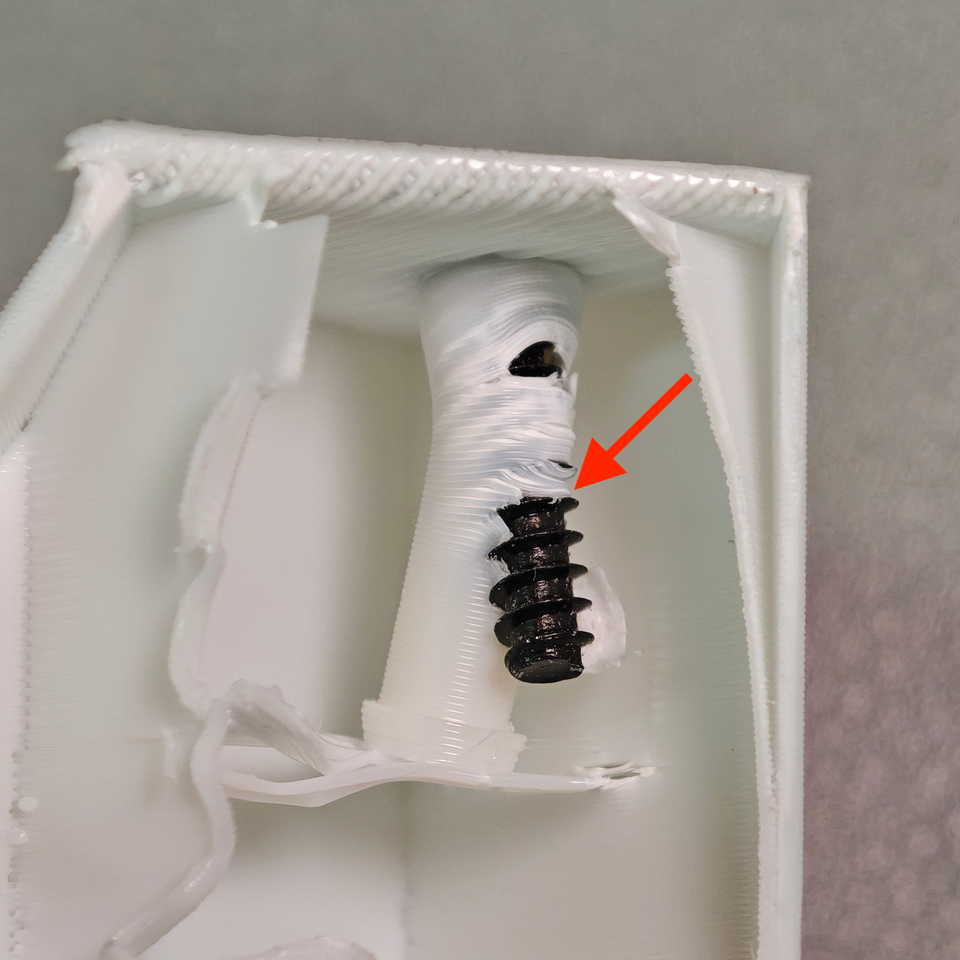
Screws are useful fasteners for 3D prints, but the effectiveness of a screw (not to mention the ease or hassle of insertion) depends on the hole itself. This comprehensive guide on how to design screw holes in 3D printed parts takes guesswork out by providing reference tables as well as useful general tips.
The guide provides handy tables saying exactly how big to design a hole depending on screw type, material (PLA, PETG, or high-flow PETG) and whether the hole is printed in a vertical or horizontal orientation. This takes the guesswork out of screw hole design.
There’s no reason to guess the right size of hole for a screw, just refer to some handy tables.
The reason for different numbers is because multiple (but predictable) variables affect a 3D-printed hole’s final dimensions. Shrinkage, filament properties, and printing orientation can all measurably affect small features like screw holes; accounting for these is the difference between a good fit, and cracking or stripping.
In addition to the tables, there are loads of other useful tips. Designing lead-ins makes screws easier to insert and engage, and while increasing walls is an easy way to add strength it’s also possible to use 3D-printed microfeatures which are more resistant to distortion and don’t depend on slicer settings. There’s even suggested torque amounts for different screw and material types.
Advertisement
Sure, the most reliable way to get a hole of a known size is to drill it out yourself. But that’s an extra step, and drill bits aren’t always at hand in the desired sizes. The guide shows that it is entirely possible to print an ideal screw hole by taking a few variables into account.
If your design calls for screws, be sure to check it out and see if there’s anything you can use in your own designs.
The GameSir Pocket Taco is an interesting, single-purpose game controller built for retro gaming on iPhone via emulation. Its low price makes its tradeoffs worth it for nostalgia seekers.
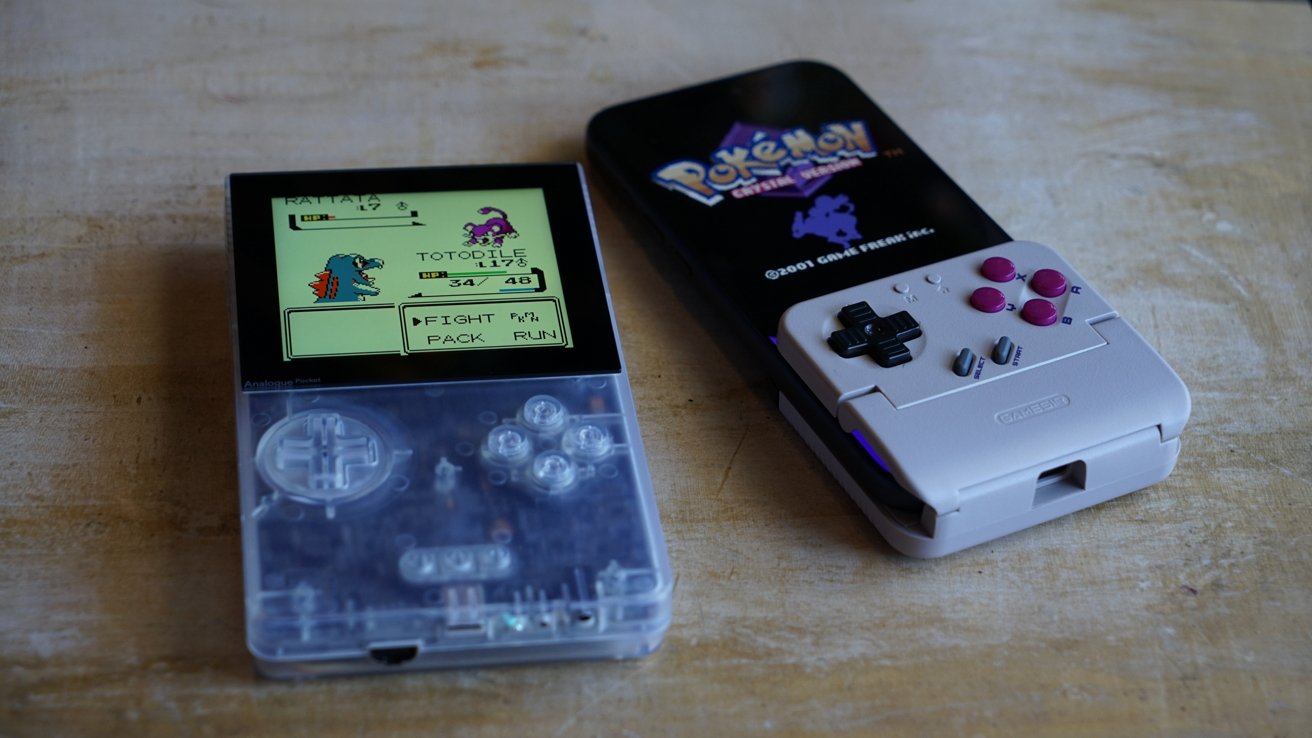
Since Apple enabled the use of emulators on iPhone, the search for the perfect emulation controller began. We’ve seen many mounts, attachments, and standard controllers, but the Pocket Taco takes a different approach.
Instead of simply being a capacitive set of buttons like Gamebaby, the GameSir Pocket Taco is a full Bluetooth game controller that slips onto your iPhone. Of the two options, I like GameSir’s approach better since I don’t always want my iPhone to have a controller attached.
That said, there are some limitations to this style of controller. In spite of its imperfections, the Pocket Taco is an excellent gadget that does a lot of things well for a very affordable price.
Advertisement
GameSir Pocket Taco review: design and features
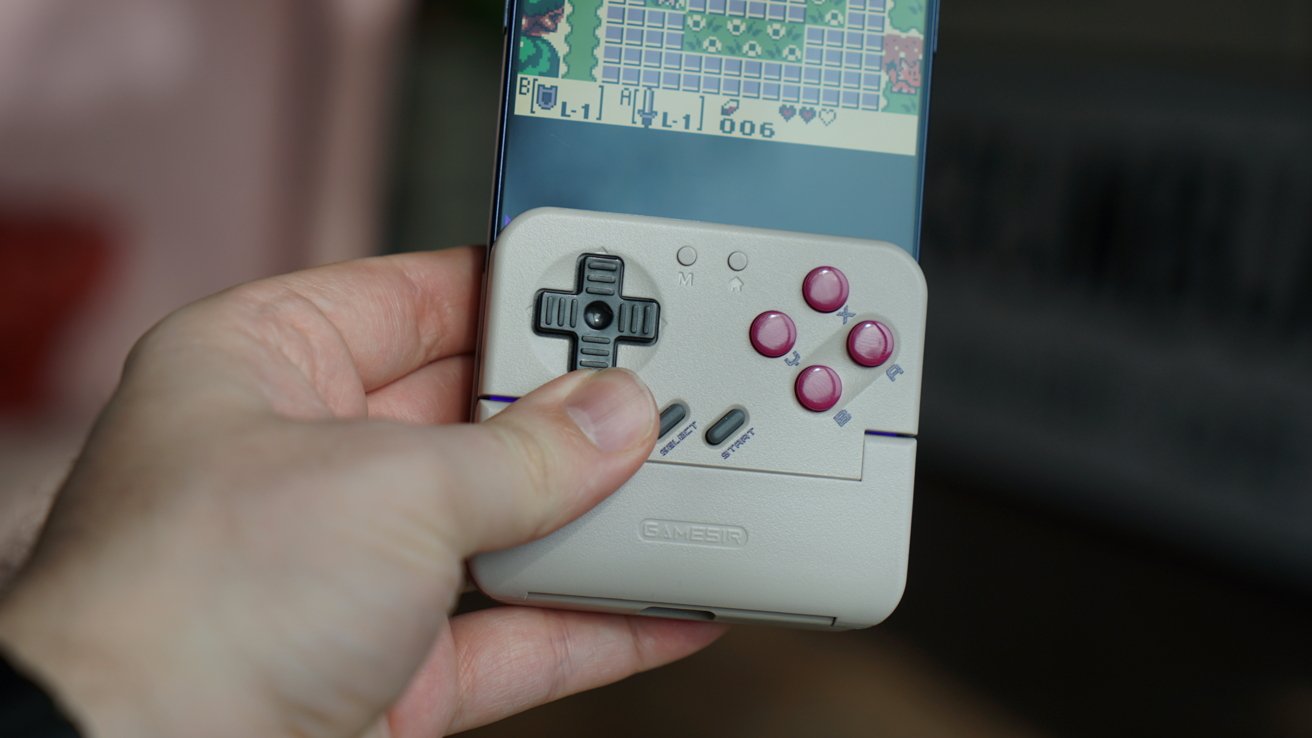
In a world filled with amazing game controller experiences, I can say the Pocket Taco is middling at best. That isn’t to slam the product from GameSir, but the form factor itself.
GameSir Pocket Taco review: nostalgic but cramped
The Game Boy that the Pocket Taco is emulating is an amazing console for children. It’s less great for adult-sized hands, though I understand why they went with this form factor.
It is a time-tested controller layout that worked great for several consoles. I even still use this layout on some occasions thanks to the Analogue Pocket.
Advertisement
However, be ready for some hand cramps after any lengthy play session. The good thing is that you probably shouldn’t be playing games on your phone for too long, even when some demand it.
Emulation is a funny thing. It brings games that were never intended for your device, be it a smartphone or tablet, and makes them run in a virtualized environment.
GameSir Pocket Taco review: the closest thing to a Game Boy experience on iPhone
That means games with 40+ hour storylines meant for dedicated outlets and CRTs are suddenly thrust into a device with a limited battery life. The funny thing is that many older games actually fit the modern play style of dropping in for minutes at a time.
Advertisement
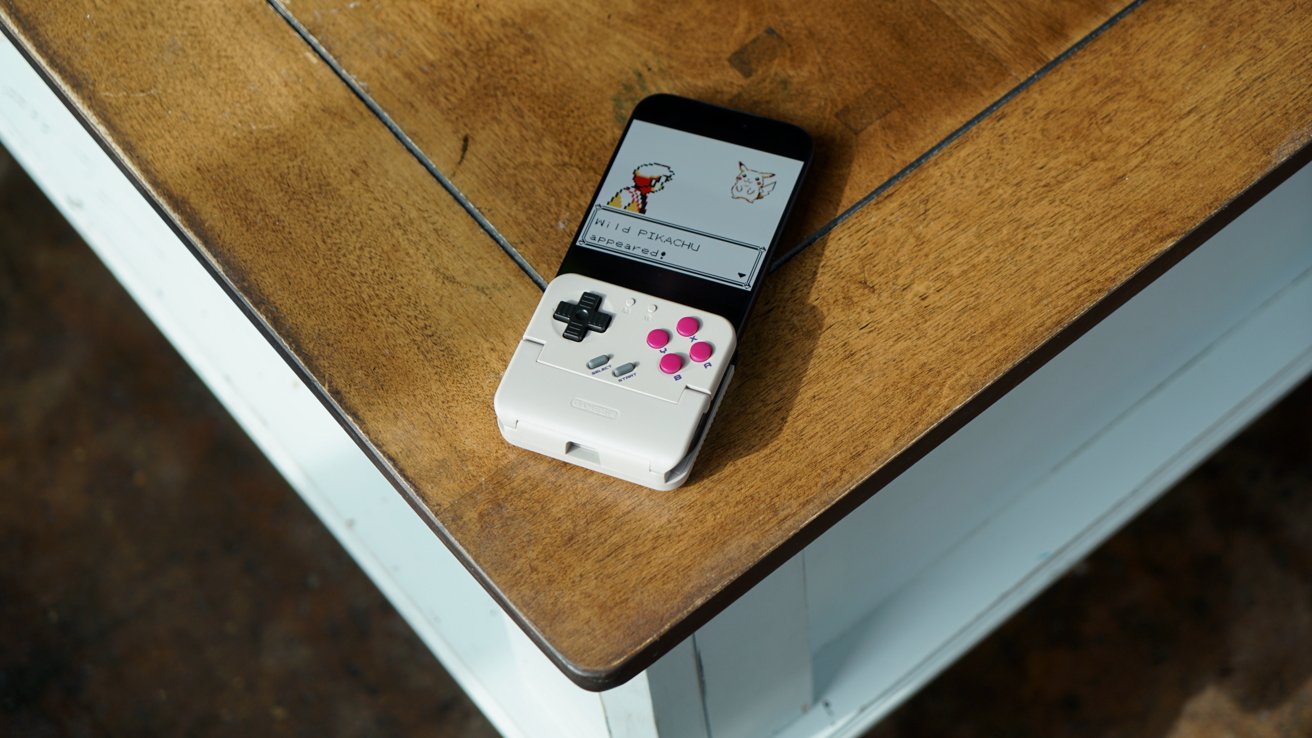
The premise of the Pocket Taco’s design is simple: you’re waiting in a doctor’s office when you get the urge for some Super Mario Bros.. Simply grab your phone from one pocket, the Pocket Taco from the other, and you’re off to the Mushroom Kingdom.
Emulators make things easy too, since you can just tap a button for an instant save state, save points be damned.
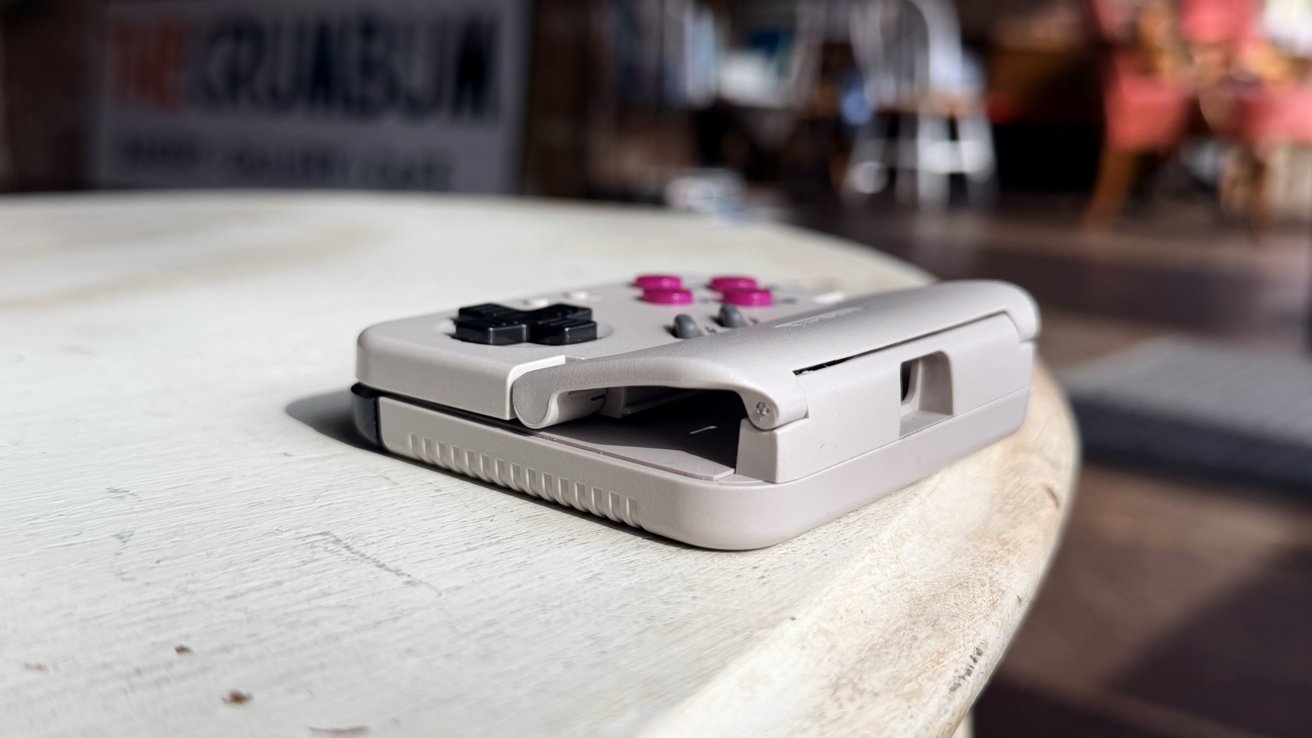
GameSir Pocket Taco review: a simple clamp with extra features
The controller attaches via a clever clamping mechanism that wakes it up when opened. Remove the controller and it disconnects from Bluetooth in a few seconds.
Advertisement
That means GameSir expects you’ll only be using the Pocket Taco with it attached to the iPhone. No, don’t try to clip it to your iPad mini or force it open for Bluetooth use on other devices.
This is a product with a very specific use case, which I appreciate. We need more companies to take the time to make cool and weird niche products without trying to hit every single use case.
GameSir Pocket Taco review: enough battery for your play sessions
It’s got a 600mAh battery, which is useless information really. I’ve never had an issue with the battery running out, just charge it between play sessions and you’re good to go.
Advertisement
There’s also a cutout in the base that lets you charge the iPhone while using the controller.
Gaming with the GameSir Pocket Taco
You’re going to want to stick to games with simple control schemes. In terms of emulators, that’s games like those made for Nintendo DS, Game Boy, Game Boy Advanced, NES, and SNES.
GameSir Pocket Taco review: Pokemon is simple enough for the controller layout
Some PlayStation One games will work with the Pocket Taco, but only those that don’t need analog sticks. I played Digimon World 3 without any issue.
Advertisement
That’s also where the L2 and R2 buttons are actually used, though they’re not the easiest buttons to press.
It isn’t as if other games or emulators will ignore the controller, but you’ll be missing necessary buttons for them to work. While you can probably get by with some N64 games, I recommend sticking with the other consoles.
GameSir Pocket Taco review: reliving a classic play style
The best part of most emulators is the fanbase working on various skins, especially for the Delta emulator. All you have to do is search for “Pocket Taco Delta skins” and you’ll find some good options.
Advertisement
The biggest problem you’ll run into with the Pocket Taco is that it is only useful for a game that has already launched. Don’t bother attaching it until you’ve navigated your emulator app and launched the game.
If you want to swap games, you’ll have to remove the Pocket Taco, navigate the menus, then reattach it when the new game has launched.
GameSir Pocket Taco review: the game pad obscures the bottom of the display
Beyond emulation, there really aren’t any good gaming choices. There might be the rare exception where an iPhone game has a virtual controller in the lower half of the display, but I don’t have any games like that.
Advertisement
Most iPhone games are full screen and rely on touch controls or external controllers. They don’t expect a controller that will take up half the display.
If you want a more tactile experience while playing emulated games, the GameSir Pocket Taco provides an authentic experience, for better or worse.
A nostalgic gadget
If you like emulation, gadgets, and nostalgia, the GameSir Pocket Taco was made just for you. It is the perfect little throwback accessory that transforms your iPhone into a Game Boy-like experience.
GameSir Pocket Taco review: a perfect retro experience on iPhone
Advertisement
It is far from the perfect gaming experience, but it isn’t meant to be. The GameSir Pocket Taco is a throwback to the Game Boy and it does a good job of capturing that form factor.
It is small and easy to carry, so it wouldn’t be far-fetched to toss this into a mesh pocket in your bag, even if you bring a full-sized controller too. It enables an authentic experience for the Game Boy and Game Boy Advanced while enabling tactile gaming for other emulators.
And seriously, you can’t beat that price.
GameSir Pocket Taco review – pros
Nostalgic design and clicky buttons
Simple sleep/wake function tied to the hinge opening
Emulator-specific controller with skins available for some emulators
Low enough price to justify in spite of its limited use
GameSir Pocket Taco review – cons
Cramped layout, but can’t be helped
Blocks the display so must be removed when navigating apps
Only useful for emulators, not regular iPhone games
Rating: 4 out of 5
The price and novelty of this controller could make this a 5 out of 5 if it weren’t for the limitations presented by the form factor. It has an excellent build quality and does the job, but it certainly isn’t for everyone.
Also, I can’t ignore the fact that this is a controller that only works on specific emulation tools.
Advertisement
Where to buy the GameSir Pocket Taco
Get the GameSir Pocket Taco from Amazon for $34.99, which is a 22% discount from the listed $44.99 price. It is only available in the single color and fits any iPhone with a standard case.
Lumen Field in Seattle, home of the Seahawks. (GeekWire Photo / Kurt Schlosser)
Former Boston Celtics majority owner Wyc Grousbeck and Aditya Mittal, an investor in the NBA team, are preparing a bid to purchase the Seattle Seahawks, according to a report Thursday by Sportico.
The report cites multiple people familiar with the process in saying that Grousbeck and Mittal submitted a letter of interest to the banking team handling the sale process for the Paul G. Allen estate. The Seahawks, Grousbeck and Mittal declined to comment to Sportico.
Mittal is a member of one of India’s richest families and is CEO of ArcelorMittal, a Luxembourg-based steel manufacturing company. He invested $1 billion in the group that purchased the Celtics in 2025 for $6.1 billion.
Grousbeck led the ownership group that bought the Celtics in 2002 for $360 million.
At least one Seahawks fan site was optimistic about the potential bid. 12th Man Rising quoted Celtics expert Ben Handler, who called Grousbeck a popular owner who was “present but also hands off” — much like Paul and then his sister, Jody Allen.
Advertisement
“If the Seahawks are going to be sold, then Grousbeck and Mittal, who could invest the most amount of money, would appear to be the perfect transition from the Allen family,” the site said.
The estate of Allen, the late Microsoft co-founder, announced that the Seahawks were being put up for sale in February as part of the long process of divesting many of the assets and investments that Allen made during his lifetime. All proceeds are being directed toward philanthropy.
The team, which won its second NFL championship last season, is expected to fetch upwards of $7 billion.
A report last month named Apple CEO Tim Cook and Meta founder Mark Zuckerberg as potential Seahawks suitors, but the two denied any interest.



























































You must be logged in to post a comment Login