Connect with us
DAPA Banner
DAPA Coin
DAPA
COIN PAYMENT ASSET
PRIVACY · BLOCKDAG · HOMOMORPHIC ENCRYPTION · RUST
ElGamal Encrypted MINE DAPA
🚫 GENESIS SOLD OUT
DAPAPAY COMING

Business

Lumentum Earnings Paused the Stock’s Rally. Why Wall Street Isn’t Worried.

Published

on

Lumentum Earnings Paused the Stock’s Rally. Why Wall Street Isn’t Worried.

Lumentum Earnings Paused the Stock’s Rally. Why Wall Street Isn’t Worried.

Continue Reading
Click to comment

You must be logged in to post a comment Login

Leave a Reply

Business

At Close of Business podcast May 8 2026

Published

on

At Close of Business podcast May 8 2026

Jack McGinn speaks with Tom Zaunmayr about the history of Albany’s port.

Continue Reading

Business

Global Food Prices Rise for Third Month Running | Iran Crisis Drives UK SME Costs

Published

on

Global Food Prices Rise for Third Month Running | Iran Crisis Drives UK SME Costs

British food and drink businesses are bracing for a fresh wave of cost pressure after global food commodity prices climbed for the third consecutive month, with fallout from the conflict in Iran emerging as a significant driver of the latest increase.

The Food and Agriculture Organization of the United Nations (FAO) reported that its closely watched Food Price Index (FFPI) rose by 1.6 per cent in April, building on gains recorded in February and March. The benchmark, which tracks a basket of internationally traded food commodities, now points to a sustained inflationary squeeze that will inevitably work its way through to wholesale markets, hospitality menus and supermarket shelves over the coming months.

For the UK’s small and medium-sized food producers, manufacturers and independent retailers, the figures will make grim reading. Margins across the sector have already been pared back to the bone by three years of input-cost turbulence, and many SME operators have warned that there is little headroom left to absorb further increases without passing them on to consumers.

Vegetable oils led the latest surge, rising by 5.9 per cent in April alone. Prices of palm, soya, sunflower and rapeseed oils all moved sharply higher, with palm oil notching up a fifth straight monthly gain. The FAO pointed to growing demand from the biofuel sector, propped up by policy incentives in several producing nations and a firmer crude oil price, alongside concerns over weaker output in Southeast Asia in the months ahead. Independent bakers, fish-and-chip operators and food manufacturers reliant on bulk vegetable oil supply are likely to feel the pinch first.

Cereal prices rose by 0.8 per cent, with drought in parts of the United States and forecasts of below-average rainfall in Australia tightening the outlook. The geopolitical picture has compounded matters. The FAO singled out the effective closure of the Strait of Hormuz, the strategic shipping lane that handles a substantial share of the world’s energy and fertiliser trade, as a key factor pushing up fertiliser costs. Farmers are now expected to scale back wheat plantings in 2026 in favour of crops requiring less fertiliser, a shift that threatens to lock in higher grain prices well beyond this year’s harvest.

Advertisement

Meat prices climbed by 1.2 per cent, with bovine meat reaching a new record high, an unwelcome development for the UK’s restaurant trade and butchers’ shops, which have already weathered relentless beef price inflation over the past 18 months.

There were two bright spots in the data. Dairy prices slipped by 1.1 per cent on the back of softer butter and cheese quotations, helped by plentiful milk supplies across the European Union. Sugar prices plunged by 4.7 per cent, the most striking move in either direction, as ample supplies in the current season, stronger production prospects in China and Thailand, and a favourable start to Brazil’s harvest in its southern growing regions weighed on the market.

For SME owners, the signal is mixed but the direction of travel is clear. With three months of consecutive rises now on the board, and with Middle East tensions showing no sign of easing, the assumption inside boardrooms across British food and drink will be that costs are heading north for the remainder of the year. Forward-buying, contract renegotiation and a hard look at menu engineering and product reformulation are likely to climb back up the agenda.

Concerns are also mounting that fresh shortages could emerge in parts of Africa later in the year, a development that would carry implications for global aid budgets and for the UK’s own development spending priorities.

Advertisement

The FAO’s data is one of the most reliable early-warning systems for shifts in global food affordability. After a period in which businesses had begun to hope the worst of the post-pandemic, post-Ukraine cost shock was behind them, April’s reading is a pointed reminder that the era of cheap food may not be returning any time soon.


Jamie Young

Jamie Young

Jamie is Senior Reporter at Business Matters, bringing over a decade of experience in UK SME business reporting.
Jamie holds a degree in Business Administration and regularly participates in industry conferences and workshops.

When not reporting on the latest business developments, Jamie is passionate about mentoring up-and-coming journalists and entrepreneurs to inspire the next generation of business leaders.

Advertisement
Continue Reading

Business

Titan Q4 Results: Cons profit jumps 35% YoY to Rs 1,179 crore; Rs 15/share dividend announced

Published

on

Titan Q4 Results: Cons profit jumps 35% YoY to Rs 1,179 crore; Rs 15/share dividend announced
Titan Company on Friday reported a consolidated net profit of Rs 1,179 crore in the March-ended quarter of FY26 versus Rs 871 crore in the year-ago period, implying a 35% growth. The company’s total income in Q4FY26 was up 46% to Rs 20,300 crore versus Rs 13,891 crore in the corresponding quarter of the previous financial year.

Along with the earnings, Titan’s Board also recommended a dividend of Rs 15 per equity share, which shall be paid within seven days from the conclusion of the 42nd Annual General Meeting, subject to the approval of the shareholders of the company.

The company’s Earnings Before Interest and Taxes (EBIT) stood at Rs 1,875 crore in the quarter under review, rising 28% over 1,470 crore in Q4FY25.

Segment performance

Jewellery

Building on its strong Q3 momentum, the jewellery business recorded another exceptional quarter of 50% growth over the year-ago period. New collections and continued strength of Titan’s exchange programs powered robust 35% growths in each of gold and studded product portfolios.
Consumer confidence in gold as both an adornment and a store of value remained intact (despite record high prices and volatility in the quarter), translating into healthy buyer engagement.

Advertisement


The International Jewellery business (with the addition of Damas Jewellery), clocked double-digit retail growth across GCC and North America, despite multiple disruptions due to the ongoing geopolitical situation in the Middle East region.
The business achieved an EBIT of 1,820 crores at a margin of 10%. Within this, the India business clocked an EBIT of Rs 1,902 crores at 11.1% margin.Tanishq, Mia and Zaya business (combined) recording EBIT of 1,813 crores at 11.3% margin, while Caratlane (domestic) recording an EBIT of Rs 89 crores at 8.4% margin. The international jewellery business (including Damas) recorded a loss of Rs 82 crores for the quarter.

Watches

The watch business achieved a total income of Rs 1,222 crores for the quarter, growing 8% over Q4FY25 and achieving an EBIT of Rs 143 crores at 11.7% margin. Business added 30 new stores (net) in the quarter, consisting of 17 stores in Titan World, 7 stores in Fastrack, 4 stores in Helios and 2 stores in Helios Luxe.

EyeCare

Domestic eyecare business achieved total income of Rs 227 crores in Q4FY26, growing 17% over Q4FY25 and recording an EBIT of Rs 21 crores at 9.2% margin. Store optimisation efforts continued in the quarter with 37 refurbishments/renovations,12 new store openings and 32 closures in this period.

Also read: SBI Q4 Results: Standalone profit rises 6% YoY to Rs 19,684 crore, beats estimates

Emerging Businesses

The Emerging Businesses, comprising SKINN Fragrances, IRTH Women’s Bags and Indian Dress Wear (Taneira), saw varying growth trajectories across individual businesses. Fragrances maintained its strong volume momentum across both the Skinn and Fastrack perfume lines, IRTH Women’s Bags witnessed robust volume growth and continued to gain in brand salience, whereas Taneira’s revenue was flattish for the quarter. Total Income for all the businesses (combined) for Q4FY26 grew 20% to Rs 123 crores and recorded a loss of Rs 5O crores for this period.

Advertisement

(Disclaimer: Recommendations, suggestions, views and opinions given by the experts are their own. These do not represent the views of The Economic Times)

Continue Reading

Business

Belfast fudge brand secures Tesco NI listing

Published

on

Business Live

Handmade fudge sweetens lunch breaks for Tesco customers

Jack McAdorey, General Manager of Melting Pot Fudge

Belfast-based Melting Pot Fudge has secured a significant new retail milestone after winning a place in Tesco Northern Ireland’s meal deal offer across all 29 of the retailer’s superstores in the region.

Advertisement

The brand’s 50g bars will be available as part of the Tesco meal deal from May 18, with three flavours included in the launch: Traditional Butter, Salted Caramel and Madagascan Vanilla.

The listing marks another important step in the growth of the Belfast business, which has built a strong reputation for its handmade fudge and is now focused on expanding its reach through mainstream retail channels.

Jack McAdorey, General Manager of Melting Pot Fudge, said: “Securing a place in Tesco Northern Ireland’s meal deal is a major milestone for the business. It gives us a strong presence in a high-footfall retail environment and puts the brand in front of a large volume of consumers on a daily basis.

“For us, this is about more than a listing. It is about growing brand awareness, driving trial and continuing to build Melting Pot Fudge’s position within grocery retail. To see a Belfast-made product secure this kind of platform is a very positive step forward for the business.”

Advertisement

The fudge brand has secured a landmark deal

Founded in Belfast more than 20 years ago, Melting Pot Fudge has grown from a small local operation into an award-winning brand with a widening retail footprint. The business continues to produce its fudge by hand in Belfast and has built momentum through a combination of traditional methods, strong product quality and increasing distribution.

Jack added: “As a business, we are focused on sustainable growth, and listings like this are an important part of that. It is another step in bringing Melting Pot Fudge to more consumers and building long-term momentum for the brand.”

The launch will feature three of the company’s best-performing 50g bars, with the chosen flavours reflecting both the heritage and broad consumer appeal of the Melting Pot Fudge range.

For the Belfast business, the Tesco Northern Ireland listing represents not only a new route to market, but further evidence of growing retailer confidence in local brands with the potential to scale.

Advertisement
Continue Reading

Business

Drone delivers first Amazon parcels in UK

Published

on

Drone delivers first Amazon parcels in UK

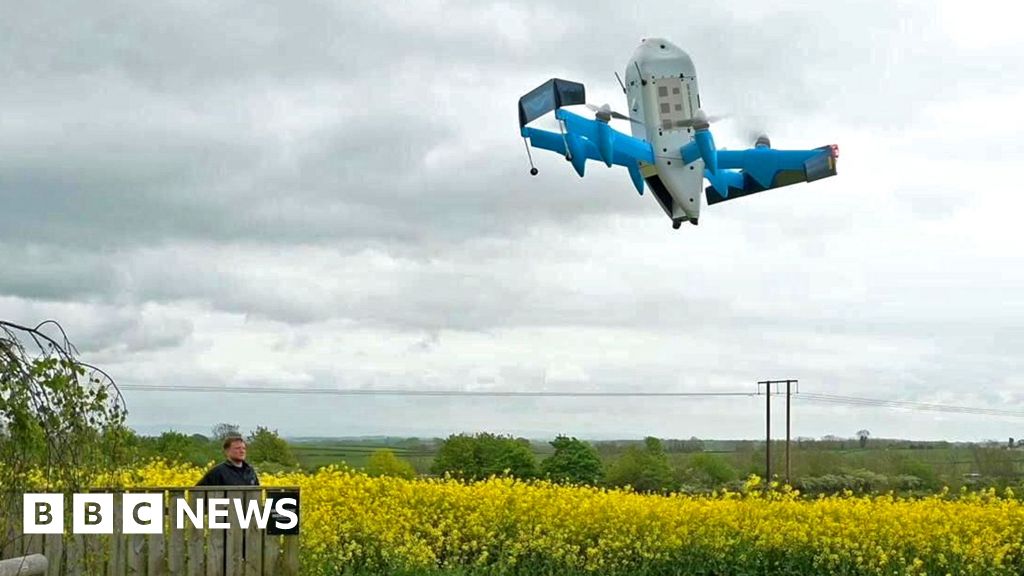
Amazon has become the first retailer in the UK to start a drone delivery service with a limited launch in Darlington, County Durham.

Packages weighing less than 5lb (2.2kg) and containing everyday items are now being delivered within a 7.5 mile (12km) radius of Amazon’s fulfilment centre – in as little as two hours.

The tech giant says it can carry out a maximum ten flights an hour, or up to a hundred deliveries a day on weekdays, as part of its limited launch – but hopes to slowly expand the service as the demand for ultra-fast deliveries grows.

Drones are already being trialled by the NHS to deliver blood supplies in London and Royal Mail is using them to send sending packages to remote communities in Orkney.

Advertisement

But this is the first time it’s being used for everyday shopping. Darlington is currently the only place outside the US where Amazon is doing drone deliveries. But the service is still at an early stage with testing expected to continue.

Read more here.

Continue Reading

Business

Mandatum Oyj 2026 Q1 – Results – Earnings Call Presentation (OTCMKTS:MANDF) 2026-05-08

Published

on

OneWater Marine Inc. (ONEW) Q1 2026 Earnings Call Transcript

This article was written by

Seeking Alpha’s transcripts team is responsible for the development of all of our transcript-related projects. We currently publish thousands of quarterly earnings calls per quarter on our site and are continuing to grow and expand our coverage. The purpose of this profile is to allow us to share with our readers new transcript-related developments. Thanks, SA Transcripts Team

Continue Reading

Business

Earnings call transcript: DMCI Holdings Q1 2026 shows stable margins, slight income dip

Published

on


Earnings call transcript: DMCI Holdings Q1 2026 shows stable margins, slight income dip

Continue Reading

Business

British Airways Owner Warns Iran War Will Dent 2026 Profits

Published

on

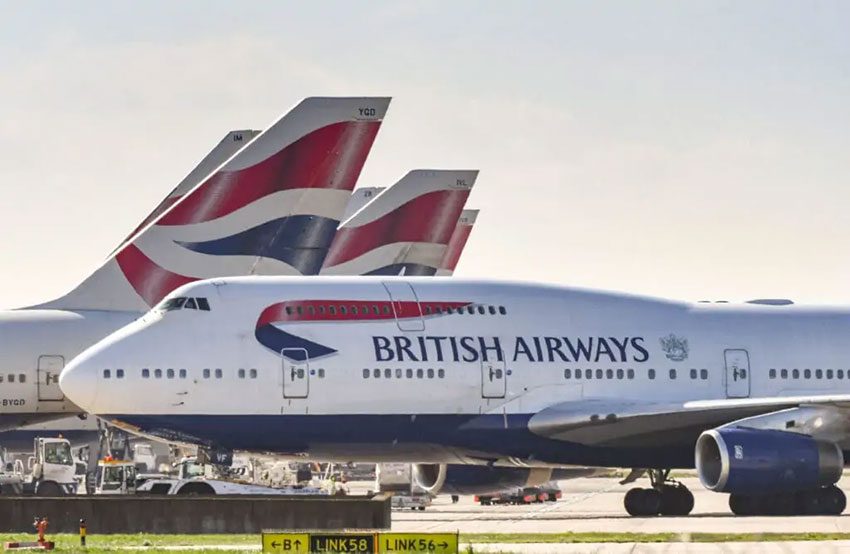
IAG, the owner of British Airways, announces $23bn aircraft order despite trade war concerns, as profits surge and transatlantic demand holds firm.

The owner of British Airways has warned that the war in Iran will saddle the group with a €2 billion fuel bill shock this year, taking the gloss off a bullish set of first-quarter numbers and forcing the City to rein in its profit expectations.

International Airlines Group (IAG), the FTSE 100 carrier that also owns Iberia, Vueling and Aer Lingus, told shareholders that surging jet fuel prices triggered by the closure of the Strait of Hormuz, the chokepoint through which roughly a fifth of the world’s oil and gas flows, would push its annual fuel costs to about €9 billion, up from €7 billion in 2025.

Despite the warning, Luis Gallego, chief executive, struck a defiant note, insisting the group was “uniquely positioned” to ride out the turbulence. Crucially, IAG said it had no plans to mothball routes, having locked in supplies through its long-standing self-supply arrangements at its main hubs.

“We currently see no issues with fuel availability in our main markets, particularly as we benefit from the strength of our supply chain, stocks and particularly our self-supply arrangements at our key hubs,” Mr Gallego said. “We are confident in fuel availability through the summer.”

The reassurance will be welcomed by holidaymakers and the City alike, which had feared a repeat of the operational chaos that plagued European carriers during previous oil shocks. Mr Gallego pointed to the group’s “leading positions across diverse markets, strong brands, structurally high margins and strong balance sheet” as a buffer against the geopolitical squall.

Advertisement

In a clear signal of confidence, IAG confirmed it would press ahead with its €1.5 billion share buyback, a programme it green-lit only the day before American and Israeli forces launched strikes on Iran in late February. The conflict has since dominated a third of the airline’s first trading quarter.

The numbers, in fact, suggest the group went into the conflict with the wind at its back. Revenues edged up almost 2 per cent to €7.1 billion in the three months to the end of March, while pre-tax profits leapt 77 per cent to €351 million, driven largely by punchy demand for premium-economy, business and first-class seats on the all-important transatlantic corridor. North Atlantic flying accounts for roughly half of IAG’s capacity, and well-heeled travellers turning left as they board are a disproportionate driver of its margins.

IAG said it had hedged about 70 per cent of its fuel needs for the rest of the year, having either forward-bought kerosene or taken out financial instruments to cap its exposure to spot prices. That insulation, the group conceded, will not last indefinitely.

“Whilst the first quarter was relatively unaffected by the Middle East conflict we expect it to have a more substantial impact throughout the rest of the year as the increase in the fuel cost starts to manifest itself,” the company said.

Advertisement

The upshot: profits in 2026 will fall short of the figure pencilled in at the start of the year. IAG booked operating profits of more than €5 billion in 2025, and analysts had been forecasting earnings growth of up to 10 per cent this year before the Iran flare-up sent oil markets spinning.

The Middle East is not the only soft patch on the route map. IAG flagged that demand into the eastern Mediterranean had, predictably, weakened, while the European short-haul market, where British Airways and Vueling go toe-to-toe with Ryanair and easyJet, “remains competitive”. Aer Lingus, meanwhile, continues to feel the heat from American carriers piling capacity onto the lucrative Ireland-United States corridor.

For SME suppliers across the British and Irish aviation supply chain, from in-flight caterers to ground handlers and MRO specialists, the message is mixed. Capacity is holding up, premium demand is robust, and IAG’s commercial machine is plainly still firing. But with the airline’s own profit ambitions clipped by geopolitics, the pressure on margins will inevitably cascade down the food chain over the coming quarters.

For investors, the read-across is familiar: IAG remains one of the more resilient operators in European aviation, but the Iran war has reminded the market that even the best-run airlines fly at the mercy of the oil price.

Advertisement

Jamie Young

Jamie Young

Jamie is Senior Reporter at Business Matters, bringing over a decade of experience in UK SME business reporting.
Jamie holds a degree in Business Administration and regularly participates in industry conferences and workshops.

When not reporting on the latest business developments, Jamie is passionate about mentoring up-and-coming journalists and entrepreneurs to inspire the next generation of business leaders.

Advertisement
Continue Reading

Business

What we could learn from the world’s happiest country Finland

Published

on

Business Live

Finland tops the latest World Happiness Report

Happiness.(Image: Getty Images)

I absolutely love Finland. Having visited for the first time over thirty years ago, I’ve found it an incredibly special place with incredibly special people. As an adjunct professor at Turku University, I’ve been privileged to teach some amazing students and to work on research projects with a group of brilliant academics.

Given this, I am not surprised that Finland has once again been ranked the happiest country in the world, while the UK sits in 29th place, a gap that tells us something important about the kind of society people feel they live in.

Advertisement

READ MORE: British Gas owner buys Welsh gas-fired power station for £370mREAD MORE: Welsh construction sector has reported a fall in workloads

That is the real message from the latest World Happiness Report, and Finland’s position is not about cheerful stereotypes or a national gift for contentment but reflects something much more substantial, namely a country that has been more successful than the UK at creating the conditions in which people feel secure, supported, and able to live well.

That should make us pause and reflect, as we too often talk about UK national success in terms of headline measures such as investment, jobs, or economic output. Of course, as this column has said so many times, those things matter immensely, but they do not tell us whether people trust the institutions around them, feel connected to their communities, or believe the future is likely to be better than the present.

That is where Finland appears to do far better than the UK, and the report makes clear that happiness is not some fluffy concept but is shaped by several practical factors, such as income, health, social support, freedom, generosity, and trust in public life. In other words, Finland is not happiest because life is perfect but because more of the basic building blocks of everyday life feel stable and secure.

Advertisement

People are more likely to feel they can rely on others, and public services are more likely to command confidence. There is also a stronger sense that society is broadly fair, that institutions can be trusted, and that everyday life is not a constant struggle against systems that no longer work properly.

That is where the comparison with the UK becomes uncomfortable, as it often feels like a country where too many people carry more anxiety than they used to. As we have seen in the recent Senedd election campaigns, the pressure may come from different sources, such as the cost of living, strained public services, insecure housing, long waits for healthcare, or political distrust, but there is also a sense that too much of life has become harder than it should be.

None of this means the UK is an unhappy country in any absolute sense, and a ranking of 29th still places it well above much of the world. But that is not really the point, and the more relevant question is why we are so far behind smaller countries such as Finland, Denmark and Iceland, and why so many Western countries now appear to be going backwards rather than forwards in terms of wellbeing.

In fact, most western nations are now less happy than they were between 2005 and 2010, and that should concern us, because it suggests this is not just a temporary wobble but rather a deeper erosion of the social foundations of everyday life, and perhaps the most worrying part of all is that this decline is particularly visible among younger people.

Advertisement

For generations, it was assumed that young people would look ahead with greater optimism than their parents, but that seems much less certain now, and the report finds that youth wellbeing has fallen in Western Europe, highlighting evidence that heavy social media use is linked to lower life satisfaction, especially in English-speaking countries and across Western Europe.

It would be too simplistic to blame social media for everything, and indeed the report does not do that, but it does suggest that the digital world has become an additional pressure point in societies where trust, belonging and security may already be under strain.

That matters because wellbeing is rarely shaped by a single big thing alone and is more often shaped by the accumulation of smaller things – whether you feel safe, whether you can get help when you need it, whether institutions seem fair, whether your children are thriving, whether you know your neighbours, and whether you feel you have some control over your future.

That is why the example of Finland matters, and its success in these rankings is not really a story about happiness in the narrow sense but about a country where the structures of daily life appear to support people rather than let them down.

Advertisement

In contrast, the situation in the UK seems more fragile, as we’ve gradually become accustomed to ongoing problems such as overstretched NHS services, deteriorating local government finances, declining political trust, and rising loneliness.

While each problem can be seen as an isolated challenge, collectively they create a very different environment, one in which life feels less stable, less predictable, and less interconnected than it used to be.

For Wales, this question should resonate even more strongly, as we know that wellbeing is shaped not only by national policy but also by the strength of local communities, the accessibility of services, and whether people feel rooted in the places where they live. Wales has real strengths in community identity, social solidarity, and a long tradition of valuing wellbeing as part of public life, but we are not immune to the wider pressures that have weakened trust and confidence across the UK.

Therefore, the lesson from Finland is not that we should try to copy another country wholesale, but that national happiness is built on choices about fairness, public trust, and the quality of everyday life. That is the real challenge for Wales and the rest of the UK: not simply to become more prosperous and generate success, but to create a society in which more people feel secure, connected and hopeful.

Advertisement
Continue Reading

Business

WARP Speed Ahead: Space Economy Reaching Escape Velocity

Published

on

WARP Speed Ahead: Space Economy Reaching Escape Velocity

WARP Speed Ahead: Space Economy Reaching Escape Velocity

Continue Reading

Trending

Copyright © 2025