

Crypto World
Amphenol (APH) Stock Tumbles 6% Despite Strong Earnings Beat


Key Highlights
- Shares of APH declined 6.29% as investors took profits after a robust earnings-driven rally
- First quarter 2026 earnings per share reached $1.06 versus analyst expectations of $0.95; sales totaled $7.62B against forecasts of $7.08B
- Analysts at Wall Street Zen and Zacks moved their ratings to “Hold” from “Buy”
- Chief Executive Richard Norwitt offloaded more than 515,000 shares during February for approximately $75.9M
- Average analyst price target stands at $176.53 supported by 13 Buy recommendations and 2 Hold ratings
Shares of Amphenol (APH) tumbled 6.29% on Friday, beginning the session at $127.72, as market participants retreated following a sustained period of appreciation.
The decline seems driven by profit-taking dynamics rather than fundamental deterioration in the company’s operations. APH had experienced a significant run-up prior to its earnings announcement, prompting some investors to lock in gains.
The company’s first quarter 2026 performance exceeded expectations across key metrics. Earnings per share landed at $1.06, comfortably surpassing the Wall Street consensus of $0.95. Revenue figures impressed at $7.62 billion, substantially outpacing the anticipated $7.08 billion — representing a remarkable 58.4% year-over-year increase.
Looking ahead to Q2 2026, management provided earnings guidance between $1.14 and $1.16 per share. The Street’s current projection for full-year earnings stands at $4.76 per share.
Despite the impressive quarterly performance, market participants appear to be reassessing valuation levels. APH currently commands a price-to-earnings multiple of 36.70 alongside a PEG ratio of 1.20.
Analyst Rating Adjustments Create Headwinds
Wall Street Zen downgraded APH from “Buy” to “Hold” over the weekend. Zacks implemented an identical rating change in March, pointing to valuation considerations as the primary rationale.
However, the overall analyst community maintains a constructive outlook. Among the 15 firms covering the stock, 13 maintain Buy recommendations while only 2 assign Hold ratings. The consensus price objective rests at $176.53.
Evercore boosted its price target to $180 with an “Outperform” stance following the earnings release. Truist demonstrated even greater confidence, elevating its target to $200 while maintaining its “Buy” rating. Barclays similarly preserved its “Overweight” recommendation with a $180 price target.
Executive Share Sales Raise Questions
Chief Executive Officer Richard Adam Norwitt divested 515,281 shares throughout February at a mean price of $147.27, generating proceeds of approximately $75.9 million. This transaction reduced his direct stake by 21.09%.
Collectively, company insiders have disposed of 646,056 shares during the past 90 days — generating combined proceeds near $94.6 million.
While insider transactions don’t necessarily indicate problems ahead, the magnitude and timing of these sales have caught investors’ attention.
Institutional investors continue to maintain substantial holdings at 97.01% of outstanding shares. Multiple smaller investment firms established new positions during Q4 and Q1, though at relatively modest scale.
An additional consideration affecting investor sentiment involves a recent senior notes offering that elevated the debt-to-equity ratio to 1.18. While not particularly concerning, this development adds another variable for balance sheet-focused investors to monitor.
The stock’s 52-week trading range extends from $80.32 to $167.04. The 50-day moving average currently sits at $137.31, while the 200-day moving average registers at $139.35 — both positioned above the present trading price.
APH has generated a year-to-date return of 1.30%, and technical indicators continue to flash a Buy signal. The company maintains its regular quarterly dividend distribution.


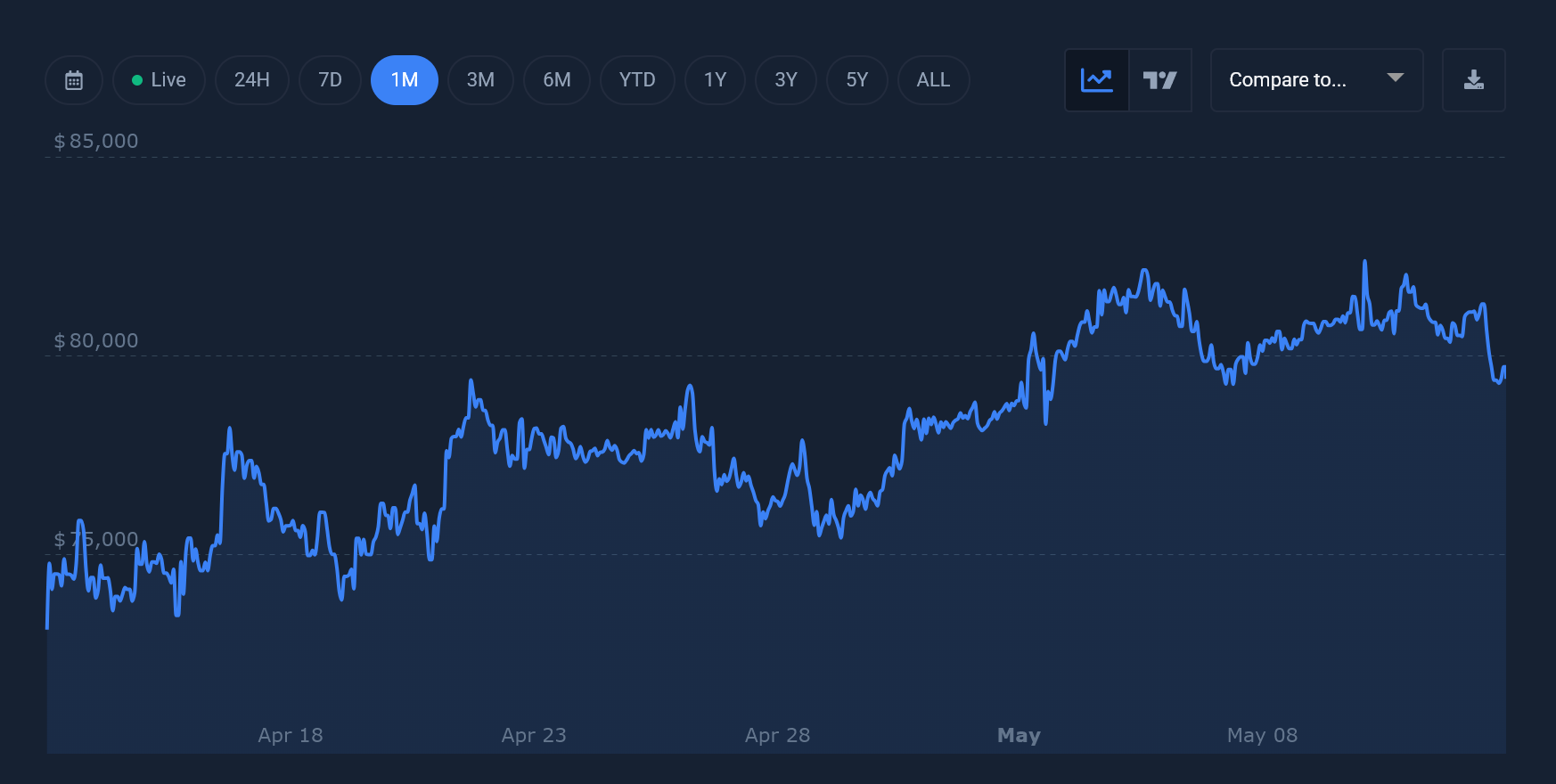
After spending several sessions consolidating above the $72,000 level, Bitcoin briefly reclaimed the $81,000 mark before correcting. The 10% recovery over the past month has pushed Bitcoin back into a critical resistance zone that has capped the latest recovery attempt.
The real test for Bitcoin lies just ahead, with the $83,000 to $85,000 range emerging as the next major barrier.
A failure to maintain this zone would likely shift attention back to lower demand areas around $75,000 and $73,000, with the 100-day moving average near $72,000 acting as a key support level.

Bitcoin price tests key resistance zone
In the first 2 weeks of May, Bitcoin trading activity has also picked up, with 24-hour volume rising 4%.
For context, reviewing the broader Bitcoin price history shows that similar consolidation phases near key resistance levels have often preceded larger directional moves.
A break above the 200-day moving average, currently positioned between $83,000 and $85,000, would likely open the path toward $89,000.
Beyond that, the $94,000 level stands as the next technical checkpoint before any potential move toward the $100,000 psychological barrier.
Bitcoin’s MACD Signal Points to Strengthening Momentum
One of the more closely watched signals right now is the weekly MACD crossover, which flashed bullish on April 13.
Since then, Bitcoin has gained approximately 15%, indicating a shift in momentum after an extended recovery period.
Historical comparisons add context to this setup. Previous MACD crossovers have often preceded strong rallies.
The October 2023 signal came before a 147% move, while the October 2024 crossover was followed by a 75% gain. A similar signal in May 2025 resulted in a 35% rally.
While past performance does not guarantee future results, the consistency of these signals has drawn attention as Bitcoin approaches another major resistance cluster near the 200-day average.
A confirmed breakout above this level would likely bring $89,000 into focus, followed by $94,000.
From there, market participants would start evaluating the probability of a broader move toward $100,000.
Miner Behavior Suggests Limited Sell Pressure
On-chain data provides additional support for the current recovery structure. The Miners’ Position Index (MPI) dropped below -1.0 during the February lows near $60,000, a level historically associated with miner accumulation rather than distribution.
This suggests that miners were not aggressively selling during the market’s weakest phase, which helped reduce downward pressure as Bitcoin established a base.

Although the MPI has since recovered, it remains below zero. This indicates that miner selling is still relatively subdued compared to conditions typically seen near market tops.
Lower distribution from miners can help stabilize prices during upward moves.
That said, traders are monitoring whether the MPI climbs above 0.5. Such a shift could signal increased selling activity as prices rise, potentially slowing the rally’s pace.
Profit-Taking Activity Reflects Strong Demand Absorption
Data from Santiment shows that Bitcoin’s net realized profits recently reached $207.56 million as the price moved above $80,000.
This marks the highest level recorded in the current cycle and reflects increased profit-taking near a major psychological level.

Profit realization during upward price movement is not necessarily bearish. In many cases, it indicates that new demand is strong enough to absorb selling pressure from existing holders.
In this scenario, Bitcoin continued to push higher despite increased selling, suggesting that buyers are actively stepping in at current levels.
A weekly close above $81,000, followed by a successful retest of this level as support, would strengthen the bullish case.
If confirmed, this structure could pave the way for a move toward the $86,000 to $89,000 range, with $100,000 emerging as the next major upside target.
The post What is the Next Resistance Level For Bitcoin Price? appeared first on BeInCrypto.
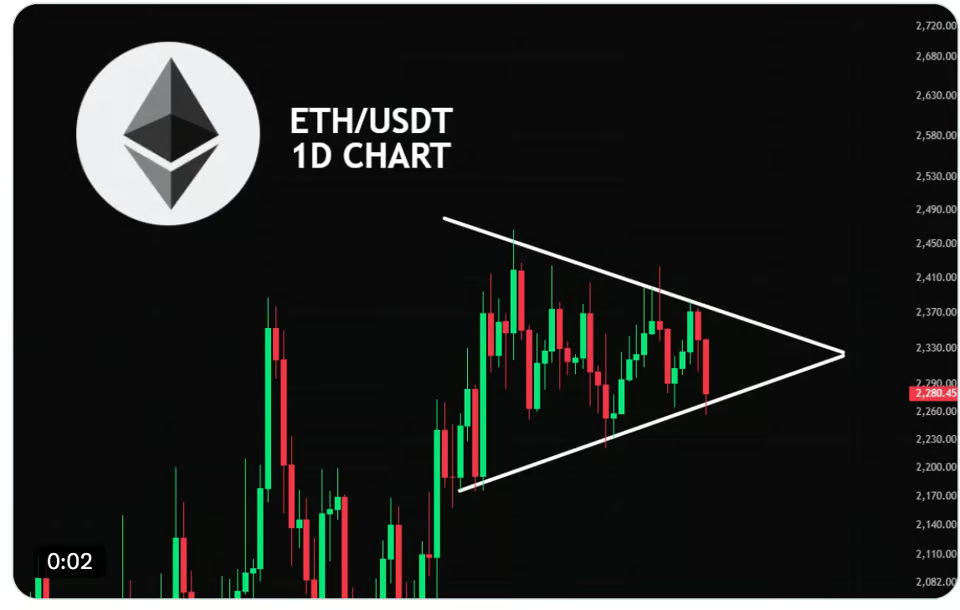
Market analysts said Ether (ETH) was ready to continue its uptrend following moves by JPMorgan and BlackRock to launch tokenized funds on the Ethereum network.
Key takeaways:
- Institutional adoption is underway as JPMorgan and BlackRock plan to launch tokenized funds on Ethereum.
- Strong technical structures in multiple time frames suggest ETH price is bottoming out.
ETH traders anticipate the price to “outperform”
Data from TradingView showed ETH/USD trading at $2,320, up 2% over the last 24 hours.
The pair failed to crack through resistance at $2,400 last week, as spot Ether exchange-traded fund (ETF) outflows and rising balance on Binance derailed Ether’s recovery.
As such, bulls must push and hold the ETH/USD pair above $2,400 to continue the uptrend.
In a Wednesday post on X, analyst CryptoJack said ETH is “getting ready for a pump” as it consolidates inside a symmetrical triangle on lower time frames.
“A breakout could lead to a strong move soon.”

ETH/USD chart. Source: X/CryptoJack
Crypto Patel’s chart shows ETH trading inside an ascending triangle that has guided its price action since 2020. ETH is bouncing off the triangle’s lower trendline around $1,800, a zone that previously acted as a launchpad for large upside moves.
The analyst sets the upside target for Ether at $10,000-$15,000, saying:
“$ETH will outperform this cycle.”

ETH/USD two-week chart. Source: X/Crypto Patel
Fellow crypto analyst Celal Kucuker also shared a bullish argument, laying out a long-term roadmap that places ETH on course for a possible move above $24,000.

ETH/USD one-month chart. Source: X/Celal Kucuker
Momentum indicators support the rebound thesis. Ether’s monthly relative strength index (RSI) has cooled toward a historical support area near 42-455, similar to levels that preceded past rallies.
As Cointelegraph reported, buyers will be back in control once the ETH/USD pair breaks above the $2,450-$2,600, confirming a trend shift.
Institutional adoption fuels Ether’s bullishness
As Cointelegraph reported, JPMorgan is set to launch a tokenized money market fund on Ethereum, allowing stablecoin issuers to hold reserves backing their stablecoins while earning interest.
Related: Bitmine slows Ethereum buys, targets December to own 5% of supply
BlackRock, the world’s largest asset manager, has also filed for tokenized versions of its Treasury liquidity funds, where official ownership records will be maintained on Ethereum using ERC-20 token standards.

Source: Cointelegraph
“Institutional adoption just hit another level,” analysts at Ethereum Daily said in a post on X on Wednesday.
“This is the most bullish news for Ethereum,” X user Borovik said in a reaction to the news on Wednesday.
Tokenized funds on Ethereum, bulls argue, will drive onchain activity, increase gas demand and total value locked (TVL). This will, in turn, boost the blockchain’s legitimacy, making ETH the preferred settlement layer for trillions in TradFi capital.
Data from RWA.xyz shows that global tokenized funds already exceed $31 billion, with Ethereum dominating approximately 55% of the space.

Total global RWA value. Source: RWA.xyz
These were not the only bullish news for Ethereum. MN Capital founder Michael van de Poppe said that the approval of the CLARITY Act, which is scheduled for markup on Thursday, would be a “massive trigger for the markets.”
Market analyst Ethprofit.eth said the CLARITY Act “looks extremely bullish for Ethereum,” while Bitcoin Mami said “institutional demand is going insane post CLARITY Act,” pushing ETH price to $10,000.
Polymarket bettors are pricing in a 60% chance that the CLARITY Act will be signed into law in 2026, down 5% over the last 24 hours.

Odds of the CLARITY Act being signed into law in 2026. Source: Polymarket
If the CLARITY Act becomes law, Ether is expected to rally, as seen in July 2025, when the signing of the GENIUS Act into law preceded a 65% ETH price rise to its current all-time high of $4,950 from $3,000.


Best Digital Asset Product is a category within the BeInCrypto Institutional 100, an annual research-driven program recognising institutional digital asset excellence across 26 categories and six pillars.
This category sits under Pillar 3: Access to Digital Assets. The 15 products below are listed alphabetically by issuer and are not ranked. Each entry is anchored on the specific product, not the issuing firm. A shortlist will be named in May 2026, with the winner announced at Proof of Talk in Paris on June 2–3, 2026.
Key Facts
- Long list: 15 products across spot crypto ETFs, tokenized MMFs, tokenized treasuries, private credit and PE funds, tokenized equities, bonds, and regional product stacks
- Initial pool: More than 30 firms screened; 15 advanced to the long list
- Order: Listed alphabetically by issuer, not ranked
- Scoring: 50% quantitative data · 50% Expert Council
- Criteria assessed: AUM, net flows, product structure, regulatory licensure, multi-jurisdiction footprint, on-chain reach, fee structure, distribution channels, institutional holders, innovation signal
- Data sources: SEC EDGAR, ETF flow trackers, SFC, VARA, FCA, FINMA, BaFin, MAS, MiCA-CASP registers, audited reports, ratings agencies, PitchBook, Tracxn, and Crunchbase
| Product / Issuer | HQ & Listing | Reach | Product Structure | Representative Work |
| Apollo Global Management — ACRED | New York · NYSE: APO | $1.026T AUM Six chains live |
Tokenized private credit fund Apollo Diversified Credit Securitize Fund |
ACRED tokenizes Apollo Diversified Credit Fund via Securitize Live on Aptos, Avalanche, Ethereum, Ink, Polygon, and Solana |
| Backed Finance — bCSPX, bIB01, xStocks | Zug, Switzerland FINMA-aligned; Kraken-owned |
$25B+ transaction volume since June 2025 100 tokenized stocks live |
Tokenized equities and bond products xStocks tokenized equity suite |
bCSPX tokenizes S&P 500 ETF exposure; bIB01 tokenizes short-term Treasuries xStocks Alliance includes Bybit, Gate.io, KuCoin, Talos, and 360X |
| BlackRock — IBIT, ETHA, BUIDL | New York · NYSE | $14T+ platform AUM IBIT $66.9B; BUIDL $2.5B–$2.85B |
Spot crypto ETFs Tokenized money market fund |
IBIT became the fastest ETF to cross $80B AUM BUIDL expanded across eight chains |
| Bitwise — BITB, BSOL | San Francisco · NYSE Arca | $11B client assets 40+ investment products |
Spot Bitcoin ETF Solana ETP with staking exposure |
BSOL launched on NYSE Arca in Oct 2025 Built direct SOL exposure with staking rewards target |
| Fidelity — FBTC, FETH | Boston, USA Fidelity Digital Assets OCC conditional charter |
$15T+ platform AUA FBTC $13B–$15B AUM |
Spot Bitcoin and Ethereum ETFs Vertically integrated custody model |
FBTC and FETH combine Fidelity asset management with Fidelity Digital Assets custody Product stack differs from pure ETF issuers through internal custody infrastructure |
| Franklin Templeton — BENJI/FOBXX, EZBC, EZET | San Mateo, CA · NYSE: BEN | $1.74T AUM BENJI deployed across 8+ chains |
Tokenized money market fund Spot Bitcoin and Ethereum ETFs |
FOBXX/BENJI was the first US-registered fund using public blockchain record-keeping Franklin built multi-chain tokenized fund distribution |
| Hamilton Lane — SCOPE, Secondary Fund VI, Direct Equity | Conshohocken, PA · Nasdaq: HLNE | $1T AUM and supervision 780 professionals globally |
Tokenized private credit and private markets funds Securitize-based access structure |
SCOPE went multi-chain on Ethereum and Optimism Secondary Fund VI feeder reduced minimums from $5M to $20K |
| Hashnote / Circle — USYC | New York Bermuda-regulated; Cayman fund structure |
$3B+ AUM Largest tokenized MMF globally by AUM |
Tokenized institutional money market fund Backed by Treasury bills and reverse repos |
USYC overtook BlackRock BUIDL in Jan 2026 Integrated with USDC for 24/7 collateral movement |
| Janus Henderson — JTRSY, JAAA, SPXA | London · NYSE: JHG | $457B AUM 25 offices worldwide |
Tokenized treasury and index funds Rated tokenized fund products |
JTRSY received S&P AA+f / S1+ rating SPXA launched on Base as S&P-licensed tokenized index fund |
| KKR — SKHC / HCSG II | New York · NYSE: KKR | $700B+ AUM Underlying HCSG II fund at $4B |
Tokenized private equity fund Avalanche and Securitize structure |
KKR tokenized Health Care Strategic Growth Fund II as SKHC Product remains available to qualified investors |
| Ondo Finance — OUSG, USDY, Ondo Global Markets | New York Private company; ONDO publicly traded |
$1.81B+ platform TVL 265 tokenized securities and ETFs |
Tokenized treasuries, yield products, tokenized securities Multi-chain market access |
SEC investigation closed without charges in late 2025 Ondo Global Markets reached significant tokenized stocks share |
| OpenEden — TBILL | Singapore BVI feeder fund; BNY-managed |
$260M+ AUM 10x year-on-year growth |
Tokenized US Treasury bills Investment-grade rated product |
First tokenized T-bill product with dual Moody’s and S&P investment-grade ratings BNY appointed investment manager and custodian |
| OSL — Tokenworks, HK Spot ETF Servicing, Taikang MMF | Hong Kong HKEX-listed parent; SFC-licensed VATP |
Sub-custodian and exclusive VATP for Hong Kong spot crypto ETFs Supports BTC, ETH, and SOL ETF servicing |
Tokenization platform and ETF servicing stack Hong Kong institutional product infrastructure |
Distributor and custody partner for Hong Kong’s first tokenized MMF under unit-trust structure Tokenworks serves Tier-1 Hong Kong asset managers |
| Superstate — USTB, USCC, FundOS | New York SEC-registered investment adviser and transfer agent |
USTB $967M AUM USCC $267M AUM |
Tokenized US Treasuries and crypto carry fund White-label tokenization infrastructure |
USTB transitioning to Invesco Advisers as investment manager FundOS powers Coinbase Asset Management’s CUSHY stablecoin yield fund |
| T. Rowe Price — TKNZ | Baltimore, USA · NYSE: TROW | $1.7T–$1.8T platform AUM ETF pending approval |
Active crypto ETF filing 5–15 eligible crypto assets |
TKNZ S-1 filed for active crypto ETF on NYSE Arca Anchorage Digital Bank named as crypto custodian |
About This List
The BeInCrypto Institutional 100 — Best Digital Asset Product (2026 Long List) identifies named institutional products giving investors access to digital assets. The category covers spot ETFs, ETPs, tokenized money market funds, tokenized treasuries, tokenized private credit and equity funds, tokenized securities, and regional product stacks.
Unlike asset manager categories, this list focuses on the product itself. A firm may appear because of one specific ETF, tokenized fund, treasury product, or integrated product suite that meets the long-list threshold.
Methodology
This category is evaluated under Track A of the BeInCrypto Institutional 100 methodology: 50% quantitative data and 50% Expert Council scoring.
Assessment spans AUM and cumulative net flows, product structure, regulatory licensure, jurisdictional footprint, on-chain reach for tokenized products, fee structure, distribution channels, institutional holder concentration, and innovation signal.
Data was verified using SEC EDGAR, ETF flow trackers, SFC, VARA, FCA, FINMA, BaFin, MAS, MiCA-CASP registers, audited reports, Moody’s tokenized product ratings, S&P Global Ratings tokenized fund ratings, KBRA/Kroll, PitchBook, Tracxn, and Crunchbase.
The post BeInCrypto Institutional Research: 15 Digital Asset Products Driving Crypto Investment appeared first on BeInCrypto.


The Solana-based tokens marketed as a way to gain exposure to Anthropic and OpenAI before they go public got an unwelcome reality check this week.
The two companies said the transfer of privately held shares to the special purpose vehicles (SPVs) that back the tokens is invalid because any such move requires approval by the corporate board.
The tokens slumped. Anthropic PreStocks (ANTHROPIC), issued by Solana-based platform PreStocks to represent Anthropic shares, dropped 34% in seven days, while OpenAI PreStocks fell 39%, CoinGecko data show.
PreStocks uses SPVs, legal entities set up specifically to hold something on behalf of investors, to hold the shares, and issues tokens on Solana that represent indirect economic exposure to those shares.
“We do not permit special purpose vehicles to acquire Anthropic stock and any transfer of shares to an SPV are void under our transfer restrictions,” Anthropic said in an updated investor warning page.
Any third party claiming to sell its shares through “direct sales, forward contracts, tokenized securities, or other mechanisms” is “likely either engaged in fraud or offering an investment that may have no value due to our transfer restrictions,” the company said.
OpenAI issued a similar warning, saying unauthorized transactions may violate U.S. securities laws and could result in the invalidation of the underlying equity. Both companies named several intermediaries. Anthropic listed Open Door Partners, Hiive and Forge as unauthorized to buy or sell its shares.
While PreStocks tokens claim 1:1 backing through SPVs, neither the platform nor any third-party auditor has published the attestation reports the company promised at launch.
Liquidity is a concern as well. Data from PreStocks shows just over $333,000 in stablecoins and $18,000 in solana (SOL) in Anthropic liquidity as of Wednesday, meaning early buyers sitting on big profits might not be able to fully cash out. This exposes the gap between the implied valuations on the platform and what the underlying SPVs can actually deliver.
The dashboard also shows an implied Anthropic valuation above $1.3 trillion against the platform holding roughly $23 million in total assets, a gap that gave the companies the structural opening to push back.
PreStocks debuted in August 2025 with backing from Republic Capital and is led by CEO Xavier Ekkel. The platform is unavailable to residents of the U.S., Singapore, the European Union, and certain sanctioned jurisdictions, and requires know-your-customer processes for minting and redemptions. Partnerships at launch included Jupiter and Meteora, both decentralized exchanges on Solana.


Aerodrome voting opens May 28. Mainnet Launch: June 4.
This quarter, AI started writing its own exploits. Tea is shipping the trust layer underneath it. Code Is Abundant. Trust Is Not.
In the span of seven days, the ground beneath the software shifted twice. On May 4, The Conversation published the most widely-circulated post-mortem yet of Anthropic’s Claude Mythos Preview, the frontier model Anthropic itself declined to release, because it can autonomously discover zero-days, generate working exploits, and execute multi-step cyber operations with minimal human oversight.
Days later, Google’s Gemma 4 landed inside Android’s AICore and Google AI Edge, putting agentic code generation, function calling, and offline reasoning on every developer’s phone and laptop under an Apache 2.0 license.
The implication is unavoidable. When any device can generate, execute, and weaponize software autonomously, trust cannot live in the binary. It has to live at the source.
Tea: the value layer for open source
Tea is the provenance, attribution, and verification layer for a world where code is written by agents faster than humans can audit it. Every package, every contribution, every dependency, cryptographically attributed, continuously verified, and economically aligned with the people and systems that built it.
Tea goes live on Aerodrom: the liquidity engine of base meets the trust layer of software
The moment Tea lists on Aerodrome, the two fastest-moving primitives in crypto collide: Base’s deepest liquidity venue and the first on-chain provenance layer built for the agentic AI era. Working with Aerodrome is a statement. It’s known as the place where Base’s most serious assets route. Tea chose Aerodrome because a trust layer for software should launch into the most battle-tested, transparent, community-governed market structure on-chain, not a centralized orderbook pretending to be neutral.
From block one, $TEA liquidity on Aerodrome means: verifiable on-chain routing, deep vote-directed emissions, and a price surface every trader, investor, and builder can see in real time. Aero flywheel + Tea provenance = a launch where the market structure is as credible as the technology’s pricing.
“Code is abundant. Trust is not,” said Tim Lewis, leading Tea’s launch. “Mythos showed us AI can write its own exploits. Gemma 4 put that capability in every pocket. The question isn’t whether agents will ship software (because they already are). The value of contribution will be weighed in inference and tokens and whether anyone can verify what they shipped. That’s what Tea is for.”
About Tea
Tea is building the software verification layer for the agentic era, serving as a decentralized protocol for provenance, attribution, and trust in open-source software. With open source running almost everything today, TEA provides the essential economic infrastructure to help people support it. Validated directly at the source, the protocol enables the community to verify work, understand dependency graphs, and govern what truly matters, ultimately empowering AI agents to build with better context.
Media contact:
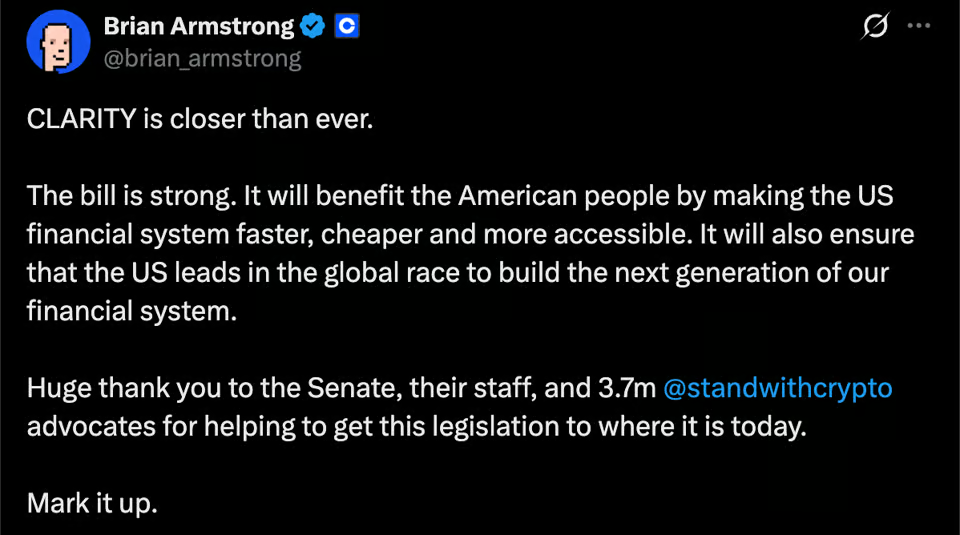
Coinbase CEO Brian Armstrong is supporting the latest version of the Digital Asset Market Clarity Act (CLARITY) ahead of the US Senate’s markup of the crypto market structure bill on Thursday.
“I don’t think it’s ever been in a stronger or more bipartisan position,” he said about the latest iteration of the market structure bill.
Armstrong said that the banking and crypto industry lobbies have reached a “healthy compromise” on stablecoin yield, which was one of the main issues that stalled the market structure bill in January. He added:
“I think there was a healthy compromise there, brokered by Senators Tillis and Alsobrooks. And you know, it was a good compromise because both sides left a little bit unhappy, but at least we got to a place that we can all live with.”
The latest version of the CLARITY bill also improved provisions surrounding decentralized finance (DeFi), tokenized stocks, and the authority of the Commodity Futures Trading Commission (CFTC) to regulate crypto markets, he said.

Source: Brian Armstrong
The comments and the bill’s pending markup follow months of back-and-forth negotiations between the banking sector and the crypto industry over the bill, which stalled in January 2025 after crypto industry players, led by Coinbase, rejected the initial draft.
Related: Latest version of crypto market structure bill raises eyebrows ahead of Senate markup
About 20% of the US population owns crypto, according to industry advocacy groups
About one in five Americans, or 20%, owns cryptocurrency, according to the National Cryptocurrency Association’s 2025 State of Crypto Holders report, which surveyed 54,000 US residents.
The survey found that about 67% of US crypto owners are below the age of 45, while about 15% are over 55 years old.

A demographic breakdown of crypto users in the United States. Source: National Cryptocurrency Association
The top-ranked use case for cryptocurrency was as an investment, with 52% of holders indicating that they use digital assets to “invest in their financial future,” according to the survey.
A HarrisX poll conducted earlier this month also found that 52% of the 2,008 registered US voters surveyed supported passing the CLARITY Act into law, while just 11% opposed the passage of the legislation.
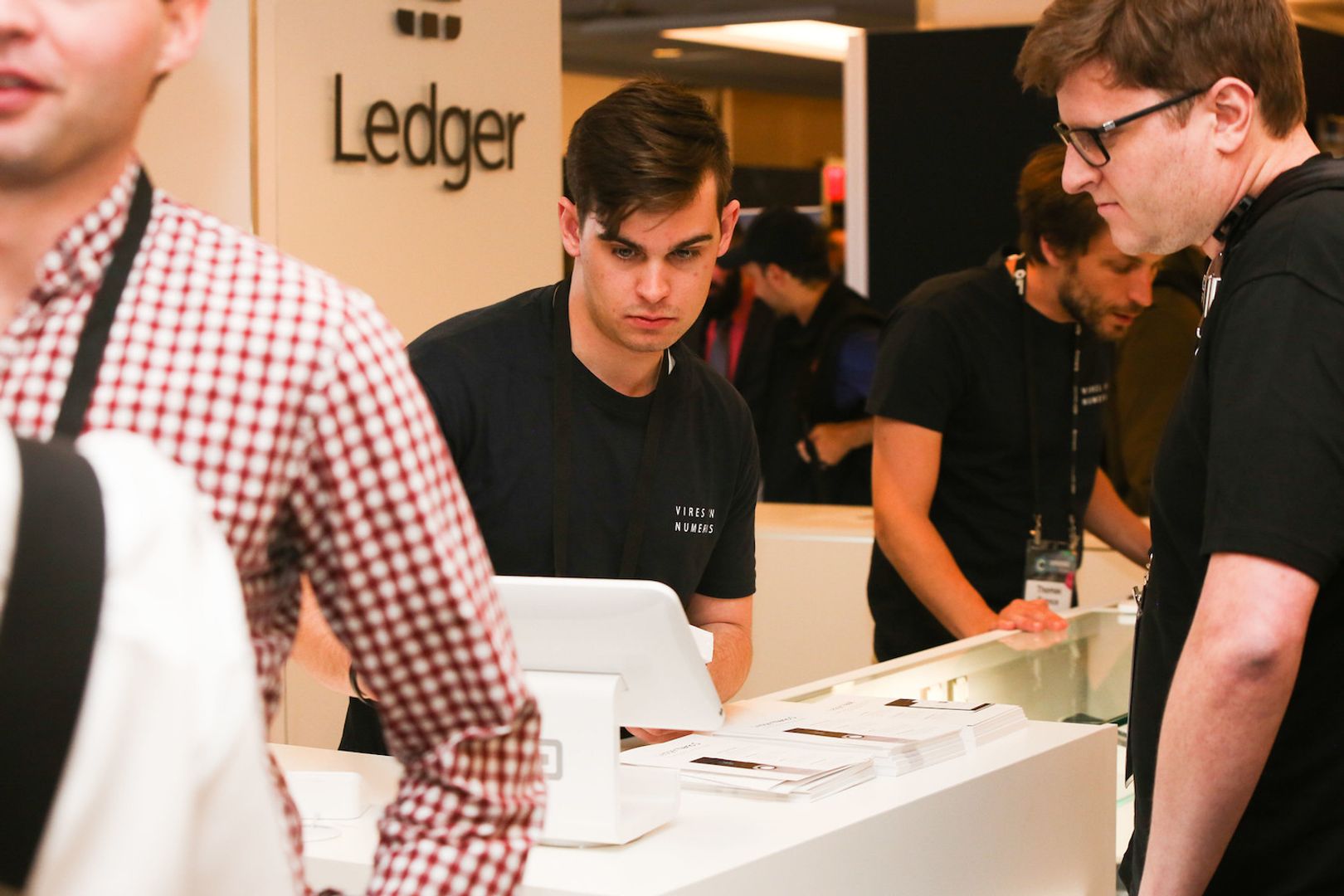
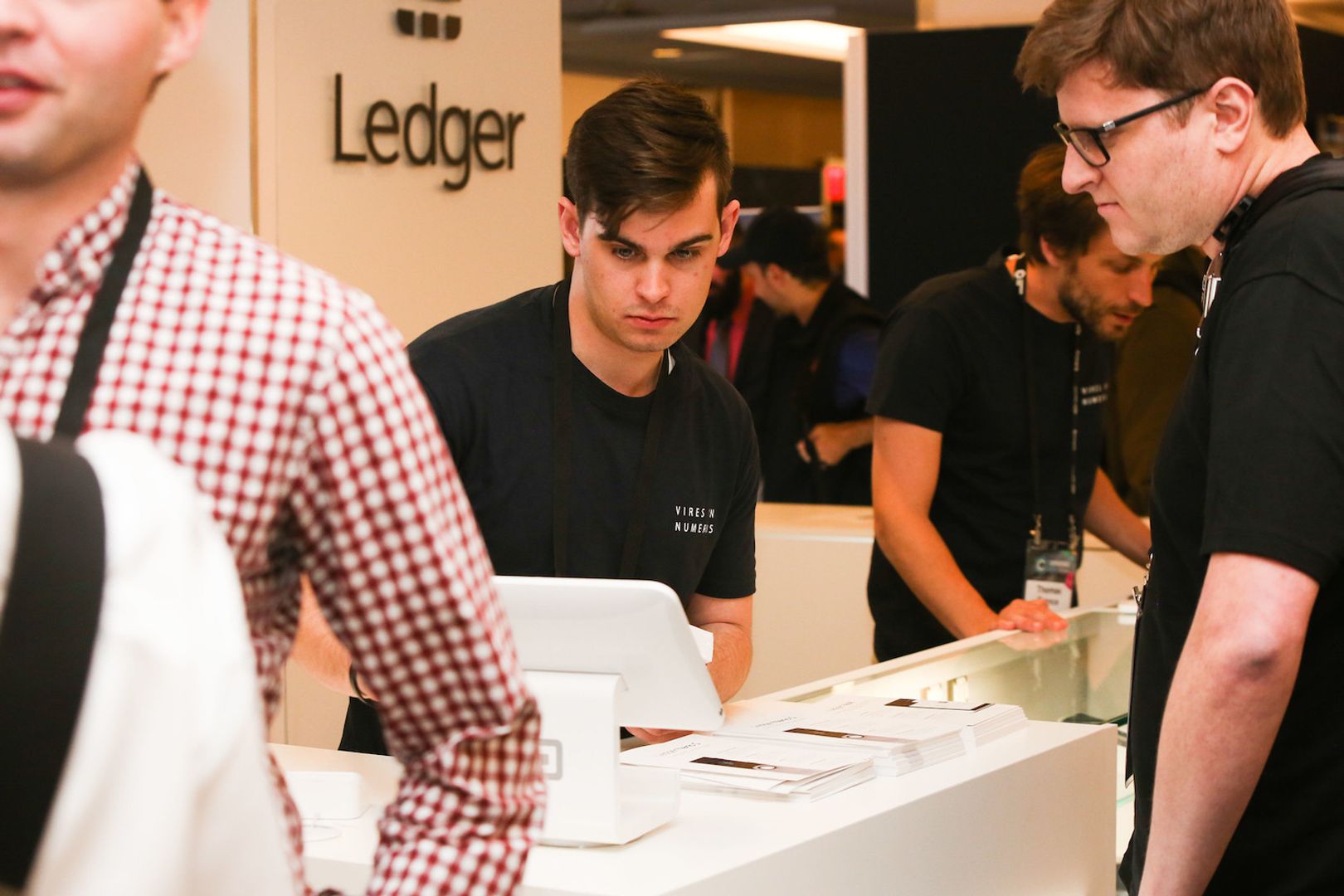
Crypto wallet provider Ledger put its plans to go public in the U.S. on hold due to difficult market conditions, according to two people with knowledge of the matter.
Ledger has not filed any draft S-1 registration statement with the Securities and Exchange Commission (SEC), one of the people said. A confidential filing is typically the first formal step in the IPO process.
The French cryptocurrency security firm has a number of options, and could decide to raise capital privately, said the person, who spoke on condition of anonymity because the matter is not public.
In January, reports emerged that Ledger had hired U.S. investment banks for a potential IPO valued at around $4 billion. Goldman Sachs (GS), Jefferies (JEF) and Barclays (BARC) were said to be advising on the offering, which could have come as early as this year.
A Ledger spokesperson declined to comment.
Ledger is best known for its hardware wallets that let people securely store cryptocurrencies offline. Its core business is protecting users’ private keys, the cryptographic credentials that control access to digital assets like bitcoin (BTC and ether (ETH).
After a wave of crypto listings in 2025, several digital-asset firms began rethinking their IPO timelines as weaker token prices, lower trading volumes and volatile equity markets weighed on investor appetite.
Kraken, one of the largest U.S. crypto exchanges, paused its multibillion-dollar IPO plans earlier this year despite having confidentially filed with the SEC in late 2025.
BitGo (BTGO), the only crypto-native company to go public in 2026, offered an early test of investor appetite for digital asset listings. It raised about $213 million in its January IPO, pricing shares above the marketed range at $18 and briefly surging more than 20% in its New York Stock Exchange (NYSE) debut.
The momentum proved short-lived. After an initial rally, BitGo shares retreated below their IPO price, underscoring the volatility and uneven investor sentiment facing crypto firms seeking to tap public markets.
The shares are currently trading about 36% below their IPO price.
In March, Ledger appointed former Circle Internet (CRCL) executive John Andrews as chief financial officer and opened an office in New York City as part of a broader expansion of its U.S. operations.
Andrews, who previously led capital markets and investor relations at Circle, joined the crypto security firm as demand from banks, asset managers and stablecoin issuers for digital asset infrastructure continues to grow.
The company said the New York office was part of a multimillion-dollar investment in its U.S. footprint and would serve as a hub for Ledger Enterprise, its institutional infrastructure platform. Ledger also said the expansion would create dozens of new jobs across enterprise and marketing functions.
Read more: Kraken parent Payward seeks fresh funding at $20 billion valuation ahead of planned IPO
Crypto wallet firm Ledger has paused its initial public offering (IPO) after getting spooked by tanking crypto stocks.
As reported by CoinDesk today, unnamed sources familiar with the listing claim that “difficult market conditions” were behind the pause, and that Ledger still hasn’t filed an S-1 application with the Securities and Exchange Commission (SEC).
CoinDesk previously reported that crypto exchange Kraken was delaying its IPO until “market conditions improve.” Kraken’s parent company, Payward, privately filed a draft S-1 registration with the SEC in November 2025.
Across the crypto industry, recently listed firms have seen far from stellar performance.
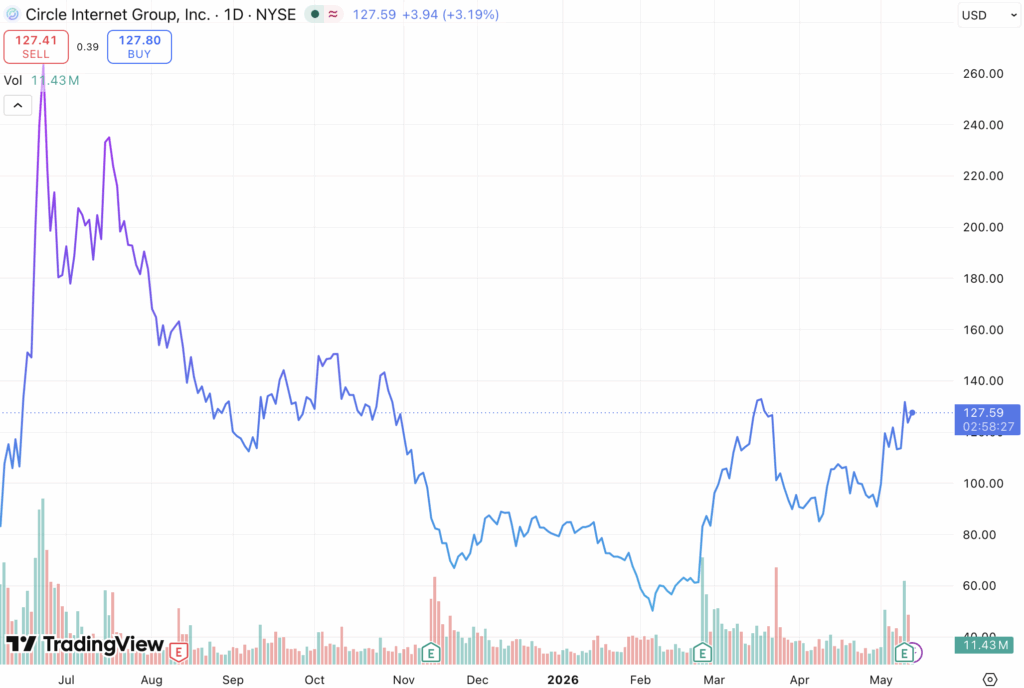
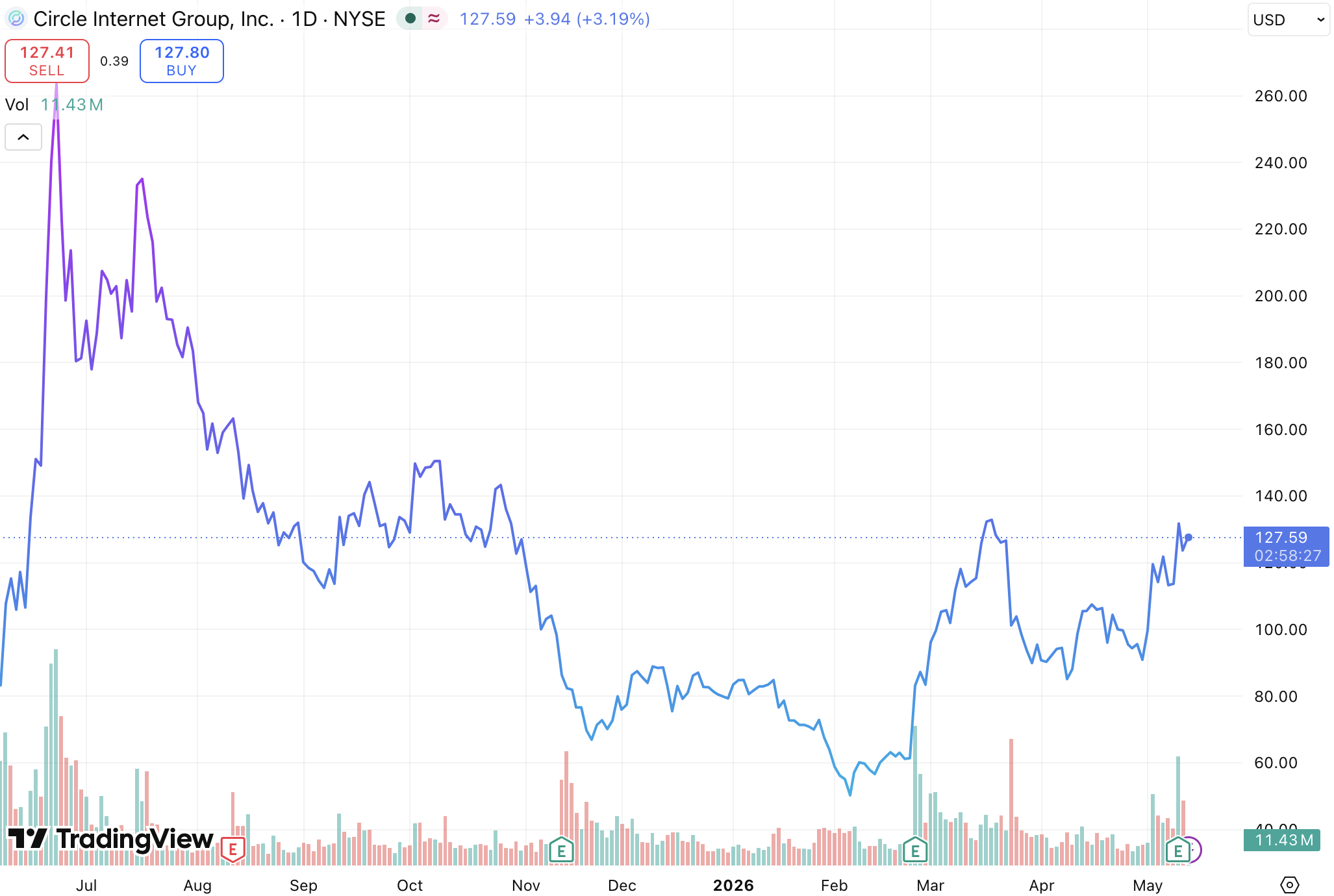
Stablecoin issuer Circle was listed on the New York Stock Exchange in June 2025 and the price of its stock shot up to $263 within a month. However, it’s since fallen -52% to $126 today.
Read more: Anthropic’s non-existent blockchain shares are tripping up investors
Elsewhere, trading platform eToro, which went public in May 2025, has seen the price of its stock fall almost -42% since its listing, while Peter Thiel-backed exchange Bullish has endured a 53% fall in its stock price since it went public in August 2025.
BitGo went public in January 2026 and has since seen its stock plummet by almost -47%, and bitcoin firm Fold went public in February 2025 and has recorded a drop of 64%.
Greyscale, which filed for an IPO in November 2025, revealed at the time that it had suffered a 20% revenue drop within the first nine months of 2025.
The Winklevoss twin-controlled crypto exchange Gemini also filed for an IPO in June 2026.
However, bucking the trend is Galaxy Digital, which, since it was listed on the US market in May 2025, has enjoyed a 41% rise to $31.
Got a tip? Send us an email securely via Protos Leaks. For more informed news and investigations, follow us on X, Bluesky, and Google News, or subscribe to our YouTube channel.


A flurry of relatively small-scale hacks continues to wreak havoc on smaller crypto projects, despite flying under the radar when compared to recent mammoth losses.
So far this year, Protos’ hack tracker shows 77 entries, totaling over $1.1 billion in losses.
April was a particularly rough month; the losses across its 33 incidents totalled over $600 million. However, just two incidents, namely the Drift Protocol and rsETH bridge hacks, made up 95% of the month’s losses between them.
While May hasn’t kept up such a devastating pace, an uptick in hacker activity has seen almost $6 million stolen from six projects this week alone.
Read more: Crypto hackers snatch over $1B in 68 incidents this year
Monday May 11: Two (smaller) hacks
On the Polygon network, Ink Finance’s Workspace Treasury Proxy contract was exploited for $140,000 on Monday.
According to crypto security firm SlowMist’s analysis, the root cause was the lack of access control in the PayrollDistribution function.
Huma Finance lost $100,000 the same day, also on Polygon. The team’s statement insists that the losses were from (now-paused) “legacy v1 contracts” and that its Solana-based v2 is a “complete rewrite and this issue does not apply.”
Read more: Hyperbridge exploited less than two weeks after April Fools’ day hack prank
Tuesday May 12: Four hacks
On Tuesday evening, TAC, a “purpose-built blockchain for EVM dApps to access TON,” alerted users to a “security incident affecting the TAC bridge,” which had been paused.
Third-party reports estimated losses at $3 million worth of USDT, BLUM and other tokens.
The following day, security auditor Peckshield drew attention to a hack of Transit Finance, which also occurred on Tuesday, with $1.9 million of DAI held by the exploiter.
Read more: LayerZero among bridges Lazarus using to launder loot
The team issued an announcement, explaining the losses came from “historical vulnerabilities” in a contract deployed on TRON which had been “deprecated since 2022.”
It said users “do not need to take any action” and affected users will be compensated.
The project was previously attacked in October 2022 for over $20 million, though the majority of funds were later returned. According to Decurity, Tuesday’s loss was due to the same vulnerability as in 2022, three and a half years later.
Also on Tuesday, DeFi projects Aurellion and BoostHook were reportedly attacked, losing approximately $455,000 and $200,000, respectively.
Wednesday May 13: One hack, so far…
During the writing of this article, another project was reportedly hacked on the Arbitrum network.
Blockaid flagged the loss of $130,000 from FOX Colony, before highlighting a further $50,000 nabbed by a copycat. The thread notes that other similar contracts are “exposed.”
This latest hack follows today’s news that Code4rena, a long-running audit contest platform, announced it would “wind down.”
Bug bounty platform ImmuneFi stated it will take over Code4rena’s bounty programs going forward.
Got a tip? Send us an email securely via Protos Leaks. For more informed news and investigations, follow us on X, Bluesky, and Google News, or subscribe to our YouTube channel.


As Wall Street firms race to bring stocks, bonds and credit products onto blockchain rails, a new Ethereum-based marketplace backed by Animoca Brands is aiming to turn tokenized assets into something crypto investors can use across decentralized finance (DeFi).
NUVA, developed by Animoca and Nuva Labs, is connecting around $19 billion worth of tokenized real-world assets originating on the Provenance blockchain ecosystem, including private credit and Treasury-linked products tied to Figure Technologies Solutions (FIGR), the blockchain firm founded by former SoFi CEO Mike Cagney.
Read more: Mike Cagney’s second act: Turning blockchain into Wall Street’s new plumbing
Tokenized real-world assets have become one of crypto’s fastest-growing sectors. Asset managers and fintech firms view blockchain rails as a way to modernize how financial products are issued, traded and used as collateral. The broader market for tokenized assets could reach trillions of dollars over the next decade, according to multiple industry forecasts.
NUVA was designed as a distribution layer for tokenized assets, allowing them to move beyond closed financial networks and into DeFi markets, giving average retail users access to assets often limited to institutional investors.
It debuts with two flagship products: a Treasury-linked yield vault called nvYLDS, tied to Figure’s SEC-regulated stablecoin YLDS with more than $500 million supply, and nvPRIME, a token tied to Figure’s $18.4 billion portfolio of home equity lines of credit (HELOCs). While the former gives investors money market yield, the latter offers high single-digit yield — more than 7% currently — that is mostly accessible to institutions and accredited investors in traditional finance.
Anthony Moro, CEO of Nuva Labs and a former BNY executive, said the goal is to create a marketplace for blockchain-native financial assets rather than wrapped versions of traditional products.
“Nobody really has that unified global distribution layer for blockchain-native assets,” Moro said in an interview. “We thought what was missing was a platform where users could access institutional-grade assets in a simple, composable format.”
Users deposit stablecoins into vaults and receive ERC-20 tokens representing ownership in the underlying assets. Those tokens can then be traded, lent or posted as collateral across Ethereum-based DeFi protocols.
As the NUVA platform expands, Moro said to “look for a wide range of assets to be available to everyone in an easy to use, self-directed and self custodial manner, eliminating Wall Street’s limited access, time lag and high fees.”
Moro argued that many existing tokenization models still rely too heavily on offchain infrastructure and manual reconciliation.
“The way to tokenize assets isn’t a digital twin,” he said. “The Figure loan itself is digitally native. There’s no filing cabinet somewhere keeping the real record.”
Figure has become one of the largest issuers of blockchain-based private credit products through the Provenance network. Moro said the broader vision is to eventually bring a range of tokenized assets onto NUVA from multiple issuers and expand to other blockchains beyond Ethereum.
“Cheaper, faster and safer will win,” Moro said. “That’s how all financial assets eventually come onchain.”

Tobi Amusan wins Nigeria’s first gold at African Athletics Championships

Anker Nano Travel Adapter Turns Outlets Into Hubs Anywhere with Five Ports in One Slim Unit

How Mixtape became the biggest video game controversy of 2026

Manchester United reach agreement with Casemiro over contract clause amid transfer speculation

US brings back mandatory military draft registration

Steven Gerrard disagrees with Gary Neville over ‘shock’ Chelsea and Arsenal claim | Football

#finance #minister #nirmalasitharaman #great #humble #dedication #caring #generosity #pure #goodvib

Zohran Mamdani Humiliated as He’s Reduced to Begging for Money

Karisma Kapoor’s financial condition is like that of Rajpal Yadav. #shortvideo
-
 Crypto World6 days ago
HarrisX Poll Found 52% of Registered Voters Support the CLARITY Act
-

 Fashion5 days ago
Weekend Open Thread: Marianne Dress
-

 Crypto World7 days ago
Upbit adds B3 Korean won pair as Base token gains Korea access
-
 NewsBeat7 days ago
NCP car park operator enters administration putting 340 UK sites at risk of closure
-

 Fashion2 days ago
Coffee Break: Travel Steam Iron
-

 Tech4 days ago
Auto Enthusiast Carves Functional Two-Stroke Engine from Solid Metal
-

 Fashion3 days ago
What to Know Before Buying a Curling Wand or Curling Iron
-

 Politics2 days ago
What to expect when you’re expecting a budget
-
 Business4 days ago
Ignore market noise, India’s long-term story intact, say D-Street bulls Ramesh Damani and Sunil Singhania
-

 Politics5 days ago
Politics Home Article | Starmer Enters The Danger Zone
-

 Tech3 days ago
GM Agrees To Pay $12.75 Million To Settle California Lawsuit Over Misuse Of Customers’ Driving Data
-

 Politics6 days ago
Simon Cowell Says He Was ‘Horrible’ To Susan Boyle During BGT Audition
-

 Entertainment7 days ago
Sarah Paulson Called Out For Met Gala ‘Hypocrisy’
-

 Entertainment6 days ago
General Hospital: Ric & Ava Bombshell – Ric’s Massive Secret Exposed!
-

 Crypto World7 days ago
Robinhood says Wall Street is building onchain
-

 Sports7 days ago
UEFA Champions League final schedule, teams, venue, live time and streaming | Football News
-

 Entertainment6 days ago
Why David Letterman Called CBS ‘Lying Weasels’
-
Entertainment7 days ago
Hayden Panettiere reveals she's estranged from mom, addresses brother Jansen's sudden death: 'I was floored'
-
 Sports7 days ago
Mike Tyson speaks out on status of Floyd Mayweather fight
-
 Entertainment7 days ago
Paramount+’s ‘Landman’ Season 3 Gets Promising New Update From Returning Director
You must be logged in to post a comment Login