

Business
Why High-Traffic Campaigns Fail to Convert


Here’s a question worth sitting with: Does your team use AI, or does your marketing actually run on AI?
There’s a difference. A big one. And most brands, if they’re being honest, fall into the second camp — AI-adjacent, not AI-ready.
That’s not an insult. It’s just where most teams are right now. They’ve added a few tools, automated some emails, and maybe plugged in a chatbot. But the strategy underneath? Still manual, slow, and built for a world that no longer exists.
The team at Moindes Limited has spent a lot of time in the trenches of performance marketing and conversion rate optimization, watching how companies handle this gap. Some close it fast. Others keep buying new tools and wondering why nothing changes. The difference usually comes down to one thing: foundations.
What “AI-Adjacent” Actually Looks Like
AI-adjacent companies aren’t doing nothing. That’s the tricky part. They often look modern from the outside.
They might be using an AI copywriting tool to speed up content drafts. They’ve got an automated email sequence running. Someone on the team tried a predictive analytics dashboard once. There are widgets, integrations, and plugins.
But none of it is connected. None of it feeds into a decision-making loop. The AI is decorating the existing process — it’s not changing it.
The Symptom That Gives It Away
The clearest sign of an AI-adjacent setup? The team still makes the same decisions the same way. They just make them faster because a tool sped up one part of the process.
Moindes team claims that real AI-readiness looks different. Decisions get better because the system is learning. Campaigns adjust automatically based on what’s working. Creative testing doesn’t wait for a weekly review meeting — it runs and updates in near real-time.
This is a pattern the agency often points to: companies invest in AI tooling before they’ve sorted out their data. No clean data means no meaningful AI output. Garbage in, garbage out — except now it’s garbage coming out faster and looking more polished.
The Four Pillars Moindes Limited Uses to Assess AI-Readiness
When the specialists at Moindes work with brands to optimize performance, they ask four questions before recommending any AI integration. Think of it as a diagnostic, not a checklist.
1. Data Quality and Accessibility
Can the AI actually learn from what you have? This means: is the data clean, current, structured, and accessible across systems? Many companies have data — lots of it — siloed in six different platforms that don’t talk to each other.
Before automation can work, this has to be solved. IBM research found that poor data quality costs businesses an average of $12.9 million per year, which makes the “boring” work of data hygiene anything but boring. It’s unglamorous, but it’s the foundation.
2. Process Clarity
AI can optimize a process. It can’t invent one. If the current workflow is messy or undefined, automating it just makes the mess faster.
Moindes Limited’s approach here is to map out every touchpoint in a campaign, from first impression to conversion, before introducing automation. The clearer the process, the more leverage the AI can actually provide.
3. Team Fluency
This one gets skipped most often. Does the marketing team understand what the AI is doing well enough to catch it when it’s wrong?
AI tools make mistakes. They optimize for the wrong metric. They miss context. A team that doesn’t understand how the system works will just trust the output, and that’s where campaigns go sideways in interesting ways.
Experts at Moindes see this as a training gap, not a tech gap. The tools are usually fine. Humans need more time with them.
4. Testing Infrastructure
AI gets better when it has structured experiments to learn from. If a brand isn’t running consistent A/B tests or multivariate experiments, the AI is essentially guessing.
Conversion rate optimization and AI go hand in hand for this reason. CRO creates the test environment that gives AI something real to optimize against.
AI-Readiness vs. AI-Adjacent: A Side-by-Side Look
The table below captures what Moindes Limited typically sees when comparing brands at different stages of the spectrum.
| Area | AI-Adjacent | AI-Ready |
| Data | Siloed, partially tracked | Unified, clean, and accessible |
| Processes | Manual with AI shortcuts | Defined workflows with embedded automation |
| Testing | Ad hoc or occasional | Ongoing and structured |
| Team knowledge | Uses outputs without questioning them | Understands how outputs are generated |
| Decision-making | AI speeds up existing decisions | AI changes what decisions get made |
| Performance feedback | Weekly or monthly review | Continuous and automated |
The gap between the left and right columns isn’t just a technological one — it’s an organizational one.
Where the Real Leverage Is (and Where Companies Keep Missing It)
The Conversion Layer
Most brands focus AI efforts at the top of the funnel — content generation, ad targeting, and audience segmentation. That’s reasonable. But Moindes Limited notes that the biggest unrealized gains are usually sitting in the conversion layer.
Small changes to landing page copy, button placement, form structure, or email timing — when informed by behavioral data and tested systematically — move numbers far more than another round of ad spend optimization.
Automation That Earns Trust
There’s a version of automation that feels like spam and a version that feels like relevance. The difference is almost entirely in the data layer.
When an automated outreach sequence is built on real behavioral signals — what someone clicked, what they downloaded, how long they stayed on a page — it doesn’t feel automated to the person receiving it. It feels like the brand is paying attention.
The team builds campaigns with this in mind. The automation is in the engine. The experience should feel human.
The Honest Assessment Most Brands Need
Here’s what the team at Moindes Limited has found after working across dozens of performance marketing engagements: most companies don’t need more AI tools. They need fewer, better-used ones.
The instinct when performance dips is to add something. A new attribution tool. A different email platform. Another analytics layer. But adding more complexity to a system that’s already unclear tends to make things worse.
The smarter move — and the harder one — is to strip back to the essentials, get the data right, and define the process clearly. Every Moindes Limited omnichannel strategy rundown points to the same conclusion: AI works best when it’s the last layer added, not the first.
That’s AI-readiness. Not the number of tools in the stack. Not the sophistication of the dashboard. Whether the system is learning, adapting, and actually improving outcomes — that’s the only metric that matters.
A Practical Starting Point
For brands trying to move from AI-adjacent to AI-ready, Moindes suggests starting with one question: Where does the biggest decision bottleneck live in your current marketing process?
Find that bottleneck. Map what data exists around it. Clean that data. Define what a good outcome looks like. Then, and only then, introduce automation.
It’s less exciting than buying a new platform. It’s also what actually works.


Business first bancshares director George Cummings III sells $428,100 in stock
Nasdaq grants XCF Global 180-day extension for bid price rule
Hut 8 closes $4.25 billion bond for Texas data center project

Fidelity’s mission is to strengthen the financial well-being of our customers and deliver better outcomes for the clients and businesses it serves. With assets under administration of $12.6 trillion, including discretionary assets of $4.9 trillion as of December 31, 2023, Fidelity focuses on meeting the unique needs of a broad and growing customer base. Privately held for 77 years, Fidelity employs more than 74,000 associates with its headquarters in Boston and a global presence spanning nine countries across North America, Europe, Asia and Australia. Note: This account is not managed or monitored by Fidelity, and any messages sent via Seeking Alpha will not receive a response. For inquiries or communication, please use Fidelity’s official channels.

NEW YORK — President Donald Trump responded Tuesday to ESPN commentator Stephen A. Smith’s pregame prediction that he would blame Trump if the New York Knicks lost Game 3 of the 2026 NBA Finals, dismissing the remarks while describing Smith as a “nice guy” but questioning his qualifications for higher office.
The exchange added a political layer to an already star-studded and dramatic night at Madison Square Garden, where the San Antonio Spurs defeated the Knicks 115-111 on Monday, narrowing New York’s series lead to 2-1. Victor Wembanyama led the Spurs with 32 points in the victory.
Before the game, Smith, a prominent Knicks supporter and vocal analyst, expressed strong opposition to Trump’s attendance. He warned that the president’s presence would create unnecessary chaos in Midtown Manhattan and vowed to hold Trump responsible for any Knicks defeat.
“If they lose tonight, I’m looking right at him. I’m saying it. This is just me. I’m blaming him. I’m blaming the president of the United States of America if the New York Knicks lose this tonight,” Smith said on air.
Trump, seated in a luxury suite as a guest of Knicks owner James Dolan, became the first sitting U.S. president to attend an NBA Finals game. His appearance drew a mixed reaction from the crowd, with notable boos captured on broadcast cameras, though he later characterized the reception positively.
After the loss, Trump addressed Smith’s comments directly when asked by reporters. “I think he’s a nice guy, but you need a certain aptitude to run for president. You need a high IQ. I’m not sure that Stephen has that. I don’t think he does actually,” Trump said.
The president also spoke about his interactions at the game, mentioning conversations with Dolan and NBA Commissioner Adam Silver. He noted the league’s physical style of play has intensified compared to previous eras.
“We did. We talked about it. He’s a friend of mine for a long time and he’s a great guy. He’s done a fantastic job,” Trump said of Dolan. Regarding Silver, Trump recalled discussing changes in the game.
On the crowd’s reaction when shown on the jumbotron, Trump remarked, “I thought it was amazing actually. … It was loud and it was very enthusiastic.” He added that it was “mostly cheers.”
The Knicks entered the game with momentum after winning the first two contests in San Antonio, extending a lengthy playoff winning streak. Monday’s defeat snapped that run and shifted focus back to New York for Game 4 on Thursday.
Trump’s visit generated significant pregame buzz and logistical challenges. Extra security measures were implemented, contributing to the heightened atmosphere Smith had anticipated. The commentator had pleaded with Trump to skip the event, calling it “selfish” and “narcissistic” and arguing it diverted attention from the players.
“This president has no business showing up in New York City. I am dead serious. It is selfish. It is narcissistic. It is ridiculous that he is coming to this game,” Smith stated in the lead-up.
The clash between the two high-profile New York figures — Trump, a longtime Knicks fan, and Smith, one of the league’s most outspoken voices — quickly became a viral storyline beyond the basketball court. Clips of Trump’s response and Smith’s original comments spread rapidly on social media.
NBA Commissioner Adam Silver acknowledged the unique circumstances but emphasized the league’s focus on the competition. Trump’s presence highlighted the intersection of sports, politics and celebrity in one of the world’s most famous arenas.
For Knicks fans, the loss stung after promising early series success. Jalen Brunson and the team’s core will look to regroup at home, where the atmosphere is expected to remain electric despite the political distractions.
The incident underscores broader cultural tensions. Sports events have long served as shared national experiences, but in an era of polarized politics, even a basketball game can become a flashpoint. Smith’s willingness to tie the outcome to Trump’s attendance reflected deep-seated frustrations for some, while Trump’s retort exemplified his combative style.
Analysts noted the irony of the situation. While Smith’s prediction came true with the Knicks’ loss, attributing the result solely to the president’s visit overlooks on-court factors, including Wembanyama’s dominance and defensive lapses by New York.
Trump has maintained a visible presence in New York sports circles over the years. His attendance, alongside family members including granddaughter Kai Trump, added to the spectacle alongside other celebrities like former Mayor Michael Bloomberg, who was involved in a separate courtside collision earlier in the game.
As the series continues, the focus will shift back to basketball. The Spurs, led by their young superstar, demonstrated resilience on the road. For the Knicks, avoiding further distractions and harnessing home-court energy will be key in Game 4.
The Trump-Smith exchange provided entertainment for observers outside the immediate playoff narrative. Commentators and fans debated the appropriateness of presidential involvement in high-stakes sporting events, a discussion likely to persist as long as prominent figures continue crossing into the arena.
In the broader context of the 2026 NBA Finals, Monday’s events blended athletic competition with real-time cultural commentary. Whether the verbal sparring influences future attendance or fan behavior remains to be seen, but it ensured the game will be remembered for reasons beyond the final score.
League officials and team executives typically prioritize minimizing off-court disruptions. However, with figures of Trump’s stature, such intersections appear inevitable in a city like New York, where sports, media and politics have long intertwined.
For now, both Trump and Smith have moved on to the next chapter, with the president continuing his public schedule and the analyst preparing for further coverage of the series. The Knicks-Spurs matchup promises more intensity as it heads toward a potential decisive stretch.
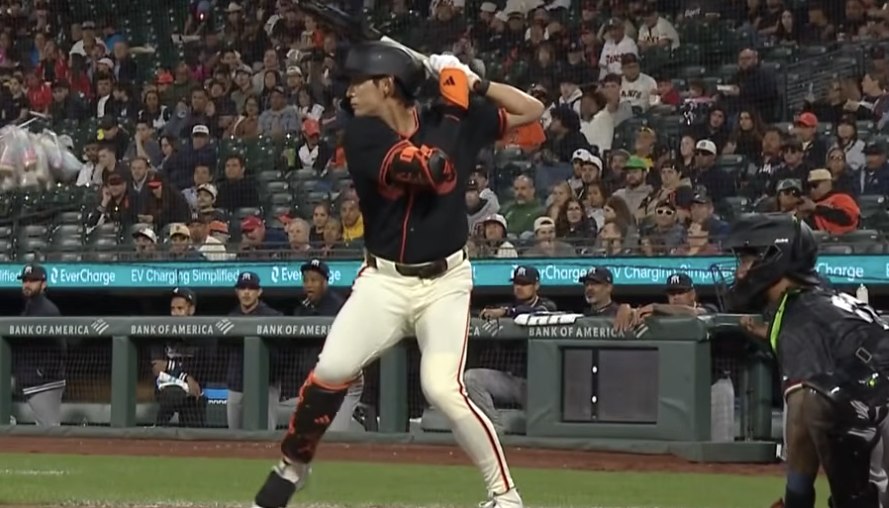
SAN FRANCISCO — San Francisco Giants outfielder Jung Hoo Lee delivered a standout performance with four singles in five at-bats, extending his hitting streak to 16 games, but the Giants dropped a heartbreaker to the Washington Nationals 4-3 on Monday night at Oracle Park.
Lee, batting in the leadoff spot, went 4-for-5 with two runs scored as part of a 12-hit attack for the Giants. His performance highlighted a season in which the 27-year-old South Korean star has emerged as one of the National League’s most consistent hitters.
The Giants led 3-1 entering the ninth inning but could not hold on against a late Nationals rally. Washington scored three runs in the final frame to secure the victory, improving to 33-33 while dropping San Francisco to 27-39.
Logan Webb pitched effectively for the Giants, allowing one run over eight innings with seven strikeouts. However, the bullpen faltered after manager Tony Vitello opted to pull Webb to preserve him for potential extra innings. Reliever Keaton Winn surrendered the go-ahead runs in the ninth.
Bryce Eldridge contributed a key RBI double in the eighth that scored Lee and gave the Giants a temporary 2-1 lead. Matt Chapman also drove in a run earlier with a single. Despite the offensive output, defensive miscues and the bullpen collapse proved costly.
Lee’s four-hit night underscored his breakout 2026 campaign. Entering the game, he was batting around .323 with a strong on-base percentage and slugging mark, ranking among the league leaders. His 16-game hitting streak is the longest active in the majors and the best by a Giant in recent years.
The South Korean native, who signed a lucrative deal with the Giants after dominating in the KBO League, has overcome previous injury setbacks to establish himself as a cornerstone player. In recent weeks, he has slashed over .480 during hot stretches, showcasing line-drive power and plate discipline.
Monday’s game featured steady drizzle and gray skies, with wind affecting play throughout. Lee collected singles in multiple innings, including a fourth-inning hit that pushed his streak forward and an eighth-inning infield single upheld after a successful challenge.
Nationals starter Miles Mikolas and the bullpen navigated the Giants’ lineup effectively enough to keep the game close until the late surge. CJ Abrams and Daylen Lile delivered crucial hits in the ninth, capitalizing on the bullpen change. Gus Varland earned the save for Washington.
The Giants’ season has been marked by inconsistency, with injuries and bullpen issues contributing to their position in the NL West standings. Despite strong individual performances like Lee’s and Webb’s outings, late-game execution has been a recurring challenge.
Lee’s consistency provides a bright spot for San Francisco fans. His ability to make consistent contact and get on base has drawn comparisons to elite contact hitters. Over his last 15-plus games, he has produced at an elite level, with multiple multi-hit games.
The Giants acquired Lee with expectations that he would anchor the outfield and provide a steady bat in the lineup. After injury-limited campaigns earlier in his MLB tenure, 2026 represents a return to form reminiscent of his KBO success, where he was a perennial All-Star and batting champion.
For the Nationals, the win marked a resilient effort on the road. Trailing late, they mounted a comeback that highlighted their depth and timely hitting. The victory helped them maintain a .500 record amid a competitive NL East race.
Oracle Park, known for its scenic views and pitcher-friendly dimensions, played host to a competitive matchup. Fans braved the weather to support the Giants, with Lee’s hits drawing loud cheers throughout the evening. The loss, however, left the home crowd disappointed after a promising late lead.
Lee’s four singles were all well-placed line drives and ground balls that exploited gaps in the defense. His speed and instincts allowed him to turn potential outs into hits, including the challenged play in the eighth.
As the season progresses into mid-June, the Giants will look to build momentum with contributions from young talents like Eldridge alongside veterans. Lee’s hot streak offers hope that the offense can carry the team through pitching inconsistencies.
Analysts point to Lee’s plate approach as key to his success. He rarely chases pitches outside the zone and has improved his power stroke, contributing to a career-best OPS around .820. His presence at the top of the order sets a tone for the Giants’ lineup.
The series continues Tuesday with the Nationals and Giants facing off again at Oracle Park. San Francisco will aim to bounce back and even the set, relying once more on strong starting pitching and Lee’s bat.
Broader context in the NL West shows the division remaining competitive, with several teams jostling for positioning. The Giants’ record reflects challenges in closing out games, an area they must address to climb the standings.
Lee, often called “Jung Hoo” by fans and teammates, has become a fan favorite not only for his production but for his work ethic and humility. His journey from KBO stardom to MLB success embodies the growing international influence in baseball.
While Monday’s result was a tough pill to swallow, Lee’s performance provided a reminder of the talent on the roster. As the Giants prepare for the remainder of the season, consistent contributions from their outfielder could prove pivotal in any playoff push or late-season surge.
The Nationals’ late heroics demonstrated the unpredictable nature of baseball, where even dominant individual efforts like Lee’s can be overshadowed by team outcomes. Both clubs will regroup for the next chapter in their series.
Business
US stocks: S&P 500, Nasdaq fall as tech selling resumes, Trump vows to react to downed US helicopter

The Cboe Volatility Index hit its highest level since April 7 during the session as stocks sold off.
Technology stocks resumed Friday’s selloff following a bounce on Monday. The S&P 500 tech index fell more than 4% before paring losses. The Philadelphia SE Semiconductor Index dropped as much as 8.6% after rising 3% in early trading.
“When the bounce ran its course this morning, the tape came for sale more broadly. There’s also a rotation going on … so part of it is more of a momentum unwind,” said Michael O’Rourke, chief market strategist at JonesTrading in Stamford, Connecticut.
The Russell 1000 value index outperformed the growth index.

Also Read | US stocks: SpaceX IPO demand is approaching four times oversubscribed, source says
Trump’s post also briefly “created another leg down,” O’Rourke said. In addition, investors may be worried ahead of inflation data and a highly anticipated SpaceX IPO later this week.
According to preliminary data, the S&P 500 lost 20.25 points, or 0.27%, to end at 7,385.48 points, while the Nasdaq Composite lost 254.47 points, or 0.98%, to 25,675.19. The Dow Jones Industrial Average rose 84.28 points, or 0.14%, to 50,857.58. Consumer price data for May could offer fresh clues on how the rise in energy prices, driven by the Iran war, is impacting inflation. The data is due on Wednesday. SpaceX’s market debut on Friday could also be a hurdle for U.S. stocks as investors worry about possible overexuberance among high-growth technology stocks. Elon Musk’s SpaceX is aiming to raise $75 billion and targeting a valuation of $1.75 trillion, the most ever for an IPO.
Some strategists have said investors are potentially booking profits in the high-flying semiconductor stocks to make room for SpaceX in their portfolios.
Technology and AI-linked stocks sold off sharply on Friday after Broadcom’s disappointing forecast fueled concerns about high valuations in the sector, particularly in chipmakers, which have rallied sharply this year. The semiconductor index remains up more than 70% for the year so far.
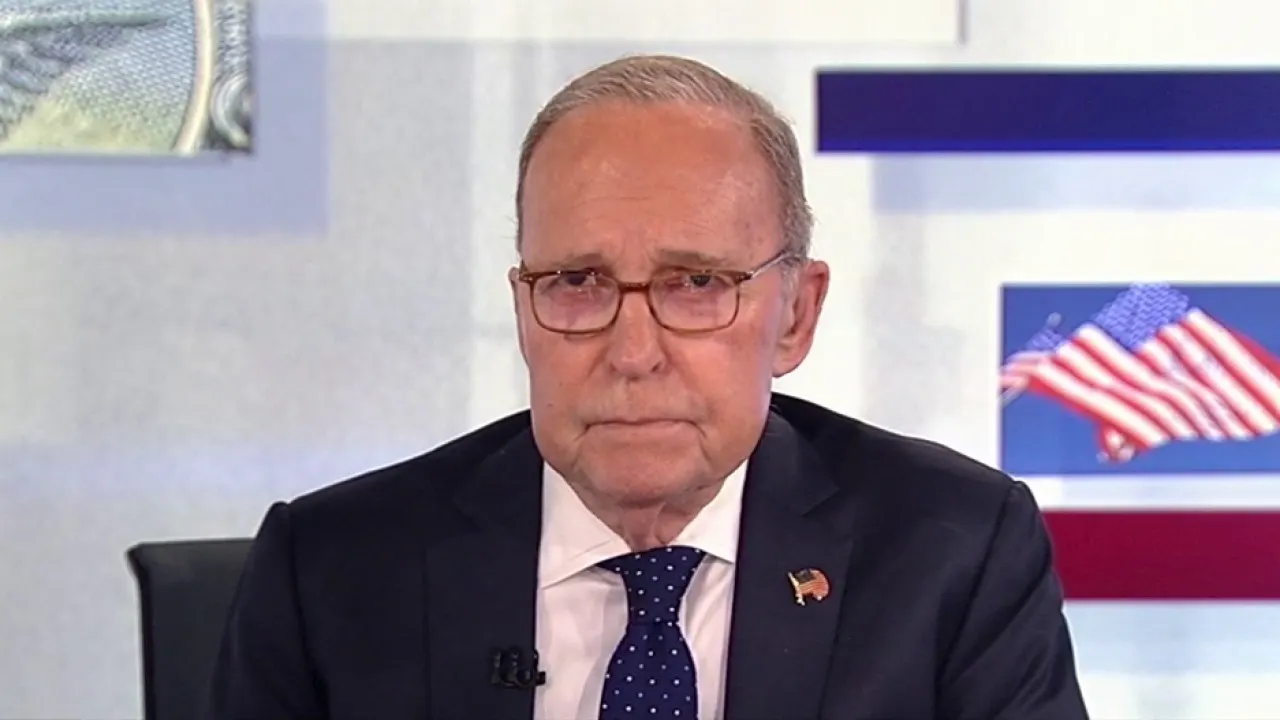
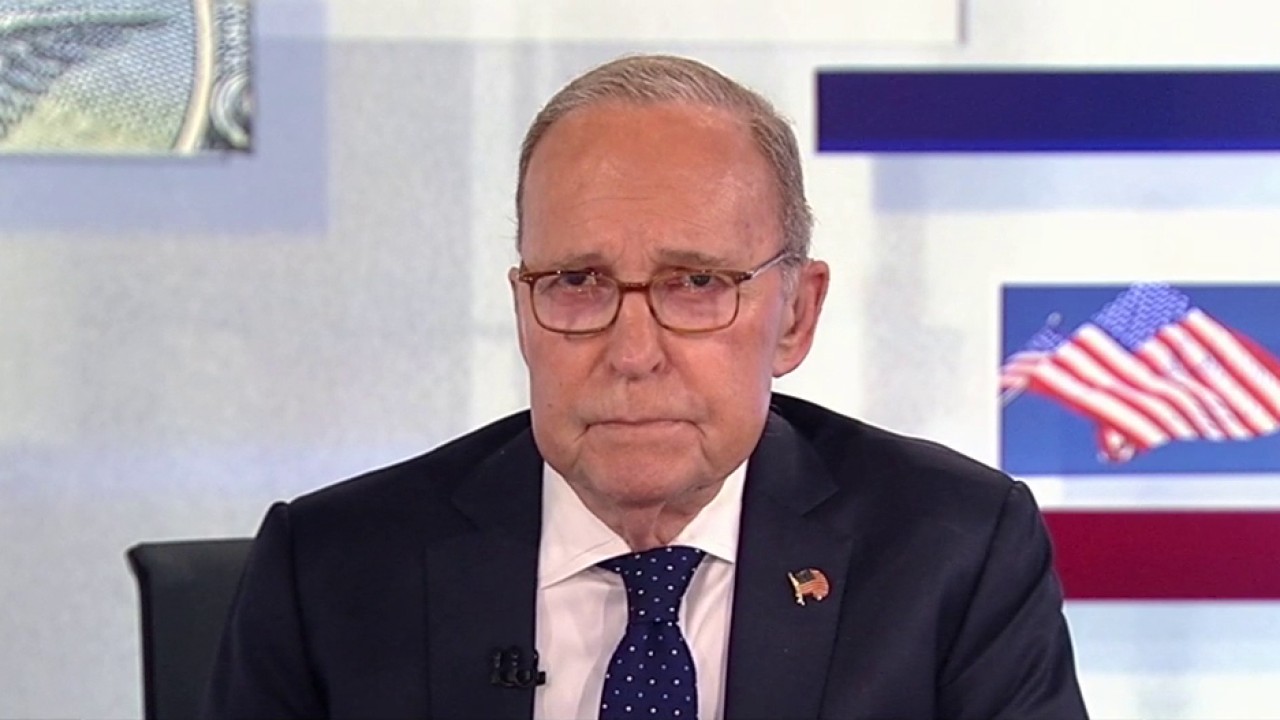
FOX Business host Larry Kudlow discusses President Donald Trump vowing a response after saying Iran shot down a U.S. Apache helicopter over the Strait of Hormuz on ‘Kudlow.’
Is now the time for one last kinetic military bombing assault on the Islamic Revolutionary Guard Corps regime in Iran?
We know that President Trump prefers diplomacy and is trying to complete an Iranian surrender deal. Yet the news today that the president is blaming Iran for shooting down an Apache helicopter over the Strait of Hormuz Monday night may change things.
Here’s the president’s Truth Social: “I have just been informed by our Great Military that last night the Iranians shot down one of our highly sophisticated Apache Helicopters while patrolling over the Strait of Hormuz.” He added: “There were two pilots involved, both are safe and uninjured. Nevertheless, the United States must, of necessity, respond to this attack.”
By the way, the central command’s rescue mission for the helicopter pilots was a miracle. The downed pilots were rescued using an Unmanned Surface Vessel sea drone, in a first-of-its-kind mission. Our military is absolutely incredible. Of course Iran has been busting the ceasefire left and right, hitting the American military, hitting Gulf states, hitting Israel. Israel bombed back by the way hitting Kharg Island. There’s a thought.
Sen. Dave McCormick, R-Pa., says the Trump administration should prioritize nuclear enrichment and the opening of the Strait of Hormuz in any deal with Iran on ‘Kudlow.’
I’m not here to second guess the president who has my support for his courageous Iranian intervention. Yet you have to wonder when his patience for diplomacy will run out. And you also have to wonder whether any deal with Iran is ever really a deal.
These radical Islamists and their Nazi-like regime do not know the civilized world’s definition of right and wrong. They have never adhered to a deal. It’s part of their ideology, it’s part of their theocratic regime. It’s part of their hatred of America and Israel.
So, what’s Mr. Trump going to do by way of responding to the Iranian hit? We’ll here’s what General Jack Keane said last night: “Clearly the preferred option after eight weeks of frustration must be to return to military operations 10 days, 14 days, let’s finish this, let’s put them in the most vulnerable position they have ever been in.”
Surely this is an option that’s front and center on the table in front of Mr. Trump. And in addition, I want to quote General Keane again because he is among the most knowledgeable and experienced patriots we have, who by the way is a Presidential Medal of Freedom recipient. Here’s General Keane again from last night: “At the end of the day, I truly believe what is going to likely come down to is having to go after them and to kill as many of them as we possibly can, capture some if we can, but take all the instruments of tyranny away from them once and for all. It is likely the solution that has to come at some point.”
I’m sure Mr. Trump is considering all of this. This is about ending a near half century gruesome, barbaric dictatorship in the Middle East. It is also about freedom and liberty for all the other Middle Eastern countries, and of course our great friend and ally Israel. These are universal values worth fighting for.

Thailand received recognition from the UNODC for efforts against illegal waste trafficking, notably after a significant electronic waste seizure at Laem Chabang Port, highlighting improved enforcement and inter-agency cooperation.
Key Points
- Thailand has been recognized by the UNODC for its efforts to combat illegal waste trafficking, highlighted by a significant seizure of electronic waste at Laem Chabang Port. This commendation underscores the country’s progress in tackling cross-border environmental crime.
- Deputy Prime Minister Suchart Chomklin received a letter from UNODC’s regional director, commending Thailand’s coordinated actions and active enforcement, as demonstrated by an on-site inspection of shipping containers.
- The successful March 10 seizure involved collaboration among various agencies: the Department of Special Investigation tracked criminal networks, the Customs Department confiscated illegal cargo, and the Pollution Control Department assessed environmental risks. The UNODC will continue its support for Thailand’s WasteNet program, promoting global waste management practices.
Thailand has received recognition from the United Nations Office on Drugs and Crime (UNODC) for its efforts to curb illegal waste trafficking, following a recent seizure of electronic waste at Laem Chabang Port.
Deputy Prime Minister and Minister of Natural Resources and Environment Suchart Chomklin said the commendation from the UNODC regional office for Southeast Asia and the Pacific cited Thailand’s progress in addressing cross-border environmental crime. The letter, signed by Regional Director Delphine Schantz, also referenced his on-site inspection of shipping containers as an example of active enforcement and coordinated action among agencies.
The March 10 seizure was carried out through cooperation among multiple authorities. The Department of Special Investigation gathered intelligence and tracked financial links tied to criminal networks, while the Customs Department conducted inspections and confiscated the illegal cargo. The Pollution Control Department provided technical analysis of hazardous materials, assessed environmental risks, and handled reporting under international obligations, including the return of waste to its country of origin.
Authorities view illegal waste trafficking as a transnational crime with direct impacts on public health, the environment, and the country’s circular economy. The UNODC will continue supporting Thailand through its WasteNet program, including capacity building, information sharing, and cross-border coordination, in line with the Basel Convention and broader efforts to strengthen global waste management practices.
Source : Thailand Wins UNODC Recognition for Waste Trafficking Crackdown
Other People are Reading
Business
Severe Storms Trigger Widespread Power Outages Across Northeast Kansas, Evergy Reports Delays

TOPEKA, Kan. — Thousands of homes and businesses across northeast Kansas remained without electricity early Tuesday after severe thunderstorms swept through the region Monday night, downing power lines and causing extensive damage to the electrical grid, utility officials said.
Evergy, the primary electric provider for much of the area, reported more than 65,000 customers without power statewide as of early Tuesday morning, with heavy concentrations in northeast Kansas communities including Topeka, Manhattan, Junction City and surrounding areas. Restoration efforts faced delays due to the scope of the storm damage and ongoing hazardous conditions.
The outages began escalating Monday evening as a cluster of strong thunderstorms moved across the region, bringing damaging winds, heavy rainfall and the risk of tornadoes. The National Weather Service in Topeka had issued warnings highlighting the potential for gusts up to 70-90 mph and localized flooding.
According to Evergy’s outage map and local reports, more than 200 customers were affected in and around Topeka, with over 100 reported near Manhattan and Junction City shortly after midnight. Additional impacts hit communities such as Wamego, Fort Riley and Lecompton. The utility indicated that some restoration times could extend due to the need for crews to safely assess and repair downed lines and debris.
Statewide, poweroutage.us tracked approximately 68,500 customers without electricity across Kansas utilities, with Evergy accounting for the vast majority. The storms followed a pattern of active severe weather in the Plains, where spring and early summer systems frequently challenge infrastructure.
Evergy crews were mobilized overnight, prioritizing critical facilities such as hospitals, emergency services and water treatment plants. The company urged customers to report outages through its website, app or phone lines and to stay clear of any downed power lines, which should be treated as live and dangerous.
Safety officials reminded residents to use flashlights instead of candles to avoid fire risks and to check on neighbors, particularly the elderly or those with medical needs reliant on powered equipment. Generators, if used, should be operated outdoors with proper ventilation to prevent carbon monoxide poisoning.
The severe weather system developed Monday afternoon and intensified into the evening, tracking east-southeast across north-central and northeast Kansas. Meteorologists noted the storms’ history of producing destructive wind gusts exceeding 80 mph in some areas, contributing to widespread tree damage and power infrastructure failures.
In Topeka and surrounding Shawnee County, winds and rain led to scattered reports of downed trees and limbs blocking roads. Similar conditions affected Riley County, home to Manhattan and Fort Riley, where military and university operations may have experienced disruptions. Local emergency management offices monitored the situation closely.
This event marks another instance of weather-related strain on Kansas utilities this season. Earlier storms in May and prior months had already tested response capabilities, with Evergy restoring power to tens of thousands after previous high-wind events. The utility has invested in grid hardening measures, including vegetation management and upgraded equipment, but officials acknowledge that major storm systems can still overwhelm the network.
For residents without power, basic needs become immediate concerns. Refrigerators and freezers can preserve food for only a limited time — typically four hours for refrigerators and 48 hours for full freezers if doors remain closed. Perishable items should be discarded if temperatures rise above 40 degrees Fahrenheit for more than two hours.
Businesses faced closures or reduced operations, particularly those dependent on refrigeration or electronic systems. In Manhattan, home to Kansas State University, campus officials likely coordinated contingency plans for students and staff. Fort Riley, a major U.S. Army installation, maintains backup power systems but still monitors impacts on non-essential facilities.
The National Weather Service continued to monitor the region Tuesday, with forecasts calling for mostly sunny conditions and highs near 94 degrees in some areas, accompanied by a heat advisory. The combination of lingering outages and rising temperatures could heighten discomfort and health risks for those without air conditioning or refrigeration.
Evergy has not yet provided specific estimated restoration times for all affected areas, noting that in major events, such projections can change based on damage assessments. Customers can check individual status via the company’s interactive outage map, which updates regularly.
Broader impacts from the storms included possible flash flooding in low-lying areas due to heavy rainfall rates of 1-2 inches per hour. While no widespread fatalities or major injuries were immediately reported, emergency responders handled weather-related calls throughout the night.
State and local officials encouraged preparedness. Kansas Emergency Management Division advised having emergency kits with water, non-perishable food, medications and battery-powered radios. As climate patterns shift, utilities and communities face increasing frequency of such extreme events.
For farmers and rural residents in the affected zones, outages disrupt irrigation, livestock operations and grain handling. Northeast Kansas agriculture plays a vital role in the state’s economy, making rapid restoration a priority.
As crews work through the morning, additional outages may be reported once daylight allows fuller damage surveys. Evergy typically brings in mutual aid from neighboring utilities during large-scale events to accelerate recovery.
The situation underscores the vulnerability of electrical infrastructure to severe weather, even in prepared regions. Past experiences have driven improvements, but each storm presents unique challenges based on wind direction, rainfall totals and duration.
Residents are advised to stay informed through local news, the National Weather Service and utility alerts. Text or email notifications from Evergy can provide real-time updates once power returns or changes occur.
While the immediate focus remains on safety and restoration, longer-term discussions about grid resilience are likely to follow. Kansas lawmakers and utility regulators have previously examined investments in underground lines, smart grid technology and better storm forecasting integration.
Tuesday’s outages, though disruptive, reflect a familiar cycle in the Midwest tornado alley and severe thunderstorm corridor. For now, thousands await the return of normalcy as utility workers navigate debris-filled roads and assess downed poles and lines under sometimes challenging conditions.
Evergy continues to update its outage map and encourages patience as safety remains the top priority in all restoration efforts. Further details on timelines and total impacts are expected throughout the day.

Wintermute warns Bitcoin lacks inflows needed to confirm market bottom

Zara & Marisa Berenson Bring Back 70s Glamour

Nigeria locals recount horror of civilian deaths in US-led airstrikes



-

 Fashion4 days ago
Weekend Open Thread: Evereve – Corporette.com
-
 Crypto World4 days ago
Jensen Huang Approves Samsung, SK Hynix, and Micron for NVIDIA (NVDA) HBM4 Memory Supply
-

 Crypto World2 days ago
Anatomy of the June crypto crash: Fed, Iran, Saylor
-
 Business7 days ago
Trump Taps Housing Chief Bill Pulte as Acting Intelligence Director After Gabbard Exit
-
 Crypto World3 days ago
Senator Cynthia Lummis Calls CLARITY Act the Most Consequential Financial Legislation of This Generation
-
 Business3 days ago
The Pain Points Taking a Fragile Tech Rally Down a Notch
-
 Entertainment3 days ago
The Best Mystery Series of All Time Is Surging on Streaming 30 Years After It Ended
-

 Tech5 days ago
Microsoft launches MXC, an OS-level sandbox for AI agents, with OpenAI and Nvidia already on board
-

 Tech2 days ago
Microsoft unveils seven homegrown AI models in new bid for ‘long term self-sufficiency’
-

 NewsBeat2 days ago
Alexander Zverev wins the French Open to finally earn a 1st Grand Slam title
-
Crypto World5 days ago
LBank Surpasses 25 Million Users Worldwide as AFA Partnership Continues to Drive Global Growth
-

 Business7 days ago
PagerDuty, Inc. (PD) Presents at Bank of America 2026 Global Technology Conference Transcript
-

 Tech4 days ago
Suspicious Polyfill login prompts pop up on Toshiba, Muji websites
-

 Crypto World2 days ago
Trump’s AI Ownership Plan Could Benefit Anthropic at OpenAI’s Expense
-
 Sports6 hours ago
Bangladesh beat Australia after 20 years in ODIs, register only their second win over six-time world champions | Cricket News
-

 Business5 days ago
(VIDEO) Justin Bieber Delivers Surprise Happy Birthday Serenade to Diners at Los Angeles Mexican Restaurant
-

 Tech4 days ago
RCS Messages Between iPhone and Android Get End-to-End Encryption With iOS 26.5
-

 Tech4 days ago
Meta steals a tactic from Tesla and builds data centers in tents
-
 Crypto World1 day ago
Eli Lilly (LLY) Stock Surges 4% Following Breakthrough Sleep Apnea Trial Results
-
Business7 days ago
Asia stocks rise past US-Iran jitters; Nikkei hits record high on stimulus cheer
You must be logged in to post a comment Login