
Crypto World
DavosWeb3 2026 Unveils Declaration on Responsible Web3 and AI Development


Editor’s note: On the sidelines of the World Economic Forum in Davos, the second DavosWeb3 roundtable convened a small group of founders, investors, and ecosystem leaders for a focused discussion on how decentralized technologies are evolving beyond experimentation. Held at the Financial Times House, the gathering emphasized practical deployment, governance, and accountability, particularly where Web3 intersects with artificial intelligence, financial infrastructure, and digital identity. The launch of the Davos Declaration formalized this direction, outlining shared principles intended to guide the next phase of decentralized innovation.
Key points
- The Davos Declaration outlines seven principles aimed at responsible Web3 and AI development.
- Speakers focused on real-world use cases such as remittances, digital identity, and institutional-grade finance.
- AI infrastructure, capital allocation, and decentralization were discussed through a long-term, execution-driven lens.
- The roundtable format prioritized substance over visibility, contrasting with typical Davos programming.
Why this matters
As Web3 matures, conversations are shifting from speculative growth to infrastructure, governance, and measurable impact. Events like DavosWeb3 signal how builders and investors are aligning decentralized technology with existing financial systems, regulatory expectations, and AI development. For the global market and the MENA-adjacent innovation ecosystem, this reflects a broader move toward accountability and integration, positioning Web3 as foundational digital infrastructure rather than a standalone experiment.
What to watch next
- How the Davos Declaration principles are adopted or referenced by Web3 projects and investors.
- Follow-on collaborations or initiatives emerging from the DavosWeb3 network.
- Practical deployments of decentralized identity, AI infrastructure, and fintech solutions discussed at the roundtable.
Disclosure: The content below is a press release provided by the company/PR representative. It is published for informational purposes.
Davos, Switzerland – February 4, 2026 – The second DavosWeb3 roundtable unfolded on January 21 at the Financial Times House, quietly carving out space for meaningful dialogue amid the World Economic Forum buzz. No flashy keynotes, just a focused group of builders, investors, and leaders exchanging grounded ideas on how decentralized tech can scale thoughtfully, especially as it intersects with AI.
The day culminated in the launch of the Davos Declaration, a clear-eyed pledge to seven core principles: Collaboration, Equitability, Transparency, Accountability, Inclusion, Decentralization, and Sustainability. Co-organizer Ajeet Khurana recited it, setting the tone for conversations that prioritized substance over speculation.
Speakers brought sharp, practical perspectives that reflected the event’s ethos:
- Adeola Adedewe (Kredete) spoke about transforming remittances into credit-building tools for underserved markets, closing massive gaps in emerging economies.
- Aly Madhavji (Blockchain Founders Fund) stressed the power of patient, transparent capital to create durable impact across a portfolio of over 200 companies.
- Dr. Jonathan Chang (0G Foundation) pushed for modular AI infrastructure treated as a transparent public good, with real accountability baked in.
- Kenny Li (Manta Network) shared reflections on evolving beyond oversaturated infrastructure toward targeted, institutional-grade financial tooling after five years of building.
- Jeffrey Schwartz (Dentity) highlighted how decentralized identity is already verifying the majority of U.S. notaries for mortgage processes privacy-preserving tech meeting real-world security needs.
- Sandy Carter (Unstoppable Domains) opened by noting crypto’s mainstream arrival in Davos and introduced the .web3 domain as a foundation for true digital ownership.
- Yat Siu (Animoca Brands) closed with a vision of gamified finance as the quickest path to universal financial literacy, backed by a massive portfolio and upcoming public-market steps.
“Great technology requires a greater conscience,” one of the organizers summed up capturing the day’s blend of ambition and principle.
The gathering reinforced that Web3 is maturing into essential infrastructure: less hype, more execution, more accountability. DavosWeb3 remains a rare spot for these kinds of high-signal exchanges.
Through partners like DroomDroom, we are bringing in-depth roundtable insights directly to the broader Web3 community.
About DavosWeb3
DavosWeb3 is the annual roundtable in Davos dedicated to thoughtful conversations on the future of decentralized technologies. More at davosweb3.com or @DavosWeb3 on X. Media inquiries: press@davosweb3.com



Aave, one of the largest decentralized lending platforms, debuted its long-awaited v4 upgrade on Ethereum, aiming to push DeFi beyond crypto trading and into broader financial markets.
The upgrade has been in development for about two years and is designed to make it easier to use Aave for a wider range of lending and borrowing activities, including those tied to real-world assets.
The introduction follows months of internal debate over governance and value flow through the protocol. Disputes over interface fees, contributor roles and proposals to redirect product revenue to the decentralized autonomous organization (DAO) have highlighted tensions between decentralization and coordination, even as the work progressed.
At a basic level, v4 changes how Aave organizes its markets. Instead of grouping everything together, the new system allows different types of lending markets to operate separately while still sharing the same pool of funds.
That means users could eventually borrow and lend against more than just crypto tokens.
For Aave Labs founder Stani Kulechov, the shift reflects a broader change in how decentralized finance is evolving. “Lending is based on trust… you need lending conditions that reflect market conditions,” he said in an interview with CoinDesk.
The upgrade is designed to better handle that complexity. By separating different market types while sharing liquidity, Aave aims to support everything from traditional crypto lending to more complex situations like institutional borrowing and real-world assets.
It also opens the door for others to build on top of the protocol more easily.
“It also means that other teams can come and build and expand that infrastructure,” Kulechov said.
Another goal is to make better use of the capital already in the system.
“There’s some technical improvements where the float … can be reinvested,” Kulechov said, referring to idle funds that can now be deployed more efficiently.
The new version went live with a limited set of markets and conservative settings. More features are likely to be added following governance decisions.
“DeFi is stronger than ever,” Kulechov said. “A lot of these opportunities will come from value outside of DeFi.
Read more: Aave labs proposes ‘Aave Will Win’ plan to send 100% of product revenue to DAO

A government app released this week has ignited a debate over location-tracking, data collection and security, with researchers and privacy advocates urging closer scrutiny of the permissions it requests. The White House rolled out the app on Friday, framing it as a direct line to the administration for breaking news, livestreams and policy updates.
Critics say the app’s permission model raises questions about privacy, especially since store listings on Google Play and Apple’s App Store do not display explicit warnings about the requested access. The White House privacy policy describes data handling that appears broader than the app’s stated use, noting it automatically stores information such as the originating IP address and other basic data, and that it may retain subscriber names and email addresses—even though providing that information is not required to use the app.
On its face, the app is marketed as a transparent communications channel, but independent analyses have flagged unusual data-collection aspects, particularly the inclusion of location services in a tool that shows no obvious location-based features such as maps, geofenced content or weather. A software developer who uses the X handle Thereallo, together with Adam, a security engineer and infrastructure architect, identified code that could enable GPS access on the device. They argue that GPS usage in this context is atypical and merits closer examination. For context, their observations have not been independently verified.
Adam noted that the mere presence of location capabilities could introduce risk, particularly if such functionality can be activated by an update or is exploited by a malicious actor. “There is no map, no local news, no geofencing, no events near you, no weather. Nothing in the app that requires location,” he said, underscoring the mismatch between expected use and the permissions being requested.
Security assessment and risk vectors
Thereallo published a deeper analysis suggesting the app could contain code that would allow tracking a device every 4.5 minutes when foregrounded and every 9.5 minutes in the background, though this claim has not been independently validated. The researchers emphasized that while the app still requires permissions, the underlying tracking infrastructure could be activated with a minimal trigger in the right conditions. In addition to GPS data, they flagged the collection of notification interactions, in-app message clicks and phone numbers.
“No servers were probed. No network traffic was intercepted. No DRM was bypassed. No tools were used that require jailbreaking. Everything described here is observable by anyone who downloads the app from the App Store and has a terminal.”
The discussions have also touched on broader security concerns. Adam warned that the app’s security may be vulnerable to interception or manipulation by skilled actors on the same Wi‑Fi network, such as in public spaces, or by users with jailbroken devices capable of runtime modification. He cautioned that the combination of permissive data access and weak defenses could open doors to data leakage or altered behavior if an attacker gains foothold in the device’s communications stack.
Researchers have cited external posts and analyses to support their findings. For example, a detailed security write-up by Thereallo references a decompilation of the app and points to potential telemetry and data-access pathways. Additional context has circulated around accompanying discussions on social media, including posts that surfaced on X.
Policy gaps and broader implications for users and markets
Within the crypto and broader digital-privacy communities, the episode underscores a recurring theme: the trust users place in digital tools—whether a government app or a crypto wallet interface—depends on clear, auditable data practices and minimal, justified permissions. While the White House app is not a crypto product, the situation matters to builders and users who rely on public-facing platforms for custody, identity verification and timely communications. It highlights how privacy-by-design considerations—especially around location data and telemetry—are increasingly front and center for any digital service that touches sensitive information.
From a regulatory perspective, the divergence between what is stated in privacy policies and what is visible in store listings can become fertile ground for scrutiny. Google Play indicates that personal data may be collected during download and use, while Apple’s App Store directs users to the White House privacy policy for further details. The absence of visible, explicit warnings about location permission on the storefronts could be interpreted as a disclosure gap, prompting calls for clearer consent and more transparent user notifications in government apps and similar public-interest deployments.
As policymakers and technologists digest the incident, several questions loom: Why is location access required at all for a news-and-updates app with no geolocation features? Will the administration publish an independent security assessment or a clearer privacy-by-design pledge? And how might these disclosures influence future digital-government projects and the adoption of privacy-enhancing technologies in more sensitive domains?
Industry watchers may also consider the broader market implications. The episode touches on a tension that resonates across the crypto ecosystem: the need for robust, transparent security postures in any platform that handles user data or communications. For users, the key takeaway is to monitor disclosures around permissions and to expect clearer explanations about why location data is being requested, especially for government-run software that arrives with high public visibility.
In the near term, observers should watch how the White House and its contractors respond. Clarifications on the necessity of location permissions, any forthcoming security audits, and possible revisions to privacy disclosures will be important signals about how seriously authorities intend to uphold privacy as public digital services scale.
For readers and market participants, the episode reinforces a practical takeaway: privacy and security commitments in public-facing tech—whether for government apps or crypto services—are only as credible as the transparency and accountability that accompany them. Continued scrutiny and independent testing will likely shape how such apps evolve and how users balance convenience with data safety in an increasingly digital world.
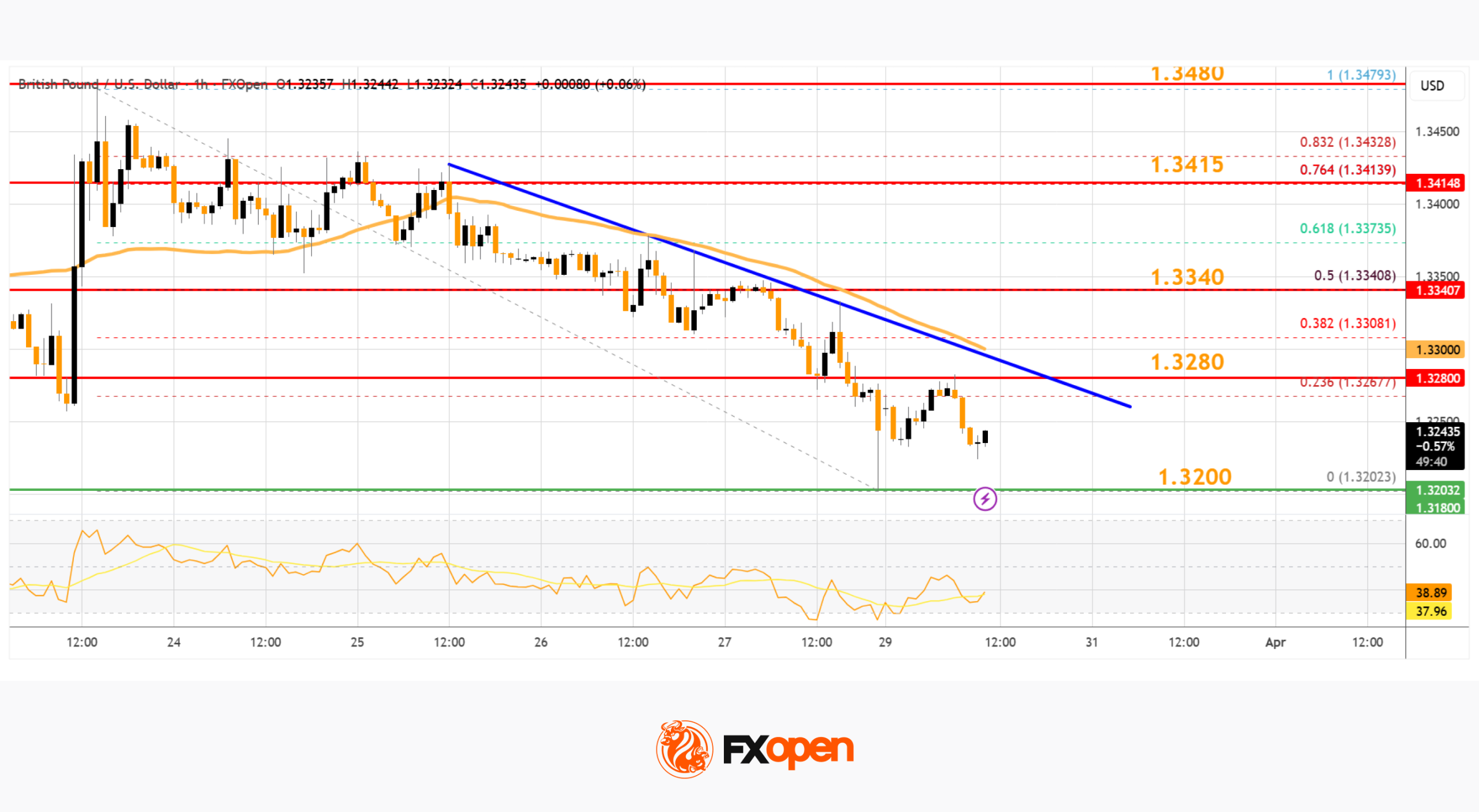
GBP/USD failed to climb above 1.3500 and corrected some gains. EUR/GBP started a decent increase and might aim for more gains above 0.8700.
Important Takeaways for GBP/USD and EUR/GBP Analysis Today
· The British Pound is showing bearish signs below the 1.3400 support.
· There is a key bearish trend line forming with resistance near 1.3280 on the hourly chart of GBP/USD at FXOpen.
· EUR/GBP is gaining pace and trading above the 0.8660 pivot level.
· There is a connecting bullish trend line forming with support at 0.8670 on the hourly chart at FXOpen.
GBP/USD Technical Analysis
On the hourly chart of GBP/USD at FXOpen, the pair failed to stay above the 1.3450 pivot level. As a result, the British Pound started a fresh decline below 1.3400 against the US Dollar.
There was a clear move below 1.3340 and the 50-hour simple moving average. The bears pushed the pair below 1.3250. Finally, there was a spike toward the 1.3200 handle. A low was formed near 1.3202, and the pair is now consolidating losses.
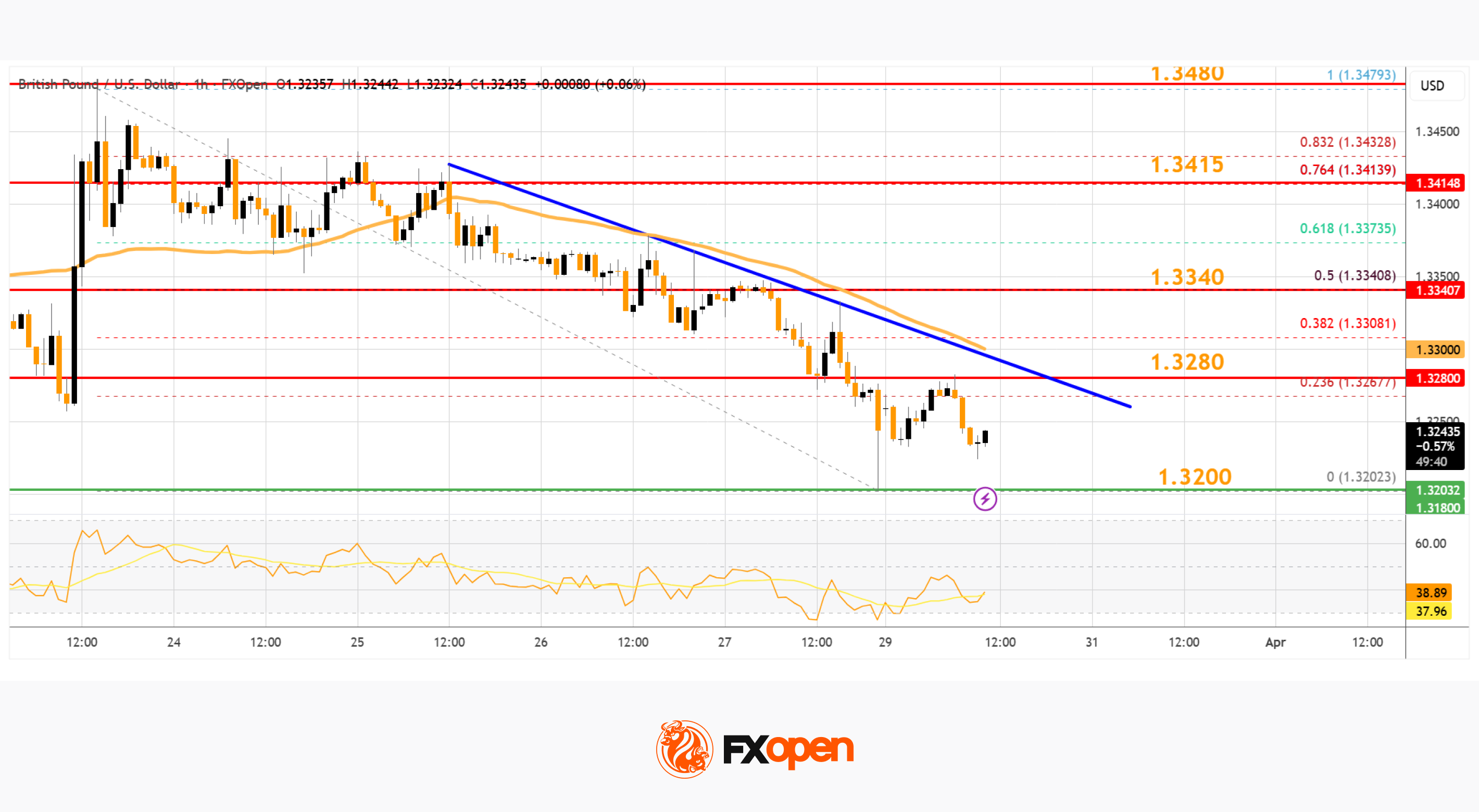
There was a minor move above 1.3240 and the 23.6% Fib retracement level of the downward move from the 1.3479 swing high to the 1.3202 low. On the upside, the GBP/USD chart indicates that the pair is facing resistance near a key bearish trend line at 1.3280.
A close above the trend line might send the pair toward the 50% Fib retracement at 1.3340. If the bulls remain in action, they could aim for more gains.
In the stated case, the pair might rise toward 1.3415. The next major hurdle for GBP/USD sits at 1.3480. On the downside, there is a key support forming near 1.3200. If there is a downside break below 1.3200, the pair could accelerate lower. The next key interest area might be 1.3160, below which the pair could test 1.3120. Any more downside could lead the pair toward 1.3050.
EUR/GBP Technical Analysis
On the hourly chart of EUR/GBP at FXOpen, the pair started a decent increase from 0.8635. The Euro traded above 0.8650 to enter a positive zone against the British Pound.
The pair settled above the 50-hour simple moving average and 0.8660. The pair traded as high as 0.8687 before there was a minor pullback, but the pair stayed above the 23.6% Fib retracement level of the upward move from the 0.8636 swing low to the 0.8687 high.
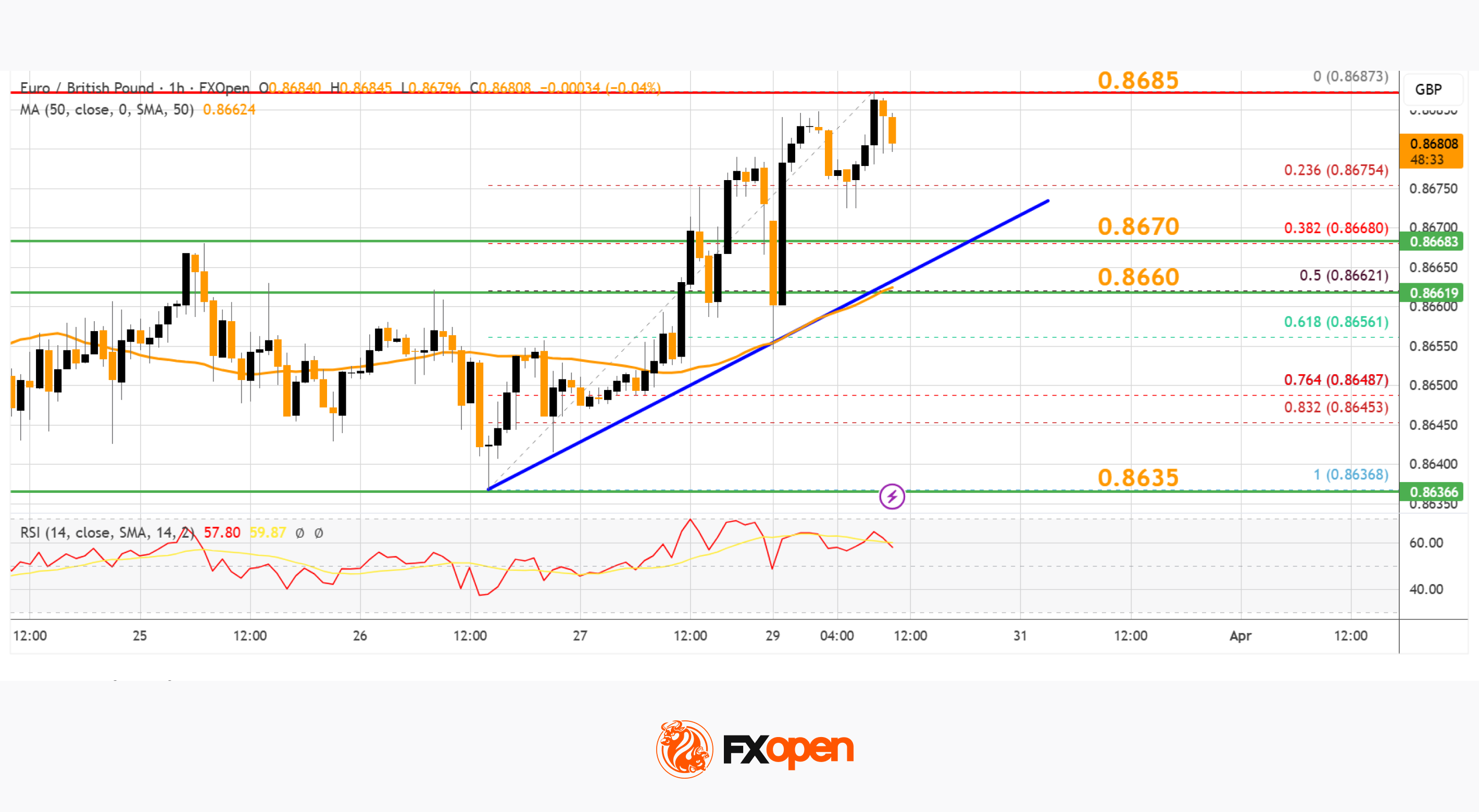
However, the pair is stable above 0.8670. Besides, there is a connecting bullish trend line forming with support at 0.8670.
A downside break below 0.8670 might call for more downsides. In the stated case, the pair could drop toward the 50% Fib retracement level at 0.8660. Any more losses might call for an extended drop toward the 0.8635 pivot zone.
If there is another increase, the EUR/GBP chart suggests that the pair is facing hurdles near 0.8685. A close above 0.8685 might accelerate gains. In the stated case, the bulls may perhaps aim for a test of 0.8700. Any more gains might send the pair to 0.8740.
This article represents the opinion of the Companies operating under the FXOpen brand only. It is not to be construed as an offer, solicitation, or recommendation with respect to products and services provided by the Companies operating under the FXOpen brand, nor is it to be considered financial advice.

Key Highlights
- Starcloud secured $170M in Series A funding at a $1.1 billion valuation, achieving unicorn status in just 17 months post-Y Combinator
- The startup is developing orbital data centers in low Earth orbit to overcome terrestrial energy and space limitations
- Successfully deployed the first Nvidia H100 GPU to space in November 2025 and conducted AI training operations
- Second satellite mission scheduled for October 2026 will include AWS Outposts and deliver 100x greater power capacity
- Competition intensifies as SpaceX and Blue Origin announce comparable orbital infrastructure initiatives, including Musk’s million-satellite proposal
A Redmond, Washington-based startup called Starcloud has successfully closed a $170 million Series A funding round. The investment values the company at $1.1 billion, granting it unicorn status merely 17 months following its presentation at Y Combinator’s demo day.
Benchmark and EQT Ventures co-led the financing round. Additional participants included Macquarie Capital, NFX, Y Combinator, along with notable angel backers such as Dennis Muilenburg, former Boeing chief executive, and Kevin Johnson, who previously led Starbucks.
This latest capital injection elevates Starcloud’s cumulative funding to $200 million. Earlier financing rounds brought in $34 million from backers including Andreessen Horowitz and In-Q-Tel, the venture investment division of the CIA.
Starcloud’s mission centers on establishing data processing facilities in low Earth orbit. The strategy leverages the virtually uninterrupted solar energy available in space, eliminating the land availability and power supply challenges that hamper terrestrial data center development.
Constructing traditional Earth-based data centers typically requires up to five years because of regulatory approvals and energy infrastructure lead times. Starcloud contends that orbital infrastructure sidesteps these obstacles completely.
“We’re witnessing the AI revolution hit the hard limits of terrestrial power infrastructure,” stated CEO Philip Johnston. “Relocating AI computation to orbit grants us access to boundless solar energy and eliminates the power constraint entirely.”
Pioneering GPU Deployment in Orbit
Starcloud deployed its inaugural satellite, Starcloud-1, in November 2025, equipped with an Nvidia H100 processor. According to the company, this marked the first instance of this GPU operating in the space environment. The mission achieved another milestone by completing the first orbital AI model training session and executing a variant of Google’s Gemini model beyond Earth’s atmosphere.
The satellite’s design and construction took only 21 months using a modest $3 million pre-seed budget—a timeline the company characterizes as unprecedented in aerospace development.
Starcloud has already established collaborative agreements with Nvidia, Amazon Web Services, and Google Cloud.
Second Mission Set for October Launch
Starcloud’s follow-up satellite, designated Starcloud-2, is scheduled for deployment in October 2026. This spacecraft will transport AWS Outposts equipment and produce 100 times the power output of its predecessor. The satellite will also debut the largest commercial deployable thermal radiator ever launched into space.
Starcloud-2 represents the company’s first satellite designed to process commercial cloud computing tasks for revenue-generating clients, including initial customer Crusoe.
The fresh capital will fund development of next-generation Starcloud-3 satellites, scale up manufacturing operations, expand the workforce, and lock in future launch service agreements.
Long-term projections call for a constellation comprising 88,000 satellites. The company anticipates orbital data centers will achieve price parity with ground-based alternatives by 2028 or 2029, driven by declining launch expenses.
Starcloud faces emerging competition in this sector. SpaceX, under Elon Musk’s leadership, revealed plans in February 2026 for an orbital data center network featuring one million satellites following the acquisition of his AI venture xAI. Jeff Bezos’ Blue Origin has similarly signaled interest in comparable infrastructure projects.
Johnston indicated that Starcloud is negotiating energy capacity agreements with major cloud service providers, with public announcements anticipated in upcoming months.

Crypto World
BTC price rises as Trump says U.S. in talks with ‘new regime’ in Iran, threatens oil infrastructure if deal fails
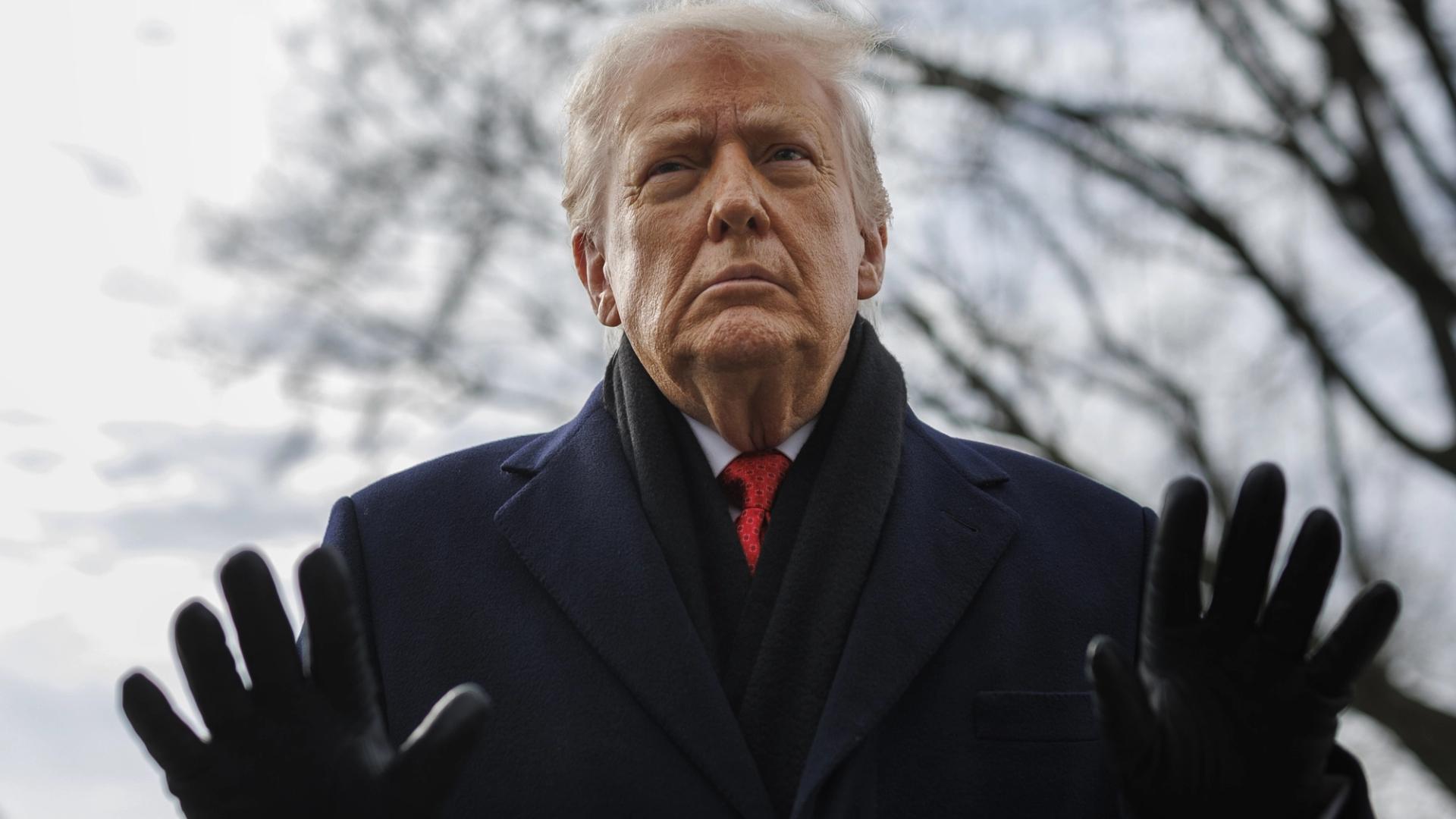
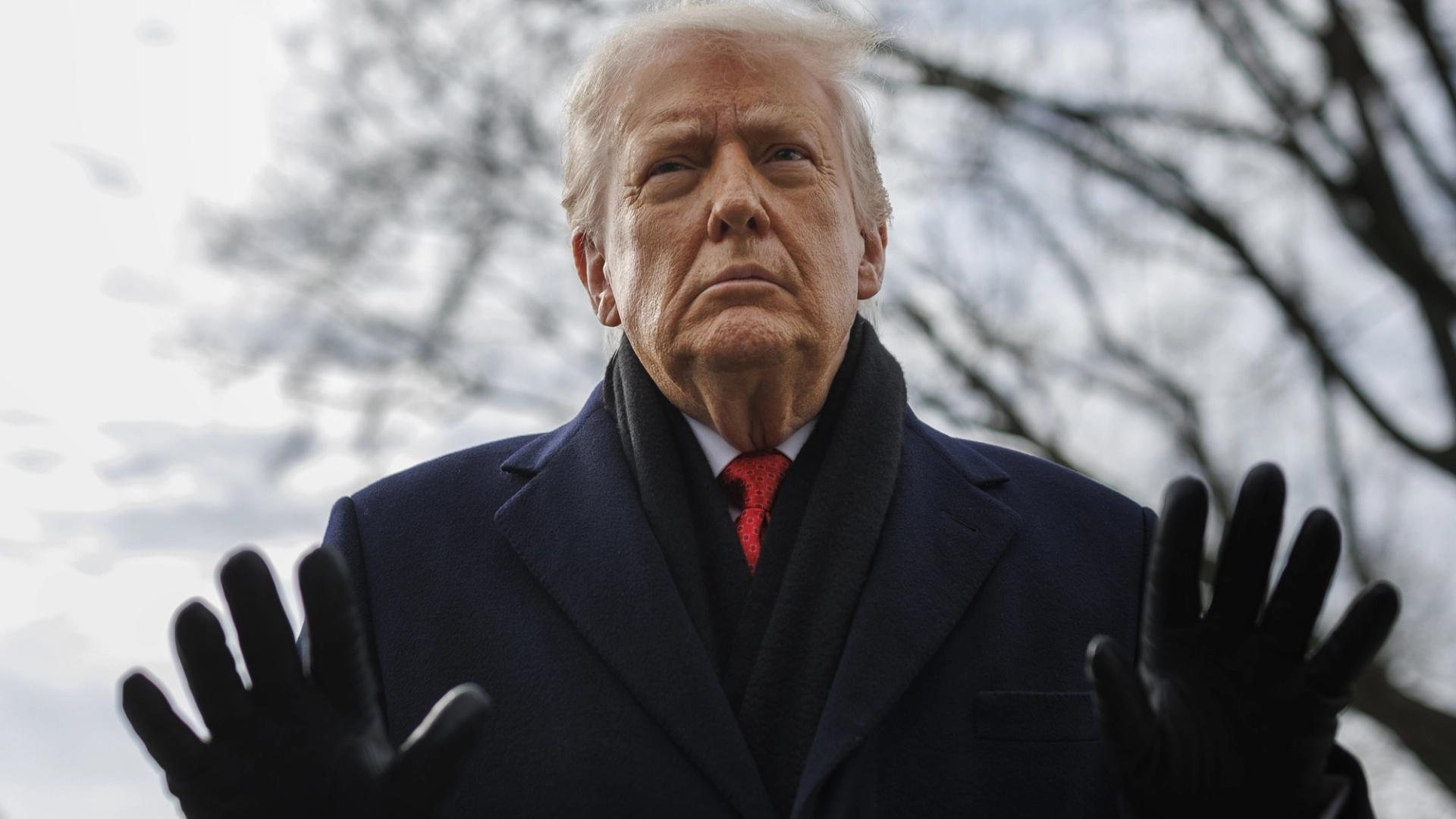
U.S. President Donald Trump said the U.S. is “in serious discussions with a new, and more reasonable, regime” to end military operations in Iran, the first public acknowledgment of a regime change in Tehran since the conflict began five weeks ago.
Using the phrase “new regime” his post on Truth Social suggests the talks involve a leadership structure that was not in place when the war started at the end of February.
In the same post, Trump demanded the Strait of Hormuz be “immediately open for business” and threatened to “blow up and completely obliterate” Iran’s electric generating plants, oil wells and Kharg Island if a deal is not reached shortly. He added that desalination plants were also under consideration.
These are all targets the U.S. deliberately avoided hitting for the duration of the five-week conflict, he said.
The combination of a potential ceasefire with a new government and the most explicit threat to civilian and energy infrastructure yet makes this a two-sided headline that the market will struggle to price cleanly.
One the one hand, talks are taking place with a new regime and “great progress” has been made. On the other, the president just publicly listed every piece of critical infrastructure he’s prepared to destroy if those talks fail while saying such action would “conclude our lovely ‘stay’ in Iran.”
Bitcoin jumped above $67,600 on the news, taking its 24-hour gain to 1.3%. Ether (ETH) outperformed, up 3.1% to $2,070, solana (SOL) rose 1.9% to $84.09 and XRP added 1.0% to $1.35. The weekly picture is still uniformly red — with BTC down 1.3%, XRP 1.2%, SOL 2.2%. Tron continues to outperform, up 1.3% in 24 hours and 5.3% on the week.
The bounce squeezed a lot of shorts on the way up. CoinGlass data shows $9.32 million in short liquidations in the last hour alone against just $207,000 in longs.
Traders took on $340 million in liquidations over a 24-hour window, absorbing the bulk at $242.25 million from the overnight flush before the Trump post landed. The largest single order was a $9.8 million BTCUSD liquidation on Bybit.
Crypto World
Solana price confirms bearish flag pattern as ETFs break 6-week inflow streak, will it crash?
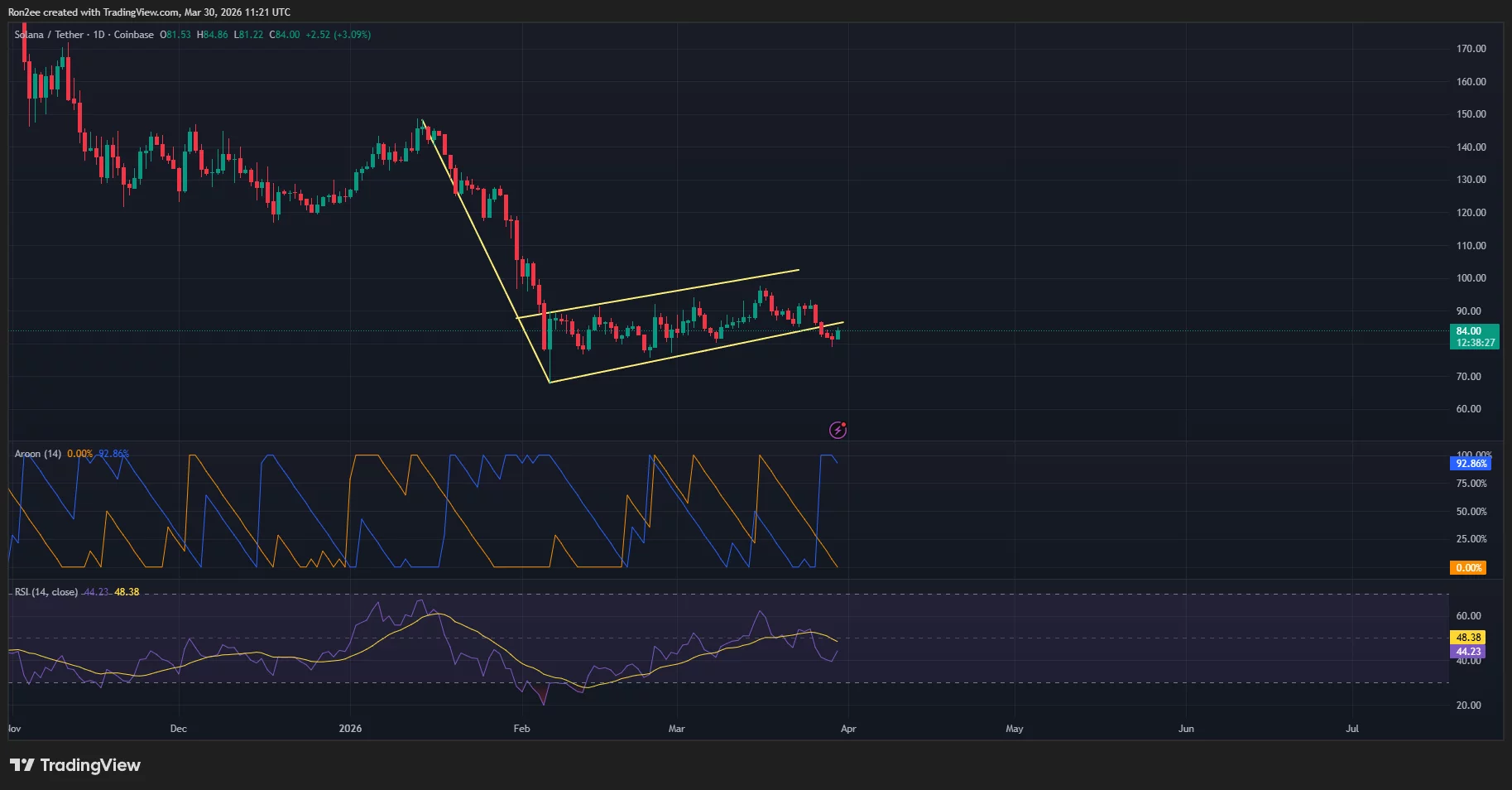
Solana price fell 13% over the past week after confirming a bearish pattern on the charts. Will it experience a steeper decline ahead as institutional investors seem to be backing away from the asset?
Summary
- Solana price dropped over 13% in a week after confirming a bearish flag pattern, signaling potential continuation of the downtrend.
- Institutional outflows from Solana ETFs and derivatives-driven liquidations have added to selling pressure, weakening investor sentiment.
- Technical indicators point to further downside risk toward $67, with a break below $80 likely to accelerate losses.
According to data from crypto.news, Solana (SOL) price fell 13.5% from its weekly high of $92.88 to $80.37 earlier on Monday before settling a little above at $84.07 at the time of writing.
Solana price fell as institutional investors began rotating capital away from the token, likely as they explored other options. Data from SoSoValue shows that spot Solana exchange-traded funds recorded $4.24 million in outflows over the past week, breaking a six-week weekly inflow streak that drew in nearly $127 million from the investment products.
While this recent cooling doesn’t necessarily mean that institutional investors will continue to back off from the asset in the weeks ahead, they have certainly spooked retail investors into a cautious state as they await clearer market signals.
Another major reason that has set back the token is the persistent liquidations across crypto derivatives markets. Over the past 24 hours, over $24 million in positions were liquidated from Solana alone, with the majority coming from long liquidations. As these positions were wiped out, the resulting selling pressure further accelerated the decline.
Meanwhile, the ongoing uncertainty around when the war between the U.S. and Iran would come to an end has also fostered a cautious environment for investors who are rotating to gold and other safe-haven assets that have historically protected capital during geopolitical crises.
On the daily chart, Solana price has confirmed a multi-month bearish flag pattern. Such a pattern is formed when an asset drops sharply downwards, forming a flagpole followed by some consolidation forming the flag part of the pattern.
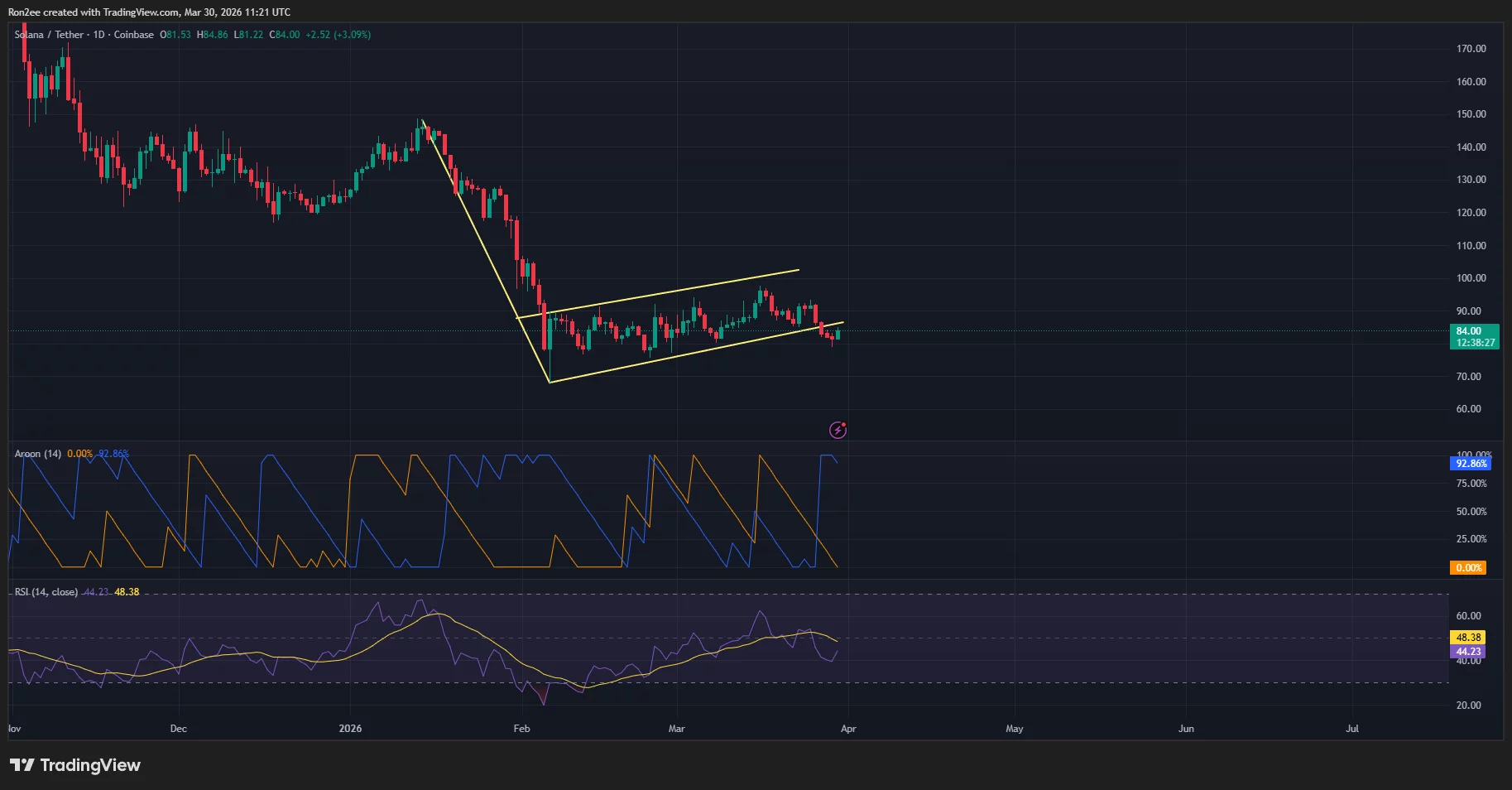
A break from the lower trendline of the pattern confirms the bearish outlook and has often preceded a significant downward move.
Hence, Solana price is likely to visit its year-to-date low of $67.82 reached on Feb. 6. On the bearish side, if Solana price loses the $80 support level, the selloff could intensify quickly.
Technical indicators seem to support this bearish outlook. Notably, the Aroon Down stood at 92.86% while the Aroon Up was at 0%, a sign that the bears are in total control of the trend.
The Relative Strength Index, which shows the RSI at 44 slowly climbing back toward the neutral threshold, suggests that while the immediate panic has subsided, the overall momentum remains weak.
Disclosure: This article does not represent investment advice. The content and materials featured on this page are for educational purposes only.


Prospects of interest rate rises are no longer just the U.S. story. Traders are now betting the Bank of Japan (BoJ) could tighten too as the resource-scarce nation faces inflation risks from the ongoing Iran war.
Traders see a roughly 69% chance of the BoJ raising its benchmark borrowing cost at the April 28 meeting, according to data tracked by Bloomberg. Action in options tied to U.S. interest rates shows traders expect the Fed to raise borrowing costs in the coming weeks.
BoJ’s policy meeting summary released Monday showed one member calling for a bigger rate hike in response to the conflict in the Middle East and its inflationary impact on Japanese society. Comments also noted that any move would factor in incoming economic data and anecdotal signals from the market.
The Fed’s tightening is a well-known headwind for risk assets, including bitcoin. The Bank of Japan can be just as impactful. Years of ultra-low rates encouraged traders to borrow in yen and invest in higher-yielding markets (the so-called carry trade), keeping borrowing costs suppressed globally and greasing rallies in risk assets.
So, a shift toward tighter policy in Tokyo could reverse these flows, sending ripples across markets and potentially deepening the crypto bear market. The BoJ has already raised its interest rate to 0.75% from -0.1% over the past two years while simultaneously ending its massive asset purchase program. Yet, rates in Japan remain significantly lower than the 3.5% seen in the U.S.
The bank, therefore, has plenty of room to hike if the Iran crisis worsens, potentially driving higher energy prices and imported inflation in Japan and other oil-dependent countries.
Easier said than done
Hiking rates, however, will be a challenging task given Japan’s strained fiscal situation. The country’s debt-to-GDP ratio stands at a staggering 240%, meaning higher rates could sharply increase borrowing costs and strain government finances.
Economists have said that Japan is caught between a rock and a hard place. If it hikes rates and allows government bond yields to rise, it could put Japan’s debt sustainability at risk. If it keeps rates low, the yen will likely depreciate significantly, adding to inflation concerns.
Strains are already evident in the FX market. The Japanese yen continues to weaken and is currently just around 160 per U.S. dollar, its weakest level since mid-2024. The JPY has depreciated by 54% since 2021.


South Korea’s Naver Financial has delayed plans for its share swap with crypto exchange Upbit’s parent firm Dunamu.
Summary
- Naver Financial has delayed its share swap with Dunamu by nearly three months, with a shareholder vote set for Aug. 18 and completion now expected on Sept. 30.
- The deal remains subject to regulatory approvals and could face further delays or cancellation, with South Korea’s Digital Asset Basic Act also likely to influence the timeline.
According to a regulatory filing with the country’s Financial Supervisory Service, Naver said it will hold a shareholder vote on Aug. 18, following which it will complete the transaction on Sept. 30.
With the new timeline, the deal has now been delayed by nearly three months from earlier target dates of late May or early June.
While the company did not disclose the reason behind the delay, it said the deal remains subject to multiple regulatory approvals tied to changes in major shareholding and business combination review. It added that the transaction could be subject to further delays or cancellation depending upon how the approval process unfolds.
The deal may also be impacted by South Korea’s proposed Digital Asset Basic Act, which is expected to be implemented in the first half of 2026.
The planned legislation is the second phase of the country’s crypto regulatory framework and is set to expand beyond the current user protection regime to put in place a broader rulebook for the digital asset sector.
In the meantime, Dunamu has reported weaker operating performance, with its revenue and profit both falling in 2025 as market activity across the crypto market has slowed.
Per its annual filing, the company posted a 10% year-on-year decline in revenue, while its operating profit fell 26.7% and its net profit fell 27.9%.
Naver Financial first disclosed plans to acquire Dunamu last year, with local media reporting at the time that the company was preparing a share swap to bring the Upbit operator under its umbrella. The deal was subsequently confirmed in November as a roughly $10.3 billion all stock deal.
Around the same time, the company also announced plans to launch a stablecoin wallet service in collaboration with blockchain investment firm Hashed and the Busan digital exchange. As previously reported by crypto.news, the companies plan to develop a wallet named “Silk Pocket.”
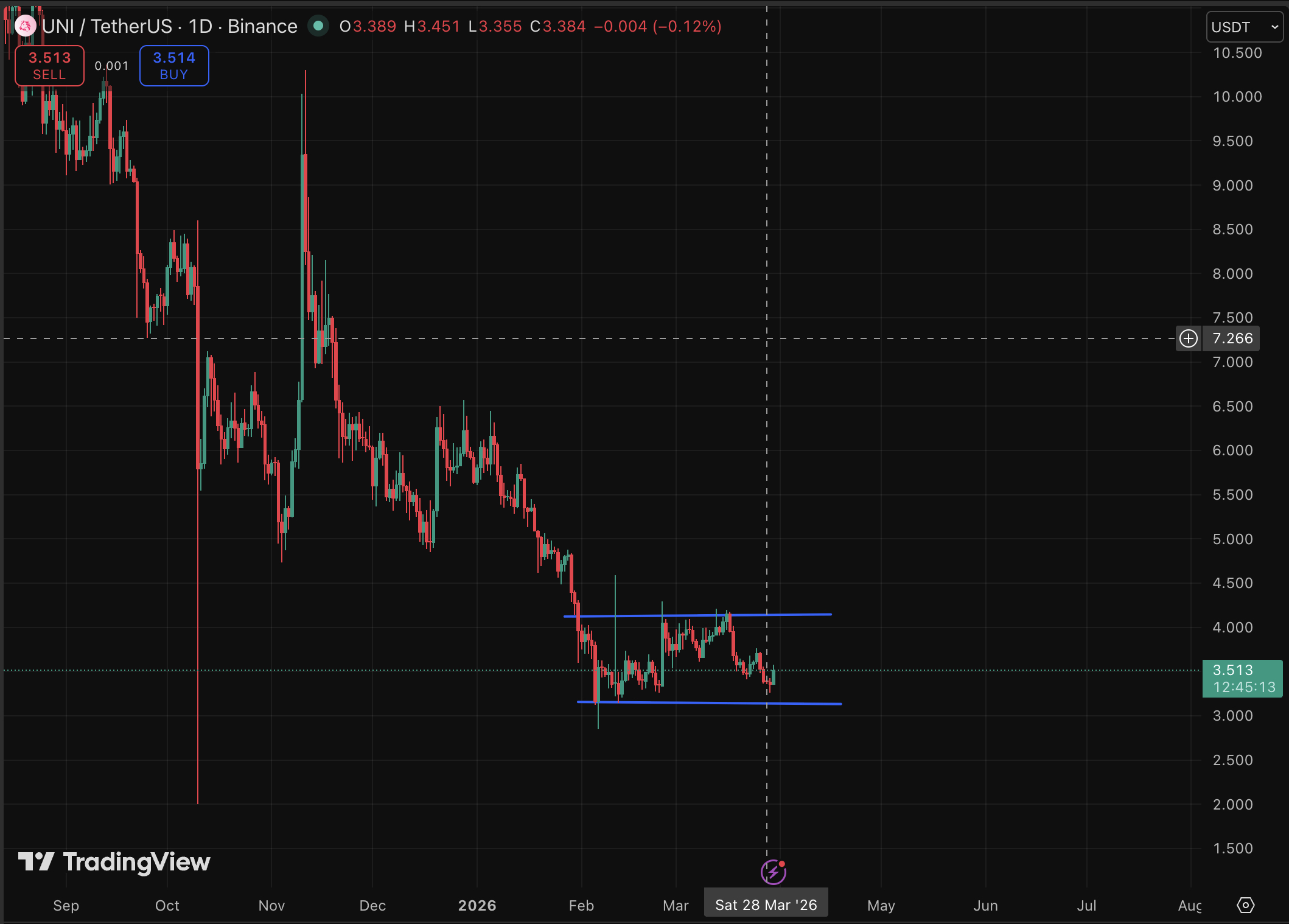
Uniswap’s governance token is holding on and looking good. UNI crypto is now priced at $3.50, with a healthy 4.5% intraday gain. However, the real story is structural, with centralized exchanges clawing back relevance in a recovering market, and UNI sits at a critical technical junction that will define its next $1 move in either direction.
The CEX versus DEX debate has sharpened considerably in early 2026. Kraken’s anticipated IPO is positioning the exchange as the compliance gold standard, while Coinbase continues to dominate retail onboarding. Uniswap v4, meanwhile, is competing as a programmable liquidity layer rather than a simple swap venue, a pivot that changes its valuation calculus entirely.
The question now is whether crypto’s recovery provides a second attempt or whether UNI fades further.
Discover: The best crypto to diversify your portfolio with
Can UNI Crypto Price Reclaim $4 Before April?
UNI is consolidating inside a $3.10–$3.95 range, with moving averages stacked in mild bearish alignment. The 7-day SMA sits at $3.71, the 20-day at $3.83, and the 50-day at $3.68, all above the current price.
An analyst, Tony Kim, set a slightly more aggressive target earlier this month: “Potential move toward $4.22 resistance if current support levels hold through March.”
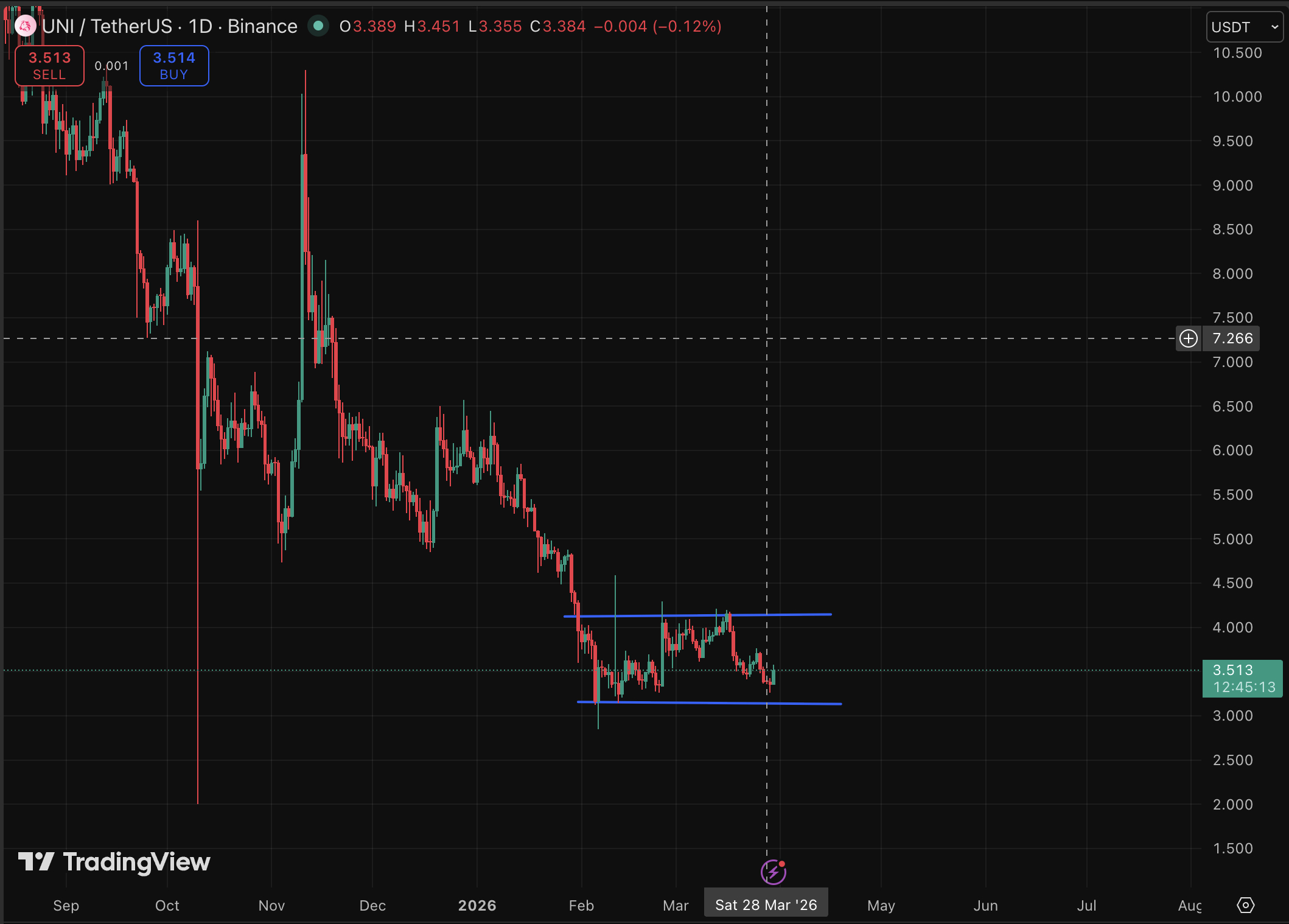
In a bull scenario, daily volume breaks above $5.2M, RSI pushes past 53, and UNI reclaims the $3.7 50-day SMA, opening a run toward $4.15.
However, the bear can argue that there could be an invalidation. A close below $3.3 flips short-term structure negative, potentially dragging price toward the $3.25 weekly low f
Discover: The best pre-launch token sales
LiquidChain Targets Early-Mover Upside as Uniswap Tests Key Levels
UNI at $3.50 offers a known asset at compressed valuation, but with the 200-day SMA at $5.85 as a realistic ceiling, the upside math is bounded. Early-stage infrastructure presales offer a different risk profile entirely.
LiquidChain is positioning itself as a Layer 3 cross-chain liquidity layer, fusing Bitcoin, Ethereum, and Solana liquidity into a single execution environment, a direct infrastructure play on the fragmentation problem that makes multi-chain trading expensive and slow.
A new layer emerges. Only a few see it first. — LiquidChain (@getliquidchain) March 24, 2026
The future is LiquidChain  ⟁https://t.co/vqvBcdSj94 pic.twitter.com/R7ZeZ0NPGl
The project’s Unified Liquidity Layer and Deploy-Once Architecture mean developers write once and access all three ecosystems simultaneously, reducing the bridging friction that has historically hemorrhaged value from DEX traders.
The presale is currently priced at $0.0144, with more than $600K raised to date. Liquid also offers a huge 1700% APY as staking rewards, and launched with a Certik audited contract.
This article is not financial advice. Crypto assets are highly volatile. Always conduct your own research before investing.
The post UNI Crypto Prediction: CEX Resurfaced as Crypto Recovers appeared first on Cryptonews.
Crypto World
Advanced Micro Devices (AMD) Stock: Aletheia Capital Projects 63% Rally on AI Infrastructure Boom

Key Highlights
- Aletheia Capital maintains Buy recommendation on AMD with $330 price objective
- Server CPU revenues expected to expand at 45% CAGR through 2028
- Data center business projected to surge from $17B in 2025 to $77B by 2028
- Company has evolved into comprehensive AI compute solutions provider
- CEO Lisa Su joins Trump administration’s science and technology advisory council
Advanced Micro Devices ($AMD) continues to attract bullish sentiment from Wall Street analysts, with Aletheia Capital maintaining its Buy recommendation and establishing a $330 price objective for the chipmaker. Trading at $201.99, the stock presents substantial appreciation potential based on the firm’s analysis.
Advanced Micro Devices, Inc., AMD
The investment case from Aletheia focuses heavily on AMD’s positioning within the emerging agentic AI landscape. The research firm contends that central processing units — rather than solely graphics processing units — represent the optimal semiconductor architecture for agent-based computational tasks, positioning AMD favorably to capitalize on this shift.
Aletheia’s financial projections anticipate AMD’s server CPU business will achieve a remarkable 45% compound annual growth rate spanning 2025 through 2028. This aggressive expansion forecast forms the foundation of the firm’s optimistic outlook.
Regarding data center operations, the analyst firm forecasts revenue climbing from $17 billion in 2025 to $58 billion by 2027, ultimately reaching $77 billion in 2028. This trajectory represents approximately 4.5-fold growth over a three-year period.
Aletheia employed a sum-of-the-parts methodology to derive its $330 valuation. For comparison, InvestingPro’s Fair Value analysis places AMD at $225.24, which still exceeds current trading levels.
The company delivered 34% revenue growth over the trailing twelve months. This performance validates the thesis that AMD is capturing increased market share within the AI computing sector.
Aletheia’s perspective on AMD has broadened beyond viewing the company as merely an alternative GPU supplier. The firm now characterizes AMD as a “comprehensive AI compute provider” — terminology that underscores the company’s strategic transformation.
However, the firm acknowledged several risk factors including end market demand volatility, execution challenges, and geopolitical uncertainties. These considerations carry significant weight given current macroeconomic conditions.
Wall Street Consensus Strengthens
Wolfe Research similarly maintains an Outperform stance on AMD with a $300 price objective. The firm emphasized AMD’s conviction in its AI accelerator development timeline and sustained server market traction.
Seaport analyst Jonathan Golub observed that semiconductor sector valuations, including AMD’s multiple, have contracted since July. He interprets this compression as creating attractive entry opportunities.
Corporate Updates and Strategic Moves
AMD and Celestica unveiled the Helios rack-scale AI platform designed for data center infrastructure applications. This collaboration capitalizes on Celestica’s engineering and production expertise.
The company also finalized a multi-year licensing arrangement with Adeia Inc. This agreement provides AMD access to Adeia’s semiconductor intellectual property library while settling all pending legal disputes between the parties.
CEO Lisa Su secured an appointment to President Trump’s Council of Advisors on Science and Technology. This role positions her among influential leaders guiding U.S. technology and scientific policy direction.
AMD communicated concerns regarding its client computing and gaming divisions due to escalating memory component costs. These segments have demonstrated weaker performance relative to the robust data center business.
InvestingPro designates AMD as a “prominent player in the Semiconductors & Semiconductor Equipment industry.” The stock declined 0.87% during the trading session at time of publication.

Sinner completes Sunshine Double with straight-sets win in Miami

Best LED Masks of 2026, Cleared by the FDA

NUEVO DUPLICAR COCHES SOLO SIN AYUDA MASIVO EN GTA 5 ONLINE/ MONEY GLITCH GTA V ONLINE


-
 NewsBeat5 days ago
Manchester United reach agreement with Casemiro over contract clause amid transfer speculation
-

 News Videos4 days ago
Parliament publishes latest register of MPs’ financial interests
-

 NewsBeat3 days ago
The Story hosts event on Durham’s historic registers
-

 Business4 days ago
Instagram, YouTube Found Responsible for Teen’s Mental Health Struggle in Historic Ruling
-
 NewsBeat5 days ago
Tesco is selling new Cadbury Dairy Milk bar and people can’t wait to try it
-
 Entertainment7 days ago
Cynthia Bailey Dishes on ‘RHOA’ Season 17, Discusses Kandi
-

 Tech7 days ago
Samsung will soon let you control smart home devices from your car’s dashboard
-
 Entertainment2 days ago
Lana Del Rey Celebrates Her Husband’s 51st Birthday In New Post
-

 Fashion6 days ago
Does It Matter What You Wear When You’re Laid Off and Looking?
-
 NewsBeat7 days ago
Colombian military plane with 110 soldiers onboard crashes following takeoff
-

 Business6 days ago
More women enter wealth management, but few in advisory roles: study
-

 Politics7 days ago
How Media Platforms Balance Performance and Accessibility in Image Delivery
-

 NewsBeat6 days ago
Entrepreneurs Forum survey reveals optimism in North East
-
 NewsBeat6 days ago
NASA Artemis II Astronauts enter 14-Day quarantine as moon rocket reaches launchpad
-

 Business6 days ago
Late-paying firms face multimillion-pound fines under new crackdown
-
 Crypto World6 days ago
BTC gives up $70,000 level as markets mull higher interest rates
-

 Sports5 days ago
Fantasy Baseball Week 1 Preview: Top sleeper hitters for both five- and 12-day period led by Munetaka Murakami
-

 Tech5 days ago
US FCC Prohibits Approval Of New Foreign-Made Consumer Routers
-

 Fashion6 days ago
Coffee Break: Korean Skincare Set
-

 Fashion6 days ago
Althea Mink: Patrice Taylor’s Atlanta Couture Brand Built on Legacy, Resilience, and Architectural Glamour
You must be logged in to post a comment Login