

Politics
The Town That Wouldn’t Die: A View from the Streets of Bint Jbeil



If you want to understand the soul of Bint Jbeil, you don’t look at a map. Instead, you look at the Israeli artillery left in our town square – a sign of liberation from the occupation after the year 2000.
Our town centre was a graveyard of Israeli hubris. We kept the rusted skeletons of Israeli armored carriers and cannons right there in the open, turning the engines of an ‘invincible’ occupation into a playground for our children. To the world, these were war trophies; to us, they were the physical receipts of a decades-long debt paid in blood. We are a people of the ‘Thursday Market,’ a town where intellectual defiance was traded as freely as grain, and where every stone house was built with the silent understanding that it might one day have to become a fortress.

“Israel is weaker than a spider’s web”
I speak to you as a descendent of that town. I saw how my town stood its ground in 1948, in 1978, and in 1982. We have proven time and again that Israel cannot govern a people who recognizes its presence only as a temporary shadow. When Hassan Nasrallah, former secretary general of Hezbollah, stood in Bint Jbeil’s municipal football field, he stated in his famous Liberation Day speech that:
Israel is weaker than a spider’s web.
It is a statement that, until today, Israel wanted to retaliate against, by taking over the football field and raising its flag in it.
Forward to 2006, Israel’s July aggression back then failed to fulfil any of its announced goals. The military announced in the last two weeks of the war that their sole goal was raising the Israeli flag in Bint Jbeil’s city centre. They failed to do so after sporadic clashes. They couldn’t even reach the square, which is roughly 5km away from the nearest border point.
Now, in 2026, the most bitter truth of our history is that Israel destroyed the whole town after failing to occupy it.
Lebanon’s “Stalingrad”
After weeks of failing to break our spirit in house-to-house combat, the occupation realized they couldn’t actually take Bint Jbeil. They couldn’t even settle for more than a couple of hours in its centre.
The town became a “Stalingrad” of southern Lebanon. Yet again, Bint Jbeil resisted an occupation and an aggressor, fighting for the safety of the entire mid-south of the country.
Nevertheless, Israelis waited for the ceasefire, as they had done in the 2024 war with the border towns. They waited for the world to look away, and then they used the silence of the ‘peace’ to systematically level everything to the ground. The buildings that they didn’t destroy, they stole, burnt, or committed their usual psychopathic acts, as they’ve done in the previous “ceasefire”.
But they didn’t defeat us; they simply erased the geography because they were too afraid to stand in our streets while the walls were still standing.

A confession of failure
This erasure was a confession of failure. For 33 days, the most advanced military machine in the region pounded against Bint Jbeil’s perimeter, only to find that high-tech warfare is useless against a geography that breathes.
Israel has turned the districts into a maze, where armor became a liability and specialized training meant nothing against a man defending his own front yard. The world called it a ‘stalemate,’ but for those of us who know the weight of Bint Jbeil’s soil, it was a victory of the spirit. The Lebanese resistance didn’t just hold the line; it proved that a town built on centuries of southern Lebanon’s identity cannot be intimidated by the optics of power.
Then came the ‘cessation of hostilities.’ As the ink dried on Resolution 1701, the strategy shifted from combat to spite. It was during those final hours, and the fragile days of the so-called ceasefire, that the real catastrophe unfolded. This was no longer about military objectives; it was about the psychological demolition of a symbol.
Israel brought down our marketplaces, our historic centres, and the very homes that had housed generations of resistance; our intellectuals, politicians, key figures, artists, businessmen, expats, journalists, historians, philanthropists, and others. They did this not because they were ‘targets,’ but because they were witnesses. They sought to create a ‘victory’ out of debris, standing atop the dust of our heritage because they could never truly stand on our streets while they were whole.
Reconstruction as an assertive geopolitical statement
In Bint Jbeil, the act of reconstruction is not merely an urban planning project; it is an assertive geopolitical statement.
When the stones of the neighborhoods were leveled in 2006, the intent was to dismantle the “intellectual market” that had long anchored the South. However, the occupier failed to realize that our geography is not just made of mortar and rock, but of a collective memory that remains immune to bombardment.
To rebuild a home on the exact footprint where it was destroyed is to reinforce a psychological barrier that says:
You may have stood on this dust for a moment, but you never owned the ground.
By restoring the ancient stone facades and reopening the Thursday Market, the locals have ensured that the physical environment continues to mirror their internal defiance. The architecture of Bint Jbeil serves as a permanent witness, proving that while buildings can be murdered, the social contract of a people rooted in their land is indestructible.

A stark, living contradiction
Yet again, my town stands as a stark, living contradiction to the paralysis of the Lebanese central government.
The “Spectator State” in Beirut often remains a passive observer to regional storms, bound by institutional deadlock and unable to project sovereignty over its own borders. Even though PM Nawaf Salam has visited the town during the previous ceasefire to assure the people that they’re under the government’s safety, Bint Jbeil has historically functioned as its own sovereign sentinel.
The town has been forced to cultivate a localized, grassroots strength precisely because the national state could not provide a shield. In the absence of a robust state defense, the town’s social fabric and its heritage of resistance became the actual border of the country. This creates a unique geopolitical phenomenon where a single town maintains a psychological and military barrier that the state it belongs to cannot physically uphold, transforming Bint Jbeil from a mere border town into the primary guardian of a sovereignty that the centre has long since abdicated.
Now that the town has been taken over by the Israelis, during an imposed ceasefire after IOF failed to occupy it in combat, the entirety of the southern Litani river is being bombarded with relative ease. Earlier today, on 11 May 2026, Salam declared that Bint Jbeil “has become a version of Gaza.” With no government military presence whatsoever to impose security, our officials scramble to negotiate peace with a brutal, psychopathic, genocidal machine, as if they have anything in hand to force a complete Israeli retreat from the 35 towns they’ve completely taken over or stopping the attacks on the 82 towns in total.
Featured images courtesy of the author

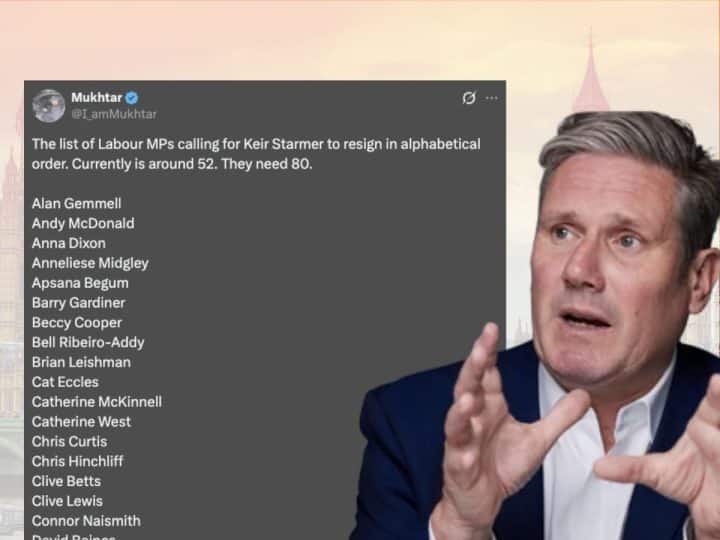

Labour politicians have been calling for Keir Starmer to step down since the party’s disastrous local election results. Starmer hoped to turn the tide with yet another refresh followed by yet another speech, but the revolt is only growing:
Debbie Abrahams (Oldham East and Saddleworth) — Politics UK (@PolitlcsUK) May 11, 2026
 IN FULL: The list of 51 Labour MPs currently calling for Keir Starmer to resign
David Baines (St Helens North)
Paula Barker (Liverpool Wavertree)
Apsana Begum (Poplar and Limehouse)
Clive Betts (Sheffield South East)
Olivia Blake…
And growing:
Catherine McKinnell and Alan Gemmell have both made statements in the last few minutes — Politics UK (@PolitlcsUK) May 11, 2026
UPDATE: The number of Labour MPs calling for Keir Starmer to resign has now risen to 54
Labour is revolting
On 8 May, Canary journalist HG reported on the MPs who’d called for Starmer to go, with the list including Ian Lavery, Ed Miliband, and Jonathan Brash (not to mention several union leaders). On 10 May, things took a surprising turn, with Josh Simons calling for Starmer to go. We say ‘surprise’ because Simons was a member of Labour Together, which is the faction that maneuvered Starmer into power.
The backlash isn’t limited to MPs, either. On 9 May, over one hundred former Labour councillors demanded that Starmer go (the reason they’re ‘former’ councillors is because they lost their seats under Starmer). Their letter read:
It is with sadness and deep regret that we, the undersigned former and present Labour councillors, Members of the Senedd, Members of the Scottish Parliament and 7th May candidates from across the UK, write to encourage you to take full responsibility for our party’s electoral defeats this week, announce a timetable for your departure, and allow an orderly transition to new leadership for the country.
Obviously, Starmer has to take sitting MPs more seriously than former councillors. He also has to take ministers more seriously than MPs, which is something we could shortly see. As Dan Hodges reported:
Multiple sources within the major camps:
* The dam has now collapsed. We will see MPs across the PLP signing up to the “Timetable” strategy.
* Will effectively be a No Confidence motion.
* When the “magic number” of 81 names is reached multiple cabinet ministers will tell Starmer he has to set out a timetable.
* I’m told some of those messages from the cabinet may already be being sent.
It’s usually the case that MPs stagger calls for the leader to go to ensure the maximum impact. As such, it’s possible the threshold of 81 has already been met, and we’re just waiting for the declarations to come out.
Hodges also said:
* Fight will now come down to whether Starmer can be persuaded to set out a short timetable (favoured by Wes Streeting) or the September timetable (favoured by Andy Burnham).
Starmer seems to be more ideologically aligned with Streeting. At the same time, Streeting has been angling to replace the Labour leader despite the PM making him health secretary, so you can possibly assume some resentment on Starmer’s part.
Other reports suggest MPs lack any confidence in there being an orderly transition:
Thoughts from a Labour MP:
“We have to face up to the fact every single one of them is fucking useless. Andy’s strategy has been a disaster. Angela bottled it. Ed clearly a hiding to nothing. Wes AWOL. God knows what Catherine West is doing. Not quite sure how we ended up here.”
— Jessica Elgot (@jessicaelgot) May 11, 2026
West-ern intervention
Catherine West is the MP who threatened to launch a leadership challenge against Starmer if no one else did. This is what she said after the PM’s speech:
The results last Thursday show that the PM has failed to inspire hope. What is best for the party and country now is for an orderly transition.
— Catherine West (@CatherineWest1) May 11, 2026
I want to thank everyone who has been in contact over the weekend to offer good wishes. We need our best top team in place to fight the next election. We owe working people up and down the country nothing less.
— Catherine West (@CatherineWest1) May 11, 2026
Obviously, this timeline is in line with what Andy Burnham’s camp wants. Burnham still has to become an MP before he can challenge Starmer, however, which could be a problem for him:
Exclusive: Green Party sources tell me they would "throw the kitchen sink" at winning a by-election in Manchester in which Andy Burnham is allowed to stand.
Party sources told me they would plan to “hit [Burnham] very hard from his left”. @newstatesman pic.twitter.com/JpKTFcxsFL
— megan kenyon (@meganekenyon) May 11, 2026
Burnham does have an advantage other Labour figures don’t, however, which is that he’s not them:
Andy Burnham is the only senior Labour figure with a net positive poll rating amongst the British public.
He is far more popular than his own party and best placed to win over Reform and Green voters. pic.twitter.com/F2gkxRZE0M — Taj Ali (@Taj_Ali1) May 9, 2026
And reports suggest he’s ready to go:
Apparently Andy Burnham has told backers he has a plan and a seat.
But no MP resignation yet!
All eyes on this..
— Kate Ferguson (@kateferguson4) May 11, 2026
Starmer-geddon
Starmer may have lost the public; he may have lost his MPs and councillors; he may be on the verge of losing his cabinet, but he hasn’t lost Britain dullest client journalist, Beth Rigby:
ANALYSIS: Starmer clearly listening to his party. Tries to step up the emotion and the passion. But so wanting when it comes to matching his rhetoric of urgency to policy offer. Next 24 hours going to be very precarious as MPs weigh up what to do https://t.co/6sTPEiWhOe
— Beth Rigby (@BethRigby) May 11, 2026
If Starmer was “clearly listening to his party”, he would have gone months ago.
Featured image via Mukhtar
By Willem Moore

!function(n){if(!window.cnx){window.cnx={},window.cnx.cmd=[];var t=n.createElement(‘iframe’);t.display=’none’,t.onload=function(){var n=t.contentWindow.document,c=n.createElement(‘script’);c.src=”//cd.connatix.com/connatix.player.js”,c.setAttribute(‘async’,’1′),c.setAttribute(‘type’,’text/javascript’),n.body.appendChild(c)},n.head.appendChild(t)}}(document);(new Image()).src=”https://capi.connatix.com/tr/si?token=19654b65-409c-4b38-90db-80cbdea02cf4″;cnx.cmd.push(function(){cnx({“playerId”:”19654b65-409c-4b38-90db-80cbdea02cf4″,”mediaId”:”bea94644-cb73-4be5-8b8a-0007f15b0b08″}).render(“6a0200ace4b088000125e3e2”);});

Keir Starmer has suffered his first resignation as the calls for him to step down as prime minister grow.
Tom Rutland, a parliamentary private secretary (PPS) in the Department for Environment, Food and Rural Affairs, issued a statement calling for Starmer to quit.
A PPS acts as an unpaid parliamentary assistant, providing a link between the senior frontbencher and backbench MPs. The role is widely regarded as the first step on the ministerial ladder.
Rutland said that the prime minister “has lost authority not just within the parliamentary Labour Party but across the country and that he will not be able to regain it.”

MDU warns Chancellor clinical negligence system ‘not fit for purpose’

Northern Ireland RE curriculum is ‘indoctrination’ – Supreme Court
He added: “That significantly impedes the ability of the government to deliver the change that people voted for at the general election – change that we must deliver…
“I do not have faith that the prime minister can meet this challenge. It is not compatible to hold this view and continue to serve on the frontbench, so I have resigned as a parliamentary private secretary to the secretary of state for environment, food and rural affairs, and will continue to represent my wonderful constituents in East Worthing and Shoreham from the backbenches.”
Naushabah Khan has resigned as a PPS in the Cabinet Office.
In a statement, Khan said: “I did not enter politics to stand by while we fail. We need a clear change of direction now and no game playing. A Labour government can and will rise to meet the moment if we act now.
“I am calling for new leadership, so that we can rebuild trust and deliver the better
future that the British people voted for.”
Sally Jameson, a PPS in the Home Office, has also called for Starmer to resign.
Jameson called for the prime minister to “set out a clear timetable for his departure in September or shortly after. In addition the NEC [national executive committee] should ensure that all potential candidates have the opportunity to stand and any timetable, I hope, would reflect this.”
Joe Morris, a PPS in the Department of Health and Social Care, has also reportedly called for Starmer to step down.
Morris and Jameson have not stated that they have stepped down from their government roles.
Collectively, Rutland, Jameson, Khan and Morris are the first frontbenchers to call on Starmer to step down as prime minister, after a day in which the number of backbench MPs calling for change at the top has snowballed.
By some counts, as many as 60 MPs have now indicated their belief that Starmer should resign.
This is a breaking story. Further details will be published as they develop.

Despite the Department for Work and Pensions (DWP) constantly spewing hatred about Universal Credit claimants stealing taxpayer money, disabled campaigners are reporting that some are being overpaid payments.
Disability News Service (DNS) reported that disabled researcher and campaigner Caroline Richardson was contacted by multiple claimants who’d been overpaid.
DWP absolutely useless, again
Campaigners identified that over payments were made to people receiving both contribution-based employment and support allowance (ESA) and Universal Credit. Basically, the DWP is recording ESA payments as lower than the amounts actually being paid out. Therefore, Universal Credit is increased to compensate for the reduction through the DWP’s ‘transitional protection programme.’
This means claimants are overpaid Universal Credit and, as with the Carers Allowance scandal, there are fears they’ll be asked to pay it back without warning.
These errors are also affecting council tax. One claimant was told to pay an extra £546 a year because the council thought her universal credit had increased due to the DWP’s woeful bookkeeping.
Richardson told DNS:
I am struggling to understand how this has gone so catastrophically wrong, and whether it has gone wrong for everybody. This is going to cause disabled people an enormous amount of worry. It is just such a mess.
Richardson checked her online Universal Credit journal before she received her benefits in her account. This meant she was able to contact DWP and try to stop her own £388 overpayment.
However, because the DWP is a clusterfuck, Richardson was issued with both a correct statement. She then received a notification acknowledging the overpayment and noting it would need to be repaid to DWP in instalments.
Richardson said:
It just seems like the whole DWP is functioning so badly, and they are blaming claimants for their mistakes. The more universal credit is rolled out, the more the errors in the software are going to be exposed.
DWP already under fire for blaiming claimants
In February, the Public Accounts Committee also pulled the DWP up for not taking accountability for their own issues and instead blaming claimants.
They found that between 2024 and 2025, claimants were overpaid by £1 billion due to the DWP’s own errors. This is up from £0.8 billion in 2023-24. However, this is cancelled out by the fact that claimants were underpaid by £1.2 billion for the same reason 2024-25. This is up from £1.1 billion in 2023-24.
The report said:
The DWP has carried out some work to tackle the root causes of fraud and error – but this has focused on those committed by claimants, rather than errors by officials.
DNS also spoke to disability activist Flick Williams, who has already repaid a £289 overpayment. However, she is still expected to pay £546 in extra annual council tax because her council thinks her benefits have increased too.
Williams said:
How many people would let their universal credit go into their account, not check it and just assume the money in their account was theirs to spend?
Another scandal brewing
This comes as yet another Carers’ Allowance inquiry could be on the cards. The department is still chasing unpaid carers for repayments after their case was discredited.
Debbie Abrahams, Chair of the Work and Pensions committee told Stephen Timms that:
The failure to offer carers redress with due care would lead the public to conclude that [it] is not serious in its public commitment to do so, which is extremely damaging to the existing issues of trust with the department.
As the Canary’s Alex Cocker reported at the time:
Spoiler alert: we have already concluded that the DWP is not serious about righting its injustices. Because, you know, its injustices could fill around 2,244 articles on a mid-sized indie news site.
Despite all this evidence, the DWP told John Pring that:
it would be wrong to describe the overpayments as a developing scandal, and insisted that it took overpayments very seriously, was aware of this issue, and was working to resolve the cases of those affected.
With the DWP fraud and error statistics out later this week it will be interesting to see just how much overpayment has increased since the latest Universal Credit forced migration.
But it’s becoming ever clearer that the DWP is a joke of an organisation that doesn’t care about claimants. It’s time the whole thing was abolished.
Featured image via the Canary
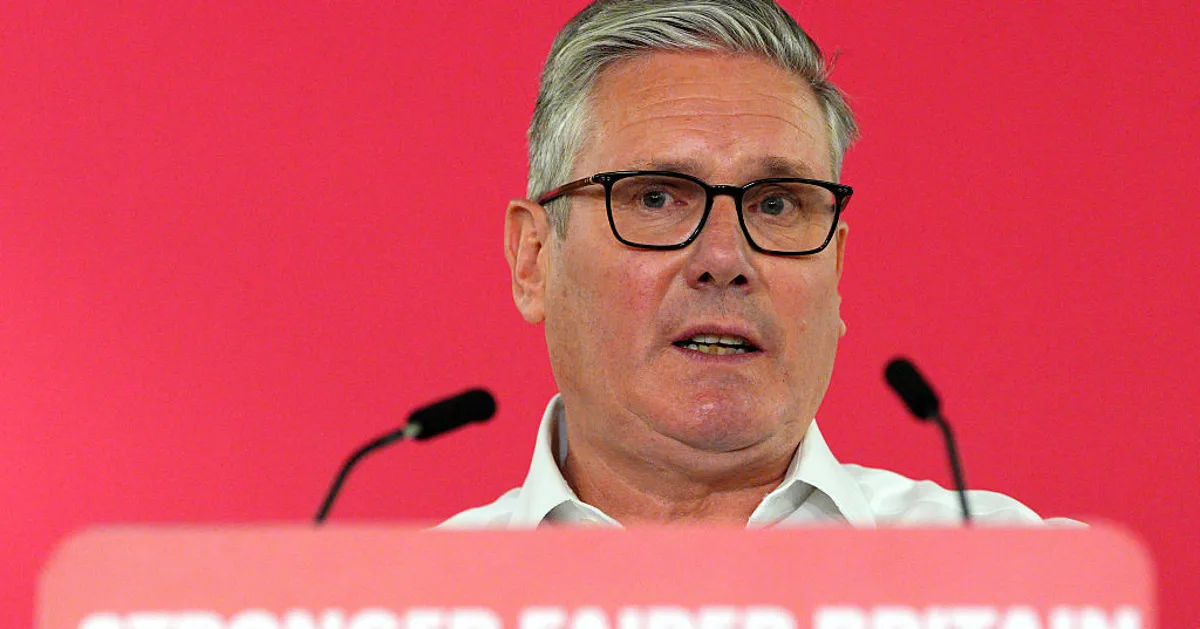
Keir Starmer is clinging on to power despite dozens of Labour MPs joined calls for him to quit as prime minister.
Nearly 60 backbenchers had called on him to quit by Monday evening after a steady stream of MPs joined the rebellion despite Starmer delivering a speech pledging to turn around the party’s fortunes.
In a further blow for the embattled PM, ministerial aides to health secretary Wes Streeting, home secretary Shabana Mahmood and environment secretary Emma Reynolds all quit their jobs calling on him to resign.
Starmer once again vowed not to “walk away” from No.10 and said he would prove the doubters wrong, despite Labour’s drubbing in last week’s elections at the hands of Reform UK and the Greens.
He said: “This is nothing less than a battle for the soul of our nation and I want to be crystal clear about how we will win it because we cannot win as a weaker version of Reform or the Greens.
“We can only win as a stronger version of Labour, a mainstream party of power, not protest.”
Starmer confirmed the government will nationalise British Steel and pledged to put the UK “at the heart of Europe” by agreeing closer ties with the EU.
But his speech was dismissed as “utterly inadequate” by one former minister, and was greeted by a fresh wave of demands from MPs for him to set out a timetable for when he will leave Downing Street.
They included Gower MP Tonia Antoniazzi, who said: “Keir Starmer is a man of great integrity who has led the Labour Party through difficult times.
“There will be those that disagree with me but I think it is genuinely time for him to step aside as PM in an orderly manner.”
Markus Campbell-Savours, the MP for Penrith and Solway, said:“I have listened carefully to the prime minister’s speech. Sir Keir Starmer is a decent, principled and kind man. But his leadership is not working, and it is with genuine regret that I say so.
“His position is now untenable. Colleagues should have the courage to say publicly what many have said privately for months.
“Loyalty matters. Loyalty to him, to the party and to each other. But today loyalty lies with our elected members across the country and with the 1,500 who lost their seats last week. It does not lie in maintaining a course that is not commanding confidence.
“What the party needs now is leadership with a credible vision for the country, a clear sense of direction, purpose and ambition. Those skills exist within our ranks, and I am confident we can find a leader who has them.”
Catherine West, the former Foreign Office minister who on Saturday threatened to challenge Starmer herself, instead wrote to all Labour MPs asking them to support her calls for a leadership contest by September.
Under Labour’s rules, 81 MPs would need to support a candidate to trigger a leadership election.
So far, no one has put their name forward, but the likes of Wes Streeting and Angela Rayner are thought to be weighing up their options.
Meanwhile, speculation is mounting that an MP will give up their seat in order to give Greater Manchester mayor Andy Burnham the chance to return to Westminster and mount his own bid to become PM.
Sharon Graham, the general secretary of Labour-backing union Unite, told HuffPost UK that Starmer’s speech had not “cut the mustard” and said he should quit.
She said: “I don’t think it’s going to happen tomorrow, but there isn’t a cat in hell’s chance that Keir Starmer’s going to lead us into the next election. It would be the death knell if that happened.”
Subscribe to Commons People, the podcast that makes politics easy. Every week, Kevin Schofield and Kate Nicholson unpack the week’s biggest stories to keep you informed. Join us for straightforward analysis of what’s going on at Westminster.
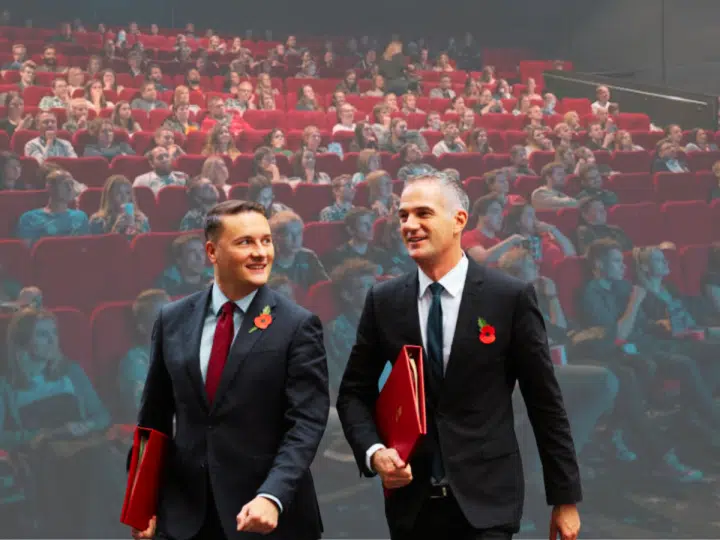

Following Labour’s embarrassing defeat at the polls, business and trade secretary and friend of Israel, Peter Kyle, was the designated fall guy and sent out on the media round.
It was as serious a time as you’d expect, with Kyle saying Wes Streeting is not plotting to overthrow Keir Starmer. The labour ministers were too preoccupied with the release of the Devil Wears Prada 2.
The devil wears cheap Labour suits
For some reason, Peter Kyle was on Sky News this morning. When asked about inevitable Labour leadership bids, he spoke of a cinema outing with his chum, health minister, Wes Streeting, to see the Devil Wears Prada 2. So surely, he couldn’t be launching a leadership bid…
On X, Sky News anchor, Sophy Ridge, said that Kyle had said the following:
Wes and I last weekend we were out campaigning together in Ilford. And let me say, he achieved a stunning result with that whole team in Ilford. That shows what a great campaigner Wes is. After we campaigned, we went for dinner and we went and saw a movie together. Somebody who was planning to pull the plug and launch a leadership bid in a couple of days time, doesn’t go to the cinema with a friend.
When asked what film they went to see, Kyle said they watched Devil Wears Prada 2.
Ridge then asked whether they had spoken about Labour’s leadership, to which Kyle replied:
Wes and I talk about the leadership of the country all the time. Wes and I shared an office together for nine years, we spent so much time talking about the leadership of the country. We almost never spoke about the individual.
Wonder if the Labour duo ever spoke about Peter Mandelson…
Kyle carried on, saying:
Wes and I care so much about the future of the country. We have a very shared view of public services in the modern world. About what Britain’s potential is amongst our competitive countries. We both care deeply about the opportunities that young people have. Also, we were friends going to the cinema and we had a good laugh about other things as well.
If you’re unfamiliar with the film, it’s a series about backstabbing, bitchy cliques, and elitists sneering at working-class people. Sound familiar?
The sequel, in particular, focuses on how the media is being corrupted and how those grappling for power are swayed by those with real power — the fucking tech billionaires.
You can’t help but wonder if Wes Streeting was getting tips. Though, with all his private health care donors, he hardly needs it.
Kyle finished by describing him and Wes as ‘very good friends.”
Wes and I are very good friends but I’m not going to fall into the trap of being his spokesperson. But what I can tell you is that he, like me, is focused on the success of this government. His primary mission in government is making sure the whole government is a success, and he is there for Keir when he needs him.
Definitely, definitely not running
This story was, of course, taken very seriously.
Peter Kyle saying Wes Streeting can’t be planning a leadership coup because they went to see Devil Wears Prada 2 at the weekend is so ludicrous it borders onto homophobia

— Calgie (@christiancalgie) May 11, 2026
It looks to as if Wes Streeting and Peter Kyle have to wait until “The Devil Wears Prada III”…..
— Greg Hadfield (@GregHadfield) May 11, 2026
This wasn’t the only media appearance Kyle made. On the BBC4 Today programme, he said:
It’s one thing [to keep] open the option that you might try to become prime minister one day, and it’s a very different thing to try to unseat a sitting prime minister in the moment we’re in, and Wes Streeting is not doing that.
So that’s that then, he’s absolutely 100% not running. Well, maybe until tomorrow.
Featured image via the Canary
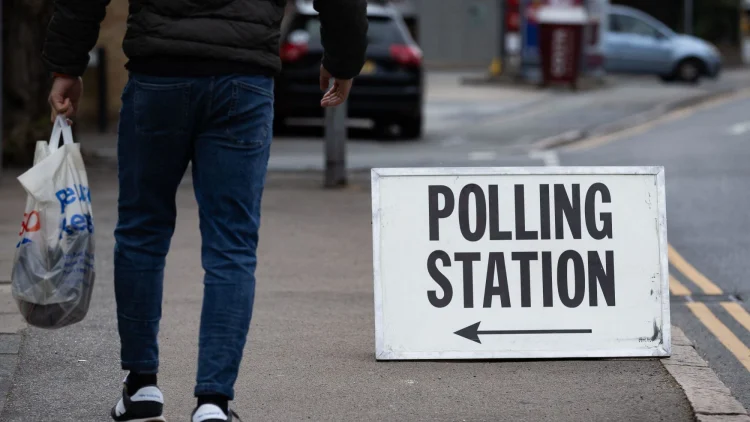

The voter turnout for the English local elections last week was 31.5 per cent (Alamy)

3 min read
The higher-than-expected turnout in these local elections showed voters were ready to demand change. Local leaders need more political and fiscal autonomy than ever to deliver for their residents.
England’s local political map has been transformed. But beyond the sweeping changes in local political control, one notable feature of last week’s local elections in England was that, in many areas, turnout tended to be above the usual low levels associated with local contests.
In my home council area of Calderdale turnout was 45 per cent, up by almost 11 per cent on the last local elections held here in 2024. The pattern was similar elsewhere.
While still not generally ‘high’ by any stretch (there’s much more to be done to improve electoral turnout both locally and nationally), higher than normal turnout is perhaps indicative of current public sentiment.
At first glance, higher turnout seems counterintuitive. Public trust in politics remains exceptionally low, and dissatisfaction with institutions is widespread. But increased turnout may indicate that many voters are increasingly willing to participate when they feel sufficiently motivated to register frustration or demand change.
The causes of voters’ discontent appear both national and local.
Undoubtedly, there’s dissatisfaction with the pace of change nationally, and growing impatience with stagnant living standards, stretched public services and the continuing cost-of-living crisis.
The message to the government in Westminster is clear: it must radically transform what it’s doing if it’s going to succeed. There is a growing demand for visible improvement in people’s everyday lives, particularly in communities that feel economically overlooked.
But interpreting these elections purely as a referendum on the government would miss a crucial part of the story. Beneath the national political turbulence lies a more localised crisis in confidence about the ability of councils themselves to deliver.
After more than a decade of cuts, many local authorities are operating under severe financial pressure, with local spending power much lower than it was in 2010, pre-austerity.
While the current government have provided additional financial support, councils across England remain constrained by a system that leaves them struggling to meet their statutory obligations and adequately fund other services. In many places, residents have seen libraries closing, parks deteriorating, roads going unrepaired, and their high streets declining.
These are the types of things that shape people’s daily experience of government most directly. For many voters, local government no longer seems capable of improving the places where they live. People feel they’re paying more council tax every year while getting less back in return.
As a result, there appears to have been a growing willingness to “roll the dice” electorally and replace incumbent administrations with alternatives promising disruption or change.
Beyond the introspection at the national level, therefore, another key takeaway from these elections should be that local leaders need more political and fiscal autonomy to deliver for their residents.
There’s a growing need to fundamentally reform local government finances so councils can act. This should mean radically reforming the council tax system, fixing social care provision, and delivering bold fiscal devolution.
This should go hand in hand with the government building on the progress it’s made on devolution and going further and faster on decentralising power so that local areas have greater control over things like economic development, transport, housing and public services.
This not only matters for delivery but also for enhancing local democratic engagement. International evidence shows that when local government has the power to genuinely change things, people are more likely to turn out to vote regularly and engage with it positively, enhancing local turnout over the longer term.
Rebuilding confidence in local government, empowering councils to deliver visible change and sustaining higher levels of democratic participation will be essential if trust in local and national politics is to be renewed.
Ryan Swift is Research Fellow at IPPR North, writing on devolution, local democracy, ‘levelling up’, and regional identity
Mike Hedges, one of the final nine Labour Senedd members, blamed the media for his party’s wipeout in a brush-by with ITV. Not taking it well…
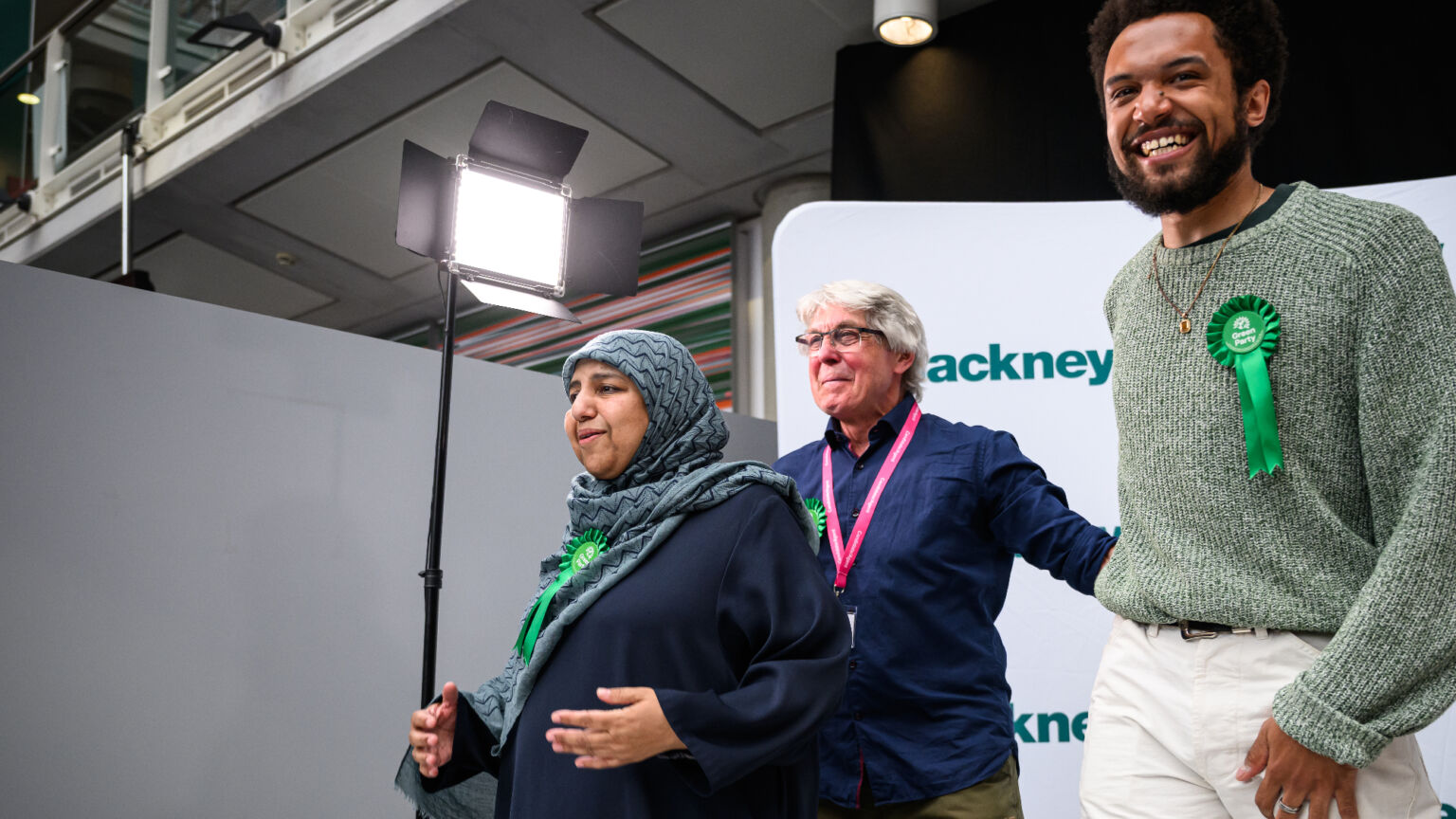
Two things seem certain after last week’s local elections in England and parliamentary elections in Scotland and Wales. The first is that the historically incompetent and unpopular prime ministership of Keir Starmer is beyond salvation. The second is that, if the quality of the candidates elected locally and nationally is anything to go by, so too is Britain.
For proof that nothing you say or do in modern times can get in the way of your political dreams, we need look no further than Eden Hills. ‘Cock is one of my favourite tastes’, the newly elected Green councillor said in a social-media post last year. ‘Not only that, but balls smell amazing.’ In a separate post, he said: ‘OKAY [I’m] bored of being woke now, [I] should get back to talking about COCK.’
Hills was one of many trans or nonbinary candidates successfully fielded by the Green Party of England and Wales. The Scottish Greens managed to get two transgender candidates elected to the Scottish parliament, both of whom have some rather questionable views.
Q Manivannan – a self-described ‘queer Tamil immigrant’ – was elected to the Scottish parliament as a member for Edinburgh and Lothians, despite only having lived in Scotland since 2021, the year he arrived in Edinburgh from India on a student visa. It is by no means certain that Manivannan will be able to remain in the country long enough to complete his five-year term.
‘I cannot wait [until] big lizard Lizzie kicks the bucket’, Iris Duane, another of the Greens’ new trans MSPs, said in a social-media post in 2022, referring to the late Queen Elizabeth II. ‘Not because she’s dead but because of the absolute meltdown it will cause [in] the British consciousness.’
Heading south, the interests of Greens’ politicians undergo something of a transformation. The London borough of Lambeth elected Saiqa Ali, who was arrested last month on suspicion of stirring up racial hatred against Jews. Ali is alleged to have posted pictures on social media of a blue-and-white serpent with a Star of David on its skin coiled around the Earth and to have said that ‘England has a government that is overrepresented with Zionist Jews’. Ifhat Shaheen, who was elected to the Hackney council, came under the spotlight for wondering if ‘Zionists’ might be ‘harvesting’ the organs of dead Palestinians.
Not that the Green Party had any kind of monopoly on dodgy candidates. Glenn Gibbins, who was elected as a Reform councillor in Sunderland, seems to be the incarnation of every fear that the liberal establishment has projected on to the populist right-wing party. His novel suggestion for, er, dealing with the ‘amount of Nigerians in town’ was to ‘melt them all down and fill in the potholes’.
There is much more that can be said about the quality of England’s local councillors. Abdul Monsur, elected to Tower Hamlets, publicly denied the Holocaust in a Facebook post in 2025. The mayor of Tower Hamlets, Lutfur Rahman, was returned to serve yet another term at the helm of the east London borough, despite a well-documented history) of vote-rigging and religious intimidation.
Once, there might have been a darkly funny side to this local-elections freakshow. But with the seriousness of the problems Britain is facing, from economic stagnation to societal Balkanisation, we surely have to ask: is this really the calibre of candidate we deserve?
Hugo Timms is a staff writer at spiked.

For many households, the “cost of living crisis” has felt inescapable and never-ending.
And now, a PwC report has found that people seem to be bracing for yet another financial shock.
It said that UK consumer confidence has seen its lowest quarterly decline in four years (in 2022, or four years ago, inflation reached a then-41-year high of 11.1%; PwC point out this is the “sharpest quarterly decline in sentiment since the onset of the Ukraine war”).
It’s the lowest overall score since 2023.
“All age groups are concerned about the rising cost of living, with most people planning short-term cutbacks and sentiment among the under-35s the hardest hit.”
What are the most common concerns?
90% of respondents said they were most worried about the cost of living.
80% said they plan to cut household spending in the coming months (food price surges are reportedly expected by some in November 2026).
Twice as many respondents (12% vs 24%) said they planned to drive less to save on fuel costs in the April survey than they did in the January survey. And a majority of under-45s – 65% – said they were worried about their job security and/or prospects.
The 2,000-person-strong survey, conducted after the Easter bank holidays, also found that members of every age group felt less financially healthy than they did in the previous quarter.
“In contrast to previous cost of living shocks, the gap between more and less affluent households has narrowed, while the gap between the young and old has widened,” the accountancy firm said.
What has caused these concerns?
PwC said that “Food prices, which are already on the rise, typically have the biggest influence on cost of living perceptions, and are expected to climb further” later on in the year.
They also pointed out that pay rises are usually given in April. They speculated that if households haven’t been given those by now, they might have begun to budget for a leaner-than-anticipated financial year.
Then, there’s the fact that the energy price cap will be removed in July. Many are expecting price hikes post the closure of the crucial shipping channel, the Strait of Hormuz.

VIVID thanks customers for their help shaping customer experience

Hormel Foods expands Herdez line

Crypto and AI Under Scrutiny in 2026 US Midterms

Manchester United reach agreement with Casemiro over contract clause amid transfer speculation

US brings back mandatory military draft registration

Steven Gerrard disagrees with Gary Neville over ‘shock’ Chelsea and Arsenal claim | Football


-
 Crypto World3 days ago
HarrisX Poll Found 52% of Registered Voters Support the CLARITY Act
-

 Fashion3 days ago
Weekend Open Thread: Marianne Dress
-

 Crypto World4 days ago
Upbit adds B3 Korean won pair as Base token gains Korea access
-

 Tech7 days ago
Image AI models now drive app growth, beating chatbot upgrades
-
 NewsBeat4 days ago
NCP car park operator enters administration putting 340 UK sites at risk of closure
-

 Tech2 days ago
Auto Enthusiast Carves Functional Two-Stroke Engine from Solid Metal
-

 Politics2 days ago
Politics Home Article | Starmer Enters The Danger Zone
-
 Business2 days ago
Ignore market noise, India’s long-term story intact, say D-Street bulls Ramesh Damani and Sunil Singhania
-

 Crypto World6 days ago
UAE Free Zone Deploys Blockchain IDs to Verify Registered Firms
-

 Tech11 hours ago
GM Agrees To Pay $12.75 Million To Settle California Lawsuit Over Misuse Of Customers’ Driving Data
-

 Crypto World5 days ago
Robinhood says Wall Street is building onchain
-

 Crypto World5 days ago
BlackRock CEO Larry Fink Discusses a New Asset Class
-
Entertainment7 days ago
Serena Williams hits Met Gala in metallic dress after GLP-1 reveal
-

 Tech6 days ago
Apple and Samsung are dominating smartphone sales so thoroughly that only one other company makes the top 10
-

 Tech6 days ago
I tested the Xiaomi 17 Ultra’s camera and I don’t think I’ll ever go back to an iPhone
-

 Fashion5 days ago
The Best Work Pants for Women in 2026
-
 Tech4 days ago
AI agents are missing all the discussions your team is having. SageOX has an answer: agentic context infrastructure
-

 Entertainment5 days ago
Sarah Paulson Called Out For Met Gala ‘Hypocrisy’
-
 Sports7 days ago
Everton v Man City LIVE: Haaland’s two-word response as visitors collapse to hand Arsenal advantage in Premier League title race
-
 Politics6 days ago
Met Gala 2026: Madonna’s Dramatic Red Carpet Look Steals The Show
You must be logged in to post a comment Login