







Connect with us
DAPA Banner
DAPA Coin
DAPA
COIN PAYMENT ASSET
PRIVACY · BLOCKDAG · HOMOMORPHIC ENCRYPTION · RUST
ElGamal Encrypted MINE DAPA
🚫 GENESIS SOLD OUT
DAPAPAY COMING

Business

Oil market enters tight supply phase after years of underinvestment: Nikhil Bhandari

Published

on

Oil market enters tight supply phase after years of underinvestment: Nikhil Bhandari
As crude oil edges towards the $100-per-barrel mark, questions are once again being raised about whether global investment flows are set to pivot back into the energy sector after years of relative underinvestment. Against the backdrop of tightening supply dynamics, slowing capex, and an uneven energy transition, market participants are reassessing the medium-term outlook for oil, refining, and renewables.

Speaking to ET Now, Nikhil Bhandari from Goldman Sachs highlighted that the industry is entering a structurally tighter phase, driven less by demand shocks and more by years of restrained investment.

Underinvestment sets the stage for tighter oil markets
“We came underinvested on energy, on crude heading into this event. We had last wave of some of the non-OPEC supply projects, long cycle projects completing by the end of this year. But starting next year, we do not have a lot of non-OPEC supply growth coming. We have capex which is down, reserves are down, exploration activities are down in the last few years, while we think the peak oil demand is still about 10 years or longer away,” he said.

He added that current price signals are still insufficient to trigger a meaningful investment cycle revival.

Advertisement

“At the current forward curve of oil where three-year out forward curve is at $75–76 per barrel, we do not think the incentive is there for the capex to return because most big oil companies are still budgeting $75 around crude already in their budget. So, to get them to invest more capex, we need the backend to go up.”

Refining sector faces deeper structural stress
Beyond upstream supply, Bhandari flagged even sharper constraints in refining.
“In the refining side, we have closed more capacities than we have added in the last few years because it has been a relatively more stranded industry in the age of climate change.”
While peak oil demand expectations have shifted repeatedly—from 2021 during the pandemic to now potentially the 2030s or 2040s—he noted that demand destruction is not uniform across segments.

He said: “We think that transition will continue. However, there is still an income growth angle in emerging markets globally. Even when we are moving towards electrification and renewables, given there are so many people who do not have access to energy, as income grows, there is always an S-curve, disproportionate increase in energy consumption growth relative to GDP growth.”

India, China and the next phase of demand growth
On regional demand, Bhandari pointed to diverging trends across Asia’s two largest economies.

“In China, we think the peak oil demand will come somewhere towards the late part of 2020s. In fact, some products like diesel and gasoline are already passing their peak, but petrochemical demand and jet fuel demand is still growing.”

Advertisement

For India, however, the demand trajectory remains structurally stronger.

“We think India will contribute hugely to the incremental energy demand growth out of Asia for the next 10 to 15 years. India has entered that sweet spot of $2000 to $3000 GDP per capita where every increase in GDP from here has a more disproportionate increase in the consumption of energy.”

Renewables growth strong, but grid constraints persist
On the accelerating renewable buildout, Bhandari cautioned against assuming a linear displacement of fossil fuels, particularly oil.

“That transition is not coming more at the expense of oil, that is coming more at the expense of coal.”

Advertisement

He noted that India’s power system is already undergoing rapid structural change, but integration challenges remain significant.

“We still need a lot of batteries, the grid to work flawlessly on evacuation, HVDC lines, and smart grids. We need to invest more aggressively in the grid and batteries as well.”

He also flagged a growing risk of curtailment in high-renewable systems, citing China’s experience where 15%–20% curtailment has been observed.

Downstream stress and product shortages emerge
Bhandari’s most immediate concern, however, lies in downstream oil markets.

Advertisement

“The bigger stress is in the products. It is diesel, jet fuel, and naphtha where most barrels coming in from the Middle East are producing more diesel and jet fuel as output, which we are producing less right now.”

He warned that inventory depletion is already underway.

“If the strait were to close for another two months, we think we create a risk of hitting tank bottoms at a global level on product inventory by 4Q this year.”

India, while a net exporter of refined products, is not insulated.

Advertisement

“India carries relatively lower levels of oil and product inventory compared to Korea, Japan, China, etc.”

Early inflation signals already visible
The impact is already filtering through industrial supply chains.

“We are already seeing 40% to 50% inflation in packaging, plastics, PET, and mineral water bottles. Edible oil cooking packaging prices are up nearly 100%.”

Bhandari stressed that while the system is not yet in outright shortage, it is firmly in deficit.

Advertisement

“We are in deficit already. Every day demand is higher than supply today and we are drawing inventory.”

Outlook: a structurally tighter energy system
Summing up, Bhandari described the current phase as one where underinvestment, transition complexity, and regional demand divergence are combining to create sustained tightness in global energy markets.

The result, he suggested, is not just a cyclical spike in oil, but a multi-year structural squeeze across crude, refined products, and energy infrastructure.

Advertisement
Continue Reading
Click to comment

You must be logged in to post a comment Login

Leave a Reply

Business

LENZ Therapeutics stock price target lowered to $38 by H.C. Wainwright

Published

on


LENZ Therapeutics stock price target lowered to $38 by H.C. Wainwright

Continue Reading

Business

Ralliant shares rise nearly 6% on raised guidance despite earnings miss

Published

on


Ralliant shares rise nearly 6% on raised guidance despite earnings miss

Continue Reading

Business

UK borrowing costs jump as uncertainty over PM's future continues

Published

on

UK borrowing costs jump as uncertainty over PM's future continues

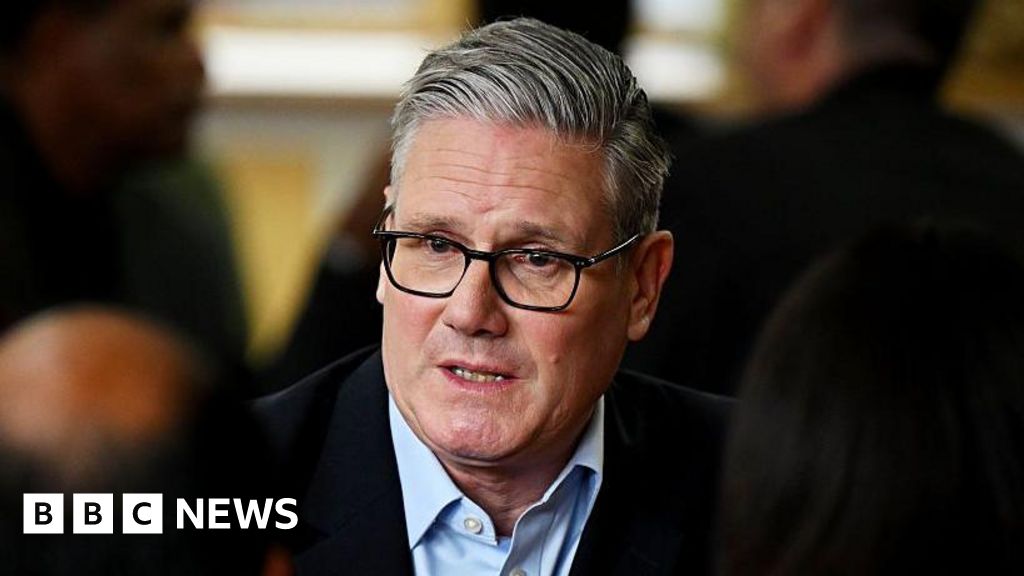
The possibility of a change of leadership in the UK has unsettled some investors and sent bond yields higher.

Continue Reading

Business

JSW Energy shares plummet 8%; Q4 net profit rises 38% to Rs 574 crore, revenue up 41%

Published

on

JSW Energy shares plummet 8%; Q4 net profit rises 38% to Rs 574 crore, revenue up 41%
Shares of JSW Energy plunged as much as 8% to their day’s low of Rs 512 on the BSE on Tuesday after it reported a consolidated net profit of Rs 574 crore for the March quarter, marking a 38% increase from Rs 414 crore recorded in the same period last year.

Revenue from operations rose sharply by 41% year-on-year to Rs 4,499 crore in Q4FY26, compared with Rs 3,189 crore in the corresponding quarter of the previous financial year. The company’s board has recommended a dividend of Rs 2 per equity share and fixed Friday, June 5, as the record date to identify shareholders eligible for the payout.

On a sequential basis, profit after tax grew 8% from Rs 529 crore reported in Q3FY26, while revenue increased 10% quarter-on-quarter from Rs 4,082 crore in the October-December quarter.

Total expenses during the quarter stood at Rs 4,666 crore, higher than Rs 4,366 crore in Q3FY26 and Rs 3,142 crore in Q4FY25. This reflects a rise of 7% sequentially and 48% on a yearly basis. The increase in expenditure was driven by higher fuel costs, employee expenses and finance costs, among other factors.

Advertisement

Power sales volume climbed 48% year-on-year to 11.7 billion units (BUs) from 7.9 BUs. Renewable energy generation rose 68% to 2.9 BUs from 1.7 BUs a year ago, while thermal generation increased 43% to 8.8 BUs from 6.2 BUs.


Generation under long-term power purchase agreements (PPAs) grew 25% year-on-year to 8.6 BUs from 6.9 BUs. Short-term PPA generation surged 201% to 3.1 BUs, compared with 1.0 BU in the year-ago period.
JSW Energy’s cash and cash equivalents stood at Rs 10,013 crore during the quarter, reflecting a strong liquidity position. The company reported a net debt-to-equity ratio of 2.1x, while operational net debt-to-EBITDA stood at 5.2x.EBITDA for Q4FY26 jumped 72% year-on-year to Rs 2,602 crore from Rs 1,512 crore reported in the corresponding quarter last year.

JSW Energy shares are up 9.5% in the last 1 month and about 15% in the last 1 year.

Sensex, Nifty today: Catch all the LIVE stock market action here
(Disclaimer: Recommendations, suggestions, views and opinions given by the experts are their own. These do not represent the views of The Economic Times)

Advertisement
Continue Reading

Business

Tax relief for workers and pain for investors in budget

Published

on

Tax relief for workers and pain for investors in budget

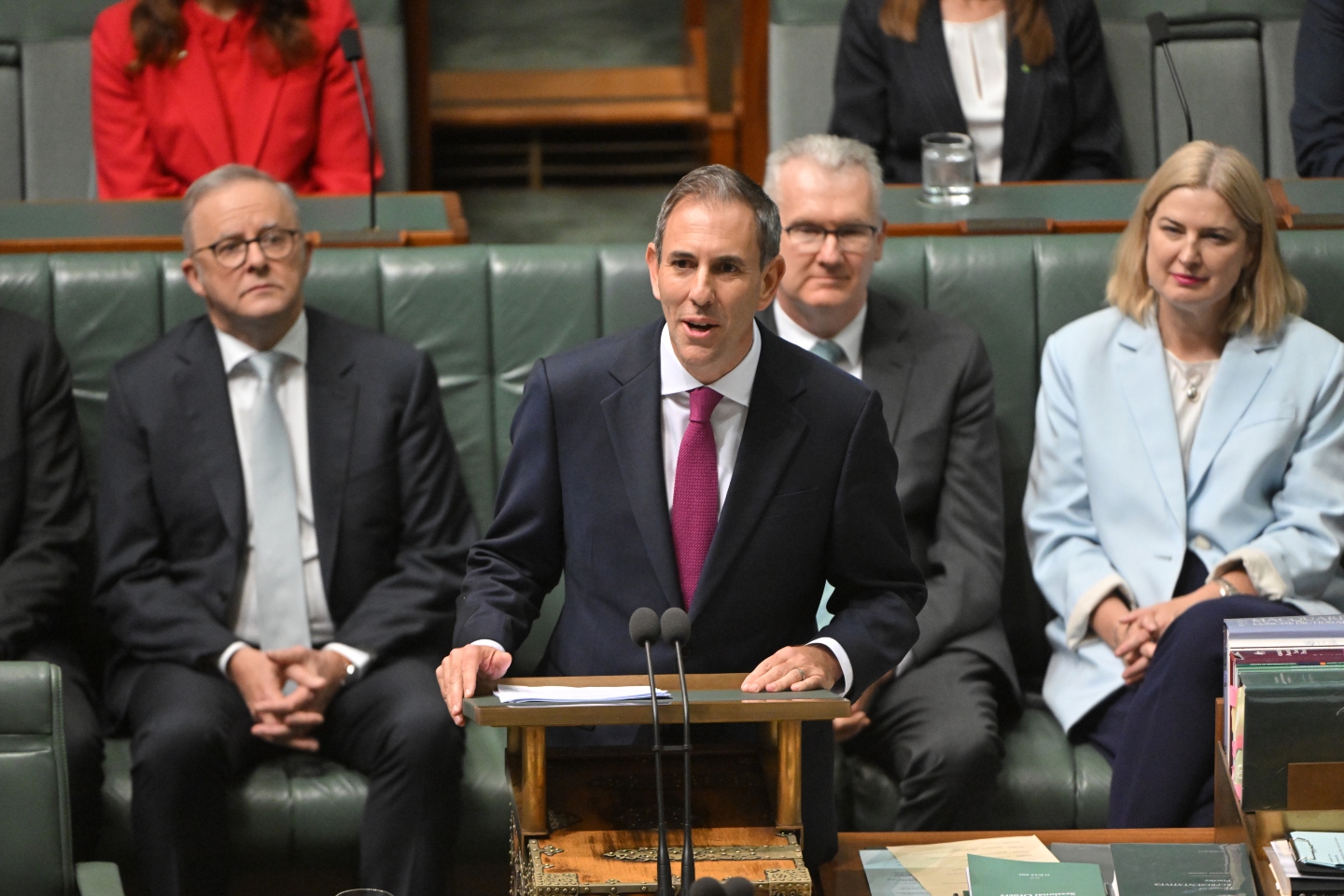
All workers will get a $250 tax cut from as part of the federal budget, funded by a raid on investment properties, trusts and other investments.

Continue Reading

Business

Clear Street raises Plug Power stock price target on strong sales growth

Published

on


Clear Street raises Plug Power stock price target on strong sales growth

Continue Reading

Business

Fed govt details sweeping CGT, negative gearing reform

Published

on

Fed govt details sweeping CGT, negative gearing reform

The federal government is replacing the 50 per cent capital gains tax discount with a new minimum rate and is restricting negative gearing to new builds to boost housing stock.

Continue Reading

Business

Vodafone Idea shares drop 4% after telco clarifies on treasury stock transfer report. Here’s what it said

Published

on

Vodafone Idea shares drop 4% after telco clarifies on treasury stock transfer report. Here's what it said
The shares of Vodafone Idea dropped nearly 4% after the telecom giant issued a clarification on a report claiming that its parent Vodafone Plc plans to transfer part of its stake to the company itself, which had sparked an 8% rally in the share price yesterday.

UK-based Vodafone Plc, which owns a 19% stake in Vodafone Idea, was considering transferring part of its shareholding to the company itself for the Indian telco to hold in its treasury, Bloomberg reported, citing people familiar with the matter. It added that the share transfer would take place instead of Vodafone injecting more cash into the Indian business.

The company’s shares sharply rallied more than 8% on Monday despite the overall stock market crash following the report, which claimed that the move could boost the balance sheet of the loss-making Vodafone Idea, and help its current efforts to raise debt.

Vodafone Idea’s clarification

Advertisement

After exchanges sought clarification from Vodafone Idea following the sharp surge in share price, the company said that it has not yet received any communication related to this from the Vodafone Group.


Vodafone Idea said that the report may possibly be referring to disclosures already made in December last year about the Contingent Liability Adjustment Mechanism (CLAM) arrangement. As part of the December exchange filing, which the company reshared yesterday, Vodafone Idea had announced that it amended a major agreement with its UK-based parent company to secure the recovery of nearly Rs 5,836 crore linked to liabilities arising from the 2017 Vodafone-Idea merger.
Vodafone Idea share priceVodafone Idea shares have seen a significant surge recently, jumping 10% in one week and 28% in one month. Shares of the telecom company are up more than 2% in 2026 so far.

In the longer term, the stock jumped over 67% in one year, 69% in three years and more than 34% in five years. The company currently has a market capitalisation of more than Rs 1.26 lakh crore.

(Disclaimer: Recommendations, suggestions, views and opinions given by the experts are their own. These do not represent the views of The Economic Times)

Advertisement
Continue Reading

Business

Jyothy Labs shares tumble 15% in two days after Henkel ends Pril, Fa licence agreements

Published

on

Jyothy Labs shares tumble 15% in two days after Henkel ends Pril, Fa licence agreements
Jyothy Labs shares declined 5% to Rs 225.20 during Tuesday’s trading session, extending losses for the second consecutive day. The stock has fallen nearly 15% over the two sessions following the company’s announcement that the licence agreements for the dishwashing brand Pril and the personal care brand Fa with Henkel will not be renewed beyond May 31, 2026.

On Saturday, Jyothy Labs said the decision marks the end of a nearly 15-year partnership between the two companies.

The company added that it is preparing for an “orderly transition” and plans to sharpen its focus on its owned brands, especially Exo in the dishwash category. While Pril has historically been Jyothy Labs’ flagship dishwash liquid brand, Exo has remained a strong player in the dishwash bars segment.

Jyothy Labs had acquired Henkel’s India consumer business in 2011 through a transaction involving brands, assets, and operations. Under the agreement, Pril and Fa were operated under fixed-term licence arrangements, whereas brands such as Mr White and Henko continued under perpetual licence agreements.

Advertisement

The company fully owns brands including Margo, Neem toothpaste, Tuhina, and Chek. Jyothy Labs also stated that discussions with Henkel regarding a possible renewal had been underway for several months, including the evaluation of “commercial and business continuity alternatives”.


Share Price and Technical Indicators


Jyothy Labs currently commands a market capitalisation of Rs 8,300.88 crore. The stock touched a 52-week high of Rs 378.20.
On the valuation front, the company is trading at a price-to-earnings (P/E) ratio of 26.14, while its price-to-sales (P/S) ratio stands at 2.46. The price-to-book (P/B) ratio is 5.48.
Technically, the stock’s 14-day Relative Strength Index (RSI) is at 43.6. Typically, an RSI below 30 indicates oversold conditions, while a level above 70 suggests the stock may be overbought. Jyothy Labs is currently trading below all eight of its key simple moving averages (SMAs), signalling a bearish trend.

Institutional sentiment remained subdued during the March 2026 quarter. Foreign Institutional Investors (FIIs) trimmed their stake from 12.77% to 12.35%, while Mutual Fund holdings declined from 13.73% to 13.15%.

(Disclaimer: Recommendations, suggestions, views and opinions given by the experts are their own. These do not represent the views of The Economic Times)

Advertisement
Continue Reading

Business

Greggs hails rising sales as new Spanish airport opening is announced

Published

on

Business Live

The company’s new food items are proving popular and ‘appealing to new and younger customers’

Greggs has announced rises in prices of some favourite products

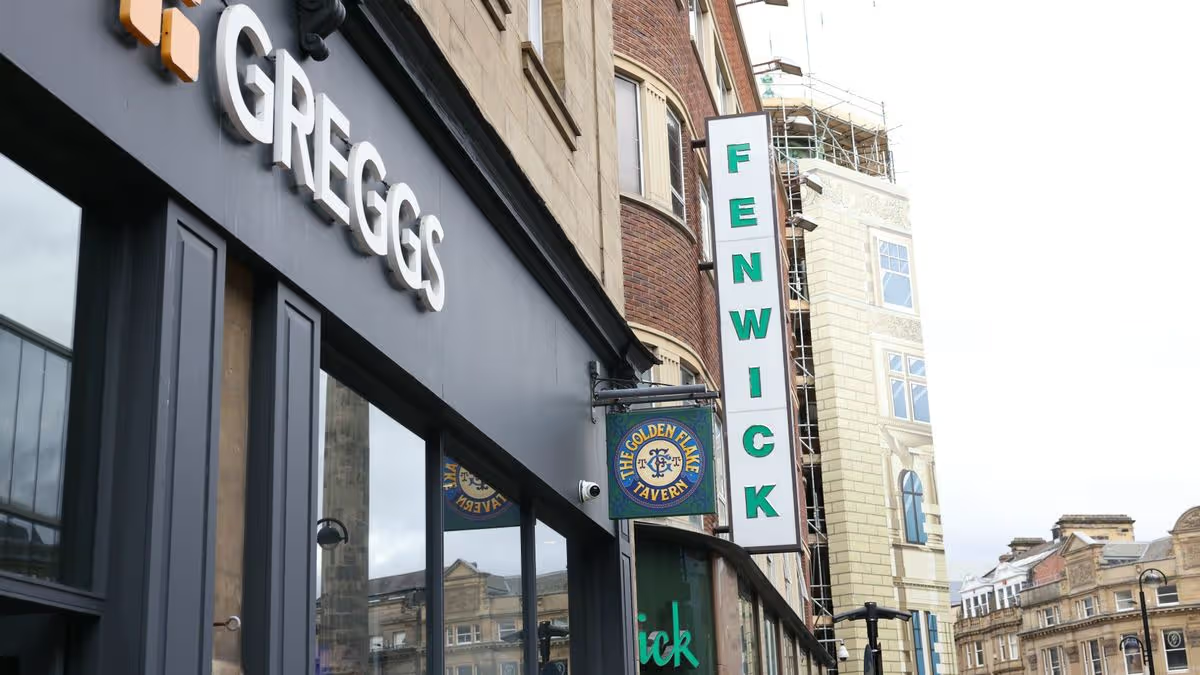
Greggs has announced a rise in sales as new items prove popular(Image: ChronicleLive)

North East food-on-the-go firm Greggs has toasted a rise in sales after announcing its first overseas shop launch. The Newcastle firm has announced results for the first 19 weeks of the year, showing total sales are up 7.5% to £800m.

Like-for-like sales in company-managed shops grew by 2.5% in the first 19 weeks of 2026, and improved to 3.3% in the most recent 10 weeks, as sales of its new menu items took off. Greggs said its new food items including matcha drink, tandoori chicken pizza slice, and its chicken roll – its chicken version of its bestselling sausage roll – were proving popular.

Advertisement

Tapping into demand in the market for protein meals, new salads were also launched last week to include chicken caesar and chicken, grains and greens. The firm said its partnerships with franchisees and grocery retailers are progressing well and contributing to the growth in overall sales.

It also said it has made “encouraging” profit progress in the year to date, partly reflecting a weak comparator period but also good operational cost control.

In a trading update it said: “The launch of our new chicken roll in April has been a standout, quickly establishing itself as a customer favourite and complementing our iconic sausage roll and vegan roll.

Greggs Chicken Roll

Greggs Chicken Roll is a new permanent addition to its menu(Image: Samantha Bartlett)

“Our drinks range has also been energised through flavour-led innovation across iced coffees, lemonades and refreshers, with the launch of matcha – which has proved extremely popular – marking an important step in appealing to new and younger customers.

Advertisement

“Together, these launches reflect our focus on relevance and innovation, while staying true to the familiar quality customers expect from Greggs.”

Meanwhile, Greggs is continuing to target the opening of around 120 shops this year – while announcing it has Tenerife as the location for a new international outlet.

In the update to shareholders it said: “In the coming weeks we will open our first shop in an airport outside the UK, working in partnership with leading global travel operator Lagardère Travel Retail at Tenerife South Airport. Tenerife South is a destination for millions of UK and international passengers each year and represents an excellent opportunity to test our offering in an international travel hub.”

The bakery chain, which runs 2,759 shops, also warned that it could be facing higher costs if the Iran war continues.

Advertisement

It added: “We are monitoring the situation in the Middle East and should the conflict continue and become prolonged we, like all food retailers, will likely see higher overall cost inflation through the end of 2026 and into 2027. In this uncertain environment, our value offer remains highly attractive as customers look to make their money go further.”

Continue Reading

Trending

Copyright © 2025