

Crypto World
NBA Star’s Bitcoin Venture Just Paused Its Accumulation Plan: Is Corporate Treasury Model Breaking Down?


Bitcoin Society, the investment vehicle backed by former NBA star Tony Parker and entrepreneur Éric Larchevêque, has halted its Bitcoin treasury accumulation program after BTC dropped more than 20% in Q1 2026, with Larchevêque citing market conditions that had turned structurally unfavorable for raising capital to buy BTC reserves.
The decision marks a direct departure from the MicroStrategy accumulation model, aggressive balance-sheet Bitcoin loading regardless of price, that Bitcoin Society had been following since entering the market in late 2024.
The pause is described as a strategic hold rather than a liquidation of existing holdings, but the distinction matters less than what the decision signals: a high-profile corporate adopter has decided the current BTC price environment does not justify the capital-raising mechanics the treasury model depends on.

Whether that is a one-firm reassessment or an early indicator of broader corporate treasury cooling is the question the market now has to answer.
Discover: The best pre-launch token sales
The Treasury Arbitrage That Powered the Model Has Eroded, and Bitcoin Society’s Pause Reflects That
The MicroStrategy model worked because of a specific structural arbitrage: companies could raise capital at elevated equity valuations, then deploy those proceeds into Bitcoin trading at a price below what treasury advocates argued was its intrinsic asset value.
That premium-to-NAV gap created a flywheel; higher stock multiples meant a cheaper cost of capital, which meant more BTC per dollar raised, which supported the equity premium further. The mechanism was self-reinforcing until it wasn’t.
By late 2025, MicroStrategy’s own stock had declined 51% year-over-year, and the company was compelled to raise $1.44 billion in additional liquidity to address debt-service concerns in what analysts called a low-premium environment.
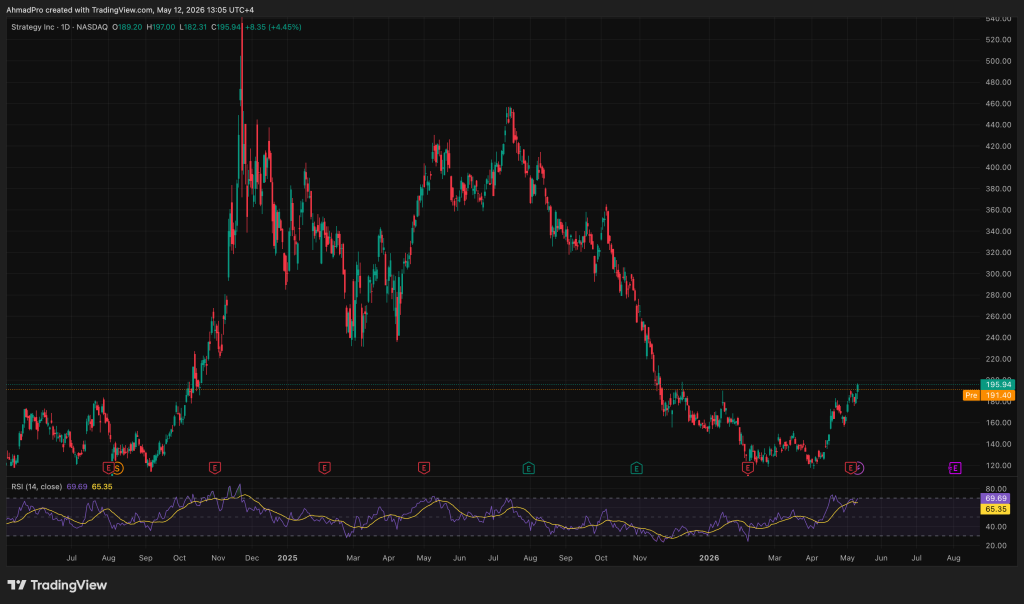
The arbitrage advantage that made the treasury model compelling had evaporated.
Standard Chartered’s analysis estimated that with Bitcoin trading below $90,000, approximately 50% of Bitcoin treasury companies would face viability challenges, a threshold Bitcoin Society Q1 2026 decision appears to have been stress-tested against.
Larchevêque’s explanation was precise: “Market conditions have turned against the objective of raising capital to accumulate Bitcoin reserves.”
That framing is not a rejection of Bitcoin as an asset. It is a rejection of the financing mechanism, and that distinction is analytically important.
The Bitcoin treasury thesis and the treasury company financing model are not the same thing, and Bitcoin Society pause reflects a failure of the latter, not necessarily a conviction change on the former.
The pause is not accompanied by publicly stated conditions for resumption, which leaves the program’s future contingent on whether equity market conditions recover enough to make the capital-raise economics viable again.
Discover: The best crypto to diversify your portfolio with
The post NBA Star’s Bitcoin Venture Just Paused Its Accumulation Plan: Is Corporate Treasury Model Breaking Down? appeared first on Cryptonews.

The Senate Banking Committee released a 309-page text of the Digital Asset Market Clarity Act of 2025 (CLARITY Act), expanding the January 278-page draft.
The text arrives ahead of a key Thursday markup vote. Committee members have until tomorrow to submit amendments before the 10:30 AM ET executive session.
Follow us on X to get the latest news as it happens
What Changed in the Clarity Act Draft
The CLARITY Act cleared the House back in July 2025 with broad bipartisan backing and has since been working its way through extended Senate negotiations. The January text faced significant pushback and ultimately stalled, with the treatment of stablecoin yield emerging as a central sticking point.
Then, earlier this month, Senators Thom Tillis and Angela Alsobrooks unveiled a bipartisan compromise on stablecoin rewards. The May rewrite preserves the nine-title structure but expands the bill by 31 pages.
The Tillis-Alsobrooks compromise allows regulated stablecoin issuers to offer certain forms of yield or rewards, but under tighter limits and oversight designed to stop stablecoins from functioning like unregulated bank deposits or securities.

Section 404 now contains the Tillis-Alsobrooks compromise. The bill also adds a new Section 109 that applies insider trading laws.
Another new addition is the Section 702 Insolvency Safe Harbor, which allows counterparties to close out digital commodity positions and access collateral outside standard bankruptcy proceedings (mirroring protections already available for conventional derivatives).
Section 906 Effective Date, which sets a general 360-day effective date after enactment, with rulemaking-dependent provisions taking effect either 360 days after enactment or 60 days after the final rule is published, whichever comes later.
“One interesting worth noting now is the inclusion of the Build Now Act (sec 904),” Alex Thorn, Head of Firmwide Research at Galaxy Digital, wrote.
Moreover, the bill includes substantial revisions to Title I (Sections 102, 104, and 108).
However, the bill, like its January counterpart, leaves ethics provisions as the remaining sticking point. Elizabeth Warren has stressed that ethics safeguards that would prevent senior government officials from financially benefiting from cryptocurrencies remain a priority.
Subscribe to our YouTube channel to watch leaders and journalists provide expert insights
The post Senate Banking Drops New 300-Page CLARITY Act Draft: What’s Changed Since January appeared first on BeInCrypto.
Kraken introduced Flexline, a lending product that accepts cryptocurrency as collateral at 10–25% APR fixed rates, targeting crypto-native businesses and high-net-worth individuals excluded from traditional banking.


Payward, the parent company of crypto exchange Kraken, is working with asset manager Franklin Templeton to expand the use of tokenized financial products for institutional investors.
The companies said Tuesday they will develop a range of blockchain-based investment offerings, including tokenized yield products, tokenized equities and custody services tied to digital assets.
The move comes as large financial firms explore testing tokenized versions of conventional assets. BlackRock, Fidelity and JPMorgan have all expanded blockchain-related financial products over the past two years, particularly tokenized Treasuries and money market funds.
Tokenization refers to representing traditional financial assets such as stocks, bonds or money market funds on blockchain networks, where they can be traded and settled digitally. Supporters argue the approach can reduce settlement times, expand market access and allow assets to move more easily between financial platforms.
The collaboration joins two firms that have taken different routes into tokenized finance. Franklin Templeton has spent years building blockchain-based investment products. Payward has focused on crypto trading infrastructure through Kraken and its xStocks tokenized equities platform, which the company says has processed more than $30 billion in trading volume since starting up in 2025.
The firms plan to explore actively managed tokenized investment products that could trade onchain and become available to institutional investors and, in some jurisdictions, retail Kraken users.
Kraken also plans to integrate BENJI, Franklin Templeton’s suite of tokenized money market funds, into its platform. The funds could serve as collateral or cash management tools for institutional trading clients seeking blockchain-based alternatives to traditional treasury operations.
Analysts view tokenized Treasury funds as one of the fastest-growing sectors in digital assets because they offer yields tied to government securities while operating on blockchain rails. In practice, that can allow institutions to move collateral around the clock instead of waiting for banking hours or multiday settlement periods.
Read more: Kraken parent Payward seeks fresh funding at $20 billion valuation ahead of planned IPO


Blockchain analytics firm Elliptic said it raised $120 million in fresh funding from investors including Nasdaq Ventures and Deutsche Bank as financial institutions ramp up spending on crypto compliance and security infrastructure.
The fundraising round, led by growth equity firm One Peak, values the London-based company at $610 million, according to a Tuesday press release. The British Business Bank also participated.
The investment comes as crypto markets face a wave of security breaches and exploits that have exposed weaknesses in both decentralized finance (DeFi) protocols and centralized platforms. Hackers have stolen nearly $3 billion in crypto assets since the beginning of 2025 through smart contract exploits, phishing attacks and cross-chain bridge breaches, and regulators are pushing exchanges and banks to tighten anti-money laundering controls.
As a result, blockchain analytics firms have become critical infrastructure providers for institutions entering the digital asset industry. Elliptic’s software tracks crypto transactions across dozens of blockchains and flags wallets linked to sanctions, fraud, ransomware or illicit finance.
Banks, exchanges and government agencies use these tools to monitor transactions and comply with financial crime rules. The company said two-thirds of global crypto trading volume flows through exchanges that already use its services.
Demand for those systems has accelerated alongside the growth of stablecoins and tokenized assets, which are increasingly moving into mainstream finance. Stablecoins accounted for roughly $33 trillion in transactions last year, according to the company.
Large financial firms are also exploring tokenized securities and blockchain-based settlement systems, raising the stakes for compliance providers that can monitor activity across public blockchains in real time. At the same time, artificial intelligence (AI) tools are making attacks cheaper and faster, forcing a rethink of how crypto systems stay secure.
Elliptic said the new funding will be used to expand its AI-driven monitoring and risk analysis tools as institutional adoption of digital assets grows.
“One of the things that we will be accelerating with the funding is our agentic product roadmap,” CEO Simone Maini told CoinDesk. “What that means is building and launching agents that sit on top of Elliptic’s dataset to be able to automate a lot of what is otherwise highly manual, repetitive tasks performed by compliance analysts.
“That means those that that those precious resources can be redeployed to deep diving and investigating financial crime where they need to,” she said.


BlackRock has filed for a new tokenized fund structure with the SEC, selecting Securitize infrastructure for the second time after BUIDL’s $2.3B success.
Crypto World
The battle for the digital euro is heating up as central bankers clash over how to take on Tether


France’s central bank deputy governor called Tuesday for the “mobilization of all relevant European players, public and private,” to develop tokenized money.
Beau’s comments are in stark contrast with European Central Bank (ECB) President Christine Lagarde’s recent speech in which she said that “the case for promoting euro-denominated stablecoins is far weaker than it appears.”
While Lagarde described the $310 billion privately-issued stablecoin market, currently dominated by Tether’s USDT and Circle’s USDC, as instruments that “risk amplifying the very vulnerabilities we are trying to overcome,” Beau told CoinDesk that private sector solutions are necessary for the region’s economic development.
The different views, however, reveal a growing concern in Europe over the “digital dollarization.” With a stablecoin sector projected to rise to the trillions of dollars in the coming years, a lack of euro-pegged currencies could force European capital into dollar-backed assets, potentially eroding the euro’s global influence and monetary sovereignty.
“To ensure a sound development of tokenized finance in Europe, its payment and settlement asset pillar should be in euro and build on the solid foundation of our current two-tier monetary system,” Beau said in an interview with CoinDesk.
The central banker outlined a “triple objective” for the region, which requires the European Union (EU) to adapt central bank money services, develop “pan-European solutions in tokenized private money issued by regulated financial institutions,” and strengthen the bloc’s Markets in Crypto-Assets Regulation (MiCA).
Beau’s stance aligns with Qivalis
Beau’s stance aligns with Qivalis, a group of 12 major European banks, including ING, BBVA, and BNP Paribas, which plans to launch a private digital euro later this year.
Qivalis CEO Jan-Oliver Sell recently told CoinDesk that without a liquid onchain euro, “the only alternative is the U.S. dollar,” which he described as a “risk to Europe’s financial and digital sovereignty.”
Lagarde agrees with the need for digital asset alternatives to dollar-pegged stablecoins, warning that USDT and USDC pose “financial stability risks” for Europe and could “transmit stress to the underlying asset markets during periods of turmoil.”
However, while Beau advocates for immediate private-sector mobilization to capture market share, Lagarde favors a central bank digital euro, which in previous statements she suggested would be ready by 2029.
Beau noted that the Eurosystem is already moving to provide native settlement options. “A first deliverable will become available by the end of this year, with the opening of our wholesale central bank money service in tokenized form,” he said, referencing projects such as Pontes.
The opposing views between Lagarde and Beau come as U.S. dollar-pegged tokens account for 98% of the stablecoin market.
While Lagarde argues that stablecoins, “do not confer the unconditional finality that central money does,” Beau maintains that public and private efforts “should complement and support each other” to ensure the euro remains a viable settlement instrument in an increasingly tokenized global economy.
Crypto World
Ripple Price Analysis: XRP Retakes Crucial Resistance, Is the Breakout Finally Starting?
XRP is trading at $1.45 as the second week of May is underway, and for the first time in several months, the technical picture carries a genuine sense of compression and potential energy.
A symmetrical triangle that has been forming since February is now at its apex, with the price breaking above the upper boundary and the RSI climbing to above 50. The broader market’s momentum provides a backdrop that XRP has not had the luxury of in most prior setups this cycle.
Ripple Price Analysis: The USDT Pair
Since February, XRP has been carving out a symmetrical triangle on the daily chart, formed by a series of lower highs and higher lows converging into an increasingly tight range. The upper boundary sits around $1.43 and has been broken to the upside over the weekend.
The higher boundary of the large descending channel and the 100-day moving average (located around the $1.40 mark) have both been broken as well. With the RSI recovering and building momentum above 50, almost all signals point to a potential surge in the coming weeks.
A daily close above the $1.50 psychological level would confirm the bullish technical development and open the path toward the next significant zone at $1.80, where the 200-day moving average is also located. On the contrary, a rejection and drop back below $1.40 would invalidate the pattern entirely and put the $1.20 February low back in immediate focus.

The BTC Pair
The XRP/BTC pair has also staged a meaningful recovery from the deeply oversold extreme reached in early May, when the RSI touched approximately 25. From the lows near 1730–1740 sats, the market has bounced back to 1800 sats, now testing the horizontal resistance zone formed by the February low. The RSI has also recovered to the 45–50 range, confirming the oversold relief bounce, while also demonstrating a clear bullish divergence.
The 1800 sats resistance zone is the first real test of this bounce. A clean breakout and close above it would open the path toward the 2000 sats area, where the 100-day moving average is also located at the moment. That, in turn, remains the minimum threshold required to suggest XRP is beginning to recover ground against Bitcoin rather than simply bouncing from an extreme.
Still, the broader downtrend on this pair is intact, as both the 100-day and 200-day moving averages continue to decline well above the price, and until one of them is reclaimed, any BTC-relative gains remain corrective rather than structural.

The post Ripple Price Analysis: XRP Retakes Crucial Resistance, Is the Breakout Finally Starting? appeared first on CryptoPotato.


Shopping giant eBay has rejected video game retailer GameStop’s ambitious $56 billion takeover offer, leaving the latter to decide whether it wants to walk away, raise the bid or take the fight directly to shareholders.
EBay’s board called the half-cash, half-stock offer “neither credible nor attractive” on Tuesday, per Reuters, citing doubts around financing and arguing the company is better positioned under its current management. The rejection was widely expected. EBay has traded well below GameStop’s $125-per-share bid since the offer surfaced, a sign investors were not convinced the deal could close.
That puts GameStop’s bitcoin position back in the conversation, as CoinDesk reported earlier this month.
The cultish firm holds roughly $368 million worth of bitcoin exposure via a covered-call options strategy. It shifted nearly all of its 4,709 BTC to institutional brokerage Coinbase Prime, as a filing showed in March, turning the position into a receivable rather than directly held bitcoin.
GameStop’s offer was built around $9.4 billion of cash and liquid investments, plus up to $20 billion in debt financing from TD Bank. But that financing is contingent on the combined company maintaining an investment-grade rating, and Moody’s has already warned the deal would be credit negative for eBay. Raising the offer or going hostile would likely make the financing math more challenging.
Cohen has previously framed the eBay deal as “way more compelling than bitcoin,” leaving open the question of whether GameStop’s BTC position could be unwound if more cash is needed.
Selling it would not fund the deal by itself, but it is one of the few discretionary assets GameStop can point to as it tries to convince investors the bid is real.
The market remains skeptical, however. EBay shares slipped about 1% to $107 before the bell Tuesday, still far below the offer price, while GameStop fell 4%.
The deal previously drew pushback from parts of GameStop’s own investor base.
Michael Burry, the investor made famous by The Big Short, sold his stake after the bid and warned that buying eBay could saddle GameStop with debt and dilute shareholders.
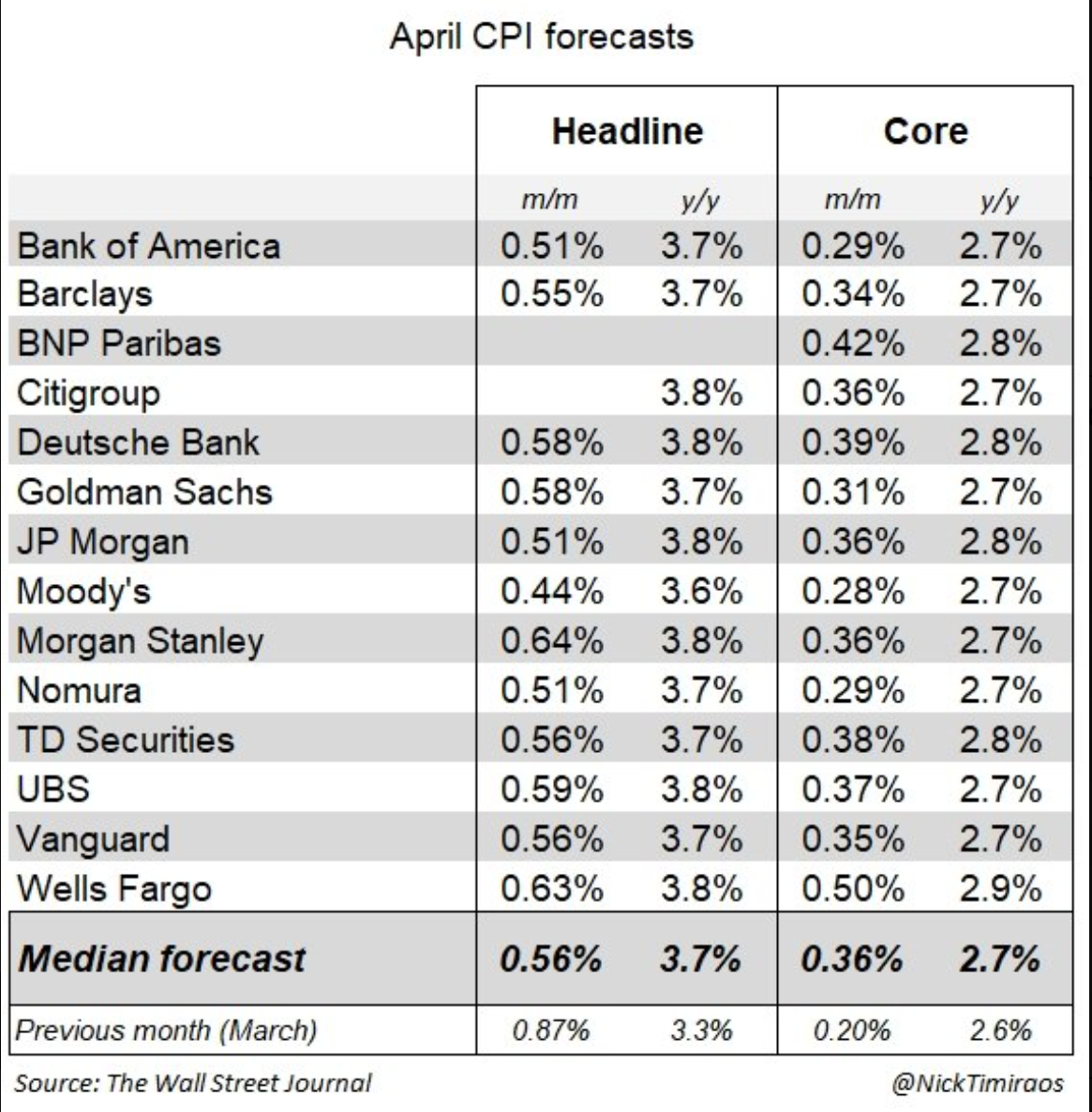
U.S. inflation accelerated more than expected in April, rattling crypto markets and reinforcing fears that the Federal Reserve may keep interest rates higher for longer.
Bitcoin and other risk assets turned volatile after headline CPI rose to 3.8% year-over-year, above Wall Street expectations of 3.7%, while core inflation also came in hotter than forecast.
Inflation Comes in Hotter Than Expected
The latest U.S. Consumer Price Index report showed inflation pressures remain stubborn despite months of cooling hopes from investors.
April CPI rose 3.8% year-over-year, beating consensus estimates of 3.7%. Core CPI, which excludes food and energy prices, climbed 2.8% year-over-year versus expectations of 2.7%.
Markets were already bracing for a strong inflation print after analysts warned that rising gasoline prices, geopolitical tensions, and persistent shelter costs could push the numbers higher.
Several major Wall Street banks, including JPMorgan, Deutsche Bank, and UBS, had projected elevated readings ahead of the release.

The hotter-than-expected report immediately raised concerns that the Federal Reserve could delay interest rate cuts deeper into 2026.
Before the data release, investors wagered a 97.6% change the Fed would hold rates steady at its June meeting. The latest inflation data is likely to reinforce that stance.

Bitcoin and Risk Assets Face Pressure
Crypto traders entered the CPI release cautiously, with many expecting sharp volatility around the data.
Bitcoin swung higher after the report as Treasury yields also climbed, as inflation and Fed tightening expectations rise, increasing required bond yields.

Risk-sensitive assets, including technology stocks and cryptocurrencies, often struggle when inflation remains elevated because higher interest rates tighten financial conditions and reduce liquidity appetite.
“This month’s CPI release looks like a problem for risk assets, but not yet a disaster…the likely reaction will be higher yields, a stronger dollar, increasing pressure on the tech sector, and more volatility in crypto. Bitcoin can hold up better than smaller peers if ETF demand stays strong, but a clean breakout seems unlikely to me, as real yields and the dollar are both working against it,” Arthur Azizov, Founder at B2BROKER Group and B2BINPAY told BeInCrypto.
In this setup, Azizov expects sideways movement with increased volatility in the $80,000 to $85,000 range.
“There is enough inflation pressure to keep risk appetite in check, but not enough to price in a full new tightening cycle,” he added.
Analysts on X had widely warned that a “hot” CPI print could trigger a risk-off reaction across markets. Popular macro accounts pointed specifically to energy inflation and sticky shelter costs as the biggest upside risks.
Why Core Inflation Matters
While energy prices contributed to the rise in headline inflation, investors are closely watching core CPI for signs of broader price persistence across the economy.
The increase to 2.8% in core inflation suggests underlying price pressures remain difficult to tame, complicating the Fed’s path toward rate cuts.
Persistent inflation could keep bond yields elevated and strengthen the U.S. dollar, both of which historically create headwinds for Bitcoin and speculative assets.
What’s Next for Crypto Markets?
Investors will now turn attention to upcoming Producer Price Index data, Federal Reserve commentary, and bond market reactions for clues about the next policy move.
For crypto markets, the key question is whether Bitcoin can maintain support above $80,000 despite fading hopes for rapid monetary easing.
If inflation continues surprising to the upside, traders may prepare for prolonged volatility across digital assets and equities alike.
The post Hot CPI Print Shakes Fed Cut Bets as Inflation Tops Forecasts appeared first on BeInCrypto.


Key takeaways
- Cardano (ADA) faces losses below $0.2800 after Sunday’s 4% recovery was capped by the 100-day EMA.
- Negative funding rates and a shift in futures market sentiment signal a bearish outlook.
Cardano futures market turns bearish as sentiment shifts
ADA is dpwn 2% in the last 24 hours and could record further losses in the near term. Cardano’s futures market sentiment is shifting to a bearish stance amid a pullback in the spot price this week.
According to CoinGlass data, the ADA futures Open Interest (OI) rose by over 4% in 24 hours, reaching $596.40 million, indicating a buildup of positions as traders prepare for a potential sharp move.
However, the negative funding rate of -0.0018% suggests that fewer traders are willing to take long positions on ADA, pointing to a bearish outlook.
Additionally, the long-to-short ratio stands at 0.7212, showing that active short positions significantly outnumber long positions, further reinforcing the bearish sentiment.
Technical outlook: ADA faces resistance at the 100-day EMA
The ADA/USD 4-hour chart remains bearish and efficient. At the time of writing, Cardano is trading around $0.2743, maintaining a capped tone below the 100-day EMA at $0.2870.
While ADA is holding above the 50-day EMA at $0.2603, the technical structure remains cautious, suggesting that the broader bearish trend could continue if support fails to hold.
The Moving Average Convergence Divergence (MACD) is inching closer to the signal line, with the positive histogram bars contracting. Meanwhile, the Relative Strength Index (RSI) has slipped to 59, indicating that bullish momentum is weakening after an overextended move.
If the rally resumes, immediate resistance is seen at the 100-day EMA near $0.2870, with the longer-term 200-day EMA around $0.3696 acting as the next significant barrier.

However, if the bearish trend persists, the 50-day EMA at $0.2603 offers the first notable layer of support.
A daily candle close below this level could signify that the latest rebound is fading and the broader bearish bias is reasserting itself.

ABC Shows A Backbone In FCC Fight, Shows FCC Manufactured A Controversy Surrounding James Talarico

Greggs worker says customers have ‘unlocked’ new ‘pet peeve’ that ‘never stops’

Oroweat adds nutrition-forward bread

Manchester United reach agreement with Casemiro over contract clause amid transfer speculation

US brings back mandatory military draft registration

Steven Gerrard disagrees with Gary Neville over ‘shock’ Chelsea and Arsenal claim | Football


-
 Crypto World4 days ago
HarrisX Poll Found 52% of Registered Voters Support the CLARITY Act
-

 Fashion4 days ago
Weekend Open Thread: Marianne Dress
-

 Crypto World5 days ago
Upbit adds B3 Korean won pair as Base token gains Korea access
-
 NewsBeat5 days ago
NCP car park operator enters administration putting 340 UK sites at risk of closure
-

 Fashion21 hours ago
Coffee Break: Travel Steam Iron
-

 Fashion2 days ago
What to Know Before Buying a Curling Wand or Curling Iron
-

 Tech2 days ago
Auto Enthusiast Carves Functional Two-Stroke Engine from Solid Metal
-

 Politics16 hours ago
What to expect when you’re expecting a budget
-

 Politics3 days ago
Politics Home Article | Starmer Enters The Danger Zone
-
 Business3 days ago
Ignore market noise, India’s long-term story intact, say D-Street bulls Ramesh Damani and Sunil Singhania
-

 Tech1 day ago
GM Agrees To Pay $12.75 Million To Settle California Lawsuit Over Misuse Of Customers’ Driving Data
-

 Crypto World6 days ago
BlackRock CEO Larry Fink Discusses a New Asset Class
-

 Entertainment5 days ago
Sarah Paulson Called Out For Met Gala ‘Hypocrisy’
-
 Sports6 days ago
NBA playoff winners and losers: Austin Reaves is not loving Lakers vs. Thunder matchup, but Chet Holmgren is
-

 Entertainment6 days ago
Bold and Beautiful Early Spoilers May 11-15: Steffy Revolted & Liam Overjoyed!
-

 Entertainment5 days ago
General Hospital: Ric & Ava Bombshell – Ric’s Massive Secret Exposed!
-

 Crypto World5 days ago
Robinhood says Wall Street is building onchain
-

 Politics5 days ago
Simon Cowell Says He Was ‘Horrible’ To Susan Boyle During BGT Audition
-

 Sports5 days ago
UEFA Champions League final schedule, teams, venue, live time and streaming | Football News
-

 Tech6 days ago
Apple and Samsung are dominating smartphone sales so thoroughly that only one other company makes the top 10
You must be logged in to post a comment Login