

Politics
Johnny Logan Supports Ireland’s Eurovision 2026 Boycott Over Israel

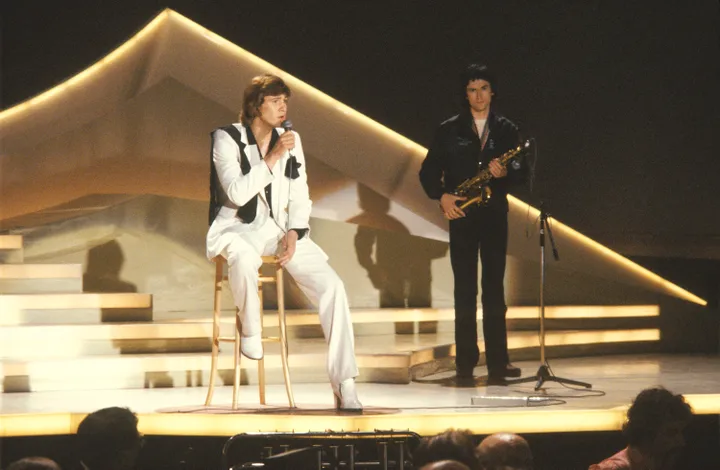
Eurovision icon Johnny Logan has backed his home country’s decision to withdraw from the competition.
Johnny earned himself the moniker the “King Of Eurovision” when he became the first act to win the song contest on three different occasions, as Ireland’s representative in 1980 and 1987, and as the writer of Linda Martin’s winning entry in 1992.
Last year, he backed calls for Israel to be removed from the Eurovision Song Contest in light of the ongoing conflict in the Middle East, similar to how Russia was banned in 2022 after its invasion of Ukraine.
“I really feel that in this case, RTÉ definitely made the right decision,” he told The Week in December 2025, after Ireland’s broadcaster withdrew from Eurovision in solidarity with Palestine.
He continued: “I don’t think that Israel should be allowed to hide under the umbrella of the Eurovision [and] make it look as though, everything’s okay, business as usual, because it’s not. I think most people in Ireland would agree with that.”

ullstein bild Dtl. via ullstein bild via Getty Images
Since then, Johnny has revealed he has repeatedly turned down offers to perform at Eurovision in light of the controversy.
“I’ve been asked three times, four times to be involved with the Eurovision Song Contest, the actual show this year, and I’ve had to say no because of my support,” he told Ireland AM at the end of April.
Noting that he’s “not antisemitic [nor] pro-Hamas or anything like that”, he continued: “I was asked to make my decision. My decision is to support the Irish Government and the Irish television position on this.
“I just wanted to make that clear because I get all these people I see on Facebook saying, ‘Johnny Logan says you can’t watch the Eurovision’. That’s not something I ever said.”
At the end of last year, Ireland was the first nation to pull out of Eurovision 2026 due to Israel’s involvement, followed quickly by Spain, The Netherlands, Slovenia and Iceland.
Eurovision 2026 officially gets underway in Basel, Austria this week, with the first semi-final airing on Tuesday, following singer JJ’s victory last year.


Worry often creeps in gradually rather than all at once. It can start with a passing comment, an incident at school, or a lingering “what if” that occupies a child’s mind longer than it should.
If left unchecked, this worry can envelop a child’s day, much like ivy wrapping around a tree, tightening its grip.
Anxiety can gradually erode a child’s confidence, sense of safety, and overall ability to enjoy life. It can manifest in various ways, from overt signs such as a child refusing to go to school or avoiding social situations, to more subtle expressions like irritability, sudden outbursts, or a façade of exaggerated confidence that conceals deeper unease.
Parents often find themselves navigating the complex landscape of supporting both neurotypical and neurodivergent children, striving to acknowledge their feelings while preventing those feelings from taking complete control.
The challenge lies in understanding how to give children’s worries the attention they deserve without allowing those worries to dominate their lives.
Ignoring anxiety doesn’t make it disappear; it often creates more space for it to grow, becoming louder and more persistent.
Conversely, giving anxiety constant attention can be equally unhelpful, allowing it to seep into everyday activities, especially during mealtimes, school runs, and bedtime when thoughts tend to rush in unfiltered.
Children require not endless discussion nor firm dismissal, but rather structure.
How ‘worry time’ can help
One effective approach I recommend to parents is known as “worry time”. This simple yet structured method helps children process their thoughts without allowing anxiety to spill over into every aspect of their day.
The concept is straightforward: just as a fast-growing plant requires a pot to contain it, worries need a designated space where they can be addressed safely and within limits.
‘Worry time’ is a brief, dedicated period, typically lasting 10 to 20 minutes, ideally scheduled around the same time each day, perhaps after school but well before bedtime.
It is crucial that this time is one-on-one, involving just one parent and one child, free from distractions. No phones, television, or interruptions – just focused presence.
During this time, children are encouraged to express whatever is on their minds. The parent’s role is not to solve problems immediately but to listen attentively. One of the most impactful questions a parent can ask is, “Do you want me to listen, or help you problem-solve?”
What happens the rest of the day matters most
While the designated time itself is important, the real power of ‘worry time’ emerges from how parents engage with worries outside of that period.
Inevitably, concerns will arise at other moments – on the way to school, during dinner, or just as bedtime approaches. Instead of diving into discussions during these moments, parents should acknowledge the child’s feelings but gently defer the conversation back to ‘worry time’.
A simple response could be, “I can see that’s really on your mind. Let’s talk about it in worry time. You could write it down so we don’t forget.”
This approach validates the child’s feelings while reinforcing an important boundary: worry has its place, but it does not need to dominate everything.
Over time, this practice helps children develop the essential skill of recognising their thoughts without feeling overwhelmed by them.
A growing need in a changing world
Many practitioners are witnessing a concerning rise in anxiety among children.
From 2019-2020, there were nearly 99,000 new referrals to NHS mental health services for patients aged 17 or under due to anxiety, a number that surged to over 204,000 in 2023.
As of early 2026, more than 550,000 children are on mental health waiting lists, with many awaiting treatment for over a year.
Whether these trends relate to long-term impacts of disrupted early experiences, increasing social pressures, or the rapid pace of modern life, the reality is stark: more children are struggling to manage the overwhelming volume of information and emotions they encounter daily.
This is particularly true for neurodivergent children, including those with ADHD, who often experience heightened sensory and emotional input. For these children, the world can feel more intense and overwhelming, making structured emotional processing not just beneficial, but essential.
Protecting space for joy
‘Worry time’ is not about eradicating anxiety, which is both unrealistic and undesirable.
Small doses of worry are a natural part of the human experience. Instead, the goal is to contain it – providing enough space for acknowledgment and processing without allowing it to overshadow everything else.
When worry is allowed to spread unchecked, it can constrict a child’s world. However, when it is gently contained within clear boundaries, there is space preserved for joy, connection, laughter, and simply being a child.
By offering children a dedicated space to address their worries, parents can help ensure that anxiety does not overshadow the moments of joy that are so vital to childhood.
Gee Eltringham is a SEN family psychotherapist and founder of twigged, the family membership for ADHD help and support.
Help and support:
- Mind, open Monday to Friday, 9am-6pm on 0300 123 3393.
- Samaritans offers a listening service which is open 24 hours a day, on 116 123 (UK and ROI – this number is FREE to call and will not appear on your phone bill).
- CALM (the Campaign Against Living Miserably) offer a helpline open 5pm-midnight, 365 days a year, on 0800 58 58 58, and a webchat service.
- The Mix is a free support service for people under 25. Call 0808 808 4994 or email help@themix.org.uk
- Rethink Mental Illness offers practical help through its advice line which can be reached on 0808 801 0525 (Monday to Friday 10am-4pm). More info can be found on rethink.org.
!function(n){if(!window.cnx){window.cnx={},window.cnx.cmd=[];var t=n.createElement(‘iframe’);t.display=’none’,t.onload=function(){var n=t.contentWindow.document,c=n.createElement(‘script’);c.src=”//cd.connatix.com/connatix.player.js”,c.setAttribute(‘async’,’1′),c.setAttribute(‘type’,’text/javascript’),n.body.appendChild(c)},n.head.appendChild(t)}}(document);(new Image()).src=”https://capi.connatix.com/tr/si?token=19654b65-409c-4b38-90db-80cbdea02cf4″;cnx.cmd.push(function(){cnx({“playerId”:”19654b65-409c-4b38-90db-80cbdea02cf4″,”mediaId”:”0c2500b0-fe3c-4b47-8c9c-63e44b391de5″}).render(“6a038a68e4b0cdaf88dbe691”);});

Eurovision organisers have addressed recent reports in the press suggesting that Israel could leave the competition in the near future to compete in an upcoming version specifically for countries in Asia.
Current Eurovision rules state that any country whose national broadcaster is part of the European Broadcasting Union (EBU) can compete in the annual song contest, which is why Israel has been part of it since 1973, despite not being in Europe.
Back in March, the EBU announced it was putting together the Eurovision Song Contest Asia, which is due to take place in Thailand towards the end of 2026.
Following the announcement, the Israeli outlet Ynet claimed on Monday that discussions had recently taken place at the EBU about Israel being removed from its currently-held place in the competition moving forward, so that it can take part in Eurovision Asia instead.
The article cited “two sources” who claimed that after the idea was “raised and discussed”, it was met with “partial opposition” from countries who’ve already agreed to take part in Eurovision Asia.

HANNIBAL HANSCHKE/EPA/Shutterstock
An EBU spokesperson said: “Discussions are ongoing with other broadcasters on joining the inaugural event in November.
“No broadcaster that takes part in the Eurovision Song Contest will be taking part in Eurovision Song Contest Asia.
“The event, like the Eurovision Song Contest, will be inclusive and celebrate being United by Music. Decisions on participation are taken by the organisers.”
Countries currently confirmed to be competing in Eurovision Asia in November are Bangladesh, Bhutan, Cambodia, Laos, Malaysia, Nepal, Philippines, South Korea, Thailand and Vietnam.
Last year, the rival competition Intervision was revived by Russia, which has been excluded from Eurovision since 2022 following its invasion of Ukraine, with 22 competing nations from around the world taking part, including China, Cuba, Egypt, Qatar, South Africa and the eventual winners, Vietnam.
Although controversy around Israel’s presence at Eurovision is nothing new, the competition has faced renewed scrutiny in recent years due to the country’s continued involvement.
Back in December, discussions took place among EBU members about whether Israel should be allowed to remain as part of Eurovision, with five nations withdrawing from this year’s contest after it was decided that Israel would be invited back in 2026.
Israeli representative Noam Bettan will perform in the first of the contest’s semi-finals in Basel, Austria on Tuesday night.
The Labour Party has descended into open warfare as Keir Starmer comes under enormous pressure to quit as prime minister after less than two years in the job.
Supporters of rival candidates turned their fire on health secretary Wes Streeting, who is expected to throw his hat into the ring if the PM announces his resignation.
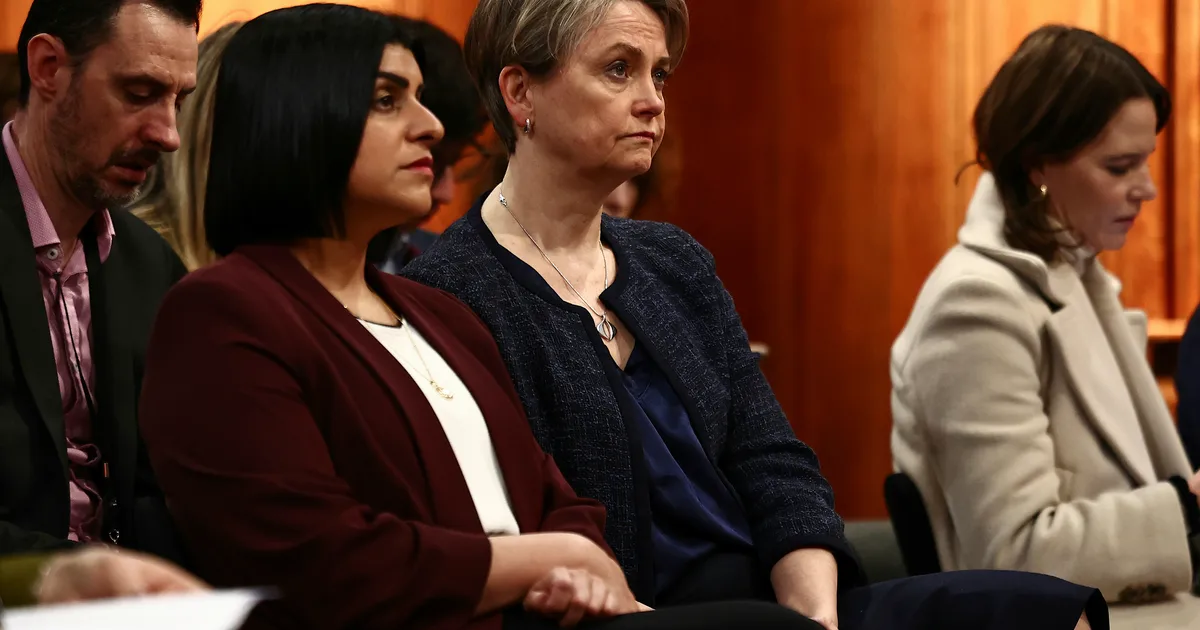
Starmer will chair his regular weekly meeting of the cabinet this morning, a day after four of them – Shabana Mahmood, Yvette Cooper, John Healey and David Lammy – told him he has to go following Labour’s drubbing in last week’s elections.
Energy secretary Ed Miliband is also understood to have communicated to No.10 that the PM should go.
But loyalists including Steve Reed, Pat McFadden and Richard Hermer have urged the PM not to give in, despite the fact that nearly 80 Labour MPs have also called on him to set out a timetable for his departure from No.10.
Starmer insisted in a make-or-break speech on Monday that he would not “walk away” from Downing Street.
He is understood to have spent last night discussing with key supporters whether he should battle on.
But one Labour source told HuffPost UK: “The game is up. It’ll happen today.”
Soft-left MPs want any contest to be delayed until later in the year to give Andy Burnham the chance to be re-elected and MP so he can take part in it.
They believe that a quick contest benefits Streeting, who they accuse of manufacturing the current crisis.
One told HuffPost UK: “It would be utterly shameless for Wes to plunge the party into chaos. It would prove to the whole country that the only person he is interested in is himself. Now is not the time for a contest.”
Another senior Labour figure said: “Wes has spent six months doing every thing he could to bring down the Labour government while publicly denying it. Now everyone can see him for what he is: a self interested lizard.”
Another Labour source warned that any new prime minister would have to call a general election within months.
They said: “These turkeys are literally voting for a Christmas election. Good luck winning your seat in December Shabana, John, Yvette and Ed.”
A government insider added: “Message to rebels – if you break it you own it. Whatever comes next is their responsibility.”
Darren Jones, the chief secretary to the prime minister and one of Starmer’s key lieutenants, this morning dodged questions about whether he will quit.
He told Times Radio: “As any leader would, he’s talking and listening to those colleagues. I can’t get ahead of what the prime minister may or may not decide.”
Subscribe to Commons People, the podcast that makes politics easy. Every week, Kevin Schofield and Kate Nicholson unpack the week’s biggest stories to keep you informed. Join us for straightforward analysis of what’s going on at Westminster.
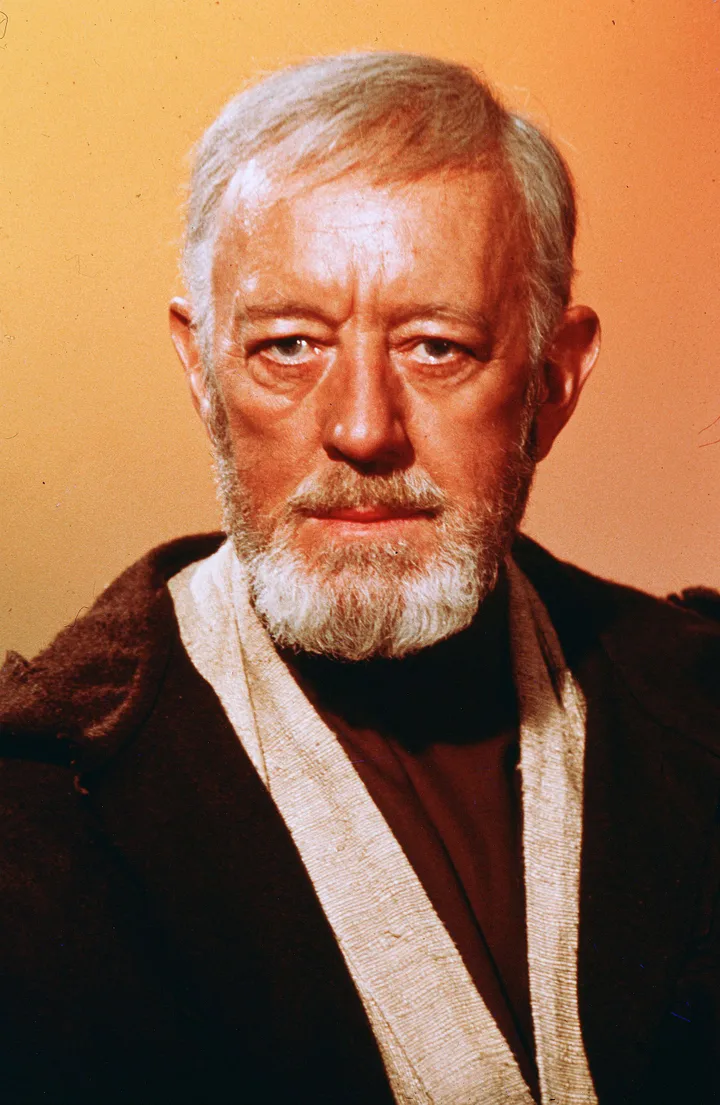
Sir Ian McKellen has said that his decision to speak out on issues surrounding LGBTQ+ community rights wasn’t always met with the most positive of reactions from his peers in the entertainment industry.
During a recent interview with The Guardian, Sir Ian was asked about the “worst piece of advice” that he’d ever been given, and recalled a time around the late 1980s or early 1990s when the late Star Wars actor Sir Alec Guinness invited him out for dinner.
“We chatted about this and that until he brought up the real reason for his invitation,” the Lord Of The Rings star explained.
“He had heard about my work to establish Stonewall – a lobby group to present to the government and the world at large the case for treating UK lesbians and gays equally under the law with the rest of the population.”
Sir Ian continued: “He thought it somewhat unseemly for an actor to dabble in public or political affairs and advised me, sort of pleaded with me, to withdraw. Advice from an older generation, which I didn’t follow.”

Lucasfilm/Fox/Kobal/Shutterstock
Following his death in August 2000, three different biographies alleged that Sir Alec was bisexual, but chose not to come out publicly in his lifetime.
Sir Ian admitted during his Guardian interview that he was reminded of his dinner with the late Oscar winner while watching a production of the show Two Halves Of Guinness, which he described as “a solo show which hints at Sir Alec’s latent bisexuality in a way that would have upset him, I suppose – Zeb Soanes’ immaculate impersonation notwithstanding”.
The six-time Olivier recipient – currently on the promo trail for his new movie The Christophers – came out as gay in 1994, and has continued to speak out on behalf of the LGBTQ+ community since.
In 2024, he told HuffPost UK of the current issues facing transgender people: “When society disregards a minority – and, worse than that, imposes laws and restrictions on their behaviour, which is really unfair – then that’s when society is going off the rails, and we have to attend to it.”
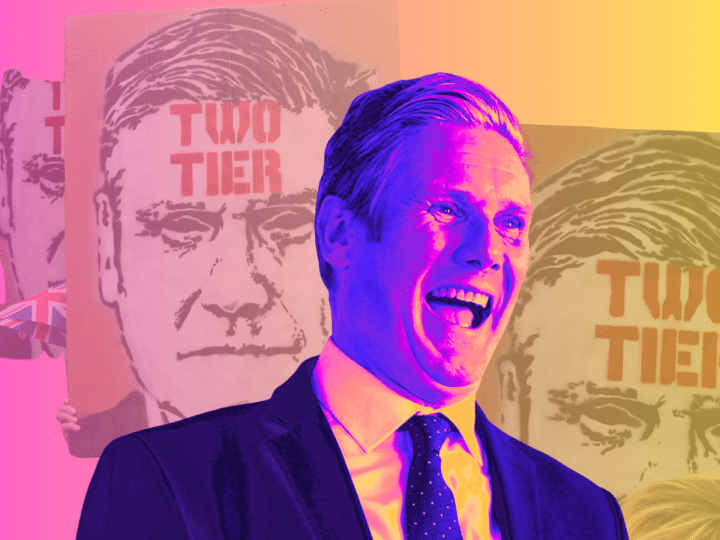

The Tribune Group of more than 100 Labour MPs have called for the prime minister to steer the party back to the left. Meanwhile, 81 MPs have demanded he stand down after Labour came third in the local elections when it comes to national vote share.
Suggested policies
Tribune Labour MPs have said Labour should:
- Introduce free buses for under 25s and universal credit claimers
- Raise capital gains tax
- Proportional property tax instead of stamp duty
- Reformed council tax
- Change government’s fiscal constraints to enable more borrowing
These are generally progressive policies, but they lack the overall economic strategy to significantly change the UK.
Also, encouraging bus use is a greener approach to travel. But why support Labour’s current policy of more expensive fares for the majority of those over 25? Labour rose the Tories’ bus fare cap from £2 to £3.
Further, raising capital gains tax towards the rate for income tax is a positive step. Capital gains is passive income and it doesn’t make sense for it to be lower than taxes on people working. Labour did raise it in its October 2024 budget, but it’s still the lowest in the G7.
Onto the next suggestion, a proportional property tax means that households pay a yearly fixed percentage of their home’s ‘value’ in tax. That’s opposed to the current stamp duty, where people pay a percentage of between 2% and 12% when they are buying a house.
A more robust policy would be to stop treating houses as an asset and for the state to provide them at cost price to the taste of the person or household. Then, the person or household re-pays for the cost of building and designing in affordable monthly payments.
Next, there’s council tax. It isn’t related to income, meaning many households pay more despite earning less. Reforming this would be welcome.
On the government’s fiscal rules, public investment is cheaper than private investment for infrastructure. The private sector pays higher interest and would charge the state or people to make profit. More borrowing, failing the use of debt-free fiat currency, is a better longterm solution.
‘Move left’ isn’t much for Labour
Given Labour is basically a corporate party under its current tragectory, the Tribune Group’s call for a move left may not mean much. But there are some worthwhile policies suggested.
Labour so far cut the winter fuel payment for pensioners then U-turned.
The leadership suspended Labour MPs for voting against the two child benefit cap, then U-turned and reinstated the benefit. The party has administered a huge rise in energy bills.
Any move to the left would be welcome after that.
By James Wright
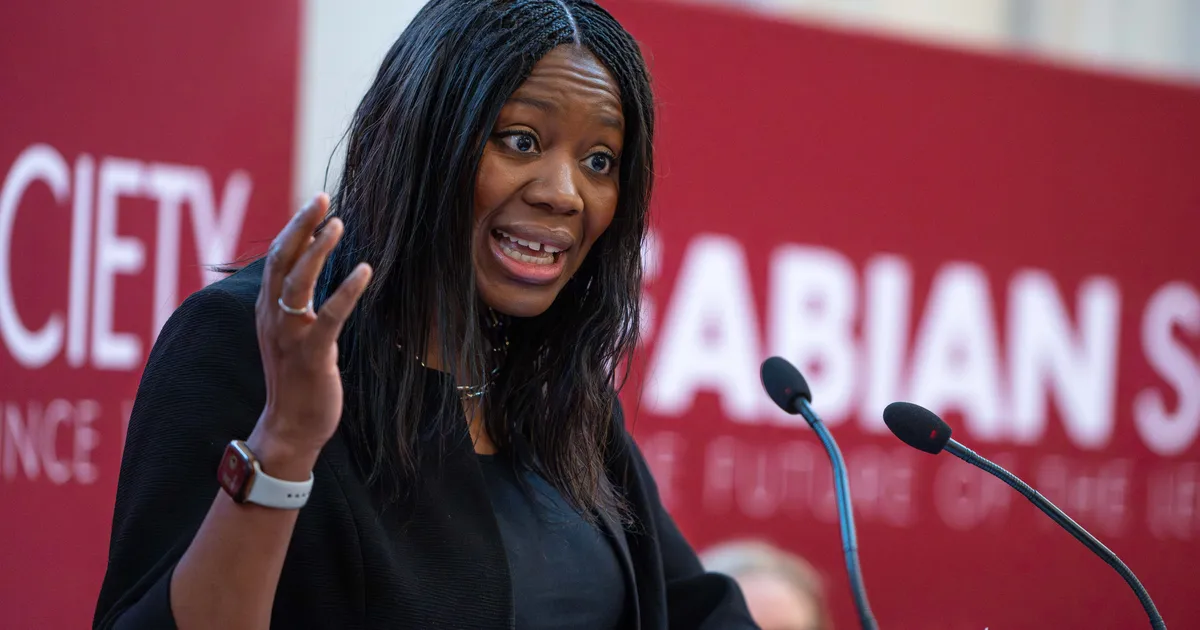
A government minister has resigned and called on Keir Starmer to set out a timetable for his departure.
Miattah Fahnbulleh was the minister for devolution, faith and communities, and has now added to the growing calls for the prime minister to quit.
She told Starmer: “The public does not believe that you can lead this change – and nor do I.”
More than 80 Labour MPs have now called on the prime minister to step down following the party’s drubbing at the elections in England, Scotland and Wales last week.
The prime minister has insisted he will not “walk away” from his job in No.10, and even claimed at the weekend he wants a decade in power.
However, Fahnbulleh has become the first government minister to officially give Starmer the push.
In a letter to the prime minister shared on social media, she said: “We have not acted with the vision, pace and ambition that our mandate for change demands of us. Nor have we governed as Labour Party clear about our values and strong in our convictions.”
She added: “Our country faces enormous challenges and people are crying out for the scale of change that this requires.
“The public does not believe that you can lead this change – and nor do I.
“Therefore I urge you to do the right thing for the country and the Party and set a timetable for an orderly transition so that a new team can deliver the change we promised the country.”
It comes after several senior cabinet ministers reportedly told Starmer to resign in private.
Subscribe to Commons People, the podcast that makes politics easy. Every week, Kevin Schofield and Kate Nicholson unpack the week’s biggest stories to keep you informed. Join us for straightforward analysis of what’s going on at Westminster.
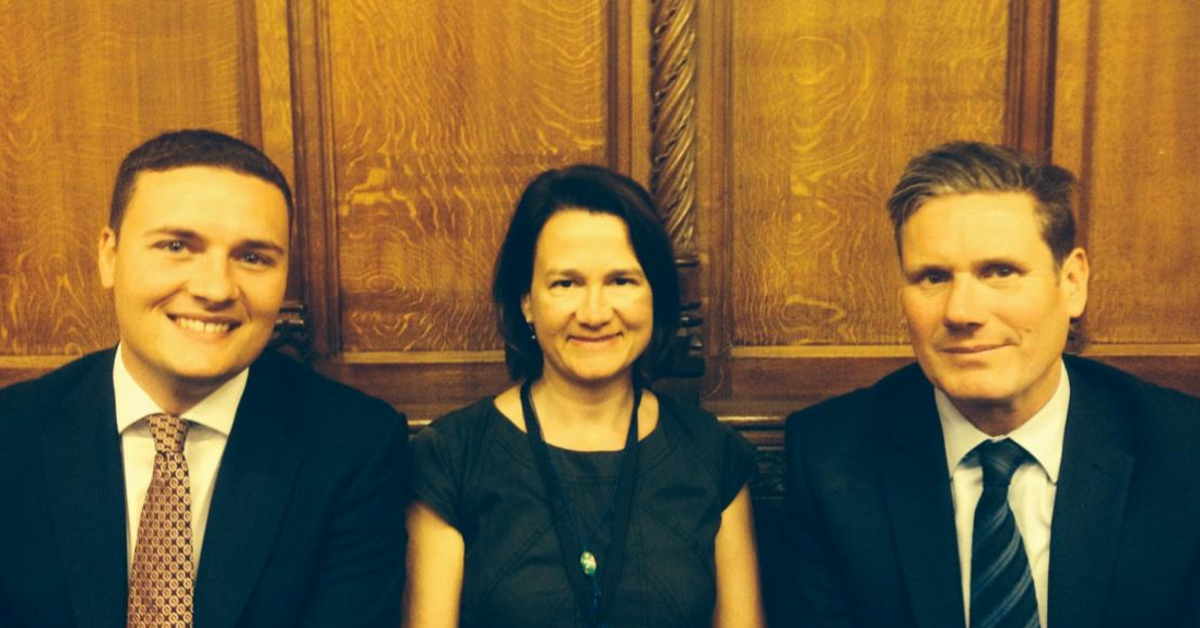
A photo posted by Keir Starmer almost exactly 11 years ago has stunned political pundits after it was unearthed this week.
The prime minister’s job is hanging by a thread as more than 80 MPs call for him to quit following Labour’s drubbing at the elections in England, Scotland and Wales last week.
Catherine West, a former foreign office minister, helped to galvanise the campaign to push Starmer out.
She offered to be a “stalking horse” candidate in a leadership challenge to the prime minister, meaning she would stand against him just to tempt other rivals out of the blocks.
While her bid ultimately failed – as did her subsequent attempt at a no confidence letter – she helped get the ball rolling this week by encouraging MPs to publicly announce they had lost faith in Starmer.
Meanwhile, health secretary Wes Streeting is thought to be one of the frontrunners in the next potential leadership race.
He has made his ambitions to be the next prime minister clear over several months and many of his allies in the Commons have already urged Starmer to resign.
So social media users were stunned when they found a photo of Starmer, Streeting and West together on their first day in the Commons after winning their seats in the 2015 general election.
The now-prime minister shared an image of himself with West and Streeting along with the caption: “Taking our seats for the 1st time.”
The image attracted a huge amount of interest – with many noting just how cruel a game politics can clearly be…
Subscribe to Commons People, the podcast that makes politics easy. Every week, Kevin Schofield and Kate Nicholson unpack the week’s biggest stories to keep you informed. Join us for straightforward analysis of what’s going on at Westminster.


Hull City finished the job at The Den, beating Millwall 2-0 in the second leg to win the tie 2-0 on aggregate and book a place in the championship play-off final.
Mohammed Belloumi opened the scoring midway through the second half and Joe Gelhardt added a second after coming off the bench to seal the victory.
Hull City AFC’s performance
The first leg was a major anticlimax finishing goalless, so the return leg was set for a winner to be decided at Millwall’s ground. Hull made the first breakthrough when Belloumi cut inside and curled a finish into the net.
That goal shifted momentum and Millwall’s plan as they were forced to chase the game. Just fifteen minutes later, Hull scored again with a swift counter that ended with Gelhardt striking low into the net, effectively ending Millwall’s hope.
The goals were the turning points in the game, each goal decisive not because of the quality but also the timings. Two different goals, but executed to perfection. The overall difference was Hull’s ability to land a killer blow whilst Millwall couldn’t find that cutting edge.
Tactical battle
Hull set up to be compact and aimed to be dangerous on the break. They ceded possession at times but organised in midfield to prevent any real danger for their defence.
Millwall tried to press and dominate territory, particularly in the first half, but struggled to make that control count by creating clear cut chances in front of Hull’s goal.
The introduction of the substitutions changed the game. Hull’s bench provided the spark, with Gelhardt’s immediate impact underlining the visitors’ game plan to use pace and power late in the game.
Bottom Line
Hull will now head to Wembley for the play-off final and are one match away from promotion to the Premier League after 16 years.
Their run this season to the play-off final has been notable as they finished sixth in the regular season and have become the first sixth-placed team in seven years to reach the final. A clear indication that form and momentum in May can outweigh league positions.
For Millwall, the season ends with near misses and questions about how to turn home advantage into the results that are needed in knockout scenarios.
Millwall will need to dust themselves off and begin to prepare for the same fight next season, getting to the play-off semi finals is a huge experience for a team that is hoping to reach the echelon of football in the Premier League.
Featured image via Hull Daily Mail
By Faz Ali


Israel has once again been caught dropping white phosphorus on civilian areas in Southern Lebanon — a blatant war crime — according to local and international human rights monitoring organisations.
This is white phosphorus.
Israel is raining white phosphorus bombs on civilian areas in South Lebanon.
Call it what it is: A WAR CRIME. https://t.co/PRry5wnQLX
— sarah (@sahouraxo) May 11, 2026
Reuters reported on X that:
Plumes of thick smoke were seen rising from southern Lebanon, following a series of Israeli airstrikes.
It’s a shame we’ve reached the stage of journalism where corporate outlets are incapable of stating the facts.
Reuters complicit in the ethnic cleansing of southern Lebanon by deliberately omitting the fact that this is a white phosphorus bomb.
Using white phosphorus near civilian populations is a war crime. https://t.co/J8kAksjCxv— courtneybonneauimages (@cbonneauimages) May 11, 2026
‘Plumes of thick smoke’ are, in fact, white phosphorous — a deadly incendiary weapon.
Dangerous incendiary weapon
As the Canary previously reported, white phosphorus is a highly reactive chemical substance which ignites instantly upon contact with oxygen. It’s incredibly hard to extinguish and sticks to surfaces such as clothing and skin. White phosphorus is extremely harmful to people, no matter the route of exposure. It causes deep and severe burns – often down to the bone, breathing problems, and burning of the eyes and respiratory tract.
The human body can absorb the chemical, causing dysfunction in multiple organs, including the liver, kidneys, and heart.
It burns at more than 800 degrees Celsius — nearly 1,500 degrees Fahrenheit — high enough to melt metal.
Importantly though:
The incendiary effects of white phosphorous can cause death or cruel injuries that result in lifelong suffering.
The use of incendiary weapons in civilian areas is a war crime for exactly this reason. Generations of Lebanese people will now suffer the consequences of Israel’s indiscriminate and illegal attacks.
According to the World Health Organisation:
The use of white phosphorus may violate Protocol III (on the use of incendiary weapons) of the Convention on Certain Conventional Weapons (CCCW) in one specific instance: if it is used, on purpose, as an incendiary weapon directly against humans in a civilian setting.
More war crimes
There is plenty of evidence of Israel’s unlawful use of white phosphorus as far back as 2009. Since October 7 alone, Israel has carried out over 1,000 illegal white phosphorus strikes in Gaza.
According to the Euro-Med Monitor, in 40 minutes alone, the IDF launched 300 white phosphorus strikes on a packed residential square in the northern Gaza town of Beit Lahia.
Journalists reported other attacks in crowded areas of Gaza City, the Al-Shati refugee camp, west of Gaza, and the Jabalia town and camp in the Strip’s north.
The sky above Al Shifa hospital in the north of Gaza, lit up by white phosphorous and war crimes: israelis are barbarians | via @xq_2zx pic.twitter.com/eJyw8GJKmn
— Sarah Wilkinson (@swilkinsonbc) November 10, 2023
Amnesty International first reported that the Israeli army was using white phosphorus in Lebanon in October 2023.
We are reporting on the ground close to the frontline. I$rael has indeed used white phosphorous, and has done so for some time, targeting civilian areas and agricultural land. We have spoken to civilians and local officials over the past two years, including those that have…
— Steve Sweeney (@SweeneySteve) March 17, 2026
Human Rights Watch also verified Israel’s use of white phosphorus on two locations along the Israel-Lebanon border and over Gaza City’s port.
By April 2025, Israel had already committed over 1,000 attacks in Southern Lebanon using white phosphorous.
Ecocide in the 2,000 year old olive tree groves of Marjayoun.
The Israelis have committed over 1k attacks using white phosphorous in south Lebanon. Approx 60k olive trees were damaged, and 2.8 square kilometers were burned.
In this photo you can see a small fraction of the damage https://t.co/K40EFIbBrB pic.twitter.com/w1gRCt9fvM— courtneybonneauimages (@cbonneauimages) April 11, 2025
Since then, Israel has continued to launch white phosphorus over civilian areas of Lebanon.
US origins
As the Canary previously investigated, the US Army supplies Israel with white phosphorus-filled projectiles.
The chemical agent can be deployed through artillery shells, bombs, rockets or grenades.
The white phosphorus itself comes from Israel Chemicals Ltd (ICL), which has a chemical manufacturing plant in St. Louis.
The US government contracted ICL to produce white phosphorus for the US Army, for:
a 5-year, indefinite-delivery, indefinite-quantity, fixed-price contract at $3,342,150.
ICL has 10 illegal quarries in the occupied West Bank, according to a report by the Israeli Ministry of Interior. Notably, ICL is also operating in the occupied Syrian Golan Heights.
Of course, it is no surprise that a country with a history steeped in colonialism is supplying incendiary weapons to a genocidal terrorist state.
Imagine the global outcry if Iran or Hezbollah were using white phosphorus on Israel? We would never hear the end of it. But because Israel is mainly terrorising Muslims, and the entire world is scared of Israel crying ‘antisemitism’, the world turns the other way.
Can Israel do anything within the bounds of international law?
Feature image via the Canary
By HG

The Funniest Show On TV Will Change The Way You Think About Education

Worry Time Could Help Kids (And Parents) Manage Anxiety Better

Sidney Crosby added to Team Canada roster for IIHF world championship

Manchester United reach agreement with Casemiro over contract clause amid transfer speculation

US brings back mandatory military draft registration

Steven Gerrard disagrees with Gary Neville over ‘shock’ Chelsea and Arsenal claim | Football


-
 Crypto World4 days ago
HarrisX Poll Found 52% of Registered Voters Support the CLARITY Act
-

 Fashion4 days ago
Weekend Open Thread: Marianne Dress
-

 Crypto World5 days ago
Upbit adds B3 Korean won pair as Base token gains Korea access
-
 NewsBeat6 days ago
NCP car park operator enters administration putting 340 UK sites at risk of closure
-

 Fashion1 day ago
Coffee Break: Travel Steam Iron
-

 Fashion2 days ago
What to Know Before Buying a Curling Wand or Curling Iron
-

 Tech3 days ago
Auto Enthusiast Carves Functional Two-Stroke Engine from Solid Metal
-

 Politics22 hours ago
What to expect when you’re expecting a budget
-

 Politics4 days ago
Politics Home Article | Starmer Enters The Danger Zone
-
 Business3 days ago
Ignore market noise, India’s long-term story intact, say D-Street bulls Ramesh Damani and Sunil Singhania
-

 Tech2 days ago
GM Agrees To Pay $12.75 Million To Settle California Lawsuit Over Misuse Of Customers’ Driving Data
-

 Crypto World6 days ago
BlackRock CEO Larry Fink Discusses a New Asset Class
-

 Entertainment6 days ago
Sarah Paulson Called Out For Met Gala ‘Hypocrisy’
-

 Entertainment5 days ago
General Hospital: Ric & Ava Bombshell – Ric’s Massive Secret Exposed!
-
 Sports6 days ago
NBA playoff winners and losers: Austin Reaves is not loving Lakers vs. Thunder matchup, but Chet Holmgren is
-

 Entertainment6 days ago
Bold and Beautiful Early Spoilers May 11-15: Steffy Revolted & Liam Overjoyed!
-

 Politics5 days ago
Simon Cowell Says He Was ‘Horrible’ To Susan Boyle During BGT Audition
-

 Sports6 days ago
UEFA Champions League final schedule, teams, venue, live time and streaming | Football News
-

 Crypto World6 days ago
Robinhood says Wall Street is building onchain
-

 Tech7 days ago
Apple and Samsung are dominating smartphone sales so thoroughly that only one other company makes the top 10
You must be logged in to post a comment Login