Connect with us
DAPA Banner
DAPA Coin
DAPA
COIN PAYMENT ASSET
PRIVACY · BLOCKDAG · HOMOMORPHIC ENCRYPTION · RUST
ElGamal Encrypted MINE DAPA
🚫 GENESIS SOLD OUT
DAPAPAY COMING

Tech

Why Audiologists Want You To Follow The 60-60 Headphone Rule

Published

on


Unfortunately, the likelihood of your hearing worsening overtime are higher than they’ve ever been, thanks in no small part to the fact that many of us walk around with headphones clamped to our heads or earbuds firmly planted into our aural canals. In fact, the World Health Organization (WHO) is so concerned about hearing loss that they’ve issued some very dire warnings that we should all pay attention to.

According to the WHO, 2.5 billion people will experience some degree of hearing loss by 2050, with at least 700 million requiring hearing assistance and/or rehabilitation. Right now, over 95 million kids between the ages of 5 and 19 already have some level of auditory impairment, and more than one billion (with a B!) more are vulnerable. The American Osteopathic Association reports that 1 in 5 teens will experience hearing problems, which is a 30% increase from just 20 years ago.

Both Dr. Kelly Conroy, a Mayo Clinic audiologist, and James E. Foy, DO, an osteopathic pediatrician from Vallejo, California, suggest one way to help prevent hearing loss is to follow what’s known as the 60/60 rule. Thankfully, it’s an easy rule to follow — the first 60 represents listening to a portable music device at just 60% of its maximum volume, while the second 60 refers to only listening for 60 minutes at any given time.

Advertisement

Hearing loss is no laughing matter

The 60/60 rule is based on scientific research conducted by audiologists and hearing experts that shows long-term exposure to loud noises can cause permanent damage. Many cells in the body can regrow or repair themselves, but not the cochlear hairs that line the inside of the ear. Those tiny hairs are important because they’re needed to convert sound into electrical signals that your brain can make sense of.

As you may know, sound is measured in decibels (dB). Everything under 70 dB is considered safe, but anything above that can be problematic. To put this all into perspective, a normal whisper registers around 30 dB, and a normal inside voice conversation typically sits around 60 dB. A vacuum cleaner hits 70 dB, and smaller DIY power tools and lawnmowers routinely exceed 71 dB. More powerful tools, like jackhammers, can easily surpass 120 dB, a range where instantaneous damage can occur.

Advertisement

So, what’s worse — headphones or earbuds? According to the experts, definitely earbuds. Yes, they’re more convenient and easier to carry around than big ole cans, but buds sit directly inside the ear, putting them much closer to the eardrum. Cranking the volume up will only cause damage more quickly. 

Something else buds do, that over-the-ear headphones don’t, is push wax and funk farther into the ear canal, which by itself can cause temporary hearing loss. Worst-case scenario: An infection takes root, turning your life into a nightmare that nobody wants to deal with. The WHO also advises that we should get our hearing checked annually, something most of us probably neglect.

Advertisement


Source link

Continue Reading
Click to comment

You must be logged in to post a comment Login

Leave a Reply

Tech

n8n embedded in SAP Joule Studio as AI orchestration layer, valuation doubles to $5.2 billion

Published

on

TL;DR

SAP embedded Berlin-based n8n inside Joule Studio as the orchestration layer for its Autonomous Enterprise platform, doubling n8n’s valuation to $5.2 billion and making the fair-code workflow automation startup Germany’s most valuable AI company.


Advertisement

Jan Oberhauser started n8n in 2019 as a side project in Berlin because the workflow automation tools he used at work were too expensive and too closed. Seven years later, SAP has embedded his company’s software inside Joule Studio, the agent-building environment at the centre of the Autonomous Enterprise platform that SAP unveiled at Sapphire last week. n8n’s valuation has doubled to 5.2 billion dollars. SAP took a stake of roughly 1.3 per cent. The side project is now Germany’s most valuable AI company, and the world’s largest enterprise software maker just told 300,000 customers that n8n is the orchestration layer their AI agents need.

The deal says less about n8n than it does about a gap in the enterprise AI stack that nobody else has filled.

The gap

SAP now has more than 200 specialised AI agents and 50 domain-specific assistants across finance, supply chain, procurement, human resources, and customer experience. The agents can automate a financial close, reconcile invoices, resolve procurement exceptions. What they cannot do, natively, is talk to the thousands of non-SAP systems that every enterprise runs alongside its ERP. The average large company operates between 200 and 400 software applications. SAP covers dozens. The rest are CRMs, ticketing platforms, communication tools, data warehouses, custom internal APIs, and the accumulated debris of two decades of SaaS procurement.

The 💜 of EU tech

Advertisement

The latest rumblings from the EU tech scene, a story from our wise ol’ founder Boris, and some questionable AI art. It’s free, every week, in your inbox. Sign up now!

n8n connects them. The platform offers a visual workflow canvas where developers and technical operators drag, drop, and wire together integrations between systems. It supports more than 1,000 integrations, over half of them built and maintained by technology partners, and can call any API with a generic HTTP node. The workflows can be triggered by events, scheduled on timers, or invoked by AI agents that need to take action in external systems. n8n runs on SAP’s Business Technology Platform cloud infrastructure, which means the data stays inside the customer’s SAP environment. It does not leave.

The multi-year commercial agreement makes n8n a native capability inside Joule Studio. SAP customers building agents in Joule can use n8n to connect those agents to systems outside the SAP ecosystem without writing custom integration code. General availability is planned for Q3 2026. The partnership also supports Cursor and Claude Code inside Joule Studio, but n8n is the workflow orchestration layer, the piece that turns an AI agent’s decision into an action across multiple systems.

The company

n8n was founded in Berlin in 2019 and operates under a fair-code licence, a model that makes the source code visible, allows self-hosting, and permits modification, but restricts commercial redistribution without a licence. The approach sits between open source and proprietary software. Users can inspect every line of code, deploy n8n on their own infrastructure, and build custom nodes. Enterprises that want managed hosting, support, and governance pay for n8n Cloud or an enterprise licence.

Advertisement

The model has produced 183,000 GitHub stars, making n8n one of the most-starred JavaScript projects in the world. It has more than 230,000 active users, over 3,000 enterprise customers including Microsoft, KPMG, Vodafone, Delivery Hero, Volkswagen, Decathlon, and Twitch, and annual recurring revenue of 40 million dollars growing at ten times year on year. Total funding is 240 million dollars, with a Series C led by Accel that included backing from Nvidia.

Accel raised five billion dollars in early 2026 for late-stage AI investments after returns from Anthropic and Cursor soared, and n8n sits in the same portfolio thesis: infrastructure tools that developers adopt bottom-up before enterprises buy top-down. Accel backed Anthropic at the model layer, Cursor at the coding layer, and n8n at the orchestration layer. The SAP deal validates the bet. A tool that 1.7 million developers chose voluntarily is now being distributed to 300,000 enterprises by the company that runs their back office.

The market

n8n competes with Zapier, which offers more than 7,000 integrations and has built its own AI agent capabilities, and Make, which provides a visual workflow builder with a strong following among marketing and operations teams. Both are closed-source, cloud-only platforms. Neither can be self-hosted. Neither exposes source code. In a market where enterprises increasingly demand auditability, data sovereignty, and the ability to run AI workflows inside their own infrastructure, n8n’s fair-code model is a structural advantage rather than an ideological choice.

The SAP partnership changes the competitive dynamics. Zapier and Make serve the long tail of small and medium businesses connecting SaaS applications. n8n now has a distribution channel into the largest enterprises on the planet through the software they already run. A procurement officer at Volkswagen does not evaluate workflow automation tools. They use what SAP provides inside Joule. n8n just became the default.

Advertisement

European technology leaders have argued that Europe’s competitive advantage lies in AI applications rather than AI infrastructure, building the tools that sit on top of foundation models rather than competing to build the models themselves. n8n is the embodiment of that thesis. It does not train models. It orchestrates them. It connects the intelligence that foundation model companies produce to the business systems where that intelligence creates value.

The European question

n8n is now Germany’s most valuable AI company and one of Europe’s most valuable startups. The 5.2 billion dollar valuation places it above most European enterprise software companies that have been operating for decades. It reached that valuation with 40 million dollars in annual revenue, a ratio that reflects the market’s judgement of what n8n’s revenue will become once the SAP distribution channel is fully operational.

Five European startups crossed the billion-dollar valuation threshold in the opening weeks of 2026 alone, spanning sectors from cybersecurity to defence technology. n8n’s trajectory illustrates a pattern that is becoming more common: European companies building developer-first tools that accumulate community adoption before converting that adoption into enterprise revenue through partnerships with established platforms.

Europe’s scaleup ecosystem faces structural growth barriers including fragmented markets, talent competition, and the absence of the hyperscale distribution channels that American startups access through partnerships with AWS, Google, and Microsoft. n8n’s SAP deal is a European answer to a European problem. SAP is headquartered in Walldorf, 600 kilometres from n8n’s Berlin office. The distribution channel is European. The enterprise customers are global. The infrastructure runs on SAP’s own cloud. For a continent that has struggled to turn technical innovation into market-scale enterprise businesses, the partnership is a template.

Advertisement

The orchestration layer

The enterprise AI stack is settling into distinct layers. Foundation model companies build the intelligence. Application companies embed that intelligence into domain-specific software. But between the model and the application sits a layer that is less visible and arguably more valuable: orchestration. The part that connects an AI agent’s reasoning to the systems where that reasoning must produce an action. The part that routes a procurement approval from Joule to a Slack notification, a Jira ticket, a DocuSign envelope, and a general ledger entry, in sequence, with error handling, retry logic, and an audit trail.

That is what n8n does. That is why SAP embedded it inside the platform it is betting its future on. The model layer has Anthropic, OpenAI, and Google competing on benchmarks. The application layer has SAP, Salesforce, and ServiceNow competing on process coverage. The orchestration layer, the glue that makes agents useful across systems rather than within them, had no incumbent. n8n just became one.

Building a scaleup requires an ecosystem, and n8n’s ecosystem was never a corporate partnership programme or a venture-backed growth playbook. It was 183,000 developers who starred a repository, built custom integrations, filed issues, and told their colleagues. SAP did not discover n8n through a vendor evaluation. It discovered n8n through the developers inside SAP’s own customer base who were already using it. The side project from Berlin became the orchestration layer of the Autonomous Enterprise because the developers got there first.

Advertisement

Source link

Continue Reading

Tech

Elon Musk Had ‘Hair-Raising’ Idea of Passing OpenAI Onto His Kids, Sam Altman Says

Published

on

Sam Altman took to the witness stand to defend his reputation in the Musk v. Altman trial on Tuesday, as Elon Musk’s lawyers peppered the OpenAI CEO with hours of questions regarding his alleged history of deceptive behavior.

The cross examination was a much needed win for Musk, who has so far struggled to make a convincing case. Tuesday’s testimony included several heated exchanges in which the OpenAI CEO had to respond to allegations from former colleagues suggesting he’s untrustworthy.

Highlighting this evidence is not only important for Musk winning over a jury, but also for beating OpenAI in the court of public opinion. Days before the trial started, Musk texted OpenAI President Greg Brockman and told him that he and Altman would soon “be the most hated men in America.”

Musk’s lawsuit accuses Altman of effectively stealing the OpenAI charity, and taking the $38 million Musk donated to the non-profit organization and using it to create a for-profit business worth more than $850 billion.

Advertisement

However, there was little evidence on Tuesday to address the gaps in Musk’s legal case. Altman and Sam Teller, Musk’s former chief of staff, testified on Tuesday that they did not recall Musk ever attaching any special conditions to his donations to OpenAI. Additionally, it appears increasingly likely that Musk filed his case too late, years after he made his last donation to OpenAI and developed suspicion that the organization had breached its charitable trust. By then, the statute of limitations had already expired.

Brockman and his wife, Anna, sat in the gallery alongside OpenAI’s chief futurist, Joshua Achiam. While Altman and Brockman were present to watch Musk on the witness stand, Musk did not stay for Altman’s testimony. (Flight records suggest he was traveling to the Washington, DC area on Tuesday to fly to China with President Donald Trump.)

Before fielding questions from Musk’s lawyers, Altman had the chance to tell his side of the story, answering gentle questions from OpenAI’s lawyers. Wearing a purple tie, Altman painted himself as an entrepreneur and investor who’s always been fascinated by, and concerned about, the power of artificial intelligence.

Altman testified that Musk has long been obsessed with controlling OpenAI. He recalled “a particularly hair-raising moment” when Musk suggested that control of OpenAI should pass to his children if Musk were to die. “We didn’t feel comfortable with that,” Altman said. Altman also suggested that Musk’s attempt in 2018 to start an AI unit within Tesla—and offering him the chance to run it—felt like a “vague, lightweight threat” that Musk would effectively crush OpenAI with or without him.

Advertisement

Bombarding Altman

Steven Molo, Musk’s lawyer, wasted no time in his cross examination, asking Altman:“Are you completely trustworthy?” as his first question. Altman responded that he believes so, and then Molo immediately asked whether the jury should trust the testimony he just gave. Altman responded, “That’s up to them. I’m not going to tell the jury what to think.” Here’s the heated exchange that followed, as best as WIRED could capture it:

Molo: Do you always tell the truth?

Altman: I’m sure there is some time in my life where I have not.

Molo: Do you tell lies to advance your business interests?

Advertisement

Altman: No.

Molo: Have you misled people with whom you do business?

Source link

Advertisement
Continue Reading

Tech

Google launches line of Android laptops festooned with Gemini AI

Published

on

Personal Tech

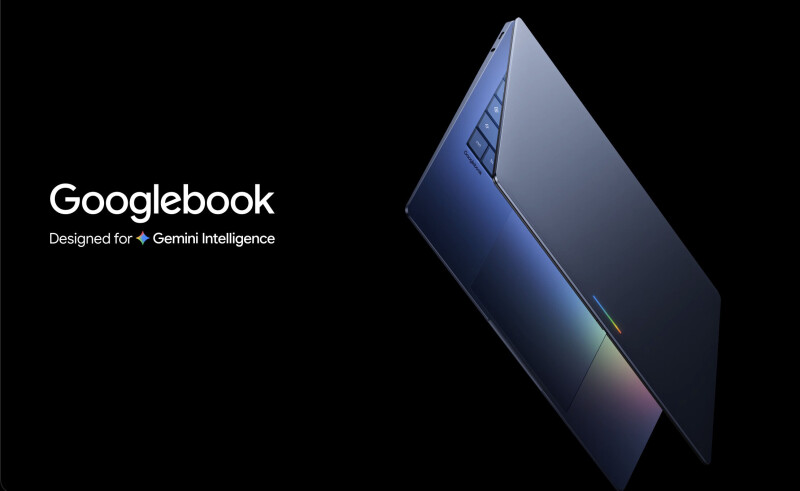
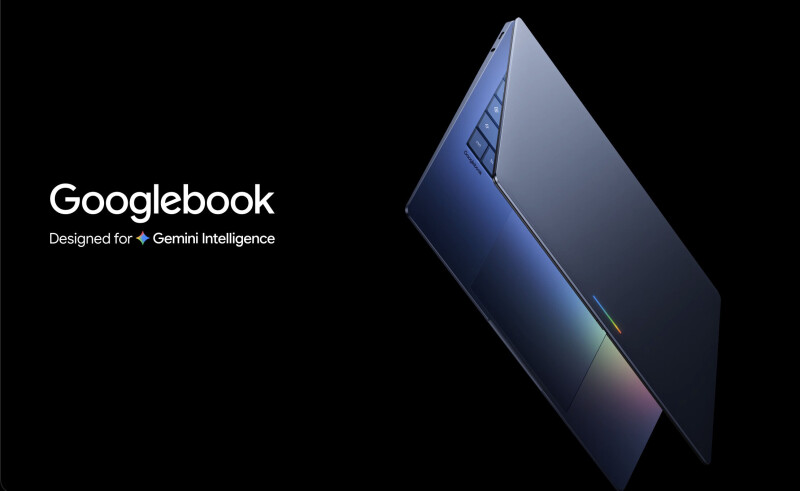
Googlebook promo imagery from a Google video on the product launch

Google is rolling out a new line of laptops based on Android instead of ChromeOS, and using the opportunity to try and move upmarket from the budget-conscious Chromebooks – while also baking AI into every fissure of the system.

Advertisement

The new line of so-called Googlebooks seems even more obtrusive about pushing embedded AI than Windows 11 embedding Copilot into everything. With the OS on Googlebooks, which the company touts as the best of Chrome OS and Android, even moving the cursor over an on-screen task such as the text of an email nags you to offload work to Gemini. 

Google was has been publicly planning to merge Android and ChromeOS for a while, with Android boss Sameer Sama saying last year that the Android codebase would be the core of the new platform.  This gives the company a chance to break into the premium laptop market, using one of its core assets, the Android ecosystem, to differentiate from the kid-friendly and budget-oriented Chromebook lineup.

While the laptops won’t be coming until later this year, we can already see from the press materials and video demo that this new kind of notebook is meant to out-Copilot Microsoft. One of the main features demoed, Magic Pointer, activates when you wiggle the cursor and shows you contextual suggestions based on what you hover over. For example, in the video, Alexander Kuscher, Senior Director of Laptops and Tablets at Google, showed how hovering over the date in an email brought up options to view his schedule, craft a reply saying “I’m in town on May 19,” or even use Google maps to suggest meetup spots. Having AI crammed into Windows Notepad seems quaint by comparison.

Kuscher also showed how dragging images on a Googlebook can combine them. He dragged a photo of a nursery onto an image of a swath of wallpaper and a picture of a crib and the system generated a picture of the nursery with the crib and the wallpaper included. The Google exec pointed out that an act like combining photos normally involves logging into a chatbot, uploading the photos, and giving it a prompt. Here it was just drag and drop. No word on whether the system can use your photos as training data.

Advertisement

Android apps will also work on Googlebooks, and users will also be able to launch them from the phones, much like Apple’s iPhone Mirroring. In the demo, Kuscher showed Duolingo running in a portrait-shaped window on the desktop operating system as if it were on his phone.

Google said that Googlebooks are being “built with premium craftsmanship and materials” by partners like Acer, ASUS, Dell, HP, and Lenovo. They also sport a Google-colored glowbar on the cover so everyone knows who owns your digital soul.

Considering the RAM shortage and the fact that IDC expects PC shipments to decline by 11.3 percent in 2026, Google has picked a challenging time to come out with a whole new category of laptop. While the company has not released pricing, we can only imagine that Googlebooks will be significantly more expensive than Chromebooks, which are currently in the $200 to $500 range in the US. 

These new notebooks are likely to compete with premium consumer Windows and macOS laptops at a time when demand is declining and people are holding onto old devices longer. We see no evidence that Google is even targeting businesses and we doubt IT departments would be interested in the features the company has focused on.

Advertisement

Google also announced the expansion of Gemini Intelligence onto high-end Android devices (i.e., Samsung Galaxy and Google Pixel devices) as part of Tuesday’s I/O preview, noting that it’s designed “to help your phone handle boring tasks for you.” Google provides examples like filling out online forms, summarizing websites, and even rewriting voice-to-text messages to get rid of pauses and other natural speech patterns that detract from the written word. 

Speaking of Chromebooks, we asked Google what will become of its budget hardware line with the release of the Googlebook, but we didn’t hear back. We imagine that they will probably continue to serve the educational market for some time.

Google made several other announcements during Tuesday’s presentation, including a new Pause Point feature in the upcoming Android 17 that follows in Apple’s steps by protecting you from your own worst instincts to scroll endlessly or waste half your day playing chess on your phone. It allows you to mark certain apps as “distracting” so that when you launch them, the phone asks you to take a deep breath and reconsider your actions, which is something Apple’s mindfulness app doesn’t do. 

To the bane of everyone tired of social media reaction videos, Google is also baking the format right into Android with Screen Reactions that will allow users to capture video of their device screen along with sticking themselves in the lower corner so they can regale everyone with their opinion about whatever they’re talking over. ®

Advertisement

Source link

Continue Reading

Tech

Kevin Hartz’s A* just closed its third fund with $450M

Published

on

Early-stage venture firm A* on Tuesday announced a $450 million Fund III. The firm takes a generalist approach, backing companies across categories such as AI applications, fintech, healthcare, and security.
The average check size for this fund will be between $3 million and $5 million, with the aim to back at least 30 startups. The capital will be deployed over the next two to three years, as with the firm’s previous funds. Limited partners include nonprofits, foundations, and endowments; Carnegie Mellon University is among the publicly named backers.

A*, founded in 2020 and run by Kevin Hartz and Bennett Siegel, previously raised a $315 million Fund II in 2024 and a $300 million Fund I in 2021. Hartz is a serial entrepreneur best known for co-founding Xoom, the international money-transfer service PayPal later acquired for $1.1 billion in 2015, and Eventbrite, the event-ticketing platform that went public in 2018. Siegel came up through Boston Consulting Group and Altamont Capital Partners before spending four years as a partner at Coatue Management.

The firm has also drawn attention for backing unusually young founders, even as the practice has become more common since. Hartz told TechCrunch last fall that close to 20% of the firm’s current portfolio involve teenage entrepreneurs. Among others of its investments, it has backed the fintech company Ramp and the AI firm Mercor.

This story was updated to clarify the name of the firm.

Advertisement

Source link

Continue Reading

Tech

OpenAI acquires Tomoro as founding piece of $14 billion Deployment Company

Published

on

TL;DR

OpenAI is acquiring Tomoro, the Edinburgh-based AI consulting firm it was born alongside, as the founding acquisition of its $14 billion Deployment Company — copying Palantir’s forward-deployed engineer model to close the gap between AI capability and enterprise adoption.


Advertisement

Tomoro was created in 2023 in alliance with OpenAI. The Edinburgh and London-based firm built AI concierges for Virgin Atlantic, in-game support agents for Supercell, and deployment systems for Fidelity International, Tesco, Red Bull, Mattel, and the NBA. It grew monthly revenue tenfold in 12 months. It pledged 10 million pounds to Scottish AI talent. It employed roughly 150 forward-deployed engineers and deployment specialists whose job was to sit inside client organisations and make OpenAI’s models work in production.

On Monday, Tomoro announced it has signed an agreement to become the founding acquisition of the OpenAI Deployment Company, the 14 billion dollar subsidiary that OpenAI launched with more than four billion dollars in initial capital from 19 investment firms. The deal is subject to regulatory approval and standard closing conditions. The model company just became the services company. The AI lab that spent a decade building intelligence is now building the consulting army to install it.

The subsidiary

The 💜 of EU tech

The latest rumblings from the EU tech scene, a story from our wise ol’ founder Boris, and some questionable AI art. It’s free, every week, in your inbox. Sign up now!

Advertisement

OpenAI launched the Deployment Company with four billion dollars from a syndicate led by TPG, with Advent International, Bain Capital, and Brookfield as co-lead founding partners. The remaining 15 investors include SoftBank, Goldman Sachs, Warburg Pincus, B Capital, BBVA, Emergence Capital, and consulting firms Bain and Company, Capgemini, and McKinsey. OpenAI holds a majority ownership and control stake. The structure guarantees its private equity backers a 17.5 per cent annualised return over five years.

The subsidiary exists because enterprise AI adoption has hit a wall that better models cannot fix. OpenAI’s annualised revenue reached 25 billion dollars in February 2026. Enterprise customers represent more than 40 per cent of that figure and are on pace to reach parity with consumer revenue by the end of the year. More than a million businesses use OpenAI’s products. But the gap between using a product and deploying it inside core business operations remains enormous. Model performance is no longer the bottleneck. Integration, change management, security review, evaluation harnesses, and the slow work of redesigning business processes around AI are the actual constraints.

The Deployment Company’s answer is to place engineers directly inside client organisations, partnering with those companies’ own teams to identify the highest-value opportunities and build production systems on site. The model is not new. It belongs to Palantir.

The playbook

Palantir pioneered the forward-deployed engineer model over years of defence and intelligence engagements where software had to work inside institutions too complex and too classified for remote support. The company sent its own engineers directly to intelligence agencies, military clients, and later private-sector companies because its platform was nearly unusable without heavy customisation. That operational intimacy drove Palantir’s US commercial revenue to surge 133 per cent year on year, and the FDE model has been credited with generating 640 per cent returns for early investors.

Advertisement

OpenAI is applying the same logic to a broader market. Tomoro’s 150 engineers become the founding cadre of a deployment operation that will scale through further acquisitions funded by the four billion dollar war chest. The engineers will not sell software. They will sit inside enterprises and build the systems that make OpenAI’s software produce business outcomes. The distinction matters. A software licence is a product. An embedded engineer is a relationship. The relationship generates switching costs that no competing model can erode.

Anthropic’s own multi-billion-dollar fundraising has signalled that the AI lab model is evolving beyond research and into enterprise infrastructure. Anthropic has built a 1.5 billion dollar joint venture with Blackstone, Hellman and Friedman, and Goldman Sachs that operates as its own deployment arm. Google has committed 750 million dollars to fund partners deploying agentic AI. The three largest foundation model companies have independently concluded that the money is not in selling intelligence. It is in installing it.

The acquisition

Tomoro was structured from inception as an OpenAI-aligned consultancy. Its co-founders, Rishabh Sagar, Albert Phelps, Chris Spencer, Ed Broussard, Chloe Kelleher, Ash Garner, and Sandi Chanda, built the firm around a single premise: that the gap between AI access and AI deployment was a business in itself. They were right. In two and a half years, Tomoro assembled a client list that most consulting firms spend a decade building.

At Supercell, the Finnish gaming company behind Clash of Clans, Tomoro launched an in-game support agent serving 110 million users in 12 weeks. The system processes 500 million daily tokens on GPT-4o and 200 million on GPT-4o-mini across five games, reduced the cost of resolving a support ticket by 90 per cent, raised customer satisfaction scores by 20 per cent, and delivers an average response time of seven seconds. At Virgin Atlantic, Tomoro built an AI travel concierge that handles booking queries and customer service. The firm quadrupled its headcount in the 12 months before the acquisition.

Advertisement

Sebastian Steinhaeuser, who serves as SAP’s chief operating officer, described Tomoro in different terms last week when discussing the SAP-n8n partnership. But the Deployment Company’s own framing is revealing. Tomoro is the “founding acquisition,” language that implies it is the first of many. The four billion dollar capital base is explicitly earmarked for scaling operations and acquiring firms that can accelerate the mission. Tomoro is not the Deployment Company. It is the template.

The threat

Accenture’s stock fell three per cent on the announcement. Cognizant dropped five per cent. Infosys declined four per cent. The market’s immediate verdict was that OpenAI had entered their business. UBS maintained its buy rating on Accenture, arguing that scale advantages in legacy infrastructure, regulated environments, and geographic coverage make the two companies more complementary than competitive. The argument has merit in the short term. In the long term, it misses the point.

The consulting industry’s business model rests on a simple asymmetry: clients know less about a technology than the consultants they hire to implement it. That asymmetry is durable when the technology is complex and general-purpose, like ERP systems or cloud migration. It erodes when the technology vendor decides to close the gap itself. OpenAI is not licensing its models to consultants and hoping they deploy them well. It is embedding its own engineers inside the same clients that Accenture, Deloitte, and McKinsey serve, with deeper access to the models, faster iteration cycles, and a direct feedback loop into the next generation of capabilities.

Google committed 750 million dollars to finance agentic AI deployments through partners including Accenture, Deloitte, and KPMG, choosing to fund the existing consulting ecosystem rather than compete with it. OpenAI chose differently. It built its own. The consulting firms that invested in the Deployment Company are hedging, putting money into the entity that threatens to displace them in the hope that partnership will protect what competition would destroy.

Advertisement

The pattern

The Deployment Company is part of a broader shift in which AI companies are vertically integrating into services. Anthropic’s joint venture with Blackstone and Goldman Sachs. Google’s partner fund. Palantir’s FDE expansion. Salesforce’s Agentforce with its 540 million dollars in annual recurring revenue and 18,500 enterprise customers. The model layer is commoditising. The application layer is fragmenting. The services layer, the part where engineers sit inside companies and make AI work, is where the margins are migrating.

Europe’s largest startup funding rounds in 2026 reflect the same pattern, with capital flowing toward companies that deploy AI inside enterprises rather than companies that build AI in laboratories. Tomoro’s journey from Edinburgh to the centre of OpenAI’s enterprise strategy is an extreme version of the trend: a consulting firm so aligned with its technology partner that the partner absorbed it entirely.

SoftBank assembled a 40 billion dollar bridge loan to fund its OpenAI investment, capital that flows through to subsidiaries like the Deployment Company and the acquisitions it will make. The financial architecture behind OpenAI’s enterprise push is not venture capital. It is private equity, structured returns, and leverage at a scale that no consulting firm can match. Accenture’s annual revenue is 65 billion dollars. The Deployment Company launched with a 14 billion dollar valuation and a mandate to acquire.

The gap

Tomoro’s own announcement was characteristically understated. “Our belief hasn’t changed,” the company wrote, “but the scale of the mission has.” The belief, as Tomoro articulated it from the beginning, is that AI should be shaped around how people think and create, redefining how work gets done. The scale is now 300,000 enterprises that OpenAI wants to convert from product users into production deployers.

Advertisement

The deployment gap is real. Eighty-eight per cent of organisations report using AI in at least one business function. Only a third have scaled it enterprise-wide. The distance between those two numbers is the market that the Deployment Company was created to serve. Tomoro’s 150 engineers are the first wave. The four billion dollars will fund the next. And the 17.5 per cent guaranteed return tells the private equity backers exactly how confident OpenAI is that the gap will close on its terms.

The model company built the intelligence. The Deployment Company will install it. Tomoro, the Edinburgh firm that existed for 30 months, is where the installation begins.

Source link

Advertisement
Continue Reading

Tech

Rivian’s New AI Assistant Knows What You Mean, Not Just What You Say

Published

on

Electric truck and SUV manufacturer Rivian on Tuesday announced the rollout of its new Rivian Assistant AI via software update to all compatible R1T and R1S owners subscribed to its Connect Plus cellular data plan. The new functionality will also be unlocked for the upcoming R2 at launch later this year. Powered directly by the EV’s onboard hardware and software rather than layered atop a phone-mirroring system or living in the cloud, Rivian’s Assistant will gain native access to almost all vehicle systems — which enables advanced features beyond just answering questions.

Rivian first announced at its Autonomy & AI Day event last year that an AI-powered in-vehicle assistant was coming. At the time, the automaker’s engineers and software developers detailed how it planned to use the powerful compute hardware in its R1 and R2 series EVs for everything from a new generation of driver-assist and autonomous features to Rivian Assistant, which ships today. For current and future Rivian owners, the feature set is substantive enough to be worth the wait.

Unified Intelligence, the platform underneath

Rivian Assistant sits on top of what the automaker calls Unified Intelligence, described as “a multimodal AI foundation” that runs across the company’s products and operations. Basically, it’s Rivian’s version of the shared-AI-backbone pitch that automakers and tech giants have been making in various forms for a few years now. The idea is that the same “unified” AI model can learn from customer data, vehicle telemetry and operational context together rather than treating each data set as a separate silo to provide more comprehensive and useful functionality to you, the end user.


Advertisement
Wassym Bensaid, Rivian Tech Head, introduces Rivian Assistant on stage

First announced in December, Rivian Assistant is now rolling out to R1 EVs.

Antuan Goodwin/CNET

The promise is that the assistant will become more capable and more personalized over time. It learns driver preferences, retains context across sessions (stored in each driver’s profile), and uses real-time vehicle logs to inform its responses. Whether that learning loop delivers measurable year-over-year improvements (and whether automakers like Rivian can be good stewards of drivers’ privacy) will take time to evaluate. At the very least, the architecture enables such improvements in ways that basic voice command systems don’t.

What can Rivian Assistant do for you?

Holding the left steering wheel button or saying, “Hey, Rivian,” tells the assistant to start listening. The basic vehicle control functions range from the familiar — call Mom, navigate home, adjust the temperature, etc. — to more advanced tasks like changing drive modes, adjusting ride height, opening the front trunk or checking range-on-arrival estimates. The utility of such voice commands is proven and well-covered.

Advertisement

More interesting are the context-aware commands. Instead of requiring precise phrasing, the assistant parses natural language and interprets intent. Rivian’s own example — “Make everyone’s seat toasty except mine” — is a good illustration of what this looks like in practice. The system understands the implicit (all seats except the driver’s) and executes accordingly. That’s a different category of interaction than “set passenger seat heat to level 2,” and the kind of thing that makes voice control actually useful for normal people rather than just people who speak like robots.

Navigation works in natural language as well. You can ask for a coffee shop near your destination rather than searching by category in the map UI, or ask for directions without specifying the exact address. Media queries follow a similar pattern; you can ask when a song came out or ask for something similar to what’s playing. None of this is revolutionary relative to what smartphone assistants do, but the integration with the vehicle’s native software and hardware is tighter than what you get through Android Auto or Apple CarPlay. (Though the latest generation of vehicles running native Google Built-in software seems similar.)

Rivian infotainment showing Assistant parsing a request to "Make all seats warm except mine"

Being able to understand natural language and intent is what makes the difference between a useful feature for regular folks and voice command system for techies who talk like robots.

Advertisement

Rivian

Messaging is handled through AI-assisted dictation that goes beyond simple voice-to-text. The assistant reads incoming texts, summarizes them, and helps draft replies. For anyone who’s tried to compose a text by voice while driving and ended up with something barely coherent, the summarization and drafting layer looks like a genuine improvement.

Additionally, Rivian says the assistant is grounded in real-time vehicle data and has a custom-built system for the owner’s manual, meaning you can ask operational questions — “How do I change a tire?” or, “What does this warning light mean?” — and get answers specific to your vehicle and its current state rather than a generic response pulled from the web. Even for car enthusiasts and automotive experts like me, this vehicle knowledge base is sure to be one of the more practical and useful features.

Agentic Google Calendar framework

The most forward-looking piece of the rollout is the agentic integration with Google Calendar, which Rivian is positioning as the first in a series of external connections. The pitch is straightforward: Managing calendar events through your phone while driving is a bad idea, and doing it through a native vehicle assistant promises to be safer and faster.

The integration allows you to check your schedule, reschedule appointments or execute multistep tasks in a single voice command. Rivian’s example walkthrough — checking your schedule, finding a coffee stop on your route, and texting your ETA to a contact, all as one continuous flow — illustrates the agentic part of this. Rather than issuing three separate commands and waiting for each to complete, here Rivian Assistant acts more like a human flunky you’ve delegated a task to and chains the steps together — at least, that’s the vision.

Advertisement
rivian assistant: what's on my calendar demonstrated by Bensaid onstage

At the AI Day event, Rivian demonstrated Assistant’s deep integration with Google Calendar.

Antuan Goodwin/CNET

What comes after Google Calendar hasn’t been specified yet. The word “first” is doing some load-bearing in Rivian’s announcement, suggesting a pipeline of integrations yet to be announced.

Privacy and availability

According to the automaker, owners will retain control over the data Rivian Assistant collects. The “Hey, Rivian” wake word can be toggled off, location sharing can be restricted and the memory feature — which stores personal context across sessions and trips — can be disabled entirely. Data is tied to individual driver profiles, not the vehicle, which feels like the right approach for multi-driver households.

Advertisement

Full Rivian Assistant functionality requires an active Rivian Connect Plus data subscription or an active trial and is currently available in English only. Rivian hasn’t announced any pricing changes (still $15 per month or $150 per year) or bundling adjustments alongside this rollout, so the math on Connect Plus’ value is somewhat better than it was before this feature existed, particularly for owners who were on the fence about renewing.

Source link

Advertisement
Continue Reading

Tech

Hackers attack Foxconn again, Apple doesn’t appear to be at risk

Published

on

Apple supply chain partner Foxconn suffered a cyberattack at its Wisconsin facility.

More than 10 million documents spanning 8 terabytes of data were reportedly stolen from Foxconn’s network. Confidential AMD, Google, and Intel projects are at risk of exposure, but Apple’s tech appears to be safe.

Even with Apple’s extensive security measures for pre-production designs, the company’s supply chain partners often fall victim to cyberattacks. In December 2025, an Apple assembler in China was targeted by attackers, with the same thing happening to Luxshare in January 2026.

Now, Foxconn has become the latest Apple supply chain and assembly partner to suffer a cyberattack. On Tuesday, the company confirmed its facility in Mount Pleasant, Wisconsin, had been impacted by the attack in May 2026.

Advertisement

Ransomware group Nitrogen claims to have taken 8TB of data, or over 11 million files. “These include files such as confidential instructions, projects, and drawings from Intel, Apple, Google, Dell, Nvidia, and many other projects,” reads the group’s announcement.

Nitrogen also posted a collection of sample files, meant to serve as proof of the alleged attack. While AppleInsider won’t share links to the allegedly stolen files, we did analyze the sample provided by the group to gain a better understanding of the scope of the attack.

The attackers seemingly stole financial documents related to Foxconn’s Houston, Texas, facility. Also stolen was documentation related to Foxconn temperature sensors, integrated circuits, board layouts, and more.

Additionally, the files appear to contain network topology documentation related to AMD, Intel, and Google projects, including files related to server processors, sockets, and other components. The sample set seems to contain files related to Foxconn’s electrical engineering team more than anything else.

Advertisement

It’s not clear if there are any files directly related to existing or future Apple projects. This ultimately doesn’t serve as much of a surprise, given that Foxconn’s Mount Pleasant facility primarily produces televisions and data servers rather than Apple devices.

Based on the sample provided, it does not look like Nitrogen obtained any Apple schematics, documentation related to Foxconn’s Apple product development teams, or Apple quality control data.

Foxconn’s manufacturing facilities, be they in China, India, or elsewhere, are typically protected via an internal VPN. While the facility network typically encompasses on-site computers, Foxconn plants do communicate with one another and with Apple via email.

As the group has documents related to Foxconn’s Houston, Texas, facility, they may have acquired additional data from facilities beyond the one in Wisconsin. In other words, Nitrogen might have obtained Apple designs from a separate Foxconn factory, maybe through emails or file-sharing servers.

Advertisement

While it’s difficult to ascertain exactly what was taken, given the group allegedly stole 8TB worth of files, it does not look like Apple has much to worry about.

How the Foxconn cyberattack allegedly happened

As noted by the Wisconsin publication TMJ4, Foxconn’s Mount Pleasant facility experienced a network outage in early May 2026 because of a cyberattack. Production was allegedly interrupted for around a week, but has since resumed.

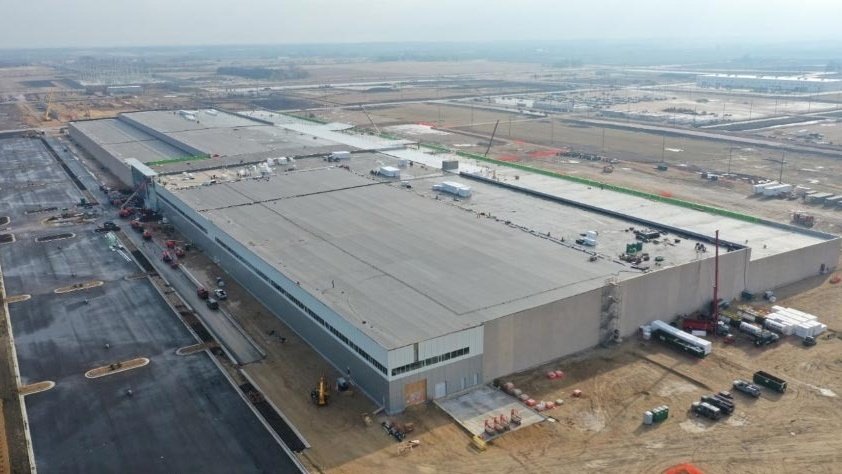
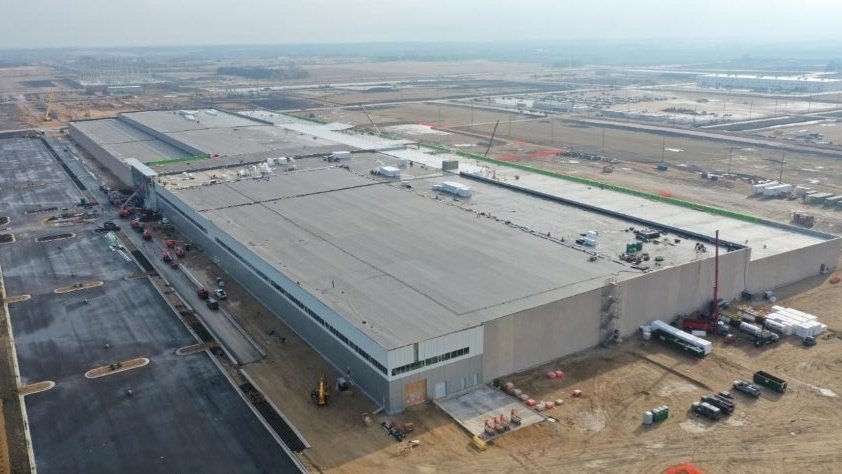
Aerial view of a massive rectangular factory under construction, surrounded by dirt, cranes, scattered equipment, and newly paved roads, stretching across a flat, hazy industrial landscape

Foxconn’s Wisconsin plant in 2020.

Per The Cybersec Guru, the facility’s network began experiencing issues on May 1, with Wi-Fi being cut off at 7 AM ET, and disruptions to the core plant infrastructure occurring by 11 AM ET. Manufacturing seemingly remained affected until May 12, 2026.

Advertisement

“We were told to turn off our computers and not log back in under any circumstances,” allegedly said an unnamed worker. “The timecard terminals were dead. We were filling out paper timesheets just to track our hours.”

Analyst Mark Henderson claims that “the topology specs for Google and Intel are the real concern.” He explains that these are “architectural maps of live infrastructure,” and that attackers could use the data to identify vulnerabilities in data centers across the world.

The ransomware group behind the attack, Nitrogen, has been around since 2023. The group seems to have ties to the BlackHat/ALPHV ransomware and is known for utilizing a double-extortion model. This means it resorts to encrypting data and later threatening to leak it.

However, according to Coveware, Nitrogen’s ESXi encryptor has a critical flaw. During encryption, the files’ public key gets corrupted, meaning that victims are unable to receive decrypted files even if the ransom is paid.

Advertisement

The full scope of the cyberattack targeting Foxconn’s Wisconsin facility remains to be seen. Judging by the available information, however, it’s unlikely we’ll see Apple’s product designs surface as a result of the hackers’ efforts.

Source link

Advertisement
Continue Reading

Tech

NASA’s Perseverance Rover Has Added Another Self-Portrait to its Collection from the Surface of Mars

Published

on

NASA Perseverance Rover Selfie Mars 2026
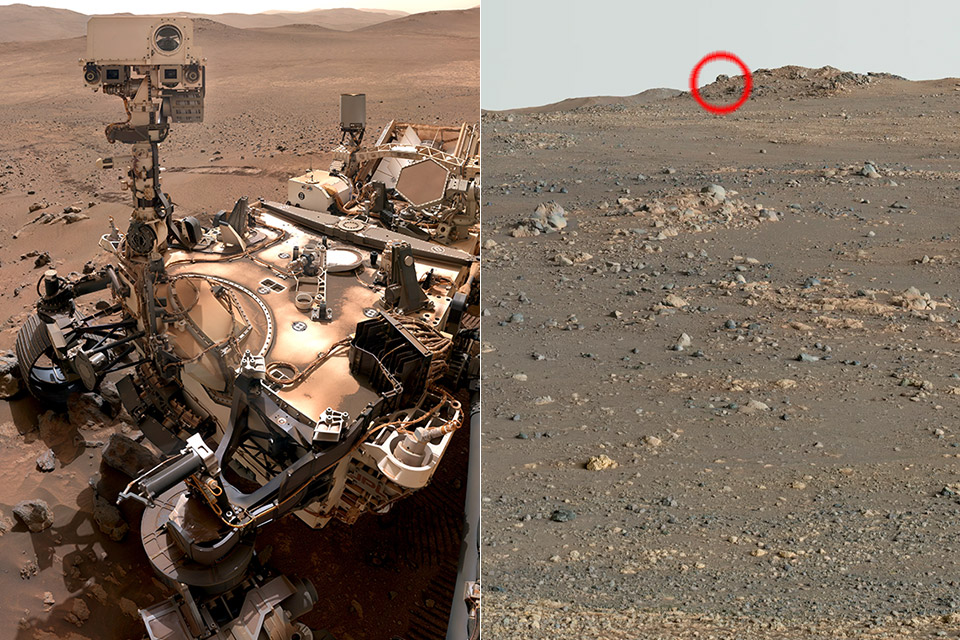
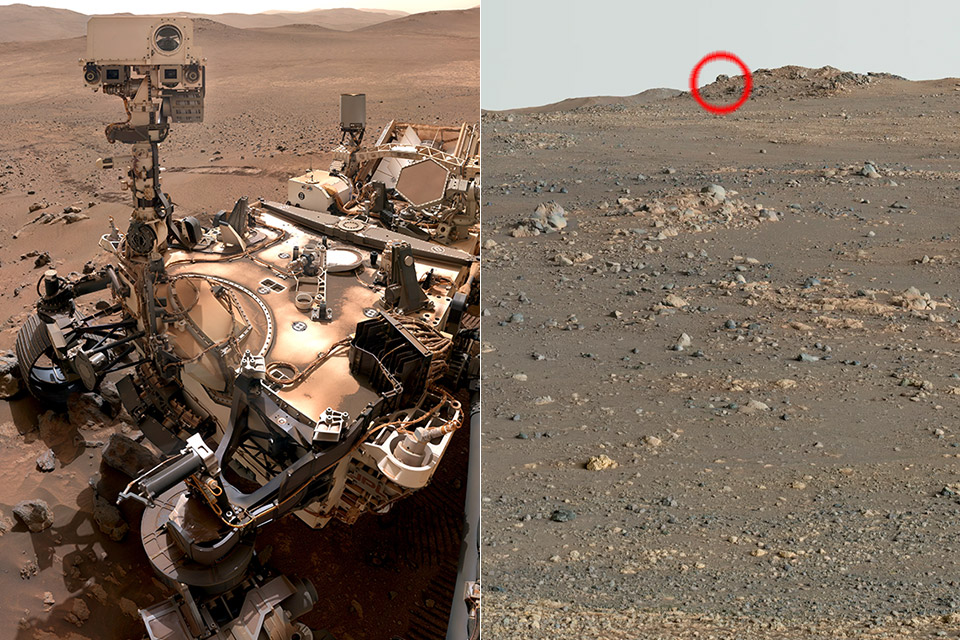
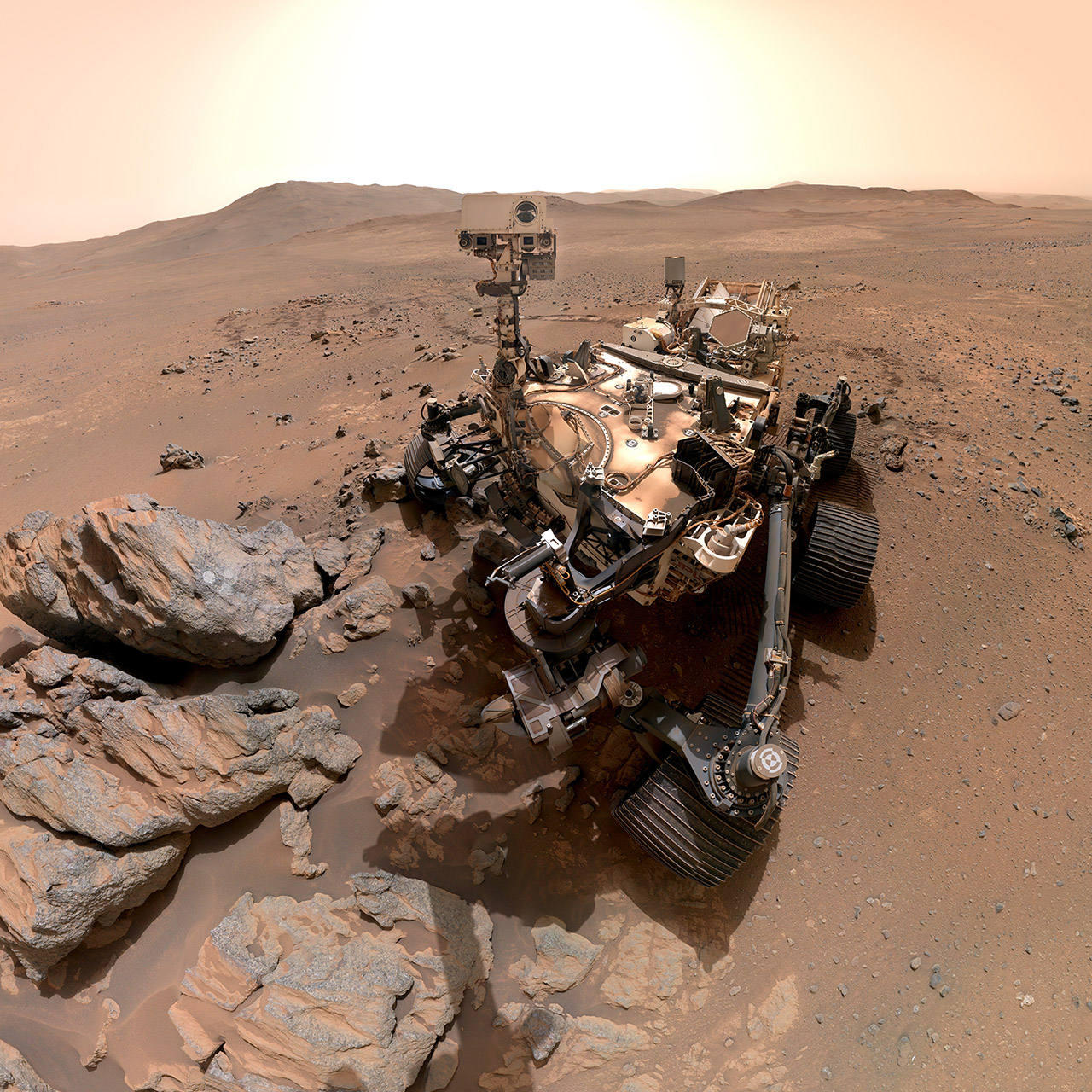
In the frame, NASA’s six-wheeled Perseverance rover is securely planted on a stretch of dirt far to the west of Jezero Crater. You can see its mast dipping down towards Arethusa, the rocky protrusion we’ve all become familiar with, before swinging back around to face the camera full on. Years of driving have created a fine layer of dust on the rover and its wheels, catching the light and creating a beautiful warm glow. Meanwhile, a new circular mark on Arethusa indicates where the rover dug in with its biters and removed a portion of the surface to examine what was hidden beneath. The robotic arm in front, with the WATSON camera attached to its end, is the one that took it all in.


Sixty-one separate exposures went into the final composite. The arm performed sixty-two precise shifts across roughly one hour on March 11, 2026, the 1,797th Martian day of the mission. Each small adjustment let the camera capture another slice of the rover and its surroundings until the pieces fit together into one complete portrait.

Sale


LEGO Technic NASA Mars Rover Perseverance Building Toys – STEM Model Kit for Boys & Girls, Ages 10+ Years…
  • Feed a passion for science and technology – Kids can learn more about the challenges of space exploration with this LEGO Technic NASA Mars Rover…
  • Conduct a test flight – This advanced building kit for kids ages 10 and up includes a buildable toy version of NASA’s Ingenuity helicopter, which…
  • AR brings the mission to life – The accompanying augmented reality app experience lets kids dive into the details of the rover and its mission

Beyond the rover, the landscape stretches in all directions. The western rim of Jezero Crater is made up of all these ancient rock layers that continue on for as far as the eye can see beneath that pale, pale sky. The land around the rover is covered with boulders and strange ridges that have formed over billions of years. We name that area Lac de Charmes, and it’s all the way out on the western side, the farthest Perseverance has gotten since it landed five years ago.

Advertisement

NASA Perseverance Rover Selfie Mars 2026
The rock named Arethusa drew the rover here for good reason. After the abrasion the team studied the freshly exposed material and found it consists of igneous minerals with large crystals that formed deep underground long before Jezero Crater itself existed. Those crystals point back to some of the earliest chapters in Mars history, when molten rock cooled slowly far beneath the surface.

Moments like this one are a big part of what keeps the mission going, as Perseverance is currently in the middle of its fifth science campaign on the northern rim, collecting data that helps connect the younger sedimentary layers inside the crater to the much older stuff that’s exposed outside. So far, the rover has cut a piece out of 62 rocks, filled 25 sample tubes, and explored about 26 miles of terrain, which is just a couple of miles shy of a full marathon.

Source link

Advertisement
Continue Reading

Tech

Foxconn confirms cyberattack after Nitrogen claims Apple, Nvidia data theft

Published

on

cyber-crime

Affected factories back up and running, we’re told

Foxconn, a critical supplier for major hardware companies like Apple and Nvidia, on Tuesday confirmed a cyberattack affecting its North American operations after the Nitrogen ransomware gang listed the electronics manufacturer on its data leak site.

“Some of Foxconn’s factories in North America suffered a cyberattack,” a Foxconn spokesperson told The Register. “The cybersecurity team immediately activated the response mechanism and implemented multiple operational measures to ensure the continuity of production and delivery. The affected factories are currently resuming normal production.”

Advertisement

Nitrogen ransomware criminals on Monday claimed to have breached the Taiwan-based company and stolen 8 TB of data comprising more than 11 million files. The miscreants say the leaks include confidential instructions, internal project documentation, and technical drawings related to projects at Intel, Apple, Google, Dell, and Nvidia, among others.

Foxconn declined to confirm that these – or any – customers’ information was hoovered up in the digital intrusion.

Nitrogen, which has been around since 2023, is believed to be one of the various ransomware offshoots that borrowed code from the leaked Conti 2 builder.

And, in what may be very bad news for its latest victim, even paying the ransom demand may not guarantee recovery of encrypted files.

Advertisement

In February, Coveware researchers warned that a programming error prevents the gang’s decryptor from recovering victims’ files, so paying up is futile. The finding specifically concerns the group’s malware that targets VMware ESXi.

This isn’t the first time Foxconn has been targeted by ransomware gangs. In 2024, LockBit claimed to have infected Foxsemicon Integrated Technology, a semiconductor equipment manufacturer within the Foxconn Technology Group. The same criminal crew also hit a Foxconn subsidiary in Mexico in 2022. ®

Source link

Advertisement
Continue Reading

Tech

Instructure Pays Canvas Hackers To Delete Students’ Stolen Data

Published

on

Instructure, the company behind the widely used Canvas learning platform, says it reached an agreement with the hackers who stole 3.5 terabytes of student and university data. The company says it received “digital confirmation” that the information was destroyed and that affected schools and students would not be extorted. The BBC reports: Paying cyber criminals goes against the advice of law enforcement agencies around the world, as it can fuel further attacks and offers no guarantee the data has been deleted. In previous cases, criminals have accepted ransom payments but lied about destroying stolen data, instead keeping it for resale. For example, when the notorious LockBit ransomware group was hacked by the National Crime Agency, police found stolen data had not been deleted even after payments had been made.

Instructure said in a statement on its website that protecting students’ and education staff data was its primary motivation. “While there is never complete certainty when dealing with cyber criminals, we believe it was important to take every step within our control to give customers additional peace of mind, to the extent possible,” the company said. Instructure did not set out the terms of the agreement but said that it meant that:
– the data was returned to the company
– it received “digital confirmation of data destruction”
– it had been informed that no Instructure customers would be extorted as a result of the incident
– the agreement covers all affected customers, with no need for individuals to engage with the hackers

Source link

Continue Reading

Trending

Copyright © 2025