A two‑year‑old British boy has reportedly been abducted in Cyprus as police launch a huge search operation after he was allegedly taken by his father from the family home in Limassol.
Advertisement
Officers say the 29‑year‑old Turkish Cypriot crossed illegally from the island’s north before entering the property, where he is accused of snatching the child from his British mother.
The man is believed to have stormed the property with an accomplice, forcing his way inside before fleeing in a small white car. A manhunt is under way, and investigators have already examined the suspected getaway vehicle as part of the operation.
Police believe the man returned to the island’s northern Turkish-occupied territories, with an island task force alerted to the incident.
Advertisement
Limassol deputy police chief Lefteris Kyriakou said an arrest warrant is set to be issued for the father, who is already subject to another arrest warrant relating to a domestic abuse incident in November 2025.
The British mum is part of the ‘Hope’ program which offers support to victims of domestic abuse, local outlet Protothema reports.
Council leaders have praised the work of the officials formerly in charge of the local authority, who helped draw up the initial idea for the major redevelopment several years ago.
At the heart of the transformation is not just a shiny entrance building, as the current council leader put it, but better connectivity between the Tees Valley and the rest of the country.
Significant work has taken place since the first spade entered the ground four years ago to ensure Darlington’s new transport hub is fit for the future.
The idea was tabled up to 20 years ago amid growing concern that the station could be downgraded, meaning it could lose mainline services. Darlington is a key station along the East Coast Main Line, but the station’s platform and track layout have previously hindered any chances of improvements.
“There was huge concern about the impact it would have on Darlington and the Tees Valley with fewer trains travelling here, reducing the number of people visiting for business or visiting friends and family,” said Steve Harker, council leader.
After several meetings in the corridors of power at Westminster, the then council leader Bill Dixon successfully ensured the railway station was not under threat. “Clearly, the work they did provided the initial building blocks to where we are today,” added Cllr Harker.
From early on in the building work, politicians said the project will boost the town’s image as the “gateway to the Tees Valley”, with the region’s mayor saying it could replicate the model seen at London’s Kings Cross station.
Advertisement
Tees Valley Mayor Ben Houchen said: “For a long time, the station has been neglected and we need to make sure when people get off the train, whether it’s visiting for tourism or business, we set the right impression from the first moment – and Darlington station is going to play a key role in that.”
The overhaul is also intended to improve reliability and capacity on the East Coast Main Line, improving the frequency and reliability of trains along the line and across the region.
Speaking on the eve of the opening, Cllr Harker told a council meeting: “The main benefits of the new station are not so much the shiny building, which is very visible and large, it is the changes that have been made to the platforms and track in and around the station.
“As a result, there is a much greater capacity for mainline services, allowing more trains to stop at the station. Equally important for the Tees Valley is that it will allow for much more frequent and regular services into the region.”
Advertisement
The first opening of the redeveloped station comes a year after the historic 200th anniversary of the opening of the Stockton and Darlington Railway, when numerous events were held to celebrate the region’s important role in the life of the railway.
Cllr Harker added: “We have a new station that is fit for the future and signifies the importance of Darlington and the Tees Valley on the rail network and the wider country.”
This is a very nice way to prepare plaice. It’s OK grilled and nice tranches are good roasted on the bone, but I don’t think anything can beat it cooked in breadcrumbs. This somehow brings out the best in this fish. The acidity and texture of a good chunky tartare sauce makes a perfect foil.
Plaice start to become good around May and they get fatter and juicier as the year goes on, well into August. If you can get a fillet from a kilo-plus-sized fish you can cut it into four portions. I think these are the best.
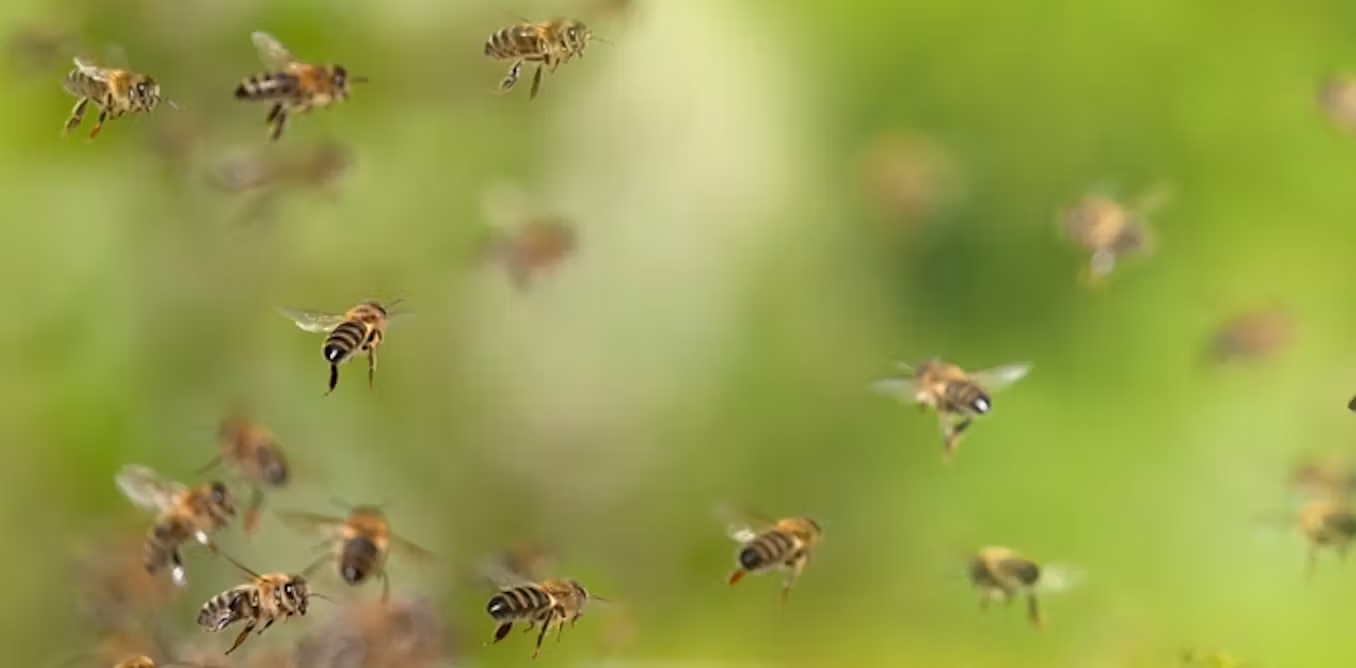
The importance of bees for pollinating wild plants and crops is well known. If we lose the bees, we lose our food. But this is only part of the picture. Bees also support a hidden network of other species, sometimes as mutual partners, sometimes as prey, sometimes as other unwilling victims.
Many organisms depend on bees for survival, and many of these interactions are not mutually supportive. Some predators focus on bees, for example bee wolves (Philanthus triangulum), capture bees to feed their young in their underground nests.
It’s not just insects, vertebrates depend on bees too. Birds such as bee‑eaters and great tits, as well as some species of bat consume bees as part of their diet, while badgers and foxes often raid nests for larvae and honey. And, of course, humans have been eating honey from before there were written records.
Advertisement
Playing host to unwelcome guests
Around 40% of animals are actually parasites and bees support a wide range of these species. The wingless fly Braula coeca, sometimes referred to as the bee louse, lives on honey bees, feeding on their secretions. Though small, these parasites are a constant presence in some colonies.
A spider preparing to eat a bee. EUIP/Shutterstock
Another parasite, Sphaerularia bombi, the nematode (a type of worm-like creature), enters bumblebee queens during hibernation. Once inside they inflate, filling much of the queen’s body. When she emerges in the spring, this queen has been neutered by the parasite and is no longer able to find a new family. She instead just acts as a vehicle to spread the parasite to new sites.
Some bees need other bees to help them survive. Cuckoo bees infiltrate the nests of bumblebees. After they gain access they suppress the bumble bee queen and force her workers to raise their young.
Invading the lives of bees
Sometimes parasitic interactions go one step further and ultimately kill the bee by spending part of their lifecycle within their host. Strepsiptera are an unusual insect, which most people may not have heard of. Stylops are one genus of Strepsiptera which live in the abdomens of bees, visible only by a small protrusion in the abdomen. But when it is time for Stylops to mate they explode from the abdomen of their bee host, killing it.
Advertisement
Bee flies definitely deserves a mention, as they bear a striking resemblance to bees. In the UK, species such as Bombylius major dance around flowers with their fuzzy, bee‑like bodies. While the adults are harmless and actually serve a role as pollinators themselves, their larvae are parasitoids of solitary mining bees. Parasitoids are defined as those that live on (or in) their host eventually killing it, a subset of parasites. The females flick their eggs into the entrances of bee nests and when they hatch, the larva consumes bee eggs or young larvae before feeding on the pollen stores.
Using bees to hitch a ride
Some species just use bees for transport. Mites such as Chaetodactylus attach themselves to solitary bees in order to travel between nests. Their larvae however, are less benign. They greedily consume the pollen stores of nests, occasionally eating eggs.
Perhaps even weirder however are the trigulins (or larvae) of blister beetles. These often cluster around flowerheads. They wait for bees, only to then climb on board for a free ride – using them as a free taxi to a nest where they feed on its contents with a particular fondness for bee eggs.
Pseudoscorpions are a distant relative of scorpions. They bear a striking resemblance to true scorpions, but these instead of carrying a sting in their tail, use the bee for a free ride. Hanging on to the bees with their pincers they use the bees as a taxi, but in their case just as a way to save energy on long-distance travel.
Advertisement
In the end, bees – whether they are solitary bees, mining bees, honey bees or bumble bees – are far more than pollinators. They support a much wider ecosystem. Countless other organisms rely on bees as hosts, prey, transport, or providers of food and shelter every day. Without bees we would not only lose those plants they pollinate but also those animals that need the bees to feed them and help them reproduce.
From hidden coves on the Durham coast to wide, remote sands in Northumberland, the region has a scattering of under-the-radar beaches where visitors can enjoy fresh sea air, long walks and a far more peaceful atmosphere than at the busier seaside favourites.
Hawthorn Hive
Hawthorn Hive on the Durham Heritage Coast is one of the region’s best hidden spots. It has a rugged, secluded feel that makes it popular with walkers and photographers rather than crowds of day-trippers.
One visitor described the wider coastal walk to Hawthorn Hive as “a cracking walk with lots of variety and interest,” while another said the views along the cliffs were “some of my favourite views on the County Durham coast.”
Easington Beach
Easington Beach in County Durham offers a more open, understated seaside experience.
Advertisement
It suits longer walks and quiet visits, with visitors tending to favour it for the space and the natural setting rather than any resort-style facilities.
The wider East Durham coast is often praised for its “scenic and atmospheric feel”, giving this stretch of shoreline a “quiet charm”.
For people looking for a low-key escape to the coast, it is an easy place to spend a slow afternoon.
Horden Beach
Horden Beach has a similarly relaxed atmosphere and remains one of the less obvious choices for a North East beach day.
Advertisement
It does not have the polish of some better-known seaside destinations, according to visitors, but that is part of its appeal for visitors who prefer somewhere simple and uncrowded.
It is the kind of beach that works best for a peaceful wander rather than a packed family day out.
That local, stripped-back feel gives it a quieter character that many visitors are looking for, or that’s what people online are saying.
Gordon’s Bay
Gordon’s Bay in South Shields is a tiny, hidden cove that feels well away from the busier beach spots, per reviews on TripAdvisor.
Advertisement
It is best enjoyed as part of a coastal walk, offering a secluded alternative to the main seaside areas nearby.
By contrast, Seaburn is one of the region’s better-known beaches, with one visitor calling the promenade and sands “wonderful for walking along with tremendous views.”
Another review said it was “very good” and added, “It will be better once Seaburn gets finished.”
Gordon’s Bay offers the quieter side of that same stretch of coast, making it a good choice for people who prefer tucked-away spots to the more obvious seaside stops.
Advertisement
Ross Back Sands
Ross Back Sands in Northumberland may be the most remote-feeling of the five.
Visitor reviews repeatedly describe it as “peaceful and beautiful”, with one reviewer saying, “This beach is stunning; I’ve been many times and never encountered more than a few people here.”
Another said, “Absolutely brilliant. Apart from the sound of the sea, it is peace itself.”
Near Bamburgh, it has broad sands, big skies and a strong sense of solitude, making it a favourite with walkers and birdwatchers.
This article contains affiliate links, we will receive a commission on any sales we generate from it. Learn more
Advertisement
With summer quickly coming up, you might be planning some day trips to the beach when the weather is nice. It can be useful to have an outfit that is easy to throw over your swimwear to pop into town.
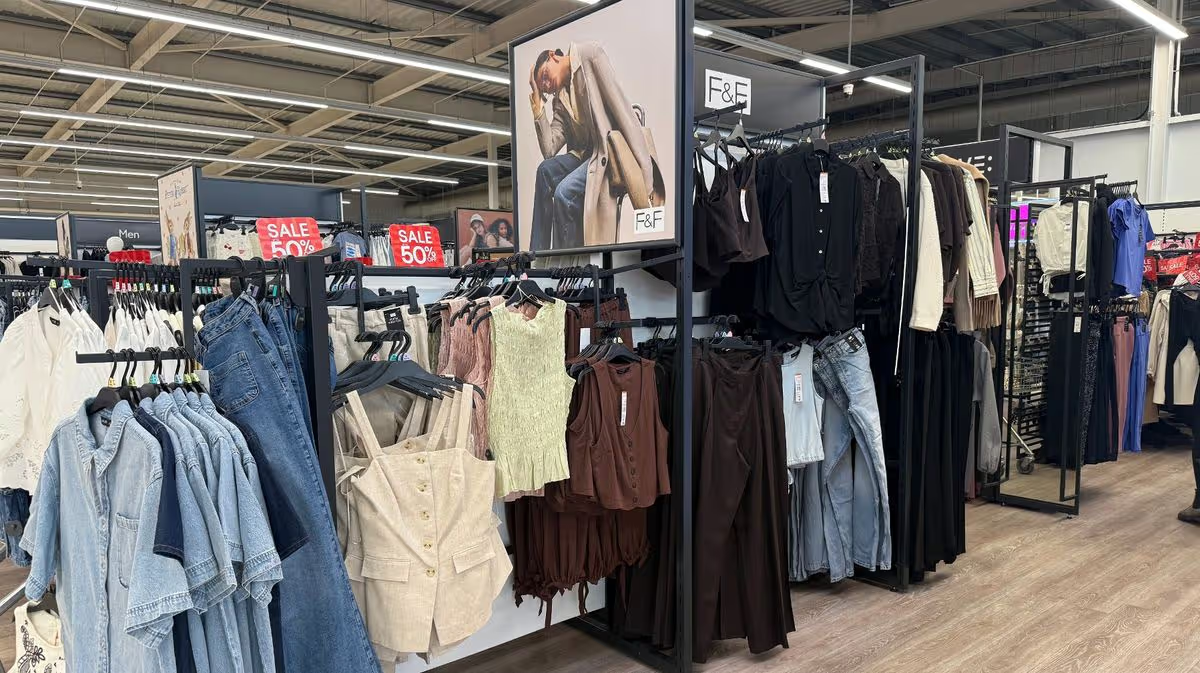
The trousers have a similar style with “pretty lace inserts” and an elasticated to make them extra comfortable. Both the shirt and trousers are being sold for £25 each.
The set was shared to the Tesco F&F Instagram page, which currently has 890K followers. The post was captioned: “Cool, calm and unexpectedly collected. #FandFClothing. #StyleItOut.”
Advertisement
Content cannot be displayed without consent
If you want to get your hands on the shirt or trousers from this set, you can go to Tesco website to browse all of its clothes. You can also go in person to a Tesco store with a clothing department.
The new Tomodachi Life has been a big hit on Switch 1 so the console still has some legs (Nintendo)
With a Switch 2 price increase looming, it sounds like Nintendo is seriously considering supporting the original Switch for longer than expected.
Ahead of the Nintendo Switch 2’s launch, Nintendo made it clear that it wasn’t immediately pulling the plug on Switch 1, not when it still had a sizeable audience and the older console was a lot more affordable.
Looking at Nintendo’s release schedule, though, you’d be forgiven for thinking support was wrapping up. So far, the only wholly new Switch 1 games it’s had this year are the new Tomodachi Life and Pokémon Champions, while Rhythm Paradise Groove will follow in July.
Everything else, from Yoshi And The Mysterious Book to the Star Fox remake, is Switch 2 only, but it sounds like Nintendo might have more Switch 1 games in the pipeline than previously assumed.
Advertisement
This is based on comments made by Nintendo president Shuntaro Furukawa during a Q&A as part of the company’s latest financial report on the 2026 fiscal year, which ended in March.
‘I believe it is important that we consider how to expand the entire software business, including titles for both Nintendo Switch and Nintendo Switch 2, instead of focusing only on sales of Nintendo Switch 2 software,’ said Furukawa.
Expert, exclusive gaming analysis
Sign up to the GameCentral newsletter for a unique take on the week in gaming, alongside the latest reviews and more. Delivered to your inbox every Saturday morning.
Advertisement
Unless Nintendo is thinking of pivoting to PC releases or something (which isn’t happening until pigs learn to fly), Furukawa can only be suggesting that further Switch 1 games are at least being talked about, if not already scheduled for the future.
This could also mean Nintendo, in response to the current financial climate, will pull back from Switch 2 exclusives slightly and encourage more cross-gen releases.
Games like Donkey Kong Bananza did start out on Switch 1 before development moved to Switch 2 (Nintendo)
It won’t stop Switch 2 exclusives completely, since it needs them to sell the console (plus, Furukawa’s already promised a ‘robust’ line-up of Switch 2 games), but the Switch 2 stands to become a harder sell thanks to the upcoming price hike.
Only 40% of Tomodachi Life players own a Switch 2, according to Furukawa, so there’s clearly a large market of Switch 1 owners that are in no rush to get a new console any time soon.
Advertisement
Nintendo, like everyone else, has had problems releasing as many games on Switch 2 as it did in the previous generation. It doesn’t have Wii U ports to fall back on, like it did with the Switch 1, but more lower budget, quicker to make last gen games could potentially fill that gap.
Don’t miss Gaming news! Add us as a Preferred Source
As a loyal GameCentral reader, we want to make sure you never miss our articles when searching for gaming stories. We have all the latest video games news, reviews, previews, and interviews, with a vibrant community of highly engaged readers.
Click the button below and tick Metro.co.uk to ensure you see stories from us first in Google Search.
GameCentral has been delivering unique games news and reviews for over a decade
More Switch 1 games could also represent a cost-effective way to maintain lower profile franchises, such as F-Zero or Metroid. Metroid Prime 4 was a flop but Metroid Dread was very successful and a sequel doesn’t really need the Switch 2, if Nintendo are leery of spending too much on the franchise.
More retro re-releases are also viable, especially older Pokémon games since Pokémon FireRed and LeafGreen, which are playable across Switch 1 and Switch 2, were tremendous successes.
It’s also interesting that Furukawa’s comment was in response to a question about why sales for Mario Kart World (the Switch 2’s best selling game) had slowed down, after Nintendo stopped selling the console bundle.
Advertisement
He refrained from giving an exact answer, although he did describe Mario Kart World as an ‘evergreen’ game that ‘we would like to continue selling throughout the lifecycle of Nintendo Switch 2.
‘Going forward, we will continue to convey its appeal to consumers to expand its popularity as an evergreen title.’ That presumably means DLC additions and not just the small gameplay updates Nintendo’s released for the game, although he gave no hint as to when this might happen.
It’s still weird that Nintendo hasn’t even announced DLC for Mario Kart World yet (Nintendo)
In his 3,700-word article, headlined The Silence that Meets the Rape of Palestinians, Kristof wrote that “there is no evidence that Israeli leaders order rapes. But in recent years they have built a security apparatus where sexual violence has become, as a United Nations report put it last year, one of Israel’s ‘standard operating procedures’ and ‘a major element in the ill treatment of Palestinians’.”
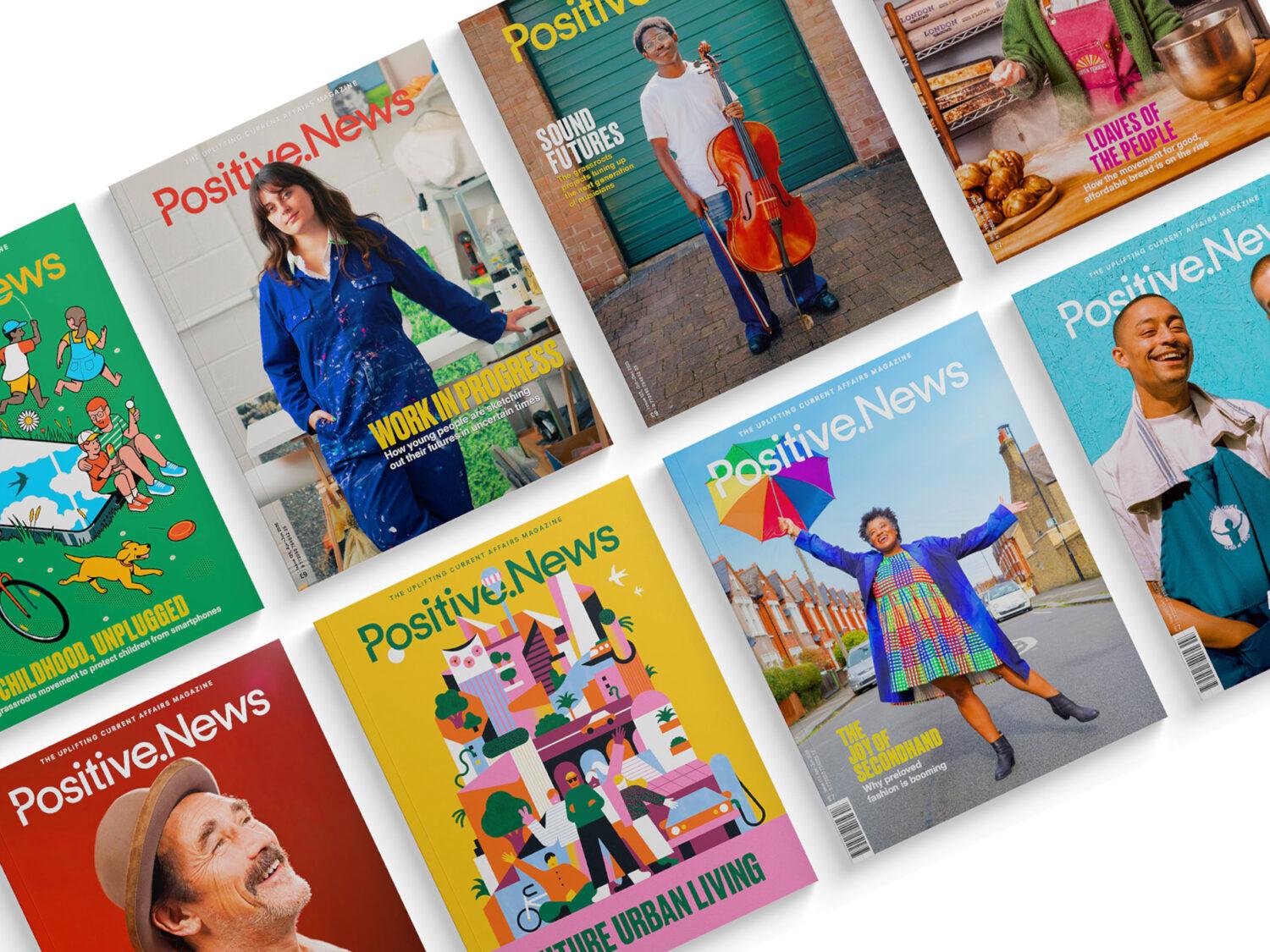
A new seven-week listening project from Positive News will explore what people truly value and how media could support a healthier relationship with the world
Every day, news organisations make choices that decide what deserves attention. Certain kinds of stories dominate the agenda: politics, crime, war, the economy – and these subjects are often told through a lens of conflict, crisis, threat, division or competition. These issues are important, but they’re not the whole of reality, nor the only way to look at the world.
What the media focuses on affects what happens next. Over time, it shapes what people notice, what they believe others care about, what they think is possible, and how much agency they feel they have. Journalism is never truly neutral. There are always choices about what to cover, whose voices are heard, and what kind of relationship with the world all of this encourages.
Advertisement
But journalism rarely questions the assumptions shaping those choices. So what would it look like to build a media organisation more consciously around the values, needs and lives of the people it exists to serve? That’s the question behind Positive News: What Next? – a seven-week listening project inviting our audience and wider community to help shape the future of Positive News. Over the coming weeks, we’ll be asking what you value, what you want from your media, and what role Positive News plays in your life.
Advertisement
As part of this, we’re launching our flagship Positive News values survey today. This draws on a long-established framework called Schwartz’s theory of basic human values, which is used by social psychologists to understand the values people hold closest. At the end of the survey, you’ll receive a personal values profile, giving you a snapshot of the principles and motivations that shape how you see the world.
It’s part of how we’re exploring an emerging idea called values-aware journalism. The premise is that all journalism reflects values, and that the things media organisations choose to emphasise – consciously or not – shape people’s sense of what matters in the world.
We also want to better understand what people are truly looking for from journalism at a time when trust in media is low, many people feel overwhelmed by the news, and digital content increasingly competes for attention through outrage, anxiety, distraction and disinformation.
At the heart of all of this is a question: does the media actually reflect what people care most about?
Advertisement
‘We’ve always believed journalism can build a fuller picture of reality and empower people’
Traditional news culture often gives most attention to ideas such as status, competition, wealth and power as markers of what matters. Yet values research has consistently shown that most people place greater importance on things such as community, equality, connection, care for others and care for the natural world. Values-aware journalism is about becoming more conscious and transparent about the values behind editorial choices, and the effect those choices have.
Advertisement
This connects closely with Positive News’ long-standing constructive journalism approach. We’ve always believed journalism can build a fuller picture of reality and empower people – not by ignoring problems, but by focusing on progress, solutions and human potential.
Now we want to take that thinking further.
Positive News is already structured as a community benefit society, a form of co-operative designed to serve the public rather than private shareholders. This next phase is about building on that purpose by exploring how more of what we do can be shaped around our community and shared values – from the stories we cover and the ways you participate, to the services or experiences we create beyond journalism.
We want to better understand what people are truly looking for from journalism at a time when trust in media is low
Because it’s no longer enough just to report the news – even if it is positive. What makes something newsworthy or “positive” anyway? What makes journalism genuinely useful? These are the kinds of questions we want to explore by better understanding your values and needs.
Advertisement
This is a genuine conversation. Throughout the project, we’ll share what we’re learning through updates, and at the end we’ll publish a full account of what we heard and how it’s shaping our next chapter.
Ultimately, Positive News: What Next? is asking a bigger question than simply what stories Positive News should publish. It’s asking: what does a media organisation that truly benefits its community look like? And with your help, we hope to find the answer.
‘We truly hope things can be changed’, Clarissa Street’s loved ones said following the conclusion of an inquest into her death
17:42, 15 May 2026
Advertisement
The devastated loved ones of a young woman who died amid ‘gross failings’ in her hospital care broke down in tears as a coroner concluded she ‘more than likely’ would have survived if she had received ‘appropriate’ treatment.
Clarissa Street, 24, from Rochdale, was left corridor late at night at Royal Oldham Hospital for more than a hour. She was handed an oxygen mask that wasn’t connected to anything while suffering from a ‘massive’, undiagnosed blood clot on the lungs.
A doctor later carried out two procedures that were ‘not medically required’ and ‘precipitated’ a fatal cardiac arrest – the result of a pulmonary embolism, Rochdale Coroners’ Court heard.
Click here to hear the latest from Manchester’s courts in our newsletter
Advertisement
Clarissa – a University of Manchester graduate from Castleton who studied sociology and earned the Dean’s Award for her dissertation – had been feeling unwell for several days. She suffered bouts of vomiting and couldn’t sleeping before she collapsed and lost consciousness.
Her boyfriend rang an ambulance and she was taken to Royal Oldham at around 11.25pm on August 13, 2024. The inquest into Clarissa’s death heard a paramedic suggested she was ‘overreacting and having a panic attack’ when she was passed over to triage staff.
She had previously experienced a provoked pulmonary embolism and deep vein thrombosis, in 2017, and had taken blood thinners for several months afterwards.
After she arrived at Royal Oldham, Clarissa was given an oxygen mask that wasn’t connected to anything ‘to try and regulate her breathing’ and spent more than an hour in a corridor before being transferred, the inquest heard.
Advertisement
Recording her conclusion on Friday (May 15), area coroner Catherine McKenna said there were ‘serious failings’ in Clarissa’s triage and the initial management of her treatment.
She said Clarissa had a National Early Warning Score (NEWS) of eight, meaning she was ‘critically ill’. That fact was not escalated and she didn’t receive the ‘care and attention her condition required’, Ms McKenna added.
The coroner said decision the decision not to hook up her oxygen mask was ‘not based on recognised nursing practice’. That fact, and the ‘failure to act on observations that showed she was acutely unwell’ were ‘gross failings’, she added.
Advertisement
Those failings did not, however, cause Clarissa’s death, Ms McKenna said. After being transferred to higher care shortly before on August 14, a doctor failed to obtain and consider Clarissa’s full medical history; didn’t review the results of an ECG; and ‘misinterpreted’ the readings on a bedside cardiac monitor, the hearing was told.
The doctor then carried out a Valsalva manouvre – a breathing technique performed by exhaling forcefully against a closed airway – and carotid sinus massage, intended to slow heart rate and lower blood pressure.
Ms McKenna said those were not ‘medically required’; were ‘inappropriate’; and ‘precipitated’ the cardiac arrest Clarissa suffered. The coroner said those were ‘basic care failings’ that were ‘contributing factors in her death’.
Ms McKenna said she was not satisfied those errors were ‘gross failings’, and so was unable to record a finding of neglect. The coroner said that ‘in no way minimises the gravity with which the court regards these failings’.
Advertisement
She said she agreed with expert evidence that Clarissa would have had a ‘more than 50 per cent chance’ of survival if she had not gone into cardiac arrest.
Ms McKenna, who recorded a narrative conclusion, said that: “I find that had Clarissa receivied appropiate care and treatment from the time she arrived, a primary diagnosis of pulmonary embolism would have been confirmed. More than likely she would have survived this acute episode.”
A number of Clarissa’s family members were in court. They burst into tears as Ms McKenna delivered her findings. The coroner thanked her loved ones for the ‘dignity’ they had shown during the proceedings and told them: “I am truly sorry for your loss.”
In a statement issued following the hearing, her family said: “We are truly devastated about the loss of our favourite person Clarissa. She will forever live on in our hearts and minds. We will always be shaped by the impression she left on all of us.”
Advertisement
They said they believed she was ‘treated as an overreacting young woman’ and that they ‘truly hope things can be changed’ to stop other families suffering similar tragedies.





















![No Money [ DJ BEN RMX ]](https://wordupnews.com/wp-content/uploads/2026/02/1770218101_maxresdefault-80x80.jpg)





































You must be logged in to post a comment Login