

Crypto World
Just 4% of US Considers Crypto in Candidate Choice: Poll

Just 4% of surveyed Americans say they would weigh a political candidate’s stance on crypto policy in deciding who to vote for.
Affordable housing, consumer fraud protection and lower bank fees were the top three issues respondents said they wanted Congress to tackle, according to a survey of 2,035 US adults released on Wednesday by POLITICO and conducted by polling firm Public First.
Just 18% of respondents considered establishing rules for the crypto market a top priority for Congress, just one percentage point ahead of regulating large banks.
The results show a divide between the average American voter’s top priorities and those of crypto industry lobbyists, who have been pushing Congress to pass crypto legislation ahead of the midterm elections.
Crypto lobbies poured more than $130 million into the 2024 elections, the most of any industry, and have already spent $320 million to influence the November midterms, according to data compiled by researcher Molly White.
Crypto lobbyists have made it clear that they will use their significant funds against any candidate who doesn’t support the industry, having spent over $5.5 million on opposing candidates in congressional races in Illinois this year.
Less than a third oppose making crypto mainstream
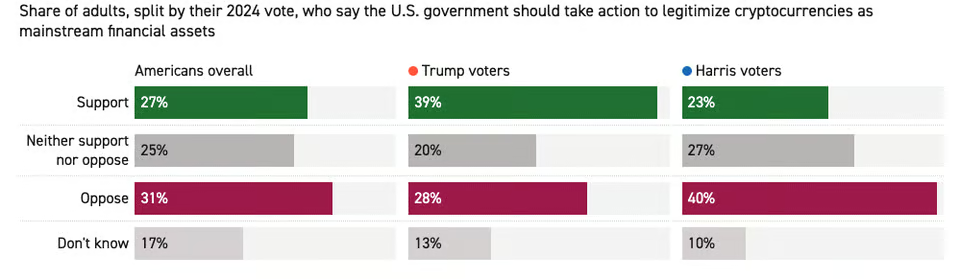
According to the survey, just 27% said they support or strongly support the US government taking action to legitimize crypto as a mainstream financial asset, while 31% said they oppose or strongly oppose it.

Poll responses to whether the US government should legitimize crypto as a mainstream asset. Source: POLITICO
Related: Crypto and AI could be dirty words on 2026 midterm campaign trail
“Most voters don’t care about digital assets,” Republican Representative Dusty Johnson told POLITICO. “But those who do care a lot. It is a high-intensity issue. And I think it’s going a little bit more mainstream. The number of people who ask me about it is still very small, but I would say growing.”
More than half of the respondents said they had not, and would not, consider trading crypto, while 19% had traded crypto. Of those who trade crypto, 7% said a political candidate’s stance on crypto would impact their vote.
The poll also found that 45% of respondents viewed investing in crypto as a risk not worth taking, even if it offered high returns, compared with 25% who said it was worth it.
The latest poll clashes with another poll of 2,008 registered voters released on Friday by HarrisX, which found 47% said they would be at least somewhat likely to consider voting for a candidate outside their preferred party if the candidate supported passing a long-awaited crypto bill that would lay out how the industry is regulated.
The Senate Banking Committee on Thursday will vote on whether to advance such a bill that has seen involvement from the White House to cut a deal with crypto and banking lobbies. A version of the bill passed the House in June as the CLARITY Act.
Magazine: Clarity Act risks repeat of Europe’s mistakes, crypto lawyer warns


Nakamoto, a company focused on Bitcoin-centric businesses, reported a dramatic shift in its first quarter after two February acquisitions broadened its footprint across the Bitcoin ecosystem. The firm posted a 500% quarter-on-quarter surge in revenue for Q1, driven by the completed purchases of BTC Inc. and UTXO Management, even as it recorded a net loss of $238.8 million.
CEO David Bailey described the quarter as a “transformational period,” noting that the acquisitions, finalized by February 20, positioned Nakamoto for longer-term growth within the Bitcoin ecosystem. The quarterly revenue mix highlighted the company’s new diversified footprint: more than $1.1 million came from its Bitcoin treasury and derivatives strategy, about $800,000 from its media business, $500,000 from healthcare operations, and $200,000 from asset management services. Notably, the company did not acquire any new Bitcoin during the quarter, and instead sold 284 BTC on March 31 to help cover operating expenses.
The reported net loss was largely non-cash. A $107.7 million write-down tied to a pre-acquisition option and a $102.5 million mark-to-market loss on Nakamoto’s 5,058 BTC treasury contributed to the quarterly bottom line, as Bitcoin declined about 23% over the period. The broader Bitcoin treasury sector has faced headwinds, with Bitcoin off roughly 37% from its all-time high in recent months. Nakamoto has been among the hardest-hit among Bitcoin treasuries, with its share price down substantially from its peak. After the results were disclosed, Nakamoto shares rose in after-hours trading, gaining about 2.7% to roughly $0.18.
Key takeaways
- Q1 revenue rose 500% quarter-on-quarter after the February closing of BTC Inc. and UTXO Management, with revenue composition leaning toward the newly integrated businesses.
- The $238.8 million net loss was dominated by a $107.7 million non-cash pre-acquisition option write-down and a $102.5 million mark-to-market loss on a 5,058-BTC treasury as Bitcoin fell during the quarter.
- Revenue sources in Q1 included more than $1.1 million from the Bitcoin treasury and derivatives program, $800,000 from media, $500,000 from healthcare, and $200,000 from asset management.
- There was no new Bitcoin buying in the quarter; Nakamoto sold 284 BTC on March 31 to fund operations, reflecting ongoing balance-sheet management amid market volatility.
- Looking ahead, the company aims to scale its operating businesses, expand revenue opportunities, and pursue capital allocation strategies tied to Bitcoin’s long-term value.
Nakamoto’s strategic expansion beyond a single business line
With BTC Inc. and UTXO Management positioned as foundational pillars, Nakamoto outlined a deliberate pivot toward building a multi-faceted Bitcoin platform. In the Q1 update, Bailey indicated that these two units would anchor the company’s longer-term growth, even though they contributed only part of the quarter’s revenue due to the February 20 close date. The acquisitions are framed not merely as bolt-on assets but as stepping stones to a more integrated Bitcoin economy playbook, spanning media, treasury management, and financial services tied to Bitcoin.
The leadership emphasized execution as the primary objective for 2026. Beyond topline growth, the management intends to scale its operating businesses, broaden revenue streams, and deliver durable shareholder value through disciplined capital allocation and a long-term conviction in Bitcoin’s fundamental role in digital finance. A notable element of this strategy is leveraging Nakamoto’s Bitcoin holdings as collateral to unlock yield from derivatives, effectively turning treasury assets into income-producing tools rather than passive reserves.
Portfolio realignment and ongoing structural changes
Concurrent with its revenue and growth plans, Nakamoto signaled a wider internal realignment. The company plans to fully wind down its healthcare business by the end of Q2, shifting managerial and financial resources toward Bitcoin-related activities. This move follows the company’s January rebranding from KindlyMD after a merger with the Utah-based healthcare provider in August of the previous year. By concentrating on Bitcoin-centric operations, Nakamoto aims to reduce cross-industry drag and sharpen its focus on long-term value creation within the Bitcoin ecosystem.
On the structural front, the acquisitions of BTC Inc. and UTXO Management are described as foundational to the firm’s strategy, signaling a shift from a single-line revenue model to a diversified platform approach. The market response to the results—an after-hours gain despite a sizable quarterly loss—suggests investors are weighing the potential upside of a more integrated Bitcoin business, even as near-term profitability remains a work in progress in a volatile crypto backdrop.
The broader context remains challenging for Bitcoin treasuries. The sector has faced persistent pressure as Bitcoin’s price fluctuations complicate sustainable buy-and-hold strategies. Still, Nakamoto’s strategic repositioning could offer a case study in how diversified Bitcoin-adjacent operations may weather price volatility more effectively than a pure treasury approach alone.
While the quarter did not feature new Bitcoin accumulation, the company’s decision to monetize part of its holdings for operating costs underscores a pragmatic approach to balance-sheet management in a downturn. Investors will be watching whether the derivative-based income model can start contributing meaningfully to cash flow and whether the healthcare wind-down proceeds on schedule, freeing capital for the core Bitcoin-focused initiatives.
In addition to describing the quarter’s mix, the update underlined a clear forward path: execute on 2026 plans, unlock additional revenue streams from the newly acquired units, and strengthen shareholder value through purposeful capital allocation. As Nakamoto progresses, the next several quarters will reveal whether the combination of treasury-driven yield strategies and a broader Bitcoin-focused platform can translate into durable earnings and a more stable equity trajectory.
Looking ahead, analysts and investors will want to monitor how Nakamoto ramps up its derivative programs, how effectively it monetizes its media and asset management capabilities, and how swiftly the wind-down of non-Bitcoin health operations frees up capital. The balance between the upside of a diversified Bitcoin ecosystem and the risk of continued volatility in crypto markets will shape how the market prices Nakamoto’s transformation in the near term.
In the near term, the market will also be watching how regulatory developments around crypto derivatives and treasury management might influence Nakamoto’s strategy. As the company leans more heavily on Bitcoin as collateral for yield-generating strategies, questions about risk management, accounting, and reporting will come to the fore. If Nakamoto can demonstrate a credible, repeatable model for generating revenue from a Bitcoin treasury while maintaining prudent risk controls, it could offer a template for other Bitcoin-centric businesses navigating a landscape of price swings and evolving regulatory expectations.
Readers should keep an eye on the company’s Q2 updates for progress on the healthcare wind-down, the pace of revenue growth from BTC Inc. and UTXO Management, and the real-world performance of its derivatives program as a core revenue driver. The story of Nakamoto’s evolution—from a focused treasury player to a broader Bitcoin ecosystem platform—rests on execution, capital discipline, and the ability to translate Bitcoin’s volatility into tangible shareholder value.
As the quarter closes, the key question remains: can Nakamoto translate this transformational period into sustained earnings power? The coming quarters will show whether the company’s expanded footprint and new funding mechanisms can deliver on the promise implied by a 500% revenue surge in Q1, even as Bitcoin itself remains a volatile, price-sensitive asset.

Bitcoin is at risk of falling into a downtrend after its price hit a key historical “major bear market resistance level” based on its 200-day moving average, according to the crypto analytics firm CryptoQuant.
The cryptocurrency hit its 200-day moving average of $82,400 after rallying over six weeks since early April when it fell to $66,000, CryptoQuant said in a report on Wednesday.
“The 200-day MA [moving average] was a major resistance in the 2022 bear market: the price resumed its downward trend after hitting it in March of that year,” it said. “The current setup raises the question of whether history repeats.”
Several traders have recently forecast a Bitcoin rally if the US Senate moves forward with the long-awaited CLARITY Act, while others have pointed to additional money printing in the US as a tailwind for Bitcoin this year. CryptoQuant’s signals point to the opposite.
Adding to CryptoQuant’s bearish outlook, traders’ unrealized profit margins reached 17.7% on May 5, their highest level since June last year, which the firm said indicated “potential selling pressure to take profits.”
“These margin levels mirror those seen in March 2022, precisely when Bitcoin last tested the 200-day MA before resuming its decline,” CryptoQuant said.
Bitcoin has fallen 2.3% in the last 24 hours to $79,300 after enjoying a rally since early April as traders returned to riskier assets on potentially easing Middle East tensions.
Bitcoin has also become increasingly sensitive to the US economy as Wall Street adoption has grown, with its latest dip coming after the US Labor Department said Wednesday that producer prices jumped 1.4% in April, the biggest increase in four years and another sign of rising inflation.

Source: CryptoQuant
Related: Whale shorts $70M in crypto and tech: Should Bitcoin traders worry?
Traders may have already started taking profits, as the report said daily realized profits jumped to their highest level since early December last week, with traders cashing out 14,600 Bitcoin, currently worth nearly $1.2 billion, on May 4.
“Historically, spikes of this magnitude in bear market rallies have preceded local price tops,” CryptoQuant said.
It added that if Bitcoin falls, its current level of price support sits around $70,000, which is the average price at which all Bitcoin was last transacted.
“This level has historically acted as a key resistance-turned-support band during bear markets,” CryptoQuant said. “It represents the average cost basis of short-term traders and the level at which unrealized profit margins compress back toward zero, reducing the incentive for further selling.”
Other analysts have remained bullish on Bitcoin, with MN Capital founder Michaël van de Poppe posting on X on Wednesday that the cryptocurrency “might see a fast move” to $90,000 if the US Senate advances a long-awaited crypto bill dubbed the CLARITY Act.
Arthur Hayes, the investment chief of the crypto fund Maelstrom, said on Tuesday that Bitcoin retaking its all-time peak of $126,000 was a “foregone conclusion.”
He predicted that the war in Iran and competition between the US and China over artificial intelligence would lead the government to increase the money supply, causing inflation that would push traders toward Bitcoin.
Magazine: eToro founder timed Bitcoin top perfectly due to belief in 4-year cycles
A key tailwind that supposedly powered bitcoin’s recent rise above $80,000 appears to be fading.
The 11 U.S.-listed spot bitcoin exchange-traded funds (ETFs), which pulled in $3.29 billion in investor money through March and April, are now leaking funds. And sizeable ones at that.
On Wednesday, investors yanked $635 million from these funds, the highest single-day net outflow since Jan. 29, according to data source SoSoValue. It wasn’t an isolated event either. Over the past five trading days, the ETFs have bled a total of $1.26 billion, pulling total net inflows since debut in January 2024 down to $58.5 billion from $59.76 billion a week ago.
Bitcoin has stopped rallying. Since last Wednesday, the upswing that carried prices from $65,000 to above $80,000 has stalled, with momentum running out of steam near the 200-day simple moving average positioned just above $82,000. In the past 24 hours, bitcoin has dropped over 2% to $79,400, with analysts attributing the loss to the resurgent inflation fears in the U.S., even though these macro developments have been largely shrugged off by Wall Street’s Nasdaq and S&P 500 equity index. Both these indices hit new highs on Wednesday.
The $635 million outflow is not a number that bulls can easily dismiss, particularly since the strong inflows through March and April were widely hailed as bullish catalysts, and the macro picture is worsening due to rising inflation in the U.S.
“A persistently hot CPI, an incoming Fed under Warsh that markets read as more hawkish, or another oil shock can compress bitcoin even with positive net flows. From our perspective, the more useful question is not whether the markup leg continues, but whether macro conditions stay loose enough for the flows to do their work,” Adam Haeems, head of asset management at Tesseract Group, said. Tesseract has over $500 in assets under management.
Still, it’s worth noting that the relationship between ETF flows and bitcoin is not as straightforward as it once was. A correlation study offers a more data-driven lens on that.

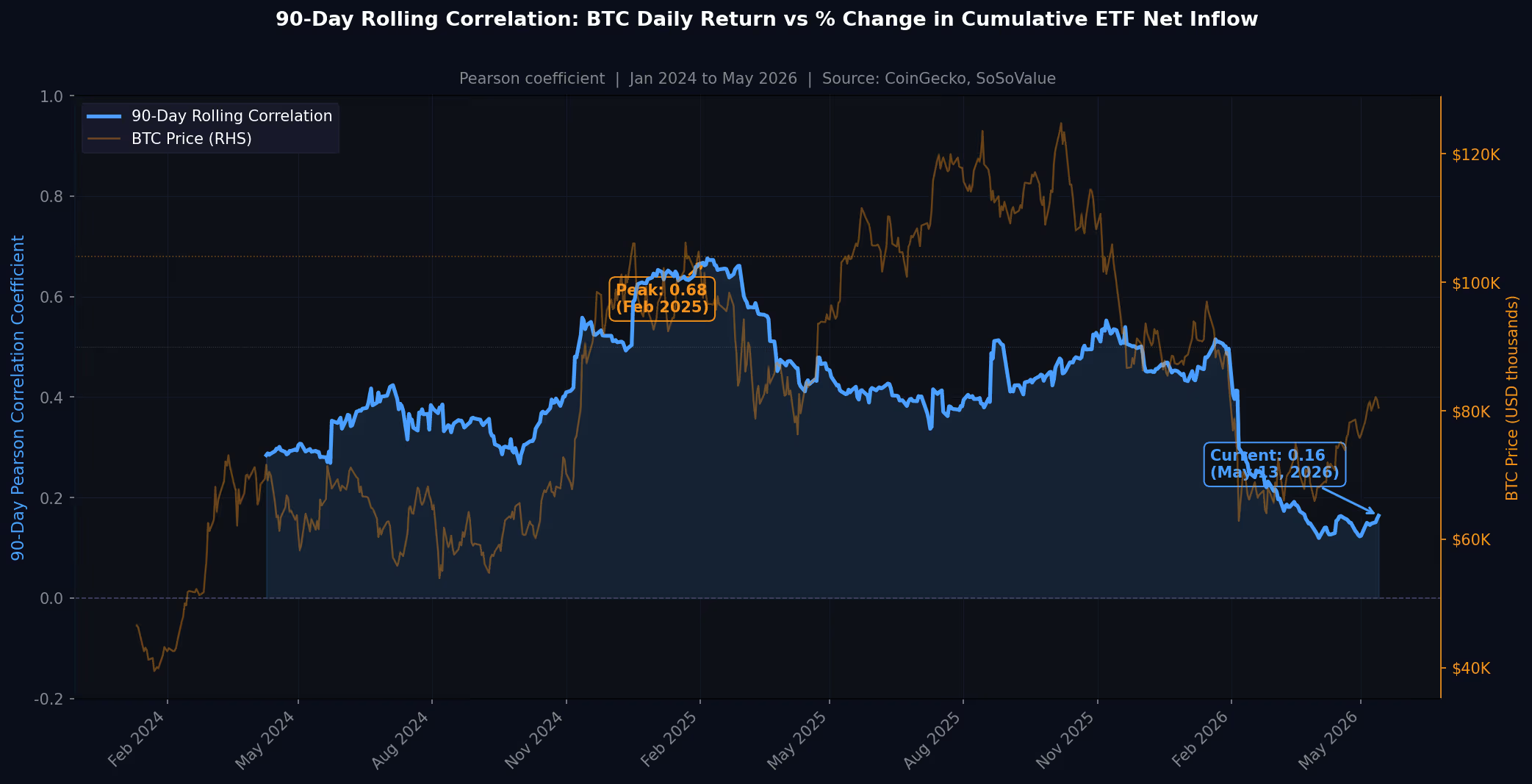
The 90-day rolling Pearson coefficient between bitcoin’s daily percentage return and the daily percentage change in cumulative net ETF inflows currently stands at just 0.16, statistically indistinguishable from zero and down from the peak of 0.68 in February.
In plain terms, knowing the direction in which ETF flows moved on any given day may not offer any cues about BTC’s price action. That said, large redemptions like the one seen on Wednesday still matter.


BitGo Holdings posted first-quarter 2026 revenue of $3.77 billion, more than doubling from a year earlier.
Yet, losses tied to Bitcoin (BTC) price swings and stock compensation pushed the digital asset custodian into the red.
BitGo Q1 Revenue Hits $3.77 Billion
BitGo’s Q1 filing attributed the 112.6% jump in top-line revenue to two main tailwinds: a pickup in digital asset sales volumes and a heavier contribution from Stablecoin-as-a-Service income compared with the same quarter a year ago.
Stablecoin-as-a-Service revenue rose 44% sequentially to $38.2 million, with the take rate improving to 7.4%. However, total revenue fell 38.7% sequentially.
BitGo attributed the drop to softer crypto markets and a shift away from spot trading. The firm launched its derivatives offering in January, capturing roughly $3 billion in notional volume during the quarter.
“Because derivatives revenue is recognized on a net basis, while spot trading revenue is recognized on a gross basis, reported revenue comparisons to prior periods are not directly comparable,” the firm said.
Follow us on X to get the latest news as it happens
Meanwhile, Digital Asset Sales brought in roughly $3.7 billion, more than doubling from a year earlier with a 127.9% YoY gain, though the figure was 39.3% lower sequentially.
The Subscriptions and Services segment posted $25.6 million in revenue, edging up 11.3% YoY but slipping 34.8% from the previous quarter. Staking revenue fell 66.2% year over year to $49.4 million as token prices declined.
The firm’s net loss widened to $60.7 million from $25.7 million a year earlier. The figure also exceeds BitGo’s Q4 2025 net loss of $50 million. According to BitGo, this was,
“Primarily driven by non-cash mark-to-market impacts related to the Company’s Bitcoin treasury, as well as elevated IPO-related stock-based compensation expense. The Company expects stock-based compensation expense to normalize from Q1 20226 levels going forward.”
Adjusted EBITDA flipped to a $1.7 million loss from a $3.9 million gain in Q1 2025. The client base grew 42% year over year, while cash and equivalents totaled $186.6 million. The results mark the company’s second earnings release since its January debut on the NYSE.
Subscribe to our YouTube channel to watch leaders and journalists provide expert insights
The post BitGo Net Loss Widens to $60.7 Million Despite 112.6% Revenue Growth appeared first on BeInCrypto.


The Commodity Futures Trading Commission’s staff issued no-action relief for fully collateralized event contracts.
Summary
- CFTC eased swap data reporting duties for fully collateralized event contracts listed on regulated exchanges.
- Relief covers DCMs, DCOs and market participants, with future applicants getting a streamlined approval process.
- The move arrives as prediction market platforms fight state gambling regulators in several courts nationwide.
The move covers certain swap data reporting and recordkeeping duties tied to contracts listed by designated contract markets and cleared by derivatives clearing organizations.
The relief means staff will not recommend enforcement against DCMs, DCOs or participants for failing to meet selected swap reporting rules, as long as they follow the terms in the staff letter. The CFTC said the approach responds to many requests from firms listing and clearing event contracts.
Moreover, the new letter also creates a cleaner path for future applicants. Entities that want to list or clear similar contracts can seek the same no-action position, and the CFTC can add them to an appendix rather than issue another full letter each time.
Staff said the position also covers earlier beneficiaries of similar no-action letters. The letter says this approach should give similar treatment to current and future market participants while the agency considers broader rulemaking for event contract reporting.
Prediction market oversight remains contested
The relief comes as prediction markets face state-level legal fights. Earlier coverage from crypto.news reported that the CFTC backed Kalshi in an Ohio appeal, arguing that state officials treated federally regulated event contracts too narrowly as sports gambling.
In addition, CFTC has also challenged state actions in Arizona, Connecticut, Illinois, New York and Wisconsin. Court protection in Arizona supported federal oversight of CFTC-regulated prediction markets while cases continue.
Market growth adds pressure for clear rules
The timing matters because prediction markets are growing quickly. Separate market coverage reported that Kalshi reached a $22 billion valuation after a $1 billion Series F round, while annualized trading volume on the platform rose from $52 billion to $178 billion in six months.
Kalshi CEO Tarek Mansour said “event contracts could become a trillion-dollar market.” That claim remains forward-looking, but it shows why regulators, exchanges and state officials are paying closer attention to reporting, supervision and legal boundaries.
The CFTC’s latest step does not decide every dispute over event contracts. It focuses on how certain fully collateralized contracts are reported and recorded. Still, it gives DCMs, DCOs and participants a more uniform process as the agency works on broader rules.
For crypto-linked prediction markets, the letter adds another federal signal. Platforms such as Kalshi, Polymarket, Coinbase and Crypto.com remain part of a wider debate over whether these products are financial contracts, betting products, or both under different legal frameworks.
Key Takeaways
- Increasing worries about blockchain transparency and Know Your Customer (KYC) requirements are driving renewed interest in privacy-focused cryptocurrencies
- Monero enforces complete transaction anonymity by default, establishing it as the leading privacy cryptocurrency while attracting the most regulatory scrutiny
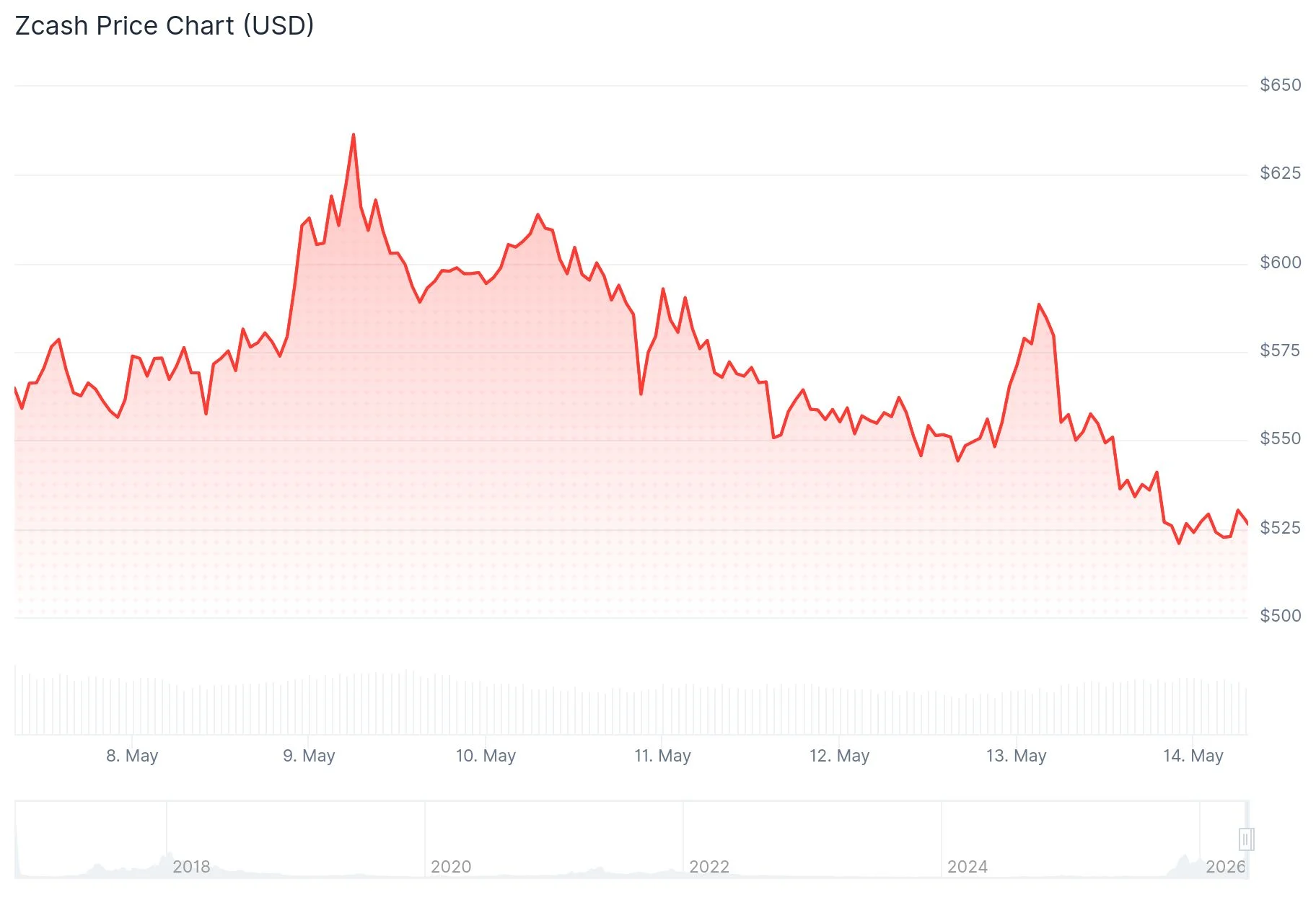
- Zcash surged past $585 in 2026 following Multicoin Capital’s disclosure of a significant investment on May 6
- Dash functions primarily as a payment-focused cryptocurrency with optional privacy capabilities rather than a dedicated privacy solution
- Regulatory challenges pose the greatest threat to all three cryptocurrencies, with multiple jurisdictions already implementing delisting measures
Privacy-oriented cryptocurrencies are experiencing a resurgence in investor attention throughout May. Escalating anxieties surrounding financial monitoring, increasingly stringent exchange regulations, and sophisticated blockchain analysis tools are driving crypto enthusiasts toward digital assets offering enhanced transactional confidentiality.
Contrasting with Bitcoin or Ethereum, where every transaction remains permanently visible on public ledgers, privacy coins employ specialized cryptographic techniques to obscure transaction information. These technologies can mask the sending party, receiving party, and transferred amounts.
This cryptocurrency category remains divisive. Financial regulators and trading platforms have approached privacy coins cautiously, contending that they complicate compliance obligations. Advocates counter with a fundamental question: if physical currency transactions enjoy privacy, shouldn’t digital alternatives offer the same?
Three cryptocurrencies deserve particular attention this month: Monero, Zcash, and Dash. Each implements distinct privacy methodologies and presents unique risk considerations.
Monero: Mandatory Anonymity with Maximum Regulatory Exposure
Monero stands as the most recognized privacy cryptocurrency. Anonymity functions as a fundamental network characteristic — every transaction maintains privacy automatically, with no mechanism for public visibility.
The protocol employs ring signatures, stealth addresses, and confidential transaction technology to conceal senders, recipients, and transaction values. This architecture represents the most comprehensive implementation of compulsory transaction privacy in cryptocurrency.
Monero doesn’t attempt to compete as a smart contract platform or comprehensive payment network. Its purpose remains straightforward: functioning as untraceable digital currency.
This singular focus has cultivated one of cryptocurrency’s most dedicated communities. User demand for private transactions may intensify as surveillance concerns escalate.
The primary vulnerability involves regulatory intervention. Nations including Japan, South Korea, India, and various European jurisdictions have already imposed restrictions on privacy coins through regulated exchanges. Monero consistently faces the earliest regulatory action.
Zcash: Zero-Knowledge Technology with Growing Institutional Backing
Zcash implements an alternative methodology. The protocol permits both public and private transactions, offering user choice rather than mandating universal privacy.
Its privacy infrastructure relies on zero-knowledge proof cryptography, enabling transaction verification without exposing underlying transaction details.
Throughout 2026, Zcash has emerged as a closely monitored privacy asset following Multicoin Capital’s announcement of a substantial holding on May 6. The cryptocurrency reached a 2026 peak exceeding $585 immediately afterward.
This development carries significance because privacy cryptocurrencies have traditionally attracted primarily retail investment. Institutional participation transforms the market narrative and indicates some professional investors view privacy as a broader digital rights or infrastructure investment theme.
Zcash may also attract investors seeking privacy sector exposure while preferring an asset with optional transparency features, facilitating discussions in regulated environments.
The principal concern involves actual usage patterns. If most participants continue using transparent transactions, the practical privacy advantage diminishes considerably.
Dash: Payment Functionality with Secondary Privacy Features
Dash originated as a privacy-centered Bitcoin derivative but subsequently pivoted toward rapid digital payment processing. Its PrivateSend functionality employs CoinJoin-style transaction mixing, which provides limited privacy but differs fundamentally from Monero’s comprehensive default model or Zcash’s zero-knowledge proof architecture.
This characterization positions Dash less as a dedicated privacy cryptocurrency and more as a payment-focused asset with supplementary privacy capabilities.
This strategic positioning can prove advantageous in certain markets. Its payment-centric identity resonates more clearly with investors, and it has historically attracted users prioritizing transaction speed and reduced fees.
Dash appeared among the sector’s strongest performers when privacy tokens outpaced the broader market earlier this year, according to CoinDesk.
The vulnerability lies in Dash’s ambiguous positioning. It may lack sufficient privacy features for strict anonymity advocates, yet its privacy associations can still trigger challenges on regulated trading platforms.
Concluding Analysis
Monero represents the most uncompromising privacy implementation. Zcash delivers advanced zero-knowledge proof technology alongside increasing institutional validation. Dash provides payment utility with moderate privacy functionality.
The opportunity remains consistent across all three: if concerns regarding surveillance and exchange restrictions intensify, privacy-focused cryptocurrencies could experience renewed demand.
The risk appears equally apparent: regulatory intervention. Exchange availability for privacy coins can shift rapidly, and this sector remains among cryptocurrency’s most politically sensitive categories.



A New York federal judge has postponed a decision on Aave’s request to release $71 million in frozen Ethereum tied to the Kelp DAO exploit, ordering both sides to submit additional legal arguments before a June hearing.
Summary
- A New York judge delayed a ruling on Aave’s bid to release $71 million in frozen ETH tied to the Kelp DAO exploit.
- The court asked Aave and Gerstein Harrow LLP to submit additional legal arguments before a June 5 hearing.
According to filings submitted Wednesday in the Southern District of New York, Judge Margaret M. Garnett said Aave LLC had not sufficiently explained how “compounding losses” to users would occur if the restraining notice on the funds remained active. The judge scheduled another hearing for June 5 and directed both parties to file supplemental briefs by May 22.
At the center of the dispute is 30,765 ETH that Arbitrum’s Security Council froze on April 21 after tracing the assets to the April 18 Kelp DAO exploit.
The attack targeted Kelp’s LayerZero-powered bridge and allowed hackers to mint unbacked rsETH, which was later used as collateral on Aave v3 to borrow an estimated $230 million in wrapped ETH. Earlier reports tied the exploit to roughly $190 million in bad debt across DeFi lending markets.
Earlier this month, Gerstein Harrow LLP secured court approval to serve a restraining notice on Arbitrum DAO. The law firm represents families holding about $877 million in unpaid terrorism judgments against North Korea and argued the frozen ETH should be treated as DPRK-linked property because blockchain analytics firms associated the exploit with the Lazarus Group. No court has formally determined that North Korea or Lazarus carried out the attack.
Aave pushed back against that argument in an emergency filing on May 4. Its lawyers argued that stolen crypto does not become the legal property of a thief simply because it passed through attacker-controlled wallets. The company also warned that extended restrictions on the ETH could hurt affected users and interfere with recovery efforts tied to rsETH.
Court asks for clarification on ownership and creditor claims
In her latest order, Judge Garnett acknowledged the risks facing Aave users but said the legal questions raised by the dispute require deeper examination. The court asked both sides to address six specific issues, including whether New York’s shelter principle applies to the hacking transactions, how theft differs from fraud under the relevant law, and whether the hackers ever gained a recognizable ownership interest in the stolen assets.
Additional questions focused on creditor priority rights over the frozen ETH and whether a constructive trust could be used to return funds proportionally to affected users. Judge Garnett also asked whether Aave or Arbitrum can identify individual victims well enough to support a pro rata distribution plan.
Days before the latest order, Judge Garnett modified an earlier freeze to allow an Arbitrum governance proposal tied to the recovery effort to continue moving through on-chain voting. The proposal, introduced on May 12, would transfer the 30,765 ETH from Arbitrum’s Security Council wallet to an address controlled by Aave LLC.
While the judge permitted governance participants to proceed without personal liability under the restraining notice, the court preserved the plaintiffs’ legal claim over the ETH. Aave, therefore, cannot freely use the assets until the dispute is resolved.
Elsewhere in the recovery effort, Aave and Kelp DAO said Tuesday they had taken steps to restore rsETH backing. The attacker’s rsETH on Arbitrum has already been burned, while nearly $278 million worth of replacement assets is expected to be restored over the next two weeks through funds managed by the Aave Recovery Guardian multisignature wallet.


Ripple’s former chief technology officer, David Schwartz, issued a sharp public warning this week over a newly surfaced Windows BitLocker vulnerability, describing it as one of the most serious security flaws he has encountered in years.
His remarks landed alongside a separate alert about a wave of scams targeting XRP Ledger users, signaling rising pressure on both consumer device security and on-chain trust.
Schwartz Issues Stark Security Warning Over BitLocker Flaw
Schwartz said the exploit allows attackers to bypass Microsoft’s full-disk encryption using a basic USB-based method. The lack of authentication prompts has fueled speculation that the mechanism resembles a backdoor more than a conventional bug, given how little technical effort the reported access path requires.
The flaw matters for anyone storing sensitive material on a Windows device, including private keys, recovery phrases, or work documents. Schwartz’s prior commentary on protocol-level security and incentive design has drawn wide industry attention, lending weight to his assessment of the BitLocker issue.
The disclosure adds to broader concern about software-level attacks moving into crypto-adjacent territory, where private key exposure can trigger direct, irreversible loss for retail holders relying on disk encryption to protect cold storage backups.
Ripple CTO Extends Alert Over XRPL Scam Surge
In a separate post, Schwartz flagged a sharp rise in scam reports targeting XRPL users. Fake airdrops and impersonation accounts are the most common patterns. Impersonators often clone verified profiles and prompt holders to connect wallets to drainer contracts.
The trend mirrors a broader rise in scams flagged by financial regulators in recent months. For XRP holders, the risk is amplified by the ledger’s pseudonymous nature and the absence of recourse once funds move.
Schwartz, whose public profile within the XRP ecosystem makes his advisories widely circulated, urged users to ignore unsolicited airdrop prompts and verify official communications independently before connecting any wallet.
AI-Built Exploits Add to Security Warning
The warnings arrive as Google said it had intercepted a live AI-built zero-day exploit before mass deployment. The Python-based attack reportedly bypassed two-factor authentication on a widely used open-source admin tool.
Defensive AI systems such as Big Sleep and CodeMender are now being rolled out in response. Whether endpoint encryption and consumer authentication can keep pace with that shift is the open question.
The post Ripple Ex-CTO Sounds Alarm Over ‘One of the Worst Security Flaws’ He’s Ever Seen appeared first on BeInCrypto.

Bitcoin company Nakamoto saw a 500% quarter-on-quarter increase in Q1 revenue after completing two key strategic acquisitions in February aimed at expanding its footprint across the Bitcoin ecosystem.
Despite recording a $238.8 million net loss, Nakamoto CEO David Bailey said Wednesday that Q1 “marked a transformational period” for the company as it closed the acquisitions of Bitcoin-focused news outlet BTC Inc. and Bitcoin-focused investment platform UTXO Management.
More than $1.1 million of Nakamoto’s revenue came from its new Bitcoin treasury and derivatives strategy, $800,000 from its media business, $500,000 from healthcare operations and $200,000 from asset management services.

Source: Nakamoto
Nakamoto attributed the bulk of its Q1 net loss to a $107.7 million non-cash reduction linked to a pre-acquisition option and a $102.5 million mark-to-market loss on its 5,058 Bitcoin (BTC) treasury as the cryptocurrency fell 23% during the quarter.
The Bitcoin treasury industry has faced pressure over the past year, with Bitcoin down 37% from its all-time high, causing some analysts to cast doubt on the sustainability of buy-and-hold strategies.
Most Bitcoin treasuries outside of Strategy and Metaplanet have slowed Bitcoin buying over the last 12 months, while others have eaten into their Bitcoin treasury to pay off debt.
Nakamoto has been one of the hardest-hit Bitcoin treasuries during this downturn, with company shares down over 99.2% from its all-time high.
The company didn’t buy any Bitcoin during the quarter, but sold 284 Bitcoin on March 31 to cover operational expenses.
Related: Bitcoin traders expect ‘fast move’ to $90K following CLARITY Act vote
Nakamoto (NAKA) rose 2.7% to $0.18 in after-hours trading after Nakamoto posted its results.
Nakamoto expands from Bitcoin treasury company
Nakamoto said BTC Inc. and UTXO Management would be two of the “foundational businesses” setting the company up for long-term growth in the Bitcoin ecosystem.
The Bitcoin company said that its sixfold revenue increase came despite only a partial quarter of contribution from these businesses, as deals were finalized on Feb. 20.
Looking forward, Bailey said Nakamoto’s “focus for the remainder of 2026 is execution — scaling our operating businesses, expanding revenue opportunities, and continuing to build durable shareholder value through disciplined capital allocation and long-term conviction in Bitcoin.”
One of those strategies involves using the company’s Bitcoin holdings as collateral to run yield-generating derivatives strategies.
Nakamoto also plans to fully wind down its healthcare business by the end of Q2, placing more focus on Bitcoin-related activities.
Nakamoto changed its name from KindlyMD in January after forming a merger with the Utah-based healthcare provider in August.
Magazine: eToro founder timed Bitcoin top perfectly due to belief in 4-year cycles


Forward Industries, the self-described world’s largest Solana treasury company, reported a net loss of $585.6 million for the fiscal quarter ended Dec. 31, 2025.
Summary
- Forward holds nearly 6.98 million SOL, with almost all tokens staked for 6.73% gross APY.
- The company reported a $585.6 million Q1 loss, driven mainly by digital asset marks today.
- At current SOL prices, Forward’s treasury faces an unrealized paper loss approaching almost $1 billion.
The loss was driven mainly by a $560.2 million loss on digital assets and a $33.0 million impairment linked to its SOL holdings.
The company still reported higher revenue. First-quarter revenue rose more than fourfold to $21.4 million from $4.6 million a year earlier, mainly due to staking revenue from its Solana treasury strategy.
Treasury sits below cost basis
Forward said it held 6,962,501 SOL on Dec. 31, 2025. It also said 6,834,505.96 SOL had been bought at a net cost of $232.08 per token, for a total cost of about $1.59 billion.
A later treasury update showed holdings had risen to 6,979,967.46 SOL by Jan. 15, 2026. With SOL recently trading near $91.24, the full position would be worth about $636.9 million, leaving a paper gap of about $983.1 million against the reported cost level.
Meanwhile, Forward said nearly all its SOL was staked. Its validator setup generated a 6.73% gross annual percentage yield before fees as of Jan. 15, while the company reported more than 112,171 SOL in staking rewards as of Dec. 31.
The staking income gives Forward recurring crypto revenue, but the price drop still shaped the quarter. Management said the accounting loss reflected the change in fair value of the company’s SOL holdings under U.S. GAAP.
Solana treasury model faces market test
Forward launched its Solana treasury strategy after a $1.65 billion PIPE backed by Galaxy Digital, Jump Crypto and Multicoin Capital. Earlier reports noted that the company moved quickly, buying 6.82 million SOL in its first week and staking the tokens.
The company has also tried to make its treasury more active. It launched fwdSOL, a liquid staking token, and began testing an automated market maker developed with Galaxy and infrastructure input from Jump Crypto.
Chairman Kyle Samani said the quarter marked the company’s first full reporting period as the largest Solana treasury firm. He said Forward was “actively executing” its strategy while building the base to compound SOL per share over time.
Forward also scheduled its fiscal second-quarter 2026 conference call for May 14. That makes the next update important for traders tracking staking rewards, SOL per share, liquidity and any shift in treasury use.

SmartestEnergy agrees 20-year supply contract with major windfarm in South Wales

Bitcoin Firm Nakamoto Posts Q1 Net Loss as Revenue Grows Sixfold

Jennifer Aniston Planning Romantic Escape With Jim Curtis

Manchester United reach agreement with Casemiro over contract clause amid transfer speculation

US brings back mandatory military draft registration

Steven Gerrard disagrees with Gary Neville over ‘shock’ Chelsea and Arsenal claim | Football

Trump: ‘I don’t think about Americans’ financial situation’ during Iran talks

WATCH: ‘I don’t think about Americans’ financial situation’ when negotiating with Iran, Trump says

STARMER’S COLLAPSE, FINANCIAL CRISIS NEXT? Matt Goodwin and Liam Halligan in conversation
-
 Crypto World6 days ago
HarrisX Poll Found 52% of Registered Voters Support the CLARITY Act
-

 Fashion6 days ago
Weekend Open Thread: Marianne Dress
-

 Crypto World7 days ago
Upbit adds B3 Korean won pair as Base token gains Korea access
-

 Fashion3 days ago
Coffee Break: Travel Steam Iron
-

 Tech4 days ago
Auto Enthusiast Carves Functional Two-Stroke Engine from Solid Metal
-

 Fashion3 days ago
What to Know Before Buying a Curling Wand or Curling Iron
-

 Politics2 days ago
What to expect when you’re expecting a budget
-
 Business5 days ago
Ignore market noise, India’s long-term story intact, say D-Street bulls Ramesh Damani and Sunil Singhania
-

 Politics5 days ago
Politics Home Article | Starmer Enters The Danger Zone
-

 Tech3 days ago
GM Agrees To Pay $12.75 Million To Settle California Lawsuit Over Misuse Of Customers’ Driving Data
-

 Politics7 days ago
Simon Cowell Says He Was ‘Horrible’ To Susan Boyle During BGT Audition
-

 Entertainment7 days ago
General Hospital: Ric & Ava Bombshell – Ric’s Massive Secret Exposed!
-

 Entertainment7 days ago
Why David Letterman Called CBS ‘Lying Weasels’
-
Entertainment7 days ago
Hayden Panettiere reveals she's estranged from mom, addresses brother Jansen's sudden death: 'I was floored'
-
 Entertainment7 days ago
Paramount+’s ‘Landman’ Season 3 Gets Promising New Update From Returning Director
-

 Sports6 days ago
Bayern Munich vs PSG UEFA Champions League SF2 live match time, streaming | Football News
-

 Entertainment6 days ago
YNW Melly Denied Bond Again Ahead Of Double Murder Retrial
-

 Tech2 days ago
GM agrees to $12.75M California settlement over sale of drivers’ data
-

 Politics7 days ago
Euphoria Creator Praises Sydney Sweeney Amid Season 3 Scenes Backlash
-
Entertainment6 days ago
Hantavirus — cause of death for Gene Hackman's wife — at the center of Dutch cruise outbreak
You must be logged in to post a comment Login