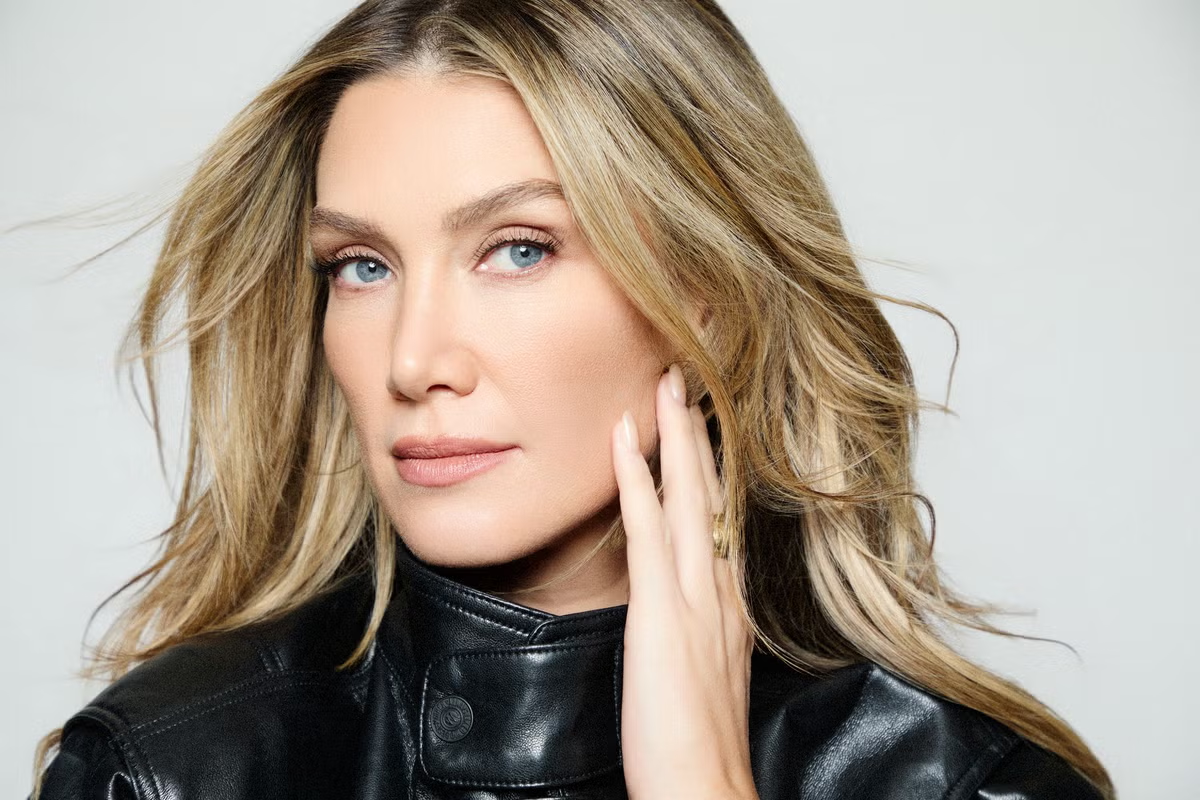
Pop singer Delta Goodrem is hoping to bring Eurovision glory to Australia for the first time as she competes in Vienna, Austria, with her song “Eclipse”.
The singer and actor, 41, is already a household name in her native Australia and known to millions around the world thanks to a starring role in the soap opera Neighbours, not to mention her debut album, the piano-based pop record Innocent Eyes.
Released in 2003, when Goodrem was just 18 years old, it remains one of the highest-selling Australian albums and spawned hit singles including “Born to Try” and “Lost Without You”. The album was also a major success in the UK, charting at number two.
Goodrem’s career was temporarily derailed, however, when she was diagnosed with a rare form of cancer, Hodgkin lymphoma, less than four months after Innocent Eyes was released.
Advertisement
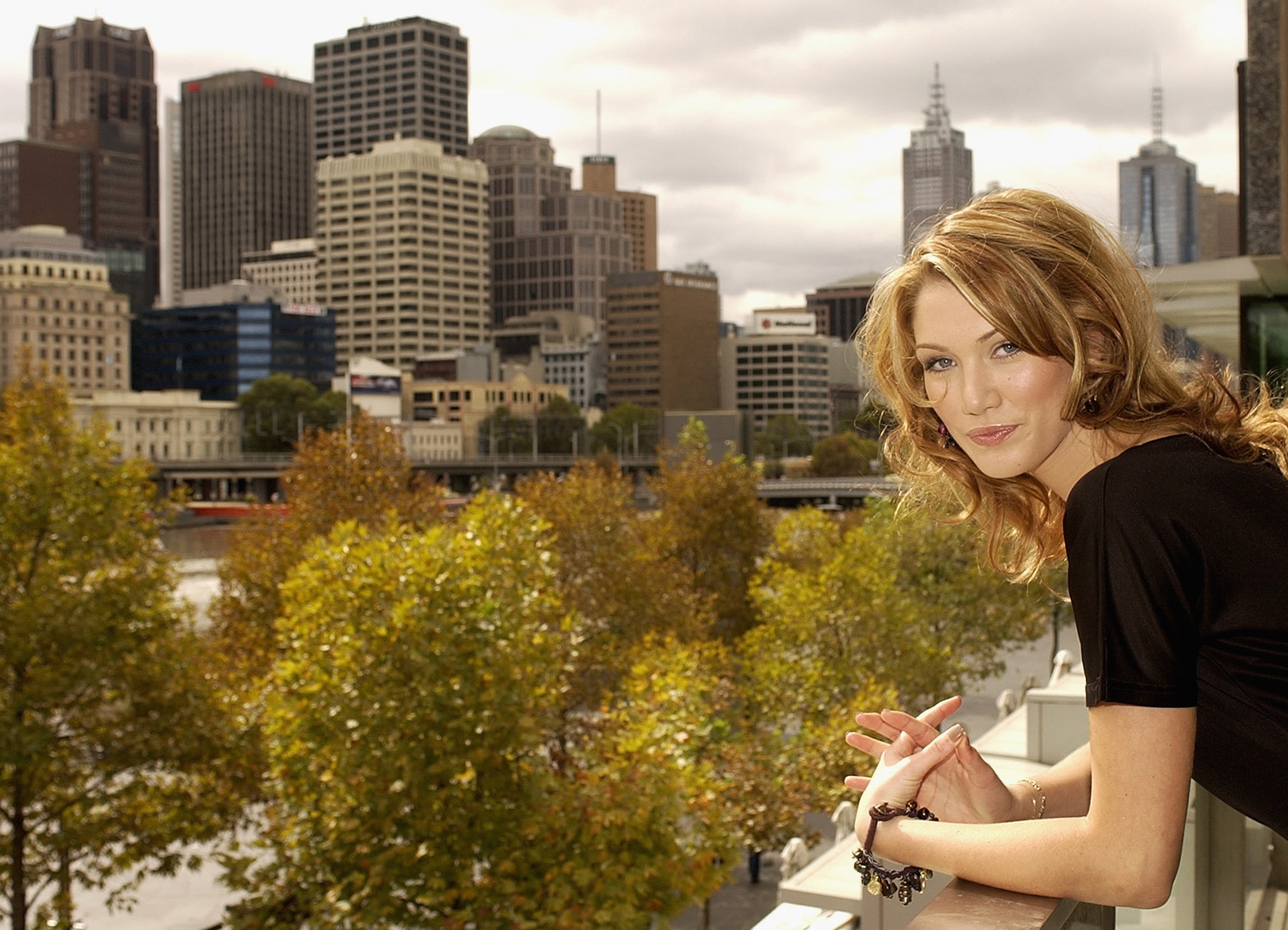
Delta Goodrem was diagnosed with a rare cancer when she was 18 years old (Getty Images)
“It changed the trajectory of my life completely,” Goodrem recalled in an interview last year. “The whole country was sitting outside my front door watching me and my family go through this thing the best we could,” she recalled.
Goodrem has also opened up in the past about how the effect the diagnosis and subsequent treatment had on her physical and mental health, as she underwent radiotherapy and chemotherapy.
“[Losing my hair] was a hard one for me as I was still only a teenager, I barely ever wore makeup back then,” she said. “But when you lose your hair, including your eyebrows and lashes, your skin is pale and you have braces – you want to feel pretty and you start to get creative.”
Goodrem went on to make a full recovery and has since released a further six albums, including five number ones in Australia – her latest record, Bridge Over Troubled Dreams, came out in 2021 and also topped the Australian album chart.
But the album arrived after further health struggles, after Goodrem suffered paralysis of a nerve in her tongue while having her salivary gland removed in 2018, meaning she had to relearn how to speak and sing through rehabilitation and speech training.
Advertisement
Delta Goodrem is representing Australia in the 2026 Eurovision Song Contest (Press)
“Anybody who is in the middle of going through a challenge, whether you’re in a cancer fight, whether you’ve gone through something traumatic, there’s many different phases and different moments you’re going to feel,” she said in an interview in 2021.
“It’s a step-by-step process. It’s the first realisation. Then it’s the journey of, ‘OK, this is happening’.”
The singer spoke of how she managed to turn the trauma she went through into an empowering moment: “It really was a reset moment in my life,” she recalled. “It happened just before the whole world went into this moment of reset.”
Read our Q&A with Goodrem below.
Hi Delta, how are you feeling about representing Australia in the Eurovision Song Contest?
Advertisement
“It’s truly an honour. Eurovision is one of the most iconic global music stages, and to represent Australia is something I feel incredibly proud of. There’s a real sense of excitement – it’s a moment to connect, to share music, and to bring a piece of Australia to the world.”
Can you tell us about the inspiration behind your song, ‘Eclipse’?
“‘Eclipse’ is about those rare, powerful moments in life where everything aligns – where love, timing, and connection feel almost cosmic. It explores light and dark, and the idea that even in moments of shadow, there is something beautiful forming. It’s both intimate and expansive – a song about hope, transformation, and the magic that can happen when two worlds meet. Only love exists when we eclipse!”
What would it mean to you to win for Australia?
Advertisement
“It would be incredibly special. More than anything, it would be a moment shared with everyone who has supported me and believed in the music. To bring that home for Australia on such a global stage would be something I’d carry with me forever but regardless of the outcome, I already feel grateful to be part of something that celebrates music in such a powerful, unifying way.”
Rivals is back for a new season with more bonking, more affairs and, of course, more moustaches.
Set in the fictional Rutshire in the hedonistic late 80s, the Jilly Cooper adaptation has turned some of British TV’s most popular actors into international sex symbols.
No one is more surprised by this than Danny Dyer, who plays the lovable Freddie Jones, especially because of his era-appropriate wig and moustache.
“I just want to see my top lip again,” he joked to the BBC of his facial hair, admitting he has to keep the moustache for around seven months of the year while he’s filming filming.
Advertisement
“My grandchildren only know me as a moustached man, and that depresses me slightly,” he added, referring to his daughter Dani Dyer’s three children, Santiago, Star and Summer.
Danny has one hope for his character in series three – that his character might move with the times and ditch his trademark tache.
“Obviously, we’re coming to the end of the 80s now, so if we go again, we’re sort of encroaching on the early 90s and hopefully this can come off,” he quipped.
Speaking with his daughter Dani on their podcast Live and Let Dyers, the Mr Big Stuff actor said: “Some people were alluding to the fact that, you know, I’m the one that sort of come out of it, really, in a way, going, ‘Oh God, he’s a really good actor.’”
“I’m getting this backhanded [praise] from these big, broadsheets,” he continued. “Actually, there was a headline that went, ‘The biggest plot twist about Rivals is that Danny Dyer can act’. In a way, I’m going, ‘Oh thanks for the compliment’, at the same time going, ‘Well, fuck off’.”
Although it’s not yet been announced, Rivals fans should feel confident – thanks to the rave reviews that season two has received – that a third run is on the cords.
“We’ve already planned season three,” executive producer Dominic Treadwell-Collins said recently on the red carpet for the second series. “It’s not officially greenlit yet, but the stories are all done.”
Advertisement
He added: “We’re ready to go.”
The first three episodes premiere on 15 May 2026, on Disney +, followed by one a week until 5 June. The second half of the season will premiere later in 2026.
A rugby league player in New Zealand has tragically died after suffering an “unsurvivable” injury in his team’s first game of the season.
Advertisement
Eugene Hanna was representing Glenora RLFC’s Premier Reserves squad against the Te Atatū Roosters on May 2 when he sustained the injury. The 30-year-old was rushed to Auckland Hospital and received care there for nearly two weeks before sadly passing away from his injuries on Tuesday, leaving his club, team-mates and West Auckland rugby league in mourning.
In a statement issued on social media, Glenora RLFC’s chairperson, Jane Hunt, confirmed the tragic news and said “there are not enough words” to express the loss suffered by Mr Hanna’s family.
“It is with a heavy heart that we inform our members of the passing of Eugene Hanna on Tuesday,” the tribute read.
Advertisement
“Eugene was a valued player in our Premier Reserves squad and although a new Bears member had good friends within the club.
“Eugene sustained an injury in the teams first game of the season against Te Atatu which was tragically unsurvivable.
“Glenora Bears would like to extend its gratitude to the Te Atatu Roosters members who helped at the scene, the attending paramedics and Auckland Hospital for their care these last two weeks.”
Ms Hunt added: “To his family, friends and teammates we extend our sincere condolences. There are not enough words to express the unimaginable loss and grief you are feeling at this time.
Advertisement
“Forever in our hearts. RIL Eugene.”
Mr Hanna also previously represented West Auckland football club Lynn-Avon United AFC, with the club sharing its own tribute on social media.
“Sadly, we advise the passing of Eugene, a former player of the Lynn-Avon Men’s Reserves team in 2022,” the club statement read.
“He was known by many club members and will be remembered as a genuine all-round good bloke.
Advertisement
“The committee and club extend our sincere condolences to Eugene’s family and friends.”
Then there is Andy Burnham, the mayor of Greater Manchester, currently marooned outside Parliament and so unable to take part in any immediate leadership race unless he can demonstrate he can get a move on – find a seat, persuade the party to let him stand, and hope that the timeframe of any contest means he can play a part in it.
It’s the latest time the technology has been used in the city
09:07, 14 May 2026Updated 09:07, 14 May 2026
Two people have been arrested and a missing man found after live facial recognition cameras were used in Manchester. Greater Manchester Police deployed the technology in the city centre on Wednesday (May 13).
Cameras were used in the Piccadilly Gardens area. During the deployment, a 19-year-old man wanted on suspicion of shoplifting offences in Salford was picked up by the cameras.
A woman wanted for offences including harassment and breach of bail was also spotted by the technology. Both people were arrested by officers at Piccadilly Gardens.
Advertisement
Click here to get the biggest stories straight to your inbox in our Daily Newsletter
GMP says a man who had previously been reported missing was also found safe and well using the technology. He has since been ‘safeguarded’ by police, the force says.
“The two LFR vans were in city centre to support our neighbourhood policing operation and keep our communities safe,” a GMP spokesperson added. Live facial recognition was introduced by GMP last autumn.
Specialist police vans are fitted with fixed cameras, with computers inside using biometric data to match faces in the crowd to those on a ‘watchlist’. Signs warn members of the public if they are entering the cameras’ ‘zone of recognition’, and GMP says the cameras are only used to find people police are already looking for.
Chief Inspector Mike Tachauer told the Manchester Evening News last year that Piccadilly Gardens is a key location to use the technology. “We speak to our community – our businesses, commuters and other users of the city centre,” he said.
“We know that Piccadilly Gardens is a priority for those people. We know that there have been historic issues here, no one is hiding from that, and we know there is a certain expectation that GMP does its part to make it a safe place. Any tools that are at our disposal that we can bring today in order to forward that imperative, we’re really keen to use them.”
Rachel Reeves has hit out at Labour MPs considering launching a leadership bid against Keir Starmer by warning that it could plunge “the country into chaos”.
Until now, the chancellor had avoided weighing in on the growing calls for the prime minister to step down in the wake of Labour’s catastrophic election results in England, Wales and Scotland.
But on Thursday morning, Reeves stood outside Downing Street speaking to the media after the UK economy grew by 0.6% in the first three months of the year – despite the destabilising war in Iran.
The chancellor said this growth enabled the government to invest more in the public services, and support families and businesses with the cost of living.
Advertisement
“But that is only possible because of the economic stability that we have brought back to our economy,” Reeves told the BBC.
“We shouldn’t put that at risk by plunging the country into chaos at a time when there is conflict in the world, but also at a time when our plan to grow the economy is starting to bear fruit.”
Asked if her message to expected leadership rivals like health secretary Wes Streeting is that a contest would “plunge the UK into chaos”, she avoided mentioning anyone by name.
But, she pointedly said: “Today there will be numbers also about the NHS performance.
Advertisement
“Because of the additional money, £29 billion a year, that I’ve been able to put into the health service as chancellor, means that those waiting lists should continue to fall.”
Reeves’ comments also come after former deputy PM Angela Rayner was cleared by the tax man, leaving her free to run in a potential leadership contest.
‘We shouldn’t put that at risk by plunging the country into chaos’
Chancellor Rachel Reeves exclusively told #BBCBreakfast a Labour leadership challenge from Health Secretary Wes Streeting against Keir Starmer could hurt the economy, which grew by 0.6% in the first quarter of… pic.twitter.com/lRXFIv7cxp
Subscribe to Commons People, the podcast that makes politics easy. Every week, Kevin Schofield and Kate Nicholson unpack the week’s biggest stories to keep you informed. Join us for straightforward analysis of what’s going on at Westminster.
A former artist turned art forger, Lori Butler (Michaela Coel) poses a deceptively simple question at the heart of Steven Soderbergh’s new film, The Christophers: does it really matter who paints an artwork?
She is commissioned by the adult children of renowned painter Julian Sklar (Ian McKellen) – Barnaby (James Corden) and Sallie (Jessica Gunning) – to “complete” the last of his unfinished works, The Christophers.

Once complete, their real intention is to sell the series of paintings for a fortune once their father dies. Lori, who once endured a scathing critique from Julian that stalled her own career, reluctantly agrees to take on the job.
The film is, on the surface, a pleasingly crafted piece of art-world intrigue. But it raises questions about pleasure, authenticity, creative ownership and race that, ultimately, it seems unwilling to interrogate closely.
The premise centres on a real psychological phenomenon called essentialism – the deeply human habit of treating objects as though they possess a hidden inner nature that no copy can replicate. Psychologist Paul Bloom explores this in his book How Pleasure Works (2010). He argues that what we enjoy about art is inseparable from our beliefs about its origin.
In a series of experiments in 2012, psychologists demonstrated that people judge original artworks as more valuable and pleasurable than perceptually identical duplicates. This was not because they looked different, but because the original carried the trace of the artist’s creative act.
Even children show this intuition. Research from 2007 showed that when offered a spoon supposedly owned by Queen Elizabeth II versus a perfect copy, children preferred the original almost universally.
Advertisement
Further experimental work has since confirmed that simply labelling a work a copy, with no perceptual difference, depresses viewers’ ratings of its beauty and emotional resonance. This suggests that we are not responding to art – we are responding to the story we tell about it.
The film understands this. It suggests the revelation that Julian’s series portrays a long-lost male lover will transform his paintings into works that are not just appreciated but revered by the art market. Were Lori’s forgeries ever exposed, this would not only jeopardise their commercial value, but also dismantle the essence of the artist’s intent and feeling behind each brushstroke.
The artist’s gaze
This idea of originality is tightly tied up with assumptions about race, gender and who gets to be seen as a “real” artist.
Advertisement
Instead of treating originality as something universal and open to everyone, the film filters it through a very specific lens shaped by white, male authority. Rather than challenging this dynamic, it ultimately reinforces Julian as the figure who decides what counts as true artistic expression.
This dynamic echoes film theorist Laura Mulvey’s analysis of classic cinema, in which the male gaze structures all meaning and value. Men are deemed active creators and women mere objects whose value is defined by men.
In one scene, Julian dismisses Lori’s polyamorous relationships, describing them as mere infidelity. He, however, is never made to reflect on his own situation. As a bisexual man, his sexual freedom is framed as expressive and romantic – the very source of his artistic legacy. As a queer black woman, Lori is afforded no equivalent interpretation.
In her book Creating Their Own Image, art historian Lisa Farrington argues that creative contributions from black women artists are often overlooked or constrained by racial and patriarchal expectations. Their originality is rarely recognised on its own terms, filtered instead through the tastes and authority of others.
Advertisement
As a forger, Lori’s skill operates invisibly throughout the film. She is framed technically as indispensable, but narratively as subordinate to Julian and his children. Her authority as an artist is dependent on someone else’s approval.
Lori’s path has been directly influenced by Julian’s brutal critique of her artistic talent, which extinguished her own originality and confidence, driving her to become a forger. Instead of challenging his views or improving her craft, she simply accepts it, further removing her from any independent agency. The film does not attempt to present this as an indictment against the art world that Julian represents.
For example, in one scene Julian sells his art in a yard sale as a protest against the fact that agents take 40% of the profits of his work while making no creative contribution. In this instance, Julian voice is repeatedly allowed to be heard. Lori is granted no such opportunity.
So what is Soderbergh trying to say? He has faced criticism before for uneven editing and ambivalent portrayals of ethnic groups. Despite being “unusually candid about racism in Hollywood”, according to film theorist Sarah Sinwell, there is a recurring pattern in Soderbergh’s films in which black characters are used primarily to drive and validate white male agency.
Advertisement
The Christophers updates that dynamic without dismantling it. Lori is sympathetic and brilliantly skilled – but her function in the narrative remains pragmatic. Unfortunately, the film does not extend to her the rich interior life it generously grants Julian.
Given the restrained, emotionally muted role Coel is asked to play, Soderbergh seems more interested in exploring ideas of originality and pleasure than questioning: what is art? Why are some creators overlooked? And most importantly, who does the art belong to: the creator or the aesthete?
This article features references to books that have been included for editorial reasons, and may contain links to bookshop.org; if you click on one of the links and go on to buy something, The Conversation UK may earn a commission.
Donald Trump’s past eyebrow-raising praise of Chinese President Xi Jinping has resurfaced as the US president attends a two-day summit in Beijing.
Footage from Trump’s 2024 presidential campaign has been circulating on social media, showing him speaking admiringly about Xi and his power over the one-party state that is frequently criticised over human rights abuses.
“He controls 1.4 billion people with an iron fist,” Trump said at one event.
“They want me to say he’s just of average intelligence, OK,” he continued. “But the look, the whole thing — he stands in front of a million soldiers, they walk by, and they want me to say bad things. I can’t say bad things.”
Advertisement
Trump praises Xi Jinping: He’s brilliant. He controls 1.4 billion people with an iron first. I can’t say bad things about him pic.twitter.com/eKur8qEqsO
Trump made similar remarks about Xi’s control on Joe Rogan’s podcast, where he also described his counterpart as “a brilliant guy.”
During the Beijing summit, Trump struck a similarly warm tone in his face-to-face remarks, telling Xi: “You are a great leader.”
“It’s an honour to be with you,” he added. “It’s an honour to be your friend, and the relationship between China and the USA is going to be better than ever before.”
Advertisement
On social media, critics called out his previous fawning over Xi:
“Control” is what sticks out most. Because that’s what he wants. He wants to control this country, not lead it.
Subscribe to Commons People, the podcast that makes politics easy. Every week, Kevin Schofield and Kate Nicholson unpack the week’s biggest stories to keep you informed. Join us for straightforward analysis of what’s going on at Westminster.
City are the favourites to reclaim trophy they last won in 2024 having swept aside Fulham, Arsenal, Chelsea, Everton and Blackburn to reach a third successive FA Youth Cup final.
However, standing in their way of further silverware just so happens to be the most successful team in the history of the competition.
Man Utd are 11-time FA Youth Cup winners, though have not lifted the trophy since 2022 when a certain Alejandro Garnacho scored twice in a 3-1 win over Nottingham Forest.
Advertisement
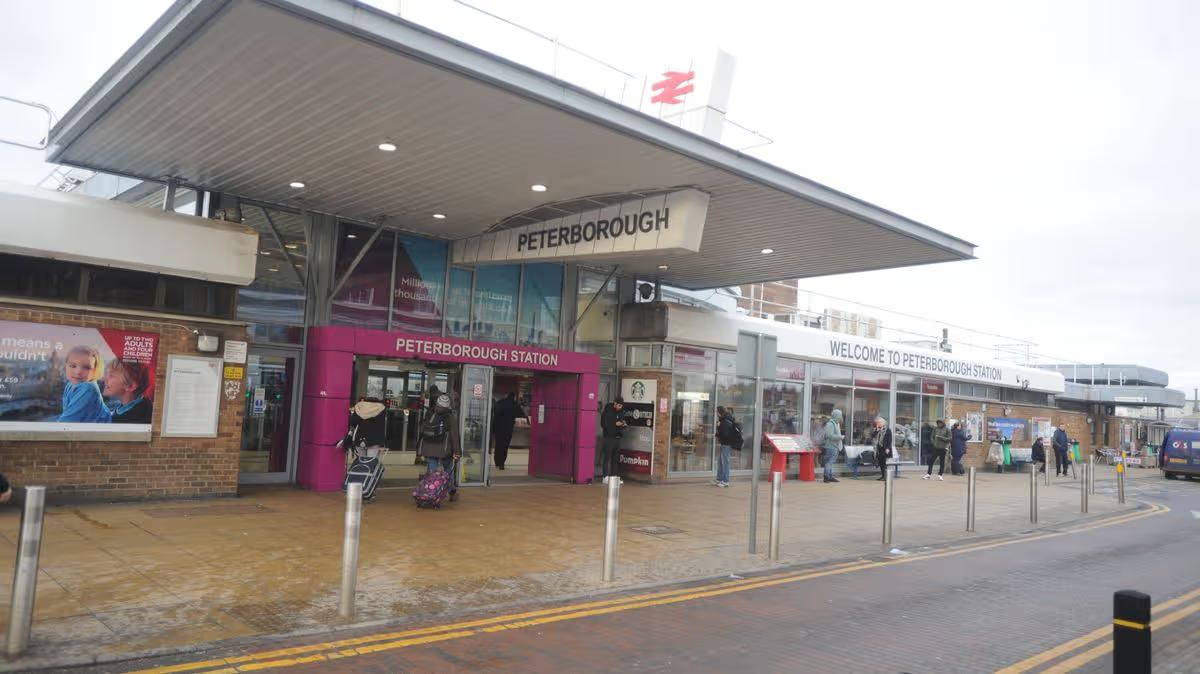
United Under-18’s run to the final has included wins over Peterborough, Derby, Oxford, Sunderland and Crystal Palace, though facing their cross-city rivals will represent the toughest test to date.
Tonight’s showpiece pits England youth team-mates Teddie Lamb and JJ Gabriel against each other, with both players having scored three times in the competition so far.
Here’s everything you need to know about where to watch…
How to watch Man City vs Manchester United
Advertisement
TV channel: In the UK, the game will be televised live on TNT Sports. Coverage starts at 6.30pm BST on TNT Sports 1 ahead of a 7pm kick-off.
Live stream: TNT Sports subscribers can also catch the contest live online via the HBO Max app and website.
The FA Youth Cup final will be free-to-air on BBC iPlayer and the BBC Sport website and app.
Live blog: You can follow all the action on matchday via Standard Sport’s live blog!
Rubio, who is rarely seen in anything less formal than a suit and tie, seemed to be making some sort of statement by cosplaying as the deposed socialist, whom the secretary lambasted as a drug trafficker and illegitimate leader following his arrest.
White House Communications Director Steven Cheung all but confirmed that Rubio was trolling when he posted the ‘fit pic on X, writing, “Secretary Rubio rocking the Nike Tech ‘Venezuela’ on Air Force One!”
Advertisement
Online, some suspected Rubio’s getup was meant to needle leaders in China, a close economic and diplomatic ally of Venezuela, which fiercely condemned Maduro’s capture as a “shocking” violation of international law.
Rubio, the son of Cuban expats and an ardent anticommunist, has a less-than-chummy relationship with China.
A screenshot of a Truth Social post by President Donald Trump showing deposed Venezuelan President Nicolas Maduro in U.S. custody.
After criticizing the nation’s human rights record and its treatment of protesters in Hong Kong during his time as a US senator, Chinese leaders banned him from entering the country.
While Chinese sanctions against Rubio still remain in place, Beijing engineered a clever linguistic loophole to allow his travel once he was sworn in as secretary of state last January, according to a report from The Guardian.
Advertisement
After he took office, the government of the People’s Republic of China changed the characters it used to spell his last name in official documents, leaving the embargo linked to the lettering that is no longer used.
Subscribe to Commons People, the podcast that makes politics easy. Every week, Kevin Schofield and Kate Nicholson unpack the week’s biggest stories to keep you informed. Join us for straightforward analysis of what’s going on at Westminster.
The elections were widely touted as judgement day for the prime minister, and he was hit by Nigel Farage’s Reform UK snatching councils, some of which had been Labour for generations, in northern England, while Zack Polanski’s Green Party lured voters away from him in former urban strongholds, including taking control of some London authorities.
Advertisement
On Monday, Sir Keir gave a make-or-break speech intended to avert any leadership challenge and reassert his authority, but it was described by rebel backbencher Catherine West as “too little, too late”, and dozens of Labour MPs called for the prime minister to stand down or to provide a timetable to ensure an orderly transition of power.
Now cabinet ministers have encouraged Sir Keir to consider his position, opening a window for some rumoured Labour leadership candidates – some of whom are said to have been planning their challenges for months – to finally strike.
The elections mark a perfect opportunity for other leadership hopefuls in the Labour Party to finally strike (PA)
Greater Manchester mayor Andy Burnham has been widely considered the most popular candidate, and allies say he has a credible plan to return as a sitting MP, a prerequisite for the top job.
Sir Keir’s former deputy Angela Rayner is also a frontrunner, alongside the current health secretary Wes Streeting.
Here, The Independent looks at each of the potential leadership candidates, while readers can also share their thoughts:
Recent YouGov polling puts Mr Burnham far ahead of any other Labour figure in popularity polls, with 34 per cent of Britons thinking he’d do a better job than Sir Keir.
Advertisement
Last year, Mr Burnham repeatedly failed to rule out a Labour leadership bid and has been regularly tipped as the leading candidate to take over should Sir Keir’s position as prime minister become untenable.
He was the focus of such rumours at the Labour Party conference last September, when he revealed that dozens of MPs were privately urging him to challenge the prime minister.
He is currently unable to launch an official bid as he is not a sitting MP, and has not made a public statement since Labour’s devastating defeat in the local elections.
Earlier this year, tensions came to a head when a parliamentary seat became available in the North West constituency of Gorton and Denton.
Advertisement
Keir Starmer and Andy Burnham at an event in Greater Manchester in April (Getty)
Mr Burnham put himself forward to run for Labour in the historically safe seat, but was blocked by the party’s National Executive Committee (NEC).
Despite the government insisting the move was down to the potential cost of a Manchester mayoral election, critics accused Sir Keir and his allies of preventing the candidacy for factional reasons and out of fear of a leadership challenge.
However, allies say he has a plan to return as an MP. And his team is reported to have lined up an “impressive” candidate to replace him as mayor – potentially removing Sir Keir’s reason to block him.
Angela Rayner
Rumours about the Ashton-under-Lyne MP’s ambitions have been circling from the moment she resigned from Sir Keir’s cabinet last September, when it was revealed she had underpaid stamp duty on her Brighton flat.
Advertisement
Once the prime minister’s No 2, Rayner is popular on the soft left of the party and has been named as one of the MPs most likely to stage a coup.
Earlier this year, she launched what was widely seen as her clearest challenge to Sir Keir, when she warned Labour is “running out of time” to deliver change and cannot “go through the motions in the face of decline”.
Rumours of a joint bid with Andy Burnham were sparked after she met with the Greater Manchester mayor amid rumblings of a challenge to Sir Keir.
Then deputy prime minister Angela Rayner and leader Keir Starmer in December 2024 (AFP/Getty)
Working with the Greater Manchester mayor could prove essential for Ms Rayner, who is trailing behind him in popularity polls, with only 15 per cent of voters believing she’d do a better job than Sir Keir.
But there have been mixed signals about whether the former deputy prime minister wanted to oust Sir Keir altogether, or just rejoin his cabinet.
Advertisement
In December, the prime minister described Ms Rayner as “hugely talented” and said he would like to see her return to his front bench.
And in what was seen as a last-ditch attempt to secure his position ahead of the elections, Sir Keir reportedly offered Rayner a spot back in his cabinet.
However, her intervention on Sunday appeared to show support for Mr Burnham, when she told the prime minister that blocking the mayor’s bid to stand in Gorton and Denton was a mistake.
In a stark warning to Sir Keir, she added: “Labour exists to make working people better off. That is not happening fast enough, and it needs to change, now.”
The health secretary is considered to be the most likely candidate to replace Sir Keir from within the sitting cabinet.
He is understood to have the backing of enough Labour MPs to launch a leadership bid, having recruited more than 81 MPs – the minimum required to trigger a leadership election.
Advertisement
Sir Keir was reportedly alerted to Mr Streeting’s intentions when a Downing Street staff member was accidentally texted details of his bid, including the “five pillars” of his campaign and his “PFG”, meaning plan for government.
In the centre-right of the party, he is a charismatic cabinet minister who is able to connect with the public.
Chatter about a potential leadership bid grew louder towards the end of last year, amid a briefing war targeting the health secretary over his perceived ambitions to succeed Sir Keir.
Positioned in the centre-right of the Labour Party, Wes Streeting is the most likely leadership contender from within the cabinet (PA)
He has previously voiced his concerns about the direction of the government, and hit out at a “toxic culture” in No 10 when the briefings against him were made public in November.
Earlier this year, as questions around Sir Keir’s future reached fever pitch, the health secretary took the controversial decision to publish communications between himself and Lord Mandelson, which contained severe criticism of the PM’s economic and Middle East policies.
Advertisement
The publication broke collective responsibility and would normally lead to a sacking, but Mr Streeting justified it by saying it was necessary to deal with “smears” that had been made about his relationship with the disgraced former Labour peer.
The main obstacle facing Mr Streeting is the perception among some Labour factions that he is too far to the right of the party, and the general feeling that he does not have enough backing to launch a successful bid.
His public popularity ratings are also low, with only 13 per cent of voters thinking he’d do a better job than Sir Keir.
But in his time away from the leadership, the energy secretary has carved a niche for himself as the party’s top advocate for green energy and net zero.
Ed Miliband has emerged as an unexpected contender to replace the prime minister (AFP/Getty)
Surprisingly popular among young people on social media, speculation has been rife that Mr Miliband is preparing an attempt to make a comeback as leader.
The recent Mandelson scandal has seen him grow increasingly critical of the government, telling broadcasters last week that he had raised concerns about the appointment with David Lammy at the time.
A Miliband supporter told The Independent recently: “He has the energy and enthusiasm. He is loved by younger members of the party. He is a new man from when he was last leader.”
Advertisement
Despite the noise, Mr Miliband has denied he is eyeing a leadership bid, and polling also suggests only 13 per cent of voters think he’d do a better job than the current prime minister.
You must be logged in to post a comment Login