

Crypto World
Forward Industries nears $1B Solana paper loss after Q1 hit



Forward Industries, the self-described world’s largest Solana treasury company, reported a net loss of $585.6 million for the fiscal quarter ended Dec. 31, 2025.
Summary
- Forward holds nearly 6.98 million SOL, with almost all tokens staked for 6.73% gross APY.
- The company reported a $585.6 million Q1 loss, driven mainly by digital asset marks today.
- At current SOL prices, Forward’s treasury faces an unrealized paper loss approaching almost $1 billion.
The loss was driven mainly by a $560.2 million loss on digital assets and a $33.0 million impairment linked to its SOL holdings.
The company still reported higher revenue. First-quarter revenue rose more than fourfold to $21.4 million from $4.6 million a year earlier, mainly due to staking revenue from its Solana treasury strategy.
Treasury sits below cost basis
Forward said it held 6,962,501 SOL on Dec. 31, 2025. It also said 6,834,505.96 SOL had been bought at a net cost of $232.08 per token, for a total cost of about $1.59 billion.
A later treasury update showed holdings had risen to 6,979,967.46 SOL by Jan. 15, 2026. With SOL recently trading near $91.24, the full position would be worth about $636.9 million, leaving a paper gap of about $983.1 million against the reported cost level.
Meanwhile, Forward said nearly all its SOL was staked. Its validator setup generated a 6.73% gross annual percentage yield before fees as of Jan. 15, while the company reported more than 112,171 SOL in staking rewards as of Dec. 31.
The staking income gives Forward recurring crypto revenue, but the price drop still shaped the quarter. Management said the accounting loss reflected the change in fair value of the company’s SOL holdings under U.S. GAAP.
Solana treasury model faces market test
Forward launched its Solana treasury strategy after a $1.65 billion PIPE backed by Galaxy Digital, Jump Crypto and Multicoin Capital. Earlier reports noted that the company moved quickly, buying 6.82 million SOL in its first week and staking the tokens.
The company has also tried to make its treasury more active. It launched fwdSOL, a liquid staking token, and began testing an automated market maker developed with Galaxy and infrastructure input from Jump Crypto.
Chairman Kyle Samani said the quarter marked the company’s first full reporting period as the largest Solana treasury firm. He said Forward was “actively executing” its strategy while building the base to compound SOL per share over time.
Forward also scheduled its fiscal second-quarter 2026 conference call for May 14. That makes the next update important for traders tracking staking rewards, SOL per share, liquidity and any shift in treasury use.


TLDR
- Paradigm and Hyperliquid Policy Center urged the U.S. Treasury to revise the proposed AML rule for stablecoin issuers.
- The groups argued that secondary market liability would impose obligations issuers cannot control.
- They supported FinCEN’s focus on primary market compliance where issuers know their customers.
- The letter asked regulators to narrow the definition of stablecoin payment-related activity.
- Hyperliquid Foundation funded the advocacy group with about $29 million worth of HYPE tokens.
Paradigm and Hyperliquid Policy Center urged the U.S. Treasury to revise a proposed anti-money laundering rule. The groups said the draft would impose strict liability on stablecoin issuers for transactions they cannot control. They asked regulators to narrow certain provisions before finalizing implementation under the GENIUS Act.
Hyperliquid and Paradigm Outline Concerns Over Secondary Market Liability
Paradigm and Hyperliquid Policy Center submitted a joint letter to the Treasury on Tuesday. The letter addressed a proposal issued in April by FinCEN and OFAC. The agencies seek to implement GENIUS Act provisions under the Bank Secrecy Act.
The proposal would treat stablecoin issuers as financial institutions for compliance purposes. However, the groups said some obligations extend beyond primary market activity. They argued that secondary market rules would create strict liability for actions issuers cannot police.
The letter stated, “We broadly support the proposed rule,” and endorsed FinCEN’s focus on primary market compliance. The groups supported tailoring obligations where issuers know their customers. They urged agencies to clarify or narrow secondary market requirements.
They said issuers only see wallet addresses and transaction amounts in public blockchain environments. Therefore, they argued that agencies should align AML and sanctions requirements with that reality. They warned that smart contract liability would exceed issuer control.
They wrote, “An issuer facing obligations it cannot meet on the secondary market has a strong incentive to deploy only to permissioned environments.”
They added that such an outcome would remove U.S.-regulated stablecoins from DeFi platforms. They stated that offshore alternatives could fill any resulting gap.
Groups Propose Specific Revisions Under GENIUS Act Framework
The joint letter recommended narrowing the definition of “payment stablecoin-related activity.” The groups also asked regulators to reconsider OFAC’s treatment of smart contract interactions. They said the current draft extends liability beyond issuer capacity.
The GENIUS Act passed last year with support from President Donald Trump’s administration. Lawmakers advanced the legislation to provide clearer rules for digital assets. Regulators now work through the rulemaking phase before full implementation.
Hyperliquid Foundation established the Hyperliquid Policy Center in February. The foundation funded the group with roughly $29 million worth of HYPE tokens. Jake Chervinsky serves as the center’s chief executive officer.
Paradigm backed Hyperliquid and supported the center’s advocacy efforts. The venture firm co-signed the letter addressed to Treasury officials. The document forms part of the public comment process.
FinCEN and OFAC will review submitted comments before issuing a final rule. The agencies proposed the draft in April under existing statutory authority. The implementation phase continues as regulators evaluate industry feedback.



Sam Bankman-Fried, the convicted founder of the collapsed crypto exchange FTX, has formally filed a petition for a presidential pardon with the Trump White House, his attorney confirmed to CNBC and Fox Business on Monday. The petition was filed with the Office of the Pardon Attorney, a division of… Read the full story at The Defiant
Crypto World
US Bitcoin Reserve Bill Text Locks Holdings for 20 Years and Mandates Quarterly Proof-of-Reserve Reports


The full legislative text of a bill to codify a US Strategic Bitcoin Reserve is now public on Congress.gov, revealing a mandatory 20-year prohibition on selling any acquired BTC and a requirement for quarterly, publicly audited proof-of-reserve reports. Rep. Nick Begich (R-AK) introduced H.R. 8957,… Read the full story at The Defiant
Crypto World
Janus Henderson Takes ENA Stake, Deploys Into USDe, Explores ETP Distribution in Four-Part Ethena Deal


Janus Henderson Investors has announced a multi-part partnership with Ethena, the synthetic dollar protocol behind USDe. The announcement, made via Ethena's official X account this morning, covers a strategic ENA investment from Janus Henderson's blockchain venture ANTIK, the integration of a Janus… Read the full story at The Defiant


Michael Saylor has pushed back against dilution concerns after Strategy sold approximately $181 million worth of MSTR shares and used part of the proceeds to expand both its Bitcoin holdings and cash reserves.
Summary
- Michael Saylor rejected dilution claims tied to Strategy’s $181M MSTR share sale.
- Strategy added 1,550 BTC and increased cash reserves by $100 million.
- Fortune warned about rising obligations and risks if Bitcoin falls further.
According to comments posted by Strategy Executive Chairman Michael Saylor on X, criticism surrounding the company’s latest capital raise misunderstands how shareholder value should be measured.
Saylor’s response came after Bitcoin analyst Matthew R. Kratter argued that recent share issuance diluted existing shareholders and pointed to a decline in Strategy’s BTC Yield metric between June 1 and June 8.
Data published by Strategy showed the company held 843,706 BTC while its assumed diluted shares outstanding increased to 384,180 during the period. Referring to those figures, Kratter said on X that the increase in shares outweighed the short-term benefit of additional Bitcoin per share.
Fresh scrutiny followed Strategy’s June 8 filing, which disclosed the sale of more than 1.4 million MSTR shares for roughly $181 million. Market participants also noted that company executives sold around $15 million worth of MSTR stock for tax-related purposes, while sentiment had already been pressured by Strategy’s disclosure of its first Bitcoin sale in more than four years at the end of May.
Saylor disputed the dilution argument by stating that BTC Yield measures growth in Bitcoin per share rather than total shareholder accretion. In his response, he said Strategy added both Bitcoin and cash during the transaction, making the outcome positive for shareholders when both assets are considered.
“Last week Strategy added ₿1,550 of BTC and $100 million of USD Reserve. When both assets are included, the transaction was accretive to MSTR shareholders.”
Strategy points to cash reserves alongside Bitcoin growth
Figures released by the company show Strategy acquired 1,550 BTC for approximately $101.3 million between June 1 and June 7. The purchase was completed at an average price of $65,332 per Bitcoin during a period of heavy market volatility.
Company disclosures indicate Strategy now holds 845,256 BTC, which Saylor said are valued at roughly $51.9 billion based on current market prices. The company also reported a year-to-date BTC Yield of 12.8% and a BTC Gain of 86,328 BTC.
At the same time, the latest fundraising increased Strategy’s dollar reserves by $100 million, lifting total cash reserves to about $1 billion. Those reserves have attracted additional attention following shareholder approval of a proposal to change STRC preferred stock dividend payments from a monthly schedule to semi-monthly distributions beginning this month.
Rising obligations remain a focus for analysts
A separate analysis published by Fortune has highlighted concerns about Strategy’s growing use of preferred stock and Bitcoin-backed financing. According to the publication, the company’s combined debt and preferred stock obligations have increased from approximately $6.9 billion in early 2025 to around $21.8 billion, with preferred stock issuances accounting for much of the increase.
Fortune also estimated that Strategy’s stock continues to trade roughly 31% above its net asset value and warned that the premium could come under pressure if Bitcoin prices fall or investor concerns about the company’s capital structure intensify.
Under a scenario modeled by Fortune in which Bitcoin (BTC) declines to $50,000, the company’s net asset value could fall to about $23 billion while liabilities remain unchanged.
Attention has also remained on Strategy’s funding flexibility after the company disclosed the sale of 32 BTC for about $2.5 million in late May, its first reported Bitcoin sale since December 2022.
In a previous research covered by crypto.news, JPMorgan described the transaction as largely symbolic and said it appeared intended to demonstrate flexibility toward preferred shareholders, while cautioning that future dividend commitments could raise questions if cash reserves are eventually depleted.
TLDR
- Senator Elizabeth Warren questioned whether the CFTC can handle expanded crypto oversight.
- Warren said staffing cuts and reduced enforcement weaken the agency’s capacity.
- The CFTC workforce has reportedly declined by about 25% in recent years.
- Warren criticized the agency’s decision to back vacating the 2022 Gemini judgment.
- The CFTC concluded the Gemini complaint would not meet current enforcement standards.
Senator Elizabeth Warren has challenged the readiness of the Commodity Futures Trading Commission as Congress weighs broader crypto oversight. She warned that staffing cuts and reduced enforcement could strain the agency. Her letter to Chair Michael Selig described the situation as a “recipe for disaster.”
CFTC Staffing and Enforcement Under Scrutiny
Warren sent the letter on Friday as lawmakers advanced legislation expanding CFTC authority over crypto and prediction markets. She argued the agency lacks the capacity to manage wider responsibilities under current conditions.
She wrote that a smaller workforce and fewer enforcement actions weaken oversight. Warren cited reports that staff levels have fallen by about 25%.
Warren also pointed to a decline in enforcement since President Donald Trump took office. She said the trend raises concerns about the agency’s ability to police complex crypto firms.
In her letter, Warren stated, “A CFTC with fewer staff members, reduced enforcement activity, and expanded responsibilities is a recipe for disaster.” She asked Selig to explain how the agency would handle expanded duties.
Warren further questioned internal decisions affecting oversight priorities. She requested records on staff reassignments and communications with industry participants.
She also asked for documents covering contacts between the CFTC and crypto firms regarding the Clarity Act. The request included communications with prediction market platforms.
Disputes Over Crypto and Prediction Markets
Warren referenced the agency’s recent handling of cases involving Gemini. She highlighted the CFTC’s decision to support vacating a 2022 judgment.
That case alleged Gemini made “false or misleading statements” in 2017 about bitcoin futures manipulation risks. The agency later concluded the complaint “should not have been filed.”
The CFTC said the case would not meet enforcement standards today. Warren questioned the reasoning behind that conclusion.
She also cited reports that officials who raised concerns about firms like Polymarket and Crypto.com left the agency. Warren asked whether internal pressure influenced those departures.
Selig has maintained that prediction markets fall under the CFTC’s “exclusive jurisdiction.” However, several states argue that such platforms violate local gambling laws.
Those disputes have led the CFTC to sue states that attempted to block prediction market operations. Warren referenced those legal actions in her letter.
She requested details on communications between agency officials and prediction market companies. She also asked for records related to enforcement strategy shifts.
Congress continues to debate legislation that would expand CFTC oversight of crypto markets. Warren’s letter seeks further clarity on staffing, enforcement, and internal decision-making as those discussions proceed.


Token of Power suffered an exploit on Tuesday that drained more than $1.5 million from its liquidity pool. On-chain firms Blockaid, PeckShield, and Cyvers flagged the incident in posts on X.
- Token of Power lost 944.2 WETH, worth about $1.58 million, from its TOP/WETH Balancer V1 pool.
- Blockaid described the incident as a governance-takeover attack, while Cyvers traced the drain to the Balancer pool.
- PeckShield data showed the attacker later moved stolen funds into the Tornado Cash crypto mixer.
The attack targeted the TOP/WETH Balancer V1 Pool and drained 944.2 WETH.
TOP token exploit hits Balancer pool
Token of Power, also known as TOP, is an Ethereum-based ERC-20 token. The project operates under a DAO called The Mask of Power. The project built TOP around collective ownership of a specific MetaMask NFT. Its token also supported liquidity for the project’s market activity.
Cyvers said the attacker drained funds from the TOP/WETH Balancer V1 Pool. The pool held TOP tokens and Wrapped Ethereum under a 50-50 structure. Wrapped Ethereum, or WETH, represents ETH in a token format used across DeFi.
The Balancer V1 pool functioned as an automated trading vault for both assets. Blockaid described the incident as a “governance-takeover attack” in its X post. PeckShield and Cyvers also published alerts as the transaction activity became visible on-chain.
On-chain firms report 944.2 WETH loss
On-chain intelligence firms said the attacker added a large number of TOP tokens into the pool. The attacker then swapped those tokens against the pool’s real WETH reserves. The exploit drained 944.2 WETH, worth about $1.58 million at the time.
After the drain, the pool held heavily diluted TOP tokens. The incident left liquidity providers exposed to tokens with little market value. Further project details on recovery, compensation, or next steps remain unavailable.
PeckShield data showed the attacker later moved stolen funds into Tornado Cash. Tornado Cash is a crypto mixer that can make tracing funds more difficult. The movement to Tornado Cash followed the initial drain from the Balancer pool. Security firms have not yet published a complete technical report on the incident.
Exploit follows separate Humanity Protocol breach
The Token of Power incident came one day after another reported DeFi security breach. As it was reported by crypto.news, Humanity Protocol lost $36 million in user funds through an employee’s laptop breach. The two incidents affected different projects and used different reported attack paths.
However, both cases drew attention from blockchain security firms this week. The Humanity Protocol breach involved a digital identity project built on blockchain infrastructure. In contrast, the Token of Power exploit centered on a liquidity pool.
The TOP project has not yet released a full incident review in the provided details. More information about the attacker’s route and possible project response remains pending. Blockaid, PeckShield, and Cyvers continue to serve as the main cited sources for the incident. Their alerts identified the affected pool, the estimated loss, and the fund movement.


Kalshi, the CFTC-regulated U.S. prediction market leader, plans to require users to disclose their employer before trading certain sensitive contracts.
The change directly addresses rising concerns over insider trading tied to government and corporate information.
Rising Insider Risks Prompt Action
Prediction markets have seen explosive growth, with combined Kalshi and Polymarket volumes reaching record levels in recent months.
Yet this surge has amplified risks of trading on material non-public information (MNPI).
On March 24, 2026, the White House sent an internal email warning staff against using non-public government information on platforms including Kalshi.
In May 2026, House Oversight Committee Chair James Comer launched a formal probe, sending letters to Kalshi CEO Tarek Mansour and his counterpart at Polymarket seeking details on user verification and suspicious activity monitoring.
Kalshi has responded aggressively. In the year leading to February 2026, it opened over 200 investigations into potential violations, resulting in public disciplinary actions.
These included fines and multi-year suspensions for a MrBeast video editor trading on upcoming content and multiple congressional candidates betting on their own races.
How the New Rule Works
Per an advisory committee recommendation, users will soon submit an online form disclosing their employer for markets with elevated MNPI risk, such as those tied to political outcomes, corporate events, or policy decisions.
According to WSJ, the rollout is expected in the coming weeks.
This builds on existing measures:
- Detailed onboarding screens for high-risk individuals (politicians, officials, athletes),
- Real-time trade surveillance with third-party partners,
- Account freezes during probes, and referrals to the CFTC and DOJ when warranted.
Kalshi’s CFTC-approved rules already ban trading with MNPI, as source-agency affiliates, or by those with outcome influence.
Edge Over Crypto Rivals
As a fully regulated exchange with mandatory KYC and fiat infrastructure, Kalshi’s enhanced controls reinforce its positioning for institutional and compliance-conscious participants.
The policy adds targeted friction for affected trades but signals stronger integrity amid Washington scrutiny, potentially attracting capital wary of looser offshore or crypto-native alternatives.
Details on exact triggering markets and enforcement will emerge soon via Kalshi’s rulebook and integrity hub.
With prediction market volumes continuing to climb and regulators watching closely, this step could influence industry standards for balancing innovation with safeguards.
Market participants and employers should review updated policies as implementation approaches.
The post White House Scrutiny Forces Kalshi Employer Disclosure Rule appeared first on BeInCrypto.
SBI Shinsei Bank will reportedly launch a service that rewards deposit customers with cryptocurrency exchange vouchers based on their account balances.
According to a Nikkei report, customers will receive vouchers equal to 20% of their interest payments, in addition to their yen-denominated interest. The vouchers can be exchanged for Bitcoin (BTC), Ether (ETH) or XRP within a specified period.
Customers would need to open an account with SBI’s crypto exchange arm, SBI VC Trade, to redeem the vouchers.
The rollout turns a conventional savings product into a crypto on-ramp, potentially exposing mainstream bank customers to digital assets without requiring them to make direct purchases.
Ahead of the permanent launch, SBI Shinsei will reportedly run a three-month campaign starting Wednesday, covering ordinary deposits and time deposits ranging from three months to five years.
SBI expands crypto push across deposits, lending and investment products
The deposit-voucher service follows several crypto moves by SBI Group as the financial conglomerate prepares for broader digital asset adoption in Japan.
On March 18, SBI VC Trade launched a retail USDC lending service, allowing users to lend the stablecoin to the platform under fixed-term agreements in exchange for returns. The product is structured as a loan to the exchange rather than a bank deposit, which means that users take direct counterparty risk.
Related: Startale raises $50M from SBI to complete $63M Series A
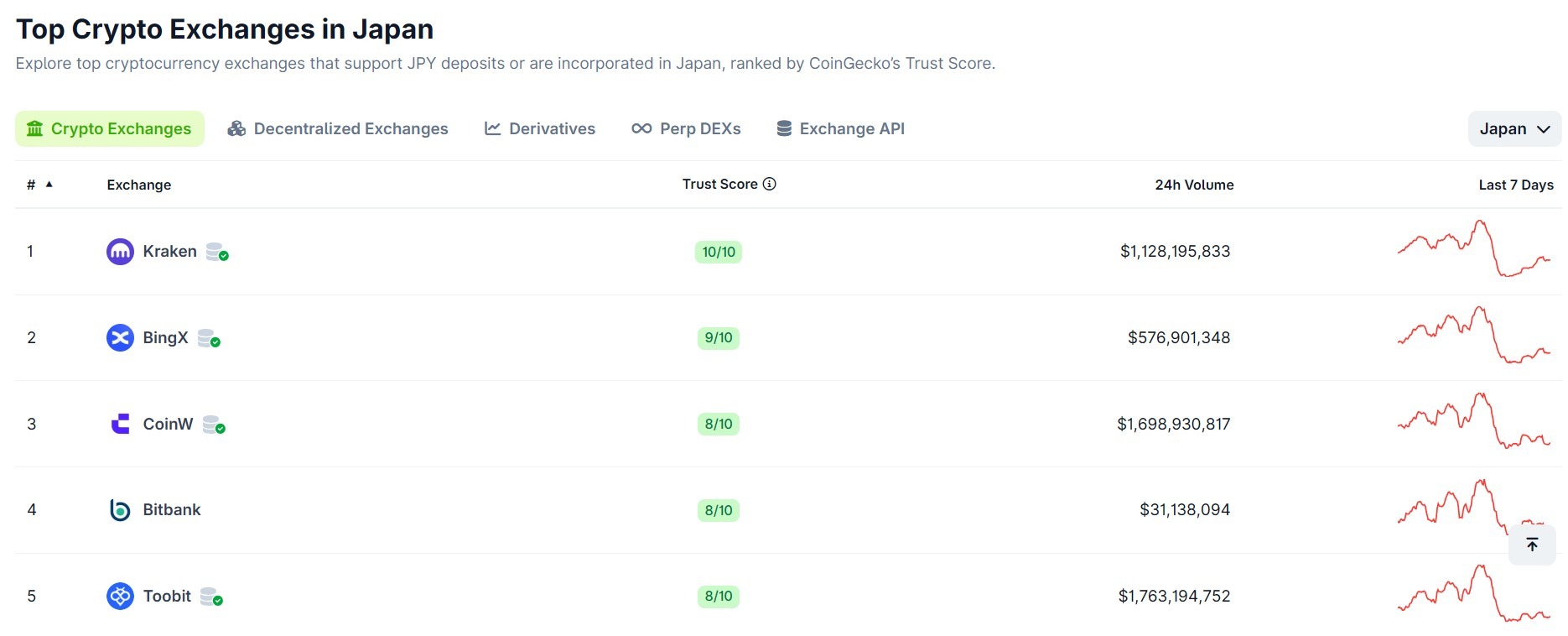
SBI has also been expanding its position in the local crypto exchange market. On May 1, the group said it was considering acquiring shares in the Bitbank trading platform and making it a consolidated subsidiary, a month after SBI VC Trade absorbed Bitpoint Japan.
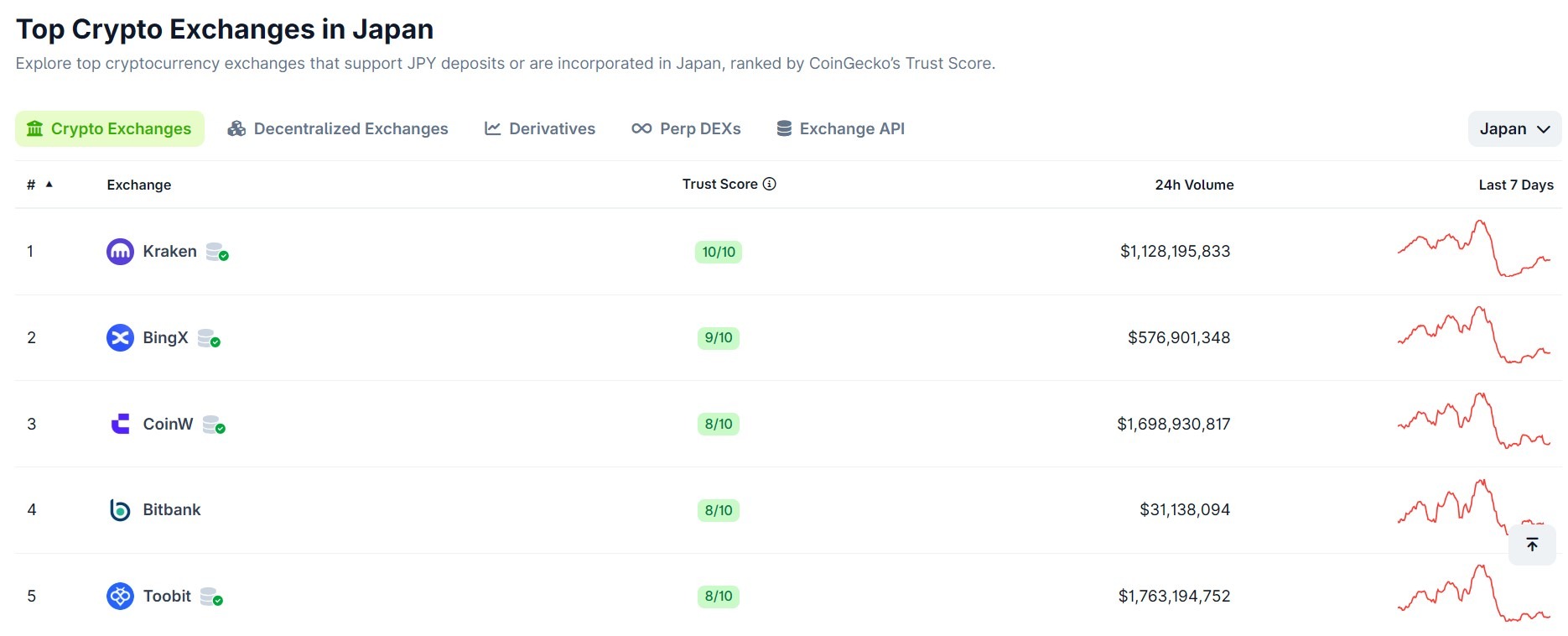
Top crypto exchanges in Japan. Source: CoinGecko
The group’s securities arm is also preparing crypto investment products. SBI Securities reportedly plans to sell funds developed by SBI Global Asset Management, including investment trusts and exchange-traded funds (ETFs) focused on crypto assets like BTC and ETH.
The moves show that the group is working to build crypto access points across regulated channels, from bank deposits and exchange services to securities products and stablecoin lending.
Magazine: Vietnam preps crypto pilot, HK pushes tokenization: Asia Express
RLUSD Records Strong Minting Activity on XRP Ledger
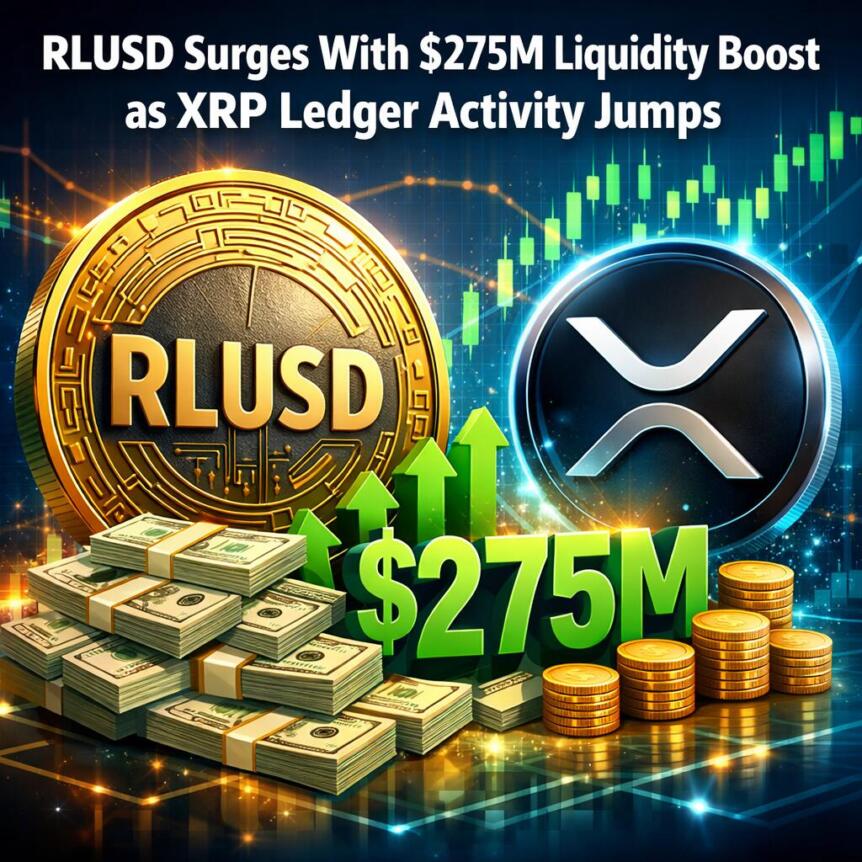
Ripple USD (RLUSD) recorded a strong liquidity increase during the past week as activity expanded across the XRP Ledger. Fresh minting transactions significantly exceeded token redemptions during the period. Consequently, the stablecoin added more than $275 million in net liquidity while its market capitalization continued to grow.
RLUSD experienced a notable rise in network activity over the last seven days. Several large minting and redemption transactions took place on the XRP Ledger. As a result, the stablecoin supply expanded during the reporting period.
Data from XRP Ledger activity showed substantial token creation across multiple days. On May 22, RLUSD Treasury minted more than 10 million RLUSD. Meanwhile, additional minting and burning transactions occurred on May 21 and May 20.
The largest transaction involved the creation of 230 million RLUSD on the XRP Ledger. At the same time, Ripple removed smaller amounts of RLUSD from circulation through treasury burn events. Consequently, minting activity outweighed redemptions by a wide margin.
Network data showed that RLUSD minted approximately $354.4 million during the week. In contrast, total burned supply reached about $78.7 million. Therefore, the stablecoin generated a net liquidity increase exceeding $275 million.
The latest figures highlight growing usage of RLUSD within the XRP Ledger ecosystem. Increased token issuance often reflects higher demand for settlement and liquidity purposes. Moreover, stablecoin activity can support broader network participation.
RLUSD continues to serve as a key component of Ripple’s expanding digital payments strategy. The stablecoin supports value transfers while maintaining a dollar-pegged structure. As adoption grows, transaction volumes may continue increasing across supported platforms.
Binance Expands RLUSD Utility Through Trading Support
Major cryptocurrency exchange Binance contributed to RLUSD activity during the reporting period. The platform processed RLUSD transactions on the XRP Ledger. Consequently, exchange-related flows added to overall network volume.
Binance expanded support for RLUSD earlier this year through several product integrations. The exchange introduced spot trading support for the stablecoin. Additionally, it enabled portfolio margin eligibility for qualifying users.
The platform also added RLUSD to its Earn products. These additions created more use cases for holders across trading and yield-related services. Therefore, RLUSD gained broader exposure within the cryptocurrency market.
Exchange support often plays an important role in stablecoin growth. Larger trading venues provide liquidity and increase accessibility for users. Moreover, integration with multiple products can encourage wider adoption.
The recent increase in RLUSD activity coincided with continued exchange participation. Transaction processing across major platforms supported the movement of newly issued tokens. As a result, liquidity expanded alongside network usage.
Growing exchange availability may strengthen RLUSD’s position among dollar-backed digital assets. Stablecoins rely on liquidity and accessibility to support adoption. Therefore, exchange partnerships remain an important factor in future growth.
RLUSD Market Cap Climbs as Ecosystem Growth Continues
RLUSD’s market capitalization recently surpassed $1.7 billion. The milestone reflects continued expansion since the stablecoin entered the market. Furthermore, growing transaction activity has supported that upward trend.
Ripple has positioned RLUSD for use in payments and decentralized finance applications. These sectors continue to represent major growth areas for stablecoins. Consequently, broader utility may contribute to sustained demand.
Market participants also expect additional ecosystem developments in the near term. Industry discussions have pointed to potential end-of-month activity involving the cryptocurrency exchange Gemini. Such developments could generate further minting and redemption transactions.
Stablecoin growth remains a significant trend across the digital asset sector. Companies continue expanding products that support blockchain-based payments and settlements. Moreover, increased liquidity often improves efficiency across related services.
RLUSD’s latest expansion demonstrates rising activity on the XRP Ledger. Strong minting volumes drove a substantial weekly liquidity increase. As adoption advances, the stablecoin continues strengthening its presence within the broader digital asset ecosystem.

How gaps in education, work and welfare support can push neurodivergent people into homelessness

Record spend delivers new pressure test
Hyperliquid, Paradigm Urge Treasury to Revise AML Rule

HarrisX Poll Found 52% of Registered Voters Support the CLARITY Act

BloFin War of Whales 2026 Grand Prix opens registration for $5M trading championship

Blockchain.com files with SEC for U.S. IPO

Crypto Trading for Beginners (EP.2) | Crypto Trading Full Course | How To Trade Crypto STEP-BY-STEP

Cryptocurrency in Pakistan: Types of Trading & Income Reality Explained | Geo News

Coins for Kids | U.S. Money | Elementary Math
-

 Fashion4 days ago
Weekend Open Thread: Evereve – Corporette.com
-
 Crypto World5 days ago
Jensen Huang Approves Samsung, SK Hynix, and Micron for NVIDIA (NVDA) HBM4 Memory Supply
-

 Crypto World2 days ago
Anatomy of the June crypto crash: Fed, Iran, Saylor
-
Crypto World3 days ago
Senator Cynthia Lummis Calls CLARITY Act the Most Consequential Financial Legislation of This Generation
-

 NewsBeat2 days ago
Alexander Zverev wins the French Open to finally earn a 1st Grand Slam title
-

 Tech5 days ago
Microsoft launches MXC, an OS-level sandbox for AI agents, with OpenAI and Nvidia already on board
-
 Entertainment3 days ago
The Best Mystery Series of All Time Is Surging on Streaming 30 Years After It Ended
-
 Business3 days ago
The Pain Points Taking a Fragile Tech Rally Down a Notch
-

 Tech3 days ago
Microsoft unveils seven homegrown AI models in new bid for ‘long term self-sufficiency’
-
Crypto World5 days ago
LBank Surpasses 25 Million Users Worldwide as AFA Partnership Continues to Drive Global Growth
-

 Tech4 days ago
Suspicious Polyfill login prompts pop up on Toshiba, Muji websites
-

 Crypto World3 days ago
Trump’s AI Ownership Plan Could Benefit Anthropic at OpenAI’s Expense
-
 Sports11 hours ago
Bangladesh beat Australia after 20 years in ODIs, register only their second win over six-time world champions | Cricket News
-

 Business5 days ago
(VIDEO) Justin Bieber Delivers Surprise Happy Birthday Serenade to Diners at Los Angeles Mexican Restaurant
-

 Tech5 days ago
RCS Messages Between iPhone and Android Get End-to-End Encryption With iOS 26.5
-

 Tech5 days ago
Meta steals a tactic from Tesla and builds data centers in tents
-
 Crypto World2 days ago
Eli Lilly (LLY) Stock Surges 4% Following Breakthrough Sleep Apnea Trial Results
-

 Tech4 days ago
Hackers now exploit SolarWinds Serv-U flaw to crash servers
-
Business7 days ago
Asia stocks rise past US-Iran jitters; Nikkei hits record high on stimulus cheer
-

 Tech4 days ago
Von der Leyen’s AI envoy pick draws conflict-of-interest fire
You must be logged in to post a comment Login