Hearts are in pole position – for now. Avoid defeat at the home of Celtic, and they are SPL champions for the first time since 1960
After one of the most dramatic title races in Scottish football history, it all comes down to one game at Celtic Park.
Advertisement
Hearts are in pole position – for now. Avoid defeat at the home of Celtic, and they are SPL champions for the first time since 1960.
“It’s a perfect ending to a season for the league, for Scottish football, for drama and excitement,” said Hearts boss Derek McInnes ahead of Scotland’s first final-day title shootout since 1991. “It’s pure box office.
The last time the Scottish Premiership was not won by Celtic or Rangers was all the way back in 1984/85 when Aberdeen won two league championships in a row under a manager called Alex Ferguson.
Martin O’Neill’s Celtic were handed a lifeline on Wednesday when they defeated Motherwell with a contentiously awarded stoppage-time spot-kick.
Advertisement
McInnes branded the decision “disgusting” after his side’s victory over Falkirk on the same night, but said on Friday, on the eve of his club’s biggest ever match, that he did not want to get bogged down in talk about referees.
“It’s important now that we have that one big performance in us to try and get over the line and get the title won. The confidence I feel in the players is so strong. We have to go there with courage, with belief and be bullish,” said McInnes.
Hearts will have fewer than 1,000 supporters at the 60,000-capacity Celtic Park.
Here is everything you need to know about the game..
Advertisement
When is the game?
Saturday at 12.30pm
Where is the game?
Celtic Park
Is the game on TV?
Yes, the game will be shown live on Sky Sports in the UK and Ireland
Is the game being streamed?
Yes, Sky Sports will have a live stream of the game
Swansea City have published their retained list, with 11 leaving and two remaining in contract talks
Swansea City have confirmed their retained list following the conclusion of the 2025/26 Championship season.
Advertisement
Youngsters Evan Anderson, Mitchell Bates, Callum Deacon, Isaac Dudding, Wahab Ojetoro, Ben Phillips, Brogan Popham and Josh Thomas will all be leaving upon the expiry of their contracts or scholarship agreements.
Loan players Malick Yalcouye, Ishe Samuels-Smith and Gustavo Nunes have returned to their parent clubs following their respective stays in south Wales.
Meanwhile, the club remain in talks with Joel Ward and Kit Margetson, with their contracts up at the end June.
Ward, 36, signed a short-term deal with the club in January and made 16 appearances.
Advertisement
Swansea have also extended Aimar Govea’s contract until December of this year.
“Everyone at Swansea City wishes all departing players every success for the future, and thanks them for their contributions,” the club said in a statement on their website.
Swansea have already triggered contract extensions with Zan Vipotnik, Lawrence Vigouroux, Josh Tymon, Jay Fulton, Andy Fisher and Paul Farman.
Head coach Vitor Matos hopes to avoid a summer of upheaval in the upcoming transfer market in a bid to improve upon last season’s 11th-placed finish.
Advertisement
“I think we need to avoid that [upheaval]. If not, all the work we’ve been doing was just for nothing,” he said last month.
“So it starts by having all players under contract, which is quite good. That’s a massive thing and then it’s about having a clear idea in terms of the market.
“The ownership has a really clear vision of what they want for the future. I’ve bought into that and they’ve bought into my ideas as well. That was always the common ground.
“We had a transfer window with more limitations in January. Now it’s a little bit different. Let’s see how it goes.”
Advertisement
Players over 24 as of June 30, 2026
Florian Bianchini, Cameron Burgess, Ben Cabango, Ollie Cooper, Liam Cullen, Jisung Eom, Paul Farman, Andy Fisher, Goncalo Franco, Jay Fulton, Ethan Galbraith, Adam Idah, Zeidane Inoussa, Josh Key, Ronald, Ricardo Santos, Marko Stamenic, Josh Tymon, Lawrence Vigouroux, Zan Vipotnik, Melker Widell.
Players under 24 as of June 30, 2026
Morgan Bates, Joe Collins, Cameron Congreve, Jacob Cook, Joel Cotterill, Sebastian Dabrowski, Caleb Demery, Jack Fanning, Yori Griffith, Iestyn Jones, Filip Lissah, Ben Lloyd, Blair McKenzie, Arthur Parker, Sam Parker, Harlan Perry, Josh Pescatore, Ramon Rees-Siso, Thomas Searle, Bobby Wales, Dan Watts, Evan Watts, Kyrell Wilson, Thomas Woodward.
Advertisement
Scholars at conclusion of first year
Kaven Bloniarczyk, Bobo Evans, Harvey Gray, Carter Heywood, Alfie Jones, Josiah Kallicharan, Jack May, Lukas Murphy, Jakub Nowak, Archie Quick, Kai Rhodes, Elis Thomas, Thomas Wright.
Offered professional contracts
Billy Clarke, Caio Ifans, Callum Jones, Milo Robinson.
As relatively recent graduates, my husband and I had struggled with the banks to secure a mortgage – and worse still, I had a humanities background that didn’t exactly guarantee employment.
But after approaching several banks, we managed to persuade a kind loan officer to say yes. Suddenly, we found ourselves settled in the suburbs, with 190 square meters, two children and a garden trampoline.
One summer evening, while the children were asleep, we sat out on the terrace in the sunshine. We had eaten well, lit candles and were drinking wine. It sounds like the perfect evening, doesn’t it?
Advertisement
On paper, we had realised our dream. The problem was, it didn’t feel that way. I had a strange sense that something was missing, even though I adore my family.
What was missing were friends.
And although I felt lonely, I wasn’t alone. Studies show that many of us have experienced loneliness.
Advertisement
This essay was published as part of a collaboration between Insights, The Conversation’s longform series, and Videnskab.dk.
I research friendship and, over the past few years, I’ve immersed myself in everything from scientific studies to literary texts on the subject.
It is especially literature that has given me a new perspective – both professionally and personally – on what friends are, and what friendship can be.
Hungry for friendship
In other words, I have what romantic movies and popular culture tell us is important: a partner, children, a job and a mortgage.
Advertisement
But it isn’t quite enough.
And it made me wonder whether the life path many of us – myself included – are following might, in fact, contain some built-in flaws.
Does this path leave too little room for the relationships defined by choice and equality? The relationships that aren’t about starting a family, but about friends?
We are raised to follow a particular social script in life. One in which career, marriage and children take centre stage and where friendship is assigned a less important role.
Advertisement
Many of us leave behind youth – when friendship often plays a central part – in favour of the so-called serious romantic relationship of adulthood. More broadly, some people tend to treat friendship as a kind of optional icing on the cake rather than the dough that holds it all together.
But what if this script doesn’t make us happy? What if we are depriving ourselves of something essential? Renowned feminist writer and activist Betty Friedan wrote about the widespread unhappiness of women in the 1960s in her groundbreaking book The Feminine Mystique.
Among its core arguments is this: women who stay at home and care for children are bound to be unhappy due to wider social structures that hold them down. A challenge she labelled “the problem with no name”.
Certainly, an element of being tired of caring for others and not being at the centre of one’s own life played an important role in my own feelings of sadness and yearning. But it couldn’t account for everything: I had a job, and things to do outside the home – contrary to many women in the 1960s. I had things I wanted to do. Friedan’s analysis didn’t entirely capture the problem.
Advertisement
A midlife phenomenon
And so, you may recognise the feeling of being hungry for friendship, even if you don’t live in the suburbs, play house day to day, or identify as female.
Perhaps you’ve structured your life very differently from mine, and yet still found yourself wondering where your friends went.
Indeed, when do our friends slip out of our lives?
It is particularly in midlife that finding time for friends can become difficult.
Advertisement
American psychologists Willard Hartup and Nan Stevens have found that we spend less than 10% of our waking time with friends during the years when work and family take up most of our time and energy.
Another study, also from the US points in the same direction: more than 40% of adult participants said they wished they were emotionally closer to their friends and would like to spend more time in their company.
In concrete terms, we now spend less than three hours a week with friends, compared with six hours a decade ago. A halving, plain and simple.
This trend goes hand in hand with a broader societal shift: fewer people are members of political parties, affiliation with religious institutions is declining, and fewer engage in unions or local sports clubs. Developments the US political scientist Robert D. Putnam described in his 1995 book Bowling Alone.
Advertisement
And it is happening across the western world.
Even in Denmark where I live, with its strong traditions of clubs and associations, we are seeing the same pattern: we simply meet up with other people less often, and increasingly spend time alone and feel lonely. While being alone doesn’t necessarily entail feeling lonely – the latter being a subjective state – being alone does indeed raise the risk of subjective loneliness.
In my own case, there was plenty of time for friendship in my early twenties. I lived in student halls, and the best thing about those years was that I didn’t have to make plans to have a social life.
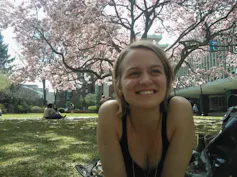
The author at a music festival in Denmark. Author provided (no reuse)
There were always people in the kitchen to talk to. Always someone to have coffee with. It was a life with built-in friendships.
So why leave that kind of collective life?
Why have children at all and, in my case, move to the suburbs?
It’s a fair question, and one I’ve asked myself. The simple answer is that I became pregnant and children weren’t allowed in student accommodation. In addition, housing in larger cities – such as Copenhagen – is almost impossible to afford for young people and young families. We are driven out of cities, to put it bluntly.
However, I was also somewhat tired of other people’s parties and other people’s mess. And sometimes, you simply want to drink your coffee alone.
Advertisement
If it had been possible to stay in some form of shared living that could accommodate children and still have a private kitchen, I would have done so. No question about it. But that option is rare.
And so we return to the social script I mentioned earlier.
What we might call both the social structure and the physical architecture leave little room for ways of living outside the standard couple, the nuclear family, or single life (more people than ever now live alone).
Cue a longing for new norms around friendship and community.
Advertisement
Literature and company
There are those who argue that the family is an oppressive institution that should be abolished altogether.
This stance builds on the radical feminism of the 1970s, where voices such as Shulamith Firestone argued that reproduction should be handed over to technology, freeing women from the burden altogether.
More recently, Sophie Lewis has made a similar case. In her book Abolish the Family: A Manifesto for Care and Liberation, she calls for dismantling the social structure of the family in favour of a more collective culture of care.
I understand the motivations behind arguments like these. But if people want to fall in love and have children together as a couple, then by all means they should. Regardless of what any intellectual might think about the matter.
Advertisement
Are there problems with families? Can they make us lonely by taking time away from friendships? Yes and yes.
Can they also be a source of joy and meaning? Just as much so.
The reason I bring up this critique of the family is that it reflects a broader trend in books, films and culture more generally: a growing willingness to question how we live and what place friendship should have in our lives.
I’ve written about this development elsewhere, describing how friendship is gaining prominence and offering three possible explanations for why that is.
Advertisement
One is the rise in loneliness , which makes friendship more valuable simply because it has become more scarce.
Another is that friendship can confer status and prestige in a world shaped by social media and visual culture.
Finally, I would argue that there is a growing cultural curiosity about whether friendships can serve as a framework for life in the same way romantic relationships historically have.
So much emphasis is placed on our romantic relationships: our ‘signficant’ other. (The author and her partner.) Author provided (no reuse)
The French literary star Édouard Louis is one of the most prominent figures on the literary scene grappling with friendship.
In Change: A Method (2021), he describes his life as a movement away from his family. Instead, he seeks out different friendships that help him escape a homophobic working-class environment in northern France and move towards the literary scene in Paris.
Advertisement
He describes how his friendship with Elena, a middle-class girl, completely overturns his worldview, and how he later becomes close friends with notable French intellectuals Didier Eribon and Geoffroy de Lagasnerie.
The latter has described their friendship of three as a “way of life” and a “radical form of life” that breaks with the status quo.
One might object that cultural portrayals of the importance of friendship like these are the culmination of contemporary individualism.
For Louis, it is about living exactly as he wants to live – entirely free from conventions and expectations. And that does indeed invoke a particularly modern form of individualism.
Advertisement
At the same time, they contain a longing for other people and for community.
He seems to be asking if it’s possible to burn down existing social conventions and develop our own norms for friendship and togetherness. Both Louis and de Lagasnerie conclude that yes, that is indeed possible.
Breaking with convention
The Danish author Thomas Korsgaard’s stories about Tue offer a parallel to the French Louis: Tue comes from a poor, non-academic provincial background and, like Louis, Tue moves to the city to create a new life for himself.
In his book, You Probably Should Have Been There (2021), Korsgaard writes about Tue’s turbulent early days in Copenhagen, where he spends a long time living as a destitute homeless man, until he meets Victoria (the Danish version of Elena, if you like) and, through her, learns the social codes of the upper middle class. Slowly but surely, he begins the same kind of transformation that Louis describes.
Advertisement
Cultural and literary history also offers many examples of female friendships that have allowed people to live outside the norms and be themselves.
The Swedish writer, Selma Lagerlöf, did not marry and instead had close relationships with other women, and Virginia Woolf’s life and work were also shaped by deep female friendships.
For many years, it was not seen as suspicious or improper for women to have romantic and borderline erotic relationships with one another – they were in many cases regarded as intimate friendships.
Male homosexuality, by contrast, has in many cases and historical contexts been met with hatred and resistance, with the important exception of ancient Greek and classical societies.
Advertisement
The accounts of Louis, Korsgaard, Lagasnerie, and many others, all testify to a powerful urge to break with the structures that dictate that we must live our lives in a certain way and remind us of the importance of asking ourselves if we are living according to our own standards – or the standards of someone else.
An adult friend
The feeling of missing friends, the one that hit me that evening on the terrace, may be about something deeper than simply missing having lots of people to invite to one’s birthday party or many people one can call on on a rainy day. And that, above all, is what literature made me realise.
My hunger for friendship was not so much about a need for having people around. It was more about a need to broaden my horizon and listen to other perspectives.
I didn’t just miss friends; I missed different viewpoints, fresh input and new ways of thinking.
Advertisement
Friendships can help us see and explore the odd and unconventional sides of life – and in doing so challenge the status quo, much like the portrayals we find in literature.
Put simply, they can make us see the world differently.
When I went to elementary school, one of my closest friends was a woman in her seventies who had looked after me as a child.
After she was no longer being paid to spend time with me, I kept seeking her out. Her name was Lise, born in 1928. With her dark humour, curls and a wardrobe full of high-heels, her apartment was my number one refuge.
Advertisement
Lise had a Jewish background and, at 15, had fled the Nazis in Denmark on a Swedish fishing boat.
I loved her stories from the past and everything else about her. She cooked terrible food, always gave me presents and was impeccably elegant.
Our friendship cut across all the usual boundaries. It was unusual, even odd. But it was exactly what we both needed.
What can you do?
Inspired by literature’s many examples, can we live a life in which friends take up more space, where friendships are allowed to challenge our assumptions about life?
Advertisement
Even if we are not ready, or willing, to throw family and all other social conventions onto the scrapheap?
I am convinced that it is possible. But it requires us to push back, at least a little, against today’s emphasis on choice and individualism, and to do something slightly unfashionable: send a message instead of scrolling. Commit. Invite someone over. Perhaps someone who you never thought of as a friend before. But who nonetheless may turn out to be valuable to have in your life.
It also requires us to view strangers as potential friends. After all, this is what friendship boils down to: strangers that you come to know, like, and trust – a definition I describe in more detail in my book Friendship from Aristotle to Snapchat (in Danish).
Say hello to your neighbour. Smile and speak to people in shops or on the bus, because so-called “weak ties” are actually really good for us and give us a sense of belonging. Sometimes it’s as simple as this: Be friendly!
Advertisement
It is also helpful to reach out to those who are not like us on paper.
And in so doing, move beyond the idea that like attracts like, and instead connect with those who are different from us, just as Louis, Korsgaard’s Tue and de Lagasnerie did.
To recognise that friendships can take many forms and do not have to resemble the perfect parties and baby showers that dominate social media. For some, reading a book or being out in nature may facilitate a feeling of friendship – even if these things are done in solitude.
So, as strange as it may sound, friendships may not even require other people. I recently heard German sociologist and renowned thinker Hartmut Rosa give a lecture in Copenhagen, and his reflections on resonance were highly conducive for thinking about friendship. We resonate with other beings, says Rosa, and with the world broadly speaking – not just with other people.
Advertisement
Can a tree be my friend? I think so. Author provided (no reuse)
As for me, I’ve started bringing friends together, including people I haven’t seen in a long time, for various gatherings.
It’s not exactly trendy or reminiscent of student life; people often bring their children, and time is spent building Lego or settling disputes. But that hardly matters. What matters to me is that we can make space for one another across different stages of life.
I’ve also broadened my understanding of friendship to include everyday interactions, everything from smalltalk with other parents at nursery to lunches with colleagues and friendly online messages.
Because you don’t need a large circle of friends.
As I see it, friendship is a practice.
Advertisement
It’s a way of being in the world – something you do, rather than something you have.
That shift has genuinely eased my hunger for friendship, and I now see my suburban life in a different light. I’ve learned that I’m not missing anything – it’s simply a matter of doing something.
Punctuating the notion that friendship necessarily looks a certain way has also really helped me. Because friendships come in all shapes and forms: from micro-interactions to life-long bonds. Perhaps with a tree or a dog?
This article was commissioned as part of a partnership between Videnskab.dk and The Conversation. You can read the Danish version of this article here.
To hear about new Insights articles, join the hundreds of thousands of people who value The Conversation’s evidence-based news. Subscribe to our newsletter.
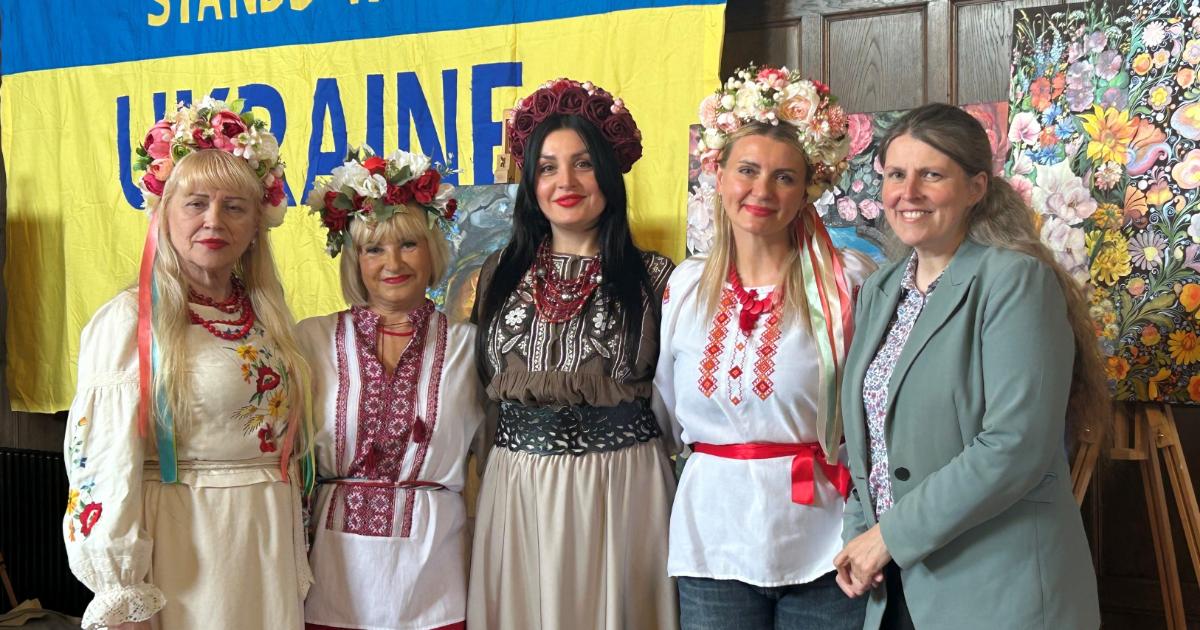
Vyshyvanka Day is held on the third Thursday of May each year but was marked during an event at the Merchant Taylors Hall, in Aldwark, on Thursday (May 14).
The annual event is dedicated to a traditional embroidered shirt known as the vyshyvanka – which is often handmade and passed down through the generations.
The day encourages Ukrainians to wear the garment as a means of expressing national identity, unity, and pride – highlighting the country’s history and resilience through hardship.
Recommended reading:
Advertisement
It was organised by the York Ukrainian community, with help from York City of Sanctuary and the Company of Merchant Taylors.
The day celebrates the country’s national dress and its rich cultural heritage (Image: Abby Backhouse)
Speaking about this, John Vincent of the Company of Merchant Taylors, said: “This is the fourth celebration of Vyshyvanka Day that we’ve held in York, and despite the event being a joyful celebration, it is tinged with sadness.
“We open up our doors to the Ukrainian community – many of whom have faced so deep hardship and loss since the beginning of the war.
“It’s an event I know they long to host in their country, at peace and without the looming threat of ongoing conflict.”
Advertisement
Iryna Martynyuk wearing the vyshyvanka her grandmother made (Image: Abby Backhouse)
One attendee Iryna Martynyuk, who helps organise the choir which sang on the day, said she had found comfort in the city of York, as its historic walls are reminiscent of her home city of Lviv – renowned for its own deep history.
Iryna brought a picture of her grandma who had handcrafted the vyshyvanka she wore to the event.
She explained: “A vyshyvanka like the one I wear today is often passed from mother to daughter.
“I cut mine, which was originally made as a dress, into a top when I was 16.
Advertisement
“It has been preserved so well and I wear it with pride today.”
A choir sang traditional Ukrainian folk songs (Image: Abby Backhouse)
Iryna and her choir sang a variety of traditional folk songs and more modern music to those in attendance before all were able to enjoy a Ukrainian pork dish.
Speaking about this, Lena Henderson said: “It’s been wonderful to see everyone today.
“The Ukrainian community in York has really evolved since they arrived here as refugees. Many families have now found secure employment, friends and have integrated into their communities.”
Advertisement
The city celebrated the fourth annual Vyshyvanka Day (Image: Abby Backhouse)
Lena helped run Sunflowers Kids Club in York – a group set up for Ukrainian children and their families after the war began in 2022.
She said: “We had originally supported over 300 children and adults with weekly wellbeing sessions – ensuring everyone had both the practical and emotional support they needed after coming to York.
“When these families came to the area, many were lost, not knowing the language and in need of a support system, aside from their wonderful host families.
“Over the years, I have seen how well they have integrated into their community and managed uncertainties.”
Advertisement
Songs, national dishes and traditional dress were celebrated at the event (Image: Abby Backhouse)
The club was a temporary project, funded in part by grants from City of York Council, the Joseph Rowntree Trust and kind-hearted sponsors, and has recently ended.
Ukraine’s rich history and the future of the 34,000 child refugees living in the UK today will soon be discussed in a talk on June 6.
The phased transition is due to begin in summer 2026
15:10, 15 May 2026Updated 15:25, 15 May 2026
A global defence contractor based in Cambridge has announced plans to relocate to South Wales, impacting 158 employees. Marshall Land Systems has confirmed a proposal to relocate its UK production facility to Merthyr Tydfil in South Wales.
The phased transition will begin in summer 2026 with the closure of production in Cambridge expected by March 31, 2027. Operations at the Cambridge facility will continue until December 2026.
The move to South Wales will “significantly reduce operating costs including rent and business rates, which in turn will strengthen our competitiveness and support a more sustainable future for the business”, a spokesperson for Marshall Land Systems said.
Advertisement
The proposals will impact 158 employees and 59 fixed term agency contractors. Proposed plans were shared with the impacted employees and fixed term agency contractors earlier this month and a formal consultation period has begun.
The company was sold by the Marshall Group, which was founded in Cambridge in 1909, to Flowing River Capital Partners in November 2025.
A spokesperson for Marshall Land Systems said: “We can confirm that Marshall Land Systems has announced a proposal to relocate its UK production facility to Merthyr Tydfil in South Wales, with a phased transition beginning in summer 2026. Operations at our Cambridge facility will continue in parallel until December 2026, with the closure of production in Cambridge expected by 31 March 2027.”
“Alongside our temporary relocation to enable the development of Marleigh Park, we have actively sought suitable, cost-effective premises within the local area. Despite these efforts, we have been unable to secure premises locally on terms that would allow the business to continue operating in an efficient and financially sustainable way.”
Advertisement
Marshall Land Systems said they “recognise this will be a difficult time for those affected” and are “committed to supporting our people throughout the consultation process and beyond”. Impact on customers or service levels are not expected during this period.
Saffron Cole-Nottage fell headfirst into sea defence rocks as the tide was coming in
Eliana Nunes and Husna Anjum Senior Live News Reporter
15:45, 15 May 2026Updated 15:53, 15 May 2026
An inquest heard ‘guidance was not followed’ after a mother tragically drowned. It was claimed that if ambulance service had alerted the fire service more quickly, it’s “possible” she might have survived.
Saffron Cole-Nottage, 32, was walking her dog with her daughter along The Esplanade in Lowestoft, Suffolk, on February 2 last year. The Mirror reports how she fell into sea defence rocks and became stuck headfirst as the tide came in.
Advertisement
A girl called 999 at 7.52pm and, within the first 30 seconds of the call, told an ambulance service call handler that Ms Cole-Nottage was “caught head down in the rock” by the “seafront”. At 7.57pm and 7.58pm, the caller referred to Ms Cole-Nottage “screaming”, before saying at 7.59pm that she was “in the water now”.
Suffolk Fire and Rescue Service was the last of the four emergency services to be alerted, with the first contact to the fire service made at 8.04pm. Firefighters arrived at 8.22pm and freed Ms Cole-Nottage in “less than half a minute” after first hands were placed on her at 8.29pm, Suffolk area coroner Darren Stewart said.
She was declared dead at 8.44pm.
Recording a narrative conclusion on Friday, the coroner said Ms Cole-Nottage “died from drowning which has come about due to accidental circumstances”. He said the East of England Ambulance Service “didn’t immediately contact the fire service”.
He continued: “Had the Suffolk Fire and Rescue Service been immediately alerted to the incident … it’s possible that Saffron would have been extricated from the rocks sooner and survived. However, it’s not probable she would have done so.”
He described Ms Cole-Nottage, who worked as a cleaner, as a “loving mother completely devoted to her children”. The coroner noted that Ms Cole-Nottage “had been drinking” on the day of the accident.
The inquest previously heard that rescue efforts to try to save Ms Cole-Nottage did not follow guidance. Professor Richard Lyon, a consultant in emergency medicine, told the inquest on Tuesday that a “clock” should start on 30 minutes of rescue efforts once a responder arrives at the scene and confirms a person is submerged.
Advertisement
Prof Lyon, who holds roles with NHS Scotland and the University of Surrey, said: “I do not think the guidance was followed in this case.”
He said: “The guidance is quite clear that the clock starts when the responder arrives on scene … and submersion is confirmed.” He questioned “how sure the responders could be that Saffron was actually confirmed submerged when that decision [at 8.13pm] seemed to have been made from above the railings when she [Ms Cole-Nottage] was down in a difficult situation”.
Prof Lyon said it was “important to have an absolute time that everyone is working to and that time is sure and that’s definite”. “That’s why the guidance is very clear that the time should be from the arrival of the first rescuer – there’s no ambiguity about that time,” he said. “The whole purpose of the guideline is to maximise the chance of a lifesaving rescue.”
Advertisement
The inquest also heard that two men had tried to pull Ms Cole-Nottage out by her legs, which were the only part of her body visible. Ian Jones described her as “screaming and panicking”, while Alex Singleton-Dent said it had “felt like ages” before emergency services arrived.
Prof Lyon estimated Ms Cole-Nottage’s window for “probable survival” was around five minutes after submersion began. He added that being upside down would have made breathing “harder”.
The inquest was earlier told that a level of 271 milligrammes of alcohol per 100ml of blood was recorded for Ms Cole-Nottage. The legal limit for driving in England is 80 milligrammes of alcohol per 100 millilitres of blood. Ms Cole-Nottage’s partner, Michael Wheeler, said in a statement read to the court that she had gone for a meal earlier in the day. He did not believe she was drunk and said she was not slurring her words when she set off on the walk.
Prof Lyon said the effect of the alcohol is “most relevant in terms of it would make her more likely to stumble, more likely to trip”. He said Ms Cole-Nottage’s “protective reflex would have been diminished”, meaning she may not have put an arm out as she fell. “When she was between the rocks her ability to move … and try to push herself out would have been impaired as well,” he said.
Advertisement
Prof Lyon said: “For Saffron to have had a probable survival, she would have needed to be rescued within five minutes of submersion and, if required, for CPR to start within that time.”
He said that “survival was possible up until about the 15-minute mark”, but she may have sustained a brain injury. “In my opinion, beyond 25 minutes, survival would not have been possible,” he said. “I should stress, all of these numbers are a best possible expert opinion,” he added.
The competing countries in the grand final will be Albania, Australia, Austria, Belgium, Bulgaria, Croatia, Cyprus, Czechia, Denmark, Finland, France, Germany, Greece, Israel, Italy, Lithuania, Malta, Moldova, Norway, Poland, Romania, Serbia, Sweden, Ukraine and the UK.
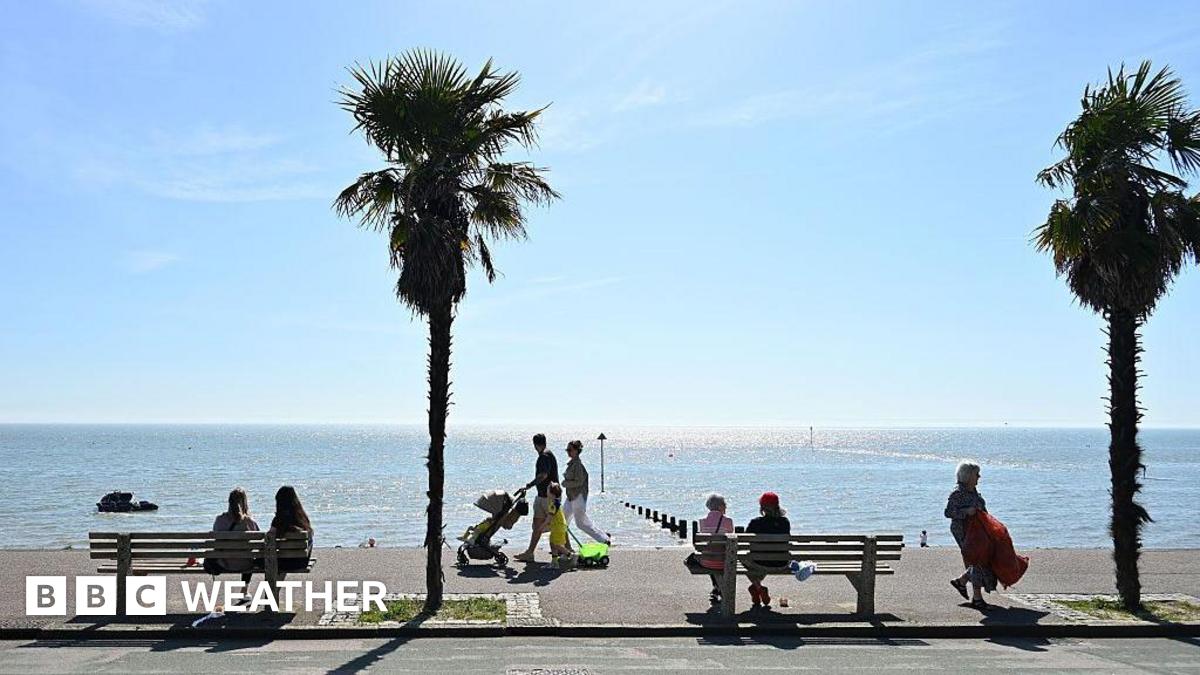
With northerly winds across the UK, the temperature has been around 4-7C below average this week.
Showers, thunderstorms and hail have also featured widely with some questioning what has happened to spring.
Thunderstorms and hail are actually quite common features of the weather this time of year as the extra daylight and warmth helps grow bigger showers that bring hail.
With the wind switching to more of a westerly direction over the weekend, it will start to feel warmer although the weather will continue to be quite mixed.
Advertisement
After a bright start on Saturday, cloud increases from the west with some rain in Northern Ireland and western areas of England and Wales.
By Sunday, temperatures will have risen to around 12-16C. This will be close to the average for the time of year. With lighter winds it should actually start to feel warmer than it has done this week.
Showers will be mostly confined to northern and western areas of the UK with sunny spells elsewhere.
Rory McIlroy feels he is “right in the tournament” after an impressive second round pulled him to within five shots of the halfway lead at the US PGA Championship.
McIlroy was furious after a four-over-par first round as his bid for back-to-back majors started in disappointing fashion.
He started his second round at Aronimink Golf Club in south-west Philadelphia eight shots off the clubhouse lead but will he enter ‘moving day’ five back from Americans Alex Smalley and Maverick McNealy after a bogey-free 67.
Only two players have shot lower over the opening two days – Chris Gotterup with a 65 and Ludvig Aberg a 66 – and it is a congested leaderboard with 15 players within two shots of the midway lead for only the third time in major history.
Advertisement
McIlroy labelled his open round “s***” and, asked to describe his second, replied: “Not as s***.”
He added: “At five back I do feel like I’m right in the tournament and that’s really what I wanted to do today was to just get myself back in it.
“I think this afternoon I had a better understanding of how the course was playing. I probably went out there yesterday being a little too aggressive, thinking that guys were going to go lower than they were.
“Because I certainly didn’t, in the practice rounds, see it playing as difficult as it has played.”
Advertisement
It was a slow pace, as is common at major championships. McIlroy sat down on the 10th tee as his group waited to play. It took over five hours to complete his round.
“It seems like the first two days of major championship golf are always going to be like that,” McIlroy added.
Aronimink has certainly proved a stiff test over the opening two days, biting back at pre-tournament claims that it would not challenge the world’s best golfers.
World number one Scottie Scheffler, who battled to a second-round 71 to sit two off the lead, said the pin locations were “the hardest I have seen on tour”.
Advertisement
McIlroy has mixed feelings over how the course has played, questioning the packed nature of the leaderboard.
“I think a bunched leaderboard like this, I think it’s a sign of not a great setup,” he said.
“I think when it’s as bunched as it is… because it hasn’t really enabled anyone to separate themselves.
“It’s easy to make a ton of pars, hard to make birdies, and it feels like bogey’s the worst score you’re going to shoot on any one hole.”
Advertisement
“I think the setup is fine, the golf course is good, the pins were tough.
“I’ve always felt like really good setups, it starts to spread the field a bit and not great setups sort of bring everyone together.
“Where they have put these hole locations, I feel like they have really tried to protect the course the first couple of days. So it seems like they have used up a lot of the really hard ones.”
McIlroy will play his third round alongside five-time major champion Brooks Koepka.
Advertisement
Selected round three tee times
12.45pm (all times BST): Jhonattan Vegas and Alex Noren.2.15pm: Justin Rose and Brian Harman.4pm: Rory McIlroy and Brooks Koepka.6.40pm: Scottie Scheffler and David Puig.7.40pm: Alex Smalley and Maverick McNealy.
While the Victorian railway cathedral remains from the days of steam and smuts, the £160m extension has the clean lines, sweeping shapes and the swish escalators that are more often associated with an international airport than a provincial station.
Like all good railway adventures, it has been a long journey with plenty of delays to reach the point where the station is now ready for public use. Britain is pretty poor at major infrastructure projects, but it shows that when we stick with it – rather than getting cold feet halfway through and pulling out, as happened with HS2 – we can achieve impressive results.
We live in a bitterly divided country at the moment, but this seems to be a great example of national government working with the regional mayor and the local council to achieve these results, and it was good to see yesterday the credit being shared between the Conservative Tees Valley mayor and Darlington’s Labour council leader, MP and transport minister, Lord Peter Hendy. The public always says it wants its politicians to put their party divides to one side and work together, and here we see collaboration – along with the railway company LNER – paying off. Congratulations to them all.
Advertisement
As the Stockton & Darlington Railway showed, if you build it, all manner of commercial enterprises will spring up alongside it, and we look forward to economic growth rippling out from the station.
But one blot on the landscape presents itself immediately the passenger steps out of the multi-million pound rotunda: St John’s Church, “the railwaymen’s church”, closed in 2023 and now looking empty and forlorn. How can it be brought back into the fold?
“This difficult decision has been made following a recent review of branch performance and operational priorities.
“We are working hard to support colleagues affected and are seeking, where possible, to redeploy and retain them within the business.
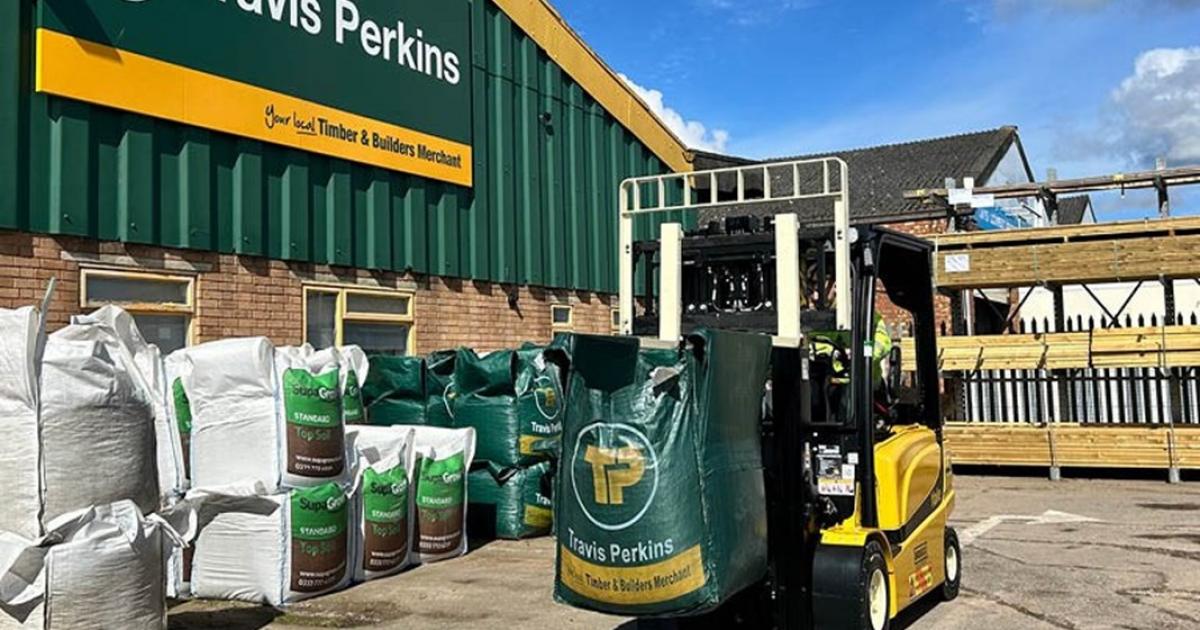
“We’d like to thank all our customers for their support at the branch. We have a number of other branches across Yorkshire which will continue to provide the outstanding service Travis Perkins is renowned for.”
Advertisement
Travis Perkins opened in 12,000-square feet premises on Charter Road, at Ripon Business Park, in 2005.
In a trading update last month, the company said it “continued to experience challenging trading conditions” and declining revenue.
The first quarter update for the period to 31 March 2026 said group revenues are down 1.7 per cent on a like-for-like basis.
Advertisement
In the Merchanting segment revenue was down 2.3 per cent as construction activity levels “remain subdued”.


























































You must be logged in to post a comment Login